India’s Iran Policy- Isolated no more
By Vijay Prashad | The BRICS Post | November 30, 2013
I imagine myself walking down to the Beirut train station, boarding the 4pm bullet train that will steam off toward Damascus, heading across the great plains to the east to Baghdad. In a day we’ll be in Iran and then at Mashad there is a choice: one could go south through Pakistan to Delhi, or one would take the longer journey to Beijing via Samarkand. This would be the Great Asian Express that links one end of the massive continent to the other.
But it is impossible. War in Syria stops the train before it has even begun. Instability in Iraq intimates that the tracks would be blown up before they can be laid down. Iran is far more stable, which is why it has begun to build a train line that would link Turkey to Turkmenistan through northern Iran. Afghanistan, Pakistan and India are unable to create a modus vivendi that would welcome such a train, or indeed an oil and gas pipeline that might run parallel to it, bringing Iranian fuel to the consumers of the subcontinent. Central Asia oscillates between long periods of calm and bursts of dangerous violence.
A train itinerary such as the one I described sounds like a dream history – impossible even. But it is not so out of our time. The Trans-Asian Railway comes out from the 1960s, a historical artefact, a project of the UN Economic and Social Commission for Asia and the Pacific that was finally brought to the stage of an inter-governmental memorandum of understanding in 2006. This Iron Silk Road is to run from Singapore to Istanbul. The project has no timetable. Parts of it are already present, and parts of it are in the maddening future. But some of it will form part of the China-Iran rail link which is expected to go into production within a decade, and will form part of the Istanbul to Tehran route that is also already in production. Not so far that regional future.
Regionalism
Regionalism rests on the mantle of geography. Attempts to isolate a country for ideological reasons do not always work. The West, since 2003 at least, has attempted to isolate Iran but it cannot do so – Afghanistan, under US occupation, buys half its oil from Iran. It cannot do otherwise. Any other source would be ridiculously overpriced. The US embargo of Iran had to be violated despite the fact that it was US money in Afghan hands that was buying the Iranian oil.
Pressure from the US and the desire of the Indian political and economic elites for a close link with the US befuddled India’s Iran policy between 2003 and 2013. India is the second largest importer, after China, of Iranian oil. In the halls of the Non-Aligned Movement, India is a country that is greatly respected.
Through a nuclear deal – as I detail in my new report on India’s Iran policy, the US was able to push India to vote against Iran twice at the International Atomic Energy Agency (IAEA) meetings in exchange for being brought out of the nuclear winter itself. As the sanctions regime on Iran tightened, India found it hard to buy oil from Iran and coldness between the countries set in as a result of India’s seeming eagerness to toe the US line. But beneath the surface of the IAEA votes and the statements against the buying of Iranian oil, linkages deepened – on oil buying certainly but also on the trade in pharmaceuticals and wheat as well as on the Indo-Iranian construction of a port in south-eastern Iran (at Chabahar). The sanctions regime had certainly throttled Iran, but it could not sunder fully the imperatives of regional trade.
On Sunday, November 24, the P5 (China, France, Russia, the United Kingdom and the United States) + 1 (Germany) signed a deal with Iran to end the siege on the latter. The P5+1 promised to ease the sanctions regime in exchange for Iran’s disavowal of a nuclear weapon.
India welcomed the deal, suggesting that it was along the grain not only of Indian policy but also of the BRICS declaration from 2013 (“We believe there is no alternative to a negotiated settlement to the Iranian nuclear issue. We recognize Iran’s right to peaceful use of nuclear energy consistent with its international obligations, and support resolution of the issues involved through political and diplomatic means and dialogue,” was the wording of the eThekwini Declaration).
India’s oil firms promised to hastily transfer arrears held in Indian banks for oil purchased during the previous years (now totalling $5.3 billion), and to increase orders for Iranian oil. The latter would be facilitated by the end to the pressure on insurance firms who then refused to underwrite oil tankers coming out of Iran.
India’s Foreign Secretary Sujatha Singh met with Iran’s Deputy Prime Minister Ebrahim Rahimpour on Monday, November 25, and agreed that there is “considerable untapped potential to develop economic cooperation between the two countries particularly in the area of energy and transit.” India and Iran have already been at work building the Chabahar port, and India is building a 900 km train track to link the port to the Hajigak region in Afghanistan. Dreams of oil and gas pipelines and train lines remained suspended over the gathering like a huge exclamation mark.
What these developments indicate is that the time of US primacy is now over and the time of multipolar regionalism is at hand. From 1991 to the present, the US had attempted to forge strong bilateral ties with its chosen allies and sought to knit those allies into a planetary security web of military bases and inter-operatable armed forces; this was the hub and spoke system that James Baker had written about in 1992. That system meant that regional ties had to be sacrificed for the close linkages to the United States. Latin America, through the Bolivarian dynamic, was the first region to exit from the US strategy and create its own regional architecture (for political, economic and social linkages). An over-extended US military presence in Asia and the collapse of the finance-led economic model in 2008 weakened the US considerably.
The example of Latin America gave confidence for the new India-Brazil-South Africa (IBSA) formation, the antecedent of the BRICS bloc. With the quiet emergence of the BRICS bloc in the context of a weaker West, it was inevitable that the siege of Iran would have to be lifted. China’s Foreign Minister Wang Li uncharacteristically told the Chinese media that his country played a crucial role in concluding the deal. Pressure from Russia and China on the European Union pushed them to bring a wayward France in line. No longer can an imperial foreign policy dominate international policy without challenge. That is the lesson of the Iranian deal.
Vijay Prashad is the Edward Said Chair at the American University of Beirut, Beirut, Lebanon. His most recent book is The Poorer Nations: A Possible History of the Global South.
Related articles
- India will continue to engage Iran in economic activities (rediff.com)
- Post-deal with world powers, Iran briefs India on moving ahead (thehindu.com)
- PressTV: US extends Iran oil sanctions waivers (jhaines6.wordpress.com)
Share this:
Related
November 30, 2013 - Posted by aletho | Economics, Timeless or most popular | Afghanistan, BRICS, China, India, Iran, Trans-Asian Railway, United States
No comments yet.
Featured Video
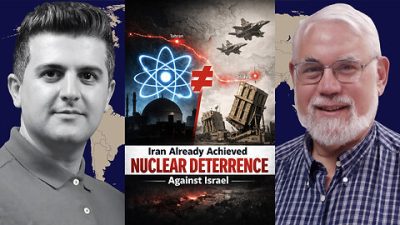
Prof. Ted Postol: Iran Already Achieved Nuclear Deterrence Against Israel
or go to
Aletho News Archives – Video-Images
From the Archives
How the occupied mentality syndrome works
Saudi Arabia on the American chessboard – Part 3
By B. J. Sabri | American Herald Tribune | June 27, 2016
Read part 2: “The occupied mentality Syndrome“
Previously I argued whether Saudi Arabia’s repeated involvements in U.S. interventions and wars stem from free national will or in response to a specific condition. For starters, in Saudi Arabia there is no national will. In Saudi Arabia, the national will is the will of the Al Saud clan. Still, when a major Arab state allies itself with a superpower that committed unspeakable crimes against humanity in almost every Arab country, then something is wrong. This fact alone should compel us to examine the U.S.-Saudi relation for one exceptional reason. As a result of the U.S.-Saudi wars, hundreds of thousands of people in Afghanistan, Iraq, Iran, Libya, Syria, Yemen, and Somalia have lost their lives. Millions became displaced in their own homelands. And millions more rendered refugees.
Attributing the Saudi policies to the bonds of “partnership” with the U.S. is frivolous. There are no bonds between these two thugs except those of business, military deals, secret plots, and wars. Proving this point, bonds such as these have no space for the American and Saudi peoples to share significant cultural or societal exchanges. If partnership is not the reason for the Saudi contribution to the U.S. strategy of empire and imperialism, then another reason must exist.
This leads to three possibilities. … continue
Blog Roll
-
Join 2,444 other subscribers
Visits Since December 2009
- 7,437,998 hits
Looking for something?
Archives
Calendar
Categories
Aletho News Civil Liberties Corruption Deception Economics Environmentalism Ethnic Cleansing, Racism, Zionism Fake News False Flag Terrorism Full Spectrum Dominance Illegal Occupation Mainstream Media, Warmongering Malthusian Ideology, Phony Scarcity Militarism Progressive Hypocrite Russophobia Science and Pseudo-Science Solidarity and Activism Subjugation - Torture Supremacism, Social Darwinism Timeless or most popular Video War Crimes Wars for IsraelTags
9/11 Afghanistan Africa al-Qaeda Australia BBC Benjamin Netanyahu Brazil Canada CDC Central Intelligence Agency China CIA CNN Covid-19 COVID-19 Vaccine Donald Trump Egypt European Union Facebook FBI FDA France Gaza Germany Google Hamas Hebron Hezbollah Hillary Clinton Human rights Hungary India Iran Iraq ISIS Israel Israeli settlement Japan Jerusalem Joe Biden Korea Latin America Lebanon Libya Middle East National Security Agency NATO New York Times North Korea NSA Obama Pakistan Palestine Poland Qatar Russia Sanctions against Iran Saudi Arabia Syria The Guardian Turkey Twitter UAE UK Ukraine United Nations United States USA Venezuela Washington Post West Bank WHO Yemen Zionism
Aletho News- Hezbollah hits Israeli warship off Lebanon’s coast, sets it aflame
- Iran slams US strikes on B1 bridge, Mahshahr petrochemical plants as ‘blatant acts of state terrorism’
- In letter to UN chief, Araghchi warns of dire consequences of US-Israeli attacks on Iran’s nuclear facilities
- Why the CIA conspiracy to invade Iran with Kurdish militias failed
- Why Are Upbeat US Claims About Mission to Rescue Pilot ‘Highly Questionable’?
- Aircraft destroyed during US ‘rescue’ of downed F-15 pilot cost more than $100 million each
- Washington University removes professor who condemned US-Israeli war on Iran
- Russia Warns of Retaliation as UK Authorizes Seizure of Vessels
- Serbia thwarts plot to bomb Russia-Hungary gas pipeline – Vucic
- Al Mayadeen voices solidarity with Dr. Marandi amid death threats
If Americans Knew- In Iran, Israel-US take aim at “reason, research, and freedom of thought” – Daily Update
- US loses planes over Iran, Israel downgrades Lebanon war goals – Daily Update
- Israel Is Blocking Palestinians from Easter at Church Where Jesus Resurrected
- Plot to assassinate Palestinian activist follows harassment campaign promoted by Zionist groups and elected officials
- Prominent New York synagogue hosts presentation on why U.S. Jews should support the ethnic cleansing of Gaza
- Tapper vs. Piker: Is the CNN Anchor Auditioning for David Ellison?
- Shouldn’t Democrats Be Able to Condemn Genocide?
- Israel-US kill negotiators, destroy civilian structures, but Iran’s military capabilities still largely intact – Daily Update
- ‘War crime’: Global condemnation as Israeli ministers celebrate death penalty law targeting Palestinian prisoners
- 7 Ways Israel Is Turning Lebanon Into Gaza
No Tricks Zone- An Inconvenient Tree: Uncovered In Alps… Europe Much Warmer Than Today 6000 Years Ago
- New Study Reports A 60% Slowdown In Greenland’s Ice Loss Rate In The Last Decade
- Low Intensity Tornado Wrecks Major Solar Farm, Creating A Potential Toxic Dump
- New Study Finds Warming Saves Lives…Cold Temperatures 12 Times More Deadly Than Excess Heat
- German Science Blog Accuses PIK Climate Institute Of Hallucinating Climate Tipping Points
- Devastating Assessment Of Comirnaty Vaccine By Former Senior Pfizer Europe Toxicologist
- New Study: CO2 Is ‘Effectively Negligible’ As An Explanatory Climate Change Factor Since 2000
- Former Pfizer Toxicologist Dr. Helmut Sterz Tells Bundestag Hearing Pfizer Vaccine Should Have Never Been Approved
- Energy Expert: Germany’s Nuclear Phaseout Was A “500 Billion Euro Mistake”
- New Research: South Australia’s Mid-Holocene Sea Surface Temperatures Were 4°C Warmer Than Today
Contact:
atheonews (at) gmail.com
Disclaimer
This site is provided as a research and reference tool. Although we make every reasonable effort to ensure that the information and data provided at this site are useful, accurate, and current, we cannot guarantee that the information and data provided here will be error-free. By using this site, you assume all responsibility for and risk arising from your use of and reliance upon the contents of this site.
This site and the information available through it do not, and are not intended to constitute legal advice. Should you require legal advice, you should consult your own attorney.
Nothing within this site or linked to by this site constitutes investment advice or medical advice.
Materials accessible from or added to this site by third parties, such as comments posted, are strictly the responsibility of the third party who added such materials or made them accessible and we neither endorse nor undertake to control, monitor, edit or assume responsibility for any such third-party material.
The posting of stories, commentaries, reports, documents and links (embedded or otherwise) on this site does not in any way, shape or form, implied or otherwise, necessarily express or suggest endorsement or support of any of such posted material or parts therein.
The word “alleged” is deemed to occur before the word “fraud.” Since the rule of law still applies. To peasants, at least.
Fair Use
This site contains copyrighted material the use of which has not always been specifically authorized by the copyright owner. We are making such material available in our efforts to advance understanding of environmental, political, human rights, economic, democracy, scientific, and social justice issues, etc. We believe this constitutes a ‘fair use’ of any such copyrighted material as provided for in section 107 of the US Copyright Law. In accordance with Title 17 U.S.C. Section 107, the material on this site is distributed without profit to those who have expressed a prior interest in receiving the included information for research and educational purposes. For more info go to: http://www.law.cornell.edu/uscode/17/107.shtml. If you wish to use copyrighted material from this site for purposes of your own that go beyond ‘fair use’, you must obtain permission from the copyright owner.
DMCA Contact
This is information for anyone that wishes to challenge our “fair use” of copyrighted material.
If you are a legal copyright holder or a designated agent for such and you believe that content residing on or accessible through our website infringes a copyright and falls outside the boundaries of “Fair Use”, please send a notice of infringement by contacting atheonews@gmail.com.
We will respond and take necessary action immediately.
If notice is given of an alleged copyright violation we will act expeditiously to remove or disable access to the material(s) in question.
All 3rd party material posted on this website is copyright the respective owners / authors. Aletho News makes no claim of copyright on such material.

Leave a comment