How Feinstein’s Fake NSA Reform Bill Could Actually Make It Easier For NSA To Record Your Phone Calls
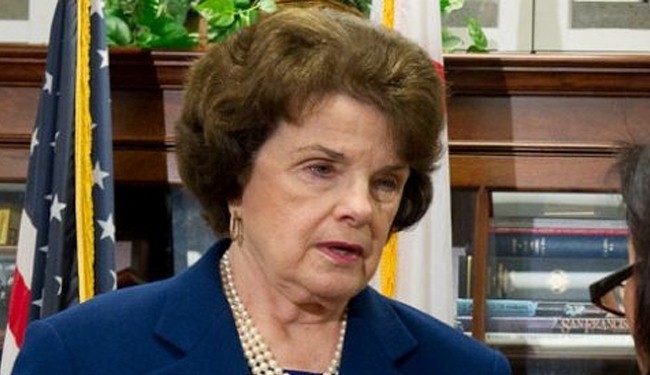
By Mike Masnick | Techdirt | November 1, 2013
We already pointed out that Dianne Feinstein’s fake NSA reform bill is being positioned by her as real reform, when all it really does is codify the (probably currently illegal) status quo. Even worse, Feinstein is using highly misleading language to pretend that the bill “bans” the very things that it clearly allows. It’s about as dishonest a statement about a bill as you can imagine.
We had noted in our original post that the talk about how the bill would prohibit the collection of “content of communications under Section 215” was a red herring. One of the NSA’s go-to talking points is that there’s “no surveillance” on the Section 215 collections because it’s “just metadata.” They keep repeating this claim over and over again that the leaked programs do not involve collecting the “content” of calls, pretending that this is what everyone’s been complaining about. That statement alone is disingenuous. Most people following this know that the Section 215 collections don’t involve the content of communications. What we’re complaining about is the metadata collection, because that’s very revealing. Separately, while the NSA may not collect contents “under this program,” they absolutely do under other programs.
But, the actual language here may be even worse. It may be so misleading that the language being held up to “prohibit” the collection of actual call content is worded in a way that actually will allow for greater content collection. As Julian Sanchez notes at that link, the ban on content collection is only for “bulk data collection,” which could be interpreted to mean it’s okay for non-bulk collections, which most people believe 215 isn’t regularly used for today.
The problem is, under canons of judicial interpretation, a narrow and explicit prohibition on getting content under bulk orders for communications records could easily be read to imply that content can be acquired via non-bulk orders, or even via bulk orders for other types of records. At present, it is not clear whether the statute allows for the acquisition of contents under 215, but there are strong arguments it does not—though, of course, I’d argue the Constitution would forbid this even if the statute didn’t. Under this law, though, a clever Justice Department lawyer could plausibly argue that a prohibition on content collection under one very specific type of 215 order would be senseless and redundant unless Congress intended for content to be accessible under 215 orders generally—and Courts generally have to interpret the law in a way that avoids making any provision redundant.
And, as Sanchez further points out, this isn’t a theoretical concept. The Justice Department has already used exactly this type of argument to allow for the bulk data collection in the first place:
This is not at all a hypothetical concern. In 2006, Congress amended Section 215 to add special “protections” for educational and medical records. What Congress didn’t know is that, because those records are already protected under other federal laws, and 215 contained no language explicitly overriding those statutes, the Justice Department had determined that 215 simply could not be used to access those types of records—an interpretation that was reversed after the “protections” were added. Congress, in other words, inadvertently expanded the scope of 215 while trying to limit it—a fact that was discovered only later, when a report by the Inspector General revealed the unintended consequences of the amendment.
This is yet another example of the really evil word games the NSA and its defenders will use to increase spying, while pretending they’re doing the opposite. Now would be a good time to reach out to your Senator to let them know that the Feinstein bill is absolutely unacceptable.
Related articles
Snowden ready to testify in Merkel tapping case – German lawmaker
RT | October 31, 2013
Whistleblower Edward Snowden has met with a German MP in Moscow. He passed a letter addressed to the German government and federal public prosecutor where he allegedly said he is ready to testify over Washington’s probable wiretapping of Merkel’s phone.
During the meeting, Snowden made it “clear that he knows a lot,” Greens lawmaker Hans-Christian Stroebele told ARD channel.
“He expressed his principle readiness to help clarify the situation. Basis for this is what we must create. That’s what we discussed for a long time and from all angles,” the MP said. “He is essentially prepared to come to Germany and give testimony, but the conditions must be discussed.”
Stroebele, 74, is a member of the German parliament’s control committee which is responsible for monitoring the work of intelligence agencies.
Snowden wouldn’t be able to travel to Germany to give evidence, as that would effectively see his refugee status lifted. If that were to happen, it would be possible for him to be extradited to the US, Interfax news agency quoted an unknown source as saying.
“At the same time, the German General Prosecutor’s Office could in principle send its representatives to Russia or pass its written questions on to Edward Snowden,” the same source said.
German Chancellor Angela Merkel has dispatched the country’s top foreign affairs and intelligence advisers to Washington this week to further investigate the allegations that her cell phone was tapped by the NSA, the report which caused fierce outrage in Germany.
The scandal initially broke when journalists working with Snowden’s leaked documents contacted the German government for clarification. German politicians subsequently suggested involving Snowden as a witness in the wiretapping case.
The German Federal Prosecutor’s Office may summon Snowden to be a witness in the case, German justice minister Sabine Leutheusser-Schnarrenberger told Deutschlandfunk radio on Sunday.
“If our suspicions prove correct and a case is opened, the German Federal Prosecutor’s Office will have to consider the possibility of interrogating Snowden as a witness,” she said.
If Snowden were to come to Germany for the case, the EU country could breach US’ requests for extradition, the minister added.
Leutheusser-Schnarrenberger also said that the phone tapping is illegal and constitutes a crime, therefore those responsible should be held accountable.
A parliamentary session will be held on November 18 to discuss the phone tapping. The Greens, along with the far-left Die Linke party, previously asked for a public inquiry into the matter. They were the ones to call on witnesses, including Snowden.
In June, Edward Snowden, a former NSA contractor who disclosed secret US surveillance programs, fled to Hong Kong and then to Russia.
President Vladimir Putin rejected US demands to extradite Snowden to face charges including espionage.
In early August, Snowden was granted temporary asylum, which can be extended annually.
Featured Video

Daniel Davis: U.S. Military Options & War Narrative Collapse
or go to
Aletho News Archives – Video-Images
Book Excerpt
“Vaccines Do Not Cause Autism!” The Science is Settled. Right?
ICAN urges the IACC to actually study infant vaccines and autism
 By Aaron Siri | Injecting Freedom | March 16, 2026
On behalf of ICAN, we just sent a copy of chapter 11 of Vaccines, Amen to the newly appointed members of the federal Interagency Autism Coordinating Committee (IACC).
If you haven’t already read this chapter, you can read the whole thing in the attached letter. I trust that after you read it, you’ll see why the statement “vaccines do not cause autism” is a belief, not science!

IACC Public Comment Letter
1.53MB ∙ PDF file
Includes chapter 11 of Vaccines, Amen
Blog Roll
 Aletho News
- Washington’s War on Cuba Is Older Than You Think
- Daniel Davis: U.S. Military Options & War Narrative Collapse
- Protesters call on Brussels university to cut partnership with Israeli defense-linked firm
- Weapons makers cash in on Trump’s Iran war
- Why Trump’s anti-Iran naval coalition in Strait of Hormuz is doomed to fail
- IRGC says regional energy sites linked to US will be reduced to ashes
- Qatar condemns ‘dangerous’ Israeli attack on gas field
- Iran made ‘unexpectedly substantial’ offer during Geneva talks, US envoys ‘dragged’ Trump into war: Report
- Russia condemns Israel’s attack near Bushehr plant, files complaint
- Russia Strongly Condemns Actions Aimed at Harming Health of Iranian Leadership – Kremlin
- If Americans Knew
- How ignorance, misunderstanding and obfuscation ended Iran nuclear talks
- Israeli media reports grotesque settler attack in West Bank
- UK security adviser attended US-Iran talks and judged deal was within reach
- Tucker Carlson says ‘neocons’ will try to destroy Joe Kent over resignation
- Lebanon death toll exceeds 900, another assassination in Iran, bombing in Gaza – Not a ceasefire Day 159
- Trump’s counterterrorism chief, whose own wife was killed by ISIS, quits over Iran War saying Tehran posed ‘no imminent threat’
- Here’s what US could fund instead of Bibi’s war on Iran
- Israel Killed Over a Dozen Lebanese Paramedics in Three Days, Now Claiming That Ambulances Are “Hezbollah” Targets
- War on Iran: These are the heritage sites devastated by US and Israeli attacks
- Four news stories from Israeli media that illustrate Israeli “justice”
- No Tricks Zone
- Energy Expert: Germany’s Nuclear Phaseout Was A “500 Billion Euro Mistake”
- New Research: South Australia’s Mid-Holocene Sea Surface Temperatures Were 4°C Warmer Than Today
- Storing Green Energy To Last Germany 10 Days Would Require A 60-Million Tonne Battery
- New Studies: UK Sea Levels Were 4 Meters Higher Than Today During The Mid-Holocene
- Destructive Green New Deal: German Energy And Metal Group Warns Of Drastic Crisis
- New Study Documents A 20-Year Pause In Arctic Sea Ice Decline – Driven By Internal Variability
- Wake-up Call: Survey Shows Majority Of Germans Now Favor Postponing Climate Targets!
- Televised! Leading German Political Candidate Tells Schoolchildren CO2 Makes Sun Hotter!
- New Study: A Century Warming Of 1.1°C Is ‘Commonplace’ And ‘Not Unusual’ During This Interglacial
- New Study: ‘Internal Noise’ And Volcanic Forcing Can Trigger 10-15°C Warming Within Decades
 Aletho News