Chávez in The Americas: Increasing Autonomy in Latin America and the Caribbean
By Stephanie Pearce, NACLA
This article originally appeared in the Summer 2013 edition “Chavismo After Chávez: What Was Created? What Remains?”
Countries in the “developing world” have, since the end of formal colonialism, seen their ability to act autonomously systematically constrained by a variety of factors. These include, but are not limited to, macroeconomic policy conditions attached to World Bank and IMF loans, poor terms of trade with the Global North, lack of effective agency in international organizations, and the actions of multinational corporations operating in their territory.
Venezuela’s regionally oriented foreign policy during the Chávez era counteracted each of these dynamics, and in doing so opened up autonomous policy space for other states in Latin America and the Caribbean. The concrete achievements of a number of mechanisms, including counter-trading and credit provision within the PetroCaribe framework, and the recent establishment of a virtual regional currency, the SUCRE, all played a part in this process.
The first crucial action undertaken by Hugo Chávez as Venezuelan President in protecting regional economies was to vociferously oppose the proposed Free Trade Area of the Americas (FTAA) at the third summit of the Americas, held in Quebec in 2000. The proposal represented the perfect consolidation of U.S. economic power, and was designed, in the words of General Colin Powell, to “guarantee control for North American businesses…over the entire hemisphere.”1 After Chávez voiced concerns, the Mercosur countries followed suit, stopping the FTAA conclusively at the subsequent Mar del Plata summit in 2005. If the FTAA had gone ahead, it would have resulted in the substantial economic subordination of Latin America to U.S. corporate interests. Agricultural sectors in particular would have suffered from an influx of low-cost subsidized U.S. products. In addition, areas of the public sphere that had previously avoided commoditization or privatization would have been fair game for trans-national corporations. Under the FTAA, Amanothep Zambrano, ALBA Executive Secretary, told me last August that states would not have been able to “lead any aspect of economic policy, and therefore their political capacity to solve social problems” would have been heavily constrained.
Their shared opposition to these proposals encouraged Cuba and Venezuela to form an alternative regional integration framework, the Bolivarian Alliance for the Peoples of Our America (ALBA) in 2004. This quickly matured from a bilateral socio-centric cooperation agreement to a nascent regional bloc, or alliance, with the addition of Bolivia in 2006. Bolivia’s newly elected president, Evo Morales, brought with him the idea of a “Peoples Trade Treaty” (TCP), which extended the ALBA’s self-identified principles of solidarity, complementarity between economies, and respect for sovereignty, into a 23-point agreement that systematically opposed the tenets of orthodox free trade agreements. The TCP opened the possibility of pursuing economic policies outside of the market fundamentalist approach of the neoliberal era, for example by stating that people’s right to access healthcare should be prioritized above protecting pharmaceuticals’ corporate profitability. In the following three years, membership of the ALBA-TCP grew to nine countries encompassing much of Central and South America as well as the Caribbean.
During this time, the Venezuelan government also constructed PetroCaribe, a framework designed to facilitate the supply of its oil products to neighboring Caribbean states under preferential conditions, which at the time of writing had 18 members. Through these two channels the Venezuelan government has opened up autonomous policy space in the region, to some extent overcoming the constraints identified above. Venezuela has, largely through ALBA and PetroCaribe, become an important source of funding in the region. Oil supply agreements, signed between Venezuela and several members of both frameworks, permit countries to defer payment on set portions of their oil bill and use the capital obtained for government spending. Crucially this capital is obtained without the macroeconomic conditionality and policy prescriptions associated with World Bank or IMF loans. PetroCaribe agreements, for example, state that “member nations of the group are allowed to defer payment of 60% of their oil bills to Venezuela for 25 years, at 1% interest, in addition to a 90-day grace period on all payments, and a two year initial grace period on the credit facility.”2
This credit facility offers an alternative to IFI loans, while maintaining small Caribbean nations’ ability for autonomous decision making, which is considered critical in the post-colonial context. Specifically, credit provision has enabled Jamaica and Antigua to delay recourse to IMF loans, and put them in a better negotiating position so, I was told in August 2011 by Norman Girvan, former Secretary General of the Association of Caribbean States, “they were able to make an easier deal.” Venezuela, under the current administration, has also purchased billions of dollars’ worth of bonds issued by the Argentine government, enabling the country’s early exit from all of its IMF debts and associated policy prescriptions.
As a result of this mechanism, PetroCaribe funding to the Caribbean now exceeds both EU and U.S. aid by a wide margin, with only remittances from the Caribbean diaspora exceeding it in funding to the signatory states.3 For Dominica, Venezuela is now the “single largest creditor…surpassing traditional sources of credit such as regional development banks and the IMF.” Venezuela is owed 27.7% of the country’s total debt, which grew 12.6% in 2011 alone, to $8.8 billion.4 Such figures inevitably raise concerns that the agreement is increasing debt levels in the region and developing dependence on Venezuelan largesse. Barbados’s Prime Minister, Owen Arthur, has stated that his country would not join because he “would not permit the present generation of Barbadians to consume oil now to be paid for by succeeding generations of Barbadians.”5 However, the deferred portion of the bill does not constitute debt in the orthodox sense, as it is kept by the Caribbean partners and can be spent as capital towards any project deemed socio-productive, or saved to accrue interest to offset the bill, as has been the case in Guyana. The domestic opposition sees the PetroCaribe scheme as Chávez “giving away” oil irresponsibly. However, the amount is relatively small and sustainable. Supply to PetroCaribe members, including Cuba, peaked in 2009 at an average of 196.4 thousand barrels daily, which constituted only 7% of total Venezuelan oil exports that year, and operates under market prices in accordance with Venezuela’s OPEC membership.6
Due to a high level of dependence on imports, Venezuela has also been uniquely able to position itself as a regional alternative to North American and European markets. This dynamic has, again, been apparent within both ALBA-TCP and PetroCaribe. In 2008, the PetroCaribe framework was augmented with a “compensatory exchange mechanism” via which oil bills from Venezuela could be offset by the export of domestically produced goods and services. The Venezuelan market is particularly important for Caribbean countries who suffer from poor terms of trade with the North due to dependence on primary commodity exports, the continued use of tariff and non-tariff barriers by developed nations, and the erosion of colonial trade preferences. For example, up to 90% of Guyanese rice exports per annum were going to EU countries when, in 2000, the Overseas Territories (OCT) loophole was closed, resulting, I was told by the Guyanese Ambassador to Venezuela, in a “50-60%” drop in prices. When the compensation mechanism was announced, the then-president of Guyana, Jagdeo Bharrat, actively sought a better deal with Venezuela through the PetroCaribe framework. The resultant export of both rice and unprocessed paddy has seen Venezuela become the single largest importer of Guyanese rice, replacing Portugal.7
In the case of ALBA countries, a strategic reorientation towards intra-regional trade, and particularly export to Venezuela, has reduced dependence on the United States and subsequently its ability to constrain autonomous action. For example, when Bolivia expelled the U.S. ambassador in 2008 following his alleged involvement in separatist actions in the Santa Cruz Department, Washington retaliated by excluding Bolivia from the Andean Trade Promotion and Drug Eradication Agreement (ATPDEA). Bolivia lost its U.S. tariff advantages, which was a particularly painful blow to its textile industry. Chávez immediately offered them a market under “the same or better conditions” that Bolivia had enjoyed with the United States. As a result, says the Bolivian Ambassador to Venezuela, in 2010 Venezuela “imported almost 50 million dollars in textiles alone, or nearly double that which [Bolivia] used to export to the USA” annually.
The purchase agreement was supported by initiatives by both governments to facilitate small and medium sized businesses’ entry into the regional market. A fund was established in the Bank of ALBA to provide short-term interest-free credit to Venezuelan importers in order to purchase Bolivian textiles, paired with a fund in the Bolivian national development bank to provide small textile producers credit to purchase raw materials. This agreement therefore not only minimized the impact that U.S. market sanctions could have over autonomous decision making by the Bolivian government, but also created direct relations between regional producers and consumers.
These patterns are part of a wider renewed focus on South-South trade, both within the region and with extra-hemispheric partners. However, the United States remains the region’s single most important trading partner. The objective is not to be “anti-American,” rather to reduce the U.S. ability to exert controlling influence over its Latin American and Caribbean neighbors by creating alternatives to the dollar in international trade. One way in which this was achieved was through the PetroCaribe mechanism and similar counter-purchase agreements with other regional allies. As direct non-market transactions, they circumvented the use of the dollar, thereby avoiding its automatic privileging in international trade, and avoiding the transaction costs associated with its use.
This concept was extended by the ALBA’s virtual common currency, the Unified Regional System for Economic Compensation (SUCRE). The SUCRE is essentially a series of clearing accounts between Cuba, Bolivia, Venezuela, and Ecuador that allow the countries to trade freely without transaction costs. Accounts are balanced every six months with one hard currency transfer. The value of trade conducted via the SUCRE in its first year of operations, 2010, was just over $8 million. It grew exponentially, to almost 100 times that the following year ($172,905,344).8 Though the SUCRE’s value was originally set against the dollar ($1 to XSU1.25), and it is typically used as the convertible currency to make balancing payments, in the long term the intention is to no longer use the dollar at all. The direct and deliberate countering of U.S. economic hegemony that the SUCRE represents has been of particular importance to Ecuador, whose macroeconomic policy options have been constrained by a prior administration’s decision to dollarize the economy in 2001. In fact, the mechanism was largely designed by Ecuadoran economists, and of the $170 million traded in 2011, $140 million was for Venezuelan purchases from Ecuador (mainly tuna).9
As we have seen, Chávez’s time in office saw an unequivocal reassertion of the state as economic actor throughout the region. This dynamic was particularly felt in the crucial energy sector. In Venezuela, governmental control of the state oil industry was consolidated, while both Bolivia and Argentina nationalized hydrocarbons with investment and technical assistance from Petroleos de Venezuela (PDVSA), via agreements with YPFB and Enarsa, state owned gas and oil companies in Bolivia and Argentina respectively. Even in centrist or center-right Caribbean nations, Venezuelan investment has enabled state-owned oil companies and agencies to supply oil products directly to their population, “to effectively intervene in their markets to minimize retail prices” in the energy sector which had previously been “dominated by foreign companies.”10
Where state energy companies or agencies did not exist prior to PetroCaribe, they have been formed to facilitate the direct import of oil products from PDVSA. These can take the form of joint ventures with the PDVSA subsidiary PDV Caribe. Venezuelan credit and grants have also been used to fund improvements in energy infrastructure; that is namely the capacity of the member countries to store and refine oil, and in turn to generate and distribute energy. Central to this scheme has been investment in the Cienfuegos refinery in Cuba and at the Kingston refinery which now almost exclusively refines Venezuelan crude. The refinery is run by Petrojam Ltd, a mixed state enterprise in which Jamaica Oil Company owns a 51% stake and PDV Caribe 49%. This reassertion of state control over energy resources is seen as a fundamental facet of PetroCaribe’s “new oil geopolitics…at the services of our peoples not at the service of imperialism and big capital.”11
The right and power of multinationals to dictate domestic policy has been systematically undermined, both through a reassertion of the state as economic actor and in the tenets of the TCP which we briefly touched on earlier. This offers a stark contrast to the World Trade Organization’s policies such as Trade Related Intellectual Property Rights (TRIPs), which consistently privilege corporate interests, and/or offer beneficial “loopholes” for developed nations. This has been possible through the creation of new regional forums in Latin America and the Caribbean, in which members’ interests are not subordinate to those of more powerful nations. For example, in the TCP, economic asymmetries between members are recognised and therefore tariff reductions do not have to be reciprocal, disregarding the “most favored nation” principle. In addition, ALBA has no supranationality; it is best described as a framework for cooperation rather than an integration body in the orthodox sense. All programs and agreements are optional, flexible, and voluntary, thereby protecting the national autonomy of members.
Though statist in its organization, ALBA facilitates continual dialogue through presidential and ministerial summits, which have also been attended by international observers. Non-member countries are also represented in the council for social movements, whose proponents include groups such as the Brazilian Landless Workers’ Movement. ALBA proved to be the first in a series of new regional spaces, catalysed by massive rejection of the FTAA proposal—a rejection led by Chávez—and culminating in the formation of the Community of Latin American and Caribbean States (CELAC), which was put together as an alternative to the Organization of American States (OAS), and includes all the countries of the Americas except the United States and Canada. In this way, lessened economic dependence has resulted in increased diplomatic autonomy from the United States.
There are those who argue that Venezuelan projects in the region created new constraints, replaced one set of dependencies with another. But this is not the case. Though he was a catalyst for and investor in regional development, Chávez avoided constructing a position of power or privilege for Venezuela. This is evident in the lack of conditionality attached to credit mechanisms and the fact that the controlling stake of each mixed state enterprise was maintained by the partner country. Though oil wealth put Chávez in a unique position to invest in regional projects, these were not unilaterally devised or constructed; the TCP came from Bolivia, SUCRE is an Ecuadoran concept, and of course ALBA social programs were exported from Cuba. However, these ideas were made a reality by the capacity for rapid implementation that oil largesse afforded. Such apparently altruistic actions led many to question Chávez’s motives. It is important to point out that these frameworks and counter-purchase agreements have also helped reduce Venezuela’s dependence on the United States as a market and refining destination for oil. The volume of Venezuelan oil exported to the United States decreased from 1,500,000 barrels per day in 2008, to 1,166,000 bpd in 2011, a drop of 334,000 barrels per day. This can, in part, be attributed to the diversification of markets in Latin America (190 bpd to PetroCaribe, plus supply agreements with Argentina among others). This is in addition to securing crucial imports without financial outlay, specifically agricultural commodities, which are often then provided to the Venezuelan population at low cost through state owned agencies such as the supermarket chain Mercal.
***
Under the last ten years of Hugo Chávez’s Presidency, Venezuela’s foreign policies resulted in an opening up of autonomous policy space in Latin America and the Caribbean. What was begun in 2004 with the rejection of the proposed FTAA continued into the post-crisis conjuncture, when Chávez was instrumental in creating a new regional financial architecture to limit the power exerted by Washington-based IFIs. PetroCaribe credit provided funds for capital expenditure, without imposing macroeconomic conditionality. In addition, guaranteed oil supplies allowed the small and energy dependent nations that made up its membership to move beyond reactive policies and look to longer term socio-productive investment.
Venezuela’s concurrent strategy of sourcing imports from the region offered primary-commodity-dependent economies some opportunity to diversify their markets and baskets, with better terms of trade than offered by the United States or ex-colonial metropoles in Europe. Chávez also took the bite out of attempted control via market sanctions, as was clearly demonstrated in the Bolivian example.
These regional imports often took the form of non-market exchanges and counter-purchase agreements within PetroCaribe, ALBA, and beyond. Combined, they arguably represented a strategic de-linking from international trade and finance systems, specifically from the U.S. dollar. As such, these frameworks have lessened both the dependence on, and influence of, the United States in the region, protecting countries’ ability to act autonomously and not follow the dictates of Washington. Chávez effectively undermined U.S. economic power by offering alternatives to the hegemony of the dollar, with the SUCRE in particular offering a concerted challenge. Lessened economic dependence in turn allowed for greater diplomatic autonomy from Washington, demonstrated in its strategic exclusion from the newly formed CELAC. The various new regional initiatives provide space to build development strategies and devise economic policies, beyond the constraints of “market-friendly” logic. This allows for a reassertion of the state as an economic actor and service provider, within a culture of regional cooperation. Though the Venezuelan state is not operating outside of capitalism per se, from the initial rejection of the proposed Free Trade Area of the Americas in 2001 the Chávez government demonstrated that there are alternatives beyond the policy prescriptions of the neoliberal era, and what’s more, facilitated their use throughout the region to mutually beneficial ends.
1. Colin Powell cited in Katharine Ainger, “Trading Away the Americas,” New Internationalist, Issue 351, November 1, 2002, available at newint.org
2. “Venezuela: Two Countries Hold Out Against Cheap Loans and Barters,” Countertrade & Offset, 26:15 (2008)7
3. Sir Ronald Sanders, “The Chavez Effect: A life belt for the Caribbean,” Kaieteur news online, July 27, 2008, available at kaieteurnewsonline.com
4. Andrés Rojas Jiménez “Deuda dominicana con PDVSA aumentó durante 201,” El Nacional, February 16, 2012, available at elnacional.com
5. Wendell Mottley, Trinidad and Tobago’s Industrial Policy 1959-2008 Kingston. (Randle, 2008) 157.
6. This data, and all data not otherwise cited, elaborated from PDVSA annual reports, 2009-2011.
7. Guyana Rice Development Board, “Guyana Rice Development Board Annual Report 2010,” 2011.
8. Consejo Monetario Regional del SUCRE, “SUCRE Informe de Gestión 2011,” 2012.
9. Ibid
10. Curtis Williams, “Venezuela Urged to Fast-track Petrocaribe Initiative,” Oil and Gas Journal, 102 (2004):26.
11. Hugo Chávez Frías, Petrocaribe, Towards A New Order in Our America, (Colecciones Discursos, Ministerio de Poder Popular para Comunicación.)
Stephanie Pearce is a doctoral candidate at the School of Politics & International Relations, Queen Mary College, University of London. Her research focuses on the role of countertrade in Venezuela’s “Bolivarian Revolution.”
Read the rest of NACLA’s Summer 2013 issue: “Chavismo After Chávez: What Was Created? What Remains?”

No comments yet.
Featured Video
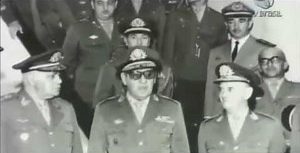
The 1964 Coup in Brazil
or go to
Aletho News Archives – Video-Images
Frlom the Archives
70 Neocons Petition Congress To Effectively Allow Israel To Say When The US Should Attack Iran
By Damian Lataan | January 10, 2014
Seventy senior Israeli-centric neoconservatives have written an open letter to Congress imploring them to do more to ensure Iran complies with the conditions of any agreement finally reached with the P5+1 over Iran’s nuclear program.
While the neocons are ostensibly asking Congress to ensure compliance, it is clear that their real aim is to convince members of Congress to support the bill currently passing through the Senate which calls for tighter sanctions against Iran in the event of any waywardness on Iran’s part.
The neocons are eager to see the bill currently passing through the Senate with enough support to make it veto-proof, not so much because they are concerned about Iran’s so-called nuclear weapons program – there’s still not a skerrick of hard evidence that Iran has a nuclear weapons program – but, rather, because embedded within the bill is this clause:
… if the Government of Israel is compelled to take military action in legitimate self-defense against Iran’s nuclear weapon program, the United States Government should stand with Israel and provide, in accordance with the law of the United States and the constitutional responsibility of Congress to authorize the use of military force, diplomatic, military, and economic support to the Government of Israel in its defense of its territory, people, and existence…
Essentially, the clause is an automatic trigger for the US to attack Iran at any time the Israelis choose to launch a first strike – regardless of whether President Obama is in favour or not.
Partial list… continue
Blog Roll
 Aletho News
- Aramco CEO warns ‘catastrophe’ imminent if Strait of Hormuz remains shut
- What If Iran Says No?
- Trump Threatens to ‘Hit’ Iran ‘Twenty Times Harder’ Over Strait of Hormuz Oil Flows
- Spare the hypocrisy: Baghaei slams Ursula’s support for US
- Iran War Supporters Invent a New and Absurd Justification: It Is All About China
- Corporate Media Go All Out To Support The US-Israeli War on Iran
- Trump press conference reveals a man who wants out of war
- When Tel Aviv decides, Washington fights
- Top official: Iran ready for a long war with US, no more diplomacy
- How Iran’s Toxic Rain Reveals US-Israel Discord
- If Americans Knew
- Threats and missiles fly, death tolls soar in Iran, Lebanon, Gaza – Not a ceasefire Day 151
- Lebanon: Israel’s White Phosphorous Use Risks Civilian Harm
- Corporate Media Go All Out To Support The US-Israeli War On Iran
- US-Israel war on Iran is creating a steady growing number of amputees
- Israel planned this war on Iran for 40 years. Everything else is a smoke screen
- The wrong question about the war in Iran
- ‘Your Tax Dollars Being Used to Raise Your Gas Prices’: US-Israel Bomb Major Iranian Oil Depots
- ‘Bogus Evidence’: Former Nuclear Watchdog Head Debunks US Justification for Iran War
- EXPLAINER – Dimona: What to know about Israel’s nuclear site
- Fires and toxic air in Iran (thanks, Israel) – Not a ceasefire Day 150
- No Tricks Zone
- Wake-up Call: Survey Shows Majority Of Germans Now Favor Postponing Climate Targets!
- Televised! Leading German Political Candidate Tells Schoolchildren CO2 Makes Sun Hotter!
- New Study: A Century Warming Of 1.1°C Is ‘Commonplace’ And ‘Not Unusual’ During This Interglacial
- New Study: ‘Internal Noise’ And Volcanic Forcing Can Trigger 10-15°C Warming Within Decades
- Glaciers Worldwide Are Suddendly Surging, Experts Blame Warming!
- Surprising Discovery: Sahara Is Greening…Billions Of Trees Where Once Thought To Be Barren
- New Research Reaffirms Clouds, Aerosols, And Surface Solar Radiation Are ‘Driving The Climate System’
- Germany: Electric Car Catches Fire At Charging Station, Sets Off Local “Inferno”, Widespread Damage
- New Study: Canada’s New Brunswick Was 1°C Warmer Than Today During The Medieval Warm Period
- Coal Power Back In Trend As Globe Tries To Keep Pace With Growing Demand For Power
 Aletho News
Leave a comment