Israeli forces protect settlers as they cut down Palestinian family’s trees
International Solidarity Movement | February 12, 2014
Hebron, Occupied Palestine – On the afternoon of February 11, 2014, settlers in the Tel Rumeida neighborhood of Al-Khalil (Hebron) cut down trees belonging to the Abu Eisheh family. While attempting to film the destruction of the trees, four human rights activists were arrested by Israeli police.
At approximately 3:30 p.m., three activists, a Swiss-American, an American, and an Italian, were sitting in their apartment in Tel Rumeida when they heard a commotion outside. Outside the apartment, they found a group of settlers, Palestinians, Israeli soldiers and Israeli police. They were informed by the Palestinians that a group of settlers was cutting down trees at a house just up the road.
The three activists began filming but were not allowed up the road to where the tree-cutting was taking place. While filming, the American activist was physically assaulted by a settler. None of the soldiers or police officers present intervened. Instead, the Israeli police took the passports belonging to the American and Swiss-American and told them to sit on the ground.
At this time, the Italian citizen returned to the apartment, where she was joined by a fourth activist, an American, who had just arrived. Shortly thereafter, a group of soldiers and police officers attempted to enter the apartment. They were not allowed entry, but briefly questioned the two activists outside the apartment door. The Israeli police then confiscated the passports belonging to the American and the Italian.
Not long after, all four activists were transported to the police station near Kiryat Arba, where they were interrogated and threatened with deportation. After seven hours, the activists were released.
The following day, February 12th, two activists from Christian Peacemaker Teams visited Tel Rumeida to document the destruction of the trees. They were not there long before several Israeli soldiers approached them, told them to stop filming, and took their passports. They were held for two hours before their passports were returned. Israeli soldiers informed the two activists that if they approached the trees again they would be arrested.
The destruction of Palestinian trees by settlers is a chronic problem, not only in Tel Rumeida, but all over the West Bank. In the past month alone, more than 2500 trees in the village of Sinjil were destroyed by settlers. Trees have also recently been destroyed by settlers in Qusra, Ramallah, and Nablus. Fruit trees are an essential resource for the Palestinian community, and their damage causes serious economic loss. It takes as long as 12 years for an olive tree to reach full maturity.

ISM activist with settlers in Tel Rumeida (photo by ISM Italy)
Related articles


UK’s Prince Charles to visit Qatar, Saudi Arabia
Press TV – February 12, 2014
Prince Charles, the heir apparent to the British throne, is set to make a four-day official visit to Saudi Arabia and Qatar later this month.
According to a statement on the British government website, released on Wednesday, the Prince of Wales is expected to begin his trip to the Middle East region from Saudi Arabia on February 17 and end it in Qatar on February 20.
He will meet King Abdullah bin Abdulaziz Al Saud and Sheikh Tamim bin Hamad Al Thani during his trips.
In March 2013, Prince Charles and his wife Camilla, Duchess of Cornwall, also visited Saudi Arabia as part of a nine-day tour of the Middle East, with stops in Jordan, Qatar and Oman.
This comes as Britain as well as Saudi Arabia and Qatar are considered as major foreign supporters of the ongoing militancy in Syria.
The UK has also played a major role in fanning the flames of unrest in Syria by arming and training militants fighting against the government of Syrian President Bashar al-Assad.
German Government Tries To Neuter FOI Requests By Refusing To Allow Responses To Be Published
By Glyn Moody | Techdirt | February 11, 2014
Freedom of information laws are one of the most powerful tools for holding governments to account. No wonder that every now and then, attempts are made to limit their effectiveness. Here’s an example from Germany, where the freedom of information (FOI) portal FragDenStaat.de asked for and received a five-page study written by government staff analyzing a ruling by the German constitutional court:
When the study in question was received from the Ministry of the Interior through an FOI request on FragDenStaat.de, the ministry prohibited publication of the document by claiming copyright. FragDenStaat.de has decided to publish the document anyway to take a stand against this blatant misuse of copyright. The government sent a cease and desist letter shortly after. The Open Knowledge Foundation Germany as the legal entity behind FragDenStaat.de is refusing to comply with the cease and desist order, and is looking forward to a court decision that will strengthen freedom of speech, freedom of the press and freedom of information rights in Germany.
Of course, if it were not possible to publish information received through FOI requests, the latter would become almost useless, as the German government doubtless well knows. So it’s great to see the Open Knowledge Foundation Germany fighting this attempt to undermine the entire FOI system there (donations gratefully received.) It’s also interesting to note how, once again, copyright is being deployed not as a means for promoting creativity, but as a weapon against openness and transparency.
Follow me @glynmoody on Twitter or identi.ca, and +glynmoody on Google+
Related articles
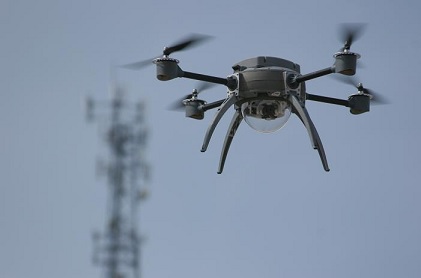
EU spending over $400m on secret drone project – Civil rights group
RT | February 12, 2014
The EU is investing hundreds of millions of taxpayer euros in the development of surveillance drones without political oversight, a report claims. The authors of the document warn the EU is secretly encouraging “the further militarization” of the region.
A report entitled ‘Eurodrones Inc.’ published by rights group Statewatch describes how the EU is channeling taxpayers’ money into surveillance drone projects without their knowledge.
“More than 315 million euro ($430 million) has so far been spent in EU research funding on drone technology or drones geared towards a specific purpose such as policing or border control,” writes the report.
However, the document points out that the research funding is largely “invisible” to the people and parliaments of Europe and lacks the proper political oversight. According to the report this was achieved by a secret budget line that was included in new EU legislation on air traffic control for this year.
The report describes a 20-year roadmap that aims to introduce surveillance drones into EU airspace and highlights that this plan is being shaped by “thinly accountable officials” and representatives of large corporations.
“The EU’s emerging drone policy has come about following years of successful lobbying by defense and security companies and their associates,” said co-author of the report Chris Jones in a statement on Statewatch’s website, adding that these are the same defense and security contractors that have the most to gain.
The drones in question would engage in civilian surveillance activities, such as border patrols and the search for criminals. However, Statewatch is concerned that the convert nature of the program lends itself to the “further militarization” of the European Union.
Calling for “proper democratization” and the opening of public debate on the issue, the report notes the EU turned a blind eye to a European Commission statement in 2012 that declared the development of unmanned surveillance craft should be more transparent.
It recommended the issue be discussed with a number of organizations, including the European Group on Ethics, the LIBE Committee of the European Parliament or the European Agency for Fundamental Rights and Data Protection Supervisor.
“Yet none of these bodies have been involved,” writes the report. “Their absence from policy debates means that many of the conversations the EU should be having about drones – such as what they should and should not be used for, and how to prevent further militarization and the deployment of fully autonomous weaponized drones – have been all but ignored.”
Although the authors of the report do not outwardly criticize research into drones, they do stress the fact that the current program is too “heavily skewed toward the interests of the big defense contractors.”
They argue that this could lead to “unwarranted state surveillance and repression,” as well as enhanced prospects for combat drone research for a global arms race.
“It’s easy to see why people are so excited about drones: there are many positive things they could be used for,” said co-author Ben Hayes. He concluded that given the “clear implications” for civil liberties in the balance, the EU has a “moral and legal obligation” to uphold fundamental rights and the rule of law.
Related articles


US deploys destroyer to Europe amid Russia concerns
Press TV – February 11, 2014
The first of four US missile destroyers has arrived in Europe, an apparent move by Washington to challenge Russia that voiced concerns over the deployment.
The USS Donald Cook arrived in the Spanish port of Rota on Tuesday.
“For the first time, a ship of the United States Navy equipped with the Aegis ballistic missile-defense system is permanently based in Europe,” NATO Secretary General Anders Fogh Rasmussen said.
“The arrival of the USS Donald Cook marks a step forward for NATO, for European security, and for transatlantic cooperation,” he added.
Three more American destroyers will also be joined the USS Donald Cook at the base in Rota over the coming two years. Other US destroyers are the USS Ross, the USS Porter, and the USS Carney.
The deployment of the four destroyers is part of Washington’s military policy in Europe that includes land-based Aegis interceptor batteries in Romania and Poland, radar in Turkey and a command center at the US Air Force base in Ramstein, Germany.
The Obama administration’s plans for increasing military presence in Europe have caused a major rift with Russia.
Moscow says the system is major threat to its own security and has threatened to beef up its own nuclear arsenal in response.
Russian President Vladimir Putin has already ordered the deployment of short-range missiles to the country’s western Kaliningrad enclave, which is situated between Poland and Lithuania.
In a speech to the country’s Federal Assembly in December, the Russian president said that his country will not allow any nation to dominate it in military terms.
“We realize clearly that the AMD system is only called defensive, while in fact it is a significant part of the strategic offensive potential,” Putin said.
Related article

On the Eve of an Illegal Attack on Syria, Avaaz/350.org Board Members Beat the Drums of War
By Cory Morningstar | Wrong Kind of Green | August 30, 2013

Appalling.
350.org’s Van Jones (U.S. Advisory Council Board member and NRDC trustee), is calling for airstrikes on Syria. [CNN Video below.]
From the 350.org website:
“Van Jones is a globally recognized, award-winning pioneer in human rights and the clean-energy economy. He is a co-founder of three successful non-profit organizations: The Ella Baker Center for Human Rights, Color of Change and Green For All. Jones is the best-selling author of the definitive book on green jobs, The Green-Collar Economy. He served as the green jobs advisor in the Obama White House in 2009. Jones is currently the President of Rebuild the Dream.” [Emphasis added.]
Never has the legacy of Ella Baker been so disgraced. Ella, today, spinning in her grave, once conveyed to the world:
“Remember, we are not fighting for the freedom of the Negro alone, but for the freedom of the human spirit a larger freedom that encompasses all mankind.”
Ella would surely spit on Van Jones if she were alive today.
350.org’s Ricken Patel (350.org International Advisory Council member – and Avaaz founder) is also pounding the drums of war. Just 4 days ago, on August 22, 2013, Patel himself urged Avaaz supporters to demand world leaders “place a no-fly zone over Syria.” Those who comprise Avaaz are already up to their necks – in the blood of the Libyan people who they helped annihilate. [Further reading: Did Libya’s Citizens Demand Foreign Intervention? A ridiculous question, yet according to Avaaz, the answer is yes.]
The following link is Google’s cache of the Avaaz/Patel campaign to demand a no fly zone (https://secure.avaaz.org/en/syria_no_fly_zone/). It is a snapshot of the page as it appeared on 22 Aug 2013 18:08:13 GMT: http://webcache.googleusercontent.com/search?q=cache:vzBe8PMa7H8J:https://secure.avaaz.org/en/syria_no_fly_zone/+&cd=1&hl=en&ct=clnk&gl=ca&client=firefox-a
Screenshots of Patel’s email:


Add to this the “Humanitarian Intervention” and “Responsibility to Protect” doctrines. The crème de le crème of imperial rhetoric. Such doctrines, created by American “think-tanks”, for the elite, by the elite, are of critical use for a declining and morally bankrupt empire. An empire that brilliantly attempts to convince and portray, utilizing the language within these doctrines, that the atrocities they manufacture, call for, and carry out, are somehow honourable and admirable – as opposed to what they actually are: crimes against humanity. Orwell would have called this psychopathic persistence a stunning feat in doublespeak.
Many so-called civil society organizations/NGOs have been instrumental in making these doctrines palatable to the public.
Related article

PALESTINE: Border Police detain, humiliate and arrest men trying to go to Friday prayers; CPTer’s camera taken.
CPTnet | February 11, 2014
On 7 February 2014, CPTers went to the routine Friday mosque patrol around prayer time. Often during Friday prayers, Israeli Border police will take the IDs of young Palestinian men while they going into the Ibrahimi Mosque, check to see if they have any outstanding warrants and then return the IDs when the men come out of the mosque. This Friday, however, Border Police were not allowing the men to go to the mosque while they were checking the IDs.
When CPTers called members of the Temporary International Presence in Hebron (TIPH), TIPH personnel told them that Border Police were detaining men at several H-2 checkpoints. The CPTers decided to look at Checkpoint 29 and found Border Police detaining twenty to thirty men there. Several of them were quite angry because of the way the Border Police had been treating them. Other men were trying to calm the situation. When one man, after realizing he was going to miss prayers at the mosque, began to lay his prayer rug on the ground to pray at the checkpoint, one of the Border Police shoved him against a wall, which really enraged several people in the crowd.
Soldiers pepper-sprayed a boy who appeared to be about eleven or twelve and an older man, who was later hospitalized. The boy passed out and was taken down the hill to a shop. Additional soldiers arrived and began deploying sound bombs and teargas. Police arrested eight men.
Video of Border Police pepperspraying man
After the police took away the men they had arrested, CPTers remained in the area because of the heavy soldier and Border police presence. Civilian police approached one and asked for his passport and his camera. They insisted on taking his camera to the police station and he accompanied it. While he was at the police station, they asked him questions about what he had witnessed, periodically coming out of a room and telling another CPTer that “your friend isn’t arrested; he is just giving testimony.”
As of this writing, six of the men arrested on Friday have been released, while two are still in custody.
Related articles
Do Only Some Massacres Matter?
Munich Olympics, Revisited
By Alison Weir | CounterPunch | February 11, 2014
The Washington Post has published a moving article, “Russian Jews remember Israeli athletes murdered at 1972 Munich Olympic Games.” Unfortunately, it gets a few things wrong and provides a one-sided context for the tragedy.
Allow me to correct the report and fill in a few of the missing facts.
Just 23 years before the Olympic incident, Israel had been created through ethnically cleansing much of the indigenous Palestinian population.
This had been accomplished through at least 33 massacres and was maintained in the years following by still more acts of ethnic cleansing and additional massacres. (These included areas from which the Munich kidnappers came).
Five years before the Munich incident, Israel violently conquered even more Palestinian land (illegal under international law), pushing out another 325,000+ Palestinian men, women, and children, and killing at least 13,000 Arabs in all. About 800 Israelis died.
The violence continued, and beginning in 1968 Israeli forces repeatedly savaged 150 or more towns and villages in south Lebanon alone. By the time of the Munich Olympics, Israel held hundreds of prisoners in its notorious prison system.
It is widely known, but rarely stated, that the goal of the Munich hostage-taking was not to kill them; it was to return the athletes to Israel in return for Israel returning its Palestinian prisoners.
Many of these prisoners were also young people, and, if we could have seen them, they might have looked very much like the Israeli athletes, minus the physical health. Israel is not known for its merciful treatment of those it dislikes.
When the Israeli government refused to consider an exchange, the German police, with the Mossad at hand, were pushed into an ill-planned rescue attempt in which some of the hostages (no one knows how many) were killed accidentally by the attackers, and a German policeman was also killed.
The day after the botched and unnecessary “rescue,” Israel launched heavy air attacks against Lebanon and Syria, killing between 200 and 500 Lebanese, Syrians and Palestinians, mostly civilians.
While Washington Post reporter Kathy Lally gives a great deal of information about the position of Russian Jews, going back over 100 years, it would have been valuable for her to tell a little about what the Munich incident was about – and about all the tragic victims of violence connected to the event, not just the 11 preferred ones.
~
Alison Weir is the executive director of If Americans Knew, president of the Council for the National Interest, and author of the upcoming history of US-Israel relations, Against Our Better Judgment, to be released next month.
Related article

Russia slams UN move on Syria as one-sided
Press TV – February 11, 2014
Russia has lashed out at the UN Security Council over a draft resolution that would impose more sanctions on Syria unless the government gives unrestricted access to aid delivery.
“Indeed, our Western partners in the [UN] Security Council addressed us and offered to work together to draft this resolution. However, the ideas that they shared with us are absolutely one-sided and divorced from fact,” Russian Foreign Ministry Sergey Lavrov said at a press conference in Moscow on Tuesday.
The top Russian diplomat went on to say that the draft resolution also disregards the measures already taken to deliver humanitarian supplies, and international agencies’ assessments of the humanitarian situation in Syria.
He further noted that the resolution needs to be issued in a way that would condemn terrorist activities in Syria.
Meanwhile, Russian Ambassador to the UN Vitaly Churkin has pledged to veto the proposed measure if necessary, saying the resolution would increase tension in Syria.
“This text would not have any positive impact on the situation,” Churkin said, “If anything, it would create disruption of humanitarian efforts.”
The Russian ambassador added that the measure would endanger the Geneva talks being held in Switzerland.
The comments come as the Syrian government delegation, led by Foreign Minister Walid al-Muallem, and foreign-backed opposition hold a second day of talks in Geneva.
The first round of the talks aimed at containing the deadly violence ended inconclusively on January 31, amid sharp differences between representatives from the Syrian government and the so-called Syrian National Coalition (SNC).
Related article

The day the world fought back
By Danny O’Brien | EFF | February 11, 2014
Mass surveillance of electronic communications is a vast, new, government intrusion on the privacy of innocent people worldwide. It is a violation of International human rights law. Without checks and balances, its use will continue to spread from country to country, corrupting democracies and empowering dictators.
That’s why, today, on February 11th, around the world, from Argentina to Uganda, from Colombia to the Philippines, the people of the Internet have united to fight back.
The Day We Fight Back’s main global action is to sign and promote the 13 Principles, a set of fundamental rules that, in clear language, tells lawmakers and governments how to apply existing human rights law to these new forms of surveillance. With the support of thousands of Net users, we’ll use your voice to demand that all governments comply with their obligation to protect privacy against unchecked surveillance.
But there’s more to today’s global action than the Principles. Hundreds of digital rights and privacy groups, thousands of individual Net users, in dozens of countries, have come together to protest surveillance by governments at home and abroad. Here’s just a sampling of the campaigns and events happening today:
In Argentina, the Asociación por los Derechos Civiles and Vía Libre Foundation is suing the Argentinian Congressional surveillance oversight commission for withholding basic information on surveillance practices in the country.
In Australia, a coalition of groups under the banner Citizens Not Suspects, is joining to demand a government investigation of the practices of the notorious “Five Eyes” countries — the nations, including Australia, which share intelligence with the NSA.
In Brazil, where the upcoming Marco Civil bill promises to encode human rights into the country’s Internet law, citizens are renewing their demands to include strong privacy protections.
In Canada, more than 45 major organizations, and tens of thousands of Canadians are calling their elected representatives to stop illegal spying by Communications Security Establishment Canada (CSEC), Canada’s spying agency.
Colombians have launched “Internet sin Chuzadas”, a campaign calling for the end of unchecked surveillance at home and abroad.
France’s La Quadrature Du Net have started an NSA Observer program to inform people of the NSA’s global surveillance. The Philippines’ Internet Freedom Alliance (PIFA) is organizing a day of mass action against the country’s draconian Cybercrime Prevention Act.
Poland’s Panoptykon Foundation is demanding answers from the Polish government and Barack Obama.
The Netherlands’ Bits of Freedom will call on Dutch citizens to join their campaign to stop mass surveillance: bespiedonsniet.nl (“Don’t Spy On Us”).
In Serbia, SHARE Foundation, one of the earliest supporters of the 13 Principles, is renewing their campaign against surveillance locally and internationally.
In Uganda, Unwanted Witness will be urging their local telephone companies to stop sharing private data with politicians.
And in the United Kingdom, a huge coalition of Britain’s privacy groups is launching DontSpyOnUs.org.uk, to pressure the UK’s GCHQ to stop its global mass surveillance apparatus.
In the US? Call Congress today.
Dial 202-552-0505 or click here to enter your phone number and have our call tool connect you
Privacy Info: This telephone calling service is operated by Twilio and will connect you to your representatives. Information about your call, including your phone number and the time and length of your call, will be collected by Twilio and subject to Twilio’s privacy policy.
Calling Congress takes just five minutes and is the most effective action you can take right now to let your elected officials know that mass surveillance must end.
Here’s what you should say:
I’d like Senator/Representative __ to support and co-sponsor H.R. 3361/S. 1599, the USA Freedom Act. I would also like you to oppose S. 1631, the so-called FISA Improvements Act. Moreover, I’d like you to work to prevent the NSA from undermining encryption standards and to protect the privacy rights of non-Americans.
Where ever you live, can join them: you can visit Necessary And Proportionate, the home of the 13 Principles, and add your name to our action, and find out what is happening in your own country. Write your own posts of opposition, and spread the word through the hashtag #stopspying .
3,000 euro Google search: French blogger gets fined for re-posting indexed govt files
RT | February 10, 2014
A French appeals court has fined an activist 3,000 euros for publishing documents accessed via an open hyperlink in a Google search. The “hacker” was prosecuted despite the fact that the government agency owning the files didn’t pursue a case against him.
For the French blogger, Olivier Laurelli, nicknamed “Bluetouff,” it all started with a simple Google search. While browsing the web for what he claims was an irrelevant subject, the co-founder of the tech-savvy activist news site Reflets.info came across a link to an online documents archive of the French National Agency for Food Safety, Environment, and Labor (ANSES).
The link led to a trove of 7.7 Gigabytes of files on public health, and Laurelli decided they might be worth looking through. For what he later said was for more convenient reading, the activist downloaded the entire online directory with a common Linux tool, and then transferred them to his desktop.
At the time, the blogger judged that the freely available documents of a public establishment “ought to be” legally available for the public to see, quotes the Ars Technica blog.
But soon after posting some scientific slides from the archives on his website, Laurelli realized that he was wrong.
ANSES discovered their archive was accessed only after the slides on “nano-substances” went public on Reflets.info, French media said. Citing possible “intrusion into a computer system and data theft from a computer,” the agency filed a report with the police, also prompting the French Central Directorate of Interior Intelligence (DCRI) to launch a case.
According to the activist himself, the investigators’ decision to pursue a criminal case against him was fueled by the fact he used a Virtual Private Network (VPN) service that masked his IP address as a Panamanian one. The VPN was actually provided by a security company he owned called Toonux.
Laurelli was then indicted with fraudulently accessing and keeping data, which, according to the French Criminal Code carries up to 2 years in prison and a maximum fine of 30,000 euro (about $41,000).
While testifying, Laurelli admitted he did spot a requirement for login and password at an upper level directory when he tried browsing the ANSES resource further, but there was no explicit indication that the directly accessible files he stumbled on required authorization and were illegal to obtain.
Related article
Featured Video

No Threat Can Force Iran’s Surrender /Trita Parsi & Lt Cl Daniel Davis
or go to
Aletho News Archives – Video-Images
From the Archives
What is the Israeli Lobby in Australia Doing in Interfaith Dialogue?
By Ali Kazak | Dissident Voice | October 11, 2015
For years Israel and its lobby around the world have been trying to normalise their relations with Arabs and Muslims without solving the Palestine Question.
One of the methods they resorted to in the last few years is using human rights and community organizations such as interfaith dialogue and Multiculturalism to achieve this objective and to: isolate the Palestinians, marginalise the Palestine question, end Israel’s isolation, and prevent criticism of Israel, knowing that these organisations will be the first to stand against Israel’s violations, racial and religious discrimination.
The group responsible for this task in Australia is The Australia/Israel & Jewish Affairs Council (AIJAC); its Director of International & Community Affairs, Jeremy Jones is in charge of lobbying religious community organizations, specifically Muslims and Christians. Consequently he convened the Faith Communities for Reconciliation, founding participant in the Australian Partnership of Religious Organisations and the Australian National Dialogue of Christians, Muslims & Jews.
AIJAC is a private political propaganda group. It is recognised as the main Israeli lobby in Australia. It coordinates its activities and works intimately with the Israeli embassy in Canberra and different institutions in Israel. It is privately funded by some Jewish businessmen. It monitors closely Australian politicians, the media, ethnic and religious groups, (especially Arabs and Muslims), unions and academics on their stands towards Israel and the Palestine question. … continue
Blog Roll
 Aletho News
- The war of liberation of the Arab and Islamic peoples expands across the Gulf
- Envoy warns UN on Trump’s threat to ‘obliterate’ Iran’s civilian infrastructure
- The Larak Corridor: Iran’s Rial Gate With No US, No Israel, and No Way Around
- ‘Economic terrorism’: Steel facilities hit again in US-Israeli strike
- ‘War Crime’: Iran condemns attacks on Arak, Ardakan nuclear sites
- Two-thirds of Americans want quick end to Iran war even if goals unmet
- Trump to Give “Important Update on Iran” Wednesday in Prime-Time Speech
- Theodore Postol: Iran’s Missiles & Drones Were Underestimated
- Iran To Target Military Industrial-Tech Complex That Facilitated Gaza Genocide
- Collapsing Empire: The Resistance Disarms ‘Israel’
- If Americans Knew
- Israel wants US to bomb more of Iran’s civilian structures (113,000 is not enough) – Not a ceasefire Day 173
- Ann Coulter Rips Into Fox News for Iran War Coverage
- Joe Kent Urges Americans To Call White House and Congress To Object To Sending Troops Into Iran
- DNC Resolution to Reject AIPAC Funding Puts Democratic Leaders in the Hot Seat
- Swedish foundation to build 400 schools as over 650,000 Gaza children remain without education for 2 years
- Israeli army admits photshopping image of slain Lebanese journalist
- This is how Israel is systematically killing health workers under the cover of war in Lebanon
- Carrying life under fire: Israeli invasion of Lebanon leaves pregnant women facing deadly risks
- Champagne all around for the new death penalty (for Palestinians) law – Not a ceasefire Day 172
- Why are Palestinian books struggling to be seen on Amazon?
- No Tricks Zone
- New Study Finds Warming Saves Lives…Cold Temperatures 12 Times More Deadly Than Excess Heat
- German Science Blog Accuses PIK Climate Institute Of Hallucinating Climate Tipping Points
- Devastating Assessment Of Comirnaty Vaccine By Former Senior Pfizer Europe Toxicologist
- New Study: CO2 Is ‘Effectively Negligible’ As An Explanatory Climate Change Factor Since 2000
- Former Pfizer Toxicologist Dr. Helmut Sterz Tells Bundestag Hearing Pfizer Vaccine Should Have Never Been Approved
- Energy Expert: Germany’s Nuclear Phaseout Was A “500 Billion Euro Mistake”
- New Research: South Australia’s Mid-Holocene Sea Surface Temperatures Were 4°C Warmer Than Today
- Storing Green Energy To Last Germany 10 Days Would Require A 60-Million Tonne Battery
- New Studies: UK Sea Levels Were 4 Meters Higher Than Today During The Mid-Holocene
- Destructive Green New Deal: German Energy And Metal Group Warns Of Drastic Crisis
 Aletho News