Nuclear regulators misled the media after Fukushima, emails show
RT | March 10, 2014
Emails obtained by journalists at NBC News reveal that officials at the United States Nuclear Regulatory Commission — the government agency that oversees reactor safety and security — purposely misled the media after the Fukushima, Japan disaster in 2011.
On Monday this week — one day shy of the third anniversary of the Fukushima meltdown — NBC published emails obtained through a Freedom of Information Act that for the first time exposes on a major scale the efforts that NRC officials undertook in order to diminish the severity of the event in the hours and days after it began to unfold.
“In the tense days after a powerful earthquake and tsunami crippled the Fukushima Daiichi power plant in Japan on March 11, 2011, staff at the US Nuclear Regulatory Commission made a concerted effort to play down the risk of earthquakes and tsunamis to America’s aging nuclear plants,” Bill Dedman wrote for NBC.
Through the course of analyzing thousands of internal NRC emails, Dedman and company unearthed evidence that proves nuclear regulators went to great lengths to keep the scary facts about the Fukushima meltdown from being brought into the public eye.
Even when the international media was eager to learn the facts about the Fukushima tragedy while the matter was still developing, emails suggest that the NRC’s public relations wing worked hard to have employees stick to talking points that ignored the actual severity of the meltdown.
“While we know more than these say,” a PR manager wrote in one email to his colleagues, “we’re sticking to this story for now.”
That story, Dedman wrote, was filled with “numerous examples…of apparent misdirection or concealment” waged by the NRC in an attempt to keep the true nature of the meltdown hidden, especially as concerns grew that a similar event could occur on American soil.
“The talking points written during the emergency for NRC commissioners and other officials were divided into two sections: ‘public answer’ and ‘additional technical, non-public information,’” Dedman wrote. “Often the two parts didn’t quite match.”
According to NBC, emails indicate that the NRC insisted on sticking to talking points that painted a much different picture than what was really happening three years ago this week. Japanese engineers employed by the NRC at American facilities were effectively barred from making any comments to the media, some emails suggest, and at other times those regulators rallied employees at the NRC to keep from making any comment that could be used to disclose the detrimental safety standards in place at American facilities.
In one instance cited by Dedman, spokespeople for the NRC were told not to disclose the fact that American scientists were uncertain if any US facilities could sustain an earthquake like the one that ravaged Fukushima .
“We’re not so sure about, but again we are not talking about that,” reads one email cited by NBC.
At other times, the report added, NRC officials were left in the dark about what was actually unfolding on the other side of the Pacific because access to social media sites had been blocked on their work computers, causing some regulators to only hear about information pertaining to Fukushima once it trickled down to a point where they could access it.
In one email, for example, NRC public affairs official David McIntrye wrote in apparent disbelief to his colleagues that scientist and actor Bill Nye was participating in “an incoherent discussion on CNN” about a potential hydrogen explosion at Fukushima.
“I’m not buying it,” McIntyre wrote.
Five minutes after that email was sent, a colleague responded by writing, “There is a good chance it was a hydrogen explosion that took the roof off that building, though we are not saying that publicly.”
Days later, McIntyre blasted his supervisor for hesitating during a CNN interview in which he was asked if US plants could withstand an earthquake on par with the one suffered by residents of Fukushima.
“He should just say ‘Yes, it can.’” McIntyre wrote, instead of hesitating. “Worry about being wrong when it doesn’t. Sorry if I sound cynical.”
The NRC did not respond specifically to emails published in Dedman’s report, but the agency’s public affairs director emails a statement ensuring that “The NRC Office of Public Affairs strives to be as open and transparent as possible, providing the public accurate information in the proper context.”
“We take our communication mission seriously. We did then and we do now. The frustration displayed in the chosen emails reflects more on the extreme stress our team was under at the time to assure accuracy in a context in which information from Japan was scarce to non-existent. These emails fall well short of an accurate picture of our communications with the American public immediately after the event and during the past three years,” NRC Public Affairs Director Eliot Brenner wrote in the email.
Arguably more disheartening than the NRC officials’ attempt to whitewash the disaster, however, are the facts of the matter addressed in secret by the agency but not disclosed publically. More than 30 of the nuclear power reactors in the US are of the same brand used in Fukushima, NBC reported, and some of the oldest facilities in operation have been in use since the 1970s. Despite this, though, the NRC instructed employees to not mention how any of those structures would be able to stand up against a hypothetical disaster.
On Monday, Fukushima expert and author Susan Q. Stranhan published an op-ed carried by the Philadelphia Inquirer which called into question the safety of the several nuclear facilities within the state of Pennsylvania, where a disaster in 1979 at Three Mile Island refocused national attention on the issue of nuclear safety.
“During Fukushima, the NRC recommended that Americans living within 50 miles of the plant evacuate, a wise call based on a dangerous radiation plume that spread about 30 miles northwest of the reactors. Despite that experience, the NRC today remains steadfast in its belief that the existing 10-mile emergency evacuation zone around US nuclear plants is adequate and that there would be plenty of time to expand that zone if conditions warranted,” Stranahan wrote.
“Three years after Fukushima Daiichi, the NRC and the nuclear industry continue to repeat a familiar mantra: The likelihood of a severe accident is so low there is no need to plan for it. That was what the Japanese said, too.”
Meanwhile, RT reported last month that a new lawsuit has been filed by crew members who sailed on the USS Ronald Reagan three years ago to assist with relief efforts off of the coast of Fukushima but now say they were poisoned by nuclear fallout. When filed, Attorneys said that “up to 70,000 US citizens [were] potentially affected by the radiation” and might be able to join in their suit.

Edinburgh accuses UK of hushing up British nuclear leak on Scottish territory
RT | March 10, 2014
The British government has “disrespected” Scotland by keeping quiet about a nuclear leak at a Scottish-based reactor for two years, believes nationalist minister, Alex Salmond, all at a time of high tensions ahead of a referendum on independence.
Salmond, the Scottish National Party’s First Minister, is now demanding an apology and an explanation from British Prime Minister David Cameron that an internal leak, found all the way back in January 2012 at the Dounreay site in Scotland, which houses an MoD test reactor identical to the one used by the British nuclear submarine fleet, was kept under wraps all this time with little excuse, the Herald Scotland reports.
“This shocking turn of events leaves Philip Hammond with some very serious questions to answer. Not only does it look as if he has misled parliament – he has misled it on the extremely serious matter of nuclear emissions– which will send a shiver down the spine of everyone in Scotland. It has taken nearly two years for the Westminster government to even tell the Scottish government about problems at the nuclear facility – now it looks as if there is a cover up and the full facts are still not known,” the first minister said.
The news that led to full-on accusations of underhanded tactics and so outraged the Scottish parliament was actually revealed unexpectedly. UK defense secretary, Philip Hammond, brought the matter up on Thursday that the oldest British sub, the HMS Vanguard, was in need of having its reactor refueled. He also announced that a small internal leak had been discovered at another identical test reactor, with elevated radioactivity levels in the cooling water.
The Scottish accused Westminster of playing down just how long ago the discovery was made.
Hammond, in defense, said that the reactor had been shut down shortly after “low levels of radioactivity” had been discovered, and that the Independent Defence Nuclear Safety Regulator and the Scottish Environment Protection Agency (SEPA) had been notified.
Scotland’s first minister has written a letter to the British expressing “deep dismay” and is treating it as an insult to Scotland that Westminster had such a lax attitude to communication under the Memorandum of Understanding on Devolution – a 2012 document that sets out principles of communication between the UK government and the devolved administrations in Scotland, Wales and Northern Ireland.
“I recognize that, in reserved areas, your government must decide what it chooses to share with us, but on areas devolved to the Scottish parliament, you have an unarguable responsibility to share information with us,” Salmond wrote, adding that in informing SEPA the MoD had recognized an environmental hazard, yet made a political decision to request that the problem be hushed for security reasons. Sepa, who itself only found out about the issue nine months after the fact, has admitted that it was told to keep the matter on a “strictly need-to-know basis.”
“By ignoring the MOU in this way, your government has completely disrespected the Scottish parliament – and the people of Scotland – as well as the democratic processes of the whole United Kingdom,” Scotland’s first minister continued, calling the perceived lack of interest by Westminster as “underhand as it is disrespectful.”
Salmond finished by saying that the matter will not be tolerated, and demanded three things: that the British government explain immediately why the Scottish government had not been notified in a timely manner, issue an apology and promise that such a thing would never again take place.
The Scottish government also demanded an immediate inquiry into the seriousness of the leak and Britain’s part in the matter.
Hitting back, a Ministry of Defence spokesman tried to explain that SEPA “was not ordered to withhold information from the Scottish government and it is absolutely wrong to suggest otherwise,” adding that SEPA decided on its own not to report the leak.
The British also maintain that the Thursday announcement had to do solely with refueling the HMS Vanguard and not the issue of the Dounreay nuclear leak, which was deemed safe and operational by regulators.
But SEPA has also measured radiation levels and noted that discharges of gases like argon, xenon and krypton increased tenfold from 2011 to 2012. Although it was judged that emissions were within legal limits, the Scottish don’t see this as an excuse for not reporting the matter.
It should be noted that Salmond had also promised voters that an independent Scotland would be nuclear-weapons-free, so the current issue adds to the existing tensions between the two countries regarding Scottish independence from the UK. Scotland, which already has a certain level of legal and financial autonomy from London with various powers devolved to the Scottish parliament, has scheduled a referendum for full independence from the UK on September 18. Salmond insists that Scotland will retain its EU membership if it splits with Britain and will merely have to renegotiate the terms.
But the UK’s foreign minister, William Hague, said in January that Scotland will likely have to reapply to join the EU, and will probably not get anywhere near the same benefits as the UK did. He also believes Scotland will be obliged to accept the euro, and that is something the SNP already said it would not do.
Related articles
EU responsible for Crimea situation: Ex-German chancellor
Press TV – March 10, 2014
Former German Chancellor Gerhard Schroeder says the European Union (EU) is responsible for the situation in Ukraine’s Crimea as its policy toward the Eastern European country was erroneous in the first place.
Schroeder made the comments on Sunday in Hamburg during a press event, in which he said that Brussels made a mistake in the outset when it offered Ukraine an association agreement on “either/or” terms.
The former chancellor wondered if it was right to offer Ukraine, which is a culturally divided country, an alternative of either signing the deal with the EU or a customs agreement with Russia.
Schroeder said it would have instead been more reasonable to offer Ukraine a “both/and” alternative.
He was referring to the ousted Ukrainian president Viktor Yanukovych refraining from signing the association agreement with the EU in favor of closer ties with Russia in November 2013 that triggered the political crisis in the country.
The remarks come amid the standoff between Russia and the West over Ukraine’s autonomous territory of Crimea.
Amid increasingly violent protests, Yanukovych left Ukraine for Russia and a new pro-EU government was formed in Kiev.
Subsequently, and as the protests inside mainland Ukraine lost momentum with the departure of Yanukovych, a crisis began to emerge in Ukraine’s Crimea, where a large majority of ethnic Russians reside and where Russia has a naval base.
Troops, who wear military apparel that bears no insignia but who are largely believed to be Russian, were deployed to several locations in Crimea, taking control of key points in the region.
Last week, lawmakers in Crimea unanimously declared they wanted to join Russia and would put the decision to a referendum on March 16.
The new Ukrainian government, however, has declared the planned vote illegal.
Israeli troops harass the residents of Qaddum, and poison a baby with CS gas while they’re at it
By Yossi Gurvitz | Yesh Din | March 9, 2014
The security forces have a problem with the village of Qaddum. We’re not quite sure why. Perhaps it’s the weekly demonstrations that its residents are holding. What is clear is that they have decided to teach the village a lesson. Recently, a mysterious officer, who according to testimonies of the residents calls himself Captain Sabri, walks around telling people he will come and teach them a lesson. Some of the residents suspect him of being an ISA (Israeli Security Agency, AKA Shin Bet) officer.
Whatever Sabri’s organizational loyalty may be, he keeps his word. The Friday demonstrations are dispersed with an iron fist, and beyond that the residents also report recurring attacks on the village, even on days when no demonstrations are held. These attacks include the throwing of stun grenades and CS gas canisters, CS gas being the more aggressive form of tear gas.
In one case which actually made the Israeli media – of course, under the utilitarian fear that one more person killed by the IDF will make the kettle boil and cook us a new intifada – an old man from Qaddum, Saeed Gasser Nassar Ali, aged 85, died after inhaling gas which seeped into his house following a demonstration. The doctor who treated Ali found it hard to give him the best treatment possible, since he too was suffocating from the gas. Let’s say that again: the man suffocated in his house, and died shortly after in the hospital. Not during a demonstration. In his house.
Three weeks before Ali died, M., a resident of Qaddum, woke up at about 1 AM. His brother warned him that the army was raiding the village, and that all windows must be closed. Soon after, even though he thought he had closed all the windows, gas seeped into the house. The first to feel it was seven year old A., who began screaming that he can’t breathe. Then four year old R. began complaining he was feeling ill. The gas came through the windows of the bathroom, which is close to the children’s room and was forgotten.
M.’s wife was in the bedroom, holding H., a two month old baby, in her arms. When the gas reached the bedroom, she too had trouble breathing. M. noticed H. was turning blue and throwing up. He called an ambulance, and reached the village’s doctor – the same doctor that, a few weeks later, himself under gas attack, would have trouble treating the late Ali. The doctor gave H. an injection and hooked him with oxygen, and soon afterwards he was evacuated to a hospital in Qalqiliya. The doctors told the parents H. was in critical condition; happily, by the morning he was significantly better.
None of this will make the news. No one died. It’s just two children and an infant, poisoned by tear gas in the peace of their home. That’s the way occupation works: it requires terror, and effective terror necessitates the knowledge that no place is safe, that even the peace of the children’s room may be violated at any moment, by a cloud of something burning and suffocating. Don’t look away, my dears: this is what we finance. This is what the flying shards, flying as the tree is cut, look like. Like the broken egg without which no omelet can be made, and all the other clichés we tell ourselves when we say – “there’s nothing we can do”. Perhaps we can begin by not suffocating babies with gas?
Fear not: no IDF soldier will be harmed as a result of complaints filed after such events. As apparent in the case of Jawahar Abu Rahma, killed after inhaling gas three years ago, in which case we still lead a legal struggle so that the IDF will begin an investigation (!) into her death, the soldiers have nothing to fear. They’re covered. In our case, M., the father, does not intend to lodge a complaint. The rhetoric of “the most moral army in the world” failed to convince him. He knows there is no point in the effort and the heartache. And who knows, if you complain, maybe you’ll be targeted for harassment. So what’s the point? Better to make sure all windows are properly closed. Maybe, next time, it won’t be your baby.
Related articles


Check The Label – Boycott Israeli Produce
By Friends of Al-Aqsa November 7, 2013

The need to boycott Israel is growing
The call for boycotting Israel has grown significantly in recent years. The main purpose of this global campaign is to bring Israel to account for its human rights violations against Palestinians. The reason such civil action is necessary is because governments around the world with the power to intervene have repeatedly failed to utilise international legal apparatus in to hold Israel to account for its crimes.
However, successful boycott campaigns have revealed that ordinary people do have the power to act and respond to Palestinian calls for intervention. The destruction of Palestinian infrastructure through Israeli military assaults, routine demolitions of essential resources such as water wells, and blocking access to farmlands; means that Palestinians are unable to freely harvest their lands and bring their produce onto the markets. It is well documented that farmers are attacked by extremist settlers, and shot at by army personnel. Entire initiatives such as the Olive Cooperative have been built in response to these attacks, so that international solidarity activists can go to Palestine simply to help farmers harvest their crops and document the violent assaults some face on a daily basis.
Fishermen off the coast of Gaza face similar deadly assaults, this time from Israel’s naval vessels. Thus, peaceful farming or fishing is now a luxury for Palestinians, yet Israel is exporting its own produce globally and reaping the financial rewards for it. Its exploitation of stolen Palestinian lands in the West Bank should not be allowed to enter European markets and the boycott campaigns seek to highlight this.
The boycott of illegal settlement produce is becoming established. However, there is now also a move to boycott Israeli produce too, as Israeli companies have been found to breach EU food labelling regulations by labelling settlements goods as ‘produce of Israel’. By doing this, they mislead consumers into believing that the goods are legitimately farmed in Israel, instead of illegitimately farmed on stolen Palestinian land, often exploiting Palestinian labour.
Recent statistics reveal that illegal settlements profit from exporting their produce to Europe to the tune of 230 million Euros a year. When compared to Palestinian exports, this is fifteen times greater in value. Thus, the EU imports 100 times more produce per illegal Israeli settler than it does per legitimate Palestinian resident of the West Bank.
The success of the boycott campaigns reflects the feeling on the ground. Ordinary Brits do not want to be a part of Israel’s racist and illegal occupation policies, and they do not wish to support the illegal settlements by buying their produce.
British Politicians Oppose Boycott
Both the Conservatives and the Labour Party have both come out against boycott of Israel.
David Cameron stated in October 2012:
In a speech by David Cameron at the annual dinner of the United Jewish Israel Appeal, Cameron said on boycotting:
“And to those in Britain’s universities and trades unions who want to boycott Israel and consign it to an international ghetto, I say not only will this Government never allow you to shut down 60 years worth of vibrant exchange and partnership that does so much to make both our countries stronger but I also say this: we know what you are doing – trying to delegitimise the State of Israel – and we will not have it.”
The Labour Shadow Foreign Secretary, Douglas Alexander, recently stated ”it is not Labour policy to support boycotts. We would like to see even stronger economic ties with Israel’. His comments were reported on twitter following a London meeting on 7 February 2013.
European Consumer Labelling laws
The EU is considering making it illegal for Israel to sell produce from the illegal settlements labelled as ‘produce of Israel’. This would be a marked step towards obstructing settlements from profiting from the land they have stolen.
Produce to Boycott
Products to look out for are: dates, citrus fruits and herbs, and manufactured products including cosmetics, carbonation devices, plastics, textile products and toys.
Recently, Morrisons supermarket was found to be selling medjoul dates labelled as ‘Produce of Israel’ but which were in fact from illegal settlements.


1) Every time you go shopping, ‘Check the Label’ on the produce you buy. Ensure they are not from Israel, West Bank or Jordan Valley. If you do see produce from these places, take a photo and send it to info@checkthelabel.org.uk detailing the store and location.
2) If you find produce from Israel, West Bank or Jordan Valley ask to speak to the store Manager and explain that the produce are from illegal Israeli Settlements as they are grown on land that has been stolen from Palestinians. Ask for them to be removed from the shelves and for them not to be stocked again. Please also ask for the suppliers name if it is not clear as this is useful information. Email your experience to info@checkthelabel.org.uk
3) If you do not want to approach the Manager whilst you are shopping, contact the stores Head office on their customer service number/email explaining your concern.
Contact Details
Tesco
Tesco Customer Service Centre, Baird Avenue, Dundee, DD1 9NF
08457 22 55 33


Sainsbury’s
Sainsbury’s Supermarkets Ltd, 33 Holborn, London, EC1N 2HT
0800 636 262


Waitrose
0800 188 884
customersupport@waitrose.co.uk
Morrisons
Customer service enquiries – 0845 611 6111
General or corporate enquiries – 0845 611 5000
By Post: Customer Service Department, Wm Morrison Supermarkets PLC, Hilmore House, Gain Lane, Bradford, BD3 7DL


Asda
General Enquiries: 0800 952 0101
Write to: Customer Service, ASDA House, Southbank, Great Wilson Street, Leeds LS11 5AD
Aldi
Holly Lane, Atherstone, Warwickshire CV9 2SQ
0844 406 8800


Lidl
0870 444 1234
Related Articles:
Israeli firms shed crocodile tears for Palestinian workers
Protests In Gaza And 40 European Cities Demand End To International Trade With Israeli Agribusiness
British businessman promises to resign as chairman of Israeli settlement exporter
Campaigners call on Sainsbury’s to ban trade with Israeli agricultural companies
Palestinians struggle to farm in West Bank
| Cultural Boycott as a Political Tool; Impact and Importance |

Israeli government lashes out, as evangelicals’ pro-Israel consensus thing of the past
MEMO | March 10, 2014
Israel’s Ministry of Foreign Affairs (MFA) has issued an unprecedented attack on a Christian conference taking place in Bethlehem this week, accusing organisers of “using religion for the purpose of incitement”.
Christ at the Checkpoint (CATC), hosted by Bethlehem Bible College, is the third such gathering following successful conferences in 2010 and 2012. Delegates predominantly hail from Protestant communities in Europe and North America, and in particular from evangelical churches and organisations.
As such, the Israeli government and its lobby groups see CATC as threatening the pro-Israel support long characteristic of much of the evangelical community. As an Israel MFA official told Christian Zionist publication Israel Today, the conference “is particularly problematic, because it is designed for the evangelical Christian leadership – an extremely important audience to us.”
The Israeli government statement released to Israel Today reads as follows:
The attempt to use religious motifs in order to mobilize political propaganda and agitate the feelings of the faithful through the manipulation of religion and politics is an unacceptable and shameful act. Using religion for the purpose of incitement in the service of political interests stains the person who does it with a stain of indelible infamy.
In addition, the Israeli government claimed to have “already actively targeted specific participants in the conference, as well as leaders of the groups who will attend the event, in a coordinated effort to expose them to our side of the story”.
Prior to the MFA statement, groups known for attacking human rights defenders and supporters of Palestinian rights such as NGO Monitor and Christians United for Israel had already lambasted the conference.
There was no sign that the attacks would have a detrimental effect on the conference programme, with speakers and delegates beginning a full schedule of events, many of which will be streamed online.
The Process of Dehumanization
The extent to which 21st Century American culture is imbued by anti-Arab racism
By Ernest A. Canning – 8/21/2009
Excerpts
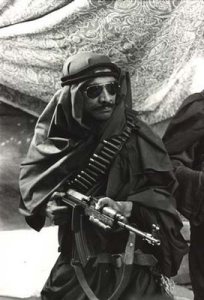 As revealed [in an] Egypt Today review, Jack Shaheen’s study of early 20th Century films exposed Hollywood’s application of “the generic ‘Ali Baba kit’ comprising of lecherous, barbaric Arab men flanked by erotic belly dancers.” Just as African American men were cast as lusting after white women in the Jim Crow era, these early films depicted the “prize of every Sheikh’s harem” as “the abducted American woman who bravely fights off her sinister master’s sexual advances.”
These disparaging images morphed into an even more sinister caricature of Arabs in the post World War II era — images that coincided with the advent of the Arab/Israeli conflict, the early 70s oil embargo and the Iranian hostage crisis. Against a backdrop of a reality in which intelligent Arab women today are “succeeding in all professions,” Sheehan laments, Hollywood replaced the erotic image of the belly dancer with projections of the Arab woman “as a bomber, a terrorist.” Added to this is what Shaheen calls “’bundles in black,’ veiled women in the background, in the shadows, submissive.”
The threat of Arab/Muslim terrorists finds its ultimate embodiment in Rules of Engagement, a film which was written by former Secretary of the Navy and now U.S. Senator James Webb (D-VA); a film Shaheen describes as “the most racist.”
Shaheen described the action, which takes place in Yemen:
There are violent demonstrations at the American embassy, and the Marines, led by Samuel L. Jackson…open fire on the crowd and kill scores of Yemeni, including women and children. And in the investigation that follows, Tommy Lee Jones, the lawyer who represents the Samuel L. Jackson character, goes to Yemen to investigate….He follows [a one-legged little girl to a hospital ward where he discovers a videotape which when translated states that it is the duty of every Muslim to kill Americans.] We discover that the Yemeni civilians aren’t so innocent after all. It turns out they fired on the Marines first. And in a moment that will live in Hollywood infamy, we suddenly learn that the little girl we’ve been sympathizing with, the very girl whose humanity and innocence may have broken down our stereotypes, well, she’s no better than those other Yemeni terrorists. As a result, when Samuel L. Jackson delivers the key line — [“Waste the mother fuckers”] — we’re now on his side.
“Why does it matter? Shaheen asks. “Because in the end, the massacre of even women and children has been justified….It’s a slaughter, but it’s a righteous slaughter.” […]
Neil Simon’s Chapter Two underscores the disparity between the presently dehumanized Arab and the formerly dehumanized African-American. The film begins with the protagonist, George Schneider, returning from London. “How was London?” his brother asks. “Full of Arabs,” Schneider replies.
“Imagine,” Shaheen states, “”if he had said, ‘Full of blacks,’ ‘Full of Jews’….”
As the Don Imus story reveals, one does not have to imagine. If Beck had openly questioned Barack Obama’s loyalty because he was an African American in the same manner that he questioned Keith Ellison’s loyalty because Ellison is a Muslim, Beck’s career would have been over.
Beck is hardly alone in his dehumanized conception of Muslims. Consider some of the words of America’s Eva Braun, aka Ann Coulter.
Writing about Muslims on Sept. 12, 2001 for the National Review, Coulter said, “We should invade their countries, kill their leaders and convert them to Christianity.” In a Dec. 21, 2005 column, Coulter wrote: :” “I think the government should be spying on all Arabs, engaging in torture as a televised spectator sport, dropping daisy cutters wantonly throughout the Middle East and sending liberals to Guantanamo.”
When her use of the words “camel jockeys” was challenged during an October 1, 2006 appearance on Fox News’s Hannity & Colmes, Coulter responded with sarcasm: “Oh. Yeah. No. They killed 3,000 Americans. I’ll be very careful with my language.”
In her November 30, 2006 column Coulter took the NAACP to task for speaking up for Muslims who had been subjected to racial profiling at airports. Coulter wrote:
The only reason Americans feel guilty about ‘racial profiling’ against blacks is because of the history of discrimination against blacks in this country. What did we do to the Arabs? I believe Americans are the victims in that relationship. After the attacks of 9/11, profiling Muslims is more like profiling the Klan.
The extent to which American culture is imbued with anti-Muslim racism helps to explain the ease with which the Bush administration succeeded in falsely linking Iraq to al Qaeda and 9/11. While the administration doctored intelligence, lied about WMD and links to al Qaeda, Bush and Cheney never flat-out accused Saddam Hussein of complicity in 9/11. They didn’t have to. Against a backdrop of the televised images of burning towers, grainy photos of hijackers, and black-garbed, gun-wielding terrorists in training camps, Bush and Cheney laced their pre-invasion speeches with references to terrorists, 9/11 and WMD. The terrorists attacked us on 9/11. We don’t want the “smoking gun” to come in the form of “a mushroom” cloud.
Palestinian Prisoners: Imprisoned for their Love of Freedom
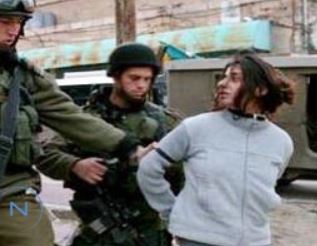
By Reham Alhelsi • April 18, 2009
Every year, on April 17, Palestinians commemorate the Palestinian Political Prisoners Day. On 17.4.1974 the first Palestinian political prisoner, Mahmoud Baker Hijazi, was released from Israeli prisons in the first prisoner exchange deal with Israel. That same year, the Palestinian National Council declared the 17th of April a day of solidarity with Palestinian political prisoners, to be commemorated every year. In Occupied Palestine prison and imprisonment are as common as sunrise and sunset. There is almost no family that had not been subjected to Israeli imprisonment one way or the other. Palestinians are being detained on a daily basis, making them the most imprisoned people on earth. It is difficult to estimate their number, but several sources put the number of Palestinians detained or imprisoned by Israel since 1967 at over 750,000 Palestinians, making 20% of the total Palestinian population in the Occupied Territories, and approximately 40% of the total Palestinian male population. With the outbreak of the 2nd Intifada in September 2000 until September 2008 some 65,000 men, 750 women and 7,500 children were arrested by Israel. According to the ICRC, in October 2008 there were 10,500 Palestinians in Israeli prisons. Addammeer puts the number at 9,493, 750 of which are administrative detainees, 349 aged 18 and under, and 75 are females. Among those detained are political figures and some 47 Palestinians parliamentarians.
The Israeli Occupation Forces (IOF) can arrest anyone and anywhere, without giving a reason. Palestinians are arrested at home, on the way to school or work, at universities, in hospitals, at checkpoints. Mass arrests, as form of collective punishment, are also very common. Curfews would be imposed on villages, towns or refugees camps, houses would be raided and Palestinians arrested. I have witnesses a number of these mass arrests, but never did the IOF bother to tell the residents why they were forced to leave their homes in the middle of the night and stand in the cold and the darkness for long hours. Under the cover of darkness and the curfew, the IOF would demand with loudspeakers that all men, usually those between 16 and 45, gather in the school yard or on the main street. We used to sit in the darkness at the windows and try and recognize the men standing in line and questioned by the IOF; relatives, friends and neighbours. Sometimes the men are blindfolded and handcuffed. They would wait for this to end, while being harassed, shouted at and kicked by the Israeli soldiers. We would wait with them, behind windows, hoping that they would all be released soon and come home safe. Sometimes, they are all sent back home after a night of harassment, but often this ends with mass arrest for no given reason.
Another form of collective punishment is house arrests. I have witnessed so many house arrests, and all were accompanied by violence and harassment and the wilful destruction of property by the IOF. They would turn the house over, destroying the furniture and even the food, as if the person they are searching for would be hiding in the wheat or the sugar, and if there was any money or valuables in the house, it was sure they would never be found again after the IOF had left the house. Family members trying to protect their home or their children are beaten. We would tell them that the person they are looking for is not in the house, we would try and reason with them, but it is all useless. They come on a mission to harass, destroy and arrest. Often I thought they knew they wouldn’t find what or who they are looking for, and that the whole operation of house raid is purely to punish the family and pressure it to hand over their son. During such house searches, the IOF would push us against the wall, kick us with their boots and beat us with the butts of their rifles. They didn’t care that they were beating children and elderly.
Upon arrest, detainees are often blindfolded and handcuffed. Not only is the detainee physically abused and humiliated, but other members of the family as well. Also, it is common practice by the IOF to use family members as human shields during such raids. The detainee is taken without informing the family about where he is taken to. Usually it takes days, if not more, before the family finds out where a detainee is. There are many incidents where families realized that their sons were in a certain prison months after they were arrested, and only after another detainee was released and informed that family about their son. One summer afternoon, my uncle and I were playing football in the garden. He was on the IOF list of wanted persons and was staying in our house. Nearby, there was a huge fruit tree, and when I was a child my father told me as way of a joke that a soldier was buried under that tree. At nights, when the leaves of the tree would move with the wind, I used to imagine the sound they made the murmuring of that soldier, and with all the Russian books we had in our library, I gave that imaginary soldier the name Yuri. My uncle and I made bets as to who would win the football game, we joked and laughed and I remember telling my uncle that Yuri would come and take him. After I explained to him what I was talking about, he said: I think you mean Uri and not Yuri, meaning that if any soldier came to take him away, it would be an Israeli soldier, not a Russian. That night at 2 in the morning, I was awakened by hurrying footsteps outside the window. The minute I fully woke up and stood, there was loud knocking on the front door. My father asked who it was, and removed the side of the curtain to see who stood outside. Standing near him, I could see the face of my grandfather and behind him nothing but darkness, complete darkness. The minute my grandfather said it was him, my father opened the door immediately, only to see grandfather practically thrown inside the house. In a matter of seconds, the house was full of IOF soldiers, some in army uniform, others in civil uniform. They had finally figured out were my uncle was hiding and had come to arrest him. They brought my grandfather, an old man, in the middle of the night as a human shield, in case anything happened. My uncle was still in bed, and the minute the Bethlehem area commander saw him, he jumped on the bed and held his throat in his arms, wanting to strangle him, shouting repeatedly: you were here the whole time. My mother tried to get them off my uncle, but the commander pushed her away. And while my uncle was putting on his clothes and shoes, the commander was slapping him and kicking him. The other area commander, responsible for Sawahreh and the surroundings, told his colleague not to do any beating in his area, meaning that since the prisoner was from the Bethlehem area, the beating was okay once they reached that area. I remember we had a huge poster on the wall, one of “Guevara Gaza”, and the commander asked my sister if she knew who it was. The name was written on the poster for all to see, so when she replied yes, he ordered her to remove the poster. When they left, we realized that they had surrounded the whole area around our house. IOF vehicles had blocked the way in case anyone thought of escaping, and I am sure that if an ant moved in the darkness that night, it would have been shot dead immediately. My uncle was taken to interrogation and tortured to confess to things he never did, and when they failed to get a confession from him, he was held in administrative detention, which is a detention without trial or charge, often used by Israel. When he was finally released, he told us that they couldn’t wait for the interrogation to start the torture, and that he was beaten by the soldiers all the way from Sawahreh till they reached the Israeli detention facility.
Sometimes, injured or sick prisoners are taken from their homes, from hospitals, or after being wounded in a demonstration. They rarely get the needed medical help, and often get Aspirin as treatment for everything. Health examinations are conducted through a fence and additional medical treatment or hospital transfers are often postponed for long periods of time. Withholding medical treatment is one method used to pressure detainees into collaboration. There are more than 800 Palestinian detainees who suffer from bad health conditions, much of which as a result of the arrest or the interrogation. According to Palestinian researcher Abdul-Naser Farawna, 196 Palestinian detainees have died in Israeli prisons since 1967 due to medical negligence and torture, 49 of whom died due to medical negligence. Alone last year, 2 detainees died because they were not given the needed medical assistance. During the 2nd Intifada 72 Palestinian detainees have died in detention, 17 due to medical negligence, 3 as a result of torture, 51 were executed by the IOF after being arrested and 1 prisoner was killed during prison protests.
Often Palestinians are arrested for breaking one of the over 2,000 military orders governing the Occupied Palestinian Territories, some of which they have never heard of before their arrest. Women and children are often arrested to pressure detained family members into confessing or pressure other family members wanted by Israel to hand themselves in. The Palestinian Prisoners Society reports that between September 2000 and September 2008 some 750 women and 7,500 Palestinian children were arrested by Israel. In September 2008 there were 69 Palestinian female political prisoners held in Israeli prisons, 2 of them in solitary confinement and 5 in administrative detention. There are 6 female child prisoners and 4 detainees imprisoned as well as their husbands. One detainee has her baby with her who was born in prison. Palestinian female prisoners are placed in 2 Israeli prisons: Hasharon-Telmond and Neve Tertza prison, where they are detained in the same section as Israeli female criminals accused of murder, drug use and prostitution. Like Palestinian male prisoners, Palestinian female prisoners face torture and humiliation. Strip search, brutal body searches and sexual harassment are frequent.
Contrary to the UN Convention on the Rights of the Child, which defines a child as being under 18, Israeli military orders consider a child over 16 an adult, to be treated, tried and sentenced as such. In practice, Palestinian children as young as 12 may be arrested, charged and sentenced in Israeli military courts, since there are no juvenile courts. According to several reports, there are over 400 Palestinian children in Israeli prisons today, including 7 girls and 6 administrative detainees. These child detainees are aged between 13 and 18, more than 54 of whom are not older than 16. They are detained in Israeli prisons together with adults. 50 of these child prisoners are held in Ofer, 100 in Magiddo, 7 in Atzion, 22 in the Negev, 105 in Hasharon-Telmond and the rest in other prison facilities. Today, more than 450 Palestinian adult prisoners were children upon arrest and turned 18 in Israeli prisons. Like adult prisoners, Palestinian child prisoners are subjected to physical and psychological torture to extract confessions from them. During interrogation, they are not allowed to have any family member or a lawyer attending. Although I was practically a child when arrested, I was placed in a small empty room. I had been separated from my sister, and didn’t know where they had taken her. I stood waiting for a life sign from anyone, and I didn’t know how long I stood there, but I remember well how tired I was of standing and how thirsty I was. After some time, I could hear the cries of a boy in the room next to where I was. I thought, they were either torturing him or someone was making these noises to make me scared before it was my turn to be interrogated. I kept thinking of everything I ever heard, of how to keep still, stay brave and remember that they are only playing games with us to scare us into confessing to things we didn’t do. When I was finally led into a room with a number of IOF soldiers, all males, the soldier in charge checked my school bag and found my biology textbook. He looked through the book and saw a drawing of the anatomy of a human tooth. He showed it to me and asked smirking in a disgusting way if I knew what it was. I knew what it was and knew what he thought it was and what his plan was by asking me about it. At that moment I didn’t feel scared anymore, because I realized how stupid they are. Not only didn’t he know it was a tooth, the textbook was in English and it was written below the drawing what it was, but most probably he didn’t know a word of English and was acting so superior. I looked at him and said: yes, this is a tooth. My suspicions were confirmed when, upon not believing me, he asked one of the other soldiers in the room and the other confirmed what I said.
Child prisoners are held up in overcrowded cells, face torture and solitary confinement and don’t receive the needed medical treatment. In the last couple of months there has been an increase in the number of Palestinian children arrested. They are either arrested at home, at checkpoints or in streets, and are often accused of throwing stones without any proof. DCI-Palestine reports that the number of children brought before Israeli military courts in pre-trial hearing in the first two weeks of January was twice as high as in 2008. It added that its legal department receives a monthly average of 10 to 15 new cases of children for legal representation in Military courts, and that alone for the first two weeks of January 2009 it received 10 new cases. In one incident, 7 children were arrested in Toura Al Gharbieh in Jenin on 20.1.2009 and were detained at the Salim detention and interrogation centre. Two of the children were 12, two 13, two were 15 and the last 17 years old. Under pressure and with no lawyer present, the children confessed they had thrown stones at the Apartheid Wall. In another incident, during an invasion of Hares in the West Bank on the night of 12/13.3.2009, the IOF arrested a 17 year old boy suffering from kidney malfunction.
Palestinians prisoners are held in facilities run by the Israeli Prison Services (IPS) or the IDF. There are 30 detention centres that include 21 prisons and military camps, 5 detention and holding centres and 4 interrogation centres. Also, there is at least one known secret prison, Facility 1391, which is renowned for its severe torture methods. The exact location of this prison is unknown and lawyers and the ICRC have no access to it. The majority of these facilities are located outside the West Bank and Gaza Strip, and transferring Palestinian prisoners to these facilities constitutes a violation of the 4th Geneva Convention, and making family visits almost impossible. Some of these facilities are buildings while others are tents within military camps like the Ketzion Military prison camp in the Negev, exposing detainees to harsh weather conditions. They are all overcrowded, with little hygiene, prisoners have to sleep on wooden planks and covers are often provided by the families or human rights organizations. The food provided is insufficient and of poor quality. Palestinian detainees have to live in appalling conditions in these facilities, are humiliated and subjected to inhuman treatment. In some cases, detainees are deported, either abroad or to the Gaza Strip. After the siege of the Nativity Church in 2003, Israel deported 13 Palestinian detainees to Europe and 26 to the Gaza Strip. During the Gaza war, hundreds of Palestinian civilians were arrested, including minors. They were handcuffed and blindfolded, and had nothing to shelter them from the harsh weather. Many held for days in pits dug in the ground. Reports added that some of the detainees were held near tanks and in combat area, making them human shields for the IOF.
Prison visits usually take the whole day, although the visit itself lasts less than an hour. We would set off in the very early morning, when it was dark outside and everyone else was still sleeping. The bus of the ICRC would be full with Palestinians from everywhere, mostly elderly women and children, all anxious to see their relatives. And before we would finally be able to see our loved ones, we would undergo one checkpoint after the other and one search after the other. I remember during one visit, when we were finally allowed into the visit room, I walked quickly looking for my uncle. I hadn’t seen him in years, and after I finally sat opposite him, we started talking through the barbed wire. We were both so happy. It was after a few minutes that someone from my family came and told me to come and say hello to my uncle. I was talking to the wrong person, and I was so embarrassed I didn’t even say goodbye or look back to see if that prisoner had any visitors that day. Later, I thought he too might have not seen his family since so long that he too mistook me for a relative, or maybe he was just anxious to speak to someone. During another visit, I remember sitting and talking to my uncle and at the same time trying to ignore the rain drops that were seeping through the roof and hitting me on the head and running down my face. My uncle must have found it amusing, because every time a raindrop would hit me in the face he would smile, but I would ignore it and continue talking, and by the end of the visit my hair was totally soaked and I was freezing. There was no possibility of kissing or hugging a relative, and the only thing we could do in way of shaking hands was to stretch our fingers through the barbed net separating us. Saying goodbye was always difficult, because we knew we were going back to our homes, to the relatively bigger prison, while leaving them behind in the small overcrowded cells. And when we finally reached home, it would be dark again and most people would be sleeping, a day spent between checkpoints and searches for a 45 minute visit of loved ones.
One time, on the way to my aunt’s house in Dheisheh, a friend of mine and I passed a young man, who was walking up and down one narrow alley of the refugee camp. The man was most probably mid twenty and was good looking. He was walking that alley and was arguing with someone. I looked around and saw no one in the whole area. I looked up to see if he was addressing someone sitting at a window or on the roof, but could see no one. I pointed the man to my friend, who told me not to worry. She said the young man had been recently released from an Israeli prison, where he was tortured. Since then he had been roaming the streets of Dheisheh, arguing with an invisible friend. As I listened closer, I realized he was talking politics with himself, discussing the occupation and life in prison. They had not released him, for he was still in that Israeli cell, being tortured every minute. Last winter when I was in Palestine, I wanted to take some photos of old UNRWA rooms, built for the Palestinians in 1949. Most old UNRWA rooms were being destroyed to build new houses, and I wanted to keep a record of the last remaining rooms that are a synonym to the Nakba and refugee camps. The wife of one of my uncles accompanied me in my search since she was born and grew up in Dheisheh and knew where to find a few old rooms. Most of these tiny rooms are deserted now, standing empty near larger family houses. I would take photos from the outside and if the room had no door or the door was open, I would take photos from the inside. As we came to inspect one room, we were surprised to find an old man lying on the ground, wrapped in a torn out winter coat. The old man opened his eyes as he saw us, he made a move as if to stand up, but my uncle’s wife told him not to leave and apologized for disturbing him, since we thought the room was deserted. A few minutes later, my mother’s aunt saw us invited us for some tea. Inside, we told her about the old man, and as she and my uncle’s wife talked about the old man and giving him something to eat and warm himself, since they knew who he was, I realized it must be the young man I saw long time ago. He was still imprisoned in that cell, a whole life wasted, and all I could do was to shake my head at the injustice of it all.
Under international humanitarian law, torture is strictly forbidden. The world was shocked when the torture in Abu Ghreib came to light, there were condemnations from everywhere and demands were made to close that prison. But the Zionist state, which conducts one war crime after the other, never hesitates in using torture. The forms of torture used in Abu Ghreib were not new to Palestinians, because they have been used since decades by the IPS against Palestinians. Was it not revealed that Israeli IOF and Shin Bet interrogators were hired by the Pentagon to brutally interrogate prisoners in Abu Ghreib? Was it not revealed that the American interrogates implicated in the torture had attended an “anti terror” training camp in Israel, and that many of the torture methods used in Abu Ghreib resembled those applied by Israel against Palestinian detainees? Much is documented about torture in Israeli prisons, but we rarely hear of any condemnation or demand to close these torture facilities. According to B’Tselem, 85% of the Palestinian detainees have been subjected to torture, adding that “Since 1987, the GSS (Israeli General Security Service) interrogated at least 850 Palestinians a year by means of torture …. (a)ll governmental authorities – from the Israeli army to the Supreme court – take part in approving torture, in developing new methods, and in supervising them.” In 1999 the Israeli High Court superficially outlawed the use of arbitrary torture as an interrogation method, but in reality it did not ban it and till today torture is still used by Israel. Physical ill treatment combined with humiliation begins with the arrest, whether at home or in the street. Palestinian detainees can be interrogated for 180 days, and can be denied a lawyer for a period of 60 days. During interrogation, torture is used and has led to the death of the detainee in some cases and confessions extracted under torture are admissible in Israeli courts.
Palestinians may be held for days without being brought before a judge or informed of the reason for the arrest, during which they are interrogated, which can last up to 180 days, or are administratively detained. Administrative detention is a detention without trial or charge or the continuation of imprisonment after the completion of a sentence. It is often used by Israel and is authorized by an administrative order of the IOF rather than by a judicial decree. Israeli Military Order 1229 of 1988 empowers IOF military commanders to detain Palestinians for up to 6 months, which can be extended indefinitely. Over the years, thousands of Palestinians, men and women and of all ages, have been held in administrative detention for periods ranging from 6 months to over 8 years, without being tried or charged. Families of detainees are not informed of a person’s arrest or the arrest location. Theoretically, detainees can appeal, but in reality neither they nor their lawyers are informed of the reason for the detention or examine the evidence, which makes defending their clients very difficult. The Orders governing administrative detention were also modified in 1999. MO 1466 – Temporary Order, Modification 13 states that a detainee must be brought before a military judge within 10 days of his arrest, and authorizing the military judge to approve, cancel or decrease the time of administrative detention order. This modification is also superficial, since the judges are military personnel who give legal legitimacy to the illegal actions of the IOF and the IPS. In reality, Palestinians are tried by Israeli military courts consisting of a panel of 3 judges appointed by the IOF. These judges often have no legal background and thus don’t fulfill international standards of a fair trial. Since the beginning of the 2nd intifada in September 2000 some 20,000 Palestinians were held in administrative detention. By April 2009 there were more than 560 Palestinian administrative detainees, held in Israeli prisons without trial. 372 of these detainees have been held without trial or charge for at least two consecutive periods, 47 of them for over two years, and 23 for over two and a half years including two who have been imprisoned for over four and a half years.
While a Palestinian may be held in custody for 18 days before being brought to a judge, an Israeli can be held in custody for a maximum of 48 hours before being brought before a judge. While a Palestinian can be held for 30 days without charges which can be extended indefinitely, an Israeli can be held for 15 days without a charge which can be extended for only another 15 days. Palestinians brought to court on accusation of murder are always convicted, even without evidence, and are always sentenced to life imprisonment. Most cases against Israeli soldiers or illegal Jewish settlers accused of murdering Palestinians are closed without any charges, even with the existence of evidence or witnesses. The few who do get sentenced are imprisoned for short periods ranging from 6 months to 7 and a half years or to community service. Palestinian Prisoners have been used by Israel at politically convenient moments, whereby Palestinians who had already served out their sentences with only a few days remaining would be released as “gestures of good will”. At the same time hundreds others would be arrested. For example, on 25.8.2008 Israel released 198 prisoners as a “gesture of good will”, however statistics for August 2008 show that another 338 Palestinians were arrested. Today there are some 81 “old detainees” i.e., detainees who are in continuous imprisonment since over 20 years, 2 of whom since over 30 years, and some 290 prisoners who have been in prison since over 15 years.
Although they have modern deadly weapons, are top recipients of military assistance, have their war crimes justified by a biased western media, and their interests protected by Zionist lobbies all over the world, the Zionists still fear us because they know we are the rightful owners of the land and that alone by existing we are defying them and their power and countering the myths and lies on which their state is built. Israeli Foreign Minister, Avigdor Lieberman said on the release of Palestinian prisoners: “It would be better to drown these prisoners, in the Dead Sea if possible, since that’s the lowest point in the world.” They not only deny us our rights and our freedom, they want to kill our spirit and see us dead. What they haven’t understood by now is that the more they humiliate us, harass us, imprison us, take away our freedom from us, the more we value that freedom and the stronger becomes our belief in our just cause and our will to be free.
Sources:
www.addameer.org
www.sumoud.tao.ca
www.btselem.org
www.imemc.org
www.dci-pal.org
www.ppsmo.org
www.palestinemonitor.org
Anti-nuclear protests in Taiwan draw tens of thousands
DW | March 8, 2014
Tens of thousands have marched in anti-nuclear protests across Taiwan, calling on the government to phase out nuclear energy. The protest comes ahead of the third anniversary of the Fukishima disaster.
Anti-nuclear protesters in Taiwan held four rallies across the country on Saturday, urging the government both to stop construction of a new nuclear power plant and to abandon nuclear power altogether.
Organizers said some 50,000 people attended the protest march and rally in the capital, Taipei, while three other events held simultaneously in other parts of the country drew a combined total of some 30,000.
The Taipei protest was attended by members both of opposition parties and the ruling Kuomintang (KMT).
Concern about the risks posed by Taiwan’s atomic power plants has been growing since a 9.0-magnitude earthquake and tsunami unleashed a nuclear disaster at Japan’s Fukushima plant on March 11, 2011.
Taiwan is also regularly hit by earthquakes, raising fears that its currently three nuclear facilities may be similarly vulnerable.
Protesters called on the government to cease construction work on a fourth plant that is being built in a coastal town near Taipei. The plant was originally scheduled to be completed by 2004, but the project has been delayed by political wrangling.
Several polls conducted last year showed that about 70 percent of Taiwanese oppose the building of the plant, which is situated near undersea volcanoes.
The existing plants furnish about 20 percent of the country’s energy needs.
(dpa, AFP)
Related article

US will not recognize the annexation of Crimea by Russia
Press TV – March 9, 2014
The US says it will not recognize “the annexation of Crimea by Russia” even if residents of the autonomous region vote to separate from Ukraine in a planned referendum next week.
The Crimean parliament has already voted to join Russia. They also voted to hold a referendum on 16 March to validate the decision. A Yes-vote would most likely further heighten the existing tensions in the already divided nation. The region has an ethnic Russian majority.
A top US national security official Tony Blinken said on Sunday that “First, if there is an annexation of Crimea, a referendum that moves Crimea from Ukraine to Russia, we won’t recognize it, nor will most of the world.”
Blinken, who is US President Barack Obama’s deputy national security adviser, told CNN that “Second, the pressure that we’ve already exerted in coordination with our partners and allies will go up. The president made it very clear in announcing our sanctions, as did the Europeans the other day that this is the first step and we’ve put in place a very flexible and very tough mechanism to increase the pressure, to increase the sanctions.”
Blinken was echoing a similar position made by Obama on Thursday that the US would not accept any referendum on the future status of Crimea unless passed with the approval of the interim government in Kiev adding that the proposed referendum would be “unconstitutional” and in violation of “international law.”
Obama is set to meet with Ukraine’s interim Prime Minister, Arseniy Yatsenyuk, in Washington on Wednesday. The meeting is seen as a show of support amid a tense stand-off with Russia over the status of Crimea.
Russia has declared its support for Ukraine’s secession movement. Russian Foreign Minister Sergey Lavrov Crimea has the right to self-determination while the Speaker of Russia’s upper house of parliament, Valentina Matvienko, said on Friday that Crimea would be welcomed as “an absolutely equal subject of the Russian Federation if a referendum on March 16 was in favor of the move.”
Moscow has also warned against “hasty and reckless steps” that could harm Russian-American relations.
Chicago’s Columbia College cancels class because of 5 Broken Cameras screening
Petition
This petition is in protest of Columbia College’s decision, following a student complaint about “bias,” to cancel one of the two sections of a course about the history of the Israeli-Palestinian conflict. The course is well grounded in fact and presents a diverse overview of Israeli/Palestinian history, including interviews with both Israelis and Palestinians. The class receives overwhelmingly positive evaluations by students, and many report having to wait to get in to the class. After registration opened last November, however, Columbia College removed its second section of the course only hours after it was posted.
After Professor Chehade’s in-class screening of the Oscar-nominated film 5 Broken Cameras, which depicts life under and popular resistance to Israeli military occupation, a student complained about “bias.” Dr. Steven Corey, the chair of the Department of Humanities, History, and Social Sciences, then held a meeting with Professor Chehade informing him that he should address the subject matter in a more “balanced” way.
Showing a movie depicting popular resistance to Israeli occupation does not constitute bias, and retaliating against a professor for engaging students about pressing social issues is a blatant violation of academic freedom. Furthermore, professors are not obligated to present an opposing view to every opinion or fact presented in class. Columbia College’s own academic freedom policies protect professors against such interference. The cancelation also restricts Columbia students from participating in learning and discussion about Israel-Palestine, a topic for which they have demonstrated a clear interest.
Help defend academic freedom by signing this petition telling Columbia College to reinstate and maintain the course offerings of Professor Chehade’s Israeli-Palestinian Conflict class.
To: Dr. Louise Love, Provost, Columbia College
Dr. Deborah Holdstein, Dean, School of Liberal Arts and Sciences
Dr. Steven Corey, Chair, Dept. of Humanities, History, & Social Sciences
We, the undersigned, wish to express our grave concern about Columbia College’s retaliation against Professor Iymen Chehade for the content of his course, The Israeli-Palestinian Conflict.
The circumstances suggest that the college’s decision was not based on legitimate academic considerations, but rather avoidance of controversy and the desire to keep Columbia courses from straying from the mainstream discourse.
This attempt to stifle the discussion of Israel and Palestine is a violation of academic freedom and a disservice to the academic community and to Columbia’s students. As such, we, the undersigned, urge the administration at Columbia College to uphold its commitment to academic freedom and to its students by reinstating and maintaining the course offerings of Professor Chehade’s Israeli-Palestinian Conflict course.
La Plata MEKOROT deal suspended
The agreement with MEKOROT in La Plata has been suspended! Now we continue, in the rest of Argentina…
Palestinian Grassroots Anti-apartheid Wall Campaign | March 7, 2014
CTA, ATE, Federación de Entidades Argentino-Palestinas (Federation of Argentinian-Palestinian Entities) and Stop the Wall announced the suspension of the shady business with Mekorot, a water treatment plant that would have fuelled Israeli apartheid in Palestine and sought to export it to La Plata in Argentina.
On January 11 2011, the governor of Buenos Aires province, Daniel Scioli, announced, after visiting Israel, that they would tender the building of a regional water treatment plant in La Plata. The contract worth US$170 million was awarded to a consortium of business conformed by the Israeli Water Company MEKOROT, ASHTROM BV (Spanish-Israeli firm) and the Argentinian “5 de Septiembre SA”, a company in which members of the Sindicato de Obras Sanitarias de Buenos Aires (SOSBA), which owns the 10% of the national and provincial Aguas de Buenos Aires (ABSA), participate.
Since 2011, Palestinian organizations, ATE-CTA unions, other civil society organizations and MPs mobilized against this contact. During more than 3 years, they informed the public about Mekorot’s criminal actions in Palestine and investigated the consequences that Mekorot would cause in Argentina.
In a joint effort, they denounced that public Argentinian money would benefit Mekorot and, through this, finance Israeli apartheid in Palestine. The accusations that Mekorot implements apartheid in Palestine are based on reports by Palestinian organizations, the United Nations, and Amnesty International.
Mekorot has been responsible for water right violations and discrimination since the 1950s, when the national water carrier was built which is diverting the Jordan river from the West Bank and Jordan to serve Israeli communities. At the same time, Mekorot deprives the Palestinian communities from access to water. The average consumption in the occupied Palestinian territories is about 70 liters per capita per day – well below the 100 liters per capita per day recommended by the World Health Organization -, while the Israeli consumption per capita per day is around 300 liters. Mekorot has refused to supply water to Palestinian communities inside Israel, despite a decision by the Supreme Court of Israel recognized their right to water. Mekorot is a proud partner of the Jewish National Fund “Blueprint Negev” plan, which will expel 40,000 Bedouin Palestinian citizens of Israel uprooting them from their homes and forcibly moving them to reserves while their lands will be used for Jewish-only settlements in the Naqab/Negev.
Mekorot’s support for illegal settlements is vital and has continued since 1967 when the company took monopoly control over all water sources in the occupied Palestinian territories and caters to the Jewish settlements to the detriment of Palestinian communities. Mekorot participates in the international crime of pillage of natural resources operating about 42 wells in the West Bank, which mostly cater to Israeli settlements. Mekorot also works closely with the Israeli army in the confiscation of irrigation pipes from Palestinian farmers and destruction of sources of water supply for Palestinian communities.
Beyond the street protests and work in the media, the more than 1000 pages of research and technical details compiled by ATE-CTA, served to substantiate questions in the provincial parliament and allow interventions in front of federal human rights organizations. In late 2012, the construction of Mekorot water plant was suspended.
The organizations insisted that Mekorot intended to export its model of discrimination, squandering of water and illegitimate profits developed in Palestine, now to the detriment of the population of Buenos Aires.
To start with, the entire bid was based on a work plan that had previously been designed by Mekorot, which expectably proposed the lowest price.
The expenditure of public money for water treatment plant and the consequent debt of the city with multinationals is unnecessary as the province of Buenos Aires has excellent aquifers. Puelches Aquifer is saturated and to stop drinking its water – as the Mekorot project envisaged – would have produced the elevation of the water table, bacterial contamination, basement flooding and damage to housing foundations. Reports from the ABSA state that the main problem of drinking water lies in the distribution network for which Mekorot wouldn’t have provided a solution.
For the installation in the region, Mekorot required an increase in water tariffs, until almost tripling the costs. The construction of the plant, also implied a further increase of service that would have exceeded 30% and would be paid by all the users in the region.
In terms of water quality, it would have been below the standards determined by the Argentine Food Code. Only part of the population would have had access to safe drinking water while poorer people would have received only tap water posing a risk to their health.
CTA, ATE, Federación de las Entidades Argentina-Palestinos and Stop the Wall thank to all social and political organizations, experts and individuals who contributed to the campaign ‘Mekorot Out of Argentina’. Together we won an important victory for justice in Palestine and the right to water! We continue to fight for our sovereignty over water, against the violence of multinationals and in solidarity with the Palestinian people for freedom, justice and the return of refugees to their homes.
We ask everyone to continue supporting the global movement of boycott, divestment and sanctions against Israel and to fight and prevent other Mekorot contracts in Argentina.
We ask everyone to join the International Week against Mekorot – from 22 to 30 March: “No to water apartheid, Yes for water justice!”
Related articles
Featured Video

Theodore Postol: Iran’s Missiles & Drones Were Underestimated
or go to
Aletho News Archives – Video-Images
From the Archives
What is the Israeli Lobby in Australia Doing in Interfaith Dialogue?
By Ali Kazak | Dissident Voice | October 11, 2015
For years Israel and its lobby around the world have been trying to normalise their relations with Arabs and Muslims without solving the Palestine Question.
One of the methods they resorted to in the last few years is using human rights and community organizations such as interfaith dialogue and Multiculturalism to achieve this objective and to: isolate the Palestinians, marginalise the Palestine question, end Israel’s isolation, and prevent criticism of Israel, knowing that these organisations will be the first to stand against Israel’s violations, racial and religious discrimination.
The group responsible for this task in Australia is The Australia/Israel & Jewish Affairs Council (AIJAC); its Director of International & Community Affairs, Jeremy Jones is in charge of lobbying religious community organizations, specifically Muslims and Christians. Consequently he convened the Faith Communities for Reconciliation, founding participant in the Australian Partnership of Religious Organisations and the Australian National Dialogue of Christians, Muslims & Jews.
AIJAC is a private political propaganda group. It is recognised as the main Israeli lobby in Australia. It coordinates its activities and works intimately with the Israeli embassy in Canberra and different institutions in Israel. It is privately funded by some Jewish businessmen. It monitors closely Australian politicians, the media, ethnic and religious groups, (especially Arabs and Muslims), unions and academics on their stands towards Israel and the Palestine question. … continue
Blog Roll
 Aletho News
- Iran’s friends are about to make life much more difficult for Israel and the US
- The war of liberation of the Arab and Islamic peoples expands across the Gulf
- Envoy warns UN on Trump’s threat to ‘obliterate’ Iran’s civilian infrastructure
- The Larak Corridor: Iran’s Rial Gate With No US, No Israel, and No Way Around
- ‘Economic terrorism’: Steel facilities hit again in US-Israeli strike
- ‘War Crime’: Iran condemns attacks on Arak, Ardakan nuclear sites
- Two-thirds of Americans want quick end to Iran war even if goals unmet
- Trump to Give “Important Update on Iran” Wednesday in Prime-Time Speech
- Theodore Postol: Iran’s Missiles & Drones Were Underestimated
- Iran To Target Military Industrial-Tech Complex That Facilitated Gaza Genocide
- If Americans Knew
- Israel wants US to bomb more of Iran’s civilian structures (113,000 is not enough) – Not a ceasefire Day 173
- Ann Coulter Rips Into Fox News for Iran War Coverage
- Joe Kent Urges Americans To Call White House and Congress To Object To Sending Troops Into Iran
- DNC Resolution to Reject AIPAC Funding Puts Democratic Leaders in the Hot Seat
- Swedish foundation to build 400 schools as over 650,000 Gaza children remain without education for 2 years
- Israeli army admits photshopping image of slain Lebanese journalist
- This is how Israel is systematically killing health workers under the cover of war in Lebanon
- Carrying life under fire: Israeli invasion of Lebanon leaves pregnant women facing deadly risks
- Champagne all around for the new death penalty (for Palestinians) law – Not a ceasefire Day 172
- Why are Palestinian books struggling to be seen on Amazon?
- No Tricks Zone
- New Study Finds Warming Saves Lives…Cold Temperatures 12 Times More Deadly Than Excess Heat
- German Science Blog Accuses PIK Climate Institute Of Hallucinating Climate Tipping Points
- Devastating Assessment Of Comirnaty Vaccine By Former Senior Pfizer Europe Toxicologist
- New Study: CO2 Is ‘Effectively Negligible’ As An Explanatory Climate Change Factor Since 2000
- Former Pfizer Toxicologist Dr. Helmut Sterz Tells Bundestag Hearing Pfizer Vaccine Should Have Never Been Approved
- Energy Expert: Germany’s Nuclear Phaseout Was A “500 Billion Euro Mistake”
- New Research: South Australia’s Mid-Holocene Sea Surface Temperatures Were 4°C Warmer Than Today
- Storing Green Energy To Last Germany 10 Days Would Require A 60-Million Tonne Battery
- New Studies: UK Sea Levels Were 4 Meters Higher Than Today During The Mid-Holocene
- Destructive Green New Deal: German Energy And Metal Group Warns Of Drastic Crisis
 Aletho News