China receives gas from Central Asia via new pipeline
The BRICS Post | June 16, 2014
China, the world’s largest energy consumer, has started receiving natural gas transported through the newly constructed Line C of the crucial China-Central Asia gas pipeline network on Sunday, state media reported.
Gas transported through Line C, which is now operational, successfully reached the Horgos Port in China’s Xinjiang province on Sunday.
Line C is over 1,800 kilometers long and runs parallel to lines A and B, with the pipeline network showing Beijing’s growing clout in Central Asia as it seeks resources for the Chinese economy.
China imports about 20 bcm of gas from Turkmenistan, about half of its total gas imports, and the two countries signed an agreement last year to ramp up gas exports to 65 bcm by 2020.
Central Asia is seeking new export routes for the fuel as transport routes to Europe via Russia are now in question following the EU sanctions on Moscow over Ukraine.
China’s first large international pipeline for imported natural gas, the China-Central Asia line starts at the Turkmenistan-Uzbekistan border before passing through central Uzbekistan and southern Kazakhstan before entering China.
From Horgos in Xinjiang, the pipeline then connects with China’s West-East pipelines, to deliver natural gas across the country.
Trade between China and Central Asia has increased from about $500 million in 1992 to $26 billion in 2009, according to official Chinese figures.
The Central Asia-China gas pipeline runs all the way from China’s east coast cities to Galkynysh field, a distance of 6000 miles as it sources energy from major energy producers Turkmenistan, Kazakhstan and Uzbekistan.
China’s energy giant CNPC also plans to integrate Afghanistan into this energy network.
TBP and Agencies
Palestinian kidnapped by Israeli forces in Awarta

Sameer Abu Shayb
International Solidarity Movement | June 16, 2014
Awarta, Occupied Palestine – At approximately 2:00 AM on the 15th June, Israeli soldiers conducted a night raid in the village of Awarta near Nablus, which was one of a series of raids and closures carried out by Israeli forces, following the disappearance of three Israeli settler youth close to al-Khalil (Hebron). Palestinian witnesses state that over 50 Israeli solders surrounded the village.
During the operation around 20 Israeli military personnel forced entry to, and stormed the home of Sameer Abu Shayb. Palestinian residents state that the soldiers were aggressive and had their faces covered. Sameer was then handcuffed and interrogated at his home over the phone by a commanding officer, for approximately 15 minutes. Sameer was not accused of any offence, but was then taken outside, blindfolded, and abducted by Israel forces.
This is the sixth time that Sameer has been imprisoned in recent years, totalling approximately 6 months.
He has never been formally accused of an offence and has never been presented with any evidence to justify his repeated detentions. Sameer formerly ran a graphic design shop but was forced to close due to this harassment. Three and a half years ago Israeli soldiers broke into his office, stole a PC and camera, and broke a printer and other merchandise. The property has never been returned, nor has he received compensation.
During the the night over 80 Palestinians were abducted by Israeli forces throughout the West Bank, in an operation that has been described by the Palestinian Authority as a form of collective punishment.
Israeli forces kill Palestinian during Ramallah arrest raid

Ahmad Sabbareen – Shfa News
By Saed Bannoura | IMEMC & Agencies | June 16, 2014
Palestinian medical sources have reported on Monday that a young Palestinian man was killed by Israeli army fire after the soldiers invaded the al-Jalazoun refugee camp, north of the central West Bank city of Ramallah. Two Palestinians were injured, many kidnapped.
Medical sources at the Palestine Medical center said the slain Palestinian has been identified as Ahmad Arafat Sabbareen, 21 years of age.
He was shot by several live bullets in the chest, and died of his wounds at the Intensive Care Unit, in the Palestine Medical Center.
Sabbareen was a political prisoner who was recently released by Israel.
One of the wounded Palestinians, identified as Ahmad Sa’afin, was shot by a live round to the chest.
Eyewitnesses said the soldiers fired dozens of gas bombs, concussion grenades, and rounds of live ammunition during the invasion, and during ensuing clashes.
In addition, soldiers kidnapped several Palestinians in the refugee camp, and took them to an unknown destination.
Some of the kidnapped Palestinians have been identified as Adnan al-Khattab, Abdul-Halim Ghannam, Ramadan Hmeidat, and Eyad Safi.
On Sunday at night that two children were wounded when Israeli soldiers detonated the main door of their home, in Hebron city, in the southern part of the occupied West Bank. Soldiers also kidnapped their father, and three brothers. At Least Nineteen Additional Palestinians Kidnapped.
Earlier on Sunday, the soldiers kidnapped at least twelve Palestinians in Hebron, after breaking into dozens of homes and searching them. The army also confiscated surveillance tapes from a number of properties.
On Sunday evening, dozens of Israeli military vehicles invaded the central West Bank city of Ramallah, the nearby towns of al-Biereh and Betunia, and clashed with dozens of Palestinian youths.
Also on Sunday, soldiers invaded Bethlehem city, and the nearby city of Beit Jala, installed roadblocks, conducted searches, and attacked local journalists.
The soldiers also closed all western entrances of Bethlehem city, and conducted military searches.
On Sunday morning, the soldiers placed Bethlehem and Hebron districts under a strict military siege, and kidnapped dozens of Palestinians in different parts of the occupied West Bank.
~
Egyptian security forces seize Brotherhood members’ assets
MEMO | June 16, 2014
Egyptian authorities yesterday seized two supermarket chains owned by two prominent Muslim Brotherhood members.
Judge Wadee Hanna, the secretary of a government committee charged with identifying and managing Brotherhood assets, said the committee had decided to seize the supermarket chain Zad, which is owned by the detained Deputy Supreme Guide of the Muslim Brotherhood, Khairat Al-Shater. The committee also seized Seoudi, another chain owned by businessman Abdulrahman El-Seoudi.
The government formed this committee after a decree declared the Muslim Brotherhood a terrorist organisation and ordered the confiscation of its assets.
“The decision to seize [the two chains] came after it was proven that the two businessmen who belong to the Muslim Brotherhood are involved in funding the group’s activities,” Hanna said.
“We received an order from the committee to seize the chains, Zad and Seoudi, and we just went and took them,” a security source said.
Al-Shater’s daughter Aisha said a large number of security forces stormed all the branches of the chain that her father owns as well as the chain owned by the Seoudi family yesterday.
“They confiscated all contents of some of the stores and emptied other stores of their goods,” Aisha told Anadolu Agency.
Anadolu could not obtain an immediate response to these accusations from the Egyptian Interior Ministry. Members of the Seoudi family could not be reached for comment.
Ali Kamal, a member of the legal committee of the Muslim Brotherhood movement, told Anadolu that “confiscation should be done at a legal level, not by damaging the contents inside the stores”.
Kamal noted that the stores are owned by individuals, not by the Muslim Brotherhood as an organisation.
Al-Shater has been in jail since July 6, 2013, on various charges, including inciting violence.
Before the January 25 revolution erupted in 2011, Al-Shater had been detained for six months for a total of 12 years.
In September, an Egyptian court banned the Muslim Brotherhood and all affiliates in Egypt and ordered the confiscation of all of its assets.
Corporate tax dodging another capitalist innovation
By Pete Dolack | Systemic Disorder | June 12, 2014
Competition takes many forms in capitalism. Financial engineering by corporations to avoid paying taxes is one aspect of this competition — under the rigors of market competition, evading responsibility is an innovation to be emulated.
The magnitude of tax evasion on the part of multi-national corporations through one channel — the shifting of profits to countries and territories with low or nonexistent taxes — was quantified earlier this month by the U.S. Public Interest Research Group Education Fund and Citizens for Tax Justice. Their study, “Offshore Shell Games 2014,” reports that the 500 largest U.S.-based multi-national corporations have squirreled away almost US$2 trillion in profits that lie untouched.
An estimated $90 billion a year in federal income taxes are not paid through the creative use of subsidiaries set up in offshore tax havens.
The Cayman Islands and Bermuda are favored locations, although other tax havens such as Hong Kong, Ireland and Switzerland are frequently used. The report illustrated the preposterous number of corporations with sham “offices” in the Cayman Islands:
“Ugland House is a modest five-story office building in the Cayman Islands, yet it is the registered address for 18,857 companies. … Simply by registering subsidiaries in the Cayman Islands, U.S. companies can use legal accounting gimmicks to make much of their U.S.-earned profits appear to be earned in the Caymans and pay no taxes on them. The vast majority of subsidiaries registered at Ugland House have no physical presence in the Caymans other than a post office box. About half of these companies have their billing address in the U.S., even while they are officially registered in the Caymans.” [page 4]
The Cayman Islands has a corporate tax rate of zero. Not a cent. The government there raises revenue through taxes on imports (thus a consumption tax for the people who live there as virtually everything must be imported), but, as an added bonus should any corporate executive stop by to visit the company post office box, luxury goods such as diamonds are exempted. Bermuda also has no corporate tax.
U.S. tax laws allow profits earned abroad to remain untouched until the money is brought into the country. Profits booked in other countries are instead subject to the local tax rate, even if zero. Accounting, rather than geography, often controls what constitutes “offshore” profits, however. The “Offshore Shell Games 2014” study reports that:
“Many of the profits kept ‘offshore’ are actually housed in U.S. banks or invested in American assets, but registered in the name of foreign subsidiaries. A Senate investigation of 27 large multinationals with substantial amounts of cash supposedly ‘trapped’ offshore found that more than half of the offshore funds were invested in U.S. banks, bonds, and other assets.” [page 5]
Corporate money is “off shore” if the corporation says it is
A 2013 report in The Wall Street Journal revealed that many corporations, including Microsoft Corp. and Google Inc., “keep more than three-quarters of the cash owned by their foreign subsidiaries at U.S. banks, held in U.S. dollars or parked in U.S. government and corporate securities.” Under federal tax law, those funds are “offshore” and thus exempt from taxation.
Microsoft, in its fiscal year 2013 filing with the U.S. Securities and Exchange Commission, said its funds held by its foreign subsidiaries are “deemed to be permanently reinvested in foreign jurisdictions.” It said, “We currently do not intend nor foresee a need to repatriate these funds.” It pays to be a monopoly in more ways than one.
A sampling of corporate highlights, according to “Offshore Shell Games 2014”:
- Bank of America reports 264 subsidiaries in offshore tax havens, more than any other company. The bank would otherwise owe $4.3 billion in U.S. taxes on the $17 billion it keeps offshore.
- Nike officially holds $6.7 billion offshore for tax purposes, on which it would otherwise owe $2.2 billion in U.S. taxes. Nike is believed to pay a 2.2 percent tax rate to foreign governments on those offshore profits.
- Apple holds more money offshore than any other company — $111.3 billion. It would owe $36.4 billion in U.S. taxes if these profits were they not offshore for tax purposes. Two of Apple’s Irish subsidiaries are structured to be tax residents of neither the U.S. (where they are managed and controlled) nor Ireland (where they are incorporated), ensuring no taxes are paid to any government.
- Google increased the amount of cash it reported offshore from $7.7 billion in 2009 to $38.9 billion. An analysis found that, as of 2012, the company has 23 tax-haven subsidiaries that it no longer discloses but continues to operate.
- Microsoft increased the amount of money it held offshore from $6.1 billion to $76.4 billion from 2007 to 2013, on which it would otherwise owe $19.4 billion in U.S. taxes. The company is believed to pay a tax rate of three percent to foreign governments on those profits.
You pay when corporations don’t
These arrangements don’t benefit working people in the tax havens. After Ireland’s then prime minister, Brian Cowen, announced that the government would assume all the debts of Ireland’s three biggest banks, he negotiated for what became an €85 billion bailout. In doing so, he demanded, and received, only one concession: There would be no increase in corporate tax rates, which are less than half the level of Ireland’s sales taxes. Taxes on incomes, cars, homes and fuel, however, did rise to pay for the bailout.
Critics, the authors of the “Offshore Shell Games 2014” study not excepted, propose various reforms and tend to discuss this issue in terms of morality. That massive corporate tax dodging is odious from any reasonable ethical standard is indisputable, but reducing it to immorality completely obscures the larger structural problems.
In the relentless competition fostered by capitalism, any successful innovation must be matched by competitors. Such an innovation could be a new production technique but also includes measures to lower costs. If production is moved to a location with low wages and little or no safety and environmental regulations, the boost to profits for the company that does this has to be matched by competitors that otherwise would become uncompetitive and/or fall into disfavor with financiers.
Financial engineering to avoid paying taxes is another boost to profits, and thus a competitive advantage. Other corporations, under the rigors of competition and the ceaseless necessity of expansion and pressure to increase profits, are compelled to copy these innovations.
However much we might wish to morally condemn such behavior, the personality of corporate executives is irrelevant. Expand or die is the remorseless logic of capitalism, and the executive who doesn’t do everything possible to maximize profits will soon be replaced by someone who will.
Nike, to provide an example, proudly announced that, in the past 10 years, it had “returned over $15 billion to shareholders through dividend payments and share repurchases” and assured it would provide more in the future. Nike’s shareholders’ report made no mention of what the company does to extract that money — through brutally exploitative sweatshop labor, paying workers less than a minimum wage set well below subsistence level in places where complaining leads to beatings or firings and striking lands you in prison. And by not paying taxes.
As a second example, Bank of America reported that it paid $3.2 billion to buy back its stock in 2013, money spent to boost its stock price and give extra profits to speculators. (Stock bought for this purpose is paid for at a price higher than the current stock-market value.) That money was available thanks to the billions of dollars it didn’t pay in taxes.
Reforms are good, but reforms can and are taken back when the pressure for them relents, and ultimately leaves the system that rewards such behavior untouched.
Russia now enemy, so we’ll help Ukraine build up military – NATO chief
RT | June 15, 2014
NATO is preparing a package deal to ramp up the Ukrainian military because it ‘must adapt’ to Russia viewing it as an enemy, the outgoing chief of the military bloc said.
The deal would be submitted to foreign ministers of members states later this month, NATO Secretary-General Anders Fogh Rasmussen told El Pais in an interview. He declined to go into detail, but said it provides for defense industry reform and modernization of the Ukrainian military.
The alliance may also facilitate cooperation with Ukraine over military training, although whatever exercises of NATO member troops would be held in Ukraine is up to individual countries, Rasmussen said.
“We must adapt to the fact that Russia now considers us its adversary,” he explained.
The help that NATO plans to give Ukrainian military comes as the said military are used in a bloody crackdown on the defiant eastern provinces, where local militias defend cities from daily artillery shelling and airstrikes.
Kiev regards the militias as Russia-backed terrorists and refuses any kind of negotiation with them. NATO shares the view, accusing Russia of funneling heavy weapons into Ukraine across the border, although so far no solid evidence of such actions was presented.
The alliance itself is experiencing a sort of revival playing the ‘Russian threat’ card to justify the build-up of troops in Central and Eastern Europe. Moscow sees such deployments as provocative and confirming NATO’s aggressive stance towards Russia.
NATO claims that it has been cooperating with Russia in every way until the Ukrainian crisis sparked the cold war hostilities again. It’s not quite true, considering the alliance’s expansion eastwards in Europe and its plans to deploy a system of anti-ballistic missile defense closer to Russian borders. Both have been done against Russia’s objections that such moves compromise Russian national security.
Israel imposing ‘collective punishment’ on Palestinian people
Ma’an – 15/06/2014
RAMALLAH – The Palestinian Authority on Sunday condemned the Israeli arrest campaign across the West Bank and airstrikes against the Gaza Strip, denouncing the “collective punishment of the Palestinian people” by Israeli forces.
Spokesman for the Palestinian national consensus government Ehab Bessaiso on Sunday also reiterated Palestinian insistence that they have no responsibility for security in the settlements, as Israel continued assaults against Palestinians that began after the disappearance of three Israeli teenagers from the Gush Etzion settlement between Bethlehem and Hebron on Thursday.
“The Israeli government cannot hold the Palestinians responsible for security in occupied territories which are not under Palestinian sovereignty and which house dozens of settlements and outposts,” Bessaiso said in a statement.
Bessaiso highlighted that the three youths went missing in the approximately 62 percent of the West Bank that is considered Area C and is under full Israeli control.
Bessaiso also said that the detention of 80 people across the West Bank and the bombing of Gaza overnight constitute “collective punishment against the entire Palestinian people,” and called upon the “international community and all international human rights organizations to protect the Palestinian people against the Israeli escalation.”
Bessaiso highlighted that even Palestinian prisoners in Israeli custody were being punished by Israel, through the banning of family visits and “other oppressive procedures,” even as around 125 administrative detainees entered their 53rd day of a collective hunger strike.
Bessaiso also said that Israel had imposed a general closure on the Hebron area in the southern West Bank, leaving thousands of Palestinians under siege.
Earlier Sunday, Hamas denied Israeli allegations that their members were involved in the kidnapping of the three Jewish youths, calling the claims “stupid.”
Overnight Sunday Israeli forces detained 80 Palestinians including a number of former ministers and top lawmakers and carried out airstrikes across the Gaza Strip, injuring a woman and a 15-year-old girl.
On Saturday, Netanyahu had said he held the Palestinian Authority responsible for the disappearance of the youths, while the PA has insisted it has no authority over the territory in which the youths disappeared.
Israel arrests 80 Palestinians, locks down Hebron in search for missing teens

Al-Akhbar | June 15, 2014
Israel on Sunday broadened the search for three Israeli teenagers believed kidnapped by militants, arresting 80 Palestinians overnight and imposing a tight closure on the southern West Bank city of Hebron.
It was the biggest arrest operation in years and came after Prime Minister Benjamin Netanyahu ordered security forces to “use all tools at their disposal” to find the three teenagers he said had been “kidnapped by a terror organization.”
Most of those arrested belonged to the Islamist movement Hamas, and included several members of the Palestinian parliament, Israeli press reports said.
“In a combined… effort to return the three abducted Israeli teenagers, approximately 80 Palestinian suspects were detained in a widespread overnight operation,” an army statement said, with a spokesman warning troops would leave no stone unturned.
“Palestinian terrorists will not feel safe, will not be able to hide and will feel the heavy arm of the Israeli military capabilities,” Lieutenant Colonel Peter Lerner said.
As the massive manhunt for the missing teens entered its third day, the defense ministry imposed a complete lockdown on the southern city of Hebron and the surrounding area, as well as a closure on the Gaza Strip.
The closure on the Hebron district began at midnight, a defense ministry statement said indicating that access to Gaza via the Erez crossing would be limited to humanitarian cases only, while only fuel would be allowed in through the southern goods crossing.
Inside Hebron, the West Bank’s largest city, Israeli paratroopers fanned out across the streets, and no cars were allowed in or out of the city, an AFP correspondent said.
Following late-night consultations with his security cabinet, which ended close to midnight, Netanyahu was to convene the weekly cabinet at his office at the defense ministry in Tel Aviv, his office said.
“Our young people have been kidnapped by a terror organisation… there is no doubt about that,” Netanyahu told reporters in Tel Aviv late on Saturday.
The teens, one of whom also holds a US passport, are believed to have been snatched Thursday night from the Gush Etzion settlement bloc between Bethlehem and Hebron, reportedly while hitchhiking.
The missing teenagers, who study at two Jewish seminaries in the West Bank, have been identified as Gilad Shaer, 16, from Talmon settlement near Ramallah, Naftali Frenkel, 16, from Nof Ayalon in Israel, and Eyal Ifrach, 19, from Elad near Tel Aviv.
Netanyahu said he placed responsibility for their safe return on the shoulders of Palestinian Authority president Mahmoud Abbas and his government, saying they must do “whatever necessary to help the hostages get home safely.”
The suspected abductions occurred 10 days after a new Palestinian unity government was sworn in, pieced together with the Hamas movement.
Israel has vowed to boycott all contact with the new government, whose emergence has ended seven years of divided rule between the West Bank and Gaza, with Netanyahu insisting Abbas be held responsible for all acts of violence emanating from anywhere in the Palestinian territories.
Israeli and Palestinian officials confirmed Palestinian security services were assisting in the search for the youths, who are believed to be “still alive,” Defense Minister Moshe Yaalon said on Saturday.
Israel’s air force also hit three targets in the southern and central Gaza Strip overnight on Saturday, the second consecutive night of strikes.
(AFP, Al-Akhbar)
Moscow outraged at Ukraine’s National Guard for detaining 2 more Russian journalists
RT | June 14, 2014
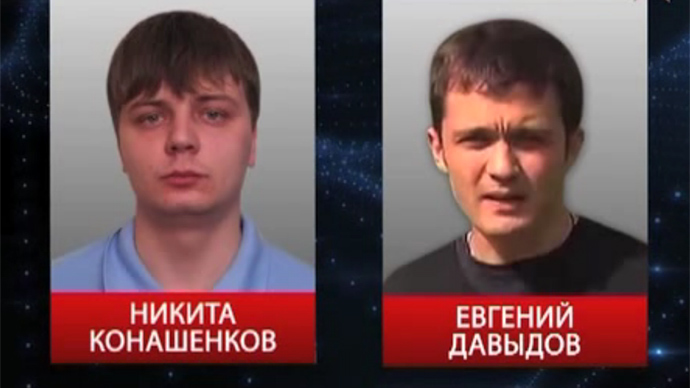
Russia’s Foreign Ministry is demanding the immediate release of two Russian journalists detained in eastern Ukraine by the National Guard on their way to Dnepropetrovsk Airport.
“Unidentified men” detained correspondent Evgeny Davydov and sound engineer Nikita Konashenkov at around 5 p.m. local time in the Donetsk region on Saturday, Zvezda TV channel reported. The two were on their way to Dnepropetrovsk Airport for a flight back to Moscow.
The journalists are now being held captive in the Ministry of Justice building in Dnepropetrovsk, according to Zvezda.
“Journalists of Zvezda TV channel were again detained several hours ago on the territory of Ukraine. This is the second time this week. According to our preliminary data, the guys are in the region of the city administration of Dnepropetrovsk,” said Alexey Pimenov, head of media holding company Krasnaya Zvezda.
The Russian channel is demanding that Ukrainian President Petro Poroshenko and the Ukrainian Security Service “immediately release our employees who were on an official business trip.”
The Russian Foreign Ministry also called for the release of the journalists. The ministry said the arrest was carried out by the National Guard. Moscow also slammed Ukraine for “continuing to encroach upon the rights of Russian mass media.”
Earlier in June, the National Guard detained two journalists from Zvezda – video operator Andrey Sushenkov and sound engineer Anton Malyshev – at a military roadblock near the city of Slavyansk. According to their driver, they were blindfolded and handcuffed during a routine check, and then taken to an undisclosed location. They were held captive for two days on accusations of espionage.
Russian journalists from a range of media outlets have been detained during the conflict in eastern Ukraine. Two Russian journalists working for LifeNews TV channel – reporter Oleg Sidyakin and cameraman Marat Saichenko – were captured by Kiev forces in May near the eastern city of Kramatorsk. Following their detention, a video appeared showing Ukrainian troops holding the men at gunpoint and forcing them to get down on their knees. They were investigated under charges of “aiding terrorist groups,” according to Ukraine’s National Security and Defense Council.
RT contributor and UK national Graham Phillips was detained by Kiev military forces at a checkpoint in the city of Mariupol on May 20. He was transferred to army barracks and interrogated by Ukrainian security forces. He was released after 36 hours.
There have also been reports that Ukrainian troops have fired at people with cameras, as well as people wearing press vests. On May 9, a Ruptly cameraman was seriously wounded during an armed assault by Kiev’s army on the Mariupol police headquarters.
Russia’s commissioner for human rights, Ella Pamfilova, told RT in May that she is confused by the fact that international human rights organizations are ignoring the violations of journalists’ rights that are taking place in Ukraine.
“I am perplexed and confused that the organizations highly respected by me, including international journalist and ‘Without Borders’ organizations… are suddenly bashfully closing their eyes or ignoring the rights violations of not only Russian journalists on Ukraine’s territory.”
EFF to Court: U.S. Warrants Don’t Apply to Overseas Emails
Microsoft Fights to Protect Data Held on Servers in Ireland
EFF | June 13, 2014
San Francisco – The Electronic Frontier Foundation (EFF) has urged a federal court to block a U.S. search warrant ordering Microsoft to turn over a customer’s emails held in an overseas server, arguing that the case has dangerous privacy implications for Internet users everywhere.
The case started in December of last year, when a magistrate judge in New York signed a search warrant seeking records and emails from a Microsoft account in connection with a criminal investigation. However, Microsoft determined that the emails the government sought were on a Microsoft server in Dublin, Ireland. Because a U.S. judge has no authority to issue warrants to search and seize property or data abroad, Microsoft refused to turn over the emails and asked the magistrate to quash the warrant. But the magistrate denied Microsoft’s request, ruling there was no foreign search because the data would be reviewed by law enforcement agents in the U.S.
Microsoft appealed the decision. In an amicus brief in support of Microsoft, EFF argues the magistrate’s rationale ignores the fact that copying the emails is a “seizure” that takes place in Ireland.
“The Fourth Amendment protects from unreasonable search and seizure. You can’t ignore the ‘seizure’ part just because the property is digital and not physical,” said EFF Staff Attorney Hanni Fakhoury. “Ignoring this basic point has dangerous implications – it could open the door to unfounded law enforcement access to and collection of data stored around the world.”
The government has argued that allowing a U.S. judge to order the collection of data stored abroad is necessary, because international storage would make it easy for U.S. Internet companies to avoid complying with search warrants. But Microsoft asserts that the government’s legal theory could hurt U.S. technology companies that are trying to do business internationally. Additionally, EFF argues in its amicus brief that the government’s approach hurts Internet users globally, as it would allow the U.S. to obtain electronic records stored abroad without complying with mutual assistance treaty obligations or other nations’ own laws.
“Microsoft is doing the right thing by pushing back here. It’s great to see a tech giant fighting for its customers,” said Fakhoury.
For the full brief in this case:
https://www.eff.org/document/eff-amicus-brief-support-microsoft
Contact:
Hanni Fakhoury
Staff Attorney
Electronic Frontier Foundation
hanni@eff.org
Featured Video

Iran Is Not Our Enemy
or go to
Aletho News Archives – Video-Images
Book Excerpt
“Vaccines Do Not Cause Autism!” The Science is Settled. Right?
ICAN urges the IACC to actually study infant vaccines and autism
 By Aaron Siri | Injecting Freedom | March 16, 2026
On behalf of ICAN, we just sent a copy of chapter 11 of Vaccines, Amen to the newly appointed members of the federal Interagency Autism Coordinating Committee (IACC).
If you haven’t already read this chapter, you can read the whole thing in the attached letter. I trust that after you read it, you’ll see why the statement “vaccines do not cause autism” is a belief, not science!

IACC Public Comment Letter
1.53MB ∙ PDF file
Includes chapter 11 of Vaccines, Amen
Blog Roll
 Aletho News
- Weapons makers cash in on Trump’s Iran war
- Why Trump’s anti-Iran naval coalition in Strait of Hormuz is doomed to fail
- IRGC says regional energy sites linked to US will be reduced to ashes
- Qatar condemns ‘dangerous’ Israeli attack on gas field
- Iran made ‘unexpectedly substantial’ offer during Geneva talks, US envoys ‘dragged’ Trump into war: Report
- Russia condemns Israel’s attack near Bushehr plant, files complaint
- Russia Strongly Condemns Actions Aimed at Harming Health of Iranian Leadership – Kremlin
- Israeli Journalist Demands Tucker Carlson and Candace Owens Be Placed in WWII-Style Internment Camps
- No Liability, No Studies, No Accountability: The Vaccine System Aaron Siri Exposed in Federal Court
- No time for losers: Why the war meant to save Israel may destroy it
- If Americans Knew
- UK security adviser attended US-Iran talks and judged deal was within reach
- Tucker Carlson says ‘neocons’ will try to destroy Joe Kent over resignation
- Lebanon death toll exceeds 900, another assassination in Iran, bombing in Gaza – Not a ceasefire Day 159
- Trump’s counterterrorism chief, whose own wife was killed by ISIS, quits over Iran War saying Tehran posed ‘no imminent threat’
- Here’s what US could fund instead of Bibi’s war on Iran
- Israel Killed Over a Dozen Lebanese Paramedics in Three Days, Now Claiming That Ambulances Are “Hezbollah” Targets
- War on Iran: These are the heritage sites devastated by US and Israeli attacks
- Four news stories from Israeli media that illustrate Israeli “justice”
- CIA Prepares Criminal Referral of Tucker Carlson, as Israel and Its Loyalists Demand His Arrest
- Top US counterterror advisor resigns in protest of “war manufactured by Israel” – Not a ceasefire Day 157
- No Tricks Zone
- Energy Expert: Germany’s Nuclear Phaseout Was A “500 Billion Euro Mistake”
- New Research: South Australia’s Mid-Holocene Sea Surface Temperatures Were 4°C Warmer Than Today
- Storing Green Energy To Last Germany 10 Days Would Require A 60-Million Tonne Battery
- New Studies: UK Sea Levels Were 4 Meters Higher Than Today During The Mid-Holocene
- Destructive Green New Deal: German Energy And Metal Group Warns Of Drastic Crisis
- New Study Documents A 20-Year Pause In Arctic Sea Ice Decline – Driven By Internal Variability
- Wake-up Call: Survey Shows Majority Of Germans Now Favor Postponing Climate Targets!
- Televised! Leading German Political Candidate Tells Schoolchildren CO2 Makes Sun Hotter!
- New Study: A Century Warming Of 1.1°C Is ‘Commonplace’ And ‘Not Unusual’ During This Interglacial
- New Study: ‘Internal Noise’ And Volcanic Forcing Can Trigger 10-15°C Warming Within Decades
 Aletho News