Horror stories abound at Gaza hospital after Israeli invasion
Al-Akhbar | July 18, 2014
As Israeli occupation forces pushed into Gaza overnight, intense tank fire shook parts of Khan Younis, sending a flood of patients into the southern city’s Nasser hospital.
The shells smashed into buildings near the border with Israel, prompting thousands to flee their homes under the cover of darkness, only missiles lighting up the sky.
At Nasser hospital, doctors and nurses working 24-hour shifts were on alert for the wave of patients who began arriving in the early hours.
“The situation is very, very difficult,” said doctor Kamel Zaqzuq.
“This is much, much more difficult than the last war,” he said, referring to the November 2012 Israeli assault on Gaza that killed 177 Palestinians.
“At night, it’s one constant emergency.”
He said the hospital was running short on some supplies, including medical sutures for stitches.
Many of those who arrived at the hospital on Thursday night and early Friday morning, after the ground invasion began, were children, he said.
For some, it was too late — doctors said 11 people ended up in the facility’s morgue.
Two were still there on Friday morning, wrapped in white sheets on the steel shelves of a refrigerator, locked behind a door of rusting iron bars.
Others suffered grave injuries and were being treated in the intensive care unit, including 25-year-old Khadija Abu Hamad.
She was hurt in tank shelling in a neighborhood known simply as Sharqiya, or eastern district.
Shrapnel ripped through most of her body, embedding itself in her brain, breaking her left arm and gouging out her left eye.
The little remaining part of her face not covered in bandages was bruised black and yellow, and metal pins were holding her broken arm together.
Next to her was 18-year-old Uday al-Astal, now paralyzed on his right side after shrapnel entered his brain.
And on the other side of the room was a relative of his — 23-year-old Yousef al-Astal.
“He came in with a very serious injury to his femoral artery,” said doctor Moataz al-Jubur, who is supervising the intensive care ward.
“We had to amputate his leg.”
Both were wounded in an Israeli bombing on Wednesday. Four of their relatives were killed — among them two children, aged four and six.
Across the ward, Jubur was supervising another patient hurt late on Thursday night as the invasion began.
Shrapnel tore into his stomach, kidneys and intestines, Jubur said.
“I keep giving him blood transfusions, but he’s in very bad shape.”
Downstairs, those with less serious injuries waited for treatment, or to hear news of loved ones.
Ibrahim Fayyad, 24, was sitting outside his house on Friday morning when an airstrike hit.
“It happened a few meters away and so I started to run away in fear,” he said.
“Even as I was running there was another strike, a plane fired three times, there was a huge explosion, and there was shrapnel flying everywhere.”
Two of his cousin’s sons were killed: 26-year-old Mohammed Fayyad, and 25-year-old Mahmoud Fayyad.
Jubur has worked at Nasser hospital for more than five years, and was sanguine when asked about the current conflict.
“This is not the first time I’ve been in a situation like this,” he said.
Israel assaulted Gaza in a 22 day war over New Year 2009, and again in late 2012, both of which had devastating consequences for civilians in Gaza.
The current conflict has depressing echoes of those former rounds of violence.
So far, the Palestinian death toll from 11 days of violence stands at more than 270, while two Israelis have also been killed, one soldier and one civilian.
UN figures indicate that at least a third of the dead are children.
“The whole world is watching while the Palestinians are being slaughtered,” Jubur said, his voice rising.
“They are innocents, people sitting next to their homes, people sitting with their relatives,” he added.
“Where should these people go?”
(AFP)
Has America learned anything from negotiating with Iran?
By Flynt Leverett, Hillary Mann Leverett, and Seyed Mohammad Marandi | Press TV | July 18, 2014
While negotiators from Iran, the United States and the rest of the P5+1 will not meet their July 20 target for a comprehensive nuclear agreement, it is clear they won’t walk away from the table in a huff. So, as the parties prepare to continue the process, what has America learned from negotiating with Iran, and what does it still need to learn to close a final deal?
One thing Washington has learned is that the Islamic Republic is deeply committed to protecting Iran’s independence. Thirty-five years ago, Iran’s current political order was born of a revolution promising Iranians to end subordination of their country’s foreign policy to the dictates of outside powers—especially the United States. Since then, the Islamic Republic has worked hard to keep that promise—for example, by defending Iran against a U.S.-backed, eight-year war of aggression by Saddam Hussein’s Iraq and fending off a steady stream of U.S. and Israeli covert attacks, economic warfare and threats of overt military action.
On nuclear matters, the Islamic Republic’s commitment to protecting Iranian independence focuses on the proposition that Iran has a sovereign right, recognized in the 1968 Nuclear Nonproliferation Treaty (NPT), to enrich uranium indigenously under International Atomic Energy Agency (IAEA) safeguards. The Islamic Republic terminated the purely weapons-related aspects of the U.S.-supplied nuclear program it inherited from the last shah, going so far as to reconfigure the Tehran Research Reactor—which, when transferred by the United States in the 1960s, only ran on fuel enriched to weapons-grade levels (over 90 percent)—to use fuel enriched to just below 20 percent.
But the Islamic Republic has also been determined to develop a range of civil nuclear capabilities, including indigenous enrichment for peaceful purposes. It won’t surrender Iran’s right to do so—even in the face of massive U.S. and Western pressure and sanctions. Beyond sovereignty and practical needs, Iranian policy makers judge that appeasing Washington on the issue will simply lead to more aggressive U.S. demands and pressure on other disputes.
America may have begun to recognize that respecting Iranian independence is key to diplomatic progress. For over a decade, Washington has insisted—contrary to how the vast majority of states read the NPT and to America’s own publicly stated view during the Treaty’s early years—that Iran has no right to enrich. Even today, while Secretary of State John Kerry acknowledges Iran’s right to a “peaceful nuclear program,” the United States refuses to acknowledge that this includes a right to safeguarded enrichment.
However, when Washington has moved, in practical ways, to accept safeguarded Iranian enrichment, Tehran has responded positively. In the Joint Plan of Action agreed last November, America and its British and French partners dropped their longstanding demands that Iran cease all enrichment-related activities before substantial diplomatic progress would be possible. Furthermore, the United States and the rest of the P5+1 agreed that a final deal would encompass an Iranian enrichment program. In return, Tehran made multiple commitments to diminish what America and its Western partners portray as the proliferation risks of Iran’s nuclear activities. These confidence-building measures—which, the IAEA reports, Iran has scrupulously implemented—include stopping enrichment at the near-20 percent level needed for TRR fuel, converting part of its near-20 percent stockpile to oxide form and diluting fissile-isotope purity in the rest, freezing its centrifuge infrastructure and accepting IAEA monitoring well beyond NPT requirements.
While U.S. officials have started to grasp the importance of respecting Iran’s independence, they have yet to draw this insight’s full implications—the main reason a final deal isn’t at hand.
America and its Western partners continue demanding that Iran dismantle most of its safeguarded centrifuge infrastructure—a demand with no basis in the NPT or any other legal instrument and which contributes nothing to Western powers’ purported nonproliferation goals. Iranian Foreign Minister Javad Zarif has made clear that, in a final deal, Iran could agree to cap temporarily the scope and level of its enrichment activities and to operate its centrifuges in ways rendering alleged scenarios of rapid “breakout” implausible (e.g., no stockpiling of low-enriched uranium).
Unfortunately, Western demands for dismantlement appear grounded in a determination that Tehran must “surrender” in a final deal—to forego sustainable indigenous enrichment capabilities and instead rely on foreign fuel suppliers (especially Russia). If Western powers insist that Iran compromise its sovereign rights, there will be no final deal, no matter how long talks are extended.
The United States also still needs to learn—however incomprehensible this may seem to some—that the Islamic Republic is, in fact, a legitimate order for the overwhelming majority of Iranians living inside their country.
Besides restoring Iranian independence, the revolution that produced the Islamic Republic promised Iranians to replace externally imposed autocracy with an indigenously created system, grounded in participatory Islamist governance. For thirty-five years, this is what the Islamic Republic has offered Iranians the chance to build. With all its flaws, the Islamic Republic has delivered for its people in important ways, including impressive (and progressive) developmental outcomes in poverty alleviation, educational access, health-care delivery, scientific and technological advancement, and improving the status of women—despite decades of war, threats of war, and intensifying sanctions.
Still, many American elites persist in depicting the Islamic Republic as a system so despised by its own people as to be chronically in danger of overthrow—a fantasy that has driven Western enthusiasm and not-so-tacit support for regime change in Iran. Beyond its falsity, this misapprehension of reality continues to warp the Western approach to nuclear diplomacy with Tehran. Beyond dictating the “acceptable” scope of Iran’s indigenous capabilities, Western powers want the limits on Iran’s nuclear activities in a final deal to apply for well over a decade. Conversations with Western officials indicate that this demand—also with no basis in the NPT or any other legal instrument—is motivated by assessments that the Islamic Republic will not last for more than ten years. By insisting on a more-than-ten-year term, Western powers are calculating that, when a final deal expires, Iran will have a political order less committed to strategic independence.
This is both foolhardy and reckless. The Islamic Republic is not about to disappear—and no truly legitimate Iranian government will compromise what the vast majority of Iranians see as their nation’s sovereign rights.
When the United States fully understands that, the nuclear issue will almost resolve itself.
Fukushima: Bad and Getting Worse
By John LaForge | CounterPunch | July 18, 2014
There is broad disagreement over the amounts and effects of radiation exposure due to the triple reactor meltdowns after the 2011 Great East-Japan Earthquake and tsunami. The International Physicians for the Prevention of Nuclear War (IPPNW) joined the controversy June 4, with a 27-page “Critical Analysis of the UNSCEAR Report ‘Levels and effects of radiation exposures due to the nuclear accident after the 2011 Great East-Japan Earthquake and tsunami.’”
IPPNW is the Nobel Peace Prize winning global federation of doctors working for “a healthier, safer and more peaceful world.” The group has adopted a highly critical view of nuclear power because as it says, “A world without nuclear weapons will only be possible if we also phase out nuclear energy.”
UNSCEAR, the United Nations Scientific Committee on the Effects of Atomic Radiation, published its deeply flawed report April 2. Its accompanying press release summed up its findings this way: “No discernible changes in future cancer rates and hereditary diseases are expected due to exposure to radiation as a result of the Fukushima nuclear accident.” The word “discernable” is a crucial disclaimer here.
Cancer, and the inexorable increase in cancer cases in Japan and around the world, is mostly caused by toxic pollution, including radiation exposure according to the National Cancer Institute.[1] But distinguishing a particular cancer case as having been caused by Fukushima rather than by other toxins, or combination of them, may be impossible leading to UNSCEAR’s deceptive summation. As the IPPNW report says, “A cancer does not carry a label of origin…”
UNSCEAR’s use of the phrase “are expected” is also heavily nuanced. The increase in childhood leukemia cases near Germany’s operating nuclear reactors, compared to elsewhere, was not “expected,” but was proved in 1997. The findings, along with Chernobyl’s lingering consequences, led to the country’s federally mandated reactor phase-out. The plummeting of official childhood mortality rates around five US nuclear reactors after they were shut down was also “unexpected,” but shown by Joe Mangano and the Project on Radiation and Human Health.
The International Physicians’ analysis is severely critical of UNSCEAR’s current report which echoes its 2013 Fukushima review and press release that said, “It is unlikely to be able to attribute any health effects in the future among the general public and the vast majority of workers.”
“No justification for optimistic presumptions”
The IPPNW’s report says flatly, “Publications and current research give no justification for such apparently optimistic presumptions.” UNSCEAR, the physicians complain, “draws mainly on data from the nuclear industry’s publications rather than from independent sources and omits or misinterprets crucial aspects of radiation exposure”, and “does not reveal the true extent of the consequences” of the disaster. As a result, the doctors say the UN report is “over-optimistic and misleading.” The UN’s “systematic underestimations and questionable interpretations,” the physicians warn, “will be used by the nuclear industry to downplay the expected health effects of the catastrophe” and will likely but mistakenly be considered by public authorities as reliable and scientifically sound. Dozens of independent experts report that radiation attributable health effects are highly likely.
Points of agreement: Fukushima is worse than reported and worsening still
Before detailing the multiple inaccuracies in the UNSCEAR report, the doctors list four major points of agreement. First, UNSCEAR improved on the World Health Organization’s health assessment of the disaster’s on-going radioactive contamination. UNSCEAR also professionally “rejects the use of a threshold for radiation effects of 100 mSv [millisieverts], used by the International Atomic Energy Agency in the past.” Like most health physicists, both groups agree that there is no radiation dose so small that it can’t cause negative health effects. There are exposures allowed by governments, but none of them are safe.
Second, the UN and the physicians agree that areas of Japan that were not evacuated were seriously contaminated with iodine-132, iodine-131 and tellurium-132, the worst reported instance being Iwaki City which had 52 times the annual absorbed dose to infants’ thyroid than from natural background radiation. UNSCEAR also admitted that “people all over Japan” were affected by radioactive fallout (not just in Fukushima Prefecture) through contact with airborne or ingested radioactive materials. And while the UNSCEAR acknowledged that “contaminated rice, beef, seafood, milk, milk powder, green tea, vegetables, fruits and tap water were found all over mainland Japan”, it neglected “estimating doses for Tokyo … which also received a significant fallout both on March 15 and 21, 2011.”
Third, UNSCEAR agrees that the nuclear industry’s and the government’s estimates of the total radioactive contamination of the Pacific Ocean are “far too low.” Still, the IPPNW reports shows, UNSCEAR’s use of totally unreliable assumptions results in a grossly understated final estimate. For example, the UN report ignores all radioactive discharges to the ocean after April 30, 2011, even though roughly 300 tons of highly contaminated water has been pouring into the Pacific every day for 3-and-1/2 years, about 346,500 tons in the first 38 months.
Fourth, the Fukushima catastrophe is understood by both groups as an ongoing disaster, not the singular event portrayed by industry and commercial media. UNSCEAR even warns that ongoing radioactive pollution of the Pacific “may warrant further follow-up of exposures in the coming years,” and “further releases could not be excluded in the future,” from forests and fields during rainy and typhoon seasons when winds spread long-lived radioactive particles and from waste management plans that now include incineration.
As the global doctors say, in their unhappy agreement with UNSCAR, “In the long run, this may lead to an increase in internal exposure in the general population through radioactive isotopes from ground water supplies and the food chain.”
Physicians find ten grave failures in UN report
The majority of the IPPNW’s report details 10 major errors, flaws or discrepancies in the UNSCEAR paper and explains study’s omissions, underestimates, inept comparisons, misinterpretations and unwarranted conclusions.
1. The total amount of radioactivity released by the disaster was underestimated by UNSCEAR and its estimate was based on disreputable sources of information. UNSCEAR ignored 3.5 years of nonstop emissions of radioactive materials “that continue unabated,” and only dealt with releases during the first weeks of the disaster. UNSCEAR relied on a study by the Japanese Atomic Energy Agency (JAEA) which, the IPPNW points out, “was severely criticized by the Fukushima Nuclear Accident Independent Investigation Commission … for its collusion with the nuclear industry.” The independent Norwegian Institute for Air Research’s estimate of cesium-137 released (available to UNSCEAR) was four times higher than the JAEA/UNSCEAR figure (37 PBq instead of 9 PBq). Even Tokyo Electric Power Co. itself estimated that iodine-131 releases were over four times higher than what JAEA/UNSCEAR) reported (500 PBq vs. 120 BPq). The UNSCEAR inexplicably chose to ignore large releases of strontium isotopes and 24 other radionuclides when estimating radiation doses to the public. (A PBq or petabecquerel is a quadrillion or 1015 Becquerels. Put another way, a PBq equals 27,000 curies, and one curie makes 37 billion atomic disintegrations per second.)
2. Internal radiation taken up with food and drink “significantly influences the total radiation dose an individual is exposed to,” the doctors note, and their critique warns pointedly, “UNSCEAR uses as its one and only source, the still unpublished database of the International Atomic Energy Association and the Food and Agriculture Organization. The IAEA was founded … to ‘accelerate and enlarge the contribution of atomic energy to peace, health and prosperity throughout the world.’ It therefore has a profound conflict of interest.” Food sample data from the IAEA should not be relied on, “as it discredits the assessment of internal radiation doses and makes the findings vulnerable to claims of manipulation.” As with its radiation release estimates, IAEA/UNSCEAR ignored the presence of strontium in food and water. Internal radiation dose estimates made by the Japanese Ministry for Science and Technology were 20, 40 and even 60 times higher than the highest numbers used in the IAEA/UNSCEAR reports.
3. To gauge radiation doses endured by over 24,000 workers on site at Fukushima, UNSCEAR relied solely on figures from Tokyo Electric Power Co., the severely compromised owners of the destroyed reactors. The IPPNW report dismisses all the conclusions drawn from Tepco, saying, “There is no meaningful control or oversight of the nuclear industry in Japan and data from Tepco has in the past frequently been found to be tampered with and falsified.”
4. The UNSCEAR report disregards current scientific fieldwork on actual radiation effects on plant and animal populations. Peer reviewed ecological and genetic studies from Chernobyl and Fukushima find evidence that low dose radiation exposures cause, the doctors point out, “genetic damage such as increased mutation rates, as well as developmental abnormalities, cataracts, tumors, smaller brain sizes in birds and mammals and further injuries to populations, biological communities and ecosystems.” Ignoring these studies, IPPNW says “gives [UNSCEAR] the appearance of bias or lack of rigor.”
5. The special vulnerability of the embryo and fetus to radiation was completely discounted by the UNSCEAR, the physicians note. UNSCEAR shockingly said that doses to the fetus or breast-fed infants “would have been similar to those of other age groups,” a claim that, the IPPNW says, “goes against basic principles of neonatal physiology and radiobiology.” By dismissing the differences between an unborn and an infant, the UNSCEAR “underestimates the health risks of this particularly vulnerable population.” The doctors quote a 2010 report from American Family Physician that, “in utero exposure can be teratogenic, carcinogenic or mutagenic.”
6. Non-cancerous diseases associated with radiation doses — such as cardiovascular diseases, endocrinological and gastrointestinal disorders, infertility, genetic mutations in offspring and miscarriages — have been documented in medical journals, but are totally dismissed by the UNSCEAR. The physicians remind us that large epidemiological studies have shown undeniable associations of low dose ionizing radiation to non-cancer health effects and “have not been scientifically challenged.”
7. The UNSCEAR report downplays the health impact of low-doses of radiation by misleadingly comparing radioactive fallout to “annual background exposure.” The IPPNW scolds the UNSCEAR saying it is, “not scientific to argue that natural background radiation is safe or that excess radiation from nuclear fallout that stays within the dose range of natural background radiation is harmless.” In particular, ingested or inhaled radioactive materials, “deliver their radioactive dose directly and continuously to the surrounding tissue” — in the thyroid, bone or muscles, etc. — “and therefore pose a much larger danger to internal organs than external background radiation.”
8. Although UNSCEAR’s April 2 Press Release and Executive Summary give the direct and mistaken impression that there will be no radiation health effects from Fukushima, the report itself states that the Committee “does not rule out the possibility of future excess cases or disregard the suffering associated…” Indeed, UNSCEAR admits to “incomplete knowledge about the release rates of radionuclides over time and the weather conditions during the releases.” UNSCEAR concedes that “there were insufficient measurements of gamma dose rate…” and that, “relatively few measurements of foodstuff were made in the first months.” IPPNW warns that these glaring uncertainties completely negate the level of certainty implied in UNSCEAR’s Exec. Summary.
9. UNSCEAR often praises the protective measures taken by Japanese authorities, but the IPPNW finds it “odd that a scientific body like UNSCEAR would turn a blind eye to the many grave mistakes of the Japanese disaster management…” The central government was slow to inform local governments and “failed to convey the severity of the accident,” according to the Fukushima Nuclear Accident Independent Investigation Commission. “Crisis management ‘did not function correctly,’ the Commission said, and its failure to distribute stable iodine, “caused thousands of children to become irradiated with iodine-131,” IPPNW reports.
10. The UNSCEAR report lists “collective” radiation doses “but does not explain the expected cancer cases that would result from these doses.” This long chapter of IPPNW’s report can’t be summarized easily. The doctors offer conservative estimates, “keeping in mind that these most probably represent underestimations for the reasons listed above.” The IPPNW estimates that 4,300 to 16,800 excess cases of cancer due to the Fukushima catastrophe in Japan in the coming decades. Cancer deaths will range between 2,400 and 9,100. UNSCEAR may call these numbers insignificant, the doctors archly point out, but individual cancers are debilitating and terrifying and they “represent preventable and man-made diseases” and fatalities.
IPPNW concludes that Fukushima’s radiation disaster is “far from over”: the destroyed reactors are still unstable; radioactive liquids and gases continuously leak from the complex wreckage; melted fuel and used fuel in quake-damaged cooling pools hold enormous quantities of radioactivity “and are highly vulnerable to further earthquakes, tsunamis, typhoons and human error.” Catastrophic releases of radioactivity “could occur at any time and eliminating this risk will take many decades.”
IPPNW finally recommends urgent actions that governments should take, because the UNSCEAR report, “does not adhere to scientific standards of neutrality,” “represents a systematic underestimation,” “conjures up an illusion of scientific certainty that obscures the true impact of the nuclear catastrophe on health and the environment,” and its conclusion is phrased “in such a way that would most likely be misunderstood by most people…”
John LaForge works for Nukewatch, a nuclear watchdog and anti-war group in Wisconsin, and edits its Quarterly.
Notes
[1] Nancy Wilson, National Cancer Institute, “The Majority of Cancers Are Linked to the Environment, NCI Benchmarks, Vol. 4, Issue 3, June 17, 2004
The Problem with the Venezuela Sanctions Debate
By Peter Hayakawa | Center for Economic and Policy research | July 18, 2014
As murmurs of U.S. sanctions against Venezuela continue in the aftermath of the protest violence there, researcher Michael McCarthy recently published an article in World Politics Review making some good arguments for why they would be a bad idea. He points out that unilateral sanctions lack regional support, and argues that they would discourage dialogue within Venezuela, would likely be ineffective, and may even harm U.S. interests by scuttling efforts to improve and maintain ties in the region.
McCarthy claims that the push for sanctions represents a “symbolic action” on the part of U.S. officials to communicate “universal support for human rights.” This assumption is pervasive in the mainstream debate about Venezuela sanctions; most commentators assume that the moral basis of imposing sanctions is sound and that the only real debate is on whether they will have the desired practical effect. In this context, some of the most obvious questions are missing from the discussion—in particular: a) what right does the U.S. have to enact coercive, unilateral economic measures against democratically-elected governments (measures that in this case, happen to be nearly universally opposed in the rest of the region and, as a study by pollster Luis Vicente Leon recently presented at the Washington Office on Latin America shows, are overwhelmingly opposed domestically in Venezuela)? And b) what integrity does the U.S. have when it comes to promoting human rights?
Last year, over a thousand unarmed protestors were killed by the U.S.-backed military government of Egypt after an illegal coup overthrew the country’s first democratically-elected president. Among those killed was a young journalist, Ahmed Assem el-Senousy, who had the misfortune to film his own murder at the hands of a government soldier who had spotted his camera. It was a grim echo of an event from another era—in June, 1973, Swedish journalist Leonardo Henrichsen similarly filmed his own death in Chile at the hands of a soldier in an unsuccessful military coup attempt that presaged Augusto Pinochet’s U.S. supported takeover three months later. The State Department claims that U.S. interests always align with democracy and human rights, but it is hard to miss the glaring gap between U.S. rhetoric on these issues and its actions.
While officials and Congress members throw unfounded accusations at the Venezuelan government and continue to discuss punitive measures, there are no comparable discussions about removing tax-payer funded military aid to U.S. allies with abysmal human rights records – let alone imposing sanctions — including states like Israel, Egypt, Saudi Arabia, and many others. The U.S. ended its partial freeze of military aid to Egypt this January and has quietly defended Israel during its latest assault on Gaza, even as Palestinian casualties rise at an alarming rate. In this hemisphere, in places like Honduras and Colombia, countries ruled by rightwing allies of the Obama administration, the laws that condition U.S. military and security aid on human rights standards are nearly systematically ignored, just as they are in the Middle East.
Over the past dozen years, the U.S. government has made no secret of its hostility toward the government of Venezuela – even supporting and getting involved in a 2002 military coup against Chávez – despite the fact that, over and over again, it has been elected democratically. In her recent book, “Hard Choices,” former Secretary of State Hillary Clinton even refers to Chávez as a “self-aggrandizing dictator.” She is much more sympathetic toward Egypt’s former president, Hosni Mubarak, whom she doesn’t label a dictator, though she does qualify her praise of his commitment to Middle East peace by mentioning that he is an “autocrat at home.” Clinton is not shy in explaining how she urged President Obama not to call for Mubarak to step down during the height of the 2011 Egyptian protests, citing her concerns about U.S. interests, just as she is not shy about detailing how she intervened to ensure that democratically-elected President Manuel Zelaya was not reinstalled after an illegal military coup in Honduras. Most importantly, while Mubarak was in office and while she was Secretary of State (i.e. when it mattered), Clinton, like virtually every other U.S. official, consistently defended the U.S. relationship with Egypt. Instead of referring to him as an autocrat while she headed the State Department, she famously referred to Hosni Mubarak and his wife as “friends of the family.”
Last November, the current Secretary of State, John Kerry, visited Latin America and announced the “end of the Monroe Doctrine,” stating that the U.S. would no longer work to undermine the sovereignty of its hemispheric neighbors in order to promote its own interests. The open secret is that U.S. officials still actively reserve the right to define human rights and democracy in ways that serve U.S. objectives. Over the decades and right up to the present, the U.S. has spent hundreds of billions of taxpayer dollars to arm some of the world’s least democratic actors, often with some of the worst human rights records, from Suharto to Sisi. Even if one disagrees that the U.S.’s historic disdain for left governments in Latin America is not a factor in the push for sanctions against Venezuela, considering the role that the U.S. continues to play in supporting human right abuses around the world, why accept the U.S. government’s own terms in the debate?
Putin: Thorough investigation of Malaysian airliner tragedy in Ukraine required
RT | July 18, 2014
The crash of a Malaysian Airlines plane in eastern Ukraine must be investigated thoroughly and objectively, Russian President Putin said in a statement. The tragedy underlines the urgent need for a peaceful resolution of the armed conflict in Ukraine.
Putin’s statement came after he contacted Dutch Prime Minister Mark Rutte to express condolences over the deaths of his fellow citizens in the disaster.
The majority of the passengers of the ill-fated flight, which was apparently shot down over the war zone in eastern Ukraine on Thursday, were from the Netherlands.
Earlier the Interstate Aviation Committee (IAC), a Russia-based international body tasked with investigation of all civil aircraft incidents in most former Soviet republics, including Ukraine, called for the formation of an international investigative group under the aegis of the International Civil Aviation Organization (ICAO), a UN body, to investigate the incident.
The IAC said such a group should be handed over MH17 flight recorders, which are currently being recovered in Ukraine’s Donetsk Region.
So far two flight recorders from the plane have been reportedly recovered in the region currently controlled by the militia forces. Some militia officials said they intended to hand them over to Moscow because they didn’t trust Kiev to properly investigate the incident.
The probe into the loss of the Boeing-777 is bound to be a politically loaded one. There was no official confirmation that the plane was shot down rather than crashed from a different cause, but the parties involved are already trading blame for the tragedy.
Both the Ukrainian military and the militias fighting against Kiev denied shooting at the plane and stated that they had no capability to take down an aircraft flying 10,000 meters high.
Some politicians and Western media are pointing fingers at Russia, alleging that it is responsible for the Malaysia Airlines plane’s loss. They claim Moscow could have provided a missile launcher, which the Ukrainian militia used to take down the plane.
Kiev in the past few days accused the Russian military of several direct attacks in its territory, including an airstrike, which militia reported as conducted by the Ukrainian military, and a downing of a Ukrainian military plane, which militia claimed was their doing. The Russian military called the accusations absurd.
Hours after the crash of the Boeing 777 was reported, Kiev published what it called intercepted communications between militia officers and their Russian handler to apparently discuss the take-down of a civilian aircraft by the militia. The militia labeled the recording “an amateurish fake.”
There were almost 300 people on board Malaysia Airlines flight 17, which was flying from Amsterdam to Kuala Lumpur, including 283 passengers and 15 crewmembers. In addition to Dutch travelers and Malaysian crew, there were Australians, Indonesians and citizens of several other countries. Nobody survived the crash.
CNN boots reporter from Israel-Gaza conflict after ‘scum’ tweet
RT | July 18, 2014

CNN has pulled correspondent Diana Magnay out of her post covering the Israeli-Palestinian conflict after the reporter tweeted that Israelis cheering bombs hitting Gaza, and who had allegedly threatened her, were “scum.”
Magnay was “threatened and harassed” before and during her report, a CNN spokeswoman told The Huffington Post, leading to the reporter’s reaction on Twitter.
“She deeply regrets the language used, which was aimed directly at those who had been targeting our crew,” the spokeswoman added. “She certainly meant no offense to anyone beyond that group, and she and CNN apologize for any offense that may have been taken.”
Israelis could be heard cheering missiles heading for Gaza on Thursday during a live Magnay report from a hill overlooking the Israel-Gaza border.
“I think you can probably see there are lots of Israelis gathered around who are cheering when they see these kinds of Israeli strikes,” Magnay said during the report.
Following the shot, Magnay tweeted, “Israelis on hill above Sderot cheer as bombs land on #gaza; threaten to ‘destroy our car if I say a word wrong’. Scum.”
The reporter eventually deleted the tweet, but not before it had been retweeted more than 200 times.
The CNN spokeswoman said Magnay has been assigned to Moscow.
Magnay’s removal comes a day after NBC News sent its reporter on the conflict, Ayman Mohyeldin, out of Gaza.
The network has not explained why Mohyeldin, a much-praised veteran reporter of the Israeli-Palestinian conflict, was removed. Sources have told media outlets that security concerns compelled NBC executives to pull Mohyeldin, yet the network quickly replaced him in Gaza with chief foreign correspondent Richard Engel.
TV Newser reported Wednesday that NBC staffers were unhappy that Engel was ordered to front an “NBC Nightly News” segment on the killing of four Palestinian children on a Gaza beach even though Mohyeldin was a witness to that very strike and had reported from the site in its aftermath.
Thursday marked the beginning of a ground offensive into Gaza by Israeli forces. Palestinian health officials said 27 Palestinians were killed in the latest ground operation, Reuters reported. One Israeli soldier perished in the fighting.
Well over 200 Palestinians and two Israelis have been killed since fighting ramped up along the border nearly two weeks ago.
Ukrainian Buk battery radar was operational when Malaysian plane downed – Moscow
RT | July 18, 2014
On Thursday, when a Malaysian Airlines plane was apparently shot down over Ukraine, a Ukrainian Buk anti-aircraft missile battery was operational in the region, the Russian Defense Ministry said, contradicting Kiev’s statements.
The battery was deployed at a site from which it could have fired a missile at the airliner, the ministry said in a statement. It said radiation from the battery’s radar was detected by the Russian military.
“The Russian equipment detected throughout July 17 the activity of a Kupol radar, deployed as part of a Buk-M1 battery near Styla [a village some 30km south of Donetsk],” the ministry said in a statement.
The ministry said the radar could be providing tracking information to another battery deployed in the region, which was at a firing distance from the plane’s flight path.
Earlier Kiev said it could not have fired a missile at the passing civilian plane because it had no Buk missile launchers deployed in the region. At the same time the Ukrainians said the militias had no Buk systems in their hands, according to a statement from the country’s Prosecutor General.
The Malaysian Airlines flight MH17 carrying almost 300 people on board crashed on Thursday as it was flying over Ukraine’s Donetsk Region. The plane was apparently shot down by a surface-to-air missile, although both Kiev and the local militias fighting against it deny responsibility. A flurry of condemnations and calls for a swift investigation followed the disaster.
Journalists injured in Israel airstrikes on media buildings
Ma’an – 18/07/2014
GAZA CITY – At least one journalist was injured in an Israeli airstrike that targeted Palestinian media buildings in the Gaza Strip early Friday.
Israeli Apache helicopters targeted the al-Jawhara tower in Gaza City at 4 a.m., causing damage to at least 10 apartments in the building, which holds several media offices.
Photojournalist Muhammad Shabab was injured and taken to al-Shifa hospital for treatment.
Two municipality workers at street level were injured as rocks and debris covered the area.
Israeli forces also targeted the Daoud Tower in the al-Rimal neighborhood, cutting off the broadcast of a local radio station and injuring several employees.
The Israeli army has been regularly accused of targeting Palestinian journalists by international watchdogs, and attacks on news and radio stations in Gaza have generally been more frequent during times of bombardment.
NYT headline on Gaza killings hits new low
By Jonathon Cook | The Blog from Nazareth | July 17, 2014
Remember the appalling New York Times headline of July 10 over a story about a family of nine Palestinians killed by an Israeli strike as they watched the World Cup on the beach: “Missile at beachside Gaza cafe finds patrons poised for World Cup.” Could you imagine a more obfuscatory and misleading headline? Like the missile made the decision about where to strike on its own. I thought that was about as low as the NYT would sink.
But I was wrong. They have come up with an even more dissembling headline, one clearly crafted to avoid highlighting the embarrassing fact that Israel slaughtered four boys yesterday who were playing football in clear view on the beach.
The first subeditor does a reasonable job: “Four young boys killed playing on a Gaza beach”. It’s not exactly clear who did the killing, but at least it gives an idea of the story.
But then, it seems, the senior editors stepped in and demanded the headline be rewritten. Not to make the headline better or clearer, mind you. Simply to strip it of any relevance to the story; in fact, to strip it of any obvious meaning at all. Here it is: “Boys Drawn to Gaza Beach, and Into Center of Mideast Strife.”
No missile strike, no blast, no deaths and injuries, no Israeli responsibility to be found in the headline. All of it whitewashed by that weasel word “strife”.
And look at the enormous burden being placed on the verb “drawn”. It leaves the reader wondering not why Israel targeted four children but why they were “drawn” to the beach in the first place. And further, why they were drawn – rather than thrust by Israel – into the “center of strife”. The clear implication is that they were pawns, lured to the beach and exploited for some nefarious end. Who could have done such luring and to what purpose?
The NYT editors are world-class wordsmiths. They understand the power of words and they are experts at using them to achieve the desired effect. There is nothing accidental about this headline. It is as precisely targeted as the Israeli missile that ended those four young boys’ lives.
www.fair.org/blog/2014/07/17/nyt-rewrites-gaza-headline-was-it-too-accurate/
Zarif and Kerry Signal Momentum on Nuclear Pact
By Gareth Porter | IPS | July 17, 2014
WASHINGTON — As the negotiations on the Iranian nuclear programme approach the July 20 deadline, both U.S. Secretary of State John Kerry and Iranian Foreign Minister Mohammad Javad Zarif have signaled through their carefully worded statements that they are now moving toward agreement on the two most crucial issues in the talks: the level of Iranian enrichment capability to be allowed and the duration of the agreement.
Their statements after two days of meetings Sunday and Monday suggest that both Kerry and Zarif now see a basis for an agreement that would freeze Iran’s enrichment capacity at somewhere around its present level of 10,000 operational centrifuges for a period of years.
They also indicated that the two sides have not yet agreed on how many years the agreement would last, but that the bargaining on that question has already begun.
The tone and content of Kerry’s statements in particular contrasts sharply with remarks by a senior U.S. official shortly before Kerry’s arrival in Vienna on July 12, which accused Iran of failing to move from “unworkable and inadequate positions that would not in fact assure us that their programme is exclusively peaceful.”
Zarif’s comments to New York Times correspondent David E. Sanger suggested movement toward an accord on the two key issues of the level of enrichment capacity and the duration of the agreement.
“I can try to work out an agreement where we would maintain our current levels,” Zarif was quoted as saying.
The Wall Street Journal reported Tuesday that a diplomat involved in the talks had said Iran had proposed freezing the number of centrifuges at 9, 400 – roughly the same number that have actually been operating.
Iran has another 9,000 centrifuges that were installed but never hooked up or operated, suggesting that Iran intended to trade them off for concessions from the P5+1 in eventual negotiations even before Hassan Rouhani became president last year.
The Times story reported that Zarif also “signaled that he had some room to negotiate on how long the freeze would last because Iran has an agreement with Russia to provide fuel for its Bushehr nuclear plant for the next seven years.”
“We want to produce only what we need,” Zarif said. “Since our reactor doesn’t need fuel for another seven years we don’t have to kill ourselves for it. We have time.”
Zarif’s latitude for negotiating on the expiration date may be wider than has been assumed because Iran is pursuing a possible deal with Russia on cooperation in fuel fabrication, according to a document on Iran’s nuclear energy needs recently released by the government.
Such an agreement could eliminate the need to begin replacing Russian fuel immediately after the expiration of the present contract.
In his press conference Tuesday, Kerry refused to address the question of specific numbers of centrifuges discussed with Zariff. Nevertheless, he said, “We have made it crystal clear that the 19,000 that are currently part of their programme is too many.”
By referring to the 19,000 figure rather than to the 10,000 operative centrifuges, Kerry was leaving the door open to a deal that would cut half of Iran’s total centrifuge capacity.
As recently as June, Obama administration officials were leaking to the press a demand that Iran would have to accept a cut in the number of centrifuges to between 2,000 and 4,000.
The rationale for that demand was that Iran’s existing level of centrifuges would allow it the capability to achieve a “breakout” to sufficient weapons-grade uranium to build a single nuclear weapon in only two to three months, and that Washington was insisting on lengthening that “breakout timeline” to six to 12 months.
But the administration is well aware that another way to achieve that objective is to reduce Iran’s low enriched uranium stockpile to close to zero.
Zarif explained to the Times correspondent the Iranian proposal, which was part of the negotiating draft, to guarantee that no breakout capability would exist even with the current level of Iranian enrichment.
Sanger reported that Zarif had “combined his proposal of a freeze with an offer to take the nuclear fuel produced by its 9,000 or so working centrifuges and convert it to an oxide form, a way station to being made into nuclear fuel rods.”
Zarif reportedly said Iran would “guarantee, during the agreement, not to build the facility needed to convert the oxide back into a gas, the step that would have to precede any effort to enrich it to 90 percent purity, which is what is generally considered bomb-grade.”
The foreign minister claimed that his proposal would lengthen the “breakout timeline” to more than a year, according to Sanger. As described by Zarif to IPS in early June, the plan is designed to assure that no low enriched uranium would be available for weapons-grade enrichment for the duration of the agreement.
Sanger reported that American officials are “doubtful” that it would accomplish that objective but offered no explanation and did not quote any official. That suggests that Sanger was relying on what U.S. officials had said about the “breakout” issue before the Kerry-Zarif negotiations.
Kerry did not address the issue of duration of the agreement in his press conference remarks. But a U.S. official was quoted in a July 12 Reuters story as declining to give a specific number but as saying that the United States wanted it to be “in the double digits”.
In earlier briefings for the news media, U.S. officials had indicated that the United States wanted the agreement to last 20 years.
Before the Kerry-Zarif meetings, the senior U.S official briefing journalists July 12 had criticised Ali Khamenei’s July 7 speech referring to Iran’s need for the equivalent of 190,000 first generation centrifuges. The official had said that the number would be “far beyond their current programme” and that the U.S. had said the existing capacity needed to be cut instead.
That suggested that Iran was insisting on getting approval for that increased capacity in the agreement.
In his news conference, however, Kerry clearly suggested that Khamenei’s citation of the 190,000 figure is not a deal-breaker. “[I]t reflects a long-term perception of what they currently have in their minds with respect to nuclear plants to provide power,” Kerry said. “[I]t was framed what way, I believe, in the speech,” he added.
Kerry was implying that Khamenei’s vision of industrial scale enrichment would not fall within the time frame of the agreement, presumably on the basis of his talks with Zarif.
That answer suggests that Kerry is now considering an Iranian proposal on the duration of the agreement that would put off the beginning of Iran’s buildup to industrial level enrichment to a point close to or within the “double digit” period of years demanded by the United States.
Once the difference between the proposed duration of the two sides has been reduced to a very few years, both sides may well conclude that the difference is not important enough to sacrifice the advantages of reaching agreement.
The Obama administration is still assessing whether to request an extension of the talks beyond Sunday’s deadline, but it may not take long to wrap up an agreement once the decision to reach compromise on the two key issues is made.
When Sanger of the Times asked Zarif whether agreement could be reached by the July 20 deadline, the foreign minister replied, “We can do that by this evening.”
Israeli military shells Gazan el-Wafa hopsital
International Solidarity Movement | July 18, 2014
Gaza, Occupied Palestine – Yesterday at 20:40 the Israeli military contacted el-Wafa hospital in Gaza and stated, “Why don’t you care about your family? Why don’t you care about your patients?”

The receptionist replied, “Sir, you can’t bomb the hospital. We cannot move the patients.”
Several minutes later, two rockets were fired at the hospital, and two more shortly after. The fourth rocket penetrated through the concrete walls.
The shelling then began heavily, hitting the hospital from all sides. Nurses ran through the halls screaming.
Dr. Basman Alashi, executive director of el-Wafa hospital, stated, “They are going to destroy the hospital.” Soon after the hospital lost electricity.
Alashi stated, “If these patients die, I hold Netanyahu personally responsible for their souls.”
All but four of the 17 patients were evacuated. Two of the four remaining patients were dependent on oxygen and were unable to be immediately moved. There were also four staff members and two Spanish international activists inside el-Wafa.

At 21:45, the Israeli military called the Red Cross and asked them to contact el-Wafa to ask how much time was needed to evacuate the rest of the hospital. Alashi told them that he needed two hours to fully evacuate the hospital.
The last shelling occurred at 22:00 and the last patient was evacuated at 22:45 to Al sahaba medical complex.
According to Dr. Basman Alashi, “There were no physical injuries but emotionally, it is indescribable for the staff.”
photos by Charlie Andreasson
Kiev deployed powerful surface-to-air missile systems to E. Ukraine ahead of the Malaysian plane crash – reports
RT | July 17, 2014
The Ukrainian military reportedly deployed a battery of Buk surface-to-air missile systems, capable of bringing down high-flying jets, to the Donetsk region the day before the Malaysian passenger plane crashed in the area.
Itar-Tass and Interfax news agencies are citing a source familiar with the issue, who said that another battery of Buk systems is currently being prepared for shipment to Donetsk region from the Ukrainian city of Kharkov.
The Donetsk region remains the scene of heavy fighting between government troops and the forces of the opposition, which refused to recognize the regime change in Kiev and demand federalization.
A Malaysian Airlines aircraft en route from Amsterdam to Malaysia crashed in Eastern Ukraine – not far from the Russian border – on Thursday.
There were reportedly 280 people and 15 crew members on board the Boeing-777 plane, who reportedly all died in the crash.
There were unconfirmed reports the Malaysian plane was travelling at an altitude of over 10,000 meters when it was allegedly hit by a missile.
There’s no way that the self-defense forces in Donetsk Region are in possession of such complex weaponry, he stressed.
Only S-300 and Buk surface-to-air missile systems are capable of hitting targets at such altitude, the source said.
Buk (Blume) is a family of self-propelled, medium-range surface-to-air missile systems developed by the former USSR and Russia to engage targets at an altitude of up to 30 kilometers.
Chances are high that the Malaysian plane was really downed by the Ukrainian anti-aircraft defense, Yury Karash, pilot and aviation expert, told RT.
“A Boeing-777 is an extremely reliable piece of machinery. Modern planes don’t just crash with no reason,” he said. “Let us recall how a Ukrainian missile downed Russian TU-154 aircraft ten years ago. I can’t completely exclude the possibility the Boeing-777 was also hit by a missile.”
“I don’t know who could’ve shot it down. But I can allege that it was most likely the Ukrainian armed forces: simply because its military – anti-aircraft defense, in particular – are, unfortunately, unqualified. As judging by the overall state of the Ukrainian armed forces, insufficient attention has been paid to their training,” Karash added.
Reports in the Western media hurried to blame the self-defense forces of the People’s Republic of Donetsk for bringing the plane down.
The claims were denied by the representatives of the Donetsk People’s Republic, saying that it’s the Ukrainian military, which destroyed the aircraft.
“We simply don’t have such air defense systems. Our man-portable air defense systems have a firing range 3,000 – 4,000 meters. The Boeing was flying at a much higher altitude,” Sergey Kavtaradze, special representative for the prime minister of the Donetsk People’s Republic, explained.
Kavtaradze also expressed condolences to the relatives of all of those who lost their lives in the tragedy.
Featured Video
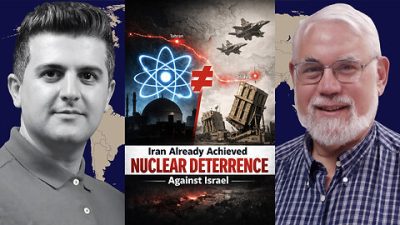
Prof. Ted Postol: Iran Already Achieved Nuclear Deterrence Against Israel
or go to
Aletho News Archives – Video-Images
From the Archives
How the occupied mentality syndrome works
Saudi Arabia on the American chessboard – Part 3
By B. J. Sabri | American Herald Tribune | June 27, 2016
Read part 2: “The occupied mentality Syndrome“
Previously I argued whether Saudi Arabia’s repeated involvements in U.S. interventions and wars stem from free national will or in response to a specific condition. For starters, in Saudi Arabia there is no national will. In Saudi Arabia, the national will is the will of the Al Saud clan. Still, when a major Arab state allies itself with a superpower that committed unspeakable crimes against humanity in almost every Arab country, then something is wrong. This fact alone should compel us to examine the U.S.-Saudi relation for one exceptional reason. As a result of the U.S.-Saudi wars, hundreds of thousands of people in Afghanistan, Iraq, Iran, Libya, Syria, Yemen, and Somalia have lost their lives. Millions became displaced in their own homelands. And millions more rendered refugees.
Attributing the Saudi policies to the bonds of “partnership” with the U.S. is frivolous. There are no bonds between these two thugs except those of business, military deals, secret plots, and wars. Proving this point, bonds such as these have no space for the American and Saudi peoples to share significant cultural or societal exchanges. If partnership is not the reason for the Saudi contribution to the U.S. strategy of empire and imperialism, then another reason must exist.
This leads to three possibilities. … continue
Blog Roll
 Aletho News
- Hezbollah hits Israeli warship off Lebanon’s coast, sets it aflame
- Iran slams US strikes on B1 bridge, Mahshahr petrochemical plants as ‘blatant acts of state terrorism’
- In letter to UN chief, Araghchi warns of dire consequences of US-Israeli attacks on Iran’s nuclear facilities
- Why the CIA conspiracy to invade Iran with Kurdish militias failed
- Why Are Upbeat US Claims About Mission to Rescue Pilot ‘Highly Questionable’?
- Aircraft destroyed during US ‘rescue’ of downed F-15 pilot cost more than $100 million each
- Washington University removes professor who condemned US-Israeli war on Iran
- Russia Warns of Retaliation as UK Authorizes Seizure of Vessels
- Serbia thwarts plot to bomb Russia-Hungary gas pipeline – Vucic
- Al Mayadeen voices solidarity with Dr. Marandi amid death threats
- If Americans Knew
- In Iran, Israel-US take aim at “reason, research, and freedom of thought” – Daily Update
- US loses planes over Iran, Israel downgrades Lebanon war goals – Daily Update
- Israel Is Blocking Palestinians from Easter at Church Where Jesus Resurrected
- Plot to assassinate Palestinian activist follows harassment campaign promoted by Zionist groups and elected officials
- Prominent New York synagogue hosts presentation on why U.S. Jews should support the ethnic cleansing of Gaza
- Tapper vs. Piker: Is the CNN Anchor Auditioning for David Ellison?
- Shouldn’t Democrats Be Able to Condemn Genocide?
- Israel-US kill negotiators, destroy civilian structures, but Iran’s military capabilities still largely intact – Daily Update
- ‘War crime’: Global condemnation as Israeli ministers celebrate death penalty law targeting Palestinian prisoners
- 7 Ways Israel Is Turning Lebanon Into Gaza
- No Tricks Zone
- An Inconvenient Tree: Uncovered In Alps… Europe Much Warmer Than Today 6000 Years Ago
- New Study Reports A 60% Slowdown In Greenland’s Ice Loss Rate In The Last Decade
- Low Intensity Tornado Wrecks Major Solar Farm, Creating A Potential Toxic Dump
- New Study Finds Warming Saves Lives…Cold Temperatures 12 Times More Deadly Than Excess Heat
- German Science Blog Accuses PIK Climate Institute Of Hallucinating Climate Tipping Points
- Devastating Assessment Of Comirnaty Vaccine By Former Senior Pfizer Europe Toxicologist
- New Study: CO2 Is ‘Effectively Negligible’ As An Explanatory Climate Change Factor Since 2000
- Former Pfizer Toxicologist Dr. Helmut Sterz Tells Bundestag Hearing Pfizer Vaccine Should Have Never Been Approved
- Energy Expert: Germany’s Nuclear Phaseout Was A “500 Billion Euro Mistake”
- New Research: South Australia’s Mid-Holocene Sea Surface Temperatures Were 4°C Warmer Than Today
 Aletho News