Journalism groups blast Obama admin for ‘politically driven suppression of news’
RT | July 10, 2014
In a letter to President Obama, 38 journalism groups criticized his administration for severely limiting access to federal agencies and a general politically-motivated suppression of information despite the president’s pledge of historic transparency.
Led by the Society of Professional Journalists (SPJ), the groups said that efforts by government officials to curb free-flow of news and information to the public has reached a peak during the Obama administration following a similarly stifling culture during prior president George W. Bush’s tenure in the White House.
“Over the past two decades, public agencies have increasingly prohibited staff from communicating with journalists unless they go through public affairs offices or through political appointees,” wrote SPJ president David Cuillier. “This trend has been especially pronounced in the federal government. We consider these restrictions a form of censorship — an attempt to control what the public is allowed to see and hear.”
Cuillier added that while agency personnel are kept mostly off limits to journalists, they are ”free [to] speak to others — lobbyists, special-interest representatives, people with money — without these controls and without public oversight.”
The groups said that Obama’s recent lamentations of a growing cynicism of government were peculiar given his administration’s broad efforts to shroud official action and policy maneuvers in secrecy, all of which “undermines public understanding of, and trust in, government,” the letter reads.
“You need look no further than your own administration for a major source of that frustration – politically driven suppression of news and information about federal agencies. We call on you to take a stand to stop the spin and let the sunshine in,” wrote Cuillier.
The administration has previously dismissed similar sentiment from other journalism and watchdog groups, including the White House Correspondents’ Association.
The letter cites examples of alleged information censorship, including officials repeatedly blocking reporters’ requests to talk with specific agency staff, long delays in answering questions that disregard reporters’ deadlines, officials’ proclivity for offering information anonymously or “on background,” and federal agencies completely blackballing of certain journalists who write critically of them.
“In many cases, this is clearly being done to control what information journalists — and the audience they serve — have access to. A survey found 40 percent of public affairs officers admitted they blocked certain reporters because they did not like what they wrote,” the letter stated.
The groups recommended that the president should encourage all federal agencies and their public employees to speak freely with reporters. In addition, they called for an ombudsman to keep track of any suppression efforts.
“Create an ombudsman to monitor and enforce your stated goal of restoring transparency to government and giving the public the unvarnished truth about its workings,” the letter said. “That will go a long way toward dispelling Americans’ frustration and cynicism before it further poisons our democracy.”
In March, journalists at the Associated Press reported that their research indicated that the US government has withheld more information than ever under the authority of President Obama. Their findings were based mainly on how difficult it is to successfully request documents from the White House through the US Freedom of Information Act.
In addition, the Obama administration has been criticized for using the punitive, World War I-era Espionage Act to punish whistleblowers who leak classified government information to journalists, in effect chilling press freedoms.
US blacklists companies accused of Hezbollah ties
Al-Akhbar | July 10, 2014
The United States moved Thursday to blacklist a group of companies it claimed covertly helped Lebanon’s powerful Hezbollah movement acquire components for surveillance drones.
The US Treasury placed sanctions on Beirut-based Stars Group Holding, which it said purchased electronics and other technology via offices in China and Dubai to support Hezbollah’s military operations.
That included the development of unmanned aerial vehicles (UAVs) that the Treasury claimed were used against rebels in Syria and for surveillance of Israeli sites.
The material bought by Stars Group included engines, communications, electronics, and navigation equipment acquired from suppliers in the United States, Canada, Europe and Asia.
It named for sanctions the company, its subsidiaries, its owner, executives Kamel Amhaz and Issam Amhaz, and two Stars Group managers, Ayman Ibrahim and Ali Zeaiter.
The sanctions place a freeze on any of their assets under US jurisdiction and ban Americans from any business with them.
(AFP, Al-Akhbar)
“Tyrant”, Hollywood’s novel plot to vilify Arabs
By Roqayah Chamseddine | In Homage to the Struggle | July 10, 2014
Our earliest intimate interaction with the foreign characters in Tyrant comes in the form of an aggressive sexual assault where we quickly learn that Bassam’s older brother Jamal is a sexual predator and philanderer in a scene featuring the first close encounter with an Arab woman. She is brutalized while her husband and small children wait outside, clearly able to hear the sounds. Juxtapose this with the show’s inaugural note between Bassam’s American and non-Arab wife, and children, who are made to appear as the quintessential American family, as the teens sit discussing the prospect of being attacked during their visit to Abbudin by “them.” We are sent flashing back and forth between the naiveté of Bassam’s immediate family and episodes of violence that overwhelm and saturate the fictional land of Abbudin, with the sounds of traditional Arabic music tossed at viewers as a constant emotional trigger which exaggerates the foreign element of the land and those who occupy it. “You better be careful, this isn’t America,” warns Bassam’s teenage daughter after her brother is told he’ll be attending a bachelor party. The Arab man is a daunting figure after all and even during the bachelor party, which is held at a sauna, there is no escaping his malevolence. Bassam calls his brother out of the sauna so they may deal with the relative of a man who is allegedly planning to attack the wedding Bassam’s family is in Abbudin to attend, and then he watches as his brother beats this man nearly to death. The towel draped around Jamal falls as he applies blow after blow to the defenseless man and then attempts to cut off his fingers. Not even the shame of his nakedness pulls him away from wielding violence.
As the story marches forward we notice that Bassam, who had left Abbudin for a more tedious but unrestrained life in America, is clearly disturbed, possibly dealing with post-traumatic stress disorder, and cannot even attend his nephew’s wedding without being reminded of the brutality he witnessed as a child. In a flashback we see a younger Jamal being pulled out of a vehicle by his father so he can shoot a man in the head. “The Arabs teach their children to hate,” as the stale orientalist adage goes, so it is not a far stretch for the writers to construct a murderous child influenced by the savagery of his culture. The audience now knows that his violence was part of the greater Arab mentality, which fosters a culture of hate and barbarism. Jamal’s savagery continues as we watch it being unleashed upon the next stock character we see in film and television – the Arab woman – the docile, obedient, easily manipulated and disposable creature. After witnessing his newlywed son’s wife laughing publicly alongside a male attendee of the wedding the audience immediately knows where things are going. The Arab man is angry. How dare she dishonor her husband and his relatives. Jamal soon follows her into the dressing room where she stands playing with her hair, and then the tension builds. His hands glide around the lines of her face as he lectures her on purity. “It would break Ahmed’s heart if the woman he married was not pure,” he whispers. Then, as we watch her beg him to stop, viewers are once again thrown into a brutal rape scene, this time with the second Arab woman they have been familiarized with. This is not even the last rape scene the writers crammed into the 50-some minute pilot, as later on we are shown the Arab woman at the beginning being viciously raped once more by Jamal in a moving vehicle. If you did not already view Jamal’s character as being nothing more than an insatiable barbarian it is pounded into you for good measure in that scene.
Bassam’s character, who may be categorized as being the “good Arab” in this series, is slowly undressed as we begin to examine his psychology and that of the Arab mind. Bassam is emotionally inhibited at all times and once in Abuddin his wife begins to feel a great disconnect, and the distance only grows after Bassam slaps his son across the face, twice, as she looks on – terrified. Here we find that even the “good Arab” is a monster in disguise and his identity as an American is nothing more than a frail shroud of deception, and the violence of the Arab culture is one which Bassam cannot escape, no matter how long his self-imposed exile lasts. Bassam’s wife grows anxious, confessing “I don’t know who you are anymore, I don’t think I ever did,” and suddenly a flashback: Jamal, who had been instructed by his father to kill a man, drops the gun and scurries back into the vehicle. As his father screams for him to return and finish the job we see Bassam, the younger of the pair, exit the car and stand before the man. Without hesitation he coldly points the gun at the weeping man and shoots him twice, killing him. Bassam does not flinch. The point being made here is that this is Bassam at his core, and at his core he is frighteningly cold.
The stock characters and sounds in Tyrant are the same as all other mainstream films and TV shows involving the Arabs – men with darkened beards, unnerving and penetrating rounds of ululation from veiled women and the muezzin’s call to prayer as a haunting backdrop. Then there are the elite Arabs who are flashy, play American music, and mingle with affluent white Americans. They do not adhere to religious dress codes, nor to religious moral codes, and they drink and fill themselves with the best liquor money can buy. Yet despite all this they cannot break away from the shackles of Arab society. No matter how Westernized the elite Arab woman is, with her casting away of the hijab and her captivating sexual presence, she remains a device, written into this script as being almost entirely silent but for whimpers and terse statements bolstering the fanaticism of male characters. Bassam’s teenage daughter is written into the script as being intellectually superior to the foreign Arab woman – when she is invited to the bachelorette party and told she would have fun and get a “henna tattoo” she scoffs, refusing to take part in what she finds to be a “patriarchal tradition.” The Arab woman is either dressed in subdued colours, her head lowered and sexually inhibited or she is a sensual and hyper-exotic creature that still has no authority over her sexuality but for being exploited and dehumanized by the Arab man. In Tyrant, and other similar television shows, the Arab man is a savage creature who rapes and pillages. He lovingly kisses his mother’s cheeks and hands but strikes his wife’s face and brings her crumbling to the floor beneath him. He gets drunk, dresses like the white man and speaks like the white man in bouts of broken English but is nothing more than an animal in a suit.
The evil Arab archetype is ever-present in film and television – the Arab is inept, blood-thirsty and unscrupulous in the serial drama 24, in Homeland we see the Arab and Muslim through American eyes as an abusive and murderous infiltrator and in Tyrant the one-dimensionality of the Arab is almost cartoonish. The impacts of these orientalist depictions are far reaching. These portrayals work to justify the day-to-day xenophobia Arabs and Muslims face to Israel’s current butchery in the besieged Gaza Strip; from encouraging the US spy on Muslim-Americans to rationalizing setting a Palestinian boy on fire or carpet bombing an entire people. Hollywood has not moved far beyond Lawrence of Arabia or Disney’s stereotypical portrayal of Arabs in the fictional desert-land of Agrabah who “will cut off your ear if they don’t like your face” (as the original lyric from the soundtrack goes). “It’s barbaric,” sang the peddler in Agrabah, “but hey, it’s home!” — the exotic natives dancing with veils in the streets, gargantuan swords, sorcery and over-exaggerated accents are as much a part of film and television today as they were long ago. In the 1992 film the protagonist and thief Aladdin (nicknamed “Al”) takes magic carpet rides with Princess Jasmine while in the TV series Tyrant Bassam (‘Barry’) and his family arrive in Abbudin in style by way of airplane, where they are the only passengers aboard, and their feet land on thick oriental rugs that have been laid on the ground. Here they come, straight from an American whole new world to the desert.
Roqayah Chamseddine is a Sydney based Lebanese-American journalist and commentator. She tweets @roqchams and writes ‘Letters From the Underground.‘
Israeli forces engaged in punitive destruction of homes in the Gaza Strip
Palestinian Center for Human Rights | July 10, 2014
The Palestinian Centre for Human Rights (PCHR) is strongly concerned by Israel’s conduct of its offensive on the Gaza Strip, and in particular by the widespread punitive targeting of homes belonging to members of Hamas and Islamic Jihad.
In recent days, the Israeli air force has conducted two phase targeting of fighters’ homes whereby a ‘warning’ is issued to the house in question so that it may be evacuated. This warning takes the form of either a dud missile (termed ‘roof knocking’) or a phone call. The house is then subsequently targeted and destroyed, typically 15 minutes later.

Photo by Palestinian Center for Human Rights
PCHR highlights that during active hostilities, only fighters and military objectives may be targeted. Civilians and civilian objects are protected from direct attack.
Article 52(2) of Additional Protocol II to the Geneva Conventions defines a military objective as: ‘those objects which by their nature, location, purpose or use make an effective contribution to military action and whose total or partial destruction, capture or neutralization, in the circumstances ruling at the time, offers a definite military advantage.’
Unless a home is being used to ‘make an effective contribution to military action’ – i.e. unless it is being used to store weapons or as a base from which attacks are launched – it cannot be considered a military objective. A home cannot be classified as a military objective merely because it owned by a fighter. Instead, it must be recognised as a civilian object and protected from direct attack. Issuing a warning does not remove this protection from direct attack.
Significantly, Article 52(3) of Additional Protocol II to the Geneva Conventions clearly states: ‘In case of doubt whether an object which is normally dedicated to civilian purposes, such as a place of worship, a house or other dwelling or a school, is being used to make an effective contribution to military action, it shall be presumed not to be so used.’
From the facts of the cases documented by PCHR, in the majority of instances there does not appear to be any military necessity justifying the destruction of Hamas or Islamic Jihad members’ homes. To-date, no secondary explosions have been documented indicating that the houses were used for weapons storage. PCHR highlight that the Gaza Strip is one of the most densely populated areas in the world, and that the targeting of homes inevitably results in significant collateral damage to individuals and property nearby.
PCHR is forced to conclude that the houses are being destroyed as a ‘punitive’ measure, targeting members of Hamas and their families. PCHR notes that Israel has recently resumed its policy of punitive house demolitions in the West Bank. This appears to be a continuation of the Dahiya doctrine, whereby civilian suffering is deliberately caused in order to act as a deterrent. This doctrine was developed during the 2006 Lebanon War, and continued during Operation Cast Lead.
The destruction of homes has resulted in a number of civilian deaths to-date. For example, in an attack on the Kaware family home in Khan Younis, 7 civilians were killed, and 28 injured, while an attack on the Hamad family home in Beit Hanoun resulted in the death of 6 civilians.
The direct targeting of civilians and civilian objects is a war crime. All suspected war crimes must be investigated and, if appropriate, those responsible must be prosecuted.
UN chief calls for ceasefire in Gaza Strip
Israeli Prime Minister Netanyahu: a ceasefire with Palestinians is not “even on the agenda”

Press TV – July 10, 2014
UN Secretary General Ban Ki-moon has called for a ceasefire between Israelis and Palestinians, asking the international community to take actions to stop the violence in Gaza.
“It is now more urgent than ever to try to find common ground for a return to calm,” Ban said at a meeting of the UN Security Council on Thursday.
The UN chief expressed his concerns over the “Palestinian deaths and injuries as a result of Israeli operations.” He said, Israel has carried out more than 500 air strikes and that the Palestinian resistance movement Hamas responded with firing more than 550 rockets.
Ban said some 900 Palestinians have been displaced in the besieged Gaza Strip since Israel began its offensive on Tuesday, while 150 homes were destroyed. He put the death toll at 88 and noted that about 340 others were injured.
“It is clear that the international community must accelerate efforts to achieve an immediate halt to this escalation and reach a durable ceasefire,” he also told the council.
Ban’s remarks came only hours after Israeli Prime Minister Benjamin Netanyahu told Knesset’s foreign affairs and military committee that a ceasefire with Palestinians is not “even on the agenda.”
Palestinian ambassador to the UN Riyad Mansour has said Tel Aviv began the violence in the enclave.
“They started the attack against our people … and the rockets started after that,” he said after briefing the council.
He stressed that Palestinians would honor any ceasefire in Gaza, but it is clear that Israelis “are not interested in a ceasefire and stopping the rockets.”
“The Palestinian people are united … and we hope the Security Council can act in accordance with its responsibilities,” Mansour added.
Justice Corrupted
By Lawrence Davidson | To The Point Analyses | July 10, 2014
Dogmatists in the Justice System
Scattered throughout the ranks of U.S. federal prosecutors and judges there have always been men and women who are unwilling to make a distinction between their own biases and the rules of evidence that are designed to keep the system focused on the goal of justice. Such closed-minded individuals, embedded in the system, can find themselves set free to act out their prejudices by special circumstances. One might think back to the “hanging judges” who appeared here and there on the American frontier in the 19th century. Being among the few enforcers of law and order in an otherwise anarchic environment, they indulged their fantasies of playing the wrathful god.
The “War on Terror” has likewise created a special circumstance that has liberated Justice Department dogmatists: Islamophobes, Zionists, neoconservatives and others who fancy themselves on a special mission to protect the nation from evil and conspiratorial forces. And, as with the hanging judges before them, the result has been an enhanced possibility not of justice, but rather of the miscarriage of justice.
The Case of Sami Al-Arian
In the past twenty years one of the most notable victims of doctrinaire judges and prosecutors has been Sami Al-Arian. Al-Arian is the son of Palestinian-refugee parents. He came to the United States in 1975 to attend university and earned his degree in computer systems engineering. Eventually he earned a Ph.D. and obtained a tenure-track position at the University of South Florida.
Not only did Al-Arian become a prominent professor, winning several teaching awards, but he also became a community activist, defending the civil liberties of minority groups, particularly Muslim Americans. During the Clinton administration he was an active campaigner against the Justice Department’s pre-9/11 use of “secret evidence” to hold people in jail indefinitely. He also actively and publicly supported the right of Palestinians to resist Israeli oppression.
At some point in the mid-1990s what may have been a coordinated effort to ruin Dr. Al-Arian developed among neoconservative and Zionist elements. Steven Emerson, a man who has made his living as a faux expert on terrorism and a professional Islamophobe, accused one of Al-Arian’s organizations, the World and Islam Studies Enterprise, of being a “terrorist front.” This accusation proved to be baseless, but it nonetheless led other Islamophobe radicals to focus on Al-Arian. Some of these people resided within the Justice Department and the FBI, and they went on a fishing expedition looking for alleged connections between Al-Arian and a recently designated “terrorist organization” called the Palestine Islamic Jihad (PIJ).
During the 2000 presidential election Al-Arian became a prominent figure in national politics as it played out in Florida. His major concern was the government’s use of secret evidence, and it was George W. Bush who promised to rein in the practice. Therefore Al-Arian backed Bush in the election. His trust in this regard proved horribly misplaced.
On September 26, 2001, Bill O’Reilly invited Al-Arian onto his TV show ostensibly to discuss Arab-American reactions to the 9/11 attacks. It was a trap. O’Reilly immediately asked Al-Arian if he had said “Jihad is our path. Victory to Islam. Death to Israel” at a rally thirteen years before (in 1988). Though Al-Arian tried to explain that it was a reference to his support for Palestinian resistance against apartheid policies in Israel, O’Reilly proclaimed that the CIA should watch Al-Arian from now on. Almost at once Al -Arian started to receive death threats. At this point the University of South Florida placed him on administrative leave. He would eventually be fired by the University.
The O’Reilly interview may have been a public relations booster for the ongoing Justice Department investigation mentioned above. That lasted until September 2003, when Al-Arian and three others were indicted on 25 counts of “racketeering” for the PIJ. The Bush administration’s Attorney General John Ashcroft went on television to extol the indictment as a great blow against terrorism (thus confusing an indictment with a conviction) that was made possible by the extensive powers of the USA PATRIOT Act. Among these powers were those George W. Bush had promised Al-Arian he would rein in.
After a 5-month, 13-day trial Al-Arian was acquitted on 8 counts and the jury deadlocked on the remaining 17. When a juror was interviewed after the trial and asked what was lacking in the government’s case he replied, “evidence.” Nonetheless, the outcome allowed the government to hold Al-Arian pending retrial on those deadlocked counts. The case had a distinctly contrived and corrupt feel to it – the result of Islamophobes turned loose by the events of 9/11 to substitute their own biases for the rules of legal evidence.
In 2006 Dr. Al-Arian was still in prison. His health was deteriorating and the strain on his family (his wife and five children) was great. Given the situation he agreed to a plea bargain agreement whereby he would plead guilty to one count of acting in a fashion that benefited the PIJ. In exchange the other counts would be dismissed by the government. He would be incarcerated for a relatively short period on the guilty count with time already served counting toward this sentence. In order to secure the plea bargain, Al-Arian also had to agreed to be deported upon release.
Once more the government, in this case the judge and the federal prosecutor, proved untrustworthy. Despite the jury verdict, the judge had decided that Sami Al-Arian was a “master manipulator” and “a leader of Palestine Islamic Jihad.” This was exactly what the jury decided the evidence could not substantiate. However, the judge, moved by emotional convictions, had equated statements on the part of Al-Arian showing understanding of acts of Palestinian resistance with actual material support of those actions. In doing so the judge went beyond the rules of evidence and corrupted the system he was sworn to serve. The judge gave Dr. Al-Arian not the minimum recommended in the plea bargain but the maximum of 57 months for the one count to which he pled guilty.
Then began a series of additional prosecutorial steps involving the issuing of repeated subpoenas demanding that Al-Arian testify at grand jury investigations. This was also in defiance of his plea bargain and so he refused. He was held in civil and later criminal contempt which added substantially to his jail time.
So egregious was the behavior of the prosecutors seeking his testimony that another, more objective judge eventually stepped in and halted the government’s efforts to force Sami Al-Arian’s to appear before grand juries. Dr. Al-Arian was also let out of prison and allowed to live under a liberal form of house arrest at his daughter’s home in Virginia. His case was held in a kind of legal limbo until just recently, when on 27 June 2014, prosecutors decided to drop all charges against Al-Arian. One should not think of this as a total victory, for the government still intends to deport Sami Al-Arian.
Sami Al-Arian and his family had to endure eleven years of persecution on the basis of assumptions that were substituted for evidence. In the process the life of an upright man, devoted to teaching, charitable works and the cause of a persecuted people, was ruined. The people who did this to him simultaneously corrupted the justice system the integrity of which they were sworn to uphold.
Other Victims
While Sami Al-Arian was perhaps the most high-profile of these cases, his was not the only one. Four members of the Holy Land Foundation charity were charged with materially aiding Hamas when, in fact, all the foundation did was supply money to charitable Palestinian organizations which had been accredited by Israel. It took two trials, one in 2007 and another 2008, for the U.S. government to eke out a conviction on weak evidence that included the testimony of anonymous Israeli witnesses. The Supreme Court refused to interfere with this prima facie unconstitutional procedure.
At present a Palestinian civil rights activist in Chicago, Rasmea Odeh, is being prosecuted for an alleged immigration fraud for failing to report on her immigration application that forty-five years ago, when she was a child, she was arrested by the Israeli military and briefly held without charge. The same prosecutor who went after the Holy Land Foundation is involved in the prosecution of Odeh.
Conclusion
Times of high tension often result in the lowering of important standards in the application of law. They do so by heightening the fears of the general public, which in turn gives license to bigots embedded in the justice system such as judges and prosecutors who have Islamophobic prejudices, Zionist biases, or neoconservative delusions. All of these motives may come into play in cases such as those mentioned above.
Normally the appeals process should catch and reverse such problematic behavior. However, if the period of public fear is prolonged, the appeals process might also become corrupted by public hysteria and political pressures. It took Sami Al-Arian eleven years to overcome his prosecutorial ordeal and those of the Holy Foundation members and Rasmea Odeh are ongoing.
The last word on this dilemma should go to Sami Al-Arian’s son, Abdullah, who in a recent statement observed,“It’s a sad day when you have to leave America to be free.” Indeed, when dogmatists are in control none of us are really free.
NYT Protects the Fogh Machine
By Robert Parry | Consortium News | July 9, 2014
A principal way that the New York Times and other leading U.S. news outlets engage in propaganda is by selecting which facts to include in a story and which ones to exclude, a process exemplified by a Times article on an interview in which the head of NATO excoriates Russia over Ukraine.
NATO Secretary General Anders Fogh Rasmussen accused Russia of playing a “double game,” warned the West not to be fooled by the peaceful overtures of Russian President Vladimir Putin, and declared, “There’s no doubt that Russia is heavily engaged in destabilizing eastern Ukraine, and they continue their activities.”
However, since Rasmussen provided no evidence, his credibility would seem to be central to this story. And, on Wednesday, correspondents Mark Landler and Michael R. Gordon provided some background about Rasmussen, noting that he served as prime minister of Denmark before getting the NATO gig in 2009.
But what is excluded from the Times’ story is what the readers would need to evaluate Rasmussen’s honesty as well as his own ability to weigh evidence. Not mentioned by Landler and Gordon was the fact that this is the same Anders Fogh Rasmussen who swallowed President George W. Bush’s bogus case for invading Iraq hook, line and sinker.
Before the U.S. invasion in 2003, Rasmussen famously declared that “Iraq has WMDs. It is not something we think; it is something we know. Iraq has itself admitted that it has had mustard gas, nerve gas, anthrax, but Saddam won’t disclose. He won’t tell us where and how these weapons have been destroyed. We know this from the UN inspectors, so there is no doubt in my mind.”
Of course, pretty much everything that Rasmussen declared was wrong, but it succeeded in tricking the Danish parliament into voting to join Bush’s “coalition of the willing” to invade Iraq. Yet, while Rasmussen was rewarded for his cooperation and his duplicity with the NATO job, a Danish intelligence analyst Frank S. Grevil was imprisoned for four months for disclosing documents that exposed Rasmussen’s deception.
While such an arrangement might now seem normal for Americans who have gotten use to prosecutions of truth-tellers who expose war crimes and immunity for liars who start unnecessary wars, Rasmussen’s falsehoods on Iraq – and his role in that criminal invasion – are facts that should have been provided to the Times’ readers as they judge whether to believe his current allegations about Russia and Ukraine.
But Landler and Gordon saw fit to protect the Fogh machine by leaving out his unpleasant history, all the better to sell the preferred narrative blaming the entire Ukraine crisis on Russia and Putin. [For more on the New York Times’ journalistic malfeasance, see Consortiumnews.com’s “Will Ukraine Be NYT’s Waterloo?”]
Checkered Journalistic Careers
Michael Gordon’s bias in favor of U.S./NATO propaganda also has a long history. He co-wrote, with Judith Miller, the infamous aluminum tube story of Sept. 8, 2002, relying on U.S. intelligence sources and Iraqi defectors to frighten Americans with images of “mushroom clouds” if they didn’t support Bush’s invasion of Iraq. The timing played perfectly into the administration’s advertising “rollout” for the Iraq War.
The story turned out to be false and to have unfairly downplayed skeptics of the nuclear-centrifuge scenario. The aluminum tubes actually were meant for artillery. But the article provided a great impetus toward the Iraq War, which ended up killing nearly 4,500 U.S. soldiers and hundreds of thousands of Iraqis.
Gordon’s co-author, Judith Miller, became the only U.S. journalist known to have lost a job over the reckless and shoddy reporting that contributed to the Iraq disaster. For his part, Gordon continued serving as a respected Pentagon correspondent.
Gordon’s name also showed up in a supporting role on the Times’ botched “vector analysis” story of Sept. 17, 2013, which nearly helped get the United States into another Mideast war, with Syria. That story traced the flight paths of two rockets, recovered in suburbs of Damascus after the Aug. 21 sarin gas attack, back to a Syrian military base 9.5 kilometers away.
The article became the “slam-dunk” evidence that the Syrian government was lying when it denied launching the sarin attack that killed several hundred people. However, like the aluminum tube story, the Times’ ”vector analysis” ignored contrary evidence, such as the unreliability of one azimuth from a rocket that landed in Moadamiya because it had struck a building in its descent. That rocket also was found to contain no sarin, so it’s inclusion in the vectoring of two sarin-laden rockets made no sense.
But the Times’ story ultimately fell apart when rocket scientists analyzed the one sarin-laden rocket that had landed in the Zamalka area and determined that it had a maximum range of about two kilometers, meaning that it could not have originated from the Syrian military base 9.5 kilometers away. C.J. Chivers, one of the co-authors of the article, waited until Dec. 28, 2013, to publish a halfhearted semi-retraction. [See Consortiumnews.com’s “NYT Backs Off Its Syria-Sarin Analysis.”]
Last April, Gordon was involved in another journalistic fiasco when he and two other correspondents fell for some grainy photographs peddled by the U.S. State Department to supposedly prove that Russian military personnel — who had been “clearly” photographed in Russia — turned up fighting in Ukraine.
However, two days later, the Times was forced to retract the story when it was discovered that a key photo that was supposedly taken in Russia was actually snapped in Ukraine, destroying the premise of the article. [See Consortiumnews.com’s “NYT Retracts Russian Photo Scoop.”]
Taking the Israeli Line
Landler, the Times’ White House correspondent, has been another propaganda specialist when it comes to framing foreign confrontations in ways favorable to the U.S. government and its allies. For instance, on March 5, 2012, he appeared on MSNBC and offered this account of Israeli-Iranian tensions:
“The Israelis feel the window for that [denying Iran the capability to build nuclear weapons] is closing and it’s closing really fast, and if they allow it to close without taking military action, they would find themselves in a position where the Iranians suddenly are in possession of nuclear weapons, which they’ve threatened already to use against Israel. As the Israelis always say, that’s an existential threat to Israel, which is something we don’t necessarily feel here in the United States.”
Landler’s account was hair-raising, claiming that Iranians have “threatened already to use [nuclear weapons] against Israel” which the Israelis understandably would perceive as an “existential threat.” But Landler’s statement simply wasn’t true. Iranian leaders continue to deny that they even want nuclear weapons, so it makes no sense that they would threaten to use them against Israel.
For instance, in February 2012, Iran’s Supreme Leader Ali Khamenei, who controls the armed forces, called “the possession of nuclear weapons a grave sin” and said “the proliferation of such weapons is senseless, destructive and dangerous.” He insisted that “the Iranian nation has never pursued and will never pursue nuclear weapons.”
Further, the U.S. intelligence community reported in 2007 that Iran stopped research work on a nuclear weapon in 2003 and has not resumed that effort. That assessment has been reaffirmed periodically and remains the position of the CIA and other intelligence agencies.
Beyond that, for Iran to threaten to “annihilate” Israel with its hypothetical nuclear weapons would represent one of the strangest threats in world history. Here is a nation without nuclear weapons – and whose top leader disavows any intent to get nuclear weapons – supposedly threatening to use those non-existent weapons against a nation which has a large stockpile of nuclear weapons.
So, perhaps it’s no surprise that the Times would spare its readers the relevant background on NATO chief Anders Fogh Rasmussen’s credibility because otherwise the supposed “newspaper of record” might also be expected to explain why it continues to entrust sensitive stories to journalists who have a history of slanting information in ways that may advance their careers but misleads the public.
~
Investigative reporter Robert Parry broke many of the Iran-Contra stories for The Associated Press and Newsweek in the 1980s. You can buy his new book, America’s Stolen Narrative, either in print here or as an e-book (from Amazon and barnesandnoble.com).
David Cameron spoke to Benyamin Netanyahu today. Here’s what was said.
Interventions Watch | July 9, 2014
From the Gov.uk website:
‘The Prime Minister spoke to Prime Minister Netanyahu earlier this evening about the situation in Israel. The Prime Minister strongly condemned the appalling attacks being carried out by Hamas against Israeli civilians. The Prime Minister reiterated the UK’s staunch support for Israel in the face of such attacks, and underlined Israel’s right to defend itself from them’.
So then, Israel simply defending itself from Hamas’ attacks on Israeli civilians.
The actual facts, of course, speak of a somewhat different reality. According to medical sources in the Gaza strip:
-
Number of Israelis killed since the launch of ‘Operation Protective Edge’: 0
-
Number of Palestinians killed since the launch of ‘Operation Protective Edge’: ‘at least 47′, of which 41 were civilians, and 12 children.
Nevermind that the very idea of ‘defending yourself’ against a people you have spent decades occupying, dispossessing, racially oppressing, collectively punishing and generally brutalising is a complete nonsense.
It doesn’t need me to point out that David Cameron’s supposed ‘humanitarianism’ and commitment to ‘freedom’ – which we are told was behind his decision to bomb Libya, and to almost bomb Syria – is a complete sham. He is simply the latest mouthpiece for a British Establishment that has long both committed and supported the perpetration of war crimes and atrocities in the service of colonial domination, while talking the language of human rights and freedom.
But statements like that one help to drive the point home.
And they illuminate where the BBC have been taking their lead from, perhaps:

(BBC News Online front page, circa 01:00 A.M., July 9th 2014)
Prosecution of Public Officials for Corruption Declines under Obama
By Noel Brinkerhoff | AllGov | July 9, 2014
Going after government officials for corruption has not been a priority of the U.S. Department of Justice under President Barack Obama, compared with his predecessors.
Cases of public corruption that have been prosecuted are down this year versus what they were last year, according to the Transactional Records Access Clearinghouse (TRAC) at Syracuse University.
TRAC also reports that the number of public corruption prosecutions is noticeably down during the Obama administration when compared to those pursued under Presidents George W. Bush and Bill Clinton.
As of July 2014, the Justice Department has filed 302 corruption prosecutions, putting the agency on a pace of 518 for this year.
If this rate holds up, the total would represent an 18.6% decline from 2013, when there were 636 prosecutions.
The drop is even sharper when the Justice Department numbers are put up alongside those from 2004 (down 32% when there were 760 cases under Bush) and 1994 (down 27% when 711 were reported under Clinton).
TRAC says public corruption referrals sent from federal agencies to Justice have averaged 1,674 during the past five years. This total is about the same as under Bush (1,663 referrals).
“The number of prosecutions, however, has fallen under Obama because a smaller percentage of these referrals (39.5%) ends up being pursued by prosecutors,” TRAC states. “So far during FY 2014 only about one out of every three (34.0%) were prosecuted. During the Bush years, 41.6 percent of the official corruption referrals resulted in prosecution.”
To Learn More:
Official Corruption Prosecutions Decline Under Obama (TRAC Reports)
Russia, Serbia agree €2.1bn South Stream construction deal
RT | July 9, 2014
Serbia has signed a 2.1 billion euro contract with Gazprom subsidiary Centrgaz to construct the South Stream pipeline across its territory. There is increasing pressure from the EU to suspend the project because it claims it breaks competition law.
Centrgaz will be involved in the design, procurement, construction and installation activities, personnel training and commissioning, while Serbian subcontractors will carrying out some of the work, according to South Stream.
The signing ceremony was held in Serbia on Tuesday between South Stream Serbia and Centrgaz.
 Gas should be flowing through the Serbian part of the pipeline by the end of 2016, according to RIA Novosti.
There has been mounting pressure from the EU to put the project on hold, as it is seen to breach European law.
Serbia had appeared to have halted the construction process, following Bulgaria’s move, however both countries later denied they were not going forward.
Most of the participating countries have confirmed their commitment to South Stream construction.
On Wednesday Russia and Italy said they would continue work on South Stream and were ready “to settle all of the issues, including those that concern dialog with the European Commission,” according to Russian Foreign Minister Sergey Lavrov.
On Tuesday, Slovenia’s Foreign Minister Karl Erjavec said the country wanted “South Stream to pass through our territory.”
Further support for the Russian-led project came from Bulgaria on Monday, when the Prime Minister Plamen Oresharski said it was one of the country’s priority projects. The comment was made after a meeting with Russian Foreign Minister Sergey Lavrov in Sofia. “I believe that we have enough arguments to continue the project,” Oresharski said, adding that the government will work as hard as it can to continue it within the European legislation.
Russian Prime Minister Dmitry Medvedev said the deal on the Serbian part of South Stream would “… mean the transition of our relations with Serbia to a new phase.”
South Stream is a Gazprom project expected to deliver 63 billion cubic meters of Russian gas annually to Europe bypassing Ukraine, which has proved unreliable as a transit partner. The on land part of South Stream goes through Bulgaria, Serbia, Hungary, Slovenia and Austria.
Featured Video
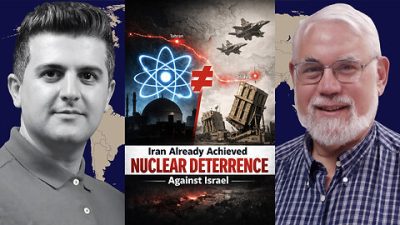
Prof. Ted Postol: Iran Already Achieved Nuclear Deterrence Against Israel
or go to
Aletho News Archives – Video-Images
From the Archives
How the occupied mentality syndrome works
Saudi Arabia on the American chessboard – Part 3
By B. J. Sabri | American Herald Tribune | June 27, 2016
Read part 2: “The occupied mentality Syndrome“
Previously I argued whether Saudi Arabia’s repeated involvements in U.S. interventions and wars stem from free national will or in response to a specific condition. For starters, in Saudi Arabia there is no national will. In Saudi Arabia, the national will is the will of the Al Saud clan. Still, when a major Arab state allies itself with a superpower that committed unspeakable crimes against humanity in almost every Arab country, then something is wrong. This fact alone should compel us to examine the U.S.-Saudi relation for one exceptional reason. As a result of the U.S.-Saudi wars, hundreds of thousands of people in Afghanistan, Iraq, Iran, Libya, Syria, Yemen, and Somalia have lost their lives. Millions became displaced in their own homelands. And millions more rendered refugees.
Attributing the Saudi policies to the bonds of “partnership” with the U.S. is frivolous. There are no bonds between these two thugs except those of business, military deals, secret plots, and wars. Proving this point, bonds such as these have no space for the American and Saudi peoples to share significant cultural or societal exchanges. If partnership is not the reason for the Saudi contribution to the U.S. strategy of empire and imperialism, then another reason must exist.
This leads to three possibilities. … continue
Blog Roll
 Aletho News
- NIAID/NIH and USDA Fund Bioengineered Chimeric Influenza Viruses Built Using Pandemic H1N1 Components: Journal ‘Science Advances’
- Hezbollah hits Israeli warship off Lebanon’s coast, sets it aflame
- Iran slams US strikes on B1 bridge, Mahshahr petrochemical plants as ‘blatant acts of state terrorism’
- In letter to UN chief, Araghchi warns of dire consequences of US-Israeli attacks on Iran’s nuclear facilities
- Why the CIA conspiracy to invade Iran with Kurdish militias failed
- Why Are Upbeat US Claims About Mission to Rescue Pilot ‘Highly Questionable’?
- Aircraft destroyed during US ‘rescue’ of downed F-15 pilot cost more than $100 million each
- Washington University removes professor who condemned US-Israeli war on Iran
- Russia Warns of Retaliation as UK Authorizes Seizure of Vessels
- Serbia thwarts plot to bomb Russia-Hungary gas pipeline – Vucic
- If Americans Knew
- In Iran, Israel-US take aim at “reason, research, and freedom of thought” – Daily Update
- US loses planes over Iran, Israel downgrades Lebanon war goals – Daily Update
- Israel Is Blocking Palestinians from Easter at Church Where Jesus Resurrected
- Plot to assassinate Palestinian activist follows harassment campaign promoted by Zionist groups and elected officials
- Prominent New York synagogue hosts presentation on why U.S. Jews should support the ethnic cleansing of Gaza
- Tapper vs. Piker: Is the CNN Anchor Auditioning for David Ellison?
- Shouldn’t Democrats Be Able to Condemn Genocide?
- Israel-US kill negotiators, destroy civilian structures, but Iran’s military capabilities still largely intact – Daily Update
- ‘War crime’: Global condemnation as Israeli ministers celebrate death penalty law targeting Palestinian prisoners
- 7 Ways Israel Is Turning Lebanon Into Gaza
- No Tricks Zone
- An Inconvenient Tree: Uncovered In Alps… Europe Much Warmer Than Today 6000 Years Ago
- New Study Reports A 60% Slowdown In Greenland’s Ice Loss Rate In The Last Decade
- Low Intensity Tornado Wrecks Major Solar Farm, Creating A Potential Toxic Dump
- New Study Finds Warming Saves Lives…Cold Temperatures 12 Times More Deadly Than Excess Heat
- German Science Blog Accuses PIK Climate Institute Of Hallucinating Climate Tipping Points
- Devastating Assessment Of Comirnaty Vaccine By Former Senior Pfizer Europe Toxicologist
- New Study: CO2 Is ‘Effectively Negligible’ As An Explanatory Climate Change Factor Since 2000
- Former Pfizer Toxicologist Dr. Helmut Sterz Tells Bundestag Hearing Pfizer Vaccine Should Have Never Been Approved
- Energy Expert: Germany’s Nuclear Phaseout Was A “500 Billion Euro Mistake”
- New Research: South Australia’s Mid-Holocene Sea Surface Temperatures Were 4°C Warmer Than Today
 Aletho News