Palestinians protest the murder of Mohammed Abu Khdeir and destroy apartheid tramway
International Solidarity Movement | July 6, 2014
Shu’afat, Occupied Palestine – On the 4th July 2014, at least 2,000 Palestinian mourners gathered in Shu’afat for the funeral of Mohammed Abu Khdeir, who was kidnapped last week.
His mutilated body was later found in a forest on the outskirts of Jerusalem. The autopsy indicates that he was burnt alive. It is widely believed that the murder was carried out by extremist Israeli settlers.
Mourners gathered by the mosque and marched carrying the body to the burial ground. Initially the funeral organisers formed a human chain to separate mourners and the police to prevent violence. Later on, Israeli police clashed with Palestinians for around 12 hours.
It has been reported that at least 30 Palestinians were hurt by rubber-coated bullets while dozens more were treated for the effects of tear gas. 13 Israeli police officers were also injured. A field of wheat was also partly destroyed by fire, probably caused by tear gas canisters.
Throughout the demonstration, undercover police agents, who were also acting violently towards the police, abducted and violently assaulted at least 11 Palestinians, including Tarek Abu Khdeir, Mohammed’s cousin, who was filmed being beaten by police.
Later in the evening, local Palestinian residents took steps to remove the illegal light rail system which runs through their neighbourhood. Two French companies, Veolia and Alstom, are subject to an international boycott and divestment campaign due to their involvement in the project. The tram primarily services illegal Israeli settlements in Occupied East Jerusalem and thereby facilitates Israel’s illegal policies of colonization and ethnic cleansing.
Local Palestinian’s pulled up bricks and cement that hold the tracks in place and damaged the tracks using an angle grinder. Many local residents gathered round to express their support for this act of civil disobedience. One Palestinian resident in his 60′s said that the tram “is for the illegal settlements. Israel takes our land and kills our people…we want them [the Palestinian protesters] to rip it up and take it away completely…we want rid of it”.
Hamas calls on Abbas to cancel participation in Israeli conference
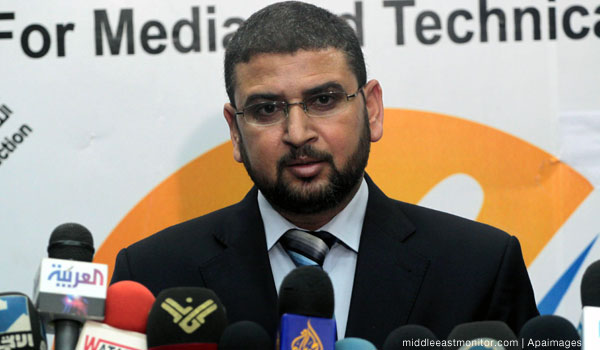
Hamas’ Sami Abu Zuhri
MEMO | July 6, 2014
Hamas has called on Palestinian President Mahmoud Abbas to withdraw from participation at the Israel Peace Conference scheduled for Tuesday in Tel Aviv.
In a press statement on Saturday, Hamas spokesman Sami Abu Zuhri said that Abbas’s participation “would constitute an insult to the feelings of the Palestinian people,” in the aftermath of the lynching of a Palestinian boy in occupied East Jerusalem last Tuesday, as well as the ruthless beating of his cousin two days later.
Abu Zuhri added that Abbas’s participation would give Israel a chance to “beautify its image” after international anger at its “heinous crimes.”
Haaretz has published the agenda of the conference, which includes a pre-recorded speech by Abbas.
Palestinian chief negotiator and senior Fatah official Saeb Erekat turned down an invitation to attend the same conference “out of respect for the feelings of Palestinians and their plight”.
The Israel Peace Conference is an annual event organised by Haaretz to discuss the Israeli-Palestinian conflict and how to bring about peace.
‘Enough is enough’: Berlin outraged by alleged US spying
RT | July 6, 2014
The arrest of a German intelligence employee for allegedly spying for the US has caused an uproar among German politicians. The country’s foreign minister has demanded an immediate clarification of the situation from Washington.
“If the reports are true, then we’re not talking about trifles,” Frank-Walter Steinmeier said on a visit to Mongolia, DPA reports. He added that prompt clarification of the details in the case were in the “US’s own interest.”
Earlier, US Ambassador to Germany John B. Emerson was summoned to the German Foreign Office to answer questions concerning the recent arrest of a 31-year-old German foreign intelligence agency (BND) employee, who confessed to having spied for the US.
German tabloid Bild reported that the man had been a double agent for two years, during which time he exchanged bundles of secret documents for €25,000 ($34,100).
The harshest reaction so far has come from German President Joachim Gauck. If the spying allegations are confirmed, “one really has to say, enough is enough,” he told the ZDF broadcaster Saturday.
Angela Merkel on Sunday expressed surprise and disappointment over the possible involvement of US intelligence in the BND espionage scandal, according to German businessmen, accompanying her on her trip to China, Spiegel Online reports. She has not made any comment so far, however.
Last October, Merkel was enraged to learn she was allegedly on the NSA’s tapping list since 2002. The Chancellor called the alleged spying, which became known thanks to Edward Snowden’s leaks, “unacceptable.”
A German parliamentary committee has been holding hearings on the NSA’s spying activities in Germany.
Ironically, the classified materials from the hearings on US spying could get into the hands of US intelligence, as they allegedly were part of the documents stolen by the suspected double agent.
“If the suspicion of espionage is confirmed, that would be an outrageous attack on our parliamentary freedom,” said Thomas Oppermann, the parliamentary leader of the SPD party, a coalition partner of Merkel’s Christian Democrats.
Opposition parties have called for caution in future cooperation with foreign intelligence agencies.
“All cooperation of the German security authorities with friendly services needs to be reviewed,” Green Party leader Katrin Göring-Eckardt told Spiegel Online.
The German government is demanding that the US replace its employees at the Joint Intelligence Staff based in the US Embassy in Berlin, Bild reports.
While most of the criticism is focused on the US, some believe it’s the German leadership’s inability to react properly to the NSA tapping leaks that’s led to the yet another spying scandal. Merkel’s opponents have repeatedly blamed her for too mild a response to the NSA global surveillance revelations.
“That’s a result of Merkel’s transatlantic hypocrisy,” co-chair of the Left Party Katja Kipping said, Der Tagesspiegel reported.
Background:
Germany arrests suspected ‘double agent’ for working for US – report
Israel and the Palestinians — It’s about Mind Over Matter
By Anthony Lawson | July 6, 2014
Ever since the three Israeli teenagers went missing, police and army units have besieged Palestinian towns and villages in the area; their houses and shops have been ransacked and atrocities have been committed; Gaza has been bombed, and the death toll is still rising, yet international leaders have remained largely silent, when they all know that such reprisals amount to collective-punishment which is a War Crime.
A young Palestinian boy, 16-year-old Mohamed Abu Khdeir, was abducted and killed in a suspected revenge attack by Israelis, on July 2nd. See how Britain’s prime minister reacted to his death.
An Eye for An Eye
By Missie Beattie | CounterPunch | July 4, 2014
A broad moral gulf separates us from our enemies. They sanctify death; we sanctify life. They sanctify cruelty, and we mercy and compassion. That is the secret of our strength. –Benjamin Netanyahu, at the funeral of three slain Israeli teenagers.
WTF?
Israel shows no morality, no mercy, and no compassion for Palestinians. Israel’s strength is not a mystery. Their power is dependent on their belief that they are God’s Chosen, on sophisticated weaponry, US tax dollars, and bipartisan Congressional support of Zionism that renders any “peace process” a charade.
During the funeral, right-wing protestors screamed for blood, “Death to Arabs.”
“There is no forgiveness for murderers of children,” said Israeli Economy Minister Naphtali Bennett. “Now is a time for actions, not words.” And action it was, has been for years, and is. Without due process, the Israeli military exploded family homes of two suspects—an uncivilized reaction that continues a cycle of retribution. Go door-to-door, terrorizing men, women, and children. Destroy homes. Bomb them. Strike Gaza. Don’t investigate to determine who’s responsible for the kidnapping and deaths of Eyal Yifrach, Naftali Fraenkel, and Gilad Shaar. And announce with chutzpa, as Israeli Defense Minister Moshe Avalon just did, that settlements will be built to memorialize the three slain teens. Yes, they’d have taken this measure regardless, any excuse, but now it’s exceedingly opportune—exploiting the deaths of the young as a sacrosanct right to seize more land.
Of course Barack Obama issued a statement:
As a father, I cannot imagine the indescribable pain that the parents of these teenage boys are experiencing. The United States condemns in the strongest possible terms this senseless act of terror against innocent youth.
Interesting. Seems Obama’s forgotten Abdulrahman al-Awlaki, the teenager and US citizen on his Kill List, incinerated in a CIA-led drone strike. Obama can’t imagine the indescribable pain that this young man’s parent (singular) feels. That’s singular because the boy’s father, Anwar al-Awlaki also was on Obama’s Kill List and droned two weeks before the death of his son. The attack in Yemen on Oct 14, 2011 that killed the young al-Awalaki also killed his teenage cousin and at least five other civilians as they sat in a restaurant. Abdulrahman al-Awlaki was 16, the same age as two of the Israelis, but the murder of al-Awlaki was, well, sensible, to Obama.
Earlier today, Tuesday, I was in the lobby of my building where a TV is tuned daily to CNN. I stopped to view the faces of the three Israeli teenagers.
In May, two Palestinian teenagers were shot and killed in separate incidents by Israeli troops. Later, film from a surveillance camera was examined, providing evidence that neither teen posed a threat. Did world leaders speak to this horror? Call for justice? Of course not. Never do we see the faces of Palestinian children kidnapped and killed by the IDF—at least not on mainstream news networks. Nor do we see the wretchedness, the inhumanity, of Gaza.
Identical to American exceptionalism’s sadism, Israel’s violent acts are legitimized by righteousness and a response to the aggressor’s (?) viciousness.
The message is hypocritically clear: Some lives are more valuable than others. We hear the cries of the Jewish parents, the family members, their friends, and we feel their suffering. But let us understand that mothers and fathers, whether they’re Palestinian, Iraqi, Afghan, Syrian, Yemini, in the lands ravaged by US greed, anywhere, love their children as much as we love ours. Let us love not only the children of those we call our allies and our own but all children. Let us value all life.
Let us value all life was supposed to be the closing sentence in this piece. I should start over, but I won’t. Instead, I’ll just add more paragraphs.
The death of 16-year-old Muhammad Abu Khdeir, a Palestinian, has been reported by US mainstream news venues. On Wednesday morning, the teenager was kidnapped, his burned body found a couple of hours later—apparently a reprisal killing. His cousin has demanded that the Israeli police and Israeli government do what they did in Hebron: “Demolish and blow the settler houses who have done this crime.”
Netanyahu, fearful of individual retaliations, this time has called for an investigation, issuing a statement that Israel is a country of laws and “Everyone is ordered to act according to the law”—despite the lawlessness unleashed after the kidnapping of the Israeli teens and further lawlessness after their bodies were discovered. Despite no inquiry to determine who killed them but instead a rampage of terror against the Palestinians.
Reading a New York Times article, I gasped that a Facebook group was created to promote revenge for the deaths of the Israeli teens. A photo was posted of two girls, holding a sign: “Hating Arabs is not racism, it’s values!”
This is eye for an eye. And everyone will be blind.
New Russian law bans citizens’ personal data being held on foreign servers
RT | July 5, 2014
All internet companies collecting personal information from Russian citizens are obliged to store that data inside the country, according to a new law. Its supporters cite security reasons, while opponents see it as an infringement of freedoms.
The law, passed Friday by the State Duma, the lower chamber of the Russian parliament, would come into force Sept. 1, 2016. The authors of the legislation believe that it gives both foreign and domestic internet companies enough time to create data-storage facilities in Russia.
The bill was proposed after some Russian MPs deemed it unwise that the bulk of Russians’ online personal data is held on foreign servers, mostly in the US.
“In this way foreign states possess full information, correspondence, photographs of not only our individuals, but companies as well,” one of the authors of the bill, Vadim Dengin of the Liberal Democratic Party (LDPR) told Itar-Tass. “All of the [internet] companies, including the foreign ones, you are welcome to store that information, but please create data centers in Russia so that it can be controlled by Roscomnadzor (the Federal Communications Supervisory Service) and there would be a guarantee from the state that [the data] isn’t going anywhere.”
Russian MPs believe the new law is in tune with the current European policy of trying to legally protect online personal data. Deputy chairman of the Duma’s committee on information policy, Leonid Levin, said the Russian law serves goals similar to those of the recent decision by European Court of Justice, which endorsed the so-called “right to be forgotten,” obliging Google to remove upon request links to personal data.
“The security of Russians’ personal data is one of the basic rights that should be protected, legally and otherwise,” Levin said, Russian Forbes reported.
Websites that don’t comply with the law will find themselves blacklisted by Roscomnadzor, which will then have the right to limit access to them.
Critics of the law believe it could be used by authorities for censorship, however.
“The aim of this law is to create … [another] quasi-legal pretext to close Facebook, Twitter, YouTube and all other services,” Internet expert and blogger Anton Nossik told Reuters.
Some are afraid two years could be not enough for certain companies to have their online data storage organized in Russia. Particular concern has been voiced in relation to online hotel and plane ticket booking services.
Leading Russian airlines Aeroflot and Transaero, for example, use the same GDS system for online ticket sales as most of the other airlines in the world. Developing the Russian system might take longer than the law allows.
“If the law is passed in its current version, then Russians won’t be able to take a plane not only to Europe, they won’t even be able to by an online ticket from Moscow to St Petersburg,” director general of internet payment provider ChronoPay, Aleksey Kovyrshin, said previously to RBC.
The Russian Association for Electronic Communications (RAEC), an NGO focused on Russian internet issues, has warned of the potential economic losses the law might entail.
“The law puts under question cross-border transmission of personal data,” RAEC said in a statement. “Passing similar laws on the localization of personal data in other countries has led to withdrawal of global services and substantial economic losses.”
Four families grieve. One is under assault
By Jonathon Cook | The Blog From Nazareth | July 5, 2014
The families of the three Israeli teens killed by their abductors have been the focus of a huge outpouring of national sympathy.
But what about the family of 16-year-old Muhammad Abu Khdeir, who was burnt alive by his abductors? How have they been treated by Israel since the devastating news of Muhammad’s murder in Jerusalem last week?
Here, in short, is what has happened to them.
They have been subjected to a campaign, secretly waged by the Israeli police, to discredit them by suggesting that Muhammad was a closet gay and killed in a family feud.
The father and close relatives have been forced to submit to intense and distressing questioning in police cells from the Israeli security services, all in an attempt to give greater plausibility to their planted rumours with “confessions” from the family.
And now it emerges that a 15-year-old cousin of Muhammad’s, visiting for the summer from the US, was the victim in video footage of a savage beating by armed Israeli police. They kicked and punched him relentlessly after he was cuffed and lying on the ground. He is still under arrest, apparently without charge.

The US state department – so eloquent in denouncing the killing of the three Israeli teens – is apparently lost for words when it comes to the mistreatment of one of its citizens.
Here is the horrifying video of Tarek Abu Khdeir’s beating:
Is this what Netanyahu meant when he said of Israel’s response to the abductions: “The devil himself has not yet created vengeance for the blood of a small child”?
Farming under siege: Working the land in Gaza
By Tom Anderson and Therezia Cooper | Corporate Watch | July 5, 2014
Corporate Watch researchers visited the Gaza Strip during November and December 2013 and carried out interviews with farmers in Beit Hanoun, Al Zaytoun, Khaza’a, Al Maghazi and Rafah, as well as with representatives from Union of Agricultural Work Committees (UAWC), Palestine Crops and the Gaza Agricultural Co-operative in Beit Lahiya. This is the first of two articles highlighting what their experiences show: that Palestinians face significant and diverse difficulties when it comes to farming their land and harvesting and exporting their produce under siege, and that Israel enforces what amounts to a de facto boycott of produce from the Gaza Strip.
The land and the buffer zones
“There is a 300 meter ‘buffer zone’ in our area. It is common that people get shot at directly if they enter it. Within 500 meters people often get shot at. It is unsafe within 1500 metres of the fence”
Saber Al Zaneen from the Beit Hanoun Local Initiative

Since the withdrawal of settlers and the end of a permanent presence of ground troops from the Gaza Strip in 2005, Israel insists that the area is no longer under occupation. However, as well as still controlling Gaza’s air space, coastline and exports, Israel effectively occupies the area commonly referred to as the ‘buffer zone’, located all the way down the strip along the border with Israel. A buffer area has existed in Gaza since the signing of the Oslo accords in 1993, when 50 meters on the Gaza side of the border was designated a no-go area for Palestinians. Since then, Israel has unilaterally expanded this zone on numerous occasions, including to 150 metres during the Intifada in 2000 and to changeable and unclear parameters since 2009.
According to the United Nations Office for the Coordination of Human Affairs (OCHA) the buffer zone takes up 17% of Gaza’s total land, making up to 35% of available farmland unsafe for Palestinians to use, with the areas nearest the border fence being the most restricted. Calling the boundaries of the zone ‘vague, unpredictable’ and ‘uncertain’, OCHA has divided the the zone into two danger grades: ‘no-go’ areas where Palestinians risk their lives if they enter as they are considered free fire zones by Israel (within 500 metres of the fence) and ‘high-risk’ areas, where the restricted access still has a severe consequences for farmers and where property destruction and levelling of the land occurs on a regular basis (within 500 and up to 1500 meters of the fence). These areas are kept under heavy surveillance by Israel, through the use of military border patrols and equipment as well as surveillance balloons and drone technology. There are regular incursions by Israeli troops into the buffer zone, sometimes as often as a few times a week.
In the ceasefire agreement during Operation Pillar of Cloud in 2012, Israel agreed to ease restrictions on some Palestinian farmland and allow access up to 100 meters from the fence but this promise appears to have had limited impact on Palestinians. There has been no official announcement regarding the easing of the restrictions and as the Israeli human rights organisation Gisha (part of Legal Center for Freedom Of Movement) has pointed out, advice from Israeli sources is often contradictory, citing the no go areas as sometimes 100 meters, sometimes 300 meters with no way for farmers to be sure. What is clear, however, is that Palestinians keep getting shot at from a greater distance than 300 metres and that anyone going closer than 500 metres from the border is putting themselves in danger. It is also clear that with so much of their land being out of bounds, farmers have no choice but to continue to work, at least partly, in areas which are unsafe.
Since 2008 over 50 Palestinians have been killed in the buffer zone and, although things have calmed down slightly since the truce in 2012, four Palestinian civilians have been killed and over 60 wounded by Israeli forces in the buffer zone so far this year, with five killed and approximately 60 wounded in 2013 according to Human Rights Watch. Most of these deaths have occurred when farmers have been trying to reach their land within, or near to, the buffer zone, or during demonstrations where communities have tried to assert their right so reach their fields. One role of international solidarity activists in the Gaza Strip is to accompany farmers wanting to access and farm their land. Sa’ad Ziada from UAWC estimates that the number of agricultural workers in Gaza has decreased from 55.000 to 30.000 as a result of the siege, with many of the remaining farmers unable to earn enough to survive from their crops.
As well as threatening life, the buffer zone has had a disastrous impact on Palestinians’ ability to make a living in the Gaza Strip, with not only fields but also property and water resources heavily affected. The Diakonia International Humanitarian Law Resource Centre states that since Israel’s supposed disengagement in 2005 ’305 water wells, 197 chicken farms, 6,377 sheep farms, 996 complete houses, 371 partial houses, three mosques, three schools, and six factories have been destroyed within the “buffer zone”’, and a total of 24.4 square kilometres of cultivated land has been levelled.
Destroying livelihoods in Khuza’a
“We can see the Israelis farming the land, and we cannot farm our land”
Hassan, farmer from Khuza’a

Khuza’a is a village in the southern Gaza Strip, just east of Khan Younis. It is located only 500 metres from the border fence with Israel and 70% of the population are farmers. The town has suffered greatly from the Israeli Occupation Forces’ enforcement of the buffer zone and from repeated air attacks. During Operation Cast Lead in 2008-2009, the village was targeted with white phosphorous, leaving farmland temporarily contaminated. During Corporate Watch’s visit to Khuza’a we talked to farmers representing several generations: Osama, Ahmed, Mohammed, Jihad, Salam and Hassan.
Hassan is 51 years old and has been a farmer in Khuza’a for over 30 years. He owns three different pieces of land, two dunams next to the border fence, two and a half dunams 400 metres from the fence and four dunams 620 metres from the border. He used to have olive trees on the plot by the border, but the land was levelled during an expansion of the buffer zone in 2000. In 2008 his other two pieces of land were bulldozed, including his greenhouses. In 2009 his house was partially burned by white phosphorous, which also affected the land next to him. “The farmers are the victims here” Hassan told us, “when resistance fighters are targeted on the farmland it destroys everything”.
Hassan is now trying to grow tomatoes and olives on the two pieces of land furthest from the fence with the support of Unadikum and other international volunteers, who accompany farmers in in the hope that their presence will make the work less dangerous. However, all the Khuzra’a farmers reported that they frequently get shot at even when working on land over 500 metres away from the border. “We have no choice, when the Israelis shoot we have to leave the land”, Hassan said.
According to the men we talked to in Khuza’a the economic situation for farmers in the Gaza Strip is the hardest it has ever been -not only are none of them making any money, but the siege is slowly killing their ability to be agriculturally self sufficient. Hassan used to earn approximately $1000 a month from his fields before he lost his first bit of land in 2000. Now he has got debts of $60.000 instead and no way of making money. We were told that farmers generally get seeds to plant from the traders which they then pay for after harvest season, but harvests in the Gaza Strip are highly unpredictable: land anywhere near the buffer zones can become impossible to farm at any point and some years whole crops are destroyed during Israeli attacks.
None of the farmers in Khuza’a are currently able to export the produce they do succeed in growing. There has been a near total ban on exports from the Strip since the tightening of the siege in 2007 with only a minimal amount of agricultural produce being allowed for export through Israeli companies every year. No Gaza produce is allowed to be sold in Israel or the West Bank, which has traditionally been Gaza farmers’ biggest market. Salam told us that he used to be able to market his produce for sale in Europe but that it had to be done through Agrexco and Arava, Israeli agricultural export companies, and that the last time he managed to export anything was almost ten years ago.
“I have been farming here for 30 years and all the lands have been destroyed” Hassan said with a shrug. “I used to produce 20 tanks of olive oil from my trees every year, but now I have to buy oil even for myself. Should we have to constantly rebuild everything? What will the future for my sons be? I am always arguing with my sons. They want to go to Algeria to find work, and then I will lose my sons too”. All these farmers want is the chance to have a future on their land.

Standing in the middle of the fields of Khuza’a, looking past the barren Palestinian land next to the fence and past the military watch tower, you can clearly see healthy looking green crops on the Israeli side of the border. The Israeli fields are close enough for us to hear the low humming of their fertilising plane as we leave.
Uprooting families in Beit Hanoun
Beit Hanoun has been one of the towns hit the hardest by Israel’s enforcement of the buffer zone. Located in the far north east of the Gaza Strip, only six kilometres from the Israeli city of Sderot and close to the Beit Hanoun (Erez) border crossing to Israel, the population is exposed to frequent incursions by the Israeli Occupation Forces and it shows. Approaching the buffer zone you walk past a big crater in the ground, the result of a 2012 F16 strike, and house rubble can be seen in the distance. The area is under constant heavy surveillance by Israel and several surveillance ‘balloons’ monitor everything that goes on on the ground. According to Saber Al Zaneen from the Beit Hanoun Local Initiative Israel bulldozed 9000 dunums of Beit Hanoun’s land between 2001 and 2009 including 70 houses. Most of it was farmland. As a result over 350 people living in the area have been displaced from their land. The Beit Hanoun Local Initiative, set up in 2007, is a grassroots group working with, and supporting, marginalised families and farmers living close to the buffer zone with the aim of helping them remain on their land.

In the past farmers in the area used to grow olives, lemons and oranges close to the border but all the trees haven now been bulldozed. “Communities now grow potatoes, peppers, tomatoes and watermelons on the outskirts of the buffer zone” Saber told us. “You can not grow anything tall at all, no trees are allowed. If plants get higher than about 80 centimetres they will be levelled”. Shortly after we visited the area, the Local Initiative assisted the planting of some new wheat fields nearer the fence, challenging the restrictions in the buffer zone.
On top of the access restrictions and the personal danger involved, farmers working the land face the big challenge of being able to access water for their crops. Approximately 60 water wells in the vicinity of the Beit Hanoun buffer zone were bulldozed or bombed between 2001-2009 and finding enough water to grow healthy produce is now a constant struggle for the community. The area we visited had one small mobile water tank for the fields but locals told us that as it requires either electricity or fuel to run they were not always able to use it. Instead they relied on a makeshift pit dug in the field and lined with tarpaulin in order to collect rain water. Gaza suffers from a severe and drawn out fuel crisis which, during our visit at the end of 2013, resulted in mains electricity only being available around 12 hours a day on a six hour off/six hour on basis at best. As a result fuel for personal use is both expensive and hard to come by (for an expanded explanation of the fuel crisis in Gaza see Corporate Watch’s briefing Besieging Health Services in Gaza: A Profitable Business)

House demolitions in Al Zaytoun
“We plant our plants here to claim our rights to the land. We are not making a profit, we are working for nothing”
Ahmad from Al Zaytoun
We met the farmers Ali, Rafat, Nasser, Ahmad, Jawad and Ishmael outside Ahmad’s house next to the Malaka intersection area of eastern Al Zaytoun just south of Gaza City. There used to be a three storey family home on this plot, but there is now a much smaller house next door. This is the result of continuous targeting of the area by the Israeli Occupation Forces, who have a military base close by. Ahmad, who was born on this land, told us that his family’s house had been demolished three times: in 2004, 2005 and during Operation Cast Lead in 2008.
“In 2008 they destroyed everything around here”, Ahmed said, “they even destroyed my jars of olive oil. We did not have time to bring hardly any of our things. The Israelis came through a gate in the fence in the buffer zone with 14 tanks and four military bulldozers. They were shooting a lot to make us leave before they arrived. We have had to rebuild our home three times”.
As in other buffer zone communities, it is not only property which is frequently targeted by Israel -it is anyone who attempts to farm the land. All the farmers we talked to in Al Zaytoun had some land within 300 metres of the fence. The last shooting incident had occurred just four days before our visit. When there is instability happening in the area, everyday activities for farmers become even more precarious.

The story of the farmers in Al Zaytoun is a familiar one: before the tightening of the siege in 2007 they all used to be able to make a decent profit from their land, with some farmers getting close to $30.000 a year but now they make no profit at all. Some of them used to export part of their produce, albeit through Israeli companies, but now none of them are able to export anything and all their goods go to the local Gaza market. “No-one has any money so we hardly make anything” said Ahmed. “Sometimes we have to feed some of the vegetables to the animals”.
Mustapha told us that farmers in this area have had some help from Norwegian People’s Aid who provided them with an irrigation system for the fields, and they also have a tractor but even with equipment taking care of the land is a challenge under siege. Just like the farmers in Beit Hanoun, they rely on access to electricity for the water pump and petrol for the tractor and those things are often not available. “The water is so salty here that we can only plant very specific plants like aubergines olive trees, potatoes, cabbage and spinach. Cucumbers and tomatoes can’t be planted”, said Mustapha. The salty water is the result of the Gaza aquifer having been contaminated by sea and sewage water, partly through a decline in ground water levels and partly as a result of infrastructure damage during Israeli air attacks in 2009. According to the UN 90% of the water from the aquifer, Gaza’s only water resource, is not safe to drink.
After the ousting of the Muslim Brotherhood in Egypt in the middle of 2013, life for Gaza’s farmers has become even harder. The men in Al Zaytoun said that they used to be able to be able to buy cheap fertilizers which had come through the tunnels from Egypt at the local market. However, since the tunnels were destroyed this is no longer possible. Products are now both harder to get hold of and more expensive as they have to come through Israel which means that there are no cheap choices and that tax will be added.
Despite all the problems they face the people of Al Zaytoun continue to work their land, they have no other option. As we walked around their fields they showed us how they have started to re-cultivate land nearer and nearer the fence, moving the area of cultivation forward by around ten metres per week. In Gaza simply farming the land has turned into an act of resistance.
Uprooting history in Al Maghazi
“It is not the uprooting of the trees themselves that is the worst, it is the uprooting of our history”
Abu Mousab from Al Maghazi

For Palestinians, the buffer zones do not only create financial hardship and humanitarian crises, they also sever people’s connection with their history. In Al Maghazi, a primarily agricultural community in the central Gaza Strip, we met Abu Mousab, a farmer who also holds down a job as an iron wielder in order to make a living. Al Maghazi is a refugee camp established in 1949 and according to Mohammed Rasi el Betany from the Al Maghazi refugee council approximately 95% of the population are refugees. However, Abu Mousab’s family have lived on the same piece of land for generations. When we visited, his father, who is in his late 90′s and who used to work for the British Mandate before the creation of Israel, was asleep in the room next door.
Staying steadfast on the farmland has not been easy for Abu Mousab and his family. Their land is located approximately 300 metres from the border fence and, despite the fact that conditions have become a little bit safer since 2012, working the land is dangerous. “We have to play a kind of cat and mouse game with the soldiers” Abu Mousab said. “When the soldiers go away we turn on the water and quickly irrigate our plants, but as soon as they start shooting we have to leave”. Only a week before our visit Abu Mousab’s nephew Medhat had been shot at with live ammunition warning shots when he was trying to weed some crops on the part of the family’s farmland nearest the fence. Some years the family have been able to access their land so infrequently that the crops have failed, leaving them with no income from their land. During good years when they do manage to harvest their barley, wheat, almonds, citrus fruits, olives and apricots they sell their produce to the local market in the Gaza Strip.
However, many people do not feel able to risk their life to work on the land. One of them is Mousa Abu Jamal, another farmer from Al Maghazi. He used to have ten dunums of farmland planted with olive trees within the buffer zone, all of which have been uprooted by Israel. When he tried to go back to re-cultivate his land in the middle of 2012 he was shot at. He has not been back since.
“I was always told by my father that he who has been raised on his farmland must stick with his farmland until he dies and that is what we are doing” Abu Mousab said. His family are so determined not to give up their heritage that during the bombardment of the Gaza Strip in 2012 they made a decision not to leave the area for relative safety further away from the border. “Ten years ago the Israelis came with Caterpillar bulldozers and destroyed olive trees and several 200 year old sycamore trees on my land. Those were trees my grandfather used to sit under”, Abu Mousab said. “They had to use two of their bulldozers to uproot just one tree, they were so rooted in our history.”
Boycott Divestment and Sanctions
Israel’s siege of Gaza is slowly strangling life in the Strip. It affects farmers’ access to land, crops, water and electricity. It also limits people in Gaza’s ability to buy food grown in Gaza and makes people more reliant on imports of Israeli goods. The situation for exporters is even worse: only a tiny amount of agricultural produce gets exported each year, all of which has to go through Israeli companies. The ban on Gaza produce being sold in Israel and the West Bank amounts to a de facto boycott of Gaza’s export industry by Israel.
What can the solidarity movement do?
During Corporate Watch’s visit to the Gaza Strip the people we interviewed made their hopes very clear: they want boycott, divestment and sanctions of Israel, but they also want opportunities to trade and make a living. This presents a challenge to the BDS movement. As the tiny amount of Palestinian produce that is being exported from the Gaza Strip is currently exported through Israeli companies it means that any boycott of, for example Arava, will boycott Palestinian produce too. When asked about this implications of this, farmers were still supportive of a boycott, as they hoped the pressure would be more beneficial to them in the long term than the minuscule benefits the current export levels achieve. “What we need is people to stand with us against the occupation”, said Mustapha from Al Zaytoun. “By supporting BDS you support the farmers, both directly and indirectly and this is a good thing for people here in Gaza”.
Farmers all over the Gaza Strip were particularly keen on getting the right to label their produce as Palestinian, ideally with its own country code, even if they have to export through Israel. Country of origin labels for Gaza goods is something the solidarity movement could lobby for.
There was strong support amongst farmers for increased action against Israeli arms manufacturers, as they are often on the receiving end of their weapons.
Mohsen Aby Ramadan, from the Palestinian Non-Governmental Organizations Network suggested that one good way forward could be to engage farming unions across the world and get them to endorse the BDS call in solidarity with Palestinian farmers -an avenue that has not as yet been properly explored.
Part two of this series of articles will look at the problems faced by Gaza’s export industry.
Protests around the world respond to assault on Palestine
Samidoun: Palestinian Prisoner Solidarity Network
 Protests are being organized in cities around the world to respond to the ongoing assault on Palestine and the Palestinian people, including the murders of Palestinians (including 16-year-old Muhammad Abu Khdeir, murdered brutally by Israeli settlers), the bombing of Gaza, the mass arrests of over 600, and the raids, attacks, tear-gassing, invasions and closure that Palestinians are being subjected to. If a rally you know of is not listed, please email samidoun@samidoun.ca to have it posted!
Updated August 7th
Click Here for Latest Update
Fort Wayne, IN, US
Thursday, August 7
5:30 PM
Allen County Courthouse
More info: https://www.facebook.com/events/823285487689263
Ann Arbor, MI, US
Thursday, August 7
7:00 PM
City Hall Council Chamber
Windsor, Ontario, Canada
Friday, August 8
4:30 PM
Huron Church and College
More info: https://www.facebook.com/events/1450666935220518/
Liege, Belgium
Friday, August 8
5:00 PM
Place du Marche
More info: https://www.facebook.com/events/279130732290848/
Toulouse, France
Friday, August 8
6:00 PM
Place du Capitole
More info: https://www.facebook.com/photo.php?fbid=1651587495067080&set=gm.681860725222422&type=1
Brussels, Belgium
Friday, August 8
12:30 PM
Israeli Embassy
Charleroi, Belgium
Friday, August 8
6:00 PM
Hotel de Ville, place Charles II
San Francisco, CA, US
Friday, August 8
5:15 PM
Montgomery and Market St
All Women and Trans Folks Welcome
Dublin, Ireland
Friday, August 8
6:00 PM
Dolphin’s Barn Bridge
Atlanta, Georgia
Friday, August 8
6:00 PM
1100 Spring Street -Israeli Consulate
More info: https://www.facebook.com/events/254345961427431/
Adelaide, Australia
Friday, August 8
5:00 PM
Adelaide Parliament
Grand Rapids, MI, US
Friday, August 8
4:00 PM
Federal Courthouse
More info: https://www.facebook.com/events/493862610749604/
London, UK
Friday, August 8
3:00 PM
G4S Headquarters
More info: https://www.facebook.com/events/749192728471429/
Wilmington, DE, US
Friday, August 8
3:30 PM
Senator Coons’ Office, 1105 N Market
More info: https://www.facebook.com/events/1519275064971962/
New York, NY, US
Friday, August 8
12:00 PM
42nd St & 2nd Avenue
More info: https://www.facebook.com/events/556829777762222/
Amiens, France
Saturday, August 9
Bordeaux, France
Saturday, August 9
3:00 PM
La Victoire
More info: https://www.facebook.com/events/1441012499519868/
New York, NY, US
Saturday, August 9
1:00 PM
Columbus Circle
More info: https://www.facebook.com/events/744268822285936/
Seattle, WA, US
Saturday, August 9
12:00 PM
Westlake Center
More info: https://www.facebook.com/events/665212870225672/
London, UK
Saturday, August 9
More info: http://stopwar.org.uk/events/august-9-national-demonstration-for-gaza-no-excuses-be-there#.U9x8sPmSxqX
Toronto, Ontario, Canada
Saturday, August 9
2:00 PM
Yonge-Dundas Square
More info: https://www.facebook.com/events/835465126471293/
Albany, NY, US
Saturday, August 9
1:00 PM
NY State Capital Building
More info: https://www.facebook.com/events/617078228390029/
Hamilton, Ontario, Canada
Saturday, August 9
1:00 PM
More info: https://www.facebook.com/events/746332655428881/
Cape Town, South Africa
Saturday, August 9
11:00 AM
Keizersgracht to the Parliament
More info: https://www.facebook.com/events/262165200657949/
Edinburgh, Scotland
Saturday, August 9
2:00 PM
The Mound
More info: https://www.facebook.com/events/1440297699590901/
Washington, DC
Saturday, August 9
2:00 PM
White House
More info: https://www.facebook.com/events/1461155427474072/
Dublin, Ireland
Saturday, August 9
2:00 PM
The Spire
London, Ontario, Canada
Saturday, August 9
7:00 PM
Victoria Park
More info: https://www.facebook.com/events/759801407403864/
Lyon, France
Saturday, August 9
3:00 PM
Place des terreaux
More info: https://www.facebook.com/events/310113679166393/
Vancouver, Canada, unceded Coast Salish Territories
Saturday, August 9
2:00 PM
Broadway and Commercial
Ottawa, Ontario
Saturday, August 9
1:00 PM
Gather at the Human Rights Monument (Elgin and Lisgar) for a rally and march
More info: https://www.facebook.com/events/334075753433247/
Nanaimo, BC, Canada
Saturday, August 9
12:00 PM
Diana Krall Plaza
More info: https://www.facebook.com/events/347620755389398
Bergen, Norway
Saturday, August 9
2:00 PM
Festplassen
More info: https://www.facebook.com/events/693715900700338/
New Delhi, India
Saturday, August 9
2:00 PM
Israeli Embassy
More info: https://www.facebook.com/events/278657995653273/
Melbourne, Australia
Saturday, August 9
1:00 PM
State Library
Sydney, Australia
Saturday, August 9
1:00 PM
Sydney Town Hall
Brisbane, Australia
Saturday, August 9
11:00 AM
King George Square
Perth, Australia
Saturday, August 9
11:00 AM
Murray Street Mall
Edmonton, Alberta, Canada
Saturday, August 9
TBA
More info: https://www.facebook.com/psnedmonton
Richmond, VA, US
Saturday, August 9
12:00 PM
West Broad and Belvidere
More info: https://www.facebook.com/events/251423911733048/
Victoria, BC, Canada
Sunday, August 9
12:00 PM
BC Legislature
More info: https://www.facebook.com/photo.php?fbid=10152169306840938&set=gm.558408540929917&type=1&relevant_count=1
Winnipeg, Manitoba, Canada
Saturday, August 9
2:30 PM
Manitoba Legislative Building
More info: https://www.facebook.com/events/755322694509356/
Paris, France
Saturday, August 9
3:00 PM
Denfert-Rochereau
More info: https://www.facebook.com/events/255815984614125/
Annecy, France
Saturday, August 9
3:00 PM
Prefecture d’Annecy
More info: https://www.facebook.com/events/489117987891714/
Berlin, Germany
Saturday August 9
3:00 PM
Axel Springer Haus
More info: https://www.facebook.com/events/789194934466038
Utrecht, Netherlands
Sunday, August 10
2:00 PM
More info: https://www.facebook.com/events/1438437706436760/
Mississauga, Ontario, Canada
Sunday, August 10
4:00 -8:00 PM
Celebration Square
More info: https://www.facebook.com/events/1480697442177557/
Chicago, IL, US
Sunday, August 10
3:00 PM
Michigan and Congress
More info: https://www.facebook.com/events/272726909597065/
Montreal, Quebec
Sunday, August 10
12:00 PM
Place Emilie-Gamelin
More info: https://www.facebook.com/events/538906192875894/
Los Angeles, CA, US
Sunday, August 10
1:00 PM
Federal Building, 1100 Wilshire
More info: https://www.facebook.com/events/1482387852007381/
Toronto, Ontario, Canada
Sunday, August 10
2:30 PM
Israeli Consulate
More info: https://www.facebook.com/events/335278933294901/
Chesapeake, VA, US
Sunday, August 10
2:00 PM
Greenbrier and Volvo Parkways
More info: https://www.facebook.com/events/269496266573029/
New York, NY, US
Sunday, August 10
3:00 PM
Barclay Center
More info: https://www.facebook.com/events/553918528067591/
Reading, UK
Sunday, August 10
2:00 PM
Broad St Mall
Chico, CA, US
Sunday, August 10
7:30 PM
Chico City Plaza
More info: chicopalestineaction@gmail.com
Brussels, Belgium
Sunday, August 10
2:00 PM
Gare du Nord
More info: https://www.facebook.com/events/594013084048788/
Canberra, Australia
Sunday, August 10
1:00 PM
Israeli Embassy
Mississauga, Ontario, Canada
Monday, August 11
6:00 PM – 10:00 PM
Verdi Banquet Hall, 3550 Derry Rd
More info: https://www.facebook.com/events/1527960680759082/
Cartagena, Spain
Monday, August 11
8:30 PM
Plaza De Espana
Belfast, Ireland
Monday, August 11
6:30 PM
Asda, West Belfast
Boston, MA, US
Monday, August 11
5:30 PM
Boston City Hall Plaza
More info: https://www.facebook.com/events/812176275483913/
Honolulu, Hawai’i
Wednesday, August 13
Time TBA
John F Kennedy Theatre UH Manoa
More info: https://www.facebook.com/events/905240319490522/
Phoenix, AZ, US
Thursday, August 14
7:00 PM
Chandler City Hall
More info: https://www.facebook.com/events/341067046040908/
Oakland, CA, US
Saturday, August 16
5:00 AM
West Oakland BART (Block the Boat)
More info: https://www.facebook.com/events/1447374682195857/
Sunderland, UK
Saturday, August 16
2:30 PM
High Street West (outside Marks & Spencer)
Tipperary, Ireland
Saturday, August 16
2:00 PM
Market Square
More info: https://www.facebook.com/events/270012553206031/
Hamtramck, MI, US
Saturday, August 16
12:00 PM
Caniff St and Joseph Campau
More info: https://www.facebook.com/events/457504094391468/
New Zealand
Saturday, August 16
National Day of Action
Cities/Times TBA
More info: https://www.facebook.com/events/495318450613242/
Auckland, New Zealand
Saturday, August 16
2:00 PM
Aotea Square
More info: https://www.facebook.com/events/495318450613242/
Hamilton, New Zealand
Saturday, August 16
1:00 PM
Garden Place
More info: https://www.facebook.com/events/495318450613242/
Christchurch, New Zealand
Saturday, August 16
2:30 PM
More info: https://www.facebook.com/events/273837992801892/
Ottawa, Ontario, Canada
Saturday, August 17
1:00 PM
MAECD, 125 Sussex Drive
More info: https://www.facebook.com/events/313783498789402/
Brussels, Belgium
Sunday, August 17
2:00 PM
North Station – Gare du Nord
Manchester, UK
Sunday, August 17
5:00 PM
Piccadilly Square
Utrecht, Netherlands
Sunday, August 17
3:00 PM
More info: https://www.facebook.com/events/513126548787621/
Southampton, UK
Saturday, August 23
3:30 PM
Peace Fountain
More info: https://www.facebook.com/events/1452880238327546/
Caught on camera: Israeli police beating 15yo cousin of murdered Palestinian teen
RT | July 5, 2014
 A shocking video, showing Israeli police officers savagely beating 15-year-old Palestinian-American Tarek Abu Khdeir – cousin of Mohammad Abu Khdeir who was burnt alive in East Jerusalem – has prompted outrage in the Palestinian community.
The video shows two officers striking the detainee, who was handcuffed and lying on the floor. One of the officers seems to be sitting on the Palestinian, while his colleague is kicking and punching him. The youth is eventually dragged away by the police.
The video of Tarek’s beating has surfaced as the funeral was held Friday for his cousin, Mohammad Abu Khdeir, who was kidnapped in the same area and burned alive.
The beating, shot from two different angles by people filming from their windows, took place on Thursday evening in Shuafat, a neighborhood in East Jerusalem.
One of the videos was broadcast on the Palestine Today television channel.
The second video posted on Facebook by Quds News Network shows the same incident.
Tariq has since been arrested and held without charge, according to his family and the rights group Addameer, as reports the Ma’an News Agency.
According to a police spokesman, the incident featured in the video occurred while six “masked rioters” were being arrested. Three of them were alleged to have been carrying knives.
“They resisted arrest and attacked the soldiers,” the spokesman said, adding that Molotov cocktails were hurled toward the police, an attack he described as “nearly fatal.”
Nevertheless, he said that the incident is being investigated. According to the spokesman, some 15 soldiers and police officers were wounded in the riots in East Jerusalem on Thursday.
Tensions rose after Mohammad Abu Khdeir’s body was found on Wednesday.
Since then, dozens were injured by rubber bullets, including six journalists, and three people suffered fractures after being assaulted by Israeli police officers, Ma’an reported.
According to the Palestinian Red Cross, 232 people have been injured in these clashes, six of them by live bullets, AFP reports.
Mohammad Abu Khdeir’s body was found on Wednesday in a West Jerusalem forest. A preliminary autopsy report shows that he was burned alive by his kidnappers, a senior Palestinian official said on Friday evening. Unrest has continued in East Jerusalem after the funeral.
Palestinians accuse right-wing Israelis of kidnapping and killing Abu Khdeir. The murder is thought to be a revenge attack in response to the killing of three Israeli teens, who were buried the day before.
Israeli police say the circumstances behind Mohammad Abu Khdeir’s killing remain unclear.
See also:
Kidnapped and slain Arab teen was burned alive – autopsy results
Autopsy shows Palestinian youth burnt alive
By Chris Carlson | International Middle East Media Center | July 5, 2014
Initial autopsy reports reveal that 16-year-old Muhammad Hussein Abu Khdeir, was still breathing when he was burnt after being assaulted by his Israeli kidnappers.
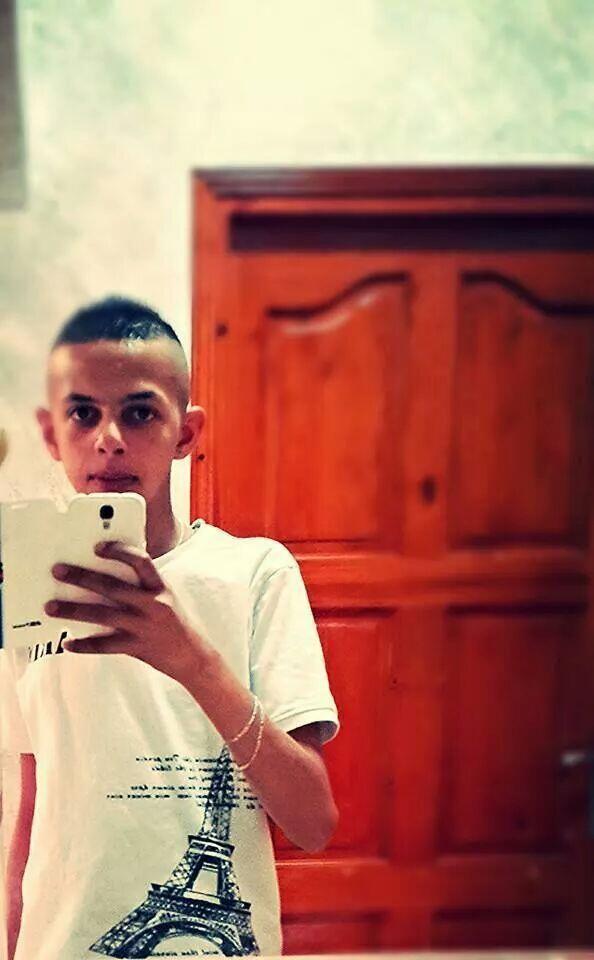 General Palestinian Prosecutor, Mohammad Abul-Ghani al-Oweiwy, attended the West Bank autopsy after body was handed over to a medical team.
Forensic studies found chars in the lungs, indicating that Muhammad was still breathing while he was being burned, according to WAFA. 90% of the child’s body was burned, varying from 1st to 4th degree in severity.
The child was also beaten on the head, as signs of beating and concussion were clear.
The Palestinian Forensic Center has taken samples and tissues from the body, to be submitted for further analysis before a final detailed report can be revealed, according to Arabs48.
16-year-old Muhammad Hussein Abu Khdeir was abducted from outside his home, in the Shu’fat district of occupied East Jerusalem, by a group of Israelis who forced him into a car and sped off.
The teen’s burned body was found hours later in a vacant lot in another part of the city, sparking protests in his home neighborhood which are ongoing at the time of this report.
Over 200 Palestinians have been injured by Israeli army fire in ongoing clashes with Israeli soldiers, in different parts of occupied Jerusalem and nearby towns, following the abduction.
His funeral was held Friday, amidst further clashes with Israeli forces.
EU Sanctions Target Humanitarian Aid and Hinder Restoration of Global Heritage in Syria
By Franklin Lamb | Al-Manar | July 4, 2014
Damascus – Today, a civilization that used to lead the world and for centuries was the beacon of learning, tolerance and trade, and that still protects our global cultural heritage is damaged—and only the Syrian people can rebuild it for all of us. We need to help them.
Last month, halfheartedly and without unanimity among its 28 member states, the European Union levied yet more sanctions on Syrian officials. Passed under pressure from the usual suspects (the US, France, Britain, and the international Zionist lobby), the EU measure targets 12 government ministers, none of whom wields or holds police authority of any type. Not a single one of these individuals has any capacity or wherewithal—or even any interest—in committing “serious human rights violations,” as the measure accuses them of having carried out.
It is a charge that amounts to defamation of character and which the EU made without offering a scintilla of evidence. Widely seen as EU frustration over failed western policy in Syria, the action is also thought to have been motivated by a sense that the EU ought to keep itself relevant by… well… doing something, given that there is a deep split within its ranks over military aid to Syrian rebels. Coming three weeks after the Syrian presidential election (generally viewed as a significant victory for the Assad government), the measure puts the officials under an EU travel ban and asset freeze, and it also raises to 191 the number of Syrian government employees, along with 53 companies, now being targeted by EU sanctions.
The impact of EU and western sanctions on the Syrian economy has been severe—this is well known. Heavy fighting has damaged or destroyed economic infrastructure, significantly impeding normal access to sources of income for average Syrians. In addition, internal distribution and supply networks have been disrupted if not destroyed; currency depreciation has devastated purchasing power; and the heavy US, EU and Arab League sanctions have hampered imports and exports. Even the import of items not subject to the sanctions has been restricted by the sanctions on financial transactions, while tourism revenue, for example, has all but disappeared.
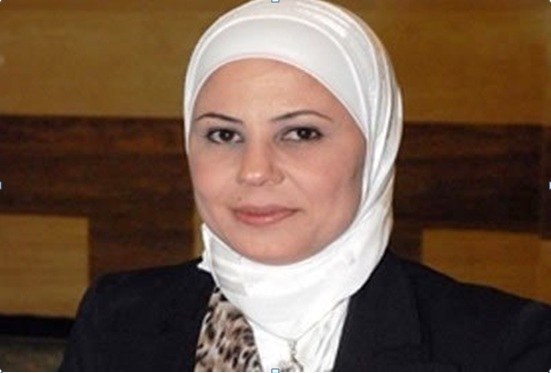 The EU’s ill-considered action simply adds to the multitude of woes faced by Syrian citizens, woes which have forced many of them to leave their country and become refugees. The ministers targeted tend to be technocrats, specialists in their field of work; they are not major government policy makers. Some are involved in humanitarian work, and some of them are ministers whose efforts in this regard have made them quite popular with Syrian people, both at home and abroad. One of these is Kinda al-Shammat, who heads Syria’s Ministry of Social Affairs.
Ms. Shammat works closely with the U.N. and other aid agencies operating on the ground in Syria, her efforts facilitating the delivery of assistance to millions of internally displaced Syrians. The UN has hundreds of aid workers working with the Syrian government through her. She has never been involved in “serious human rights violations,” but she is a well-known human rights advocate. Ms. Shammat holds a PhD in Private Law from the University of Damascus, where she teaches, and she has also worked with the Syrian Commission for Family Affairs, the General Union of Syrian Women, and the UN Development Fund. In the latter capacity she served as a legal expert in family affairs and violence against women, and in 2012 she was also a member of the committee that amended the Syrian constitution.
Ms. Shammat first came to this observer’s attention for her continued dedication to getting aid to Palestinian refugees trapped inside Yarmouk camp during the current crisis. She survived an assassination attempt by rebels opposed to her views on women rights, and some suggest that she became a target for al-Qaeda types last year when Damascus University banned the wearing of total full face veils. It was a decision she openly welcomed at the time, saying that it was in line with the Syrian belief in moderation.
“We in Syria have never gone to the extreme left or the extreme right,” she told Al-Arabiya TV.
Kinda al-Shammat is surely one of the last officials, in Syria or anywhere else, who would warrant EU sanctions against her, and it is deeply egregious that she should be targeted, along with her colleagues, without any proof of wrongdoing. Most of the other ministers added to the sanctions list also have stellar records of public service; they would doubtless be applauded by the people, and probably, under different circumstances, would even be esteemed and well received in all 28 EU member states as well. These include Finance Minister Ismael Ismael, Economy and Foreign Trade Minister Khodr Orfali, Oil Minister Suleiman Al Abbas, Industry Minister Kamal Eddin Tu’ma, Labor Minister Hassan Hijazi, and Minister of Tourism, Bishr Riad Yaziji. None of these individuals has ever been accused of any conduct that could be construed as anything other than humanitarian. Of these it is perhaps Yaziji who most embodies the “new breed” of Syrian officials.
Yaziji was appointed as Minister of Tourism on 8/22/13, and he appears beholden to no person or thing other than his own vision of restoring Syria’s vital tourist industry. Born in Aleppo in 1972, Yaziji is a businessman, and he is currently the youngest member of the Assad Cabinet. With a Bachelor’s degree in Informatics Engineering from Aleppo University (1995), he is possessed with distinctively Kennedyesque good looks, voices progressive ideas, and exerts a charm and charisma that instantly connects with ordinary citizens and foreigners alike. Not affiliated with the Baath Party, Yaziji is an independent and was elected as such to the People’s Assembly, or the Syrian parliament. This observer has closely followed his work, both in the media and from direct personal experience.
Prior to the conflict, tourism brought in more than $8 billion annually, and as one admirer of Yaziji, who also works in government, put it, “The Tourism Ministry is working to reconnect to the world the way we Syrians used to reach out.” The official added:
“Syria’s treasures, from the cradle of civilization that we are, fundamentally belong to all of humanity, and please accept our promise—that we will do our best to repair all damage to the antiquities and will welcome assistance, as we shall welcome every visitor again, before long, enshallah (God willing).”
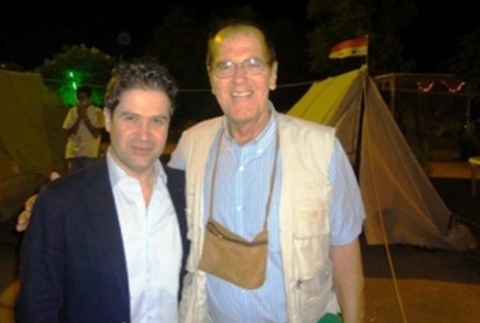 Minister Yaziji appears to thrive on the broad scope and depth of his work, which in fact includes visiting Syrian archaeological sites and drawing international focus on the need to protect and restore humanity’s collective cultural heritage, of which the people of Syria are the custodians. He also spends his time participating in youth festivals, visiting wounded citizens in hospitals, and recently attended a “Loyalty to Syria” gathering, where he stressed the importance of NGOs in conveying the reality of events in Syria to the global public. At that gathering he also discussed the unparalleled richness of the country’s historical and religious monuments, and spoke of “boosting the social values and developing national capacity to serve the best interest of Syria.”
This new generation of Syrian officials is dedicated to ameliorating the country’s humanitarian crisis as well as preserving our global heritage. They have been indefatigable in their around-the- clock projects, and they need to be encouraged, not hindered. In an interview with Reuters on 6/28/14, Yaziji said the sanctions will not interfere with his work—and he also said he has never been involved with any “human rights violations” of any sort. Some have pointed to the curious timing of this latest round of sanctions, so soon after the presidential election, and have suggested that in reality it is a form of collective punishment of the Syrian people—for daring to vote the wrong way, or in a way disapproved of by the EU and the rest of the West.
The EU has spoken piously of “Cultural Heritage—our debt to the past, our promise to the future,” and claims that it seeks to “promote culture as a catalyst for creativity,” but its actions last month belie this. If it truly seeks to implement its claimed humanitarian values, the EU should work to open the paths of these Syrian officials, not close them. At the very least it should desist from layering more “show sanctions” upon those in Syria who are striving to salvage their country. Yaziji and Shammat are Syrian patriots whose invaluable work the EU should be encouraging rather than hindering with politically motivated sanctions and silly, gratuitous defamations of character.
Few in the Syrian Arab Republic these days question the urgency and enormity of the task of reconstructing their ancient country from war-caused destruction, the fall-out from a conflict already more than half as long as World War I and approaching two-thirds as long as World War II. For this ten-millennium civilization, emergency measures are needed to protect its thousands of priceless archaeological treasures, both from the ravages of war as well as plunder and illegal excavation wrought by thieves. The Syrian government has given high priority to the preservation of cultural heritage, a policy that presumably not many in the EU would openly disagree with. Yet the EU’s ill-considered sanctions are harming multi-faceted restoration efforts—by intimidating members of the international public who want to help and by attempting to isolate Syrian officials whose full schedules these days are consumed by humanitarian undertakings as well as projects aimed at restoring cultural heritage sites and preserving our link to the past. And by the way, some of these sites they are working to protect are included on UNESCO’s list of World Heritage Sites. These include the Ancient City of Aleppo , the Ancient City of Bosra , Ancient City of Damascus , Ancient Villages of Northern Syria , Crac des Chevaliers and Qal’at Salah El-Din and the Site of Palmyra .
Syria and her hardworking public servants will survive these gratuitous political sanctions, but the sanctions likely will remain an indelible stain on the EU and its claimed humanitarian principles for a long time to come.
Featured Video
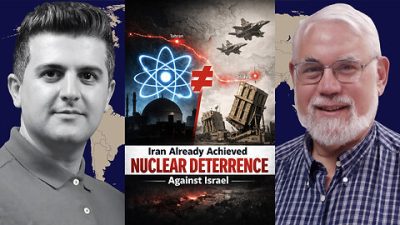
Prof. Ted Postol: Iran Already Achieved Nuclear Deterrence Against Israel
or go to
Aletho News Archives – Video-Images
From the Archives
How the occupied mentality syndrome works
Saudi Arabia on the American chessboard – Part 3
By B. J. Sabri | American Herald Tribune | June 27, 2016
Read part 2: “The occupied mentality Syndrome“
Previously I argued whether Saudi Arabia’s repeated involvements in U.S. interventions and wars stem from free national will or in response to a specific condition. For starters, in Saudi Arabia there is no national will. In Saudi Arabia, the national will is the will of the Al Saud clan. Still, when a major Arab state allies itself with a superpower that committed unspeakable crimes against humanity in almost every Arab country, then something is wrong. This fact alone should compel us to examine the U.S.-Saudi relation for one exceptional reason. As a result of the U.S.-Saudi wars, hundreds of thousands of people in Afghanistan, Iraq, Iran, Libya, Syria, Yemen, and Somalia have lost their lives. Millions became displaced in their own homelands. And millions more rendered refugees.
Attributing the Saudi policies to the bonds of “partnership” with the U.S. is frivolous. There are no bonds between these two thugs except those of business, military deals, secret plots, and wars. Proving this point, bonds such as these have no space for the American and Saudi peoples to share significant cultural or societal exchanges. If partnership is not the reason for the Saudi contribution to the U.S. strategy of empire and imperialism, then another reason must exist.
This leads to three possibilities. … continue
Blog Roll
 Aletho News
- “Davos Can Really Replace the UN”
- NIAID/NIH and USDA Fund Bioengineered Chimeric Influenza Viruses Built Using Pandemic H1N1 Components: Journal ‘Science Advances’
- Hezbollah hits Israeli warship off Lebanon’s coast, sets it aflame
- Iran slams US strikes on B1 bridge, Mahshahr petrochemical plants as ‘blatant acts of state terrorism’
- In letter to UN chief, Araghchi warns of dire consequences of US-Israeli attacks on Iran’s nuclear facilities
- Why the CIA conspiracy to invade Iran with Kurdish militias failed
- Why Are Upbeat US Claims About Mission to Rescue Pilot ‘Highly Questionable’?
- Aircraft destroyed during US ‘rescue’ of downed F-15 pilot cost more than $100 million each
- Washington University removes professor who condemned US-Israeli war on Iran
- Russia Warns of Retaliation as UK Authorizes Seizure of Vessels
- If Americans Knew
- In Iran, Israel-US take aim at “reason, research, and freedom of thought” – Daily Update
- US loses planes over Iran, Israel downgrades Lebanon war goals – Daily Update
- Israel Is Blocking Palestinians from Easter at Church Where Jesus Resurrected
- Plot to assassinate Palestinian activist follows harassment campaign promoted by Zionist groups and elected officials
- Prominent New York synagogue hosts presentation on why U.S. Jews should support the ethnic cleansing of Gaza
- Tapper vs. Piker: Is the CNN Anchor Auditioning for David Ellison?
- Shouldn’t Democrats Be Able to Condemn Genocide?
- Israel-US kill negotiators, destroy civilian structures, but Iran’s military capabilities still largely intact – Daily Update
- ‘War crime’: Global condemnation as Israeli ministers celebrate death penalty law targeting Palestinian prisoners
- 7 Ways Israel Is Turning Lebanon Into Gaza
- No Tricks Zone
- An Inconvenient Tree: Uncovered In Alps… Europe Much Warmer Than Today 6000 Years Ago
- New Study Reports A 60% Slowdown In Greenland’s Ice Loss Rate In The Last Decade
- Low Intensity Tornado Wrecks Major Solar Farm, Creating A Potential Toxic Dump
- New Study Finds Warming Saves Lives…Cold Temperatures 12 Times More Deadly Than Excess Heat
- German Science Blog Accuses PIK Climate Institute Of Hallucinating Climate Tipping Points
- Devastating Assessment Of Comirnaty Vaccine By Former Senior Pfizer Europe Toxicologist
- New Study: CO2 Is ‘Effectively Negligible’ As An Explanatory Climate Change Factor Since 2000
- Former Pfizer Toxicologist Dr. Helmut Sterz Tells Bundestag Hearing Pfizer Vaccine Should Have Never Been Approved
- Energy Expert: Germany’s Nuclear Phaseout Was A “500 Billion Euro Mistake”
- New Research: South Australia’s Mid-Holocene Sea Surface Temperatures Were 4°C Warmer Than Today
 Aletho News