Israel ‘withholding information’ about Gaza detainees
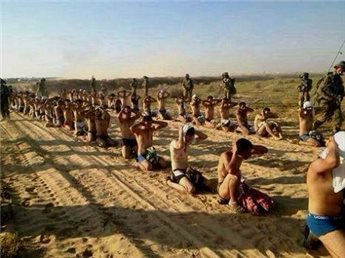
Israeli soldiers hold Palestinians in Gaza on July 24, 2014
Ma’an – 06/08/2014
RAMALLAH – The Ministry of Prisoner Affairs said Wednesday that it has not received information about Palestinians detained in Gaza during Israel’s offensive.
“The occupation army, during its current aggression on the Gaza Strip, has detained dozens of Palestinians and taken them to unknown locations,” Minister of Prisoner’s Affairs Shawqi al-Ayasa said in a statement.
Al-Ayasa said the ministry was yet to receive crucial information about the prisoners, including their ID numbers, locations, and conditions.
The fact that Israel has withheld the information is worrying, al-Ayasa said, adding that there were “growing fears that some of the prisoners have been executed.”
He called on international organizations, specifically the International Committee of the Red Cross, to intercede to obtain the information on the ministry’s behalf.
Al-Ayasa also requested that families in Gaza who suspect their relatives have been detained contact the Ministry of Prisoner Affairs.
The ministry said in a statement Sunday that more than 200 Palestinians had been detained in Gaza while Israeli forces were on the ground, but that some of them had been released.
An Israeli army spokeswoman told Ma’an that Israeli forces had arrested 159 Palestinians in Gaza who were “actively doing terrorist attacks.” The prisoners were transferred to the Shin Bet intelligence agency for questioning, she said.
The spokeswoman did not have information regarding how many of those Palestinians were still being held, and did not comment on allegations that Israel was withholding information about the prisoners from the prisoner’s ministry.
More than 70 per cent of Gazans have no drinking water
MEMO | August 6, 2014
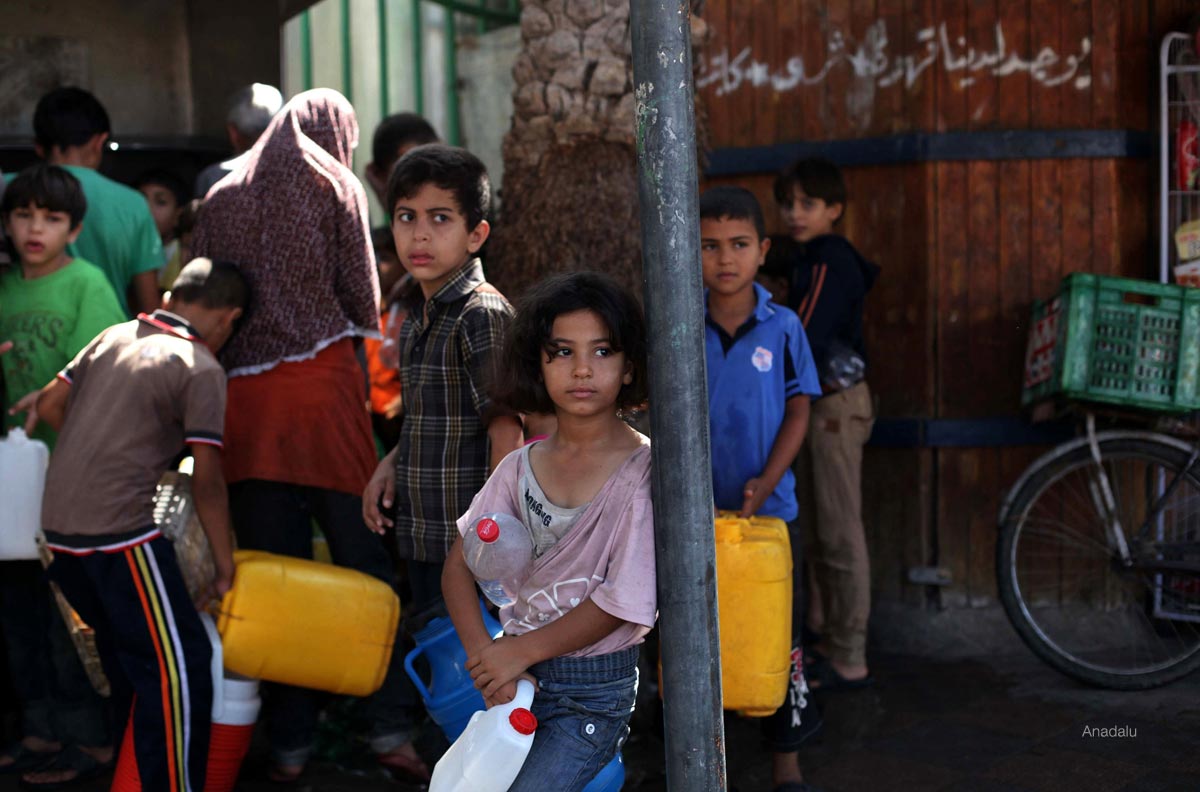 Head of the Palestinian Water Authority (PWA) Shaddad Attili said on Tuesday that the Gaza Strip is suffering a severe shortage of clean drinking water, calling the water situation “disastrous” after heavy Israeli attacks on the network of water pipes.
Speaking to Anadolu news agency, Attili said that 70 percent of the water pipelines have been damaged and that the 1.8 million Gazans are surviving on only 30 percent of the Strip’s capacity.
He went on to say that the water from some of the wells along the Strip was mixed with sewage. In addition 50 per cent of the sewage was pouring into the sea without being filtered because of the damage to the pipelines.
Gaza is one of the world’s most densely populated areas, where around 1.8 million people live in 360km2.
The PWA previously condemned Israeli plans to establish a security area 3km along the Gaza Strip. The PWA said this area, 36 percent of the Gaza strip, includes most of the resources for drinking water.
The PWA called upon the international community to intervene in order to prevent this and to allow chloride, which is used to sterilise drinking water, into the Strip. They also called for fuel to be allowed in to run water wells.
According to the statement, the Gaza Strip is in an urgent need of large tankers to distribute drinking water to urgently fulfil the needs of its residents.
During the war, the Palestinian housing and work ministry said that Israel had destroyed 25 percent of the infrastructure. Executive manager of the Palestinian Telecom Company said that 85 percent of wired and wireless telephone facilities were destroyed.
Israel killed 1,875 Palestinians, including 426 children and 255 women, and wounded 9,893; more than half of them are children and women, according to the ministry of health. 10,606 homes were destroyed, including 1,724 that were completely destroyed. It attacked 132 mosques; 42 of them were completely destroyed. Six universities and 188 schools, as well as 19 banks and exchange offices were directly attacked.
More than 315 factories, 27 public services facilities and 52 fishing boats were also destroyed.
Embedded Reporter Says Israel Targeted Guided Missile at UNWRA School, Killing 15 Civilians
By Richard Silverstein | Tikun Olam | August 5, 2014
An Israeli reporter for Maariv, Aviram Zino, has been embedded with an Israeli unit during the current invasion. Noam R writes in his Israeli political blog about Zino’s fawning enthusiastic response to being given the chance of a lifetime to be a reporter in the middle of the “action.” His reporting comes across as cheerleading rather than objective journalism. But in spite of himself, Zino reveals a damning fact that impeaches the Israeli’s credibility regarding its denial of deliberately targeting UN buildings housing Palestinian civilian refugees.
Zino reports that the unit commander, Nadav, ordered the firing of a $100,000 Tamuz (aka Spike) heat-seeking anti-tank missile on a UNWRA school in Beit Hanoun on July 24th:
Nadav tried to clarify what means were available to him. A survey of the field shows clearly fire coming from an UNWRA school in the center of Gaza. The order is given and a Tammuz missile is fired at the school. The commanding general, who arrives later for a press conference, says in response: “This is yet another example of Hamas’ cynical use of civilian structures for the purposes of terror.”
It’s a bit aggravating since the unit tried from the beginning of the Operation to do minimal damage, as best as possible, to the “uninvolved” [military jargon for “civilians”].
15 Palestinian civilians died from this missile and 150 were injured. As Noam R points out in his blog post, this is the first eyewitness, definitive evidence that Israel deliberately ordered a lethal guided-weapon (not indiscriminate artillery fire) to be fired at a civilian building in Gaza knowing there were unarmed non-combatants inside who would be killed.
Two things to point out about this report. Clearly, Zino didn’t see firing from the school. He trusted the unit commander’s word that such fire had been confirmed. But by whom and how is not mentioned. Second, the commander speaking at the press conference only notes the attack by Israel on the school without explaining how it justified killing civilians. Zino, in the closing sentence, admits explicitly that the attack was both disproportional and knowingly attacked civilians. As Sara Lee Whitson says in the paragraph below: that “is a war crime.”
In fact, Human Rights Watch’s Sarah Leah Whitson spoke about Israel’s responsibility to Gaza’s civilian population:
…The…presence of… civilians despite a warning to flee cannot be ignored when attacks are carried out, as Israeli forces have done previously.
“Warning families to flee fighting doesn’t make them fair targets just because they’re unable to do so, and deliberately attacking them is a war crime,” Whitson said.
In other words, you may not attack a civilian target containing unarmed civilians using heavy lethal weapons, even if you believe there are armed fighters engaged in combat operations against you. The safety of civilians trumps any desire to eliminate the armed threat, if there is one. This is reinforced by the fact that the Israel never presents any proof of its claims that armed fighters are firing from such structures and didn’t do so in this particular case.
There is yet another instance of serious Israeli prevarication. Army spokesperson Lt. Col. Lerner told AP 900 Palestinian fighters had been killed during the war. Yet Israel itself only two days before had put that number at 300. When asked why it jumped so much, AP characterized his response:
Lerner said the figure of 900 militants killed was an approximation, based on reporting from individual Israeli units, but provided no further detail.
In other words, “900″ is nothing more than the old Vietcong “body count” released by the U.S. army to persuade the press it was killing gooks and winning the war. The truth turned out to be quite different, as it will be in Gaza as well.
Palestinian and UN reports place the number of dead fighters at 20% of the overall total, which is 1,900. That would mean that 380 militants were killed. My own Israeli source reports more candid Israeli claims that 500 fighters have been killed. Certainly, the final number will be somewhere between 380-500, but nowhere near Lerner’s prevaricating claim of 900.
My Operation Protective Edge debrief yesterday argued that while both sides had gotten bloody noses, Hamas, simply by remaining standing, had gotten the better of Israel. Sheera Frenkel interviewed soldiers leaving Gaza and they uniformly told her they believed both that their objectives hadn’t been clear going into Gaza, and now that the Operation had ended, they hadn’t “gotten the job done.” Meaning, don’t believe the PR-bloviating you’ll hear from Benny Gantz and Bibi Netanyahu saying that Hamas had been dealt a mortal blow, that Israel had achieved all its objectives, etc. None of that happened. … Full article
Gaza industrial sector hit hard as 134 factories destroyed
Ma’an – 06/08/2014
GAZA CITY – At least 134 factories were destroyed during Israel’s four-week military offensive in the Gaza Strip, a Palestinian industrial union said Wednesday, causing severe damage to an already fragile industrial sector.
The union of Palestinian industries said that most factories stopped operations for over 30 days, with reported losses of at least $70 million.
Over 30,000 workers were made redundant due to the closures.
“The Israeli war machine deliberately destroyed the infrastructure of the Palestinian national economy by targeting factories which posed no security threat to the occupation,” the union said.
The industrial sector had already suffered major damage during previous Israeli military offenses in Gaza in 2012 and 2008.
The ongoing Israeli blockade has also severely limited the productivity of the industrial sector since it was imposed eight years ago, forcing factories to close or fire workers to remain in operation.
“Israel shouldn’t be rewarded for this aggression, and so Israeli products should be boycotted both locally and internationally,” the union added.
Deputy PA economy minister Taysir Amro said the 29-day war had caused total damage of up to $6 billion dollars.
US objects Palestinian bid to International Criminal Court
MEMO | August 6, 2014
Spokesperson of the US Department of State Jen Psaki said on Tuesday that her country objects to the Palestinian Authority’s efforts to try Israel at the International Criminal Court (ICC).
Commenting at a daily press briefing in Washington on what she called “reports of a push for an ICC investigation”, she said: “Our view is that we continue to strongly oppose unilateral actions that seek to circumvent or prejudge the very outcomes that can only be negotiated.”
She continued: “We’ve been very clear that, while we’ve expressed concerns when we’ve had them, there is – the only realistic path for realising Palestinian aspirations of statehood is through direct negotiations between the parties.”
Earlier on the same day, Palestinian Foreign Minister Riyad Al-Malki said he is optimistic that the latest ceasefire in Gaza will hold, even as Palestinians renewed efforts to bring Israel before the ICC.
“We expect the ceasefire to expand into another 72 hours and beyond,” Al-Malki told reporters at a press conference at The Hague, where he met the ICC’s chief prosecutor, Fatou Bensouda.
“We have heard that Israel has really committed itself to withdrawing… but it really depends on Israel and the seriousness of the Israeli side,” Al-Malki said.
He also openly expressed that the Palestinian Authority is planning to bring Israel to the ICC over the massacres carried out in the Gaza Strip during the last four weeks.
Reports of Russia’s military build-up on Ukraine border groundless – Moscow
RT | August 6, 2014
Moscow slammed NATO and Pentagon claims that Russia is amassing military near the border with Ukraine calling them unsubstantiated, according to a statement made by a Ministry of Defense spokesman.
“In Russia’s Ministry of Defense such statements only raise sympathy for the speakers of the Pentagon, the US State Department and NATO. It seems the people are serious, but they have to constantly improvise during their speeches to somehow add seriousness to their statements,” said Igor Konashenkov, spokesman for the ministry Major General, on Wednesday.
Pentagon spokesman, Rear Admiral John Kirby, told reporters on Tuesday that Russia has at least 10,000 troops on Ukraine’s border.
Following this, on Wednesday, NATO spokeswoman Oana Lungescu stated that Russia has already amassed around 20,000 combat-ready troops on the border.
Konashenkov said that “we would like to explain to the Pentagon and NATO officials that it is impossible to perform such a manoeuver with thousands of soldiers with weapons and military equipment in such a short time, all the more to keep it secret from OSCE observers now in the region.”
In late July, the OSCE deployed sixteen observers to two border-crossings in Russia – Gukovo and Donetsk, following a request to the organization by the Russian government.
The regular “tales” of Russian troops amassing near the border with Ukraine are reminiscent “of an auction selling soap bubbles, where the main goal is to set the price higher before the bubble bursts.”
This is the reason Pentagon and NATO figures vary so much, he explained.
Russia has conducted a series of war games since the start of the crisis in Ukraine. The latest five-day military exercise started on Monday in Russia’s south at the Ashuluk test site near Astrakhan, more than 700 kilometers away from the Ukrainian conflict zone.
The tests were scheduled last year, according to Russia’s Ministry of Defense.
The Major General pointed out that the representatives of the US and NATO, which have been inspecting the border under the ‘Open Skies’ mission, “consistently cannot find” any evidence of a military build-up.
“At the same time, a grouping of 25,000 Ukrainian military forces leading military actions near the border with Russia, for some reason, does not cause any concern in Europe or the United States.”
Earlier, Russia’s Defense Ministry accused the US of releasing “fake” satellite images allegedly proving Russia had shelled Ukraine territory. The images were posted by the US ambassador Geoffrey Pyatt on his Twitter account on July 27. Moscow said that because of “extremely low resolution” and “due to the absence of any attribution to the exact area” the images’ “authenticity is impossible to prove.”
UN: ‘Scared of the way Kiev conducts military operation in E. Ukraine’
RT | August 6, 2014
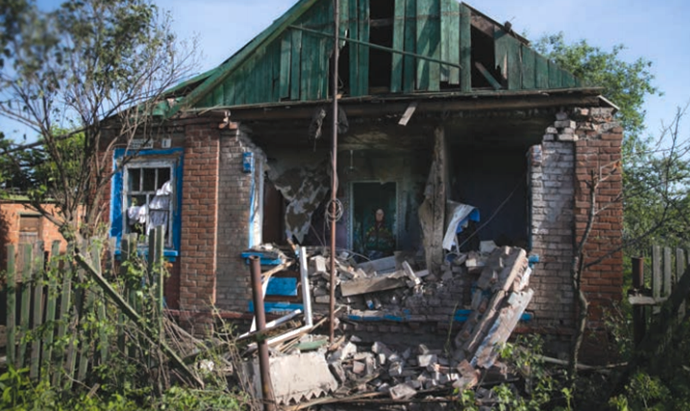
The UN has expressed its major concern over the plight of the eastern Ukrainian territories and their soaring numbers of refugees. There are 118,000 internally displaced people, and 740,000 have fled to Russia during the crisis.
“What we are scared about is the way the military operations are conducted. What will happen if we have intense fighting inside the big urban centers of Lugansk and Donetsk? Fighting in highly intensified urban areas could lead to massive exodus and massive destruction,” UN High Commissioner for Refugees Vincent Cochetel stated on Tuesday.
Almost 4 million people live in a region that has been the hardest-hit by violence, and “face imminent security threats from the fighting,” which has also led to massive damage to infrastructure and the interruption of power and water supplies, John Ging, the head of UN’s Office for Coordination of Humanitarian Affairs, stated.
Donetsk and Lugansk are home to 1.5 million people, and the water supply there has diminished to being only available for a few hours a day. Medical supplies also dangerously low.
Another major concern is that around 70 percent of medics have fled the area.
Currently, 118,000 internally displaced people are registered in Ukraine, with 87 percent of them having fled the east of the country, according to UN data. Over 1,000 people are reportedly leaving the conflict zone each day.
Those numbers can’t be viewed as comprehensive, as “many Ukrainians left their homes without officially registering with the Ukrainian authorities or not addressing them directly.”
740,000 refugees have arrived in Russia since the beginning of this year, according to Russian and UN estimates.
At least 1,367 people, civilians and military, have been killed and 4,087 people wounded by fighting in eastern Ukraine since mid-April.
Ging drew attention to the issue of civilian evacuation from areas affected by the military conflict.
Humanitarian corridors are “open for several hours each day, but these are regularly blocked by combatants, and the evacuation of people through these channels is impeded.”
The UN also demanded that Kiev stops taking customs fees from the humanitarian aid that arrives in the country, and also simplify UN employees’ access into Ukraine.
Moreover, “a unified system is necessary to register the internally displaced persons, a system that will allow to fully analyze and understand the people’s needs,” Ging stated.
“Humanitarian aid should be free of customs payments. Apart from that, it is necessary to accelerate the process of signing and ratifying the agreement between the UN and the government about the simplification of the entry to the country for humanitarian workers and the import of loads,” the official added.
The key component of UN plans to provide humanitarian aid is preparation for the winter when freezing temperatures will prevail.
“We need to assure that all the necessary efforts are taken to address the consequences of the coming winter – which is expected to be severe – for the forcibly displaced people,” Ging stressed.
Beware NYT’s Michael R. Gordon
Stop Him Before He Kills Again!
By John Walsh | CounterPunch | August 5, 2014
“There’s an old saying in Tennessee — I know it’s in Texas, probably in Tennessee — that says, fool me once, shame on — shame on you. Fool me — you can’t get fooled again.”
– George W. Bush
Those in the U.S. who are enthralled by relentless reports of the most demonic acts attributed to President Vladimir Putin and the rebel Eastern Ukrainian federalists a in the New York Times, NPR, ETC. would do well to look at the track record of the “reporters” dishing out this stuff. What they will find is a trail of deception that is piled with corpses of hundreds of thousands of innocents.
Principle among the purveyors of these bloodletting falsehoods is Michael R. Gordon, chief military correspondent for the NYT, serving over the decades as a trusty pipeline from the Pentagon to you. Although his name should be in profound disrepute, many opposed to war are unaware of his ignoble career or may have forgotten it. Most notoriously he is the co-author with Judith Miller of the front page NYT article planted by Dick Cheney’s minions, which claimed that Saddam Hussein had Weapons of Mass Destruction (WMD), relying on the idea that aluminum tubing being purchased by Iraq was to be used for purifying uranium.
Here is a quick reminder of that sorry episode so typical for the NYT. That article, entitled “Threats and Responses: The Iraqis; U.S. Says Hussein Intensifies Quest For A-Bomb Parts,” ran on page one of the NYT on Sunday, September 8, 2002. That same day, with the newsprint barely dry, Cheney popped up on Meet the Press citing the piece and claiming that Saddam Hussein was on his way to making nukes. Appearances on the other Sunday propaganda shows were made that same day by Colin Powell, Donald Rumsfeld, Richard Meyers (Chairman of the Joint Chiefs of Staff) and Condoleeza Rice who employed the infamous phrase used by Miller and Gordon, declaring with a straight face, “We don’t want the smoking gun to be a mushroom cloud.” On October 11, 2002, with an election staring it in the face, the Congress voted authorization for Bush to go to war. (That Constitutional requirement was unceremoniously dropped when Obama decided to make war on Libya. At least Bush took the time to lie to Congress.) As we know all too well now, the entire aluminum tube story was a lie, as was obvious at the time to anyone who read the article with the slightest care and as the Department of Energy and Department of State knew well at the time, as was later disclosed.
But unlike Judith Miller the well connected Gordon escaped punishment for these criminal fictions. And so he went on to peddle ever more lies on Iraq, being the first “journalist” to be embedded with U.S. forces of aggression and later championing the “surge” of his buddy, that great military strategist and legendary lover, David Petraeus. That bit of his career was documented in considerable detail in 2007 by the late Alex Cockburn. Cockburn summed it up thus:
“Gordon managed to dodge the fall-out from the WMD debacle he played a major part in contriving. For example, he co-wrote with Miller the infamous aluminum tubes-for-nukes story of September 8, 2002, that mightily assisted the administration in its push to war. In the latter part of 2006 he became the prime journalistic agitator for escalation in troop strength.
“On September 11, 2006, the Times ran a Gordon story under the headline, ‘Grim Outlook Seen in West Iraq Without More Troops and Aid’. Gordon cited a senior officer in Iraq saying more American troops were necessary to stabilize Anbar. A story on October 22 emphasized that “the sectarian violence [in Baghdad] would be far worse if not for the American efforts” There were of course plenty of Iraqis and some Americans Gordon could also have found, eager to say the exact opposite.”
The next year, 2007, Gordon went on to join the journalistic chorus in its effort to finger Iran as the source of new, more lethal roadside bombs used in Iraq which were called EFP’s (Explosively Formed Penetrators). This was another piece of Cheney propaganda designed to help satisfy his itch to launch a war on Iran. It was quickly exposed by another Cockburn, Andrew, Scott Horton and others. Fortunately this fiction thus exposed passed on quickly.
The point is that Gordon’s career has been not that of a reporter but a propagandist preparing us to accept the next moves of the U.S. Empire. So what is the intrepid Gordon up to these days? Unsurprisingly he is on the job covering the crisis in the Ukraine. He and the rest of the NYT are frantically peddling the wildest of lies about Ukraine, Russia and the ever evil Vlad. Here is a good example from the page one article by Gordon and others on July 18, entitled “U.S. Sees Evidence of Russian Links to Jet’s Downing.” It begins:
“The United States government has concluded that the passenger jet felled over Ukraine was shot down by a Russian-made surface-to-air missile launched from rebel-held territory and most likely provided by Russia to pro-Moscow separatists, officials said on Friday. While American officials are still investigating the chain of events leading to the destruction of Malaysia Airlines Flight 17 on Thursday, they pointed to a series of indicators of Russian involvement……” (Emphasis, jw)
Where is the evidence? The only evidence is that “officials said.” There is no indication of who the “officials” are or precisely what they said. Then there is the hedge phrase “most likely.” And finally Gordon and his co-authors tell us that the unnamed officials are “still investigating.” Finally although there is no conclusion, there are a “series of indicators.” (At the same time the Russian Ministry of Defense has released a lot of verifiable information on the incident, readily accessible on RT.com, whereas the U.S. has produced nothing other than some suspicious anecdotes on social media and a lot of speculation.) Not only should Gordon and his co-authors, Peter Baker and Mark Mazetti, the Judith Millers du jour, be summarily dismissed but also the “editors that let this trash appear as news rather than the unfounded propaganda that it is. (Mazetti and Baker should be leery of being Gordon’s accomplices. He may need a fall guy once again. Think Judith Miller, fellows.)
Let us turn to the notorious Miller and Gordon article of 2002 for comparison with Gordon’s piece on Ukraine. It begins:
“More than a decade after Saddam Hussein agreed to give up weapons of mass destruction, Iraq has stepped up its quest for nuclear weapons and has embarked on a worldwide hunt for materials to make an atomic bomb, Bush administration officials said today. In the last 14 months, Iraq has sought to buy thousands of specially designed aluminum tubes, which American officials believe were intended as components of centrifuges to enrich uranium. American officials said….” (Emphasis, jw)
Remarkable similarity! Cookie cutter prevarication, one might say. “American officials” are ever on the job and ever anonymous. And Michael R. Gordon is front and center on page one as their ever faithful, ever unquestioning transmission belt. No one can possibly think that Gordon is in the business of truth. We would be fools to believe a word he says. He fooled us once (in fact, many times). Shame on us if we let him fool us once again. His lies are laced with blood and death. We should avert our gaze from them.
John V. Walsh can be reached at John.Endwar@gmail.com.
Eyeless in Gaza
Israeli deceptions revealed in story of ‘kidnapped’ soldier
By Jonathan Cook | Dissident Voice | August 4, 2014
A single incident at the weekend – the reported capture by Hamas on Friday of an Israeli soldier through a tunnel – illustrated in stark fashion the layers of deception Israel has successfully cast over its attack on Gaza.
On Sunday, as the army indicated it would start limited withdrawals, Israel claimed Hadar Goldin was dead, possibly buried in a collapsed tunnel as Israel bombarded the area in which he was seized. His family said he was being left behind.
Israeli officials or media did not view Hamas’ operation dispassionately. Goldin was not “captured” but “kidnapped” – as though he was an innocent seized by opportunistic criminals.
As occurs so often, many western journalists followed Israel’s lead. The London Times’ front page blared: “Kidnapped in Gaza”, while the Boston Globe called him the “abducted Israeli soldier”.
From western reactions, it was also clear the soldier’s capture was considered more significant news than any of the massacres of Palestinian civilians over the past weeks.
Israel’s cynical calculus – that one soldier is more valuable than large numbers of dead Palestinian civilians – was echoed in the diplomatic and editorial corridors of Washington, London and Paris.
Misleading too was the general agreement that, in attacking a group of soldiers in Rafah and seizing Goldin, Hamas had violated the first moments of a 72-hour humanitarian ceasefire.
The Washington Post reported on the circumstances as a Hamas suicide bomber emerged from a tunnel to explode his vest, killing two soldiers, and Goldin was pulled into the shaft. “>On Friday morning, Israeli troops were in the southern Gaza Strip preparing to destroy a Hamas tunnel, said Israeli military officials. Suddenly, Palestinian militants emerged from a shaft.”
CBS reporter Charlie D’Agata parroted the same Israeli briefings, also inadvertently exposing the central deceit. The soldier was “suspected of being kidnapped during an operation to clear tunnels – crucially, [officials] say, this happened after the ceasefire was supposed to take place.”
So if a ceasefire was in place, what were Goldin and his comrades doing detonating tunnels, tunnels in which Israel says Hamas is hiding? Were Hamas fighters supposed to simply wait to be entombed in their bunkers during the pause in hostilities? Or was Israel the one violating the ceasefire?
And then there was the explosion of military fury as Israel realised its soldier was missing. Israeli correspondents have admitted that the notorious “Hannibal procedure” was invoked: the use of all means to stop a soldier being taken alive, including killing him. The rationale is to prevent the enemy gaining a psychological advantage in negotiations.
The unleashing of massive firepower appeared designed to ensure Goldin and his captors never made it out of their tunnel, but in the process Israel killed dozens of Palestinians.
It was another illustration of Israel’s absolute disregard for the safety of civilians. At least three-quarters of the more than 1,700 Palestinians killed so far are non-combatants, while almost all Israeli casualties have been soldiers. This has been a pattern in all Israel’s recent confrontations.
Israel’s official justifications for taking the fight into Gaza have been layered with deceit too.
Prime minister Benjamin Netanyahu has argued that Israel was dragged into a war of necessity. Barack Obama echoed him: Israel had a right to defend itself from a barrage of rockets fired out of Gaza. Later the pretext became Israel’s need to destroy the “terror tunnels”.
The logic is deeply flawed. Israel is occupying and besieging Gaza, conferring on its inhabitants a right under international law to fight for their freedom. How does the oppressor, the lawbreaker have a right to self-defence? If Israel objects to being scratched and bruised, it should stop choking its victim.
The degree to which Israel’s narrative of “self-defence” has come to dominate news coverage and diplomatic statements was revealed in a CNN interview. Anchor Carol Costello asked a baffled interviewee in all seriousness: “Why doesn’t Hamas just show Israel where these tunnels are?”
Equally significantly, Israel has obscured the truth that it picked this particular round of its ongoing confrontation with Hamas – and did so entirely cynically.
A BBC reporter recently confirmed with an Israeli police spokesman a rumour that had been circulating among military correspondents for weeks. The group behind the abduction in June of three Israeli teens in the West Bank – the trigger for Israel’s campaign against Hamas – was a lone cell, acting on its own.
Claiming precisely the opposite – that he had cast-iron proof Hamas was responsible – Netanyahu gave the army free rein to arrest hundreds of Hamas members and smash the organisation’s institutions in the West Bank.
The crackdown created the necessary provocation: Hamas allowed Gaza’s factions to start firing limited numbers of rockets. Analyst Nathan Thrall noted recently that Hamas had impressed the Israeli army until that point by enforcing the ceasefire agreed with Israel 18 months earlier, even though Israel violated the terms by maintaining Gaza’s siege.
Now the rockets gave Netanyahu an excuse to strike.
So what was his real reason for going into Gaza? What were these many deceptions designed to hide?
It seems Netanyahu wanted to end a strategic threat: not Hamas rockets or tunnels, but the establishment of a unity government between Hamas and its long-time rivals Fatah. Palestinian unity risked reviving pressure on him to negotiate, or face a renewed and more credible Palestinian campaign for statehood at the United Nations.
But Hamas’ unexpectedly impressive martial display against Israel – killing dozens of soldiers, firing long-range rockets into Israel throughout, closing briefly the sole international airport, launching attacks into Israeli territory, and causing a loss to the economy estimated so far at more than $4bn – may have changed the calculus again.
For the moment, Netanyahu seems to prefer to pull back Israeli soldiers rather than be forced under international pressure to negotiate with Hamas. He knows that its key demand will be that Israel end the siege.
But in the longer term, Netanyahu may need Palestinian unity, at least on his terms, to undermine Hamas’ gains.
As Israel began its attack on Gaza, Netanyahu turned his attention to the West Bank. He warned that there could never be “any agreement in which we relinquish security control” over it for fear that, given the West Bank’s larger size, Israel might “create another 20 Gazas”.
He was ruling out any hope of Palestinian statehood. A “demilitarised” entity, heavily circumscribed and absolutely dependent on Israel and the US, seems to be all that Israel will ever put on the table.
Allowing Palestinian leader Mahmoud Abbas and Fatah into Gaza could justify loosening the siege. But only as long as Abbas agrees to remove Hamas’ military infrastructure and export to the coastal enclave the model he has established in the West Bank – of endless accommodation to Israeli and US dictates.
Jonathan Cook, based in Nazareth, Israel is a winner of the Martha Gellhorn Special Prize for Journalism. His latest books are Israel and the Clash of Civilisations: Iraq, Iran and the Plan to Remake the Middle East (Pluto Press) and Disappearing Palestine: Israel’s Experiments in Human Despair (Zed Books).
Spain embargoes arms sales to Israel
MEMO | August 5, 2014
Spain has frozen all arms and technological sales to Israel in protest against its ongoing brutal war against the Gaza Strip and the killing of thousands of Palestinian civilians, El Pais newspaper revealed.
The newspaper described this decision as purely “political” and was made last week by a committee consisting of the president, treasury, economy ministry, foreign ministry and defence ministry.
Spain is reported to have sold nearly €5 million in arms sales to Israel last year.
The Spanish decision comes hours after Britain announced it was reviewing licenses to export weapons and military technology to Israel.
A spokeswoman for the British government said yesterday that the UK is reviewing all arms export licenses to Israel because of the escalating conflict between Israel and Hamas in the Gaza Strip. “We are currently reviewing all export licenses to Israel to make sure they are appropriate,” she said.
However, ministers said they would not stop licensing military equipment to Israel outright because they believed the country had a “legitimate right to self-defence”.
In defense of Palestine
Silvio Rodriguez OJALA
Bolivia Rising | August 5, 2014
The following statement in defense of Palestine and encouraging people to join the BDS campaign has been signed by Bolivian president Evo Morales, former Honduran president Mel Zelaya, Nobel peace prize winner Adolfo Pérez Esquivel, Uruguayan author Eduardo Galeano, Cuban musician Silvio Rodríguez and many more (see list below) To add your name email endefensadepalestina@gmail.com
In defense of Palestine
Faced with the tragic events our Palestinian brothers and sisters are living through in Gaza, the Network in Defense of Humanity (REDH) assumes our responsibility and expresses the following:
We take up as our own the words of compañero Evo Morales, a founder of the Network in Defense of Humanity and President of the Plurinational State of Bolivia, who has declared Israel to be a terrorist state.
We express our absolute repulsion at the genocide being carried out against the Palestinian people by a state founded on dispossession and the colonial occupation of Palestinian territories.
We pay recognition to, and express our solidarity with the Palestinian people and its resistance organizations, especially in Gaza, in their heroic struggle against Israeli attempts to exterminate them and seize the small pieces that remain of what was once their homeland.
We condemn the imperialist role of the United States that politically, financially and militarily sponsors and backs Israel, in the face of the extraordinary inaction of the UN Security Council whose resolutions on the question of Palestine are systematically violated with complete impunity by Washington. The United States is once again demonstrating the hypocrisy and cynicism with which it has acted throughout history, threatening sanctions and interventions against the peoples of Latin America, Africa and Eurasia who defend their sovereignty at the same time as its backs the actions of Israel.
We denounce the complicity in what is occurring, by default in some cases, of the governments that make up the European Union, as well as the unconditional subordination of the media oligarchs to Washington’s dictates. Enough of calling it a war when in fact it is a genocide being perpetrated by one of the best equipped armies in the world against a people whose defensive resources are infinitely inferior in quantity and quality!
We encourage you to join the Boycott, Divestment and Sanctions campaign against the terrorist state of Israel, as it is time for active and creative solidarity that goes beyond statements of condemnation. We have failed the more than 1,600 people killed in Palestine over the last few weeks, as well as the more than 9,000 injured since the start of the terrorist operation hypocritically named “Protective Edge”.
We demand an end to apartheid and genocide, as well as to the walls and illegal settlements. We call on the governments of the world to demand that Israel complies with US Security Council resolutions that oblige it to withdraw from Gaza, the West Bank and East Jerusalem, return to the borders that existed prior to the “Six Day War” (1967) and guarantee the right of return for Palestinian refugees, as per Security Council Resolution No. 242, November 22, 1967, a resolution that has been consistently ignored by the state of Israel.
We call for a real political solution to the conflict in Palestine on the basis of dialogue, negotiation and the existence of two states with equal rights and delineated borders that are internationally recognized. We believe this solution must begin with the immediate lifting of the blockade on Gaza and the liberation of all Palestinian political prisoners. We congratulate the governments of ALBA [Bolivarian Alliance of the Peoples of Our Americas], Mercosur [Common Market of the South] and other governments of the South for their position of solidarity against the barbaric actions of Israel in Gaza.
We adopt as our own the words of the revolutionary, Nelson Mandela: “We know too well that our freedom is incomplete without the freedom of the Palestinians.” We affirm that Israel has morally and politically lost this battle in the face of the brave Palestinian people and the growing condemnation by the peoples of the world of a “criminal” state that violates international law. The unbreakable Palestinian resistance will be rewarded, sooner rather than later, with the smiles of their children in a free homeland.
Against Israeli terrorism and US imperialism, in defense of the right to self-determination for Palestine and all the peoples of the world!
Initial signatories: Evo Morales, Bolivia; Adolfo Pérez Esquivel, Argentina; Pablo González Casanova, México; Eduardo Galeano, Uruguay; Roberto Fernández Retamar, Cuba; Federico Mayor Zaragoza, España; Silvio Rodríguez, Cuba; Luis Arce Catacora, Bolivia; Gianni Vattimo, Italia; Gabriela Rivadeneira, Ecuador; Istvan Meszaros, Hungría/Reino Unido; Samir Amin, Egipto; Alfonso Sastre, País Vasco; Nardi Suxo, Bolivia; Enrique Dussel, México; Marta Harnecker, Chile; Carmen Bohorquez, Venezuela; Cesar Navarro, Bolivia; Miguel Barnet , Cuba; Franz Hinkelammert, Alemania; Héctor Arce Zaconeta, Bolivia; Piedad Cordoba, Colombia; Reverendo Raúl Suarez, Cuba; Martin Almada, Paraguay; Fernando Rendón, Colombia; Graziella Pogolloti, Cuba; Sacha Llorenti, Bolivia; Ana Esther Ceceña, México; Luis Britto, Venezuela; Rafael Cancel Miranda, Puerto Rico; Atilio Boron, Argentina; Theotonio Dos Santos, Brasil ; Alfredo Rada, Bolivia; Piedad Cordoba, Colombia, Farruco Sesto, Venezuela; Ángel Guerra, Cabrera, Cuba/ Mexico, Juan Carlos Trujillo, Bolivia; Mel Zelaya; Honduras; Hildebrando Pérez Grande, Perú; Patricia Villegas, Colombia/Venezuela; Maria Nela Prada, Bolivia; Stella Calloni, Argentina; Omar González, Cuba;; Hugo Moldiz, Bolivia; Pascual Serrano, España;; Raúl Pérez Torres, Ecuador; Obispo Raúl Vera, México; Joao Pedro Stedile, Brasil; Boaventura de Sousa Santos, Portugal; Rodrigo Álvarez Cambras, Cuba; Socorro Gomes, Brasil; Katu Arkonada, País Vasco/Bolivia
Full list of signatories
Abdón Ubidia Ecuador
Adalberto Santana México
Adelaide Gonçalves Brasil
Ademar Olivera Uruguay
Adolfo Pérez Esquivel Argentina
Adriana Rossi Argentina
Adys Cupull Cuba
Aitana Alberti Cuba
Alba Carosio Venezuela.
Alba Estela Maldonado Guatemala
Alberto Abreu Arcia Cuba
Alberto Acosta Cuba
Alberto Ferrari Argentina
Alberto Mass Argentina
Alberto Rabilotta Argentina/Canadá
Aldo M. Etchegoyen
Alejandra Ciriza Argentina
Alejandra Claros Borda Bolivia
Alejandra del Palacio México
Alejandro Dausa Bolivia
Alejandro Hamed Franco Uruguay
Alejandro Moreano Ecuador
Alejandro Zárate Bladés Bolivia
Alex Pausides Cuba
Alexis Adarfio Marin Venezuela
Alfonso Herrera Franyutti Mexico
Alfonso Sastre País Vasco;
Alfredo Rada Bolivia
Alfredo Serrano Bolivia
Alfredo Vera Arrata Ecuador
Alicia Castellanos México
Amelia Barreda Argentina
Américo Díaz Núñez Venezuela
Ana Bas Cortada Argentina
Ana Carolina Strongoli Argentina
Ana Cristina Abud Argentina
Ana Esther Ceceña México
Ana Leticia Vargas México
Ana María Aragonés México
Ana María Ramb Hughes Argentina
Ana Mariaa Vera Smith México
Ana Paula de Teresa México
Ana Ruiz España
Ana Zambrano Estados Unidos
Anahit Aharonian Uruguay
Andrea Fernández México
Andrea Trejo Márquez México
Andrea Vlahusic Argentina
Ángel Guerra Cabrera Cuba/ México
Ángel I. Baños
Ángeles Maestro España
Angelo Baracca Italia
Anita Leocadia Prestes Brasil
Annamaria Testi Italia
Antonella Signorini Italia
Antonio Elías Uruguay
Antonio J. Martínez Fuentes Cuba
Antonio Preciado Ecuador
Araceli Cortes México
Ariana López Marth Cuba
Arlete Moysés Rodrigues Brasil
Armando Fernández Cuba
Arturo Corcuera Perú
Arturo Escobar Estados Unidos
Atilio Bonilla Perú
Atilio Borón Argentina
Augusto Plaza Bolivia
Aurelio Alonso Cuba
Beatriz Stolowicz México
Beilton Freire da Rocha Brasil
Bernard Duterme Bélgica
Betinho Duarte Brasil
Beto Almeida Brasil
Betty Tejada Soruco Bolivia
Boaventura de Sousa Santos Portugal
Boris Brito Bolivia
Bruno Portugués Perú
Camilo Valqui Cachi México
Carla Espósito Guevara
Carlin Shapiama Perú
Carlos Aznárez Argentina
Carlos Borroto Cuba
Carlos Cabal Mirabal Cuba
Carlos Chanove Bolivia
Carlos Fazio México
Carlos Fernández Liria España
Carlos Moya Ureta Chile
Carlos Zamora Cuba
Carmen Bohorquez Venezuela;
Carol Proner Brasil
Carolina Sánchez Cuba
Cecilia Todd Venezuela
Cesar Navarro Bolivia
Cesar Navarro Bolivia;
Cesar Pedros Fernández Cuba
Christian Mirza Uruguay
Christian Mirza Uruguay
Clara Algranati Argentina
Clara Ferri México
Clara Rivas España
Claudia Camba Argentina
Claudia Gómez Haro México
Claudia Iriarte Chile
Claudia Yarza Argentina
Clemencia Correa México
Colette Louise Wall México
Crisbeyle González Bolivia
Cruz Mejía México
Crysbeylee González Venezuela
Danny Rivera Puerto Rico
Darío Machado Rodríguez Cuba
Delfina Paredes Perú
Denis Merino Perú
Derlei Catarina De Luca Brasil
Domenico Losurdo Italia
Domenico Vasapollo. Italia
Edgar Butron Bolivia
Edgar Llanos Bolivia
Edgard Sánchez México
Edgardo Lander Venezuela
Edmundo Cepeda México
Eduardo Arroyo Perú
Eduardo Galeano, Uruguay
Eduardo González Cuba
Eduardo Heras Cuba
Eduardo Neururer Argentina-España
Eduardo Paz Rada Bolivia
Eduardo Raúl Neururer Rabottini España
Elena Jiménez Cuba
Elisa Rando Argentina
Elma Beatriz Rosado Puerto Rico
Elza Neves Moraes Brasil
Emiliano Teran Mantovani Venezuela
Emilio Comas Paret Cuba
Emira Imaña Bolivia
Enrique Dussel México;
Enrique González Ruiz México
Enrique Rajchenberg México
Enrique Ubieta Gómez Cuba
Epigmenio Ibarra México
Epitacio Paes Brasil
Eréndira Salazar México
Esteban Falcón
Esteban Silva Cuadra Chile
Estefanía Prado Bolivia
Estela Fernández Nadal Argentina
Eugenio Sánchez Aldana México
Eva Björklund Serbia
Eva Forest-Sastre País Vasco
Eva Golinger Venezuela
Evaliz Morales Alvarado Bolivia
Evo Morales Bolivia
Fabio Grobart Sunshine Cuba
Fanny Palacios Izquierdo Perú
Farruco Sesto Venezuela
Federico García Perú
Federico Mayor Zaragoza España
Feliciano Padilla Perú
Felipe de J. Pérez Cruz Cuba
Fernando Bossi Venezuela
Fernando Buen Abad Domínguez México
Fernando Martínez Heredia Cuba
Fernando Medina Venezuela
Fernando Mijangos País Vasco
Fernando Morais Brasil
Fernando Rendón Colombia
Fernando Rodríguez Bolivia
Flora Rocha Bolivia
Francesco Spinazzola Italia
Francisco García Bolivia
Francois Houtart Belgica
Frank Gaudichaud Francia
Franz Hinkelammert Alemania;
Franz Sandoval Bolivia
Fred Fuentes Australia
Freddy Salazar Sanjinés
Fredy Salazar Bolivia
Froilán González Cuba
Gabriel Coderch Díaz Cuba
Gabriel Pérez México
Gabriel Vargas Lozano México
Gabriela Rivadeneira, Ecuador
Gabriela Sosa Martínez México
Gianni Vattimo Italia
Gilberto López y Rivas México
Gilda Girardi Venezuela
Gina Rey Cuba
Gladys M Quiroga Argentina
Gloria Sellera Uruguay
Gonzalo Perera Uruguay
Gorki Tapia Perú
Graciela Masetti Argentina
Graziella Pogolloti Cuba;
Griselda Ramos Suco Cuba/México
Guillermo Azzi Argentina
Guillermo Rodríguez Rivera Cuba
Guillermo Tineo Bolivia
Gustavo Codas Paraguay
Gustavo Espinoza Perú
Gustavo Rojas Perú
Gustavo Valcárcel Perú
Héctor Arce Zaconeta Bolivia
Héctor Bernardo Argentina
Héctor de la Cueva México
Héctor Fernando Aguilar Venezuela
Hector Udaeta Bolivia
Henrique Galarza España
Henry Morales López Guatemala
Hernando Calvo Ospina Colombia
Hildebrando Pérez Grande Perú
Homero Castro Guzmán México
Horacio E. Pérez López Cuba
Hugo Chinea Cabrera Cuba
Hugo Moldiz Bolivia
Humberto Zambrana Bolivia
Ilonka Vargas Ecuador
Inés Izaguirre Argentina
Inés Lucero Belgrano México
Iraida Vargas Venezuela
Irene León Ecuador
Iroel Sánchez Cuba
Isabel Monal Cuba
Isabel Sanginés Franco México
Isel Llerena del Castillo Cuba
Ismael Hamdouch Argentina
Istvan Meszaros Hungría/Reino Unido;
Iván Padilla Bravo Venezuela
Jacques de Novion Brasil
James Cockcroft Canadá
Javier García Bolivia
Javier Lenz Bolivia
Javier Lenz
Javier Vargas Lozano México
Jessica Saravia Atristain Bolivia
Jesús Guanche Cuba
Jesús Ramírez Cuevas Mexico
Joan Tafalla España
Joaquín Arriola País Vasco
Joel Suárez Cuba
John Catalinotto Estados Unidos
John Saxe-Fernández México
Jonas Rojas Bolivia
Jorge Bustillos Bolivia
Jorge Castañeda Zavala Mexico
Jorge Wejebe Cuba
Jorge Fons Mexico
Jorge Fonseca España
Jorge Guichón Uruguay
Jorge Montemayor México
Jorge Orbe León Ecuador
Jorge Rachid Argentina
Jorge Veraza Urtuzuàstegui Mexico
Jorge Winter Argentina
Jorge Zabalza Uruguay
José Adeildo Ramos. Brasil
José Antonio Almazán González Mexico
José Antonio García Araujo Venezuela
José E. Díaz Uruguay
José E. Díaz Uruguay
José Enrique González Ruiz Mexico
José Gandarilla Mexico
José García Bolivia
José Luis Rubén Silber Argentina
José Luis Silverio Peralta México
José Luis Tagliaferro Argentina
José María Barreiro España
José Pertierra Estados Unidos
José Regato Ecuador
José Steinsleger Argentina/ México
Juan Antonio García Miranda Cuba
Juan Carlos Biani Argentina
Juan Carlos Calvimonte Bolivia
Juan Carlos Gómez Leyton Chile
Juan Carlos Medrano Bolivia
Juan Cristóbal Perú
Juan Diego García España
Juan Manuel Navarro Reina España
Juanita Conejero Cuba
Julio Benavides Perú
Julio C. Gambina Argentina
Julio Ferrer Argentina
Julio Manduley Panamá
Julio Muñoz Rubio México
Katiuska Blanco Cuba
Katiuska García Alonso Cuba
Katu Arkonada País Vasco/Bolivia
Laritza González Achón Cuba
Laura Encinas Bolivia
Lautaro Chanove Bolivia
León Moraria Venzuela
Leonel Nodal Álvarez Cuba
Lidia Fagale Argentina
Lilian Vega El Salvador
Liliam Álvarez Navarrete
Lino Morán Venezuela
Liseth Ortuño Bolivia
Lois Pérez Leira España
Lourdes Cervantes Cuba
Lourdes Garzón México
Luciano Andrés Valencia Argentina
Luciano Concheiro Bórquez Mexico
Luciano Vasapollo Italia
Lucio Triolo Italia
Lucrecia D’Agostino Argentina
Luis Arce Catacora Bolivia
Luis Arce Catacora, Bolivia
Luis Baudoin Olea Bolivia
Luis Britto García Venezuela
Luis Carlos Marrero Chasbar Cuba
Luis Edgar Páez Venezuela
Luis Ernesto Quesada Cuba
Luis Felipe Vázquez Vázquez Cuba
Luís H. Vignolo Uruguay
Luís H. Vignolo Uruguay
Luis Hernández Navarro México
Luis Morado Argentina
Luis Sexto Cuba
Luis Zorraquino Brasil
Magdalena Gómez México
Manolo Monereo España
Manuel Cabieses Donoso Chile
Marcelo Colussi Argentina/Guatemala
Marco A. Gandásegui Panamá
Marcos Roitman Rosenmann México
Mareelen Díaz Tenorio Cuba
Marga Herrera Aguirre
María Augusta Calle Ecuador
María Bolivia Rothe Bolivia
María del Pilar Muñiz López
María Esther Aguirre México
María Eugenia Pulido México
Maria Gabriella Italia
Maria Luisa Mendonça Brasil
María Martha González Bolivia
María Nela Prada Bolivia
Maria Nela Prada Tejada Bolivia
María Teresa Díaz Álvarez Cuba
Mariana Espinosa Obarrio Argentina
Mariela Flores Torres Argentina
Marilia Guimaraes Brasil
Marina Rossi Italia
Marina Taibo México
Mario Augusto Jakobskind Brasil
Mario Fiore Italia
Mario Jorge da Motta Bastos Brasil
Mario López Bolivia
Mario Sanoja. Venezuela
Mario Saucedo Pérez México
Marta Harnecker Chile;
Marta Speroni Argentina
Martin Almada Paraguay
Martin Almada Paraguay;
Martin Schwander Suiza
Maurício Vieira Martins Brasil
Mauro Cristaldi Italia
Max Murillo Mendoza Bolivia
Mayra Godoy Guatemala
Mel Zelaya Honduras
Melissa Arria Venezuela.
Mely González Aróstegui Cuba
Mercè Escayola Cabrejas España
Michael Lebowitz Canadá
Miguel Ángel Herrera C. Costa Rica
Miguel Angel Puigvert Valerio Argentina
Miguel Barnet Cuba;
Miguel Enrique Lagarde Cuba
Miguel Mejides Cuba
Miguel Urbano Rodríguez Portugal
Milagros Rivera Pérez Puerto Rico
Milton Pinheiro Brasil
Mirtha Isabel Tomas Argentina
Mónica Bruckman Brasil
Montserrat Ponsa Tarrés España
Morales Paco César Abraham Mexico
Nardi Suxo Bolivia
Nardi Suxo Bolivia;
Nayar López Castellanos México
Nelson Aguilar Bolivia
Nestor Kohan Argentina
Nila Heredia Bolivia
Nils Castro Panamá
Norbert Froufe González España
Norberto Vilar Argentina
Norma Núñez Montoto Panamá
Obispo Raúl Vera México
Octavio Rodríguez Araújo México
Olmer Torrejón Alcoba Bolivia
Omar González Cuba
Omelio Esteban Borroto Leiseca Cuba
Óscar Adolfo Suárez Morales
Oscar Guerrero Bolivia
Oscar Kuperman Argentina
Oscar Oramas Oliva Cuba
Oscar Ugarteche México
Pablo González Casanova, México
Pablo Guayasamín Ecuador
Pablo Kunich Venezuela
Pablo Navarrete Reino Unido
Paco Guardeño Sáez España
Paco Ignacio Taibo México
Paloma Saiz México
Paola Tiberi Italia
Pascual Serrano España
Patricia Rodas Honduras
Patricia Vaca Bolivia
Patricia Villegas Colombia/Venezuela
Patricio Montesinos España
Patxi Erdozain Beroiz País Vasco
Paul-Emile Dupret Bélgica
Paulino Núñez Venezuelal
Pavel Égüez Ecuador
Pedro de la Hoz Cuba
Pedro Gellert México
Pedro Hernández México
Pedro Marcel Oliva Estofan
Pedro Pablo Rodríguez Cuba
Percy Francisco Alvarado Godoy Guatemala/Cuba
Peter Rosset México
Piedad Córdoba Colombia
Piero Arria Venezuela
Pierre Mouterde Canadá
Pilar Roca Perú
Pocho Álvarez Ecuador
Porfirio Martínez México
Rafael Cancel Miranda Puerto Rico
Rafael Cancel Miranda Puerto Rico
Ramón Mier García México
Ramón Pedregal Casanova España
Rashid Sherif Túnez
Raúl Antonio Capote Cuba
Raúl García Linera Bolivia
Raúl Miranda Ocampo Mexico
Raúl Pérez Torres Ecuador
Raúl Pérez Torres Ecuador
Raúl Zibechi Uruguay
Rebeca Peralta Mariñelarena México
Rene Peres Bolivia
Reverendo Raúl Suarez Cuba;
Reynaldo Naranjo Perú
Ricardo Acuña Gómez Reino Unido
Ricardo Bajo Bolivia
Ricardo Cohen Uruguay
Ricardo Flecha Hermosa Paraguay
Ricardo Gayol Rodríguez España
Ricardo Salgado
Rigoberto Lopéz Cuba
Rina Bertaccini Argentina
Rita Martufi Italia
Robert Austin Australia
Roberto Ávila Toledo Chile
Roberto Battiglia Italia
Roberto Burgos Colombia
Roberto Fernández Retamar Cuba
Roberto Leher Brasil
Roberto Núñez Cuba
Rodrigo Álvarez Cambras Cuba
Rodrigo Loyola Chile
Rogelio Rodríguez Coronel Cuba
Roger Olmedo Bolivia
Roque Aparecido da Silva Brasil
Rosa Cristina Báez Valdés Cuba
Rosa Miriam Elizalde Cuba
Rosario Arroyo Perú
Rosina Valcárcel Perú
Roy Chaderton Matos Venezuela
Ruth Cartaya Suecia-Venezuela
Sacha Llorenti Bolivia
Salim Lamrani Francia
Samir Amin Egipto;
Santiago Alba Rico España
Sara Rosenberg Argentina/ España
Sergio Argüello Guatemala
Sergio Arria Venezuela
Sergio Guerra Vilaboy Cuba
Sergio Serrano Soriano México
Silvia Tamez México
Silvio Rodríguez Cuba
Silvya de Alarcón Bolivia
Simona Yagenova Guatemala
Socorro Gomes Brasil
Sonia Quiroga Bolivia
Stella Calloni Argentina
Susana Molina Suárez Cuba
Susana Oviedo Rosales España
Susana Rodríguez Venezuela
Tania Jamardo Faillace Brasil
Tania Temoche Perú
Techi Cusmanich Paraguay
Telma Luzzani Argentina
Teófilo Gutiérrez Perú
Teresa Toca México
Thalía Muklan Fung Riverón Cuba
Thelvia Marín Mederos Cuba
Theotonio Dos Santos Brasil
Urda Alice Klueger Brasil
Veronika Engler Uruguay
Víctor García Calvo España
Víctor Hugo Parés Lores Cuba
Víctor Regalado El Salvador
Víctor Ríos España
Víctor Vacaflores Bolivia
Victoria Fernández Bolivia
Virginia Fontes Argentina
Virginia Gutiérrez Argentina
Vivian Prado Bolivia
Viviana Ramírez Australia
Walter García Bolivia
Walter Martínez Venezuela
Win Dierckersen Costa Rica
Winston Orrillo Perú
Yamandú Acosta Uruguay
Yasser Gómez Perú
Yemil Antonio Harcha Chile
Yolanda Añasco Ecuador
Yolanda Rojas Urbina Venezuela
Zulema Hidalgo Cuba
Organizations and institutions:
Organización de Solidaridad con los pueblos de África, Asia y América Latina, Cuba
MST, Brasil
Partido Comunista Revolucionario, Uruguay
Tricontinental Internacional de la Solidaridad, Venezuela
Unión Provincial de Organizaciones Campesina de Manabí, Ecuador
Movimiento Autónomo Utopía e Luta Porto Alegre Brasil
Movimiento Mexicano de Solidaridad con Palestina México
Movimiento Tzuk Kim-pop Guatemala
Grupo de Reflexión y Solidaridad Oscar Arnulfo Romero Cuba
Coordinadora de Solidaridad con Palestina México
Casal de Amistad con Cuba de Badalona España
Centro Mandela DD.HH., el Chaco Argentina
Featured Video
American Military Failure in Afghanistan
or go to
Aletho News Archives – Video-Images
Frlom the Archives
Iran War: United States Military Versus Israel Firsters
By James Petras | November 27, 2007
Why must Jewish organizations be and be seen as the loudest drum-beaters of all? Why can we not bring ourselves to say that military intervention is not on the table at all? Why not stash it under the table, out of sight and mount instead a diplomatic assault? – Leonard Fein, Forward
Introduction
As the White House and Congress escalate their economic sanctions and military threats against Iran, top military commanders and Pentagon officials have launched a counter-offensive, opposing a new Middle East War. While some commentators and journalists, like Chris Hedges (Truthdig, November 13, 2007), privy to this high stakes inter-elite conflict, attribute this to a White House cabal led by Vice President Cheney, a more stringent and accurate assessment puts the Zionist Power Configuration (ZPC) in the center of the Iran war debate.
There is a great deal riding in this conflict – the future of the American empire as well as the balance of power in the Middle East. Equally important is the future of the US military and our already heavily constrained democratic freedoms. The outcome of the continuous and deepening confrontation between top US military officials and the Israel Firsters over US foreign policy in the Middle East has raised fundamental questions over self-determination, colonization, civilian primacy and military political intervention, empire or republic. These and related issues are far from being of academic interest only; they concern the future of the United States. … continue
Blog Roll
 Aletho News
- Who Is closer to collapse?
- A War that Backfired: Why the US-Israeli Campaign Is Strengthening Iran
- How Zionist Control Is Hurting US Interests
- Iran warns it may target US missile launch sites in UAE cities
- American Military Failure in Afghanistan
- Friendly Skies of Georgia: Are Israeli-Linked Drones Launching False Flags from Georgian Territory?
- The Three Big Lies about Mammography Screening
- Ukrainian Embassy in Beirut sheltering top Mossad agent
- Palestinian family displaced after settlers violently attack them in Humsa, Jordan Valley
- The EU never learns – except for the wrong lessons
- If Americans Knew
- No let-up in attacks on Gaza as Israel takes on Iran, Lebanon – Not a ceasefire Day 155
- ‘Of Course’: IDF Drops Case Against Soldiers Accused of Raping Palestinian Prisoner
- Don’t Fall for the Regime Change Talk. Israel Is ‘Mowing the Lawn’ in Iran
- Will Israel and the US wreck the Gulf States along with Iran?
- US so far burned through ‘years’ of munitions in Iran war: Report
- How the Israeli Tail Wags the American Dog
- Outdated intel likely led to deadly U.S. strike on Iranian elementary school, sources say
- Pentagon insider says high U.S official Douglas Feith reported to Netanyahu
- In fond memory of Walid Khalidi, the historian of Palestine
- 6 more Americans killed, as Israel ‘mows the lawn’ in Iran – Not a ceasefire Day 154
- No Tricks Zone
- Storing Green Energy To Last Germany 10 Days Would Require A 60-Million Tonne Battery
- New Studies: UK Sea Levels Were 4 Meters Higher Than Today During The Mid-Holocene
- Destructive Green New Deal: German Energy And Metal Group Warns Of Drastic Crisis
- New Study Documents A 20-Year Pause In Arctic Sea Ice Decline – Driven By Internal Variability
- Wake-up Call: Survey Shows Majority Of Germans Now Favor Postponing Climate Targets!
- Televised! Leading German Political Candidate Tells Schoolchildren CO2 Makes Sun Hotter!
- New Study: A Century Warming Of 1.1°C Is ‘Commonplace’ And ‘Not Unusual’ During This Interglacial
- New Study: ‘Internal Noise’ And Volcanic Forcing Can Trigger 10-15°C Warming Within Decades
- Glaciers Worldwide Are Suddendly Surging, Experts Blame Warming!
- Surprising Discovery: Sahara Is Greening…Billions Of Trees Where Once Thought To Be Barren
 Aletho News