Obama’s Lonely Climate Summit – world leaders are staying home
Watts Up With That? | September 16, 2014
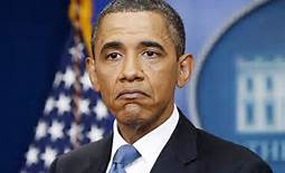 Eric Worrall writes: The imminent climate summit in New York is rapidly turning into an utter embarrassment for President Obama and UN Secretary General Bank Ki-Moon, in addition to becoming a bit of a punishment round for national deputy leaders.
Aussie PM Tony Abbott today defended his decision not to hop on an earlier flight to America, so he could attend the UN climate conference in New York, because he has more important matters to attend to, such as running the country.
Chinese President Xi Jinping and Indian Prime Minister Narendra Modi have also indicated they likely won’t attend the summit.
Canadian Prime Minister Stephen Harper has indicated he will not be attending.
Even Angela Merkel, President of über green Germany, will not be attending the UN climate summit.
Who is Behind the Islamic State Beheadings? Probing the SITE Intelligence Group
By James F. Tracy | Global Research | September 15, 2014
Since mid-August 2014 major news organizations have conveyed videos allegedly found online by the SITE Intelligence Group.
Unsurprisingly the same media have failed to closely interrogate what the private company actually is and whether the material it promotes should be accepted as genuine.
The Search for International Terrorist Entities Intelligence Group (SITE) was co-founded by Rita Katz in 2001.
In 2003 Katz authored a book, Terrorist Hunter: The Extraordinary Story of a Woman Who Went Undercover to Infiltrate the Radical Islamic Groups Operating in America, which she published using the pseudonym, “Anonymous.”
In the book Katz explains how she took on the trappings of a Muslim woman to infiltrate the meetings of radical Muslim terrorists. The plot is unlikely, especially when one considers that such secret fundamentalist gatherings are almost always segregated along gender lines and no woman, however elaborate her costume, would be granted entry without her identity being firmly established.
SITE Intelligence Group consists of Katz and two “senior advisers,” one of whom is Bruce Hoffman, the Corporate Chair in Counterterrorism and Counterinsurgency at the RAND Corporation and former director of the RAND’s Washington DC office.
The SITE Intelligence Group “constantly monitors the Internet and traditional media for material and propaganda released by jihadist groups and their supporters,” the company’s website announces.
“Once obtained, SITE immediately translates the material and provides the intelligence along with a contextual analysis explaining the source of the material and its importance to our subscribers.”[1]
In 2003 and 2004, SITE received financial support from the US government. Also in the early 2000s SITE was on contract providing consulting services to the FBI.[2]
It would appear that SITE has abandoned its non-profit status and now relies on corporate and individual subscriptions for revenue. In 2005 the private mercenary contractor Blackwater hailed SITE as “an invaluable resource.”[3]
The majority of “jihadist groups” operate one or more media outlets that produce and publish “the group’s multimedia, and in some cases, communiqués and magazines,” SITE explains on its website.
“These media units involve production teams and correspondents who report directly from the battlefield, and craft propaganda to indoctrinate and recruit new fighters into the group’s ranks.” SITE provides no direct links to the jihadist groups’ websites or multimedia productions from its own platform.[4]
Katz describes SITE as geared toward international Islamic jihad. “[W]e at SITE for over a decade monitor, search, and study the jihadists online,” she explains.
We have been studying and monitoring the jihadists online, which also as they get more sophisticated, we follow their techniques and study them. And based on that, we could predict where they will be uploading their video.
After all, we have to remember that much of this propaganda is being posted online. Their releases are released online [sic]. So they have to be able to use certain locations to upload their releases before they are published.[5]
Though routinely overlooked in the flurry of front-page coverage corporate media have allotted the three beheading videos–the most recent of which featured Scottish aid worker David Cawthorne Haines–it is common knowledge that SITE uncannily secures terrorist statements and videos well before the US’s wide array of lavishly-funded intelligence services.
For example, as the Washington Post reported in 2007,
[a] small private intelligence company that monitors Islamic terrorist groups obtained a new Osama bin Laden video ahead of its official release last month, and around 10 a.m. on Sept. 7 … It gave two senior officials access on the condition that the officials not reveal they had it until the al-Qaeda release. Within 20 minutes, a range of intelligence agencies had begun downloading it from the company’s Web site. By mid-afternoon that day, the video and a transcript of its audio track had been leaked from within the Bush administration to cable television news and broadcast worldwide.[6]
The video later proved to be fraudulent.
With the above in mind, one may ask, If parties within a US presidential administration or the State Department sought to bypass the potential scrutiny of a wide-ranging intelligence community concerning such matters, while simultaneously providing itself with the means to effectively propagandize the American public toward a broader end, what better way than to contract the services of an entity such as SITE?
If there is some merit in the above appraisal, the arrangement is now being pushed to an extreme by the Obama administration to pave the road toward a long-sought goal: war with Syria’s Bashar Al Assad regime. Indeed, services such as SITE’s are a potent and valuable means for moving public opinion, as they have done in recent weeks concerning military action against the Islamic State. Along these lines, a decade ago both John Kerry and George W. Bush credited the latter’s re-election to a surreptitious appearance by Osama bin Laden via video tape several days before the vote.[7]
Playing a role similar to SITE, IntelCenter acts as an intermediary between Al-Qaeda’s supposed media arm, As-Sahab, and major media. In other words, “they acquire the tapes and pass them on to the press, and have occasionally even predicted when tapes would be released beforehand,” Paul Joseph Watson reports.
“IntelCenter is run by Ben Venzke, who used to be the director of intelligence at a company called IDEFENSE, which is a Verisign company. IDEFENSE is a web security company that monitors intelligence from the Middle East conflicts and focuses on cyber threats among other things. It is also heavily populated with long serving ex-military intelligence officials.[8]
As noted, news outlets seldom see fit to closely analyze SITE or Katz concerning their research and function as conduits for terrorist propaganda. A LexisNexis search for SITE Intelligence in the article content of US newspapers and major world publications over the past two years produces 317 items—an admittedly low figure given the prominence of SITE’s recent disclosures. Yet a similar search for “Steven Sotloff” alone yields over 1,000 newspaper stories and 600 broadcast transcripts, suggesting the sensationalistic usage and effect of SITE’s data and how neither SITE nor Katz are called upon to explain their specific methods and findings.
Indeed, a similar search for “SITE Intelligence” and “Rita Katz” yields only 26 entries over a two year period. Of these, 14 appear in the Washington Post, a publication with well-established links to US intelligence. Four New York Times articles feature the combined entities.
In a CNN on the heels of the Sotloff beheading, Katz explains how again SITE curiously surpassed the combined capacities of the entire US intelligence community in securing the Sotloff footage.
“The video shows the beheading of Steven Sotloff,” Katz cautiously begins after being queried on the document’s authenticity.
The location from where the video was obtained from is the location where ISIS usually uploads their original videos to [sic]. The video shows a clear message from ISIS that follows the same message that it had before. And in fact within a short time after our release, ISIS’ account on social media indicated that within a short time they would be releasing the video, only we actually had that video beforehand and were able to beat them with the release. (emphasis added)
This unusual statement alongside SITE’s remarkable abilities, should put news outlets on guard concerning the reliability of SITE statements.
Undoubtedly this is a great deal to ask from a news media that all too frequently participate in orienting public opinion toward war, a feat it has once again accomplished with the aid of SITE.
The interests and alliances of the transnational entities owning such media make them poised to profit from the very geopolitical designs drawn up by SITE’s corporate and government clients–the most important of which may be those seeking to broaden Middle Eastern conflict. No doubt, the wide-scale acceptance of such propaganda is also the result of the vastly diminished critical capacities of the broader public, now several decades in the making.
Notes
[1] “Services,” SITE Intelligence Group, , accessed September 15, 2014,
[2] Berni McCoy, “So, a ‘Charitable Organization’ Released the bin Laden Video,” Democratic Underground, September 10, 2007, http://journals.democraticunderground.com/berni_
[3] “SITE Institute,” Sourcewatch.org, Center for Media and Democracy, n.d.
[4] “Media Groups,” SITE Intelligence Group, n.d., accessed September 15, 2014.
[5] Karl Penhaul, Pamela Brown, Alisyn Camerota, Don Lemon, Paul Cruickshank, “Joan Rivers on Life Support; Chilling Words From ISIS Terrorist; How to Fight Radical Recruitment” (transcript), CNN, September 2, 2014.
[6] Joby Warrick, “Leak Severed a Link to Al Qaeda Secrets,” Washington Post, October 9, 2007.
[7] Paul Joseph Watson, “Another Dubious Osama Tape Appears When the Neo-Cons Need It Most,” Prisonplanet.com, July 16, 2007.
[8] Ibid. See also, Kurt Nimmo, “Sotloff Video Found by Group Responsible For Releasing Fake Osama Bin Laden Video,” Infowars.com, September 3, 2014.
Abbas’ spurious charges
By Nicola Nasser | Al-Ahram | September 11, 2014
President Mahmoud Abbas and the Fatah movement, which he commands, have unleashed a media campaign against Hamas and the resistance. If pressure from the Palestinian public fails to stop the campaign, Abbas may achieve politically what Israel failed to achieve militarily: forcing the Palestinian presidency to choose “peace with Israel” over national reconciliation.
It appears that President Abbas has, indeed, prioritised “peace with Israel.” He has devised plans for resuming negotiations, and is still banking on American support for such talks. This is the only explanation for the current anti-Hamas media campaign.
Abbas sent his negotiators — Saeb Erekat, Majed Faraj and Maen Erekat — to Washington, where they met with US Secretary of State John Kerry a week ago last Wednesday. US State Department spokesperson Jen Psaki described the more than two-hour meeting as “constructive”. Abbas then prepared to obtain an Arab mandate, which seems guaranteed in advance, for his plans from the 142nd session of the Arab foreign ministers conference, held in Cairo this week.
However, US Ambassador to the UN Samantha Power poured cold water over the Palestinian Authority (PA) president’s bid to obtain US backing for his plan, which he intends to put before the UN Security Council and UN General Assembly. The proposal would end the Israeli occupation of the West Bank and Gaza within three years, during which period negotiations would resume within three months with the occupying power over its borders with the Palestinian state.
“We don’t think there are shortcuts or unilateral measures that can be taken at the United Nations or anyplace else that will bring about the outcome that the Palestinian people most seek,” Power said in a press conference last week. “To think that you can come to New York and secure what needs to be worked out on the ground is not realistic.”
This clearly translates into an unequivocal US “No.” The Palestinian president’s new plan has run up against the same American wall that Palestinian negotiators have faced since negotiations were adopted as a strategic approach. The Zionist route remains the only way these negotiators can access the White House and the UN Security Council.
There can be only one explanation for this plan. It is in fulfilment of a Palestinian promise not to resist the occupation and to offer the occupying power the opportunity to agree to yet another futile round of negotiations. Such negotiations will give Israel the time it needs to turn the Givaot colony into a major settler city on the 4,000 dunams of Palestinian land that it has just seized by declaring it “state land”.
The purpose of this appropriation is to separate the Hebron and South Bethlehem governorates in the West Bank. It is also a means to deflect international humanitarian pressure in reaction to Israeli war crimes in Gaza, to evade Israel’s obligations to the truce agreement with the resistance in Gaza, and to fuel internal Palestinian tensions until they reignite once more.
It was not Hamas or the resistance that described Abbas’s new plan as a “spurious process”. It was independent Palestinian figures who expressed their views in a statement read out by Mamdouh Al-Akr, general commissioner of the Independent Organisation of Human Rights, on 2 September in Ramallah. They called for an urgent meeting of the unified leadership of the Palestine Liberation Organisation (PLO), in accordance with the Cairo agreement of 2011, so that it can serve as a frame of reference for the Palestinian will and take critical national decisions.
Activating the unified leadership framework of the PLO will put President Abbas’s call for a “single Palestinian central authority”, uniquely empowered to “determine matters of war and peace”, into its concrete national context. Only this context can confer legitimacy on a Palestinian leadership that does not derive its authority from resisting the occupation in all forms.
Moreover, the currently missing “electoral legitimacy” is no longer sufficient in and of itself to allow Palestinian decisions on war and peace to remain in the hands of a leadership that is the product of elections that were held with the approval of the occupation power and in the framework of agreements signed with it.
The Palestinian presidency has dropped the available option of resistance from the lexicon of its negotiating strategy, let alone the option of war, which is not available. The PA, in coordination with the occupation’s security apparatus, has become “the security proxy for the occupying power, rather than an instrument to end the occupation and establish the state,” as Palestinian analyst Hani Al-Masri wrote on 26 August.
As a result, the occupying power, alone, holds the keys to the decision of war, which it continues to repeat, and to the decision of peace, which it still refuses to take.
It appears that President Abbas is working against the tide of Palestinian public opinion, as voiced in a recent survey conducted by the Palestinian Centre for Policy and Survey Research (PCPSR) in Ramallah. According to this poll, only 22 per cent of respondents supported a resumption of negotiations, while 53 per cent said they regarded resistance as “the more effective way” to realise the creation of a Palestinian state.
The results of the PCPSR poll contradict all the charges levelled by the president and Fatah against the resistance and Hamas. Of those polled, 79 per cent believe that the resistance emerged victorious from the recent war, while 86 per cent support the defensive use of rockets.
Respondents gave very low ratings to the performance of the Palestinian president, the PA, the national unity government and the PLO, while the approval rating for Hamas was 88 per cent.
What is the substance of this media campaign against Hamas? It ranges from blaming Hamas for prolonging the war and for the consequent loss of lives and material damage, to adopting the Israeli narrative regarding a Hamas-engineered “coup attempt” against the president in the West Bank and the existence of a “shadow government” in Gaza that prevents the national unity government from functioning.
Then there are the charges of keeping Fatah members under “house arrest”, of “opening fire on civilians”, and of “selling emergency relief on the black market.” On top of these come the accusation that Hamas has violated “the law that defines the colours and dimensions of the flag.”
President Abbas’s instructions to create a “committee to hold a dialogue” with Hamas to discuss the “fate of the national unity government,” as announced by Amin Maqboul, secretary of the Fatah Revolutionary Council, does little to encourage optimism. The national unity government, national reconciliation, the Cairo agreement of 2011, the unified leadership framework that it stipulated, and the reactivation of the PLO, all stand at a crossroads.
This is because of the confrontation stirred by the systematic smear campaign that President Abbas and the Fatah movement are waging against Hamas and the resistance. The campaign has created a media smokescreen behind which the occupation authority can conceal its foot-dragging in carrying out its obligations under the truce agreement, which will probably be echoed in Israeli procrastination on continuing with truce talks due to be held in Cairo.
It should also be stressed that to accuse the resistance and Hamas of prolonging the war is to exonerate the occupation power of responsibility. The Israeli media was quick to capitalise on this, further proof of the extensive coverage the campaign has received.
Indeed, Israeli government spokesman Mark Regev virtually reiterated it verbatim when he said that the Egyptian initiative was on the table from 15 July and that while the Arab League and Israel had approved the initiative, Hamas rejected it, only to turn around and agree to it a month later. “If [Hamas] had agreed then to what it agrees to now” it would have been possible “to avoid all that bloodshed,” he said.
The investigatory commission appointed by the UN Human Rights Council will most likely cite the president’s charges to strengthen the claims of the occupying power, as these charges would be regarded as “testimony of a witness from the other side.”
Abbas says that while the “final toll” from the most recent war in Gaza was 2,140 dead, “if added to the number of dead in previous wars, and those who died during the period of the Shalit problem, the number would be 10,000 dead and wounded, in addition to the 35,000 homes that were totally or partially destroyed.”
When Abbas says that “it would have been possible” to avert the human and material losses of the recent conflict he is effectively blaming the resistance, not the occupation, for the last war on Gaza and the two wars since 2008 that preceded it.
The spectre of discord once again hovers over Palestinian unity, with Palestinian opinion divided over a programme of negotiations versus a programme of resistance. This is the breach through which Arab and non-Arab “axes” penetrate into the Palestinian interior, deepening rather than mending Palestinian rifts.
Nicola Nasser is a veteran Arab journalist based in Birzeit, West Bank of the Israeli-occupied Palestinian territories
Poll: Only 10 percent of Gazans would vote for Abbas in presidential election
Al-Akhbar | September 16, 2014
Only 10 percent of Palestinians in the Gaza Strip would vote for current President Mahmoud Abbas if presidential elections were held today, according to a new poll released Tuesday.
The poll, conducted by the Gaza-based House of Wisdom Institute, indicates that 29.8 percent of Gazans would vote for senior Hamas official Ismail Haniyeh, while 28 percent would vote for jailed Fatah leader Marwan Barghouti.
Interestingly, 32.4 percent would choose a different candidate.
The majority of those surveyed thought the Israeli assault unified Palestinians, but expected Hamas-Fatah disputes to continue in the aftermath of the war.
Regarding the Israeli assault on Gaza, 73.6 percent were satisfied with the performance of the different resistance groups.
When it comes to the Egyptian-brokered ceasefire deal, the survey, which was conducted in 30 locations across Gaza, showed that 40 percent were dissatisfied with the deal and 60 percent said they expected Israel to violate the conditions of the deal.
The seven-week Israeli assault on the besieged Gaza Strip has killed more than 2,130 Palestinians, the overwhelming majority of them civilians, including 577 aged 18 or younger.
(Al-Akhbar, Ma’an)
PCHR: Gaza detainees underwent ‘torture’ in Israeli custody
Ma’an – 16/09/2014
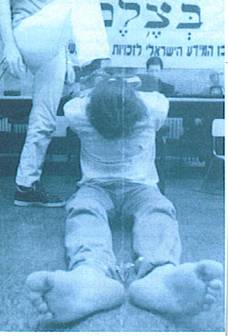 BETHLEHEM – The Palestinian Center for Human rights said Tuesday that its lawyers confirmed that at least four Palestinians who were arrested during Israel’s assault on Gaza were subjected to “torture” during their detention period.
PCHR lawyers visited four detainees in Ashkelon prison, and said they had undergone beatings or had been shackled between two chairs for long hours in a method known as “Shabeh,” a statement said.
It said Israeli forces detained dozens of Palestinian civilians during the seven-week Gaza offensive, 31 of whom were transferred to Israeli prisons.
Four of the imprisoned detainees were released while 26 remain in custody and are accused of being members of armed groups.
One of them was charged with being an “illegitimate combatant.”
According to international law, members of armed resistance groups are considered prisoners of war, and bills of indictment cannot be presented against them, the statement added.
The recently dissolved Ministry of Prisoner Affairs said in August that 200 Palestinians had been detained in Gaza while Israeli forces conducted a land invasion in Gaza, but that some of them had been released.
Crucial information was not immediately available about the prisoners, and the ministry accused Israeli authorities of withholding the prisoners’ names and whereabouts.
An Israeli army spokeswoman told Ma’an at the time that the prisoners were transferred to the Shin Bet intelligence agency for questioning.
On Sept. 9, a Palestinian died in an Israeli medical center died after allegedly being tortured in Israeli jails.
Issa Qaraqe, head of the department of prisoner affairs, said 35-year-old Raed al-Jabari had died after sustaining blows to the head, adding that an autopsy showed that internal bleeding and concussion were the cause of death.
An Israeli Prison Service spokeswoman said the man had hung himself in Eshel prison.
Ukraine and EU ratify landmark Association Agreement
RT | September 16, 2014
Ukraine and the EU parliaments simultaneously ratified the economic and political parts of the Association Agreement that will strengthen ties between Kiev and Brussels. Economic integration is postponed until the end of 2015.
The document was approved at 1:00pm in Kiev and there was a synchronous signing session in the European Parliament in Strasbourg.
Ukraine’s Rada voted 355 votes in favor out of 381 total, and the European Parliament supported the ratification with 535 ‘yes’ votes and 127 against, with 26 abstaining.
“From tomorrow I task the government with approving the implementation of the agreement and immediately implementing it into the force of law,” President Petro Poroshenko said at the ratification in Kiev. Poroshenko said he hopes the agreement will help Ukraine reform its economy and fight corruption, and that someday Ukraine hopes to apply for EU membership.
Ukraine “has embarked on the European path and nobody will are to shut the door to the EU membership for Ukraine,” the President said, as quoted by ITAR-ITASS.
Free trade with Europe’s $13 trillion economy will be postponed until January 2016, due to the weak state of Ukraine’s economy which would make it vulnerable to a sudden influx of European goods. Ukraine will continue duty-free trade with Russia and other CIS states until December 31, 2015, and on January 1, 2016 will begin economic integration with the EU.
Ukraine will still have the benefit of sending exports to Europe under a preferential trade code, but duty- free trade will not come into effect until 2016, protecting both Kiev and Moscow from economic risk.
In 2013, Ukraine exported goods worth $16 billion to Russia, nearly 25 percent of all total exports. In comparison, Ukraine exported $17 billion to Europe in the same 12-month period.
Since the political tension has intensified between the two, both have been cutting back on imports. In the first seven months of 2014, Russia reduced Ukrainian imports by 23.7 percent down to $6.7 billion, according to Russia’s Statistics Bureau. At the same time, Ukraine has been decreasing goods bought from Russia, which have fallen 20.7 percent to $9 billion. The lack of cooperative trade between the two has left a negative balance of trade of $2.3 billion.
Russian President Vladimir Putin has estimated that nixing duty-free trade with Russia and switching over to the European system will cost Ukraine €165 billion over the next 10 years.
During trilateral talks in Brussels on Friday, Ukraine, Russia, and the EU agreed Ukraine’s integration into Europe’s trade orbit will begin on January 1, 2016.
Ukrainian President Petro Poroshenko signed the economic (the Deep and Comprehensive Free Trade Area, or DCFTA) part of the Association Agreement with the EU along with ex-Soviet nations Georgia and Moldova on June 27.
Ukraine signed the political part of the agreement on March 21, shortly after Crimea rejoined Russia.
The Association Agreement and Deep and Comprehensive Free Trade Area (DCFTA) will replace the current Partnership and Cooperation Agreement Ukraine signed with the EU in 1998.
Featured Video
Bombing Iran Back Into the Stone Age /Lt Col Daniel Davis & Jim Jatras
or go to
Aletho News Archives – Video-Images
From the Archives
The Occupied Mentality Syndrome
Saudi Arabia on the American chessboard – Part 2
By B. J. Sabri | American Herald Tribune | April 19, 2016
Since the Korean War, but particularly since the Iranian Revolution of 1979 until today, the United States has been steadily escalating its military presence in the Persian Gulf. Taking advantage of many colossal events of the past 36 years, [1] the hyper-empire has institutionalized its massive presence on land and sea, and expanded its objectives to include the unambiguous physical control of the area, as well as the clear understanding that local Arab governments should abide by them. The pretext is always the same: in “defense” of the national interests and security of the United States. From observing how the United States has been interacting with the governments of the region, and by judging from the size of its expeditionary force, we could reach a basic conclusion. The United States is occupying, de facto, the entire Arabian Peninsula. (Yemen, devastated by Saudi and American jets is yet to be conquered. Oman? Britain returned not as colonial ruler but as a soft occupying power.)
Under this articulation, Saudi Arabia, Qatar, Kuwait, and the United Arab Emirates are virtually occupied countries. If we compare this type of occupation to the mandate and protectorate regimes of the past, the results might be identical—the nations affected by it lose sovereignty. When Arab governments comply with the objectives of a foreign power that station military forces on their national milieu, then that power controls them in multiple ways including how they react to policy deliberations and what decisions they intend to take on specific issues. A good method to verify the concept of effective occupation is this: take notice of what the United States says and wants, and then compare it to what the gulf rulers do in response. (I shall discuss this detail at some point in the upcoming parts.)
If the presence of US forces or other means of political pressure are a factor in Saudi Arabia’s interventionist Arab wars, then we need to debate this issue. However, from the history of resistance to colonialism, we learnt: if a powerful state imposes its order on a nation by military means or other forms of coercion, and if this nation does not resist that imposition, then a mental subordination to the powerful state will ensue. This is especially true in the case of Saudi Arabia. One single event, 9/11, has transformed it from a US “ally” into an instant political hostage of the American Empire. … continue
Blog Roll
 Aletho News
- Brazilian Congressman seeks to bar Israeli military personnel from entering Brazil
- Official reveals evidence of Arab states’ involvement in US-Israeli war on Iran
- His Majesty’s head-chopper: Syria’s MI6-backed president bows to King Charles
- Forced to backtrack: ‘Israel’ drops Hezbollah disarmament goal
- Britain’s Lebanon surveillance network: A digital map for war
- Bahrain faces scrutiny for opposition crackdown after detainee killed
- Hegseth’s Pentagon Purge Designed to Prevent a Mutiny: Karen Kwiatkowski
- Greek shipping firms secretly transporting oil, weapons to Israel
- UN vote on Hormuz force delayed as Iran issues warning
- Trump and the debris of Iran war
- If Americans Knew
- Israel-US kill negotiators, destroy civilian structures, but Iran’s military capabilities still largely intact – Daily Update
- ‘War crime’: Global condemnation as Israeli ministers celebrate death penalty law targeting Palestinian prisoners
- 7 Ways Israel Is Turning Lebanon Into Gaza
- World’s Leading Football Bodies Under Fire Over Israel Policies
- Experts warn of possible use of nukes against Iran
- Israeli invasion of Lebanon could be worse than 1982, warn European officials
- Passover: Liberation and collective punishment
- Trump says the quiet part out loud: (Israel’s) war on Iran > Americans’ health – Daily Update
- Gaza families reunite years after babies evacuated amid Israel’s war
- International Rescue Committee warns Gaza’s children face grave protection risks
- No Tricks Zone
- Low Intensity Tornado Wrecks Major Solar Farm, Creating A Potential Toxic Dump
- New Study Finds Warming Saves Lives…Cold Temperatures 12 Times More Deadly Than Excess Heat
- German Science Blog Accuses PIK Climate Institute Of Hallucinating Climate Tipping Points
- Devastating Assessment Of Comirnaty Vaccine By Former Senior Pfizer Europe Toxicologist
- New Study: CO2 Is ‘Effectively Negligible’ As An Explanatory Climate Change Factor Since 2000
- Former Pfizer Toxicologist Dr. Helmut Sterz Tells Bundestag Hearing Pfizer Vaccine Should Have Never Been Approved
- Energy Expert: Germany’s Nuclear Phaseout Was A “500 Billion Euro Mistake”
- New Research: South Australia’s Mid-Holocene Sea Surface Temperatures Were 4°C Warmer Than Today
- Storing Green Energy To Last Germany 10 Days Would Require A 60-Million Tonne Battery
- New Studies: UK Sea Levels Were 4 Meters Higher Than Today During The Mid-Holocene
 Aletho News