Once more: It ain’t about the graffiti
Another incident of nationalist crime in the village of Yasuf, but the media only paid attention to the unimportant part: the graffiti
By Yossi Gurvitz | Yesh Din | September 3, 2014
Atallah Yassin Muhammad Gouda lives in the village of Yasuf, which has known quite a few attacks by Jewish felons; perhaps the most notorious being the torching of its mosque in 2009, which introduced the phenomenon of the price tag attacks into Israeli consciousness. Gouda lives in a neighborhood that is adjacent to the outpost Tapuach Maarav, and according to the testimonies of its residents, they suffer from frequent attacks by Israeli civilians. The residents attribute the burning of several vehicles, as well as stone attacks on the houses in the neighborhood to their Israeli neighbors.
At the beginning of August, Gouda was woken by noise, and when he hurried to see what happened, he saw the family car, which was in the courtyard, on fire. He alerted the rest of the household, and together, they managed to prevent the fire from spreading to the house, which was only two meters away from the vehicle. After dousing the flames, which had caused severe damage – estimated at several thousand NIS – to the car, they discovered a gasoline can and several rags soaked in gasoline there also. The police were called and arrived at the scene, collecting evidence and taking fingerprints. Given the record of the SJPD, I wouldn’t hold my breath waiting for an indictment.
The torching of the car caused the family significant damage: not only would they have to pay for fixing it, but as the only provider, the father, is a taxi driver, and as the car (bought 18 months ago) was his work vehicle, there would also be time in which they would have no income.
So, the attack by the unknown felons achieved three goals: significant damage to the car, and damaging the Gouda family income. The third goal is the wider goal of settler violence: spreading fear and despair among the Palestinian residents, in an attempt to convince them by violent methods to abandon their lands, so that Israeli civilians can take them over. A fourth, collateral, goal – the spreading of the fire to the house and its sleeping residents – was not achieved. We note this isn’t the first time that Israeli civilians are suspected of torching a vehicle in dangerous proximity to a house, as its residents are sleeping.
And, oh, yes: there was also some graffiti. When the bedlam ended, after the fire was extinguished, and the smoke and panic settled, the residents found that someone had sprayed the wall of the house with a “price tag” graffiti. Anyone following the issue through the Israeli press, might have mistakenly concluded that the graffiti is the main issue. Here is a Ynet newsflash (Hebrew): “A price tag slogan was sprayed on a house in the Palestinian village of Yasif (error in the original – Yesh Din). A Palestinian vehicle nearby was set ablaze.” And then you have Mako (Hebrew): “The residents of the Palestinian village of Yasuf in Shomron woke up this morning to a new-old troubling sight – slogans sprayed on the walls of a house and significant damage caused to a vehicle.”
Which is weird. Every journalist learns that you open your piece with the most important part, and go on to the less important. In any reasonable measure, the setting of a vehicle on fire – especially one which is close to a house – is significantly more serious than any graffiti daubed on a nearby wall. The slogan cannot kill anyone or destroy anything: a few brushes of paint, and it is gone. So why is the media obsessed with the graffiti?
Because to a certain extent, the media has swallowed the myth spread by the settlers: that their crimes are not severe, it’s merely spray paint. Nothing to write home about. When the Israeli media puts the slogans in the spotlight, it puts the fire in the background. But as we’ve already shown, the great majority of nationalist crimes in the West Bank do not include slogans – and when these are present, there is a clear correlation between them and cases of arson. That is, the slogans accompany arson, and not vice versa. And arson is the spreading of terror par excellence.
It’s time we remembered that.
Scottish independence to spark nuke debate
Press TV – September 4, 2014
A yes vote in the upcoming referendum on Scottish independence is expected to pose challenges over the future of the UK’s strategic nuclear Trident program.
Keeping the nuclear base in Scotland for a least a number of years would be part of the independence negotiations, says Professor Malcolm Chalmers, a research director at the Royal United Services Institute (Rusi) and co-author of a recent report on relocating the Trident base.
According to the report, cited Thursday in The Guardian newspaper, while any relocation could not be completed by the 2020 target date currently proposed by the Scottish government, it could be put off – under a specific UK-Scotland basing agreement – perhaps until 2028, the date a new fleet of Trident submarines is due to start entering service.
The relocation would add up to £3.5bn to the cost of retaining Britain’s nuclear forces, a program estimated to cost £80bn over 25 years.
Yet, as the Rusi report concedes, negotiations following a yes vote in the Scottish referendum this month would trigger a wider debate in the rest of the UK about whether or not the strategic benefits of retaining nuclear weapons exceed the costs involved.
Chalmers adds that the debate over British nuclear weapons has always been politically driven and the military is divided over the issue.
The US, in particular, which wants its major British NATO ally to retain nuclear weapons, has made it clear that it would not welcome such a debate.
However, Colin Fleming, a Scottish defense and security academic, put it this way in a recent edition of the Chatham House think tank Journal of International Affairs : “There is no reason why Scotland would not provide a modern, flexible, defence force capable of securing Scottish territory and playing its part in the broader security of the British Isles as a whole.”
More NATO Aggression Against Syria?
Media Myths and Distortions
By Rick Sterling | CounterPunch | September 3, 2014
Syria will be an important subject of discussion at this week’s NATO Summit meeting in Wales. The US and NATO powers will evaluate whether to expand air strikes against ISIS (Islamic State in Iraq & Syria) into Syria, whether to do it in cooperation with the Syrian government and whether to increase support to the “moderate” armed opposition. The US mainstream media and politicians have been beating the war drums with Republican Senator McCain calling for military escalation and Democratic Senator Feinstein criticising President Obama for being “too cautious”.
There has been little mention of the fact that it is one year since the highly publicized chemical weapons attack in the Ghouta outskirts of Damascus. The same elements who are pushing for “regime change” military action now were doing so one year ago. Since then, the case that the Syrian government was responsible for the attack has been effectively discredited. The diplomatically negotiated agreement to remove all Assad’s chemical weapons has been successfully implemented. One would think this would merit attention, but it has been widely ignored.
One good thing in the media this week is recognition that Libya is now in chaos. This is the country which was “liberated” by NATO bombing which led to the murder of President Ghadaffi and collapse of that government. Nine months ago a plurality of Libyans said they are worse off than before the regime change. It’s very likely that even more Libyans are unhappy with their externally imposed regime change today. Three years ago NATO members were congratulating themselves on the air war against Libya. Now they are hopefully more sober as it goes public that Libya is in chaos, the airport shut down, competing extremists fighting for dominance, with one faction enjoying themselves in the US Embassy swimming pool.
The Obama Administration is at another turning point where it may choose to escalate its aggression against Syria. Clearly Obama and team do not want to go solo. The dreams of a“New American Century” with unchallenged US dominance have been broken by reality in Iraq, Afghanistan and beyond. But the hounds of war and aggression are noisy and persistent.
As NATO begins to deliberate whether and how to escalate aggression against Syria, let’s review some recent and long standing myths and lies about the Syrian conflict.
Myth #1.
Some articles and even the (current) Wikipedia entry for James Foley (journalist) claim that he was a prisoner of the Syrian military and that they turned him over to ISIS. This is in perfect keeping with the pervasive demonization of the Assad government. However it’s false. A serious investigation into the disappearance of Foley is in the May 2014 Vanity Fair. Foley was captured by Nusra Front (or allied rebels) in November 2012 and later transferred or sold to ISIS.
Myth #2.
Both NY Times’ Anne Barnard and John McCain suggest or assert that the Syrian government has collaborated with ISIS. The “evidence” of this is that the Syrian Army did not actively attack ISIS in eastern Syria during the past year.
The reality is that Syrian Army needs to pick and choose its battles and priorities. They are weakened by over three years of intense conflict resulting in at least 65 THOUSAND Syrian army and militia deaths. For reference, the total US death count in Vietnam was 58 thousand and Syria today is one tenth the size of the US in the 1970’s. In the past year the Syrian military has focused on confronting armed opposition in Aleppo (the largest city), Homs, outer Damascus and the Lebanese border area. The Syrian military has gained ground in each of these areas along with implementing the national “reconciliation” policy.
In the past two months, ISIS has gone on the offensive in eastern Syria and is pressing towards Aleppo and central Syria with US equipment and weaponry captured in Iraq. The battles have taken a heavy toll on both ISIS and the Syrian military. According to rebel aligned Syrian Observatory for Human Rights (SOHR), 346 ISIS fighters were killed in a four day assault on Tabqa Air Base near Raqqa. The fighting has been brutal with heavy losses on both sides.
Longtime Mideast journalist Patrick Cockburn writes, “A conspiracy theory, much favoured by the rest of the Syrian opposition and by Western diplomats, that Isis and Assad are in league, has been shown to be false.”
In contrast with the myth, ISIS has in fact been aided and abetted by US allies. This includes funds from Saudi Arabia and other Gulf countries, ideology and recruitment by Saudi media, transportation and safe haven through Turkey.
Myth #3.
It is usually claimed that the Syrian conflict is a civil war that started with peaceful protests in 2011. In reality the seeds of the conflict were planted much earlier. General Wesley Clark’s 2007 memoir described plans for “regime change” in Syria and other countries. Also in 2007 Seymour Hersh documented the US strategy of fomenting conflict in Syria (and Iran) by working with Sunni extremists:
“The U.S. has also taken part in clandestine operations aimed at Iran and its ally Syria. A by-product of these activities has been the bolstering of Sunni extremist groups that espouse a militant vision of Islam and are hostile to America and sympathetic to Al Qaeda.”
When mass protests began in Syria they included violent attacks and murders of police from the beginning. The situation was the same in other regions. Jesuit priest Father Frans Van Der Lugt was widely respected by Sunni Muslims and Christians in the Old City of Homs. He described the start of the protests thus:
“From the start, the protest movements were not purely peaceful. From the start I saw armed demonstrators marching along in the protests, who began to shoot at the police first. Very often the violence of the security forces has been a reaction to the brutal violence of the armed rebels.”
The conflict in Syria has been primarily instigated and continued by some of the world’s wealthiest and powerful governments. They make no secret and call themselves, with Orwellian chutzpah, the “Friends of Syria”. Their division of labor including who pays the salaries of the rebel mercenaries, who supplies communication equipment, who does training and who supplies weapons. Thus the conflict in Syria is primarily a war of aggression using domestic and foreign mercenaries.
Myth #4.
It is often suggested the “moderate opposition” is popular, democratic and secular.
President Obama has recently proposed giving $500 million to the “moderate opposition”.
Patrick Cockburn sums up the reality in the newly released book “The Jihadis Return: ISIS and the New Sunni Uprising”:
“It is here that self-deception reigns, because the Syrian military opposition is dominated by ISIS and by Jabhat Al Nusra, the official Al Queda representative, in addition to other extreme jihadi groups. In reality there is no dividing wall between them and America’s supposedly moderate opposition allies.”
This siuation is not new. A NY Times article in summer 2012 discussed the hidden presence of Al Queda within the “Free Syrian Army”. When he read this, James Foley sent out a tweet linking to the article and pondering whether the photographed black flag was necessarily Al Queda. He did not recognize the flag and wondered whether it was “some misc jihadi group”. Ironically that was the unique flag of ISIS before it was widely recognized. The “misc jihadi” group is the one that would later murder him.

Foley’s last article documented the overall unpopularity of the rebels in Aleppo:
“Aleppo, a city of about 3 million people, was once the financial heart of Syria. As it continues to deteriorate, many civilians here are losing patience with the increasingly violent and unrecognizable opposition — one that is hampered by infighting and a lack of structure, and deeply infiltrated by both foreign fighters and terrorist groups.”
Myth #5.
Finally there is the myth that the Free Syrian Army and other “moderate opposition” groups were not supported. In reality, huge quantities of weapons and ammunition have flowed which is exactly what has allowed the terrorist organizations to continue the mayhem and bloodshed. Starting in November 2012 three thousand TONS of weapons and ammunition were flown from Zagreb to Turkey and then transferred to the Syrian rebels. In addition there were huge shipments from Benghazi Libya and more shipments paid by Saudi Arabia and Qatar.
DO USA AND NATO REALLY WANT TO STOP ISIS?
One week after the Syrian Presidential election where 73% of the electorate turned out, ISIS made its advance through western Iraq to Mosul and other cities. There were virtually no battles. Iraqi military leadership simply departed and in the confusion troops fled or disbanded. Was this a military collapse or was it planned, with key Iraqi figures either bribed or otherwise in alliance with ISIS? Whichever is the truth,we can see the consequences and who has benefited: the campaign for greater autonomy in the oil rich Kurdish region has advanced; the split between Shia and Sunni has been exacerbated; and one of the world’s greatest overnight military arms transfers took place with ISIS effortlessly taking control of vehicles, humvees, tanks, lethal mortar launchers, high grade military equipment and tons of ammunition.
Did US military officers, who spent years and billions of dollars “training” the Iraqi military, have advance notice or knowledge of this seeming collusion between ISIS and Iraqi military officers? Did wealthy enemies of Syria simply bribe the Iraqi officers? Was it a “collapse” or is there much more behind this? How can a few hundred jihadi militants traveling in new Toyota pickup truck convoys surprise and overtake military checkpoints and bases without a fight unless there was collusion at the highest levels?
Actions reveal more than words. If the US and NATO really are worried about ISIS they can and will implement measures such as the following:
* shut down the Jihadi Highway through Turkey.
* shut down safe haven and supply routes of ISIS and other terrorist groups in Turkey
* provide useful information from surveillance flights to the Syrian army which is doing the main on-the-ground fighting
* demand and check that Saudi Arabia and Qatar stop broadcasting TV programs featuring hate speech which serve to recruit jihadis to join ISIS.
* demand and check that Saudi Arabia and Qatar implement measures to stop funding for ISIS through their banks and other financial operations.
Will the US and NATO take practical steps to counter ISIS or will they escalate their aggression against Syria, violating Syrian air space and looking for a pretext to impose a “no fly zone” as done in the disastrous aggressions against Iraq and Libya?
Will the US and NATO start a bombing campaign against ISIS in Syria which will ignite MORE support for the group in the Arab world?
Will they violate Syrian air space as a stepping stone to US bombing of Syrian army positions?
Or will the US and NATO resist the hounds of war and finally put aside the campaign of regime change against a secular, socialist inclined government that is supported by a big majority of its people?
Rick Sterling is a founding member of Syria Solidarity Movement. He can be contacted at rsterling1@gmail.com
New EU economic sanctions to hit Russian oil, defense investments – report
RT | September 4, 2014
The European Union is looking at introducing more economic sanctions against Russia over its alleged role in Ukrainian conflict, targeting the country’s oil and defense industries with investment bans, according to a new report.
EU diplomats have started drawing up new economic sanctions in Brussels, indicating that they could be passed as soon as Friday, The Telegraph reported, citing a three-page document.
The confidential document was reportedly handed over to ambassadors from several European countries this week.
It calls to “prohibit debt financing (through bonds, equities and syndicated loans) to defense companies and to all companies whose main activity is the exploration, production and transportation of oil and oil products and in which the Russian state is the majority shareholder.”
The new wave of sanctions could potentially ban state-controlled Russian oil and defense companies from raising funds in European capital markets, cutting off foreign investment.
“This extension would significantly increase the burden placed on the Russian state to finance its companies,” the document suggests.
The sanctions would affect Rosneft – Russia’s largest oil producer – in turn impacting British energy company BP, which has a 20 percent stake in the company.
Moreover, Russia’s oil prospectors could be blocked off from accessing exploration, production and refinery services.
“Measures could be extended… to provision of future associated services (such as seismic campaign-related services, drilling, well testing, logging and completion services, supply of floating vessels etc) for deep water, oil exploration and production, Arctic oil exploration and production or shale oil projects in Russia,” said the paper.
That may even include “prohibiting the provision of new additional technologies, for instance refining technologies needed to upgrade crude oil to EURO 4 standards.”
The banking sector will also be targeted further, making borrowing money from the EU even more difficult for Russian state-owned companies.
“Possible measures [include] prohibiting EU persons from participating in syndicated loans to major Russian State owned banks and other entities with a view to further restraining access to capital and closing a possible gap in the current regulation,” said the EU document. “[Also] lowering the maturity beyond which certain debt instruments are restricted bringing it form the current 90 days to 30 days.”
READ MORE: France says it cannot deliver Mistral warship to Russia over Ukraine
Some of the measures not being considered at this time, but reportedly being held in reserve, include bans on the purchase of newly issued Russian government bonds and a boycott of non-industrial diamonds.
Aside from the economic measures, other forms of sanctions are also being considered.
“Beside economic measures, thought could be given to taking coordinated action within the G7 and beyond to recommend suspension of Russian participation in high profile international cultural, economic or sports events (Formula One races, UEFA football competitions, 2018 World Cup etc),” according to the document.
AFP reported, citing a source, that the World Cup boycott idea is being considered as a “possibility for later on, not now.”
On Wednesday the president of FIFA, Sepp Blatter, said there was no chance of the 2018 World Cup being taken away from Russia.
“We are not placing any questions over the World Cup in Russia,” the head of world football’s governing body said at an event near Kitzbuehel, Austria, according to the DPA news agency. “We are in a situation in which we have expressed our trust to the organizers of the 2018 and 2022 World Cups.”
“[A boycott] has never achieved anything,” Blatter stressed.
Meanwhile, President Putin has outlined a seven-point plan to stabilize the situation in the crisis-torn region of eastern Ukraine.
Putin also expressed hope that final agreements between Kiev and the militia in southeastern Ukraine could be reached and secured at the coming meeting of the so-called contact group on September 5.
The military conflict has killed 2,593 people since mid-April and displaced over a million Ukrainians, most of whom sought refuge in Russia.
So far, attempts at temporary ceasefires between Kiev and self-defense forces in the past months have failed to improve the situation in southeastern Ukraine. The fighting has continued, with both sides blaming each other for breaking the truce.
Obama’s War on Ukraine
By Renee Parsons | CounterPunch | September 2, 2014
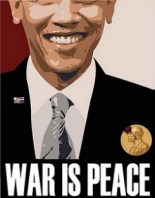 Amidst a slew of unverified allegations in recent weeks of Russian invasions, violations of Ukraine sovereignty and NATO’s current claim of Russian troops and Russian tanks fighting on the side of the federalist rebels, the upcoming annual NATO Heads of State Summit in Wales, threatens a widening violence and heightened military activity throughout eastern Europe.
Add to the equation that the tide of war appears to be turning against the US-imposed Kiev government as a successful offensive by the rebels captured the coastal town of Novoazovsk near Crimea opening a new front in the southeast and holding the line in Elenovka as rebel forces maintain their ground in Donetsk, the Kiev government needs to save face by claiming that Russian troops are aiding the out-manned, under-supplied rebels. Russia’s envoy to the EU Vladimir Chizhov added that the only Russian troops in Ukraine were the nine paratroopers who wandered across the border recently while on patrol.
NATO Summit
It is worth noting that the largest gathering of international leaders to ever assemble in the UK, will include non NATO member Ukraine President Petro Poroshenko as part of a ‘special NATO meeting’ on Ukraine but will exclude Russian President Vladimir Putin. While that omission may be a sure sign that negotiating a political settlement regarding the US-sponsored fiasco in Ukraine is not a NATO or US priority, the subject of Ukraine will be front and center on the agenda as the EU/NATO/US alliance already know their plans with regard to NATO expansion and the future of Ukraine.
President Obama will attend the Summit after visiting the Baltic states of Estonia, Latvia and Lithuania while ‘reaffirming’ the US commitment to the region. It did not used to be common for the US President to visit every little nickel and dime country (no offense intended) along the way but in this case such assurance along with a Presidential visit can mean only one thing: that those self-proclaimed ‘threatened’ strategically-located countries (with Estonia and Latvia on Russia’s border and Lithuania and Poland bordered by Russian-ally Belarus) need the President to personally shore them up for a new NATO missile defense system going further east than the former Iron Curtain, and in advance of any possible turbulence spillover within their borders.
On the eve of the Summit, outgoing Secretary General Anders Fogh Rasmussen offered the following:
“We are at a crucial point in history, our peace and security are once again being tested. NATO support for the sovereignty and total integrity of Ukraine is unwavering. Our partnership is long-standing. NATO is working even more closely with Ukraine to reform its armed forces and defense institutions. NATO stands ready to support Ukraine with advisors and assistance. We are advising Ukraine on defense planning and defense reform and are ready to intensify this cooperation. As a sign of strong support and solidarity, we have decided to hold a ‘special meeting’ with Ukraine at the upcoming NATO Summit in Wales. We will continue to improve the ability of NATO and Ukraine soldiers to work together. It is the right of every country to choose its own foreign policy without foreign interference. NATO fully respects that right but today Ukraine’s freedom and future are under attack.”
In addition, in a series of recent interviews with European newspapers, when asked whether there would be permanent international deployments under a NATO flag in east Europe, NATO Secretary General Anders Fogh Rasmussen said: “The brief answer is yes ….’for as long as necessary.’ In addition, Rasmussen promised a readiness action plan to provide rapid reinforcements with ‘a more visible NATO presence in the east.”
In accordance with the promise made in Bucharest in 2008 that both Georgia and Ukraine would become members, it is doubtful whether the Summit will formally act given NATO’s inability to accept new members with borders in dispute but would rather allow each to function as proxy states. As every NATO member fully understands, membership approval of any of the encirclement countries can be expected to trigger Russia’s long time vehement opposition to a missile presence on its borders.
NATO Accusations
None of this is reassuring especially that the recent accusations have yet to establish whether NATO’s images are date and time stamped, accurate and reliable. Nevertheless, just as the unfounded accusations regarding MH 17 flight continue to fuel enmity toward Putin, the latest ‘invasion’ charge will be provocative enough, as US-dominated NATO members congregate, to escalate a war effort that has already claimed over 2,600 fatalities, according to the UN. It was, of course, the ouster of the democratically elected President Yanukovych and the imposition of a pro-EU, pro-NATO and a pro-IMF government in Kiev that sparked the revolt in east Ukraine.
One immediate flaw in NATO’s latest assertion is that, given its total dependence on creating military conflict, reliance on their version of anything should be subject to intense scrutiny. With an estimated 50,000 plus Ukrainian troops in action (not counting CIA and US mercenaries), the question is whether sending 1,000 Russian troops into Ukraine is worth the risk to Putin who has consistently followed a diplomatic path while US diplomacy has been dominated by threats and bullying.
What makes more sense is that if the situation in Ukraine reached the critical point of no-return, that Putin would send in a sufficient force the size of a field army accompanied by an impressive number of tank battalions, support convoys and enough heavy artillery to finish the job – and presumably there would be no doubt about whether or not the Russians had moved into Ukraine to protect the civilian population from continued merciless attacks. The other option is that the Russian air force could easily put an end to Ukraine’s shelling and bombing of defenseless citizens.
Perhaps the best response to the latest ‘invasion’ disinformation has come from Alexandre Zakharchenko, Chair of the Council of Ministers of the Donetsk National Republic, given in a recent press briefing. When an English speaking reporter inquired whether Russian military units were fighting with the rebels, Zakharchenko replied that if ‘you think that Russia is sending its regular units here, then let me tell you something. If Russia was sending its regular troops here, ‘we would not be talking about the battle of Elenovka; we’d be talking about the battle of Kiev.” Zakharchenko, an attorney who made an impressive presentation, went on to remind the media that “A territory has the right of self-determination and separation after a referendum,” a referendum that was approved by Donbass voters in May.
What is not debatable is that for some weeks, a conservative estimate of 4,000 Russian volunteers (including some ‘off duty’ military and women) have crossed into Ukraine to fight on the side of the ‘rebels.’ That number may have also been augmented by volunteers sent by Chechen president Ramzan Kadyrov whose “statements in support of the illegal annexation of Crimea and support of the armed insurgency in Ukraine,” were cited as reasons for his inclusion in a recent round of sanctions.
Obama’s Unprovoked Attack on Russia
In reaction to NATO’s invasion charge, President Obama, whose State Department was intimately involved in the February coup, spoke at the White House voicing the usual provocations:
“Russia is responsible for the violence in eastern Ukraine. The violence is encouraged by Russia. The separatists are trained by Russia. They are armed by Russia. They are funded by Russia. Russia has deliberately and repeatedly violated the sovereignty and territorial integrity of Ukraine.”
“In Estonia, I will reaffirm our unwavering commitment to the defense of our NATO allies” and “At the NATO Summit in the United Kingdom, we’ll focus on the additional steps we can take to ensure the Alliance remains prepared for any challenge” and “There is no doubt that this is not a homegrown, indigenous uprising in eastern Ukraine.”
In a stunning denial of self-reflection, the president has consistently failed to mention his own Administration’s role as sole cause of the violence, the $1 billion of Congressional support for Kiev, the $5 billion of US aid revealed by Secretary of State Victoria Nuland last spring or the NATO build up in Poland, the Baltic states and elsewhere in eastern Europe. There is never serious mention of the humanitarian catastrophe on a civilian population, no mention of the fatalities, no mention of a ceasefire, no mention of the withdrawal of all non-Ukraine factions from meddling and no mention of requiring the Kiev government’s direct negotiations with the federalist rebels to determine the future of their own country.
Putin Redefines Russia’s National Interests
After the Gorbachev – Yeltsin years overseeing the dissolution of the USSR in which much of its national interests were imprudently relinquished to a market economy, Putin addressed the Munich Conference on Security Policy in 2007. During that speech, he redefined contemporary Russia’s national interests and its geopolitical concerns as he established himself as an independent, critical thinker with an international perspective – and, therefore, a threat to US dominion. The speech is worth reading in its entirety and here are several excerpts:
Decrying a “greater and greater disdain for the basic principles of international law. One state, first and foremost, the United States has overstepped its national borders in every way.”
In referring to “Russia’s peaceful transition to democracy. Why should we start bombing and shooting now at every available opportunity?”
In referring to an earlier speaker, “I understood that the use of force can only be legitimate when the decision is taken by NATO, the EU, or the UN. If he really does think so, then we have different points of view. The use of force can only be considered legitimate if the decision is sanctioned by the UN. And we do not need to substitute NATO or the EU for the UN.”
With regard to expanding NATO with missiles on Russia’s borders: “It turns out that NATO has put its frontline forces on our borders I think it is obvious that NATO expansion does not have any relation with the modernisation of the Alliance itself or with ensuring security in Europe. It represents a serious provocation that reduces the level of mutual trust. And we have the right to ask: against whom is this expansion intended? And what happened to the assurances our western partners made after the dissolution of the Warsaw Pact?”
And lastly, Putin quoted the “speech of NATO General Secretary Manfred Woerner in Brussels on 17 May 1990. He said at the time that: “the fact that we are ready not to place a NATO army outside of German territory gives the Soviet Union a firm security guarantee“.
Renee Parsons was a staffer in the U.S. House of Representatives and a lobbyist on nuclear energy issues with Friends of the Earth. in 2005, she was elected to the Durango City Council and served as Councilor and Mayor. Currently, she is a member of the Treasure Coast ACLU Board.
Russia proposes roadmap for peace in Ukraine
Press TV – September 3, 2014
Russian President Vladimir Putin says he hopes for Kiev and pro-Russian militias to reach a peace agreement on the spiraling crisis in east Ukraine on Friday.
Putin made the remark on Wednesday as he outlined a seven-point peace plan which calls for the end “of active offensive operations by the (Ukrainian) armed forces” and pro-Russia forces “in the southeast of Ukraine.”
“I believe that a final agreement between the authorities of Kiev and southeastern Ukraine can be reached and cemented during a meeting of the Contact Group on September 5,” said Putin.
He was referring to the European-mediated negotiations planned to be held in the Belarusian capital, Minsk, on Friday.
The blueprint calls for the Ukrainian forces to halt airstrikes on cities in the volatile east.
Putin also called for the deployment of international observers to monitor a ceasefire, the unconditional exchange of prisoners as well as the establishment of corridors for humanitarian aid supply to crisis-stricken cities of Donetsk and Lugansk.
The roadmap raises hopes of an end to months-long fighting which has left more than 2,600 people dead.
Earlier in the day, Kiev said Ukrainian President Petro Poroshenko and Putin had agreed to a “permanent ceasefire” in the volatile eastern Ukraine. Russia, however, said the leaders agreed on steps towards peace in eastern Ukraine but not a truce as Moscow is not a party to the crisis.
Ukraine’s mainly Russian-speaking regions in the east have witnessed deadly clashes between pro-Moscow forces and the Ukrainian army since Kiev launched military operations to silence the pro-Russians there in mid-April.
Violence intensified in May after the two flashpoint regions of Donetsk and Lugansk held local referendums, in which their residents voted overwhelmingly in favor of independence from Ukraine.
Western powers and the Kiev government accuse Moscow of having a hand in the crisis in eastern Ukraine. Russia denies the accusation.
France says it cannot deliver Mistral warship to Russia over Ukraine
RT | September 3, 2014
France has suspended delivery of the first of two Mistral helicopter carrier ships to Russia, due to events in eastern Ukraine.
“The situation is serious. Russia’s recent actions in the east of Ukraine contravene the fundamental principles of European security,” said a statement from the office of President Francois Hollande.
“The president of the Republic has concluded that despite the prospect of ceasefire, which has yet to be confirmed and put in place, the conditions under which France could authorise the delivery of the first helicopter carrier are not in place.”
The office informed AFP that the suspension would be next reviewed before November.
“Legally, nothing has changed and the contract is still in force, and the first vessel is still due for delivery on November 1. But a political decision has been taken. The President is saying that if nothing changes, he cannot allow the delivery to go through,” one of Hollande’s representatives told Russia’s RIA news agency.
As the rift over Ukraine has widened, Russian officials have repeatedly said that they would accept the French government’s failure to deliver the ships, as long as it paid the penalty for breaking the contract, which, could potentially exceed the cost of the ships themselves.
“This is not a tragedy, though of course the news is unpleasant. It will not affect our armament plans. We will act in accordance with international laws and the statutes of the contract,” said Russian Deputy Defense Minister Yuri Borisov, in a statement.
The two ships were commissioned by Russia in 2011 at a cost of $1.6 billion. The first of these, the Vladivostok, was due to come into service at the end of this year, with the second, the Sevastopol, due to be completed in 2015.
France’s suspension does not fall under the sectoral sanctions the EU and the US imposed upon Russia for purported meddling in the armed conflict in eastern Ukraine, introduced last month. That raft of sanctions did not cover deals signed before their imposition.
But it could be covered under new sanctions sanctions the EU is expected to introduce this week, which may earn France a temporary reprieve from compensation under the terms of the contract.
While Moscow officials earlier admitted that in terms of efficiency and versatility the cutting-edge Mistral has no equivalent in the Russian Navy, the deal was always considered controversial, as France was a Cold War adversary, and is a founding member of NATO.
Indeed, there had been speculation of NATO taking over the Mistral order from Russia, following a proposal from a group of US congressmen back in May. Earlier this week, the Alliance chief Anders Fogh Rasmussen did not rule out the possibility, but said that it “remains a national decision, not for NATO to interfere.” In the aftermath of the announcement from Hollande, NATO maintained that it wasn’t forcing France to suspend the sale.
Previously US President Barack Obama said France should “press the pause button” on the deal, while fighting in Ukraine is in progress.
Previously, French officials resisted, citing concerns over reputational damage, and saying that the financial penalties might hurt Paris more than Moscow. Even if France does now decide to sell the ships to someone else, it will have to refit them, as every aspect, from the helicopter pads to hull alloys is custom-made to Russian specifications.
UNRWA calls for end of Gaza siege
IMEMC News | September 3, 2014
UNRWA Commissioner-General, Pierre Krähenbühl, says that the reconstruction process of Gaza may take over a decade, if the current blockade on the Gaza Strip is not lifted.
According to Al Ray Palestinian Media Agency, Kraehenbuel declared, during a two-day official visit to Switzerland, that the blockade on Gaza “must be lifted”.
“I would like to thank the government and people of Switzerland for their generous and unwavering support to UNRWA and the refugees we serve. The recent fighting in Gaza and the UNRWA response demonstrated once more how vital our services have become,” he said.
“As the discussions intensify about the reconstruction of Gaza, it is becoming clear that UNRWA will be central to that effort. But we have to remember that Swiss funds are supporting our services beyond Gaza, across the Middle East in war-torn Syria, Lebanon, Jordan and the West Bank.”
Mr. Krähenbühl announced that at least 20,000 homes were destroyed during the recent Israeli assault on the Gaza Strip, and that there had been widespread destruction of public infrastructure.
He states that it was “an imperative for the international community and for the people of Gaza to reconstruct after the devastation”, which was unprecedented in recent history:
“I visited Gaza three times during the recent conflict and the impact of the fighting on individual human lives, particularly the young, is palpable and profound. Hundreds of thousands of children are deep in trauma. We estimate that of one thousand injured children out of three thousands will suffer permanent disabilities.”
Krähenbühl noted that several hundred UNRWA counselors are working to restore a sense of normality to the region. “UNRWA will do all it can to restore human dignity to a community that has suffered enough,” he said.
He also expressed his concern for “more than 50,000 people” who are still living in Gaza’s UNRWA schools due to the fact that their homes had been destroyed:
“We need to do all we can to find alternative accommodation for these people, as we are determined to begin our delayed school year on 14 September… It will be a challenge.”
Prisoner hospitalized after being tortured in Israeli jail
Ma’an – 03/09/2014
RAMALLAH – A Palestinian prisoner has been moved to a hospital ward after undergoing torture at Israel’s Russian Compound detention center, a Palestinian Authority prisoners committee said Wednesday.
Muhammad Hussein Rabee, 33, from Beit Anan village near Ramallah, suffered health complications as a result of being tortured while being held at the Jerusalem detention center for 40 days, the committee said.
He was first moved to Hadassa hospital last week, and is now in the Shaare Zedek Medical Center.
Rabee was detained on July 27 and his family did not find out his whereabouts until 30 days later.
“We did not know where Muhammad was until after a month of his detention, and his lawyer was not allowed to visit him until after 35 days of being at the Russian compound,” his brother Usama told Ma’an.
Rabee’s lawyer said he had been “harshly tortured.”
Former prisoner Khaldun Jumhur, who was being held in the Russian Compound with Rabee, said that interrogators used a method of putting pressure on the victim’s neck, as well as beating him on his hands, legs and head.
A doctor at the detention center requested an x-ray for Rabee, but was refused by the Shin Bet agency.
The Prisoner Affairs Committee demanded human rights organizations to hold Israel accountable for torturing Palestinian prisoners.
Some 4,000 Palestinian prisoners in Israeli jails launched hunger-strike action in 2013 to protest the death of Arafat Jaradat, who died in Israel’s Megido jail after being tortured by Israeli interrogators.
Around 7,000 Palestinians are currently being held in Israeli prisons, more than 2,000 of whom were arrested over summer alone.
Russian sale of S-300 system to Egypt a threat to Israel
MEMO | September 3, 2014
Israeli military magazine Israel Defence has reported that Israel is concerned over the possibility of Russia supplying Egypt with the developed anti-aircraft system S-300.
According to foreign media reports, Israel does not possess the proper technology to undermine the work of such an advanced system.
Sources told the magazine that Israel may not allow for Egypt to deploy such anti-aircraft missiles, if they are in fact being obtained, in the Sinai Peninsula.
A source in the Russian military industrial complex told Russia News Agency last month that the anti-aircraft system Egypt is currently negotiating with Russia over was initially produced for Syria. However, Egyptian partners have now “expressed interest in S-300 purchases”.
“The system may be re-equipped for Egypt in a short period of time,” the source added.
Israel Defence noted that if the anti-aircraft system were to be placed in Suez, its radar would cover half of Israel, and if placed in Port Said, it would cover almost the entire area of Israel.
This means that any Israeli plane flying towards Egypt or any Israeli rocket launched at Egypt would be monitored while still inside Israel.
Featured Video
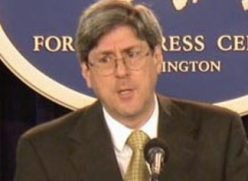
Pentagon insider says high US official Douglas Feith reported to Netanyahu
or go to
Aletho News Archives – Video-Images
Frlom the Archives
Who’s to blame for the Iraq war?
A not-so-trivial quiz
By Maidhc Ó Cathail | 14 March 2010
Maidhc Ó Cathail names and shames the top 19 politicians, academics and policy makers – all con men and all Zionist Jews – who lied and conspired to steer the US toward aggression against the Iraqi people. … continue
Blog Roll
 Aletho News
- Pentagon insider says high US official Douglas Feith reported to Netanyahu
- The Sludging of Rural America
- Lawyers’ groups demand end to British military bases in Cyprus
- CIA Assessment: The Resistance Cannot Be Crushed
- Hezbollah Returns: It Didn’t Start a War, It Is Ending One
- EU states seek ‘talks’ with Iran for access to Strait of Hormuz: Report
- Trump on Hormuz: “Others must take care of it” after US falters
- Who Is closer to collapse?
- A War that Backfired: Why the US-Israeli Campaign Is Strengthening Iran
- How Zionist Control Is Hurting US Interests
- If Americans Knew
- As US-Israel war on Iran rages, Gaza faces massive dust storm – Not a ceasefire Day 156
- No let-up in attacks on Gaza as Israel takes on Iran, Lebanon – Not a ceasefire Day 155
- ‘Of Course’: IDF Drops Case Against Soldiers Accused of Raping Palestinian Prisoner
- Don’t Fall for the Regime Change Talk. Israel Is ‘Mowing the Lawn’ in Iran
- Will Israel and the US wreck the Gulf States along with Iran?
- US so far burned through ‘years’ of munitions in Iran war: Report
- How the Israeli Tail Wags the American Dog
- Outdated intel likely led to deadly U.S. strike on Iranian elementary school, sources say
- Pentagon insider says high U.S official Douglas Feith reported to Netanyahu
- In fond memory of Walid Khalidi, the historian of Palestine
- No Tricks Zone
- Storing Green Energy To Last Germany 10 Days Would Require A 60-Million Tonne Battery
- New Studies: UK Sea Levels Were 4 Meters Higher Than Today During The Mid-Holocene
- Destructive Green New Deal: German Energy And Metal Group Warns Of Drastic Crisis
- New Study Documents A 20-Year Pause In Arctic Sea Ice Decline – Driven By Internal Variability
- Wake-up Call: Survey Shows Majority Of Germans Now Favor Postponing Climate Targets!
- Televised! Leading German Political Candidate Tells Schoolchildren CO2 Makes Sun Hotter!
- New Study: A Century Warming Of 1.1°C Is ‘Commonplace’ And ‘Not Unusual’ During This Interglacial
- New Study: ‘Internal Noise’ And Volcanic Forcing Can Trigger 10-15°C Warming Within Decades
- Glaciers Worldwide Are Suddendly Surging, Experts Blame Warming!
- Surprising Discovery: Sahara Is Greening…Billions Of Trees Where Once Thought To Be Barren
 Aletho News