Is Hamas really like ISIS, as Netanyahu claims?
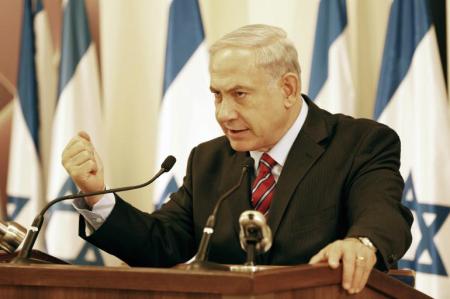
By Ibrahim Al-Madhoun | MEMO | October 8, 2014
In his heart of hearts, Netanyahu is aware of the major and fundamental differences between the Palestinian Hamas movement and the so-called “Islamic State” (ISIS) that is not limited to a specific state or nationality. However, for some reason, he is trying to link the two. In doing so, he ignores what is even more dangerous than his erroneous comparison; the significant similarity between ISIS and Israel’s ideology, policies and practices.
Israel calls itself the “Jewish State”, just as Al-Baghdadi calls his group the Islamic State. From the time of its “independence” in 1948, Israel has never declared it borders; in fact, they expand and contract, just as the territory controlled by ISIS does (it rejects the ideas of borders and does not recognise nation states). Indeed, ISIS considers its borders to be wherever its forces have reached. Israel was established on the basis of colonial-settlement and mass immigration of Zionist Jews from all over the world; ISIS is also encouraging immigrants who believe in the ideology of the group, regardless of their ethnicity and nationality.
It is no wonder that the Palestinian resistance is surprised when it captures or kills Israeli soldiers only to find that they are French, British, Polish, German or Russian individuals brought in to fight on Palestinian land and join the ranks of the “Jewish State”. In addition, the war crimes and crimes against humanity committed by Israel throughout its occupation of Palestine far surpass those committed by ISIS; the Israelis kill women and children and commit massacres deliberately, with apparent impunity, and then boast about it.
I do not mean that this comparison should offend ISIS, nor am I very concerned with talking about an organisation being fought by the world. It is undoubtedly a serious phenomenon that requires further reflection and study. What I am really concerned about is revealing Netanyahu’s manipulation and his attempt to divert attention from the real nature of the conflict in Palestine. When he fights Hamas, he is fighting the rightful owners of the land, the Palestinians. He is also following terrorist logic and using unimaginably extreme methods thanks to the world overlooking the Zionist project’s excesses in the region.
The international community is applying blatant double standards in its reaction to Israel and ISIS. Alliances have been formed to fight ISIS but the world turns a blind eye to the Israeli occupation that commits war crimes witnessed by all who wish to see. Over the summer, and not for the first time, Israel bombed hospitals, schools and safe houses while they were still inhabited and Israel also used internationally-banned weapons.
Netanyahu’s repeated attempts to link Hamas to ISIS is just more proof of Israel’s defeat and failure in its latest attack on the movement. It is also a cry for help by Israel to the countries of the world after its army failed to progress more than a few metres into Gaza. This is a desperate attempt to discredit and ruin the reputation of the Palestinian resistance and link it to a terrorist organisation reviled across the world. Netanyahu still hasn’t realised that the world is no longer held hostage to Israeli propaganda, and that such links and comparisons do not harm Hamas or change the fact that occupation is terrorism in every sense of the word. There is only one state occupying someone else’s land in the Middle East, and it isn’t the “Islamic State”.
Erdogan’s expansionist dreams in Syria
Press TV – October 9, 2014
The policies of the Turkish government and President Recep Tayyip Erdogan are becoming more and more dangerous both in Syria and the whole Middle East.
Ankara has not only been promoting terrorist and extremist groups, alongside its sole ally in the region, Qatar, but it is now preparing an invasion of northern Syria.
Erdogan thinks that he has the right to invade and occupy territories of Turkey’s neighbors and ignore and violate the sovereignty of these Arab countries. He has supported terrorist organizations in Syria and allowed illegal oil trading by these groups, ignored Baghdad’s sovereignty over the Iraqi Kurdistan and its resources and insulted the Egyptian president in the United Nations.
The Erdogan government has long been a key supporter of ISIL, al-Nusra Front and some other terrorist organizations. However, Ankara is now trying to use ISIL advances towards its border as a pretext to illegally send troops to occupy a part of the northern Syrian territory without the authorization of the Syrian government. This is clearly a war act.
Turkish propaganda is invoking a false excuse, the humanitarian protection for Kurds fleeing the advance of ISIL, to promote the creation of a buffer zone and a no-fly zone in Syria.
The objective of this strategy is to weaken the Syrian state and give the Ankara-backed opposition armed groups a sanctuary from which they can launch attacks on the Syrian army and where the Turkish forces can train them.
On his return from New York, Erdogan unveiled some of the plans of the Turkish leadership, which explain the situation prevailing in northern Syria. “We must look to the events in Syria, not only from the angle of terrorism, but also from the angle of the Syrian regime”, he said.
He openly called for the creation of a buffer zone and a no-fly zone in northern Syria, while criticizing Germany’s decision to provide Peshmerga Kurdish forces fighting against ISIL in Iraq with arms, claiming that they could end up in the hands of terrorist organizations, according to the Turkish classification, such as PKK.
That is, from Erdogan’s point of view, the main enemy is not ISIL but the Syrian government and PKK, which are both fighting the ISIL terrorists.
It is noteworthy to point out that the Turkish foreign minister, Mevlut Cavusoglu, has also claimed that Turkey opposes supplying the Iraqi army with weapons, because “95 percent” of the soldiers are Shiites, according to him.
Recently, Abdulkadir Selvi, journalist in the newspaper Yeni Safak, which is considered a leading pro-Erdogan outlet, said that Turkey will not take part in any air war or ground war with the coalition against ISIL in order to press the US to establish a buffer zone in Syria or allow Turkey to do so with its own warplanes and troops.
Erdogan is now using the events in the Kurdish town of Kobani to increase this pressure: If you do not allow me to send troops to Syria, Kobani will fall. This is Erdogan’s new strategy.
According to several media, Syrian Kurds are denouncing Erdogan’s plans. One of them, Binici Ibrahim, member of the Popular Democratic Party (HDP), has blamed Ankara for the situation in northern Syria due to its support for ISIL “The Turkish authorities are partly responsible for this situation. They protect ISIL, which is a terrorist organization”, Binici said, “Today they prevent young Kurds from returning to Syria to defend their territory.” “The Turkish government does not want to defend our city”, accused Mehmet Eminakma, another young HDP activist. “It crazily supports ISIL and not the Syrian people.”
Therefore, Ankara is trying to prevent young Syrian Kurds living in Turkey from returning and fighting against ISIL in order to create a humanitarian crisis and press ahead with its plans.
Facing this blackmail, the strategy of the Obama Administration is not clear. US Secretary of State, John Kerry, has said that stopping ISIL terrorists in Kobani is not a priority because “the strategic objective of the US war is to attack ISIS infrastructure”.
This could mean that Washington understands the Turkish game and is unwilling to fall into the trap.
Nevertheless, on October 8, US Secretary of State John Kerry claimed that the UK and the US were “ready to examine the Turkish idea of setting up a buffer zone in Syria to protect refugees fleeing ISIL violence.” Kerry made the announcement in a joint press conference with British Foreign Secretary Philip Hammond in Washington DC.
“The buffer zone is an idea that is out there. It is worth examining. It is worth looking at very, very closely,” said Kerry. The US Secretary of State added that creating a buffer zone will be one of the issues General John Allen, President Barack Obama’s anti-ISIL envoy, will be discussing with Turkish officials during an upcoming meeting in Turkey.
Some months ago, Turkey sent some troops to protect the Tomb of Suleiman Shah, located 33 km from the border. According to Turkish media, the convoy entered the Syrian territory without asking permission of Damascus. The excuse was some alleged links between the site and the Ottoman history. If such an argument was acceptable, dozens of countries could use a similar pretext to invade other neighbouring states.
Obstacles for a Turkish intervention
However, there are some obstacles for a possible Turkish intervention. First of all, Syrian and Arab peoples remember the Ottoman occupation and they do not want to see the Turks return. Erdogan’s policies have outraged not only Syria and Iraq but also other states of the region. In fact, Jordan’s alleged decision to suspend its participation in the airstrikes in Syria has been linked by some Arab media to Turkish actions in this country.
Other countries, such as Egypt and United Arab Emirates, do not want a Turkish intervention in Syria either. They think that Turkish government, alongside with Qatar, is trying to mobilize its allies of the Muslim Brotherhood in northern Syria and this is a clear threat for these countries, which are battling this group in their territories.
Even Saudi Arabia, despite its hostility towards the Syrian government, will not likely be happy either, as the Saudi regime does not want a more powerful Brotherhood-supporting Turkey in the region.
Secondly, Syria and Iraq have rejected any military Turkish interference. Iraqi Prime Minister Haydar Abadi reiterated on October 7 to his Turkish counterpart, Ahmed Davutoglu, that Iraq rejects any ground intervention of foreign forces in his country under the pretext of fighting ISIL. Syria has also warned that any Turkish military deployment in its territory would be an “act of aggression”.
Thirdly, Iran and Russia have clearly stated that Syria is a red line and any aggression against Syria would violate their principles and interests. Russia will certainly block any project in the UN Security Council to create a buffer or a no-fly zone. Both countries would also respond to such a Turkish action. Russia has recently sent a new warship to the Mediterranean and has held military maneuvers in the Caspian Sea alongside with Iran in order to send a signal to Turkey.
In Turkey, a large part of the population strongly rejects Erdogan’s policies in the Middle East. Major Turkish opposition parties opposed a motion by AKP (Erdogan’s party) aimed at authorizing a military intervention in Syria and Iraq. The Republican People’s Party and Freedom and Democracy Party said that such a step would be “unacceptable”.
There have also been demonstrations in Istanbul and other cities against the government’s interference in Syria and its support for ISIL. On October 5th, 10,000 people marched in Istanbul behind banners proclaiming “ISIL killer; AKP accomplice”.
For the West, Erdogan’s Turkey is becoming a serious problem too. Turkey, a NATO member, is one of the main supporters of extremism in the Middle East, and its imperialist “neo-Otoman” dreams are endangering the whole region and feeding terrorism everywhere. Thus, it is not surprising that Erdogan has become the new hero of the extremist sites and forums in Internet.
However, a Turkish intervention in Syria would have dire consequences for both Erdogan and Turkey. He will soon discover everyone is against him and such a step would renew the fear of “the Otoman resurgence” among the Arab peoples. Therefore, it would become the last nail of the coffin of the Turkish leadership’s ambitions in the Middle East.
New Horizon Conference: Meeting of Minds in Tehran
By Eric Walberg | Dissident Voice | October 8, 2014
The 2nd conference “New Horizon: the International Conference of Independent Thinkers” was held in Tehran, September 29–October 1 2014, including over 30 journalists, writers and academics from around the world presenting papers and arguing issues of world geopolitics, with a focus on the Middle East. I came from Canada, along with University of Lethbridge Globalization Studies Professor Anthony Hall, author of Earth into Property: Colonization, Decolonization, and Capitalism (2010). It was greeted in western media by hysterical denunciations; firstly, by the American Jewish Committee which accused it of “promoting hatred of Jews and Israel”, and the Anti-Defamation League which accused it of “promoting anti-Semitic propaganda”. The conference almost didn’t take place at all, having been officially cancelled, supposedly as a gesture to the West, after the new Iranian President Hassan Rouhani was elected last year. But after a flood of criticism on Iranian websites sympathetic to the organizers, the Iranian Foreign Ministry reversed itself. Nader Talebzadeh, the principle organizer, had had to lobby hard to reinstate the conference, calling the cancellation of the conference “a major mistake on the part of our government”.
“Have our leaders given in so much to the world that they are even afraid of a conference that might hurt Mr Obama’s feelings?” asked one blogger sarcastically.
The 1st New Horizon Conference in September 2012 was denounced in the West when it was addressed by the previous president Mahmoud Ahmedinejad, probably best remembered in the West for his 2005 soundbyte that Israel should be “wiped off the map”, referring to Ayatollah Khomeini’s prediction that “the regime occupying Jerusalem must vanish from the page of time.” The translation of the Persian text was later corrected but this was ignored in the West, where Ahmedinejad was further accused of “holocaust denial” for suggesting the figure of six million as the number of Jews who died in the holocaust was exaggerated, and he was mocked for suggesting that 9/11 was a conspiracy.
Indeed, most Iranians see 9/11 as involving some degree of conspiracy by the US and/or Israel, but then so do, for instance, 55% of Egyptians. So, not surprisingly, prominent at the New Horizon Conference this year was the world’s leading 9/11 conspiracy theorist, France’s Theirry Meyssan, who in 2002 published what is still considered the classic work on the topic, 9/11: The Big Lie (L’Effroyable imposture), translated into 28 languages, arguing that the attacks were organized by a faction of “the US military industrial complex in order to impose a military regime.” Meyssan also argues that the attack against the Pentagon was not carried out by a commercial airliner but by a missile. Also present was American filmmaker Art Olivier, who produced the feature film Operation Terror (2012), whose scenario followed Meyssan’s.
In a YouGov poll last year, 60% of Americans rejected the official explanation as published in the 9/11 Commission Report (2004), so Meyssan’s call for a UN investigation of 9/11 and the recent petition signed by 100,000 New Yorkers for an investigation of the collapse of World Trade Center building 7 are surely legitimate, though they have been blocked by politicians as “absolutely ridiculous” and “wild fantasies”.
Iran’s current President Rouhani was not associated directly with this year’s conference. Instead he was embroiled in a controversy with UK Prime Minister David Cameron, who both extended his hand in friendship to Rouhani at the UN General Assembly in a “historic meeting”, and then slapped him in the face from the UN General Assembly podium, attacking Iran for its “support for terrorist organizations, its nuclear program, its treatment of its people”, calling it “part of the problem in the Middle East”.
“On the contrary,” said a peeved Rouhani in his address to the UN, blaming the West and Saudi Arabia for sowing the seeds of extremism in the Middle East with “strategic blunders” that have given rise to the Islamic State and other violent jihadist groups. He also criticized the West’s sanctions on Iran’s nuclear program and reiterated his government’s desire to resolve the dispute, stating that no cooperation with the West against ISIS is possible until the sanctions are lifted. He called Cameron’s comments at the UN “wrong and unacceptable.”
Appropriately, the New Horizon Conference opened with the book launch of the Persian edition of US journalist Gareth Porter’s Manufactured Crisis: The Untold Story of the Iran Nuclear Scare (2014). Porter told me:
Through painstaking checking with experts and an IAEA official, I discovered that the documents submitted to the IAEA, which supposed showed Iranian plans to put nuclear warheads on their missiles, were fabricated by the terrorist group People’s Mojahedin of Iran and were passed on the IAEA by Mossad. They were contradictory—clearly doctored blueprints for an obsolete missile system.
Porter was awarded the UK Gellhorn Prize for investigative journalism in 2012 for exposing official lies concerning US policies in Afghanistan and Pakistan. With this latest expose, Porter did for the Iranian nuclear dossier what he and others did after 2003 in exposing the lies that prompted the US invasion of Iraq.
The sessions were varied. “The Gaza War and the BDS Movement Strategies” was addressed by Code Pink activist Medea Benjamin, who has been arrested dozens of time for her plucky protests at Congressional hearings against the war in Iraq, and who famously interrupted a speech by President Barack Obama in May 2013 protesting his continued use of drones against civilians. (She is barred from entering Canada.) Benjamin suggested a new project to highlight illegal Israeli settlements: activists hope to target one of the largest US-based real estate firms, RE/MAX, which “operates in over 90 countries, including Israel, where it sells homes complete with swimming pools in the West Bank to Israeli settlers in defiance of international law.” Every Sunday tens of thousands of “open houses” are held by RE/MAX around the world. Benjamin hopes activists will picket these open houses to embarrass RE/MAX into ceasing their West Bank activities. A session on Islam and the West, “Postsecularism and its Discontents”, emphasized the importance of ethics in Islamic civilization which makes subservience to market diktat unacceptable, and is a major stumbling block to understanding between the West and the Muslim world. “There is no teleology in western society, no guiding morality, only an obsession with materialism, with logos,” argued organizer Arash Darya-Bandari. “We believe it is necessary to control the negative tendencies in culture, such as pornography, alcohol, drugs, prostitution, to strive towards a more moral and justice society.”
“The ‘Islamic’ State Meme, its Precursors, and the US-Israel-Saudi Triangle” heard frontline reports from Meyssan and others about the intentional destruction of the Iraqi and Syrian states by the invasion of Iraq and ongoing western and Israeli support for insurgents in Syria, directly resulting in ISIS’s phenomenal success. “The West has abetted Sunni-Shia differences in the process to keep Muslims divided and allow continued western penetration and control of the growing chaos there,” charged Meyssan. Rouhani’s comment at the UN—“Certain intelligence agencies [who] have put blades in the hands of madmen, who now spare no one,”—is hard to argue with.
In the session “The Israeli Lobby in England”, Stephen Sizer, Anglican vicar and author of Christian Zionism—Road Map to Armageddon? (2004), explained that the vast majority of Zionists are not Jewish, but Christian. This prompted him in 2006 to draft what became known as the Jerusalem Declaration on Christian Zionism, signed by four of the Heads of Churches, declaring Christian Zionism a heretical belief, both immoral and a contradiction of faith. The rector of the University of Middlesex was pressured to rescind Sizer’s PhD but the examination committee wouldn’t budge. Nor has Sizer been cowed by constant harassment, including a break-in and the theft of his computer. At the same time, on his visits to Tehran, Sizer lobbies on behalf of Iranian religious minorities and always brings Persian-language New Testaments as “gifts”. “My intent is to show the Iranians that genuine Christians are not a threat to anyone, but bring the message of peace and love.”
Contrary to the shrill cries in the western media that the conference was anti-Semitic, it was unique in my experience in addressing Zionism and US imperialism forthrightly and intelligently, without a hint of racism. The issue of anti-Semitism was addressed and dismissed, as “There is no issue with Jewish people or the Jewish religion,” explained Darya-Bandari, “but rather with Zionism, that secular distortion of Judaism that itself is racist, and has been used as a pretext to dispossess and kill Palestinians.”
The American Defense League loudly attacked the conference for focusing on Zionist control of western media and the outsize influence of the Zionist Lobby in the US and around the world. So what’s wrong with that? There is more than enough documented proof of this, as I discover when I researched Postmodern Imperialism. The ADL labelled several of the delegates as anti-Semitic, including ex-US Marine Ken O’Keefe, who has led several relief convoys to Gaza, has appeared several times on BBC’s Hardtalk in support of Gaza, and famously renounced his US citizenship in view of US crimes around the world. It should be remembered that the ADL was successfully sued in the 1990s for false accusations of anti-Semitism.
The conference issued a resolution condemning ISIS, Zionism, US unconditional support of Israel, Islamophobia, and calling for activism locally to boycott Israeli goods and to promote understanding between the West and the Muslim world, and to fight sectarianism. “This was a great opportunity to meet anti-imperialist activists from around the world, to bring Russians, Poles, western Europeans, North Americans together with Iranians and other Muslims, both Sunni and Shia, in a forum without sectarianism, truly supporting peace and understanding,” said delegate Mateusz Piskorski, director of the European Centre of Geopolitical Analysis in Warsaw and former MP in the Polish Sejm.
~
Featured Video

No Threat Can Force Iran’s Surrender /Trita Parsi & Lt Cl Daniel Davis
or go to
Aletho News Archives – Video-Images
From the Archives
An Expert Military Analysis of War with China
Actually, None is Necessary
By Fred Reed • Unz Review • December 13, 2020
The Correlation of Armed Forces: U.S. goods and services trade with China totaled an estimated $634.8 billion in 2019. Exports were $163.0 billion; imports were $471.8 billion. The U.S. goods and services trade deficit with China was $308.8 billion in 2019. Trade in services with China (exports and imports) totaled an estimated $76.7 billion in 2019. Services exports were $56.5 billion; services imports were $20.1 billion. The U.S. services trade surplus with China was $36.4 billion in 2019.
There is talk within the Washingtoniat of a possible war with China. Steve Bannon, who apparently was dropped on his head as a child, actually favors such a war. We hear the usual shoo-the-boobs alarm about how the Chinese are doing something terrible and we must gird our loins and American values and show them what for, bow wow, woof. The danger is that the current game of who-blinks-first in Asian waters might actually provoke a shooting war. You know the kind of thing: One warship refuses to get out of the way of another, a collision ensues, some retard lieutenant who signed up on waivers opens fire, and we’re off and running. It is not a good idea to let children play with matches.
The said war is discussed either in emotional terms by idiots or in purely naval terms by those familiar with such things, so we hear of the First Island Chain and the Second Island Chain and whose missiles against the other’s missiles and so on. This would be appropriate if we were fighting World War Two again. Which we aren’t. Let’s take a quick-and-dirty look at how such a war might go.
To begin the war, America would overestimate itself and underestimate China. This is doctrine in the Pentagon. … continue
Blog Roll
 Aletho News
- Iran To Target Military Industrial-Tech Complex That Facilitated Gaza Genocide
- Collapsing Empire: The Resistance Disarms ‘Israel’
- Suicide Should Not Be a Government Service
- Rethinking America’s greatest threat: Iran vs. Israel-Firsters
- Iran accuses adversaries of false flags to strain Turkey ties
- Poland rules out sending Patriot missiles to US/Israel amid war on Iran
- Tehran approves new Hormuz plan with major restrictions
- No Threat Can Force Iran’s Surrender /Trita Parsi & Lt Cl Daniel Davis
- UK’s New Pandemic Plan Would Turn Big Tech Into a Mass Location Tracking Network
- Growing insecurity, soaring prices fuel protests in north as regime bans evacuation: Sources
- If Americans Knew
- Ann Coulter Rips Into Fox News for Iran War Coverage, Compares to False Rigged 2020 Election Reporting
- Joe Kent Urges Americans To Call White House and Congress To Object To Sending Troops Into Iran
- DNC Resolution to Reject AIPAC Funding Puts Democratic Leaders in the Hot Seat
- Swedish foundation to build 400 schools as over 650,000 Gaza children remain without education for 2 years
- Israeli army admits photshopping image of slain Lebanese journalist
- This is how Israel is systematically killing health workers under the cover of war in Lebanon
- Carrying life under fire: Israeli invasion of Lebanon leaves pregnant women facing deadly risks
- Champagne all around for the new death penalty (for Palestinians) law – Not a ceasefire Day 172
- Why are Palestinian books struggling to be seen on Amazon?
- The Line Between Affinity and Conspiracy
- No Tricks Zone
- New Study Finds Warming Saves Lives…Cold Temperatures 12 Times More Deadly Than Excess Heat
- German Science Blog Accuses PIK Climate Institute Of Hallucinating Climate Tipping Points
- Devastating Assessment Of Comirnaty Vaccine By Former Senior Pfizer Europe Toxicologist
- New Study: CO2 Is ‘Effectively Negligible’ As An Explanatory Climate Change Factor Since 2000
- Former Pfizer Toxicologist Dr. Helmut Sterz Tells Bundestag Hearing Pfizer Vaccine Should Have Never Been Approved
- Energy Expert: Germany’s Nuclear Phaseout Was A “500 Billion Euro Mistake”
- New Research: South Australia’s Mid-Holocene Sea Surface Temperatures Were 4°C Warmer Than Today
- Storing Green Energy To Last Germany 10 Days Would Require A 60-Million Tonne Battery
- New Studies: UK Sea Levels Were 4 Meters Higher Than Today During The Mid-Holocene
- Destructive Green New Deal: German Energy And Metal Group Warns Of Drastic Crisis
 Aletho News