US Court Rejects Argentina’s Appeal in Vulture Funds Case
teleSUR | October 23, 2014
The ongoing saga between Argentina and the vulture funds continues after a U.S court rejects Argentina’s appeal to allow the country to pay its creditors.
A United States appeals court has dismissed the Argentine appeal of an order directing Bank of New York Mellon to hold on to US$539 million dollars that Argentina deposited to pay its bondholders.
The appeals court said that it lacked jurisdiction over the appeal as an earlier ruling by U.S. District Judge Thomas Griesa was a clarification rather than modification of his earlier rulings on the matter.
In Griesa’s original ruling, the judge ruled that Argentina deposit with Bank of New York Mellon to pay bondholders who had renegotiated their debt with Argentina was “illegal,” and ordered the bank to hold on to the funds.
No progress has been made in talks between the country and hedge-fund holdouts, led by Elliott Management and Aurelius Capital Management.
Griesa has also scheduled another hearing on December 2 to weigh arguments over whether Citigroup Inc (C.N) should be allowed to process an expected interest payment by Argentina on bonds issued under its local laws following its 2002 default.
The hearing comes less than a month before an interest payment by Argentina on the bonds is due on December 31.
The hold outs, commonly referred to as vulture funds, had previously rejected all Argentina’s past restructuring offers on the country’s debt, most of which was incurred under Argentina’s military dictatorships and neoliberal governments. Ninety-two percent of creditors accepted the offer, and Argentina has been taking steps to continue to pay them back in spite of Judge Griesa’s ruling.
Boeing reneges on Iran business pledge
Press TV – October 23, 2014
American aircraft-manufacturing giant Boeing has ended a 35-year break in business with Iran, supplying the country’s national flag carrier with a cargo of aircraft-related items.
But the sale did not include spare parts for Iranian aircraft as promised by Washington following last year’s nuclear deal between Iran and six world powers.
“During the third quarter of 2014, we sold aircraft manuals, drawings, and navigation charts and data to Iran Air,” Boeing said in its quarterly report on Wednesday.
This is the first time that the American company has sold safety items to Iran Air since the 1979 Islamic Revolution.
The business deal brought Boeing USD 120,000 in revenue, the report added.
The sales came after the US Treasury Department issued a license in April that allowed Boeing to provide “spare parts that are for safety purposes” to Iran for a “limited period of time.”
Boeing said the plane parts were purchased “consistent with guidance from the US government in connection with ongoing negotiations.”
Boeing, which is still banned from selling new aircraft to the Islamic Republic, said that it could sell more plane parts to Iran Air in the future.
“We may engage in additional sales pursuant to this license,” it added.
In February, two major US aerospace manufacturers, Boeing and General Electric, applied for export licenses in order to sell airliner parts to Iran following an interim nuclear agreement between Tehran and the P5+1 group of world powers in November 2013.
Under the deal dubbed the Geneva Joint Plan of Action, the six countries – the US, France, Britain, Russia, China and Germany – undertook to provide Iran with some sanctions relief in exchange for Tehran agreeing to limit certain aspects of its nuclear activities.
In the past decade, Iran has witnessed several major air accidents blamed on its aging aircraft due to the US sanctions that prevent Iran from buying aircraft spare parts.
Ottawa shooting: a false flag designed to steal away our freedoms?
Brandon Martinez | Non-Aligned Media | October 22, 2014
I’m not one to hastily jump to conclusions about events like these, but the alleged shooting at the Canadian parliament and a nearby war memorial that took place today smells like a false-flag operation designed to expedite the Harper regime’s militarist agenda.
The mainstream media is in a furor over the incident. Non-stop wall-to-wall coverage has commenced. Even American and British outlets have picked up the story.
One very noticeable clue as to the fraudulent nature of this event is the immediate calls from establishment propagandists for a crack down on free speech (what they call “hate speech”) and the bolstering of Orwellian “anti-terrorism” laws which will in effect hand the state unlimited powers to spy on the citizenry of Canada and snuff out dissidents.
For example, the former CSIS Assistant Director Ray Boisvert said this on CBC:
“We need to get at those who are the purveyors of hate. So those who proselytize, those who are radicalizing, we need to find ways to go after them with respect to hate speech or perhaps its time for new legislation under the anti-terrorism act as we’re seeing in the UK.”
The former Canadian spy boss essentially echoed what British PM David Cameron said in a UN speech last month wherein he called for “non-violent extremists” to be criminalized. The traitorous British statesman specifically named 9/11 and 7/7 skeptics as falling within his dubious definition of “non-violent extremists.”
Another suspicious guest on the aforementioned CBC program used innuendo to try to link the Ottawa shooting to ISIS and Islamism, conveniently at a time when Stephen Harper is looking to justify his decision to whore out our military in the US-led bombing initiative in Iraq.
Shortly after the false-flag attacks of 9/11, the Canadian government mimicked its US counterpart by passing anti-terror laws which included the infamous “Section 13″ provision in the Human Rights Act that was consequently used by Zionists and their agents to silence critics on the internet.
Look for more of the same from the Zionist regime in Ottawa in the coming days. The mainstream media’s job is to whip up hysteria in order to scare the populace into accepting draconian laws that will eliminate our freedoms. Unfortunately most of the population are lemmings who will believe anything the government or media tells them and willingly forfeit their freedoms to the deceptive miscreants who currently occupy our government.
In any case, one cannot discount the very real possibility that the Canadian state had a hand in this.
Click here to listen to Joshua Blakeney’s commentary on the matter.
JSIL vs. ISIS

By Samer Jaber | Al-Akhbar | October 23, 2014
The Jewish state of Israel in the Levant (JSIL) and the Islamic State in Iraq and Syria (ISIS) are different in many ways. The most fundamental difference is that the former is a recognized state and a member of the United Nations, while the latter is not recognized as a legitimate polity and is considered a political/military terrorist organization. However, the two share core characteristics that define them and by recognising these similarities observers may be able to make predictions about their futures.
Divine right to exist
Both JSIL and ISIS display what might be termed “self-defined righteousness.” Although Israel is a modern state, its politics and treatment of others (Palestinians) are based on religious concepts and principles that can be traced back to the first century BC and the teachings of Rabbi Hillel, someone who would be considered a fundamentalist today. He instructed Jews to have a religious and social identity separate from those of other people (tribes). Israel introduces itself to the international community as a Jewish state and, based on this interpretation of Zionist Judaism, is a home to Jews wherever they are in the world. In other words, it is a state which includes all Jews but excludes the indigenous people of Palestine, the Palestinians. It uses its interpretation of Judaism to deny Palestinians equal rights and prevent them from accessing their lands.
ISIS believes that it is enacting God’s will and defines itself as the force to enforce the Islamic moral code, religious rituals and law (Sharia). ISIS’ interpretation of Islam goes back to Ibn Taymiyyah (1263-1328) who promoted the idea that Muslims are different from non-Muslims both in their way of life as well as in religious instruction. This notion of non-acceptance together with cultural differences led Ibn Taymiyyah’s followers to the practice of excluding others and in some cases putting them to death. This particular interpretation of Islam also means the rejection of other branches of Islam.
The form of righteousness practiced by ISIS leaders and Israeli politicians is also used to set apart the “good” people from the “bad” ones. The good are those who believe and support their respective political projects while the bad ones are those who stand against them. It is this stance that makes it permissible for Israel to inflict damage on the bad ones and reward the good. As such, the Palestinian people are depicted in the official Israeli narrative as the bad people who work hard to inflict damage on the good Israeli Jews.
Historically, the state of Israel was established on the self-proclaimed premise of the Zionist movement, that anti-Semitism and murder might surge again in the world. Thus, the resurgence of another wave of anti-Semitism will inflict another Holocaust on the world’s Jews. The Zionist movement took anti-Semitism and the Holocaust out of their historical context. In other words, the concepts were given an absolute ahistoric “religious” meaning. Consequently, the “Jews” started to become reified as an ethnic identity and Israel as a refuge for the world’s Jewry from harm.
For ISIS, one of the underlying reason for Muslims’ degeneration over the centuries is that too many people have strayed far from the fundamental principles of Islam. The role of ISIS is to establish an Islamic state ruled by the caliph. It considers itself to be the force that will revive true Islam and create a state in which all Muslims can live in under its interpretation of Islam. Similarly to Israel, where non-Jews are discriminated against, there is no place for non-Muslims to live as equal citizens in the so-called Islamic State.
Both JSIL and ISIS use the self-serving interpretation of religious texts to enact pragmatic politick. The Zionist narrative that gave birth to the state of Israel and is now its official ideology starts with the idea that the Jews are God’s chosen people and that God promised them the holy land. These two concepts of chosenness are ahistorical, unconditional, and self-limited. Thus, settler colonial expansion in Palestine beyond the 1948 borders is seen as the redemption of the biblically named Judea and Samaria for the Jewish people. Putting Palestinian communities under closure during Jewish holidays is usually disguised as a religious instruction and therefore not seen for what it is: a measure of control.
ISIS also claims it is justified in its actions; it considers itself the group fighting for God and enforcing the latter’s instructions on earth. The group’s interpretation of religious texts is based on its spiritual-political leaders’ rulings that place people into two main categories – believers in ISIS’ ideology are viewed as being on the right path for following the “correct” version of Islam while everyone else, including followers of other branches of Islam, is on the wrong path. Thus the expulsion or execution of Iraqi Christians and Yazidis in Mosul who refuse to convert or pay Jizya (a tax paid by non-Muslims) is introduced as a religious instruction that permits politically motivated discrimination.
Indiscriminate attacks on perceived “enemies”
International humanitarian law forbids parties in armed conflict from deliberately launching attacks against civilians but both Israel and ISIS carry out indiscriminate attacks against their enemies, and they cite similar justifications for such attacks, mainly operational reasons.
JSIL, like ISIS, says that engaging in conflict in residential areas makes it difficult to avoid harm to civilians. Israel, which deems itself “superior” to others, says it launches military operations to prevent harm to its own people whose lives are worth much than those of “others.” ISIS believes it is on the right path and views everyone else as living in a state of sinfulness and, according to the group, sinners deserve to be put to death. Ultimately, ISIS and Israel attack civilians as part of their strategy to dispose of the natives and remove them from their lands. As such, in their quest for control of the land they both practice ethnic cleansing under a myriad of guises.In areas controlled by ISIS, in both Syria and Iraq, the group has carried out the mass executions of opposition militants captured by its forces and any person who assists its enemies is liable to be sentenced to death. Israel carries out a similar strategy of collective punishment against Palestinian resistance. It used it in its latest war on the Gaza Strip and during the so-called Operation Cast Lead in 2008-09. Even when Israel states that its attacks are intended to kill only resistance fighters, its bombardment of residential areas always leads to the killing of civilians. These attacks are clearly designed to target and punish the combatants’ families and homes.
During Israel’s latest war on Gaza in the summer of 2014, the Israeli army intentionally converted 40 percent of the Gaza Strip into uninhabited land. The Israeli army displaced up to 500,000 Palestinians out of their neighborhoods. This is the same tactic ISIS has been using in vast swaths in Syria and Iraq. The latest incident is the ongoing fighting in Kobane, the Kurdish city under Syrian jurisdiction, where ISIS’ shelling of the city forced the majority of its citizens to be displaced.
Displacement, collective punishment, terrorism and ethnic cleansing in the name of God are but a few similarities between the two entities. It is worth considering how the state of Israel has embraced the legend of the Maccabees, a sect of Judaism which fought other Jews and foreign powers in the name of piousness and righteousness, and how it has incorporated it within the contemporary ethos. The Maccabees were fundamentalists who used violence against their enemies, both Jewish and non-Jewish, and carried out forced conversions much as ISIS does today.
Samer Jaber is a political activist and researcher. He is the managing director for Dar el-Karma Inc. for Media, Researches and Publication. He tweets at @Jerusalem_sbj
France puts pro-Palestinian campaigner on trial
Press TV – October 23, 2014
The French government has prosecuted a pro-Palestinian activist for disregarding the official ban on anti-Israel rallies during its recent offensive on the Gaza Strip, Press TV reports.
France has put the spokesperson of the New Anti-Capitalist Party on trial for his attempts to organize an “illegal demonstration” against the Israeli regime.
Meanwhile, several demonstrators held a rally on Wednesday to protest against the government’s prosecution of the pro-Palestinian campaigner.
“To incriminate the spokesman of a political party who is also a strong supporter of unions… is totally unjustified and unacceptable. We would like to know why the government singled him out,” said Patrick Picard, a member of the General Confederation of Labor (CGT).
France was heavily criticized by rights groups after it officially banned demonstrations against the Israeli regime’s deadly attacks on the besieged Gaza Strip in summer. Thousands of people defied the French government’s decision, saying it was a glaring breach of their constitutional basic right to demonstrate.
“This government made two decisions this summer: to support the extreme-right regime of Benjamin Netanyahu, which was in the process of massacring people in Gaza and then, … it tried to weaken the Palestinian solidarity movement here in France by claiming it was anti-Semitic and violent which we totally reject,” stated the national secretary of Left Front Party (PG), Eric Coquerel.
The French government has recently intensified the trend of prosecuting social activists who disagree with the unpopular policies of President Francois Hollande.
For the Bottom 90% of Americans, Financial Security is Slipping Away
By Noel Brinkerhoff | AllGov | October 23, 2014
No matter how you look at it, the economic picture for most of America is not good.
From too much debt to not enough savings to shrinking incomes, the vast majority of Americans are confronted with erosion of their financial security.
A new economic study (pdf) from the National Bureau of Economic Research paints a bleak outlook for 90% of the country. This great mass once enjoyed a growing share of the nation’s wealth from before the Great Depression until the 1980s, according to researchers Emmanuel Saez and Gabriel Zucman. The share of the wealth for that group peaked at 35% in the mid-1980s. By 2012, that share had dropped to 23%.
Saddled with growing amounts of mortgage, consumer credit and student debt, the 90% has had little in the way of extra money to put into savings, Saez and Zucman wrote. In fact, the savings rate by those in the lower 90% is about zero. By comparison, the top 1% of families put aside about 35% of their income. The authors say that income inequality will increase as long as the middle-class savings rate remains low.
Another report, from the liberal Center for American Progress, offered up another double whammy of fiscal troubles for Americans: declining income and growing expenses. It reported that the median income of all families dropped 8% from 2000 to 2012.
Meanwhile, the costs of sending kids to college and paying for health care and child care have soared. Higher education expenses have represented the biggest increase, jumping 62% from 2000 to 2012. Health care and child care went up 21% and 24%, respectively.
To Learn More:
Exploding Wealth Inequality in the United States (by Emmanuel Saez and Gabriel Zucman, Washington Center for Equitable Growth)
Wealth Inequality in the United States Since 1913: Evidence from Capitalized Income Tax Data (by Emmanuel Saez and Gabriel Zucman, National Bureau of Economic Research) (pdf)
The Middle-Class Squeeze (Center for American Progress)
U.S. Income Inequality Reaches Record Extreme (by Noel Brinkerhoff, AllGov)
Upset about the Richest 1%? The Top .000003% Own $25 Trillion (by David Wallechinsky and Noel Brinkerhoff, AllGov)
Ecuador Investing in Strategic Sectors
teleSUR | October 22, 2014
For the state general budget plan for 2015 it has been announced that strategic sectors will be the largest investment at 35%. The principal areas of focus will be strengthening electric and hydraulic resources as well as hydrocarbons and increasing social investment.
This investment is intended to provide a financial base upon which the state will focus on other projects, on sectors such as education and technology, to support a future economy which will move away from extractivism.
In an interview with TeleSUR English, Latin American School of Social Sciences (FLACSO) specialist Patricio Trujillo said, “Investment in strategic sectors first creates an infrastructure that is sufficiently self-sustainable so that the second phase can be based on human talent. If we do not have infrastructure it is very difficult to better this human talent, to improve for example investigation.”
Other sectors include production at 22%, social development at 16%, Security at 7% and the rest at 6%. The sector of human talent, expected to receive greater investment in the future a critical base of the Citizen’s Revolution, will receive 14 percent investment at USD $1.19 billion, which will be directed towards basic and higher education as well as culture.
On strategic sectors, President Rafael Correa said that investment will be focused in the Ministries of Electricity and Water. He said, “This investment is just in two ministries. We are beginning with an investment of 3 billion dollars.”
Much of this investment will be directed towards creating the necessary infrastructure for the functioning of hydroelectric dam projects by the end of 2016, with the possibility of exporting energy to neighboring Colombia and Peru.
“For example, with eight hydroelectric dams, by 2016 we will have saved an enormous amount of resources. So this puts pressure on the budget, and the country. This is of course because we are trying to accomplish this in 2, 3 years what was not done in 50. There is spending, spending, spending now but afterwards, we are going to see the fruits of these efforts,” said Correa.
Heightened investment in strategic sectors is aimed at ensuring national sovereignty over energy and natural resources, and at an eventual surplus for internal consumption, allowing for export and greater revenue for investment in other areas.
Featured Video
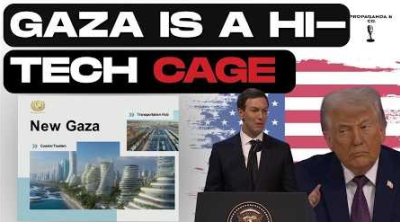
Your Enslavement Begins in Gaza: The ‘Board of Peace’
or go to
Aletho News Archives – Video-Images
From the Archives
The US: The Century of Lost Wars
By James Petras | Global Research | September 12, 2018
Introduction
Despite having the biggest military budget in the world, five times larger than the next six countries, the largest number of military bases – over 180 – in the world and the most expensive military industrial complex, the US has failed to win a single war in the 21st century.
In this paper we will enumerate the wars and proceed to analyze why, despite the powerful material basis for wars, it has led to failures. … continue
Blog Roll
 Aletho News
- Your Enslavement Begins in Gaza: The ‘Board of Peace’
- Israeli FOIA Data Reveals Massive Heart Injury Spike in Children Immediately After mRNA Shot Rollout
- What is Zionism? And what is anti-Zionism?
- Hungary’s Blocking of EU Loan to Ukraine May Jeopardize IMF Funding – Reports
- Pax Judaica Explained | Prof. David Miller
- Was MAHA Too Good to Last in the Trump Administration?
- Vermont advances bill letting unelected Health Commissioner decide which vaccines ctizens should receive
- Why the US-Israeli alliance will lose against Iran
- US envoy Huckabee claims Israel has ‘biblical right’ to conquer all West Asia
- Testing the Alliance: Netanyahu’s Washington Visit
- If Americans Knew
- Palestinian church leaders admonish Christian Zionist Mike Huckabee – Not a ceasefire Day 135
- Ominous messaging from Trump’s “Board of Peace” – Not a ceasefire Day 134
- ‘Christians Out’: Jerusalem Church Tagged With Hate Graffiti, Police Investigating
- Israeli Settlers Kill American Teen
- ‘We returned from hell’: Palestinian journalists recount torture in Israeli prisons
- No mercy for Gaza in Ramadan – Not a ceasefire Day 133
- The Israeli Government Installed and Maintained Security System at Epstein Apartment
- Tucker Carlson interrogated in Israel, has passport seized after interviewing US ambassador
- 6,000 Amputees in Gaza Face Impossible Recovery amid Israeli War Ultimatum
- The Lancet: Gaza death toll far higher than reported – Not a ceasefire Day 132
- No Tricks Zone
- New Research Reaffirms Clouds, Aerosols, And Surface Solar Radiation Are ‘Driving The Climate System’
- Germany: Electric Car Catches Fire At Charging Station, Sets Off Local “Inferno”, Widespread Damage
- New Study: Canada’s New Brunswick Was 1°C Warmer Than Today During The Medieval Warm Period
- Coal Power Back In Trend As Globe Tries To Keep Pace With Growing Demand For Power
- New Study: A 4°C Warmer Beaufort Sea Had ‘No Sea Ice’ 11,700 – 8200 Years Ago
- Unfudging The Data: Dutch Meteorological Institute Reinstates Early 20th Centruy Heat Waves It Had Erased Earlier
- German Gas Crisis…Chancellor Merz Allegedly Bans Gas Debate Ahead of Elections!
- Pollen Reconstructions Show The Last Glacial’s Warming Events Were Global, 10x Greater Than Modern
- Germany’s Natural Gas Storage Level Dwindles To Just 28%… Increasingly Critical
- New Study Rebuts The Assumption That Anthropogenic CO2 Molecules Have ‘Special’ Properties
 Aletho News