Demonstration in Bil’in honoring slain US citizens faces attacks and arrests by Israeli forces
International Solidarity Movement | February 17, 2015
Bil’in, Occupied Palestine – On Friday 13th February, Israeli forces assaulted the demonstration in Bil’in with hundreds of tear gas rounds, dozens of stun grenades and pepper spray, injuring eleven Palestinian, Israeli and international demonstrators. Member of the Bil’in popular committee Mohammed Khatib and a UK citizen and solidarity volunteer Michael “Mick” Bowman were both violently arrested. At the demonstration, Palestinian activists carried posters honoring Kayla Mueller and condemning the murders of the three students in Chapel Hill, North Carolina.
“As people were protesting a soldier suddenly came running, wielding pepper spray, spraying it at journalists and activists indiscriminately,” reported Karam Saleem, a Palestinian activist present documenting the demonstration. Those who had been pepper sprayed, including Mohammed Khatib, were taken down to an ambulance to treat their burns. Saleem continued, “Mohammed was about twenty meters away from the main part of the protest, still suffering from pepper spray, when suddenly a soldier ran after him and grabbed him. Another five soldiers quickly surrounded him and shoved him violently to the ground.”
He was handcuffed and blindfolded before being loaded into a military jeep.
Israeli forces targeted journalists and those attempting to document the protest; many were shoved and threatened while attempting to photograph or film. Those present reported that the Israeli military also fired tear gas directly at people holding cameras.

Journalist being assaulted by Israeli forces – only one of many that Friday in Bil’in (photo by ISM)
Israeli forces pepper sprayed demonstrators who were doing nothing more that trying to photograph the army’s brutality, and also pepper sprayed those holding posters of Kayla Mueller and the three US students from Chapel Hill. Jameel Al-Barghouthi, head of the Palestinian Authority Committee Against the Apartheid Wall and Settlements, Munthir Amira, head of the Popular Struggle Coordination Committee (PSCC), Mohammed Khatib, a member of Bil’in’s Popular Struggle Coordination Committee, Issam Rimawi, a Palestinian photojournalist, two Palestinian activists Abdallah Elian and Kafah Mansour, British citizen and activist Mick Bowman, two female Israeli activists, and one Danish and one Dutch female international volunteer were all injured.
“The army was extremely brutal yesterday in their use of tear gas, beatings, and pepper spray,” recalled Tali Shapiro, an Israeli activist who was severely pepper sprayed in Friday’s demonstration, suffering from first degree burns on her hands, ears, and most of her throat and neck. “We saw they were beating and arresting someone (Mohammed Khatib), so I ran towards them. By the time I got up the hill Mohammed had been taken away and another man [Mick] was on the ground with many soldiers on top of him, twisting his limbs and head. I immediately took out my phone to take pictures. The soldiers started pushing away journalists. They formed a line in front of several of us, and before I could assess the situation another soldier sprayed my face with pepper spray.”

Activist Tali Shapiro after being severely pepper sprayed (photo by ISM)
Fifty-six-year-old Mick Bowman, a social worker and resident of Newcastle upon Tyne, England, recalled that in the time before his arrest, “the Israeli forces behaved with particular aggression towards protesters who were carrying the posters of Kayla and of the students from Chapel Hill North Carolina.” Border police threw stun grenades directly towards demonstrators, scattering those holding posters near the front of the protest.
“Next thing I knew,” Mick recalled, “three or four soldiers jumped on me from behind and forced me to the ground. I was lying face downwards, with a couple of them kneeling on my back.

Mick Bowman, knelt on, assaulted and pepper sprayed by Israeli border police arresting him (photo by ISM)
As they were handcuffing me, one of them stood on my hand, rubbing his boot back and forth and crushing my thumb. One of them grabbed my nostrils, and another was pressing down on my face, causing abrasions and bruising around my right eye. After they had handcuffed me, a border policeman also pepper sprayed the left side of my face from the distance of a few inches.”
After their arrest, Mohammed and Mick were transported to the Binyamin settlement police station. Mohammed Khatib was taken to Ofer military prison and Michael Bowman was taken to Muskubiya (the Russian Compound) prison in Jerusalem. Both were charged with ‘assaulting a soldier.’
“When police officers use violence they always claim that violence was used against them. It’s standard procedure” explained Mohammed Khatib. Mick was released on the evening of February 14th, and Mohammed was eventually released on the evening of February 15th, on a bail of 4,000 shekels (1,030 USD).
Abdullah Abu Rahma, head of the Bil’in popular committee, described the purpose of demonstration in Bil’in: “On Friday we protested against the theft of our land by Israel’s illegal wall and settlements and to express our resistance to terrorism everywhere. We carried the images of Kayla Mueller who was killed while being held captive by Da’esh and who had marched with us in Bil’in. We also carried the images of Deah Barakat, Yusor Mohammad, and Razan Abu-Salha, who were murdered in their home in North Carolina. We made it clear that we will oppose terrorism and the killing of innocent people whether it is committed by organizations like Da’esh, by states like Israel or by individuals like the murderer from Chapel Hill.” This Friday will mark the tenth anniversary of Bil’in’s popular resistance demonstrations – against the Apartheid Wall, against the Israeli occupation, and against oppression and violence everywhere.
Israel’s Fifth Column
Enabling Netanyahu
By Philip Giraldi • Unz Review • February 17, 2015
When I was in college back in the 1960s a Jewish friend and I got into a discussion after Israel’s overwhelming victory in the June 1967 “Six day war.” I observed that many of the Jewish students who were exulting over kicking the crap out of the Arabs were at the same time leaders of the anti-war movement on campus, which opposed the Vietnam War. Admittedly media coverage of Vietnam was already becoming negative and the press descriptions of what had gone on in the Middle East falsely represented a beleaguered Israeli David by sheer grit and valor defeating an overwhelming Arab Goliath, so it was possible to distinguish in practical terms between the two conflicts. One was defense and the other was American imperialism, or so it could be construed by those who chose to see it that way.
As I knew that I was soon to be drafted I tried to rationalize within my own mind Vietnam, convincing myself that it was a war to stop the spread of communism, which at the time appeared to represent an existential threat directed against the United States. But I was still bothered by folks who claimed to oppose Vietnam on principle cheering on another war apparently based on their own ethnic affinity. My friend responded to my concerns by acknowledging the emotional tug represented by Israel but adding that the United States would always be much more important to him. It didn’t really answer the question but it came from a friend and it was good enough.
Well, that was then and this is now. Since the 1960s what Norman Finkelstein has described as the “Holocaust industry” has burgeoned, much of it used as an excuse to exonerate Israeli bad behavior. The Israel Lobby has also grown enormously in support of only one objective, which is binding Israel to the United States in such a fashion as to make Americans the enablers and uncritical supporters of Tel Aviv’s foreign and security policies.
Many American Jews, to their credit, have become weary of the tie that binds to Israel as they recognize that it is bad for both parties involved and enables an endless occupation of Arab land that is both cruel and immoral while fostering internal developments in Israel that might reasonably be described as fascistic. Other Jews have, however, gone in another direction, making the immunizing of Israel from any and all criticism while demonizing her enemies their life’s goal. In that they have largely succeeded, with Benjamin Netanyahu an honored guest of the U.S. Congress, a wannabe presidential candidate incorrectly describing Israel as a “most cherished ally,” and two Jewish billionaires openly lining up to be principal supporters of the upcoming Republican and Democratic presidential candidates as measured by their support of Israel.
Indeed, many supporters of Israel do not seem at all ashamed of openly putting Israel ahead of the United States, which is where I have a problem because, apart from enabling the skewing of America’s foreign policy, it raises the issue of where one has basic loyalty. Loyalty to a nation might well be passé in this day and age but it can have significant consequences when groups that are powerful promote detrimental policies that impact on everyone.
All of which brings me to the Super Bowl. New England Patriots owner Robert Kraft is a passionate supporter of Israel and all its works, to include its increasingly right wing governments over the past decades. He has visited the country more than 50 times. When his team won the Lombardi trophy in 2005 he personally carried it to Israel and presented it to then Prime Minister Ariel Sharon. To be sure Kraft appears to be a decent, well liked man who has funded institutes that foster better Christian-Jewish relations, but his bottom line always appears to be Israel.
Kraft’s recently deceased wife Myra once told the Jerusalem Post that if one of her sons wanted to join the Israeli Army “I would go with him. I always wanted to live here. As for joining the army, over Vietnam, I would have had an issue, because I didn’t believe in it. The same goes for the war in Iraq. I don’t know why we’re there. I would hate to have one of my sons fighting there. Iran’s the problem, not Iraq. But, as far as fighting for Israel is concerned, there is no problem.” For Myra Kraft even if one were serving to maintain an illegal occupation, Israel was always the “good war” while America’s wars were debatable. For what it’s worth, none of her four sons has ever been in anyone’s uniform. Nor has their father.
The Kraft family passion for the Israel Defense Forces extends to Robert’s recent writing of a personal letter to the family of Israeli-American soldier Max Steinberg. Steinberg was killed during Israel’s recent invasion of Gaza, in which 2,310 Palestinians, 500 of whom were children, died compared to 71 Israelis, 66 of whom were soldiers.
Kraft wrote “It is with a heavy heart that I write to you after having learned about your dear son and distinguished member of the Israel Defense Forces, Max. Although I didn’t have the privilege of knowing your son Max personally, I have taken the liberty of reaching out to you since I noticed him wearing a New England Patriots cap in one of the broadcasted photos. He represents the consummate patriot and I am forever grateful for the sacrifices he made to keep our beloved Israel safe. His dedication and loyalty to Israel have not gone unnoticed and I am sure he has left behind a legacy of which you and your family can be proud.”
Why is all this important? It is important because Robert Kraft is a rich, powerful and politically well-connected man. What he says and does and the example he sets matter. Insofar as I could determine he has never written a letter to a fallen American soldier from either Boston or Massachusetts. Like his wife, he perhaps unintentionally sees something special in service to Israel that he does not find in service to the United States. And as for those who might perversely argue as Myra Kraft did that America’s wars are suspect while Israel’s conflicts are righteous self-defense, one might well note that Washington’s disastrous invasion of Iraq was intertwined with Israeli interests while Tel Aviv’s urging yet another war against Iran serves no U.S. national interest at all. Arguing in favor of Israel’s use of its armed forces as somehow more ethical than that of the United States is ridiculous, particularly as Tel Aviv’s military is mostly engaged in supporting an illegal and brutal occupation of Palestinian territory.
The bottom line is that celebrating Israel’s apartheid regime and its wars is bad for both Israel the United States and it behooves moderate leaders like Robert Kraft to recognize that fact and state it openly.
This type of blinkered Israel-centric thinking leads to other extraordinary behavior, far beyond anything done by Kraft. The controversial impending visit by Benjamin Netanyahu to address the U.S. Congress has brought the Lobby out in full force. Israeli former parliamentarian and journalist Yossi Sarid, who writes for Haaretz, notes how Republican Jewish organizations have “launched a campaign of intimidation against those lawmakers who have already announced the intent to skip the joint session.” He observes that “Netanyahu is determined to show the president once and for all who really rules in Washington, who is the landlord both here and there.” He cites Matthew Brooks, head of the Republican Jewish Coalition, who reportedly said “We will commit whatever resources we need to make sure that people are aware of the facts, that given the choice to stand with Israel and Prime Minister Netanyahu in opposition to a nuclear Iran, they chose partisan interests and to stand with President Obama.” Morton Klein of the Zionist Organization of America added “We will, of course, be publicly condemning any Democrats who don’t show up for the speech, unless they have a doctor’s note.”
Sarid concludes somewhat hyperbolically with an observation that no American newspaper would ever dare print: “In these very moments, the protocols are being rewritten. Rich Jews are writing them in their own handwriting. They, in their wealth, are confirming with their own signatures what anti-Semites used to slander them with in days gone by: We, the elders of Zion, pull the strings of Congress, and the congressmen are nothing but marionettes who do our will. If they don’t understand our words, they’ll understand our threats. And if in the past, we ran the show from behind the scenes, now we’re doing it openly, from center stage. And if you forget our donations, the wellspring will run dry.”
Benjamin Netanyahu has ignored demands that he alter the agenda of his visit to make it less confrontational. He recently said that he will be the “representative of the entire Jewish people” when he addresses Congress, an assertion that has made many American Jews very uncomfortable. He will also be speaking at the annual AIPAC summit and will attend a gala reception hosted by the Emergency Committee for Israel, headed by Bill Kristol. Kristol welcomes the visit of Netanyahu because “Obama left a few things out of SOTU. Bibi can help out by filling in some blanks–al Qaeda, radical Islam, Iran’s sponsorship of terror, etc.” In other words, Americans should be grateful for Netanyahu’s telling us how ignorant we all are.
And obsession with defending Israel also can lead to turning a blind eye to the celebration of the cruel deaths of Americans who do not share that infatuation. Debbie Schlussel, a popular talk radio host who describes herself as a “lifelong conservative Republican activist,” does not find the recent killing by ISIS of American aid worker Kayla Mueller a tragedy. Schlussel, who claims to be highly educated, describes Mueller as a “Jew hating, anti-Israel bitch,” and “an anti-Israel piece of crap who worked with HAMAS and helped Palestinians harass Israeli soldiers and block them from doing their job of keeping Islamic terrorists out of Israel.” Another advocate for Israel calls Mueller a “useful idiot” and “terrorist supporter.” That the rabid Schlussel is borderline mainstream in terms of her audience and access is astonishing and the comments on her website suggest, unfortunately, that she is not alone in her vitriolic hatred of anyone even vaguely perceived as being not friendly enough to Israel.
As Allan Brownfeld has argued very persuasively Judaism is a religion and the United States and Israel are both sovereign countries having different interests, which is something that Robert Kraft, Bill Kristol, Matthew Brooks, Debbie Schlussel and Mortimer Klein should just occasionally bear in mind. Ultimately, if you are being honest with yourself you can only be loyal to one country and if you are born, living and working in the United States that should be your default choice. If your religion, tribal solidarity or ethnic affinity makes you defer to the interests of Israel or indeed any other country, by all means move there.
Indeed, American citizens can have affection for as many countries as they choose but loyalty involves the responsibilities of citizenships and doing what is right for one’s own country which makes it quite a different issue. It is not a rhetorical conceit that the oath new American citizens take requires them to abjure any prior allegiances. No one is suggesting that American Jews should not be charitable to and express concern regarding the well-being of their co-religionists worldwide, but that charity and empathy should not extend to promoting the pernicious interests of a foreign government.
Our first President George Washington, whose birthday we celebrate this week, called such ties “passionate attachments” that create “the illusion of an imaginary common interest in cases where no real common interest exists.”To my mind, it would not be possible to describe the lopsided special relationship between Israel and the United States, engineered by a powerful domestic lobby, any better than that.
German TV Channel in Trouble After Being Caught in Ukraine War Lie
Sputnik News | 17.02.2015
The German federal television channel ZDF got into a bit of trouble recently after a citizens’ media monitoring group called them out over false reporting on the presence of Russian tanks in eastern Ukraine.
A German media monitoring organization has filed a complaint against federal channel ZDF over false reporting on the situation in eastern Ukraine, Deutsche Wirtschafts Nachrichten has reported.
The complaint, filed by a citizens’ group known as the Permanent Open Committee of Media Monitoring, revolves around a photo accompanying a recent news segment airing on ZDF about alleged Russian military presence in eastern Ukraine.
The segment, which described the alleged movement of Russian tanks and missile systems into eastern Ukraine, featured a photo with the caption “Russian armored vehicles moved through Isvarino in the Lugansk region, February 12, 2015,” citing “Ukrainian army spokesman Andrei Lysenko in Kiev.” The only problem is that the image in question was actually taken several years earlier, in 2009, and in South Ossetia, not Ukraine.
In their complaint to ZDF, one of Germany’s largest broadcasters, the Open Committee notes that “it would be interesting to know why such an image, which has nothing to do with the news in question, is being repeated, meant as it is to convince a third party of the truthfulness of assumptions about an “invasion by [Russian] armor.”
Maren Mueller, one of the founders of the Open Committee and a former media worker herself, believes that much of German coverage of events in eastern Ukraine is tainted by distortions, half-truths and outright lies. Mueller says that “the coverage of events in Ukraine by the media has reached the height of fantasy, and is not worth taking seriously.” She notes that the tank story is just one example of the kinds of distortions that regularly occur. Recently, German media watchers forced an ARD correspondent to retract his words on the deaths of two civilians in Krasnoarmeysk, after the latter had erroneously claimed that the deaths were caused by “the bullets of the new rulers,” meaning the anti-Kiev rebels. The channel has since been forced to issue an apology over the mistake.
Ms. Mueller believes that among the biggest problems of the German media’s coverage of events is the “dangerous closeness” between the media’s line and that of the description of the conflict being provided in the government.
Last week a senior American official faced embarrassment on the Senate floor after it turned out that photos of Russian tanks he was presenting as proof of Russian involvement in Ukraine were also from the war in South Ossetia. After finding out that the photos weren’t from the Ukraine war, Inhofe stated that “the Ukrainian parliament members who gave us these photos in print form as if it came directly from a camera really did themselves a disservice. We felt confident to release these photos because the images match the reporting of what is going on in the region. I was furious to learn one of the photos provided now appears to be falsified from an AP photo taken in 2008.”
Recent Academy of Sciences Reports on Climate Change were Partially Funded by CIA
By Noel Brinkerhoff | AllGov | February 17, 2015
A voluminous scientific study on climate change and man-made possibilities of altering it was funded by several federal agencies, including the Central Intelligence Agency (CIA).
The CIA’s decision to partially fund the research left at least one expert who participated in the study a little uneasy.
Scientist Alan Robock at Rutgers University told The Guardian the CIA’s investment in the $630,000 study “makes me really worried who is going to be in control” of efforts to stem the impact of climate change.
In addition to the CIA, the National Aeronautics and Space Administration, the Department of Energy, and the National Oceanic and Atmospheric Administration funded the National Academy of Sciences research that produced two reports within the study.
One report addressed ways to remove carbon dioxide from the atmosphere, and the other looked at ways to alter cloud cover or change the planet’s surface to make it reflect more sunlight back into space.
The CIA never explained to the academy why it was funding the project.
But Robock became suspicious after two CIA consultants contacted him inquiring about the possibility of another country gaining control of the weather.
“They said: ‘We are working for the CIA and we’d like to know if some other country was controlling our climate, would we be able to detect it?’ I think they were also thinking in the back of their minds: ‘If we wanted to control somebody else’s climate could they detect it?’” he told The Guardian.
He said that he told the consultants that any attempt to generate large, climate-changing clouds would be noticed by weather satellites or other equipment used to monitor the atmosphere.
The CIA didn’t respond to a press inquiry about its involvement and has previously refused to confirm its role in the study. In 2013, CIA spokesman Edward Price told Mother Jones: “It’s natural that on a subject like climate change the Agency would work with scientists to better understand the phenomenon and its implications on national security.”
Using the weather as a weapon is forbidden under international law, per the Environmental Modification Convention of 1978.
The agency’s inquiry left Robock concerned. “I’d learned of lots of other things the CIA had done that didn’t follow the rules,” he said. “I thought that wasn’t how my tax money was spent.”
The CIA opened its own climate change office in 2009 but shut it down three years later after criticism from some Republicans who called it a distraction from the agency’s focus on combatting terrorism.
To Learn More:
Spy Agencies Fund Climate Research in Hunt for Weather Weapon, Scientist Fears (by Ian Sample, The Guardian )
CIA Backs $630,000 Scientific Study on Controlling Global Climate (by Dana Liebelson and Chris Mooney, Mother Jones )
C.I.A. Closes Its Climate Change Office (by John Broder, New York Times )
Climate “Science”: Consensus or Conformity?
An Indictment
By David Small | Climate Etc. | February 15, 2015
I started a PhD program in Environmental Engineering because I worried about climate change. It didn’t take long for me to become a skeptic.
My first paper, a study about precipitation intensity over the U.S., was rejected by reviewers because it contradicted the climate model projections. Though they could find nothing wrong with the methodology, they decided observational data must be flawed because climate models couldn’t possibly be wrong and wrote that the paper could not be published.
I then started reading the atmospheric science literature about precipitation trends. It was clear to me that the theory about changes in precipitation intensity were designed to explain climate model results that didn’t mesh with observations. When I found that changes in observed precipitation were largest in autumn, and did not find the same patterns of precipitation in climate models outputs, I really became skeptical about the use of climate models. When I started working with climate models and saw how poorly they reproduce precipitation patterns, I was forced into the realization that the “science” was being fit to the models and that the models were not very realistic. From my perspective, this runs contrary to the scientific method.
After finishing my PhD in Environmental Engineering, I earned a M.S. in Atmospheric Science and started working on a PhD. As I learned more about meteorology and atmospheric dynamics, I started to see the contradictions in the climate change discussion.
I had another paper refused by a high profile journal because it showed that cold air is required to produce the conditions that cause storm surges in the western Canadian arctic. That suggestion really seemed to upset the editor (an engineer) who wouldn’t even send it out for review. My later research has shown the importance of strong jets and cold air in building the blocking ridges that cause the extreme weather we’ve seen over the last two autumns/winters. The claims that are being made that a warming of the arctic will lead to warmer conditions in the mid-latitudes because it will cause more blocking are preposterous because strong jets are needed to support the blocking ridges. I received dozens of letters saying my published paper must be wrong because I suggest that strong jets, not weak jets, cause blocking. Most of the claims being made by climate change advocates appear to run contrary to basic meteorology.
As I’ve been attacked personally and professionally for offering contrary views, I decided to leave the field. I will defend my Atmospheric Science PhD thesis and walk away. It’s become clear to me that it is not possible to undertake independent research in any area that touches upon climate change if you have to make your living as a professional scientist on government grant money or have to rely on getting tenure at a university. The massive group think that I have encountered on this topic has cost me my career, many colleagues and has damaged my reputation among the few people I know in the field.
I’m leaving to work in the financial industry. It’s a sad day when you feel that you have to leave a field that you are passionately interested in because you fear that you won’t be able to find a job once your views become widely known. Until free thought is allowed in the climate sciences, I will consider myself a skeptic of catastrophic human induced global warming.
Obama, Kashmir, and India’s “Perfect Genocide”
teleSur | February 15, 2015
Welcome to Kashmir, the land known for its flowers, mountains and pristine lakes!
 But here, I am talking about an absolutely different Kashmir:
Welcome to the land of watchtowers and barbed wire, of military convoys, of torture and rape! Welcome to the place where India, the U.S. and Israel are continuously conducting their joint military exercises, while plotting in unison, the best strategy of how to oppress and “pacify” the local population.
Welcome to the land of 7,000 mass graves!
Welcome to a land of torture and extra-judicial executions, where at least 80,000 people have already died, most of them in just the last two decades.
Welcome to that exhausted land, where at least 8,000 people have been “disappeared” without a trace, where the entire female population of some border villages have been raped, where torture perpetrated by Indian security forces has reached an unimaginable level of brutality.
Maybe you have never heard about the crimes against humanity committed by the Indian forces in Kashmir or in the Northeast, and it is not surprising if you haven’t. Because India is like Indonesia, like Rwanda, Uganda or Ukraine — it is now a staunch ally of the West; virtually its client state. As a reward to the Indian rulers and elites, there is almost no criticism coming from the Western mainstream media. And all the Indian mass media now belongs to the right-wing business conglomerates, so there is no criticism coming from there, either!
What takes place in Kashmir is called genocide — by some, by many. But their voices are barely audible. Their voices are muffled, even silenced, by the Western and Indian regimes.
*
“By inviting President Obama to New Delhi, India betrayed BRICS, politically, economically and militarily,” explained Mr. Binu Matthew, editor of an influential alternative Indian web-based magazine Countercurrents, which operates from the southern state of Kerala (www.countercurrents.org).
For years, I actually tried to define India’s position in BRICS. My conclusion is increasingly straightforward: it does not belong there at all! Its social, economic, political and military stands are anti-BRICS, pro-business and pro-Western.
While Obama was visiting India in January 2015, I was actually working in Kashmir. In fact, exactly at the time when his Air Force One was touching down near New Delhi, I was supposed to be transiting at Indira Gandhi International Airport, en route from Kerala to Srinagar, Kashmir.
The madness of the Indian security apparatus in action has turned into something indescribable! Two maniacal countries — India and the United States, have joined their hands, as well as their paranoia.
My Air India flight had to circle in the air for an extra hour, before being allowed to land. And several days later, long after Obama departed, when I checked into the same hotel where the U.S. President had been staying (ITC Maurya), the place was still overflowing with those brave and beefed-up U.S. security apparatchiks and their confused Indian lackeys.
I was told that at its peak, there were approximately 1,600 members of the U.S. security, operating in the India’s capital. They brought everything with them, from surveillance equipment, to oxygen bombs, in order to “fight” the legendary New Delhi pollution and supply their Commander-in-Chief with clean, breathable air.
The Metro system was shut down, and snipers, both from local and foreign security forces occupied most of the high-rise buildings in the center.
In India, even without Obama’s visit, surveillance and “security” has become a national obsession. Outrageous “security” measures here are always justified by “terrorism” and by all other “threats” (most of them fabricated). The main reason why they exist is very simple: they serve the elites who are protecting themselves against the great majority of their own miserably poor, cheated and underprivileged citizens.
Obama got from his Indian sojourn exactly what he hoped for: both countries (or more precisely, their elites) are now moving closer and closer towards each other, both militarily (India is readily offering itself to the U.S. geo-political interests, particularly to the most important one, which is to ostracize, demonize and provoke China) and economically by maintaining a despotic market fundamentalist system, which is for the exclusive benefit of the upper classes, corporations and moneyed mobsters.
The mechanism is simple: India, which is actually a police state, oppresses the majority of its citizens on behalf of the Empire and its business interests. And in exchange it gets promoted as “the largest democracy on Earth.”
Its big boys are now finally getting what they have dreamt about ever since the collapse of the British Empire: acceptance to the exclusive Western imperialist club. When they were in charge there, the Brits put up warnings all over Sub-Continent: “No Indians and Dogs!” Such sleights are now conveniently forgotten. Everything Western is glorified.
“Let’s walk together!” declared Obama during his visit. He forgot to mention, where?
*
Now imagine what a police state based on thoroughly cynical principles and deceptions is capable of doing to an occupied territory, like Kashmir!
Parvez Imroz, the Director of “Jammu & Kashmir Coalition of Civil Society,” explained to me during our meetings on the outskirts of Srinagar, in Kashmir:
“India, being a growing regional power, with an increasingly free market open to the United States and other such states, has been emboldened by foreign powers.
The army since 1989 has resorted to war crimes as they have been given legal impunity, and seldom have any armed personnel been punished for crimes against humanity. The militarization in Jammu and Kashmir has affected all aspects of life and unfortunately the Indian media and civil society, with some exceptions, have also been extending the moral and political impunity to the army who they believe are fighting trans-border terrorism. The systematic disappearances, mass graves, and torture have been completely ignored by the Indian and international media.”
In New Delhi, I discussed the joint exercises of Indian, US and Israeli military forces, with a renowned independent documentary film-maker, Sanjay Kak. He concluded:
“When it comes to brutality, Indian forces could actually teach both Israel and United States quite a few things.”
*
It is easy to confirm it.
For several days, I worked in Kashmir, with two members of “Jammu & Kashmir Coalition of Civil Society,” but also with reporters employed by large Western press agencies, as well as with prominent lawyers from New Delhi. The journalists and attorneys asked not to be identified in this report, for reasons of safety and fear of losing their jobs. But they readily shared their knowledge and contacts.
I visited the border region with Pakistan, near the city of Kupwara. I also worked in the city of Sopore, known for its resistance against what the majority of local people calls, “the occupation of Kasmire.” I worked in Srinagar and its vicinity, and in several other places. It is obvious that Kashmir is brutalized, and the loss of lives here is so high that it could easily qualify as genocide.
The torture of civilians accused of supporting the “Mujahedin,” is comparable only with other examples of the most outrageous atrocities, committed in the 20th century. There seems to be no justice for the victims.
I spoke to local people from the villages of Kunan and Poshpora, where more than 2 decades ago, the Indian military arrested all men, took them to a frozen creek and tortured them, then raped all the women in their houses, killing five, including a four-day old baby. This case is well documented, and the victims pressed charges, but no one had been punished as of yet.
I spoke to a man in Sopore, Hassan Bhat, who lost both of his sons. They were murdered at the age of 15. One was shot by a cop while he was buying a carton of milk at local grocery store, and the other, shot with a teargas canister when he was trying to hide in the river, scared of a confrontation between local youth and armed forces. No justice; no one had been punished, although Mr. Bhat knows the names of the officers who were in charge.
I was shown several photos, and the case of a man who was detained after being accused of sympathizing with the “Mujahedeen,” was explained to me. When he was not “too cooperative,” both his feet were cut off. He survived. Later, pieces of flesh were cut off from various parts of his body, cooked, and force-fed to him. He survived again. For years he has been pressing charges, but no one has been punished.
The methods of torture used in Kashmir includes driving nails into victim’s feet, amputations, electric shocks, burning of genitals and other parts of the body, and the removal of nails. Rape is a common form of torture.
All this is documented. Nothing is done.
Even in India itself, I spoke to several people who are aware of the situation.
Just today, in Darjeeling, West Bengal, my colleague explained:
“My friend’s brother confessed that when he recently served in Kashmir, he was in a special Gorkha unit, well known and hated for its brutality. A Mujahedeen fighter, in one of deep villages, killed one of their men. The soldiers did not inform their commander: they just went on the rampage, ‘killing literally everything that moved, from women and children, to dogs, cats and chickens’. None of them were punished. They were discharged without honors. No one was punished.”
*
Mr. Parvez Imroz concluded:
“In order to suppress the struggle for freedom in Jammu and Kashmir, the Indian government has resorted to systematic and institutional repression. More than 700,000-strong, armed force has been pressed into service to neutralize the armed struggle and to control the people of Jammu and Kashmir who are seeking the right of self-determination which the government of India had promised before the United Nations in the 1948 and 1949 resolutions. The repression of the Indian state has been part of their policy. In this lie, even the judiciary is culpable, they as a wing of the State, have served the interests of the executive and not the people of Jammu and Kashmir.
The international institutions, particularly western civil society and governments after 9/11 and because of Islamophobia and other interests, are completely ignoring the situation in Jammu and Kashmir.”
Arundhati Roy, a famous Indian writer and activist, came to a similar conclusion two years earlier when she spoke on “Democracy Now”:
“Today Kashmir is the most densely militarized zone in the world. India has something like 700,000 security forces there. And in the ’90s, early ’90s, the fight became — turned into an armed struggle, and since then, More than 70,000 people have died, maybe 100,000 tortured, more than 8,000 disappeared. I mean, we all talk a lot about Chile, Pinochet, but these numbers are far greater.”
Locals often compare Kashmir to Palestine, to the Intifada there, but they never fail to point out that their land is suffering a much worse fate, as many more people have died here, and under much more horrible circumstance. Kashmir is far from the cameras, and far from international scrutiny.
I met stone-throwing youth in Kashmir. I stood between them and the security forces. I managed to photograph the encounter. The intensity here was the same as I had witnessed in Palestine. But in Srinagar, I was alone. I was told: “Foreigners do not dare to come. The Indian media does not care and if it did come, perhaps it would have to face the wrath of the locals. And the local media is scared: whenever they come, they get beaten up by the security forces.”
Not long ago, a Mexican journalist dared, and was badly beaten by Indian police. When his case became known, the police apologized: “Sorry, he looked like a local. We thought he was a Kashmiri.”
People, who dare to speak and write about the plight of Kashmir, are intimidated, deported, and even physically attacked. Some of the critics are ordinary individuals, while others are well-known figures:
Arundhati Roy is periodically threatened with sedition charges, lawsuits and life imprisonment.
Others, like the legendary radio host David Barsamian, got deported from India, no explanation was given.
In October 2011, a senior Supreme Court lawyer Mr. Prashant Bhushan (who drafted the “Lokpal Bill”) was brutally beaten in his chambers at the Supreme Court after he made comments on the human rights situation in Kashmir.
*
In Sopore, several people formed a circle around me, after dark, in front of a house that recently saw fighting between pro-independence fighters and the security forces.
“What would save Kashmir?” I asked.
A heroic but desperate battle, of 200 to 300 pro-independence fighters struggling against 700,000 members of the security forces, was not looking too promising.
“Only pressure from the international community can help,” I was told.
“BRICS,” I thought. The West was too busy admiring Indian oligarchs, the military top brass, and politicians who had recently just been considered to be responsible for some heinous crimes against humanity, including those committed in 2002 in the state of Gujarat!
Israel’s claims on journalists slain in its war “misleading”
Palestine Information Center – February 16, 2015
 GAZA – The Palestinian ministry of information strongly denounced Israel’s channel 7 for fabricating claims about some of the journalists that had been killed by the Israeli army during the last war on the Gaza Strip, and described its report as “misleading.”
Israel’s channel 7 claimed in a recent report that eight of the journalists who were killed during Israel’s last military operation in Gaza were working for Hamas and Islamic Jihad.
The information ministry said in a press release on Sunday that the channel’s claims about the journalists was an exposed attempt by the Israeli government to shirk its responsibility for the crimes its army had committed against the journalists in Gaza.
The ministry underlined that all Israeli crimes against the journalists in the last war were documented in reports issued by international and local organizations, especially the International Federation of Journalists.
It said that Israel’s attempt to deflect attention from its crimes by questioning the number of slain journalists and their professional activities could not deceive the UN probe committee or the international community.
Israeli authorities ban water hook-up to Palestinian city
MEMO | February 16, 2015
Israeli Minister of National Infrastructure, Energy and Water, Silvan Shalom, banned water connection to the new West Bank Palestinian city of Rawabi, which is to house around 40,000 Palestinian families, Israeli newspaper Haaretz reported yesterday.
Israeli Defence Minister Moshe Ya’alon and the Coordinator of the Israeli Government Activities in the Palestinian Territories Major General Yoav Mordechai had ordered the Israeli Water Authority to provide water to the city.
However, Shalom refused Ya’alon’s instruction saying that water and sewage projects in the West Bank require the Israeli-Palestinian Joint Water Committee’s (JWC) approval.
Shalom blamed the Palestinians, claiming they have been refusing to convene the committee since 2010. The response from Shalom’s office stated that according to an agreement with the Palestinians signed in 1995, the committee is the principal party which decides on such issues in West Bank communities.
Haaretz reported the Palestinian side confirming that the committee had not convened since 2010, but they insisted this does not justify the ban to connect water to the city.
The head of project department in the Palestinian Water Authority, Ihab Al-Barghouti, said: “The reason that the committee has not convened was the Israeli condition that the committee must approve an Israeli settlement project in return for any approval of any Palestinian project.”
Al-Barghouti insisted that the Palestinians refused this condition, thus, they do not attend the committee’s meetings.
UK Human Rights Activist Beaten and Arrested by Israeli Soldiers at Protest in Palestine

Mick Bowman being arrested by Israeli soldiers in Bil’in / Haitham Khatib
By Alexandra Halaby | IMEMC & Agencies | February 16, 2015
Human rights activist and English political candidate, Mick Bowman, alleges he was beaten and arrested at a peaceful demonstration in Palestine on Friday.
The human rights activist from Tyneside, in North East England, claims he was beaten and abused after being arrested while taking part in a peaceful demonstration in Palestine on Friday.
Mick Bowman, aged 57, from the United Kingdom, said he was pepper sprayed in the face from less than six inches away during his arrest Friday afternoon. He was then detained without charge by Israeli soldiers for 24 hours and then released.
The case of Mr. Bowman’s violent arrest is being investigated by Israeli authorities who claim that his alleged treatment was “unacceptable” and “inappropriate,” according to a statement received by IMEMC.
Mr. Bowman is a member of the Newcastle Palestinian Solidarity Campaign (NPSC) located in Newcastle-upon-Tyne in England. He is also actively involved with his local branch of Amnesty International. Bowman was taking part in a peaceful demonstration along with other international solidarity volunteers protesting Israel’s continuous violations of Palestinian human rights in the village of Bil’in, located in the West Bank just north of Ramallah.
Witnesses at the Bil’in protest tell IMEMC that Mr. Bowman did not commit any violent acts and that he was arrested for no apparent reason.
Palestinian, Israeli, and international activists gather in the village of Bil’in each Friday to protest the construction of the illegal Israeli separation wall which has divided the village. Previously, President Jimmy Carter has joined the Bil’in protests, as has Richard Branson. In April 2009, a Palestinian man, Bassem Abu Rahmeh was killed when an Israeli soldier fired a teargas canister into his chest. The death of Bassem Abu Rahmeh was depicted in the 2011 film, ‘5 Broken Cameras.’ The following year, Jawaher Abu Rahmah, a 36 year old woman, was also killed following protests at the village. The conditions of Ms. Abu Rahmah’s death were contested and most likely she died from suffocation following teargas being hurled at her face.
In a message Mr. Bowman sent to coordinators at NPSC, he says he was told he was arrested for allegedly assaulting an Israeli soldier.
He wrote in the message: “That was why they had detained and restrained me with ‘appropriate force’ (standing on my hands and thumping me etc to get the plastic cuffs on and then pepper-spraying my eyes from a distance of six inches after I had been cuffed but refused to stand up).
“The military were extremely aggressive from the outset in how they responded to what was a peaceful demonstration.
“I gave up counting the number of tear gas grenades fired after I counted 50 or so – the eventual number will have been in the hundreds – and stun grenades and rubber coated steel bullets were fired at us all.”
Mick Bowman is a mental health social worker in his native UK. He was held for 24 hours by Israeli soldiers during which time he was processed by the military, interviewed by Israeli civil police, and taken to a military court. He was released on Saturday night with stipulations that he never return to the West Bank.
Mr. Bowman is now in Jerusalem and due to return to the UK on Thursday.
Iran Denies Claims on New Khamenei Letter to Obama
Al-Akhbar | February 16, 2015
Iran has denied reports that Supreme Leader Ayatollah Ali Khamenei wrote to US President Barack Obama in response to an October letter mooting cooperation against the Islamic State of Iraq and Syria (ISIS).
The Wall Street Journal reported on Friday that Khamenei, who has the final say in all matters of state in Iran, had sent a secret but noncommittal letter to Obama in response to his overture.
But in a statement released late on Sunday, the foreign ministry denied there had been any new correspondence.
“The US president has already previously written letters and in some cases there have been replies,” ministry spokeswoman Marzieh Afkham said.
“There has been no new letter.”
The Journal reported that Khamenei had raised an array of historic grievances against the United States in his response to Obama’s letter, which suggested cooperation against ISIS if Iran reaches a deal with world powers on its nuclear program.
Tehran is an ally of both Baghdad and Damascus in their fights against ISIS but has kept its distance from the US-led coalition carrying out air campaigns in the two countries.
Iran and other critics opposed to US involvement in the conflict with ISIS have pointed out that Washington, in partnership with its Gulf allies, played a role in the formation and expansion of extremist groups like ISIS by arming, financing and politically empowering armed opposition groups in Syria.
Iran also believes the US and Britain are using the Islamist threat to justify their renewed presence in the region.
Iran and the US have not had diplomatic ties since the 1979 Islamic Revolution in Iran.
However, there has been a growing recognition that Iran could play a role in helping to restore stability in countries such as Iraq and Syria.
Since the election of President Hassan Rouhani in June 2013, Iran-US relations have entered a new phase. In November 2014, for the first time since the Islamic Revolution, Iran’s foreign minister and the US secretary of state had a direct bilateral meeting in Vienna over Iran’s nuclear program.
(AFP, Al-Akhbar)
Ukraine Denouement
By Michael Hudson | CounterPunch | February 16, 2015
The fate of Ukraine is now shifting from the military battlefield back to the arena that counts most: that of international finance. Kiev is broke, having depleted its foreign reserves on waging war that has destroyed its industrial export and coal mining capacity in the Donbass (especially vis-à-vis Russia, which normally has bought 38 percent of Ukraine’s exports). Deeply in debt (with €3 billion falling due on December 20 to Russia), Ukraine faces insolvency if the IMF and Europe do not release new loans next month to pay for new imports as well as Russian and foreign bondholders.
Finance Minister Natalia Yaresko announced on Friday that she hopes to see the money begin to flow in by early March.[1] But Ukraine must meet conditions that seem almost impossible: It must implement an honest budget and start reforming its corrupt oligarchs (who dominate in the Rada and control the bureaucracy), implement more austerity, abolish its environmental protection, and make its industry “attractive” to foreign investors to buy Ukraine’s land, natural resources, monopolies and other assets, presumably at distress prices in view of the country’s recent devastation.
Looming over the IMF loan is the military situation. On January 28, Christine Lagarde said that the IMF would not release more money as long as Ukraine remains at war. Cessation of fighting was to begin Sunday morning. But Right Sector leader Dmytro Yarosh announced that his private army and that of the Azov Battalion will ignore the Minsk agreement and fight against Russian-speakers. He remains a major force within the Rada.
How much of Ukraine’s budget will be spent on arms? Germany and France made it clear that they oppose further U.S. military adventurism in Ukraine, and also oppose NATO membership. But will Germany follow through on its threat to impose sanctions on Kiev in order to stop a renewal of the fighting? For the United States bringing Ukraine into NATO would be the coup de grace blocking creation of a Eurasian powerhouse integrating the Russian, German and other continental European economies.
The Obama administration is upping the ante and going for broke, hoping that Europe has no alternative but to keep acquiescing. But the strategy is threatening to backfire. Instead of making Russia “lose Europe,” the United States may have overplayed its hand so badly that one can now think about the opposite prospect. The Ukraine adventure could turn out to be the first step in the United States losing Europe. It may end up splitting European economic interests away from NATO, if Russia can convince the world that the epoch of armed occupation of industrial nations is a thing of the past and hence no real military threat exists – except for Europe being caught in the middle of Cold War 2.0.
For the U.S. geopolitical strategy to succeed, it would be necessary for Europe, Ukraine and Russia to act against their own potential economic self-interest. How long can they be expected to acquiesce in this sacrifice? At what point will economic interests lead to a reconsideration of old geo-military alliances and personal political loyalties?
This is becoming urgent because this is the first time the EU has been faced with such war on its own borders (if we except Yugoslavia). Where is the advantage for Europe supporting one of the world’s most corrupt oligarchies north of the Equator?
America’s Ukrainian adventure by Hillary’s appointee Victoria Nuland (kept on and applauded by John Kerry), as well as by NATO, is forcing Europe to commit itself to the United States or pursue an independent line. George Soros (whose aggressive voice is emerging as the Democratic Party’s version of Sheldon Adelson) recently urged (in the newly neocon New York Review of Books) that the West give Ukraine $50 billion to re-arm, and to think of this as a down payment on military containment of Russia. The aim is the old Brzezinski strategy: to foreclose Russian economic integration with Europe. The assumption is that economic alliances are at least potentially military, so that any power center raises the threat of economic and hence political independence.
The Financial Times quickly jumped on board for Soros’s $50 billion subsidy.[2] When President Obama promised that U.S. military aid would be only for “defensive arms,” Kiev clarified that it intended to defend Ukraine all the way to Siberia to create a “sanitary cordon.”
First Confrontation: Will the IMF Loan Agreement try to stiff Russia?
The IMF has been drawn into U.S. confrontation with Russia in its role as coordinating Kiev foreign debt refinancing. It has stated that private-sector creditors must take a haircut, given that Kiev can’t pay the money its oligarchs have either stolen or spent on war. But what of the €3 billion that Russia’s sovereign wealth fund loaned Ukraine, under London rules that prevent such haircuts? Russia has complained that Ukraine’s budget makes no provision for payment. Will the IMF accept this budget as qualifying for a bailout, treating Russia as an odious creditor? If so, what kind of legal precedent would this set for sovereign debt negotiations in years to come?
International debt settlement rules were thrown into a turmoil last year when U.S. Judge Griesa gave a highly idiosyncratic interpretation of the pari passu clause with regard to Argentina’s sovereign debts. The clause states that all creditors must be treated equally. According to Griesa (uniquely), this means that if any creditor or vulture fund refuses to participate in a debt write-down, no such agreement can be reached and the sovereign government cannot pay any bondholders anywhere in the world, regardless of what foreign jurisdiction the bonds were issued under.
This bizarre interpretation of the “equal treatment” principle has never been strictly applied. Inter-governmental debts owed to the IMF, ECB and other international agencies have not been written down in keeping with private-sector debts. Russia’s loan was carefully framed in keeping with London rules. But U.S. diplomats have been openly – indeed, noisily and publicly – discussing how to “stiff” Russia. They even have thought about claiming that Russia’s Ukraine loans (to help it pay for gas to operate its factories and heat its homes) are an odious debt, or a form of foreign aid, or subject to anti-Russian sanctions. The aim is to make Russia “less equal,” transforming the concept of pari passu as it applies to sovereign debt.
Just as hedge funds jumped into the fray to complicate Argentina’s debt settlement, so speculators are trying to make a killing off Ukraine’s financial corpse, seeing this gray area opened up. The Financial Times reports that one American investor, Michael Hasenstab, has $7 billion of Ukraine debts, along with Templeton Global Bond Fund.[3] New speculators may be buying Ukrainian debt at half its face value, hoping to collect in full if Russia is paid in full – or at least settle for a few points’ quick run-up.
The U.S.-sponsored confusion may tie up Russia’s financial claims in court for years, just as has been the case with Argentina’s debt. At stake is the IMF’s role as debt coordinator: Will it insist that Russia take the same haircut that it’s imposing on private hedge funds?
This financial conflict is becoming a new mode of warfare. Lending terms are falling subject to New Cold War geopolitics. This battlefield has been opened up by U.S. refusal in recent decades to endorse the creation of any international body empowered to judge the debt-paying capacity of countries. This makes every sovereign debt crisis a grab bag that the U.S. Treasury can step in to dominate. It endorses keeping countries in the U.S. diplomatic orbit afloat (although on a short leash), but not countries that maintain an independence from U.S. policies (e.g., Argentina and BRICS members).
Looking forward, this position threatens to fracture global finance into a U.S. currency sphere and a BRICS sphere. The U.S. has opposed creation of any international venue to adjudicate the debt-paying capacity of debtor nations. Other countries are pressing for such a venue in order to save their economies from the present anarchy. U.S. diplomats see anarchy as offering an opportunity to bring U.S. diplomacy to bear to reward friends and punish non-friends and “independents.” The resulting financial anarchy is becoming untenable in the wake of Argentina, Greece, Ireland, Spain, Portugal, Italy and other sovereign debtors whose obligations are unpayably high.
The IMF’s One-Two Punch leading to privatization sell-offs to rent extractors
IMF loans are made mainly to enable governments to pay foreign bondholders and bankers, not spend on social programs or domestic economic recovery. Sovereign debtors must agree to IMF “conditionalities” in order to get enough credit to enable bondholders to take their money and run, avoiding haircuts and leaving “taxpayers” to bear the cost of capital flight and corruption.
The first conditionality is the guiding principle of neoliberal economics: that foreign debts can be paid by squeezing out a domestic budget surplus. The myth is that austerity programs and cuts in public spending will enable governments to pay foreign-currency debts – as if there is no “transfer problem.”
The reality is that austerity causes deeper economic shrinkage and widens the budget deficit. And no matter how much domestic revenue the government squeezes out of the economy, it can pay foreign debts only in two ways: by exporting more, or by selling its public domain to foreign investors. The latter option leads to privatizing public infrastructure, replacing subsidized basic services with rent-extraction and future capital flight. So the IMF’s “solution” to the debt problem has the effect of making it worse – requiring yet further privatization sell-offs.
This is why the IMF has been wrong in its economic forecasts for Ukraine year after year, just as its prescriptions have devastated Ireland and Greece, and Third World economies from the 1970s onward. Its destructive financial policy must be seen as deliberate, not an innocent forecasting error. But the penalty for following this junk economics must be paid by the indebted victim.
In the wake of austerity, the IMF throws its Number Two punch. The debtor economy must pay by selling off whatever assets the government can find that foreign investors want. For Ukraine, investors want its rich farmland. Monsanto has been leasing its land and would like to buy. But Ukraine has a law against alienating its farmland and agricultural land to foreigners. The IMF no doubt will insist on repeal of this law, along with Ukraine’s dismantling of public regulations against foreign investment.
International finance as war
The Ukraine-IMF debt negotiation shows why finance has become the preferred mode of geopolitical warfare. Its objectives are the same as war: appropriation of land, raw materials (Ukraine’s gas rights in the Black Sea) and infrastructure (for rent-extracting opportunities) as well as the purchase of banks.
The IMF has begun to look like an office situated in the Pentagon, renting a branch office on Wall Street from Democratic Party headquarters, with the rent paid by Soros. His funds are drawing up a list of assets that he and his colleagues would like to buy from Ukrainian oligarchs and the government they control. The buyout payments for partnership with the oligarchs will not stay in Ukraine, but will be moved quickly to London, Switzerland and New York. The Ukrainian economy will lose the national patrimony with which it emerged from the Soviet Union in 1991, still deeply in debt (mainly to its own oligarchs operating out of offshore banking centers).
Where does this leave European relations with the United States and NATO?
The two futures
A generation ago the logical future for Ukraine and other post-Soviet states promised to be an integration into the German and other West European economies. This seemingly natural complementarity would see the West modernize Russian and other post-Soviet industry and agriculture (and construction as well) to create a self-sufficient and prosperous Eurasian regional power. Foreign Minister Lavrov recently voiced Russia’s hope at the Munich Security Conference for a common Eurasian Union with the European Union extending from Lisbon to Vladivostok. German and other European policy looked Eastward to invest its savings in the post-Soviet states.
This hope was anathema to U.S. neocons, who retain British Victorian geopolitics opposing the creation of any economic power center in Eurasia. That was Britain’s nightmare prior to World War I, and led it to pursue a diplomacy aimed at dividing and conquering continental Europe to prevent any dominant power or axis from emerging.
America started its Ukrainian strategy with the idea of splitting Russia off from Europe, and above all from Germany. The U.S. playbook is simple: Any economic power is potentially military; and any military power may enable other countries to pursue their own interests rather than subordinating their policy to U.S. political, economic and financial aims. Therefore, U.S. geostrategists view any foreign economic power as a potential military threat, to be countered before it can gain steam.
We can now see why the EU/IMF austerity plan that Yanukovich rejected made it clear why the United States sponsored last February’s coup in Kiev. The austerity that was called for, the removal of consumer subsidies and dismantling of public services would have led to an anti-West reaction turning Ukraine strongly back toward Russia. The Maidan coup sought to prevent this by making a war scar separating Western Ukraine from the East, leaving the country seemingly no choice but to turn West and lose its infrastructure to the privatizers and neo-rentiers.
But the U.S. plan may lead Europe to seek an economic bridge to Russia and the BRICS, away from the U.S. orbit. That is the diplomatic risk when a great power forces other nations to choose one side or the other.
The silence from Hillary
Having appointed Valery Nuland as a holdover from the Cheney administration, Secretary of State Hillary Clinton joined the hawks by likening Putin to Hitler. Meanwhile, Soros’s $10 million on donations to the Democratic Party makes him one of its largest donors. The party thus seems set to throw down the gauntlet with Europe over the shape of future geopolitical diplomacy, pressing for a New Cold War.
Hillary’s silence suggests that she knows how unpopular her neocon policy is with voters – but how popular it is with her donors. The question is, will the Republicans agree to not avoid discussing this during the 2016 presidential campaign? If so, what alternative will voters have next year?
This prospect should send shivers down Europe’s back. There are reports that Putin told Merkel and Holland in Minsk last week that Western Europe has two choices. On the one hand, it and Russia can create a prosperous economic zone based on Russia’s raw materials and European technology. Or, Europe can back NATO’s expansion and draw Russia into war that will wipe it out.
German officials have discussed bringing sanctions against Ukraine, not Russia, if it renews the ethnic warfare in its evident attempt to draw Russia in. Could Obama’s neocon strategy backfire, and lose Europe? Will future American historians talk of who lost Europe rather than who lost Russia?
Michael Hudson’s book summarizing his economic theories, “The Bubble and Beyond,” is now available in a new edition with two bonus chapters on Amazon. His latest book is Finance Capitalism and Its Discontents. He is a contributor to Hopeless: Barack Obama and the Politics of Illusion, published by AK Press. He can be reached via mh@michael-hudson.com
Notes.
[1] Fin min hopes Ukraine will get new IMF aid in early March – Interfax, http://research.tdwaterhouse.ca/research/public/Markets/NewsArticle/1664-L5N0VN2DO-1
5:40AM ET on Friday Feb 13, 2015 by Thomson Reuters
[2] “The west needs to rescue the Ukrainian economy,” Financial Times editorial, February 12, 2015.
[3] Elaine Moore, “Contrarian US investor with $7bn of debt stands to lose most if Kiev imposes haircut,” Financial Times, February 12, 2015.
Featured Video
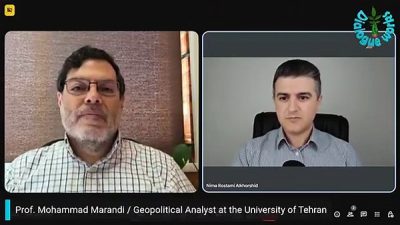
Seyed M. Marandi: U.S. Military DIVIDED? Iran’s Secret Defense EXPOSED
or go to
Aletho News Archives – Video-Images
From the Archives
‘Israel sees Iran as obstacle to its policies’
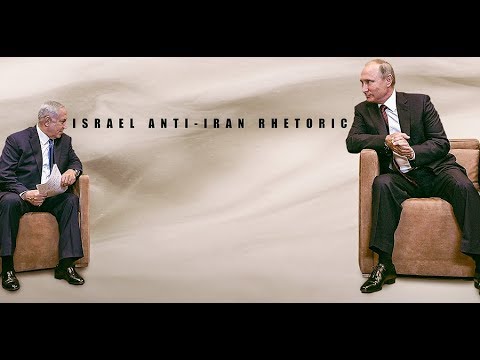
Press TV – August 25, 2017
Prime Minister Benjamin Netanyahu has said that Israel felt threatened by Iran’s growing influence in the Middle East. Netanyahu expressed his Iranophobic view in a meeting with Russian President Vladimir Putin in Russia’s Black Sea resort of Sochi on Wednesday. Press TV has asked Scott Rickard, former American intelligence linguist from Tampa, Florida, and Brent Budowsky, a columnist at The Hill from Washington, to give their thoughts on the issue.
Rickard said Tel Aviv is concerned about the fact that the regime could not carry out its old project to spread sectarian divisions and pave the way for dismemberment of the countries in the Middle East region because of the Iranian-led resistance against Israeli policies, not only in the occupied territories of Palestine but also in the whole region.
“Iran is not a threat to Israel whatsoever. The threat that Israel sees is the fact that their Oded Yinon Plan is being put to a hold by Iran,” the intelligence linguist said on Thursday night.
“They (the Israelis) look at Iran as a threat only because they have no influence on their governments and Iran is autonomous and is not under the Zionist influence,” he added.
Since the victory of the Islamic Republic of Iran in 1979, Tehran has been critical of Israel’s policies in the region, whereas “no leaders [of other states] even dared to speak out against Zionism,” Rickard argued. … continue
Blog Roll
 Aletho News
- Alberta Bill Would Fine Political Deepfakes $10,000 Without Satire Exemptions
- Iran declares ‘historic victory’ over US, says enemy forced to accept its proposal
- Trump Claims Ceasefire, Reopening of Strait of Hormuz Agreement with Iran
- Israeli tank fire killed UN peacekeeper in Lebanon, UNIFIL investigation finds
- Russia, China block Bahrain-sponsored UN resolution on Strait of Hormuz
- The US-Israeli War on Science is an Assault on our Future
- Trump’s Promise to Bomb Iran ‘Like Never Before’ Faces Brutal Logistics — Expert
- Germany seeks to restrict stays abroad for men of fighting age – Berliner Zeitung
- Evidence points to Ukraine being behind TurkStream attempted sabotage, but that should come as no surprise
- Sri Lanka secures supplies of Russia oil – minister
- If Americans Knew
- Thousands dead and neighborhoods razed to the ground: Aid agencies fear southern Lebanon is becoming the new Gaza
- The war the US is fighting for Israel could cost trillions
- ‘Cigarette Burns, Nail Wounds’: Toddler Tortured in Gaza to Coerce Father
- Trump Says US Sent ‘a Lot of Guns’ to Protesters in Iran
- Israeli forces destroy 17 UN peacekeeper cameras in south Lebanon
- US-Israeli strikes ‘completely destroy’ synagogue in Tehran
- Archbishop for US Military Says Iran War Is Unjust Under Catholic Teaching
- Iranian leaders’ Open Letters to the American People
- Trump says Iranians appreciate bombs, WHO warns of nuclear risks – Daily Update
- U.N. experts demand Israel release prominent Gaza doctor after reports of ‘severe torture’
- No Tricks Zone
- An Inconvenient Tree: Uncovered In Alps… Europe Much Warmer Than Today 6000 Years Ago
- New Study Reports A 60% Slowdown In Greenland’s Ice Loss Rate In The Last Decade
- Low Intensity Tornado Wrecks Major Solar Farm, Creating A Potential Toxic Dump
- New Study Finds Warming Saves Lives…Cold Temperatures 12 Times More Deadly Than Excess Heat
- German Science Blog Accuses PIK Climate Institute Of Hallucinating Climate Tipping Points
- Devastating Assessment Of Comirnaty Vaccine By Former Senior Pfizer Europe Toxicologist
- New Study: CO2 Is ‘Effectively Negligible’ As An Explanatory Climate Change Factor Since 2000
- Former Pfizer Toxicologist Dr. Helmut Sterz Tells Bundestag Hearing Pfizer Vaccine Should Have Never Been Approved
- Energy Expert: Germany’s Nuclear Phaseout Was A “500 Billion Euro Mistake”
- New Research: South Australia’s Mid-Holocene Sea Surface Temperatures Were 4°C Warmer Than Today
 Aletho News