Demolitions in Qusra
International Solidarity Movement | February 3, 2015
Qusra, Occupied Palestine – In the early morning of February 2nd, 2015, Israeli forces demolished a two-room structure, a water well, and damaged a stone wall in Qusra, Occupied West Bank. All of the destroyed property was on land belonging to brothers Anwar and Akram Tayseer.
Israeli forces, at approximately 5:00am, destroyed the property with bulldozers. When farmers went out into their fields at 5:00am, five Israeli military jeeps were still present at the site, loitering around the recently destroyed infrastructure. The occupying forces refused to speak with anyone. The water well and small concrete structure were built with money donated by the French Consulate, to facilitate agricultural development in the vulnerable region. Located in Area C, Qusra is subject to common attacks from nearby illegal Israeli settlements, mainly the Esh Kodesh outpost. Settlers living in the illegal outpost Esh Kodesh have been implicated in various ´price tag´ attacks throughout the West Bank (acts of violence against Palestinians by settlers). Settlers come after every time local Palestinians work their land, in day or night, sometimes armed with iron bars; families often wake up to destroyed trees, structures, or crops. Israeli soldiers are often present at these incidents, intervening only to protect settlers. An Israeli military watchtower was constructed on the hill overlooking the agricultural lands around ten months ago. In the past, village residents have received Israeli orders to stop building on their land, which they have always respected (despite their illegality). However, it is not uncommon, according to locals, for farmers to have their agricultural structures demolished shortly after receiving these orders, despite the lack of further development.
This is not the first time the Tayseer´s family land has been attacked by settlers. On one occasion two years ago, Akram Tayseer was taken by the settlers, and severely beaten. He sustained injuries which put him in the hospital for two months, in his head, face, and arm. He was unable to leave his home for one year. Since this incident, residents recount that they have not seen him smile, and perceive that he is broken inside. The family has documents indicating their ownership of the land and the property which once stood on it.
The cost of agricultural structure demolished is approximately 5000 NIS (~$1275USD). The water well served as a collection site, and an important reservoir to nourish the fields. Enclosing the plots of land, around 500 meters of a traditional Palestinian stone wall was dismantled. The fields are the main source of income for the family.
According to OCHA (United Nations Office for the Coordination of Humanitarian Affairs), 82 Palestinian homes and agricultural structures have been demolished by Israel since the beginning of 2015. Under the Fourth Geneva Convention, it is illegal for occupying powers to destroy property; Article 53 states: “Any destruction by the Occupying Power of real or personal property belonging individually or collectively to private persons…is prohibited.” Since 1967, Israel has demolished over 27,000 Palestinian structures in the Occupied West Bank.
Distorting the story of Syria’s Heritage destruction
The takfiris’ destruction of Syria’s heritage—indeed of all humanity’s—is extremely serious. The world’s including the UN’s turning a blind eye to this horrendous crime against humanity is shocking.
By Eva Bartlett | Crescent International | February 3, 2015
Much has been written about the destruction and looting of Syria’s heritage sites. Syria’s Directorate-General of Antiquities & Museums (DGAM), as well as UNESCO have documented the vast damage and looting as extensively as possible in this time of proxy-war-manufactured crisis. In July 2014, the DGAM issued a statement and plea regarding the critical situation of Syria’s heritage under attack.
“A year has passed since we last sent an international call out to all those concerned with defending Syria’s heritage. At the time, we warned against a possible cultural disaster that might be inflicted on an invaluable part of the human heritage existing in Syria,” the DGAM statement read. It noted, “Much of what we had feared happened… vast regions extending along the geography of Syria are now classified as ‘distressed cultural areas’ due to the exacerbation of the clandestine excavation crimes and deliberate damage to our historic monuments and cultural landmarks in those regions…”
 As for UNESCO, it noted, “Syria’s exceptional archaeological, urban and architectural heritage has been considerably damaged during the conflict, and has affected all six World Heritage Sites in Syria and eleven sites inscribed on UNESCO’s Tentative List.”
The six UNESCO-recognized sites are: The Ancient City of Damascus; Palmyra; The Ancient City of Aleppo; Crac des Chevaliers and Qal‘at Salah al-Din; and The Ancient villages of Northern Syria, many of which have suffered intense digging and looting, as well as various acts of intentional destruction.
Yet, in spite of DGAM warnings and UNESCO confirmations, as we near the start of year five of the war on sovereign Syria, the Axis-of-Interventionalists continue to arm terrorists within Syria, and train and funnel still more terrorists into Syria — terrorists who are not only murdering Syrians and Palestinians, but destroying Syria’s heritage, as they have been doing since the beginning.
The “moderate” heritage-wreckers
Over the years, many corporate news pieces either outright blame the Syrian government and Syrian Army (SAA), or pin the blame almost solely on Da‘ish (ISIS/ISIL/IS), obfuscating and/or justifying the crimes of the other militia factions who have plundered and destroyed Syrian heritage for the last four years.
Reports noting the thieving of the so-called “moderates” often follow with claims that it is out of desperate want of funding that they pillage. One such piece, a September 2012 Time Magazine article, both inserts the standard MSM talking points about an “uprising,” a “civil war,” etc. and also notably promotes the line of cash-strapped “rebels” giving in to necessity and looting the country to fund a “revolution” against a “dictator.” Time Magazine inserts a sectarian flourish at the end, “Still, says the Sunni Muslim, who has committed to helping his co-religionists across the border, ‘sometimes you have to make a sacrifice. How else will we overthrow Bashar?’”
As with numerous other reports, conveniently overlooked is the amply-documented role of the NATO-Gulf-Zionist-Turkey alliance arming (and training and enabling the transit of) terrorists, from the so-called “FSA” to the Nusra Front to the Islamic Front to Da‘ish themselves, including by air-dropping weapons on more than one occasion.
Rick Sterling’s “U.S. Alliance with FSA and ISIL in Six Photographs” notes the US alliance with Da‘ish. In just six photos, the link between so-called “moderate rebel” leader ‘Abd al-Jabbar al-Okaidi and Da‘ish and US politicians, is clear. The fourth photo, a still from a November 2013 video interview with al-Okaidi, quotes the “moderate” terrorist saying, “My relationship with the brothers of ISIL is good.” The US politicians include Former US Ambassador to Syria and Coordinator of the “Friends of Syria”, Robert Ford — shown in May 2013 with al-Okaidi — and US Congress members—including the repeatedly-illegally-sneaking-into-Syria, John McCain — shown meeting with al-Okaidi. [see also “Who is Ambassador Robert Stephen Ford? The Architect of US Sponsored Terrorism in Syria” and “Washington Admits: FSA Equals Fictitious Syrian Army” and “FSA Leader Defects to ISIL and Exposes FSA as a Saudi-Israeli Run Project”].
Maram Susli’s (the “Syrian Girl”) December 27, 2014 article in the New Eastern Outlook, “US Armed Rebels Gave TOW missiles to al-Qaeda,” notes, “US supplied TOW anti-tank missiles have ended up in the hands of Jabhat al-Nusra, Syria’s branch of al-Qaeda. The US provided the missiles to CIA-vetted Syrian rebel faction Harakat al-Hazm in May. A video posted by al-Nusra shows the weapons being used to take over Syrian military bases, Wadi Deif and Hamidiyeh in Idlib province… Currently Harakat al-Hazm is united with Jabhat al-Nusra, in Handarat Aleppo, and are jointly fighting the Syrian Army. The militant employing the TOW missile in the video, shows clear proficiency in its use, indicating that he has directly or indirectly benefited from US training. In spite of this revelation, there is evidence to suggest the US is still arming the FSA with TOW missiles.”
The article goes on to explain these new revelations are only the latest in years of documented alliances between Western-sponsored “moderates” and Da‘ish. “In 2012 the Free Syrian Army (FSA), referred to as the ‘moderate rebels’ by the US State Department, fought alongside ‘Islamic State in Iraq and al-Sham’ (ISIS) in Aleppo against the Syrian military for control over Menagh Airbase. The FSA head of Aleppo Military Council ‘Abd al-Jabbar al-Oqaidi, who has met with US Ambassador Robert Ford, was filmed with ISIS Amir Abu Jandal praising ISIS for helping take the base using a suicide car bomb. As late as September 2014, FSA commander Bassel Idriss said that they had joined forces with ISIS and Jabhat al-Nusra in Qalamoun Mountain.”
Anthony Cartalucci’s November 28, 2014 artilce, “Germany’s DW Reports ISIS Supply Lines Originate in NATO’s Turkey,” further exposes Turkey’s blatant role in supplying arms to terrorists in Syria. “Germany’s international broadcaster Deutsche Welle (DW) published a video report of immense implications — possibly the first national broadcaster in the West to admit that the so-called “Islamic State” (ISIS) is supplied not by “black market oil” or “hostage ransoms” but billions of dollars worth of supplies carried into Syria across NATO member Turkey’s borders via hundreds of trucks a day. The report titled, “‘IS’ supply channels through Turkey,” confirms what has been reported by geopolitical analysts since at least as early as 2011: that NATO member Turkey has allowed a torrent in supplies, fighters, and weapons to cross its borders unopposed to resupply ISIS positions inside of Syria.”
Before she was killed in a highly-suspect car crash (days after stating the Turkish intelligence had threatened her), journalist Serena Shim had reported on World Food Organization trucks ferrying Da‘ish terrorists via Turkey into Syria. With the clearly-documented ties between the US (and its Axis-of-Destruction allies) and the numerous terrorist groups destroying Syria, the hollow concern that US figures and media sometimes voice is blatantly hypocritical.
In September 2014, the US Department of State urged “all parties in Iraq, Syria, and the international community to respect and protect archaeological, historic, religious, and cultural sites, including museums and archives. All those who destroy important cultural property must be held accountable.” American Secretary of State John Kerry topped this hypocrisy with his statement at a white-washing event in New York City, “Threats to Cultural Heritage in Iraq and Syria,” in September, 2014 that, “… no one group has done more to put our shared cultural heritage in the gun sights than ISIL. How shocking and historically shameful it would be if we did nothing while the forces of chaos rob the very cradle of our civilization. We are determined instead to help Iraqis and Syrians protect and preserve their heritage in peace.”
The sting of these hypocritical words is that Syrian patriots are trying to protect their heritage (in many cases giving their lives while doing so), and that Da‘ish’s recruiters, trainers, and enablers continue to supply weapons and open borders while crying crocodile tears over Syria’s destroyed and pillaged heritage. Had the Western-Zionist-Gulf alliance not cooked up this plan to attempt to destroy Syria, Syria’s heritage would not be in peril — period (see Seymour Hersh’s 2007 investigative report, “The Redirection” in The New Yorker ).
In January, 2015, the US Defense Department said that “as many as 1,000 American troops and trainers would be sent to Turkey, Saudi Arabia and Qatar to assist in the training of Syrian opposition groups,” Sputnik News reported. According to the same report, crocodile-tears Kerry stated that in addition to so-called “moderate” Syrian rebels, “other nationals will also undergo special training to join the coalition in their fight against IS militants.” You can bet the newest batch of terrorists will be just as respectful of Syria’s heritage as all the terrorists before them.
Gleefully destroying the cradle of civilization
When terrorists — no, not Da‘ish, but al-Nusra and the so-called “FSA” — terrorized the ancient village of Ma‘loula for eight months, they meted out considerable destruction and damage on this heritage site, as well as looted and burned the town’s monasteries and historic buildings. They burned the shrine containing the remains of St. Thekla, stole her bones. They vandalized icons and frescoes in the church in the Convent of St. Thekla, and burned parts of the church itself. They shelled and looted icons from the Monastery of Sts. Sergius and Bacchus (see video report, “Syrian historical treasures and archeological artifacts destroyed or stolen by terrorist gangs”).
In Homs, it was likewise not Da‘ish but al-Nusra and the so-called “FSA” who not only stole the food and valuables of residents in the Old City, but also vandalized, blew up, and set afire historic buildings, like the torched Church of Um al-Zenar (St. Mary’s Church), “built upon an ancient crypt cave with signs of Christian worship dating back to 59ce.”
In both cases, it was the SAA, local volunteers in the National Defense Forces (NDF) and empowered residents who struggled to preserve and minimize damage to their heritage sites. And in both cases, once under control of the SAA and government, plans for restorations were immediately started.
Damascus, which UNESCO describes as “founded in the 3rd millennium BCE, … one of the oldest cities in the Middle East,” has also suffered damage to its heritage sites. Terrorists’ car bombs and mortars, which have terrorized residents of the city, have also hit historic places. The 11th-century Citadel, the 8th-century Umayyad Masjid, the 13th-century Great Madrasah, al-Adliya, the Greek Orthodox Church of Antioch in Bab Touma, and the Armenian Orthodox Church in Bab Sharqi, have all suffered, according to UNESCO’s report. But some of the worst destruction and damage to cultural heritage thus far documented is in Aleppo, which UNESCO describes as “one of the (if not the) oldest, continuously occupied cities in the world with some 7,000 years of known settlement history.”
The Aleppo section of UNESCO’s latest “Damage Assessment Overview” is lengthy. Some of the assessment includes:
• “At least 121 historical buildings have been damaged or destroyed — equal to 30–40% of the World Heritage property area — in addition to the destruction of more than 1,500 shops of the Suq.
• “The 11th century Minaret, the prayer hall, and the main gate of the Omayyad Masjid have been destroyed. The masjid’s courtyard and all of its decorative elements have also suffered severe damage, as did the surrounding neighbourhood.
• “The wooden minbar has been dismantled and transferred to an unknown location.
• “Damage to the gates of the city wall has occurred…
to some of the most important Islamic architecture buildings… and to most historic houses of the Jdeideh quarter…
• “The Waqifiyya Library has been damaged due to a fire.”
YouTube videos and online images showed terrorists from the Islamic Front (Robert Ford’s “moderates”) gleefully exploding the 150-year-old Carlton Citadel Hotel in Aleppo’s Old City in May 2014, the destruction and damage extending to the 13th-century Citadel facing the hotel. A report in the Independent cited the Islamic Front’s Twitter account as claiming responsibility for destroying the Carlton. A video posted online shows the takfiris in a tunnel beneath the Old City, repeatedly stating their intent to blow up the hotel. Clearly, with over 23 tons of explosives, these Western-sponsored terrorists knew the detonation would mean extensive destruction to Aleppo’s historic sites surrounding the hotel.
Yet, the corporate media noted the destruction with little-to-no condemnation. The Los Angeles Times reported blithely, “The explosion ripped through the Carlton Citadel Hotel, near the landmark medieval Citadel and Aleppo’s walled Old City, both deemed United Nations World Heritage sites,” carefully choosing their words to abstain from condemnation of the terrorist act. The Los Angeles Times additionally took the opportunity to plug the so-called “revolution,” “‘The attack came as a way to raise the morale of the people after the deal that happened yesterday,’ said the pro-opposition activist…” Other headlines justified, rather than condemned, the calculated destruction. Reuters reported, “Syrian rebels blow up Aleppo hotel used by army.” The Guardian said, “Syria rebels blow up Aleppo hotel used as barracks by government forces.”
Conversely, the DGAM stated, “This criminal act is part of a series of similar acts targeting historic and unique buildings and landmarks in Aleppo, such as the incidents of the Police Headquarters and the Justice Court… This targeting has resulted in great loss in the components of Syria’s archaeological heritage, which can be added to a long list of painful losses that cannot be replaced.”
In early December, Islamic Front militants bombed a historic masjid in Aleppo’s Old City. Al-Masdar News noted, “The militants from the Islamic Front (Jabhat al-Islamiyah) bombarded multiple historical sites in the Old City of Aleppo this weekend, destroying residential buildings and the 900-year old al-Sultaniyah Masjid. According to a military source in Aleppo, the Islamic Front has destroyed numerous sites in the Old City, including the outer walls of the Aleppo Citadel.” Video footage shows terrorists bombing the Citadel area at the end of November.
On December 30, the DGAM reported further tunnel explosions in the Old City near the Citadel. “The Armed groups have detonated bombs in tunnels under the Aleppo old city, the bombs were reportedly placed in two tunnels running under historic parts of the city. The explosions caused severe damage to the market and the historical buildings in the area…” Other examples of the terrorists’ deliberate destruction of Syrian heritage include:
• March, 2013: al-Nusra terrorists destroyed a Muslim shrine in Raqqa. PressTV reported, “Videos posted online show foreign-backed militants blew up the tomb of ‘Ammar ibn Yasir, who was one of the companions of Islam’s Prophet Mohammad (pbuh)… Anti-government militants have attacked and destroyed several holy sites, including Shia mosques, since the beginning of unrest in Syria.”
• May 2, 2013: Syria News reported, “[Terrorists] destroyed one more grave in Syria, the Prophet’s (pbuh) companion Hijr ibn ‘Adi al-Kindi in Adra, Damascus Countryside. They took out his dead body, he died some 1,400 years ago and buried it in an unmarked place…”
• November, 2014: The Independent reported that al-Nusra blew up an Armenian church in Deir al-Zor dating to 1846. “All of the church archives, dating back to 1841 and containing thousands of documents on the Armenian Holocaust, were burned to ashes, while the bones of hundreds of genocide victims, packed into the church’s crypt in memory of the mass killings 99 years ago, were thrown into the street beside the ruins,” the report noted.
• January 8, 2015: Business Insider reported that al-Nusra blew up a 13th-century tomb near the Jordanian border.
• January 17, 2015: DGAM reported that terrorists destroyed “the shrine of Shaykh Muhammad Nabhan in The Kiltawiye Masjid at Bab al-Hadid, the historical gates of the Ancient City of Aleppo, despite the appeals from residents and dignitaries of the region.”
Brother, can you spare a relic?
The talking-point that the pillaging of militants in Syria is due solely for want of financing and weapons is a lie and a diversion from the truth. It is true that some terrorists are selling relics for money to purchase weapons, but the terrorists’ looting of Syria’s relics stems more from opportunism than from being the main source of funds for their war on Syria. Turkey’s role in allowing terrorists’ transit with stolen relics must be noted. Turkey has, additionally, already plundered factories in Syria.
According to UNESCO, in the Aleppo region, “The site of Tell Qaramel is at the centre of what can only be qualified as looting on an industrial level, as heavy machinery has been deployed to accelerate the excavation of the site.”
In Deir al-Zor, the heritage site Mari (Tell Hariri) has been “extensively looted causing irreparable damage to some of the temples and part of the Royal Palace.” The list goes on:
• Daraa region: “The sites in Yarmouk valley, notably Tell al-Ash‘ari, have been plundered by hundreds of people hired by gangs, intent on trafficking Syrian cultural property.”
• Palmyra (“the monumental ruins of a great city that was one of the most important cultural centres of the ancient world”): “The Necropolis has been attacked by looters who broke into a tomb and stole 22 funeral busts and the headstone of a child; illegal excavations are occurring in the Valley of the Tombs, in the Camp of Diocletian, some undertaken by heavy machinery.”
• Dura-Europos, Ebla, Raqqa: a December 2014 report by AAAS notes, “have been heavily looted and damaged,” based on satellite imagery.
Syrian patriots protecting heritage
In a June 2014 interview with Dr. Maamoun Abdulkarim, General Director of the DGAM, he told me of the efforts Syrian civilians and the government are making to protect and preserve Syria’s heritage. Early on, the DGAM made the decision to move artifacts from Syria’s 34 museums.
“After the US invasion of Iraq, you know what happened in Baghdad museums, they lost about 70,000 pieces… The majority of the artifacts in the museums were evacuated and put in a safe place.” According to Abdulkarim, the DGAM employs 2,500. “In each region we have DGAM employees responsible for the area’s antiquities. The people that work there are local, not from Damascus. This is good because they, being local, can mediate.”
Additionally, according to UNESCO, Syria launched a national campaign, “Save Syria’s History,” to inform and educate Syrians about looting, in hopes of preventing such acts, and increasing security at heritage sites, where possible. The DGAM has been digitally archiving information on Syria’s heritage sites and relics, and coordinating with international organizations concerned with heritage preservation, as well as with INTERPOL.
Following the May 2014 exploding of the Carlton Citadel Hotel, the Syria Times reported that Syria’s Ministry of Foreign Affairs and Expatriates sent letters to the UN Secretary General and President of the UNSC calling for “the inclusion of the so-called ‘Islamic Front’ on the terrorism list, as the methodology of this terrorist operation complies with terrorist tactics espoused by al-Qaeda terrorist organization.” It also called for the UNSC to “take immediate action against states sponsoring these terrorist groups to stop providing them with financial and logistical support.”
Further, the DGAM and Syrian government have called on neighboring countries to be vigilant in preventing Syrian artifacts from being smuggled and sold, and returning smuggled relics to Syria. In areas which the Syrian government has under control, rebuilding and restoration efforts of destroyed or damaged heritage sites are either underway or have been planned. Homs is one such example. Also, Ma‘loula, Krak des Chevaliers, and damage to the Umayyad Masjid in Damascus, are among others.
However, some sites and relics are lost forever at the hands of NATO’s terrorists. Would the corporate media fairly report on the proxy war on Syria, and the true culprits of Syria’s heritage loss, and would the Axis-of-Destruction stop funding, training and enabling terrorists’ entry into Syria, the question of Syria’s heritage under attack would cease to be a question. As DGAM’s Dr. Abdulkarim said in June, “The destruction of antiquities is a problem for all 23 million Syrians. If we are Syrian, we need to work together to protect our history.”
Israel freezes another $100m in Palestinian tax revenues
MEMO | February 3, 2015
Israeli Prime Minister Benjamin Netanyahu has frozen an additional 400 million shekels ($100 million) from Palestinian tax revenues, Israel Today revealed yesterday.
The funds were from January’s tax revenues, the newspaper said, and will be added to the 500 million shekels ($128 million) that Israel froze in December, making the amount of Palestinian tax revenues frozen about $228 million.
Sources close to Netanyahu told the newspaper that he promised continuous tax freezes as a punishment for the Palestinian leadership’s application to join the International Criminal Court.
Such revenues constitute 70 per cent of the Palestinian Authority’s source of income which finance the bulk of salaries and public services in the West Bank such as hospitals and schools.
It is worth mentioning that the money freeze last month faced critical reactions from the UN, US and many EU countries, but none of them put any pressure on Israel to recede its decision.
The Israeli newspaper reported that sources say the situation in the West Bank is expected to explode because of the hard economic circumstances resulting from the lack of funds.
The Great Israeli Theft of Iraqi Jewish Heritage

Extreme right-wing Israeli Foreign Minister Avigdor Lieberman (C) holding the Torah stolen from Iraq on January 22, 2015
By Alaa al-Lami | Al-Akhbar | February 3, 2015
Recently, Israel stole one of the symbols of Iraqi Jewish heritage, a rare ancient copy of the Torah. The incident went smoothly and quietly, with blatant collusion between Israel, the United States, the Kurdish Regional Government in Iraq, and the Jordanian authorities, amid suspicious silence from the Iraqi federal authorities and the Iraqi cultural scene, save for a few objections.
The Torah manuscript in question, known as the Iraqi Old Testament Scroll, was written using concentrated pomegranate juice on deer-skin parchments. The manuscript was seized by US forces, among other Iraqi antiquities, which survived the systematic destruction by the illegal Anglo-American invasion and occupation.At the time, it was said that many Iraqi archaeological treasures and large amounts of documents from the Iraqi state’s secret archives were transferred to Israel, ostensibly for restoration and preservation. In truth, however, this was the deliberate looting of Iraqi heritage.
At a ceremony held at the Ministry of Foreign Affairs, Israeli authorities publicly displayed that major Iraqi artifact, thus admitting that they had pirated part of Iraq’s heritage. The Israeli Foreign Minister explicitly admitted that the manuscript had been obtained from Kurdistan via Baghdad and Amman, and that it is now being used in daily prayer in the Foreign Ministry synagogue.
According to The Times of Israel, “After it was repaired and prepared for ritual use by a Jerusalem-based scribe, the scroll was placed in a case from Aleppo, Syria and brought over to the ministry.” Avigdor Lieberman, the extremist foreign minister of Israel, did not let the occasion go without repeating old Zionist cliches, saying that “the scroll’s journey from Kurdistan to Baghdad to Amman to Jerusalem was reminiscent of the destiny of the Jewish nation.”
Some like Iraqi writer Akil al-Azraki, one of the rare voices who commented on the affair, believe that the Israeli announcement exposed the lies of the Iraqi government. The Iraqi government had claimed the manuscript was sent along with other Iraqi artifacts to the United States for restoration.
Azraqi, citing information revealed by The Times of Israel, said, “The claim about the Torah scroll having been sent to the United States for restoration is a lie. The scroll was revealed not to have travelled to the United States, but to the Israeli embassy in Amman from that time until 2011. After the attack by Egyptian protesters on the Israeli embassy in Cairo, the manuscript was sent to Israel.”
After the Israelis celebrated their successful piracy, official Iraqi authorities were oddly silent. There was no immediate response to the reports, even in the Iraqi media and cultural scene, save for a few voices.
Recall here that the Minister of Tourism and Antiquities in Iraq Adel Shershab had said on January 19, 2015, “The Jewish archive should have been returned to Iraq since 2005, after it was removed on the grounds of restoring it,” stressing that this was part of Iraqi heritage and that his government would continue efforts to retrieve it.
However, the minister did not say anything in response to the Israeli theft. In turn, the Iraqi Ministry of Culture fell completely silent following the incident, although it had announced on May 13, 2010, that an agreement was conducted between Iraq and the United States, whereby the Iraqi Jewish archive and millions of documents that the US army removed from Baghdad following the US-led invasion in 2003 would be returned to Iraq. These include the archive of the dissolved Baath Party and many Iraqi historical artifacts.
A few days after the report on the Israeli theft, the media published remarks by a member of the Culture Committee in the Iraqi parliament calling on the Iraqi Foreign Ministry to issue a complaint to Washington over the matter.
The news agency that first published the remarks, which is owned by Fakhri Karim, a businessman and senior adviser to former Iraqi President Jalal Talabani, tried to promote another account of what happened.
The news agency said the way the manuscript reached Israel was a “mystery,” describing what happened as “the loss of parts of the manuscript,” even though the Israeli foreign ministry had said in its ceremony that the scroll had come from Baghdad via Kurdistan, Jordan, and then Tel Aviv. Fakhri Karim, however, is known for his pro-Israel attitudes. Karim visited the headquarters of the pro-Israel lobby AIPAC in Washington, as reported by renowned Iraqi poet Saadi Youssef, in a story Al-Akhbar reported in August 2013 (in Arabic).
On the day Al-Mada reported the story, one of its most famous staff writers, Sarmad al-Tai, wrote a strongly-worded criticism of those who protested the theft of the Iraqi Torah scroll, accusing them of folly. He suggested that the Jews who were expelled by the Iraqis from their country in various ways had only retrieved their Torah.
Tai’s article is often quoted by the Israeli media, though some Iraqi Jews who live in Israel and beyond dispute such analysis. Refer, for example, to what Sasson Somekh wrote in his books, and novels by Jewish Iraqi writer Samir Naqqash, who wrote all his novels in Arabic and refused to write anything in Hebrew, considering himself an Iraqi until the last day of his cruel life in Israel. The article received strong responses, though they were few in number, on social media.
The article’s absurd and sinister logic is meant to exonerate the occupation and its allies in the Iraqi federal government, the KRG, and Israel, for the crime of stealing important Iraqi artifacts, produced in Iraq hundreds of years before the creation of the Zionist entity.
Extrapolated further, the same skewed skewed logic can be used to justify an artificial entity, built on injustice, aggression, and warmongering, which has killed, maimed, and displaced people by the millions amid global silence.
The official Iraqi position was not stated publicly until days after the incident. The Iraqi minister of tourism released a statement calling on Washington to return the manuscript to Iraq, and said what happened was unlawful confiscation of a part of Iraqi heritage.
However, the minister repeated previous claims purporting the manuscript had been in Washington. These claims were invalidated by remarks made by Israeli Labor MP Mordechai Ben-Porat, who has Iraqi Jewish ancestry. Ben-Porat said that it was Iraqi government officials who gifted Israel a number of precious historical manuscripts.
Ben-Porat’s account cannot be completely dismissed. It is indeed possible that insiders colluded with this theft and piracy. Recall that Lieberman said that the manuscript was moved from Baghdad to Kurdistan, Jordan, then Tel Aviv.
The theft of Iraqi antiquities is not unprecedented. Many Western powers, led by France, Britain, Germany, and the United States, have its looted artifacts in the last century and before.
Dr Mahmoud al-Saied al-Doghim, Research Associate, Centre of Islamic Studies at the University of London, wrote a paper titled, “One Hundred and Ten Years of US Theft of Iraqi Heritage.” The paper says that entire wings of the Louvre Museum, the Berlin Museum, and the British Museum would have to close down entirely, if they returned all the artifacts stolen from Iraq (and elsewhere).
Doghim estimates the number of stolen artifacts at more than one million. A single US university, the University of Pennsylvania, as he wrote, “Acquired more than 50,000 palettes and other artifacts shedding light on the history of Mesopotamia, and discrediting many of the biblical claims promoted by the Zionists.”
The American occupation forces hit the mother-lode following the invasion of 2003. The US forces seized a large part of the contents of Iraq’s 33 museums.
In effect, the astounding rich history of Iraq and its wealth of ancient historical artifacts is not the subject of dispute. However, it might be very surprising when one examines the numbers.
According to a statement made in March 2003 by former head of Iraqi antiquities Jaber Khalil Ibrahim, archaeologists believe that there are 500,000 archaeological sites in Iraq that remain undiscovered and unstudied, along with ten thousand registered and discovered sites. The sites include at least 25,000 highly important ones.
Only 15 percent of the sites in Iraq have been excavated, most of them located between the Euphrates and the Tigris. This area is considered the cradle of humanity, and from six thousand years ago, it was home to civilizations like the Sumerians, Akkadians, Assyrians, Babylonians, all the way to the Abbasids.
The US occupation of Iraq was a disaster for the country’s material heritage.
Netanyahu: UN Gaza probe should be ‘shelved’
MEMO | February 3, 2015
Israeli Prime Minister Benjamin Netanyahu on Tuesday said that a probe by the UN Human Rights Council (UNHRC) into last year’s Israeli offensive against the Gaza Strip should be shelved in light of the recent resignation of inquiry commission head William Schabas.
“After the resignation of the committee chairman, who was biased against Israel, the report that was written at the behest of the UNHRC… needs to be shelved,” Netanyahu said in a statement.
The Israeli premier went so far as to slam the rights council as “an anti-Israel body, the decisions of which prove it has nothing to do with human rights.”
“This is the same council that in 2014 made more decisions against Israel than against Iran, Syria and North Korea combined,” Netanyahu asserted.
“It is Hamas, the other terrorist organizations and the terrorist regimes around us that need to be investigated, not Israel,” he added.
The Israeli government has already said it would not cooperate with the UNHRC committee formed to investigate violations committed during Israel’s onslaught on the Gaza Strip last July and August.
Israel had said that the UN council would not be objective.
The Israeli offensive left more than 2,160 Palestinians dead and some 11,000 injured – the vast majority of them civilians – while partially or completely destroying thousands of residential structures across the territory.
The onslaught, which was launched with the stated aim of ending rocket fire from the coastal enclave, finally ended with the announcement last August of an open-ended cease-fire between Israel and Palestinian resistance factions.
On Monday, Schabas, a Canadian professor of international law, reportedly resigned from his post as head of the investigation committee due to Israeli allegations of bias.
Israeli Foreign Minister Avigdor Lieberman, for his part, hailed Schabas’ resignation, saying it was a “victory” for the self-proclaimed Jewish state.
“It is an Israeli diplomatic victory. However, it will not change the probe’s conclusions,” he said.
He added that the appointment of Schabas to investigate last year’s war against Gaza was like “appointing Cain to investigate who killed Abel.”
Head of UN War Crimes Inquiry Resigns After Israeli Accusations of Pro-Gaza Bias
IMEMC News & Agencies | February 3, 2015
The head of a UN inquiry into last summer’s Israeli military offensive in Gaza has said he will resign after Israeli allegations of bias, due to consultancy work he did for the Palestinian Liberation Organisation (PLO).
William Schabas, a Canadian academic, was appointed last August by the head of the UN Human Rights Council to lead a three-member group looking into war crimes during the offensive.
Al Ray reports that, according to the Guardian and in a letter to the commission, a copy of which was seen by Reuters, Schabas said he would step down immediately to prevent the issue from overshadowing the preparation of the report and its findings, which are due to be published in March.
Schabas’ departure highlights the sensitivity of the UN investigation just weeks after prosecutors at the international criminal court in The Hague said they had started a preliminary inquiry into atrocities committed in the Palestinian territories.
In the letter, Schabas said that a legal opinion he authored for the PLO in 2012, and for which he was paid some $1,300 (£900), was not different from advice he had given to many other governments and organizations.
“My views on Israel and Palestine as well as on many other issues were well known and very public,” he wrote. “This work in defence of human rights appears to have made me a huge target for malicious attacks.”
Israel has long criticized Schabas’ appointment, citing his record as a strong critic of “the Jewish state” and its current political leadership. Schabas said his work for the PLO had prompted the Human Rights Council’s executive to seek legal advice about his position from UN headquarters on Monday.
“I believe that it is difficult for the work to continue while a procedure is underway to consider whether the chair of the commission should be removed,” he wrote, adding that the commission had largely finished gathering evidence and had begun writing the report.
The appointment of Schabas, who lives in Britain and teaches international law at Middlesex University, was welcomed at the time by Hamas but was harshly criticized by Jewish groups in the US.
Schabas, at the time, had said that he was determined to put aside any views about “things that have gone on in the past”.
The commission is looking into the behavior of both the Israelis and of Hamas.
US Slaps Venezuelans with New Sanctions
teleSUR | February 3, 2015
The United States officially imposed new sanctions on Venezuela Monday, amid accusations from President Nicolas Maduro that Washington is trying to destabilize his country.
The new sanctions expand the number of Venezuelan government officials barred from entering the United States.
“These restrictions will also affect the immediate family members of a number of those individuals subject to visa restrictions for believed involvement in human rights abuses or for acts of public corruption,” said State Department spokesperson Jen Psaki.
Psaki continued by stating, “We will not publicly identify these individuals because of U.S. visa confidentiality laws, but we are sending a clear message that human rights abusers, those who profit from public corruption, and their families are not welcome in the United States.”
Maduro hit back at the announcement by accusing the U.S. government of hypocrisy.
“They kill black youth in the street with impunity, they persecute and have concentration camps of Central American kids. They have abducted dozens of citizens of the world under no known legal system, submitting them to torture, isolation,” he said during a speech.
Maduro has previously accused U.S. officials of plotting to topple his government.
He asked, “What human rights are they talking about?”
The new U.S. sanctions are in response to a wave of unrest that hit Venezuela in early 2014. Around 43 people died as anti-government groups took to the streets with weapons ranging from firearms to molotov cocktails and home-made bazookas to demand Maduro step down. According to an analysis of the death toll by independent media collective Venezuelanalysis, around half the casualties were government supporters, state security personnel or ordinary members of the public likely killed by anti-government groups. Venezuelan authorities have arrested opposition figures it claims masterminded the violence including Leopoldo Lopez, while also pressing charges against security personnel accused of misconduct.
However, Psaki described the opposition violence as “peaceful protests.”
“We emphasize the action we are announcing today is specific to individuals and not directed at the Venezuelan nation or its people,” she said.
However, Venezuelan foreign minister Delcy Rodriguez told private broadcaster Venevision that the U.S. and corporate media are trying to mislead the international community about Venezuela.
“All imperialist wars have been precipitated by media campaigns such as this one, giving false information that aims to provide the world with the justification for an intervention,” said Rodriguez.
Sabino Romero’s Widow Testifies Amidst Threats

Sabino’s widow, Lucia Martinez de Romero, testified at court today (Aporrea)
By Lucas Koerner | Venezuelanalysis | February 2, 2015
Caracas – Dozens of activists gathered outside the Ministry of Justice in the capital today in solidarity with Lucia Martinez de Romero, the widow of assassinated indigenous Yukpa leader Sabino Romero. Today she testified in the trial of Angel Antonio Romero Bracho, (aka “Manguera”) accused of murdering the indigenous chief or “cacique”.
Lucia herself also suffered multiple gunshot wounds the night of March 3, 2013 when her husband was shot and killed by hired assassins reportedly acting in the service of wealthy cattle ranchers.
Lusby Portillo, 66, Coordinator of the Zulia-based Homo Et Nature Society, explained what is at stake in today’s proceedings:
“Today there is a trial against the physical murderer, who shot and killed [Sabino] and wounded Lucia Martinez. Five police officers from Machiques have already been tried and given seven years of prison… They gave them seven years, because there was influence on the part of the cattle ranchers, who paid so that the court would decide a minimum sentence of seven years”.
Portillo is one of the principal activists to have followed the case over the past 23 months. He told Venezuelanalysis that many indigenous activists feared that a miscarriage of justice would take place unless supporters continued to draw attention to the case. One witness today also noted that the family of Manguera began to threaten Lucia before she was due to testify.
“If we let our guard down, if we don’t protest, if we don’t make movies, if we don’t write articles, if we don’t get the word out, these courts are going to give Manguera ten, eleven years, and then within two or three years he can go free with all of the benefits…So we are demanding thirty years of prison [for Manguera], and we’re also demanding that the trial against the five police officers be annulled, that there be a new trial, and that… the intellectual actors… the cattle ranchers who financed [the murder], who are millionaires, go to trial.”
Land Struggles
In the leadup to his assassination, Rabino spearheaded a series of occupations by Yukpa campesinos of the expansive rancher haciendas established on their ancestral land in Sierra de Perijá, which were returned to them by the current socialist government under the Constitution. According to Portillo, these lands were violently confiscated by the government of dictator Juan Vicente Gomez in 1930, driving the Yukpa people into the mountains. When they subsequently attempted to retake their lands, as Sabino would do over eighty years later, they were brutally massacred by the cattle ranchers.
For indigenous rights activist Tibisay Maldonado, 52, however, this struggle goes much further back than eighty years.
“We are active in the organization National Front for Land Struggle, because, even though we are from Caracas we are from the city, this problematic of the land, this plundering from 500 years ago. We are the inheritors of a dispossession, of an invasion 500 years ago, and the indigenous peoples remain in resistance, and we must stand with them”.
Amid Trial, Impunity Continues for Murder of 8 other Yukpa Leaders
Portillo went on to criticize what he described as “impunity” for the hired killers of indigenous leaders and their intellectual and financial backers.
“Of the Yukpa [leaders] killed over the question of land, who are nine up until now, only the case of Sabino has been taken to the courts, but the [case of the] other eight murdered [leaders] has not been investigated nor brought to trial…Besides trial for [the case of] Sabino, there also needs be trials for the other eight Yukpa who were assassinated.”
Nonetheless, for Leonardo Dominguez, the problem goes well beyond these nine assassinated leaders, encompassing the issues of paramilitary violence in Venezuela writ large;
“This is something that is practiced in Colombia. These are new crimes in Venezuela. So I think the laws need to stipulate a decent punishment for this murderer to mark a precedent, because enough is enough. There have already been 359 campesinos assassinated at the hands of the hitmen, plus workers’ leaders, plus popular leaders. We want peace, but we believe peace is achieved through struggle. If you want peace, prepare for war,” he said.
A Test for the Revolution
For those present outside the Ministry of Justice, today’s trial represents a fundamental test of the Bolivarian government’s commitment to defending indigenous rights.
“Socialism has two paths,” warns Dominguez..”Either we’re with the indigenous people or we’re with the murderers.”
Despite the challenges faced by the Yupka people, including the relative inaction of the government, Jessy Rojas, 20, of Urbano Aborigen, is nevertheless hopeful. She stated that there had been a “fair amount of gains” for indigenous people under the Bolivarian Revolution, including the trial of Sabino’s murderer.
“In the past, there generally weren’t trials for indigenous cases. In the past, there wasn’t this openness to discussing indigenous issues in the capital”.
According to Jessy, these historic gains are propelling young activists to take the struggle evern further.
“This is the moment to demand,” she asserted.
The case has been adjourned until February 13th.
‘Game of Thrones’ statue stolen, pagans blame religious hate
RT | February 3, 2015

A still from a YouTube video by sculptor Darren Sutton
The theft of a Celtic sea god sculpture from a mountainside in Northern Ireland must be labeled as a religious hate crime, a local pagan priest believes. The statue, made by a ‘Game of Thrones’ set creator, prompted a media stir after it was vandalized.
The six-foot statue of Manannán Mac Lir, a sea deity in Irish mythology, was stolen from Binevenagh Mountain near Limavady in County Derry in January and replaced with a crucifix bearing the words “you shall have no other gods before me.”
Now, pagan priest Patrick Carberry, the founder and sovereign of the Order of the Golden River, which is based out of Belfast, says the incident should be treated as a religious hate crime.
“If a pagan stole a statue from a Christian church and left a pagan one in its place it would make world news,” Carberry told the Londonderry Sentinel.
Police have not yet discarded considerations that there could be a religious element to the crime, according to local media reports.
The creator of the statue is John Sutton – the man behind the sets of the popular HBO series ‘Game of Thrones’. Sutton said he was “disturbed” by the “unreal” theft.
The $15,000 statue was made of stainless steel and fiberglass, which would make it very difficult to steal, according to Sutton. Several people would have needed to be part of the crime and it likely would have taken them several hours.
According to Carberry, Pagans represent a significant minority in Northern Ireland. “There is a large community in Belfast alone and there are large communities across Ireland…people are afraid to admit that they have these beliefs because they might lose their jobs.”
“Paganism is the original religion of this land. We worship many gods and goddesses. In Ireland we are associated with the Celtic gods. Manannán would fall into that category,” he added.
Meanwhile, many others have been outraged by the crime in the predominantly-Christian region, decrying the vandalism of what is considered to be both a work of art and a tourist attraction.
A local Member of the Legislative Assembly (MLA), Claire Sugden, on Sunday told Coleraine Times she was “disgusted” by the theft.
“It seems the reason for removing this statue was in God’s name which is shameful and indeed more disrespectful than their reasoning. Certainly I think God would have something to say about those who stole something which brought a lot of happiness to a lot of people,” Sugden said.
The MLA said that the statue of Manannán was “entirely appropriate in its setting” as it “framed and celebrated the natural beauty” of the place.
Chile: Two Found Guilty in Horman Murder Case
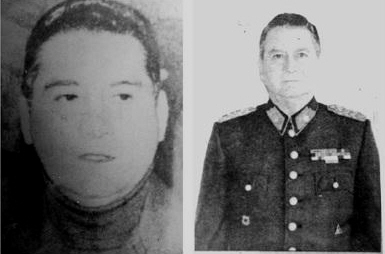
Weekly News Update on the Americas | February 2, 2015
Retired Chilean army colonel Pedro Espinoza and former Chilean air force intelligence agent Rafael González Berdugo have been convicted in the murder of US journalist Charles Horman and US graduate student Frank Teruggi during the days after the Sept. 11, 1973 military coup that overthrew leftist president Salvador Allende Gossens [see Update #1226].
Judge Jorge Zepeda sentenced Espinoza–formerly an officer in the now-defunct National Intelligence Directorate (DINA) who has been described as the right-hand man of DINA head Manuel Contreras—to seven years in prison for the two murders.
González Berdugo was sentenced to two years of police surveillance as an accomplice in Harmon’s murder.
Judge Zepeda ruled in the case on January 9 but the decision wasn’t announced until January 28.
Last summer the judge officially ruled that “US military intelligence services played a fundamental role in the murders” by supplying information to the Chilean military. (El Ciudadano (Chile) 1/31/15)
Syriza-led Greek parliament ‘will never ratify TTIP’

At an anti-TTIP demonstration in Berlin last month. (Photo: Uwe Hiksch/flickr/cc)
By Sarantis Michalopoulos | EurActiv | February 2, 2015
The newly-elected government in Athens has always been suspicious of the Transatlantic Trade and Investment Partnership (TTIP) and will use its Parliament majority to sink the EU-US trade pact, claims a former Syriza MEP now turned minister.
After making its voice heard in the debate over sanctions on Russia, the new government in Athens is now making its opposition known to the EU-US trade deal, TTIP.
Georgios Katrougkalos, a former influential Syriza MEP who quit his European Parliament seat to become deputy minister for administrative reform in the leftist Greek government, said the new leadership in Athens will use its veto to kill the proposed trade pact – at least in its current form.
Just before the January elections, he told EurActiv Greece that a Syriza-dominated Greek parliament would never ratify the EU-USA trade deal.
Asked by EurActiv Greece whether the promise still holds now Syriza is in power, Katrougkalos replied:
“I can ensure you that a Parliament where Syriza holds the majority will never ratify the deal. And this will be a big gift not only to the Greek people but to all the European people”.
Double veto power
The leftist Syriza party may not have an absolute majority in Parliament but its junior coalition partner seems to share the same views on the EU-US trade pact.
Syriza, which won a stunning victory at snap elections a week ago (25 January) formed a coalition with the right-wing anti-austerity Independent Greeks party, which is intent on opposing laws seen as too favourable to big business.
The coalition agreement gives the new Greek leadership an effective veto power over TTIP and other deals submitted to Parliament ratification.
Indeed, once the pact is negotiated – a process which may still take over a year –, it will be submitted for a unanimous vote in the European Council, where each of the 28 EU national governments are represented.
This means that one country can use its veto power to influence the negotiations or block the trade deal as a whole, an opportunity Syriza will no doubt use.
And even if the pact makes it past this first stage, it will then be submitted to ratification by all parliaments of the 28 EU Member States, offering opponents a second opportunity to wield a veto.
Welfare state under threat
Like many other leftists and social democrats in Europe, Katrougkalos raised serious concerns about the Investor State Dispute Settlement mechanism, or ISDS, contained in the pact.
The mechanism is designed to protect companies’ foreign investments against harmful or illegal rulings in the countries where they operate. It gives them the chance to take legal action against a state whose legislation negatively impacts their economic activity.
Katrougkalos underlined the uncertainty surrounding the ISDS negotiations, saying the European Commission’s precise mandate was unclear.
“An undemocratic practice of lack of transparency has prevailed from the very beginning of the negotiations,” he claimed.
The newly-appointed minister understands that TTIP’s objective was not to reduce tariffs, which are already “very low” but to make an adjustment to the rules governing other sectors. “It contributes to the elimination of some bureaucratic procedures on exports, helping this way the economic efficiency,” he said.
But he made clear that the danger lies in the fact that in most economic fields the regulatory rules are different in the EU and the US. For him, multinational companies stand to benefit the most from lower regulatory barriers, citing banks and brokerage firms, which are subject to weaker supervision in America than in Europe.
“For example we [the EU] don’t permit GMOs, data protection is significantly more important as well as the protection of national health systems,” he said, adding that any consolidation in these rules “will undermine the way the welfare state is organised in the EU.”
Independent Greeks take the same line
Meanwhile, Syriza’s coalition partner, the right-wing anti-austerity Independent Greeks party, takes a similar stance against TTIP.
In a statement issued on 4 November 2014, the then-opposition party said the deal will not live up to its promise of relaunching economic activity.
“It is supposed to be an agreement that will boost the real economy, but its main supporters are international bankers and lobbies,” emphasised Marina Chrysoveloni, a spokesperson for Independent Greeks.
“In simple words, the speculative capital will have even more freedom to move […] in a huge single market with eight hundred million people,” she concluded.
On Syriza’s side, Katrougkalos admitted there was uncertainty about how the talks will conclude but said he was confident that the trade pact “will be approved by the European Parliament”.
“The social democrats have objections on ISDS [investor-state dispute settlement] mechanism but it seems they accept the trade deal’s logic,” Katrougkalos said. In his view, the centre-right European People’s Party and the Liberal ALDE “have a safe majority in Parliament”.
Read:
Featured Video
Laith Marouf: Hezbollah’s position on US-Iran ceasefire
or go to
Aletho News Archives – Video-Images
From the Archives
Is Israel to blame for the Iraq War?
American Goy | March 10, 2008
I am so tired of this old canard that “Israel had nothing to do with USA’s war with Iraq – in fact, it officially advised America against it”.
Bullshit. … continue
Blog Roll
 Aletho News
- Laith Marouf: Hezbollah’s position on US-Iran ceasefire: What you’re not being told
- Israel’s priority lies in destroying chances of peace between Iran, US: Ex-UN nuclear chief
- Ceasefire for all or for none: Iran shuts Hormuz over Lebanon attacks
- Strait of Hormuz is Iran’s ‘nuclear weapon’ that forced US retreat: Medvedev
- Energy crisis will last for months – Kremlin envoy
- Europe’s quiet role in the war on Iran
- Forty days that shook the Empire: How Iran turned the tables on US and prevailed
- Netanyahu unilaterally declares Lebanon outside of ceasefire deal
- Israeli leaders: ‘Not a single goal’ achieved in war with Iran
- What on earth just happened? Trump, Iran, and the unlikely ceasefire
- If Americans Knew
- Gazans face a triple crisis: severe shortages of water and bread, healthcare in tatters
- NY Times reports how Netanyahu took the US into Iran War
- A sigh of relief over Iran, but Gaza and Lebanon in dire straits – Daily Update
- Thousands dead and neighborhoods razed to the ground: Aid agencies fear southern Lebanon is becoming the new Gaza
- The war the US is fighting for Israel could cost trillions
- ‘Cigarette Burns, Nail Wounds’: Toddler Tortured in Gaza to Coerce Father
- Trump Says US Sent ‘a Lot of Guns’ to Protesters in Iran
- Israeli forces destroy 17 UN peacekeeper cameras in south Lebanon
- US-Israeli strikes ‘completely destroy’ synagogue in Tehran
- Archbishop for US Military Says Iran War Is Unjust Under Catholic Teaching
- No Tricks Zone
- An Inconvenient Tree: Uncovered In Alps… Europe Much Warmer Than Today 6000 Years Ago
- New Study Reports A 60% Slowdown In Greenland’s Ice Loss Rate In The Last Decade
- Low Intensity Tornado Wrecks Major Solar Farm, Creating A Potential Toxic Dump
- New Study Finds Warming Saves Lives…Cold Temperatures 12 Times More Deadly Than Excess Heat
- German Science Blog Accuses PIK Climate Institute Of Hallucinating Climate Tipping Points
- Devastating Assessment Of Comirnaty Vaccine By Former Senior Pfizer Europe Toxicologist
- New Study: CO2 Is ‘Effectively Negligible’ As An Explanatory Climate Change Factor Since 2000
- Former Pfizer Toxicologist Dr. Helmut Sterz Tells Bundestag Hearing Pfizer Vaccine Should Have Never Been Approved
- Energy Expert: Germany’s Nuclear Phaseout Was A “500 Billion Euro Mistake”
- New Research: South Australia’s Mid-Holocene Sea Surface Temperatures Were 4°C Warmer Than Today
 Aletho News