Russia to launch own corruption index, to replace ‘biased’ Transparency International
RT | April 20, 2015
A Russian government institute has developed a complex program for evaluating the level of corruption, which its authors say is superior to the widely advertised, but very subjective Transparency International index.
The new method will be presented by the Institute of Law and Comparative Jurisprudence at the Eurasian Anti-Corruption Forum this week, the Izvestia daily reported on Monday. It is called the International Corruption Monitoring Program, or MONKOR.
The new index is based on criminal statistics, economic data, opinion polls and analysis of national legislation, one of its authors, Artyom Tsyrin, told reporters. This makes it different from the famous Corruption Perception Index, which is prepared annually by the international NGO Transparency International, he added.
“The Corruption Perception Index by Transparency International only evaluates psychological attitude of responders in polls. As a result, they are making conclusions on desirable institutional changes in the country purely on the basis of sociological studies. We try to find a correlation between actions and effects. It is important to move away from a subjective approach and towards objective research.
Our institute offers a universal tool allowing any willing nation to conduct an evaluation of its anti-corruption efforts and figure out whether the national anti-corruption policy is effective. MONKOR can compare the results in various countries that use its methods,” Tsyrin said.
Despite the fact that MONKOR’s author sees it as an alternative to Transparency International’s index, the latter is used in the Russian method as part of its fundamental data, along with the Word Bank’s country policy and institutional assessment (CPIA) for Corruption. Experts at the International anti-corruption academy and the FATF (Financial Action Task Force) group also participated in the research.
In Russia, the index uses data provided by the Supreme Court, the Interior Ministry and the Prosecutor General’s Office. It will also include “corruption market” data provided by the Ministry of Economic Development.
The new index is being tested in Russia and Kyrgyzstan, and talks are being held with Belarus, Kazakhstan and some other nations, Tsyrin told reporters.
Russia’s position in the Transparency International Corruption Perception Index has been gradually falling since the mid-1990s. In 2014, the country was placed 136th of 174, a list also including Iran, Lebanon, Nigeria, Kyrgyzstan and Cameroon. The authors of the research emphasized that Russia’s anti-corruption effort was, in their view “chaotic and irresolute.”
Top Russian officials have repeatedly criticized the TI’s approach as biased and politicized. The head of the Presidential Administration, Sergey Ivanov, said that he was “extremely skeptical” about the 2014 index, adding “ratings can be drawn by anyone.” At the same time, Ivanov noted the authorities were closely following serious sociological agencies, including foreign and international organizations.
One such agency is Ernst&Young, which lowered corruption risks in Russia in 2014 and put it below average world levels.
Number of Ukraine internally displaced persons tops 1.2 million: UN
Press TV – April 20, 2015
The number of internally displaced persons (IDPs) in Ukraine has exceeded 1.2 million, the United Nations says as the crisis in the country’s eastern parts enters its second year.
Back in February, the UN Office for the Coordination of Humanitarian Affairs (OCHA) estimated that five million Ukrainians, including some 1.7 million children, have been affected by the ongoing crisis in the country’s eastern provinces.
The two mainly Russian-speaking regions of Donetsk and Lugansk have witnessed deadly clashes between pro-Russia forces and the Ukrainian army since Kiev launched military operations in April last year to crush pro-Russia protests there.
The UN said recently that at least 6,116 people have been killed and 15,474 wounded since the beginning of the tumult in Ukraine last April.
Warning that the actual number of casualties could be significantly higher, the UN further expressed concerns that the repeated violation of a shaky ceasefire aimed at ending the conflict would further worsen the human rights situation in the country’ restive parts.
Ukraine’s warring sides reached the truce deal, dubbed Minsk II, at a summit attended by the leaders of Russia, France, and Germany in the Belarusian capital city of Minsk in February. Since then, both parties have, on numerous occasions, accused each other of breaking the ceasefire.
Political Murders in Kiev, US Troops to Ukraine
By Ron Paul | April 19, 2015
Last week two prominent Ukrainian opposition figures were gunned down in broad daylight. They join as many as ten others who have been killed or committed suicide under suspicious circumstances just this year. These individuals have one important thing in common: they were either part of or friendly with the Yanukovych government, which a US-backed coup overthrew last year. They include members of the Ukrainian parliament and former chief editors of major opposition newspapers.
While some journalists here in the US have started to notice the strange series of opposition killings in Ukraine, the US government has yet to say a word.
Compare this to the US reaction when a single opposition figure was killed in Russia earlier this year. Boris Nemtsov was a member of a minor political party that was not even represented in the Russian parliament. Nevertheless the US government immediately demanded that Russia conduct a thorough investigation of his murder, suggesting the killers had a political motive.
As news of the Russian killing broke, Chairman of the House Foreign Affairs Committee Ed Royce (R-CA) did not wait for evidence to blame the killing on Russian president Vladimir Putin. On the very day of Nemtsov’s murder, Royce told the US media that, “this shocking murder is the latest assault on those who dare to oppose the Putin regime.”
Neither Royce, nor Secretary of State John Kerry, nor President Obama, nor any US government figure has said a word about the series of apparently political murders in Ukraine.
On the contrary, instead of questioning the state of democracy in what looks like a lawless Ukraine, the Administration is sending in the US military to help train Ukrainian troops!
Last week, just as the two political murders were taking place, the US 173rd Airborne Brigade landed in Ukraine to begin training Ukrainian national guard forces – and to leave behind some useful military equipment. Though the civil unrest continues in Ukraine, the US military is assisting one side in the conflict – even as the US slaps sanctions on Russia over accusations it is helping out the other side!
As the ceasefire continues to hold, though shakily, what kind of message does it send to the US-backed government in Kiev to have US troops arrive with training and equipment and an authorization to gift Kiev with some $350 million in weapons? Might they not take this as a green light to begin new hostilities against the breakaway regions in the east?
The Obama administration is so inconsistent in its foreign policy. In some places, particularly Cuba and Iran, the administration is pursuing a policy that looks to diplomacy and compromise to help improve decades of bad relations. In these two cases the administration realizes that the path of confrontation has led nowhere. When the president announced his desire to see the end of Cuba sanctions, he stated very correctly that, “…we are ending a policy that was long past its expiration date. When what you’re doing doesn’t work for fifty years, it’s time to try something new.”
So while Obama is correctly talking about sanctions relief for Iran and Cuba, he is adding more sanctions on Russia, backing Saudi Arabia’s brutal attack on Yemen, and pushing ever harder for regime change in Syria. Does he really believe the rest of the world does not see these double standards? A wise consistency of non-interventionism in all foreign affairs would be the correct course for this and future US administrations. Let us hope they will eventually follow Obama’s observation that, “it’s time to try something new.”
Featured Video
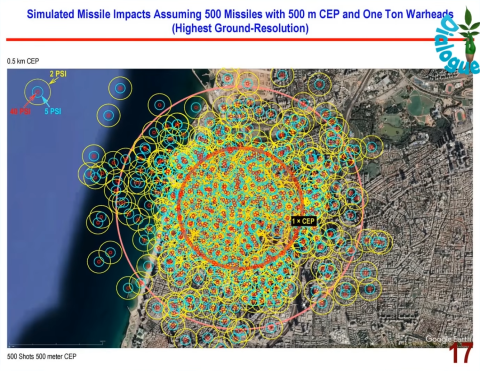
Prof. Ted Postol: US–Iran War? Israel’s Fatal Gamble
or go to
Aletho News Archives – Video-Images
From the Archives
Still No End in Sight of the Murder and Mayhem Wrought by the 9/11 Culprits
By Prof. Tony Hall | American Herald Tribune | July 17, 2016
The Kevin Barrett-Chomsky Dispute in Historical Perspective – Fourth part of the series titled “9/11 and the Zionist Question”
Back in 2006 all but a prescient few, such as Christopher Bollyn, perceived it as premature to try to identify and bring to justice the actual perpetrators of the 9/11 crimes. There was still some residue of confidence that responsible officials in government, law enforcement, media and the universities could and would respond in good faith to multiple revelations that great frauds had occurred in interpreting 9/11 for the public.
Accordingly, the main methodology of public intellectuals like Dr. Kevin Barrett or, for instance, Professors David Ray Griffin, Steven E. Jones, Peter Dale Scott, Graeme MacQueen, John McMurtry, Michael Keefer, Richard B. Lee, A.K. Dewdney, Nafeez Mossadeq Ahmed, and Michel Chossudovsky, was to marshal evidence demonstrating that the official narrative of 9/11 could not be true.
The marshaling of evidence was spurred on by observations coming from government insiders like Eckehardt Wertherbach, a former head of Germany’s intelligence service. In a meeting in Germany with Christopher Bollyn and Dr. Andreas von Bülow, Wertherbach pointed out that, “an attack of this magnitude and precision would have required years of planning. Such a sophisticated operation would require the fixed frame of a state intelligence organization, something not found in a loose group like the one led by the student Mohammed Atta in Hamburg.”
Andreas von Bülow was a German parliamentarian and Defense Ministry official. He confirmed this assessment in his book on the CIA and 9/11. In the text von Bülow remarked that the execution of the 9/11 plan “would have been unthinkable without backing from secret apparatuses of state and industry.” The author spoke of the “invented story of 19 Muslims working with Osama bin Laden in order the hide the truth” of the real perpetrators’ identity. … continue
Blog Roll
 Aletho News
- ‘Britain’s Index of Repression’ documents 964 incidents of anti-Palestinian crackdown
- Prof. Ted Postol: US–Iran War? Israel’s Fatal Gamble
- UK prosecutors drop aggravated burglary charges against 24 Palestine Action activists
- Unidentified drone downed over Lebanon airbase, US forces block authorities from crash site
- Peeling Back the US Information Operation in Iran
- Israel ‘dictating terms’ to US – Turkish professor
- US ramps up nuclear claims against China
- Erdogan wants nukes: What a Turkish bomb would mean for the Middle East
- Ukrainian disruption of Russian oil pipeline triggers emergency in EU state
- Kaja Kallas: an uncomfortable figure useful to the EU’s Russophobic purposes
- If Americans Knew
- Compliant aid: Who are the Israel-approved NGOs scaling up in Gaza?
- Why won’t Trump’s “Board of Peace” bring peace? – Not a ceasefire Day 131
- Help end the injustice against Shadi
- Israel’s Favorite American President
- Israel’s “Yellow Line” Is a Death Trap for Palestinians. We Drove Into It.
- Why Israel’s expanding occupation in Syria presents a critical legal test
- Gaza is not a natural disaster. It is the victim of genocide enabled by global inaction
- Netanyahu’s plan to “end” US aid to Israel is to give even more money under a different name
- Israel ceased firing on Gaza for just 15 days of the “ceasefire” – Not a ceasefire Day 130
- In Gaza, “rats run over our faces” – Not a ceasefire Day 129
- No Tricks Zone
- Coal Power Back In Trend As Globe Tries To Keep Pace With Growing Demand For Power
- New Study: A 4°C Warmer Beaufort Sea Had ‘No Sea Ice’ 11,700 – 8200 Years Ago
- Unfudging The Data: Dutch Meteorological Institute Reinstates Early 20th Centruy Heat Waves It Had Erased Earlier
- German Gas Crisis…Chancellor Merz Allegedly Bans Gas Debate Ahead of Elections!
- Pollen Reconstructions Show The Last Glacial’s Warming Events Were Global, 10x Greater Than Modern
- Germany’s Natural Gas Storage Level Dwindles To Just 28%… Increasingly Critical
- New Study Rebuts The Assumption That Anthropogenic CO2 Molecules Have ‘Special’ Properties
- Climate Scientist Who Predicted End Of “Heavy Frost And Snow” Now Refuses Media Inquiries
- Polar Bear Numbers Rising And Health Improving In Areas With The Most Rapid Sea Ice Decline
- One Reason Only For Germany’s Heating Gas Crisis: Its Hardcore-Dumbass Energy Policy
 Aletho News