US approves sale of missiles to Egypt as it launches first air strikes in Yemen
MEMO | April 10, 2015
The US State Department has approved the sale of 356 AGM-114K/R3 Hellfire II Missiles to Egypt, the Defence Security Cooperation Agency announced on 8 April. The sale of the missiles, which were requested by Egypt, is estimated to cost $57 million.
It is the first military sale by the US to Egypt since the Obama administration announced on 31 March that it would lift the hold on the delivery of military equipment including F-16 aircraft, Harpoon missiles, and M1A1 tanks. The ban had been in place since the overthrow of democratically elected president Mohamed Morsi in October 2013.
The move comes as the Obama administration hopes to strengthen ties with the Egyptian regime and promote shared objectives in the region. In a White House statement, Obama spoke of “shared challenges to US and Egyptian interests in an unstable region”, quoted from a phone call with Al-Sisi on 31 March.
The approval for the Hellfire missiles also comes as Egypt began its first airstrikes against the Houthi targets in Yemen on 9 April, according to Al Jazeera.
The US has also expressed support to the Saudi-led coalition for carrying out airstrikes against the Houthis in Yemen.
Pentagon: US bunker busting bombs ‘ready’ for war against Iran
Press TV – April 11, 2015
US Secretary of Defense Ashton Carter has threatened Tehran with war, saying his country’s bunker-busting bombs are ready to destroy Iran’s nuclear facilities if necessary.
“We continue to improve it and upgrade over time so that there is this alternative,” Carter told CNN on Friday.
“My job as secretary of Defense is to, among other things, make sure that the so-called military option is on the table,” he added.
The bunker busting bomb or the Massive Ordinance Penetrator can explode 200 feet underground.
The threats come amid efforts by Iran and world powers to reach a final nuclear agreement following the framework deal reached in Switzerland last week.
The Pentagon chief also noted that the US military has the capability to “shut down, set back and destroy the Iranian nuclear program.”
Carter also said any nuclear deal with Iran must include inspection of Iran’s military sites.
“It depends on what you mean by military sites, but yes. Absolutely,” he said.
Deputy Chief of Staff of Iran’s Armed Forces Brigadier General Masoud Jazayeri has already hit back at Carter’s comments, saying Tehran would not allow any inspection of its military facilities as part of a possible nuclear deal.
“During the previous negotiations, the Iranian officials… have explicitly and unequivocally expressed the prohibition of any inspection of [Iran’s] military and defense centers and facilities,” Jazayeri said on Friday.
A landmark framework agreement was reached between Iran and the P5+1 group – the US, Britain, France, China, Russia and Germany – in Switzerland on April 2.
The two sides will work to draw up a final accord by the end of June.
Seven Steps of Highly Effective Manipulators
White Helmets, Avaaz, Nicholas Kristof and Syria No Fly Zone
By Rick Sterling | Dissident Voice | April 9, 2015
You might think that after seeing the consequences of their campaign for “freedom and democracy” in Libya, journalists like Nicholas Kristof and “humanitarian campaigners” like Avaaz would have some qualms.
Unfortunately they have learned nothing. They have generally not been held to account, with a few nice exceptions such as this Greenwald/Hussain article. And now they are at it again. Many well-intentioned but naive members of the U.S. and international public are again being duped into signing an Avaaz petition based on fraud and misinformation. If the campaign succeeds in leading to a No Fly Zone in Syria, it will result in vastly increased war, mayhem and bloodshed.
The following illustration shows the sequence and trail of deceit leading to Avaaz’s call for a No Fly Zone in Syria.
 Following is a brief description documenting the flow of misinformation and deceit, beginning at the Source and ending with Avaaz’s campaign for NATO/US attack on Syria.
Source
The “Source” is unknown at this time. It might be some US agency with or without the approval of the Obama administration. Or it might be another foreign government which seeks, in plain violation of international law, the overthrow the Syrian government. In addition to the U.S., Turkey, Saudi Arabia, France, Britain and Qatar have each spent hundreds of millions and even billions in heavy weaponry plus 3,000 tons of weapons via Croatia plus arming, training, supplying and paying the salaries of thousands of domestic and international mercenaries sowing mayhem and destruction in Syria.
At this point we do not know but there is a REWARD: $100 finders fee to the first person who can provide credible evidence identifying the SOURCE.
PURPOSE Inc.
This is an international PR firm. CEO is Jeremy Heimans, a co-founder of Avaaz.
President is Kevin Steinberg, previous CEO of World Economic Forum USA (antithesis of World Social Forum). Their website describes their goal:
“Purpose builds and accelerates movements to tackle the world’s biggest problems.”
In this case the “problem” is reluctance to take over Syrian skies and land.
For a hefty fee, “Purpose” will dupe the public and break down that reluctance.
Toward that end, Purpose created “The Syria Campaign”.
The Syria Campaign
The Syria Campaign began in spring 2014. One of their first efforts was to work to prevent publicity and information about the Syrian Presidential Election of June 2014. Accordingly, “The Syria Campaign” pressured Facebook to remove advertisements or publicity about the Syrian election. Since then Syria Campaign has engineered huge media exposure and mythology about their baby, the “White Helmets” using all sorts of social and traditional media. The campaigns are largely fact free. For example, the Syrian election was dismissed out of hand by them and John Kerry but taken seriously by many millions of Syrians.
The Syria Campaign is managed by Anna Nolan, who grew up in northern Ireland and has very likely never been to Syria. In addition to promoting the White Helmets, Syria Campaign promotes a new social media campaign called “Planet Syria”. It features emotional pleas for the world to take notice of Syria in another thinly veiled effort pushing for foreign intervention and war.
According to their website, The Syria Campaign received start-up funding from the foundation of Ayman Asfari, a billionaire who made his money in the oil and gas services industry.
White Helmets
White Helmets is the newly minted name for “Syrian Civil Defence”. Despite the name, Syria Civil Defence was not created by Syrians nor does it serve Syria. Rather it was created by the UK and USA in 2013. Civilians from rebel controlled territory were paid to go to Turkey to receive some training in rescue operations. The program was managed by James Le Mesurier, a former British soldier and private contractor whose company is based in Dubai.
The trainees are said to be ‘nonpartisan’ but only work in rebel-controlled areas of Idlib (now controlled by Nusra/Al Queda) and Aleppo. There are widely divergent claims regarding the number of people trained by the White Helmets and the number of people rescued. The numbers are probably highly exaggerated especially since rebel-controlled territories have few civilians. A doctor who recently served in a rebel-controlled area of Aleppo described it as a ghost town. The White Helmets work primarily with the rebel group Jabat al Nusra (Al Queda in Syria). Video of the recent alleged chlorine gas attacks starts with the White Helmet logo and continues with the logo of Nusra. In reality, White Helmets is a small rescue team for Nusra/Al Queda.
But White Helmets primary function is propaganda. White Helmets demonizes the Assad government and encourages direct foreign intervention. A White Helmet leader wrote a recent Washington Post editorial. White Helmets are also very active on social media with presence on Twitter, Facebook etc. According to their website, to contact White Helmets email The Syria Campaign which underscores the relationship.
Nicholas Kristof/New York Times
The “White Helmets” campaign has been highly successful because of uncritical media promotion. Nicholas Kristof of the New York Times was an advocate of the NATO/US attack on Libya. According to him, villagers who had been shot, injured and their homes destroyed were not bitter, they were thankful! “Hugs from Libyans” is how he viewed it. It was, of course, nonsense, helping to pave the way in the invasion and destruction of the country.
Now Kristof is uncritically promoting the White Helmets, aiding and abetting their political and propaganda message seeking foreign intervention in Syria.
Avaaz
Avaaz is an online lobby organization founded in 2007 by Jeremy Heimans (now CEO of Purpose) and others. Start-up funding was provided by George Soros’ foundation. While Avaaz has promoted some worthy causes, they have been prominent in promoting neoliberal foreign policies in keeping with the U.S. State Department. Accordingly, they had a major disinformation campaign against Venezuela last year.
Avaaz very actively promoted a No Fly Zone in Libya. They are now very actively promoting the same for Syria.
In-depth research and exposure of Avaaz can be found here. The titles give some indication: “Faking It: Charity Communications in the Firing Line”, “Syria: Avaaz, Purpose & the Art of Selling Hate for Empire”, “Avaaz: Imperialist Pimps for Militarism”.
Avaaz justifies its call for No Fly Zone in part on White Helmets. Given the close interconnections between Avaaz and Purpose, they are surely aware that White Helmets is a media creation. This calls into question their sincerity.
Conclusion
The manipulators rely on emotional images and messages, not facts. They depend on willing partners in the mainstream media who amplify the easy and glib characterizations of who and what is good and bad. The manipulators depend on their audience not asking questions or investigating on their own. In these times of rapid spread of visual and text information via social media, the potential for deceit is huge.
Snapshots
 Avaaz Petition for Libya No Fly Zone — 2011
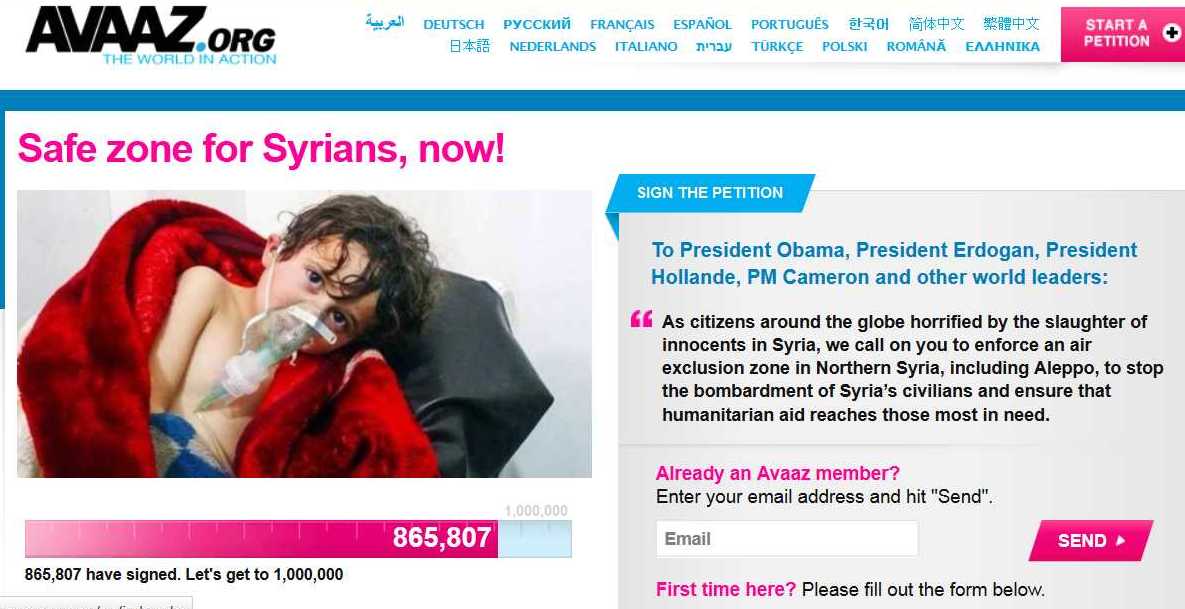 Avaaz Petition for Syria No Fly Zone — 2015 (Syria Campaign Posting)
 Kristoff/New York Times/2011
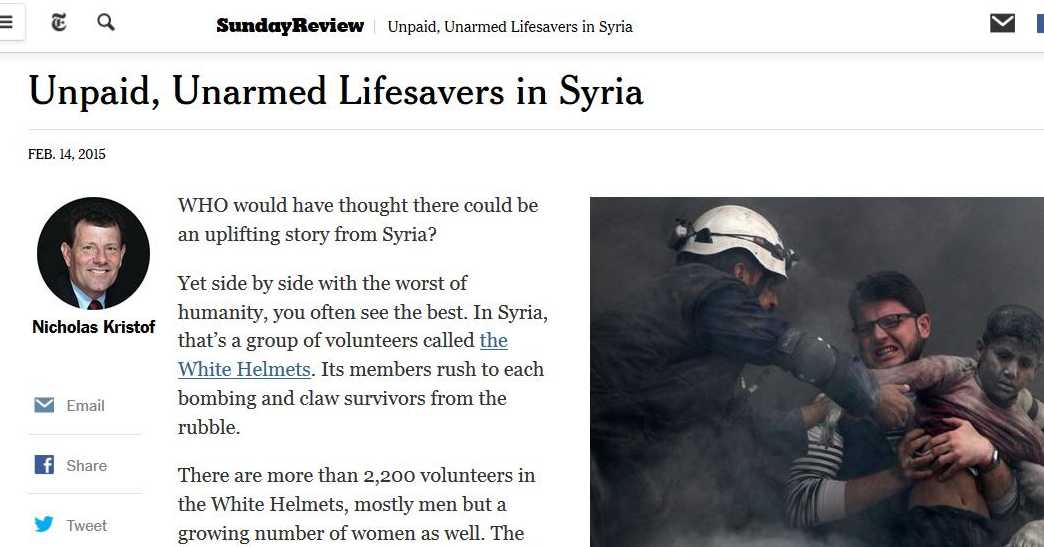 Kristoff/New York Times/2015

 The Real White Helmet Purpose: Propaganda
Locals Protest, Sabotage U.S. Navy Base Construction in Desert in Sicily
World Beyond War
There’s a popular movement in Sicily called No MUOS. MUOS means Mobile User Objective System. It’s a satellite communications system created by the U.S. Navy. The primary contractor and profiteer building the satellite equipment at the U.S. Navy base in the desert in Sicily is Lockheed Martin Space Systems. This is one of four ground stations, each intended to include three swivelling very-high-frequency satellite dishes with a diameter of 18.4 meters and two Ultra High Frequency (UHF) helical antennas.
Protests have been growing in the nearby town of Niscemi since 2012. In October 2012, construction was suspended for a few weeks. In early 2013 the President of the Region of Sicily revoked the authorization for the MUOS construction. The Italian government conducted a dubious study of health impacts and concluded the project was safe. Work recommenced. The town of Niscemi appealed, and in April 2014 the Regional Administrative Tribunal requested a new study. Construction goes on, as does resistance.
I spoke with Fabio D’Alessandro, a juornalist and law school graduate living in Niscemi. “I’m part of the No MUOS movement,” he told me, “a movement that works to prevent the installation of the U.S. satellite system called MUOS. To be specific, I’m part of the No MUOS committee of Niscemi, which is part of the coalition of No MUOS committees, a network of committees spread around Sicily and in the major Italian cities.”
“It is very sad,” said D’Alessandro,”to realize that in the United States people know little about MUOS. MUOS is a system for high-frequency and narrowband satellite communications, composed of five satellites and four stations on earth, one of which is planned for Niscemi. MUOS was developed by the U.S. Department of Defense. The purpose of the program is the creation of a global communications network that allows communication in real time with any soldier in any part of the world. In addition it will be possible to send encrypted messages. One of the principal functions of MUOS, apart from the speed of communications, is the ability to remotely pilot drones. Recent tests have demonstrated how MUOS can be used at the North Pole. In short, MUOS will serve to support any U.S. conflict in the Mediterranean or the Middle East or Asia. It’s all part of the effort to automate war, entrusting the choice of targets to machines.”
“There are many reasons to oppose MUOS,” D’Alessandro told me, “first of all the local community has not been advised of the installation. The MUOS satellite dishes and antennas are built within a non-NATO U.S. military base that has existed in Niscemi since 1991. The base was constructed within a nature preserve, destroying thousands of cork oaks and devestating the landscape by means of bulldozers that leveled a hill. The base is larger than the town of Niscemi itself. The presence of the satellite dishes and antennas puts at serious risk a fragile habitat including flora and fauna that exist only in this place. And no study has been conducted of the dangers of the electromagnetic waves emitted, neither for the animal population nor for the human inhabitants and the civilian flights from the Comiso Airport approximately 20 kilometers away.
“Within the base there are already present 46 satellite dishes, surpassing the limit set by Italian law. Moreover, as determined anti-militarists, we oppose further militarizing this area, which already has the base at Sigonella and other U.S. bases in Sicily. We don’t want to be complicit in the next wars. And we don’t want to become a target for whoever attempts to attack the U.S. military.”
What have you done thus far, I asked.
“We’ve engaged in lots of different actions against the base: more than once we’ve cut through the fences; three times we’ve invaded the base en masse; twice we’ve entered the base with thousands demonstrating. We’ve blocked the roads to prevent access for the workers and the American military personnel. There has been sabotage of the optical communication wires, and many other actions.”
The No Dal Molin movement against the new base at Vicenza, Italy, has not stopped that base. Have you learned anything from their efforts? Are you in touch with them?
“We are in constant contact with No Dal Molin, and we know their history well. The company that is building MUOS, Gemmo SPA, is the same that did the work on Dal Molin and is currently under investigation subsequent to the seizure of the MUOS building site by the courts in Caltagirone. Anyone attempting to bring into doubt the legitimacy of U.S. military bases in Italy is obliged to work with political groups on the right and left that have always been pro-NATO. And in this case the first supporters of MUOS were the politicians just as happened at Dal Molin. We often meet with delegations of activists from Vicenza and three times have been their guests.”
I went with representatives of No Dal Molin to meet with Congress Members and Senators and their staffs in Washington, and they simply asked us where the base should go if not Vicenza. We replied “Nowhere.” Have you met with anyone in the U.S. government or communicated with them in any way?
“Many times the U.S. consuls have come to Niscemi but we have never been permitted to speak with them. We have never in any way communicated with U.S. senators/representatives, and none have ever asked to meet with us.”
Where are the other three MOUS sites? Are you in touch with resisters there? Or with the resistance to bases on Jeju Island or Okinawa or the Philippines or elsewhere around the world? The Chagossians seeking to return might make good allies, right? What about the groups studying the military damage to Sardinia? Environmental groups are concerned about Jeju and about Pagan Island Are they helpful in Sicily?
“We are in direct contact with the No Radar group in Sardinia. One of the planners of that struggle has worked (for free) for us. We know the other anti-U.S.-base movements around the world, and thanks to No Dal Molin and to David Vine, we have been able to hold some virtual meetings. Also thanks to the support of Bruce Gagnon of the Global Network Against Weapons and Nuclear Power in Space we are trying to get in touch with those in Hawaii and Okinawa.”
What would you most like people in the United States to know?
“The imperialism that the United States is imposing on the countries that lost the Second World War is shameful. We are tired of having to be slaves to a foreign politics that to us is crazy and that obliges us to make enormous sacrifices and that makes Sicily and Italy no longer lands of welcome and peace, but lands of war, deserts in use by the U.S. Navy.”
Canada to send troops to Ukraine ‘in non-combat role’ – report
RT | April 11, 2015
Canadian government has decided to send troops to Ukraine in a non-combat role, CTV News reported, citing official sources. The troops could arrive in the country in the coming weeks or months, but the details of the mission are still being worked out.
The Canadian soldiers are likely to be sent for a training mission and could cooperate with American soldiers, the report said.
“While the government is still working out the details, sources told CTV News a training mission is one of the options on the table. Canada is likely to work closely with American allies who are already in the region,” CTV News reporter Mercedes Stephenson said.
The Conservative government has been leaning towards a more significant Canadian involvement in the Ukrainian crisis for the past few months.
In February, Canada updated the list of its sanctions against Russia with travel bans slapped on 37 Russian and Ukrainian individuals. It also applied economic sanctions against 17 Russian and Ukrainian companies, which included Russian oil giant Rosneft.
Russian Foreign Ministry spokesman Aleksandr Lukashevich labelled the new sanctions as an anti-Russian step that looks like “an awkward attempt to hinder the implementation of the conflict settlement agreements, reached in Minsk on February 12 with Russia’s active constructive role.”
In December, Canada signed an agreement to send its military police to Ukraine to “look into the possibilities of cooperation,” while it also looked to help the government in Kiev with security issues.
Meanwhile, Canada’s Toronto Symphony Orchestra (TSO) barred a Ukrainian-born pianist from playing in a scheduled program for expressing views on the situation in Ukraine via Twitter.
The orchestra dropped pianist Valentina Lisitsa who was due to play a concerto by Rachmaninoff. The hashtag #LetValentinaPlay surged in popularity on social media, and thousands of supporters spoke out for the artist, who was offered to be paid not to play.
Read more ‘Dangerous process’: Russia warns against US, NATO military instructors in Ukraine
Kashmiris protest Hindus only settlement plans
Press TV – April 10, 2015
Large crowds of demonstrators have held a massive protest rally in the Indian-administered Kashmir in response to a New Delhi plan to build new townships across the disputed region.
Kashmiri protesters rallied in Srinagar after Friday prayers to voice opposition to a government plan to build new townships for thousands of Hindus in the Muslim-majority region.
The angry protesters chanted pro-independence slogans as they marched toward the city center, Lalchowk, in Srinagar, the main city in Indian-controlled Kashmir.
Srinagar, which lies in the Kashmir Valley, is the summer capital and largest city of the northern Indian state of Jammu and Kashmir. Its winter capital is Jammu.
Indian police and paramilitary troops fired teargas and used stun grenades to disperse the crowd. The security forces also arrested nearly a dozen activists, including some prominent regional protest leaders.
The protesters pelted Indian security forces with stones and blocked roads in the region.
The massive rally comes as New Delhi has announced plans to build a number of townships to accommodate some 200,000 Hindus.
Kashmiri leaders have called the plan a conspiracy to create settlements on religious lines, saying the plan will create hatred between Hindus and Muslims.
Mohammed Yasin Malik, the chairman of the pro-independence Jammu-Kashmir Liberation Front (JKLF) compared the plan to that of Israeli settlements on occupied Palestinian land. Malik suggested that they would rather live side by side the Hindus in a merged society.
“We will not allow anybody to turn Kashmir into another Palestine. They (Pandits) are owners of this land as we are, and we welcome them to live in a composite society along with their Muslim brothers,” a media outlet quoted Malik as saying.
Indian authorities have deployed large contingents of police and paramilitary troops to most parts of Srinagar and several other major towns to prevent street demonstrations.
Kashmir lies at the heart of more than 67 years of hostility between India and Pakistan. Both neighbors claim the region in full but have partial control over it.
The neighbors agreed on a ceasefire in 2003, and launched a peace process the following year. Since then, there have been sporadic clashes, with both sides accusing the other of violating the ceasefire.
Thousands of people have been killed in Kashmir unrest over the past two decades.
Why the War on Drugs is So Bad For Privacy
By Jay Stanley | ACLU | April 8, 2015
In 2011, for the 50th anniversary of Richard Nixon’s declaration of America’s “War on Drugs,” I wrote a roundup of some of the ways in which the War on Drugs has eroded privacy. Yesterday’s news about the DEA’s enormous program to collect Americans’ call records is a hell of an addition to the list. But with the DEA story fresh in the headlines, it’s important to remember a key point about why the drug war has been so corrosive of privacy: drug use is a victimless crime.
Why does that make it so bad for privacy? Think about it: with an ordinary crime, you have a victim who goes running to the police to tell them about the wrongdoing that has taken place. They have been assaulted, or stolen from, or otherwise wronged, and are hopping mad, and look to the police for justice. If the crime is murder, then the victim’s loved ones will do the same. While police might engage in a certain amount of patrolling, for the most part reports of crime come to them.
But when there’s no victim, how are the police supposed to find out when the law has been broken? The only way for police to fight victimless crime is to proactively search out wrongdoing: insert themselves into people’s lives, monitor their behavior, search their cars, etc. The enforcement of drug laws thus relies disproportionately on surveillance, eavesdropping, and searches of private places and effects. This (and misguided judges) is the reason that the failed War on Drugs has generated so much bad law around privacy and the Fourth Amendment in particular.
It’s a simple point, and I’m hardly the first to make it, but it’s well worth keeping in mind, and it’s one reason that the ACLU generally opposes victimless crimes.
US Backtracks, Says Venezuela is Not a Threat, as Opposition Leaders Flock to Panama Summit
By Lucas Koerner | Venezuelanalysis | April 8, 2015
Caracas – On the eve of the much-anticipated Summit of the Americas, Senior White House Advisor Benjamin J.Rhodes downplayed his government’s designation of Venezuela as a threat to U.S. national security on Tuesday.
On March 9, President Obama issued an Executive Order branding Venezuela an “unusual and extraordinary threat” and imposing new sanctions, a move which has been roundly condemned by a multitude of nations and multilateral blocs, including UNASUR, the Non-Aligned Movement, CELAC, and the G77+China.
In response to the global outcry, the White House has appeared to soften its tone, with Rhodes dismissing the aggressive language of the Executive Order as “completely pro forma”.
“The United States does not believe that Venezuela poses some threat to our national security,” Rhodes stated in a press conference. The Presidential advisor did not, however, indicate that the U.S. administration had any intention of rescinding the executive decree.
The White House statement comes just days prior to the Summit of the Americas in Panama, which may mark a new chapter in U.S.-Latin American relations as the former continues to rebuild diplomatic ties with Cuba.
However, this supposed watershed moment has been vastly overshadowed by the Obama administration’s aggressive measures against Venezuela which have united the region behind Caracas and are likely to be a key point of contention at the summit.
Venezuelan President Nicolas Maduro has launched a petition campaign to gather 10 million signatures demanding the repeal of Obama’s Executive Order, of which 9 million have been collected so far. The Venezuelan head of state intends to personally deliver the signatures to the U.S. president during the summit this weekend.
Opposition Leaders Seek to Discredit Venezuela
While the U.S. attempts to downplay its aggressive posture against Venezuela, Venezuelan opposition leaders head to Panama where they plan to denounce the Bolivarian nation before the gathering of regional leaders.
The Panama summit will feature various parallel fora that will give “civil society” leaders the opportunity to present on the political and social situation in their respective countries.
Lilian Tintori, the wife of jailed far right opposition leader Leopoldo Lopez, will be given four minutes to present on Venezuela, which she claims is “on the verge of a humanitarian catastrophe“. Lopez, awaits trial for his role in leading last year’s violent opposition protests known as “the Exit” which sought the ouster of President Nicolas Maduro, taking the lives of at least 43 people.
Also attending is Rocio San Miguel of Citizen Control, who is a journalist specializing in military affairs closely linked to the U.S. embassy and various programs of USAID. She has actively worked to discredit President Nicolas Maduro’s relationship with the Venezuelan military as well as coordinates the provision of U.S. funds to anti-government groups.
Representing the Civil Consortium for Development and Justice, attendee Carlos Ponce Silen is the director of the Latin American and Caribbean Network for Democracy (RELIAL), which funnels the millions it receives in National Endowment for Democracy (NED) funding to Venezuelan opposition groups.
According to U.S. embassy cables published by Wikileaks, Ponce Silen organized a meeting between the U.S. Agency for International Development’s (USAID) acting country representative and right wing student leaders in 2008.
Participating on behalf of the Venezuelan Institute of Social and Political Studies (INVESP) is Carlos Correa, director of the NGO Public Space, which has been revealed by a Freedom of Information Act request to be one of the principal fronts for over $4 million in NED funds channelled to Venezuelan opposition journalists between 2008 and 2010.
The Venezuelan opposition has received hundreds of millions in U.S. funding over the past decade, including $14 million between 2013 and 2014 alone, provided via USAID and the NED.
War is Peace in Yemen
By Michael Horton | CounterPunch | April 10, 2015
In his essay entitled, “Politics and the English Language,” George Orwell says, “political language…is designed to make lies sound truthful and murder respectable, and to give an appearance of solidity to pure wind.” Orwell, whose writings are more prescient with each passing year, would wince at the words of Saudi Arabia’s Brigadier General Asiri, who, in a recent press conference, defended Saudi Arabia’s unprovoked war in Yemen by saying, “all we are trying to do is to make sure that there is security in Yemen.” Bombing an already desperately poor country’s infrastructure, destroying its armed forces (the same armed forces that were equipped and trained to fight al-Qaeda by the US), air dropping weapons (now being sold in Yemen’s arms markets), blockading Yemen’s ports (Yemen imports 90% of its food), and hobbling an already struggling economy are hardly ways of ensuring security.
Saudi Arabia’s ambassador to the United States, Adel A. al-Jubeir, has sought to justify the Kingdom’s war in Yemen by arguing that Saudi Arabia—a country that is ruled by an autocratic king and a collection of princes—is fighting to protect the “elected and legitimate government of Yemen,” the government of Abd Rabbuh Mansur al-Hadi.
Hadi, who fled Yemen for Saudi Arabia on 25 March, was “elected” in an election in February 2012 in which his name was the only one on the ballot. There is also the fact that Hadi’s term as president expired in February 2014. According to the Gulf Cooperation Council (GCC) brokered initiative, national elections, including the election of a new president, were to be held in 2014.
To sum it up: an autocracy with a deplorable human rights record (Saudi Arabia’s Sharia courts routinely behead criminals and flog victims of gang rape as well as recalcitrant bloggers) and its partners—which includes the US—are endeavoring to reinstall an ineffectual exiled government of questionable legitimacy and ensure security in Yemen by bombing and starving it into submission.
Hadi and his exiled government are supporting the bombardment of their own country and calling on the Saudis and their allies to intensify air strikes and launch what will likely be a disastrous ground invasion. Of course, these calls for more bombs, more weapons, and more war are being made by men who fled Yemen aboard private jets and are comfortably ensconced in villas in Riyadh. They do not have to worry about being incinerated in their homes, finding food or water, or burying their dead. It is worth citing another quote from Orwell who wrote in Homage to Catalonia, “all the war-propaganda, all the screaming and lies and hatred, comes invariably from people who are not fighting.”
So what fruits is the Saudi led and US supported “Operation Decisive Storm” bearing? Security is not among them. An estimated 600 people, including at least 80 children, have been killed. According to UNICEF, a hundred thousand additional Yemenis have been displaced since the beginning of “Operation Decisive Storm.” Food, medical supplies, and petrol are in short supply across the country and as yet, flights and convoys bringing aid are being blocked. Conditions in parts of southern Yemen are so bad that some Yemenis are fleeing by boat to relatively secure and stable Somaliland and Puntland.
Across southern Yemen, al-Qaeda in the Arabian Peninsula (AQAP) is on the offensive. AQAP has freed its members from various jails and has raised its flag over Mukalla, a city of nearly four hundred thousand and a major port with critical oil and gas handling facilities. However AQAP and other militant Islamist groups whose ideology differs little from the state sanctioned Wahhabism of Saudi Arabia, are seemingly not targets for those directing “Operation Decisive Storm.” The primary targets of the aerial campaign, beyond critical infrastructure, food factories, and refugee camps, are the Houthis, a Zaidi Shi’a group that has had more success at fighting AQAP in the last six months than the US and its drones have had in the last decade.
AQAP was and, in some military circles, still is considered to be the most virulent of the al-Qaeda franchises. Mainstream US media has long trumpeted the idea that AQAP poses a clear and present danger to the US. Hundreds of millions of dollars of US tax payer money has been spent on the “war on terror” in Yemen. Yet rather than calling for a ceasefire and dialogue as the governments of China, Russia, and Iran have done, the US is supporting a war that will, beyond anything else, make sure that Yemen remains a failed state and fertile ground for AQAP and potentially the Islamic State.
It all makes sense in an Orwellian way.
Michael Horton is a writer and Middle East analyst.
Pakistan MPs vote to stay out of Yemen crisis
Press TV – April 10, 2015
The Pakistani parliament has passed a resolution that urges Islamabad to remain neutral vis-à-vis the conflict in Yemen, dismissing Saudi Arabia’s request to join its deadly air raids against the Arabian Peninsula state.
“The parliament desires that Pakistan should maintain neutrality in the Yemen conflict so as to be able to play a proactive diplomatic role to end the crisis,” read the resolution which was ratified unanimously on Friday after days of dispute among the lawmakers.
The parliament “underscores the need for continued efforts by the government of Pakistan to find a peaceful resolution of the crisis,” the resolution added.
The resolution urged all warring factions in Yemen to put an end to deadly clashes and resolve the conflict through dialogue, warning that the flare-up in the Arab country would “have a critical fallout in the region, including in Pakistan.”
The Pakistani parliament also called on the international community and Muslim countries to push ahead with their efforts to bring about a ceasefire deal in the violence-wracked country.
Pakistani Prime Minister Nawaz Sharif also attended the parliament session on Friday to express his approval of the resolution.
This is while Riyadh has made repeated calls to Islamabad to take part in the Saudi aggression in Yemen.
The resolution came a day after Iranian Foreign Minister Mohammad Javad Zarif wrapped up a two-day visit to neighboring Pakistan.
“Military attacks, aerial bombings and the destruction of the infrastructure in this country (Yemen) cannot help resolve the crisis,” said Zarif during a meeting with Sardar Ayaz Sadiq, the speaker of the Pakistani parliament,
“We should all invite all sides to the negotiation table to resolve the regional problems,” Zarif said.
In a meeting with Pakistani army chief General General Raheel Sharif on Thursday, Zarif said, “The past experiences show that the consequences of the military intervention in Yemen will become part of the problems.”
Saudi Arabia’s air campaign against Ansarullah fighters started on March 26, without a UN mandate, in a bid to restore power to the country’s fugitive former president, Abd Rabbuh Mansur Hadi, a staunch ally of Riyadh.
According to figures released Thursday by Yemeni media outlets, nearly 450 people have so far been killed since the beginning of the Saudi aggression. Most deaths are reported to be women and children.
Hadi stepped down in January and refused to reconsider the decision despite calls by the Houthi Ansarullah movement.
However, the Ansarullah movement later said Hadi had lost his legitimacy as president of Yemen after he escaped Sana’a to Aden in February.
On March 25, the embattled president fled the southern city of Aden, where he had sought to set up a rival power base, to the Saudi capital, Riyadh, after Ansarullah revolutionaries advanced on Aden.
The Ansarullah fighters took control of the Yemeni capital in September 2014. The revolutionaries said Hadi’s government was incapable of properly running the affairs of the country and containing the growing wave of corruption and terror.
Featured Video
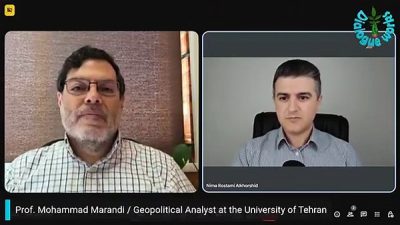
Seyed M. Marandi: U.S. Military DIVIDED? Iran’s Secret Defense EXPOSED
or go to
Aletho News Archives – Video-Images
From the Archives
‘Israel sees Iran as obstacle to its policies’
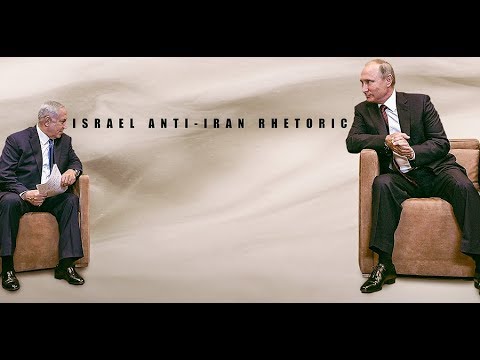
Press TV – August 25, 2017
Prime Minister Benjamin Netanyahu has said that Israel felt threatened by Iran’s growing influence in the Middle East. Netanyahu expressed his Iranophobic view in a meeting with Russian President Vladimir Putin in Russia’s Black Sea resort of Sochi on Wednesday. Press TV has asked Scott Rickard, former American intelligence linguist from Tampa, Florida, and Brent Budowsky, a columnist at The Hill from Washington, to give their thoughts on the issue.
Rickard said Tel Aviv is concerned about the fact that the regime could not carry out its old project to spread sectarian divisions and pave the way for dismemberment of the countries in the Middle East region because of the Iranian-led resistance against Israeli policies, not only in the occupied territories of Palestine but also in the whole region.
“Iran is not a threat to Israel whatsoever. The threat that Israel sees is the fact that their Oded Yinon Plan is being put to a hold by Iran,” the intelligence linguist said on Thursday night.
“They (the Israelis) look at Iran as a threat only because they have no influence on their governments and Iran is autonomous and is not under the Zionist influence,” he added.
Since the victory of the Islamic Republic of Iran in 1979, Tehran has been critical of Israel’s policies in the region, whereas “no leaders [of other states] even dared to speak out against Zionism,” Rickard argued. … continue
Blog Roll
 Aletho News
- Iran declares ‘historic victory’ over US, says enemy forced to accept its proposal
- Trump Claims Ceasefire, Reopening of Strait of Hormuz Agreement with Iran
- Israeli tank fire killed UN peacekeeper in Lebanon, UNIFIL investigation finds
- Russia, China block Bahrain-sponsored UN resolution on Strait of Hormuz
- The US-Israeli War on Science is an Assault on our Future
- Trump’s Promise to Bomb Iran ‘Like Never Before’ Faces Brutal Logistics — Expert
- Germany seeks to restrict stays abroad for men of fighting age – Berliner Zeitung
- Evidence points to Ukraine being behind TurkStream attempted sabotage, but that should come as no surprise
- Sri Lanka secures supplies of Russia oil – minister
- Nations across Asia strike direct deals with Iran for Hormuz passage
- If Americans Knew
- Thousands dead and neighborhoods razed to the ground: Aid agencies fear southern Lebanon is becoming the new Gaza
- The war the US is fighting for Israel could cost trillions
- ‘Cigarette Burns, Nail Wounds’: Toddler Tortured in Gaza to Coerce Father
- Trump Says US Sent ‘a Lot of Guns’ to Protesters in Iran
- Israeli forces destroy 17 UN peacekeeper cameras in south Lebanon
- US-Israeli strikes ‘completely destroy’ synagogue in Tehran
- Archbishop for US Military Says Iran War Is Unjust Under Catholic Teaching
- Iranian leaders’ Open Letters to the American People
- Trump says Iranians appreciate bombs, WHO warns of nuclear risks – Daily Update
- U.N. experts demand Israel release prominent Gaza doctor after reports of ‘severe torture’
- No Tricks Zone
- An Inconvenient Tree: Uncovered In Alps… Europe Much Warmer Than Today 6000 Years Ago
- New Study Reports A 60% Slowdown In Greenland’s Ice Loss Rate In The Last Decade
- Low Intensity Tornado Wrecks Major Solar Farm, Creating A Potential Toxic Dump
- New Study Finds Warming Saves Lives…Cold Temperatures 12 Times More Deadly Than Excess Heat
- German Science Blog Accuses PIK Climate Institute Of Hallucinating Climate Tipping Points
- Devastating Assessment Of Comirnaty Vaccine By Former Senior Pfizer Europe Toxicologist
- New Study: CO2 Is ‘Effectively Negligible’ As An Explanatory Climate Change Factor Since 2000
- Former Pfizer Toxicologist Dr. Helmut Sterz Tells Bundestag Hearing Pfizer Vaccine Should Have Never Been Approved
- Energy Expert: Germany’s Nuclear Phaseout Was A “500 Billion Euro Mistake”
- New Research: South Australia’s Mid-Holocene Sea Surface Temperatures Were 4°C Warmer Than Today
 Aletho News
