Activists stop Israeli-Palestinian conference in East Jerusalem
Ma’an – June 12, 2015
JERUSALEM – A group of activists on Friday stopped a conference in occupied East Jerusalem from going ahead that they accused of contributing to the “normalization” of the Israeli occupation.
The conference had been organized by the “Creativity for Peace” group and was set to take place in the Legacy Hotel.
However, the hotel reportedly cancelled the event after they were contacted by the activists.
The hotel management had apparently been unaware of the conference, believing instead that a tourism company had booked the hall.
Creativity for Peace is a non-profit organization that works with young Israeli and Palestinian women on “collaborative leadership and peacemaking,” according to the organization’s website.
Some activists allege that organizations aiming to facilitate dialogue and understanding between Jewish Israelis and Palestinians without addressing political realities “normalize” the Israeli occupation.
The Palestinian Campaign for the Academic and Cultural Boycott of Israel argues that partnership and dialogue groups often ignore the stark inequalities between Jewish Israelis and Palestinians living under occupation.
They claim that this approach normalizes the Israeli occupation by promoting co-existence at the expense of acknowledging the right of Palestinians to resist oppressive policies of the Israeli government.
Saudi Arabia’s Human Rights Campaign
By Daniel McAdams | Ron Paul Institute | June 9, 2015
When thinking about the protection of human rights, Saudi Arabia doesn’t immediately come to mind. After all, this year the Saudis are on course to break their own record of 87 decapitations in 2014. It is only June and the Saudi leaders have already chopped off their 84th head. Religious apostasy is a leading offense resulting in decapitation and last year half of all such killings were carried out for non-lethal offenses. According to a news report last year, bringing Christian bibles into the country is considered a capital offense.
In addition, it is illegal to build a Christian church in Saudi Arabia.
That is why it seems so strange that Saudi Arabia last week hosted an international conference “on combating religious discrimination” backed by the United Nations and attended by the president of the UN Human Rights Council. Saudi Arabia, considered one of the planet’s worst human rights abusers, is a member of the UN Human Rights Council and will take over as chair of the Council next year.
Saudi Arabia’s unique view of human rights extends beyond its borders as well. For the past three months Saudi Arabia has been bombing neighboring Yemen in retaliation for the overthrow of the Saudi-favored Yemeni leader. Yemen did not attack or commit aggression against Saudi Arabia, but thus far Saudi bombs have killed thousands of innocent Yemeni citizens. Just this week one raid killed more than 40 civilians, including women and children.
In Syria, Saudi Arabia has likely spent billions financing terrorist groups such as al-Qaeda’s Syrian franchise, Jabhat al-Nusra — and even ISIS.
How ironic that a US government that seems to go out of its way to see the splinter in the eye of other nations seems to consistently turn a blind eye to the log in the eye of the Saudi royals (and in our own too, it must be said).
Of course this is not to say that the United States should attack or even sanction Saudi Arabia. But should we promise to defend them? Just last month President Obama pledged that he would use the US military to defend Saudi Arabia and the other US “allies” in the Gulf.
Said the president:
The United States will stand by our GCC partners against external attack and will deepen and extend the cooperation that we have when it comes to the many challenges that exist in the region.
It is all about shared values and human rights.
Irish teen details abuse, threats of torture in Egypt prison
Reprieve | June 13, 2015
An Irish teenager facing a death sentence in Egypt has written a letter detailing his ill-treatment in prison, where he has been awaiting trial for nearly two years.
Ibrahim Halawa, a student from Dublin, was 17 and on holiday in Egypt when he was arrested, along hundreds of others during the military’s breakup of protests. Now 19, he faces a death sentence if convicted, and has reported mistreatment throughout his detention in Egypt, where police torture is common. He is being tried as an adult – in contravention of Egypt’s Child Law and international law – alongside 493 others, in controversial mass proceedings that have been repeatedly postponed over the past year (most recently on June 3rd).
A recent letter written by Ibrahim to his family from Wadi Natrun prison, where he awaits trial, details how:
- He is being held in a room with a glued-shut window and no access to the sun, and wakes up “every morning to the voices of other prisoners screaming from the hitting and I can hear the beatings”
- Prison official Selim Shakawy, or “the Prosecutor”, hits him if he speaks out and threatens him, including with removal to the “torture room”
- The Prosecutor has told him that the Irish government cannot help him, saying: “Let the embassy go to the minister of interior, they can’t do anything… a passport isn’t going to save me from him… he kept threatening me & said life is just going to get tougher”
- Ibrahim has decided to go on hunger strike, in protest at the repeated delays in his trial and his mistreatment
The letter marks the first time Ibrahim has been able to publicly detail his treatment since he was moved to Wadi Natrun from Tora prison, in Cairo – where he shared a cell with journalists Peter Greste and Mohammed Fahmy.
Maya Foa, head of the death penalty team at Reprieve, said: “This heartbreaking letter from Ibrahim demonstrates the complete injustice of his ordeal, and that of the hundreds detained alongside him. These are people whose only ‘crime’ was to attend a protest – and yet, two years later, they are languishing in hellish conditions, enduring terrible mistreatment, and awaiting a Kafkaesque mass trial. The Irish government and the international community must make it clear to the Sisi government that this cannot continue. Justice must be done, and Ibrahim must be returned home to his family in Dublin without delay.”
Turkey providing electricity to ISIL-held Syria town: Report
Press TV – June 13, 2015
A Turkish newspaper says Ankara provides electricity to the Syrian town of Tal Abyad controlled by ISIL terrorists, who are also allowed to freely walk in the streets of a Turkish border district.
Citing a Friday report by the Istanbul-based BirGün daily, English-language Turkish newspaper Today’s Zaman referred to “the not-so-secret presence of ISIL militants on the streets of Akçakale, in the southeastern province of Şanlıurfa.”
Akçakale forms a divided city with the Syrian town of Tal Abyad and has been experiencing “first-hand” the spillover of the unrelenting Takfiri militancy raging in Syria.
“The enemy is no longer at the gate, locals have bemoaned. It is here, in Akçakale. They are, of course, talking about ISIL,” Zaman wrote.
According to the source, the ISIL uses hotels in Akçakale as a gathering point for its recruitment efforts, transporting the recruits through the Turkish town to Tal Abyad.
The report adds the terror group also offers the locals high salaries in return for joining their ranks amid the social and economic woes in the border area.
“If I didn’t have a family, I probably wouldn’t be able to resist their offer. They offer to write off your credit card debt, give you a high salary,” the daily quoted a local as saying.
The report also said that the northern Syrian town of Tal Abyad, located in Raqqa Province, continues to receive electricity from Turkey.
The international community has for long been critical of Turkey over its provision of assistance to Takfiri terrorists waging war in Syria.
Meanwhile, newly-surfaced video footage has corroborated widespread assertions that the Turkish government’s intelligence agency has been ensuring ISIL terrorists safe passage into Syria.
The center-left Turkish daily, Cumhuriyet, integrated the videos in a Thursday report implicating the National Intelligence Organization (MİT) in assisting the notorious Takfiri group.
Cumhuriyet had also posted a video on its website on May 29, purportedly showing trucks belonging to Turkey’s intelligence agency carrying weapons to the Takfiri terror groups operating in Syria.
The Turkish opposition group, the People’s Democratic Party (HDP), has called for an immediate end to Ankara’s support for terrorists in Syria.
Selahattin Demirtas, HDP’s co-leader, has noted that the move would be the key to restore the foreign relations of the new Turkish government to normal state.
The Guardian on Nicaragua : high-intensity disinformation warfare
Tortilla con Sal | June 1, 2015
Among NATO’s psychological warfare outlets the UK Guardian occupies a special place as the fake-progressive mouthpiece of neocolonial English language news media. In recent years, Guardian writers and editors have been persistent propaganda shills for Nazi militias and death squads in Ukraine and for Al Qaeda and related terror groups in both Libya and Syria. No surprise then that it should also have an almost endless record of propaganda attacks against the main member countries of ALBA – Bolivia, Cuba, Ecuador, Nicaragua and Venezuela.
The latest disinformation offering has been an article by Nina Lakhani in the Guardian’s development pages targeting Nicaragua’s education system. The article’s title “Poverty in Nicaragua drives children out of school and into the workplace” could be applied to almost any country in the majority world as well as to countries in North America and Europe. It’s also worth noting that the Guardian’s development pages are funded by the Bill and Melinda Gates Foundation.
A recent survey of projects funded by the Microsoft tycoons’ NGO between 2003 and 2013 in Africa found out that only 12% of the USD 3 billion granted went directly to the target populations. The rest was invested in research centers for the expansion of European and US-American agribusiness corporations. Self-evidently, the Guardian has a vested interest in promoting a neocolonial perspective skewed in favour of corporate funded non-governmental views and against sovereign governments, especially anti-imperialist governments like those of the ALBA countries.
This particular Guardian article offers a helpful concrete example of how certain kinds of anti-ALBA country propaganda can work while still staying within the bounds of apparently progressive ideas and argument. Nicaragua’s Sandinista government education has transformed education in Nicaragua in many positive ways despite very significant difficulties. But the Guardian article tries to make the absolutely false case that Nicaragua has practically abandoned a large number of it’s school age population and lacks a serious commitment to improving the country’s education system. The article uses various propaganda tricks that depend entirely on readers’ likely ignorance of Nicaragua and the region.
Nina Lakhani starts her false argument with quotes from childen in Bluefields, a city on Nicaragua’s impoverished Caribbean Coast. One quote goes “My family can’t afford the books”. But nowhere in her article does Nina Lakhani report that in January 2007, the very first decision of the incoming Sandinista government under Daniel Ortega was to make health and education services free. No child in Nicaragua’s public school system needs to pay for their schoolbooks. School directors breaching the principle of free education face dismissal. Does Lakhani offer a quote from a local school director? Of course not.
Similarly, Nina Lakhani’s disinformation exercise completely omits reporting mass national programmes by Nicaragua’s Sandinista government to guarantee at least one meal a day for children in school, to ensure the poorest children have shoes and a backpack for their books, to rehabilitate classrooms and classroom furniture, to consolidate literacy skills and to improve dental health. Apart from those important omissions, perhaps the most reprehensible feature of the Guardian article is that it cites figures that are mostly five years or more out of date.
This use of obsolete statistics effectively ignores the Nicaraguan government’s massive efforts to improve school attendance, diminish desertion, improve academic performance and promote better academic standards. Readily available World Bank data for some indicators is slightly more up to date and allows a fair comparison with Nicaragua’s neighbours. While it is certainly true that available recent statistics are patchy and make it hard to compare like with like, that does not mean a more current view is out of reach. In any case, data isolated from any comparative context are grossly misleading and are a long-standing disinformation specialty of corporate media writers on foreign affairs.
So Nina Lakhani’s false use of out-of-date data looks even more dishonest when Nicaragua’s indicators according to the World Bank for the period 2006 to 2013 are compared with its regional neighbours’. For example, in the area of primary education, Nicaragua’s indicators are generally better than those in Guatemala, somewhat behind Honduras and El Salvador and all four countries lag behind Costa Rica. However, in terms of indicators relating to secondary education, Nicaragua has generally similar or better indicators than Guatemala, Honduras and El Salvador and again all four lag behind Costa Rica.
Nina Lakhani’s insistence on the importance of reducing child labour so as to ensure good education for all children is certainly correct. But that is true throughout Central America, whose countries share many social characteristics derived from their history of colonial and neocolonial domination and economic under-development. In particular in Nicaragua, the school year has historically been scheduled around the coffee harvest from mid-December to late February when thousands of rural families migrate en bloc as families to pick coffee. As in most of Central America, Nicaraguan law allows children to start work at 14.
Since 2011, the Nicaragua government has implemented a series of measures aimed at preventing under-age children from working. In 2012 the government began an annual campaign coordinated by local municipal authorities, the Education Ministry, the Health Ministry and relevant labour unions to ensure children under 14 years old, accompanying their families picking coffee in Nicaragua’s main coffee growing areas, attend classes and educational activities. The national confederation of workers in the informal sector also works with the government in urban centres to keep school age children from working selling with their parents on the streets.
Child labour is a serious problem throughout Central America. But Lakhani’s article suggests the Nicaraguan government’s policy on child labour represents a unique failure. To make her false case, she cites old figures from the 2005 census that she compares with unreliable current estimates from Nicaragua’s business sector. Lakhani writes “Nicaragua has ratified multiple international treaties and has strong national policies, but government claims that it is reducing child labour are not supported by any published evidence.” But Lakhani applies a different standard to a business sector estimate “that there are between 250,000 and 320,000 child workers, with one in three under 14.”
The link her report offers is to a video with off the cuff remarks at a press conference by business organization President José Adán Aguerri. His claim too is unsupported by any recent published evidence, but still Lakhani gives it more weight than government claims. By contrast, the Chair of the National Assembly’s Commision for Women Youth, Children and the Family, Carlos Emilio López, announced in 2013 a 10% drop in child labour in Nicaragua since 2005. Nina Lakhani mentions no reliable evidence to falsify that assertion.
She mentions an anecdotal case study by La Isla Foundation of 26 children in the sugar cane plantations aged between 12 and 17 which is virtually meaningless in the national context, but may perhaps reflect to some degree the reality in the sugar industry throughout the region, not just in Nicaragua. In that regional context, Nicaragua has a better record at protecting vulnerable children than its neighbours. In fact, the International Labour Organization representative in Nicaragua said in June 2014, “In the 2005 census, 53% of children working did not go to school, now that percentage is less than 15%.”
That statement by the ILO should be taken together with recent government data for education indicating substantial increases in matriculation numbers, lower figures for academic desertion, and better academic results generally. Likewise, Nicaragua’s Ministry of the Family’s mass campaign to help families ensure their children go to preschool is helping hundreds of thousands of children to get better early schooling. Bearing all that in mind, it is fair to say that the recent statements from the relevant responsible officials about the government’s committed implementation of education and family policies categorically contradict the Guardian’s misleading report. Nina Lakhani seems deliberately to omit highly relevant context supporting the government’s education policies in relation to child labour.
When she cites the most recent US government report saying, “The [Nicaraguan] government’s enforcement of labour laws is inadequate, and plans to combat child labour and protect children have not been fully implemented”, one has to assume she is making an extremely bad joke. The United States government, has overseen the fall of much of its child population into deep poverty for many years now and has zero authority to lecture another country about its record on child welfare. All the Central American governments are working to reduce child labour, Nicaragua’s Sandinista government especially.
Nina Lakhani’s baseless claim that the Nicaraguan government is failing to reduce child labour is not just grossly unfair given available evidence that she has chosen to ignore. A look at the budgetary history of Nicaragua’s spending on education since January 2007 also serves to confirm the falsity of the Guardian’s report. This calculation of education spending in Nicaragua includes both spending assigned to universities and the budget of Ministry of Education. It does not include :
-
spending by the Ministry of the Family to support pre-school education;
-
spending by the Ministry of Health to support children with special needs or dental health
-
spending in schools by the government’s sports and culture institutions;
-
in some years it may not include all spending on vocational and technical education;
-
spending to guarantee school meals or shoes and backpacks for school
Last year of the Presidency of Ing. Enrique Bolaños Geyer
| Year | Education spending in C$ (millions) | % national budget | % GDP |
| 2006 | 4, 608.4 | 20.1 | 03.98 |
Comandante Daniel Ortega Saavedra became President in January 2007
| Year | Education spending in C$ millions | % national budget | Inflation adjusted increase | % GDP |
| 2007 | 5,501.40 | 22.00 | 08.61 | 04.30 |
| 2008 | 6,250.00 | 21.80 | 02.21 | 04.52 |
| 2009 | 7,526.00 | 23.10 | 00.51 | 05.34 |
| 2010 | 7,250.80 | 23.00 | -07.64 | 04.74 |
| 2011 | 7,900.40 | 22.00 | 03.17 | 04.65 |
| 2012 | 9,364.40 | 22.10 | 08.21 | 05.01 |
| 2013 | 10,553.80 | 22.00 | 04.08 | 05.14 |
| 2014 | 12,766.40 | 22.80 | 11.38 | — |
| 2015 | 14,439.10 | 23.60 | 05.93 | — |
(Budget data from Ministerio de Hacienda y Crédito Público. Inflation data calculated from various IMF reports. GDP data calculated from World Bank data.)
This represents an increase of education spending of 36% in real terms since 2006, well outstripping the development of the school age population which, like Costa Rica’s, has in fact been declining slightly year by year in contrast to Honduras, El Salvador and Guatemala where the school age population is slightly increasing year by year. Here are World Bank data on Nicaragua’s population of children and adolescents under 18 years of age :
|
Age group |
2006 |
2007 |
2008 |
2009 |
2010 |
2011 |
2012 |
2013 |
2014 |
|
Ages 0-14 |
2050489 |
2039137 |
2027692 |
2017376 |
2009063 |
2003075 |
1999212 |
1996346 |
n/a |
|
Ages 10-18 |
1213061 |
1217077 |
1218835 |
1217850 |
1213924 |
1206832 |
1197091 |
1186169 |
1176045 |
(Data from World Bank: http://databank.worldbank.org/data/download/EdStats_excel.zip)
As regards the above table of budget allocations, note the period 2008 to 2011. Major events in this period were the massive inflationary pressures leading to dramatically higher oil and food prices. Also in 2009 the US government and the European Union cut a total of over US$100m in development cooperation funding to the Nicaraguan government in response to the opposition campaign led by right-wing leader Eduardo Montealegre and his social democrat allies falsely alleging fraud in the November 2008 municipal elections. That mendacious campaign was supported by political opinion across the political spectrum in North America and Europe, including neo-colonial progressives and leftists.
It was only through 2011 that the government was able to make good the budgetary difficulties of the three years 2008-2010. Government spending figures tend to conceal the huge deficiencies of Nicaragua’s education system as of January 2007. The new Sandinista government had to overcome the enormous deficit in capital spending accumulated over 16 years of systematic denial of resources and corruption, preceded by a decade of war. In January 2007, that 26 year period had left Nicaragua’s schools unable even to deliver the complete primary school curriculum to large areas of the country, never mind comprehensive provision for secondary or technical and vocational education.
In January 2007, preschool care was almost entirely private. Secondary education was in the early stages of effective privatization. Public vocational and technical training was grossly under-resourced. Nationally, school infrastructure needed a programme of complete overhaul and renewal. Teacher salaries were desperately inadequate, as were resources for teacher training. That same year, 2007, saw the start of the global economic crisis with oil reaching US$147 a barrel in early 2008 and the worst economic collapse in North America and Europe since the 1930s.
None of that essential context figures anywhere in the Guardian’s report by Nina Lakhani on Nicaragua’s education system and its link to child labour. Her report glibly evades all that essential history. Instead, she shifts from disinforming her readers about Nicaragua’s education system to remarks reflecting an ideological disagreement between international education bureaucrats. But her earlier faithless, heavily prejudiced depiction of Nicaragua’s education dilemmas offers no legitimate insight into that debate. Her Guardian report quotes Manos Antoninis, “a senior analyst at Education for All global monitoring report“.
Manos Antoninis argues, “While raising the compulsory age of schooling is unlikely to immediately impact on completion rates in Nicaragua, it would send a powerful message that the state believes in the importance of education, which in turn would impact the way families perceive their own responsibility in keeping children in school.” His remarks are quoted in such a way as to reinforce Nina Lakhani’s false argument that the Nicaraguan government neither really believes in the importance of education nor devotes the resources necessary to improving Nicaragua’s education system.
The Guardian cites an opposing theoretical view, without explaining that this view, offered by Philippe Barragne-Bigot, Unicef representative in Nicaragua, in fact reflects the current policy of the Nicaraguan government. Philippe Barragne-Bigot argues “Quality, flexible education and jobs will keep children in school, not a change in the law.” But Nina Lakhani categorically fails to report the significance of these remarks by UNICEF’s representative in Nicaragua. Nicaragua’s Sandinista government is very deliberately prioritizing improving the quality of education in Nicaragua, broadening the range of study and training opportunities available to adolescents and young adults and prioritizing employment creation.
All these policy measures are integral components of Nicaragua’s national development strategy whose overwhelming priority is to reduce poverty. But the Guardian never even mentions the wide-ranging, complex national development policy the government is trying to implement. Instead, the Guardian report gives Manos Antoninis the last word:
“Countries that don’t educate their children to second school level don’t stand a chance. But the sudden expansion of secondary education could serve the elite, so policies must target the neediest,” said Antoninis. He added: “The inter-generational effect is chilling. A lack of education not only scuppers a child’s chances, but also the chances of their children. Failing to make an effort in this generation, also fails the next.”
And that’s it. Nina Lakhani’s article ends there, leaving the reader with the impression that Nicaragua’s Sandinista government is a clear example of a government “failing to make an effort” for the education of the country’s children and youth. The falsity of Nina Lakhani’s report in the Guardian is beyond travesty. More than any other country in the region, with the possible exception of El Salvador, Nicaragua is very much targeting the neediest among its population as it works to strengthen the whole of its historically devastated public education system.
On May 19th this year, the government’s policy coordinator, Rosario Murillo, announced that enrollment in the public education system came to “a grand total 2,143,721 students between Pre-school, Primary level, Secondary level, Special Education, Teacher training, Workshop-Classrooms for Young people and Adults, Literacy tutoring, Technical education and training”, apart from university level education. Earlier in the year, Rosario Murillo also confirmed the distribution of almost 90,000 text books in indigenous peoples languages, free, for school students on Nicaragua’s Caribbean Coast.
The reality of educational policy in Nicaragua overwhelmingly contradicts Nina Lakhani’s disingenuous fake-progressive argument that the Sandinista government has failed Nicaragua’s children. Perhaps the most egregious outright falsehood in the Guardian’s account is its report as a current fact that “The UN children’s agency, Unicef, estimates that 500,000 Nicaraguan children aged three to 17 are not in the educational system.” That is grotesquely unfair both to UNICEF and the Nicaraguan government because the link leads to a 2012 report using figures from 2010 that were probably out of date even then, despite the crisis between 2008 and 2010, and much more so now, five years after that crisis, in 2015.
For us at Tortilla con Sal we feel particularly bitter at the Guardian’s mendacious report on education and child labor in Nicaragua because much of the community work of our collective’s members is with families on extremely low incomes. Since 1998, we have worked with a programme serving 40 young women from very impoverished rural families each year training to be primary school teachers. Since 1999, we have worked on a programme that each year has helped over a hundred low income women, mostly single mothers, return to school to finish their secondary education. Over the last four years we have worked on a program to address domestic violence among families in low income rural and urban areas.
This close grass roots engagement has permitted us to witness the great sacrifices people in Nicaragua on very low incomes will make to ensure their children get an education that will improve their economic opportunities. We have also witnessed how year by year the government’s education and child protection policies improve systematically and incrementally, often making a dramatic difference to different sectors of the country’s impoverished majority. That process throws up many complex dilemmas over trade-offs, the most obvious being that of young family members opting to start work so as to increase their family’s income and go back to education later.
By quoting UNICEF’s country representative in Nicaragua, the Guardian’s Nina Lakhani opened the door a fraction towards a view of the flexible, quality education system Nicaragua’s Sandinista government led by Comandante Daniel Ortega is trying, despite innumerable difficulties, to promote. But she and her editors then immediately slammed it shut. They had to.
Nina Lakhani had to close down that view because it contradicts her own self-evident prejudices against Nicaragua’s government. Her Guardian editors’ had to deny it because their sinister psy-warfare imperative is to erase any reality contradicting their neocolonial propaganda line. In sum, Nina Lakhani’s article in the Guardian is grossly unfair and disingenuous. Contrary to her phony conclusion, Nicaragua’s education system is a very successful example of how a government committed to ALBA’s emancipatory socialist vision can overcome, in favour of the impoverished majority, the intractable problems inherited from decades of neocolonial subjugation and war.

Iceland Recovering Fastest in Europe After Jailing Bankers Instead of Bailing them Out
By Claire Bernish | ANTIMEDIA | June 11, 2015
After Iceland suffered a heavy hit in the 2008-2009 financial crisis, which famously resulted in convictions and jail terms for a number of top banking executives, the IMF now says the country has managed to achieve economic recovery—“without compromising its welfare model,” which includes universal healthcare and education. In fact, Iceland is on track to become the first European country that suffered in the financial meltdown to “surpass its pre-crisis peak of economic output”—essentially proving to the U.S. that bailing out “too big to fail” banks wasn’t the way to go.
Iceland is beautifully, yet unfortunately, unique in how it chose to handle the disaster. It simply let the banks fail, which resulted in defaults totaling $85 billion—lending ample justification for the prosecution and conviction of bank executives for various fraud-related charges. The decision seemed shocking at the time, but the gamble has obviously paid off. Choosing a different route, the U.S. bailed out the banks and let executives off the hook by levying fines that ultimately ended up being paid by the corporations—meaning the executives ostensibly responsible for the mess got off scot-free.
“Why should we have a part of our society that is not being policed or without responsibility?” special prosecutor Olafur Hauksson said after Iceland’s Supreme Court upheld the convictions for three bankers—and sentenced them to between four and five and a half years each. “It is dangerous that someone is too big to investigate—it gives a sense there is a safe haven.”
Hauksson, a police officer from a small fishing village, ended up taking the role of special prosecutor after being urged to do so when the first announcement to fill the position drew no applicants. The Icelandic Parliament even aided the prosecution’s effort by loosening secrecy laws to allow investigation without the hindrance of requiring court orders.
Six of the seven convictions that ended up in Iceland’s Supreme Court have been upheld, and five cases were scheduled for the top court as of February. An additional fourteen cases appear likely to be prosecuted. By contrast, the animosity Americans felt toward their largest financial institutions after the bailout has grown bitter. After the banks pled guilty in May for manipulating global currency and interest rates, the court imposed a paltry fine of $5.7 billion—which won’t even go to the people most affected by the fraud. Iceland’s successful prosecutions and economic recovery remain the subject of envy for Americans.
Shortly, however, Iceland’s economic health will be put to the test.
Strict capital controls that were applied when banks were circling the drain six years ago will now be loosened, allowing foreign investors—whose assets have essentially been frozen since then—to take their business elsewhere. To prevent a possible repeat crisis, the finance minister announced a 39% tax for anyone choosing to do so. “The danger is capital flight and a consequent fall in the value of the krona,” explained University of Iceland economics professor, Thorolfur Matthiasson. “That would be tantamount to October 2008, bringing back bad memories for ordinary people and possibly making most businesses unsustainable due to balance-sheet problems.”
Though many are nervous, there is still cautionary optimism since Iceland has certainly weathered the storm before.
‘Profoundly distressing’: UNESCO condemns Saudi-led bombing of historic Yemen capital

The Old Town of Sanaa, Yemen (image from wikipedia.org by flickr user ai@ce)
RT | June 12, 2015
The director-general of UNESCO has said she is “shocked” after an airstrike destroyed three houses in the Old City of Sanaa, where the oldest building dates back over 1,400 years.
Planes belonging to the anti-rebel coalition, led by Saudi Arabia, and endorsed by the United States, bombed a house, where a senior commander of the Shiite Houthi rebels, was purportedly hiding.
The airstrike, the first direct hit on the Old City since airstrikes began 11 weeks ago, caused the destruction of a trio of three-story buildings, and the death of five people, all presumably belonging to the same family. Houthi sources said there were six casualties, and five buildings were decimated.
“I am profoundly distressed by the loss of human lives as well as by the damage inflicted on one of the world’s oldest jewels of Islamic urban landscape. I am shocked by the images of these magnificent many-storyed tower-houses and serene gardens reduced to rubble,” said Irina Bokova in a statement.
“This destruction will only exacerbate the humanitarian situation and I reiterate my call to all parties to respect and protect the cultural heritage in Yemen. This heritage bears the soul of the Yemeni people, it is a symbol of a millennial history of knowledge and it belongs to all humankind.”
The current Yemeni capital has been inhabited for over 2,500 years, and was recognized as a UNESCO World Heritage site in 1986. It features tightly packed rammed earth and burnt brick houses, mosques and public baths, all decorated with elaborate geometric patterns.
UNESCO, charged with preserving historic and natural landmarks, is the second UN agency to draw attention to the conflict this week. The turmoil has seen more than 2,500 lose their lives.
“20.4 million people are now estimated to be in need of some form of humanitarian assistance, of whom 9.3 million are children,” Jeremy Hopkins, deputy representative of UNICEF, the emergency relief arm of the UN, said in Sanaa on Thursday.
“The de facto blockade on Yemen’s ports, though there is some easing, means fuel is not coming into the country, and since pumps are mechanized that means over 20 million people don’t have access to safe water.”
On Friday, the coalition issued a statement saying it wouldn’t stop its ground and bombing campaign until an April UN resolution, demanding Houthi withdrawal is implemented.
Yemen existed as two separate and often hostile states prior to reunification in 1990, and tensions have resurfaced since Shia President Saleh was deposed in 2012. His Shia supporters, reportedly aided by Iran, occupied the capital Sanaa in September last year.
With the current Sunni President Hadi forced into exile, other Sunni states, including most Gulf monarchies, Egypt and Pakistan have stepped in to return him to power, deploying a force of over 150,000 troops and 150 warplanes.
Russia slams US, NATO allies for violating NPT
Press TV – June 12, 2015
Russia has censured the United States and its NATO allies for “violating” the Non-Proliferation Treaty (NPT) by conducting nuclear planning and missions.
“The so-called joint nuclear missions practiced by the United States and their NATO allies are a serious violation of the said treaty,” the Russian Foreign Ministry said in a statement released on Thursday.
The statement also called for the return of all US nuclear weapons to the country, a ban on nuclear warheads abroad and the dismantling of the technology that facilitates the use of nuclear weapons as well as abstaining from nuclear exercises.
Back in April, Russia’s Foreign Minister Sergei Lavrov said Washington is breaching the NPT by deploying its nuclear weapons in Belgium, Italy, Turkey, Germany and the Netherlands.
Also in March, Russian Foreign Ministry spokesman Alexander Lukashevich urged the US, as a NATO member, to withdraw its nuclear weapons from Europe, highlighting that their deployment on the continent violates the NPT.
“We have repeatedly drawn NATO’s attention to the fact that such practices directly run counter to the spirit and the letter of NPT,” he said on March 24.
The remarks came days after the US State Department spokeswoman, Jen Psaki, claimed that “the deployment of US nuclear weapons on the territories of our NATO allies is consistent with the NPT.”
Under the article 1 of NPT, no country is allowed to transfer its nuclear weapons to other parties while article 2 of the treaty prohibits those countries lacking nuclear know-how from having access to nuclear weapons, Lukashevich stated, adding that the US deployment of nuclear arms in Europe infringes upon the terms of the agreement.
Washington-Moscow relations have become markedly tense in recent months. The US and NATO accuse the Kremlin of supporting pro-Russia forces in east Ukraine. Russia categorically denies the allegation, saying NATO’s presence near the Russian borders is responsible for the flare-up in the restive region.
5 injured, 2 critically as Israeli forces fire on Kafr Qaddum march
Ma’an – June 12, 2015
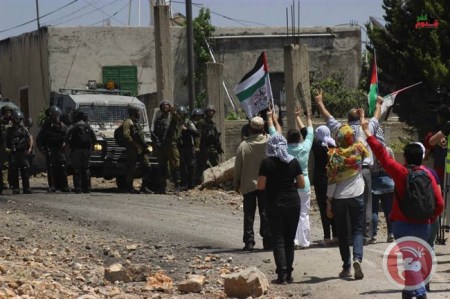
QALQILIYA – Five Palestinians were injured, two critically, when Israelis forces opened live fire on the Kafr Qaddum weekly march Friday.
A coordinator for the village’s popular resistance committee, Murad Shtewi, said that Muhammad Majid, 20, had been shot in the stomach and chest with live rounds and is in critical condition.
Ibrahim Mousa, 35, is also in critical condition after he was shot in the abdomen while in his house.
Shtewi also said that Muhammad Nidal, 20, and Mouiz Khader had been shot in the leg, and Ayman Farouq, 38, in the hand.
Dozens others suffered from excessive tear gas inhalation.
Israeli forces had closed down the village’s entrance since the early morning after they declared it a closed military zone. As a result, those injured had to be evacuated from the village in private cars using dirt roads.
An Israeli army spokeswoman contacted by Ma’an said she would look into it.
Israeli forces routinely suppress weekly marches by violent means.
In Kafr Qaddum, they also regularly declare the village a closed military zone in order to prevent the weekly march from taking place.
The march is carried out to protest the Israeli separation wall and Israeli settlement activity, both illegal under international law.
The internationally recognized Palestinian territories of which the West Bank and East Jerusalem form a part have been occupied by the Israeli military since 1967.
Norwegian pension fund divests from Israeli occupation
MEMO | June 12, 2015
Norway’s largest pension fund has excluded two companies “on the grounds of their exploitation of natural resources in occupied territory on the West Bank.”
KLP, which manages a US$70 billion investment portfolio, formally excluded Heidelberg Cement and Cemex on June 1, following a period of investigation and engagement. The combined worth of KLP’s shareholdings in both Heidelberg Cement and Cemex was approximately $5 million.
Heidelberg Cement and Cemex, leading global suppliers of building materials, operate quarries in the West Bank through their respective Israeli subsidiaries. According to KLP, “the companies pay licence fees and royalties to the state of Israel” while “the products deriving from the quarries are sold primarily for use in Israel’s domestic construction market.”
Based on “a review of applicable international law”, which the company explained in a separate document, KLP concluded that “the companies’ operations are associated with violations of fundamental ethical norms.”
Citing a previous similar case in Western Sahara, KLP noted that the quarries in question were opened after 1967, when Israel’s occupation began. “The opening of a quarry in occupied territory”, KLP said, “is in all probability incompatible with Article 55 of the Hague Regulations.”
The fund, which manages the retirement assets of Norwegian public sector workers, also excluded a further eight companies on the grounds of their income from coal-based operations, corruption, environmental damage, and the production of tobacco.
Featured Video
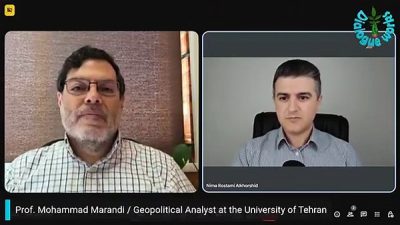
Seyed M. Marandi: U.S. Military DIVIDED? Iran’s Secret Defense EXPOSED
or go to
Aletho News Archives – Video-Images
From the Archives
‘Israel sees Iran as obstacle to its policies’
Press TV – August 25, 2017
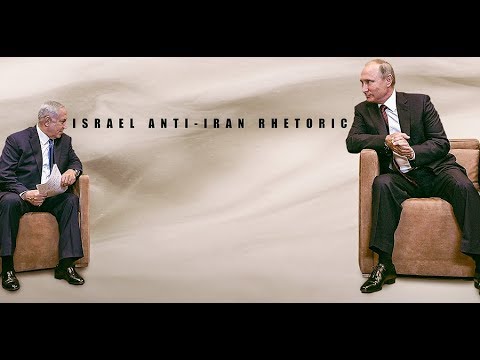
Prime Minister Benjamin Netanyahu has said that Israel felt threatened by Iran’s growing influence in the Middle East. Netanyahu expressed his Iranophobic view in a meeting with Russian President Vladimir Putin in Russia’s Black Sea resort of Sochi on Wednesday. Press TV has asked Scott Rickard, former American intelligence linguist from Tampa, Florida, and Brent Budowsky, a columnist at The Hill from Washington, to give their thoughts on the issue.
Rickard said Tel Aviv is concerned about the fact that the regime could not carry out its old project to spread sectarian divisions and pave the way for dismemberment of the countries in the Middle East region because of the Iranian-led resistance against Israeli policies, not only in the occupied territories of Palestine but also in the whole region.
“Iran is not a threat to Israel whatsoever. The threat that Israel sees is the fact that their Oded Yinon Plan is being put to a hold by Iran,” the intelligence linguist said on Thursday night.
“They (the Israelis) look at Iran as a threat only because they have no influence on their governments and Iran is autonomous and is not under the Zionist influence,” he added.
Since the victory of the Islamic Republic of Iran in 1979, Tehran has been critical of Israel’s policies in the region, whereas “no leaders [of other states] even dared to speak out against Zionism,” Rickard argued. … continue
Blog Roll
 Aletho News
- Iran declares ‘historic victory’ over US, says enemy forced to accept its proposal
- Trump Claims Ceasefire, Reopening of Strait of Hormuz Agreement with Iran
- Israeli tank fire killed UN peacekeeper in Lebanon, UNIFIL investigation finds
- Russia, China block Bahrain-sponsored UN resolution on Strait of Hormuz
- The US-Israeli War on Science is an Assault on our Future
- Trump’s Promise to Bomb Iran ‘Like Never Before’ Faces Brutal Logistics — Expert
- Germany seeks to restrict stays abroad for men of fighting age – Berliner Zeitung
- Evidence points to Ukraine being behind TurkStream attempted sabotage, but that should come as no surprise
- Sri Lanka secures supplies of Russia oil – minister
- Nations across Asia strike direct deals with Iran for Hormuz passage
- If Americans Knew
- Thousands dead and neighborhoods razed to the ground: Aid agencies fear southern Lebanon is becoming the new Gaza
- The war the US is fighting for Israel could cost trillions
- ‘Cigarette Burns, Nail Wounds’: Toddler Tortured in Gaza to Coerce Father
- Trump Says US Sent ‘a Lot of Guns’ to Protesters in Iran
- Israeli forces destroy 17 UN peacekeeper cameras in south Lebanon
- US-Israeli strikes ‘completely destroy’ synagogue in Tehran
- Archbishop for US Military Says Iran War Is Unjust Under Catholic Teaching
- Iranian leaders’ Open Letters to the American People
- Trump says Iranians appreciate bombs, WHO warns of nuclear risks – Daily Update
- U.N. experts demand Israel release prominent Gaza doctor after reports of ‘severe torture’
- No Tricks Zone
- An Inconvenient Tree: Uncovered In Alps… Europe Much Warmer Than Today 6000 Years Ago
- New Study Reports A 60% Slowdown In Greenland’s Ice Loss Rate In The Last Decade
- Low Intensity Tornado Wrecks Major Solar Farm, Creating A Potential Toxic Dump
- New Study Finds Warming Saves Lives…Cold Temperatures 12 Times More Deadly Than Excess Heat
- German Science Blog Accuses PIK Climate Institute Of Hallucinating Climate Tipping Points
- Devastating Assessment Of Comirnaty Vaccine By Former Senior Pfizer Europe Toxicologist
- New Study: CO2 Is ‘Effectively Negligible’ As An Explanatory Climate Change Factor Since 2000
- Former Pfizer Toxicologist Dr. Helmut Sterz Tells Bundestag Hearing Pfizer Vaccine Should Have Never Been Approved
- Energy Expert: Germany’s Nuclear Phaseout Was A “500 Billion Euro Mistake”
- New Research: South Australia’s Mid-Holocene Sea Surface Temperatures Were 4°C Warmer Than Today
 Aletho News