Saudi Arabia biggest sponsor of terrorism: Iran
Press TV – May 27, 2016
Iran says Saudi Arabia is the “biggest sponsor of terrorism” in Iraq and elsewhere, dismissing Saudi Foreign Minister Adel al-Jubeir’s allegations that Iran was meddling in regional affairs.
Foreign Ministry spokesman Hossein Jaberi Ansari was reacting on Friday to Jubeir’s “foolish” remarks about Iran’s role in Iraq and the presence of its military advisers, including Qassem Soleimani, the Fars news agency said.
“The presence of Iran’s military advisers in Iraq under the command of General Qassem Soleimani is at the request of the country’s legitimate government in order to fight terrorists and extremists who have beset Iraq and the region with instability and insecurity,” he said.
“To know its interests and its friends and enemies, the Iraqi nation doesn’t need the remarks by the foreign minister of a country which has been the biggest agent and sponsor of instability and terrorism in Iraq, the region and the world,” he added.
“Instead of trying to deceive the public opinion and distort facts, Adel al-Jubeir must not forget that his country is currently perceived at the international level as the first and most dangerous sponsor of terrorism and the spread of insecurity in the world,” Jaberi Ansari added.
Ties between Iran and Saudi Arabia have been tense since Tehran strongly condemned of the kingdom’s execution of prominent Shia cleric Sheikh Nimr al-Nimr in January.
Riyadh later severed diplomatic relations with Tehran following attacks on two vacant Saudi missions in Iran by angry protesters.
On Thursday, Foreign Minister Sergei Lavrov announced Russia’s readiness to help resolve “specific problems” in ties between Iran and Saudi Arabia.
Moscow enjoys “good ties” with both sides, he said, adding, “We will be ready to use these good relations in order to help create the conditions for a specific conversation on normalization, which can be attained only through direct dialogue of the two sides.”
He made the remarks during Jubeir’s visit to Moscow, denouncing “unacceptable” attempts to portray disagreements between Iran and the kingdom as a rift in the Muslim world.
“We know about the existing disagreements that are purely specific in nature, but we also know about the very dangerous attempts to present these disagreements as a reflection of a split in the Muslim world,” Lavrov said.
Moscow, he said, believes that “such attempts to provoke the situation in this sphere are unacceptable.”
“It is in the interests of Islam to ensure unity of all its branches,” Lavrov added.
Trucks Carrying Weapons For al-Nusra Front Arrive From Turkey Daily
Sputnik – 27.05.2016
Head of the Russian General Staff told journalists that trucks carrying weapons for the al-Nusra Front cross from Turkey into Syria daily. This allows the terrorist group to continue attacking local targets.
Lt. Gen. Sergey Rudskoy said in his press briefing on Friday that weapons and ammunition are continuously being delivered to the al-Nusra Front terrorists in Syria, allowing them to engage Syrian government forces and hindering the fight against Daesh in the country.
“The never-ending flow of large trucks from Turkey carrying weapons and ammunition crosses the Turkish-Syrian border. This constant feed of live forces and weapons allows terrorists from the Nusra Front to continue their provocative shelling and make advances on Syrian government forces, which diminishes [government military] activity against Islamic State terrorists in other areas,” Rudskoy said during a briefing.
Rudskoy also added that the US has acknowledged that the heaviest fighting is centered around areas where the al-Qaeda affiliated al-Nusra Front is most active.
“Everyone knows, and our US partners admit that the biggest hot spots of active military operations are those parts of the Syrian Republic where the al-Qaeda-affiliated terrorists from the al-Nusra Front run rampant.”
So far, according to Rudskoy, the US has refused to conduct joint operations against terrorist groups in Syria, which has led to an escalation of the conflict.
The al-Nusra Front terrorist group hampers the ceasefire efforts in northern areas of Syria, the Russian General Staff said Friday.
“It is very clear that the terrorist group Jabhat al-Nusra, active in the regions of Aleppo and Idlib, is the main obstacle to expanding the ceasefire regime to northern areas of Syria,” Sergey Rudskoy, chief of the Main Operational Directorate of the Russian General Staff, said.
Moreover, the Al-Nusra Front has used the ‘period of silence’ to partly restore its combat capability. Rudskoy told reporters.
Earlier, Russian Defense Minister Sergey Shoigu offered to conduct joint air strikes against terrorist groups in Syria, but the Pentagon declined the offer. However, The Russian Foreign Affairs Ministry says Moscow hasn’t ruled out a possible joint operation in the future.
Nominally Populist Sweden Democrats Help Ratify NATO Deal
Sputnik – May 27, 2016
After Sweden Democrats reneged on earlier pledges to make a last-ditch effort to stall the decision, the Swedish parliament effortlessly railroaded through an agreement which essentially allows NATO to deploy forces in Sweden and brings the non-aligned Nordic country yet another step closer to the alliance.
The Swedish parliament ratified the so-called Host Nation Support Agreement (HNSA) after a proposal by the Left Party to put off the decision by one year, initially backed by Sweden Democrats, was voted down by 291 votes to 21.
The right-wing populist Sweden Democrats made an about-face ahead of the vote, abandoning plans team up with the Left Party, which argued that the hotly-debated deal posed a significant risk to the rights and freedoms stipulated in Sweden‘s constitution.
Despite earlier pledges by party leader Jimmie Åkesson to join efforts with the Left to stop the agreement he claimed posed “a threat to Sweden’s neutrality,” the Sweden Democrats had second thoughts in the eleventh hour and voted unanimously in favor of the controversial deal with NATO.
Remarkably, the party has been against closer NATO ties from the very beginning and officially stays true to its ideals.
Bizarrely, several Sweden Democrats party members claimed on Twitter and Facebook that they actually voted against the agreement, and that the parliament had published erroneous information on its website, news outlet Fria Tider reported.
The Left Party’s leader, Jonas Sjöstedt, condemned their usual antagonists’ U-turn.
“I am not at all surprised. The Sweden Democrats have been very wobbly on issues to do with freedom from alliances for some time now,” he said as quoted by the tabloid newspaper Aftonbladet.
Originally signed in September 2014, the HNSA allows the alliance to deploy helicopters, aircraft, ships and personnel across Swedish territory, but only at Sweden’s request. Since the agreement involved changes to Swedish regulation regarding privileges and immunities afforded NATO staff, a parliamentary ratification was necessary.
Additionally, public opinion in traditionally neutral Sweden, which boasts several centuries of non-alignment, has markedly shifted towards NATO in recent years. A survey by pollster Sifo, released in September 2015, marked the first time the majority of Swedes actually were in favor of NATO.
The HNSA may be seen as a major victory for Defense Minister Peter Hultqvist, who, despite formally denouncing perspectives of joining NATO, prepared a long series of agreements that would steadily increase Sweden’s involvement with the alliance.
Yesterday, the Swedish government entrusted the Swedish Civil Contingencies Agency MSB with negotiating a cooperation agreement with NATO’s Center for Strategic Communications in Riga, Latvia, in order to address the “information war” on Russia’s part, Swedish television network SVT reported. Hultqvist repeatedly urged Sweden to join the NATO Strategic Communications Centre of Excellence (STRATCOM), which is charged with targeting propaganda in traditional and social media.
Despite the soothing rhetoric that such measures “would not affect non-alignment,” today Sweden has emerged as a full-fledged NATO member in all but name.
Sweden’s deliberate creeping towards NATO may set an example for its fellow neutral neighbor Finland, which has also come under immense pressure recently with respect to NATO membership.
In late April, the Finnish Foreign Ministry published an “independent” report exploring the consequences of NATO membership for Helsinki. The report’s primary conclusion was that the Nordic duo should stay together: either in both joining the alliance or declining the generous offer.
The Web They Want: How a twitter wordsearch justifies internet censorship
Off Guardian | May 26, 2016
Earlier this year the Guardian launched their new campaign – “The Web We Want”. It’s an agenda driven campaign to suppress free speech and protect the ancien media regime from the alt-news revolution, in the name of protecting ethnic minorities, female writers and the LGBT community from the all the hate that pours out of the privileged fingertips of all the white men on the internet.
We have written extensively on what the Guardian really means by “the web they want”. We know their statistics are a farce and can see through their editorial double talk. Their place in a planned roll out of an idea is obvious, coinciding with political climbers from all parties making speeches attacking free speech in the name of freedom. Banning liberty because… won’t somebody please think of the children!
When the Guardian talks about “taking action” against internet abuse, we know what they mean. They mean censorship. There’s nothing more need be said. But this latest story cries out for a response.
Apparently by tracking the number of tweets that use the word “slut” or “whore” you can track the “huge scale” of social media misogyny. Yes, seriously:
The study monitored the use of the words “slut” and “whore” by UK Twitter users over three weeks from the end of April. It found that 6,500 individuals were targeted by 10,000 aggressive and misogynistic tweets in that period.
The study, conveniently published the day before Yvette Cooper launches her “Reclaim the Internet” movement, is rather vague on the details. We don’t know how they collected their data, or what their criteria for inclusion/exclusion were. Bearing that in mind we’re going to have to make some educated guesses: Since rough estimates put the number of twitter users in Britain at between 12 and 20 million people, 6,500 is roughly 1/2000th. You have, apparently, a 1/2000 chance of being “targeted” by a tweet using the word slut or whore. Personally, that is risk I am willing to take.
The study is not clear on how they select “aggressive” tweets, so we’ll have to assume they just collate all the tweets containing the word “slut” and/or “whore”. We don’t know how many of these uses are truly abusive – many may have been jokes – but it does not really matter.
Another interesting caveat:
… more than half of the offenders were women.
Yes. It seems women are the biggest misogynists of all. An interesting fact, buried in the article, made even more interesting with some context. Firstly, women make up considerably less than half of the twitter users in the UK. Less than half of the users, more than half the misogyny. Secondly, over 1/3 twitter users in Britain are between 15-24. With this context you can paint a rather more accurate picture – that the bulk of this “online misogyny” is made up of young women, aged 15-24, calling each other names (possibly in jest).
That this qualifies as a “study” at all is ludicrous, that the Guardian can try to peddle it as “shocking” is, frankly, laughable. The figures are meaningless.
Of course, this is the Guardian, so a poorly done, lazily explained statistical study must be followed by an editorial from whichever member of the Guardian’s insipid, pre-programmed writing staff happens to pull the day shift. In this instance it’s Polly Toynbee. “Why we need a feminist internet”, the headline declares, “feminist” in this instance meaning “controlled”.
She paints a picture of a dank, dark internet. A squalid, David Fincher-directed world, full of unwashed slug-like life-forms crawling over each other in an effort to spread slime and shit to every corner of the civilised world. She has nothing new to say. She repeats tired memes about free speech bullying “victims” into silence, about “trauma” and “safe spaces” and the “need to act.” She explains that women abusing each other on twitter is actually the fault of the Patriarchy, because female anger is all based on being unable to match the ideal woman presented in the media.
Like all Guardian editorials, you can discard the majority. It is designed to seed an idea, and can be reduced down to one key paragraph that pushes its agenda:
The internet has turned all discourse rougher, pushing politics and all views towards extremes. It can make individuals feel inadequate and vulnerable and let them lash out to express their own insecurities. As the Guardian’s the web we want project explores, it is in our hands to shape a civilising internet that serves us well, not one that tears civilisation apart.
There are important questions posed here: What does Toynbee mean by “our hands”? Who will this “reshaped” internet be “serving well”? What does “serves us well” mean? Does she really believe that teenaged name calling on twitter could “tear civilisation apart”? What does she really mean by “civilisation?”
To whom, or what, does a free internet REALLY pose a threat?
You’d be forgiven for reading “rougher” as slang for “more honest”, for reading “extreme” as “less controlled”. You might say the “individuals” it makes feel “inadequate”, are the workaday hacks who so consistently have their inaccurate agitprop ridiculed and corrected below the line.
With this paragraph you get the feeling of an organism protecting itself, like watching a pillbug curl in upon itself. The above is a plea for compliance. They want permission to enact a policy that leaves the definitions of “rough discourse” (see:honesty) and “civilisation” (see:establishment) open for interpretation. The repeated patterns and tired prose of the “web we want” sections have an increasing air of desperation. Again and again they wheel out the same faces to sell the same snake oil. Rather like the pillbug, it seems the Guardian’s last line of defense is to stick its head up its ass.
UN Body on Prevention of Torture Suspends Visit to Ukraine
Sputnik – 25.05.2016
The UN Subcommittee on Prevention of Torture (SPT) decided to halt its visit to Ukraine as it did not get access to some sites where it suspected infringements of human rights were taking place, the Office of the United Nations High Commissioner for Refugees (UNHCR) said Wednesday.
“The delegation concluded that the integrity of the visit, which began on 19 May and was due to end on 26 May, had been compromised to such an extent that it had to be suspended as the SPT mandate could not be fully carried out,” the UNHCR statement said.
Malcolm Evans, head of the delegation, told the UNHCR that the delegation was denied access to the sites where tortures and ill-treatment allegedly was taking place.
The UNHCR said it is only the second time it was forced to suspend its mission under the Optional Protocol to the Convention against Torture (OPCAT), according to which the SPT has a right to visit all sites of detention without preliminary notification.
Evans called on Ukraine to fulfill its duties under the OPCAT that will enable the SPT to resume its mission.
“The SPT expects Ukraine to abide by its international obligations under the Optional Protocol, which it ratified in 2006. We also hope that the Government of Ukraine will enter into a constructive dialogue with us to enable the SPT to resume its visit in the near future and so work together to establish effective safeguards against the risk of torture and ill-treatment in places where people are deprived of their liberty,” he said.
The Optional Protocol to the Convention against Torture entered into force in 2006 and is ratified by 81 countries including Ukraine.
Europe Revolts Against Russian Sanctions
By Finian CUNNINGHAM | Strategic Culture Foundation | 26.05.2016
From ministerial offices to barricades on the streets, Europe is in open revolt against anti-Russian sanctions which have cost workers and businesses millions of jobs and earnings. Granted, the contentious issues are wider than anti-Russian sanctions. However, the latter are entwined with growing popular discontent across the EU.
Germany’s vice chancellor Sigmar Gabriel is among the latest high-profile politicians to have come out against the sanctions stand-off between the European Union and Russia.
At stake is not just a crisis in the economy, of which the anti-Russian sanctions are symptomatic. It is further manifesting in a political crisis that is challenging the very legitimacy of EU governments and the bloc’s institutional existence. The issue is not so much about merely trying to normalize EU-Russian relations. But rather more about preserving the EU from an existential public backlash against anti-democratic and discredited authorities.
Gabriel, who also serves as Germany’s economy minister, said that relations between the EU and Moscow must be quickly normalized. And he called for the lifting of sanctions that have been imposed since early 2014 as a result of the dubious Ukraine conflict. The EU followed Washington’s policy of slapping sanctions on Russia after accusing Moscow of «annexing» Crimea and interfering in Ukraine’s internal affairs. The charges against Russia are tenuous at best and are far removed from the mundane pressing concerns of ordinary EU citizens, who are being made to bear a heavy economic price for a stand-off that seems unduly politicized, if not wholly unwarranted.
Russia responded to the sweeping sanctions by implementing counter-measures banning exports from the EU and the US. The stand-off has hit the European economies hardest, with the Austrian Institute of Economic Research estimating that the trade war will cost the EU over €100 billion in business and up to 2.5 million in jobs. By contrast, the US has scarcely felt a pinch from the trade impasse.
Germany, Europe’s biggest economy with the largest trade links to Russia, has suffered most from the sanctions rift. Up to 30,000 German businesses are invested in Russia, amounting to as many as half a million jobs in danger and €30 billion in lost revenues, according to the Austrian Institute of Economic Research.
In one German state alone, Saxony-Anhalt, the local economy minister Jorg Felgner says that exports to Russia have been slashed by 40 per cent, with the loss of €200 million to his state. Felgner is among the growing chorus of EU voices who are calling for the anti-Russian sanctions to be lifted when the EU convenes in July to decide on whether to extend its embargo or not.
The EU has been reviewing its sanctions policy on Russia every six months since 2014. To extend the measures, a unanimous decision is required among all 28 member states. It looks increasingly unlikely that the EU will maintain its hitherto unanimity. It can be safely assumed that if Brussels were to end the sanctions, then Moscow will respond in kind to promptly resume normal trade with the bloc.
In addition to the country’s vice chancellor, Germany’s foreign minister Frank-Walter Steinmeier has also expressed disquiet with the ongoing EU-Russian tensions stemming from the sanctions. Steinmeier noted that «resistance to anti-Russian sanctions is growing across the EU».
He also reiterated dismay over a fundamental contradiction in EU policy objectives. «How can we expect Russia’s help in solving the Syrian crisis while at the same time imposing economic sanctions on Russia?» asked Steinmeier.
It’s not just Germany that is growing leery with the deterioration in relations with Russia. Hungary and Italy, which have also strong historic trade ties with Russia, are increasingly opposed to the EU’s policy towards Moscow, according to a recent Newsweek report.
Added to the maligned mix is Greece. The country’s six-year economic crisis has been greatly exacerbated by the loss of a once-bustling agricultural export business to Russia. The country’s finance minister Dimitrios Mardas attributed major losses specifically to the anti-Russian sanctions, which have piled on fiscal deficits to the teetering Greek economy. Greece is no isolated problem. It threatens to undermine the whole EU from its chronic bankruptcy.
In France, the National Assembly’s Lower House voted last week by 55 to 44 votes to end the EU sanctions on Russia. The vote is non-binding on the government of President Francois Hollande. Nevertheless, it demonstrates the growing popular opposition to what is widely seen as a self-defeating policy of trade antagonism with Russia.
The cancellation last year by the Hollande government of the Mistral dual helicopter-ship contract with Moscow epitomizes the self-inflicted pain on French workers. The cancellation – cajoled by Washington – cost the French government revenues of over €1.5 billion and has put thousands of shipyard jobs at risk. Paris claims to have since directed the ships’ order to Egypt, but that remains doubtful.
The economic losses from anti-Russian sanctions have rebounded severely on French farmers too. Dairy, meat, vegetable and fruit exports to the once lucrative Russian market have been pummeled. Hollande recently vowed to release €500 million in state aid to placate angry farmers. The absurdity is not lost on the French agricultural sector that such state handouts would not be necessary if the Hollande government hadn’t sabotaged Russian markets in the first place by following US hostility towards Moscow, as in the case of the Mistral fiasco.
France’s economic problems, as with the rest of Europe, are not entirely related to the downturn in relations with Russia. But there seems little doubt that the issues intersect and are compounded. And the public knows that.
Hollande – the most unpopular French president since the Second World War – is ramming through draconian labor reforms. The president and his truculent prime minister Manuel Valls claim that the retrenchment of workers’ rights will boost the economy and reduce France’s soaring unemployment rate of 10 per cent nationally and 25 per among French youth.
In opposition to the French government’s deeply unpopular assault on workers’ rights, the country is to observe nationwide strikes this week. The protests have been going on now for several months and seem set to escalate, as Hollande’s administration digs its heels in and refuses to relent.
Among students and farmers joining France’s nationwide strike are workers in the transport sectors of road haulage, rail, shipping and airports. With exports to Russia slashed due to the French government-backing of EU sanctions, the transport sectors are among the hardest hit. The Hollande government’s attempt to force through labor cuts, purportedly to reinvigorate the economy, is seen as it trying to offload responsibility for economic woes on to workers and businesses. If Hollande did not pick a fight with Russia – at Washington’s goading – then the country’s economy wouldn’t be under such duress.
Across Europe, the popular revolt against economic austerity is bound up with the EU’s self-defeating sanctions on Russia. And it is leading to a crisis of authority among EU governments who are held with increasing disdain by their citizens. More enlightened political leaders like Germany’s vice chancellor Sigmar Gabriel and foreign minister Frank-Walter Steinmeier are obviously aware of the geopolitical connection that citizens are making.
As Europe’s economic crisis deepens, the policy of anti-Russian sanctions is tantamount to the EU cutting off its nose to spite its face. The growing public disaffection is also fueling the electoral rise of anti-EU political parties in Germany, France, Britain, Netherlands, Hungary, Poland, Slovakia and other member states.
Mainstream EU parties like the ruling coalition government in Berlin realize that the EU’s trade war with Russia is simply becoming untenable. It is an ideologically driven and dubious antagonism that the EU can ill-afford. That policy speaks to EU citizens of a political leadership that is losing legitimacy from its fundamentally wrongheaded and anti-democratic governance. As well as from slavish pandering to American hegemonic ambitions.
Brussels, in following Washington’s hostility to Moscow, is inflicting further economic pain on the bloc’s 500 million citizens. Something has to give way if Europe is not to implode, or explode, from popular fury. Normalizing relations with Russia is not the whole solution to Europe’s economic and political crises. But such a move would certainly alleviate. And is long overdue.
EU governments are thus facing a stark choice. Are they to continue on the path of destruction at Washington’s reckless behest, or can they find an independent policy of pursuing mutual relations with Russia? Undoing the crass anti-Russian sanctions is taking on an urgency – before such a policy leads to the undoing of the EU itself.
Israeli authorities transfer political prisoner Marwan Barghouti to undisclosed location
Ma’an – May 26, 2016
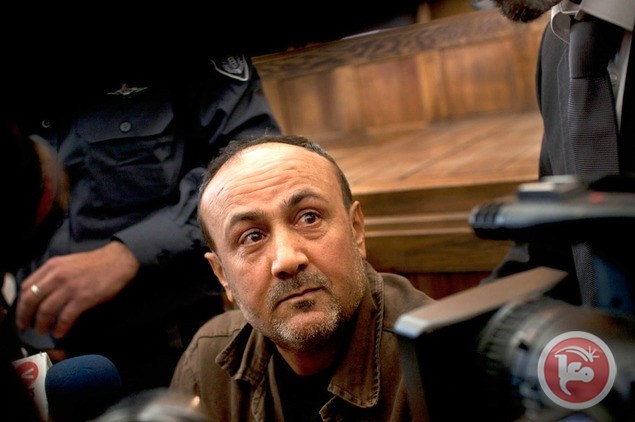
JERUSALEM – Israeli prison authorities transferred detained prominent Palestinian parliament member Marwan Barghouti from Israel’s Ramon prison to an unidentified location on Thursday, according to Palestinian sources.
Barghouti, a member of Fatah’s central committee, was transferred to Israel’s Ramon prison five days before the most recent transfer to an undisclosed location, according to a statement by the Palestinian Committee of Prisoners’ Affairs.
While Barghouti was held in Ramon, he was reportedly prevented from moving between sections of the prison or communicating with other prisoners.
The committee stated Israeli Prison Services were responsible for arbitrary violations and abuses against the imprisoned politician.
Barghouti, a leading politician in the Fatah party, entered the 15th year of his prison sentence this year.
A spokesperson for the Israeli prison service was not immediately available for comment.
After being detained in 2002, Barghouti was later handed five consecutive life sentences after Israeli authorities charged him with the founding of the Al-Aqsa Martyrs’ Brigade, a group Israel designates as a “terrorist” organization, and being involved in several murders during the Second Intifada, charges he has consistently denied.
The imprisoned parliament member was politically active for several decades before being elected to parliament in 1996. However, he ascended to prominence as a powerful leader against Israeli military occupation amid the political upheaval of the Second Intifada.
He has remained politically active from behind bars, including assisting in the drafting of the Mecca agreement in 2007, which paved the way for a unity government aimed at ending internal political conflict in the besieged Gaza Strip.
Barghouti remains one of the most popular politicians in Palestine, receiving a wide range of support among various political factions. Many see him as an indispensable component of hope for the possibilities of obtaining a viable peace process and a renewed unification throughout the Palestinian political landscape.
Barghouti also received a PhD in Political Science while imprisoned and has most recently received three nominations for the 2016 Nobel Peace Prize, including a nomination from leading members of Belgium’s parliament.
Featured Video
No Threat Can Force Iran’s Surrender /Trita Parsi & Lt Cl Daniel Davis
or go to
Aletho News Archives – Video-Images
From the Archives
An Expert Military Analysis of War with China
Actually, None is Necessary
By Fred Reed • Unz Review • December 13, 2020
The Correlation of Armed Forces: U.S. goods and services trade with China totaled an estimated $634.8 billion in 2019. Exports were $163.0 billion; imports were $471.8 billion. The U.S. goods and services trade deficit with China was $308.8 billion in 2019. Trade in services with China (exports and imports) totaled an estimated $76.7 billion in 2019. Services exports were $56.5 billion; services imports were $20.1 billion. The U.S. services trade surplus with China was $36.4 billion in 2019.
There is talk within the Washingtoniat of a possible war with China. Steve Bannon, who apparently was dropped on his head as a child, actually favors such a war. We hear the usual shoo-the-boobs alarm about how the Chinese are doing something terrible and we must gird our loins and American values and show them what for, bow wow, woof. The danger is that the current game of who-blinks-first in Asian waters might actually provoke a shooting war. You know the kind of thing: One warship refuses to get out of the way of another, a collision ensues, some retard lieutenant who signed up on waivers opens fire, and we’re off and running. It is not a good idea to let children play with matches.
The said war is discussed either in emotional terms by idiots or in purely naval terms by those familiar with such things, so we hear of the First Island Chain and the Second Island Chain and whose missiles against the other’s missiles and so on. This would be appropriate if we were fighting World War Two again. Which we aren’t. Let’s take a quick-and-dirty look at how such a war might go.
To begin the war, America would overestimate itself and underestimate China. This is doctrine in the Pentagon. … continue
Blog Roll
 Aletho News
- Iran To Target Military Industrial-Tech Complex That Facilitated Gaza Genocide
- Collapsing Empire: The Resistance Disarms ‘Israel’
- Suicide Should Not Be a Government Service
- Rethinking America’s greatest threat: Iran vs. Israel-Firsters
- Iran accuses adversaries of false flags to strain Turkey ties
- Poland rules out sending Patriot missiles to US/Israel amid war on Iran
- Tehran approves new Hormuz plan with major restrictions
- No Threat Can Force Iran’s Surrender /Trita Parsi & Lt Cl Daniel Davis
- UK’s New Pandemic Plan Would Turn Big Tech Into a Mass Location Tracking Network
- Growing insecurity, soaring prices fuel protests in north as regime bans evacuation: Sources
- If Americans Knew
- Joe Kent Urges Americans To Call White House and Congress To Object To Sending Troops Into Iran
- DNC Resolution to Reject AIPAC Funding Puts Democratic Leaders in the Hot Seat
- Swedish foundation to build 400 schools as over 650,000 Gaza children remain without education for 2 years
- Israeli army admits photshopping image of slain Lebanese journalist
- This is how Israel is systematically killing health workers under the cover of war in Lebanon
- Carrying life under fire: Israeli invasion of Lebanon leaves pregnant women facing deadly risks
- Champagne all around for the new death penalty (for Palestinians) law – Not a ceasefire Day 172
- Why are Palestinian books struggling to be seen on Amazon?
- The Line Between Affinity and Conspiracy
- As Iran targets US military bases, will they be relocated to Israel? Not a ceasefire Day 171
- No Tricks Zone
- New Study Finds Warming Saves Lives…Cold Temperatures 12 Times More Deadly Than Excess Heat
- German Science Blog Accuses PIK Climate Institute Of Hallucinating Climate Tipping Points
- Devastating Assessment Of Comirnaty Vaccine By Former Senior Pfizer Europe Toxicologist
- New Study: CO2 Is ‘Effectively Negligible’ As An Explanatory Climate Change Factor Since 2000
- Former Pfizer Toxicologist Dr. Helmut Sterz Tells Bundestag Hearing Pfizer Vaccine Should Have Never Been Approved
- Energy Expert: Germany’s Nuclear Phaseout Was A “500 Billion Euro Mistake”
- New Research: South Australia’s Mid-Holocene Sea Surface Temperatures Were 4°C Warmer Than Today
- Storing Green Energy To Last Germany 10 Days Would Require A 60-Million Tonne Battery
- New Studies: UK Sea Levels Were 4 Meters Higher Than Today During The Mid-Holocene
- Destructive Green New Deal: German Energy And Metal Group Warns Of Drastic Crisis
 Aletho News