Freddie Gray Case Judge Rules it is Unreasonable to Expect Cops to Obey the Law
A Black Agenda Radio commentary by executive editor Glen Ford | May 25, 2016
The cops charged in the death of Freddie Gray had another good day in a Baltimore courtroom, on Monday, when one of the six officers was found not guilty of second degree assault, misconduct and reckless endangerment. Officer Edward Nero had opted not to undergo a trial by jury, so the case was decided by a Black circuit court judge, Barry Williams. The trial of another cop, William Porter, ended in a mistrial back in December when the jury deadlocked on all four counts. If Officer Porter is tried again, it will be after the trials of all the other cops are completed.
But Officer Nero is home free, because Judge Williams ruled that there was “no evidence that the cop intended for a crime to occur.” Judge Williams was affirming the triple legal standard that exists in American law: one standard for cops, another for civilians in general, and no reliable expectation of justice at all for Black people.
Officer Nero was one of the cops that arrested Freddie Gray, dragged his limping body to a police transport wagon, and then failed to secure him with a seatbelt. Gray was given a wild ride through the streets of Baltimore, his handcuffed body crashing into the sides and front of the vehicle, fatally severing his spine.
Lawlessness Begins with the Lawmen
Freddie Gray’s only offense was to run away after making eye contact with a police supervisor – which is not a crime in anybody’s law book. But, as my colleague Bruce Dixon often says, cops are like hounds, and Black people are treated like rabbits, and when a rabbit runs away from the hounds they will chase it down and tear it apart.
So, the hounds are on trial in Baltimore. The prosecution maintains that the cops had no right to arrest and move Freddie Gray – that this amounted to second degree assault on his person. In her closing arguments, deputy state’s attorney Janice Bledsoe said “people get jacked up in the city all the time” by cops, and such behavior must be punished. But, the judge seemed to think it would be ridiculous to treat every arrest as criminal just because there were no grounds for arrest. Officer Nero’s lawyer agreed, saying it didn’t make any difference if the cops acted illegally in arresting Freddie Gray. “Wrong or right isn’t the standard,” said the cop’s attorney. “The standard is, were they so wrong that it was unreasonable?”
So, cops have to be more than just guilty of breaking the law; they must be “unreasonably” guilty – whatever that is.
Warren Brown, a defense lawyer who observed the proceedings, said: “If you’re going to go back and charge every police officer whose arrest was determined to be illegal with assault, or every search that’s deemed to be absent probable cause, [then] you’re going to indict the entire police force.”
Sounds good to me. Indict them all, and empower the people to form a security force that respects, and is answerable to, the community it serves. But, of course, it would be “unreasonable” for Black people to expect anything that smacks of justice in America.
Glen Ford can be contacted at Glen.Ford@BlackAgendaReport.com.
Afghan Taliban: Haibatullah Akhundzada Appointed New Leader
Al-Manar | May 25, 2016
 The Afghan Taliban on Wednesday announced influential religious figure Haibatullah Akhundzada as their new leader after confirming supremo Mullah Akhtar Mansour’s death in a US drone strike.
“Haibatullah Akhundzada has been appointed as the new leader of the Islamic Emirate (Taliban) after a unanimous agreement in the shura (supreme council), and all the members of shura pledged allegiance to him,” the insurgents said in a statement.
It added that Sirajuddin Haqqani, an implacable foe of US forces, and Mullah Yakoub, the son of Taliban founder Mullah Omar, were appointed his deputies.
Haibatullah was one of two deputies under Mansour, who was killed in a US drone strike on Saturday, the first known American assault on a top Afghan Taliban leader on Pakistani soil.
Mansour’s killing is a major blow to the militant movement just nine months after he was formally appointed leader following a bitter power struggle, and sent shockwaves through the leadership.
Haibatullah’s appointment comes after the Taliban’s supreme council held emergency meetings that began Sunday in southwest Pakistan to find a unifying figure for the leadership post.
Taliban sources told AFP the supreme council members were lying low and constantly changing the venue of their meetings to avoid new potential air strikes.
Liberation Day in South Lebanon: Resistance and Memory at Khiam Prison

Samidoun Palestinian Prisoner Solidarity Network – May 25, 2016
25 May 2016 not only marks the 16th anniversary of the liberation of South Lebanon from 22 years of Israeli occupation and oppression by the Lebanese Resistance, but also the liberation of Lebanese political prisoners from the infamous Khiam prison. On 23 May 2000, 144 Lebanese prisoners were liberated from Khiam, 2 days before the complete withdrawal of the occupation forces.
3,000 Lebanese stormed Khiam, the site of infamous torture of Lebanese resisters, breaking the locks with axes and crowbars. “Set up by the Israelis in 1985 on a hill in the village of Khiam in the South Lebanon Governorate, the Khiam prison was considered to be one of the most ruthless detention and interrogation centers in the Middle East. While the Israelis governed the prison, which included 67 cells and more than 20 solitary confinement cells, they used the South Lebanon Army (SLA), an Israeli proxy militia made up of Lebanese nationals, to execute their orders,” wrote Rana Harbi in Al-Akhbar.
Over 5,000 Lebanese, including 500 women, were imprisoned in Khiam prison over the years. Lebanese who participated in all forms of resistance to the occupation and its proxy forces were tortured brutally inside the notorious prison. The prison after its liberation became a museum and symbol of the torture of the occupiers and the victory of the Lebanese people and their resistance, of their freedom obtained through struggle and years of resistance.
In 2006, when Israel attacked Lebanon, it bombed the Khiam site, leaving a pile of rubble at the site of the prison, as if attempting to destroy the memory of its torture, brutality – and its defeat – preserved by the Lebanese people. However, the memory and commitment to resistance of the former prisoners – many of whom continue to struggle and play leading roles in Lebanese movements and parties, including Hezbollah and the Lebanese Communist Party – and of the people, cannot be erased by the bombing of the prison site, just as they could not be erased by torture, solitary confinement, and years of imprisonment.
The liberation of Khiam prison was not merely symbolic; it was central to the liberation of South Lebanon, just as the liberation of Palestinian prisoners is central to the struggle for the liberation of Palestine. The Lebanese people and Resistance continue to struggle against Israeli occupation of the Shebaa Farms; and the Palestinian people and their Resistance continue to struggle for the liberation of Palestine – its land, its people and its prisoners after over 68 years of occupation. The victory in South Lebanon and the liberation of Khiam remains an anniversary of liberation and a promise for future victories over torture, oppression and occupation.
The following testimonies of former prisoners held in Khiam prison were collected and published in Al-Akhbar by Rana Harbi in 2014:
Degol Abou Tass
In 1976, at the age of 16, I was arrested in a village in occupied Palestine for the first time. I told the Israelis that I trespassed by mistake. They knew I was lying but released me anyway. My parents packed my bags and forced me to leave the country. I found out later that I was the first Lebanese citizen to get arrested by the Israeli forces.
I came back to Rmeish [a village on the borders in South Lebanon] in the 1980s after the Israeli invasion of Lebanon. The civil war was still raging in Beirut but in the south different resistance movements, such as the Lebanese Communist Party, the Amal Movement, Syrian Social Nationalist Party and many other factions, united against the Israelis. A few months after my arrival, the SLA knocked on my parents door. I had to leave the country, again.
I was miserable. I couldn’t stay away for long. In the early 1990s I came back to Rmeish. All the armed groups were long gone. Hezbollah dominated the resistance scene. I tried to reconnect with old militia leaders but in vain.
One day, an old childhood friend pulled into my driveway. “Are you willing to fight with us?” he asked. I looked uncertain. “Us … Hezbollah,” he added. I climbed into his car and we drove away. In 1998, one of my neighbors ratted me out.
“A Christian with Hezbollah? Now that’s something,” the Israeli officer interrogating me said. “How much are they paying you? We will pay double, no triple. What is your price? We can work something out,” he continued. I remained silent. “Okay then Jesus, welcome to Khiam prison.”
In Khiam prison we died a hundred times every day. Torture included electric shocks, being tied naked to a whipping pole for hours under the burning sun in the summer and snow in the winter, and getting whipped and beaten continuously with metal rods, wires and nightsticks.
We were caged and treated like animals. Believe me, it wasn’t so much about the pain, but the humiliation.
On the morning of May 23, 2000, the guards were talking and walking outside, as usual. Suddenly, complete silence. You could hear a pin drop. We heard the daily UN airplane fly by so we knew it was 9:30 am. “Where did they go?” one prisoner asked. We had no idea.
“They are moving us to occupied Palestine,” yelled a prisoner in a cell right next to ours. I put my feet on the shoulders of two of my cellmates so that I can reach the small window right under the ceiling. “All of us?” I asked. “They will execute half and take half … this is what we heard,” replied another prisoner. Before I could even reply I heard a noise coming from a distance. I couldn’t see anything. The voices grew louder and louder.
“Looks like our parents are clashing with the SLA guards as usual,” one prisoner said. “I bet my mother is still trying to bring me food,” another exclaimed. And then we heard gunshots. People were screaming. More gunshots.
“They are shooting our parents!” said one frightened detainee. “No, the mass execution began. They will execute half of us remember!” replied another. Panic attacks. Anxiety. Fear.
I put my ear against the door. I heard ululations. I heard prayers. I heard women. I heard children. Suddenly, the door opening through which food was usually served broke wide open. “You are liberated, you are liberated!” I fell on my knees. I thought I was hallucinating. I put my fist out. Two men grabbed my fist. “Allah akbar, Allah akbar (God is the greatest) … you are liberated!” My cellmates were all kneeling on the floor in disbelief. The locks were getting smashed from the outside. I cried aloud and the door broke wide open. I don’t really remember what happened next.
I was the first prisoner to get caught on camera. My parents watched the liberation of Khiam on TV because Rmeish was still under occupation at the time. They didn’t recognize me though. My hair and beard were too long and well, I was screaming “Allah akbar!”
Fourteen years later, I’m living with my wife and children in Rmeish, and every morning I drink my coffee while looking over occupied Palestine.
Adnan al-Amin
In November 1990 I was picking up photos from a store in Marjeyoun, a city in south Lebanon, when I got arrested. I was 19 at the time.
They put a tight black cover over my head and made me strip naked. Suspended from my bound wrists from a metal pole, hot and cold water was thrown on me consecutively … hot cold hot cold until I was completely soaked. Then they attached electrodes to my chest and other particularly sensitive areas of my body and electrocuted me, repeatedly.
In the 70 day interrogation period, I was tortured three times per day. I used to lose consciousness and wake up to find myself stumbling blindly in a pitch-black, 1m by 80cm by 80cm solitary confinement room.
We were tied to window grills naked for days in painful positions, freezing water thrown at us in the cold winter nights. We were whipped, beaten, kicked in the head and the jaw, burned, electrocuted, had ear-shattering whistling in our ears, and deprived of food and sleep … it was hard, very hard.
I endured the pain. With time, I became numb. I survived it all without saying a word. I was winning, I thought.
One morning, they dragged me into the interrogation room. “You didn’t tell me your sister was this beautiful,” one of the SLA officers said. My whole world came crashing down. “Wait until you see his mother,” said another. Handcuffed, I threw myself on him from across the table. It costed me 14 hours in the “chicken cage,” a 90-cubic-centimeter enclosure used for extra-severe punishment.
The SLA used to bring in the wives, sisters and daughters of the prisoners and treat them in a vulgar manner like taking off their head scarves, groping them and threatening to rape them. For me, the mere thought was intolerable. “Your sister will pay you a visit tomorrow. You miss her don’t you?”
“I’m a Hezbollah fighter,” I confessed.
Up to 12 prisoners were crammed in a tiny room. We were buried alive. The cells were like coffins. Light and air hardly penetrated through the small, barred windows located near the ceiling. We could barely breathe. We used to relieve ourselves in a black bucket placed in the corner. The heavy odor of human sweat and wastes was intolerable. We showered every three or four weeks. Once a month, we were allowed into the “sun or light room” for 20 minutes only.
One night in 1991 I woke up to the deafening screams of a detainee being tortured in the yard. The louder he screamed, the harder he got whipped. His cries were unbearable, beyond anything I had ever heard before. “You are killing him, you animals,” one of my fellow cellmates shouted.
We started banging on the door of the cell, kicking it with our feet, yelling and asking them to stop. Other prisoners in other cells joined us, but the lashes kept falling and the cries continued. And then … silence. Youssef Ali Saad, father of eight, died under torture on that cold January night. One month later, Asaad Nemr Bazzi died because of medical neglect.
Do you know what the worst part was? Fellow Lebanese citizens did this to us. I almost died on the hands of a man named Hussein Faaour, my neighbor in Khiam. Abu Berhan, another torturer I remember was from Aitaroun. The SLA members were all Lebanese, mostly from the south. Family members, neighbors, childhood friends, classmates, teachers … Lebanese who decided to sell their land and people for cash.
Lebanese who are now living among us like nothing happened, as if they did nothing! It breaks my heart that our former tormentors have escaped punishment so easily.
Fourteen years later, I’m still waiting for justice.
Nazha Sharafeddine
In 1988, I was in Beirut purchasing medicine for my pharmacy in al-Taybeh (a village in South Lebanon) when the SLA forces, aware of my role in transferring arms to Hezbollah fighters, first came looking for me. They stormed into our house again a week later but my mother told them I was in Bint Jbeil. It was the truth but they didn’t believe her.
I remember opening the front gate that afternoon and seeing my mother waiting, weeping and trembling on the doorstep. “They took away your sister and your sister-in-law along with Hadi (her five-month-old baby.) My daughter, my grandson!” she cried. I put on my clothes and waited for the SLA on the front porch. My sister was 20-years-old at the time and I was 26. My mother begged me to run away, but I didn’t.
My mother collapsed on the ground next to the SLA vehicle. I sat in the backseat and they took me away.
Blindfolded I was shoved into the interrogation room. Boiling water was thrown on my face, and my fingers and ears were electrocuted. I didn’t say a word. This went on for a month.
“I heard Hadi is sick,” one of the Israeli officers told me one morning. He wasn’t lying. My sister in law got infected and breastfeeding her child was not an option anymore. Psychologically, I suffered greatly. I wished they would just beat me up instead. I struggled, but I remained silent. Two months later Hadi and his mother, along with my sister, got released. They were of no use to the Israelis anymore.
Women detainees, like men, were severely tortured. You see, gender equality is not always a good thing [she laughs]. Let me tell you how the torture stopped.
After spending 15 days in solitary confinement, I found out upon my return to the cell I shared with six other women that one of my fellow prisoners had an extremely disgusting skin rash. I examined her and as a pharmacist I knew that her rash was contagious. As planned, I got infected. Soon, my skin started changing and I looked like an acid attack victim.
Clearly disgusted by my deteriorating skin, the SLA guard dragged me by my hair into yet another torture session. The torturer, a woman, was waiting for me. With my hair still trapped between the guards fingers, he forced me down to my knees. Before the torturer’s fist reached my jaw, I told her that my skin condition was contagious. The guard instantly let go of my hair and they both took a step back. I tried to keep a straight face but I couldn’t hide my smile. Nobody laid a hand on me after that day.
Fourteen years later, I made peace with the past. My three years in Khiam were tough, but now I feel blessed. I really do.
Russia Denounces External Forces for Crisis in Venezuela
By Rachael Boothroyd Rojas – Venezuelanalysis – May 24, 2016
Caracas – Russia’s Foreign Ministry has spoken out against “outside” efforts to destabilise Venezuela, warning against the consequences of imposing “colour scenarios” on the South American nation.
On Monday, Russian news agency Tass and Sputnik International reported that Russia’s Foreign Ministry had released an official statement addressing the current situation in Venezuela.
“The upsurge of tensions in Venezuela is being fed from outside,” asserted the Foreign Ministry statement.
“We are confident that a political solution to Venezuelan problems is to be found by the Venezuelan people who have elected its legitimate authorities… Destructive interference from outside is inadmissible,” it continued.
The South American country has been suffering from a worsening economic crisis for the past two years and is currently locked in a political stand-off between the executive branch and the opposition controlled legislature.
In firm language, the declaration also reminded other global powers that “no-one has the right to impose ‘color scenarios’ on Venezuela, referring to the outside financing of “proxy” organisations aimed at destabilising the national government.
Russia also warned that current tensions in Venezuela risk spilling over into open conflict on the nation’s streets, bringing “serious consequences” for the rest of the region.
Moscow’s remarks come as the Union of South American Nations (UNASUR) begins to take tentative steps towards opening up negotiations between Venezuela’s two warring political factions: the leftist government of Nicolas Maduro, and the rightwing political coalition, the MUD, which currently controls the National Assembly.
However, escalating rumours of a possible coup against the national government in recent weeks are threatening to dampen hopes of a rapprochement.
The MUD has pledged to remove Maduro through a variety of “constitutional” means since taking hold of the legislature last December.
Nonetheless, Russia said it backed a UNASUR negotiated solution to the crisis and asked both sides to “cool down” their emotions. It also confirmed it would be open to participating in negotiation efforts in Venezuela if requested.
“We are confident that the main challenge facing Venezuela at the moment is to find realistic ways out of the economic crisis, improve the social situation of broad layers of the population… It is obvious that this is possible only in conditions of internal political tranquility,” asserted the foreign ministry declaration.
Although Moscow didn’t name the “outside” influences which it cites as exacerbating tensions in Venezuela, it is possible that the US has caught the Kremlin’s eye.
Just last week, Russia’s Vice-minister for Foreign Affairs, Sergéi Ryabkov, said that his government believed that Washington was intensifying its attempts to directly “interfere” in Latin American affairs to the detriment of the region.
He cited a swing to the right in Argentina’s government, as well as the recent controversial impeachment of Brazil’s left leaning president, Dilma Rousseff, as examples.
Russia Not to Discuss Conditions for Lifting Sanctions – Lavrov
Sputnik – 25.05.2016
Russia has not and will not get into discussions on criteria to lift sanctions, Russian Foreign Minister Sergei Lavrov said.
The West has introduced several rounds of sanctions against Russia since 2014, accusing Moscow of meddling in Ukraine’s internal affairs and fueling the conflict in the southeast of Ukraine, however Russia denies the allegations and has responded to the restrictive measures with a food embargo.
“As for the future of these restrictions, this question should be directed to those who initiated the sanctions spiral. We have not and will not discuss any conditions or criteria for lifting these restrictive measures,” Lavrov told Hungary’s Magyar Nemzet newspaper.
“The European Union has linked this to Russia fulfilling the Minsk agreements,” the minister said. “Such a connection is absurd, because our country, as is well known, is not party to the conflict in Ukraine. Such a stance only encourages Kiev to sabotage the Minsk measures without any consequences.”
Unilateral Sanctions Unable to Force Russia to Sacrifice National Interests
Russia will not give up on pursuing its national interests due to attempts to pressure it through unilateral sanctions, Russian Foreign Minister Sergei Lavrov said.
“It is clear that attempts to pressure Russia through unilateral sanctions will not force us to abandon our principled line or to sacrifice our national interests,” Lavrov told Hungary’s Magyar Nemzet newspaper.
“Significant security risks”: State Department says Clinton violated email security rules
RT | May 25, 2016
Hillary Clinton violated federal records rules by never obtaining permission to conduct official business on private email server during her tenure as secretary state, a State Department audit concluded.
The report from the State Department’s inspector general say mentions “longstanding, systemic weaknesses” in the agency’s communications even before Clinton took office there, but it singles her out as having been a particularly bad offender for her exclusive use of private, unsecured email.
“Secretary Clinton had an obligation to discuss using her personal email account to conduct official business with their offices, who in turn would have attempted to provide her with approved and secured means that met her business needs” says the audit, which was first obtained by Politico.
“At a minimum, Secretary Clinton should have surrendered all emails dealing with Department issues before leaving government service and, because she did not do so, she did not comply with the Department’s policies that were implemented in accordance with the Federal Records Act,” the report continued.
The 78-page report is the culmination of a review prompted by last year’s revelations that Hillary Clinton conducted official business on a private email server, rather than the secured government servers that officials are expected to use, during her four years in the Obama administration.
The inspector general states that its findings are based on interviews with Secretary of State John Kerry, and predecessors Colin Powell, Condoleeza Rice and Madeleine Albright.
Clinton and her deputies, including Cheryl Mills and Huma Abedin, declined the inspector general’s request for interviews, Politico reported.
The report said that State Department workers are required to use “agency-authorized information systems to conduct normal day-to-day operations” because the use of other systems “creates significant security risks.”
The inspector general went on to recommend that the State Department remind employees that the use of personal email accounts to conduct official business is “discouraged in most circumstances,” and improved policies to promote compliance by all employees – including the secretary of state. The State Department’s management concurred with these recommendations.
“While people were aware of her use of personal email, no one had a full and complete understanding of the extent,” said the State Department’s representative Mark Toner. “We acknowledge that we need to do a better job with our record keeping.”
Clinton campaign spokesman Brian Fallon responded to the report on Wednesday, saying that the report actually showed that Clinton’s practices were consistent with previous secretaries of state.
“[A]s this report makes clear, Hillary Clinton’s use of personal email was not was not unique, and she took steps that went much further than others to appropriately preserve and release her records,” Fallon said.
Clinton herself made the same argument in a March debate. However, Politifact found that statement to be “mostly false.”
However, the State Department has apparently made progress in its record keeping systems.
“Any email that [Secretary Kerry] sends is automatically copied and saved automatically,” the agency’s Deputy Spokesman said at a press briefing. “This automatic archiving approach does comply with the Federal Records Act.”
The audit is only one part of a much larger controversy. Clinton, who is the likely Democratic presidential nominee, is currently under investigation by the FBI for potentially putting highly sensitive information at risk, a fact that has become an important talking point in the election.
Clinton has contended that since most of her emails were sent to other people in the state department, she was complying with the federal law requiring the preservation of government records.
Though the FBI’s investigation is still ongoing, the inspector general’s audit casts doubt on this defense, saying that sending emails to other State Department accounts “is not an appropriate method of preserving any such emails that would constitute a federal record.”
Clinton’s use of a private email account came to light in 2013, when a hacker going by the name of Guccifer accessed the email account of her aide Sydney Blumenthal. The hacker, whose real name is Marcel Lazar, pleaded guilty to various hacking-related offenses on Wednesday.
Israeli President Applauds Shin Bet Chemist Doing “God’s Work” Developing Chemical Weapons for Assassinations
By Richard Silverstein | Tikun Olam | May 25, 2016
The Israeli settler publication, Arutz 7, reported that the Shin Bet gave special merit awards to personnel who excelled in their work. The prime minister and president both attended a ceremony at the President’s House. Pres. Rivlin praised the Shin Bet efforts as “God’s work.” Among those applauded was an assassin who uses chemical and biological weapons in his “creative efforts.”
“A.,” age 32, works as a chemist in the technology division. The text declares that he heads a staff which develops capability for special “deterrence” (an Israeli intelligence euphemism for assassination), using advanced technological-operation methods. He’s shown tremendous initiative and creativity by struggling to meet major challenges in the technology realm. He’s thought to be the top of his field and a font of knowledge for numerous elements of the intelligence apparatus. He’s even known as “Mr. Q” after the name of James Bond’s technology wizard. A nickname which reflects his level of ingenuity and ability to transform something from the realm of the imagination into reality as far as Shabak operations are concerned.
An Israeli security source confirmed that A’s work involves assassinations, including this one Yossi Melman reported, involving the 2004 murder of a Hamas commander through food poisoning.
‘We became subcontractors to the occupation’: B’Tselem ends work with Israeli army
Ma’an – May 25, 2016
BETHLEHEM – After 25 years of accountability work in the occupied West Bank, Israeli human rights organization B’Tselem announced on Wednesday its decision to discontinue their strategy of holding Israeli forces accountable for their crimes against Palestinians through internal military mechanisms.
Representatives of the organization, which focuses on collecting information and documenting Israeli human rights violations against Palestinians in the occupied West Bank, called their complicity in Israel’s military mechanisms “morally unacceptable,” in a press briefing on Tuesday.
According to a new report released by the organization, the inefficiency of Israeli military mechanisms to provide justice for Palestinian victims led the organization to label their accountability activities as a “whitewash machine” for the continuation of the nearly 50-year Israeli military occupation of the West Bank.
“B’Tselem has gradually come to the realization that the way in which the military law enforcement system functions precludes it from the very outset from achieving justice for the victims. Nonetheless, the very fact that the system exists serves to convey a semblance of law enforcement and justice,” the report stated.
The report argued that the veneer of legal legitimacy “makes it easier to reject criticism about the injustices of the occupation, thanks to the military’s outward pretense that even it considers some acts unacceptable, and backs up this claim by saying that it is already investigating these actions.”
“In so doing, not only does the state manage to uphold the perception of a decent, moral law enforcement system, but also maintains the military’s image as an ethical military that takes action against these acts,” the report added.
Since the start of the second intifada in late 2000, of the 739 complaints filed by B’Tselem of Palestinians being killed, injured, used as human shields, or having their property damaged by Israeli forces, roughly 70 percent resulted in an investigation where no action was taken, or in an investigation never being opened.
Only three percent of cases resulted in charges being brought against the soldiers, according to the report.
Field Researcher for B’Tselem Iyad Haddad told Ma’an on Tuesday that Israeli and Palestinian NGOs worked for many years to create a “culture” of accountability in Palestinian communities plagued with deeply-rooted mistrust for Israeli military bodies, convincing Palestinians to submit complaints to the Israeli military when faced with human rights violations.
However, the organization became complicit in the violations by reinforcing the credibility of a system incapable of providing results or any semblance of justice for individuals or their families, Haddad said.
Kareem Jubran, field research director of B’Tselem, said he was “ashamed” of B’Tselem’s engagement with the military occupation during the press briefing, adding that the process forced victims to become victims a second time, as Palestinians are commonly mistreated by military investigators while their cases rarely result in accountability or justice.
“We became subcontractors to the occupation,” Yael Stein, a research director of B’Tselem, said in the conference, adding that the organization’s accountability work served to “legitimize the whole occupation.”
The decision has led the group to redesign its strategy from direct accountability to working in the “public arena” through a launch of a public awareness campaign that can “rob the system of its credibility,” Executive Director Hagai Elad said.
B’Tselem’s disengagement with internal mechanisms of the Israeli military occupation comes in the midst of an increasingly right-wing government and renewed attacks on Israeli human rights organizations.
Newly appointed ultra-right Defense Minister Avigdor Lieberman accused B’Tselem earlier this year of being funded by the same groups financing Hamas — the Palestinian movement leading the besieged Gaza Strip’s de facto government, which has been designated a “terrorist” organization by the Israeli government — while calling B’Tselem “traitors” to the Israeli public.
In December, Ayelet Shaked, leader of the ultranationalist Israeli Home Party, pushed for a so-called “transparency” bill that would compel NGOs to reveal their sources of funding if more than 50 percent of their funding came from foreign entities, in a push to crack down on groups who receive foreign funding in order to criticize Israel.
Critics have slammed the bill, which passed its first reading in the Knesset in February, with the chairwoman of the left-leaning Meretz party Zehara Galon calling it a “continuation of the witch hunt, political persecution, and censorship of human rights groups and left-wing organizations that criticize the government’s conduct.”
Since organizations in Israel which rely on foreign funding also tend to oppose the government’s right-wing policies against Palestinians, the potential legislation is widely considered discriminatory and an attempt to weed out human rights groups working to end the large-scale human rights violations that occur in the occupied territory.
B’Tselem’s recent decision to focus on public awareness in Israeli society marks a unique shift in Israeli human rights approaches to violations against Palestinians, in a political climate where far-right views are increasingly becoming mainstream, and concerted attacks on human rights groups could be considered government policy.
Jaclynn Ashly contributed reporting from Jerusalem.
Russia’s Gazprom No Longer Interested in Israeli Gas Field Development
Sputnik — May 25, 2016
Russian energy giant Gazprom is no longer interested in participating in the development of Israel’s Leviathan gas field in the Mediterranean Sea, Russian media reported Wednesday, citing an unnamed Gazprom source.
According to the Vedomosti newspaper, the source did not specify why the company had decided to abandon the project. Gazprom is reportedly not considering any other projects in Israel at the moment.
In 2012, the company was in talks with Leviathan’s operating firms on buying a 30-percent stake in the development project. At the time, Total, ExxonMobil, ConocoPhillips, Chevron, Woodside Petroleum also wanted a part in the project, however Gazprom offered the largest sum.
Currently, the Leviathan gas field, first drilled in 2011, is one of the largest young gas reserves in the world. According to the US Geological Survey, Leviathan’s volume of undiscovered reserves amounts to some 620 billion cubic meters of natural gas.
Nuclear threats in US worse than previously known — study
RT | May 25, 2016
Conflicting with a prior industry study, a new analysis claims 96 nuclear facilities in the US are less safe than reported, citing risks such as terrorism and sabotage. The study says there remain lessons to be learned from the Fukushima disaster.
Neglect of the risks posed by used reactor fuel, or spent nuclear fuel, contained in 96 aboveground, aquamarine pools could cost the US economy $700 billion, cause cancer in tens of thousands of people as well as compel the relocation of some 3.5 million people from an area larger than New Jersey, a study released May 20 finds.
The National Academies of Sciences, Engineering, and Medicine’s study, ‘Lessons Learned from the Fukushima Nuclear Accident for Improving Safety and Security of US Nuclear Plants,’ is the second installment of a two-part study ordered by Congress on the 2011 Fukushima Daiichi nuclear disaster in Japan. It not only cites, but also outright challenges a 2014 study by the Nuclear Regulatory Commission, the US industry’s regulator and enforcer of safety standards.
The spent fuel, The Academies’ study recommends, is safer in dry casks rather than pools, because of the risk of leaks, drawing water away from the irradiated nuclear rods. An accident, terrorist attack or malicious employee all pose greater dangers to the pools, the study says.
Aside from calling on the Nuclear Regulatory Commission to offer a better evaluation of the health risks posed, The Academies study conducted by 17 engineers, nuclear physicists and other scientists demands the commission fulfill a 10-year-old promise to put together an impartial review of the surveillance and security policies on spent nuclear fuel.
“Even with the recommendations that the Academies’ board has put together,” Nuclear Regulatory Commission spokesman Scott Burnell responded, “we continue to conclude that spent fuel is being stored safely and securely in the US.”
“Nothing in the report causes immediate concern,” Burnell added, although the commission is planning a more formal follow-up later this year, according to The Center for Public Integrity.
Congress felt compelled to fund the study on Japan’s natural-turned-nuclear disaster to help prevent a similar accident from occurring in the US. On March 11, 2011, the Daiichi nuclear plant in Fukushima was thrashed by an earthquake and tsunami, leaving three reactors without power or coolants, which resulted in their radioactive cores melting down.
Pure luck kept the disaster from becoming even worse, The Acadamies found. Instead of Daiichi’s highly radioactive rods being exposed to oxygen, which would have sent over 13 million people packing from as far as 177 miles south in Tokyo, a leak happened to be situated between a fuel rod pool and a reactor core, which sent just enough coolant to keep the vulnerable rods from rising above the water. In the end, 470,000 people were evacuated and the still ongoing cleanup is estimated to cost about $93 billion.
The Nuclear Regulatory Commission’s 2014 study put the highest odds of an earthquake happening near spent fuel storage at one in 10 million years, boasting that “spent fuel pools are likely to withstand severe earthquakes without leaking,” while the odds of a terrorist attack or internal subversion were deemed incalculable and left out of any risk assessment.
Calling that cost-benefit analysis “deeply flawed,” The Academies panel member Frank von Hippel, also an emeritus professor and senior research physicist at Princeton University, complained that the commission’s study also left out the impact on property contamination in a 50-mile radius of an accident, tourism rates and the economy, The Center for Public Integrity reported.
The new analysis also calls for new officially designated risk assessments of safety and financial impacts at the federal level as well as what improvements aboveground dry casks may bring compared to pools. The latter is estimated to cost upwards of $4 billion by the industry.
Featured Video
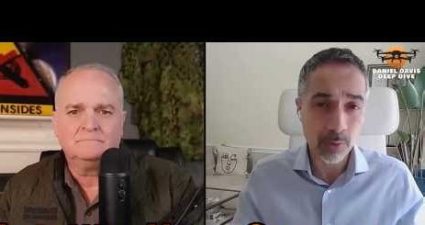
No Threat Can Force Iran’s Surrender /Trita Parsi & Lt Cl Daniel Davis
or go to
Aletho News Archives – Video-Images
From the Archives
An Expert Military Analysis of War with China
Actually, None is Necessary
By Fred Reed • Unz Review • December 13, 2020
The Correlation of Armed Forces: U.S. goods and services trade with China totaled an estimated $634.8 billion in 2019. Exports were $163.0 billion; imports were $471.8 billion. The U.S. goods and services trade deficit with China was $308.8 billion in 2019. Trade in services with China (exports and imports) totaled an estimated $76.7 billion in 2019. Services exports were $56.5 billion; services imports were $20.1 billion. The U.S. services trade surplus with China was $36.4 billion in 2019.
There is talk within the Washingtoniat of a possible war with China. Steve Bannon, who apparently was dropped on his head as a child, actually favors such a war. We hear the usual shoo-the-boobs alarm about how the Chinese are doing something terrible and we must gird our loins and American values and show them what for, bow wow, woof. The danger is that the current game of who-blinks-first in Asian waters might actually provoke a shooting war. You know the kind of thing: One warship refuses to get out of the way of another, a collision ensues, some retard lieutenant who signed up on waivers opens fire, and we’re off and running. It is not a good idea to let children play with matches.
The said war is discussed either in emotional terms by idiots or in purely naval terms by those familiar with such things, so we hear of the First Island Chain and the Second Island Chain and whose missiles against the other’s missiles and so on. This would be appropriate if we were fighting World War Two again. Which we aren’t. Let’s take a quick-and-dirty look at how such a war might go.
To begin the war, America would overestimate itself and underestimate China. This is doctrine in the Pentagon. … continue
Blog Roll
 Aletho News
- Iran To Target Military Industrial-Tech Complex That Facilitated Gaza Genocide
- Collapsing Empire: The Resistance Disarms ‘Israel’
- Suicide Should Not Be a Government Service
- Rethinking America’s greatest threat: Iran vs. Israel-Firsters
- Iran accuses adversaries of false flags to strain Turkey ties
- Poland rules out sending Patriot missiles to US/Israel amid war on Iran
- Tehran approves new Hormuz plan with major restrictions
- No Threat Can Force Iran’s Surrender /Trita Parsi & Lt Cl Daniel Davis
- UK’s New Pandemic Plan Would Turn Big Tech Into a Mass Location Tracking Network
- Growing insecurity, soaring prices fuel protests in north as regime bans evacuation: Sources
- If Americans Knew
- Ann Coulter Rips Into Fox News for Iran War Coverage, Compares to False Rigged 2020 Election Reporting
- Joe Kent Urges Americans To Call White House and Congress To Object To Sending Troops Into Iran
- DNC Resolution to Reject AIPAC Funding Puts Democratic Leaders in the Hot Seat
- Swedish foundation to build 400 schools as over 650,000 Gaza children remain without education for 2 years
- Israeli army admits photshopping image of slain Lebanese journalist
- This is how Israel is systematically killing health workers under the cover of war in Lebanon
- Carrying life under fire: Israeli invasion of Lebanon leaves pregnant women facing deadly risks
- Champagne all around for the new death penalty (for Palestinians) law – Not a ceasefire Day 172
- Why are Palestinian books struggling to be seen on Amazon?
- The Line Between Affinity and Conspiracy
- No Tricks Zone
- New Study Finds Warming Saves Lives…Cold Temperatures 12 Times More Deadly Than Excess Heat
- German Science Blog Accuses PIK Climate Institute Of Hallucinating Climate Tipping Points
- Devastating Assessment Of Comirnaty Vaccine By Former Senior Pfizer Europe Toxicologist
- New Study: CO2 Is ‘Effectively Negligible’ As An Explanatory Climate Change Factor Since 2000
- Former Pfizer Toxicologist Dr. Helmut Sterz Tells Bundestag Hearing Pfizer Vaccine Should Have Never Been Approved
- Energy Expert: Germany’s Nuclear Phaseout Was A “500 Billion Euro Mistake”
- New Research: South Australia’s Mid-Holocene Sea Surface Temperatures Were 4°C Warmer Than Today
- Storing Green Energy To Last Germany 10 Days Would Require A 60-Million Tonne Battery
- New Studies: UK Sea Levels Were 4 Meters Higher Than Today During The Mid-Holocene
- Destructive Green New Deal: German Energy And Metal Group Warns Of Drastic Crisis
 Aletho News