International aid workers in Gaza found spying on resistance
MEMO | June 16, 2016
A group of employees working with international organisations active in the Gaza Strip have been found to be carrying out activities against the resistance, security website Al-Majd reported yesterday.
Security sources told the Hamas owned website that the group was found to be carrying out doubtful activities related to work sites for the Palestinian resistance.
Later on, the workers of international aid organisations were questioned and they recognised that they are connected to international intelligence services.
The foreigners recognised that they were asked to record footage of resistance work sites such as tunnels, military bases and other sensitive places, in addition to monitoring military movements in Gaza.
The security source reiterated that these collaborators used their work with the international aid organisations to cover-up their anti-resistance acts.
At the same time, they recognised that they are run by international intelligence services connected with the Israeli occupation.
Clinton’s National Security Strategy: Endless Wars of Aggression

By Stephen Lendman | June 16, 2016
Her deplorable record speaks for itself, publicly supporting all US wars of choice, naked aggression against nonbelligerent states, raping them, responsible for mass slaughter, destruction and appalling human misery.
Don’t let her deceptive rhetoric fool you. Urging escalated war on ISIS ignores its US creation along with likeminded terrorist groups – used as imperial foot soldiers.
America’s phony war on terror is a pretext for state terror, targeting sovereign independent nations worldwide, justifying homeland repression, turning planet earth into a battleground, risking its destruction.
The possibility of a Clinton presidency should terrify everyone. She deplores peace and stability, wants America leading aggressively in waging global wars – not to “defeat ISIS” or “disrupt and dismantle the growing terrorist infrastructure… around the world.”
To foster and facilitate it, help it spread, support it with US weapons, air power and ground forces, maintain a permanent state of war.
Russia and China are her prime targets of choice, wanting regime change by whatever methods it takes, her recklessness risking nuclear war. Her madness threatens humanity.
She urges stepped US military action against Syria, unilaterally imposed no-fly zones over parts of the country on the phony pretext of creating safe areas, US-controlled puppet rule replacing Assad.
She’s militantly pro-Israel/anti-Iranian, irresponsibly accusing its government of supporting terrorism, wanting its regional influence “counter(ed),” earlier saying “(w)e cannot view Iran and ISIS as separate challenges.”
She urges Congress “swiftly pass an updated authorization to use military force… The time for delay is over.”
She wants the nonexistent threat of homegrown terrorism addressed more aggressively, targeting “radical jihadism” and anyone opposing US imperial aims.
She supports full-blown tyranny replacing what remains of constitutional protections on the phony pretext of protecting national security at a time America’s only enemies are ones it invents.
Her disturbing response to Orlando shootings, saying “weapons of war have no place on our streets,” ignores her advocacy for using them aggressively against one sovereign state after another.
A Clinton presidency assures the horror of four more years of war, waged on humanity at home and abroad – risking a third global conflict with super-weapons able to end life on earth.
Stephen Lendman lives in Chicago. He can be reached at lendmanstephen@sbcglobal.net.
His new book as editor and contributor is titled “Flashpoint in Ukraine: US Drive for Hegemony Risks WW III.”
UAE terminates military attacks in Yemen
Press TV – June 16, 2016
The United Arab Emirates (UAE) has announced the end of its combat operations in Yemen, marking a departure from the Saudi-led coalition that has been waging war on the impoverished country.
“Our standpoint is clear: war is over for our troops. We are monitoring political arrangements, empowering Yemenis in liberated areas,” Sheikh Mohammed bin Zayed Al Nahyan, the crown prince of Abu Dhabi and the deputy supreme commander of the UAE Armed Forces, wrote on his official Twitter account late on Wednesday, quoting earlier remarks by Minister of State for Foreign Affairs Anwar Gargash.
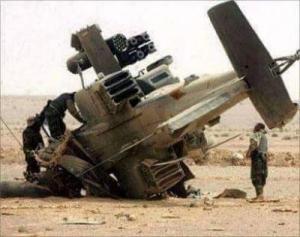 No explanation has been offered as to why the decision was made.
The UAE had been suffering heavy casualties in Yemen, where Ansarullah fighters and allied military units have been fighting back against the Saudi-led invaders.
On Monday, an Emirati military helicopter crashed near the al-Buraiqeh coast of the southern Yemeni port city of Aden, killing its two pilots.
On March 14, two Emirati pilots died when their Mirage fighter jet crashed due to a technical fault while conducting military operations for the Saudi-led military coalition in the same Yemeni district.
A senior Emirati military commander and three other Saudi-backed foreign mercenaries had been killed in an attack by Yemeni forces in the Dhubab district of the southwestern province of Ta’izz two months earlier.
Last September, the UAE confirmed that at least 52 of its soldiers were killed when Ansarullah fighters and allied fighters from Popular Committees fired a barrage of missiles at Saudi-led foreign troops in the central Ma’rib Province. At least 70 soldiers were also injured in the missile attack.
Meanwhile, there are reports that Jordanian military forces and advisers will be replacing UAE troops fighting in the Saudi war on Yemen.
Yemen’s Khabar news agency, citing informed sources, reported that the decision had been made following a visit by Saudi Deputy Crown Prince Mohammad bin Salman Al Saud to Jordan in mid-April.
Mohammad, who is also the Saudi defense minister, met King Abdullah in the Jordanian port city of Aqaba and signed a package of agreements, including on military cooperation.
The Saudi crown prince also traveled to the UAE in an effort to mend fences after reports of significant friction between the two allies over the war on Yemen.
A Saudi decision earlier this year to dismiss a former general with close ties to the UAE angered Emirati authorities.
In February, Saudi Arabia sacked Khaled Bahah and appointed Ali Mohsen Al Ahmar to lead the fight against Yemen’s Houthis. Ahmar had been based in Saudi Arabia since Ansarullah fighters took over Sana’a in 2014.
Saudi Arabia launched its military aggression against Yemen on March 26, 2015, in a bid to bring former President Abd Rabbuh Mansur Hadi — who is a staunch ally of Riyadh — back to power and defeat the Ansarullah movement.
More than 9,400 people have been killed and at least 16,000 others injured since the onset of the aggression.
The Saudi strikes have also taken a heavy toll on the country’s facilities and infrastructure, destroying many hospitals, schools, and factories.
Noor Zahi Salman: Everything You’re Hearing About Me Is a Lie
By Sam Husseini | June 15, 2016
Virtually everything in the media about Noor Zahi Salman, Omar Mateen’s wife, is from anonymous government sources. They lie in situations like this.
Such anonymous sourcing helped facilitate the lies used to invade Iraq and countless other horrific policies. They’re doubly dangerous during a panic, consider that after government anthrax killed people in 2001, Andrew Sullivan talked about using nuclear weapons.
And the government has a lot of incentives to lie about this case. They failed to keep people safe. So, what to do? Blame the wife. Blame the Muslims. They didn’t alert us. They are suspect. Potentially, all of them. That’s what Trump — and Clinton in more subtle ways — are saying.
I didn’t need to be in contact with people who know Noor Zahi Salman to know that, but it helps.
In fact, I am in touch with a friend of hers who is in regular contact with people around her now. This means I am probably in closer touch with the actual facts of the case than the zillion media outlets blaring whatever it is “sources” are telling them to blare at you. In so doing, they are smearing a woman who was questioned by the most powerful government in the world, smeared on the largest media outlets as a virtual accessory to mass murder — all without the benefit of a lawyer.
She is apparently telling people around her that virtually everything you’re hearing about her is a lie.
Some examples:
NBC claims: “The Orlando gunman’s wife feared he was going to attack a gay nightclub overnight Saturday and pleaded with him not to do anything violent — but failed to warn police after he left, NBC News has learned.”
Noor Zahi Salman is apparently saying she didn’t have any idea of an attack.
NBC claims: “In addition, she said she was with him when he bought ammunition and a holster, several officials familiar with the case said.”
Noor Zahi Salman is apparently saying she didn’t do that. She says it might be possible that they went shopping together — and she went to buy food or clothing and he might have gone to a gun store. In any case, why is this on her? Why are people focusing on her and not the “security” firm G4S that employed Mateen? How is it that the FBI is suddenly off the hook?
The Daily Beast claims: “Noor Zahi Salman also reportedly drove Mateen to the gay nightclub Pulse to case the place before he killed 49 people there on Sunday night.”
Noor Zahi Salman is apparently saying that she never drove him to the club and that in fact, she doesn’t like to drive at all.
ABC claims: “After Noor Mateen began to answer questions, agents administered a polygraph test to determine whether she was telling the truth.”
Noor Zahi Salman is apparently saying she offered to take a polygraph but the government declined.
Noor Zahi Salman is apparently “free”, but with an electronic bracelet.
What we apparently have is severe logrolling between media and government — where government sources hide behind anonymous quotes and media hide behind anonymous sources. So, basically, they can mutually absolve each other and publish most anything that will benefit the both of them.
Seriously, what’s the justification for using anonymous sources on this story? My justification for using my anonymous sources is that they are scared. The only thing the government sources driving this story are afraid of is that they will be held responsible for their words.
We’re not seeing a free-for-all in terms of everyone speculating as they please. There might be justification for that: Bring on the government stenographer, then bring on the false flag theorist. No, what we’re seeing are directed leaks laying out a pattern of smearing an individual, smearing a community and getting the government and media off the hook for the fact that 50 people are dead.
Some friends of Noor Zahi Salman are apparently speculating that what actually happened was that Omar Mateen was about to be outed as gay — and went nuts. This could have broader implications since “Israel surveils and blackmails gay Palestinians to make them informants.” That clearly is speculative. But far more responsible than speculation that is streaming forth from your TV.
I know more, including an allegation about how the government treated Noor Zahi Salman that would turn your stomach.
I’m not telling all I know now because I have reason to believe it might make the family and friends uncomfortable.
See what I did just there? I was forthright with you, my reader, while respectful of my sources.
Big media propagating anonymous government allegations about Noor Zahi Salman distracts from their own failure to protect the public from attacks.
Instead, it fingers the Arab and Muslim communities as responsible. And that’s a message that is being articulated in ways crude and subtle from our “leaders”:
Says Donald Trump: “But the Muslims have to work with us. They have to work with us. They know what’s going on. They know that he was bad. They knew the people in San Bernardino were bad. But you know what? They didn’t turn them in. And you know what? We had death, and destruction.”
More subtly, says Hillary Clinton: “Since 9/11, law enforcement agencies have worked hard to build relationships with Muslim-American communities. Millions of peace-loving Muslims live, work, and raise their families across America. They are the most likely to recognize the insidious effects of radicalization before it’s too late, and the best positioned to help us block it. We should be intensifying contacts in those communities, not scapegoating or isolating them.” Clinton pretends to be against “scapegoating” when that’s exactly what she just did. Most just let it slide because it’s not as crass as Trump’s formulation of much the same idea.
Most subtle still is President Obama: “Since before I was President, I’ve been clear about how extremist groups have perverted Islam to justify terrorism. As President, I have repeatedly called on our Muslim friends and allies at home and around the world to work with us to reject this twisted interpretation of one of the world’s great religions.”
I don’t know Noor Zahi Salman. I have not had the opportunity to speak to her directly. I don’t know for certain how forthright of a person she is, though even through media reports, several people who have known her have said she’s upstanding. My immediate source I believe is very reliable. Things are rushed, there may be misunderstandings here. Noor Zahi Salman is quite likely in shock, she may be honestly misspeaking, especially when in a coercive environment before threatening government agents.
Now, would I like more sources to confirm what I’m writing? Yes, I would, but I think it would be irresponsible to let what are likely falsehoods contaminate the public mind on virtually every major media outlet given the limited capacity to communicate directly with Noor Zahi Salman at this time.
NYT Praises Obama’s Phony War on Terror, Lauds Clinton, Blasts Trump
By Stephen Lendman | June 15, 2016
New York Times editors never let facts interfere with their worldview, consistently misinforming readers, willfully lying.
On Tuesday, they ignored Obama’s imperial madness, his high crimes against peace, his rage for wars, waging them in multiple theaters, using ISIS and other terrorist groups as US foot soldiers.
Instead they praised what demands universal condemnation and accountability, saying in a Tuesday speech, Obama “listed the ways in which his administration has worked to subdue the threat of terrorism abroad and home” – at the same time denouncing what he called Trump’s “dangerous” mindset.
Fact: America created ISIS and likeminded terrorist groups.
Fact: It uses them in Syria, Iraq, Libya and elsewhere, providing their fighters with arms and other material support, waging wars on sovereign independent states, wanting US-controlled puppet regimes replacing them.
What’s ongoing is longstanding imperial policy, wanting all nations transformed into US vassal states. Instead of denouncing America’s war on humanity, The Times supports it.
As part of its pro-Clinton, anti-Trump campaign, it quoted Obama’s Big Lie about nonexistent US “pluralism and… openness, our rule of law, our civil liberties, the very things that make this country great.”
“The very things that make us exceptional.” The very things neocon infested Washington rejects.
On Thursday, Obama heads for Orlando – not “to bring solace to grieving families and a stricken city” as The Times suggests – solely to exploit last Sunday’s shootings for political advantage, ignoring a likely state-sponsored false flag, his administration responsible for what happened.
He’s been at war with Islam throughout his tenure, Hillary Clinton its lead orchestrator as secretary of state, an unindicted war criminal/racketeer The Times endorses.
Ignoring her rage for escalated war on humanity and increased crackdowns on fundamental homeland freedoms in the wake of Orlando, it praised her for “echo(ing) many of (Obama’s) points and even some of his language” – quoting her saying “(h)istory will remember what we do in this moment.”
“History” documents millions of US imperial victims at home and abroad, its contempt for rule of law principles, its rage for unchallenged dominance, its threat to world peace.
Neocon infested Democrat and Republican parties represent pure evil. World peace hangs in the balance.
Stephen Lendman can be reached at lendmanstephen@sbcglobal.net.
His new book as editor and contributor is titled Flashpoint in Ukraine: US Drive for Hegemony Risks WW III.
UN Warns 30 Million Latin Americans May End Up Back in Poverty
teleSUR | June 15, 2016
A new report says governments must continue to make social investments and place focus on marginalized populations.
As many as 30 million people in Latin America, who were recently lifted out of poverty, could go back to being poor, a report from the United Nations Development Programme warned Tuesday.
Thanks to investments in social programs and wealth redistribution policies over the past 15 years, approximately 72 million Latin Americans were lifted out of poverty and a further 94 million moved into the middle class.
However, according to the UNDP, 2015 and 2016 saw a rise in the number of people living in poverty in the region for the first time in decades.
The report, entitled “Multidimensional Progress: Well-Being Beyond Income,” says more than a third of those who left poverty since 2003 are now at risk of becoming poor again.
The UNDP report stressed that the economic slowdown being experienced throughout the region is only one factor.
“Every Latin American generation decides which structural changes to pursue: there are pending citizenship and resilience challenges that will not be solved with economic growth alone,” said George Gray Molina, lead author and UNDP chief economist for Latin America and the Caribbean.
Molina specified that recent achievements were not attributable to free market policies, but rather direct government intervention.
The UNDP is calling on governments to support vulnerable or marginalized groups through social investment and subsidies.
“Right now, on the one hand, we must protect the region’s past achievements, including preventing millions from of people from falling back into poverty; on the other hand, we must also promote inclusive policies and comprehensive strategies for populations suffering from historical discrimination and exclusion,” said United Nations Assistant Secretary-General and UNDP Regional Director for Latin America and the Caribbean Jessica Faieta.
Left-wing governments, such as Ecuador and Bolivia, have pledged to maintain social investment, despite the downturn in the economy.
However, right-wing governments, such Mauricio Macri’s in Argentina, have pursued policies that have made living more expensive for the poor. According to an April report by the Social Debt Observatory of the Argentine Catholic Church, in only a few months over 2 million Argentines have been pushed into poverty.
The report also suggested that reforms to tax codes to make them more progressive could lessen the burden on low-income people. Governments throughout Latin America largely depend on revenue from resource extraction and value-added taxes, which tend to be regressive.
A 2015 report by the U.N. Economic Commission for Latin America and the Caribbean called for a reform of tax codes to reduce inequality and improve tax collection on high-income earners.
ANALYSIS:
Industry-Dominated Group Writes Drone Privacy “Best Practices” That Don’t Deserve the Name
By Jay Stanley | ACLU | June 15, 2016
An industry-dominated “multistakeholder process” convened by the Commerce Department recently produced a set of voluntary privacy “best practices” for commercial drones that are so riddled with exceptions and vague language that companies could engage in all sorts of practices that would violate the public’s privacy expectations, while still claiming to comply with these guidelines.
The idea of the process was to produce a set of voluntary best practices to ensure that commercial drone use protects privacy rights. It was convened at the direction of President Obama in an executive order on drone privacy that he issued in February 2015.
Last month, before the document was finalized, we, along with the Electronic Frontier Foundation and Access Now, urged the corporate participants to make a clear commitment to actual best practices, rather than a weak document designed primarily to ensure maximum flexibility in what companies can do with drones. We proposed a set of changes to the document’s language that would have strengthened it enough to allow us to endorse it. Unfortunately, these changes were rejected.
Why won’t Amazon and other industry players in the drone space make a clean commitment to good privacy practices when it comes to drones? To take just one example, I think one thing most Americans would definitely not want to see companies doing with their drones is engaging in persistent and continuous surveillance of people without their consent. Yet this industry-led draft says the best practice is to avoid doing that “in the absence of a compelling need to do otherwise.” A compelling need? What is that? Is Amazon planning to engage in such surveillance with its delivery drones? If not, why wouldn’t it agree to a more straightforward statement? There were a lot of industry players, so I don’t mean to pick on Amazon. Except actually I do, because apparently that company led the meeting negotiations for industry on what turned into the final product.
Perhaps one could dream up scenarios where a company engages in persistent, continuous surveillance of people without their consent, in a way that nobody would find objectionable. I’m not sure what that scenario would look like, but that certainly wouldn’t be a best practice, and the inclusion of such language is far more likely to be abused than to cover such a remote eventuality.
Other areas where we thought the documents language was too weak were around issues such as consent, the collection of data where people have a reasonable expectation of privacy, the sharing of data with third parties, and data retention. We spell out these and other problems in our letter. As it now stands, the document shows more promise as a corporate consciousness-raising document than an assurance that any complying company isn’t doing anything objectionable.
Any company that is operating drones should certainly comply with the practices laid out in this document. But doing so represents the very bare minimum of what companies should do on privacy, not best practices. The NTIA should reject this document, and discussions in the multi-stakeholder process should continue until adequate privacy protections can be included.
Arms Control and Non-Proliferation: Looming Crisis Slipping Through the Cracks of Public Attention
By Andrei AKULOV | Strategic Culture Foundation | 15.06.2016
The missile defense capable USS Porter is in the Black Sea to trigger discussions on the state of European and global security. This month experts mark the 28th anniversary of the Intermediate-Range Nuclear Forces Treaty (INF) that came into force on June 1, 1988. Those were the days of great hopes and expectations.
Today Ukraine’s drama, the EU’s migrants’ crisis, China’s economic slowdown and the fight against the Islamic State group hit headlines while another crisis is looming in the background – the unraveling of nuclear arms control and the related problem of non-proliferation. The prospect of losing the legal regime for managing the instruments of devastation is very much real.
It is true that the two key treaties – the 2010 New Strategic Arms Reduction Treaty (New START) and the 1987 Intermediate-Range Nuclear Forces (INF) Treaty – are still in force. However, their future is not assured. The 2010 New START (also known as the Prague Treaty) was an important achievement in preventing the collapse of arms control. But it expires in 2020 without any prospects for a new agreement coming into force. There are no signs that the parties are planning to launch talks on the subject. The future of the INF is also in doubt. The Treaty is threatened by ballistic missile defense (BMD) deployment. Aegis Ashore uses the naval Mk-41 launching system, which is capable of firing long-range cruise missile. This is a blatant violation of the INF Treaty provisions.
The countries which host BMD sites inevitably become targets for Russia’s Iskander surface-to-surface missiles and aviation.
Actually, the United States launched the arms control erosion by withdrawing from the 1972 Anti-Ballistic Missile Treaty to no longer accept any restrictions on its missile defense deployments. Washington still has not ratified the Comprehensive Nuclear Test Ban Treaty (CTBT) 20 years after it was adopted by the United Nations General Assembly in 1996.
Russia refuses any limitations on its sub-strategic nuclear arms while the US enjoys advantage in conventional long-range precision guided weapons, and NATO is implementing the program of stationing missile defense Aegis sites in Romania and Poland – in the vicinity of Russia’s borders. European security is weakened by the Russia-NATO stand-off. Nowadays, the plans to establish nuclear-weapons-free zones in Europe are, to large extent, forgotten. Measures that might include steps to prevent nuclear weapons being stationed outside the borders of the nuclear-weapon states are not on the Russia-NATO Council’s agenda. There is no accord between Russian and NATO on nuclear incidents prevention. Currently around 200 B61 bombs are deployed in underground vaults inside around 90 protective aircraft shelters at six bases in five NATO countries (Belgium, Germany, Italy, the Netherlands, and Turkey). About half of the munitions are earmarked for delivery by national aircraft of these non-nuclear states, although they all are parties to the Non-Proliferation Treaty (NPT) of 1968 that envisions certain obligations.
Article I of the treaty prohibits the transfer of nuclear weapons from nuclear-weapons states to other countries. Its Article II requires non-nuclear weapons states not to receive nuclear weapons. The US and NATO breach a major international treaty.
Russia considers US forward-based tactical nuclear weapons deployed in Europe to be an addition to the US strategic arsenal that is capable of striking deep into Russian national territory. Moscow has, therefore, demanded that the United States withdraw these weapons (which amount to about 200 air-dropped gravity bombs in the process of being upgraded) from Europe as a precondition to any possible talks on the issue. The process is stalled.
In addition, developments in non-nuclear BMD systems and long-range, precision-guided offensive weapons, as well as their proliferation, have complicated nuclear arms control.
The United States is in violation of the 2000 Plutonium Management and Disposition Agreement (PMDA). Russia and the US agreed to transparently dispose of weapons-grade plutonium, thereby preventing it from being reused for military purposes. The agreement specifies that the United States will dispose of its plutonium by burning it in light water reactors (Article III.2).
In 2016 the US Energy Department changed the plans in favor of “a cheaper, faster alternative”.
Changing the disposition method requires formally amending the agreement, which cannot be done without Russia’s consent.
Despite that, the US administration’s Fiscal Year 2017 budget proposal calls for the termination of the MOX (mixed oxide) project.
The violation was one of the reasons the Russian President skipped the Nuclear Security Summit held in Washington, DC on March 31-April 1, 2016.
The seven nuclear-armed states besides Russia and the United States have refused to join the discussions on any limitations till Russia and the US get closer to their numerical levels. In fact, it implies another substantial reduction on top of cuts already undertaken by the “Big Two”. Global and regional powers with quite different points of view, ambitions, and political and military experiences from Russia and the United States are now important international players. Nuclear-arms limitations are no longer in the foreground of international security giving place to local conflicts, the fight against terrorism, and nuclear proliferation – the issue greatly exacerbated by the recent North Korean activities.
Nuclear nonproliferation is also in trouble. Nothing has been done in real terms. For instance, a conference on the establishment of weapons of mass destruction–free zone in the Middle East (agreed on at the 2010 Nuclear Summit) has never materialized. 2016 Washington Nuclear Summit ended without producing any tangible results with Russia skipping the event. Negotiations with North Korea have been in limbo for many years and there is no prospect for their revival. This is confirmed by the recent events.
The talks on a Fissile Material Cut-Off Treaty have been deadlocked for many years with the US-Russian cooperation on the safety and security of nuclear sites and materials ended in 2014.
The 2015 Iran deal is the only silver lining, but it still has a long way to go to become a long-term, comprehensive process. All other negotiations on nuclear arms reduction and nonproliferation have come to a dead end. Russia and the United States still retain their leading roles in the nonproliferation regime, but they can use this advantage effectively only joining together. The history of negotiations on the Iranian nuclear program provides a telling example.
Today the world is facing the most serious and comprehensive crisis in the fifty-year history of nuclear arms control with almost every channel of negotiation deadlocked and the entire system of existing arms control agreements in jeopardy. One can see the US taking one decision after another to undermine the arms control regime that has served as a pillar of international security for dozens of years. This crisis may quite possibly result in the total disintegration of the existing framework of treaties and regimes followed by probable resumption of the arms race with dire consequences for humanity. Further proliferation of nuclear weapons may lead to the deliberate or accidental use of nuclear weapons in local wars. Only political unity among the major global powers and alliances, coupled with urgent and effective action, can reverse this trend.
Inventiveness and an aggressive search for new approaches can adapt nuclear arms control to the new realities, including disentangling further strategic arms reductions from the present knot of problems, binding agreements on the capabilities of BMD systems, limitations on existing and emerging long-range, precision-guided conventional offensive weapons and reductions in substrategic nuclear arms. Cooperative relations among key global and regional powers and alliances could be adapted to the emerging new post–Cold War world order molded through patient negotiations launched upon a joint Russia-US initiative. Nuclear arms control – the central pillar of the process – should be restored and modernized.
Hopefully, the next President of the United States will realize that the problems can be resolved if the leaders of the great powers are willing to work them out, and if experts approach them creatively.
Law Enforcement Misrepresentation of Orlando Killer’s 911 Call Ignores U.S. Foreign Policy Motivation
By Matt Peppe | Just the Facts | June 14, 2016
In the aftermath of the horrific mass murder at the Pulse nightclub in Orlando over the weekend in which 50 people were killed, media including CNN, USA Today, NPR, NBC News, and CBS News, all reported that the gunman called 911 during his murderous rampage and pledged allegiance to ISIS. None of the journalists writing for any of these news outlets heard the call themselves; they all cite the FBI as their source.
The U.S. government has been engaged in a war against the self-professed Islamic State for the last two years. Their military intervention consists of a bombing campaign against ISIS targets in Iraq and Syria. Hyping the threat members connected to the terror group – or spiritually loyal to it – pose to American citizens is supportive of U.S. foreign policy. If ISIS, or people claiming to act on behalf of ISIS, are a real danger to Americans, it bolsters the notion that the group is a threat to national security and helps justify the government’s military response.
The FBI seems eager to show itself as disrupting ISIS plots in the States. As Adam Johnson has written in FAIR, the FBI has put Americans in contact with informants who claim to represent ISIS and then led the targets to believe they would help the targets join the terrorist organization. The media have then conflated this with an “ISIS Plot” and “ISIS Support,” when no members of ISIS were ever involved in any way.
The FBI’s motivation to portray events in a way that supports U.S. foreign policy, and its history of portraying its actions in a way that has served to hype an ISIS threat should make journalists cautious about taking officials’ words at face value. Especially in the case of a 911 call, which is a public record in Florida, proper journalistic due diligence would be to consult the actual source of the claims being disseminated.
Instead, not a single journalist appears to have done this with Orlando killer Omar Mateen’s 911 call.
On Tuesday, CNN aired interviews of eyewitnesses to the shooting spree who described their harrowing encounters with the gunman inside the club. Patience Carter, who was inside a bathroom stall feet from the gunman when he called 911, said he told the dispatcher that “the reason why he was doing this is because he wants America to stop bombing his country.” (Mateen is a native of the United States, but he was presumably referring to Afghanistan, where both of his parents are from.) She said he then declared that “from now on he pledges his loyalty to ISIS.”
This demonstrates that his primary motive for his terror attack was retaliation for the U.S. aggression in Afghanistan, where nearly 100,000 people have been killed since the illegal U.S. invasion in 2001. His mention of ISIS seems merely adjunct to what he admits was his justification for the attack. His motivation precedes his ideological alignment with ISIS, not the other way around.
Anti-war activists have long argued that overseas military operations endanger not only the populations whose countries are invaded, occupied and bombed, but Americans in the United States who are at risk of terrorist retaliation from people outraged by the death and destruction war inevitably produces to the point of being willing to resort to violence themselves.
Carter’s version of the 911 call reveals a very different picture than the partial one revealed by the FBI and reprinted by each of the largest news organizations. The complete conversation depicts Mateen as indicating that he considered his actions a response to U.S. foreign policy. Of course, the murder of innocent civilians is always reprehensible and can never be justified by claiming they are a response to a state’s military aggression, regardless of how deadly and devastating such military operations are. But it should be predictable that some people will use this rationalization regardless and seek out soft targets in the country whose government they claim to be retaliating against.
The FBI chose to omit Mateen’s professed motive entirely when recounting the 911 call to the media, and merely state that he professed allegiance to ISIS. Perhaps they recognized how putting Mateen’s call in context may lead people to question whether U.S. wars in Afghanistan (and Iraq) raise the terrorist threat at home.
After all, this is not the first time this has happened. The surviving Boston Marathon bomber cited the U.S. wars abroad as his motivation for committing the attack that killed three people and maimed dozens more.
It is not clear whether any journalist even asked to hear the 911 call themselves. But it is clear that they chose to disseminate second-hand information when the primary source should have been easily accessible. If it was not made available (as required by law), the public deserves to know that it was suppressed and be given an explanation why.
Media stenographers parroted government officials’ descriptions of the call, which left out the killer’s professed motivation for his politically motivated attack and failed to put the ISIS claim in any context. Unsurprisingly, their misrepresentation served the government’s policy agenda and avoided having the incident serve as an example of a negative consequence of U.S. foreign policy – one that anti-war dissenters have used in arguing against the wars in Afghanistan and Iraq since the War on Terror was launched more than a decade and a half ago.
Featured Video

No Threat Can Force Iran’s Surrender /Trita Parsi & Lt Cl Daniel Davis
or go to
Aletho News Archives – Video-Images
From the Archives
What is the Israeli Lobby in Australia Doing in Interfaith Dialogue?
By Ali Kazak | Dissident Voice | October 11, 2015
For years Israel and its lobby around the world have been trying to normalise their relations with Arabs and Muslims without solving the Palestine Question.
One of the methods they resorted to in the last few years is using human rights and community organizations such as interfaith dialogue and Multiculturalism to achieve this objective and to: isolate the Palestinians, marginalise the Palestine question, end Israel’s isolation, and prevent criticism of Israel, knowing that these organisations will be the first to stand against Israel’s violations, racial and religious discrimination.
The group responsible for this task in Australia is The Australia/Israel & Jewish Affairs Council (AIJAC); its Director of International & Community Affairs, Jeremy Jones is in charge of lobbying religious community organizations, specifically Muslims and Christians. Consequently he convened the Faith Communities for Reconciliation, founding participant in the Australian Partnership of Religious Organisations and the Australian National Dialogue of Christians, Muslims & Jews.
AIJAC is a private political propaganda group. It is recognised as the main Israeli lobby in Australia. It coordinates its activities and works intimately with the Israeli embassy in Canberra and different institutions in Israel. It is privately funded by some Jewish businessmen. It monitors closely Australian politicians, the media, ethnic and religious groups, (especially Arabs and Muslims), unions and academics on their stands towards Israel and the Palestine question. … continue
Blog Roll
 Aletho News
- The war of liberation of the Arab and Islamic peoples expands across the Gulf
- Envoy warns UN on Trump’s threat to ‘obliterate’ Iran’s civilian infrastructure
- The Larak Corridor: Iran’s Rial Gate With No US, No Israel, and No Way Around
- ‘Economic terrorism’: Steel facilities hit again in US-Israeli strike
- ‘War Crime’: Iran condemns attacks on Arak, Ardakan nuclear sites
- Two-thirds of Americans want quick end to Iran war even if goals unmet
- Trump to Give “Important Update on Iran” Wednesday in Prime-Time Speech
- Theodore Postol: Iran’s Missiles & Drones Were Underestimated
- Iran To Target Military Industrial-Tech Complex That Facilitated Gaza Genocide
- Collapsing Empire: The Resistance Disarms ‘Israel’
- If Americans Knew
- Israel wants US to bomb more of Iran’s civilian structures (113,000 is not enough) – Not a ceasefire Day 173
- Ann Coulter Rips Into Fox News for Iran War Coverage
- Joe Kent Urges Americans To Call White House and Congress To Object To Sending Troops Into Iran
- DNC Resolution to Reject AIPAC Funding Puts Democratic Leaders in the Hot Seat
- Swedish foundation to build 400 schools as over 650,000 Gaza children remain without education for 2 years
- Israeli army admits photshopping image of slain Lebanese journalist
- This is how Israel is systematically killing health workers under the cover of war in Lebanon
- Carrying life under fire: Israeli invasion of Lebanon leaves pregnant women facing deadly risks
- Champagne all around for the new death penalty (for Palestinians) law – Not a ceasefire Day 172
- Why are Palestinian books struggling to be seen on Amazon?
- No Tricks Zone
- New Study Finds Warming Saves Lives…Cold Temperatures 12 Times More Deadly Than Excess Heat
- German Science Blog Accuses PIK Climate Institute Of Hallucinating Climate Tipping Points
- Devastating Assessment Of Comirnaty Vaccine By Former Senior Pfizer Europe Toxicologist
- New Study: CO2 Is ‘Effectively Negligible’ As An Explanatory Climate Change Factor Since 2000
- Former Pfizer Toxicologist Dr. Helmut Sterz Tells Bundestag Hearing Pfizer Vaccine Should Have Never Been Approved
- Energy Expert: Germany’s Nuclear Phaseout Was A “500 Billion Euro Mistake”
- New Research: South Australia’s Mid-Holocene Sea Surface Temperatures Were 4°C Warmer Than Today
- Storing Green Energy To Last Germany 10 Days Would Require A 60-Million Tonne Battery
- New Studies: UK Sea Levels Were 4 Meters Higher Than Today During The Mid-Holocene
- Destructive Green New Deal: German Energy And Metal Group Warns Of Drastic Crisis
 Aletho News