The Growth Industry That is Anti-Russian Propaganda
By John Wight | Sputnik | August 19, 2016
People living in the West don’t need their governments to tell them who their enemy is. Not when they have an obliging intelligentsia to do it for them.
A quick browse of the non-fiction shelves in your local UK high street bookshop offers prospective customers a banquet of anti-Russian books in which no superlative or pejorative is spared when it comes to depicting Russia as the epitome of evil and with its President, Vladimir Putin, a composite of every Bond villain the decades-long movie franchise has given us. Just consider some of the titles.
- The New Tsar: The Rise and Reign of Vladimir Putin
- Red Notice: How I Became Putin’s No. 1 Enemy
- Putin’s Kleptocracy: Who Owns Russia?
- The Invention of Russia: The Journey from Gorbachev’s Freedom to Putin’s War
- Winter is Coming: Why Vladimir Putin and the Enemies of the Free World Must be Stopped
- 2017 War With Russia
By now you should get the idea: Russia is the contemporary bête noire of Western liberal commentators and an intelligentsia that has extended itself in parroting the views of their own governments, happily abandoning their critical faculties in the process.
While conformity may be the enemy of critical and independent thought, for such people it is a religion. Acceptance and respectability, after all, requires nothing less. How else are they to secure those newspaper columns, book deals, and invites to dinner parties and literary functions without life wouldn’t be worth living?
The history of Western colonialism and wars of conquest is replete with its cheerleaders in the form of newspaper columnists, novelists, and writers.
During the high water mark of the British Empire, Rudyard Kipling was its unofficial chronicler. His most famous poem is White Man’s Burden, which he wrote as a celebration of the takeover of the Philippines by the United States in 1898.
“Take up the White Man’s burden-
Send forth the best ye breed-
Go bind your sons to exile
To serve your captives’ need;
To wait in heavy harness,
On fluttered folk and wild-
Your new-caught, sullen peoples,
Half-devil and half-child.”
In modern times the now departed British writer and journalist Christopher Hitchens was perhaps most prominent when it came to carrying on the tradition of providing literary and journalistic muscle for the projection of Western imperial power. From a withering critic of the West and Western foreign policy in the 70s and 80s, Hitchens underwent a slow but sure metamorphosis throughout the nineties. It reached its apogee after 9/11, when he enthusiastically embraced the wars unleashed by George W Bush.
For him, and other members of the liberal literati, US imperialism and militarism was suddenly a force for good and human progress in the world. The Stealth bombers, Abrams tanks, battleships, aircraft carriers and legions of kevlar-helmeted marines which at one time stood for death and destruction in the name of US hegemony, now constituted the vanguard of a neo-enlightenment, spreading civilization and democracy to the dark peoples of the world.
Here was Hitchens’ advice to the US and British military leaderships, published in the pages of the UK’s Daily Mirror newspaper, just before the 2003 invasion of Iraq:
“The best case scenario is a rapid attack by precision-guided weapons, striking Saddam’s communications in the first hours and preventing his deranged orders from being obeyed. Then a massive landing will bring food, medicine and laptop computers to a surging crowd of thankful and relieved Iraqis and Kurds. This could, in theory, all happen.”
After the invasion, with the resulting slaughter and carnage at its height, Hitchens had this to say this during a speech he gave at Kenyon College, Ohio in 2004 on the destruction of Fallujah, “The death toll is not nearly high enough… too many have escaped.”
As the Australian journalist and documentary makes John Pilger wrote:
“Many journalists now are no more than channelers and echoers of what George Orwell called the ‘official truth’. They simply cipher and transmit lies.”
The problem is, of course, that those lies are being told in pursuit of a very dangerous attitude when it comes to Russia and its government. Allied to the increasingly bellicose stance of NATO in Eastern Europe, we are talking the prospect of direct military conflict, the consequences of which you would think would be self-evidently too awful to contemplate. But then this assumes reasoned and rational minds, the kind clearly absent in the case of a large section of the aforementioned Western liberal intelligentsia.
It really does defy belief that Putin and Russia are being depicted as a threat to the West when there are no Russian military bases on America’s border; no troops stationed in either Mexico or Canada, no Russian navy ships patrolling the Gulf of Mexico, and no missile defense shields either. Nor are there Russian troops deployed within striking distance of the UK, France, or Germany.
Yet such details are of trifling importance compared to the more important task of raising the Russian bogeyman as a convenient catch-all when it comes to explaining everything that’s wrong with the world.
But then again, they do say that if you can’t beat them join them. So with my bank balance and the prospect of mainstream acceptance in mind, I think I should add my own offering to the list. And given that sensationalism is the order of the day, the title will be: Vladimir Putin ate my hamster.
Palestinian women prisoners to launch protests against mistreatment of family visitors

Samidoun Palestinian Prisoner Solidarity Network – August 20, 2016
Palestinian women prisoners are declaring their intention to launch a series of protests over mistreatment of their relatives during family visits, Ma’an News reported on Thursday. In particular, Riyad al-Ashqar of the Palestinian Prisoners’ Center for Studies noted that family visits are frequently denied, cut short or delayed and visitors forced to undergo strip searches.
Lena Jarbouni, the elected representative of the 42 women held in HaSharon prison, stated that the women will protest so long as their families continue to experience lengthy waits in the sun, humiliating strip searches, repeatedly altered visitation schedules and prohibition of clothing for the prisoners and other necessary items. Several women prisoners, including Ansam Shawahneh, 19, have been completely denied family visits. There are currently approximately 60 Palestinian women held in HaSharon and Damon prisons.
On Thursday, Ofer Military Court ordered Taghreed al-Faqih, 44, from Dura near al-Khalil, imprisoned for two months and fined 5000 NIS (approximately $1100 USD) for “incitement.” Al-Faqih, the sister of Mohammed al-Faqih, extrajudicially executed by Israeli forces who bulldozed and fired a missile into his home, was arrested after her brother’s killing on 12 July 2016.
On Monday, 15 August, Randa Ahati of al-Khalil was released on bail to house imprisonment in her home in Yatta until her next court date. A former prisoner held for nearly four years in Israeli prison, she was arrested by occupation forces while traveling between Bethlehem and al-Khalil.
Sana Abdelrahman Nayef Abu Sneineh, 24, from Dura near al-Khalil, was released on 15 August after six months in administrative detention. She was arrested on 17 February by Israeli occupation soldiers invading her home in a pre-dawn raid, accusing her of posting “inciting” material on Facebook. She was ordered to three months’ administrative detention without charge or trial, which was then renewed for an additional three months.
Two women remain in administrative detention without charge or trial, among nearly 750 Palestinians in total: Sabah Feroun, imprisoned since 19 June after an invasion of her Jerusalem home by Israeli occupation forces and ordered to six months in administrative detention, and Haneen Abdelqader Amer, 39, from Tulkarem, imprisoned since 27 March and accused of “incitement” on social media but ordered imprisoned without charge or trial.
Jennifer Rubin: Hillary Must Stop Peace With Iran at All Costs!

By Daniel McAdams | Ron Paul Institute | August 18, 2016
After anxiously and incessantly angling for a hardcore neoconservative to take the Republican presidential nomination, the Washington Post’s online blogger Jennifer Rubin has made the long journey home. Rebuffed by Republican voters who selected Donald Trump as their candidate, Rubin’s gunpowder breath is now desperately seeking Democratic nominee Hillary Clinton’s ear.
Her message? This damned Iran deal is improving US/Iran relations and that is completely intolerable. “Hillary: Please bomb something over there,” Rubin screeches, in her latest installment of the neocon chronicles.
Why is Rubin so hot and bothered? Well, Secretary of State John Kerry has dared to encourage some business investment in Iran after the nuclear deal has begun paying dividends in more stable relations. Doing business is always preferable to sanctions and blockades because it makes war less likely. Each side has too much to lose when there are economic interests at stake so each side will act with more caution. As when a Chinese incident with a US spy plane led the damaged US plane to land in China, yet both sides realized that economic relations were sufficiently important that the potentially volatile situation needed to be carefully walked back from the brink of conflict.
War kills economic opportunities for the average people on both sides, but it also produces unique financial opportunities for the specially connected. Like the people around Jennifer Rubin.
Rubin is given a little corner of Washington’s “paper of record,” but she is either so ill-formed when it comes to the basic situation in Syria that one wonders why she has such a platform when surely there are plenty of better-informed high school students who could fill the slot… or she is purposely obfuscating from her little perch in which case the Washington Post is a witting party to her deception.
For example she writes this:
This week we have also learned that as many as 100,000 Iranian-backed militia members are fighting in Iraq…
But she does not inform her readers that these Iranian militia members are in fact fighting ISIS in Iraq. In other words, they are helping us defeat our sworn enemy. While Washington is pained to admit it, even John Kerry said not long ago that having so many additional fighters taking on ISIS in Iraq is “helpful” to America’s efforts to defeat ISIS.
Rubin would clearly prefer an ISIS victory to accepting the assistance of an Iran that also views the establishment of an anti-Iranian jihadist Caliphate in its backyard an existential threat.
Again Rubin plays fast and loose with the truth when she writes:
Russia is expanding its alliance with Iran and influence in Syria in unprecedented ways. Russian planes are now taking off directly from Iran to bomb Syrian targets…
What she does not tell us once again is that those Russian planes are bombing ISIS and al-Qaeda (those guys who attacked us on 9/11). Does anyone else wonder why she objects to the Russians bombing ISIS and al-Qaeda? Particularly as the US seems to be letting them get away at every possible opportunity.
What is to be done, in the mind of Rubin?
[R]ather than pleading with Russia, we can make clear that we will be establishing a new policy of direct action against the Assad regime, including establishment of safe havens. Vladimir Putin has had a risk-free policy of aggression up to now; that should change.
So, Rubin would have the US attack a Syrian government that has fought for five years against a foreign, radical jihadist insurgency and directly confront a Russia that has the same enemy in the process.
Who’s side is she on? Ours or the terrorists’?
Evidently we can partner with Stalin to defeat Hitler but we dare not partner with Putin to defeat ISIS and al-Qaeda. The neocons are clearly high on their own vapors. Rubin is first in line for neocon bong hits.
US Withdraws Staff Dedicated for Yemen War Planning from Saudi: Report
Al-Manar | August 20, 2016
The US military has withdrawn from Saudi Arabia its personnel who were coordinating with the Saudi-led air campaign in Yemen, and sharply reduced the number of staff elsewhere who were assisting in that planning, US officials told Reuters.
Fewer than five US service people are now assigned full-time to the “Joint Combined Planning Cell,” which was established last year to coordinate U.S. support, including air-to-air refueling of coalition jets and limited intelligence-sharing, Lieutenant Ian McConnaughey, a US Navy spokesman in Bahrain, told Reuters.
That is down from a peak of about 45 staff members who were dedicated to the effort full-time in Riyadh and elsewhere, he said.
The June staff withdrawal, which US officials say followed a lull in air strikes in Yemen earlier this year, reduces Washington’s day-to-day involvement in advising a campaign that has come under increasing scrutiny for causing civilian casualties.
A Pentagon statement issued after Reuters disclosed the withdrawal acknowledged that the JCPC, as originally conceived, had been “largely shelved” and that ongoing support was limited, despite renewed fighting this summer.
“The cooperation that we’ve extended to Saudi Arabia since the conflict escalated again is modest and it is not a blank check,” Pentagon spokesman Adam Stump said in a statement.
US officials, speaking on condition of anonymity, said the reduced staffing was not due to the growing international outcry over civilian casualties in the 16-month civil war that has killed more than 6,500 people in Yemen, about half of them civilians.
But the Pentagon, in some of its strongest language yet, also acknowledged concerns about the conflict, which has brought Yemen close to famine and cost more than $14 billion in damage to infrastructure and economic losses.
“Even as we assist the Saudis regarding their territorial integrity, it does not mean that we will refrain from expressing our concern about the war in Yemen and how it has been waged,” Stump said.
“In our discussions with the Saudi-led coalition, we have pressed the need to minimize civilian casualties.”
Riyadh Plays down Move
A spokesman for the Saudi-led coalition, Brigadier General Ahmed al-Asseri, declined to confirm details about the positioning of US military personnel, but played down such moves.
“The relationship between the kingdom and the US is a strategic one. If true, this move reflects something at a tactical level,” Asseri told Reuters.
“The US may move its assets, but that doesn’t have any impact on the bilateral relationship between the countries.”
Since the campaign began, the US military has conducted an average of two refueling sorties every day and provided limited intelligence support to the coalition. That assistance continues, Reuters cited officials as saying.
Senator Chris Murphy: “There’s an American Imprint on Every Civilian Life Lost in Yemen”
Al-Manar | August 19, 2016
A US Senator slammed his country’s administration over bombing civilians in Yemen, warning that Washington’s support for Riyadh’s war would have consequence for US national security.
The Saudis are the ones dropping the bombs, but “there’s an American imprint on every civilian life lost in Yemen,” Sen. Chris Murphy (D-Conn.) told CNN’s Jake Tapper on Tuesday.
“If you talk to Yemenis, they will tell you, this is not perceived to be a Saudi bombing campaign. This is perceived to be a US bombing campaign. What’s happening is that we are helping to radicalize the Yemeni population against the United States.” Murphy called that “terrible for us right now.”
A Saudi air strike on Tuesday hit a hospital in Yemen, killing 19 people. The US-supported Saudi air campaign against Yemen began in March 2015.
Rights groups and UN agencies say around 9,000 people have been killed in the conflict. The fighting has intensified since peace talks in Kuwait collapsed earlier this month.
Murphy said the Saudis couldn’t fight the war without US help: “It’s our munitions, sold to the Saudis; it’s our planes that are refueling the Saudi jets; and it’s our intelligence that is helping the Saudis (with) their targeting.”
“We have made a decision to go to war in Yemen against a Houthi rebel army that poses no existential threat to the United States,” Murphy said referring to Ansarullah revolutionaries who are known as Houthis.
“It’s really wild to me that we’re not talking more about this in the United States because of the very high level of US involvement in the civil war and the consequences to US national security.”
Murphy noted that the US Congress has not authorized President Obama to “conduct this operation in Yemen.”
He also noted that the target in Yemen is not al Qaeda, the group mentioned in the 2001 war authorization. He called it “another example of a war being conducted by this administration without prior approval by Congress and therefore by the American public.”
Pentagon sends jets, warning as Syria bombs near US-backed Kurds
RT | August 19, 2016
The US-led coalition scrambled planes near the northeastern Syrian city of Hasakah, after Syrian SU-24 airplanes dropped bombs “dangerously near” the US Special Forces operators embedded with the Kurdish YPG militia in the area.
Two Syrian Su-24 jets struck Kurdish positions in and near Hasakah, in northeastern Syria, on Thursday, Pentagon spokesman Captain Jeff Davis told reporters.
The strike came close to US Special Forces operators, who were embedded with the so-called Syrian Democratic Forces (SDF), comprised of the Kurdish YPG and local Arab militias.
By the time the US jets arrived, the Syrian bombers had already departed. No Americans were wounded in the bombing, according to Davis. The Special Forces were ordered to retreat from the area as a precaution.
When the strikes began, the “coalition forces on the ground” tried reaching the Syrian jets on a common radio frequency, but received no response, Davis added. US forces then reached out to the Russian military, using a previously established channel, and the Russians confirmed their aircraft were not involved.
The Americans made it clear that the US would “take whatever action is necessary” to defend the special operators on the ground, Davis said.
The US has increased air patrols in the area, Davis said.
Local media report that the fighting in Hasakah broke out earlier this week between the pro-government National Defense Forces (NDF) militia and the Kurdish forces, with the Syrian Army role limited to 10 airstrikes against the Kurds.
In a statement, the Syrian Army said it “responded appropriately” to the attempt by Kurdish militias to take over the city.
The US-backed SDF was set up in October 2015, as a proxy force against Islamic State (IS, formerly ISIS/ISIL). The militia recently succeeded in ousting IS from Manbij, a strategic city in northern Syria near the Turkish border.
While the Russian aerospace forces have been invited by the government in Damascus, the presence of US forces in Syria is not authorized under international law.
The Upcoming Nicaraguan Election Will Be a Test
By Nil NIKANDROV | Strategic Culture Foundation | 19.08.2016
After three Americans from the US embassy were accused of espionage and tossed out of Nicaragua, a protest was lodged in Managua against this «unwarranted» decision, and the Nicaraguan government was warned that the relationship between the two countries would suffer inevitable damage in tourism, trade, and investment from the US. The State Department issued notice that Americans might face threats in Nicaragua. The war of propaganda waged against Daniel Ortega’s regime has become so ferocious that political commentators are drawing conclusions about Washington’s plans to «end the dictatorship» in Nicaragua once and for all.
The Democratic Initiative of Spain and the Americas (IDEA), an international forum, was created in April of 2015 in order to launch attacks on Ortega and other Latin American «populist» leaders, and Washington was responsible for choosing its members: the chosen favorites include – Álvaro Uribe of Colombia, Alejandro Toledo of Peru, Lucio Gutiérrez of Ecuador, Felipe Calderón of Mexico, Óscar Arias of Costa Rica, José María Aznar of Spain, and others. These politicians work closely with the United States and continue to defer to Washington, even after leaving office.
IDEA released a statement in August that was highly critical of Nicaragua and which reads like something out of the Cold War: «The international community finds the violation of the democratic system in Nicaragua so worrisome that the former Ibero-American heads of state and of government have decided to ask the OAS and the EU to maintain critical oversight of these serious violations of democratic and constitutional order». And it goes on to say that statements by the members of IDEA «may be preceded by certain political and diplomatic actions, as provided by international law … in order to defend democracy and reestablish it where it has been compromised, as in the current example of Nicaragua».
In its attacks on the Nicaraguan government, the US National Security Agency uses materials obtained over the course of years of electronic surveillance of President Ortega, as well as his family and inner circle. Its deft use of such materials makes it possible to circulate all sorts of drivel that is designed to defame politicians who have been marked for public retaliation. Almost every «populist bloc» leader in Latin America is currently up against such cheap shots – Inácio Lula da Silva, Dilma Rousseff, Cristina Fernández de Kirchner, Rafael Correa, Nicolás Maduro, Evo Morales, and others.
Daniel Ortega has led his country for 13 years. He has been elected three times: in 1985, 2006, and 2012, and no one is predicting that he will have any opponents in the upcoming Nov. 6 election. Ortega’s political rivals are feuding amongst themselves. Despite the behind-the-scenes efforts of the US embassy, is has not been possible to consolidate the opposition in the run-up to the election. For this reason, the US has launched a blitzkrieg of propaganda against Daniel Ortega, his wife Rosario Murillo, and their grown children. The leitmotif of these «revelations» is a familiar one – some hogwash about the abuse of power, corruption, multi-million-dollar accounts in overseas banks, and the ownership of foreign real estate. The US continues to harp on the supposed parallels with the family of the dictator Anastasio Somoza; «Somoza García amassed a huge fortune, making him and his family some of the richest people in all of Latin America. By the time of his death in 1956 he left his children $200 million, which they managed to triple within a few years. His son, Anastasio Somoza DeBayle, owned 130 real estate holdings, as well as estates, residences, and tracts of land. He was owner of an airline (Líneas Aéreas de Nicaragua), a television station (Televisora de Nicaragua), the San Uribe and San Albino gold mines, and more».
One might well ask, what does Somoza’s wealth have to do with Ortega and his family? Nevertheless, the author of the article writes: «As is usual for totalitarian regimes of the past, there is no reliable information about the finances of the Nicaraguan president and his wife. That knotty question is top secret». Although there is no «reliable information», he goes on to claim that the family owns the Distribuidora Nicaragüense de Petróleos chain of gas stations, plus media outlets including four TV channels, radio stations, newspapers, websites, etc. In addition, Ortega has control over the project to build a transoceanic canal that would link the Pacific and Atlantic oceans, the cost of which is estimated at $50 billion. That mega-project has the backing of the Chinese entrepreneur Wang Jing.
Naturally of course the Chinese-Nicaraguan canal mega-project was met with hostility by Washington. They don’t want anything competing with the updated Panama Canal. And as for the company Distribuidora Nicaragüense de Petróleos, that is a model for energy-sector cooperation between Venezuela and Nicaragua – not some private racket that is allegedly being used by Ortega’s friends for their personal enrichment.
During the years when the Sandinistas were in the opposition, Ortega was constantly faced with the problem of getting access to the media. His attempts to communicate his views to the public invariably ran up against an information boycott. But now the situation has changed drastically. Ortega has turned the tide to his own advantage. The government controls hundreds of Internet websites, as well as the news services Nicaragua Triunfa and Nicaragua Comovamos. Dozens of provincial radio stations work on the side of the government, as do influential national stations like Radio Sandino, La Nueva Radio Ya, Radio Nicaragua, and Radio Primerísima. The work of the government and the president gets favorable coverage by TV channels that are managed by members of the Ortega family – Canal 13, Multinoticias Canal 4, Canal 8, and Telenica Canal 10. The pro-government channels also include Canal 23, Canal Extra Plus, 100 % Noticias, and others. None of the «leftist» Latin American presidents enjoy such an effective mouthpiece for information and propaganda as Ortega.
Yet despite the accusations that it is a dictatorship, the country has no censorship restrictions. The opposition and, consequently, the US embassy have every opportunity to proselytize there. Popular newspapers like La Prensa and El Nuevo Diario and the weekly Confidencial are employed with particular vigor toward this goal. Ortega responds immediately, using fiercely anti-imperialist and anti-American terminology. Nor does he keep silent when Washington directs attacks against Nicaragua’s allies. Ortega’s speeches in support of Russia, Cuba, and friendly governments in Ecuador, Bolivia, and other countries resonate far and wide.
The ideological underpinnings of Ortega’s international policy have remained unchanged throughout recent years: they consist of a fundamental rejection of American hegemony, coupled with patriotism, nationalism, and «socialism with a Nicaraguan face», plus support for the Latin American path to a true people’s democracy. This 70-year-old politician has never altered his revolutionary convictions. That said however, he is a flexible strategist who understands that a superpower can strike at any time and that the US is still unpredictable and dangerous. As the leader of a small country he has no choice but to maneuver, and he manages to do so without compromising his principles.
In December 2015 the CIA launched into yet another act of provocation against Nicaragua. Under the influence of inflammatory media reports about the Obama administration’s possible suspension of the preferential treatment Cuban migrants receive upon entering the US, hundreds rushed to emigrate from that island nation. The route suggested by the «well-wishers» from Miami: first by air from Havana to Ecuador (no visa needed), then by bus across several borders into Mexico, and from there into the US. Nothing to worry about, or so it would seem. However, Nicaraguan counter-intelligence got its hands on some information about CIA plans to use those migrants to stir things up. After arriving in Nicaragua from Costa Rica, their onward path – through Honduras, Guatemala, and Mexico – was to be closed, and the Cuban migrants would find themselves stranded in Nicaragua for a long time. As envisioned by the CIA, they were supposed to be the fuse to the ticking bomb of the country’s destabilization. Therefore, Daniel Ortega’s decision was emphatic: there should be no back doors, and the ones who came up with the whole migrant scheme should be the ones to deal with the mess! Demands that the migrants be admitted were hurled at that «inhumane regime» from all manner of human rights organizations patronized by American foundations. The members of the Central American Integration System (SICA) went public with their criticism of Ortega’s decision. The migrants themselves, as if on cue, tried to crash through the Nicaraguan border, with children and pregnant women planted in their forward ranks. The Nicaraguan government needed time to force the fugitives into Costa Rica. Tensions eased by February-March 2016. Ortega’s government refused to be blackmailed, and Washington had to quietly furnish its ally Costa Rica with financial assistance in order to provide for the migrants and evacuate them by air…
As the date of the Nicaraguan presidential election nears, new acts of provocation should be expected from US intelligence agencies and the American embassy. Ambassador Laura Dogu works assiduously with the Nicaraguan business community, persuading them that the ongoing Sandinista administration and its policy of «socialism with a Nicaraguan face» can only hurt their business interests.
The US embassy has conspicuously stepped up its work with the media and activists from NGOs and indigenous organizations, as well as the country’s youth. US intelligence agencies, diplomats, staffers with USAID (which is in reality a branch of the CIA), and Peace Corps volunteers are pinning their main hopes on Nicaragua’s youth, viewing that demographic as the most promising in the struggle against the Nicaraguan regime.
The Constitution offers no barriers to President Ortega’s reelection. He has been accused of taking control of executive, legislative, and judicial power, but the main factor ensuring his re-election is his broad popular support, which Ortega enjoys thanks to the social programs established during his years in office. Despite his socialist, anti-imperialist views, the president has many supporters in the country’s business community.
The November election forecasts don’t look too auspicious for the conspirators in the US embassy: Daniel Ortega is once again going to be elected president.
Mexican police executed 22 civilians in drug raid: Rights body
Press TV – August 19, 2016
A human rights body has found that Mexican police killed nearly two dozen civilians in “arbitrary executions” during a raid against a drug cartel in the country’s troubled west last year.
The independent National Human Rights Commission said in a report on Thursday that the massacre happened in the federal police raid against the Jalisco Nueva Generacion cartel in the western state of Michoacan on May 22, 2015.
Police officers committed “violations of the right to life by excessive use of force that entailed the arbitrary execution of 22 civilians,” the commission said.
Meanwhile, commission chief Ismael Eslava said the government forces also perpetrated “aggravated acts of torture on two people who were detained.”
According to the commission report, forensic investigations indicated police had moved the bodies of those killed in the raid and placed guns next to them in an attempt to cover up the crime.
It also noted that a police helicopter fired 4,000 rounds into the farm where the suspects were hiding.
Responding to the document, Renato Sales, the chairman of Mexico’s National Security Committee, rejected the characterization of arbitrary executions and defended the actions of police.
He said the shooting erupted when the suspects refused to drop their weapons. “We do not think the theory of arbitrary executions stands up.”
The government said previously that the helicopter had fired to contain the suspects. It also said that the 42 people killed by police had attacked officers.
The commission report concluded that a total of 43 people were killed in the security operation, including one policeman and numerous suspected criminals, but only 22 of them were deemed arbitrary executions by police.
The commission also found fault with the actions of investigators from the Michoacan Attorney General’s Office, who mishandled ballistics evidence. Medical examiners likewise came under criticism for irregularities in the autopsies and delays in the return of bodies to their families.
The incident is considered as one of the bloodiest battles in the Mexican government’s decade-long campaign against powerful drug gangs across the Latin American state.
Official figures show that more than 35,000 people are currently missing in the country due to drug-related violence, which has also claimed thousands of lives over the past few years.
Police corruption, drug cartels and organized crime are the greatest challenges facing Mexico.
Could a Russian-Led Coalition Defeat Hillary’s War Plans?
By Gary Leupp | CounterPunch | August 19, 2016
Joe Scarborough this morning on MSNBC was inveighing against the “ransom” the U.S. supposedly paid to Tehran in return for the release of U.S. prisoners (“hostages”) in Iran. Two other talking heads also used that term “ransom” matter-of-factly to describe what happened while acknowledging that the money had been owed to Iran by the U.S. since the days of the Shah. Just more knee-jerk anti-Iran, anti-nuclear agreement rhetoric.
Then Joe turned to Syria, bemoaning the U.S. “silence” and lack of action to end the carnage, absolutely ignoring the fact that the U.S. has repeatedly tried and failed to recruit and train Syrian allies to fight the regime, is bankrolling rebel groups, and has provided them with arms that have wound up in the hands of al-Nusra and ISIL. He acts as though further U.S. action in Syria (which he imagines the world cries out for, from this last best hope of mankind) would produce better results than it did in Iraq or Libya. It is frightening to see the mainstream media line up with the 51 State Department “dissidents” and Hillary on Syria, while it continues to promote crude anti-Russian and anti-Iranian propaganda.
The representation of Russia as an “existential threat” to the U.S. is preposterous fantasy. Just like the depiction of Iran as a nuclear threat is preposterous, and the notion that Bashar al-Assad’s secular government in Syria is the cause for the emergence of ISIL is sheer delusion.
Russia with 12% the U.S. military budget has military bases in precisely 8 foreign countries: Armenia, Belarus, Kazakhstan, Kyrgystan, Tajikistan (all nations bordering Russia, and former soviet socialist republics) plus Syria and Vietnam. Its only foreign naval facilities are in the latter two countries. The Sevastopol base in Crimea used to be on Ukrainian territory, but Russia has of course annexed the Crimean Peninisula to ensure continued control of the headquarters of its Black Sea fleet.
The U.S. in contrast has over 650 military bases abroad, and five naval bases on the Mediterranean coast alone, in Spain, Italy and Greece. There are 10,000 sailors stationed at NSA Naples. In that same region the Russians have only their resupply station in Tartus, Syria operative by treaty since 1971, typically with a tiny garrison.
The Russian air force base in Latakia, Syria is a modest operation, incapable of supporting those Tupolev-22M3 long-range bombers and Sukhoi-34 fighter bombers used to bomb ISIL and al-Nusra targets a few days ago in Aleppo and elsewhere. Those took off instead from Sahid Nojeh air base near Hamadan, Iran, causing some Pentagon concern and (false) accusations that the mission somehow violated a UNSC resolution about arming Iran. Moscow is boasting of mission success. (Morning Joe’s upset about that true.)
Russian forces have already done more damage to ISIL, dismissed in January 2014 by President Obama as a minor problem, than the U.S. The U.S. started its bombing of ISIL months before the Russians but Russian strikes have turned the tide of battle in Syria.
One is struck simultaneously with Russia’s relative weakness vis-a-vis the hyperpower, and its creativity in reacting belatedly (just since September 2015) to the U.S.-orchestrated destruction of the Middle East.
Moscow is well aware that pro-Hillary forces in the State Department are rallying in favor of short-term, Libya-like regime change in Syria. But everybody knows there will be no UN fig leaf this time, as there was in 2011. Russia, (and as looks likely, China also) active in the Syrian skies will not accept a “no-fly zone” unilaterally proclaimed by the Exceptional Nation, restricting a sovereign government’s right to deploy aircraft in its own air space.
Moscow has basically carved out a coalition against regime change in Syria, united in abhorrence of ISIL and al-Nusra (now Fateh al-Sham) but pledged to the defense of the existing secular Syrian state and specifically to support for its professional, mostly Sunni and Sunni-led army. The pro-Assad forces now include the Syrian Arab Army and assorted militia, Lebanese Hizbollah fighters, Iraqi Shiite militia fighters, Russia, and Iran. India has repeatedly offered support for the government, and China has just vowed to provide aid and military training.
The Kill Assad Now Coalition on the other hand consists of the Hillary wing of the U.S. State Department, absolute monarchs of Gulf nations where Sharia is the law, and some NATO allies including Turkey. They want to prioritize the destruction of the Assad regime over the destruction of terror groups in Syria. But Turkey’s president Erdogan is reconsidering his foreign relations generally. After the recent coup attempt in which he believes the U.S. was complicit he has met with Putin in Moscow and mended relations strained by the Turkish shooting down of a Russian fighter plane over Syria last November.
Turkey’s foreign minister has intimated that a normalization of relations with Syria is also in the cards. Especially if Turkey shifts (perhaps in return for Russian help in preventing the establishment of a Syrian Kurdistan), it might become well nigh impossible for Hillary to bomb Assad out of power.
Unless of course she wanted to show how strong she is and start World War III. That could be even worse than a Trump presidency, arguably, don’t you think?
Clinton Privilege: a Rejoinder to a Popular Charge Against #NeverHillary
By Michael Howard | CounterPunch | August 19, 2016
We’ve all heard the sophism by now: those on the left who refuse to cast a ballot for H.R. Clinton this November need to “check their privilege,” for it is this privilege that precludes the specter of President Trump from keeping them awake at night. In other words, since the Never Hillary camp is mostly white (like every other voting bloc in the US), they need not worry about being persecuted by the nativism and bigotry enabling Donald Trump’s success.
“A Trump presidency,” writes Quiana Fulton for the Inquisitr, “will likely have no impact on white folks’ lives, but for minorities, well, we don’t have the luxury of being ‘Bernie or Bust’ supporters. Our lives are in peril this election cycle.”
Elsewhere, Melissa Hillman puts it into interrogative form: “How privileged do you need to be to imagine that it’s a good idea to risk the actual lives of vulnerable Americans because you ‘hate’ Clinton so much that you vow to stay home if Sanders doesn’t get the nomination?”
And writing for Pajiba, Dustin Rowles asserts that “this whole Bernie or Bust movement is the self-serving, entitled bullshit of people who won’t have to worry about a Trump election because they’re not black, or Muslim, or a woman.”
The game of moral blackmail is a dubious one, but when in Rome….
One notes that the forgoing authors all fail to mention, or perhaps acknowledge, how convenient it is not to have to fear being maimed or killed by shrapnel from an American-made bomb; a privilege all of us, irrespective of gender, race or religion, share equally. Moreover, I’m not aware of an American citizen whose home is liable to be bulldozed to the ground by an occupying army so as to make room for more colonial settlements.
It’s a matter of truncated empathy, it would seem, or else plain racism. A world exists beyond the United States, and other human beings inhabit it. Millions of them—mostly brown people; Muslims—are currently living with and dying from the grisly consequences of American military aggression, of which the moral blackmailers’ favored candidate is very fond. Millions more live and die under the yoke of Zionist brutality, of which the moral blackmailers’ favored candidate is perhaps even fonder.
Not everyone is indifferent to the suffering endured by those unfortunate enough to be born into a region the American Empire saw fit to mutilate. It hardly needs to be said that those of us who aren’t cannot in good conscience bring ourselves to vote for a candidate who counts among her personal mentors a notorious war criminal, and who promises to invite Israel’s prime minister to the White House in her first month in office.
Privilege has precisely nothing to do with it; anyone who says otherwise is either intellectually dishonest or intellectually challenged.
One inevitably wonders whether those With Her who demand that we “check our privilege” have ever bothered to consider the extent of their own, particularly in relation to the people who actually have none at all. If they’ve indeed done so, they evidently don’t want us to know, preferring to come across as moral hypocrites.
Featured Video
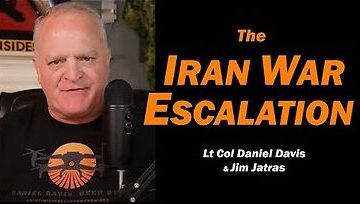
Bombing Iran Back Into the Stone Age /Lt Col Daniel Davis & Jim Jatras
or go to
Aletho News Archives – Video-Images
From the Archives
The Occupied Mentality Syndrome
Saudi Arabia on the American chessboard – Part 2
By B. J. Sabri | American Herald Tribune | April 19, 2016
Since the Korean War, but particularly since the Iranian Revolution of 1979 until today, the United States has been steadily escalating its military presence in the Persian Gulf. Taking advantage of many colossal events of the past 36 years, [1] the hyper-empire has institutionalized its massive presence on land and sea, and expanded its objectives to include the unambiguous physical control of the area, as well as the clear understanding that local Arab governments should abide by them. The pretext is always the same: in “defense” of the national interests and security of the United States. From observing how the United States has been interacting with the governments of the region, and by judging from the size of its expeditionary force, we could reach a basic conclusion. The United States is occupying, de facto, the entire Arabian Peninsula. (Yemen, devastated by Saudi and American jets is yet to be conquered. Oman? Britain returned not as colonial ruler but as a soft occupying power.)
Under this articulation, Saudi Arabia, Qatar, Kuwait, and the United Arab Emirates are virtually occupied countries. If we compare this type of occupation to the mandate and protectorate regimes of the past, the results might be identical—the nations affected by it lose sovereignty. When Arab governments comply with the objectives of a foreign power that station military forces on their national milieu, then that power controls them in multiple ways including how they react to policy deliberations and what decisions they intend to take on specific issues. A good method to verify the concept of effective occupation is this: take notice of what the United States says and wants, and then compare it to what the gulf rulers do in response. (I shall discuss this detail at some point in the upcoming parts.)
If the presence of US forces or other means of political pressure are a factor in Saudi Arabia’s interventionist Arab wars, then we need to debate this issue. However, from the history of resistance to colonialism, we learnt: if a powerful state imposes its order on a nation by military means or other forms of coercion, and if this nation does not resist that imposition, then a mental subordination to the powerful state will ensue. This is especially true in the case of Saudi Arabia. One single event, 9/11, has transformed it from a US “ally” into an instant political hostage of the American Empire. … continue
Blog Roll
 Aletho News
- Now everyone is dumping US government bonds
- Brazilian Congressman seeks to bar Israeli military personnel from entering Brazil
- Official reveals evidence of Arab states’ involvement in US-Israeli war on Iran
- His Majesty’s head-chopper: Syria’s MI6-backed president bows to King Charles
- Forced to backtrack: ‘Israel’ drops Hezbollah disarmament goal
- Britain’s Lebanon surveillance network: A digital map for war
- Bahrain faces scrutiny for opposition crackdown after detainee killed
- Hegseth’s Pentagon Purge Designed to Prevent a Mutiny: Karen Kwiatkowski
- Greek shipping firms secretly transporting oil, weapons to Israel
- UN vote on Hormuz force delayed as Iran issues warning
- If Americans Knew
- Israel Is Blocking Palestinians from Easter at Church Where Jesus Resurrected
- Plot to assassinate Palestinian activist follows harassment campaign promoted by Zionist groups and elected officials
- Prominent New York synagogue hosts presentation on why U.S. Jews should support the ethnic cleansing of Gaza
- Tapper vs. Piker: Is the CNN Anchor Auditioning for David Ellison?
- Shouldn’t Democrats Be Able to Condemn Genocide?
- Israel-US kill negotiators, destroy civilian structures, but Iran’s military capabilities still largely intact – Daily Update
- ‘War crime’: Global condemnation as Israeli ministers celebrate death penalty law targeting Palestinian prisoners
- 7 Ways Israel Is Turning Lebanon Into Gaza
- World’s Leading Football Bodies Under Fire Over Israel Policies
- Experts warn of possible use of nukes against Iran
- No Tricks Zone
- Low Intensity Tornado Wrecks Major Solar Farm, Creating A Potential Toxic Dump
- New Study Finds Warming Saves Lives…Cold Temperatures 12 Times More Deadly Than Excess Heat
- German Science Blog Accuses PIK Climate Institute Of Hallucinating Climate Tipping Points
- Devastating Assessment Of Comirnaty Vaccine By Former Senior Pfizer Europe Toxicologist
- New Study: CO2 Is ‘Effectively Negligible’ As An Explanatory Climate Change Factor Since 2000
- Former Pfizer Toxicologist Dr. Helmut Sterz Tells Bundestag Hearing Pfizer Vaccine Should Have Never Been Approved
- Energy Expert: Germany’s Nuclear Phaseout Was A “500 Billion Euro Mistake”
- New Research: South Australia’s Mid-Holocene Sea Surface Temperatures Were 4°C Warmer Than Today
- Storing Green Energy To Last Germany 10 Days Would Require A 60-Million Tonne Battery
- New Studies: UK Sea Levels Were 4 Meters Higher Than Today During The Mid-Holocene
 Aletho News