Today’s Arctic Compares with 150 years ago

Imagery date refers to Google Earth capture of land forms. Ice extent is for August 31, 2016 from MASIE. Serenity is docked at Devon Island.
By Ron Clutz | Science Matters | November 28, 2016
Researchers found that ice conditions in the 19th century were remarkably similar to today’s, observations falling within normal variability. The study is Accounts from 19th-century Canadian Arctic Explorers’ Logs Reflect Present Climate Conditions (here) by James E. Overland, Pacific Marine Environmental Laboratory/NOAA, Seattle,Wash., and Kevin Wood, Arctic Research Office/NOAA, Silver Spring, Md. H/t GWPF
Overview
This article demonstrates the use of historical instrument and descriptive records to assess the hypothesis that environmental conditions observed by 19th-century explorers in the Canadian archipelago were consistent with a Little Ice Age as evident in proxy records. We find little evidence for extreme cold conditions.
It is clear that the first-hand observations of 19th-century explorers are not consistent with the hypothesized severe conditions of a multi-decadal Little Ice Age. Explorers encountered both warm and cool seasons, and generally typical ice conditions, in comparison to 20th-century norms.
Analysis
There were more than seventy expeditions or scientific enterprises of various types dispatched to the Canadian Arctic in the period between 1818 and 1910. From this number, we analyzed 44 original scientific reports and related narratives; many from expeditions spanning several years. The majority of the data come from large naval expeditions that wintered over in the Arctic and had the capacity to support an intensive scientific effort. A table listing the expeditions and data types is located at http://www.pmel.noaa.gov/arctic/history. The data cover about one-third of the possible number of years depending on data type, and every decade is represented.
Our analysis focuses on four indicators of climatic change: summer sea ice extent, annual sea ice thickness, monthly mean temperature, and the onset of melt and freeze as estimated from daily mean temperature. Historical observations in these four categories were compared with modern reference data; the reference period varied, depending on data availability. Both sea ice extent and the onset of melt and freeze were compared to the 30- year reference period 1971–2000; monthly means are compared to the 50-year period 1951–2000. Modern sea ice thickness records are less continuous, and some terminate in the 1980s; the reference period is therefore based on 19 to 26 years of homogeneous record.

Fig.1.
(a) Proxy record of standardized summer air temperature variation derived from ice cores taken on Devon Island. This proxy record suggests that a significantly colder climate prevailed in the 19th century. Shading indicates temperatures one standard deviation warmer or colder than average for the reference period 1901–1960 [Overpeck,1998].
(b) Historical monthly mean temperature observations compared to the 20th-century reference period 1951–2000. Sixty-three percent of 343 monthly mean temperatures recorded on 19th-century expeditions between 1819 and 1854 fall within one standard deviation of the reference mean at nearby stations (reference data from Meteorological Service of Canada,2002; and National Climatic Data Center,2002).
(c) Onset of melt observed by expeditions between 1820 and 1906 expressed as departures from the mean for the reference period 1971–2000. The period of melt transition observed by 19th century explorers is not inconsistent with modern values.
(d) Onset of freeze observed between 1819 and 1905 compared to the reference period 1971–2000. The onset of freeze transition is frequently consistent with modern values,but in some cases occurred earlier than usual. The incidence of an early onset of freeze represents the largest departure from present conditions evident in the historical records examined in this study. Melt and freeze transition dates for the reference period 1971–2000 were calculated from temperature data extracted from the Global Daily Climatology Network data base (National Climate Data Center, 2002).

Fig.2. The ship tracks and winter-over locations of Arctic discovery expeditions from 1818 to 1859 are surprisingly consistent with present sea ice climatology (contours represented by shades of blue). The climatology shown reflects percent frequency of sea ice presence on 10 September which is the usual date of annual ice minimum for the reference period 1971–2000 (Canadian Ice Service,2002). On a number of occasions, expeditions came within 150 km of completing the Northwest Passage, but even in years with unfavorable ice conditions, most ships were still able to reach comparatively advanced positions within the Canadian archipelago. By 1859, all possible routes comprising the Northwest Passage had been discovered.
Summary
As stated here before, Arctic ice is part of a self-oscillating system with extents expanding and retreating according to processes internal to the ocean-ice-atmosphere components. We don’t know exactly why 19th century ice extent was less than previously or less than the 1970s, but we can be sure it wasn’t due to fossil fuel emissions.

Explorers encountered both favorable and unfavorable ice conditions. This drawing from the vicinity of Beechey Island illustrates the situation of the H.M.S.Resolute and the steam-tender Pioneer on 5 September 1850 [from Facsimile of the Illustrated Arctic News, courtesy of Elmer E. Rasmuson Library, Univ. of Alaska Fairbanks].
The Corporate Media’s Gulag of the Mind
By Charles Hugh Smith | of two minds | November 28, 2016
Your crime, as it were, need not be substantiated with evidence; the mere fact you publicly revealed your anti-Establishment thought convicted you.
One of the most remarkable ironies of The Washington Post’s recent evidence-free fabrication of purported “Russian propaganda” websites (including this site) is how closely it mimics the worst excesses of the USSR’s Stalinist era.
Those unfamiliar with the Stalinist era’s excesses will benefit from reading Solzhenitsyn’s three-volume masterpiece The Gulag Archipelago: 1918-1956, The Gulag Archipelago 2 and Gulag Archipelago 3.
One episode is especially relevant to the totalitarian tactics of The Washington Post’s evidence-free accusation. Solzhenitsyn tells the story of one poor fellow who made the mistake of recounting a dream he’d had the previous night to his co-workers.
In his dream, Stalin had come to some harm. In Solzhenitsyn’s account, the fellow was remorseful about the dream.
Alas, mere remorse couldn’t possibly save him. He was promptly arrested for “anti-Soviet thoughts” and given a tenner in the Gulag–a tenner being a ten-year sentence in a Siberian labor camp.
The Washington Post’s accusation is based on a “behavioral analysis”–in other words, publicly sharing “anti-Soviet thoughts”–in our era, the equivalent is sharing anti-Establishment thoughts.
Your crime, as it were, need not be substantiated with evidence; the mere fact you publicly revealed your anti-Establishment thought convicted you.
This is the Corporate Media’s Gulag of the Mind. We’ll tell you what’s “true” and what is correct to think and believe. Any deviation from the party line is a threat and must be discredited, marginalized or suppressed.
Where is the Post’s hard evidence of Russian ties or Russian influence? There isn’t any–but like Stalin’s henchmen, the Post has no need for evidence: merely going public with an anti-Establishment thought “proves” one’s guilt in the kangaroo court of America’s corporate media (a.k.a. mainstream media or MSM).
While The Washington Post is owned by billionaire Amazon founder Jeff Bezos, the vast majority of what we read, watch and hear is controlled by a handful of corporations loaded with cash and connections to the ruling elite.

This concentration of media control creates the illusion of choice— the same elite-propaganda spin is everywhere you look; our “choice” of “approved” (i.e. corporate) media is roughly the same as that offered the Soviet citizenry in the old USSR.
This is why the billionaire/corporate media is so desperate to discredit the non-corporate media: if an alternative to the corporate media’s elite-propaganda catches on, the corporate media will lose its audience, its advert revenues and a substantial measure of its influence.
The cornered elite-propaganda beast is lashing out, undermining its waning credibility with every attack on an independent free press. As I noted in a recent conversation with Max Keiser, democracy requires the citizenry to sort out who benefits from whatever narrative is being pushed.
That’s what terrifies the elite-propaganda mainstream media: the status quo narrative they’ve spewed for years doesn’t benefit the bottom 95% — rather, it actively impoverishes and disempowers the bottom 95%–and the citizenry is slowly awakening to this reality.
So for goodness sakes, if you have an anti-elitist dream, keep it to yourself or you’ll end up on the ruling elite’s “enemies list.”
The final irony in all this: the real enemy of democracy and freedom of the press is The Washington Post and the rest of the billionaire/corporate media. The only way to escape the Corporate Media’s Gulag of the Mind is to stop watching their TV channels, turn off their radio stations and stop reading their print/digital propaganda–except of course if you have a taste for dark humor.
Check out both of my new books, Inequality and the Collapse of Privilege ($3.95 Kindle, $8.95 print) and Why Our Status Quo Failed and Is Beyond Reform ($3.95 Kindle, $8.95 print). For more, please visit the OTM essentials website.
Erdogan: Turkish forces are in Syria to end Assad’s rule
RT | November 29, 2016
 Recep Tayyip Erdogan has said that the Turkish Army has entered Syria to end the rule of Syrian President Bashar Assad, whom he accused of terrorism and causing the deaths of thousands of Syrians.
“We entered [Syria] to end the rule of the tyrant al-Assad who terrorizes with state terror. [We didn’t enter] for any other reason,” the Turkish president said at the first Inter-Parliamentary Jerusalem Platform Symposium in Istanbul, as quoted by Hurriyet daily.
Erdogan said that Turkey has no territorial claims in Syria, but instead wants to hand over power to the Syrian population, adding that Ankara is seeking to restore “justice.”
“Why did we enter? We do not have an eye on Syrian soil. The issue is to provide lands to their real owners. That is to say we are there for the establishment of justice,” he said.
He went on to say that “in his estimation” almost 1 million people have died in the conflict in Syria, although no monitoring group has provided any similar figures. The latest UN estimate stands at 400,000 people killed in the five-year civil war.
Erdogan said that Turkey could not “endure” the unending killing of civilians and “had to enter Syria together with the Free Syrian Army.”
The Turkish leader also accused the UN of inability to influence the situation in Syria and said that the organization is ineffective in its current state.
“The world is bigger than five,” he said, referring to the number of permanent members on the UN Security Council, as reported by Hurriyet.
‘Beacon for despots everywhere’: Britain’s ‘extreme’ surveillance bill becomes law
RT | November 29, 2016
Britain’s intelligence services have officially been given the most wide-ranging and privacy-invading mass surveillance powers in the world, according to critics, after the Investigatory Powers Act became law on Tuesday.
The legislation, dubbed the ‘snooper’s charter,’ authorizes the government to hack into devices, networks and services in bulk, and allows for large databases of personal information on UK citizens to be maintained.
It requires internet, phone and communication app companies to store customers’ records for 12 months and allow authorities to access them on demand.
That data could be anything from internet search history, calls made or messages sent, and will be available to a wide range of agencies, including the Department for Work and Pensions as well as the Food Standards Agency.
Security agencies will also be able to force companies to decrypt data, effectively placing limits on the use of end-to-end encryption.
Home Secretary Amber Rudd has hailed the legislation as “world-leading,” saying it provides “unprecedented transparency and substantial privacy protection.”
The Home Office says the “landmark” law “sets out and governs the powers available to the police, security and intelligence agencies to gather and access electronic communications.”
In a statement, the department said the law “brings together and updates existing powers while radically overhauling how they are authorized and overseen.”
Not all the powers available in the act will be rolled out immediately. Some require testing so will not be ready for some time, the Home Office says.
The legislation has been divisive since it was first published, and was opposed by tens of thousands of people in a recent petition.
Civil liberties group Liberty told the Independent the law served as a “beacon for despots everywhere.”
“It’s a sad day for our democracy as this bill, with its eye-wateringly intrusive powers and flimsy safeguards, becomes law,” said Bella Sankey, the group’s policy director.
“The government has a duty to protect us, but these measures won’t do the job. Instead they open every detail of every citizen’s online life up to state eyes, drowning the authorities in data and putting innocent people’s personal information at massive risk.
“This new law is world-leading – but only as a beacon for despots everywhere. The campaign for a surveillance law fit for the digital age continues, and must now move to the courts.”
Privacy campaigners say the law will provide an international standard to authoritarian regimes around the world to justify their own intrusive surveillance powers, and could be a breach of human rights.
Twenty Buses Carrying Militants Go out of Western Ghouta towards Idlib

Buses carrying militants in Homs
Al-Manar | November 29, 2016
Twenty buses carrying militants left Khan El-Sheikh area in western Ghouta of Damascus toward Idlib city on Monday after they handed over their weapons, Hezbollah Military Media Bureau said in a statement.
“300 Kalashnikov guns were handed over to the Syrian army as another five buses transferred families from the same area toward Zakiya region,” the statement read.
The Military Media said that all gunmen will be gradually transferred by Tuesday in accordance with the deal between the national military and allied forces, and the armed groups operating in Khan El-Sheikh, Zakiya, Moqailabiyah and Taibeh.
Iranophobes on Parade
Will Iran be the target of the Trump regime?
By Philip Giraldi • Unz Review • November 29, 2016
One of the most discouraging aspects of the filling out of the Donald Trump cabinet is the array of Iran haters that seem to be lining up in the foreign policy and national security areas. Trump has been personally advocating sensible policies relating to Russia and Syria but he appears to have gone off the rails regarding Iran, which just might be attributed to those who are giving him advice. A reversion to the relationship that prevailed prior to last year’s signing of the Joint Comprehensive Plan of Action (JCPA) between Iran and the so-called P5+1 consisting of the United States, Russia, China, France, Britain, and the European Union would be undesirable, to say the least, but that appears to be what is likely to develop. Or it could be even worse, finding bilateral support for “action” as a number of policy advisors in the presidential campaign from both parties were endorsing something like war against the Persians.
The irony is that the arguments made then and now for attacking Iran were based on the threat of Tehran deciding to build its own atomic bomb. With the JCPA agreement, however, most would agree that any remaining concerns that Tehran might even be considering the development of a nuclear weapons program were greatly diminished. Iran has since that time been in compliance with the agreement, possible nuclear proliferation has been avoided, and, apart from the fulminations of the inevitable anti-Iranian politicians in the United States, the signatories to the agreement have expressed their satisfaction with the outcome. It has been Washington that has failed to live up to its part of the agreement by easing remaining restrictions that are being imposed against Iranian financial institutions and regarding the purchase of some commercially available dual use technologies.
Candidate Donald Trump did not need much prompting to pick up on the prevailing anti-Iran sentiment. In a number of campaign speeches he denounced the JCPA as a bad deal and vowed to tear it up upon taking office. Some of that sentiment might well have been derived from his desire to distance himself from foreign policy positions promoted by President Barack Obama that were subsequently endorsed by Hillary Clinton so it is no surprise that since being elected he has somewhat modified his stance. He is now veering towards trying to renegotiate the agreement, which would likely be impossible given that it has multiple signatories. He could nevertheless disrupt it by continuing or increasing sanctions on Iran.
The thought of reverting to a state of unrelenting hostility towards Iran is disconcerting. One recalls joint CIA-Mossad operations between 2010 and 2012 that assassinated four civilian scientists connected to the country’s nuclear program as well as the creation of the Stuxnet virus that threatened to spread to other computers worldwide. It is generally accepted that Israel’s Mossad planned and prepared the killing of the scientists with a little help from the U.S., attacks which were almost certainly carried out by associates of the radical Marxist group Mujaheddin e Khalq (MEK), which is now being seen favorably by several Trump advisors even though the group is Marxist, cult-like and has killed Americans.
The assassinations were based on the false premise that Iran had a nuclear weapons program that could be disrupted by killing the scientists and technicians involved. Two comprehensive studies by the American government’s Central Intelligence Agency (CIA) conducted in 2007 and 2011 determined that no such program existed and that Iran had never taken any serious steps to initiate such research. Israel was also aware that there was no program. Nevertheless, the Israeli and American governments took steps to interfere with Iran’s existing and completely legal and open to inspection atomic energy program by identifying then killing its scientists and also introducing viruses into its computer systems. This was in spite of the fact that Iran was fully compliant with international norms on nuclear research and it was a signatory to the Nuclear Non-Proliferation Treaty (NPT), which Israel, possessing its own nuclear arsenal, had refused to sign.
The history of the Iran-U.S. relationship is significant because several Trump advisors appear to be locked into a time warp regarding the Mullahs and the threat to Americans that they allegedly constitute. Former Defense Intelligence Agency (DIA) head Michael Flynn, who will be the Trump National Security Advisor, is the most prominent Iran hater and also the most outspoken.
Flynn, also an unapologetic Islamophobe, has said that Iran represents a danger to U.S. national security and that our friend and ally Israel “lives under the threat of total annihilation from Iran… something the United States must never allow.” He believes that Iran intends to build nuclear weapons as well as the ballistic missiles needed to deliver them on target and thinks that “regime change” is the only solution to the threat posed by the current government. And for Flynn, Iran is not alone, it is part of a “global alliance” that includes China and Russia which seeks to threaten the U.S. and its allies.
Flynn concludes that Iran is unmitigated evil and that Washington should have nothing to do with it, apart from recognizing the reality that it and its government must be destroyed. I personally attended a conference in Moscow last December at which Flynn asserted that Iran is solely responsible for nearly all the instability in the Middle East and is behind at least five wars in the region, an assertion that is just as ridiculous as it sounds.
One might suggest that Flynn is terribly uninformed about a subject regarding which he claims expertise. His comments would suggest that the capabilities of the DIA that he once headed were dangerously overrated, but reports from his former colleagues indicate that he was always guilty of serious overreach in his pronouncements, something they referred to as “Flynn facts”.
If Flynn were just one loud voice braying in the wilderness he would be bad enough since his job is important, particularly with a president who has no foreign policy experience, but the sad fact is that he is not alone. Congressman, West Point grad and former Army officer Mike Pompeo, who will head the CIA, is more-or-less on the same page when it comes to Iran. He supports new sanctions on the country and, regarding his appointment as Director, he had only one comment to make and it related to the JCPA, “I look forward to rolling back this disastrous deal with the world’s largest state sponsor of terrorism.” As in the case with Flynn and DIA one has to wonder what kind of “objective” intelligence CIA will be producing under Pompeo.
Finally, there is retired Marine General James Mattis, who is being considered for a senior position in national security, possibly as Secretary of Defense. He is yet another Iranophobe who opposed the JCPA and calls Iran a rogue state that constitutes the “greatest threat” in the Middle East. As part of the evidence for that assessment he cites Iran’s alliance with Syria, which is at least in part directed against America’s enemy number one ISIS, demonstrating once again how Establishment Washington has difficulty in understanding what constitutes actual national interests. Mattis, in fact, denies that Iran is actually fighting ISIS.
The neoconservative kingpin Bill Kristol is gloating, headlining in his Weekly Standard publication that the “Iran Deal Is Doomed!” He should be pleased. Team Trump’s attitude towards an alleged Iranian threat is delusional, more in sync with Kristol and some Israeli thinking than with any actual American interests. Just as neoconservatives always believe that it is 1938 and we are in Munich, Flynn, Pompeo and Mattis likewise seem to think that it is 1979 and the United States Embassy in Tehran is still occupied.
The three Trumpsmen are not stupid, far from it, but the problem appears to be that they cannot comfortably assess two or more conflicting concepts at the same time, which might be due to the linear thinking derived from their military backgrounds. The Middle East is awash with players, all of whom have separate agendas, few of which coincide with actual American interests. If one is fixated on or obsessed with Iran as the sole disruptive force in the region it becomes difficult to see how Saudi Arabia, Turkey and Israel are also problems. It is decidedly neoconnish to look at a complex foreign policy issue and only see black and white, but that is what the Trump national security team seems to be prone to do.
Hopefully someone will convince Donald Trump that the real answer to eliminating the “Iranian threat” is not war. It requires building on the relationship established by JCPA to bind Iran more closely to the international community, both economically and culturally. By all accounts, young Iranians, a majority of the population, are dismissive of the rigidity of their own government and are very open to Western ideas and lifestyle. Change will come to Iran if the United States and its European allies encourage more rather than less non-threatening contact. It will not come at the point of a bayonet as Flynn, Pompeo and Mattis appear to be promoting.
NATO’s Rear-Guard Actions
By Brian CLOUGHLEY | Strategic Culture Foundation | 29.11.2016
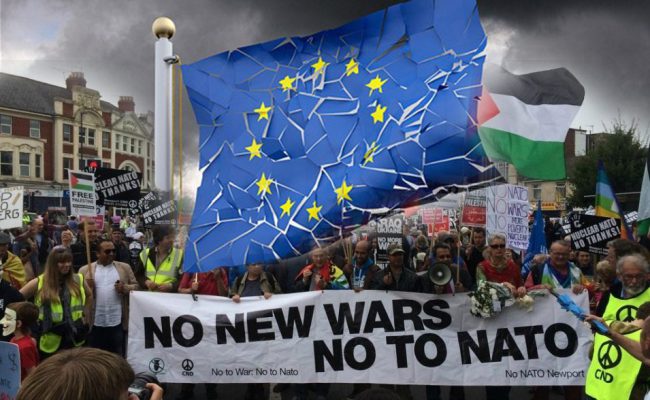
In the military a rearguard action is defined as ‘a defensive action carried out by a retreating army’ and it is an appropriate description of the desperate scrabbling by NATO to convince the rest of the world — and especially Donald Trump — that its existence is justified.
President-elect Trump has never said that the US should actually leave NATO. Certainly Hillary Clinton declared that he ‘wants to pull out of NATO’ but this was just another of her lies, and what he said back in April was that it is ‘obsolete’ which is a gentle way of indicating that it’s hopeless. He did, after all, tell a town hall meeting in Wisconsin: «Maybe Nato will dissolve and that’s OK, not the worst thing in the world», but although that may have sent shivers up the supple spine of NATO’s Secretary General Stoltenberg, it was by no means a definitive statement of intention.
The fact remains that The Donald is unhappy with NATO, and he’s perfectly right to consider that it’s a vastly expensive and largely ineffective military grouping that indeed should be disbanded. On the other hand, the massive propaganda campaign waged against Russia has convinced much of the world that Moscow has expansionist plans and that the only way to counter its supposed ambitions is to spend more money — lots and lots more money — and deploy troops and aircraft and ships all over the place to make it look as if gallant little NATO is defending the so-called Free World against the might of an illusory aggressor.
Trump may not have examined the minutiae of the NATO shambles, but in spite of being a bit of a blowhard whose knowledge of international affairs is modest, he’s not a fool, and even he can perceive that NATO has a record of catastrophe.
The Financial Times reported him as saying «Its possible that we’re going to have to let Nato go. When we’re paying and nobody else is really paying, a couple of other countries are but nobody else is really paying, you feel like the jerk». He said that if elected president he would contact many of the other 27 NATO members and put pressure on them to make a larger financial contribution or leave. «I call up all of those countries… and say ‘fellas you haven’t paid for years, give us the money or get the hell out’», he said, to loud cheering.
This may have been populist rhetoric, but it played to the people who matter to him — to the people who elected him. When he becomes President he might well think that he owes them a lot more than he does to NATO.
In March Stoltenberg told NATO countries that «the time has come to invest more in defence» but his motives for doing so were not those of Mr Trump, because Trump, like any businessman, wants to look carefully at expenditure and go on to make a profit, while Stoltenberg wants to spend money — including a great deal of American money — to justify existence of the costly monolith that has grown larger, more expensive and less effective over the past twenty years.
Stoltenberg sought to vindicate NATO’s record by writing an article for Britain’s Observer newspaper to say that NATO had strongly supported the United States following the 9/11 atrocities by joining it in its war in Afghanistan. ‘This,’ he declared, ‘was more than just a symbol. NATO went on to take charge of the operation in Afghanistan. Hundreds of thousands of European soldiers have served in Afghanistan since. And more than 1,000 have paid the ultimate price in an operation that is a direct response to an attack against the United States.’
The truth differs from what Stoltenberg claims. He is correct in saying that NATO became heavily involved (and lost a thousand troops for no reason at all), but gives the impression that NATO was there, poised and ready to take the leap into action when the US and Britain invaded Afghanistan in October 2001. Certainly the forces of the US and the UK were joined by troops from other countries — but it wasn’t until August 2003 that NATO itself managed to become involved, when, as the BBC reported, it ‘assumed control of peacekeeping in Afghanistan – the alliance’s first ever operational commitment outside Europe.’ And things went screaming downhill from that time.
There was no need for NATO, as such, to become involved, because there were plenty of alliance countries with contingents already in Afghanistan (for example, the Germans had been there since January 2002 and Canadians and Italians since December 2001). All that NATO added to the foreign military machine in Afghanistan was yet another layer of military bureaucracy. The result was described in, among other histories, ‘The Good War’, an excellent account of the catastrophe by Jack Fairweather who describes the reaction of President Bush’s National Security Adviser, General Douglas Lute, who saw the map of NATO operations in 2008 and was of the opinion that «each nation was fighting its own private war. Nobody was running the show, and there was no common purpose».
In present-day NATO there are far too many people «running the show» and the purpose of the show itself is far from clear. Stoltenberg and other champions of the continuing existence of the expensive farce claim that there’s a threat from Russia — but if they genuinely believe that Russia is going to invade a NATO member country they belong in a lunatic asylum.
To be blunt, had Russia wanted to invade Ukraine at the time of the US-engineered coup in 2014 (recollect Obama’s admission that the US ‘brokered a deal to transition power in Ukraine’), it could have done so with ease. It would have taken about three weeks to defeat the Ukrainian military and occupy the country right up to the border with Poland. But why on earth would it have wanted to do that?
Russia would have been extremely unwise to take such action, because once you invade a country you have to occupy and pacify it, which is extremely difficult — as US-NATO has found to its enormous cost in lives and money in the Afghanistan debacle.
Similarly, for what possible reason would Russia attempt to invade Estonia or Latvia, or any other country for that matter? It would be insane to do so, yet this totally imaginary threat is trotted out as the reason for NATO’s present posture of confrontation. There is never explanation for the US-NATO expansion up to Russia’s borders that took place from 1999 to 2009, which is rightly regarded as confrontational by the Russian people. (And remember that it’s not correct in the west to refer to ‘the Russian people’. Rather, it is mandatory to call the country ‘Putin’s Russia’.)
Stoltenberg’s message to President-elect Trump is that the US-NATO military grouping must continue to confront ‘Vladimir Putin’s Russia’, but Trump has other priorities, not the least being the appalling economic circumstances in regions where he received most support. He’s no fool, and he’s going to pay attention to these voices rather than the plaintive wailing of Stoltenberg who rests his case for US expenditure on the foundation that ‘our proud history is one of common challenges overcome together’.
One thing that Secretary General Stoltenberg had better bear in mind is that President-elect Donald Trump does not care about history, and most decidedly not the history of Europe. He cares about the hard facts of here and now. Not intellectually, but practically. He is devoid of sentiment. Europe and NATO mean nothing to him in terms of nostalgia and all that sob-stuff.
And he’s not going to forget the volume of insults delivered by European political leaders and media, such as ‘loudmouth’ and ‘hatemonger’. In the British parliament he was described as a ‘buffoon, demagogue and wazzock’. The British foreign minister, Boris Johnson (who really is a buffoon), said in June that ‘the only reason I wouldn’t visit some parts of New York is the real risk of meeting Donald Trump’. French President Hollande (another fool) declared that Trump’s ‘excesses’ made him ‘want to retch’ and in one particularly amusing reaction to Trump’s election, Martin Schulz, President of the European Parliament, said ‘We hope that Donald Trump will respect the fundamental rights and rules of the European Union,’ in which, be assured, Mr Trump has not the slightest interest.
President-elect Donald Trump might not be the ideal person to enter the White House in January (although Clinton would have been a disaster), but he’s going to try to look after America. NATO’s wellbeing comes way down on his priorities. NATO Secretary General and confronter-in-chief Stoltenberg will continue fighting his rearguard action to keep his wobbly and mega-expensive military circus in existence, but it’s possible that Mr Trump might make the world a safer place by letting the whole thing collapse.
What Will Canada’s Military Involvement in Iraq Lead To
Inside Syria Media Center – November 24, 2016
According to Reuters, about 200 Canadian commandos are actively involved in the ground operation to recapture Mosul from ISIS rule. According to Michael Rouleau, Canadian Special Forces Commander, troops are engaged in a ‘substantial’ number of clashes with terrorists which continues to rise.
Why is Canada sending troops to Iraq? What are the results desired by the Canadian government? And what is it willing to sacrifice?
First, Ottawa claims that by doing so it protects itself against terrorism. Former foreign minister Rob Nicholson stressed the need to weaken and destabilize ISIS in 2015. However neither airstrikes in Iraq and Syria nor coalition’s participation in Mosul mincing machine will lead to eradication of terrorism. The example of the Taliban in Afghanistan clearly demonstrates that large-scale fighting will be followed by long and bloody guerrilla war, in which Canada could get stuck with no end in sight.
Second, we should analyze the aftermath of ISIS defeat in Iraq and Syria. This question has no clear-cut answer. In theory the Canadian military presence in Iraq helps the Iraqi government to regain control over the country. In practice Ottawa is cooperating with the Kurds, who are planning to establish their own independent state on the territory of Iraq, Syria and Turkey. These aspirations could further destabilize the region.
Third, it is unclear whether Canada is ready to confront the Islamic State on a global scale. ISIS is conducting subversive activities in Lebanon, Afghanistan, Algeria, Pakistan, Libya, Egypt, Yemen, Nigeria, as well as in the countries of Southeast Asia in addition to Syria and Iraq. Consequently, it will require much more effort than just sending a few hundred soldiers to take part in an operation with controversial results for the complete elimination of the Islamic State.
Fourth, the situation in Syria and Iraq resembles a scenario that has repeatedly led to disastrous consequences in the Middle East. For example, the Western overthrow of Saddam Hussein in Iraq in fact led to the creation of ISIS. NATO’s invasion in Libya has practically ruined the country, led to fierce carnage over Muammar Gaddafi and contributed to the rapid spread of terrorist groups throughout North Africa not mentioning numerous victims among the civilian population.
Fifth, judging by the events in Mosul, one could argue that the operation would require a considerable amount of money. Despite the fact that the military operation in Iraq has already hit the budget of the country, Canada is going to allocate approximately $305.9 million extra towards extension, refocusing and carrying out the mission. This includes $41.9 million to be allocated for redeployment of personnel and equipment in 2016-17.
In addition, Canadian military’s participation in missions abroad comes with casualties. According to The Department of National Defense and the Canadian Armed Forces, 162 soldiers were killed in Afghanistan with more than two thousand injured. During the ten years of military presence in Afghanistan the Government invested more than $11 billion in the operation.
It is obvious that in the absence of a clear military strategy and achievable goals the situation in Iraq can become a second Afghanistan for Ottawa. Instead of solving internal problems, by supporting the international coalition Canada dared to get involved in another endless armed conflict. The leadership of the country once again has not consulted the opinion of its citizens sending dozens of soldiers to death and destroying the state budget.
Featured Video
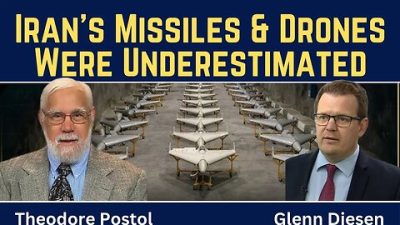
Theodore Postol: Iran’s Missiles & Drones Were Underestimated
or go to
Aletho News Archives – Video-Images
From the Archives
Wars for Israel: A reminder of who’s giving the marching orders
By Damian Lataan | February 7, 2012
As the West prepares to march off to yet another war in the Middle East, we should perhaps remind ourselves of who is giving the West their marching orders.
In February 2003, just weeks before the US and their allies launched their attack on Iraq and her peoples, a delegation of US congressmen, together with the US Ambassador to the United Nations, John Bolton, a well known pro-Zionist and neoconservative war-hawk, were in Israel at the invitation of the Israeli government then led by Israeli Prime Minister Ariel Sharon.
Addressing the congressmen, Sharon told them ‘that Iran, Libya and Syria should be stripped of weapons of mass destruction after Iraq’. Later, Sharon told John Bolton ‘that Israel was concerned about the security threat posed by Iran, and stressed that it was important to deal with Iran even while American attention was focused on Iraq’. … continue
Blog Roll
 Aletho News
- Trump’s April Fools’ Address to the nation
- The Most Important Bet You’ve Never Heard Of
- The killing of three Indonesian soldiers in Lebanon should remind Jakarta that Israel does not want peace
- Defeated and delusional: Netanyahu’s remarks reveal $80bn war failure, says analyst
- Iran’s friends are about to make life much more difficult for Israel and the US
- The war of liberation of the Arab and Islamic peoples expands across the Gulf
- Envoy warns UN on Trump’s threat to ‘obliterate’ Iran’s civilian infrastructure
- The Larak Corridor: Iran’s Rial Gate With No US, No Israel, and No Way Around
- ‘Economic terrorism’: Steel facilities hit again in US-Israeli strike
- ‘War Crime’: Iran condemns attacks on Arak, Ardakan nuclear sites
- If Americans Knew
- Gaza families reunite years after babies evacuated amid Israel’s war
- International Rescue Committee warns Gaza’s children face grave protection risks
- Iran’s Alleged 47-Year War on America: Debunking the 1,050 American Deaths Canard
- Israel wants US to bomb more of Iran’s civilian structures (113,000 is not enough) – Not a ceasefire Day 173
- Ann Coulter Rips Into Fox News for Iran War Coverage
- Joe Kent Urges Americans To Call White House and Congress To Object To Sending Troops Into Iran
- DNC Resolution to Reject AIPAC Funding Puts Democratic Leaders in the Hot Seat
- Swedish foundation to build 400 schools as over 650,000 Gaza children remain without education for 2 years
- Israeli army admits photshopping image of slain Lebanese journalist
- This is how Israel is systematically killing health workers under the cover of war in Lebanon
- No Tricks Zone
- New Study Finds Warming Saves Lives…Cold Temperatures 12 Times More Deadly Than Excess Heat
- German Science Blog Accuses PIK Climate Institute Of Hallucinating Climate Tipping Points
- Devastating Assessment Of Comirnaty Vaccine By Former Senior Pfizer Europe Toxicologist
- New Study: CO2 Is ‘Effectively Negligible’ As An Explanatory Climate Change Factor Since 2000
- Former Pfizer Toxicologist Dr. Helmut Sterz Tells Bundestag Hearing Pfizer Vaccine Should Have Never Been Approved
- Energy Expert: Germany’s Nuclear Phaseout Was A “500 Billion Euro Mistake”
- New Research: South Australia’s Mid-Holocene Sea Surface Temperatures Were 4°C Warmer Than Today
- Storing Green Energy To Last Germany 10 Days Would Require A 60-Million Tonne Battery
- New Studies: UK Sea Levels Were 4 Meters Higher Than Today During The Mid-Holocene
- Destructive Green New Deal: German Energy And Metal Group Warns Of Drastic Crisis
 Aletho News