The more Juif becomes Theresa, the more antisemitic becomes Britain.
By Gilad Atzmon | February 2, 2017
Today, the Jewish Chronicle (JC) reported that the number of antisemitic incidents in Britain in 2016 were the highest on record. The CST’s statistics show that there were 1,309 incidents of ‘Jew hatred’ last year — a 36 per cent increase on the previous 12 months.
Of course, the CST is not a reliable source and its‘antisemitism figures’ have been debunked numerous times before. However, if these statistics are accurate, they suggest only that the more the British government invests in fighting anti-Semitism…. the more antisemitic Britain becomes.
This is easy enough to explain. The fight against antisemitism is now a profitable industry. Every day, we learn of some new Jewish organisation dedicated to fighting antisemitism and to hunt down the Jew haters, and all at the expense of the British tax payer*.
And, as always in the case of Israel and Zionism, these organisations are financially sustained by the very Jewish hatred they seek to oppose. And, when there is no Jew hatred to be found, they will either induce, or even invent some.
For instance, we learned in the last few weeks that Stephen Silverman of the Campaign Against Antisemitism (CAA) launched a war against popular cult figure David Icke. The same Stephen Silverman who launched this war also launched a war against musician Alison Chabloz for expressing her thoughts on Holocaust religion by means of a cabaret performance.
These ugly campaigns against British truth-seekers are unlikely to make UK Jewry popular. Quite the opposite. Both these campaigns immediately backfired – Alison’s work went viral and the campaign against Icke proved only that Icke’s investigation into Rothschild Zionism is not only legitimate, it is actually essential. These campaigns clearly are not going to silence Icke or Chabloz but they will confirm that Jewish institutions here in Britain do not subscribe to the notion of freedom of thought and elementary human rights.
Dave Rich, Deputy Director of Communications at the CST told the JC : “I think there is an overall climate rather than one specific thing that is responsible for the rise in (antisemitic) incidents.”
Rich is wrong. There is one crucial factor in the rise in opposition to Jews and their politics: Jewish power has lost all its subtlety. It is now crude and vulgar and manifested right out in the open: whether it is the campaign against Jeremy Corbyn and his Labour party or the Israeli embassy crudely interfering with British party politics or the constant hunting of critics of Israel or even the impunity of suspected child molester Lord Janner – more and more Brits are now reading between the lines. They have had enough.
If the British government is really concerned about antisemitism, it could eliminate it in no time at all. It must immediately strip Jewish organisations of any special treatment and funds and must stop spending millions on the CST and all the other Jews-only paramilitary organisations operating in the kingdom.
We all agree that racism is a bad thing, so let’s fight it in a universal manner rather than following the whims of one particular tribe.
* Theresa May vowed recently to allocate more than 13.4 million pounds annually to Jewish security matters.
Zionist Regime Plays down White House Comments on Settlements
Al-Manar – February 3, 2017
A senior Israeli official played down Friday remarks from the White House that building new or expanding existing settlements in the occupied Palestinian territories “may not be helpful” in securing peace.
In an apparent break from President Donald Trump’s previously full-throated support of settlements building, White House spokesman Sean Spicer told reporters on Thursday that the new administration hadn’t yet taken an official position on settlements.
Responding Friday, Israeli ambassador to the United Nations Danny Danon said Spicer’s comments didn’t amount to “a U-turn”.
“The statement is very clear and essentially means: wait for the meeting with (Israeli) Prime Minister (Benjamin) Netanyahu, who is arriving in Washington in less than two weeks to meet President Trump, and then we’ll determine our policy,” Danon told Israeli public radio.
The Zionist entity has now approved more than 6,000 settler units since Trump took office having signaled a softer stance on settlement construction than predecessor Barack Obama.
“While we don’t believe the existence of settlements is an impediment to peace, the construction of new settlements or the expansion of existing settlements beyond their current borders may not be helpful,” Spicer said on Thursday.
Trump is scheduled to welcome Netanyahu to the White House on February 15.
US senators seek additional sanctions against Iran
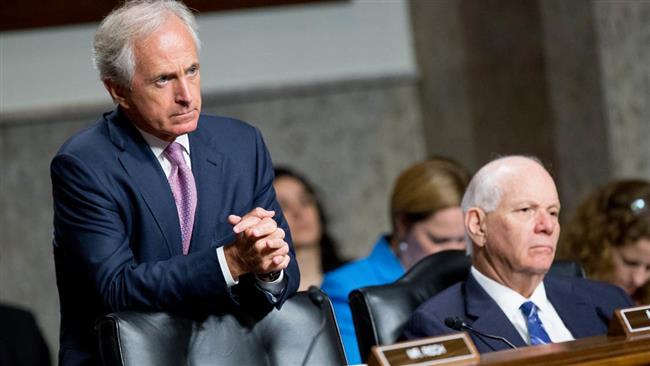
US Republican Senator Bob Corker (left) and Democratic Senator Ben Cardin in the US Senate (file photo)
Press TV – February 3, 2017
A number of US senators have backed additional sanctions against Iran over the country’s missile program, arguing that Tehran “must feel sufficient pressure.”
Twenty-two senators, including Bob Corker (Republican from Tennessee) and Ben Cardin (senior Democrat from Maryland) pronounced their support in a letter they sent to US President Donald Trump on Thursday. Corker is the chairman of the US Senate Committee on Foreign Relations.
“Full enforcement of existing sanctions and the imposition of additional sanctions on Iran for its ballistic missile program are necessary,” the senators wrote.
They added that “we look forward to supporting your Administration’s efforts to hold Iran accountable.”
The Reuters news agency reported on Thursday that the Trump administration is expected to announce new sanctions against Iran on Friday to ratchet up pressure on the Islamic Republic.
This is while the US president said on Thursday that “nothing is off the table” in terms of a response to Iran’s latest ballistic missile test.
Hours earlier, Trump said the White House has formally put Tehran on notice over its recent ballistic missile test.
“Iran has been formally PUT ON NOTICE for firing a ballistic missile. Should have been thankful for the terrible deal the U.S. made with them!” Trump tweeted, echoing his national security adviser’s comments a day earlier.
‘Iran Non-Nuclear Sanctions Act of 2017’
Also on Thursday, a group of Republicans in the US House of Representatives introduced a bill for new sanctions on Iran as the Trump administration is mulling anti-Iran measures.
The measure, called the Iran Non-Nuclear Sanctions Act of 2017, seeks sanctions against Tehran for “supporting terrorism, abusing human rights, and testing ballistic missiles.”
It was presented by New York Representative Lee Zeldin, Illinois Representative Peter Roskam, New Jersey Representative Leonard Lance and Colorado Representative Doug Lamborn.
The proposed legislation comes after US House Speaker Paul Ryan said he would support imposing additional sanctions on Iran over its recent missile test.
“I would be in favor of additional sanctions on Iran,” Ryan told reporters on Thursday at a weekly press conference.
“We need to have a tough-on-Iran policy … We should stop appeasing Iran,” he said.
Washington has said Sunday’s ballistic missile test was in violation of the 2015 nuclear deal between Iran and the P5+1 group of countries.
Tehran insists its missile tests do not breach any UN resolution because they are solely for defense purposes and not designed to carry nuclear warheads.
Arms control experts have also said that Iran’s missile tests are not banned under the nuclear agreement and the Security Council resolution, because Iran’s missiles are not meant to deliver nuclear warheads.
Resolution 2231 calls on Iran “not to undertake any activity related to ballistic missiles designed to be capable of delivering nuclear weapons, including launches using such ballistic missile technology.”
Iran sanctions: US Treasury lists 13 individuals, 12 business entities
RT | February 3, 2017
The US government has blacklisted 13 individuals and a dozen businesses under the Iran sanctions authority, a day after President Donald Trump’s administration threatened a response over Tehran’s ballistic missile tests.
The Treasury Department posted a listing on Friday, naming the individuals and the companies added to the sanctions list. Eight of the individuals are listed as Iranian citizens, three appear to be Chinese, and two Arab.
Most of the businesses listed in the announcement are based in Iran, though one of the entities is located in the United Arab Emirates, two are in China, and three are in Lebanon.
“Today’s action is part of Treasury’s ongoing efforts to counter Iranian malign activity abroad,” said John E. Smith, acting director of the Treasury Department’s Office of Foreign Assets Control.
“Iran’s continued support for terrorism and development of its ballistic missile program poses a threat to the region, to our partners worldwide, and to the United States,” Smith said. “We will continue to actively apply all available tools, including financial sanctions, to address this behavior.”
Meanwhile, the guided missile destroyer USS Cole arrived in the waters off the coast of Yemen on Friday, where it will conduct patrols to “protect waterways” from the Houthi rebels, unnamed US officials told reporters.
“Iran is unmoved by threats as we derive security from our people,” Iran’s foreign minister Mohammad Javad Zarif said ahead of the announcement. “We will never use our weapons against anyone, except in self-defense,” he added later.
Theresa May to push EU members to up NATO spending
RT | February 3, 2017
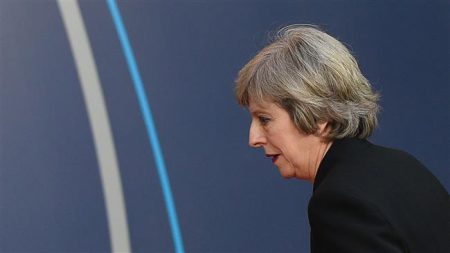
UK Prime Minister Theresa May will use the upcoming EU summit in Malta to demand Europe strengthen its commitment to NATO and spend more on defence.
May is expected to conduct a series of one-on-one meetings with EU leaders, including Germany’s Angela Merkel and Spain’s Mariano Rajoy, in order to secure “new, positive and constructive” relationships with the Union.
The prime minister, however, is not expected to attend the part of the talks in which Brexit will be discussed. Instead, she is using the summit as an opportunity to press the EU’s NATO members to fulfil their defence expenditure requirements.
According to a 2016 NATO report, only five of its 28 members actually reached the required defence spending limit of two percent. The list of those failing to spend enough includes Germany, France, and Spain.
Britain’s push for Europe to open its wallet comes after a meeting between Theresa May and US President Donald Trump last Friday.
At a joint press conference, May agreed with Trump that NATO spending should be “fairly shared” among its members.
Trump has in the past criticised NATO as being “obsolete” and “costing too much money.”
The president has also suggested that the US may not come to the assistance of NATO members who do not satisfy the two percent requirement.
May, however insisted she had received a “100 percent” commitment to NATO from the Trump administration. She also promised to “encourage fellow European leaders” to comply with their obligations.
It remains unclear how Britain will convince EU leaders to increase defence spending, as relations with Brussels have been significantly affected by Brexit. One possible way might be to emphasise the threat to European security that is supposedly posed by Russia.
Earlier this week, UK Defence Secretary Michael Fallon urged other NATO states to fulfil defence spending targets in order to effectively counter alleged Russian attempts to destabilise the continent.
Fallon has accused Russia of “becoming a strategic competitor to the West” and mounting a sophisticated information and cyber campaign against various NATO members.
Moscow has categorically denied these allegations, describing them as “baseless” and a “witch hunt.”
Read more:
UK minister accuses Russia of MH17 downing & ‘testing’ NATO, Moscow says claims ‘baseless’
RT | February 3, 2017
When British Defense Secretary Michael Fallon was asked to deliver a speech on ‘Russian resurgence’, he seized the opportunity to accuse Moscow of “annexing” Crimea, shooting down MH17 over Ukraine, and “testing” NATO. Russia calls the claims baseless.
Fallon’s speech at St. Andrews University on Thursday began kindly enough, speaking about the UK’s “renewed interest in Russian scientific and artistic achievement.”
However, the talk quickly changed course, with Fallon changing the focus to Russia’s so-called “military resurgence.”
Referring to the reunification of Crimea and Russia following a referendum in 2014, Fallon claimed the situation actually amounted to Russia illegally annexing the territory.
“Russia did not allow Ukraine to decide its own destiny like any other sovereign country,” he said. “Instead, under the guise of ambiguous and deniable instruments it annexed Crimea.”
Fallon’s anti-Russia rhetoric didn’t stop there. He went on to cite an inquiry by the Dutch-led Joint-investigative Team (JIT) which claims the MH17 tragedy was caused by a “Russian-provided missile.” He said that despite the finding, Moscow continues to deny its role in the tragedy.
Fallon failed to mention, however, that there are numerous issues surrounding that report, including the fact that the Dutch apparently couldn’t read raw radar data provided by Russia, yet failed to ask Moscow for help to decode it.
The discrepancies surrounding the inquiry have led to Major General Aleksandr Tazekhulakhov, the former deputy head of the Russian Army Air Defense, to accuse the Netherlands of trying to keep Moscow out of the investigation, likely in “yet another attempt to put the blame on Russia for something…”
The next phase of Fallon’s speech transitioned from Ukraine to Syria, in which he accused Russia of targeting the Syrian opposition in Aleppo “with little regard for innocent lives,” claiming that 80 percent of its strikes targeted non-Islamic State (IS, formerly ISIS/ISIL) targets.
However, Fallon seemed to conveniently forget that the US-led coalition in Syria – which includes the UK – just last month admitted to “unintentionally” killing at least 188 civilians in Syria and Iraq since 2014.
And while Fallon accused Russia of targeting civilians in Aleppo, he failed to mention a hospital set up by Russia in the city, despite the facility being hailed by the World Health Organization (WHO) last month.
“The WHO, same as the Syrian people – we’re very grateful to the Russians, the EMERCOM [Agency for Support and Coordination of Russian Participation in International Humanitarian Operations] gave a hospital to be used in the Jibreen [refugee] camp. The hospital provided by the Russian people has provided several hundred consultations and has been given by the Russian people to the Syrian people for the use by the central health authorities in Aleppo,” the WHO’s Elizabeth Hoff told RT.
Any typical bashing of Russia by the UK wouldn’t be complete without claims that Moscow is trying to “test” NATO, and Fallon didn’t disappoint.
“Russia is clearly testing NATO and the West,” Fallon said, accusing Moscow of “seeking to expand its sphere of influence, destabilize countries, and weaken the alliance.”
“It is undermining national security for many allies and the international rules-based system,” he continued.
Fallon was apparently in no mood to present a balanced argument during his speech, failing to mention NATO’s build-up of troops near Russia’s borders, or Moscow’s concern that NATO is compromising its national security.
The speech also included a healthy dose of the usual Western rhetoric, including allegations that Russia influenced the US presidential election by hacking into Democratic National Committee (DNC).
There was a touch of irony towards the end of Fallon’s speech, in which he said “we need to understand Russia better,” but then went on to accuse it of “reckless military activity” and “misinformation.”
“Russia could again become the partner the West always wished for…” he concluded.
However, based on Fallon’s speech, it seems Russia will only be a ‘partner’ to the UK and the West if it panders to their every wish.
Moscow responded to Fallon’s speech on Friday, calling his statements “baseless.”
“We express regret for this hostile stance of the minister. We are sure that such allegations are baseless,” Kremlin spokesman Dmitry Peskov told reporters, as quoted by Reuters.
Read more:
Crimea & Minsk Agreements: What the British media fails to mention
The New Trump Administration – a New Strategy or a New Paradigm? The View from Russia – 1
By Dmitry MININ | Strategic Culture Foundation | 02.02.2017
The first moves by the new US president, Donald Trump, have demonstrated that he is taking his campaign promises seriously and is working to fundamentally restructure the American economic system.
Changes that were seen immediately after Trump’s inauguration: the official White House website deleted its pages that formerly proclaimed support for sexual minorities and the fight against climate change, instead reaffirming its commitment to the goals of energy independence, increased economic growth, and bringing jobs back to the US.
An executive order was signed to withdraw from the Trans-Pacific Economic Partnership. This presidential decision received the immediate and unqualified support of the biggest American labor unions – the AFL-CIO and the Teamsters – once considered Democratic strongholds and which had previously been wary of Trump. Geopolitics is giving way to geoeconomics.
On Jan. 24 Trump met with the heads of the three largest US automakers: General Motors; Ford; and Fiat Chrysler, urging them to expand production in the US rather than abroad. He warned that he would attempt to introduce a 35% import tariff on any company that moved its manufacturing overseas and then imported its products back into the US. But if they agreed to his demands, he promised «big league» regulatory and tax relief in order to give American companies an incentive not to move their plants abroad.
All of these actions are evidence of Trump’s determination to limit the expansion of the virtual economy and to begin the country’s reindustrialization. The transformations he has envisioned are so sweeping that it is more fitting to speak of a whole new stage of technological evolution, rather than merely a new approach. It appears that herein lies the root causes of the fierce resistance to Trump found among the ranks of the «global elite».
It would be an oversimplification to think that the new president is bent on taking America backward. His logic is the logic of a new industrialism, in which material production retains its innovative features, but produces tangible, rather than virtual assets. It is, in any case, a move away from a «bubble economy». According to Trump, the economy of a powerful country like the US should be deeply diversified, not one-dimensional as it has become.
There is currently quite a popular school of thought that claims that our society is at a particular stage of technological evolution (some consider this the «third», while others – the «fifth»), which is based on the development of digital technology. A transition to the next phase should be in the offing, which will be dominated by nano- and biotechnology. And the first to make the transition wins. The US has structured its development since the 1970s in accordance with this linear blueprint. It seemed attractive to focus on the high value-added information business, relegating dirty and labor-intensive manufacturing to other countries. The prevailing view – supported by the ideology of globalism – held that since IT-technology originated in the US, Americans would always call the shots.
This self-confidence has undermined the economic foundations of US power. The rest of the human race has risen to meet the Americans’ challenge successfully. A plurality of economic «poles» is appropriate for a politically multipolar world, but the fact that other economic «power centers» are banking on building more multifaceted economic systems is even more important.
Many years ago the US lost its position as a world leader in the production of material goods, and it survives mainly as a broker of financial and technological services, and also thanks to its virtual economy. Manufacturing and agriculture make up only 20% of US GDP – approximately $3.6 trillion out of $18 trillion. In China, those sectors are responsible for half of GDP, or $5.5 trillion out of $11 trillion. In this respect, the Chinese are already seriously outpacing the Americans – and that is according to the current exchange rate, without adjusting to take into account purchasing power parity, which would show that China is even further ahead of the US.
Liberal economists will say that in today’s economy, national wealth depends not so much on material output as on the development of the tertiary sector – the provision of services to final consumers or to other businesses, as well as the securing of patents, standards, etc. And this is true when speaking of the prosperity of the general public, but sovereign power is predicated upon quantities of material goods. And that low output affects, for example, export figures, and consequently – a nation’s ability to maintain an economic presence in the world. America’s total foreign-trade numbers now lag behind those of China, but even those indices are mainly based on imports – when it comes to exports the US is not even in second place. The EU exported $2.26 trillion worth of goods in 2014 (excluding intra-EU trade), China (in 2016) – $2.02 trillion (plus exports to Hong Kong – $0.49 trillion), and the US – $1.47 trillion. The global leader, which is only the third-largest exporter, is condemned to rely on military force to preserve its status, which is in turn detrimental to its ability to remain competitive.
There was an assumption that the decline in material production would be offset by the IT sector, but that is not happening. The Chinese company Lenovo became the global leader in PC sales in 2012, overtaking its biggest rival – America’s Hewlett-Packard. And in 2014, Lenovo took top honors for its sales of laptops as well. The world’s largest manufacturer of telecommunications equipment is also a Chinese company – Huawei, beating out the international giant Ericsson in 2012. And India is on its way to dominating the global software industry.
The emphasis on the virtual economy has also had unforeseen political consequences. For example, the concept of «soft power» is widely believed to be able to offset certain weakened or absent elements of a state’s traditional economic power. But conversely, the enthusiasm for «soft power» has evolved into an ideologization of foreign policy, replacing standard diplomatic tools with ubiquitous manipulation. As a result, US foreign policy is now faced with an even larger number of problems and conflicts. Paradoxically, despite its proclaimed «softness», Washington has increasingly been forced to resort to «hard» interventions abroad in order to maintain its global hegemony.
Trump’s answer to this appears quite reasonable. A country that is fully developed does not need additional proof of its power in the form of interventions. The rest of the world will recognize its real power and always take that into account. As international politics become less ideological, they will also become less prone to conflict.
But it is still too early to judge whether Trump is up to this task. Given the global dissemination of information technologies, it would hardly be possible, for example, to completely «reverse» financial globalization. Trump’s America needs partners, but they should not be chosen with the idea of «teaming up against someone», but with the goal of «teaming up for the sake of something». And there can be no question that Russia has its own interests and its own niche in that.
See also:
Trump Administration’s Policy on Ukraine?
By Stephen Lendman | February 3, 2017
It’s not encouraging based on Nikki Haley’s Thursday UN Security Council remarks – sounding like neocon Samantha Power never left.
Her maiden voyage appearance as US envoy outrageously “condemn(ed) Russian actions” in Ukraine – ignoring flagrant Kiev aggression, including willful shelling of Donetsk civilian areas.
“The United States stands with the people of Ukraine, who have suffered for nearly three years under Russian occupation and military intervention,” Haley ranted.
“Until Russia and the separatists (sic) it supports respect Ukraine’s sovereignty and territorial integrity, this crisis will continue.”
Shocking stuff! Haley speaks for Trump. Her disgraceful misrepresentation of hard facts didn’t go down well in Moscow.
Russia’s lower house State Duma International Affairs Committee chairman Alexey Pushkov blasted her, saying “(i)t looks like the new US representative at the UN came with remarks…written by (Samantha) Power.”
“How can Russia be blamed when (Ukrainian forces) are firing at Donbass?” Moscow’s UN envoy Vitaly Churkin condemned Kiev’s escalation, saying its regime “desperately, frantically” needs money so it provoked conflict to “swindle (it from) the European Union, certain European countries and from the United States and from international financial institutions by pretending to be the victims of aggression.”
He accused Kiev of trying to use the armed clashes that it provoked as a pretext for a complete rejection of the February 12, 2015” Minsk II agreement.
He called for deescalation “to prevent disaster and to return the situation to the political track (so) the situation in (Donbass won’t) develop (into a) worse-case scenario.”
Kiev’s UN ambassador Volodymyr Yelchenko turned truth on its head blaming “the Russian army and Russian-backed separatists (sic)” of starting the latest escalation.
Militantly anti-Russia European Council president Donald Tusk issued a statement, saying “we are reminded again of the continued challenge from Russia’s aggression in eastern Ukraine.”
In her remarks, Haley continued her anti-Russia rant, saying “Eastern Ukraine… is not the only part of the country suffering because of Russia’s aggressive actions.”
“The United States continues to condemn and call for an immediate end to the Russian occupation of Crimea. Crimea is a part of Ukraine. Our Crimea-related sanctions will remain in place until Russia returns control over the peninsula to Ukraine.”
Fact: Crimeans voted overwhelmingly to return to Russia, wanting no part of Kiev’s putschist regime. Putin accommodated them. The Republic of Crimea is Russia’s Southern Federal District. That won’t change!
Fact: Haley’s remarks suggest improving Russia/US ties won’t come easily at best, perhaps wishful thinking at worst.
Fact: Donbass freedom fighters decisively smashed Kiev’s earlier aggression, while its forces resort to shelling alone so far this time around.
They can’t win militarily. Aggression was launched for political and economic reasons. The regime wrecked the country. It’s a financial deadbeat, in default on its debt, unable to function without foreign aid.
Conditions are deplorable. Waging war on Donbass distracts attention from state-inflicted misery. How long it can work is uncertain.
In 2004 and 2014, US-instigated color revolutions replaced sitting governments with illegitimate pro-Western puppet regimes.
Will another uprising follow, this time internally generated, replacing US-installed putschists with leadership looking east, not west? It’s unlikely soon, maybe longer-term.
Stephen Lendman can be reached at lendmanstephen@sbcglobal.net. His new book as editor and contributor is titled Flashpoint in Ukraine: How the US Drive for Hegemony Risks WW III.
Undercover Israeli forces detain 2 students from Birzeit University
Ma’an – February 2, 2017
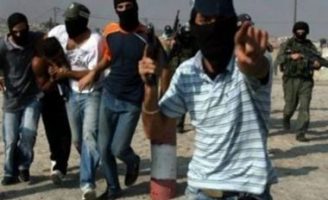 RAMALLAH – Israeli special forces disguised themselves as Palestinians and “kidnapped” two Palestinian students at the entrance of Birzeit University in the occupied West Bank district of Ramallah on Thursday afternoon, according to a statement released by the university.
The two students were identified as Tawfiq Abu Arqub, a coordinator for the Hamas-affiliated Islamic student bloc at the university, and Basel Falaneh, the secretary of specialities committee of the student council. They were studying computer science and business, respectively.
Birzeit University released a statement after the incident, saying that the two students were detained at the western gate of the university by “a number of [Israeli] soldiers.” Locals also told Ma’an that the students were forced into a vehicle “at gunpoint,” while also pointing guns at other students in the area.
The head of the university’s security, Muhammad Rimawi, stated that Israeli forces had “intercepted” a car that Abu Arqub and Falaneh were riding in, according to the statement, when “a number of undercover occupying forces took the students out of the car and kidnapped them.”
“This is neither new nor unprecedented given the ongoing colonial aggression against the people and institutions of Palestine,” the statement said.
The statement called the incident an “outrageous act of violence,” and part of a larger Israeli campaign resulting in the “rapid arrests” of students.
“This violation of our students’ right to learn is a part of a systematic attack on the right of education and freedom of expression,” the statement added.
The university’s Dean of Student Affairs Muhammad al-Ahmad also said in the statement that Israel’s “repressive measures” against all Palestinians and specifically students “shall only strengthen international efforts in support of an academic boycott of Israeli institutions.”
“The University condemns these outrageous acts in the strongest possible terms and calls upon all international and human rights organizations to speak this truth loudly in the face of these violations immediately and without reserve and to stand in solidarity with our struggle,” the statement concluded.
Birzeit University, ranked the top university in Palestine and among the highest-ranking universities in the Arab world, has been the focus of an Israeli military crackdown in recent months, which increased after the Hamas-affiliated Islamic bloc won student elections at Birzeit last year for the second consecutive year.
In December, more than 20 Israeli military vehicles raided the campus before dawn, forced campus security guards to stand against walls, and proceeded to raid several buildings, including the university’s administration building, the student council’s headquarters, Kamal Nasir Hall, and the Faculty of Science.
Another incident occurred in July, when at least 11 Palestinian youths were injured after Israeli undercover forces and soldiers opened live fire on the campus amid clashes sparked by an Israeli raid to detain a former member of the Islamic bloc.
At the start of 2016, Israeli military forces also raided Birzeit, destroying and confiscating university equipment. It was reported at the time that Israeli forces had detained more than 80 students between Oct. 2015 and the start of 2016.
Rights groups have widely condemned the concerted detention of Islamic bloc members at the university since their initial victory in 2015.
The Hamas movement is deemed illegal by the Israeli government — along with the majority of Palestinian political factions and movements — making students involved with the Islamic bloc vulnerable to raids and arbitrary detentions. Members have also been targeted by Palestinian security forces.
Police lied to me over Umm al-Hiran deaths
By Jonathon Cook | February 2, 2017
Speaking to me for my report last month on the killing by police of Yacoub Abu al-Qiyan during the demolition of his home in Umm al-Hiran, in the Negev, police spokesman Micky Rosenfeld made three allegations against Abu al-Qiyan that he said proved he was a terrorist. All of them have now been shown to be entirely unfounded.
A fourth claim, made against Ayman Odeh, head of the Joint List and the most senior politician among Israel’s 1.7 million Palestinian citizens, has also proved to be untrue.
The Israeli police appear to have been caught out as serial liars. Rosenfeld himself may have not known that he was peddling lies. He may have been simply reading from a script. But others surely knew. Not only did they wilfully mislead journalists, but they dangerously incited against Israel’s large Palestinian minority.
(This would be far from the first time. Only recently, the police, as well as prime minister Benjamin Netanyahu, accused Palestinian citizens of waging an “arson intifada” against Israel in November, when hundreds of fires broke out due to exceptional weather conditions. All of the dozens of Palestinians arrested over the fires were subsequently released, but no apology or retraction has been issued.)
First, Rosenfeld told me Abu al-Qiyan had carried out a deliberate “car-ramming terror attack” on police, which killed one officer. But a police aerial video of the incident shows that police opened fire on the car while Abu al-Qiyan was driving slowly and cautiously to leave his home before the demolition crew began work.
Further, leaks of an autopsy report show that Abu al-Qiyan was shot twice, in the torso and the knee, strongly suggesting that he lost control of the car as he tried to navigate carefully down a steep dirt track. If anyone is responsible for the death of the police officer, Erez Levy, it is his colleagues who opened fire without provocation.
Of equal concern should be the fact that Abu al-Qiyan was left for up to half an hour to bleed to death, while police denied an ambulance access to his village.
Second, Rosenfeld told me that Abu al-Qiyan’s terrorist intent was discernible because, even though the incident occurred before dawn, he had turned off his headlights to avoid detection. But a new video shows his car lights were on, just as one would have expected.
Third, Rosenfeld told me police had definitive proof that Abu al-Qiyan was a supporter of ISIS, and that the evidence would soon be divulged. But two weeks later Israel’s domestic intelligence service, the Shin Bet, have provided no evidence of such a link. All his family deny that he supported ISIS, or even that he held strong political views.
And fourth, Rosenfeld denied Knesset member Ayman Odeh’s claim that police fired a potentially lethal sponge-tipped bullet at his head. Rosenfeld said instead that the Knesset member’s injuries had been caused by stones thrown by the inhabitants of Umm al-Hiran opposing the dozen or so demolitions police were carrying out. Another police spokesperson told the Israeli Maariv newspaper that the police did not even have sponge-tipped bullets in their armoury.
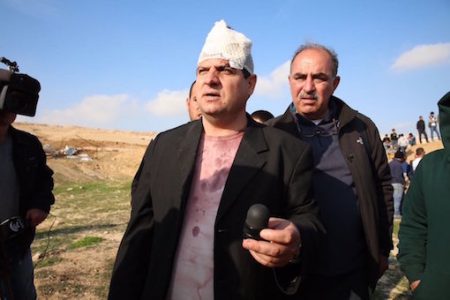
There were multiple problems with that account. Witnesses say there was no stone-throwing at the time Odeh was injured. And the Knesset member is photographed (above) holding the bullet in Umm al-Hiran, after he was shot. There is also a picture (below) of a huge bruise across his back, where he was shot a second time. It is hard to imagine how that injury was caused apart from by an impact with some form of rubber bullet.

And, whatever the police claim, there are well-documented instances of Israeli police using sponge-tipped bullets before, especially in East Jerusalem, but also in the Negev. The shocking thing in this case is that they used these bullets against a Palestinian Knesset member.
Interestingly, when challenged by another journalist, Mairav Zonszein, Rosenfeld denied that he had said Odeh was hit by stones, only that: “During the incident stones were thrown.” Well, my notes from our conversation show him clearly stating that Odeh’s head injury was caused by a stone.
It is past time for the police and the government ministers who for two weeks have incited against Abu al-Qiyan, against the inhabitants of Umm al-Hiran and more generally against Israel’s Palestinian citizens to issue an apology for their serial lies and distortions.
It is also essential that the government set up an independent, judicial-led inquiry to assess what really happened in Umm al-Hiran on the morning of January 18.
Featured Video
The Source of America’s Wars – Kristol Clear
or go to
Aletho News Archives – Video-Images
From the Archives
Is Israel to blame for the Iraq War?
American Goy | March 10, 2008
I am so tired of this old canard that “Israel had nothing to do with USA’s war with Iraq – in fact, it officially advised America against it”.
Bullshit. … continue
Blog Roll
 Aletho News
- Ceasefire for all or for none: Iran shuts Hormuz over Lebanon attacks
- Strait of Hormuz is Iran’s ‘nuclear weapon’ that forced US retreat: Medvedev
- Energy crisis will last for months – Kremlin envoy
- Europe’s quiet role in the war on Iran
- Forty days that shook the Empire: How Iran turned the tables on US and prevailed
- Netanyahu unilaterally declares Lebanon outside of ceasefire deal
- Israeli leaders: ‘Not a single goal’ achieved in war with Iran
- What on earth just happened? Trump, Iran, and the unlikely ceasefire
- Alberta Bill Would Fine Political Deepfakes $10,000 Without Satire Exemptions
- Iran declares ‘historic victory’ over US, says enemy forced to accept its proposal
- If Americans Knew
- Gazans face a triple crisis: severe shortages of water and bread, healthcare in tatters
- NY Times reports how Netanyahu took the US into Iran War
- A sigh of relief over Iran, but Gaza and Lebanon in dire straits – Daily Update
- Thousands dead and neighborhoods razed to the ground: Aid agencies fear southern Lebanon is becoming the new Gaza
- The war the US is fighting for Israel could cost trillions
- ‘Cigarette Burns, Nail Wounds’: Toddler Tortured in Gaza to Coerce Father
- Trump Says US Sent ‘a Lot of Guns’ to Protesters in Iran
- Israeli forces destroy 17 UN peacekeeper cameras in south Lebanon
- US-Israeli strikes ‘completely destroy’ synagogue in Tehran
- Archbishop for US Military Says Iran War Is Unjust Under Catholic Teaching
- No Tricks Zone
- An Inconvenient Tree: Uncovered In Alps… Europe Much Warmer Than Today 6000 Years Ago
- New Study Reports A 60% Slowdown In Greenland’s Ice Loss Rate In The Last Decade
- Low Intensity Tornado Wrecks Major Solar Farm, Creating A Potential Toxic Dump
- New Study Finds Warming Saves Lives…Cold Temperatures 12 Times More Deadly Than Excess Heat
- German Science Blog Accuses PIK Climate Institute Of Hallucinating Climate Tipping Points
- Devastating Assessment Of Comirnaty Vaccine By Former Senior Pfizer Europe Toxicologist
- New Study: CO2 Is ‘Effectively Negligible’ As An Explanatory Climate Change Factor Since 2000
- Former Pfizer Toxicologist Dr. Helmut Sterz Tells Bundestag Hearing Pfizer Vaccine Should Have Never Been Approved
- Energy Expert: Germany’s Nuclear Phaseout Was A “500 Billion Euro Mistake”
- New Research: South Australia’s Mid-Holocene Sea Surface Temperatures Were 4°C Warmer Than Today
 Aletho News