Castigated by the Southern Poverty Law Center

By Deir Yassin Remembered | Dissident Voice | February 24, 2017
The “public” that allegedly “protested” against this billboard in Ann Arbor, as reported by the Rochester Democrat and Chronicle, were not the only folks watching DYR.
The SPLC has now included DYR on its Hate Map.
Dan McGowan responds:
The Southern Poverty Law Center (SPLC) recently criticized Deir Yassin Remembered (DYR) by including it on the so-called Hate Map, purportedly for the high crime of Holocaust denial.
Apparently if the SPLC disagrees with you, it will label you as a racist or a hatemonger. There is no discussion, no defense, and no chance of winning a defamation suit against it.
The SPLC is the cash cow of the civil rights movement. Last year it took in over $58 million, some of which was added to its bloated endowment of over $328 million held in questionable investments, some in off shore accounts.
Its two chief executives together received over $800,000. Of its nine top executives, none come from minorities.
The SPLC claims to reject hate, embrace diversity, and respect differences. But often the SPLC and the people who believe their fear mongering behave exactly the opposite. The SPLC campaigns to deny free speech and freedom of association to groups of Americans with whom they disagree, often doing so to pander to other groups for more contributions all in the name of promoting “tolerance.” For example, if the British historian David Irving plans a lecture in Syracuse, the SPLC will protest any venue he might select, leaflet cars at his hotel saying, “There is a Nazi staying here,” and photograph and shout at anyone who might try to attend.
SPLC slime is not reserved solely for skinheads and members of the KKK. Dr. Ben Carson got a dose for opposing same sex marriage. SPLC later apologized but the charge never completely goes away, leading Carson to say that fear of being on the SPLC’s list serves to shut people up.
The SPLC makes money out of fear mongering and promoting the idea that Americans are inundated with hateful people, particularly on the radical right. The favorite target is the KKK and white supremacists.
The Baltimore Sun characterizes SPLC operations this way: “Its business is fundraising, and its success at raking in the cash is based on its ability to sell gullible people on the idea that present-day America is awash in white racism and anti-Semitism, which it will fight tooth-and-nail as the public interest law firm it purports to be.”1
It is understandable that the SPLC will run out of rocks under which to look for old KKK members and skinheads, but why criticize Deir Yassin Remembered, a small not-for-profit organization of Jews and non-Jews working to build a memorial for Palestinians murdered in 1948 on the west side of Jerusalem? DYR is certainly not the radical right. DYR practices and preaches tolerance; it has agreed to the advice of none other than the Latin Patriarch of Jerusalem that its memorial show the Christian tenet of forgiveness. Its advisory board boasts diversity; it is composed of half men, half women, half Jews, half non-Jews. It has worked continuously since 1994 for Palestinian human rights, including equal rights of citizenship, with no compensation for any executive and with less than $5,000 of reserves.
The answer lies in the writings of some of the DYR members who have questioned the use of the Holocaust as both the sword and shield of Israel. The Holocaust has been used to justify the need for a Jewish state and its expropriation of Palestinian land; the Holocaust is used to monopolize victimhood and defend Israel from criticism of its brutal and unending occupation.
But it is more than that. The Holocaust has morphed from a historical event to a religion, which must not be contradicted for fear of being branded an apostate or a hater or a denier or an anti-Semite. Religious faith is self-validating, impervious to reason, and regards proposals to scientifically validate its claims as profane in all senses of the word.
So, anyone who is skeptical about the number “six million,” about mass extermination in gas chambers, or about Nazi orders for extermination is to be named and shamed and hated. For this topic, there can be no diversity of opinion and no respect for inquiry or debate.
Don’t tell us that the United States government claimed Hitler murdered over 20 million people until the late 1970s when that number was officially revised downwards and carved in stone at 11 million. Don’t tell us that Jewish historians today claim the 5 million number of non-Jewish victims is overstated. Don’t remind us that the lampshade and the soap-from-human-fat stories were simple gruel propaganda and have no historical significance. Don’t remind us that Elie Wiesel took his violin to Auschwitz and that none of his family was gassed. Don’t remind us that Elie chose to retreat with the Nazis rather than be liberated from Auschwitz as was the father of Anne Frank.
Fear mongering and sliming little organizations like DYR is fake news. It is ridiculous disinformation to keep SPLC campaign money coming in. It foments hate and bigotry and intolerance by the very hypocrites who claim the opposite.
- “The truth about ʻhate crimesʼ and the racial justice racket” by Ron Smith, Baltimore Sun, December 3, 2008.
Deir Yassin Remembered seeks progress on behalf of the over 100 Palestinian men, women, and children who were victims of the Deir Yassin Massacre. Read other articles by Deir Yassin Remembered, or visit Deir Yassin Remembered’s website.
Venezuelan VP Releases Open Letter to US Treasury as Parliament Demands Resignation
By Lucas Koerner | Venezuelanalysis | February 21, 2016
Caracas – Venezuelan Vice-President Tareck El Aissami published an open letter to the US Treasury Department in the New York Times Tuesday in which he lambasted the body’s recent drug trafficking accusations as an attempt to further derail bilateral relations.
On February 13, the US Treasury Department’s Office of Foreign Assets Control (OFAC) froze all of El Aissami’s alleged assets in the US under the Foreign Narcotics Kingpin Act, making the vice-president the top-ranking official of any country to be sanctioned in this way. In particular, the OFAC accused El Aissami of having “facilitated shipments of narcotics from Venezuela” allegedly in collusion with the Las Zetas Cartel in Mexico.
In the letter, El Aissami charged the OFAC of being “deceived” by certain US political factions “whose fundamental interest is to prevent Venezuela and the United States from restoring their political and diplomatic relations on the basis of mutual recognition and respect”.
The vice-president further lambasted the drug trafficking allegations as a “false positive” which he said was intended to “criminalize – by way of my person – the Bolivarian Government of Venezuela”. The US Treasury Department has yet to release concrete evidence buttressing the accusations; meanwhile no US court has indicated that it is opening an investigation into the case.
El Aissami also highlighted the 62 percent increase in Venezuelan drug busts following the expulsion of the US Drug Enforcement Agency in 2005, which he said evidences Washington’s “egregious failure in the fight against drug trafficking”.
“How many heads of drug trafficking organizations has the US captured in its territory? How many banks and tax havens has the US closed for serving as a financial base for this gigantic business and crime against humanity? … The United States should reflect and rectify,” he wrote in the New York Times.
While El Aissami has received resounding support from President Maduro as well as the nation’s armed forces, the number two official has come under fire from the opposition-controlled National Assembly (AN), which has demanded that he resign from his post.
On Wednesday, a special parliamentary commission headed by Popular Will party legislator Freddy Guevara announced that it was opening an inquiry into the US Treasury allegations and called on the vice-president to step down in order to “facilitate the investigation”.
The AN moreover resolved to formally solicit from the US Congress and the US Treasury Department “the precise information that backs up the claims made so the AN can carry out the corresponding inquiry”.
The legislature additionally called on the Public Prosecutor’s office to provide all information relevant to the case.
Neither the executive branch nor the Public Prosecutor’s office have yet responded to the AN’s resolutions.
Venezuela’s parliament has been declared “null and void” by the Supreme Court over the body’s failure to unseat three legislators from Amazonas state under investigation for alleged electoral fraud.
Perfidious Albion…

By Andre Vltchek | OffGuardian | February 24, 2017
Here it goes again! The same old tired and predictable tune, the same recognizable chorus. Once again the world is told what to think and what to believe. The world is also given both rhythm and leitmotif, so the grotesque and crooked dance could begin.
Who could resist, really? The lyrics of the tune are recited in perfect English, and with that air of moral and cultural superiority, which is supposed to disperse all doubts.
On February 19, 2017, RT published the following:
The Telegraph, as a favored mouthpiece for British intelligence service disinformation, is a part of psychological warfare operation against Russia, said independent journalist Martin Summers. Another accusation is being thrown at Russia as a British newspaper published a story about Moscow being allegedly behind a plot to kill Montenegro’s Prime Minister last October… According to the article, Russia wanted to overthrow the country’s government to stop them joining NATO.
So now it is Montenegro. Yesterday it was Crimea, Donbas, and the US elections. Evil Russia again! Evil China, evil socialist Latin American countries, evil Syria, Eritrea, Zimbabwe, South Africa, North Korea, Philippines, evil all those who are laughing at the notion of Anglo-Saxon superiority.
This time I’m actually not intending to write some long, philosophical essay on the subject of “shamelessness of British propaganda”. I’m just taking a short break from my 10 thousand-word ‘paper’ for the China Academy of Social Sciences (CASS); a paper analyzing the impact of the 1917 Soviet Revolution on the world.
I just want to state what I believe should be so obvious, but somehow isn’t, at least to billions of people all over the world: “Those British blokes running the mainstream media outlets and global propaganda network really cannot be trusted. For centuries, no other country brought more grief to the planet, destroyed more lives, ruined more nations and cultures, and stole more natural resources from the ‘natives’, than the United Kingdom.” All this was done with a straight face, all explained and justified by the most advanced propaganda apparatus on earth, all ‘morally defended’. The entire twisted concept of British-style ‘justice’ was first introduced at home, and then exported to many corners of the globe.
It went on for several long centuries, and it goes on until now: the rapists are introducing globally accepted moral codes. Mass murderers are running international courts of justice. Notorious liars and thieves are teaching the world about ‘objectivity’. Gurus of disinformation are even ‘educating’ their own children, as well as the children of elites from all parts of the world, in their ‘prestigious’ factories of indoctrination – schools and universities.
Of course there are some countries that have tried very hard to outdo the UK in terms of brutality, greed and tactics of deception. It is worth mentioning such candidates for genocidal world leadership like France, Germany, Spain and lately the United States. They really have been competing determinately and zealously, but despite all their efforts, they never truly managed to come close to the forerunner.
Please, just think about all this, if you haven’t already done it for years. Then wash your eyes thoroughly, and look anew at those tabloids and ‘serious publications’ that are printed in the UK. Look at the indoctrination television channels. If you are still able to retain at least some detachment and common sense, please compare what they are saying and writing and showing, with the reality outside your own window, wherever on this Planet you may be.
For many years I worked all over the world, on all continents, in some 160 countries. For many years, I was told stories, shown evidence, about the most monstrous and barbaric crimes that the Brits have been committing almost everywhere on this Planet.
To compile even some semi-complete list, one would need to compose at least a sizable brochure, if not an entire book. Let’s just mention a few of the most obvious horrors that ‘Great’ Britain is responsible for: Slave trade and destruction of entire huge parts of Africa with tens of millions people directly or indirectly killed. Monstrous occupation of the ‘Sub-continent’, with tens of millions of lives lost (including those in several artificially triggered famines). Ransacking of large parts of China, murdering and participating in breaking the most populous nation on earth. Brutal attacks against the young Soviet state. Horrid treatment of colonized peoples of the island nations, from Oceania (South Pacific) to the Caribbean. Gassing, bombing, literally exterminating people of the Middle East, from what is now Iraq and Kuwait, to Palestine. There were invasions of Afghanistan and the ‘reign of terror in Kabul’ in 1879. There were many other things, many nightmarish crimes, of course, but today I’m being brief…
In the “New World”, consisting of countries like the US, Canada and Australia, the most terrible massacres of the native people were committed by the first and second generation of Europeans, mainly the Brits.
Britain actually never ceased to commit crimes against humanity. Since WWII it has been tutoring the United States, strategically and ideologically, in the art of how to run the Empire and how to manufacture unanimity inside the West itself, and even among the population of the colonized nations (in the neo-colonialist context).
It has also been involved in some of the vilest acts in modern history, related to countries like Egypt, Iran, Iraq, Afghanistan, Congo as well as entire areas of Asia Pacific and the African Great Lakes.
Again, that’s only a brief and incomplete summary.
Having experience with occupying huge parts of the world for centuries, knowing first-hand how to ‘pacify’ the natives, the Brits gradually developed and then passed on to the rest of the Western world their highly effective and successful indoctrination methods. These were eventually spread further – mainly among the elites of the colonized nations. As a result, fully standardized global perceptions evolved, and were implemented and upheld until this very moment. They included the general worldview, ‘principles’ and ‘moral standards’, law and justice (including such concepts as ‘human rights’), and even the set of overall values.
The English language (especially well articulated; spoken with certain recognizable and ‘acceptable’ accents) became the main linguistic tool embodying both truth and authority.
News presented in a certain ‘objective’ way and with a certain accent (or acceptable set of accents) became subconsciously, for the great majority of people, much more trustworthy than that which would be delivered by individuals whom a great Polish journalist, anthropologist and philosopher Ryszard Kapuscinski used to define as ‘the others’.
This ‘perfect’, seemingly bulletproof system produces intellectual laziness, submissiveness, even servitude. It is successfully upholding the status quo.
Lies are mounting on top of lies, and even the most obvious fabrications lately do not get challenged, except in some marginal and ‘extremist’ (defined by the Western regime) outlets.
The colonialist empire managed to survive. It is now fully in charge. It dominates the psyche of both the colonizers and the colonized. Advances that were made by liberation and independence struggles, by the anti-colonialism fighters during the post-WWII era, have been skillfully annulled. Then, it was officially declared, “colonialism is over”.
At some point, the Anglo-Saxon demagogues invented ‘political correctness’, one more highly effective tool designed to neutralize and ‘pacify’ any serious resistance. Political correctness claims that all nations and races are equal; it is even glorifying those ‘little people’ and almost all ‘cultures of the under-developed nations’, at least verbally, while in reality the Empire keeps plundering and manipulating the planet, as it has been doing for ages. In the colonies, the only individuals who are gaining are the elites; those morally corrupt rulers of the deprived and still enslaved world.
As in the past, the regime pragmatically chooses its enemies, and it then applies the most proven and spiteful tactics, launching defamation campaigns, dehumanizing citizens and leaders of adversary states, creating often phantasmagoric but highly effective conspiracy theories.
The British media, the British propagandists, in fact the entire British establishment, had reached absolute perfection in the field of mind-control and brainwashing.
How else, otherwise, would anyone in his or her sane mind trust the words of those who are responsible for tens of millions, perhaps for hundreds of millions of lost human lives in all corners of the world?
How could the primary architects of our insane global arrangement be taken seriously, unless they managed to fully indoctrinate their ‘subjects’?
Some would suggest that we are living in a world where the ‘normality’ could be found only in an insane asylum; where the only place for a decent man or a woman could be behind some barricade, or behind bars.
However, not many would have such thoughts, as even reflections are now almost fully standardized and controlled. So much glorified freedom has been reduced to just a handful of personal, very limited, often self-serving choices that one is still allowed to make while being generally fully locked within the existing system.
This British, European, in fact Western obsession with controlling, with ruling over everything in this world, has actually fully derailed natural human evolution. Instead of much higher aspirations, instead of optimistic attempts to build an egalitarian, compassionate and joyful society, our humanity is once again stuck in some master-slave morass, in something that appeared to be on its way out even during some periods of the 19th century, and definitely later, in the 20th century.
How to fight this nightmare? I wrote it many times before, and I have to repeat it again: To change things, one has to first understand reality. But it is not only about knowing the facts; it is mainly about how to analyze them, how to perceive the world and essential events.
We are being bombarded, in fact flooded with information, data and ‘facts’. What is missing is a totally new approach towards sorting and analyzing the reality within which we live.
The Empire is not withholding the facts. It is doing something much more sinister: it is depriving people of learning how to analyze them in the most logical ways.
Let us begin with absolute basics: “Mass murderer cannot be a judge”. “Indoctrinator and brainwasher cannot be a teacher”. “Those who are shackling, enslaving billions, should not be allowed to preach about freedom.”
The reality is: we have a handful of deranged, mentally disturbed nations and cultures that have been subjugating, raping and robbing entire nations and continents, still in charge of our beautiful but already terribly scarred Planet.
These morally defunct nations have no compassion left, and no real rationality. This fact they have proven again and again. One million victims, tens of millions of victims – it means nothing to them, as long as they can continue to rule. Ruined nature, disappearing islands, poisoned air, it matters nothing to them. People turning into indoctrinated, intellectually and emotionally uniformed cattle; good, who cares?
It is an extremely unsettling reality, but reality it is. The sooner we recognize it for what it is, the better.
‘Great’ Britain should sit down on its ass and cry in horror, recalling all crimes it has been committing, imagining the concentration camps it built in Africa and elsewhere, recalling the famines it triggered in India and elsewhere, remembering all those innocent people it murdered on each and every continent. It should be howling from shame, because of the nihilism it has been spreading, while ruining enthusiasm, beautiful dreams and hopes of our human kind.
It should stop and weep in horror, picturing instructions it provided to countries like South Africa, the United States or Rwanda – instructions that brought terrible bloodbaths, instead of harmony and progress to our world.
Why all this terror? Just so the UK and its cohorts could continue to rule! It is not about greed only, or natural resources, it is about control.
I don’t want their analyses, anymore. I don’t want their news, their films, their books, and their propaganda materials. Even in the dark solitude of some cave, one could understand the world much better than when reading their disinformation sheets, or when watching their indoctrination channels. All this is just designed to confuse people, to make them passive and submissive. Their announcers as well as their writers are like some sad lobotomized robots: there is no life, nothing new, nothing daring or revolutionary in their words. They function, somehow: they move, they eat, shit, repeat what they are expected to say, but they are not alive.
They only smear, but don’t inspire. If there is any optimism, it is always false, pre-approved, and mass-produced.
If you think about it, it all actually makes sense: A torturer cannot be a visionary, or an idealist.
Compared to China or Iran, the UK is a relatively young culture. But it feels old, tired, spent, and obsolete. Too many crimes and too many lies can exhaust and depress even a young person.
Were England a person, operating in a normal society, it would be either in prison or in a mental institution. The same could be said about the rest of the West.
We have nothing to learn from some murderous maniac, do we? The only concern should be: how to put a straightjacket on such an individual, how to prevent him from killing and harming others, and how to do it as quickly as possible.
I also highly doubt that with such a background and monstrous track record, our dangerous maniac should be allowed to interpret the world publicly, to teach people, and to even participate in the discussions touching the most essential issues facing our planet!
How Trump Could Be a Truth-teller
By Robert Parry | Consortium News | February 23, 2107
One positive thing about a change in party control of the White House is that the new occupants sometimes release information that the old residents kept hidden because the facts were politically embarrassing or did not support some favored policy.
We saw this in the first days of the Obama administration when President Barack Obama declassified some documents relating to President George W. Bush’s internal policy debates about torture and other abuses from the “war on terror.”
However, as yet, we have seen nothing similar from the Trump administration even though some truth-telling might work very well for President Donald Trump, especially given his reputation for getting facts wrong. A commitment to transparency – giving some truth to the American people on important topics – could change Trump’s image for the better.
Plus, by releasing information that was unjustifiably kept hidden during Obama’s second term, Trump could underscore how Obama grew increasingly obsessive about secrecy the longer he remained in the White House, treating the American people as objects to be manipulated rather than citizens to be informed.
For instance, Obama kept the clamps on CIA analyses relating to the Ukrainian crisis, even regarding the shoot-down of Malaysia Airlines Flight 17 over eastern Ukraine on July 17, 2014, killing 298 people and leading to a dangerous escalation in the New Cold War with Russia.
After the crash, the Obama administration quickly steered the Western media toward blaming President Vladimir Putin and got the European Union to join in economic sanctions against Russia.
However, after exploiting the rush to judgment against Putin, the Obama administration went silent, withholding U.S. intelligence evidence even from the official crash investigators. The more the administration learned about the tragic event and who was responsible the less it wanted to say.
At the time, I was told that the reason was that some senior CIA analysts were uncovering evidence that went in an inconvenient direction, suggesting a rogue Ukrainian operation connected to a hardline oligarch with the intent of shooting down a Russian jetliner, possibly even the one carrying Putin back from a state visit in South America, but instead brought down MH-17, which had similar markings.
To spread confusion and create some deniability for the attack, the scheme supposedly called for launching the missile from as deep inside “rebel-controlled” territory as possible.
A Closed File
The source described getting this briefing from U.S. intelligence analysts, but I was unable to get the CIA or the Office of Director of National Intelligence to provide any guidance. Instead, they clammed up, claiming that they didn’t want to “prejudice” the official Dutch-led investigation (although I pointed out that the hasty U.S. finger-pointing at Russia had already done that).
The refusal of the Obama administration to open its MH-17 files allowed the “Dutch-led” Joint Investigation Team (JIT) to be effectively taken over by Ukraine’s unsavory SBU intelligence agency, which oversaw the care and feeding of Dutch and Australian investigators who decamped for long periods in Kiev.
The SBU’s “evidence” became central to the JIT’s investigation although the SBU was deeply involved in the war against the ethnic-Russian Ukrainian rebels and was even denounced by United Nations investigators for blocking access to alleged SBU torture centers. Beyond that, part of the SBU’s mandate was to protect Ukrainian government secrets, so the SBU had obvious conflicts of interest.
Nevertheless, the JIT relied on SBU-provided telephone “intercepts” of cryptic Russian-language conversations to base its conclusion that Russia provided the rebels a Buk missile system on the night of July 16, 2014, which was then taken on a strangely circuitous route far to the west before circling back to the east to a location far from the battlefront where it shot down MH-17 on July 17 and then was driven back to Russia that evening, again taking an unnecessarily long way home.
Though there were numerous holes in the SBU’s evidence and serious questions about why the Buk would have taken its bizarrely long ride – when a much more direct and discreet route was available – the Western media again showed no skepticism, simply accepting Russian guilt as established fact and dismissing any alternative explanation as “fanciful.”
The Value of Truth
However, whatever the truth is – whether the Russians and their rebel allies were responsible for the tragedy or whether a rogue Ukrainian operation brought down MH-17 – there is no reason why President Trump shouldn’t instruct CIA Director Mike Pompeo to release as much of the U.S. intelligence analysis as possible.
First, the families of the dead deserve all the help that the U.S. government can provide to identify the killers and bring them to justice. Second, by releasing the MH-17 file, President Trump can demonstrate that he does care about truth in contrast to President Obama who mysteriously withheld this information for 2½ years and thus gave the culprits, whoever they are, time to escape and cover their tracks.
Further, if the file blames the Russians, releasing it would show that Trump is not in Putin’s pocket, as many people in Official Washington claim. And, if the file implicates an element of the Ukrainian government – even a rogue faction – that might relieve geopolitical tensions with Russia and open possible paths for resolving the Ukrainian crisis.
The Trump administration also could consider other topics for declassification, such as the circumstances surrounding the U.S-backed coup that ousted elected Ukrainian President Viktor Yanukovych on Feb. 22, 2014. U.S. intelligence surely was following those events closely and could clarify the roles of Assistant Secretary of State Victoria Nuland, U.S. Ambassador to Ukraine Geoffrey Pyatt and Sen. John McCain, who all cheered on and encouraged violent protests that preceded the coup.
Obama also hid the intelligence regarding the mysterious sarin gas attack outside Damascus, Syria, on Aug. 21, 2013, which Secretary of State John Kerry and others blamed on the Syrian government although later evidence seemed to implicate jihadist rebels who wanted to trick the U.S. military into intervening directly in the war on their side.
Given the importance of those turning-point moments – and the Obama administration’s attempts to exploit them for geopolitical ends – the American people deserve to know what the U.S. intelligence analysts ultimately concluded and whether President Obama’s team was telling the truth or had gotten lost in the Orwellian idea of “perception management.”
President Trump might find that he can begin to turn around his reputation as a person who doesn’t care about the truth by becoming a truth-teller.
Investigative reporter Robert Parry broke many of the Iran-Contra stories for The Associated Press and Newsweek in the 1980s.
At US behest Turkey reboots Syrian war
By M K Bhadrakumar | Indian Punchline | February 23, 2017
Turkey has decided to pick up a quarrel with Iran. It all began with President Recep Erdogan’s sudden outburst on February 14 in the first leg of a regional tour of Gulf States – Bahrain, Saudi Arabia and Qatar — when he said, “Some people want both Iraq and Syria to be divided. There are some that are working hard to divide Iraq. There is a sectarian struggle, a Persian nationalism at work there. This Persian nationalism is trying to divide the country. We need to block this effort.”
Tehran hit back by accusing Turkey of supporting terrorist organizations “to destabilize neighbouring countries.” And there has been much back and forth in mutual recriminations since then. The spat makes a mockery of the “trilateral alliance” between Russia, Turkey and Iran that Moscow has been promoting at the recent Astana talks on Syria. The Russian Foreign Ministry had announced as recently as February 16 that Russia, Turkey and Iran have formed a tripartite operational group to stabilize the ceasefire in Syria. The most puzzling aspect is that this is happening just when the Syrian peace talks began in Geneva today under UN auspices.
But then, there is always a method in Erdogan’s madness. Succinctly put, Erdogan’s outburst reflects an overall frustration that Iran has greatly outstripped its traditional rival Turkey in expanding its influence in both Iraq and Syria. The Iranian militia played a big role in taking Aleppo city and vanquishing the rebel groups supported by Turkey.
Turkey had fancied that it would play a similar lead role in wresting control of Mosul from the hands of the ISIS. But to its great consternation and anger, Iran has wrested that role too. The latest reports show that Iraqi forces have stormed Mosul airport. Iraq (and Iran) opposed any role for Turkey in the liberation of Mosul.
Conceivably, with an eye on the new US administration’s reported plan to create an anti-Iran alliance in the region, Turkey is repositioning itself. There are several developments pointing in this direction. The US and Turkey have been holding a series of top-level meetings through the past fortnight since President Donald Trump made his first phone call with Turkish President Recep Erdogan on February 7. The American visitors to Ankara since then included CIA Director Mike Pompeo, Chairman of the Joint Chiefs of Staff General Joseph Dunford and US the senator who heads the Armed Services Committee John McCain.
Meanwhile, Erdogan has undertaken a tour of the GCC states, which aimed at harmonising the Turkish stance on Syria with that of Saudi Arabia and Qatar. (During Erdogan’s tour, Turkey and Saudi Arabia signed a defence agreement.) Ankara has noted that in the past fortnight there have been important visitors from the US to the Gulf region –CIA chief Pompeo, Senator John McCain and Defence Secretary James Mattis. Pompeo conferred on Saudi Crown Prince Mohammed bin Nayef bin Abdulaziz the CIA’s George Tenet Medal for his exceptional contributions in the fight against terrorism. It doesn’t take much ingenuity to figure out that the US is promoting a Saudi-Israeli alliance against Iran.
Equally, Ankara and Washington are edging toward a mutually satisfactory resolution of a discord that had set them apart in the recent past – the fate of Islamist preacher Fetullah Gulen who lives in exile in Pennsylvania. The Trump administration may act to curb Gulen’s activities, while Erdogan may no longer press for his outright extradition to Turkey.
However, one other contentious issue still remains unresolved – US military support for Syrian Kurds. This is a non-negotiable issue for Turkey, which considers the Syrian Kurdish militia to be an affiliate of the separatist Kurdish group PKK. Turkey and the US are actively discussing at the moment the modalities of a Turkish military operation aimed at liberating Raqqa, the ‘capital’ of the Islamic State. The Turkish Prime Minister Binaldi Yildirim discussed the Raqqa operation with the US Vice-President Mike Pence in the weekend at the Munich Security Conference. It will be a major military operation with tanks, armoured vehicles and artillery. Turkey seeks US Special Forces’ participation, which will also serve the purpose of deterring Russian intervention, apart from weakening the Syrian Kurds’ drive to create an entity in northern Syria.
Without doubt, the capture of Raqqa will be much more than a symbolic event. Raqqa determines how much of Syria will be under the control of the Syrian regime. Clearly, Erdogan hopes to project Turkish power right into Damascus and have a big say in Syria’s future. Yildirim sounded upbeat after meeting Pence. See a report in the pro-government Turkish daily Yeni Safak – PM Yildirim: Turkey, US turning over a new leaf.
Suffice to say, Erdogan seems confident that the Trump administration is viewing Ankara once again as a “strategic partner and a NATO ally” (as Trump indeed told him). Just another 5 days remain in the timeline given by the Trump administration to the Pentagon to prepare a comprehensive plan to defeat the Islamic State in Syria and Iraq. But Turkey is already acting as if it had a preview of the Pentagon plan.
A lengthy dispatch from Damascus by Xinhua underscores that Turkey’s journey back to its American ally also coincides with the “re-emergence of the Gulf states as the backers of the rebels” and with a growing probability of US putting boots on the ground in Syria — all in all a “remilitarization” of the Syrian conflict. Read the insightful report titled Spotlight: Gloomy outlook shadows Syrian talks in Geneva.
Double Standards over ‘Russian Interference’ in Western Elections
By Finian CUNNINGHAM | Strategic Culture Foundation | 23.02.2017
Just as polls show Marine Le Pen of the Front National taking a decisive lead over her two main rivals, Francois Fillon of the Republicans, and Emmanuel Macron of the newly formed En Marche, the latter gets a high-profile reception in Downing Street with British prime minister Theresa May.
Fillon has no plans to make a similar visit to Britain, while Downing Street officially announced that it would not be receiving Le Pen, reported the Independent.
With only weeks to go to the first round of the French presidential elections in April, the British government’s hosting of Macron this week can be seen as an extraordinary endorsement of his candidacy.
One could express it even more strongly and say that Britain is evidently interfering in the French democratic process by elevating one candidate over another.
A spokesman for premier May said that Macron had requested the meeting at Downing Street and «we were able to accommodate».
A smiling Macron photographed on the doorsteps of Number 10 clearly showed him relishing the singular honor bestowed by the British prime minister.
One can imagine the media hullabaloo if Marine Le Pen were greeted in Moscow by Russian President Vladimir Putin, and the Kremlin to then pointedly announce that her rival Macron would not be receiving a similar invitation. There would be howls of «Russian interference» in the French election.
Indeed, Russia is being accused of doing just that already on the basis of scant allegations. Emmanuel Macron has recently claimed that his campaign is being targeted by Russian hackers and «fake news». Macron’s campaign team is alleging – without providing any evidence – that its computers are being attacked by «Russian hackers».
The liberal pro-EU candidate is also claiming that «Kremlin-run news media» are mounting a fake news «influence campaign» to damage his credibility.
This follows the publication of a news article by the Sputnik outlet earlier this month which quoted French political rivals accusing Macron of being supported by global banking interests and a wealthy gay rights lobby.
Russian government-owned Sputnik has denied that it is trying to damage Macron’s candidacy, and that it was merely giving coverage to criticisms aired by French political rivals.
Based on such flimsy, partisan claims of political interference, the French Foreign Minister Jean-Marc Ayrault earlier this week issued a warning to Russia to «stop meddling in the French presidential election».
Thus, a one-sided overblown claim by one of the presidential candidates is raised to a state level as if it is an established fact of Russian subversion of French sovereignty.
This narrative of Russian interference in foreign elections has evidently become contagious. Ever since American intelligence agencies, amplified by US media, began accusing Russia of hacking into the presidential elections to favor Donald Trump, the narrative has become a staple in other Western states.
Last week, German news outlet Deutsche Welle published this headline: «Is Moscow meddling in everything?» The article goes on to ask with insinuating tone: «Does Putin decide who wins elections in the West? Many believe that he cost Clinton the US presidency; now Macron is next France, and then Merkel will be in the line of fire».
The Russian government is legitimately entitled, as are other governments, to hold views on the outcome of foreign elections. After all, many European governments, including those of Germany and France, were adamantly opposed to Trump winning the US election, instead preferring his Democratic rival Hillary Clinton. But they weren’t subjected to criticism that they were interfering in the American election.
Regarding France, Russian state interests might be best served by Marine Le Pen taking the presidency. She has expressed a desire to restore friendlier relations with Moscow and to jettison the NATO agenda of hostility towards Russia. Her anti-EU views would also help to undermine the Washington-led atlanticist axis which has driven enmity between Europe and Russia.
The Kremlin has been careful to not make any public statements on the outcome of the French election, nor of any other foreign election, maintaining that it does not interfere. Nevertheless, Moscow is entitled to have its own private assessment on what would serve its own national interests. There’s nothing untoward about that. It seems almost bizarre to have to explain that.
But such is the fever-pitch and hysteria about alleged Russian malfeasance that the slightest sign, such as a random news article airing critical comments as in the Macron example, is taken as «proof» of Kremlin interference.
This is in spite of the fact that no evidence is presented. German state intelligence, for instance, recently concluded that there was no evidence to support allegations that Russia was running a Trump-like influence campaign against Chancellor Merkel ahead of her country’s elections being held in September.
Perhaps the most egregious expression to date of the Russian interference narrative were claims made this week by Britain’s Telegraph newspaper that the Kremlin had sponsored a coup attempt against the government of Montenegro last October.
Russian foreign minister Sergey Lavrov lambasted the evidence-free claims as «absurd». Lavrov said it «is just another one in a series of groundless assertions blaming our country for carrying out cyberattacks against the entire West, interfering in election campaigns in the bulk of Western countries as well as allegations pointing to the Trump administration’s ties with Russian secret services, among other things».
The height of absurdity is Britain this week hosting Emmanuel Macron at the Downing Street residence of Prime Minister Theresa May.
May’s intervention is a full-on endorsement of this one candidate at a crucial time in the French election which sees his main rival Marine Le Pen taking a decisive lead in the polls.
But where are the headlines denouncing «British interference» in French democracy?
Western media are too preoccupied digging up far-fetched stories claiming Russian interference based on the flimsiest speculation.
That double standard is clear evidence of the irrational Russophobia that is gripping Western governments and news media. Russophobia that has become a psychosis.
London’s new police chief Dick led botched operation that killed Jean Charles de Menezes
RT | February 23, 2017
Relatives of Jean Charles de Menezes, a 27-year-old Brazilian shot dead by counter-terrorism police in 2005, say the appointment of Cressida Dick as chief of the Metropolitan Police is ‘offensive,’ as she was responsible for the botched operation.
De Menezes was shot in the head 11 times on a train at Stockwell Underground Station, south London, after being mistaken for a terrorism suspect.
His bereaved family say Dick’s appointment proves that “police officers can act with impunity.”
Dick was appointed chief of the Metropolitan Police Service (MPS) on Wednesday, making her the first woman in history to head the UK’s largest police force in its 188-year history.
Although many hailed Dick’s appointment, the de Menezes family hit out at the decision, saying they had “serious concerns” for London’s security under her leadership.
“We had to face a tragedy that no family should ever have to experience; the tragic death of a loved one at the hands of those we entrusted to serve us and protect us,” the family said in a statement.
“At the helm of the police on that fateful day when Jean was killed was Cressida Dick.
“The message of today’s appointment is that police officers can act with impunity.”
The family also pointed out the seriousness of the role.
“The commissioner of the Metropolitan Police is the most senior police officer in the country, a post that is expected to uphold the highest standards of professionalism, to command public confidence and be responsible for ensuring that the police act lawfully and are held to account.”
De Menezes, who worked as an electrician, was killed in 2005 at Stockwell tube station while on his way to work after police reportedly mistook his actions for those of terrorist suspect Hussain Ossman.
De Menezes, was seen entering the station, but then doubled back, one of the acts deemed suspicious by police. However, it was later revealed the station was in fact closed.
Dick said in 2007: “From the behaviors described to me – nervousness, agitation, sending text messages, [using] the telephone, getting on and off the bus – it all added to the picture of someone potentially intent on causing an explosion.”
Despite ordering officers to stop de Menezes, she claims she never ordered that they open fire on him.
While the Met was found guilty of failings when the incident was taken to trial, Dick was spared any personal blame.
The family wrote to London Mayor Sadiq Khan on Friday, warning him Dick would not “command public confidence” if she was given the job.
But Khan, a former human rights lawyer, was among those backing Dick’s candidacy, hailing her appointment as “historic.”
“This is a historic day for London and a proud day for me as mayor … it was absolutely essential that we found the best possible person to take the Met forward over the coming years and I am confident that we have succeeded.”
Prime Minister Theresa May also welcomed Dick’s appointment, saying she has an“outstanding record of public service.”
“[Dick’s skills and insight] will be crucial in shaping the Met as the job of police reform continues, coordinating the national response to the ongoing threat of terrorism and serious criminality as well as keeping Londoners safe,” May said.
ISIS Calls For Backup: Israel Attacks Syrian Army Positions Near Damascus
Israel bombs Syrian army positions on the eve of peace talks in Geneva

War by any means
By Rudy Panko | Russia Insider | February 22, 2017
Syria peace talks are expected to begin this week in Geneva. And what are the Israelis doing? Bombing Syrian Arab Army positions near the Lebanese border.
Because as we all know, the Israelis are really good at these “ceasefire” things. Especially when they have no business interfering in any way in a conflict:
Minutes ago, an Israeli warplane conducted an airstrike over the western countryside of Damascus, targeting the Syrian Arab Army’s (SAA) positions in the Qalamoun Mountains near the Lebanese border.
A Syrian Army source told Al-Masdar this morning that the Israeli warplane had crossed into Syria after flying over Lebanon’s ‘Arsal Barrens, where both Al-Qaeda and the Islamic State (ISIS) are headquartered in the eastern Beqa’a Governorate. The Syrian Army source added that the specific location of the attack was in the Jard Nalhleh area of the Qalamoun Mountains.
Oh, isn’t that interesting? The Israelis flew over ISIS and al-Qaeda positions — but saved their bombs for the Syrians. Quite telling.
There were no reported casualties.
If Israel admits that it did indeed bomb a sovereign state unprovoked (which is unlikely to happen), it will probably claim that it was targeting “terrorists” such Hezbollah. The problem is that Russia’s Foreign Minister Sergei Lavrov has made it clear that Russia thinks Hezbollah has played an important role in defeating ISIS in Syria.
A bit of a diplomatic pickle for the Israelis, no?
Israel doesn’t want to return Syrian land that it stole, so it needs the war in Syria to continue. These airstrikes aren’t too surprising.
Who is Responsible for the Economic Collapse in the US
By Grete Mautner – New Eastern Outlook – 23.02.2017
Some people today still remember the times when America was the wealthiest nation on the entire planet and that could afford even the boldest infrastructure. But things are different now, as the US now has the biggest mountain of debt in the history of the world and it can’t even afford to repair the marvels that it used to build. The near catastrophic failure of the Oroville Dam is a perfect example of the situation most Americans have found themselves in.
Just recently, the Most Important News presented its version of 11 deeply alarming facts about America’s crumbling infrastructure and its long-term economic collapse. According to this site, the US economy expanded at its slowest rate for five years in 2016. Gross domestic product (GDP) rose by only 1.6 percent in 2016, down from 2.6 percent in 2015.
In turn, the World Socialist Web Site notes that the feature to emerge from the US GDP figures is the ever-widening disconnect between the underlying real economy and the financial system. This disconnect has a significant impact on economic growth, as vast amounts of wealth are diverted from the real economy into various forms of financial speculation. This leads to a decline in investment and falling productivity, two central features of the US economy in the eight years since the eruption of the financial crisis.
The situation is critical, so it’s hardly surprising that The Daily Caller has attempted to establish those responsible for the crisis most Americans have found themselves in, noting that President Obama’s time in the White House has added nearly 8 trillion dollars to the national debt. It means that Obama’s agenda came at a cost of the national debt increasing from more than 10.6 trillion dollars in January 2009 to 19.6 trillion dollars at the end of fiscal year 2016.
At the same time, as it’s pointed out by the Economic Collapse, none of long-term economic problems have been fixed. When the cost of living rises faster than paychecks do year after year, eventually that becomes a very big problem. Every month, tens of millions of American families struggle to pay the bills, and most of them don’t even understand the economic forces that are putting so much pressure on them.
Even if one still manages to remain employed, his quality of life is degrading rapidly as the rent, healthcare rates and even food are getting more expensive by the day. The Huffington Post notes that Water bills are on the rise across the United States, and the poor communities are being hit the hardest.
The total household debt climbed to 12.58 trillion dollars at the end of 2016, which constitutes an increase of 266 billion dollars from the third quarter, according to a report from the Federal Reserve Bank of New York. For the year, household debt ballooned by 460 billion dollars – the largest increase in almost a decade. That means the debt loads of Americans are flirting with 2008 levels, when total consumer debt reached a record high of 12.68 trillion dollars.
How much more are you going to squeeze out of U.S. consumers? Two-thirds of the country is living paycheck to paycheck. But the US government is reluctant to provide relief to those hard working people who have suddenly found themselves struggling financially even after taking on a tremendous work load. Instead it prefers to finance all sorts of military contractors that are pouring money down the drain on such projects as the F22 program, which has already consumed hundred of billions of dollars.
The American Thinker is predicting an abrupt rise in political violence in the United States, while arguing that wars begin when, in a major crisis, no peaceful solution can be found. Americans are at or near that point. Unfortunately, most people are not going to acknowledge the truth until it is too late.
Artificial Intelligence: ‘Frankenstein’ or Capitalist Money Machine
By James Petras :: 02.21.2017
Introduction
The Financial Times’ Special Report (2/16/2017) published a four-page spread on the ‘use and possible dangers of artificial intelligence (AI)’. Unlike the usual trash journalists who serve as Washington’s megaphones on the editorial pages and political columns, the Special Report is a thoughtful essay that raises many important issues, even as it is fundamentally flawed.
The writer, Richard Walters, cites several major problems accompanying AI from ‘public anxieties, to inequalities and job insecurity’. Walters pleads with those he calls the ‘controllers of autonomous systems’ to heed social and ‘political frictions’ or face societal ‘disruption’. Experts and journalists, discussing the long-term, large-scale destruction of the working class and service jobs, claim that AI can be ameliorated through management and social engineering.
This essay will proceed to raise fundamental issues, questions leading to an alternative approach to AI relying on class analysis. We will reject the specter of AI as a ‘Frankenstein’ by identifying the social forces, which finance, design and direct AI and which benefit from its negative social impact.
Basic Questions: Demystifying AI
The best and the worst of the experts reporting on AI assert that it is an autonomous system, devoid of any link to the class structure within which it operates. Their version of technological determinism, above and beyond the needs and demands of capitalists, fits neatly with the corporate ideology of the trash journalists and pundits.
The fundamental questions that must be raised include: 1) ‘AI’, for whom?; 2) How are the productivity gains of AI to be distributed between capital and labor? 3) How are work time, income and pensions distributed between the owners of technology and the labor force?; and 4) What kinds of socio-economic activity does AI serve?
‘Artificial Intelligence’ and related technological innovations are financed, designed, controlled and ultimately applied by the major corporations and financial institutions in order to reduce the cost of labor and to enhance profits and competitiveness between capitalist rivals.
AI and similar capitalist technological changes, along with the overseas relocation of information technology and manufacturing production are the principal destroyers of workers’ employment and living standards in the US.
AI technology, alongside vast spending for imperial wars and military procurement, multi-billion dollar bank-bailouts and the promotion of finance-over-productive capital represent the forces driving down wages, salaries, living standards, pensions and, lately, life expectancy for the marginalized working class and rural population.
The innovators and promoters of AI, whether individuals or small groups, seek capitalist support to finance, market and ‘acquire’ their ‘discoveries’. In fact, the entire industry has been built upon large-scale, tax-funded public research centers and university laboratories, which have paid for the buildings as well as the scientists’ and professors’ salaries.
Most of IT and AI related profits are distributed among the military-industrial complex, the chemical agro-industrial monopolies and the transport and consumer goods manufacturing elites. While garbage journalists and experts cite ‘AI’s contribution to health, education and social services, they forget to clarify that these ‘innovations’ are controlled by private health corporations, private ‘charter’ schools and public sector education elites intent on increasing profits, lowering teachers’ salaries, slashing programs and undermining student learning. The dismal, fragmented and mal-distributed state of healthcare and education in the United States is never seriously discussed because it puts the lie to the absurd claims made about the benefits of AI and IT for the broader population.
Far from being ‘autonomous’ and subject to abstract ‘controllers’, AI, IT and high technology serve to concentrate wealth, power and profits for multiple sectors of the ruling class who determine how such technologies will be used.
The financiers of AI and their partners direct the scientists, engineers and marketers. The garbage journalists are paid to proclaim the arrival of ‘history-making’ innovations. The media describe AI as ‘machine learning, a form of advanced pattern recognition technology to make judgments by analyzing large amounts of data (which) could supplement human thought’ (FT Special Report 2/17/2017).
Contrary to the above-mentioned assumptions, the ‘judgments’ are made by the ruling class, using parameters and metrics determined by the elite, deciding on what kinds of ‘patterns are to be recognized’ in order that they can derive the kind of information they need to enhance profits, make war, maximize killing and engineer massive layoffs of workers. In a word, class assumptions dictate AI, IT and the use of these innovations.
Conclusion: Alternatives
If class determines AI, and in present-day America that means the ruling class, then only changes in the class structure can pose different questions and answers to our originally stated problems. Only by sharpening the class struggle, which changes who rules the banks, factories and social institutions, will new assumptions direct AI and IT and other innovations.
Only workers, professionals and scientists, who replace the prioritizing of profits with meeting social needs, can produce an AI that lowers the retirement age, increases national health care, facilitates workers’ decision making, distributes high quality education and information to the citizenry, reduces inequalities and shifts earnings from capital to labor.
Media bias is real, and everywhere
By Yves Engler · February 22, 2017
Can you trust any media outlet to tell the truth about foreign affairs? Or are they all part of some propaganda system? Perhaps the best we can do to understand what’s really happening in the world is read/listen/watch a variety of sources, but assume they are all biased in one way or another?
These questions came to mind after a recent Montréal event about Syria.
In a La Presse article, international affairs reporter Agnès Gruda essentially dismissed a presentation by a freelance journalist who has covered the war in Syria by writing: “for who does Eva Bartlett really work? During her conference, she confirmed that she wrote commentaries for Russia Today — a Russian propaganda organ.”
Gruda isn’t the only reporter to highlight Bartlett’s ties to RT when discussing her Syria work. A Hamilton Spectator story about her talks in that city noted, “Bartlett maintains a blog for the state-funded media outlet Russia Today” while Pulse reported that she contributed to the “Kremlin broadcaster Russia Today.” (Bartlett has published five articles about Syria for RT.)
Of course, the question of where journalists publish or who employs them and the interests of the owners/funders of said media does deserve attention. It is not unreasonable to be skeptical of a Russian media outlet’s reporting on Syria. While I’m not current with RT, it’s hard to imagine that a station set up by the Russian government wouldn’t be biased in favor of Moscow’s position in a conflict it is a major player in.
But, does Gruda describe herself as an employee of the billionaire Desmarais family that is heavily involved in Canadian and other countries’ politics? How does Gruda describe journalists who’ve written for Al Jazeera, which is owned by a Qatari monarchy that has backed armed opposition to Assad? Or how about the BBC, CBC and other media outlets owned by governments?
Does Gruda offer readers similar background on journalists who’ve worked on a National Film Board documentary? Created as part of the Canadian government’s World War II propaganda arsenal, the 1950 National Film Board Act calls for it to “promote the production and distribution of films in the national interest.”
Or, does she mention journalists’ ties when they have freelanced for Radio Canada International, a “Canadian government propaganda arm”? Initially focused on Eastern Bloc countries, beginning in 1945 RCI beamed radio abroad as part of “the psychological war against communism”, according to external minister Lester Pearson. Early on External Affairs was given a copy of the scripts used by commentators and it responded to criticism of Canada’s international policies. Into the 1990s RCI’s funding came directly from External Affairs.
Or what about the Canadian Press ? The influential media institution has significant historic ties to official Canadian international policy. During World War I Ottawa helped establish the Canadian Press to increase pro-war coverage and strengthen national identity. A predecessor newswire disseminated Associated Press stories in Canada but the war spurred criticism of the US news agency, which did not cheerlead British/Canadian policy loud enough for some (Washington had yet to join the fighting). “In effect, an arm of the British Foreign Ministry”, Reuters offered Canadian newspapers free wire copy during the war. But, the British press agency would only deliver the service to Ottawa. If the federal government “wanted to ensure that this pro-war imperial news service was distributed effectively across the country”, it had to subsidize a telegraph connection to the West Coast. To support CP the federal government put up $50,000 ($800,000 in today’s dollars) a year, which lasted for six years.
CP “cemented” itself as Canada’s national news service during World War II. “To accomplish this,” Gene Allen writes in a history of the organization, “CP cultivated unprecedentedly close relations with Canada’s military authorities — who had reasons of their own for wanting extensive coverage of the national war effort — and thereby moved some distance away from traditional notions of journalistic independence.” In an extreme example, CP recruited a Canadian Forces public relations officer who led reporters into battle zones. Bill Boss remained with the same unit but began reporting for the news service and would become one of Canada’s most famous war correspondents.
Nationalism remains an important media frame at the CP. “As a warcorrespondent in the 1990s”, former CP reporter Stephen Ward describes facing nationalist pressures. “I came under pressure to be patriotic when reporting on Canadian soldiers or peacekeepers in the former Yugoslavia and elsewhere [Iraq] … I should not embarrass Canada by reporting on mistakes in the field; I should not quote soldiers puzzled about their mission; I should do ‘feel-good’ pieces about soldiers watching hockey via satellite in warring Bosnia.”
Most Canadian media face similar pressures in their international coverage, as I detail in A Propaganda System: How Canada’s Government, Corporations, Media and Academia Sell War and Exploitation.
Certainly Russia’s foreign affairs machinery isn’t the only one that shapes international coverage. Highlighting Russia’s “propaganda system” to a Canadian audience without mentioning the one at home indicates either a journalist’s ignorance or that she is part of it.
Featured Video
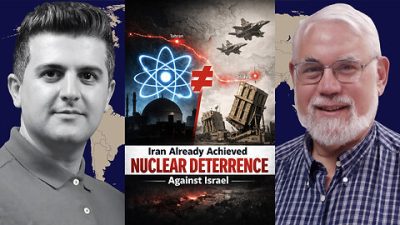
Prof. Ted Postol: Iran Already Achieved Nuclear Deterrence Against Israel
or go to
Aletho News Archives – Video-Images
From the Archives
How the occupied mentality syndrome works
Saudi Arabia on the American chessboard – Part 3
By B. J. Sabri | American Herald Tribune | June 27, 2016
Read part 2: “The occupied mentality Syndrome“
Previously I argued whether Saudi Arabia’s repeated involvements in U.S. interventions and wars stem from free national will or in response to a specific condition. For starters, in Saudi Arabia there is no national will. In Saudi Arabia, the national will is the will of the Al Saud clan. Still, when a major Arab state allies itself with a superpower that committed unspeakable crimes against humanity in almost every Arab country, then something is wrong. This fact alone should compel us to examine the U.S.-Saudi relation for one exceptional reason. As a result of the U.S.-Saudi wars, hundreds of thousands of people in Afghanistan, Iraq, Iran, Libya, Syria, Yemen, and Somalia have lost their lives. Millions became displaced in their own homelands. And millions more rendered refugees.
Attributing the Saudi policies to the bonds of “partnership” with the U.S. is frivolous. There are no bonds between these two thugs except those of business, military deals, secret plots, and wars. Proving this point, bonds such as these have no space for the American and Saudi peoples to share significant cultural or societal exchanges. If partnership is not the reason for the Saudi contribution to the U.S. strategy of empire and imperialism, then another reason must exist.
This leads to three possibilities. … continue
Blog Roll
 Aletho News
- Hezbollah hits Israeli warship off Lebanon’s coast, sets it aflame
- Iran slams US strikes on B1 bridge, Mahshahr petrochemical plants as ‘blatant acts of state terrorism’
- In letter to UN chief, Araghchi warns of dire consequences of US-Israeli attacks on Iran’s nuclear facilities
- Why the CIA conspiracy to invade Iran with Kurdish militias failed
- Why Are Upbeat US Claims About Mission to Rescue Pilot ‘Highly Questionable’?
- Aircraft destroyed during US ‘rescue’ of downed F-15 pilot cost more than $100 million each
- Washington University removes professor who condemned US-Israeli war on Iran
- Russia Warns of Retaliation as UK Authorizes Seizure of Vessels
- Serbia thwarts plot to bomb Russia-Hungary gas pipeline – Vucic
- Al Mayadeen voices solidarity with Dr. Marandi amid death threats
- If Americans Knew
- In Iran, Israel-US take aim at “reason, research, and freedom of thought” – Daily Update
- US loses planes over Iran, Israel downgrades Lebanon war goals – Daily Update
- Israel Is Blocking Palestinians from Easter at Church Where Jesus Resurrected
- Plot to assassinate Palestinian activist follows harassment campaign promoted by Zionist groups and elected officials
- Prominent New York synagogue hosts presentation on why U.S. Jews should support the ethnic cleansing of Gaza
- Tapper vs. Piker: Is the CNN Anchor Auditioning for David Ellison?
- Shouldn’t Democrats Be Able to Condemn Genocide?
- Israel-US kill negotiators, destroy civilian structures, but Iran’s military capabilities still largely intact – Daily Update
- ‘War crime’: Global condemnation as Israeli ministers celebrate death penalty law targeting Palestinian prisoners
- 7 Ways Israel Is Turning Lebanon Into Gaza
- No Tricks Zone
- An Inconvenient Tree: Uncovered In Alps… Europe Much Warmer Than Today 6000 Years Ago
- New Study Reports A 60% Slowdown In Greenland’s Ice Loss Rate In The Last Decade
- Low Intensity Tornado Wrecks Major Solar Farm, Creating A Potential Toxic Dump
- New Study Finds Warming Saves Lives…Cold Temperatures 12 Times More Deadly Than Excess Heat
- German Science Blog Accuses PIK Climate Institute Of Hallucinating Climate Tipping Points
- Devastating Assessment Of Comirnaty Vaccine By Former Senior Pfizer Europe Toxicologist
- New Study: CO2 Is ‘Effectively Negligible’ As An Explanatory Climate Change Factor Since 2000
- Former Pfizer Toxicologist Dr. Helmut Sterz Tells Bundestag Hearing Pfizer Vaccine Should Have Never Been Approved
- Energy Expert: Germany’s Nuclear Phaseout Was A “500 Billion Euro Mistake”
- New Research: South Australia’s Mid-Holocene Sea Surface Temperatures Were 4°C Warmer Than Today
 Aletho News