US Marines sent to Afghanistan’s Helmand province
Press TV – April 29, 2017
US Marines have returned to Afghanistan’s southern Helmand province, the first to be deployed in the war-torn country since the North Atlantic Treaty Organization (NATO) ended its combat mission in 2014.
US General John Nicholson, the commander of American and NATO forces in Afghanistan, attended a ceremony on Saturday marking the return of the Marines to Helmand, where US forces faced intense fighting until 2014.
About 300 Marines will form part of the so-called Operation Resolute Support, described by NATO as a train, advise, and assist mission consisting of over 13,000 troops.
The Marines were among the first US forces sent to Afghanistan after the September 11, 2001 terror attacks in the US. Several thousand were deployed in Helmand, only for it to slip deeper into a quagmire of instability.
The deployment came one day after the Taliban militant group announced the start of its “spring offensive,” a heightened campaign of bombings, ambush attacks, and other raids that begin as weather conditions improve.
The new deployment is the latest sign of how the NATO military alliance is increasingly being drawn back into fighting in Afghanistan.
The Marines will largely operate from a sprawling installation known during earlier Marine operations as Camp Leatherneck, but will be based in other locations and could engage in combat.
The US has around 8,400 troops in the country with about another 5,000 from NATO allies.
The Pentagon said Wednesday that two US troops were killed in Afghanistan’s Nangarhar province during a military operation against the Daesh (ISIL) terrorist group.
In total, 2,217 American soldiers have died in the country since the invasion in 2001 and another 20,000 have been wounded, according to the Pentagon.
On Monday, US Defense Secretary James Mattis visited Afghanistan as President Donald Trump’s administration looks to craft a new policy in the country.
The change of policy was put on display earlier this month, when Gen. Nicholson ordered a Massive Ordnance Air Blast (MOAB) bomb—also known as the Mother of All Bombs— to be dropped on a purported Daesh target in the eastern province of Nangarhar.
Afghanistan is still suffering from insecurity and violence years after the United States and its allies invaded the country as part of Washington’s so-called war on terror. The 2001 military invasion removed the Taliban from power, but their militancy continues to this day.
More NYT ‘Spin’ on the Syria-Sarin Case
By Robert Parry | Consortium News | April 28, 2017
In blaming Syrian President Bashar al-Assad for the April 4 chemical incident in Khan Sheikhoun, The New York Times and other Western news outlets have made a big deal out of discrepancies in the timing and other details provided by the Syrian and Russian governments.

Crater containing alleged canister in Khan Sheikdoun
The Times and the others also have chided anyone who notes that Assad had no logical reason to undertake a sarin attack since his forces were making solid gains and he had just learned that the Trump administration was dropping the longstanding U.S. goal of “regime change” in Syria.
To those of us outside the mainstream media bubble, there seemed to be little or no military advantage to be gained. Instead, Assad would be risking more international intervention, which has ripped his country apart for the past six years. But the Times and other major outlets dismissed our logic by arguing that Assad was simply announcing his impunity in some particularly brutal Arab-sort-of-way.
However, neither the value that the Times and others placed on the Russian-Syrian timing discrepancies nor the strange explanation of Assad’s motive made any sense. After all, if Assad were making some bizarre public declaration of his impunity, why would he then deny that his forces were responsible? Wouldn’t he simply say, “yes, I did it and I don’t care what anyone thinks”? Isn’t that what impunity means: that you do whatever you want knowing that no one can hold you accountable? Instead, Assad has consistently denied ordering the attack.
The gotcha observation about the time element of the bombings fails the logic test, too. Why would Syria and Russia say Syrian warplanes carried out a conventional attack on Khan Sheikhoun around noon if the actual attack occurred around 6 a.m., as it apparently did? There was nothing to be gained for them by having the timing off by six hours, since the point that Syria and Russia were making was that there were indeed airstrikes but that they were conventional bombs that may have unintentionally struck an Al Qaeda depot holding chemical weapons and thus released them. The timing element was immaterial to that point.
What this apparent timing error suggests is confusion, not “spin,” as the Times insists in a tendentious April 27 video by Malachy Browne, Natalie Reneau and Mark Scheffler, entitled “How Syria and Russia Spun a Chemical Strike.”
The Syrians and Russians appeared perplexed by what had happened. Their officials understood that a conventional airstrike had been carried out and stated what they believed the time was. The time discrepancy either meant the Syrian air-wing commander had dispatched warplanes earlier than expected or that some other entity carried out the 6 a.m. strike. But the Syrians and the Russians would seem to have no reason to lie about this detail.
Intervention by Air
Another false assumption pervading the Western accounts on this and other chemical incidents in Syria is that only the Syrian government and its Russian allies have control of the skies. That is clearly not true. Various military forces, including those of the U.S. and its allies, as well as Israel and – to some degree – the rebels have air capabilities in Syria.
According to Syrian accounts, the rebels have captured some government helicopters and apparently used one in what United Nations investigators were told by multiple eyewitnesses was a staged chemical-weapons attack in 2014 with the goal of sticking the blame on the Syrian regime.
Further, the U.S. and its allies have been conducting airstrikes across much of Syria in campaigns against Islamic State and Al Qaeda-linked terror groups, which have been supported by Saudi Arabia, Turkey, Qatar and other Sunni-led sheikdoms. Turkey has been active, too, with strikes against Kurdish forces. And Israel has hit repeatedly at Syrian targets to promote what it regards as its interests, including destruction of Iranian weapons believed headed to the Lebanese militant group, Hezbollah.
Some – if not all – of these entities had a far stronger motive to create a chemical-weapons incident in Syria on April 4 than the Syrian government did. At the end of March, the Trump administration announced that it was no longer a U.S. priority to overthrow the Assad government, an announcement that upset several of the countries involved in the Syrian conflict, including Turkey, Saudi Arabia, the Gulf States and Israel.
All of them – having committed resources and prestige to achieve “regime change” in Syria – had motive to overturn President Trump’s pronouncement. (Israel has had “regime change” in Syria at the top of its to-do list since at least the mid-1990s.) How better to keep that hope alive than to stage another chemical-weapons attack and blame it on Assad? (Another sarin attack in August 2013 also now appears to have been a staged incident by Al Qaeda that killed hundreds while almost tricking President Obama into ordering a massive U.S. military strike on government forces.)
Shortly after the incident at Khan Sheikhoun, I was told by an intelligence source that U.S. satellite imagery had picked up what looked like a drone in the vicinity at around the time that the poison gas was released. Despite some technical difficulties in tracking its route, the source said the analysts believed that it may have come from a Saudi-Israeli special operations base in Jordan, used to assist the rebels.
There are also other combinations of factors that should have been carefully evaluated before President Trump jumped to his Assad-did-it conclusion and fired off 59 Tomahawk missiles at a Syrian airbase on April 6, but they weren’t given serious thought in the rush to blame Assad.
For instance, Al Qaeda’s clever propagandists could have again staged a chemical attack on the ground by creating a crater in the road and inserting what was purported to be a chemical-weapons canister. The Times and others have noted that the crater was not visible in earlier satellite images but that observation doesn’t mean the crater had to be created by an aerial bomb; a ground explosion or simple digging could have done the trick – with the crushed canister inserted later.
Dubious Narrative

Men allegedly inside crater where sarin bomb landed
The canister-in-the-crater story struck MIT’s technology and national security expert Theodore Postol as particularly odd because on-scene photos showed people climbing into the supposedly sarin-saturated crater wearing minimal protection and not keeling over dead. Postol also said the canister appeared to have been crushed rather than exploded.
There is also the possibility that some third party with access to sarin or other powerful chemical weapons could have delivered the poison gas by air – possibly from that drone – with the rebels either coordinating with that delivery before the fact or reacting to the opportunity after the fact.
The hard truth is that intelligence services from a number of countries could fit the bill in terms of producing sarin or some similar substance that could mimic what Syria once had in its arsenal, although those chemical weapons were supposedly destroyed in 2014 as part of an agreement hammered out by Russia and the United States.
And there are plenty of ruthless intelligence operatives on all sides who would have found the deaths of 80 or so people acceptable collateral damage to advance a geopolitical priority. The timing, so close to the Trump administration’s major announcement that Assad no longer had to go, would have represented a logical motive for such a ruse.
The other problem in assessing what has or hasn’t happened in Syria over the past six years is that all sides, but particularly those seeking “regime change,” have deployed sophisticated propaganda operations to the combat zone.
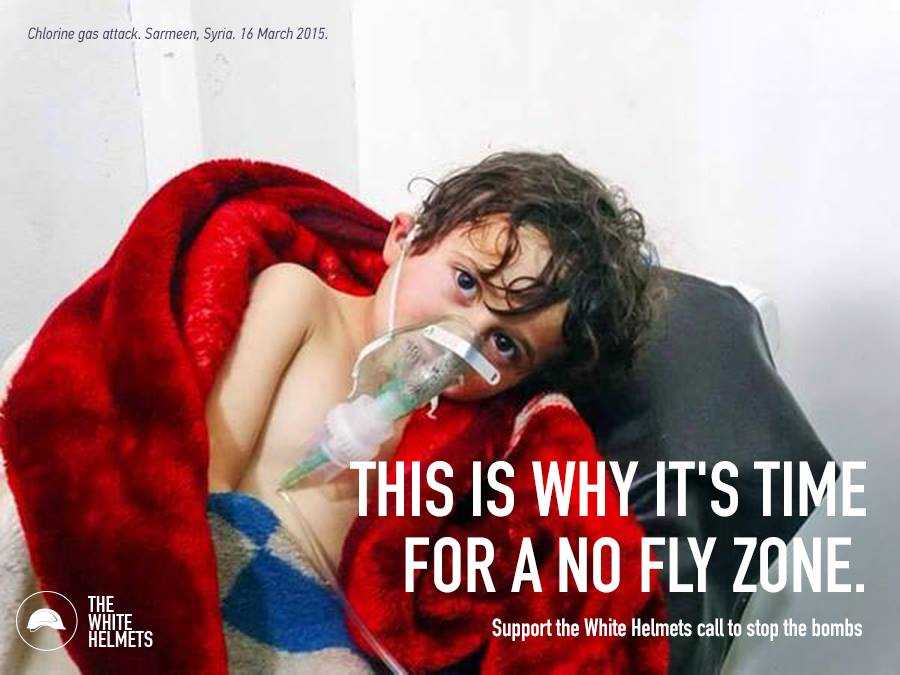
Propaganda designed to justify major US military operation
Anti-regime activists – financed and supplied by the West and the Gulf States – understand the emotional value of showing dying children. These propagandists have regular and uncritical access to major Western media outlets, from the hipsters at VICE to the neocons and liberal-interventionists at The New York Times.
In other words, what is still desperately needed in this latest chapter of the Syrian tragedy is some honest broker who could conduct a serious investigation that isn’t contaminated by all the previous propaganda-infused narratives. But the chances of finding that person or group are slim to none.
Investigative reporter Robert Parry broke many of the Iran-Contra stories for The Associated Press and Newsweek in the 1980s.
Trump Releases Declassified Operation Condor-Era Docs to Argentina

Chilean dictator Agusto Pinochet (L) and Argentine dictator Rafael Videla (R) | Photo: Wikimedia Commons
teleSUR | April 27, 2017
U.S. President Donald Trump met with Argentine President Mauricio Macri on Thursday, handing over 931 declassified Department of State records related to Operation Condor.
Operation Condor was a Cold War-era campaign of violence across Latin America that resulted in tens of thousands of activist deaths.
Trump’s release falls in line with former President Barack Obama’s promise to release intelligence documents about human rights abuses committed by the Argentine military dictatorship during the 1970s and 1980s.
Entitled “Secret/Exdis,” the declassified documents provide new insight into U.S. support for human rights abuses in Argentina and neighboring countries. Here’s what the reports divulged.
They describe Operation Condor as a trans-border, multinational effort by Southern Cone secret police services to “track down” and “liquidate” regime opponents, the National Security Archive reports.
They reveal that the orchestrators of Operation Condor considered establishing “field offices” in the United States and Europe.
They provide information about former President Jimmy Carter’s propping up of former dictator Rafael Videla in 1977. It has also been confirmed that Orlando Letelier, chief economist for former Chilean President Salvador Allende, was killed by members of Chile’s intelligence service under the Augusto Pinochet dictatorship.
Moreover, they include details about the censorship of U.S. Buenos Aires embassy human rights officer Tex Harris, who tried making human rights abuses public.
The declassification of other top secret documents is expected to occur before the end of the year. Records of 14 intelligence agencies, including the CIA, FBI, and DIA, are expected to be included in the release.
100 US Senators Want Israeli High Crimes Suppressed
By Stephen Lendman | April 28, 2017
In an April 27 letter to UN Secretary-General Antonio Guterres, all US senators demanded the world body ignore Israeli high crimes, calling truth-telling “anti-Semiti(c).”
“Too often, the UN is exploited as a vehicle for targeting Israel,” they said.
Fact: Much more needs to be done to hold Israel accountable for high crimes of war and against humanity – for decades of ruthlessly persecuting Palestinians, for committing slow-motion genocide, for attacking its neighbors.
The letter quoted neocon US UN envoy Nikki Haley, saying “(i)t is the UN’s anti-Israel bias that is long overdue for change” – an outrageous perversion of truth.
The senators praised the world body “for disavowing” the important Richard Falk/Virginia Tilley report, calling Israel a racist apartheid regime – “beyond a reasonable doubt.”
The entire US Senate urged the UN “to improve (its) treatment of Israel…” It demands no world body support for the vital global BDS initiative – or any other actions hostile to Israeli interests.
It wants information about its human rights abuses suppressed. It demands support for US interests. It calls truth-telling anti-Israeli “bias.”
All 100 US senators disgracefully signed the letter. Washington and Israel partner in each other’s high crimes – a ruthless axis of evil threatening humanity.
Last week, Haley accused the world body of holding “Israel-bashing sessions.” Ignoring US wars in multiple theaters, she lied claiming “Iran is using Hezbollah to advance its regional aspirations.”
“They are working together to expand extremist ideologies in the Middle East. That is a threat that should be dominating our discussion at the Security Council.”
Iran threatens no one. Neither does Hezbollah. Haley turned truth on its head. So did Tillerson days earlier, irresponsibly accusing Tehran of “alarming ongoing provocations” to destabilize regional countries.
Iranian UN envoy Gholamali Khoshroo debunked his remarks, calling them “misleading propaganda…”
Last week Washington asked which Middle East countries benefit from regional chaos, “and what are the connections between terrorist groups and these states?”
Israel, of course, benefits most. So does America by its belligerent presence in a part of the world not its own – waging endless wars of aggression, supporting terrorist groups it created, wanting pro-Western puppet rule replacing all sovereign independent governments.
Stephen Lendman can be reached at lendmanstephen@sbcglobal.net. His new book is titled Flashpoint in Ukraine: How the US Drive for Hegemony Risks WW III.
George Monbiot, about Syria…
By Tim Hayward | April 28, 2017
I write this open letter, George, because you have been using your public platform to defend claims about Syria that I fear may be damaging for its people.
Most recently, you blogged a note about the 4th April chemical incident in Khan Sheikhoun, Syria, and you related this to the more general issue of competing narratives.
Professor Postol of MIT criticised the NATO/Gulf State account of the incident, and you say his claims ‘should be treated with great caution’. That’s fair enough. Shouldn’t we apply a similar standard of scrutiny to claims made on both sides?[1] You replied to the Media Lens article reporting Postol’s claims without acknowledging that it also mentioned that ‘former and current UN weapons inspectors Hans Blix, Scott Ritter and Jerry Smith, as well as former CIA counterterrorism official Philip Giraldi, had all questioned the official narrative of what happened on April 4.’
We can be cautious about what they all say, of course, but I hope we may avoid the hubris of just dismissing their concerns.
There are serious unsettled questions about every aspect of the incident, not only the anomalies concerning time of incident, identity of victims, causes of death, role of White Helmets, and about whose interests it served, but also concerning the forensic evidence itself. Regarding the latest claim made by France, a very elementary issue is chain of custody: with no French representatives on the ground, the test samples appear to have come from Al Qaeda by way of Turkey. Must we simply trust the testimony of a terrorist organisation in collaboration with a major conduit and supplier of anti-government forces in Syria? Do we find any corroboration? Western powers, you might be aware, have blocked the independent investigation sought by Russia.
The reported results themselves are opaque. The French reports are no clearer on the science than the earlier UK ones (and I note that the UK has since gone rather silent about those rather than address questions about them). Moreover, the French claims rely on the veracity of claims relating to a 2013 incident, which are highly questionable.[2]
Still, even aside from the facts around the Khan Sheikhoun incident, you are confident that there is a mountain of compelling evidence that is disregarded by ‘a few contrarians’. In tweets, too, you seem to be impressed by the sheer quantity of evidence purporting to establish President Assad’s complicity in war crimes and crimes against humanity.
Yet you surely realise that what actually matters is the quality of evidence?
I therefore ask you: what evidence are you referring to? Whose evidence? In your note you link to a Guardian article by an Egyptian, raised in Dubai and living in Lebanon, who conveys reports from an Al Qaeda base; you also link to another Guardian article, by the same author, reporting claims from Turkey – one of the chief supporters of anti-government forces. Meanwhile, on twitter, you respond to ‘contrarians’ with the advice to read a lengthy thread authored by Kuwaiti activist Iyad El-Baghdadi who is renowned for talking up the “Arab Spring”. Based in Norway, he cites evidence from sources like the New York Times.
Why should utterances from your recommended sources inspire less caution than those of MIT professors and professional weapons inspectors? You seem to think that anyone who questions the official narrative is a conspiracy nut, or an ‘Assadist’. I personally find a little condescending your reference to ‘an element on the left that seems determined to produce a mirror image of the Washington Consensus … and denies the crimes of the West’s official enemies.’ [3]
At any rate, that begs the question: what crimes have been demonstrated? We have had mountains of allegations from organisations like Amnesty International since the “Arab Spring”, but what credible evidence have they ever produced?
I earnestly invite you to cite some. Having looked at their reports over the past ten years myself, I have not found it. Instead, I have found very clear traces of a narrative produced in Washington. And not just a narrative, but a strategy for getting the liberal intelligentsia on board with the hawks.
I think we need to look very closely at who is being misled by whom. Wouldn’t you agree?
Meanwhile, with the upcoming UK election to think about – and the imperative of removing this warmongering government – I will understand if you direct your focus and energies towards areas of public life where you have a strong intellectual and political contribution to make.
Best wishes,
Tim
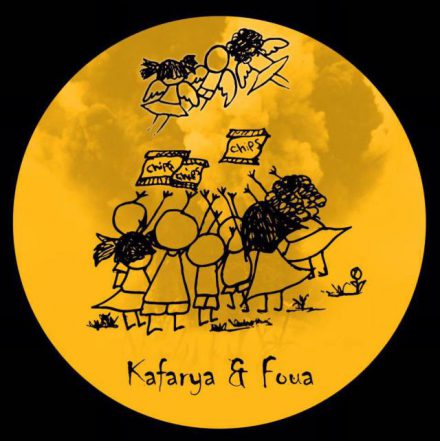
In memory of all Syrian children, taken by violence.
[1] You might start by taking a more dispassionate look at the people you imagine have ‘debunked’ criticism of the mainstream narrative. Your link to Louis Proyect’s attack on Postol, for instance, betrays what I would regard as some want of judgement. In an update to your note, you add a link to further ‘debunkers’ who turn out to rely on the same Guardian evidence you are claiming they offer further support for! Incidentally, when the Guardian tells readers it is ‘the first western media organisation to visit the site of the attack’ it should really be careful what it boasts about, given that the area is controlled by Al Qaeda.
[2] I understand from scientists that the unanswered questions include these:
- Did the Porton Down analysis of samples collected from the alleged attacks on 19 March 2013 support the finding of the Russian Laboratory for Chemical and Analytical Control that the material contained diisopropyl fluorophosphate and that the sarin had been produced under “cottage industry” conditions?
- What were the findings with respect to the synthetic pathway by which the sarin was produced? Specifically, did this synthesis start from trimethyl phosphite (which the Foreign Secretary stated had been sold to the Syrian government by UK companies) or from phosphorus trichloride or elemental phosphorus (which Turkish prosecutors stated was on the procurement list of the Nusra Front members arrested in Adana, Turkey in May 2013)?
- What efforts have been made by the UK government to establish whether or not the sarin used in alleged chemical attacks in Syria originated from Syrian military stocks, based on comparison of the chemical profiles of the environmental samples analysed at DSTL with the stocks of the sarin precursor methylphosphonyl difluoride that were profiled by mass spectrometry under the supervison of OPCW inspectors before they were destroyed on the MV Cape Ray in 2014?
Those of us who struggle even to understand questions like these can very easily be bamboozled by bullshit responses from government spokespersons. But when scientists put such questions, I think they merit answer rather than dismissive tweets bidding us trust the word of foreign activists. I am grateful to Professor Paul McKeigue for the formulation of these questions.
[3] For a more considered view of disagreement on the left, see, e.g., the recent short talk by Jay Tharappel on ‘Syria and the Confusion of the Western Left’: https://www.facebook.com/Chacko.TJ/videos/10158536910055697/
At Reuters, ‘Not Refuting’ Is the Same as ‘Seeing’
By Jim Naureckas | FAIR | April 26, 2017
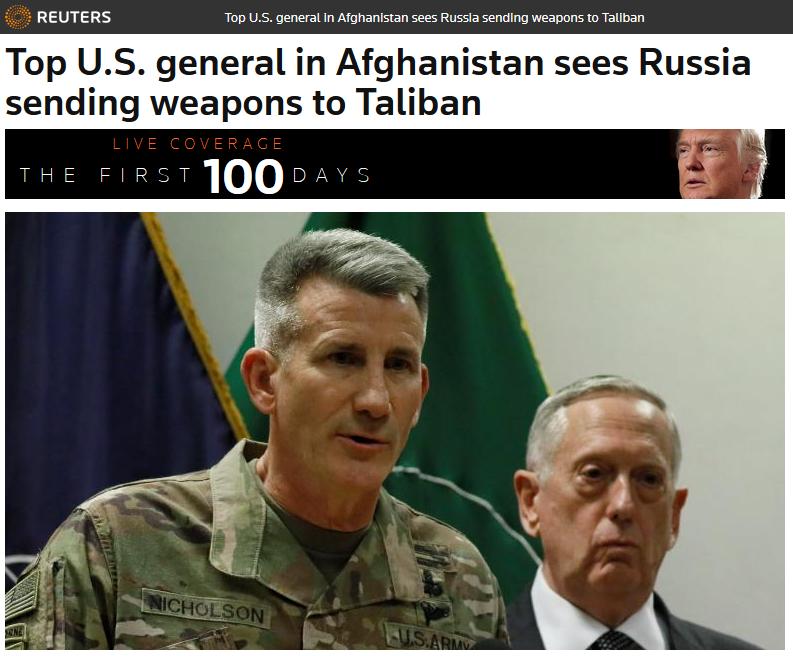
US general in Afghanistan does not say what Reuters headline says he said
“Top US General in Afghanistan Sees Russia Sending Weapons to Taliban” was Reuters’ headline over a April 25 story.
Well, that sounds like news! Tell me more, Reuters’ Idrees Ali:
The head of US and international forces in Afghanistan said on Monday he was “not refuting” reports that Russia was providing support, including weapons, to the Taliban…
Asked about reports that Russia was providing a range of help, including weapons, to the Taliban, who control large areas of Afghanistan, [Gen. John] Nicholson replied: “Oh no, I am not refuting that.”
“I am not refuting that”? How does that translate into “General… Sees Russia Sending Weapons to Taliban”? If NASA tells Reuters that they can’t refute speculation that there might be life on Mars, will Reuters run a story headlined “NASA Sees Life on Mars”? That would be a scoop!
Ali writes that Nicholson’s no-comment comments “are among the strongest suggestions yet that Moscow is providing arms to the Taliban.” Maybe next time Reuters could wait for a somewhat stronger suggestion—involving actual evidence, perhaps—before running a story that could inflame the new Cold War.
Middle Eastern Surgeon Speaks About the “Ecology of War”

Dr. Gus Abu-Sitta
By Andre Vltchek | Dissident Voice | April 27, 2017
Dr. Gus Abu-Sitta is the head of the Plastic Surgery Department at the AUB Medical Center in Lebanon. He specializes in: reconstructive surgery. What it means in this part of the world is clear: they bring you people from the war zones, torn to pieces, missing faces, burned beyond recognition, and you have to try to give them their life back.
Dr. Abu-Sitta is also a thinker. A Palestinian born in Kuwait, he studied and lived in the UK, and worked in various war zones of the Middle East, as well as in Asia, before accepting his present position at the AUB Medical Center in Beirut, Lebanon.
We were brought together by peculiar circumstances. Several months ago I burned my foot on red-hot sand, in Southeast Asia. It was healing slowly, but it was healing. Until I went to Afghanistan where at one of the checkpoints in Herat I had to take my shoes off, and the wound got badly infected. Passing through London, I visited a hospital there, and was treated by one of Abu-Sitta’s former professors. When I said that among other places I work in Lebanon, he recommended that I visit one of his “best students who now works in Beirut”.
I did. During that time, a pan-Arab television channel, Al-Mayadeen, was broadcasting in English, with Arabic subtitles, a long two-part interview with me, about my latest political/revolutionary novel “Aurora” and about the state of the global south, and the upsurge of the Western imperialism. To my surprise, Dr. Abu-Sitta and his colleagues were following my work and political discourses. To these hardened surgeons, my foot ‘issue’ was just a tiny insignificant scratch. What mattered was the US attack against Syria, the Palestine, and the provocations against North Korea.
My ‘injury’ healed well, and Dr. Abu-Sitta and I became good friends. Unfortunately I have to leave Beirut for Southeast Asia, before a huge conference, which he and his colleagues are launching on the May 15, 2017, a conference on the “Ecology of War”.
I believe that the topic is thoroughly fascinating and essential for our humanity, even for its survival. It combines philosophy, medicine and science.
What happens to people in war zones? And what is a war zone, really? We arrived at some common conclusions, as both of us were working with the same topic but looking at it from two different angles: “The misery is war. The destruction of the strong state leads to conflict. A great number of people on our Planet actually live in some conflict or war, without even realizing it: in slums, in refugee camps, in thoroughly collapsed states, or in refugee camps.”
We talked a lot: about fear, which is engulfing countries like the UK, about the new wave of individualism and selfishness, which has its roots in frustration. At one point he said: “In most parts of the world “freedom” is synonymous with the independence struggle for our countries. In such places as the UK, it mainly means more individualism, selfishness and personal liberties.”
We talked about imperialism, medicine and the suffering of the Middle East.
Then we decided to publish this dialogue, shedding some light on the “Ecology of War” – this essential new discipline in both philosophy and medicine.
Ecology of War
(The discussion took place in Beirut, Lebanon, in Cafe Younes, on April 25, 2017)
Broken Social Contract In The Arab World, Even In Europe
GA-S: In the South, medicine and the provision of health were critical parts of the post-colonial state. And the post-colonial state built medical systems such as we had in Iraq, Egypt and in Syria as part of the social contract. They became an intrinsic part of the creation of those states. And it was a realization that the state has to exercise its power both coercively, (which we know the state is capable of exercising, by putting you in prison, and even exercising violence), but above all non-coercively: it needs to house you, educate you, and give you health, all of those things. And that non-coercive power that the states exercise is a critical part of the legitimizing process of the state. We saw it evolve in 50’s, 60’s and 70’s. So as a digression, if you want to look at how the state was dismantled: the aim of the sanctions against Iraq was not to weaken the Makhabarat or the army; the aim of the sanctions was to rob the Iraqi state of its non-coercive power; its ability to give life, to give education, and that’s why after 12 years, the state has totally collapsed internally – not because its coercive powers have weakened, but because it was robbed of all its non-coercive powers, of all its abilities to guarantee life to its citizens.
AV: So in a way the contract between the state and the people was broken.
GA-S: Absolutely! And you had that contract existing in the majority of post-colonialist states. With the introduction of the IMF and World Bank-led policies that viewed health and the provision of health as a business opportunity for the ruling elites and for corporations, and viewed free healthcare as a burden on the state, you began to have an erosion in certain countries like Egypt, like Jordan, of the non-coercive powers of the state, leading to the gradual weakening of its legitimacy. Once again, the aim of the IMF and World Bank was to turn health into a commodity, which could be sold back to people as a service; sold back to those who could afford it.
AV: So, the US model, but in much more brutal form, as the wages in most of those countries were incomparably lower.
GA-S: Absolutely! And the way you do that in these countries: you create a two-tier system where the government tier is so under-funded, that people choose to go to the private sector. And then in the private sector you basically have the flourishing of all aspects of private healthcare: from health insurance to provision of health care, to pharmaceuticals.
AV: Paradoxically this scenario is also taking place in the UK right now.
GA-S: We see it in the UK and we’ll see it in many other European countries. But it has already happened in this region, in the Arab world. Here, the provision of health was so critical to creation of the states. It was critical to the legitimacy of the state.
AV: The scenario has been extremely cynical: while the private health system was imposed on the Arab region and on many other parts of the world, in the West itself, except in the United States, medical care remains public and basically free. We are talking about state medical care in Europe, Canada, Australia and New Zealand.
GA-S: Yes. In Europe as part of the welfare state that came out of the Second World War, the provision of healthcare was part of the social contract. As the welfare state with the advent of Thatcherism and Reagan-ism was being dismantled, it became important to undergo a similar process as elsewhere. The difference is that in the UK, and also in countries like Germany, it was politically very dangerous. It could lead to election losses. So the second plan was to erode the health system, by a thousand blows, kill it gradually. What you ended up in the UK is the piece-by-piece privatization of the health sector. And the people don’t know, they don’t notice that the system is becoming private. Or in Germany where actually the government does not pay for healthcare – the government subsidizes the insurance companies that profit from the private provision of healthcare.
AV: Before we began recording this discussion, we were speaking about the philosophical dilemmas that are now besieging or at least should be besieging the medical profession. Even the social medical care in Europe: isn’t it to some extent a cynical arrangement? European countries are now all part of the imperialist block, together with the United States, and they are all plundering the rest of the world – the Middle East, Africa, parts of Asia – and they are actually subsidizing their social system from that plunder. That’s one thing. But also, the doctors and nurses working for instance in the UK or Germany are often ‘imported’ from much poorer countries, where they have often received free education. Instead of helping their own, needy people, they are actually now serving the ageing and by all international comparisons, unreasonably spoiled and demanding population in Europe, which often uses medical facilities as if they were some ‘social club’.
GA-S: I think what has happened, particularly in Europe, is that there is a gradual erosion of all aspects of the welfare state. Politically it was not yet possible to get rid of free healthcare. The problem that you can certainly see in the United Kingdom is that health is the final consequence of social and economic factors that people live in. So if you have chronic unemployment, second and third generation unemployment problem, these have health consequences. If you have the destruction of both pensions and the cushion of a social umbrella for the unemployed, that has consequences… Poor housing has health consequences. Mass unemployment has health consequences. Politically it was easy to get rid of all other aspects of the welfare state, but they were stuck with a healthcare problem. And so the losing battle that the health systems in the West are fighting is that they are being expected to cater to the poor consequences of the brutal capitalist system as a non-profit endeavor. But we know that once these lifestyle changes are affecting people’s health, it’s too late in terms of cure or prevention. And so what the European health systems do, they try to patch people and to get them out of the system and back on the street. So if you have children with chronic asthma, you treat the asthma but not the dump housing in which these children are living in. If you have violent assaults and trauma related to violence, you treat the trauma, the physical manifestation, and not the breakdown of youth unemployment, or racism that creates this. So in order to sustain this anomaly, as you said, you need an inflated health system, because you make people sick and then you try to fix them, rather than stopping them from being sick. Hence that brain drains that have basically happened, where you have more Ghanaian doctors in New York than you have in Ghana.
AV: And you have an entire army of Philippine nurses in the UK, while there is suddenly a shortage of qualified nurses in Manila.
GA-S: Absolutely! This is the result of the fact that actually people’s health ‘happens’ outside the health system. Because you cannot get rid of the health system, you end up having a bloated health system, and try to fix the ailments that are coming through the door.
Collapse Of The Health Care In The Middle East
AV: You worked in this entire region. You worked in Iraq, and in Gaza… both you and I worked in Shifa Hospital in Gaza… You worked in Southern Lebanon during the war. How brutal is the healthcare situation in the Middle East? How badly has been, for instance, the Iraqi peoples’ suffering, compared to Western patients? How cruel is the situation in Gaza?
GA-S: If you look at places like Iraq: Iraq in the 80’s probably had one of the most advanced health systems in the region. Then you went through the first war against Iraq, followed by 12 years of sanctions in which that health system was totally dismantled; not just in terms of hospitals and medication and the forced exile of doctors and health professionals, but also in terms of other aspects of health, which are the sewage and water and electricity plants, all of those parts of the infrastructure that directly impact on people’s lives.
AV: Then came depleted uranium…
GA-S: And then you add to the mix that 2003 War and then the complete destruction and dismantling of the state, and the migration of some 50% of Iraq’s doctors.
AV: Where did they migrate?
GA-S: Everywhere: to the Gulf and to the West; to North America, Europe… So what you have in Iraq is a system that is not only broken, but that has lost the components that are required to rebuild it. You can’t train a new generation of doctors in Iraq, because your trainers have all left the country. You can’t create a health system in Iraq, because you have created a government infrastructure that is intrinsically unstable and based on a multi-polarity of the centers of power which all are fighting for control of the pie of the state… and so Iraqis sub-contract their health at hospital level to India and to Turkey and Lebanon, or Jordan, because they are in this vicious loop.
AV: But this is only for those who can afford it?
GA-S: Yes, for those who can, but even in those times when the government had cash it could not build the system anymore. So it would sub-contract health provisions outside, because the system was so broken that money couldn’t fix it.
AV: Is it the same in other countries of the region?
GA-S: The same is happening in Libya and the same is happening in Syria, with regards of the migration of their doctors. Syria will undergo something similar to Iraq at the end of the war, if the Syrian state is destroyed.
AV: But it is still standing.
GA-S: It still stands and it is still providing healthcare to the overwhelming majority of the population even to those who live in the rebel-controlled areas. They are travelling to Damascus and other cities for their cardiac services or for their oncological services.
AV: So no questions asked; you are sick, you get treated?
GA-S: Even from the ISIS-controlled areas people can travel and get treated, because this is part of the job of the state.
AV: The same thing is happening with the education there; Syria still provides all basic services in that area.
GA-S: Absolutely! But in Libya, because the state has totally disappeared or has disintegrated, all this is gone.
AV: Libya is not even one country, anymore…
 Intifada Gaza
GA-S: There is not a unified country and there is definitely no health system. In Gaza and the Palestine, the occupation and the siege, ensure that there is no normal development of the health system and in case of Gaza as the Israelis say “every few years you come and you mown the lawn”; you kill as many people in these brutal and intense wars, so you can ensure that the people for the next few years will be trying to survive the damage that you have caused.
AV: Is there any help from Israeli physicians?
GA-S: Oh yes! Very few individuals, but there is…
But the Israeli medical establishment is actually an intrinsic part of the Israeli establishment, and the Israeli academic medical establishment is also part of the Israeli establishment. And the Israeli Medical Association refused to condemn the fact that Israeli doctors examine Palestinian political prisoners for what they call “fitness for interrogation”. Which is basically… you get seen by a doctor who decides how much torture you can take before you die.
 Gaza Shifa Hospital – wounded by Israeli soldiers
AV: This actually reminds me of what I was told in 2015 in Pretoria, South Africa, where I was invited to participate as a speaker at the International Conference of the Psychologists for Peace. Several US psychologists reported that during the interrogation and torture of alleged terrorists, there were professional psychologists and even clinical psychiatrists standing by, often assisting the interrogators.
GA-S: Yes, there are actually 2-3 well-known American psychologists who designed the CIA interrogation system – its process.
AV: What you have described that is happening in Palestine is apparently part of a very pervasive system. I was told in the Indian-controlled Kashmir that Israeli intelligence officers are sharing their methods of interrogation and torture with their Indian counterparts. And. of course, the US is involved there as well.
Conflict Medicine
GA-S: War surgery grew out of the Napoleonic Wars. During these wars, two armies met; they usually met at the frontline. They attacked each other, shot at each other or stabbed each other. Most of injured were combatants, and they got treated in military hospitals. You had an evolution of war surgery. What we have in this region, we believe, is that the intensity and the prolonged nature of these wars or these conflicts are not temporal-like battles, they don’t start and finish. And they are sufficiently prolonged that they change the biological ecology, the ecology in which people live. They create the ecology of war. That ecology maintains itself well beyond of what we know is the shooting, because they alter the living environment of people. The wounds are physical, psychological and social wounds; the environment is altered as to become hostile; both to the able-bodied and more hostile to the wounded. And as in the cases of these multi-drug-resistant organisms, which are now a big issue in the world like the multi-drug-resistant bacteria, 85% of Iraqi war wounded have multi-drug-resistant bacteria, 70% of Syrian war wounded have it…
So we say: this ecology, this bio-sphere that the conflicts create is even altered at the basic DNA of the bacteria. We have several theories about it; partly it’s the role of the heavy metals in modern ordnance, which can trigger mutation in these bacteria that makes them resistant to antibiotics. So your bio-sphere, your bubble, your ecological bubble in which you live in, is permanently changed. And it doesn’t disappear the day the bombs disappear. It has to be dismantled, and in order to dismantle it you have to understand the dynamics of the ecology of war. That’s why our program was set up at the university, which had basically been the major tertiary teaching center during the civil war and the 1982 Israeli invasion. And then as the war in Iraq and Syria developed, we started to get patients from these countries and treat them here. We found out that we have to understand the dynamics of conflict medicine and to understand the ecology of war; how the physical, biological, psychological and social manifestations of war wounding happen, and how this ecology of war is created; everything from bacteria to the way water and the water cycle changes, to the toxic reminisce of war, to how people’s body reacts… Many of my Iraqi patients that I see have multiple members of their families injured.
AV: Is the AUB Medical Center now the pioneer in this research: the ecology of war?
GA-S: Yes, because of the legacy of the civil war… of regional wars.
AV: Nothing less than a regional perpetual conflict…
GA-S: Perpetual conflict, yes; first homegrown, and then regional. We are the referral center for the Iraqi Ministry of Health, referral center for the Iraqi Ministry of Interior, so we act as a regional center, and the aim of our program is to dedicate more time and space and energy to the understanding of how this ecology of war comes about.
AV: In my writing and in my films, I often draw the parallel between the war and extreme poverty. I have been working in some of the worst slums on Earth, those in Africa, Central America and Caribbean, South Asia, the Philippines and elsewhere. I concluded that many societies that are in theory living in peace are in reality living in prolonged or even perpetual wars. Extreme misery is a form of war, although there is no ‘declaration of war’, and there is no defined frontline. I covered both countless wars and countless places of extreme misery, and the parallel, especially the physical, psychological and social impact on human beings, appears to be striking. Would you agree, based on your research? Do you see extreme misery as a type of war?
GA-S: Absolutely. Yes. At the core of it is the ‘dehumanization’ of people. Extreme poverty is a form of violence. The more extreme this poverty becomes, the closer it comes to the physical nature of violence. War is the accelerated degradation of people’s life to reaching that extreme poverty. But that extreme poverty can be reached by a more gradual process. War only gets them there faster.
AV: A perpetual state of extreme poverty is in a way similar to a perpetual state of conflict, of a war.
GA-S: Definitely. And it is a war mainly against those who are forced to live in these circumstances. It’s the war against the poor and the South. It’s the war against the poor in the inner-cities of the West.
AV: When you are defining the ecology of war, are you also taking what we are now discussing into consideration? Are you researching the impact of extreme poverty on human bodies and human lives? In this region, extreme poverty can often be found in the enormous refugee camps, while in other parts of the world it dwells in countless slums.
GA-S: This extreme poverty is part of the ecology that we are discussing. One of the constituents of the ecology is when you take a wounded body and you place it in a harsh physical environment and you see how this body is re-wounded and re-wounded again, and this harsh environment becomes a continuation of that battleground, because what you see is a process of re-wounding. Not because you are still in the frontline somewhere in Syria, but because your kids are now living in a tent with 8 other people and they are in danger of becoming the victims of the epidemic of child burns that we now have in the refugee camps, because of poor and unsafe housing.
Let’s look at it from a different angle: what constitutes a war wound, or a conflict-related injury? Your most basic conflict-related injury is a gunshot wound and a blast injury from shrapnel. But what happens when you take that wounded body and throw it into a tent? What are the complications for this wounded body living in a harsh environment; does this constitute a war-related injury? When you impoverish the population to the point that you have children suffering from the kind of injuries that we know are the results of poor and unsafe housing, is that a conflict-related injury? Or you have children now who have work-related injuries, because they have to go and become the main breadwinners for the home, working as car mechanics or porters or whatever. Or do you also consider a fact that if you come from a country where a given disease used to be treatable there, but due to the destruction of a health system, that ailment is not treatable anymore, because the hospitals are gone or because doctors had to leave, does that constitute a conflict-related injury? So, we have to look at the entire ecology: beyond a bullet and shrapnel – things that get headlines in the first 20 seconds.
AV: Your research seems to be relevant to most parts of the world.
GA-S: Absolutely. Because we know that these humanitarian crises only exist in the imagination of the media and the UN agencies. There are no crises.
AV: It is perpetual state, again.
GA-S: Exactly, it is perpetual. It does not stop. It is there all the time. Therefore there is no concept of ‘temporality of crises’, one thing we are arguing against. There is no referee who blows the whistle at the end of the crises. When the cameras go off, the media and then the world, decides that the crises are over. But you know that people in Laos, for instance, still have one of the highest amputation rates in the world.
AV: I know. I worked there in the Plain of Jars, which is an enormous minefield even to this day.
GA-S: Or Vietnam, with the greatest child facial deformities in the world as a result of Agent Orange.
AV: You worked in these countries.
GA-S: Yes.
AV: Me too; and I used to live in Vietnam. That entire region is still suffering from what used to be known as the “Secret War”. In Laos, the poverty is so rampant that people are forced to sell unexploded US bombs for scrap. They periodically explode. In Cambodia, even between Seam Reap and the Thai border, there are villages where people are still dying or losing limbs.
GA-S: Now many things depend on how we define them. It is often a game of words.
AV: India is a war zone, from Kashmir to the Northeast, Bihar and slums of Mumbai.
GA-S: If you take the crudest way of measuring conflict, which is the number of people killed by weapons, Guatemala and Salvador have now more people slaughtered than they had during the war. But because the nature in which violence is exhibited changed, because it doesn’t carry a political tag now, it is not discussed. But actually, it is by the same people against the same people.
AV: I wrote about and filmed in Salvador, Honduras and Nicaragua, on several occasions. The extreme violence there is a direct result of the conflict implanted, triggered by the West, particularly by the United States. The same could be said about such places like Jamaica, Dominican Republic and Haiti. It has led to almost absolute social collapse.
GA-S: Yes, in Jamaica, the CIA played a great role in the 70’s.
AV: In that part of the world we are not talking just about poverty…
GA-S: No, no. We are talking AK-47’s!
AV: Exactly. Once I filmed in San Salvador, in a gangland… A friend, a local liberation theology priest kindly drove me around. We made two loops. The first loop was fine. On the second one they opened fire at our Land Cruiser, with some heavy stuff. The side of our car was full of bullet holes, and they blew two tires. We got away just on our rims. In the villages, maras simply come and plunder and rape. They take what they want. It is a war.
GA-S: ICRC, they train surgeons in these countries. So the ICRC introduced war surgery into the medical curriculum of the medical schools in Colombia and Honduras. Because effectively, these countries are in a war, so you have to train surgeons, so they know what to do when they receive 4-5 patients every day, with gunshot wounds.
 Med Experiments in Haiti
AV: Let me tell you what I witnessed in Haiti, just to illustrate your point. Years ago I was working in Cité Soleil, Port-au-Prince, Haiti. They say it is the most dangerous ‘neighborhood’ or slum on Earth. The local wisdom goes: “you can enter, but you will never leave alive”. I went there with a truck, with two armed guards, but they were so scared that they just abandoned me there, with my big cameras and everything, standing in the middle of the road. I continued working; I had no choice. At one point I saw a long line in front of some walled compound. I went in. What I was suddenly facing was thoroughly shocking: several local people on some wooden tables, blood everywhere, and numerous US military medics and doctors performing surgeries under the open sky. It was hot, flies and dirt everywhere… A man told me his wife had a huge tumor. Without even checking what it was, the medics put her on a table, gave her “local” and began removing the stuff. After the surgery was over, a husband and wife walked slowly to a bus stop and went home. A couple of kilometers from there I found a well-equipped and clean US medical facility, but only for US troops and staff. I asked the doctors what they were really doing in Haiti and they were quiet open about it; they replied: “we are training for combat scenario… This is as close to a war that we can get.” They were experimenting on human beings, of course; learning how to operate during the combat…
GA-S: So, the distinction is only in definitions.
AV: As a surgeon who has worked all over the Middle East but also in many other parts of the world, how would you compare the conflict here to the conflicts in Asia, the Great Lakes of Africa and elsewhere?
GA-S: In the Middle East, you still have people remembering when they had hospitals. Iraqis who come to my clinic remember the 80’s. They know that life was different and could have been different. And they are health-literate. The other issue is that in 2014 alone, some 30,000 Iraqis were injured. The numbers are astounding. We don’t have a grasp of the numbers in Libya, the amount of ethnic cleansing and killing that is happening in Libya. In terms of numbers, they are profound, but in terms of the effect, we are at the beginning of the phase of de-medicalization. So it wasn’t that these medical systems did not develop. They are being de-developed. They are going backwards.
AV: Are you blaming Western imperialism for the situation?
GA-S: If you look at the sanctions and what they did to their health system, of course! If you look at Libya, of course! The idea that these states disintegrated is a falsehood. We know what the dynamics of the sanctions were in Iraq, and what happened in Iraq after 2003. We know what happened in Libya.
AV: Or in Afghanistan…
GA-S: The first thing that the Mujahedeen in Afghanistan or the Nicaraguan Contras were told to do was to attack the clinics. The Americans have always understood that you destroy the state by preventing it from providing these non-coercive powers that I spoke about.
 Afghan kid – is he at peace?.
AV: Do you see this part of the world as the most effected, most damaged?
GA-S: At this moment and time certainly. And the statistics show it. I think around 60% of those dying from wars are killed in this region…
AV: And how do you define this region geographically?
GA-S: From Afghanistan to Mauritania. And that includes the Algerian-Mali border. The Libyan border… The catastrophe of the division of Sudan, what’s happening in South Sudan, what’s happening in Somalia, Libya, Egypt, the Sinai Desert, Syria, Yemen, Afghanistan, even Pakistan including people who are killed there by drones…
AV: But then we also have around 10 million people who have died in the Democratic Republic of Congo, since the 1995 Rwandan invasion…
GA-S: Now that is a little bit different. That is the ‘more advanced phase’: when you’ve completely taken away the state… In the Arab world Libya is the closest to that scenario. There the oil companies have taken over the country. The mining companies are occupying DRC. And they run the wars directly, rather than through the Western armies. You erode the state, completely, until it disappears and then the corporations, directly, as they did in the colonialist phase during the East Indian Company, and the Dutch companies, become the main players again.
AV: What is the goal of your research, the enormous project called the “Ecology of War”?
GA-S: One of the things that we insist on is this holistic approach. The compartmentalization is part of the censorship process. “You are a microbiologist then only look what is happening with the bacteria… You are an orthopedic surgeon, so you only have to look at the blast injuries, bombs, landmine injuries…” So that compartmentalization prevents bringing together people who are able to see the whole picture. Therefore we are insisting that this program also has social scientists, political scientists, anthropologists, microbiologists, surgeons… Otherwise we’d just see the small science. We are trying to put the sciences together to see the bigger picture. We try to put the pieces of puzzle together, and to see the bigger picture.
AV: And now you have a big conference. On the 15th of May…
GA-S: Now we have a big conference; basically the first congress that will look at all these aspects of conflict and health; from the surgical, to the reconstruction of damaged bodies, to the issues of medical resistance of bacteria, infectious diseases, to some absolutely basic issues. Like, before the war there were 30,000 kidney-failure patients in Yemen. Most dialysis patients are 2 weeks away from dying if they don’t get dialysis. So, there is a session looking at how you provide dialysis in the middle of these conflicts? What do you do, because dialysis services are so centralized? The movement of patients is not easy, and the sanctions… One topic will be ‘cancer and war’… So this conference will be as holistic as possible, of the relationship between the conflict and health.
We expect over 300 delegates, and we will have speakers from India, Yemen, Palestine, Syria, from the UK, we have people coming from the humanitarian sector, from ICRC, people who worked in Africa and the Middle East, we have people who worked in previous wars and are now working in current wars, so we have a mix of people from different fields.
AV: What is the ultimate goal of the program?
GA-S: We have to imagine the health of the region beyond the state. On the conceptual level, we need to try to figure out what is happening. We can already see certain patterns. One of them is the regionalization of healthcare. The fact that Libyans get treated in Tunisia, Iraqis and Syrians get treated in Beirut, Yemenis get treated in Jordan. So you already have the disintegration of these states and the migration of people to the regional centers. The state is no longer a major player, because the state was basically destroyed. We feel that this is a disease of the near future, medium future and long-term future. Therefore we have to understand it, in order to better treat it, we have to put mechanisms in place that this knowledge transfers into the medical education system, which will produce medical professionals who are better equipped to deal with this health system. We have to make sure that people are aware of many nuances of the conflict, beyond the shrapnel and beyond the bullet. The more research we put into this area of the conflict and health, the more transferable technologies we develop – the better healthcare we’d be allowed to deliver in these situations, the better training our students and graduates would receive, and better work they will perform in this region for the next 10 or 15 years.
AV: And hopefully more lives would be saved…
• All photos by Andre Vltchek
Andre Vltchek is a philosopher, novelist, filmmaker and investigative journalist. He has covered wars and conflicts in dozens of countries. Three of his latest books are the revolutionary novel Aurora and two bestselling works of political non-fiction: Exposing Lies Of The Empire and Fighting Against Western Imperialism. View his other books here. Watch his Rwanda Gambit, a documentary about Rwanda and DRCongo. He continues to work around the world and can be reached through his website and Twitter.
Featured Video
John Mearsheimer: US Already lost Iran war – No off-ramp in sight
or go to
Aletho News Archives – Video-Images
Frlom the Archives
With apparently fabricated nuclear documents, Netanyahu pushed the US towards war with Iran
By Gareth Porter | The Grayzone | April 29, 2020
President Donald Trump scrapped the nuclear deal with Iran and continued to risk war with Iran based on Israeli Prime Minister Benjamin Netanyahu’s claim to have proven definitively that Iran was determined to manufacture nuclear weapons. Netanyahu not only spun Trump but much of the corporate media as well, duping them with the public unveiling of what he claimed was the entire secret Iranian “nuclear archive.”
In early April 2018, Netanyahu briefed Trump privately on the supposed Iranian nuclear archive and secured his promise to leave the Joint Comprehensive Plan of Action (JCPOA). That April 30, Netanyahu took the briefing to the public in a characteristically dramatic live performance in which he claimed Israel’s Mossad intelligence services had stolen Iran’s entire nuclear archive from Tehran. “You may well know that Iran’s leaders repeatedly deny ever pursuing nuclear weapons…” Netanyahu declared. “Well, tonight, I’m here to tell you one thing: Iran lied. Big time.”
However, an investigation of the supposed Iranian nuclear documents by The Grayzone reveals them to be the product of an Israeli disinformation operation that helped trigger the most serious threat of war since the conflict with Iran began nearly four decades ago. This investigation found multiple indications that the story of Mossad’s heist of 50,000 pages of secret nuclear files from Tehran was very likely an elaborate fiction and that the documents were fabricated by the Mossad itself. … continue
Blog Roll
 Aletho News
- 40 Years of Endless War, Data Point by Data Point
- Department of War Using Palantir AI to Pick Targets in Iran
- American bases do not protect – they attack the peoples of the Persian Gulf
- ‘We’ve Obliterated Their Missiles’
- Syrian president vows ‘absolute support’ to disarm Hezbollah
- Ukraine attacking Russian gas pipeline to stop deliveries to Europe – Defense Ministry
- ‘Heinous crime’: Iran denounces Israeli assassination of 4 Iranian diplomats in Lebanon
- John Mearsheimer: U.S. Already Lost Iran War – No Off-Ramp in Sight
- UK Parliament Plans ISP Blocking and Age Verification Powers
- World cannot remain silent as US and Israel attack ‘heritage of humankind’: Iran
- If Americans Knew
- Israeli strategic plans to “remake the Middle East” from the 1950s and since
- Honoring Gaza’s women who refused to let the world look away
- 97% of victims of war on Iran are Iranian, 98% of victims in war on Gaza are Gazans – Not a ceasefire Day 152
- Early Iran strikes cost $5.6 billion in munitions, Pentagon estimates
- Israel Decided the War, But Trump’s America Fights and Pays the Bill
- Conscientious Objector Group: Phone ‘Ringing Off Hook’ As Huge Mobilization Underway
- U.S. support for Israel continues to plummet, despite media’s best efforts
- Threats and missiles fly, death tolls soar in Iran, Lebanon, Gaza – Not a ceasefire Day 151
- Lebanon: Israel’s White Phosphorous Use Risks Civilian Harm
- Corporate Media Go All Out To Support The US-Israeli War On Iran
- No Tricks Zone
- Destructive Green New Deal: German Energy And Metal Group Warns Of Drastic Crisis
- New Study Documents A 20-Year Pause In Arctic Sea Ice Decline – Driven By Internal Variability
- Wake-up Call: Survey Shows Majority Of Germans Now Favor Postponing Climate Targets!
- Televised! Leading German Political Candidate Tells Schoolchildren CO2 Makes Sun Hotter!
- New Study: A Century Warming Of 1.1°C Is ‘Commonplace’ And ‘Not Unusual’ During This Interglacial
- New Study: ‘Internal Noise’ And Volcanic Forcing Can Trigger 10-15°C Warming Within Decades
- Glaciers Worldwide Are Suddendly Surging, Experts Blame Warming!
- Surprising Discovery: Sahara Is Greening…Billions Of Trees Where Once Thought To Be Barren
- New Research Reaffirms Clouds, Aerosols, And Surface Solar Radiation Are ‘Driving The Climate System’
- Germany: Electric Car Catches Fire At Charging Station, Sets Off Local “Inferno”, Widespread Damage
 Aletho News