In an explosive interview with Megyn Kelly at the 21st St. Petersburg International Economic Forum, the Russian President, Vladimir Putin, systematically destroyed many of the narratives promulgated by the enemies of the Syrian state who seek to turn the country into the new Libya.
Although the panel discussion covered many issues and featured other speakers, one of the most crucial sections was when Kelly questioned Putin over the Syrian conflict. The opening exchange consisted of Kelly asking the Russian leader whether he believed Assad was an “evil guy?”, allowing Putin to articulate one of the central reasons why Russia supports the Syrian government. Putin emphasized that it is not Assad that Russia is protecting per se; instead, Russia is protecting “the Syrian statehood” from collapsing into an abyss of chaos similar to the one we have seen Libya descend into since 2011:
“It’s not President Assad whom we are protecting; we are protecting the Syrian statehood. We don’t want their interior to be a situation similar to that in Libya, or that in Somalia, or in Afghanistan – in Afghanistan NATO has been present for many years, but the situation is not changing for the better. We want to preserve the Syrian statehood. On the basis of resolving this fundamental issue we would like them to move towards settling the Syrian issue through political means. Yes, probably everyone there is to blame for something, but let’s not forget that were it not for active interference from outside, this civil war probably would not have broken out.”
Ever since NATO forced regime change in Libya – through waging a bombing campaign coupled with supporting al-Qaeda connected rebel legions on the ground – it has been in total chaos. The North African country has been a failed state for years, with rebel factions fighting over control of certain regions.
As journalist Neil Clark and others have pointed out, in July 2010, the Telegraph listed Libya as number one on their six best exotic cruise destinations. By August 2011, numerous reports detailed how many factions of the Libyan opposition were slaughtering black people on mass. In 2012, a disturbing video surfaced which purported to show Libyan rebels forcing African prisoners to eat flags while being kept in giant cages. Earlier this year, the International Organization for Migration (IOM) said that African migrants were being bought and sold in slave markets.
This is just a glimpse into the utter chaos and degradation that Libya has descended into after NATO ‘liberated’ the country back in 2011, and it provides a window into what Syria would be like if the West forces regime change in Damascus.
“The Militants used Chemical Weapons”
Putin then moves on to counter the propaganda spread by the enemies of Syria that Assad’s forces had used chemical weapons in April of this year, before highlighting that the militants have a history of using chemical weapons in the region:
“What is President Assad been accused of recently? We know he has been accused of using chemical weapons, but there’s no evidence to support that whatsoever. Right after the incident, we suggested that an inspection should be carried out at the airbase… But they refused to conduct this kind of inspection. So, they’re talking a lot, but not doing much. We suggested that an inspection should be carried out at the site where the strike took place, [but] they’re saying it’s too dangerous. Why is it dangerous if the strike was against the good part of the opposition? No, they say it is too dangerous.”
“In Iraqi Kurdistan, the militants used chemical weapons and the world community recognised it. So, they know that the militants have got chemical weapons. But according to the OPCW [Organization for the Prohibition of Chemical Weapons] Syria has destroyed its stocks of chemical weapons. You see, if pretexts are created without any real willingness to look into the matter, it’s not going to lead us anywhere. Let’s talk substantively. Did Assad make mistakes? Yes, probably a lot of them. But those who oppose him, are they angels? Who [are] murdering people and executing children – beheading people. Should we support those people?”
On multiple occasions, investigations have indicated that chemical weapons have been used by the Syrian opposition. In May 2013 for instance, the Commissioner of the UN’s Independent International Commission of Inquiry for Syria, Carla Del Ponte, said in an interview that there was evidence which suggested that the rebels, not the Syrian army, used chemical weapons:
“During our investigation for crimes against humanity and war crimes, we collected some witness testimony that [appeared to confirm] that some chemical weapons were used – in particular nerve gas. What appeared to our investigation was that it was used by the opponents, the rebels, and we have no indication at all that the Syrian government have used chemical weapons. Of course, now, the special commission will investigate and tell us what it is exactly. But I was a little stupefied that the first indication we got [was] about the use of nerve gas by the opposition.”
In regards to the nature of the Syrian opposition, it is not just the Russian President who believes that many of the opposition forces are far from angelic. Even the former Prime Minister of Britain, David Cameron, who was always a strong proponent of forcing regime change in Syria (he was also heavily involved in the Libyan war), admitted in early 2016 that many of the ‘moderate’ rebels actually belonged to “relatively hardline Islamist groups” (i.e. terrorist groups):
“But if you’re arguing: are all these people impeccable democrats, who would share the view of democracy that you and I have? No. Some of them do belong to Islamist groups, and some of them belong to relatively hardline Islamist groups.”
Furthermore, a declassified US military intelligence report – by the Defense Intelligence Agency (DIA) – from August 2012, clearly states that the opposition was the walking antithesis of moderate:
“The Salafists, the Muslim Brotherhood and AQI [Al-Qaeda in Iraq], are the major forces driving the insurgency in Syria.” The report added that “AQI supported the Syrian opposition from the beginning, both ideologically and through the media,” and that “events are taking a clear sectarian direction.”
False Flags and Provocations
When Kelly again brought up the chemical weapons attack in April of this year, asking whether the Russian leader believed the videos of the alleged victims of the attack were “fake,” Putin responded by describing the incident as a “provocation” designed to blame the Syrian President:
“As for those people who were killed or who suffered because of the use of weapons – including chemical weapons, this is false information. As of now, we are absolutely confident that this is just a provocation; President Assad didn’t use chemical weapons. All of this was orchestrated in order to accuse him. Moreover, our intelligence services have got information that in another district of Syria, not far from Damascus, there were plans to reproduce this scenario, and we made these plans public. Those who had been planning these actions thought it better not to engage in these actions.”
When Kelly pressed him further, asking: “are we really to believe that the whole thing was staged?”, Putin responded by saying:
“The answer is very simple and you know it. Yes, sarin could have been used by someone, but not by Assad. It could have been used by someone in order to accuse Assad. So, we have to understand who is to blame; otherwise, if there is no true investigation, it is only going to play into the hands of those who orchestrated it. I would like to ask you a question: why didn’t everyone go right away to inspect the airbase, to the spot where chemical weapons allegedly had been used? Why didn’t they want to go to see the aircraft that had been allegedly used to perform the strike? The answer is very simple: because they were afraid that the truth would come to light.”
Logic alone would tell you that the Syrian government did not use chemical weapons in April. Why would Assad order the use of chemical weapons when the Syrian government had the upper hand in the conflict? Assad may be a lot of things, but he is not suicidal. Why would he give the enemies of Syria justification to bomb the country or launch a full-scale invasion? As the former US congressman and host of the Liberty Report, Ron Paul, said at the time:
“It makes no sense, even if you were totally separate from this and [you] take no sides of this and you were just an analyst, it doesn’t make sense for Assad, under these conditions, to all of the sudden use poison gasses… I think [there’s] zero chance that he would have done this deliberately.”
For the sake of the Syrian people, let’s hope that Syria does not become the new Libya.
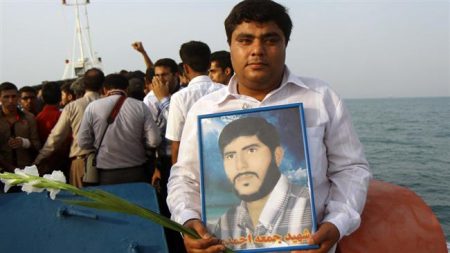
Iran is commemorating the 29th anniversary of the downing of its passenger plane by a US Navy guided-missile cruiser in the Persian Gulf waters in 1988.
The civilian aircraft, an Airbus A300B2, was flying in Iranian airspace over the Strait of Hormuz from the port city of Bandar Abbas to Dubai, carrying 274 passengers and 16 crew members on July 3, 1988, when USS Vincennes fired two SM-2MR surface-to-air missiles at it.
One of the missiles hit the plane, killing all the 290 on board.
On Monday, the Iranian Foreign Ministry issued a statement to commemorate the victims and once again censure the US Navy’s “horrific crime.”
“A look at the precedence of the US inhumane behavior, which is manifested in massacring innocent people across the world, including the aggrieved people of Iran, indicates that such an attitude has been institutionalized in various US governments in pursuit of their own goals,” said the statement.
A survivor holding up a picture of victims of USS Vincennes’ downing of an Iranian passenger plane on July 3, 1988. (File)
US officials claimed the warship had mistaken Iran Air Flight 655 for a warplane. This is while the warship was equipped with highly sophisticated radar systems and electronic battle gear at the time of the attack.
A year later, the captain of the USS Vincennes, William C. Rogers, was cleared of any wrongdoing in the incident, and was even awarded America’s Legion of Merit medal by then President George Bush for his “outstanding service.”
The atrocity especially stoked anti-American sentiment as it coincided with the final year of the former Iraqi regime’s eight-year war, which had been waged against Iran with Washington’s all-out political and material support.
The statement added that the Iranian people hold to account the so-called advocates of human rights for ordering and perpetrating this atrocity, and for committing crimes and inhumane acts.
The Islamic Republic wants all those behind the tragedy to be held accountable for the crime, said the statement, adding that the Iranian nation will never “forgive the perpetrators.”
“Non-interventionism: the Forgotten Doctrine”
John Laughland (France) – Institute of Democracy and Cooperation, Director of Studies http://wpfdc.orghttp://rhodesforum.org
Recent hearings by the Senate and House Intelligence Committees reflected the rising tide of Russian-election-hacking hysteria and contributed further to it. Both Democrats and Republicans on the two committees appeared to share the alarmist assumptions about Russian hacking, and the officials who testified did nothing to discourage the politicians.
On June 21, Samuel Liles, acting director of the Intelligence and Analysis Office’s Cyber Division at the Department of Homeland Security, and Jeanette Manfra, acting deputy under secretary for cyber-security and communications, provided the main story line for the day in testimony before the Senate committee — that efforts to hack into election databases had been found in 21 states.
Former DHS Secretary Jeh Johnson and FBI counter-intelligence chief Bill Priestap also endorsed the narrative of Russian government responsibility for the intrusions on voter registration databases.
But none of those who testified offered any evidence to support this suspicion nor were they pushed to do so. And beneath the seemingly unanimous embrace of that narrative lies a very different story.
The Department of Homeland Security (DHS) has a record of spreading false stories about alleged Russian hacking into U.S. infrastructure, such as the tale of a Russian intrusion into the Burlington, Vermont electrical utility in December 2016 that DHS later admitted was untrue. There was another bogus DHS story about Russia hacking into a Springfield, Illinois water pump in November 2011.
So, there’s a pattern here. Plus, investigators, assessing the notion that Russia hacked into state electoral databases, rejected that suspicion as false months ago. Last September, Assistant Secretary of DHS for Cybersecurity Andy Ozment and state officials explained that the intrusions were not carried out by Russian intelligence but by criminal hackers seeking personal information to sell on the Internet.
Both Ozment and state officials responsible for the state databases revealed that those databases have been the object of attempted intrusions for years. The FBI provided information to at least one state official indicating that the culprits in the hacking of the state’s voter registration database were cyber-criminals.
Illinois is the one state where hackers succeeded in breaking into a voter registration database last summer. The crucial fact about the Illinois hacking, however, was that the hackers extracted personal information on roughly 90,000 registered voters, and that none of the information was expunged or altered.
The Actions of Cybercriminals
That was an obvious clue to the motive behind the hack. Assistant DHS Secretary Ozment testified before the House Subcommittee on Information Technology on Sept. 28 (at 01:02.30 of the video) that the apparent interest of the hackers in copying the data suggested that the hacking was “possibly for the purpose of selling personal information.”
Ozment ‘s testimony provides the only credible motive for the large number of states found to have experienced what the intelligence community has called “scanning and probing” of computers to gain access to their electoral databases: the personal information involved – even e-mail addresses – is commercially valuable to the cybercriminal underworld.
That same testimony also explains why so many more states reported evidence of attempts to hack their electoral databases last summer and fall. After hackers had gone after the Illinois and Arizona databases, Ozment said, DHS had provided assistance to many states in detecting attempts to hack their voter registration and other databases.
“Any time you more carefully monitor a system you’re going to see more bad guys poking and prodding at it,” he observed, “because they’re always poking and prodding.” [Emphasis added]
State election officials have confirmed Ozment’s observation. Ken Menzel, the general counsel for the Illinois Secretary of State, told this writer, “What’s new about what happened last year is not that someone tried to get into our system but that they finally succeeded in getting in.” Menzel said hackers “have been trying constantly to get into it since 2006.”
And it’s not just state voter registration databases that cybercriminals are after, according to Menzel. “Every governmental data base – driver’s licenses, health care, you name it – has people trying to get into it,” he said.
Arizona Secretary of State Michele Reagan told Mother Jones that her I.T. specialists had detected 193,000 distinct attempts to get into the state’s website in September 2016 alone and 11,000 appeared to be trying to “do harm.”
Reagan further revealed that she had learned from the FBI that hackers had gotten a user name and password for their electoral database, and that it was being sold on the “dark web” – an encrypted network used by cyber criminals to buy and sell their wares. In fact, she said, the FBI told her that the probe of Arizona’s database was the work of a “known hacker” who had been closely monitored “frequently.”
James Comey’s Role
The sequence of events indicates that the main person behind the narrative of Russian hacking state election databases from the beginning was former FBI Director James Comey. In testimony to the House Judiciary Committee on Sept. 28, Comey suggested that the Russian government was behind efforts to penetrate voter databases, but never said so directly.
Comey told the committee that FBI Counterintelligence was working to “understand just what mischief Russia is up to with regard to our elections.” Then he referred to “a variety of scanning activities” and “attempted intrusions” into election-related computers “beyond what we knew about in July and August,” encouraging the inference that it had been done by Russian agents.
The media then suddenly found unnamed sources ready to accuse Russia of hacking election data even while admitting that they lacked evidence. The day after Comey’s testimony ABC headlined, “Russia Hacking Targeted Nearly Half of States’ Voter Registration Systems, Successfully Infiltrating 4.” The story itself revealed, however, that it was merely a suspicion held by “knowledgeable” sources.
Similarly, NBC News headline announced, “Russians Hacked Two U.S. Voter Databases, Officials Say.” But those who actually read the story closely learned that in fact none of the unnamed sources it cited were actually attributing the hacking to the Russians.
It didn’t take long for Democrats to turn the Comey teaser — and these anonymously sourced stories with misleading headlines about Russian database hacking — into an established fact. A few days later, the ranking Democrat on the House Intelligence Committee, Rep. Adam Schiff declared that there was “no doubt” Russia was behind the hacks on state electoral databases.
On Oct. 7, DHS and the Office of the Director of National Intelligence issued a joint statement that they were “not in a position to attribute this activity to the Russian government.” But only a few weeks later, DHS participated with FBI in issuing a “Joint Analysis Report” on “Russian malicious cyber activity” that did not refer directly to scanning and spearphishing aimed of state electoral databases but attributed all hacks related to the election to “actors likely associated with RIS [Russian Intelligence Services].”
Suspect Claims
But that claim of a “likely” link between the hackers and Russia was not only speculative but highly suspect. The authors of the DHS-ODNI report claimed the link was “supported by technical indicators from the U.S. intelligence community, DHS, FBI, the private sector and other entities.” They cited a list of hundreds of I.P. addresses and other such “indicators” used by hackers they called “Grizzly Steppe” who were supposedly linked to Russian intelligence.
But as I reported last January, the staff of Dragos Security, whose CEO Rob Lee, had been the architect of a U.S. government system for defense against cyber attack, pointed out that the vast majority of those indicators would certainly have produced “false positives.”
Then, on Jan. 6 came the “intelligence community assessment” – produced by selected analysts from CIA, FBI and National Security Agency and devoted almost entirely to the hacking of e-mail of the Democratic National Committee and Hillary Clinton’s campaign chairman John Podesta. But it included a statement that “Russian intelligence obtained and maintained access to elements of multiple state or local election boards.” Still, no evidence was evinced on this alleged link between the hackers and Russian intelligence.
Over the following months, the narrative of hacked voter registration databases receded into the background as the drumbeat of media accounts about contacts between figures associated with the Trump campaign and Russians built to a crescendo, albeit without any actual evidence of collusion regarding the e-mail disclosures.
But a June 5 story brought the voter-data story back into the headlines. The story, published by The Intercept, accepted at face value an NSA report dated May 5, 2017, that asserted Russia’s military intelligence agency, the GRU, had carried out a spear-phishing attack on a U.S. company providing election-related software and had sent e-mails with a malware-carrying word document to 122 addresses believed to be local government organizations.
But the highly classified NSA report made no reference to any evidence supporting such an attribution. The absence of any hint of signals intelligence supporting its conclusion makes it clear that the NSA report was based on nothing more than the same kind of inconclusive “indicators” that had been used to establish the original narrative of Russians hacking electoral databases.
A Checkered History
So, the history of the U.S. government’s claim that Russian intelligence hacked into election databases reveals it to be a clear case of politically motivated analysis by the DHS and the Intelligence Community. Not only was the claim based on nothing more than inherently inconclusive technical indicators but no credible motive for Russian intelligence wanting personal information on registered voters was ever suggested.
Russian intelligence certainly has an interest in acquiring intelligence related to the likely outcome of American elections, but it would make no sense for Russia’s spies to acquire personal voting information about 90,000 registered voters in Illinois.
When FBI Counter-intelligence chief Priestap was asked at the June 21 hearing how Moscow might use such personal data, his tortured effort at an explanation clearly indicated that he was totally unprepared to answer the question.
“They took the data to understand what it consisted of,” said Priestap, “so they can affect better understanding and plan accordingly in regards to possibly impacting future election by knowing what is there and studying it.”
In contrast to that befuddled non-explanation, there is highly credible evidence that the FBI was well aware that the actual hackers in the cases of both Illinois and Arizona were motivated by the hope of personal gain.
The bold warriors of the McResistance are bound and determined to get Trump impeached at any cost, come what may. I mean, so long as it doesn’t inconvenience America’s oligarchs or interfere with the profit margins of the military-industrial complex.
According to Francis Boyle, professor of international law at the University of Illinois College of Law, Trump has already committed impeachable war crimes in Syria. Boyle calls the case for impeachment due to war crimes a “slam dunk”. If Democrats were serious about their determination to give the world President Pence at all costs, they wouldn’t be banging on about the crumbling Russiagate conspiracy theory or Trump’s obnoxious tweets, they’d be focusing on the actual, tangible, provable things that this administration has done in Syria.
They will not do this, though. Trump has dropped his right hand and is currently circling into an opening for a crushing left hook knockout, but Democrats will not throw that punch. Ever. You will never see congressional Russiagate queen Maxine “I’m out to impeach this president” Waters attempt to get Trump impeached with the impeachment case that he has gift wrapped and handed to her by committing war crimes in Syria. You will never see Rep. Jamie “remove Trump from office because of obnoxious tweets” Raskin put together a case for impeachment based on the Trump administration’s unilateral decision to attack the Syrian military, its use of white phosphorus or its relentless slaughter of civilians across the Middle East. You will never see Rachel Maddow or Keith Olbermann rallying the Resistance troops into protest marches over Trump’s bloodbaths in Yemen or Syria. These things will never, ever happen. You will see them focusing on nonsense like Russiagate and mean tweets about Zbigniew Brzezinski’s daughter.
These things will never happen because the Democratic party, as we have discussed before, has become an overwhelmingly neoconservative party, and because the corporate media never misses an opportunity to advocate in favor of US military aggression. We saw this in their shamelessly orgiastic celebration of Trump’s deadly missile strike on a Syrian airfield in April, and we continue to see it in their refusal to unequivocally condemn the senseless military aggression in nations that America never had any business involving itself with in the first place.
This is precisely why I’ve been writing with such venom about the so-called “Resistance”, a title not organically arising from the people but one manufactured in a DC think tank to harness and exploit the healthy inclination toward progressive activism which arose on an organic grassroots level in the Occupy and Bernie Sanders movements. People with more or less healthy impulses, people who claim to want peace, economic justice and social justice, have had those good intentions harnessed by America’s unelected power establishment and geared toward manufacturing support for escalations with Russia and unforgivable corporatist bloodbaths in the Middle East. These deep state parasites have taken something good and healthy in their fellow humans and used the deceit and manipulations of their corporate media propaganda arm to twist those healthy impulses in on themselves and turn them into something sick and evil.
If you are reading this under the mistaken impression that resisting Trump has something to do with the 25th Amendment or investigations into Russian connections, I strongly advise you to begin insistently urging the pundits and politicians you trust and respect to oppose the Trump administration on the basis of war crimes. Push them to put together a case for Trump’s impeachment based on his violations of the Nuremberg charter, the UN charter, and the War Powers Resolution of 1973. Then watch what they do. Not what they say, but what they do. Ignore their words about this and watch their actions. Pay attention when they ignore you or brush you off with a few supportive-sounding words without taking any action. I promise you this is exactly what will happen. You will never, ever see anything remotely like the full-scale mobilization you’ve seen in the Russiagate movement and #TheResistance protests over Trump’s war crimes.
If you try these things and find what I am saying to be true (and you will), please consider the possibility that these people are not your friends. Please consider the possibility that the media you consume which tells you how to perceive world affairs is full of lies and propaganda. Please consider the possibility that a coalition of powerful elites controls your government and uses your country’s immense military might to manipulate world affairs for the purpose of amassing more power. Please consider the possibility of a real resistance replacing the fake one they’ve given you.
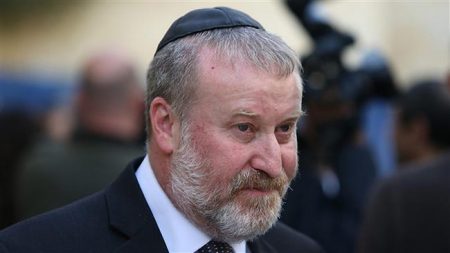
A newly released report says Israeli attorney general Avichai Mendelblit approved last year the use of a controversial 1967 order to legalize settler units built on private Palestinian land.
During a meeting attended by several Israeli judicial officials, Mendelblit said the “Order Concerning Government Property,” which was issued in July 1967, could be invoked to expropriate Palestinian land, the Israeli newspaper Haaretz reported on Sunday.
Clause 5 of the order states that “any transaction concluded in good faith between the authorities and another person … will not be struck down and is valid, even if it is proven that the asset was not government property at the time of its purchase.”
Mendelblit’s office said in a document that the clause had rarely been used in almost five decades, but “the need to make use of it has arisen now.”
It further set out a number of conditions for invoking the clause, such as purchase in good faith, the existence of a contract and payment having been made for the land.
“The use of Clause 5 should be limited as a rule to the built residential boundaries of the community, and to actual construction done before the parties to the transaction became aware that this was in fact not government property,” the document added.
Back in February, the Israeli parliament, known as the Knesset, passed a law on the expropriation of privately-owned Palestinian land in the West Bank, where Israeli settlements or outposts have been constructed.
However, Palestinians filed petitions to the Israeli High Court against the law.
Mendelblit proposed that the Israeli parliament suspend the land garb law until the court rules on the petitions and the Knesset accepted the bid.
Dror Etkes, Israeli anti-settlement activist, said the document by Mendelblit’s office seems to be “a parallel path being prepared … for the day after the High Court tosses the [expropriation] law into the garbage.”
“The purpose of this legal construction, rotten from the foundation, is to raise the claim of ‘good faith’ wherever Israel has stolen private Palestinian land and given it to settlers,” he said. “This is a situation in which lies, denial, violence and manipulation prevail – that is, everything except good faith.”
About 600,000 Israelis live in over 230 settlements built illegally since the 1967 occupation of the Palestinian territories.
The continued expansion of Israeli settlements is one of the major obstacles to the establishment of peace in the Middle East.
In recent months, Tel Aviv has stepped up its settlement construction activities in the occupied Palestinian territories in a blatant violation of international law and in defiance of United Nations Security Council Resolution 2334.
The resolution, which was passed last December, states that Israel’s establishment of settlements in the occupied territories, including East Jerusalem al-Quds, “had no legal validity” and urges the regime to immediately and completely cease all its settlement activities.
Israeli military forces have abducted a Palestinian legislator and a senior member of the Popular Front for the Liberation of Palestine (PFLP) during separate raids across the occupied West Bank.
On Sunday morning, a large number of Israeli troopers raided the home of 55-year-old Khalida Jarrar in the central West Bank city of Ramallah, located 10 kilometers (six miles) north of Jerusalem al-Quds, and arrested her.
Her husband, Ghassan said Israeli forces seized computers during the raid.
Israel’s internal spy agency, Shin Bet, announced in a statement that Jarrar was arrested along with a Palestinian activist for “promoting terror activities,” without providing any further information.
Jarrar is one of the most outspoken critics of the Israeli occupation and has repeatedly slammed the Tel Aviv regime’s atrocities against Palestinians.
The Israeli regime has been denying the lawmaker the right to travel outside the occupied Palestinian territories since 1988. She campaigned for months in 2010 before receiving the permission to travel to Jordan for medical treatment.
In August 2014, Jarrar received a “special supervision order” from the Israeli military, instructing her to leave Ramallah to the West Bank city of Ariha (Jericho).
However, she set up a protest tent outside the Palestinian Legislative Council in Ramallah, where she lived and worked, until the controversial order was overturned later in September that year.
Israeli soldiers last arrested the Palestinian lawmaker on April 2, 2015 after storming her house in Ramallah. She was released from prison on June 3, 2016 on a suspended sentence of 12 months within a five-year period.
According to reports, a total of 13 Palestinian lawmakers are currently imprisoned in Israeli detention facilities.
Nine of them are being held without trial under the so-called administrative detention, which is a policy according to which Palestinian inmates are kept in Israeli detention facilities without trial or charge. Some Palestinian prisoners have been held in administrative detention for up to 11 years.
Palestinian MK enters prison with “pride”
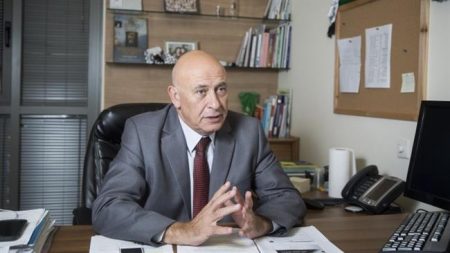
Meanwhile, a Palestinian member of the Knesset (parliament) has headed to prison with “pride” as he began a two-year sentence on charges of giving cellphones and SIM cards to Palestinian prisoners in Israeli jails.
Basel Ghattas of the Joint List, a political alliance of four Arab-dominated parties in Israel, said he was entering prison with his “head held high” and with “support from my people.”
File photo shows Palestinian member of Knesset (Israel’s parliament) Basel Ghattas at his office at the Knesset in Jerusalem al-Quds
More than 6,500 Palestinians are reportedly held at Israeli jails. Hundreds of the inmates have apparently been incarcerated under the practice of administrative detention.
The Palestinian inmates regularly go on hunger strike in protest against the administrative detention policy and their harsh prison conditions.
The Israeli web site Debka, though not always reliable in some respects, nonetheless, occasionally, can give useful glimpses into the Israeli calculus: Here it is expressing somewhat unusual enthusiasm, even open rapture, about a recent political event:
“The Saudi king’s decision to elevate his son Mohammed bin Salman … is not merely the internal affair of the royal hierarchy, but a game-changing international event. The king’s son is ready to step into his allotted place in a new US-Arab-Israeli alliance established by President Trump in May, along with the UAE, Egyptian and Israeli leaders that will seek to dominate Middle East affairs. Israel will be accepted in a regional lineup for the first time alongside the strongest Sunni Arab nations who all share similar objectives, especially the aim to stop Iran”.
“A game-changing international event”? Why exactly are these Israelis so excited; why should the elevation of bin Salman, known by the initials MbS, be such a game-changer? Is there here something new? And how come the dismissal of Prince Nayef, whom MbS replaced as crown prince and who was a Western favorite, barely ruffled a leaf in protest?
On the face of it, not much has changed. Israeli Prime Minister Bibi Netanyahu’s (and his father’s) obsession with Iran is well known. The Israeli PM (like his father before him) believes that Iran is the precursor to a new Jewish holocaust.
It was not always like this however: the Ben Gurion doctrine of courting regional minorities to Israel’s side (including Iran), was only “flipped” when the Israeli Labour Party won parliamentary elections in 1992.
In short, Iran’s subsequent identification with Satan by the Israeli government effectively was a domestic Israeli political need of the electoral moment: switching from the Arabs as “enemy” – in order for Rabin to make peace – required, in public terms, that Iran become the “far enemy” – the new existential threat to “plucky little” Israel’s survival, vice the now peace-partnering Arabs.
Netanyahu however, is a true “believer” (in Iran’s murderous intentions), and tried to corner President Obama into destroying Iran, by threatening America that either you do it (bomb Iran) – or, Israel shall (which effectively amounted to making America “do it” anyway). Obama demurred, and avoided Bibi’s binary threat to him of “war or war” by rather unenthusiastically negotiating a JCPOA with Iran – and thus re-balancing the region.
A New Strategic Situation
So what has changed? Iran has just re-elected President Hassan Rouhani who upholds the JCPOA and who actively engages with the West, and does not exude any clear and present danger to Israel, or the region (ISIS and al-Qaeda apart). “Nothing to see here”: aside from some jostling with U.S. partner forces for future influence in Syria.
Clearly however, Debka does espy something new in the strategic situation. And they may be right. Ostensibly, on the surface, things may look the same, but two dynamics seem to be conflating that may account for official Israel’s high excitement. (It is not just Debka that is on a high – several senior intelligence and security officials at the recent Herzaliyia security conference, were also selling the imminent strategic change meme.)
One of the two conflating dynamics which might help us understand the enigma of Israeli satisfaction is this: a well-known Arab journalist wrote recently of a dinner held some months ago in the Gulf (with prominent Gulf guests), at which an unnamed former Arab Prime Minister was quizzed about MbS’ prospects of becoming king. What he said shocked the gathering. Some expressed their incredulity.
He said bluntly: if MbS wanted to come to the throne, he would need America’s blessings. He would need to offer them something that no one had offered before – that no one had dared to offer before. And what was that, the journalist asked the former PM that MbS must offer: “He must recognize Israel. If he does that, the U.S. will support him. They’ll even crown him themselves.”
In one of the Sherlock Holmes detective stories, Holmes’s solution to a particular mystery rested on “the dog did that did not bark in the night.” Holmes’s point was why had the dog not barked when its nature is to bark.
It is common knowledge that the U.S. has been firmly committed to Prince Nayef succeeding King Salman. The authoritative Saudi insider and blogger Muhtahidd has tweeted that the U.S. sent messages last year to MbS warning that he should not seek to supplant Nayef. In July 2016,
Mujtahidd tweeted that Secretary of State John Kerry had told MbS that Nayef continuing as Crown Prince was a “red line” for the U.S.
Why then did the U.S. “dog” not bark on the night that MbS seized the succession, just before dawn? We have heard not one tiny growl on Nayef’s behalf. In fact, a trawl through Mutahhid’s early tweets lays it all bare … if one bothers to connect the dots.
A Kingmaker
The main actor in this drama is Mohammad bin Zayed (MbZ), the Crown Prince of Abu Dhabi, who according to Mutjtahidd recognized MbS’ ambition from early on, and saw in him an instrument by which MbZ could gain personal influence through becoming kingmaker in Saudi Arabia. From the outset MbZ apparently urged MbS to obtain America’s support for him becoming king – via the channel of Israeli full support.
In tweets from May 2, 2016, Mujtahhid describes MbZ’s advice to bin Salman: first, seize the succession to the throne before King Salman dies; second, gain U.S. favor by moving the Kingdom of Saudi Arabia away from religious values – away from values that reinforce an Islamic identity, and third, expand ties with Israel.
Mujtahidd developed the third element in his tweets – ties to Israel – by saying that it began “shyly” as a lead-in to direct contacts. Senior Saudis were to be encouraged to participate in debates with Israelis (i.e. appearing on Israeli TV channels), while highlighting a common interest in combating Iran and fighting “terrorism.”
MbZ was also reported by Mujtahidd as advising MbS to please Israel by supporting President Sisi of Egypt (with whom the Israelis have a close relationship) – and finally, Mujtahidd reports MbS (again in July last) that Netanyahu had met with MbS at Aqaba, three months earlier.
All of Mujtahidd’s points made over a year or more have been borne out in practice: The Saudi succession has been seized before the king has died; MbS has paraded his “opposition to religion” and Vision 2030 has emphasized a more secular, liberal economic identity for Saudi Arabia; Sisi has been supported (in spite of political differences); and Saudi ties to Israel have become incrementally more visible.
Mujtahidd is clear: There is no “big bang” shock recognition of Israel planned, but a continuing incrementalism (Israeli use of Saudi airspace, institution of telephone links, etc.).
On the one hand, Israel may be seeing the ambition and opportunism of two young men (MbZ and Mbs), but what “bakes the cake” for Israel, is the background, long-term dynamic of the declining legitimacy the Gulf “system” of monarchical, non-representational rule — a vulnerability exacerbated by financial tightening: an austerity that promises to limit Saudi ability to buy out popular disaffection.
This – the declining standing of Sunni authority and the leadership of Islam which the Saudis claim to be theirs and theirs alone – is what MbS and MbZ wish to reverse. Qatar was the first victim of their insistence on complete obedience.
Crosscurrents of Change
It was the “Arab Awakening” that initially fanned secular alienation with the absolute nature of the monarchial system, but then the Muslim Brotherhood doctrine of the Umma (the whole community of Muslims bound together by ties of religion) as sovereign, undermined it further, but from the Islamic stance. A left and a right punch. Also, the revisionist history of the first Islamic State, presented by ISIS, shreds Saudi’s religious credentials completely.
This is the combination that may be provoking such Israeli excitement: The ambition and opportunism of two young crown princes, coupled by their desire to restore Sunni authority (and the obedience of subordinate states) by mobilizing the Sunni world in a “jihad” against Iran and “terrorism,” must be music to some Israeli ears.
And this is the rabbit hole down which President Trump has fallen. It matters little whether the primary motive for Trump’s Riyadh fiesta was pecuniary, or whether it was triggered by son-in-law Jared Kushner’s ambitions. Either way, Trump has embraced pushback against Iran (and seemingly, regime change, as Rex Tillerson has implied). In fact, Trump seems to be surrounding himself more and more with anti-Iranian advisers. He seems to like the notion of leading an alliance of the U.S., Israel and the two Crown Princes pushing back against Iran and its “terrorism.”
The Shi’a — pilloried by the Sunni Establishment as discontents, rejectionists and revolutionaries — have over a thousand-year history. Language changes, but the Shi’a as (false) innovators, apostates, heretics – and now “terrorists” – are as old as Islam. Terrible persecutions have ensued over the centuries. And Shi’a Islam is no insignificant 10 percent minority — in the Arab heartland, it is more like 60-40 percent. In the northern crescent, it is some 100 million Shi’i to 30 million Sunnis. And Sh’ism is undergoing a profound revival.
What interest of America will be served by intruding into these ancient animosities? MbS, MbZ and Netanyahu may be American “allies,” but their interests are not America’s. The former might be happy for America to spill its blood in fighting their fights. But why should Trump want to do that?
Alastair Crooke is a former British diplomat who was a senior figure in British intelligence and in European Union diplomacy. He is the founder and director of the Conflicts Forum.
In the style of a President’s Daily Brief for President Trump:
When you meet with President Putin next week, you can count on him asking you why the U.S. is encircling Russia with antiballistic missile systems.
Putin regarded the now-defunct Anti-Ballistic Missile Treaty as the key to maintaining the nuclear-weapons balance between the United States and Russia and told filmmaker Oliver Stone that the U.S. withdrawal from the treaty in 2001 and the follow-on U.S. deployment of ABM batteries could “destroy this balance. And that’s a great mistake.”
For decades, the Russians have viewed an invulnerable nuclear-tipped strategic missile force as a deterrent to a U.S. attack though they have never displayed an inclination to commit suicide by actually firing them.
From this perspective, Putin wonders why the U.S. might seek to upset the nuclear balance by deploying ABM systems around Russia’s borders, making Russia’s ICBM force vulnerable.
Putin’s generals, like yours, are required to impute the most provocative intentions to military capabilities; that is what military intelligence is all about. Thus, they cannot avoid seeing the ABM deployments as giving the U.S. the capability for a first strike to decapitate Russia’s ICBM force and, by doing so, protecting the U.S. from Russian nuclear retaliation.
And, as Putin has made clear, the Kremlin sees U.S. claims that the deployments are needed to thwart a strategic strike from Iran as insultingly disingenuous – all the more so in light of the 2015 multilateral agreement handcuffing Iran’s development of a nuclear bomb for the foreseeable future.
Yet, the U.S.-Russia strategic balance becomes more and more precarious with the deployment of each new ABM site or warship, together with rising concerns at the possibility of a U.S. technological breakthrough. With the time window for Russian leaders to evaluate data indicating a possible U.S. nuclear strike closing, launch-on-warning becomes more likely – and so does World War III.
Your visit to Warsaw en route to Hamburg for the G-20 summit will shine the spotlight on the threat Putin sees in the deployment of missile defense systems in Poland – as well as Romania and elsewhere on Russia’s periphery.
It is no secret that Russian leaders feel double-crossed by NATO’s steady creep eastward, but Russia’s strategic planners seemed to believe they could handle that – up to a point. That point was reached with the Feb. 22, 2014 coup d’etat in Ukraine, which Moscow viewed as one U.S.-backed regime change too many and one that installed a virulently anti-Russian government along a route historically used by foreign invaders.
On April 17, 2014, the day before Crimea was re-incorporated into Russia, Putin spoke of what motivated Russia’s strong reaction. The “more important” reason he gave was the need to thwart plans to incorporate Ukraine and Crimea into the anti-ballistic missile deployment encircling Russia.
Putin explained: “This issue is no less, and probably even more important, than NATO’s eastward expansion. Incidentally, our decision on Crimea was partially prompted by this.”
ABM: ‘A Separate Issue’
In his interviews with Oliver Stone (aired on Showtime as “The Putin Interviews”), Putin made the same distinction between the NATO buildup (bad enough) and ABM deployment (more dangerous still), telling Stone the ABM challenge is “a separate issue which no doubt is going to require a response from Russia.”
Putin blames your predecessors for his mistrust of Washington on this important issue. He has branded a huge mistake President Bush’s 2001 decision to exit the ABM Treaty – an agreement that sharply limited the number of permitted anti-ballistic missile sites – noting that the Treaty had been for three decades the “cornerstone of the system of national security as a whole.”
Putin’s misgivings were hardly allayed by President Obama’s ten-second pas de deux five years ago with Dmitry Medvedev in South Korea. An ABC open mike picked up their private conversation on March 26, 2012, at a summit on nuclear security in Seoul.
Obama is heard assuring then-Russian President Dmitry Medvedev that the missile defense issue “can be solved,” but that it was “important for him (Putin) to give me space.” President Obama asked Medvedev to tell Putin that Obama would have “more flexibility” after being re-elected. More flexibility or no, the missile defense program proceeded unabated, with Washington shunning bilateral talks.
It is now five years later, but there will be a residue of distrust on Putin’s part with respect to ABM deployment. We still expect Putin to show his characteristic reserve, but you will be dealing with someone who feels he’s been diddled on this key issue, and who, on occasion, gets angry when others don’t grasp the gravity of this potentially existential moment.
For example, speaking to journalists on June 17, 2016, Putin criticized the reasons that the U.S. gives for the need to deploy ABM systems, especially the “threat from Iran.” Observing their apathetic reaction, Putin uncharacteristically lost his cool.
Given this history, you will have a suitcase of mistrust to overcome in talks with Putin. It will take more than smooth Obama-style reassurances to allay the Russian President’s misgivings over Washington’s intentions on missile defense.
Given the priority he places on the challenge, however, he may propose that U.S. and Russian negotiators begin to talk seriously about the issue.
Lost Opportunities
It may be helpful to recall that less than four years ago U.S.-Russian relations were in a much more positive place. After a disputed sarin incident outside Damascus on Aug. 21, 2013, Putin helped Obama out of a geopolitical corner by persuading Syrian President Bashar al-Assad to surrender Syria’s entire chemical weapons inventory, under close U.N. supervision, for destruction on a U.S. ship.
A few days later, on Sept. 11, 2013, Putin placed an op-ed in The New York Times, titled “A plea for caution from Russia,” the last part of which he is said to have drafted himself:
“My working and personal relationship with President Obama is marked by growing trust. I appreciate this. I carefully studied his address to the nation on Tuesday. And I would rather disagree with a case he made on American exceptionalism …
“It is extremely dangerous to encourage people to see themselves as exceptional … There are big countries and small countries, rich and poor, those with long democratic traditions and those still finding their way to democracy. … We are all different, but when we ask for the Lord’s blessings, we must not forget that God created us equal.”
Russia then played a central role in facilitating Iran’s concessions regarding the nuclear accord that President Obama considered perhaps his greatest diplomatic achievement, with the key interim agreement reached on Nov. 24, 2013. But Putin felt betrayed when Obama’s State Department helped organize the coup in Ukraine just three months later.
Since the Ukraine crisis, U.S. media and political circles have subjected Putin to an unrelenting demonization, including comparisons of him to Adolf Hitler and an over-the-top campaign to blame him for Hillary Clinton’s defeat and the Trump presidency.
Yet, while the tone of the Russia-bashing in Washington has reached hysterical levels, the Defense Intelligence Agency has just published a balanced assessment of “Russia’s Threat Perceptions,” which offers a view from Moscow’s vantage point:
“Since returning to power in 2012, Russian President Putin has sought to reassert Russia as a great power on the global stage and to restructure an international order that the Kremlin believes is tilted too heavily in favor of the United States at Russia’s expense.
“Moscow seeks to promote a multipolar world predicated on the principles of respect for state sovereignty and non-interference in other state’s internal affairs, the primacy of the UN, and a careful balance of power preventing one state or group of states from dominating the international order. …
“Moscow has sought to build a robust military able to project power, add credibility to Russian diplomacy, and ensure that Russian interests can no longer be summarily dismissed without consequence.”
A fair assessment, in our view.
Ray McGovern was a CIA analyst for 27 years, during which he served as chief of the Soviet Foreign Policy Branch. He also prepared the President’s Daily Brief under Presidents Nixon, Ford, and Reagan, conducting the early morning briefings under Reagan.
If you wish to understand the degree to which a supposedly free western media are constructing a world of half-truths and deceptions to manipulate their audiences, keeping us uninformed and docile, then there could hardly be a better case study than their treatment of Pulitzer prize-winning investigative journalist Seymour Hersh.
All of these highly competitive, for-profit, scoop-seeking media outlets separately took identical decisions: first to reject Hersh’s latest investigative report, and then to studiously ignore it once it was published in Germany last Sunday. They have continued to maintain an absolute radio silence on his revelations, even as over the past few days they have given a great deal of attention to two stories on the very issue Hersh’s investigation addresses.
These two stories, given such prominence in the western media, are clearly intended to serve as “spoilers” to his revelations, even though none of these publications have actually informed their readers of his original investigation. We are firmly in looking-glass territory.
So what did Hersh’s investigation reveal? His sources in the US intelligence establishment – people who have helped him break some of the most important stories of the past few decades, from the Mai Lai massacre by American soldiers during the Vietnam war to US abuse of Iraqi prisoners at Abu Ghraib in 2004 – told him the official narrative that Syria’s Bashar Assad had dropped deadly sarin gas on the town of Khan Sheikhoun on April 4 was incorrect. Instead, they said, a Syrian plane dropped a bomb on a meeting of jihadi fighters that triggered secondary explosions in a storage depot, releasing a toxic cloud of chemicals that killed civilians nearby.
It is an alternative narrative of these events that one might have assumed would be of intense interest to the media, given that Donald Trump approved a military strike on Syria based on the official narrative. Hersh’s version suggests that Trump acted against the intelligence advice he received from his own officials, in a highly dangerous move that not only grossly violated international law but might have dragged Assad’s main ally, Russia, into the fray. The Syrian arena has the potential to trigger a serious confrontation between the world’s two major nuclear powers.
But, in fact, the western media were supremely uninterested in the story. Hersh, once considered the journalist’s journalist, went hawking his investigation around the US and UK media to no avail. In the end, he could find a home for his revelations only in Germany, in the publication Welt am Sonntag.
There are a couple of possible, even if highly improbable, reasons all English-language publications ignored Hersh’s story. Maybe they had evidence that his inside intelligence was wrong. If so, they have yet to provide it. A rebuttal would require acknowledging Hersh’s story, and none seem willing to do that.
Or maybe the media thought it was old news and would no longer interest their readers. It would be difficult to sustain such an interpretation, but at least it has an air of plausibility – except for everything that has happened since Hersh published last Sunday.
His story has spawned two clear “spoiler” responses from those desperate to uphold the official narrative. Hersh’s revelations may have been entirely uninteresting to the western media, but strangely they have sent Washington into crisis mode. Of course, no US official has addressed Hersh’s investigation directly, which might have drawn attention to it and forced western media to reference it. Instead Washington has sought to deflect attention from Hersh’s alternative narrative and shore up the official one through misdirection. That alone should raise the alarm that we are being manipulated, not informed.
The first spoiler, made in the immediate wake of Hersh’s story, were statements from the Pentagon and White House warning that the US had evidence Assad was planning yet another chemical attack on his people and that Washington would respond extremely harshly if he did so.
The US said on Tuesday that it had observed preparations for a possible chemical weapons attack at a Syrian air base allegedly involved in a sarin attack in April following a warning from the White House that the Syrian regime would ‘pay a heavy price’ for further use of the weapons.
And then on Friday, the second spoiler emerged. Two unnamed diplomats “confirmed” that a report by the Organisation for the Prohibition of Chemical Weapons (OPCW) had found that some of the victims from Khan Sheikhoun showed signs of poisoning by sarin or sarin-like substances.
There are obvious reasons to be mightily suspicious of these stories. The findings of the OPCW were already known and had been discussed for some time – there was absolutely nothing newsworthy about them.
There are also well-known problems with the findings. There was no “chain of custody” – neutral oversight – of the bodies that were presented to the organisation in Turkey. Any number of interested parties could have contaminated the bodies before they reached the OPCW. For that reason, the OPCW has not concluded that the Assad regime was responsible for the traces of sarin. In the world of real news, only such a finding – that Assad was responsible – should have made the OPCW report interesting again to the media.
Similarly, by going public with their threats against Assad, the Pentagon and White House did not increase the deterrence on Assad, making it less likely he would use gas in the future. That could have been achieved much more effectively with private warnings to the Russians, who have massive leverage over Assad. These new warnings were meant not for Assad but for western publics, to bolster the official narrative that Hersh’s investigation had thrown into doubt.
In fact, the US threats increase, rather than reduce, the chances of a new chemical weapons attack. Other, anti-Assad actors now have a strong incentive to use chemical weapons in false-flag operation to implicate Assad, knowing that the US has committed itself to intervention. On any reading, the US statements were reckless – or malicious – in the extreme and likely to bring about the exact opposite of what they were supposed to achieve.
But beyond this, there was something even more troubling about these two stories. That these official claims were published so unthinkingly in major outlets is bad enough. But what is unconscionable is the media’s continuing blackout of Hersh’s investigation when it speaks directly to the two latest news reports.
No serious journalist could write up either story, according to any accepted norms of journalistic practice, and not make reference to Hersh’s claims. They are absolutely relevant to these stories. In fact, more than that, the intelligence sources he cites are are not only relevant but are the sole reason these two stories have been suddenly propelled to the top of the news agenda.
Any publication that has covered either the White House-Pentagon threats or the rehashing of the OPCW report and has not mentioned Hersh’s revelations is writing nothing less than propaganda in service of a western foreign policy agenda trying to bring about the illegal overthrow the Syrian government. And so far that appears to include every single US and UK mainstream newspaper and TV station.
Two Chinese teachers based in Pakistan’s southwest province of Baluchistan were reportedly abducted and murdered by militants from the self-proclaimed “Islamic State” (ISIS).
In reality, the terror attack was very precise in terms of location and purpose, and fits into a larger pattern of violence and political instability that has plagued Pakistan’s Baluchistan province and China’s ambitions there for years.
US Using Proxies to Disrupt China-Pakistan Economic Corridor
Baluchistan, and more specifically, the port city of Gwadar, serve as the central nexus of the China-Pakistan Economic Corridor (CPEC). It is a complex and expanding system of rail, roads, ports, and other infrastructure projects built jointly with the Pakistani government to facilitate regional economic growth – and an integral component of the much larger One Belt, One Road initiative.
The report states explicitly in regards to a possible “hard approach” toward Beijing that:
There are no guarantees that China will respond favorably to any U.S. strategy, and prudence may suggest to “prepare for the worst” and that it is “better to be safe than sorry.” Is it perhaps better to take a hard line towards China and contain it while it is still relatively weak? Is now the time to keep China down before she can make a bid for regional hegemony? Foreign policy realists, citing history and political theory, argue that inevitably China will challenge American primacy and that it is a question of “when” and not “if” the U.S.-China relationship will become adversarial or worse.
What better way to contain China’s regional ambitions than to mire economic development in places like Baluchistan with armed militancy, or obstruct it altogether with a US-backed independence movement in the province?
US policymakers have noted just that. In a 2012 paper published by the Carnegie Endowment for International Peace titled, “Pakistan: The Resurgence of Baluch Nationalism” (PDF), it would be stated unequivocally that (emphasis added):
If Baluchistan were to become independent, would Pakistan be able to withstand another dismemberment—thirty-four years have passed since the secession of Bangladesh—and what effect would that have on regional stability? Pakistan would lose a major part of its natural resources and would become more dependent on the Middle East for its energy supplies. Although Baluchistan’s resources are currently underexploited and benefit only the non-Baluch provinces, especially Punjab, these resources could undoubtedly contribute to the development of an independent Baluchistan.
Baluchistan’s independence would also dash Islamabad’s hopes for the Gwadar port and other related projects. Any chance that Pakistan would become more attractive to the rest of the world would be lost.
Not only would it be Pakistan’s loss regarding the Gwadar port, it would be China’s loss as well.
And while the paper attempts to claim the US stands nothing to gain from Baluchistan’s independence, the US State Department has spent years and an untold sum of money and resources supporting just such an independence movement. Additionally, the Carnegie Endowment for International Peace itself hosted an event by the “Baloch Society of North America,” advocating US intervention in the province toward achieving “independence.”
The US State Department’s National Endowment for Democracy (NED) and convicted financial criminal George Soros’ Open Society via “Global Voices” funds a long list of organizations in Pakistan’s Baluchistan province advocating everything from autonomy to outright independence. This includes the Association for Integrated Development Balochistan (AID Balochistan), The Balochistan Point, and the Balochistan Institute for Development.
The US NED-funded Institute for Development Studies & Practices’s (IDSP) president regularly uses social media like Twitter to make and support statements calling for Baluchistan’s independence and depicting the province as a “colony” of Pakistan. So do virtually all other members of the above mentioned organizations funded by the US government.
The long list of US-funded Baluchistan-based organizations regularly link to op-eds and propaganda depicting violence in the province as one-sided and perpetuated by Pakistani forces alone – echoing the same sort of intentionally skewed public relations campaigns supporters of US-backed violence in Syria have undertaken since 2011.
And just like in Syria, the violence being spun, excused, or glossed over directly meshes with US interests – in this case – impeding Chinese-Pakistani cooperation in Baluchistan and beyond.
Violence in Baluchistan Benefits US Proxy War with Iran Also
That the Islamic State has claimed responsibility for this latest attack, following in the wake of a larger attack on Tehran, Iran, is particularly significant. It was US policymakers who, in a 2009 Brookings Institution policy paper titled, “Which Path to Persia? Options for a New American Strategy toward Iran,” would mention Baluchistan and Baluchi separatists by name as possible conduits, safe havens, and proxies for conducting armed conflict against Iran.
Creating violence in Baluchistan, Pakistan thus serves to not only mire Chinese ambitions across Asia, it assists Washington’s long-standing objective to encircle Iran with hostile state and non-state actors ahead of eventual regime change operations against Tehran.
Previously, the United States has attempted to use a variety of local groups to foment political instability and violence. Now it appears that all of its geopolitical mischief is being lumped under the catch-all, the “Islamic State.” In reality, the militants who kidnapped and murdered the two Chinese teachers in Baluchistan, Pakistan, were likely local militants the US has been backing for years, and whose role in destabilizing Pakistan is increasingly understood by local and global audiences.
Assigning blame to the Islamic State appears to be a means of disassociating America from the violence it is intentionally fueling across the region.
The Islamic State “coincidentally” appearing in virtually every geopolitical theater on Earth US interests are impeded or challenged by local and regional interests helps explain why not only the Islamic State exists in the first place, but explains how it has managed to survive and continue to thrive despite multinational efforts by nations like Russia, Syria, and Iran to defeat it.
Through state sponsorship, the Islamic State’s source of logistical, political, and military power ultimately lies in Washington, London, Brussels, Ankara, Riyadh, and Doha – where Russian-Syrian-Iranian military and political power cannot reach.
For those wondering where the Islamic State will strike next, one needs only to look at a world map and identify where else US interests are being impeded by an increasingly multipolar world unwilling to yield to Wall Street and Washington’s corporate-financier monopolies. As illustrated in this recent and abhorrent attack in Baluchistan, Pakistan, important points along China’s One Belt, One Road project would be important places to look out for.
By targeting teachers, such terrorism seeks to incite fear across the very workers who are part of implementing this ambitious regional economic plan. It is a motive that resides far above the crude ideological motivations generally assigned to the Islamic State, and instead resembles well thought-out – if not sinister – geostrategic planning.
U.S. Secretary of Defense James Mattis has said “civilian casualties are a fact of life in this sort of situation,” referring to America’s war against Islamic State.
How can America in clear conscience continue to kill civilians across the Middle East? It’s easy; ask Grandpa what he did in the Good War. Civilian deaths in WWII weren’t dressed up as collateral damage, they were policy.
Following what some claim are looser rules of engagement in place under the Trump administration, U.S.-led coalition air strikes in Iraq and Syria killed 1,484 civilians in March 2017 alone. Altogether some 3,100 civilians have been killed from the air since the U.S. launched its coalition war against Islamic State, according to the NGO Airwars. Drone strikes outside of the ISIS fight killed 3,674 other civilians. In 2015 the U.S. destroyed an entire hospital in Afghanistan, along with doctors and patients inside.
That all adds up to a lot of accidents — accidents created in part by the use of Hellfire missiles designed to destroy tanks employed against individual people, and 500 pound bombs that can clear a football-field sized area dropped inside densely inhabited areas. The policy of swatting flies with sledgehammers, surgical strikes with blunt instruments, does indeed seem to lead to civilian deaths, deaths that stretch the definition of “accident.”
Yet despite the numbers killed, the watchword in modern war is that civilians are never targeted on purpose, at least by our side. Americans would never intentionally kill innocents.
Except we have.
The good guys in World War II oversaw the rapid development of new weapons to meet the changing needs of killing entire cities’ worth of innocents. For example, in Europe, brick and stone construction lent itself to the use of conventional explosives to destroy cities. In Japan, however, given the prominence of wood construction, standard explosives tended to simply scatter structures over a limited area. The answer was incendiary devices.
To fine-tune their use, the U.S. Army Air Force built a full-size Japanese village in Utah. They questioned American architects who had worked in Japan, consulted a furniture importer, and installed tatami straw floor mats taken from Japanese-Americans sent off to internment camps. Among the insights gained was the need for incendiary devices to be made much heavier than originally thought. Japanese homes typically had tile roofs. The early devices tended to bounce right off. A heavier device would break through the tile and ignite inside the structure, creating a much more effective fire.
Far from accidental, firebombing Japan had been planned in War Plan Orange, written long before Pearl Harbor. As far back as the 1920s, U.S. General Billy Mitchell had said Japan’s paper and wood cities would be “the greatest aerial targets the world had ever seen.” Following the outline in War Plan Orange, the efforts were lead by Curtis “Bombs Away” LeMay, who expressed his goal as “Japan will eventually be a nation without cities, a nomadic people.”
LeMay also helped run the U.S. bombing campaign against North Korea during that war, claiming that American efforts killed some 20 percent of the civilian population. The man many call the architect of the Vietnam War, Robert McNamara, worked for LeMay during the WWII firebombing campaign. McNamara as Secretary of Defense went on to order the use of napalm in Vietnam, often against undefended civilian targets. The accidents of civilian deaths in war turn inside tight circles.
The skill with which America tuned its WWII firebombing into an exquisite way to destroy civilians reached its peak on March 10, 1945, when three hundred American B-29 bombers flew virtually unopposed over Tokyo’s most densely populated residential area. They dropped enough incendiary bombs to create a firestorm, a conflagration that burned the oxygen out of the air itself.
What was accomplished? One hundred thousand dead, a million people made homeless. The raid remains the single most destructive act of war ever committed, even after Hiroshima.
The problem, however, for the U.S. with such raids was their inefficiency in killing civilians. The logistics of sending off 300 planes were daunting, especially when an hour or two of unexpected wind or rain could negate much of effort. There was no question firestorms were the very thing to systematically commit genocide in Japan. But what was needed was a tool to create those firestorms efficiently, and to make them weather-proof.
It would only take science a few more months after the Tokyo firebombing to provide that tool. A single atomic bomb meant one plane could do the work of 300. And the bomb would create a fire so powerful and large and hot that weather would have no effect; it was foolproof. There could be no better weapon for destroying whole cities and all of the people in them, and it has only been used by one nation. Twice, because the 85,000 killed in Hiroshima were not enough.
These were tactics of vengeance matched with weapons designed to carry them out as horribly as possible. They worked well: the firebombing campaign over Japan, including the atomic bombings, purposely killed more than one million civilians in just five months in 1945.
It was only after WWII ended, when accurate descriptions from Hiroshima began finding their way back to America, that the idea of firebombing as a way to shorten the war, to spare lives in the long game, came into full flower. The myth, that the atomic bomb was in fact a reluctant instrument of mercy, not terror, was first published in Harper’s Magazine in February 1947 under the name of Secretary of War Henry Stimson. The actual writing was done by McGeorge Bundy, who later as National Security Adviser helped promote the American war in Vietnam that took several million civilian lives.
The majority of Americans, recovering their consciences post-war, were thus nudged into seeing what was actually a continuation of long-standing policy of civilian genocide in Japan as an unfortunate but necessary step toward Japan’s surrender, and thus saved innumerable lives that would have been lost had the war dragged on. This thinking lives on today on politically correct ground under the banner of great powers having to reluctantly put aside what is moral in peace for what is expedient in war. A “fact of life,” according to the U.S. Secretary of Defense.
So look deeper into history if you want to understand the morality-free rise in civilian deaths across America’s battlefields in the Middle East. We don’t like to think of ourselves as the kind of people who willfully kill innocents, but we were pleased by it only a skip back in history; your grandfather flew missions over Japan to burn children to death. Accidents of course happen in war, but there is a dark history of policy that demands skepticism each time such claims are made.
ICAN urges the IACC to actually study infant vaccines and autism
By Aaron Siri | Injecting Freedom | March 16, 2026
On behalf of ICAN, we just sent a copy of chapter 11 of Vaccines, Amen to the newly appointed members of the federal Interagency Autism Coordinating Committee (IACC).
If you haven’t already read this chapter, you can read the whole thing in the attached letter. I trust that after you read it, you’ll see why the statement “vaccines do not cause autism” is a belief, not science!
This site is provided as a research and reference tool. Although we make every reasonable effort to ensure that the information and data provided at this site are useful, accurate, and current, we cannot guarantee that the information and data provided here will be error-free. By using this site, you assume all responsibility for and risk arising from your use of and reliance upon the contents of this site.
This site and the information available through it do not, and are not intended to constitute legal advice. Should you require legal advice, you should consult your own attorney.
Nothing within this site or linked to by this site constitutes investment advice or medical advice.
Materials accessible from or added to this site by third parties, such as comments posted, are strictly the responsibility of the third party who added such materials or made them accessible and we neither endorse nor undertake to control, monitor, edit or assume responsibility for any such third-party material.
The posting of stories, commentaries, reports, documents and links (embedded or otherwise) on this site does not in any way, shape or form, implied or otherwise, necessarily express or suggest endorsement or support of any of such posted material or parts therein.
The word “alleged” is deemed to occur before the word “fraud.” Since the rule of law still applies. To peasants, at least.
Fair Use
This site contains copyrighted material the use of which has not always been specifically authorized by the copyright owner. We are making such material available in our efforts to advance understanding of environmental, political, human rights, economic, democracy, scientific, and social justice issues, etc. We believe this constitutes a ‘fair use’ of any such copyrighted material as provided for in section 107 of the US Copyright Law. In accordance with Title 17 U.S.C. Section 107, the material on this site is distributed without profit to those who have expressed a prior interest in receiving the included information for research and educational purposes. For more info go to: http://www.law.cornell.edu/uscode/17/107.shtml. If you wish to use copyrighted material from this site for purposes of your own that go beyond ‘fair use’, you must obtain permission from the copyright owner.
DMCA Contact
This is information for anyone that wishes to challenge our “fair use” of copyrighted material.
If you are a legal copyright holder or a designated agent for such and you believe that content residing on or accessible through our website infringes a copyright and falls outside the boundaries of “Fair Use”, please send a notice of infringement by contacting atheonews@gmail.com.
We will respond and take necessary action immediately.
If notice is given of an alleged copyright violation we will act expeditiously to remove or disable access to the material(s) in question.
All 3rd party material posted on this website is copyright the respective owners / authors. Aletho News makes no claim of copyright on such material.







 Aletho News