Korea and Venezuela: Flip Sides of the Same Coin
By Jacob G. Hornberger | Future of Freedom Foundation | August 14, 2017
By suggesting that he might order a U.S. regime-change invasion of Venezuela, President Trump has inadvertently shown why North Korea has been desperately trying to develop nuclear weapons — to serve as a deterrent or defense against one of the U.S. national-security state storied regime-change operations. In fact, I wouldn’t be surprised to see Venezuela and, for that matter, other Third World countries who stand up to the U.S. Empire, also seeking to put their hands on nuclear weapons. What better way to deter a U.S. regime-change operation against them?
Think back to the Cuban Missile Crisis. The U.S. national-security establishment had initiated a military invasion of the Cuba at the Bay of Pigs, had exhorted President Kennedy to bomb Cuba during that invasion, and then had recommended that the president implement a fraudulent pretext (i.e., Operation Northwoods) for a full-scale military invasion of Cuba.
That’s why Cuba, which had never initiated any acts of aggression against the United States, wanted Soviet nuclear missiles installed in Cuba. Cuba’s leader Fidel Castro knew that there was no way that Cuba could defeat the United States in a regular, conventional war. Everyone knows that the military establishment in the United States is so large and so powerful that it can easily smash any Third World nation, including Cuba, North Korea, Iraq, Afghanistan, and Venezuela.
Castro’s strategy worked. The Soviet nuclear missiles installed in Cuba drove Kennedy to reject the Pentagon’s and CIA’s vehement exhortations to bomb and invade Cuba. The way the Pentagon and the CIA saw the situation was that Kennedy now had his justification for effecting a violent regime-change operation in Cuba. The way Kennedy saw the situation was that a violent regime-change operation through bombing and invasion could easily result in all-out nuclear war between the United States and Russia.
It turned out that Kennedy was right. What the Pentagon and the CIA didn’t realize at the time is that Soviet commanders on the ground in Cuba had fully armed tactical nuclear weapons at their disposal and the battlefield authority to use them in the event of a U.S. bombing or invasion of the island. If Kennedy had complied with the dictates of the Pentagon and the CIA, it is a virtual certainty that the result would have been all-out nuclear war between the Soviet Union and the United States. To his ever-lasting credit, Kennedy struck a deal in which he vowed that the United States would cease and desist from invading Cuba in return for the Soviet Union’s withdrawal of its nuclear missiles from Cuba.
The point is this: If the Pentagon and the CIA had not been trying to get regime-change in Cuba, Cuba would never have felt the need to get those Soviet missiles. It was the Pentagon’s and CIA’s commitment to regime change in Cuba that gave us hte the Cuban Missile Crisis.
Equally important, the resolution of the crisis showed that if an independent, recalcitrant Third World regime wants to protect itself from a U.S. national-security-state regime-change operation, the best thing it can do is secure nuclear weapons. Thus, the current crisis over North Korea’s quest to get nuclear weapons to deter a U.S. regime-change operation is rooted in how Cuba deterred the U.S. national security establishment’s regime-change efforts in 1962.
Americans would be wise to regime change operations in North Korea and Venezuela in the context of the U.S. government’s overall foreign policy of military empire and interventionism.
Recall, first of all, that the U.S. government has a long history of interventionism in Latin America, where it has brought nothing but death, destruction, suffering, misery, and tyranny. Nicaragua, Guatemala, Chile, Brazil, Panama, and Grenada come to mind.
In fact, the situation in Chile that resulted in U.S. intervention was quite similar to today’s situation in Venezuela. In Chile, a socialist was democratically elected and began adopting socialist policies, which caused economic chaos and crisis. The CIA and Pentagon intentionally and secretly did everything they could to makes matters worse. U.S. officials even engaged in bribery, kidnapping, and assassination in Chile. They incited and encouraged a coup that succeeded in ousting the democratically elected socialist and replaced by a “pro-capitalist” military general, whose forces proceeded to round up, kidnap, torture, rape, or execute tens of thousands of people, including the murder of two Americans, all with the support and complicity of the Pentagon and the CIA.
Haven’t we seen the same types of results with the U.S. regime-change operations in Iraq, Afghanistan, Libya, Yemen, Syria, and elsewhere? Death, destruction, and chaos, not to mention a gigantic refugee crisis for Europe.
And look at what the pro-empire, interventionist system has done to the American people. Constant, never-ending crises and chaos, with North Korea being just the latest example. Out of control federal spending and debt that are threatening the nation with financial bankruptcy and economic and monetary crises. Totalitarian-like powers being exercised by the president and his national-security establishment, including assassination, torture, and indefinite detention. Weird, bizarre random acts of violence that reflect the same lack of regard for the sanctity of human life that U.S. officials display in faraway countries.
None of this is necessary. It’s entirely possible for Americans to live normal, healthy, free lives. All it takes is a change of direction — one away from empire and interventionism and toward a limited-government republic and non-interventionism in the affairs of other nations. That’s the way to achieve a free, prosperous, harmonious, and friendly society.
UN Calls for Syria Peace Talks in Oct./Nov.
Al-Manar | August 17, 2017
The United Nations hopes for “serious negotiation” between the government and a still-to-be-formed unified Syrian “opposition” in October or November this year, the U.N. Special Envoy Staffan de Mistura said on Thursday.
“Regarding the [Syrian] government, we are counting very much on Russia, on Iran, on anyone who has got major influence, and on the government of Syria to be ready finally to initiate when they are invited to Geneva, a genuine, direct negotiation with whatever [opposition] platform comes out,” he told reporters.
De Mistura also said that a letter from Russian defense minister Sergei Shoigu in August had paved the way for Russian military police to be staged along the route of a U.N.-Red Cross convoy which reached Douma in eastern Gouta near Damascus on Thursday, the first time since May.
De Mistura added that the aid convoys are being prepared to be sent to Foaa & Kefraya in addition to other towns.
Russia throws weight behind Iran’s missile program
Press TV – August 16, 2017
Iran’s defensive missile program is part of its “national interests,” Russian Foreign Minister Sergei Lavrov says, asserting that the new US sanctions against the Islamic Republic over its missile activities are “illegitimate” and only harm the nuclear deal between Tehran and the P5+1.
Speaking to reporters in a news conference on Wednesday, Lavrov said Iran’s development of an array of ballistic missiles was not in violation of the UN Security Council’s Resolution 2231, adopted in July 2015 to endorse the landmark nuclear agreement, known as the Joint Comprehensive Plan of Action (JCPOA.)
“The missile program is Iran’s internal affair. Iran is not prohibited from having it,” Lavrov said. “The UN Security Council’s resolution contains no legal bans on that score.”
‘Illegitimate’ pressure
The top Russian diplomat warned the US against upsetting the balance of the deal in favor of its own interests by resorting to unilateral measures.
Washington has on several occasions slapped new sanctions against Iran over its missile program, most recent of which was on July 28.
“Unilateral sanctions are essentially illegitimate. When these sanctions are used to upset the balance on a certain problem in favor of some party, and such a balance was achieved on the Iranian nuclear program, these are irresponsible moves, which may upset and undermine that balance,” Lavrov said.
“One should not come up with such provocations, since the issue at hand is the interests of a vast region where we would like to secure a non-nuclear status rather than some individual country’s national interests,” he added.
Iranian President Hassan Rouhani warned earlier this week that Tehran’s nuclear program could quickly return to its pre-JCPOA status in case the US continued its hostile attitude.
“I do hope that this will not happen,” Lavrov said. “I also hope that the United States will not violate its commitments to the Joint Plan, either.”
He noted that both the International Atomic Energy Agency (IAEA) and the administration of US President Donald Trump had time and again confirmed Iran’s compliance to the deal.
Russia against ‘suffocating’ North Korea
Elsewhere, Lavrov weighed in on the aggravating tensions between the US and North Korea and said Russia was not in favor of economic sanctions that were meant to “suffocate” Pyongyang and its people.
“We cannot support the ideas that some of our partners continue to nourish and that are aimed literally at the economic suffocation of North Korea with all the negative, tragic humanitarian consequences for the North Korean citizens,” Lavrov said, noting that the possibilities for economic pressure on North Korea had almost been “exhausted.”
The standoff was intensified earlier this month after Trump threatened Pyongyang with “fire and fury” over its missile program. The North hit back by threatening a missile strike against the US Pacific territory of Guam.
“We are noting that this rhetoric has quieted down recently, and it is probably to be hoped that the hot heads have cooled down,” Lavrov said.
Implementing Single Payer is Not Rocket Science
By Dr. Ida Hellander | Health Over Profit
Liberals have created a new single payer bogeyman to justify their renewed pursuit of failed incremental policies for health reform (“Medicare for All Isn’t the Solution for Universal Health Care” by Joshua Holland, The Nation, August 2). It used to be that single payer was not “politically feasible”. Now, according to the likes of Joshua Holland, Harold Pollack, and Dean Baker, it’s that single payer advocates haven’t worked out a plan to “implement” single payer, or the “brass tacks.”
In fact, implementation is the easy part of health reform. The Canada Health Act is less than 14 pages long, and is only that long because it is also printed in French. Taiwan, which had a whopping 40 percent of its population uninsured in 1994, installed a universal, single payer system ahead of schedule in less than a year. The ease of adoption of the U.S.Medicare program, as Holland admits, also refutes the myth that a lack of policy detail will sink the single payer movement. Nearly every implementation issue Holland raises is already addressed in the Physicians Proposal for Single Payer National Health Insurance (2015) and Conyers’ bill, HR 676, which is the “gold standard” for single payer legislation.
The “single payer” envisioned in these proposals is not today’s Medicare, of course, but an improved version of Medicare, with more comprehensive benefits, and greater ability to control costs. HR 676 may not specify an exact financing plan, but gives specific enough parameters so that whatever financing plan is adopted (one possible version I worked on is below) will shift the burden from the sick and poor to the healthy and wealthy, and make care free at the point of delivery. Private employers only pay a paltry 20 percent of the current health care tab, which can be recouped with a small payroll tax or tax on corporate revenues (as recently proposed by Robert Pollin for California). Taxes already fund over 65 percent of health care in the U.S., so moving to a publicly-funded plan is a shift, not a radical change.
For one example of what the “brass tacks” of this shift might entail, Gerald Friedman, an economist at U. of Mass. at Amherst proposed this plan for the additional funding: a tax of 0.5 percent on stock trades and 0.01 percent tax per year to maturity on transactions in bonds, swaps, and trades (the so-called Tobin tax), a 6 percent high-income surtax (on households with incomes > $225,000), a 6 percent tax on unearned income from capital gains, dividends, interest, profits, and rents, a 6 percent payroll tax on the top 60 percent of income earners (with incomes over $53,000) and a 3 percent payroll tax on the bottom 40 percent of income earners. It could use a few tweaks, such as exempting people earning less than poverty from the payroll tax, but it’s otherwise a solid example of the kind of policy detail that advocates of incremental reform insist is missing.
Holland also wrongly asserts that physicians will have to be paid less under a single payer, which is false. There are many advantages to a single payer system, not least of which is the saving of $500 billion annually currently wasted on insurance overhead and excess provider bureaucracy – more than enough money to cover the extra costs of clinical care for the uninsured and under-insured, and to eliminate co-pays and deductibles for everyone, without cutting physician pay. Having said that, the single payer will have the ability to shift more funding towards primary care over time, which would help with both access and costs down the road.
Bizarrely, Holland tries to revive Jacob Hacker’s discredited proposal for a “public option” that would compete with private insurers. The premise for Hacker’s proposal is that Americans are “stubbornly attached” to employer-based insurance and don’t want to give it up. Far from wanting to keep their rapidly shrinking employer-based coverage, polls show that about 2/3 of Americans consistently favor Medicare for All. Adding one more insurance company to our fragmented and failing health system will not cover everyone or control costs.
Proposals for incremental reform to “fix” the ACA are on the Congressional agenda, but much more fundamental reform is needed. As Nina Turner, the new head of Sanders’ group Our Revolution, recently said, “If we can go to the moon we can have Medicare for all.” If Congress passed single payer today, we could implement it within a year and save tens of thousands of lives.” Time to get to work.
Pentagon Denies Sending Chemical Agents to Syrian Opposition Groups
Sputnik – August 16, 2017
The Pentagon said Wednesday it had never sent chemical agents to so-called Syrian opposition groups after Damascus accused the United States of supplying terrorists with toxic agents.
US military assistance to vetted Syrian opposition forces is limited to those fighting against the Daesh terrorist group (banned in Russia) and has never included chemical agents, Pentagon spokesman Eric Pahon told Sputnik on Wednesday.
The statement comes after Syrian Deputy Foreign Minister Faisal Mekdad accused US and UK-based companies of supplying toxic agents to terrorists, adding that CS and CN substances, allegedly produced by NonLethal Technologies and Chemring Defence, were found in Aleppo and Damascus.
“Department of Defense assistance to Vetted Syrian Opposition groups is limited to those groups fighting ISIS [Daesh]. That assistance does NOT now, nor has it ever, included chemical agents like you describe,” Pahon said.
Russian Foreign Ministry spokeswoman Maria Zakharova said the fact that the United States and the United Kingdom could have supplied toxic agents to militants in Syria is “beyond understanding.” The Organization for the Prohibition of Chemical Weapons said in June that its fact-finding mission confirmed that man-made chemical sarin, a gas used as a chemical weapon, was used in an attack on Khan Shaikhoun in Idlib in early April, but did not determine who was responsible.
The US-backed militias blamed the use of chemical weapons on the Syrian government, despite Syrian President Assad told Sputnik following the attack in April that there was no chemical weapons in Idlib.
Islamic Jihad, Hamas and PFLP reject PNC meeting in Ramallah
Palestine Information Center – August 16, 2017
GAZA – The Islamic Jihad Movement on Tuesday announced its rejection of the Palestinian National Council (PNC) meeting set to be held in Ramallah and considered it a prelude to the exclusion of Palestinian resistance factions from any future national project.
In a statement on Tuesday, the Movement said that the statements made about the current arrangements for holding a PNC meeting will entrench the internal division.
According to statements by a number of Fatah representatives lately, the Palestinian Authority (PA) president, Mahmoud Abbas, decided unilaterally to hold a PNC meeting in Ramallah in September.
Islamic Jihad called on Fatah Movement and the PA to abide by the understandings reached in Cairo and in the PNC preparatory committee meetings in Beirut.
Hamas Movement as well as the Popular and Democratic Fronts for the Liberation of Palestine expressed earlier their rejection of Fatah’s call for a PNC meeting in Ramallah.
Artists boycott Israel sponsored festival in Germany
MEMO | August 16, 2017
Four artists have cancelled their scheduled performances at an international festival in Berlin citing the festival’s partnership with the Israeli embassy and their support for the Palestinian call for the Boycott, Divestment and Sanctions (BDS) movement.
The Pop-Kultur festival, which is due to take place in Berlin next week, is an annual event that attracts thousands of visitors. While the two-day event also boasts over 30 sponsors including several internationally recognised brands, Israel appears to be the only foreign country taking a keen interest.
Tunisian singer-songwriter Emel Mathlouthi, one of the four to cancel their performance, said in a statement posted on Facebook yesterday that she “was looking forward to playing until [I] realised the festival was sponsored by Israeli embassy”. The musician went on to say: “As things get tougher inside and outside Palestine, what each one of us can always do is show solidarity and empathy, as artists it starts by being true and faithful.”
Announcing their cancellation, the Egyptian group Islam Chipsy said on Monday that they had cancelled their performance because of the participation of the Israeli embassy. The group posted on Facebook that they wanted to make it clear that their music seeks to “resist violence, persecution and discrimination of any kind against each other”.
Mohammad Abu Hajar of the Mazzaj Rap Band, who was previously jailed in Syria for his activism, explained why his group had cancelled its appearance last week:
It did not take us a minute to know what we had to do; we will not participate in a festival that accepts the partnership with an embassy representing a state and a government – led by right-wing party Likud and Netanyahu – which openly declared on many different occasions anti-Arab, anti-Muslim and anti-Black attitudes.
“Given this and its perpetration of all previous government’s colonial behaviour, we understand the partnership with an embassy as an attempt to whitewash the image of its government and an endorsement of its behaviour.”
Abu Hajar went on to say that the festival cannot achieve its stated aim of bringing artists from different backgrounds together on one stage under such conditions. “Our stand is not against a culture, but resistance against a discriminatory, colonial government,” he added. “It is not merely an opinion that we disagree with, but a whole set of oppressive structures, manifesting themselves in the policies of the Israeli state.”
Syrian DJ and producer Hello Psychaleppo, the third artist to cancel, said on Monday that at the time he agreed to take part in the festival over a couple of months ago, he was not aware that the Israeli embassy was amongst the sponsors of the event.
The Palestinian Campaign for the Academic and Cultural Boycott of Israel (PACBI) welcomed the cancellations saying in a statement released yesterday: “[PACBI] salutes the artists who have cancelled their participation in Pop-Kultur to protest Israel’s sponsorship.”
As in the struggle against apartheid in South Africa, a regime of oppression and racism should never be welcomed in cultural spaces claiming to advocate for openness, inclusion and human rights.
PACBI, a founding member of the Palestinian Boycott, Divestment & Sanctions (BDS) National Committee, went on to condemn Pop-Kultur’s acceptance of Israel’s sponsorship describing the decision as “a conscious act of complicity in whitewashing Israel’s regime of occupation and apartheid”.
Pop-Kultur responded to the string of cancellations in a statement yesterday to confirm that the four artists had cancelled their performances at this year’s festival due to its partnership with the Israeli embassy. They also confirmed that the Israeli embassy “partly contributes to the travel expenses for artists performing at the festival”.
Meanwhile, Artists for Palestine UK (APUK) published an open letter addressed to UK musicians scheduled to perform at Pop-Kultur calling on them to withdraw from the event.
“When you signed up to play Berlin Pop-Kultur, you possibly didn’t know that the Israeli embassy in Germany was a sponsor. Maybe you also don’t know that Palestinian civil society, living under Israeli military occupation or in exile, is appealing to artists not to take part in events sponsored by the state of Israel, in solidarity with the Palestinians’ long struggle for rights and freedom.”
“But now that you do know, will you follow the example of the musicians who have withdrawn from Pop-Kultur in the past few days?”
APUK, whose pledge to uphold the cultural boycott of Israel has been signed by more than 1,200 UK artists continued:
You have the power to tell the Palestinians they are not alone under occupation and in exile. Please use your power. Please withdraw from Berlin Pop-Kultur.
Pop-Kultur is one of several cultural festivals which the Israeli embassy has been keen to support. The Edinburgh Fringe, one of the UK’s major festivals, also partnered with the Israeli embassy. Critics say that under the banner of coexistence and cultural cooperation Israel is trying to whitewash its brutal occupation of Palestine and the long list of human rights abuses committed by its occupying forces against the Palestinians.
Read also: Palestinians protest Radiohead’s support for ‘apartheid’ Israel
A ‘new normal’ in South China Sea
By M K Bhadrakumar | Indian Punchline | August 16, 2017
India’s ‘Look East’ policy, which shifted to ‘Act East’ under the Modi government circa 2015, may now have to quickly shift again – to, say, ‘Watch East’. It will be on the one hand a judicious shift in tune with the rapid stabilization of the ASEAN’s relations with China and on the other hand a cathartic experience insofar as the rapid flow of events in the south-east Asian region holds some useful lessons for Indian diplomacy.
Looking back, the Permanent Court of Arbitration’s award of 12 July 2016 on the South China Sea (SCS) has turned out to be a turning point, opening a new page of cooperation between the ASEAN and China. A fair amount of ground has been covered in the past year with the hotline at foreign ministry level to manage maritime emergencies, the operationalization of the observance of the Code for Unplanned Encounters at Sea, and the framework of the Code of Conduct in the SCS. Sourabh Gupta at the Institute for China-America Studies in Washington sums up:
- In fact, every member of Asean, with the exception perhaps of Singapore, yearns for the success of Asean-China political relations – but not at the inadmissible cost of having to capitulate to Beijing’s unilateral and non-conforming sovereign rights claim to oil and gas resources in their respective exclusive economic zones in the South China Sea.
- The current easing cycle, rather, will lend itself to a period of strategic calm in this critically important waterway. Without an agitated local claimant on whose behalf it can claim to be intervening to uphold the stability of the South China Sea, the US has few other tools at its disposal to assert its relevance and authority in this body of water other than to endlessly navigate its length and breadth.
No doubt, the announcement in Manila on Wednesday of a new “modus vivendi” or a new “way to get along” is in sync with the trend outlined above by Gupta. It appears that there has been a diplomatic breakthrough between the Philippines and China. “The Chinese will not occupy new features in the South China Sea nor are they are going to build structures in Scarborough Shoal,” Philippine Defense Minister Delfin Lorenzana told lawmakers in Manila on Tuesday. Cayetano also said the Philippines was working on a “commercial deal” with China to explore and exploit oil and gas resources in disputed areas of the SCS with an aim to begin drilling within a year. (Reuters )
To be sure, when the “frontline state” that is Philippines leaves behind standoffs and brinkmanship with China, something has fundamentally changed in the SCS. There are lessons here for other countries having territorial disputes with China. The Philippine approach under President Rodrigo Duterte is strikingly similar to India’s under the leadership of former Prime Minister Manmohan Singh – “compartmentalizing” different templates of the relationship with China whereby hugely beneficial economic engagement is possible without forfeiting the prerogative to uphold national security interests.
The East Asia Forum has featured a riveting analysis of Duterte’s policy by Prof. Aileen S P Baviera at the University of the Philippines, who writes,
- By de-linking economic relations from management of the disputes, Manila can benefit from Beijing at a time when sustained high growth and investor confidence in the Philippines coincides with a massive investment drive by China as part of BRI… Duterte’s China policy shift also reduces disagreement within ASEAN over the handling of the disputes.
Of course, the success of the policy also depends on China. To quote Baviera, “China would have to downplay nationalist emotions and restrain military adventurism. This could give Duterte breathing space both for repairing relations with China and reorienting the US alliance towards more convergent objectives.”
Ironically, Duterte’s new thinking bears striking similarity with the former Prime Minister Manmohan Singh’s policies toward China. Yet, Duterte’s political personality happens to have more in common with Prime Minister Modi than with Manmohan Singh. Like Modi, Duterte is also a strongman populist. Both thrive on polarizing domestic politics and both pursue controversial approaches to social problems. Neither can claim to have a sophisticated understanding of international affairs. But where Duterte leaves Modi miles behind is in his pragmatism to eschew confrontation and megaphone diplomacy to leave the territorial disputes as a stalemate and instead maximise the economic benefits of the China relationship .
These are early days, but according to reports from Hanoi, the Spanish drilling ship, which has been prospecting in the disputed waters in in Vietnam’s Block 136/3 last month, has left the area after pressure from China. Interestingly, according to reports citing a “diplomatic source with direct knowledge of the situation”, Hanoi’s decision to suspend the drilling followed the visit of a Vietnamese delegation to Beijing.
The big question is whether the tidings from Manila and Hanoi presage a “new normal”. Though the Code of Conduct between China and the aggrieved members of the ASEAN is not yet a done deal, a future order of the SCS based on international rules and norms seems a near-term possibility. The Global Times newspaper carried on Tuesday a “preview” of what a future SCS order might look like – based on principles of “equality”, “balance” and “openness”. Read it here.
Shocking videos raise #Venezuela fake-news fears
SKWAWKBOX · 03/08/2017
All the mainstream news channels and publications have been running dramatic footage of a night-time police raid to arrest one of two Venezuelan opposition leaders as part of their odd clamour for the UK’s opposition leader to ‘condemn’ Venezuelan President Maduro’s actions.
The raid, which occurred earlier this week and was caught on apparent mobile phone footage inside the raided house, is certainly dramatic enough, with half a dozen police officers in camouflage uniforms bundling Antonio Ledezma out of his house at night:
Equally dramatic daytime footage, however, sheds new light on the incident – and raises fears that the presentation of events in Venezuela may involve fake news:
Of course, this video is not of a raid in Venezuela. It was taken on a smartphone in the Fallowfield area of Manchester as dozens of police raided the house of someone suspected of involvement in the Manchester Arena attacks.
Only exterior footage is available, but watching police surround the house in order to enter from all directions simultaneously, it’s not hard to see that the scene inside the house would have been even more dramatic than the Venezuelan footage.
But of course, there were no demands for Jeremy Corbyn to condemn the Fallowfield raid because, well – we’re the United Kingdom.
Police raid houses regularly, of course. What matters is whether they do so lawfully, act proportionately – and what happens after the arrest.
The way the Venezuelan video has been presented is a classic example of ‘framing’. How a thing is described and presented can dramatically affect how we perceive it – and we’re meant to perceive the Venezuelan footage in a very different way than we see the Fallowfield raid.
But was it really different? Look again at the Ledesma arrest video. There’s no apparent violence – he’s not struck, he doesn’t crack his head on the police car as they put him in it. The police officers are walking him out, not dragging him or going faster than he can keep up. There’s even an officer filming the arrest as if to prevent any later accusations of brutality:

Hardly something you’d expect in a ‘hard-line socialist dictatorship’ or however your preferred news source and various opportunistic politicians have described Venezuela under Maduro.
Nor is this the case of a man beyond reproach being summarily arrested.
Much of the UK media has, curiously, left it out of their coverage of the arrest, but Antonio Ledezma was jailed in 2014 for inciting violence – and in fact, is still serving his sentence. But Venezuelan authorities released him earlier this month to serve his sentence as ‘house arrest’.
Again, not exactly the behaviour of a repressive state.
Ledezma was being re-arrested, not summarily arrested. What was the cause? We don’t know – but ‘don’t know’ is the key point. The UK’s mainstream media and right-wing politicians don’t know either. But you’d never guess there might be a legitimate cause, from the way they’ve framed the issue.
And you don’t have to look too hard to find out what might be the cause. As noted, Ledezma was already convicted of incitement to violence and returned home to house arrest in early July. The other man arrested this week, Leopoldo Lopez, was released from prison to house arrest at the same time – and he ‘celebrated’ his return home to house arrest with a pledge to continue his fight:
If continuing my fight for freedom means going back to Ramo Verde [prison], I am ready to do it. … I reiterate to you my commitment to fight until we conquer
What does ‘continuing my fight’ mean? Again, we don’t yet know, although the Venezuelan government has said that both men had violated the terms of their house-arrest – but we do know (if we look, because the UK media are not telling us) that other opposition leaders have been calling for violent protest for months.
And got violent protests, including bombs used against police::
Evidence for the opposition plans to create violent riots and plant car-bombs includes audio of an alleged meeting discussing explosives and a plan to create a situation requiring foreign intervention to remove the Maduro government.
The SKWAWKBOX does not assert that Ledezma and Lopez have been fairly treated – we don’t know, nor do the mainstream media. That’s the whole point.
What we do know is that the evidence paints a different, less one-sided picture than has been presented to us by the UK mainstream media.
A night-time police raid to re-arrest two men – convicted of incitement to violence and released to serve house arrest – is not in itself evidence of anything. Especially when the arrest appears to have been non-violent, carried out with professional restraint – and filmed by one of the officers as well as by one of the familes of the arrested man.
The arrest video, when watched free of the media’s framing, looks very different – and that difference allows us to see that the framing of the events by the media may be designed to prevent a balanced view – in order to create a particular perception.
A perception skewed and one-sided enough to raise genuine concerns that we are – yet again – being fed fake news.
A perception that the Establishment can then weaponise to attack – for a change – one Jeremy Corbyn.
Featured Video
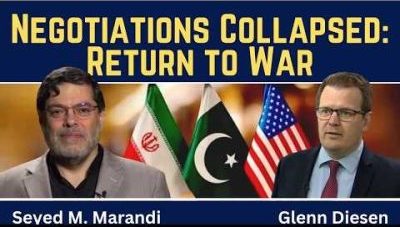
Seyed M. Marandi: Negotiations Collapsed – Return to War
or go to
Aletho News Archives – Video-Images
From the Archives
The US-Iran Scenario That Most Scares Israel
By Ali Haydar | Al-Akhbar | October 9, 2013
Israeli Prime Minister Benjamin Netanyahu issued a series of threats toward Iran and its interlocutors in the West, including the US, as serious negotiations on Iran’s nuclear program seem more plausible.
As a possible rapprochement looms between the US and Iran, Netanyahu has attempted to impose impossible Israeli conditions on the negotiators, such as the full dismantling of Iran’s nuclear program, not to mention threatening military force.
Whatever the deal that could materialize between Iran and the West, Israel is going to find itself before an open-ended path. One can foresee three possible scenarios… continue
Blog Roll
 Aletho News
- Seyed M. Marandi: Negotiations Collapsed – Return to War
- Tomorrow’s naval blockade showdown
- ‘Israel’ attacks civilians to hide its embarrassing military failures & out of pure sadism
- Any Foreign Military Vessel Approaching Hormuz Under Any Pretext ‘Will Be Dealt With Severely’: IRGC
- Diplomats slam US negotiators’ performance in Iran talks
- Trump Refuses Exit Ramp, War with Iran will Continue
- Trump Says US Naval Blockade in Strait of Hormuz Will Begin Shortly
- US, Iran end 21-hour talks without agreement
- US IRAN TALKS: Who Are the Crazy Ones Here? /Lt Col Daniel Davis
- Talks with the US end without a deal over excessive US demands: Iran
- If Americans Knew
- US-Iran ceasefire negotiations make zero progress – Daily Update
- Pro-Israel ‘Thinktanks’ and Individuals who Influence U.S. Foreign Policy
- Mearsheimer reveals how Israel dictates US policies on Iran, Gaza – video
- After killing 350+, Israel still has a “score to settle” with Lebanon before ceasefire – Daily Update
- Military aid to Israel emerges as the latest political litmus test for Democrats
- The only Palestinian children’s rights organization closes following years-long Israeli campaign against it
- ‘I Can’t Forget the Smell’: Lebanese Reel After Israel Kills Over 300 in Single Day
- DNC Shoots Down Resolutions Calling Out AIPAC and Limiting Arms to Israel
- TCN: Is Israel Blackmailing President Trump?
- Israel killed at least 303 Lebanese yesterday – who were they? Daily Update
- No Tricks Zone
- Cave Discovery Reveals Today’s Desert Climates Were Recently Far Warmer, Wetter, Teeming With Life
- German Expert: Heat Dome Led To Record Temps In Western USA…Warmer In 1934, 1936
- New Study: No Linear Warming Or Glacier Retreat Along Northern Antarctic Peninsula Since 1980s
- An Inconvenient Tree: Uncovered In Alps… Europe Much Warmer Than Today 6000 Years Ago
- New Study Reports A 60% Slowdown In Greenland’s Ice Loss Rate In The Last Decade
- Low Intensity Tornado Wrecks Major Solar Farm, Creating A Potential Toxic Dump
- New Study Finds Warming Saves Lives…Cold Temperatures 12 Times More Deadly Than Excess Heat
- German Science Blog Accuses PIK Climate Institute Of Hallucinating Climate Tipping Points
- Devastating Assessment Of Comirnaty Vaccine By Former Senior Pfizer Europe Toxicologist
- New Study: CO2 Is ‘Effectively Negligible’ As An Explanatory Climate Change Factor Since 2000
 Aletho News