Israeli settlers torch cars, vandalize property during attack on Ramallah-area village
Ma’an – August 9, 2017
BETHLEHEM – Israeli settlers set fire to two Palestinian-owned vehicles on Wednesday in the village of Umm Safa in the central occupied West Bank district of Ramallah in an alleged revenge attack for three Israeli settlers who were killed by a Palestinian in the nearby Halamish settlement last month.
Palestinian news agency Wafa received testimony from Marwan Sabah, the village council head, who said that Israeli settlers had set fire to the vehicles around 2:30 a.m.
While Israeli soldiers were reportedly stationed at the entrance of the village at night, the settlers attacked homes on the outskirts of the village after the soldiers had left, Sabah said.
However, Israeli soldiers are rarely able to control Israeli settlers, and reports often emerge of Israeli soldiers watching settler attacks on Palestinians without intervening. If any action is taken by Israeli soldiers, it is typically in the form of shooting “crowd control measures,” such as tear gas, rubber-coated steel bullets, and often live ammunition, at Palestinians.
The settlers had also reportedly graffitied hate slogans on walls in the village, calling for revenge attacks on Palestinians in response to a deadly attack last month when a Palestinian from the Ramallah-area village of Kobar entered the Halamish settlement and stabbed three Israeli settlers to death.
According to the Israeli army, the incident would be under the jurisdiction of the Israeli police. However, an Israeli police spokesperson was not immediately available to comment.
According to Sabah, Israeli forces arrived in the village in the morning following the attack “to examine the area.” An Israeli army spokesperson told Ma’an she would look into any follow-up reports on the incident.
Israeli forces raided Kobar village in the predawn hours of Wednesday, detaining the father and uncle of the Halamish attacker, 19-year-old Omar al-Abed. Three others from the village were also detained during clashes that left 15 injured, some with live fire.
Last week, some 200 settlers from the Halamish settlement attacked the Kobar village. Israeli forces responded by violently suppressing clashes that had broken out between the settlers and Palestinian locals, which resulted in one Palestinian being injured by live ammunition shot by the Israeli army.
An upwards of some 600,000 Israeli settlers reside in occupied Palestinian territory in violation of international law. The international community has repeatedly called their presence and rising population the main impediment to potential peace in the region.
The UN reported on Saturday that after a three-year decline of settler attacks on Palestinians, the first half of 2017 showed a major increase in such attacks, with 89 incidents being documented so far this year.
“On a monthly average, this represents an increase of 88 percent compared with 2016,” the UN said. The attacks during this time period have led to the deaths of three Palestinians.
Israeli media has reported that the Shin Bet, Israel’s internal security agency, has also warned the Israeli government over the alarming trend and has “called on the government to adopt urgent measures to prevent further deterioration,” according to the UN.
Palestinian activists and rights groups have long accused Israel of fostering a “culture of impunity” for Israeli settlers and soldiers committing violent acts against Palestinians.
Israeli authorities served indictments in only 8.2 percent of cases of Israeli settlers committing anti-Palestinian crimes in the occupied West Bank in the past three years, according to Israeli NGO Yesh Din.
Meanwhile, Palestinians allegedly or actually committing any attacks on Israelis are often shot dead at the scene, in what rights groups have deemed “extrajudicial executions,” or face long prison sentences.
Moscow: Anti-Caracas Sanctions Hamper Normalization of Situation in Venezuela
Sputnik – 10.08.2017
The recently imposed sanctions against Venezuela do not contribute to the normalization of the situation in the country, pushing it back into deadlock instead, the Russian Foreign Ministry said in a statement Thursday.
On Wednesday, the US Department of Treasury announced the expansion of its sanctions on Venezuela. These measures included travel bans and asset freezes on eight people who played a role in convening the new legislative body, the Constituent Assembly.
“Certain internal and external political forces promote a destructive line aimed at dismantling the emerging dialogue and, in fact, at returning the situation to the initial impasse, contrary to the very logic of developments [in Venezuela] and their own calls for the democratization of the ongoing processes in Venezuela. The expansion of unilateral sanctions and restrictions, isolationist measures, pressure, and the ultimatum toward Caracas applied by a number of countries can hardly be seen in a different light,” the statement read.
The Russian Foreign Ministry stressed that the situation in Venezuela could only be addressed through direct negotiations between the government and opposition.
According to the statement, peace in Venezuela depends on the willingness of all parties to return to a dialogue within the Venezuelan Constitution, without any outside intervention, to form a common agenda.
The National Constituent Assembly, which proclaimed itself the main governing body of Venezuela, is a new legislature with the power to amend the country’s constitution. It was elected on July 30 amid mass protests across Venezuela, which resulted in 10 deaths on election day alone. Overall, the death toll has risen to more than 120 people since early April.
The Venezuelan opposition has refused to recognize the legitimacy of the Constituent Assembly, as it believes that Venezuelan President Nicolas Maduro’s plan for constitutional reform aims at sidelining the opposition-controlled National Assembly.
‘Africans will be biggest losers after letting foreign military into their continent’
RT | August 9, 2017
Africa has become a staging ground where foreign countries can show off their military capabilities against one another away from their country of origin at the expense of Africans, says African affairs expert Ayo Johnson.
Turkey is gearing to open its largest overseas military base in Somalia.
The United Arab Emirates are building a military base at the port of Berbera, in the self-declared Republic of Somaliland.
Africa is an attraction to foreign militaries: China opened its first overseas military base on August,1 in Djibouti on the Horn of Africa. Djibouti is also currently housing Americans, Japanese and French troops.
RT discussed why Africa has become so popular with the foreign military with Africa affairs expert Ayo Johnson who believes the world powers are turning the continent into the latest theater of military confrontation.
“Back in colonial days, we saw Africa being cut up and carved up by the Western nations. Now we are seeing Africa again being the center ground for the new verge of a proxy war because all these different countries which are founding military bases on the African continent. It is a huge worry,” Ayo Johnson told RT.
In Johnson’s opinion, “it is showing that Africans can’t protect themselves and it is also showing that Africans can’t control their own affairs and ultimately it is finders keepers.”
“We have China who already has a military base of its own, the excuse is that it ultimately wants to protect its own investment which we know it has on the African continent. Also, it says it wants to prevent piracy and to be able to launch against such events,” Johnson said.
“The Americans have similar bases, not to mention the Europeans. So, on the ground itself, ultimately the African continent is becoming the staging ground for the next possibly violent confrontation between the superpowers of the world in their so-called proxy battles,” he continued.
According to Johnson, such interest in the continent might be explained by its strategic location.
“The Horn of Africa is the gateway for many shipping lanes, the protection of that area because of long term standing piracy issues. But others would say it is about land grab, control; it is about influence.”
“The Americans, the British and other Europeans, not to mention the Chinese most recently, all seem to have a huge stake and might show their muscles and their military capabilities against one another. Africa has now become a staging ground from which they can exploit those opportunities away from their own individual countries, a place where they can prowess their military might at the expense of Africans,” Johnson noted.
Despite the increased foreign military presence, the problem of piracy in the region remains unsettled.
“One thing for sure is that piracy still exists and it will continue and is unlikely to stop or to be slowed down.”
“Again in terms of terrorism, Al-Qaeda and ISIS still have strongholds and control, influence in that part of the world and the military bases that are physically positioned there. If they are there to prevent such attacks, I think in the short term or more long term it could create antagonism, create a problem for locals who may want to join those organizations to attack the military powers that are there. So the protection of Africa becomes the reverse, becomes an area where everyone wants to show each other what they are capable of doing and that is the worry, be it terrorist or be it an American, European or even most recently the Turks are also considering having bases there,” he told RT.
Johnson claimed “that comes at the expense of every single African nation – ultimately the biggest losers will be every single individual on the African continent.”
German Bombshell Bestseller Exposing CIA Media Control Blocked in US
Americans are being prevented from reading an important book by a hero who made a huge difference

By Charles Bausman | Russia – Insider | August 10, 2017
Udo Ulfkotte is near and dear to our hearts, because we wrote about him in October of 2014, (Top German Editor: CIA Bribing Journalists) a few weeks after our founding, and these articles were some of our first to go viral, getting hundreds of thousands of views, despite the fact that we were practically unknown.
His book caused a sensation in Germany, was a best-seller despite being completely ignored by the same media he was implicating, and was a major factor in turning German public opinion against the Ukraine war.
Ulfkotte’s book was extraordinary because it named names in the German establishment, a sure-fire path to massive libel lawsuits. We were the first English language publication to write about Ulfkotte, and he gave us an exclusive interview shortly after we ran the above article.
We were in touch with Ulfkotte after writing about him, and followed his story. He told us at the time that he wasn’t afraid of any lawsuits, because he was near death due to complications from gas poisoning he suffered while reporting on the Iran-Iraq war in the 1980s (ironically it was German manufactured gas), another story suppressed in Germany.
Sure enough, he passed away in January 2017, at the age of 56.
Perhaps the English translation of his book has been taken out of circulation because of libel threats?
R.I.P. Mr. Ulfkotte, you are a hero, and remembered by millions, and not just in Germany.
We quote in its entirety below an excellent article which recently appeared at Global Research, who noticed that the English translation is being stymied.
The English translation of German journalist Udo Ulfkotte’s best-selling book, Gekaufte Journalisten (Bought Journalists) appears to have been suppressed throughout North America and Europe. On May 15, 2017 Next Revelation Press, an imprint of US-Canadian-based publisher Tayen Lane, released the English version of Bought Journalists, under the title, Journalists for Hire: How the CIA Buys the News.
Tayen Lane has since removed any reference to the title from its website. Correspondingly Amazon.com indicates the title is “currently unavailable,” with opportunities to purchase from independent sellers offering used copies for no less than $1309.09. The book’s subject matter and unexplained disappearance from the marketplace suggest how powerful forces are seeking to prevent its circulation.
Gekaufte Journalisten was almost completely ignored by mainstream German news media following its release in 2014. “No German mainstream journalist is allowed to report about [my] book,” Ulfkotte observed. “Otherwise he or she will be sacked. So we have a bestseller now that no German journalist is allowed to write or talk about.”[1]
Along these lines, publication of the English translation was repeatedly delayed. When this author contacted Ulfkotte in early December 2015 to inquire on the book’s pending translation, he responded, “Please find the link to the English edition here,”
http://www.tayenlane.com/bought-journalists
The above address once providing the book’s description and anticipated publication date now leads to an empty page.[2] Tayen Lane has not responded to emails or telephone calls requesting an explanation for the title’s disappearance.
When a book publisher determines that it has acquired a politically volatile or otherwise “troublesome” title it may embark on a process recognized in the industry as “privishing.” “Privishing is a portmanteau meaning to privately publish, as opposed to true publishing that is open to the public,” writes investigative journalist Gerald Colby.
It is usually employed in the following context: “We privished the book so that it sank without a trace.” The mechanism used is simple: cut off the book’s life-support system by reducing the initial print run so that the book “cannot price profitably according to any conceivable formula,” refuse to do reprints, drastically slash the book’s advertising budget, and all but cancel the promotional tour.”[3]
Privishing often takes place without the author knowing, simply because it involves breach of contract and potential liability. Tayen Lane will likely not face any legal challenge in this instance, however. Ulfkotte died of a heart attack on January 13, 2017, at age 56.[4]
Udo Ulfkotte was a prominent European journalist, social scientist, and immigration reform activist. Upon writing Gekaufte Journalisten and becoming one of the most significant media industry and deep state whistleblowers in recent history, Ulfkotte complained of repeated home searches by German state police and expressed fear for his own life. He also admitted previous health complications stemming from witnessing a 1988 poisoned gas attack in Iraqi Kurdistan.
Ulfkotte’s testimony of how intelligence agencies figure centrally in Western journalism is especially compelling because he for many years functioned in the higher echelons of mainstream newsworkers. The German journalist explains how he was recruited during the 1980s to work in espionage. This began through an invitation proffered by his graduate school advisor for an all-expense-paid trip to attend a two-week seminar on the Cold War conflict in Bonn.
After Ulfkotte obtained his doctorate he was given a job as a reporter at “the leading conservative German newspaper, the Frankfurter Allgemeine Zeitung, oddly appointed despite no journalistic training and hundreds of other applicants. Serving as a correspondent throughout the Middle East, Ulfkotte eventually became acquainted with agents from the CIA, German intelligence agency Bundesnachrichtendienst (BND), Britain’s MI6, and Israel’s Mossad, all of whom valued his ability to travel freely in countries largely closed to the West. His editors readily collaborated in such intelligence gathering operations,”[5] for which journalist possess “non-official cover” by virtue of their profession.
“Non-official cover” occurs when a journalist is essentially working for the CIA, but it’s not in an official capacity,” Ulfkotte explains. “This allows both parties to reap the rewards of the partnership, while at the same time giving both sides plausible deniability. The CIA will find young journalists and mentor them. Suddenly doors will open up, rewards will be given, and before you know it, you owe your entire career to them. That’s essentially how it works.”[6] He likewise ruefully admits to “publishing articles under my own name written by agents of the CIA and other intelligence services, especially the German secret service.”[7]
Ulfkotte’s insider knowledge of the relationship between mainstream media and the intelligence community has special relevance in terms of informing the CIA’s antipathy toward Wikileaks, as well as the media campaign centering on the Trump administration’s alleged “ties to Russia,” while also lending credence to Trump’s frequent claims of the US media’s political biases and deep state ties. Indeed, Ulfkotte “Tweeted” about these very subjects just two days before he passed.
Ulfkotte’s explosive revelations still have the potential to further intensify the much-deserved scrutiny corporate news media presently face. In a society that pays more than lip service to freedom of thought and expression Journalists for Hire would be required reading for college students—and particularly those studying in journalism programs intending to seek employment in the media industries.
In fact, journalism professors, some of whom have migrated to the academy following long careers at renowned news outlets, possess similar insider knowledge of the relationships Ulfkotte readily explains. As both journalists and educators they have a twofold burden of responsibility. This is the case more so than ever because the entire professional and intellectual enterprise they are engaged in (and one directly linked to the nation’s accelerating civic deterioration) has been made a farce. Journalists for Hire’s suppression suggests how Ulfkotte’s posthumous censors refuse for this important examination and cleansing to proceed.
Notes
[1] Ralph Lopez, “Editor of Major German Newspaper Says He Planted Stories for CIA,” Reader Supported News, February 1, 2015.
[2] Udo Ulfkotte to James Tracy, email correspondence, December 6, 2015. In author’s possession.
[3] Gerard Colby, “The Price of Liberty,” in Into the Buzzsaw: Leading Journalists Expose the Myth of a Free Press, Kristina Borjesson, ed., Amherst NY: Prometheus Books, 2002, 15-16.
[4] Former US military intelligence officer L. Fletcher Prouty relates a similar experience of how publication of his book, The Secret Team: The CIA and Its Allies in Control of the United States and the World, was greeted in 1972. “Then one day a business associate in Seattle called to tell me that the bookstore next to his office building had had a window full of books the day before, and none the day of his call. They claimed they had never had the book. I called other associates around the country. I got the same story from all over the country. The paperback had vanished. At the same time I learned that Mr. Ballantine had sold his company. I traveled to New York to visit the new ‘Ballantine Books’ president. He professed to know nothing about me, and my book … The campaign to to kill the book was nationwide and worldwide. It was removed from the Library of Congress and from College libraries as letters I received attested all too frequently.” Prouty, The Secret Team: The CIA and Its Allies in Control of the United States and the World, New York: SkyHorse Publishing, 2008, xii.
[5] Ronald L. Ray, “Reporter Admits Most Media Work for CIA, MI6, Mossad,” American Free Press, October 26, 2014. See also Tyler Durden, “German Journalist Blows Whistle on How CIA Controls the Media,” Zerohedge, October 9, 2014; Udo Ulfkotte, “German Politicians Are US Puppets,” Center for Research on Globalization, November 9., 2014.
[6] Durden, “German Journalist Blows Whistle on How CIA Controls the Media.”
[7] Lopez, “Editor of Major German Newspaper Says He Planted Stories for CIA.”
Moldova to Become Foothold for US Military

By Peter KORZUN | Strategic Culture Foundation | 10.08.2017
The former Soviet republic of Moldova may actually become yet another foothold for the US military in Europe. The US Naval Facilities Engineering Command Europe Africa Southwest Asia (NAVFAC EURAFSWA) plans to construct eight training facilities for military operations in urban terrain at the Bulboaca training base in Moldova. The fact that the US Navy Department is involved makes believe the facility will host American Marines.
A total of $1.6 million has already been invested in the renovation of the Bulboaca base located near Tiraspol, the capital of Transnistria or the Transnistrian Moldovan Republic. The largely Russian-speaking region broke away from Moldova following the collapse of the Soviet Union in 1991.
The secession led to an armed conflict that ended in a ceasefire in July 1992. Russian troops were deployed to the conflict zone in accordance with the «Agreement on the Principles for a Peaceful Settlement of the Armed Conflict in the Transnistrian Region of the Republic of Moldova», signed in 1992 by the presidents of Russia and Moldova in the presence of Transnistria’s leader.
Today, 450 Russian servicemen are carrying out the peacekeeping mission in accordance with the decisions of the 1999 Organization for Security and Co-operation in Europe (OSCE) summit. Besides the peacekeepers, Russia holds units of the 1,200-strong Operative Group of the Russian Forces residing in Transnistria. The Transnistrian authorities strongly oppose Moldova’s plan to withdraw Russian peacekeepers, whom they see as guarantors of peace in the region. They point out that the mission has proved to be highly successful. The 25th anniversary since the start of the peacekeeping operation was marked in July.
Since 2005, talks on Transnistrian peace have been held in the so-called «5+2 format», which includes Moldova, Transnistria, the OSCE, Russia, and Ukraine, plus the European Union and the United States in external observers’ roles.
Moldovan President and Supreme Commander-in-Chief of the Armed Forces Igor Dodon stepped in to suspend the implementation of the plans to build a US military facility in Bulboaca, saying the move was not approved by him. The president said he will examine the issue. Meanwhile, the US stopped financing the project.
Anatol Șalaru, acting leader of the Party of National Unity and ex-Defense Minister, said he is going to sue President Dodon for undermining national security as the US suspended the $12, 7 military aid to modernize Moldova’s military through the Foreign Military Financing (FMF) program.
Moldova closely cooperates with the US and NATO. It joined the NATO Partnership for Peace program in 1994 and the Individual Partnership Action Plan in 2006. A NATO liaison office is to open in Chisinau soon.
Since 2016, Moldova has been included in a US regional program to build «more formidable defense capabilities… against aggressive actions by Russia or from other sources». Areas targeted include «border security and air/maritime domain awareness, as well as building stronger institutional oversight» of defense ministries. Last March, Lt. Gen. Ben Hodges, the commander of US Army Europe, said that military engineers would head to Moldova as the US looks «for ways to do more exercises in the southern flank of NATO».
In February, the US donated 41 High Mobility Multipurpose Wheeled Vehicle (HMMWV) and trucks to the Moldovan Army. The military vehicles would be used during national and international exercises. In 2014, the US donated some other 39 HMMWV and 10 trailers for the military vehicles.
On July 24 — August 5, the base hosted the Dragoon Pioneer 2017, joint drills of US and Moldovan troops. Army Maj. Gen. John L. Gronski, Deputy Commanding General for Army National Guard, US Army. Europe, visited Moldova to watch the training event.
In late July, the Moldovan parliament passed a declaration demanding the withdrawal of Russian troops from the territory of the unrecognized Transnistrian Moldovan Republic. The resolution was supported by deputies from the ruling coalition led by the Democratic Party, as well as representatives of Liberals and Liberal Democrats. The lawmakers from the opposition Socialist Party left the meeting in protest. Moldovan President Igor Dodon condemned the parliament’s decision, calling it a provocation.
Moscow expresses concern over the Moldovan policy in Transnistria. Russian military personnel movements are obstructed by Moldavan authorities. In late July, Russian Deputy Prime Minister Dmitry Rogozin was barred by the Moldovan government from flying to Transnistria in a military plane to celebrate the 25th anniversary of Russia’s deployment of peacekeepers there. Russia retaliated by halting imports of Moldovan farm produce, depriving Europe’s poorest country of a key market for its wine, fruit and vegetables. In early August, Moldovan authorities declared Rogozin persona non grata. Actually, the relations had begun to worsen much earlier after the expulsion of five Russian diplomats in May. President Igor Dodon believes that the government embarked on provocations against Russia in order to complicate relations.
Moscow has accused Moldova of undermining their relations and threatening regional stability. The Russian Foreign Ministry’s statement reads: «High-ranking Russian representatives and peacekeepers but also ordinary citizens of both countries have recently become targets of provocations. It seems that Chisinau politicians are trying to get to the forefront of the hysterical and hopeless campaign that has been launched against the Russian Federation». It adds that dangerous actions may have a serious destabilising influence on the general situation in the region and Europe as a whole. Kremlin spokesman Dmitry Peskov said Moldova’s decision to ban Rogozin was «much worse» than even the new tough US economic sanctions on Russia.
The US military presence is expanding everywhere, including areas in the proximity of Russia’s borders, such as Transnistria. This is a very dangerous development to make US forces and Russian peacekeepers watch each other through gun sights. Moscow and Chisinau may have different views and divisions but it does not make them adversaries.
With Russian peacekeepers gone, the situation would exacerbate and a spark would be enough to restart the hostilities – something that has been prevented since 1992. By hosting US-operated facilities on its territory, Moldova, a neutral state, will become a target for a Russian retaliatory strike. Parliamentary elections are expected to be held in Moldova in November 2018. Hopefully, the voters will make the right choice, electing more responsible people to end incessant provocations and adopt a more reasonable foreign policy. If the hopes come true, Russia and Moldova will become friends and good neighbors again.
Why Siding with Washington on Korea May Be Dangerous
By Finian CUNNINGHAM | Strategic Culture Foundation | 10.08.2017
In backing the latest US-led sanctions against North Korea at the United Nations Security Council, both China and Russia seem to have made a tenuous bet to resolve the crisis on the Asian peninsula. By deferring to Washington’s punitive sanctions, Beijing and Moscow are calculating that the US will relent on their proposals for comprehensive talks and a freeze on American military exercises with its South Korean ally.
China and Russia may regret their course of action. Since the imposition of new sanctions on North Korea last weekend, the tensions in the region have ratcheted up to alarming levels. US President Trump has even been accused of using «unhinged» language by members of Congress after he threatened to unleash «fire and fury» on North Korea «with a power the world has never seen before». Some American lawmakers were comparing Trump’s rhetoric with that of North Korea’s fiery leader Kim Jong Un.
North Korea, predictably, responded to Trump’s outburst by declaring that its leadership was considering a pre-emptive military strike on the US air base on the Pacific island of Guam.
The region is being put on a hair-trigger for war – a war that would certainly involve the use of nuclear weapons. The American side has come to the conclusion that North Korea has finally mastered the technology to fit a nuclear warhead on its already proven intercontinental ballistic missile (ICBM) capability, reported the Washington Post this week. That means that if a military confrontation breaks out, the US will be tempted to use overwhelming force.
Trump’s words about deploying «power the likes of which the world has never seen before» are especially icy given the 72nd anniversary this week of the US dropping the atomic bombs on Hiroshima and Nagasaki in 1945.
When the UN Security Council convened last weekend it passed Resolution 2371 unanimously with 15 votes to 0. It was a surprise turnaround by China and Russia. Last month, following North Korea’s ICBM test on July 4, both Beijing and Moscow rejected the US call for more sanctions on Pyongyang. They said then that sanctions policy doesn’t work and instead called for all-party dialogue to resolve the long-running Korean crisis. China and Russia also made the eminently reasonable call for the US and its South Korean ally to desist from their frequent joint war maneuvers, which the Communist North perceives as a threat of invasion.
Over the past few weeks, the US and China reportedly engaged in intense negotiations over the Korean issue. Trump accused his Chinese counterpart President Xi Jinping of not doing enough to rein in allied North Korea. The US also threatened to take punitive action against China over wider issues of trade and intellectual property rights. Before the weekend vote at the UNSC, Trump inexplicably cancelled a speech in which he was expected to lay out tough American actions against China over commercial disputes. That suggests some kind of bargain was done between Washington and Beijing – and that China voting for further sanctions on North Korea was part of it.
Following the unanimous vote at the UNSC, Trump and his ambassador Nikki Haley reportedly could hardly contain their glee over «the united response» against «rogue state North Korea».
What Russia gets out of it is not clear. Perhaps Russia felt that to veto the sanctions against North Korea would have incurred international wrath. But it seems curious that Moscow should go along with sanctions at the very same time that Washington is provocatively imposing similar measures against it too.
What appears to be in the calculus by China and Russia is that by giving a sop to the American desire to get tough on North Korea, they are anticipating that the US will agree to calls for multi-party talks and a freeze on military activities on the Korean Peninsula.
Both the Chinese and Russian ambassadors to the UN coupled the latest resolution for sanctions against North Korea with the reboot of the six-party negotiations involving the two Koreas, China, Russia, Japan and the US. Those talks were abandoned in 2009 when the US and North Korea broke off in recriminations.
Last week, before the UN vote, US Secretary of State Rex Tillerson made a significant speech in which he said that the US was not seeking regime change in Pyongyang, nor had any intention of going to war on North Korea.
Following the UN sanctions, Tillerson sounded a conciliatory note while attending the summit of the Association of South East Asian Nations in Manila. The summit was also attended by Chinese and Russian counterparts Wang Yi and Sergei Lavrov. Tillerson said the US was open to dialogue with North Korea if the latter stopped its missile tests. That appeared to be a significant concession from the US side towards resolving the Korean problem.
However, this is where the calculation comes unstuck. The backing of more sanctions against North Korea by China and Russia may have softened the stance of the US somewhat, but at what price?
From the North Korean side, the increased sanctions are tantamount to an act of war. The new measures are aimed at banning the country’s top export earning commodities, including coal, minerals and seafood. The new sanctions will reportedly slash North Korea’s annual export revenue by one-third, down to $2 billion a year. Not surprisingly, Pyongyang responded furiously, saying the sanctions were an attack on its sovereignty.
Given Trump’s propensity for Twitter diplomacy, the spiral of rhetoric could lead to disastrous misunderstanding, as this week is tending to show.
In retrospect, it seems astonishing that Beijing and Moscow made the bet they did over new sanctions. The damage cannot be undone. But what China and Russia must do immediately is to insist that all sides proceed to multilateral talks and the standing down of military forces. The onus is primarily on the US to stand down its military power in the region. It needs to cancel its provocative maneuvers with its ally in Seoul – due again later this month – and it needs to halt the ongoing installation of the THAAD missile system on South Korean territory.
It is misplaced for China and Russia to pander to the US over sanctions and to expect something by way of concessions in return. The arrogant Americans don’t know the meaning of concessions, they only perceive weakness and will move to capitalize on weakness.
By indulging American demands for more sanctions on North Korea, the danger comes from emboldening Washington’s hubris and its own sense of impunity. One would think that Russia, above all, should understand that dynamic given its own experience over the US confiscating diplomatic properties and slapping on ever-more sanctions.
What Moscow and Beijing should do as a matter of urgency is to never mind new sanctions on North Korea; they should demand that Washington removes its military threat against North Korea – a threat that has been looming since the end of the Korean War in 1953. Then all sides must open talks without preconditions for a comprehensive peace settlement on the peninsula.
Pandering to a bully is never a good idea.
Democratic Demagogues and ‘The Better Deal’
By James Petras • Unz Review • August 9, 2017
Introduction
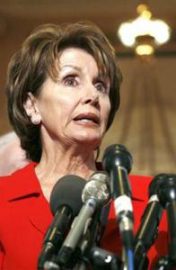 After 6 months of blaming Russia for the Democratic Party’s Presidential election debacle, the Party stalwarts have finally realized that the American electorate is not listening.
Democratic Party investigators in Washington still hold hearings and the mass media are still scandal mongering, but the public is not rallying to their cause.
Trump’s demagogy may have lost its appeal, while the Republican Administration purges and internecine squabbles have been met with a huge collective yawn by the public. The Democratic Party proves itself to be a weird sideshow for the vast majority of American voters… and for good reason.
Their perpetual (corrupt and senile) leaders are unwavering supporters of every indignity and economic hardship that the majority of worker families have suffered for the last three decades.
Democratic Party Senator Chuck ‘the Schmuck’ Schumer and Congresswomen Nancy ‘The Loser’ Pelosi have spent a collective sixty-five years in Congress. Their joint tenure marks a period of long decline in working class living standards and even worker life expectancy, while they have made possible the greatest concentration of wealth in the hands of the 1% plutocrats.
The Democratic Party’s ‘Better Deal’ – But for Whom?
In July 2017, nearly a dozen of the top Democratic Party honchos and Congress people met to spin out a new electoral manifesto for American workers which they are marketing as ‘A Better Deal’.
They issued prophetic press releases claiming to have received (presumably from the Holy Mountain) ‘a new vision of the party’. They claimed ‘the vision’ was also the result of their humble ‘listening to the American people’. They confessed that ‘the American people deserve better’. But their sweetly harmonized collective ‘Mea Culpa’ omitted any mention of the four previous Democratic Party Presidential terms, under Bill ‘The Shill’ Clinton and Barak ‘The Con” Obama, which ushered in this deplorable state of affairs for the American working class.
The Democratic Party’s ‘new vision’ wallows in the muddy demagogic footsteps of ‘The Donald’ Trump: Their new ‘product’ is just ‘demagogy lite’.
Tossing electoral fodder to the multitude, they have trotted out three ‘new promises’: 1. cheaper drug prices, 2. the regulation of ‘monopolies’ and 3. more funds to retrain workers. Their new marketing campaign does not include even a tiny whisper about a single payer national health system (favored by the majority of the public and by tens of thousands of doctors and nurses). Their cheap shots on ‘drug prices’ does not mention how Obama and Clinton facilitated the Big Pharma’s pillage of the public for decades. They mention ‘monopolies’ but made no attack on Wall Street billionaires. Their ‘job re-training’ promises have no provision for any national public employment program. The ‘Better Dealers’ with their ‘New Vision’ have banished all mention of ‘trade unions’.
The minimalist program of these old hack Democrats, re-packaged as the ‘Better Deal’, will not attract American workers for several clear reasons:
Reason #1: The Democrats Have a Rotten Record
For the majority of the American electorate there is no reason to believe or trust the Democratic Party leadership in the Senate. The leading Senate Democrat is New York’s ‘Chuck, the Schmuck’ Schumer, best known for his three decade residence in the pockets of Wall Street, his open loyalty to the dictates of Tel Aviv and his cozy relationship with the Brighton Beach mafia.
Schumer promoted the ‘trillion-dollar tax-payer bailout’ of Wall Street while foreclosing on 2 million household mortgages. He consistently defended AIPAC officials caught spying for Israel and has led the Zionist attack against the UN whenever questions of Israel’s war crimes and ethnic cleansing of the Palestinian people arise. He led the Senatorial Pack of wolves into destroying Iraq in 2003 and Libya in 2011. He has now turned his tribal ire against his ‘fellow’ American citizens, leading the Senate campaign to make criticism of Israel by boycotting Israeli products punishable by a fine of $1 million dollars and 20 years in Federal Prison. Huge numbers of law-abiding Americans who support the BDS movement for justice and international law will now be targeted with felony convictions and loss of their civil rights by the Israel Anti-Boycott Law (S720). That Senator Schumer would condemn thousands of his own compatriots to virtual life imprisonment for the ‘crime’ of exercising their First Amendment Right of Free Speech speaks volumes about his respect for the Constitution. This thug has brow-beaten scores of his fellow representatives in Washington to support this tyrannical legislation by threatening them with the career-ending accusation of ‘anti-Semitism’ if they waver in their fealty to the war criminals in Israel.
Throughout his political career, Senator Schumer consistently supported Federal Reserve free marketer Alan Greenspan, whose wholesale deregulation of the banks and finance sector led directly to the financial crash of 2008.
Geographically closer to Senator Chuck than Tel Aviv are the factory towns, green hills and valleys of Upstate New York where his forgotten constituents have suffered from decades of de-industrialization, 30% de-population and a raging socio-economic crisis of which the opioid epidemic is only part. Meanwhile, the warmonger Schumer prefers to rant for war against North Korea demanding Trump impose trade sanctions on China. If Beijing finally decides to tell Netanyahu how ‘the Shumck’s’ sanction bombast would harm Israel’s lucrative trade with China, a gentle whisper from Tel Aviv would silence Schumer’s bluster.
Peering over his bifocals, ‘Commandante Schumer’ now claims to lead the “The People’s Resistance against Trump”. While his party activists vent against the ‘Trump and the deplorables’ over the internet, Chuck will be attending the Bar Mitzvahs of Brighten Beach mobsters at the Waldorf Astoria and soirees with his Wall Street billionaire backers, consulting over strategy with his real constituents. Under Schumer, New York City has become the most socially and economically polarized and unequal city in the US.
Most voters know that Schumer’s ‘reincarnation’ as a ‘resistance politico’ is laughable and that the Senator’s re-election rests comfortably with the multi-million dollar contributions from his brothers on Wall Street.
Across the nation, most working class voters have dismissed the antics of the Democratic Party’s ‘Maestro of Demagogy’, Bernie Sanders – who spoke pious piffle to the workers while running errands for the ‘Queen of Chaos’, Hilary Clinton, would-be President and life-long Wall Street warmonger.
The citizens rightly reject the Presidential and Senatorial demagogues, Trump and ‘The Schmuck’. According to a recent Bloomberg Poll, 58% of Americans disapprove of the Democrats, a few points lower than the Republicans level of disapproval. An ABC /Washington Post poll revealed that only 37% of Americans believe that the Democratic Party stands for something!
Nine months after the Clinton debacle, the Democrats remain at or below their dismal voter-approval. Trump has skillfully managed to sink a few points below the Democrats.
In other words, nearly 60% of the voters disapprove of leaders from both parties.
The ‘anti-Trump circus and road show’ increasingly takes place to an empty audience. Their “fight” for ‘transgender rights’ attracts the 1% while studiously ignoring the basic life supporting interests of the seventy million Americans (including both transgendered and straight) who work at lousy part-time contingent and minimum wage jobs and desperately need full-time employment at living wages.
In multiple national polls, one hundred and fifty million Americans have registered their support for a national, single payer health system to insure fairness and access to competent medical care. Instead the ‘newly visioned’ Democrats are merely offering cheaper opioids for their social pain. The people want billions of dollars in public investment for deteriorating schools and infrastructures, not bi-partisan (sic) expansion in military spending for seven ongoing wars and new wars in the making.
Warmongers are not Vote-getters
The high level of voter disapproval against the Democrats results from ultra-militarism, as well as their demands for provocative economic sanctions against Russia, Iran, North Korea, Venezuela, Palestine and China – exceeding Trump and his warmongers.
The voters know that the Democrats ‘new vision’ is a thinly veiled recipe for costly new wars and economic sanctions that will spill their children’s blood, cripple their families futures and reduce job opportunities everywhere for everyone.
New Candidates, Grass-roots Movements and the Democratic Party
The Democratic Party’s fiasco and their election losses, as well as the growing realization that the socio-economic demands of the American people are never going to be addressed by the ‘old-new visionaries’, have led to a new ‘crop’ of candidates for the 2018 elections.
Over 200 Democratic Party candidates have registered to run in 2018 elections, hoping that ‘new faces’ and a new style of demagogy will bring back the disenchanted voters. These much-ballyhooed ‘upstarts’ toss out empty promises to the victims of the dying economy, industrial towns in ruins, villages with social and health crises, big cities with skyrocketing rents and stagnant wages. They offer nothing that can bring workers back to a Democratic Party still tightly controlled by the Tel Aviv-Wall Street shilling, war-mongering Pelosis and Schumers.
The Democratic Party ‘insurgents’ try to imitate the ‘Bernie’ Sanders double-speak, attacking the billionaires while shilling for the oligarchs’ stable of loyal Democratic Party hacks. The ‘new vision’ Democrats have motes in both eyes and a long road to regaining the votes of the disillusioned ‘deplorables’!
Media-sponsored trips to Rust Belt States to bad-mouth ‘The Donald’ and his anti-health agenda provides no alternative to the decades of Democratic Party betrayal on health care, especially during the last Democrat Presidents whose policies facilitated the rise of Big Pharma’s prescription opioid epidemic which has killed over 500,000 overworked and underpaid workers since 1999. Their continued refusal to hold these policies and their authors to account does not reflect any vision of a viable solution to the crisis.
Conclusion
In place of the discredited bipartisan electoral system, numerous grass roots groups are emerging: Some are operating parallel to the flurry of new Demo-demagogues while many are working against it.
Many community-based groups have taken radical positions, which demand vast new job programs and public finance for a national, accountable, high quality health care system.
They demand prosecution and long prison sentences for Wall Street swindlers, money launderers, tax evaders and corporate drug pushers.
They demand a 90% tax rate ‘adjustment’ on the trillion dollar corporations- Apple, Facebook, Amazon, Twitter, Google etc.
The grass roots movements are more than just an ‘anti-Trump’ bandwagon (secretly driven by the old pols of the Democratic Party): They are against both parties and all demagogues. They are especially opposed to any phony ‘Better Deals’ coming out of the backsides of the billionaire-backed ‘shilling and dealing’ Democrats!
Monsanto knew of grave health risks from toxic PCB chemicals it sold for years before ban, docs say
RT | August 9, 2017
Monsanto used toxic industrial chemicals known as PCBs in the production of everyday appliances such as TVs, fridges and plastics for at least eight years after discovering the harm they did, newly-compiled archives claim to prove.
From the 1930s, and until the end of their distribution in 1977, Monsanto was the dominant US producer of the chemicals.
Now a trove of 20,000 documents, dubbed the “Poison Papers,” gathered from regulators, lawsuits and archives by campaigners and scientists, claims that the Missouri-headquartered company openly discussed the environmental and health impact of PCBs.
“If authentic, these records confirm that Monsanto knew that their PCBs were harmful and pervasive in the environment, and kept selling them in spite of that fact. They knew the dangers, but hid them from the public in order to profit,” Bill Sherman, the assistant attorney general for the state of Washington, which is suing the company, told the Guardian.
Several cities in the Pacific Northwest, including Seattle, and multiple municipalities in California, such as San Diego and San Jose, are also currently pursuing legal action against Monsanto.
As far back as 1969, an internal policy document admitted “damage to the ecological system by contamination from PCBs,” and stated that “evidence proving the persistence of these compounds and their universal presence in the environment is beyond questioning.”
The non-biodegradable nature of PCBs, which are still found both in water and in soil worldwide, has since turned out to be one of its most serious legacies.
“Direct lawsuits are possible… because customers using the products have not been officially notified about known effects nor do our labels carry this information,” read the assessment. At the end of the document, the author provides Monsanto with three solutions: Do Nothing (“poor customer relations” and “potential loss of business”), Discontinue Manufacture (“not that simple”) and presumably the option the company chose: Respond responsibly by phasing out the product (“maximizing the corporate image by publicizing this fact”).
“At the end of the day, Monsanto went for the profits instead of for public health and environmental safety,” said Sherman.
Notably, the company admitted in its internal documents that PCBs were “highly toxic” to birds, and in 1975 noted that they can have “permanent effects on the human body.”
Yet, it challenged government findings of toxicity, and said in a memo to “let govt prove its case on a case by case basis.”
Monsanto argues that it was an industrial leader in curtailing the use of PCBs – stopping their sale in applications where they could leak in 1972, and discontinuing their retail altogether two years before the 1979 ban.
“More than 40 years ago, the former Monsanto voluntarily stopped production and sale of PCBs prior to any federal requirement to do so,” Monsanto’s vice president of global strategy, Scott Partridge, told the Guardian. He stressed though that back then, the product was legal and hence the company “has no liability for pollution caused by those who used or discharged PCBs into the environment.”
Human contact with increasing quantities of PCBs is linked to a host of negative outcomes, from cancers, to neurological damage and sterility. PCBs were responsible for two mass food contamination events, in Japan in 1968 and in Taiwan in 1979, as well as a scandal over an alleged cover-up of a contamination in Belgium in 1999, which is thought to have brought down the incumbent government.
Monsanto, which has been the target of high-profile public protests for decades, is currently besieged by several high-profile class action lawsuits over the carcinogenic properties of its weedkiller Roundup, which has been banned in several European countries, and the lengths to which it purportedly went to manipulate academic, regulatory and media coverage of the glyphosate-based bestseller. The company is awaiting EU approval for its $66 billion takeover by German chemical giant Bayer, which could result in the elimination of the Monsanto brand, which has become synonymous with various controversial industrial practices.
Response to Nation Article on Single Payer: Improved Medicare for All is the Solution
By Margaret Flowers | Health Over Profit for Everyone | August 7, 2017
On August 2, 2017, The Nation published an article by Joshua Holland, “Medicare for All isn’t the Solution for Universal Health Care,” chastising Improved Medicare for All supporters because, in his view, the single payer movement has “failed to grapple with the difficulties of transitioning to a single-payer system.” The article, which doesn’t quote anyone involved in the movement for Improved Medicare for All, begs a response because it shows what liberals opposed to single payer believe. Holland dredges up the same arguments used to keep single payer off the table during the creation of the Affordable Care Act (ACA). He even dusted off a few that were used to try to stop Medicare from coming into existence in the 1960s. And then he attempts to distract single payer supporters away from supporting Improved Medicare for All and settling for something less, as was done successfully in 2009.
The first error that Holland makes is confusing the term “Medicare for All” as meaning that advocates would simply take the current Medicare system, with both traditional and ‘Advantage’ plans, and expand that. This is why it is important to use the phrase “Improved Medicare for All.” As outlined in HR 676: The Expanded and Improved Medicare for All Act, the new system would be based on the current Medicare system, which is already national, but it would be a single public plan that is comprehensive in coverage and does not have out-of-pocket costs or caps. It would ban investor-owned facilities and ban private insurers from selling policies that duplicate what the system covers. A single system is the simplest for patients and health professionals because there is one transparent set of rules.
Most people who purchase health insurance have no idea which plan is best for them because nobody can anticipate what their healthcare needs will be in the future. A study of the Massachusetts health exchange plans done by the Center for American Progress showed that some plans were best for patients with cancer and other plans were best for people with heart disease or diabetes, but that isn’t something that can be advertised up front. Even if it were, people can’t predict if they will be diagnosed with cancer, heart disease or diabetes in the future. HR 676: The Expanded and Improved Medicare for All Act solves this problem by creating a single public plan designed to cover whatever our healthcare needs will be.

A second error that Holland makes is saying that HR 676 calls for the new system to start within a single year. The bill will take effect “on the first day of the first year that begins more than [emphasis added]1 year after the date of the enactment of this Act.” This means that if HR 676 were to be signed by the President in July of 2018, then it would take effect in January of 2020. Holland raises the concern that we can’t move the whole country into the new Improved Medicare for All system that quickly. In fact, HR 676 has transition periods for the Veteran’s Administration, the Indian Health Service, displaced workers and buying out for-profit health providers.
When Medicare was enacted in 1965, more than 50% of seniors were uninsured and the rest had some form of health insurance. Without computers and without a national health system in place, all 19 million seniors were enrolled in the first year (almost twice as many as were enrolled in the ACA in the first four years). At present, the United States has Medicare infrastructure in place and all practicing health professionals have a National Provider Identifier issued to them by the Centers for Medicare and Medicaid Services (CMS). When the new Improved Medicare for All system takes effect, enrollment will be very simple because there is only one plan that is universal and paid for up front though taxes. All health professionals will be in it. Every person could be sent a card, much as CMS does now for people who are turning 65. For those who do not receive a card, HR 676 has a solution – when they present for care at a health facility, they are assumed to be in the system, are treated first and then are enrolled in the system afterwards.
Next, Holland brings up the same arguments used to prevent universal health care attempts in the past. He states that people don’t want to give up what they have. This is called ‘loss aversion.’ It is a task of the single payer movement to build the public support for Improved Medicare for All necessary to overcome any potential loss aversion. Public figures and elected officials can play a role in building support as well.
Holland raises concerns that employers and seniors won’t want to give up their private plans, but that is based on his mistaken belief that Improved Medicare for All will be the same as current Medicare. The reality is that people will be less worried about giving up what they have if they know that it will be replaced with something better and that they will no longer fear losing their doctor as they will all be in the new system. Improved Medicare for All will provide more comprehensive benefits, no out-of-pocket costs and an unrestricted network of health professionals from which to choose. Employers will no longer be burdened with the high costs of health insurance. People with pre-existing health conditions will no longer worry about losing coverage or having to pay more. Unions and employers can offer supplemental plans for extras not covered by the new system, as is done in countries like France, if they choose to do so.
Holland also raises the concern that people will lose their doctor because they will opt out of the system due to low reimbursements. We are already losing doctors because of the current system. Physician burnout was listed as the second biggest concern by the Surgeon General last year. Under Improved Medicare for All, all health professionals will be in the system. There won’t be any place to opt out to. And why would they want to? Health professionals will save tens of thousands of dollars each year on billing and won’t have to worry about whether a patient has insurance or not. They can see anyone who calls for an appointment. And they will have a system with which to negotiate fair reimbursement. Private health insurance doesn’t negotiate with physicians and hospitals. Each year they make an offer and providers can either basically take it or leave it. Doctors in single payer systems that spend much less per capita than the United States are paid well, so the US can certainly afford to reimburse doctors adequately.
 Every transformative change has suffered from loss aversion, but that hasn’t stopped them. When Medicare was enacted, it was called socialized medicine, a government intrusion that would take away people’s choices and freedom and become an opening to government control over our lives. The scare tactics didn’t work and Medicare is one of the most popular parts of our current healthcare system. Desegregation, women’s rights, workers’ rights and more were great changes that were successful and we are a better society for them. Why is the right to health care any different?
Finally, Holland dives into the myth that we can’t afford Improved Medicare for All because it will be too expensive. My first response when I hear this is that the same excuse wasn’t made when we spent $16 trillion to bail out the banks in 2008 and is never made when we invade another country, so why is it raised when it comes to one of the most basic necessities a society can have? The United States has the highest wealth and the highest wealth inequality of industrialized nations. The new “Commitment to Reducing Inequality Index” recommends social spending on education, health and other basic social protections as its top priority. Congress can appropriate the funds to do this. This should be a top priority in the United States as well.
The reality is that the United States is already spending the most on health care per person each year because the market has failed to control costs. That is exactly why we need a single payer system like National Improved Medicare for All. It is the only way to simplify the bloated bureaucracy of the current healthcare system, which would save around $500 billion each year, and to control the costs of medical procedures, medical devices and pharmaceuticals by having a single system that can negotiate fair prices. In addition to the bureaucracy created by a multi-payer system, the US subsidized the insurance industry with more than $300 billion last year. A system based on health, rather than profits for investors, can identify and prioritize our greatest health needs and work to address them.
For example, the US is failing when it comes to care for people with chronic diseases. There are numerous reasons why this is occurring – lack of access to consistent care, inability to afford medications, insufficient time for health education when patients see a health professional, cheap and highly processed food, environmental pollutants and more. An actual health system could take meaningful action to address these issues, and keep people healthier. Think about it: people with high blood pressure or diabetes in the US may not be able to see the doctor regularly or stay on their medicines due to cost, but when they suffer a stroke or kidney failure, and need long term care or dialysis, then they can receive disability benefits and Medicare. How much better and less expensive would it be for everyone to prevent strokes and kidney failure in the first place?
Just as many ‘progressive’ groups did during the health reform process that resulted in the ACA, Holland works to convince us that we don’t need a single payer system, and that we can work with the current system. Once again, Jacob Hacker, a leading advocate for the ACA and single payer opponent, is invoked and we are told that we can add a Medicare buy-in or another form of a public option. We are told that other countries use private insurance, so why can’t we? The Democrats, beholden to the medical industrial complex, want us to believe these false non-solutions that protect the insurance industry. It feels like 2009 all over again.
Rather than go through all of the reasons why these approaches will fail, I urge you to read articles on that topic posted on HealthOverProfit.org (Click here for a list of them). Instead, I refer to a saying used by my now-deceased mentor Dr. Quentin Young: “You can’t cross an abyss in two jumps.” The only way we can get to a universal single payer healthcare system in the United States is by creating a universal single payer healthcare system in the United States. Anything less than that will fail because it will not achieve the savings on administration and prices needed to cover everyone and it will not compete with the powerful private insurance industry.
Throughout time, every great social movement has been told that it was asking for too much. Advocates for worker’s rights, women’s rights, civil rights, etc., were labelled as unreasonable radicals wishing for some pie-in-the-sky change that can’t be achieved. Holland is doing the same to the single payer movement. Don’t fall for it. We have the resources in the US to have one of the top healthcare systems in the world. We have health policy experts who have helped to design excellent systems for other countries. Single payer is a proven solution, unlike the plans being proposed by the Democratic leadership.
One thing that Holland and I do agree on is that there is more than one way to skin a cat, so to speak. We could have an excellent national debate about which type of single payer healthcare system we support – a fully socialized system like the Veteran’s Health Administration, a national health service, or a socialized payer with multiple types of providers as in the Expanded and Improved Medicare for all Act. At the basis of our discussion must be the principles that every person in the US deserves high quality health care without financial barriers.
‘Free trade’ has come to mean powerful interests get whatever they want
By Yves Engler · August 8, 2017
“Free trade” has become a euphemism for “whatever power wants,” no matter how tangentially tied to transferring goods across international borders.
In an extreme example, Ottawa recently said its Free Trade Agreement (FTA) with Israel trumps Canada’s Food and Drugs Act since accurately labelling two wines might undermine a half-century long, illegal, military occupation.
Of little connection to international trade, the North American Free Trade Agreement — and subsequent FTAs — has granted foreign corporations the ability to bypass domestic courts and sue governments in secret tribunals for pursuing policies that interfere with their profit making. Over 75 cases have been brought before the Investor State Dispute Settlement section of NAFTA, which has resulted in tens of millions of dollars paid to companies impacted by Ottawa banning the export of toxic PCB wastes or the import of suspected neurotoxin gasoline additive MMT.
Strengthening this dynamic, Canada’s “free trade” deal with the European Union (CETA) empowers companies to sue municipalities if they expand public services. For instance, a municipality unhappy with private water delivery could face a suit if they tried to remunicipalize (or de-privatize) this service.
CETA, TPP, WTO and other self-described “free trade” agreements also extend patent and copyright protections (monopolies), which stifle competition, a pillar of free trade ideology. CETA’s increased patent protections are expected to drive up already high Canadian pharmaceutical drug costs by between $850 million and $1.65 billion a year. Negotiations to “modernize NAFTA” could end up granting big pharma perks that would effectively block Canada’s ability to set up universal pharmacare. Similarly, the yet to be signed TPP strengthens patents and would increase the length of copyright in Canada from 50 to 70 years after the death of an author.
It is little exaggeration to say politicians have come to employ the term “free trade” to mean “whatever powerful corporations want.” But, the Trudeau Liberals recently broadened the term’s definition even further. In a move to make “free trade” mean “whatever powerful interests want,” they announced that Canada’s FTA with Israel supercedes this country’s Food and Drugs Act.
After David Kattenburg repeatedly complained about inaccurate labels on two wines sold in Ontario, the Canadian Food Inspection Agency (CFIA) notified the Liquor Control Board of Ontario (LCBO) that it “would not be acceptable and would be considered misleading” to declare Israel as the country of origin for wines produced in the Occupied Palestinian Territories. Quoting from official Canadian policy, CFIA noted that “the government of Canada does not recognize Israel’s sovereignty over the territories occupied in 1967.”
In response to pressure from the Israeli embassy, Centre for Israel and Jewish Affairs and B’nai Brith, CFIA quickly reversed its decision. “We did not fully consider the Canada-Israel Free Trade Agreement,” a terse CFIA statement explained. “These wines adhere to the Agreement and therefore we can confirm that the products in question can be sold as currently labelled.”
In other words, the government is publicly proclaiming that the FTA trumps Canada’s consumer protections. But, this is little more than a pretext to avoid a conflict with B’nai B’rith, CIJA and Israeli officials, according to Canadian Centre for Policy Alternatives Trade and Investment Research Project director Scott Sinclair. “This trade-related rationale does not stand up to scrutiny,” Sinclair writes. “The Canadian government, the CFIA and the LCBO are well within their legal and trade treaty rights to insist that products from the occupied territories be clearly labelled as such. There is nothing in the CIFTA [Canada–Israel FTA] that prevents this. The decision to reverse the CFIA’s ruling was political. The whole trade argument is a red herring, simply an excuse to provide cover for the CFIA to backtrack under pressure.”
In another commentary on the government “backtracking under pressure,” Peter Larson points out that CIFTA grants Israel an important concession that seeks to sidestep Canada’s commitments under international law. The agreement says, “unless otherwise specified, ‘territory’ means with respect to Israel the territory where its customs laws are applied,” but omits “in accordance with international law,” which is in many of Canada’s other free trade agreements. This omission seeks to allow goods produced on land occupied in contravention of the 4th Geneva Convention and Statute of Rome to benefit from CIFTA.
David Kattenburg and his lawyer Dmitri Lascaris will be challenging CFIA’s decision in court. On Monday they filed an appeal of the wine labelling and released a statement to the media.
The Council of Canadians and Canadian Centre for Policy Alternatives have recently added their voices to those criticizing CFIA’s decision. The NDP’s trade critic has yet to comment.
Kattenburg and Lascaris’ court challenge offers NDP leadership candidates Niki Ashton, Charlie Angus, Guy Caron and Jagmeet Singh a good opportunity to express their opposition to defining “free trade” as “whatever power wants.”
Featured Video
U.S. Naval Blockade & Ground Invasion of Iran?
or go to
Aletho News Archives – Video-Images
From the Archives
Major rabbi says non-Jews are donkeys, created to serve Jews

By Khalid Amayreh, in occupied East Jerusalem | The People’s Voice | October 18, 2010
A major Jewish religious figure in Israel has likened non-Jews to donkeys and beasts of burden, saying the main reason for their very existence is to serve Jews.
Rabbi Ovadia Yosef, spiritual mentor of the religious fundamentalist party, Shas, which represents Middle Eastern Jews, reportedly said during a Sabbath homily earlier this week that “the sole purpose of non-Jews is to serve Jews.”
Yosef is considered a major religious leader in Israel who enjoys the allegiance of hundreds of thousands of followers. … continue
Blog Roll
 Aletho News
- Russian security chief issues warning to four NATO states
- Seyed M. Marandi: U.S. Naval Blockade & Ground Invasion of Iran?
- The Iran War Exposes the Emptiness of American ‘Strength’ in East Asia
- Europe’s Drone Pipeline to Ukraine Could Soon be in Russia’s Crosshairs – Analyst
- EU spied on Orban for years – former Slovak minister
- Fact-Checking the “Placebo Control” Fact Checkers
- An Open Letter To President Donald Trump (My Response) | Candace
- Arms industry given direct influence over university courses
- Another Trump Flip Flop: From ‘Kill FISA’ to ‘Clean Renewal’
- AIPAC ‘slimeball’ Eric Swalwell leaves the stage
- If Americans Knew
- An error has occurred; the feed is probably down. Try again later.
- No Tricks Zone
- Abrupt Climate Change Also Occurred NATURALLY In The Past …25 Times During Last Ice Age
- Cave Discovery Reveals Today’s Desert Climates Were Recently Far Warmer, Wetter, Teeming With Life
- German Expert: Heat Dome Led To Record Temps In Western USA…Warmer In 1934, 1936
- New Study: No Linear Warming Or Glacier Retreat Along Northern Antarctic Peninsula Since 1980s
- An Inconvenient Tree: Uncovered In Alps… Europe Much Warmer Than Today 6000 Years Ago
- New Study Reports A 60% Slowdown In Greenland’s Ice Loss Rate In The Last Decade
- Low Intensity Tornado Wrecks Major Solar Farm, Creating A Potential Toxic Dump
- New Study Finds Warming Saves Lives…Cold Temperatures 12 Times More Deadly Than Excess Heat
- German Science Blog Accuses PIK Climate Institute Of Hallucinating Climate Tipping Points
- Devastating Assessment Of Comirnaty Vaccine By Former Senior Pfizer Europe Toxicologist
 Aletho News