Nicaragua’s Sandinista Achievements Baffle World Bank, IMF
teleSUR | August 31, 2017
No one can take at face value any report, governmental or quasi non-governmental, coming out of the imperialist bureaucracy in Washington. Ideological bias and institutional self-justification prevent these reports from giving a true account of virtually anything.
The latest World Bank report on Nicaragua is no exception.
The implicit but unstated truth in this report is that President Daniel Ortega and the Sandinista National Liberation Front have achieved an unprecedented economic turnaround in just seven years, starting in 2010.
Reading the report, it is impossible to ignore the tension between latent ideological and political imperatives and the obligation to report the facts. Put another way, mild conflict clearly prevails between the World Bank’s Washington head office and its reality based local officials. From Washington, the tendency is both to minimize Ortega’s achievement and also to cover up the World Bank’s own lamentable history in Nicaragua. On the other hand, in Nicaragua, local World Bank staff dutifully report the facts as they see them.
A total of 71 people contributed to the report. Supposing those 71 people each worked for a month to prepare the research and say their average salary was about US$80,000, then pro rata a month’s work by that team cost over US$500,000, a very conservative guess. Even so, in summary, that money bought policy recommendations for Nicaragua’s development amounting to little more than better infrastructure; better basic services; more private business investment; more efficient government; better targeted social policies. That’s it, for US$500,000 or more.
In general, the report recognizes Nicaragua’s achievements in reducing poverty and inequality, raising productivity, diversifying economic activity and promoting security and stability. The report’s 130 or so pages include, among the economic and sociological analysis, many self-confessed guesses to fill in “knowledge gaps” and much gerrymandered history to cover up what Harold Pinter in his 2005 Nobel prize winning address justly called “the tragedy of Nicaragua.”
Pinter himself might have remarked the report is almost witty in its audacious, glib omissions. It acknowledges the catastrophic destructive effects of the 1980s war in Nicaragua, but carefully omits the U.S. government’s deliberate role in that destruction, now repeated against Syria and Venezuela.
The report talks about a “democratic transition” starting in 1990. In fact, the Sandinistas organized the first free and fair democratic elections ever in Nicaragua in 1984, but the U.S. government ordered the main Nicaraguan opposition to boycott them. Despite the war, Ortega and the Sandinistas won with 67 percent of the vote, very similar to the most recent presidential elections in 2016.
The heavy ideological bias also explains the World Bank’s curious dating of when Nicaragua’s economic turnaround began, placing it firmly in the neoliberal era prior to 2007. But at just that time, the World Bank was cutting back the public sector as much as they could, pushing, for example, to privatize Nicaragua’s public water utility and its education system.
Back then, Nicaragua’s neglected electrical system collapsed through 2005 and 2006, incapable of generating even 400 megawatts a day, plunging swathes of Nicaragua back into 19th-century darkness for 10 to 12 hours at a time, day after day. That was the World Bank and IMF’s gift to Nicaragua after 17 years of so-called “democratic transition.” That period included Hurricane Mitch, devastating Nicaragua to the tune of 20 percent of its GDP, only for the corrupt neoliberal government at the time to misuse hundreds of millions of dollars in disaster relief. The only structurally significant economic achievement of the neoliberal era in Nicaragua was substantial foreign debt relief.
When Ortega took office in January 2007, he faced four years of domestic crisis with an opposition controlled legislature persistently sabotaging his government’s programs. From 2007 to 2008, Nicaragua and the whole region struggled in vain to contain a balance of payment deficits against oil prices reaching US$147 a barrel in 2008.
That disaster was compounded by the collapse of the Western financial system in late 2008 to 2009, a year when Nicaragua’s economy suffered a 3 percent contraction. Only in 2010, did the Nicaraguan government finally enjoy domestic and international conditions stable enough to be able to consolidate and improve its social programs, improve infrastructure investment, democratize and diversify the economy, extend basic services, and attract foreign investment, among other things.
If that sounds suddenly familiar, it should. It is exactly the development recipe offered up by this latest World Bank report, essentially an embellished review of policies the Nicaraguan government has already been implementing for a decade. Put positively, the government’s National Human Development Plan and other relevant documents suggest that the World Bank’s engagement with the Nicaraguan government has been one of mutual learning. So much so, that the current country program is likely to continue and may even expand.
The political opposition in Nicaragua has seized on parts of the report to try and discredit the Sandinista government’s outstanding achievements. In fact, for 17 years under neoliberal governments implementing World Bank and IMF policies, areas criticized like, for example, access to drinking water and adequate sanitation, or education, suffered chronic lack of investment, compounded by egregious waste and corruption. Now, the World Bank hypocritically criticizes Nicaragua’s government for intractable policy difficulties the IMF and the World Bank themselves originally provoked.
Similarly, when the World Bank report criticizes the targeting of social programs, they omit the unquestionable success of the government’s Zero Usury micro credit program and the Zero Hunger rural family support program, both prioritizing women. These programs have lifted tens of thousands of families out of poverty and, along with unprecedented support for Nicaragua’s cooperative sector, radically democratized Nicaragua’s economy, especially for previously excluded rural families and women. That supremely important national process is entirely absent from the World Bank report.
In its discussions of almost all these issues, the report makes more or less detailed contributions, mostly already identified by the government itself. In every case, the underlying cause of problems or lack of progress, for example, on land titling or social security, has been the legacy of neoliberal governments between 1990 and 2007, that reinstated elite privilege, rolled back the revolutionary gains of the 1980s and failed to guarantee necessary investment.
The World Bank and the IMF were enthusiastic ideological partners in that endeavor. They would have continued their ideological offensive had not Ortega and his government dug in their heels in 2007 and 2008, backed by investment support for social and productive programs from Venezuela as part of the Bolivarian Alliance of the Americas.
Since then, the World Bank, as this report suggests, seems, at least for the moment, to have learned two key lessons from the Sandinistas. In a world dominated by corporate elite globalization, their report implicitly recognizes the importance, firstly, of a mixed economy under a strong central government and, secondly, the crucial role of broad dialogue and consensus, across all sectors of society, to promote and sustain national stability. Essentially, the World Bank has acknowledged the undeniable success of the Sandinista Revolution’s socialist inspired, solidarity based policies, decisively prioritizing the needs of people over corporate profit and demonstrating the systemic inability of capitalism to meet those needs.
Seymour Hersh Honored for Integrity
By Ray McGovern | Consortium News | September 1, 2017
Journalist Seymour Hersh is to be honored with this year’s Sam Adams Award for Integrity to be presented to him at the Sam Adams Associates for Integrity in Intelligence (SAAII) award ceremony on the evening of Sept. 22 at American University.
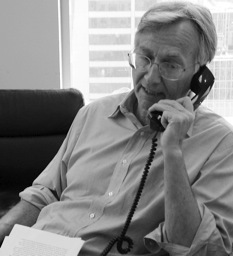
Investigative reporter Seymour Hersh
Sam Adams Associates, who selected Hersh last month from a truly impressive roster of truth-tellers, are enthusiastic at the prospect of Sy joining the ranks of the 15 earlier awardees – from Coleen Rowley (2002) to John Kiriakou (2016). Included among those in between are other patriots: like Katharine Gun, U.K. Ambassador Craig Murray, Col. Larry Wilkerson, Julian Assange, Assistant Secretary of State Thomas Fingar, Edward Snowden, Chelsea Manning, and Bill Binney. [To learn more about previous honorees, as well as other material on whistleblowing, go to samadamsaward.ch.]
SAAII confers its annual award on a member of the intelligence profession or related field who exemplifies the courage, persistence and devotion to truth of Sam Adams, a CIA analyst on Vietnam who exposed the lies of the generals in Saigon and was then silenced. Later – but too late – Sam realized he should have gone public. (Yes, during the 1960s and 1970s, more of the U.S. media was able to put the national interest first and was open to whistleblowers.)
Sam, who was a fourth cousin seven times removed of President John Adams, died prematurely at age 55, nagged by the thought that had he not let himself be diddled by the system, thousands of lives might have been saved in Indochina. His story is told in War of Numbers, published posthumously. Several of Sam’s former colleagues are included in SAAII, as well as others who hold up the experience he underwent as a lesson for those who now know that, if they wish to succeed in getting the truth out, “going thru channels” normally is not only quixotic but also dangerous.
In 1967, Sam discovered that there were more than a half-million Vietnamese Communists under arms in South Vietnam – roughly twice the number that the U.S. command in Saigon would admit to, lest the outside world learn that American generals’ claims of “progress” were bogus. Commanding general William Westmoreland had put an artificial limit on the number that Army intelligence was allowed to carry on its books.
On Aug. 22, 1967, Westmoreland’s deputy, Gen. Creighton Abrams, specifically warned the Johnson administration back in Washington that the press would have a field day if Adam’s numbers were released, and that this would weaken the war effort. In a SECRET/EYES ONLY cable from Saigon, Abrams wrote: “We have been projecting an image of success over recent months,” and cautioned that if the higher figures became public, “all available caveats and explanations will not prevent the press from drawing an erroneous and gloomy conclusion.”
The Communist countrywide offensive during Tet (January/February 1968) made it painfully clear that the generals had been lying and that Sam Adams’s higher figures were correct. A few weeks after Tet, Daniel Ellsberg rose to the occasion and leaked the truth. Dan had learned that Westmoreland was asking for 206,000 more troops to widen the war into Cambodia, Laos and North Vietnam — right up to the border with China, and perhaps beyond.
After the 206,000 request was leaked by someone else to the New York Times, Ellsberg leaked Sam Adams’ information on actual enemy strength. Dan had come to the view that leaking truth about a deceitful war would be “a patriotic and constructive act.” It was his first unauthorized disclosure, and it was effective. On March 19, 1968, the Times published a stinging story based on Adams’s figures.
On March 25, President Johnson complained to a small gathering, “The leaks to the New York Times hurt us. … We have no support for the war. This is caused by the 206,000 troop request [by Westmoreland] and the leaks. … I would have given Westy the 206,000 men.” On March 31, 1968, Johnson introduced a bombing pause, opted for negotiations, and announced that he would not run for another term in November.
Enter Sy Hersh
Sy Hersh, who was already famous for bringing the My Lai massacre story to global attention in 1969, found Sam Adams and pursued this other story of Vietnam deception. Thus, there is poetic justice in Sy Hersh receiving this award named for Adams, since it was he who first reported (in the New York Times on Feb. 26, 1973) on Sam’s David vs. Goliath struggle against a military/political/intelligence establishment eager to cover up the politically driven undercounting of Communist fighters in South Vietnam.
In an article on Feb. 26, 1973, Hersh duly quoted Army officials who were still disparaging Sam’s courageous pursuit of the truth. But the quote that Sy chose to conclude the article reflects his well honed smell for the truth. He wrote, “’The trouble with Sam is that he has always been right,’ one former colleague remarked. ‘He always told the truth and never cared whose toes he stepped on.’”
Sy Hersh has no doubt worn out several pairs of shoes stepping on the toes of a well-heeled Establishment. The current response from the mainstream media to Hersh’s latest exposés that challenge the lies and propaganda of Official Washington is to say: “We’ll show you, Hersh. Just you try to get published anywhere in the English-speaking world.”
Sy tried in vain to find an American or British outlet that would publish his most recent report on President Donald Trump’s lie that a Syrian aircraft carried out a “chemical weapons attack” in Syria’s Idlib Province on April 4. This disclosure of a deception by the new President would have been a big deal, at least by the journalistic standards of the past, since Trump openly attacked Syria with 59 cruise missiles on April 6 in ostensible “retaliation.”
Sy ended up having to go to the mainstream German newspaper Die Welt to get the results of his investigation published. [See here and here.]
As for the New York Times – the so-called “paper of record” – and its proud tradition of publishing “all the news that’s fit to print,” its hallowed pages have made no mention of Pulitzer Prize-winning Sy Hersh’s article on the chemical incident in Syria on April 4. The slogan should be changed to “all the news that fits neatly into the government narrative we print.” Many Sam Adams Associates have also been active with Veteran Intelligence Professionals for Sanity and have faced similar ostracism from the mainstream media for almost 15 years.
Until He Was Silenced
Besides revealing the My Lai massacre in 1969, Hersh exposed illegal CIA domestic operations against the antiwar movement in 1974. More recently, in 2004, he reported on the torture and other abuses at Abu Ghraib in Iraq, and he exposed the Obama administration’s lies used to justify a bloody proxy war in Syria. None of this, however has left him cynical or dulled his conscience.
Sy told Die Welt that he still gets upset with government lying and at the reluctance of the media to hold governments accountable. Summing up lessons from Trump’s reaction to the April 4 chemical event in Syria, Sy said this: “We have a President in America today who lies repeatedly … but he must learn that he cannot lie about intelligence relied upon before authorizing an act of war. There are some in the Trump administration who understand this, which is why I learned the information I did.”
The common challenge we all face is getting such information into media outlets that Americans regularly access. Encouragement comes from Sy Hersh’s example of grit, integrity and stick-to-itiveness, which have already had a powerful influence on Sam Adams Associates. In sum, this year’s awardee is a wonderfully good fit.
Ray McGovern works for Tell the Word, a publishing arm of the ecumenical Church of the Saviour in inner-city Washington. A former CIA analyst and colleague of Sam Adams, Ray co-founded Sam Adams Associates for Integrity in Intelligence and Veteran Intelligence Professionals for Sanity (VIPS).
Putin on N. Korea crisis: Tensions ‘balancing on brink of large-scale conflict’
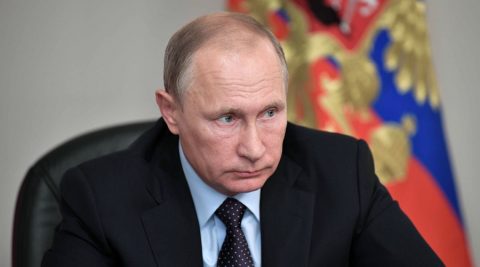
RT | September 1, 2017
Attempts to pressure North Korea into stopping its nuclear missile program through sanctions are “misguided and futile,” Russian President Vladimir Putin warned, adding that threats and provocations would only add more fuel to the fire.
“The situation on the Korean Peninsula, where tensions have grown recently, is balancing on the brink of a large-scale conflict. Russia believes that the policy of putting pressure on Pyongyang to stop its nuclear missile program is misguided and futile,” Putin, who is due to attend a summit of the BRICS nations in China next week, wrote ahead of his trip.
“The region’s problems should only be settled through a direct dialogue of all the parties concerned without any preconditions. Provocations, pressure and militarist and insulting rhetoric are a dead-end road,” he noted.
Russia and China have created a roadmap for a settlement on the Korean Peninsula that is designed to promote the gradual easing of tensions and the creation of a mechanism for lasting peace and security, the Russian leader added.
The Russian-Chinese initiative of “double freezing,” put forward by the Russian and Chinese foreign ministers on July 4, is designed to cease any missile launches and nuclear tests by Pyongyang, as well as large-scale military exercises by Washington and Seoul.
Last month, the UN Security Council unanimously agreed to impose more restrictive measures on Pyongyang, banning exports of coal, iron, lead, and seafood. The move came in response to North Korea’s missile launches in July, which it, as well as South Korea and the US, claimed were intercontinental ballistic missile (ICBM) tests. Moscow has questioned the claim, arguing North Korea was testing intermediate range rockets.
China announced a full ban on imports of coal, iron, and seafood, among other goods from North Korea as of August 15, thus cutting key export revenues for Pyongyang.
Russian Foreign Minister Sergey Lavrov said on Friday that all conceivable and unimaginable sanctions against North Korea have already been imposed, to no avail.
“All possible sanctions aimed at preventing North Korea from using a map of external relations for the development of missile and nuclear programs banned by the [UN] Security Council, all conceivable and even unimaginable sanctions, which have little to do directly with these areas of DPRK’s [the Democratic People’s Republic of Korea] activities, have already been adopted by the Security Council. In addition, unilateral sanctions have been adopted, which we consider illegitimate,” Lavrov said.
In a bid to ease tensions, Moscow will seek the resumption of six-party talks on the situation on the Korean Peninsula, the Russian Foreign Minister noted.
“We will still seek to resume these talks,” he said, adding that “we know that Americans are talking with representatives of Pyongyang via some semi-secret, semi-official, semi-academic channel.”
Moscow will be happy “if they agree on some de-escalation, so that all parties cool down, sit down at the negotiating table and start talking.”
“We have a common goal – denuclearization of the Korean Peninsula, so that neither the North nor the South, the US and us [Russia] have nuclear weapons,” Lavrov said.
Featured Video
No Threat Can Force Iran’s Surrender /Trita Parsi & Lt Cl Daniel Davis
or go to
Aletho News Archives – Video-Images
From the Archives
What is the Israeli Lobby in Australia Doing in Interfaith Dialogue?
By Ali Kazak | Dissident Voice | October 11, 2015
For years Israel and its lobby around the world have been trying to normalise their relations with Arabs and Muslims without solving the Palestine Question.
One of the methods they resorted to in the last few years is using human rights and community organizations such as interfaith dialogue and Multiculturalism to achieve this objective and to: isolate the Palestinians, marginalise the Palestine question, end Israel’s isolation, and prevent criticism of Israel, knowing that these organisations will be the first to stand against Israel’s violations, racial and religious discrimination.
The group responsible for this task in Australia is The Australia/Israel & Jewish Affairs Council (AIJAC); its Director of International & Community Affairs, Jeremy Jones is in charge of lobbying religious community organizations, specifically Muslims and Christians. Consequently he convened the Faith Communities for Reconciliation, founding participant in the Australian Partnership of Religious Organisations and the Australian National Dialogue of Christians, Muslims & Jews.
AIJAC is a private political propaganda group. It is recognised as the main Israeli lobby in Australia. It coordinates its activities and works intimately with the Israeli embassy in Canberra and different institutions in Israel. It is privately funded by some Jewish businessmen. It monitors closely Australian politicians, the media, ethnic and religious groups, (especially Arabs and Muslims), unions and academics on their stands towards Israel and the Palestine question. … continue
Blog Roll
 Aletho News
- The war of liberation of the Arab and Islamic peoples expands across the Gulf
- Envoy warns UN on Trump’s threat to ‘obliterate’ Iran’s civilian infrastructure
- The Larak Corridor: Iran’s Rial Gate With No US, No Israel, and No Way Around
- ‘Economic terrorism’: Steel facilities hit again in US-Israeli strike
- ‘War Crime’: Iran condemns attacks on Arak, Ardakan nuclear sites
- Two-thirds of Americans want quick end to Iran war even if goals unmet
- Trump to Give “Important Update on Iran” Wednesday in Prime-Time Speech
- Theodore Postol: Iran’s Missiles & Drones Were Underestimated
- Iran To Target Military Industrial-Tech Complex That Facilitated Gaza Genocide
- Collapsing Empire: The Resistance Disarms ‘Israel’
- If Americans Knew
- Israel wants US to bomb more of Iran’s civilian structures (113,000 is not enough) – Not a ceasefire Day 173
- Ann Coulter Rips Into Fox News for Iran War Coverage
- Joe Kent Urges Americans To Call White House and Congress To Object To Sending Troops Into Iran
- DNC Resolution to Reject AIPAC Funding Puts Democratic Leaders in the Hot Seat
- Swedish foundation to build 400 schools as over 650,000 Gaza children remain without education for 2 years
- Israeli army admits photshopping image of slain Lebanese journalist
- This is how Israel is systematically killing health workers under the cover of war in Lebanon
- Carrying life under fire: Israeli invasion of Lebanon leaves pregnant women facing deadly risks
- Champagne all around for the new death penalty (for Palestinians) law – Not a ceasefire Day 172
- Why are Palestinian books struggling to be seen on Amazon?
- No Tricks Zone
- New Study Finds Warming Saves Lives…Cold Temperatures 12 Times More Deadly Than Excess Heat
- German Science Blog Accuses PIK Climate Institute Of Hallucinating Climate Tipping Points
- Devastating Assessment Of Comirnaty Vaccine By Former Senior Pfizer Europe Toxicologist
- New Study: CO2 Is ‘Effectively Negligible’ As An Explanatory Climate Change Factor Since 2000
- Former Pfizer Toxicologist Dr. Helmut Sterz Tells Bundestag Hearing Pfizer Vaccine Should Have Never Been Approved
- Energy Expert: Germany’s Nuclear Phaseout Was A “500 Billion Euro Mistake”
- New Research: South Australia’s Mid-Holocene Sea Surface Temperatures Were 4°C Warmer Than Today
- Storing Green Energy To Last Germany 10 Days Would Require A 60-Million Tonne Battery
- New Studies: UK Sea Levels Were 4 Meters Higher Than Today During The Mid-Holocene
- Destructive Green New Deal: German Energy And Metal Group Warns Of Drastic Crisis
 Aletho News