US planned to ‘harass & attack’ Soviet personnel in Cuba – JFK files
RT | October 27, 2017
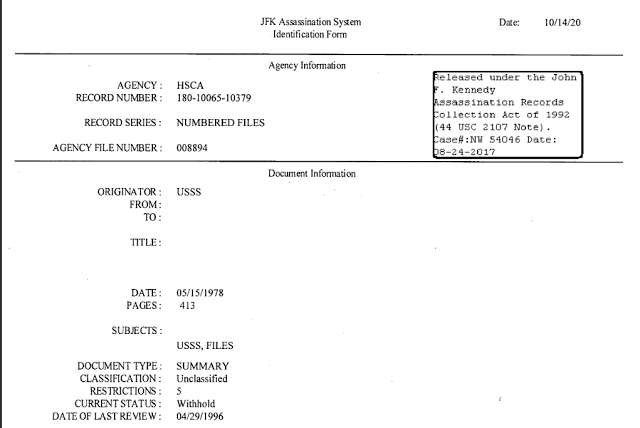
National Security Council meeting notes on the covert CIA program ‘Operation Mongoose’ have revealed the lengths to which the US was willing to go to remove Fidel Castro’s Cuban government.
The 1962 file, released Thursday as part of a cache of previously classified documents on the assassination of John F Kennedy, states that the NSC considered a plan of “attacking and harassing Soviet personnel within Cuba.” However, the document doesn’t provide any finer details on the proposal.
Members of the council also debated targeting the island nation’s crops by “introducing biological agents which would appear to be of natural origins” – an idea supported by then-National Security Advisor McGeorge Bundy.
“Mr. Bundy said that he had no worries about any such sabotage which could clearly be made to appear as the result of local Cuban disaffection or of a natural disaster, but that we must avoid external activities such as release of chemicals, etc., unless they could be completely covered up,” the document reads.
Other suggested measures included distributing explosives to Cuban insurgents, using balloons to drop leaflets over the country, employing submarines to broadcast anti-government radio messages and “counterfeiting” operations.
The NSC also explored the possibility of infiltrating Cuban radio and TV channels but acting on advice from council member and former American broadcast journalist, Edward R Murrow, decided against the move.
“Mr Murrow explained the far-reaching reactions that the Cubans could mount against US radio stations, and said that he felt on balance it would not be profitable to provoke this kind of electronic warfare,” the minutes read.
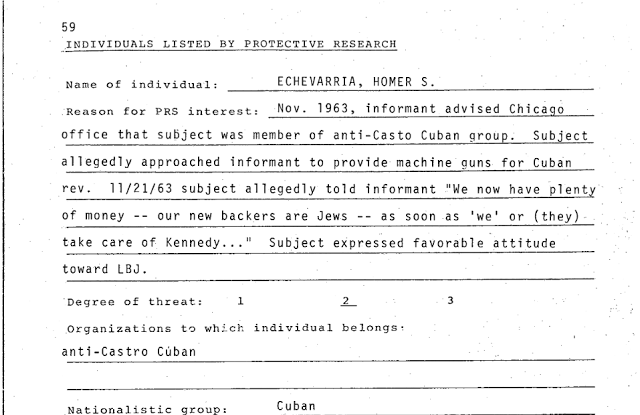
Conspiracy theories have abounded since Kennedy was shot while traveling in an open-top limousine in Dallas in November 1963.
The report from the Warren Commission in September 1962 said that Lee Harvey Oswald had fired the shots from the Texas School Book Depository building. Oswald was later killed while in the custody of Dallas police by Jack Ruby, a local nightclub owner.
The US government released 2,800 classified files on the assassination of JFK Thursday night, with President Donald Trump saying that the public deserves to be “fully informed about all aspects of this pivotal event.”
After intense lobbying from the CIA, FBI and State Department, some documents remain unreleased. The files will now undergo a further six-month review. A new deadline has been set for their release in April 2018.
Why the United Socialist Party of Venezuela (PSUV) Won the Election
By James Petras | Axis of Logic | October 27, 2017
Introduction
Every major newspaper, television channel and US government official has spent the past two years claiming that the United Socialist Party of Venezuela (PSUV), founded by the late Hugo Chavez, had become a marginalized political party, supported only by ‘hard core Chavistas’ and public employees. The US government, under Presidents Obama and Trump, backed gangs of violent demonstrators, who rampaged through the streets, as ‘the true democratic representatives’ of the will of the voters. Secretary General of the Organization of American States Luis Almagro, a veteran running dog for Washington, railed against President Nicholas Maduro, denouncing him as a ‘dictator’ and openly demanded that the Venezuelan people and neighboring Latin American regimes unite to oust him – even through violence. President Trump imposed brutal economic sanctions designed to strangle the economy and guaranteed Washington’s support for the rightwing opposition, the self-styled Democratic Unity Roundtable, (‘Mesa de la Unidad Democratica’ – or MUD).
MUD took advantage of the economic crisis facing Venezuela with the sharp decline of the price oil, of its main export. MUD has spent the past three years attacking the government and mobilizing its supporters through street violence and parliamentary maneuvers to paralyze the government’s socio-economic agenda. Vital public services, like power stations, were frequent targets of MUD-orchestrated sabotage, even leading to the assassination of public employees, like police and firefighters.
MUD rejected the government’s proposal for peaceful negotiations with the opposition. President Maduro asked for a dialogue with the US, which was sponsoring MUD, but President Trump replied with his usual bombast and threats of violent intervention.
The economic blockade and drop in oil prices had devastating consequences: Inflation hit triple digits in Venezuela. There were increasing food shortages, long lines and valid consumer complaints. As a result, the opposition coalition won the Congressional elections of 2015 and immediately tried to impeach President Maduro. Rather than using their electoral mandate to govern and address the country’s problems, they focused exclusively on forcing ‘regime change’. This monomania led to voter dissatisfaction with MUD and, contrary to Washington’s hopes, predictions, threats and sanctions, the PSUV won the gubernatorial elections by a wide margin in October 2017.
The opposition was decisively defeated. Over a thousand independent outside observers, who had monitored the Venezuelan elections and voting procedures, declared the elections to be the free and valid expression of the citizens will. The opposition immediately rejected the result. The entire US-EU press predictably converged on Caracas, screaming ‘fraud’, echoing the rabid right-wing politicos in the US, the OAS and Europe. They saw no need to back their claims with ‘evidence’.
In truth, the Opposition-MUD was roundly defeated: They had secured only 39% of the vote and only 5 of the 23 governorships. The PSUV, for its part, increased its voter support from 44% in the 2015 to 54% in October 2017.
The real question, which is being ignored, is how the PSUV won and the Opposition lost, given the enormous outside support for MUD and the economic crisis in Venezuela? Why did the opposition lose 2.7 million votes in two years following their much-ballyhooed parliamentary victory? How could the US, the OAS and the EU miss this trend and waste their money and credibility?
Ten Reasons for the Socialist Victory and the Rightist Defeat
Understanding the reasons for the Socialist victory requires that we first analyze the strengths and weakness of the MUD.
- The PSUV retained its committed and loyalist core, despite hardships endured by the masses of Venezuelans, because of the socialists long-term, large-scale socio-economic programs advancing the citizens’ welfare over the previous decade and a half.
- Many low-income voters feared that, once in power, the rightwing extremists in MUD would reverse these social advances and return them to the pre-Chavista era of elite domination, repression and their own marginalization.
- Many right-of center-voters were appalled by MUD’s support for violence and sabotage, leading to the destruction of public buildings and private businesses and paralyzing public transportation. They decided to abstain and/or vote for the PSUV, as the party of law and order.
- Many independent voters supported the PSUV as the greater defender of Venezuelan sovereignty. They were appalled by the opposition coalition – MUD’s endorsement of Washington’s economic sanctions and blockade and President Trump’s brutal threats to intervene to force ‘regime change’.
- Probably most decisive for the shift to the left by many former MUD voters was the right-wing opposition’s failure to offer any positive alternative. Apart from promoting violence and dismantling the Chavista social programs, MUD lacked any concrete program or policies to address the ongoing economic crisis. It was clear to voters that MUD’s constant harping on the ‘failures’ of the PSUV offered no viable way out of the crisis.
- The MUD was not able to use its electoral majority in Congress to obtain overseas economic aid to provide social services, or to arrange trade deals or loans. Washington was only willing to subsidize MUD’s campaign for violent regime change but not to support any opposition congressional proposals for Venezuela’s schools or its health system. MUD was stuck in a self-perpetuating cycle, telling people what they already knew, with no serious proposals to address the people’s everyday problems.
- MUD constantly denigrated the memory of President Hugo Chavez, whose legacy represented the ‘best of times’ for millions of Venezuelans. Many voters recalled the decade of Chavez’s Presidency – his generous welfare policies, his own humble origins, his courage, his folksy sense of humor and his links to the grassroots. This was in stark contrast to the MUD leaders’ ‘Miami mentality’, their fawning over US consumerism and Washington’s militarism, their servility to the upper class’s cultural elitism and contempt for the dark-skinned mestizo population.
- The MUD congressmen and women focused their time in Congress with sectarian political name-calling when they weren’t busy plotting regime change in the posh upper class salons of the Caracas’ elite. They failed to articulate any realistic grassroots solution to everyday problems. Their complaints over ‘dictatorship’ carried little weight since they held the majority in Congress and did nothing for the electorate.
- The MUD’s unsuccessful attempts to incite a military coup among Venezuela’s patriotic military officers alienated moderate liberal-democrats, some of whom either ‘jumped ship’ to support the Left or, more likely, abstained in October’s election.
- President Maduro’s moves toward negotiating favorable trade and investment deals with Russia, China and Iran encouraged voters to imagine that viable alternatives to the crisis were on the government’s agenda.
Many voters may have placed more trust in Maduro’s promise of serious new programs and policies to revive the economy. But more significantly, the PSUV’s established programs and future prospects were more appealing than MUD’s predictable denunciations of election fraud; and almost two-thirds of the electorate chose to participate in October’s elections. These ‘fraud’ charges only worked with MUD’s true believers who had either abstained, virtually ensuring a victory for the Left, or had voted and therefore made themselves ‘accessory to electoral fraud’, which they had denounced.
Conclusion
The MUD lost the state governor elections of October 2017, less than 2 years after they had won the congressional elections, by demonstrating their incompetence, their propensity for violence against serious democratic adversaries and their incapacity to fulfill any programmatic promises.
The PSUV won because of the Chavez legacy, the decision by middle-of-the-road voters to support a pragmatic ‘lesser evil’ over a violent opposition ‘greater evil’ promising chaos. Many voters are desperate for new and better policies to address Venezuela’s current economic challenges. Finally, many Venezuelans rejected US President Trump and OAS President Almagros’ blatant, arrogant assumption that they knew what was best for the people of Venezuela – even if it meant blood in the streets.
In the end, the Chavez legacy of successful class and national struggles carried more weight with the voters than the negative, chaotic impotence of a subservient opposition. The US/Venezuelan mass media’s efforts to undermine the government were defeated because the people responded to the socialist message that US-led economic warfare, and not government mismanagement, was the key cause of their social and economic decline. They had experienced more than a decade of independent foreign policy and Bolivarian socialist programs to compare with the chaos of ‘regime change’ promised by Washington and the opposition.
The Left won the battle for now but the war continues.
Please note James Petras’s most recent book:
THE END OF THE REPUBLIC AND THE DELUSION OF EMPIRE
ISBN: 978-0-9972870-5-9
$24.95 / 252 pp. / 2016
EBOOK ISBN: 978-0-9972870-6-6
ORDER E-BOOK: $19.00
© Copyright 2017 by AxisofLogic.com
‘Collusion’ Claims Backfire on Democrats Threefold, but Russia Is More Evil Than Ever
By James George JATRAS | Strategic Culture Foundation | 27.10.2017
For months America and the rest of the world have been bombarded with hysterical claims from sore-loser Democrats, GOP Never-Trumpers, and their media shills that Donald Trump only won the 2016 election thanks to the hidden hand of that Mephistopheles of contemporary geopolitics, Vladimir Putin. Never mind that no evidence of any collusion between the Russians and anyone on the Trump team has been found, despite millions of dollars spent by Special Counsel Robert Mueller and several Congressional committees.
With the growing sense that there’s no collusion to be found, the narrative lately had shifted towards a new story: maybe what the Russians were really doing was planting discord among Americans to exacerbate our social problems and destroy our faith in our democratic institutions. So, for a measly few hundred thousand dollars’ worth of social media ads (many of them appearing after the election) on Facebook, Twitter, etc., Russian interests (we are never told who, exactly) aimed to “sow chaos and create divisions among Americans” – evidently in general, without any link to Trump or even particularly to help him. Among the favorite topics for socially divisive ads were left-leaning memes about Black Lives Matter and the environmental hazards of fracking, as well “a range of right-wing causes associated with Donald Trump’s campaign,” such as gun rights and illegal immigration. (Regarding the latter, let’s not forget that, while remaining an unreconstructed KGB commie, Putin is also a tiki-torch wielding Grand Dragon of the global Alt-Right white nationalist movement. He’s another Stalin and “literally Hitler” at the same time.) If not for dastardly Russian meddling, we would have no social problems at all, and everybody would be holding hands singing Kumabaya.
But now, with astonishing speed, just this week three stories have popped out that toss the whole Russian collusion tangle right back in face of Hillary Clinton and her party:
1. Hillary Clinton’s presidential campaign and the Democratic National Committee paid for a defamatory “dossier” against Trump allegedly based on Russian sources:
‘An explosive and salacious dossier alleging links between President Donald Trump and Russia was in part financed by Hillary Clinton’s presidential campaign, according to a report Thursday.
‘Marc E. Elias, a lawyer who represented Clinton’s campaign and the Democratic National Committee, retained Fusion GPS, an intelligence firm that commissioned the former British intelligence officer Christopher Steele to produce the dossier, The Washington Post reported. . . . It has previously been reported that the dossier was financed by anti-Trump Republicans during the 2016 primary before Democrats picked up the tab. [ . . . ]
‘The revelation comes amid increasing attempts by some Republicans on Capitol Hill to get Fusion GPS to reveal who financed the dossier. Last week, two Fusion GPS partners appeared before the House Intelligence Committee following a subpoena by the panel’s Republican Chairman Devin Nunes. However, the firm’s officials invoked their constitutional privilege not to answer any questions. [ . . . ]
The dossier, first published by BuzzFeed News in January, garnered widespread attention in part to a particularly salacious allegation. It claimed that the Russian FSB spy agency possessed a compromising video of Trump getting Russian prostitutes to urinate on a Moscow hotel room bed once slept on by Obama and his wife, Michelle.’ [Newsweek, October 24: “TRUMP-RUSSIA ‘PEE TAPE’ DOSSIER WAS PAID FOR BY HILLARY CLINTON CAMPAIGN: REPORT”]
2. Russian investors are said to have paid millions of dollars to the Clinton Foundation and a half-million dollar speaking fee to Bill Clinton while Hillary, as Secretary of State, was considering approval of a controversial acquisition of a uranium-mining company:
‘Multiple congressional committees are investigating an Obama-era deal that resulted in a Russian company purchasing American uranium mines.
‘Lawmakers are also asking the Department of Justice to lift a reported gag order on a confidential informant who is expected to have more information about the agreement that allowed Russia to control about one-fifth of the uranium mining in the US – and former Secretary of State Hillary Clinton’s involvement in it. [JGJ Note: The gag order was lifted shortly after this story was posted.]
‘President Trump called the Uranium One deal “the real Russia story” as federal investigators continue to probe Russia’s alleged involvement in the 2016 election. And The Hill recently reported that Russian officials engaged in a “racketeering scheme” to further its energy goals in the US
‘In 2013, Russian company Rosatom acquired a Canadian uranium mining company, now called Uranium One, which has assets in the US Uranium is key to making nuclear weapons. Through the deal, Russia is able to own about 20 percent of US uranium production capacity. [ . . . ]
‘The agreement was approved by nine government agencies with the Committee on Foreign Investment in the United States (CFIUS), an inter-agency group that reviews how certain foreign investments can impact national security. Clinton’s State Department was one of those agencies, though the former secretary of state told WMUR-TV in 2015 that she was not “personally involved” in the agreement. [ . . . ]
‘Republicans have largely decried the deal, especially as some investors reportedly donated millions of dollars to the Clinton Foundation. Former President Bill Clinton also received a $500,000 speaking fee in Russia and reportedly met with Vladimir Putin around the time of the deal.
‘The FBI had looked into the agreement and uncovered that some Russian nuclear industry officials were engaged in nefarious dealings, which included extortion, bribery and kickbacks, The Hill reported. Evidence of wrongdoing by Vadim Mikerin, the Russian official overseeing Putin’s nuclear expansion in the US who was eventually sentenced to prison, was discovered by the FBI before the deal was approved, according to The Hill.’ [Fox News, October 25: “Obama-era Russian Uranium One deal: What to know”]
3. A firm linked to Hillary Clinton’s presidential campaign chairman, John Podesta, is reportedly under investigation by Mueller for influence-peddling on behalf of Russian interests:
‘Tony Podesta [John’s brother] and the Podesta Group are now the subjects of a federal investigation being led by Special Counsel Robert Mueller, three sources with knowledge of the matter told NBC News.
‘The probe of Podesta and his Democratic-leaning lobbying firm grew out of Mueller’s inquiry into the finances of former Trump campaign chairman Paul Manafort, according to the sources. As special counsel, Mueller has been tasked with investigating possible collusion between the Trump campaign and Russia.
‘Manafort had organized a public relations campaign for a non-profit called the European Centre for a Modern Ukraine (ECMU)… The ECMU was reportedly backed by the Party of Regions, the pro-Russian and oligarch-funded Ukrainian political party for which Manafort worked as a consultant, and which paid his firm millions.’ [NBC News, October 24: “Mueller Now Investigating Democratic Lobbyist Tony Podesta”]
At this point no one knows what impact these developments will have or how they relate to one another. But two things are certain. First, at least for a while Trump supporters and much of the Republican party, plus media like Fox News, will be dancing with glee, whooping it up that the Democrats have now been caught in their own “RussiaGate” snare. How much real change there will be in the political landscape, either in getting rid of the collusion cloud over Trump’s head or dragging down Hillary, the Podestas, and their cronies, remains to be seen.
Second, it’s already clear that Trump’s defenders are at least as thrilled to play the anti-Russian card as the Democrats have been:
- What does Democratic funding of the Christopher Steele dossier mean? The Democrats were implementing a Russian “Chekist provokatsiya” to smear Trump! (Never mind that there’s no evidence the Russians had anything at all to do with what may well be a total fabrication by Steele and his pals in the shadowy world of British intelligence. (Let’s not forget the possible role of GCHQ in monitoring then-candidate Trump.) Or maybe it’s the fruit of the warped imagination of the yet-to-be identified Republican who funded Steele. Or maybe the FBI, which also paid Steele.)
- Why did the Russians bribe Bill and Hillary with speaking fees? To get their filthy paws on American uranium and “corner the market” on “the foundational material for nuclear weapons”! (Never mind that no less than the United States, Russia – which sits right next to friendly Kazakhstan, the world’s top uranium producer – can make as many warheads as desired; access to sufficient uranium isn’t an issue. As for the bribes, why should it be a surprise that some Russians would play the same game as the Saudis, Emiratis, Qataris, Ukrainians, and others who “contributed” the coffers of the likely next, and highly corrupt, president of the United States?)
- What were the Podesta Group and Manafort doing working for an NGO supported by Ukraine’s Party of Regions? Peddling influence for Putin! (Just try to explain to anyone in Washington that working for Yanukovych and “Putin lobbying” weren’t necessarily the same thing.)
In short, whatever the fallout in terms US internal politics, the root of all evil, for Republicans and Democrats alike, will remain the vast Russian conspiracy and its demon mastermind in the Kremlin.
Ex-NSA Official: Nobody Knows What’s Going On at US Intelligence Agencies
Sputnik – October 26, 2017
When it comes to the US intelligence community’s ability to collect, store and analyze data on any person at any time, there’s virtually nothing that can stop them. Keeping track of who’s doing what within that community, however, is a different animal.
Congressional intelligence committees, FISA (Foreign Intelligence Surveillance Act) courts, “and even the administration have no real control of what happens inside these intelligence agencies. They don’t have any way of verifying what they’re doing, that’s the real problem — even the managers of those agencies don’t necessarily know what’s going on in their agency,” former NSA officer Bill Binney told Loud & Clear on Radio Sputnik Thursday.
Regarding the government’s use of contractors in facilitating their operations, former Anonymous activist Barrett Brown told By Any Means Necessary in March, “there’s so much going on with these contracting firms, so much compartmentalization, that no single person knows exactly what’s possible these days.”
This week, the Senate Intelligence Committee voted to approve Section 702 of the Foreign Intelligence Surveillance Act 12-3. The bill “reauthorizes our nation’s most valuable intelligence collection authorities and ensure that the men and women of the intelligence community and our law enforcement agencies have the tools and authorities they need to keep us safe,” Senator Richard Burr (R-NC) said in an October 24 news release.
Reauthorizing the act is just theater anyway, since the intelligence agencies have the capabilities to skirt around the law anyway, Binney says. “You can write any number of bills you want: [the intelligence] agencies can violate them,” because Congress doesn’t really know what is going on at the agencies, the expert said.
“They have no idea what’s going on, and what’s going under, the mass collection of data on US citizens under Executive Order 12333,” Binney explained. First signed by US President Ronald Reagan on December 4, 1981, the order requires federal agencies to comply with requests for information from the Central Intelligence Agency. One statute of the order specifically allows information collection “that may violate federal, state, local or foreign laws.” In other words, the order gives the intelligence community a free pass to break the law, regardless of who made the law.
Binney refers to the intelligence apparatus as ‘the modern-day pretorian guard,’ which exerted disproportionate control over who would be selected for leadership positions during the Roman Empire and very often operated outside the legal bounds set by the Roman Senate.
This week, Senators Ron Wyden (D-OR) and Rand Paul (R-KY) introduced the USA Rights Act, praised by the Electronic Frontier Foundation as “the most comprehensive reform so far of Section 702.” The measure would make it more difficult for the government to gather data from private-sector companies.
Binney was skeptical such a measure could move the needle on mass domestic espionage. “For example, right now, and for the past 16 years,” the US intelligence community has been “violating the constitutional rights of US citizens. Well, if they can do that, and just simply, get the law to conform with to that — that’s what they’ve been doing.”
“The problem with that is it’s unconstitutional,” he said.
Russia-gate Breeds ‘Establishment McCarthyism’
By Robert Parry | Consortium News | October 26, 2017
In the past, America has witnessed “McCarthyism” from the Right and even complaints from the Right about “McCarthyism of the Left.” But what we are witnessing now amid the Russia-gate frenzy is what might be called “Establishment McCarthyism,” traditional media/political powers demonizing and silencing dissent that questions mainstream narratives.

Sen. Joe McCarthy with lawyer Roy Cohn (right)
This extraordinary assault on civil liberties is cloaked in fright-filled stories about “Russian propaganda” and wildly exaggerated tales of the Kremlin’s “hordes of Twitter bots,” but its underlying goal is to enforce Washington’s “groupthinks” by creating a permanent system that shuts down or marginalizes dissident opinions and labels contrary information – no matter how reasonable and well-researched – as “disputed” or “rated false” by mainstream “fact-checking” organizations like PolitiFact.
It doesn’t seem to matter that the paragons of this new structure – such as The New York Times, The Washington Post, CNN and, indeed, PolitiFact – have a checkered record of getting facts straight.
For instance, PolitiFact still rates as “true” Hillary Clinton’s false claim that “all 17 U.S. intelligence agencies” agreed that Russia was behind the release of Democratic emails last year. Even the Times and The Associated Press belatedly ran corrections after President Obama’s intelligence chiefs admitted that the assessment came from what Director of National Intelligence James Clapper called “hand-picked” analysts from only three agencies: CIA, FBI and NSA.
And, the larger truth was that these “hand-picked” analysts were sequestered away from other analysts even from their own agencies and produced “stove-piped intelligence,” i.e., analysis that escapes the back-and-forth that should occur inside the intelligence community.
Even then, what these analysts published last Jan. 6 was an “assessment,” which they specifically warned was “not intended to imply that we have proof that shows something to be a fact.” In other words, they didn’t have any conclusive proof of Russian “hacking.”
Yet, the Times and other leading newspapers routinely treat these findings as flat fact or the unassailable “consensus” of the “intelligence community.” Contrary information, including WikiLeaks’ denials of a Russian role in supplying the emails, and contrary judgments from former senior U.S. intelligence officials are ignored.
The Jan. 6 report also tacked on a seven-page addendum smearing the Russian television network, RT, for such offenses as sponsoring a 2012 debate among U.S. third-party presidential candidates who had been excluded from the Republican-Democratic debates. RT also was slammed for reporting on the Occupy Wall Street protests and the environmental dangers from “fracking.”
How the idea of giving Americans access to divergent political opinions and information about valid issues such as income inequality and environmental dangers constitutes threats to American “democracy” is hard to comprehend.
However, rather than address the Jan. 6 report’s admitted uncertainties about Russian “hacking” and the troubling implications of its attacks on RT, the Times and other U.S. mainstream publications treat the report as some kind of holy scripture that can’t be questioned or challenged.
Silencing RT
For instance, on Tuesday, the Times published a front-page story entitled “YouTube Gave Russians Outlet Portal Into U.S.” that essentially cried out for the purging of RT from YouTube. The article began by holding YouTube’s vice president Robert Kynci up to ridicule and opprobrium for his praising “RT for bonding with viewers by providing ‘authentic’ content instead of ‘agendas or propaganda.’”
The article by Daisuke Wakabayashi and Nicholas Confessore swallowed whole the Jan. 6 report’s conclusion that RT is “the Kremlin’s ‘principal international propaganda outlet’ and a key player in Russia’s information warfare operations around the world.” In other words, the Times portrayed Kynci as essentially a “useful idiot.”
Yet, the article doesn’t actually dissect any RT article that could be labeled false or propagandistic. It simply alludes generally to news items that contained information critical of Hillary Clinton as if any negative reporting on the Democratic presidential contender – no matter how accurate or how similar to stories appearing in the U.S. press – was somehow proof of “information warfare.”
As Daniel Lazare wrote at Consortiumnews.com on Wednesday, “The web version [of the Times article] links to an RT interview with WikiLeaks founder Julian Assange that ran shortly before the 2016 election. The topic is a September 2014 email obtained by Wikileaks in which Clinton acknowledges that ‘the governments of Qatar and Saudi Arabia … are providing clandestine financial and logistic support to ISIL and other radical Sunni groups in the region.’”
In other words, the Times cited a documented and newsworthy RT story as its evidence that RT was a propaganda shop threatening American democracy and deserving ostracism if not removal from YouTube.
A Dangerous Pattern
Not to say that I share every news judgment of RT – or for that matter The New York Times – but there is a grave issue of press freedom when the Times essentially calls for the shutting down of access to a news organization that may highlight or report on stories that the Times and other mainstream outlets downplay or ignore.
And this was not a stand-alone story. Previously, the Times has run favorable articles about plans to deploy aggressive algorithms to hunt down and then remove or marginalize information that the Times and other mainstream outlets deem false.
Nor is it just the Times. Last Thanksgiving, The Washington Post ran a fawning front-page article about an anonymous group PropOrNot that had created a blacklist of 200 Internet sites, including Consortiumnews.com and other independent news sources, that were deemed guilty of dispensing “Russian propaganda,” which basically amounted to our showing any skepticism toward the State Department’s narratives on the crises in Syria or Ukraine.
So, if any media outlet dares to question the U.S. government’s version of events – once that storyline has been embraced by the big media – the dissidents risk being awarded the media equivalent of a yellow star and having their readership dramatically reduced by getting downgraded on search engines and punished on social media.
Meanwhile, Congress has authorized $160 million to combat alleged Russian “propaganda and disinformation,” a gilded invitation for “scholars” and “experts” to gear up “studies” that will continue to prove what is supposed to be proved – “Russia bad” – with credulous mainstream reporters eagerly gobbling up the latest “evidence” of Russian perfidy.
There is also a more coercive element to what’s going on. RT is facing demands from the Justice Department that it register as a “foreign agent” or face prosecution. Clearly, the point is to chill the journalism done by RT’s American reporters, hosts and staff who now fear being stigmatized as something akin to traitors.
You might wonder: where are the defenders of press freedom and civil liberties? Doesn’t anyone in the mainstream media or national politics recognize the danger to a democracy coming from enforced groupthinks? Is American democracy so fragile that letting Americans hear “another side of the story” must be prevented?
A Dangerous ‘Cure’
I agree that there is a limited problem with jerks who knowingly make up fake stories or who disseminate crazy conspiracy theories – and no one finds such behavior more offensive than I do. But does no one recall the lies about Iraq’s WMD and other U.S. government falsehoods and deceptions over the years?
Often, it is the few dissenters who alert the American people to the truth, even as the Times, Post, CNN and other big outlets are serving as the real propaganda agents, accepting what the “important people” say and showing little or no professional skepticism.
And, given the risk of thermo-nuclear war with Russia, why aren’t liberals and progressives demanding at least a critical examination of what’s coming from the U.S. intelligence agencies and the mainstream press?
The answer seems to be that many liberals and progressives are so blinded by their fury over Donald Trump’s election that they don’t care what lines are crossed to destroy or neutralize him. Plus, for some liberal entities, there’s lots of money to be made.
For instance, the American Civil Liberties Union has made its “resistance” to the Trump administration an important part of its fundraising. So, the ACLU is doing nothing to defend the rights of news organizations and journalists under attack.
When I asked ACLU about the Justice Department’s move against RT and other encroachments on press freedom, I was told by ACLU spokesman Thomas Dresslar: “Thanks for reaching out to us. Unfortunately, I’ve been informed that we do not have anyone able to speak to you about this.”
Meanwhile, the Times and other traditional “defenders of a free press” are now part of the attack machine against a free press. While much of this attitude comes from the big media’s high-profile leadership of the anti-Trump Resistance and anger at any resistors to the Resistance, mainstream news outlets have chafed for years over the Internet undermining their privileged role as the gatekeepers of what Americans get to see and hear.
For a long time, the big media has wanted an excuse to rein in the Internet and break the small news outlets that have challenged the power – and the profitability – of the Times, Post, CNN, etc. Russia-gate and Trump have become the cover for that restoration of mainstream authority.
So, as we have moved into this dangerous New Cold War, we are living in what could be called “Establishment McCarthyism,” a hysterical but methodical strategy for silencing dissent and making sure that future mainstream groupthinks don’t get challenged.
Investigative reporter Robert Parry broke many of the Iran-Contra stories for The Associated Press and Newsweek in the 1980s.
Israel finally ends $10 billion binary options scam – or does it?
By Alison Weir | If Americans Knew | October 26, 2017
Israeli lawmakers have finally passed a law they say will ban Israel’s notorious binary options industry, which has brought in $10 billion a year.
The money was made by scamming millions of people around the world. A recent Reuters article reports: “London-based lawyers said hundreds of their clients were duped out of vast sums of money by some Israeli firms. More than 100 operators are estimated to be based in Israel, a technology hub.”
The industry was officially banned in the U.S. but Israeli operators still managed to scam many Americans. An article in Finance Feeds reports: “America is still a target for these nefarious entities whose methodology stems not from the financial markets or technology sectors, but from the lowbrow depths of online gambling, lead buying and affiliate marketing in Israel.”
News stories through the years have described misery and suicides among victims. Finally, a year ago the Israeli government banned sales of binary options to Israelis, but continued to permit them to the rest of the world.
The current bill that now also outlaws sales abroad was passed when Israeli legislators became concerned that the industry was hurting Israel’s image.
The Jewish Telegraphic Agency (JTA) reports that Knesset member Rachel Azaria said in introducing the recent bill: “We worry about the BDS movement. This industry has a huge impact on how Israel is viewed throughout the world. Our government officials go to international conferences and their colleagues abroad raise their eyebrows because of this industry.”
Israel National News reports that notes on behalf of the proposed legislation warned that “Israeli binary option companies risked damaging the country’s reputation and ‘could foment anti-Semitism’.”
The Times of Israel reports that the legislation was catalyzed by the outcry “among overseas law enforcement agencies, with the FBI at the forefront, that Israel was allowing this ‘monstrous’ fraud to flourish year after year.”
For years the Israeli government did little to stop it. JTA reports that despite widespread awareness of the scam, “Only a handful of Israelis have been arrested for binary options fraud, and none have been indicted, even as international law enforcement against the industry has ramped up.”
The article reports that an Israeli police superintendent “said Israeli organized crime was being massively enriched and strengthened because of law enforcement’s failure to grasp the scope of the problem.”
The law is set to take effect in three months, but some raise questions about it, charging that it lets perpetrators off the hook without punishment, allows scammers to simply relocate, and exempts similar activities, allowing the massive profits through victimization to continue.
The Times of Israel reports: “The original text was watered down — creating loopholes through which binary options and other rogues, simply by retooling what they do, will be able to continue to prosper.”
Austin Smith, founder of a company that reclaims money for binary options victims, calls the law “total garbage” that allows perpetrators to shift into new rackets without answering for their past scams.
“It’s more a political talking point than actually something with teeth that’s going to stop more fraud from being perpetrated,” he said. “It also does nothing to help victims of fraud recover any of their money.”
JTA reports that Smith is working with attorneys around the world to track down the heads of binary options companies as they open new operations in Cyprus and elsewhere, moving into such industries as diamond sales, cryptocurrencies and predatory business loans.
The original legislation authored by the Israel Securities Authority would have also outlawed similar gambits – companies involved in the foreign exchange market, or Forex, and CFD financial instruments. Pressure from lobbyists caused these to be removed from the bill.
Also, some actions are still permissible under the new law. Finance Magnates reports that binary options agents will be allowed “to provide research and development services (in other words – to develop the trading software) and to sell trading software as a shelf product.”
The FM article points out: “It remains to be seen how the amendment will be enforced.”
In particular, the question may be “how much flexibility the Israeli Securities Authority (ISA) will show when industry players, especially technology and platform solutions providers, seek relief or exemption from the ISA by trying to establish that their services do not amount to operating a trading platform but rather are in the permitted realm of software development.”
The Times of Israel reports: “Binary options owners and investors include former senior employees of the state, well-known public figures, relatives of former senior police officers and more. Immensely wealthy, some of the key figures make substantial charity donations — which in turn give them access to political figures all the way to the very top of the Israeli hierarchy.”
Past, present, and future problems
The Times of Israel, whose investigative journalists were instrumental in raising the alarm about binary options, reports that some elements of the back story to the current bill “raise extremely disturbing questions about the power of Israel’s criminal classes, the integrity of some of our legislators, and the quality of our law enforcement authorities.”
The article describes courageous actions by many Israelis intent on ending the scam. It also describes major failures and predicts deep problems for the future.
The article by David Horovitz, Why binary options ban is only a small victory in the war on Israeli corruption, is subtitled: “MKs finally moved this week to shut down a mega fraud. But the legislative process exposed the impotence of law enforcement… and the growing intimidatory power of Israel’s crooks.”
Following are some excerpts from Horovitz’s indepth report:
“The binary options crooks were barred from targeting Israelis in March 2016, but were being allowed to continue to steal from foreigners — and still are, in fact, because Monday’s law only goes into effect three months from now.”
“it quickly emerged that the police complaints bureaucracy is set up in such a way as to make it almost impossible for overseas victims of crime hatched in Israel to so much as report the matter.”
“when a Canadian father of four named Fred Turbide took his own life after an Israeli binary options firm stole all his money, and a clear paper trail established exactly who had defrauded him, the police did not take any action against the individuals and company involved, which continued to operate.”
“The fraudulent salespeople routinely conceal where they are located, misrepresent what they are selling and use false identities. (The FBI affidavit against Elbaz goes into considerable detail to explain the fraud, in all its miserable manifestations.)”
“The crooks are still out there. Some binary options firms have closed down. Others have relocated overseas, including to Cyprus and Ukraine. Some of the prime movers and shakers have already adjusted their focus to other fraudulent fields — in the fields of diamond sales, cryptocurrencies, initial coin offerings and predatory business loans.
“Top scammers are still enjoying the vast overseas bank accounts, the yachts, luxury cars, exotic holidays and other profits of their ill-gotten gains.”
“The ranks of binary options owners and investors include former senior employees of the state, well-known public figures, relatives of former senior police officers and more. Immensely wealthy, some of the key figures make substantial charity donations — which in turn give them access to political figures all the way to the very top of the Israeli hierarchy.
“They also donate to Jewish religious causes, for example Tel Aviv’s Great Synagogue, again with consequent friends in high places.”
“Some of those thousands of Israelis who have been drawn into lives of crime in the industry — cynical swindlers posing as financial experts and advisers, gloating at the naivety of their victims — are extremely cunning. And many of the higher-ups — including the computer coders, the lawyers, the affiliate marketers, and the SEO experts who manipulate Google and social media to ensure the prominence of seductive content hyping the ostensible potential for profit — are despicably smart. They will not go down without a fight. Israeli law enforcement seems largely disinclined even to try to tackle them, much less capable of doing so.”
“Monday night’s passage of the law banning binary options was but a small winning battle in what, to this extremely worried Israeli, looks for now like a losing war, a war Israel is barely bothering to fight, against a toxic cocktail of corruption.”
Alison Weir is executive director of If Americans Knew, president of the Council for the National Interest, and author of Against Our Better Judgment: The Hidden History of How the U.S. Was Used to Create Israel. Her upcoming book talks are listed here.
My Name is Rachel Corrie
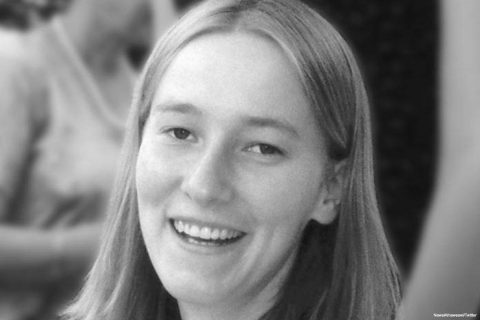
23-year-old Rachel Corrie who was crushed to death by Israeli bulldozers in Gaza in 2003 [NawalAlhawsawi/Twitter]
By Nasim Ahmed | MEMO | October 26, 2017
Fourteen years have passed since 23-year-old Rachel Corrie was crushed to death by Israeli bulldozers in Gaza. The American activists, along with other members of the International Solidarity Movement (ISM), were taking part in nonviolent direct action to protect the home of a Palestinian family from demolition when the activist from Washington was killed.
Since her untimely death on the Rafah border crossing in 2003, Corrie’s free-spirited attitude to life has been the inspiration for international solidarity movements, non-violent resistance as well as plays and books celebrating her humanity and bravery.
My Name is Rachel Corrie, being showed at the Young Vic in London, is based on the emails and diary entries of the pro-Palestinian activist, which first premiered at London’s Royal Court in 2005. The play was originally put together by the late Alan Rickman and Katharine Viner, now the editor of the Guardian.
Unsurprisingly the plays reproduction has come under strong criticism from Pro-Israeli groups. Fury at the revival of the play has stirred all kinds of controversy such that supporters of Israel in the UK are piling pressure on the Young Vic for staging the play. The Vic’s artistic director David Lan, who is Jewish, felt compelled to come to the theatre’s defence saying: “Gaza is a wound to the planet from which so many people are suffering.”
Pro-Israeli organisations have even threatened to leverage the £1.7 million pubic grant given to the Young Vic to ensure that it takes a more “balanced” position when it comes to Israel. Lan however has insisted that artistic expressions are useful to promote dialogue saying: “We welcome and hope to encourage as wide a discussion of this terrible situation as possible and anything that keeps Gaza at the front of our consciousness is to be valued.”
Aside from the nuisance of having Pro-Israeli activists shoving propaganda leaflets smearing the memory of Corrie towards you at the entrance of the theatre, the hour and half long immersion into Corrie’s mind is a memorable experience.
The play brilliantly darts through the diaries of Corrie from her early teens through to the period of her untimely death. Directed by an award winning director, Josh Roche, and wonderfully performed by British actor Erin Doherty, viewers are exposed to a visceral representation of the brutality of Israeli occupation seen through the eyes of an activist searching for her place in life.
Doherty’s astonishingly skilful performance of Corrie brings to life defining moments in the campaigner’s personal journey as she grapples with her own sense of privilege in contrasted with the indignity and poverty she saw in Gaza. If nothing else, the play powerfully captures the inner tensions of Corrie who felt a deep sense of responsibility over her own country’s unquestioned support for Israel.
The play is emotionally rousing given the very nature of diary entries, which are intended by its author to be an honest representation of ones thoughts and feelings unpolluted by polemics. Corrie appeared deeply troubled by the constant dehumanisation of Muslims and Palestinians; her conversations with her father, which are including in the the play, shed light on America’s own troubling assumptions about the world in the post 9/11 world.
The added punch to the play and the performance of Doherty is made all the more incredible by the setting; a background made up from the barest material, empty colourless plywood panels on the floor and the wall. The centrepiece is a tall wooden stand that appears to stand as a representation of Israel’s Separation Wall. It required an exceptional actor playing an exceptional person to make the experience so emotionally jarring.
Rachel Corrie’s legacy will continue to inspire thousands in campaigns against political oppression and this play, like its predecessor, has certainly reached the level of being “the irrepressible political voice” of the young campaigner from Olympia.
US attempt to fuel Iraq-Iran rift backfires
By M K Bhadrakumar | Indian Punchline | October 26, 2017
The US project to create a rift between Iraq and Iran backfired just a couple of days of its launch from Riyadh on October 22 by US Secretary of State Rex Tillerson. Washington effectively sought out Saudi Arabia to project itself as counterweight to Iran in the Iraqi theatre, predicated on the presumption that Riyadh’s offer to extend funding to ‘rebuild’ post-ISIS Iraq will be found irresistible by Baghdad. Washington fancied that Iraqi Prime Minister Haider al-Abadi is looking for ways to push back at Tehran, as his dependency on Iran’s military support is diminishing with the defeat of ISIS.
Tillerson travelled to Riyadh over the weekend to be present as a special guest at the first inaugural meeting of the so-called Saudi Arabia-Iraq Coordination Council. Things seemed to go well and Tillerson’s remarks to the media exuded optimism. At a press conference in Riyadh, he said that the Saudi largesse will “strengthen Iraq as an independent and whole country… (and) this will be in some ways counter some of the unproductive influences of Iran inside of Iraq.” Tillerson then came to the point:
- Certainly, Iranian militias that are in Iraq, now that the fight against Daesh and ISIS is coming to a close, those militias need to go home. Any foreign fighters in Iraq need to go home and allow the Iraqi people to regain control of areas that had been overtaken by ISIS and Daesh that have now been liberated, allow the Iraqi people to rebuild their lives with the help of their neighbors. And I think this agreement that has been put in place between the Kingdom of Saudi Arabia and Iraq is a crucial element to assisting the Iraqi people to do that. (Transcript)
The reference was to the Shi’ite militia groups funded, trained and deployed by Iran’s Revolutionary Guards Corps, which literally bore the brunt of the fight against the ISIS in the recent years. Washington is particularly incensed over the lead role by the Shi’ite paramilitary groups in seizing Kirkuk recently from the Kurdish Peshmerga who are US allies. (See my blog Kirkuk bells also toll for US strategy in Syria.)
Evidently, Tillerson crossed the red line. The point is, these Shi’ite groups, collectively known as Popular Mobilisation Forces and several tens of thousands strong, are probably going to be designated as part of the Iraqi armed forces. Abadi’s office in Baghdad came out in no time with a stinging rebuke – “No party has the right to interfere in Iraqi matters” – and called the Shi’ite paramilitary groups “patriots.” The next day, when Tillerson showed up in Baghdad for a meeting with Abadi, the latter was fairly explicit. Abadi said the Popular Mobilisation Forces form “part of the Iraqi institutions” and they will be the “hope of country and the region.” (Reuters )
Later, in an interview with the American press, Abadi retorted: “We would like to work with you (US)… But please don’t bring your trouble inside Iraq. You can sort it anywhere else.” Abadi then began suggesting a US troop withdrawal from Iraq. He said that US air power won’t be needed anymore and Iraq’s requirements will be henceforth on intelligence sharing and help to train Iraqi forces. The way things are shaping up between Washington and Tehran, continued US military presence in Iraq may become problematic in a near future.
Meanwhile, having gambled on the independence referendum only to lose oil-rich Kirkuk, Iraqi Kurdish leader Massoud Barzani is suing for ceasefire and talks with Baghdad. The US is urging Abadi to respond to Barzani’s overture and engage with him in discussions. The Trump administration has secured strong Congressional support for its demands on Abadi. Signaling the seriousness of the demands, On Wednesday, House Speaker Paul Ryan, House Intelligence Committee Chairman Devin Nunes, House Foreign Affairs Committee Chairman Ed Royce, and House Armed Services Committee Chairman Mac Thornberry issued the following statement to pressure Baghdad:
- Ongoing clashes between forces aligned with the Iraqi government and Kurdistan Regional Government are undermining hard-fought gains in the fight against ISIS, and threatening to plunge Iraq into a new wave of sectarian violence. The bloodshed must stop immediately. We support a united Iraq under the federal government in Baghdad, and we support the Kurdistan Regional Government.
- To that end, we welcome today’s reports that the Kurds are offering to suspend results of their recent referendum in return for a ceasefire and negotiations with the central government. Baghdad should accept this offer and enter into meaningful discussions that address long-term Kurdish concerns about autonomy, share of the national budget, and oil revenues. Meanwhile, it is critical that the Iraqi government heed Secretary Tillerson’s concern about the role and activities of Iranian-backed Shia militias. We are very concerned about Iranian involvement in recent operations. These forces have been responsible for horrible abuses, including the deaths of Americans. They have no place in a peaceful, united, and stable Iraq.
But Abadi is parrying. He visited Ankara on Wednesday to consult President Recep Erdogan. (Rudaw ) The latest reports suggest that the Iraqi forces with the support of the Shi’ite forces might go for the jugular veins of the Iraqi Kurds. Baghdad will want to drive home the advantage that the Kurds are not cohesive and are split 3-ways with the PUK (which was led by late Talabani) inclined to cooperate with Baghdad and Tehran, thereby isolating Barzani who is reduced now increasingly as a US-Israeli proxy. (Turkey has also become hostile toward Barzani following his push for the Kurdish independence referndum.) The Russian news agency Sputnik reported today as ‘breaking news’ that Iraqi troops and Shi’ite militias had been pulling heavy artillery and tanks close to Peshmerga positions near Zummar and shelling their positions. (Sputnik ) If a flare-up ensues in coming days, the US will be in a tight spot, apart from the breakdown of ties between Washington and Baghdad.
The US’ problem, quintessentially, is that its intentions are suspect in all three key regional capitals confronting the Kurdish question – Ankara, Baghdad, Tehran. At a recent meeting with US ambassador Douglas Sliman, Iraqi Vice-President Nouri al-Maliki said with brutal frankness, “We will not allow the creation of a second Israel in northern Iraq.”
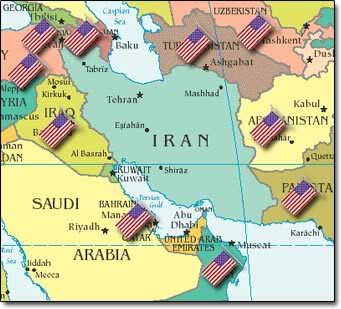 Last week’s events underscore three things. One, the US does not intend to end its military presence in Iraq (and Syria), although the pretext of the war against the ISIS is no longer there. Two, US is planning to turn Iraq into a major theatre of confrontation with Iran.
A US control of Iraq puts it in a position to pile pressure on Iran from different directions — interfering with Iranian supply routes to Syria and Lebanon; playing itself back to regain a role in the Syrian settlement; having a say in Iraq’s rising oil production and staging covert cross-border operations to destabilize the Iranian regime. Indeed, with the open-ended US military presence already in place in Afghanistan, the intention is to squash with a similar western neighbor under American tutelage.
Three, fundamentally, it becomes all too obvious that the US-Saudi alliance in regional politics is very much alive and kicking, and any reports to the contrary are greatly exaggerated. The US’ return to the centre stage in Iraq to challenge Iran’s regional influence will give much verve to the US alliance with Saudi Arabia.
Interestingly, the Saudi establishment daily Asharq Al-Awsat reported last week that the Pentagon plans to boost deployments to the Middle East specifically to counter Iran. The report cited General Joseph Votel, commander of the US Central Command, as saying, “The United States wants to help the Arab countries deal with Iranian threats. The Pentagon is working to achieve that desire and ensure its effective implementation. That includes the establishment of US military battalions sent as missions to the region and be designed specifically to provide advice and assistance.”
Access to Alternative Sources ‘Made Mainstream Media Lose Their Credibility’
Sputnik – October 26, 2017
The results of a poll commissioned by Sputnik and conducted by Ifop in the US have revealed that the majority of Americans believe that their mainstream media unfairly cover international and domestic events. Foreign journalists have explained why the MSM have lost the trust of their audience.
“The results of the survey clearly demonstrate that the US mass media enjoy less and less credibility among Americans. People do understand that newspapers and broadcasters in their country have become a tool in the hands of big businesses and politicians. There is another issue, however, that with all the understanding, people are not immune to the influence of these media sources,” Professor Julián Jiménez, Spanish blogger and mass media analyst surmised to Spanish website Sputnik Mundo.
He referred to the recent poll commissioned by Sputnik and conducted by Ifop, the renowned French pollster, which revealed that as many as 59 percent of Americans think that MSM media coverage of international and domestic affairs is biased, untrustworthy and is heavily influenced by politicians and big business.
According to the expert, the Spanish also share this distrust of the national media, neither believing in the objectivity and independence of their domestic media. At the same time, the general public can be heard repeating word-for-word the lies they hear about Russia, Venezuela or Catalonia from the very same media sources they have admitted they don’t trust.
Professor Jiménez suggested that the level of distrust towards the mass media in the EU is even higher than that in the US, however, very few Europeans are eager to spend their time on searching for alternative information or to dig for the truth.
“I think there is a direct link between the decline in trust towards the national media in the US and the EU and the campaign which has been launched against RT and Sputnik. These two media sources provide far more objective and comprehensive coverage of national and international events, unlike the one-sided and predictable reporting of the mainstream media,” he told Sputnik.
That is why the authorities and mainstream media use various absurd pretexts to hinder the access of these two outlets to the western audience, the expert explained. It has reached the point where El Pais, the most circulated daily newspaper in Spain, has accused RT and Sputnik of instigating the Catalan crisis in its attempt to undermine their reputation. This is a particularly dangerous line to take because while people are being put on the wrong scent, the real problems that initially ignited this conflict will only worsen. And these are purely internal problems and not engineered from abroad, he concluded.
Fernando Martínez, a journalist from the Dominican Republic, who worked for a long time in the US, has offered his opinion on the results of the survey, suggesting that the mainstream media, including in the US, have lost their competitiveness now that many diverse sources of information around the world are available for free.
According to the reporter, before the spread and the development of the Internet, the US was able to easily dominate the world’s media agenda by using simple tricks – half-truths or half-lies.
“This reminds me of The Matrix movie, in a sense that the fictional reality, which had been built by the US media for decades, is falling to pieces before our very eyes. To a large extent, it is due to media sources such as RT and Sputnik. That is why western politicians are accusing Russia of virtual information terrorism. They are so alarmed that these outlets, whose budgets pale in comparison with the western international media, so easily win the audience. However their secret is very simple: they opt to tell truth,” Martínez opined.
Commenting on the recent reports that both media sources have come under intense scrutiny of authorities in the US, the journalist ruled out that they could be banned either in the EU or overseas. Russia has made it clear that it would respond symmetrically to such a decision and neither Washington nor Brussels would want to lose the Russian audience. That is why they limit themselves to threats without resorting to any radical moves, he concluded.
UN blacklists 130 Israeli firms & 60 multinationals for working in occupied Palestinian territories
RT | October 26, 2017
The United Nations (UN) has included some of the biggest Israeli and international firms operating in the West Bank, East Jerusalem, and the Golan Heights in a blacklist for those violating “international law and UN resolutions.”
According to Israeli Ynet News which has gained access to part of the list, 130 Israeli companies and 60 international corporations received warning letters from the United Nations High Commissioner for Human Rights Zeid bin Ra’ad al-Hussein about their impending inclusion on the blacklist.
The list, which reportedly will be published in late December includes Israel Aerospace Industries, telecom giants, international tech firms, banks, and even cafes.
Israel Aerospace Industries, Hewlett-Packard, the Israeli branches of Motorola and HP, the Dead Sea cosmetics firm Ahava, the Cellcom and Partner telecommunications companies are among those listed. Israel’s two largest banks, Hapoalim and Leumi, are also said to be on the list.
Israeli Channel 2 News has reported that among the American firms that received letters were Coca-Cola, TripAdvisor, Airbnb, and Caterpillar.
The US ambassador to the UN Nikki Haley condemned the blacklist as “the latest in this long line of shameful actions” taken by the United Nations Human Rights Council (UNHRC). In June Haley warned the US could withdraw from the 47-member body.
“It may cause large investment firms or pension funds carrying stocks of various Israeli companies to divest in them because they, in turn, operate in the settlements,” an unnamed senior Israeli official told Ynet, adding “it may lead to a snowball effect that will greatly harm the Israeli economy eventually.”
The companies say the list’s creation was politically motivated and their inclusion may cause them financial harm and tarnish their brand. They are reportedly looking into filing lawsuits against the Commissioner and the UNHRC.
In September, the UN Commissioner warned over 150 companies that their activities in the “occupied Palestinian territories” may see them added to a blacklist of companies as “they operate in opposition to international law and in opposition of UN resolutions.”
The UN Human Rights Commission voted in March for the resolution being pushed by the Palestinian Authority and Arab nations, according to which the commission would formulate a database of Israeli and international firms directly or indirectly doing business in the West Bank, East Jerusalem or the Golan Heights. The decision passed despite pressure and criticism from the US.
Featured Video

The Most Important Bet You’ve Never Heard Of
or go to
Aletho News Archives – Video-Images
From the Archives
The Occupied Mentality Syndrome
Saudi Arabia on the American chessboard – Part 2
By B. J. Sabri | American Herald Tribune | April 19, 2016
Since the Korean War, but particularly since the Iranian Revolution of 1979 until today, the United States has been steadily escalating its military presence in the Persian Gulf. Taking advantage of many colossal events of the past 36 years, [1] the hyper-empire has institutionalized its massive presence on land and sea, and expanded its objectives to include the unambiguous physical control of the area, as well as the clear understanding that local Arab governments should abide by them. The pretext is always the same: in “defense” of the national interests and security of the United States. From observing how the United States has been interacting with the governments of the region, and by judging from the size of its expeditionary force, we could reach a basic conclusion. The United States is occupying, de facto, the entire Arabian Peninsula. (Yemen, devastated by Saudi and American jets is yet to be conquered. Oman? Britain returned not as colonial ruler but as a soft occupying power.)
Under this articulation, Saudi Arabia, Qatar, Kuwait, and the United Arab Emirates are virtually occupied countries. If we compare this type of occupation to the mandate and protectorate regimes of the past, the results might be identical—the nations affected by it lose sovereignty. When Arab governments comply with the objectives of a foreign power that station military forces on their national milieu, then that power controls them in multiple ways including how they react to policy deliberations and what decisions they intend to take on specific issues. A good method to verify the concept of effective occupation is this: take notice of what the United States says and wants, and then compare it to what the gulf rulers do in response. (I shall discuss this detail at some point in the upcoming parts.)
If the presence of US forces or other means of political pressure are a factor in Saudi Arabia’s interventionist Arab wars, then we need to debate this issue. However, from the history of resistance to colonialism, we learnt: if a powerful state imposes its order on a nation by military means or other forms of coercion, and if this nation does not resist that imposition, then a mental subordination to the powerful state will ensue. This is especially true in the case of Saudi Arabia. One single event, 9/11, has transformed it from a US “ally” into an instant political hostage of the American Empire. … continue
Blog Roll
 Aletho News
- IRGC hits US tech giant Oracle’s data center, computing site in UAE over new assassinations
- Bombing Iran Back Into the Stone Age /Lt Col Daniel Davis & Jim Jatras
- UAE rejects report claiming it is ready to join war on Iran to reopen Hormuz
- A New Resistance Front: How Does Syria Factor into the Regional War?
- Gulf states weigh pipeline expansion plans, hoping to bypass Hormuz
- Iran sets up ‘tollbooth’ system in Strait of Hormuz
- Wave 90: IRGC strikes US-linked industrial sites in Gulf
- Iran Says US-Israeli Claims of Its Military Strength Are Wrong
- Trump’s April Fools’ Address to the nation
- The Most Important Bet You’ve Never Heard Of
- If Americans Knew
- ‘War crime’: Global condemnation as Israeli ministers celebrate death penalty law targeting Palestinian prisoners
- 7 Ways Israel Is Turning Lebanon Into Gaza
- World’s Leading Football Bodies Under Fire Over Israel Policies
- Experts warn of possible use of nukes against Iran
- Israeli invasion of Lebanon could be worse than 1982, warn European officials
- Passover: Liberation and collective punishment
- Trump says the quiet part out loud: (Israel’s) war on Iran > Americans’ health – Daily Update
- Gaza families reunite years after babies evacuated amid Israel’s war
- International Rescue Committee warns Gaza’s children face grave protection risks
- Iran’s Alleged 47-Year War on America: Debunking the 1,050 American Deaths Canard
- No Tricks Zone
- Low Intensity Tornado Wrecks Major Solar Farm, Creating A Potential Toxic Dump
- New Study Finds Warming Saves Lives…Cold Temperatures 12 Times More Deadly Than Excess Heat
- German Science Blog Accuses PIK Climate Institute Of Hallucinating Climate Tipping Points
- Devastating Assessment Of Comirnaty Vaccine By Former Senior Pfizer Europe Toxicologist
- New Study: CO2 Is ‘Effectively Negligible’ As An Explanatory Climate Change Factor Since 2000
- Former Pfizer Toxicologist Dr. Helmut Sterz Tells Bundestag Hearing Pfizer Vaccine Should Have Never Been Approved
- Energy Expert: Germany’s Nuclear Phaseout Was A “500 Billion Euro Mistake”
- New Research: South Australia’s Mid-Holocene Sea Surface Temperatures Were 4°C Warmer Than Today
- Storing Green Energy To Last Germany 10 Days Would Require A 60-Million Tonne Battery
- New Studies: UK Sea Levels Were 4 Meters Higher Than Today During The Mid-Holocene
 Aletho News