After PLO halts ties with US, Arab League steps in to salvage peace process
Ma’an – November 20, 2017
BETHLEHEM – The Arab League has reportedly approached the United States government regarding its recent decision to punitively shut down the office of the Palestine Liberation Organization (PLO) in Washington D.C, over the Palestinian leadership’s efforts to bring Israel before the International Criminal Court (ICC).
Official Palestinian Authority (PA)-owned Wafa news agency reported on Sunday, shortly after the US State Department announced its decision, that the Arab League — a regional organization of 22 Arab countries — announced that its Secretary General Ahmed Aboul Gheit approached the US President Donald Trump’s administration over the closure.
The league is reportedly attempting to do damage control and resume US-led peace negotiations following the PLO’s reaction to the closure, in which the group’s secretary general, Saeb Erekat, threatened to “put on hold all our communications with this American administration” if the US did in fact close the PLO Washington office.
According to Wafa, Aboul Gheit met with the league’s foreign minister, Riyad al-Maliki, where the two discussed the the official position of the PLO and the PA, “saying it will harm the peace process and the role of the US as peace broker.”
The PLO announced in September its decision to submit a request to the ICC to investigate illegal Israeli settlement activity in the occupied West Bank and East Jerusalem.
Separately, four Palestinian human rights organizations submitted a 700-page communication to the ICC alleging that Israeli officials have committed war crimes and crimes against humanity in the West Bank, including East Jerusalem.
International media reported that the PLO’s plans would breach conditions previously imposed by US Congress on the PLO, preventing it from taking any cases to the ICC.
The PLO office could allegedly be reopened 90 days after closure if Trump believes the PLO has entered into “direct, meaningful negotiations with Israel.”
The events came amid weeks of speculation in Israeli and Palestinian media over the Trump administrations “ultimate peace plan” for the region, which is set to be presented soon.
Israeli news daily Haaretz quoted Palestinian President Mahmoud Abbas’ spokesperson Nabil Abu Rudeina as calling the US move to shut down the PLO office as “a dangerous threat… that leads (to the conclusion that (the United States is losing its position as a negotiator” and that it was “withdrawing from its role as a sponsor of the diplomatic process for peace as promised by President Trump.”
While Trump has maintained on many occasions that, under his auspices, the decades-long Palestinian-Israeli conflict will be solved, his administration has painted a rather unclear picture regarding Trump’s plans in the region, while a number of high-profile US officials are known to be staunch supporters of Israel.
In February, Trump said that when it came to a solution for the decades-long conflict he could “live with either” a one- or two-state solution, in a significant departure from the US’ publicly held position in favor of a two-state solution to the conflict.
However, his elusiveness has not belied the fact that Trump and his administration have maintained their pro-Israel stance, despite stated efforts to renew the Israeli-Palestinian peace process, which he said in the past was “not as difficult as people have thought over the years.”
Remembering Ishaq Maragha: Martyr of the battle of empty stomachs
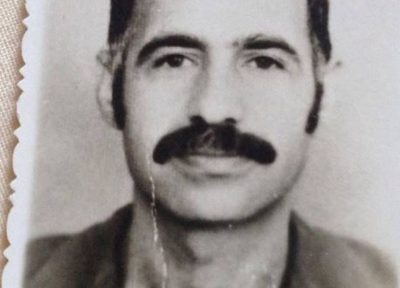
Ishaq Maragha
Samidoun Palestinian Prisoner Solidarity Network – November 19, 2107
16 November 2017 marks the 34th anniversary of the death of Palestinian prisoner Ishaq Maragha, one of four Palestinians whose lives were taken – three through forced-feeding – during a hunger strike for justice inside Israeli prisons. Maragha, who died in 1983, three years after he was grievously wounded by Israeli forced feeding, was not only a martyr but a longtime leader of the Palestinian prisoners’ movement and the Palestinian liberation struggle.
Along with Ali al-Jaafari and Rasim Halawa, he was martyred by Israeli force feeding aimed at breaking the hunger strike of Nafha prison in 1980. Fellow prisoner Anis al-Dawla also lost his life in 1980 from fatigue, malnutrition and disease caused by his solidarity strike in Ashkelon prison in support of the prisoners of Nafha.
Born in the town of Silwan near Jerusalem in 1942, he became a member of the Arab Nationalist Movement – the movement founded by George Habash, Wadie Haddad and other Arab and Palestinian young people looking towards liberation, unity and socialism – and was considered one of the first members of the movement in Palestine, joining in 1959 at the age of 17. He had four children, Jamal, Amal, Amina and Musa.
As a member of the ANM, he traveled to Egypt for military training in 1964. He joined the ranks of the Popular Front for the Liberation of Palestine from the very beginning of its foundation on December 11, 1967 from the Palestine Section of the ANM. Shortly over one year later, in February 1969, he was arrested by Israeli occupation forces on charges of being a leader in the PFLP in the Jerusalem area. After three years in Israeli prison including a period of intense torture under occupation, he was released from prison in August 1972.
As Abdel-Nasser Ferwana, Palestinian researcher on prisoners’ affairs notes, this was only a “fighter’s rest” for Maragha. In February 1975 he was once again seized by occupation forces and accused of participating in the resistance to occupation; he was sentenced to 20 years imprisonment.
Ferwana recalled meeting Maragha several times while visiting his imprisoned father, who would laer be released in the 1985 prisoner exchange with the Palestinian resistance. Maragha said to him as a young man, “The prisons will be destroyed and your father and I will be liberated.”
During his time in prison, he was transferred to Ramle, Beersheba and Nafha prisons; he was well-known among the prisoners as an example of a dedicated worker and a revolutionary leader. Ferwana caled him a “distinguished leader, loved by everyone, a brilliant instigator and a dedicated fighter…one of the pillars of the prisoners’ movement.” He became one of the leaders of the prison organization of the PFLP, responsible for international relations.
In 1980, Nafha prison was opened as an “exile and cemetery for the prisoners’ movement leaders;” Maragha was one of the first to be transferred there. The prisoners began their strike that year, on 14 July 1980. One of the hunger strikers, Abdel-Rahim al-Noubani, chronicled the development of the strike.
The prisoners demanded:
1. The prisoners demand the installation of beds
2. The prisoners demand access to a radio and television
3. The prisoners demand the improvement of the quality and quantity of food
4. The prisoners demand access to Arabic and Hebrew books and newspapers
5. The prisoners demand the expansion of windows, allowing more sun and air into the cell
6. The prisoners demand an end to the policy of collective and individual punishment, solitary confinement, depriving them food during their isolation, and only providing them with bread and water.
7. The prisoners demand the visiting allowance to be prolonged to one hour every two weeks
8. The prisoners demand access to winter and summer clothes, as well as blankets
9. The prisoners demand permission to buy food and vitamins from the prison canteen, which has been hitherto denied
10. The prisoners demand their walk allowance extend from 15 minutes to an hour
As Shahd Abusalama wrote chronicling her own father’s history in the Nafha strike, “Whenever Palestinian prisoners have gone on hunger strike, the Israeli authorities have responded by punishing them collectively. The Nafha hunger strike was no exception.”
After 10 days of hunger strike which drew growing international and Palestinian support, the Israeli occupation attempted a particularly cruel and dangerous form of force-feeding against 26 prisoners in which boiling water and salt were poured down tubes forced down the prisoners’ throats. In the case of Ishaq Maragha, Rasem Halawi and Ali al-Jaafari, the tube was not fully inserted and instead entered their lungs; the boiling water poured into the tube burned and destroyed their lungs. Halawi and Jaafari died almost immediately, killed by Israeli force feeding on their hunger strike.

Ishaq Maragha, Ali al-Jaafari, Rasem Halawa
Maragha later related the experience to al-Noubani:
“When we were put in the waiting room, the three of us collapsed onto a wooden bench, overcome with extreme exhaustion and fatigue. The pain was ripping our chest and gut apart. But it seemed that Ali Jaafari was the suffering the most; he grabbed the bars of the iron door, his drained voice shouting out to the section’s jailer and clinic doctor alternately, asking them to provide us with emergency assistance and treatment. He then turned to me suddenly and said, ‘Abu Jamal, I’m dying, I’m dying!’ I tried to calm him and raise his spirits, and boost his strength – for I had noticed something in him that I myself did not feel, despite the fact that we had both gone through the same torment.
Ali al-Jaafari started shouting again, ‘Abu Jamal, my legs have died, I can no longer feel them, they’re as cold as ice.’ I was helpless, and could do nothing but say to him, ‘Don’t be afraid, Ali, here comes the doctor, don’t worry.’ He suddenly shouted again, for the third and last time: ‘My arms have died, Abu Jamal.’ I was as drained as he was, and as he said this to me, my eyes filled with tears; I saw his last gasp escape from his deteriorated lung to his broken nose by the zonda hose; canals filled with blood and pain opened up inside him. His head was slightly bent over to his right shoulder and his cold hands were still holding onto the bar of that damned iron door. His gracious self slid away, and his pure soul left his body, and all the while he stood there, like a palm tree that had lasted a hundred years drying out. We rested the body of our martyr on the ground, shaking with sobs. In that moment, Rasem and I forgot we shared the same fate as he.”
Maragha also reported that the prison doctor swore that he would not let him die, not out of concern for his life, but because “I will not let them make you a national hero.”
The strike continued after the martyrdom of al-Jaafari and Halawa; Maragha became a key spokesperson for the strike to lawyers and before the world. After 33 days, the prisoners’ ended their strike with a victory in all of their demands.
Maragha was then transferred to Beersheba prison as his health deteriorated further and without the provision of any treatment until he died on 16 November 1983 of his ongoing injuries and wounds caused by his torture under forced feeding during the Nafha strike, leaving a legacy of struggle, sacrifice and commitment above all to the liberation of Palestine, his land and his people.
Ishaq Maragha was a beloved leader of the Palestinian prisoners’ movement and a symbol of the leading role of Palestinian prisoners in the struggle for the liberation of Palestine, whose bodies and lives are on the line on a daily basis in a direct confrontation with occupation. The hunger strikes of Palestinian prisoners are a collective means of struggle and immense self-sacrifice for dignity and freedom.
On the 34th anniversary of the passing of Ishaq Maragha, Samidoun Palestinian Prisoner Solidarity Network remembers him, Ali al-Jaafari, Rasim Halawa and the long legacy of the martyrs of the prisoners’ struggle – and their commitment to Palestinian and global liberation. Their deepest and most precious sacrifice must urge all of us around the world who stand with Palestinian rights, freedom and liberation to intensify and escalate our work for the freedom of the imprisoned leaders of the Palestinian people today. As plans for regional warfare and a so-called “deal of the century” promulgated by the United States and Israel with the backing of Saudi Arabia and reactionary forces threaten the Palestinian people, the people of the region and the world, the legacy of Ishaq Maragha and his fellow Palestinian prisoners can and must inspire us all to struggle at this critical moment to defend the Palestinian cause and struggle to achieve their goals of return and liberation.
Featured Video

America Racing to Strategic Defeat in Iran
or go to
Aletho News Archives – Video-Images
From the Archives
Should Europeans ‘Thank’ the Americans for Destroying Nord Stream?
By Robert Bridge | Strategic Culture Foundation | September 29, 2022
With an investigation continuing into the destruction of the Nord Stream gas pipeline that provided energy supplies to Europe from Russia, there appears to be just one prime suspect, and that should surprise nobody.
Following the sabotage of the Nord Stream 1 and 2 gas pipelines, former Polish Foreign Minister Radoslaw Sikorski already seemed to know the identity of the perpetrator when he tweeted out: “Thank you, USA.”
At first glance, it seemed that Sikorski was speaking sarcastically, berating Washington for carrying out an attack that will have severe repercussions for the people of Europe. After all, how could anyone see any good coming from the termination of Europe’s primary source of gas reserves with winter just around the corner? It was Sikorski’s homeland of Poland, after all, that urged its citizens to collect firewood in the face of dwindling gas reserves.
In fact, the Polish diplomat was speaking one-hundred percent literally… continue
Blog Roll
 Aletho News
- Growing insecurity, soaring prices fuel protests in north as regime bans evacuation: Sources
- Iran denies responsibility for ‘depraved’ attack on Kuwait desalination plant
- Bring The Troops Back. End This War Now!
- Can we please stop calling Israel the ‘only democracy in the Middle East’ now?
- US should start removing its troops for Germany, proposes AfD co-leader Chrupalla
- Iran Red Crescent: 600 educational centers attacked in US-Israeli ‘war crimes’
- Russian Oil Tanker Arrives in Cuba Amid U.S. Blockade
- America Racing to Strategic Defeat in Iran: Lt Col Daniel Davis
- FTC Warns Visa, Mastercard, PayPal, Stripe Over Political Debanking
- Russian tanker approaches Cuba despite US oil blockade
- If Americans Knew
- Israeli police block Catholic cardinal from entering Church of the Holy Sepulchre on Palm Sunday
- Israel is assassinating journalists again, more than any other nation, anywhere, ever – Not a ceasefire Day 170
- Over 300 US service members wounded, majority have brain injuries – Not a ceasefire Day 169
- Researchers at Human Rights Watch Resign Over Blocked Report on Palestinian Refugee Return
- Jewish Groups Are Backing a War Americans Don’t Want
- Eric Fingerhut Thinks He’s the President of the Jews
- Top Jewish Philanthropists, Rabbis Urge Israeli President to Take Action Against ‘Jewish Extremists’
- Don’t Be Fooled. Zionist Leaders Have Always Wanted to Control Southern Lebanon
- Israel’s widespread use of torture is a core element of its genocide against the Palestinian people
- In Israel’s War on Iran, Many Middle East US Bases Rendered “All But Uninhabitable”
- No Tricks Zone
- New Study Finds Warming Saves Lives…Cold Temperatures 12 Times More Deadly Than Excess Heat
- German Science Blog Accuses PIK Climate Institute Of Hallucinating Climate Tipping Points
- Devastating Assessment Of Comirnaty Vaccine By Former Senior Pfizer Europe Toxicologist
- New Study: CO2 Is ‘Effectively Negligible’ As An Explanatory Climate Change Factor Since 2000
- Former Pfizer Toxicologist Dr. Helmut Sterz Tells Bundestag Hearing Pfizer Vaccine Should Have Never Been Approved
- Energy Expert: Germany’s Nuclear Phaseout Was A “500 Billion Euro Mistake”
- New Research: South Australia’s Mid-Holocene Sea Surface Temperatures Were 4°C Warmer Than Today
- Storing Green Energy To Last Germany 10 Days Would Require A 60-Million Tonne Battery
- New Studies: UK Sea Levels Were 4 Meters Higher Than Today During The Mid-Holocene
- Destructive Green New Deal: German Energy And Metal Group Warns Of Drastic Crisis
 Aletho News