President Trump announced last week that he was returning North Korea to the US list of “state sponsors of terrorism” after having been off the list for the past nine years. Americans may wonder what dramatic event led the US president to re-designate North Korea as a terrorism-sponsoring nation. Has Pyongyang been found guilty of some spectacular terrorist attack overseas or perhaps of plotting to overthrow another country by force? No, that is not the case. North Korea is back on the US list of state sponsors of terrorism because President Trump thinks the move will convince the government to give up its nuclear weapons and ballistic missile program. He believes that continuing down the path toward confrontation with North Korea will lead the country to capitulate to Washington’s demands. That will not happen.
President Trump and Secretary of State Rex Tillerson argued that North Korea deserved to be back on the list because the North Korean government is reported to have assassinated a North Korean citizen – Kim Jong-Un’s own half-brother — in February at the Kuala Lumpur International Airport. But what does that say about Washington’s own program to assassinate US citizens like Anwar al-Awlaki and his 16 year old son under Obama, and later Awlaki’s six year old daughter under Trump? Like Kim’s half brother, Awlaki and his two children were never tried or convicted of a crime before being killed by their own government.
The neocons, who are pushing for a war with North Korea, are extremely pleased by Trump’s move. John Bolton called it “exactly the right thing to do.”
Designating North Korea as a state sponsor of terrorism will allow President Trump to impose the “highest level of sanctions” on North Korea. Does anyone believe more sanctions – which hurt the suffering citizens of North Korea the most – will actually lead North Korea’s leadership to surrender to Washington’s demands? Sanctions never work. They hurt the weakest and most vulnerable members of society the hardest and affect the elites the least.
So North Korea is officially a terrorism-sponsoring nation according to the Trump Administration because Kim Jong-Un killed a family member. Meanwhile, Saudi Arabia is in the process of killing the entire country of Yemen and no one says a word. In fact, the US government has just announced it will sell Saudi Arabia $7 billion more weapons to help it finish the job.
Also, is it not “state-sponsorship” of terrorism to back al-Qaeda and ISIS, as Saudi Arabia has done in Syria?
The truth is a “state sponsor of terrorism” designation has little to do with actual support for global terrorism. As bad as the North Korean government is, it is does not go abroad looking for countries to invade. The designation is a political one, allowing Washington to ramp up more aggression against North Korea.
Next month the US and South Korean militaries will conduct a massive military exercise practicing an attack on North Korea. American and South Korean air force fighters and bombers will practice “enemy infiltration” and “precision strike drills.” Are these not also to be seen as threatening?
What is terrorism? Maybe we should ask a Yemeni child constantly wondering when the next Saudi bomb overhead might kill his family. Or perhaps we might even ask a Pakistani, Somali, Iraqi, Syrian, or other child who is terrified that the next US bomb will do the same to his family. Perhaps we need to look at whether US foreign policy actually reflects the American values we claim to be exporting before we point out the flaws in others.
For the 330,000 dead souls of Syria it may be small comfort that the bloody conflict in their homeland is drawing to a close, finally, but it is brilliant news nonetheless.
Although there has been a struggle against terrorism on Syrian soil, the struggle was quintessentially geopolitical. The decades-long US agenda – at least, dating back to the invasion of Iraq in 2003 – was at the core of it. That agenda, which sucked in regional and extra-regional powers, has conclusively failed. Therefore, it is the regional settlement that becomes crucial at this stage.
Peacemaking makes strange bedfellows because protagonists are jockeying for position to secure their interests. The trilateral summit in Sochi between Russia, Iran and Turkey on Wednesday can be regarded as a celebratory event insofar as Russia and Iran have not only ‘won’ the Syrian war but also cemented the ‘defection’ of Turkey to their side. The locus of Middle East politics itself has shifted. This is one thing.
Equally, Russian diplomacy has effectively ‘neutralized’ Saudi Arabia and encouraged that country to ‘sanitize’ the Syrian opposition groups who are under its influence and nudge them toward swallowing the bitter pill and drop their persistent pre-condition that President Bashar al-Assad cannot be part of any solution to the Syrian problem.
With Qatar and Jordan having already moved to a ‘neutral position’ on their own accord in the recent months – each for its own reasons of self-interest – and with Egypt all along being fully behind the Russian leadership, there is no regional state that is any longer in the business of prolonging the fratricidal war by putting up proxy groups.
Except, of course, Israel. But then, Israel is a small country and non-Muslim and lacks the clout to influence the prevailing winds or to create new facts on the ground in Syria. The Russian President Vladimir Putin who spoke to all key regional leaders and (US President Donald Trump) on Tuesday night in a flurry of ‘telephone diplomacy’ pointedly ignored Israeli PM Benjamin Netanyahu who then had to initiate a request to the Kremlin to solicit a briefing by Putin. (Putin graciously obliged.) But it was a signal of displeasure to ‘Bibi’ from the Kremlin as well as a warning to behave responsibly in the period ahead.
Added to the Saudi back-tracking in Lebanon, Israel has been virtually put out of business. Besides, the fact of the matter is that ISIS has been defeated and the Syrian army controls over 98 percent of territory (according to Russian estimates.) There is already talk of a winding down of the Russian military presence in Syria before the end of the year.
So, how will the post-conflict scenario look in Syria? The Sochi summit provided some signposts. There are five main ‘takeaways’.
Turkey has a deal with Russia and Iran to accept Assad’s continuance as leader through the transition – and even beyond (more of that below) – and in return, President Erdogan scored a major victory in keeping the Kurds from inclusion in the settlement.
The troika – Russia, Iran and Turkey – will be in the driving seat to shepherd the Syrian parties to the negotiating table in Geneva where the UN will notionally preside over the talks. The three countries will decide the participants for the upcoming Syrian Dialogue to be held in Sochi in early December to discuss a constitution and deliberate on the broad contours of a settlement.
The troika will also continue to be the ‘guarantor powers’ ensuring the ceasefire and will coordinate the maintenance of security within Syria through the uncertain period ahead. But the so-called ‘de-escalation zones’ as such will be an interim measure, which will be disbanded once the transition is complete. That means, there is no scope for external powers to carve out ‘spheres of influence’ on Syrian territory.
A US withdrawal from Syria becomes inevitable, no matter what Defence Secretary James Mattis might say or not. In fact, an open-ended US military presence (such as in Afghanistan) will be possible only through the establishment of a puppet government in Syria, which is inconceivable.
Russia has emerged as the Master of Ceremonies. This is not at all surprising since Russia is the only power on earth which has networking with all protagonists within Syria, in the region and internationally. The Russians displayed a masterly performance in optimally conducting ‘coercive diplomacy’. It is an incredible feat that they entered the Syrian conflict only in September 2015 but turned the tide of the war within a short period of time, went on to crush the ISIS, and consolidated Assad’s position as the unassailable future leader – all within a matter of two years flat – and are now putting together the nuts and bolts of a settlement almost suo moto, while also carrying along the ‘losers’ in the war and altogether eschewing triumphalism.
Trump himself appears to be on board Putin’s settlement formula, which is of a unitary Syrian state and a democratically government that comes out of UN-supervised elections in which all Syrians (including Assad) can contest. (To jog memory, the Trump-Putin statement on Syria after their meeting in Da Nang even made a reference to Assad.)
Indeed, there are grey areas still. The most important one involves the continued presence of the Islamic Revolutionary Guards, the militia supported by Iran and Hezbollah who have been the real source of strength on the ground for the Syrian government. But it is unrealistic to expect the Syrian army to handle the security all by itself through the delicate period of transition. There are terrorist groups present on Syrian soil, as the massive attack in Damascus today shows.
The bottom line is that the above becomes a non-issue if Assad remains in power because as the democratically elected leader of a sovereign country, it will be his prerogative to seek help from any quarter to strengthen national security. And the plain truth is that there is no credible opposition figure who can rival Assad in a free and fair election in Syria. If anything, the 7-year bloody civil war strengthens Assad’s appeal to the Syrian people cutting across religion or sects as the only bulwark against instability and chaos. To my mind, all that Assad needs is a level playing field in the nature of an inclusive democratic process.
Russia and Iran insisted throughout that it is for the Syrian people to elect or reject candidates in a democratic election. Turkey has now virtually identified with that principled stance. In a very significant remark, Turkish President Recep Erdogan said after the Sochi summit that he does not rule out resuming contacts with Assad in the coming period. The principle that it is simply not for outsiders to prescribe the political future of Syria is only going to get wider regional and international acceptance. In fact, one can visualize even European countries re-establishing ties with Damascus in a near future.
The Great Socialist People’s Libyan Arab Jamahiriya whose most prominent leader was Muammar Gaddafi, even after he relinquished titular status, was a country that moulded itself on the unique Third International Theory. This new ideology combined elements of traditional Arab Nationalism, the socialist model of Yugoslavia, direct democracy and pan-Africanism.
As detailed on his Green Books, Gaddafi’s official ideas helped develop Libya from a state which in its pre-revolutionary days had virtually no modern infrastructure, little modern housing, no real modern irrigation or sewage systems, low levels of literacy and a very low life expectancy, to one which attained the highest living standards in Africa history, where housing was either cheap or free, education and healthcare were free, petrol and car ownership was subsidised by the state, food was cheap and plentiful and where a highly elaborate man made river made the desert bloom.
But above all of these achievements, Gaddafi’s revolutionary leadership helped close the gap between Arabism and the pan-African liberation movement.
Gaddafi’s foreign policy could not be easily pinned-down into any specific geo-political bloc. He was his own man and the foreign policy of the Great Socialist People’s Libyan Arab Jamahiriya reflected this.
Libya was the only Arab state to support Iran during the Iran-Iraq war, apart from Syria and likewise, one of the few states in the wider Muslim world to support the socialist Yugoslav government in its war against terrorism and fascism during the 1990s.
As Gadafi became increasingly ostracised by Arab League governments who loathed his independent streak in foreign policy and moreover, resented Libya’s general independence from the western financial system, Gaddafi turned increasingly little to the prodigal Arab world and more towards Africa.
Gaddafi supported every major African liberation movement on the continent, even those who were rejected by both China and the Soviet Union. South Africa’s Nelson Mandela maintained a lifelong friendship with Gaddafi whom he called ‘Brother Gaddafi’, as did many Africans.
But Gaddafi did more than support liberation movements in Africa. Because the economic boom Gaddafi created required a larger labour force than Libyans could provide, Gaddafi invited many black Africans to work in the Arab state. They were paid incredibly well, not just by African but international standards and they became integrated into Libyan society in spite of their racial backgrounds. While most of the black Africans who came to Libya were Muslims, some Christians also come and they were treated with the same courtesy as Muslims.
This was Libya then. Today, Libya is a failed state with several governments and many terrorist groups and piratical gangs competing for land, resources and influence. Among the first casualties of Libyan society when NATO invaded, was the safety of the black population. From the beginning of the NATO led war, black men and women in Libya were beaten, tortured, physically molested in other unspeakable ways and of course many more were killed. Those who could escape, did so, with many dying of dehydration in the desert, during the process.
Shortly after 2011, captured blacks became literally enslaved by various Takfiri gangs ruling Libya. This trend is nothing new, all that has changed is that the price of a black slave has recently gone up from the low hundreds or a few barrels of oil, to at most, the mid hundreds.
It has only been since the defeat of ISIS in Syria and Iraq that the western mainstream media has paid any attention to the tragic condition of black men and women in Libya. From 2011 until very recently, very little was ever said about this tragic development.
While some welcome this apparent about face from the mainstream media, I would urge caution. It was the mainstream media that lied constantly about Libya in the prelude to NATO’s deadly invasion in 2011.
It was the mainstream media that failed to state that those in 2011 causing agitations in Benghazi were al-Qaeda terrorists, many of whom were trained and transported to Libya by western governments. It was the mainstream media that made up a total lie about Libya, saying that the armed forces gave the drug Viagra to soldiers and told them to go on a raping spree. This outlandish allegation had zero basis in fact.
It was the mainstream media that failed to tell its gullible viewers that Libya was transformed by Gaddafi from a wasteland into a sophisticated society with high living standards and a population with extremely long life expediencies. More to the point, it was the mainstream media which dismissed early reports that black people in Libya, would be among the first victims of the war.
With the western powers on the losing side of the wars in Syria and to a degree, in Iraq also, many of the terrorists who have not been killed will flee to Libya. Many already have reached Libya which is effectively the next stop on the ‘jihad express’.
Because of this, western media outlets are looking for an angle to justify further military intervention in Libya. Moreover, with the secular Libyan House of Representatives making gains against terrorists thanks to the leadership of Khalifa Haftar and the Libyan National Army, many are worried that the western backed puppet government in Tripoli called the Government of National Accord, may lose what very little power it has. Haftar by contrast is openly supported by Egypt and has had many high-level meetings with Russian officials, including Foreign Minister Sergey Lavrov.
If Haftar is able to gain further success in his war against terrorism, it would be another sign that the west has lost control of a country they once successfully destroyed.
If the western mainstream media did not care about the black population of Libya when they cheered on the terrorists who killed and enslaved them, why should they care now? The logical answer is that they do not care any more now than they did when they had a chance to explain why a war on Libya would unleash a plague of racist violence on a stable country. The mainstream media are now, simply looking for a new narrative to justify further war on a country whose only stable, secular factions are those operating independently of the west.
Our aim is to “starve the whole population — men, women, and children, old and young, wounded and sound — into submission,” said First Lord of the Admiralty Winston Churchill.
He was speaking of Germany at the outset of the Great War of 1914-1918. Americans denounced as inhumane this starvation blockade that would eventually take the lives of a million German civilians.
Yet when we went to war in 1917, a U.S. admiral told British Prime Minister Lloyd George, “You will find that it will take us only two months to become as great criminals as you are.”
After the Armistice of Nov. 11, 1918, however, the starvation blockade was not lifted until Germany capitulated to all Allied demands in the Treaty of Versailles.
As late as March 1919, four months after the Germans laid down their arms, Churchill arose in Parliament to exult, “We are enforcing the blockade with rigor, and Germany is very near starvation.”
So grave were conditions in Germany that Gen. Sir Herbert Plumer protested to Lloyd George in Paris that morale among his troops on the Rhine was sinking from seeing “hordes of skinny and bloated children pawing over the offal from British cantonments.”
The starvation blockade was a war crime and a crime against humanity. But the horrors of the Second World War made people forget this milestone on the Western road to barbarism.
A comparable crime is being committed today against the poorest people in the Arab world — and with the complicity of the United States.
Saudi Arabia, which attacked and invaded Yemen in 2015 after Houthi rebels dumped over a pro-Saudi regime in Sanaa and overran much of the country, has imposed a land, sea and air blockade, after the Houthis fired a missile at Riyadh this month that was shot down.
The Saudis say it was an Iranian missile, fired with the aid of Hezbollah, and an “act of war” against the kingdom. The Houthis admit to firing the missile, but all three deny Iran and Hezbollah had any role.
Whatever the facts of the attack, what the Saudis, with U.S. support, are doing today with this total blockade of that impoverished country appears to be both inhumane and indefensible.
Almost 90 percent of Yemen’s food, fuel and medicine is imported, and these imports are being cut off. The largest cities under Houthi control, the port of Hodaida and Sanaa, the capital, have lost access to drinking water because the fuel needed to purify the water is not there.
Thousands have died of cholera. Hundreds of thousands are at risk. Children are in danger from a diphtheria epidemic. Critical drugs and medicines have stopped coming in, a death sentence for diabetics and cancer patients.
If airfields and ports under Houthi control are not allowed to open and the necessities of life and humanitarian aid are not allowed to flow in, the Yemenis face famine and starvation.
What did these people do to deserve this? What did they do to us that we would assist the Saudis in doing this to them?
The Houthis are not al-Qaida or ISIS. Those are Sunni terrorist groups, and the Houthis detest them.
Is this now the American way of war? Are we Americans, this Thanksgiving and Christmas, prepared to collude in a human rights catastrophe that will engender a hatred of us among generations of Yemeni and stain the name of our country?
Saudis argue that the specter of starvation will turn the Yemeni people against the rebels and force the Houthi to submit. But what if the policy fails. What if the Houthis, who have held the northern half of the country for more than two years, do not yield? What then?
Are we willing to play passive observer as thousands and then tens of thousands of innocent civilians — the old, sick, weak, and infants and toddlers first — die from a starvation blockade supported by the mighty United States of America?
Without U.S. targeting and refueling, Saudi planes could not attack the Houthis effectively and Riyadh could not win this war. But when did Congress authorize this war on a nation that never attacked us?
President Obama first approved U.S. support for the Saudi war effort. President Trump has continued the Obama policy, and the war in Yemen has now become his war, and his human rights catastrophe.
Yemen today is arguably the worst humanitarian crisis on earth, and America’s role in it is undeniable and indispensable.
If the United States were to tell Crown Prince Mohammed bin Salman that we were no longer going to support his war in Yemen, the Saudis would have to accept the reality that they have lost this war.
Indeed, given Riyadh’s failure in the Syria civil war, its failure to discipline rebellious Qatar, its stalemated war and human rights disaster in Yemen, Trump might take a hard second look at the Sunni monarchy that is the pillar of U.S. policy in the Persian Gulf.
In one of the most glaring, power-serving omissions in some time, CBS News’ 60 Minutes (11/19/17) took a deep dive into the humanitarian crisis in Yemen, and did not once mention the direct role the United States played in creating, perpetuating and prolonging a crisis that’s left over 10,000 civilians dead, 2 million displaced, and an estimated 1 million with cholera.
Correspondent Scott Pelley’s segment, “When Food Is Used as a Weapon,” employed excellent on-the-ground reporting to highlight the famine and bombing victims of Saudi Arabia’s brutal two-and-a-half year siege of Yemen. But its editors betrayed this reporting—and their viewers—by stripping the conflict of any geopolitical context, and letting one of its largest backers, the United States government, entirely off the hook.
As FAIR has previously noted (10/14/16, 2/27/17), US media frequently ignore the Pentagon’s role in the conflict altogether. Pelly did not once note that the US assists Saudi Arabia’s bombing campaign with logistical support, refueling and the selling of arms to the tune of $400 billion. The US also routinely protects Saudi Arabia at the UN from condemnation—a shield that may have vastly prolonged the war, given that it signals the support of the most powerful country on Earth.
Meanwhile, Iran’s involvement in the conflict—which, even by the most paranoid estimates, is far less than the United States’—is placed front and center as one side of the “war.” The conflict is framed in hackneyed “Sunni vs Shia” terms, with Saudi Arabia unironically called the “leader of the Sunni world” and Iran the “leader of the Shia world.” A reductionist narrative that omits that Sunnis have fought alongside the Houthis, and the fact that Saudi bombs kill members of the marginalized, mostly Sunni Muhamasheen caste, who are neither “led” by Saudi Arabia nor part of the “Shia world.”
This cartoon dichotomy is the extent of the context. Saudi Arabia is rightly singled out as the primary aggressor (though a dubious comparative body count of 3,000 killed by Saudis vs. 1,000 by Houthis is proffered that is far lower than the UN’s January 2017 estimates of 10,000 total civilians killed), but who the Saudis’ primary patrons are—the United States and Britain (and Canada, too)—is simply not mentioned. One would think, watching Pelley’s report, it was a purely regional conflict, and not one sanctioned and armed by major Western superpowers to counter “Iranian aggression.”
To compound the obfuscation, 60 Minutes doesn’t just omit the US role in the war, it paints the US as a savior rescuing its victims. The hero of the piece is American David Beasley, the director of the UN’s World Food Programme, the organization coordinating humanitarian aid. “The US is [the World Food Programme]’s biggest donor, so the director is most often an American. Beasley was once governor of South Carolina,” Pelly narrates over B-roll hero shots of Beasley overseeing food distribution.
Beasley, in his sit-down interview, bends over backwards to downplay Saudi responsibility, insisting at every turn that “all parties” are to blame:
You see it’s chaos, it’s starvation, it’s hunger, and it’s unnecessary conflict, strictly man-made. All parties involved in this conflict have their hands guilty, the hands are dirty. All parties.
The spin that the crisis is the fault of “all parties” is understandable from a US-funded de facto diplomat, charged with providing some cover for a major regional ally. But the premise that “all parties” are causing the famine is never challenged by Pelley. It’s taken as fact, and the piece moves on.
It’s part of a broader trend of erasing American responsibility for the conflict and resulting humanitarian disaster. The Washington Post ran an editorial last week (11/8/17) and an explainer piece Saturday (11/19/17) detailing the carnage in Yemen, neither one of which bothered to mention US involvement. American complicity in the war is so broad in scope, it merited a warning last year from the US’s own State Department they could be liable for war crimes—yet it hardly merits a mention in major media accounts. The war just is, a collective moral failing on the part of “all parties”—irrational sectarian Muslims lost in a pat “cycle of violence” caricature.
As momentum builds in Congress, animated by grassroots anti-war activists, to push back against the war and hold US lawmakers accountable, how the US contributes to the death and disease in the Arabian peninsula is of urgent political import. By erasing the US role in the war, CBS producers obscure for viewers the most effective way they can end the war: by pressuring their own lawmakers to stop supporting it. Instead, viewers are left with what filmmaker Adam Curtis calls “Oh, dearism”: the act of feeling distressed but ultimately helpless in the face of mindless cruelty—perpetrated, conveniently, by everyone but us.
Some of the confusion as to who sets the US policies on Syria may be clearing up. It seems Trump plays an influential role.
This first became discernible when despite the shenanigans of state department functionaries to scuttle a meeting between him and Russian counterpart Vladimir Putin in Danang on November 10 (pleading ‘scheduling difficulty’), the two veterans snatched a few minutes together the next day to be able to sign up on a US-Russian joint statement on Syria stressing an inclusive political solution through free and fair elections under a new constitution.
The very next day, however, senior state department officials began fudging the statement by injecting a dose of poison into it – by hinting at a continued US military presence in Syria (echoing an earlier remark by US Defence Secretary James Mattis) and reiterating the archaic demand that President Bashar Al-Assad just cannot be part of even the transition.
Moscow objected promptly to point out that the Trump-Putin statement did not require any annotation. At any rate, Putin touched base with Trump personally exactly 10 days later on November 21 (on the eve of the famous ‘trilateral summit’ in Sochi) where they simply picked up the threads of discussion in Danang.
Once again, they had an amiable conversation. (The Kremlin released an unusually detailed press release, here) Once again, Trump appeared to be clear-headed and purposive about working with Putin to bring the war to an end and to negotiate an inclusive settlement that brought enduring peace. Possibly, Trump senses that there are pockets of resistance within the administration to his line on Syria.
Indeed, on Sunday, the State Department came out with a statement on the upcoming intra-Syrian talks in Geneva. It made no ‘pre-condition’ on Assad and instead acknowledged that the elections under a new constitution “should include the broadest spectrum of Syrian citizens, including all groups with representation and influence on the ground.” Bravo!
Interestingly, it also urged Assad’s government pointedly “to enter into substantive negotiations.” (The Trump-Putin statement in Danang had mentioned Assad by name.) There was absolutely no trace of polemics, rancor or sophistry.
Now the ‘residual’ ambiguity is limited to the US presence in Syria. But here again, a backtracking seems to be under way. The official US position was that 500 American personnel were deployed to Syria to help the Syrian Democratic Forces (read Kurdish militia) to fight the ISIS. But the Pentagon is considering how to acknowledge that the actual number could be 2,000! (Reuters)
However, the good thing is, again, that Trump in a phone call to Turkish President Recep Erdogan on November 24 pledged to “ensure the stability of a unified Syria” and, more importantly, held out the commitment that the US will no longer supply arms to the Syrian Kurdish militia whom the Turks regard as terrorists. Prior to that, Trump had tweeted, “Will be speaking to President Recep Tayyip Erdogan of Turkey this morning about bringing peace to the mess that I inherited in the Middle East. I will get it all done, but what a mistake, in lives and dollars (6 trillion), to be there in the first place!”
Of course, Turkey has now demanded that it expects the US to altogether end its partnership with Syrian Kurds. (Xinhua) To be sure, the US presence in Syria will be wound up, no matter Mattis’ swagger. A commentary today in theJerusalem Post argues persuasively that continued US military presence in Syria really doesn’t make sense – not even for ‘containing’ Iran.
The point is, unless Turkey, Syria and Iraq allowed the US supply lines to the remote northeastern region of Syria, a presence there is impossible to maintain – and all these three countries (plus of course, Iran and Russia) want the US troops to vacate.
The sobriety of the latest US state department statement is also to be attributed to the dramatic shift in the Saudi stance. The Russian presidential envoy on Syria, Alexander Lavrentiev, was present in Riyadh last week (and was received by Crown Prince Mohammed bin Salman) even as Syrian opposition groups congregated there to pick a negotiating team for the Geneva talks. Their new leader Nasr al-Hariri, is a cardiologist by profession. He is a Syrian dissident but not an embittered defector like his predecessor Riyad Hijab, who used to be the Syrian prime minister. Moscow has dealt with Nasr al-Hariri previously.
Israel is putting in place the final pieces of a Greater Jewish Jerusalem that will require “ethnically cleansing” tens of thousands of Palestinians from a city their families have lived and worked in for generations, human rights groups have warned.
The pace of physical and demographic changes in the city has accelerated dramatically since Israel began building a steel and concrete barrier through the city’s Palestinian neighbourhoods more than decade ago, according to the rights groups and Palestinian researchers.
Israel is preparing to cement these changes in law, they note. Two parliamentary bills with widespread backing among government ministers indicate the contours of Jerusalem’s future.
One bill intends to annex to Jerusalem some 150,000 Jews in illegal West Bank settlements surrounding the city. As well as bolstering the city’s Jewish population, the move will give these additional settlers a vote in Jerusalem’s municipal elections, pushing it politically even further to the right.
Another bill will deny more than 100,000 Palestinians on the “wrong” side of the barrier rights in the city. They will be assigned to a separate local council for Palestinians only, in what observers fear will be a prelude to stripping them of residency and barring them from Jerusalem.
Meanwhile, a web of harsh Israeli policies, including late-night arrests, land shortages, home demolitions and a denial of basic services, are intensifying the pressure on Palestinian inside the wall to move out.
These measures are designed to pre-empt any future peace efforts, and effectively nullify Palestinian ambitions for a state with East Jerusalem as its capital, said Aviv Tartasky, a field researcher with Ir Amim, an Israeli group advocating fair treatment for Palestinians in Jerusalem.
“What is going on is ethnic cleansing, without guns,” Tartasky told Middle East Eye. “Israel hopes to get rid of a third of Jerusalem’s Palestinian population through legislative moves alone.”
Demographic fears
Israel’s demographic concerns in Jerusalem date back to 1967, when it occupied and annexed East Jerusalem, combining the large Palestinian population there with West Jerusalem’s Jewish population. It also expanded the city’s municipal borders as a way to covertly annex West Bank land.
Israel initially set an upper limit of 30 per cent Palestinians to 70 per cent Jews in what it called its new “united, eternal capital”, but has been losing the battle to maintain that ratio ever since. Higher Palestinian birth rates mean that today there are more than 315,000 Palestinians in East Jerusalem, comprising nearly 40 per cent of the city’s total population. Projections suggest Palestinians could be a majority within a decade.
Although few Palestinians in Jerusalem have taken or been allowed Israeli citizenship, and almost none vote in municipal elections, Israel fears their growing numerical weight will increasingly make its rule in the city untenable.
“What we have in Jerusalem is an apartheid system in the making,” Mahdi Abd al-Hadi, a Palestinian academic in Jerusalem, told MEE.
“Israeli policies are dictated by demographic considerations and that has created a huge gulf between the two societies. Palestinians are being choked.”
‘Save Jewish Jerusalem’
Fear of the demographic loss of Jerusalem provoked the launch of a high-profile campaign by political and security leaders last year: “Save Jewish Jerusalem”. Fearful that Palestinians will soon be a majority and might start voting in municipal elections, the campaign warned Jewish residents they would “wake up to a Palestinian mayor in Jerusalem”.
Over the past year government ministers, including education minister Naftali Bennett, have aggressively pushed for the annexation of Maale Adumim, a large settlement outside Jerusalem, in the West Bank. Gradually, they appear to be winning the argument.
Late last month a ministerial committee was set to approve a Greater Jerusalem Bill, legislation intended to expand Jerusalem’s municipal borders to include Maale Adumim and several other large settlements in the West Bank. It won Netanyahu’s backing.
The settlements would have been annexed in all but name, and their 150,000 residents become eligible to vote in municipal elections.
De facto annexation
Yisrael Katz, the minister of transport and intelligence who helped introduce the bill, has said its purpose is to “safeguard a Jewish majority” in the city. A recent poll showed 58 per cent of Israeli Jews support the plan.
Under pressure from the administration of US President Donald Trump, Netanyahu has temporarily put the bill on the back burner. Washington is reportedly worried that the legislation will stymie a peace initiative it is reportedly about to unveil.
Ir Amim fears the legislation is likely to be revived when pressure dissipates. A position paper it published last week warned that the legislation was the “first practical move since the annexation of East Jerusalem in 1967 to implement the de facto annexation of areas in the West Bank to Israel”.
After decades of implanting Jewish settlers in the midst of Palestinian areas to prevent their development and growth, Israel is beginning the difficult process of disentangling the two populations, said Tartasky.
Eviction notices
The effects are being felt keenly on the ground.
Last Friday, Israeli forces stormed the Bedouin village of Jabal al-Baba and issued “eviction” notices to its 300 residents. In August the Israeli army demolished the village’s kindergarten school.
Jabal al-Baba stands between East Jerusalem and Maale Adumim.
“These Palestinian communities outside Jerusalem are like a bone in the throat for Israel,” said Tartasky. “Israel is trying to make their life as hard as possible to force them to leave, and so create a territorial continuity between Jerusalem and the settlements.”
The latest raid on Jabal al-Baba came immediately after Israel notified the hundreds of residents of Walaja that a military checkpoint would be relocated close to the entrance to their village. That will cut them off from ancient agricultural terraces on Jerusalem’s uplands their families have farmed for generations.
Although many of Walaja’s residents have Jerusalem identity papers issued by Israel, the new move will effectively seal them off from the city, as well as their lands. The terraces and a nearby spring, where the villagers water livestock, will become “attractions” in an expanded Jerusalem metropolitan park.
Chokehold tightening
Meanwhile, Israel is tightening its chokehold on Palestinians in East Jerusalem’s built-up areas.
Those on the far side of the concrete wall have been effectively abandoned by the Jerusalem municipality, and are finding it ever harder to access the rest of the city, said Daoud Alg’ol, a Palestinian researcher on Jerusalem.
A bill by Zeev Elkin, the Jerusalem affairs minister, is designed to disconnect from the Jerusalem municipality Palestinian neighbourhoods such as Walaja, Kafr Aqab, Shuafat refugee camp and Anata, which lie beyond the separation wall.
They would be hived off into a separate local council for Palestinians, instantly reducing the city’s Palestinian population by a third.
“Once Palestinians are in a separate local council, Israel will say the centre of their life is no longer in Jerusalem and their Jerusalem residency papers will be revoked,” said Alg’ol. “This already happens, but now it will be on a much larger scale.”
Since 1967, Israel has revoked the residency permits of more than 14,000 Palestinians, forcing them to leave Jerusalem.
Twilight zones of neglect
Even though their residents pay taxes to the Jerusalem municipality, Palestinian areas outside the barrier are already “twilight zones” of neglect and lawlessness.
In Kafr Aqab, for example, which is sealed off from the rest of East Jerusalem behind the wall and a military checkpoint, residents receive few services. Israel, however, has also denied the Palestinian Authority access.
“They are living in a no-man’s land,” said Alg’ol.
These areas have become a destination both for criminals and for Palestinian families caught out by Israel’s intricate web of strict residency regulations. Palestinians in the West Bank are denied access inside Jerusalem’s wall, while Palestinians in Jerusalem risk being stripped of their residency papers if they move out of the city.
Couples who have married across that residency divide have found a refuge in Kfar Aqab as Israel slowly disconnects the neighbourhood off from East Jerusalem. Residents say the population there has rocketed from a few thousand to tens of thousands in the past few years.
As a result, a building boom has taken place beyond the wall as Palestinians take advantage of a lack of enforcement by Israel of its building regulations. That has offered demographic gains for Israel too, said Alg’ol.
Housing crisis
“Planning restrictions and land shortages inside the wall have created a housing crisis for Palestinians, making it too expensive for them to live there,” he said. “They have been forced to move to areas outside the wall to find more affordable housing. Economic pressure is creating a silent transfer.”
Palestinians in neighbourhoods inside the wall are being driven out in other ways, noted Tartasky.
Traditionally, Israel has used a range of policies to strip Palestinians of land and prevent development in Jerusalem and justify house demolitions.
Those have included declaring Palestinian areas “national parks”, thereby criminalising the homes in them; confiscating the last green areas to build Jewish settlements; and allowing settlers to take over Palestinian properties in the Old City and surrounding neighbourhoods as israel seek to strengthen its hold over the city’s holy sites, especially al-Aqsa mosque.
There are now some 200,000 Jewish settlers living in East Jerusalem.
“Palestinians are never part of the planning in Jerusalem, and their interests are never taken into account – they are always an obstacle to be removed,” Alg’ol told MEE. “Israel wants the land but not the Palestinians on it.”
Late-night raids
Pressure has mounted on Palestinians in Jerusalem, noted Tartasky, as their communities have been denied schools and basic municipal services. More than 80 per cent of Palestinian children live below the poverty line.
The Jerusalem municipality and police have also begun stepping up “law enforcement” operations against Palestinians – or what residents term “collective punishment”. Under claims of “restoring order”, there has been a wave of recent late-night raids in areas like A-Tur and Issawiya. Large numbers of Palestinians have been arrested, demolition orders issued and businesses closed.
“Israel is using the same militarised methods as in the West Bank,” said Tartasky. “The assumption is these pressures will encourage them to move to areas outside the barrier, where sooner or later they will lose their residency rights.
“Israel has realised that is an opportunity it can exploit.”
The office of Jerusalem’s mayor, Nir Barkat, issued a statement to MEE denying that the situation of Palestinians in East Jerusalem was deteriorating. It said that there had been dramatic improvements in Palestinian areas in the provision of schools, community centres, sports fields, new roads, postal services and welfare.
It added that Barkat had “developed a plan unprecedented in scope and budget allocation to reduce gaps in East Jerusalem in order to address the 50 years of neglect he inherited from his municipal predecessors and successive Israeli governments.”
Alg’ol said the municipal claims were a denial of reality. “Israel wants to create a make-believe city free of Palestinians,” he said. “Where it can, it is ethnically cleansing them from the city. And where it can’t, it simply hides them from view.”
Israeli occupation forces seized Palestinian student leader Osama Mafarjeh, in addition to six more Palestinians taken by occupation forces from their homes in pre-dawn raids. Mafarjeh, 24, is the president of the Islamic Bloc at Bir Zeit University and has been imprisoned before by the Israeli occupation as well as Palestinian Authority security forces.
He was taken away by occupation forces after his vehicle was stopped by an occupation military checkpoint imposed at Beit Ur al-Fuqua southwest of Ramallah.
Palestinian students are frequently subject to arrest and imprisonment on the basis of their student activities; most student blocs are labeled as prohibited organizations by the occupation due to their political affiliations. Over 60 Bir Zeit University students are imprisoned in Israeli jails; just last week a number of students at an-Najah University in Nablus were seized by occupation forces. The Islamic Bloc, which Mafarjeh represents, won the largest share of seats on Bir Zeit’s student council during the annual spring elections.
In a victory for academic freedom (and common sense) Professor Anthony Hall is back at work at the University of Lethbridge, starting today, after the Board of Governors announced that it is rescinding his suspension. Here is the Board’s statement:
The Board of Governors of the University of Lethbridge and the University of Lethbridge Faculty Association have agreed that the outstanding issues that have been raised concerning Dr. Anthony Hall will be addressed in the context of the Faculty Handbook. As a result, the suspension imposed on Dr. Hall has been lifted and he has returned back to work at the University. The parties will be fully participating in the agreed upon procedures in the Faculty Handbook to investigate and address the outstanding issues. – November 23, 2017
Professor Hall was suspended more than one year ago following a witch hunt orchestrated by B’nai Brith Canada. The anti-Hall PR campaign was launched by an outrageous and illegal “kill all Jews” image surreptitiously planted on his Facebook page by parties still unknown. B’nai Brith and its allies falsely insinuated (and in some cases stated) that Hall was responsible for posting the image. The Canadian mainstream media, including CBC, dutifully echoed those lies and false insinuations.
At the height of the media witch hunt, University President Mike Mahon, apparently backed by the Board, unilaterally suspended Hall without pay. Mahon never even contacted Hall to ask whether Hall had posted the offending image! Mahon and the Board took the position that they had the right to fire any faculty member at will, for any reason or no reason, with no due process of any kind, in complete violation of the procedures of the University of Lethbridge Faculty Handbook. In response, the Canadian Association of University Teachers (CAUT) issued a stinging reprimand to the Board, threatening to censure and sanction the University for its outrageous conduct. The U of L Faculty Association, U of L founder Owen Holmes, and others rallied to the defense of academic freedom, and the witch hunt gradually crumbled under the weight of its own absurdity.
Professor Hall and I will be discussing and celebrating his return to the University of Lethbridge this Friday, 11 to noon Eastern, on False Flag Weekly News, broadcast live on No Lies Radio and later archived at my VT page and also here.
Undoubtedly the media’s account of Saad Hariri’s ‘forced’ resignation is not the whole story, but how true or untrue is it? As Hariri is a Saudi-US asset, the ‘forced’ resignation seems more like the sacking of a company executive who has not lived up to expectations. Told to step out of office Hariri did what he was told, following through by issuing a Saudi-scripted statement accusing Hezbollah and Iran of sowing discord across the region, and talking of a plot to assassinate him.
In fact, it was Saudi Arabia sowing discord, by blaming Hezbollah and Iran for Hariri’s resignation, with the apparent aim of throwing Lebanon into chaos. Predictably, Netanyahu jumped in immediately, saying the resignation was a call to the ‘international community’ to take action against Iranian aggression but no-one else bought it, not even Lebanon’s Sunni Muslims. Hezbollah reacted calmly and if anyone came out of it badly it was Saudi Arabia. In the Iranian view the removal of Hariri was a plot cooked up by Trump and Crown Prince Muhammad bin Salman.
Hariri himself did not return to Lebanon where he could have defied the Saudis and resumed his position but moved on to France, where he was welcomed by President Macron at the Elysee Palace. Soon after talking to Hariri, Macron was on the phone to Trump, discussing the Iranian ‘threat’ and how to deal with it. According to Lebanon’s President Michel Aoun, Hariri told him he would return to Beirut by Independence Day, November 22, marking the end of the French mandate. The Lebanese parties, including Hezbollah, still regard Hariri as the country’s Prime Minister so how all of this plays after Hariri’s return will be interesting to see.
What lies behind all this? What is the connection between Hariri’s resignation (forced or otherwise) and the other events running concurrently in Saudi Arabia, namely the arrest of some of the most powerful figures in the kingdom and the confiscation of their assets, estimated at about $800 billion? One has to assume there is a connection. It seems far too much of a coincidence for there not to be one.
The claim that the purge of the princes was part of an anti-corruption drive is bunk, seeing that corruption is intrinsic to how the Saudi government operates, domestically and in its foreign policy. If corruption is a cover story, why were these princes removed? Could it be their opposition to Saudi Arabia’s policy failures, in Syria and Yemen, and their opposition to what is now clearly being moved from the drawing board to implementation, a war on Iran, involving the US, Israel and Saudi Arabia? They would hardly be alone in seeing Crown Prince Muhamad bin Salman as reckless, foolhardy and lethally dangerous to the stability of the Saudi kingdom: his accession to the throne they would regard, literally, as a crowning act of folly.
That another war is on the horizon is clear from all the signals coming out of Israel in the past six months. That not just the US but Saudi Arabia will be part of it is obvious. Intermittently, Israel and Saudi Arabia have been pushing for war on Iran for a decade. With the US refusing to bite, to the extent of launching an open military attack, Syria was chosen as the next best target: if the government in Damascus could be destroyed, the strategic alliance between Iran, Syria and Hezbollah would collapse at its central arch. This plan B was partly foiled by the refusal of the UN Security Council, thanks to the vetoes of Russia and China, to sanction an aerial war on Syria along the lines of the assault on Libya. Plan C had to come into effect, reliance on a war of attrition fought by takfiri proxies organised, financed and armed mainly by the US, Saudi Arabia, Qatar, Israel, Britain and France, and coordinated with the assistance of governments ranging from the Balkans to Central Asia. Seven years later Plan C has now ground to a halt. The ‘axis of reaction’ (the US, Israel and Saudi Arabia) has suffered a crushing defeat at the hands of the ‘axis of resistance’ (Iran, Syria and Hezbollah). Russian intervention has been critical, so the victory is Russia’s as well, and a particular humiliation for the US.
This does not end the list of defeats suffered by the ‘axis of reaction.’ Another severe blow has been suffered through the collapse of the Kurdish drive for independence in northern Iraq. Both the US and Israel have assiduously cultivated the Kurds for decades, seeing northern Iraq as a new strategic centre for military and intelligence operations across the Middle East. The US and British ‘no fly’ zone and ‘safe haven’ initiatives of 1990/91 were the first steps in the planned breakup of an Iraq that no longer suited imperial purposes. The invasion of 2003 and the imposition of a constitution dictated by the US, weakening the authority of the central government, led to Kurdish autonomy which, in time, would have been expected to end in independence and a new base for US/Israeli operations across the Middle East.
Even the US was against the referendum called by Masoud Barzani: seeing that it was already getting what it wanted, the referendum would be premature and cause more trouble than it was worth.
This proved to be the case. Turkey and Iran reacted viscerally, ending flights and closing border crossings: the Iraqi army retook Kirkuk and all the territory conquered by the Peshmerga in 2014. Barzani stepped down as president of the KRG: Jalal Talabani, the head of the Patriotic Union of Kurdistan (PUK), had died only recently, leaving the Kurds leaderless and at each other’s throats over who was responsible for this debacle. Iraq is now being reconstituted as a unitary state. The largely Shia Popular Mobilization Forces (PMF) has developed into a powerful annex to the regular army. Moreover, the government in Baghdad has a close working relationship with the government of the Islamic Republic in Tehran.
The paradox of these defeats is that they increase to a critical level the danger of a new attack by the ‘axis of reaction’ on the ‘axis of resistance.’ Russia, Iran, Syria and Hezbollah cannot be allowed to get away with these victories. The Israeli chief of staff, Gabi Eisenkot, hardly needed to say, as he did recently, that there is ‘complete agreement between us and the Kingdom of Saudi Arabia’ on the question of Iran’s spreading influence across the Middle East, or ‘control’ of the region as he put it. Unable to impose its will on one of the poorest countries in the world, Yemen, Saudi Arabia would be of little help on the front line in a war against dangerous targets such as Hezbollah and Iran. But it has money and according to Hasan Nasrallah, has offered to pay Israel billions of dollars for a new war on Hezbollah.
As Israel always has the next war on the drawing board, the central question is ‘when’ rather than ‘if’ it will be launched. In recent months it has held some of the largest-scale land and air exercises in its recent history in preparation for a new war on Hezbollah, including training for fighting in tunnels. It has warned repeatedly over the years that the next time around the ‘Dahiyeh strategy’ will be applied across Lebanon and is busy selling the propaganda package that there really is no Lebanon any more but only a Hezbollah enclave controlled by Iran.
Dahiyeh, of course, is the largely Shia Beirut suburb and urban HQ of Hezbollah that was pulverised from the air in 2006. Given the huge civilian casualties Israel is willing to inflict in the next war, Iran and Syria would be hard pressed to stay out but the moment they intervene, Israel, the US and Saudi Arabia will have their three primal enemies directly in their line of fire. The refusal of the US to withdraw its forces and dismantle its air bases in Syria now that the Islamic State has been ‘defeated’ (if still being used as an American tool) is probably connected with preparation for the coming conflict.
Israel’s existential struggle in the Middle East since 1948 has now reached the point of crisis. Israel may think it has all the time it needs to completely engorge the West Bank but it does not have such a luxury on the regional front. If Iran is stronger now than before the wars on Iraq and Syria, it will be even stronger in two or three years’ time. It has a large standing army, fought an extremely destructive war against Iraq (1980-89), has been deeply involved at the planning and combat level in the defence of Syria and has built up a large arsenal of locally developed short and long-range missiles.
By comparison, Israel has not even fought a regular army since 1973: in 2000 it was driven out of Lebanon by a guerrilla force and when it attempted to retrieve lost ground by launching a new war in 2006 its ground troops proved incapable of taking villages even a few kilometres from the armistice line. Its attacks on Gaza have been onslaughts on a largely defenceless civilian population.
Given that since 1948 its security/insecurity situation has ultimately been based not on diplomacy but on full spectrum military domination from the possession of nuclear weapons down to conventional warfare, Israel cannot allow the current situation of strengthening enemies to continue. Hostile to any kind of diplomatic settlement that would generate a real peace, Israel must go to war. It says it is much stronger and better prepared than in 2006 but so are Hezbollah and Iran. Hezbollah alone has a large stockpile of missiles able to reach any corner of occupied Palestine: Israel’s Iron Dome anti-missile system will stop some of them but not all.
If it does go to war Israel is certainly going to suffer civilian casualties unprecedented in its history but the politicians and generals around Netanyahu will argue that its existential situation will demand these sacrifices. The US would come in behind Israel, but Russia could not be expected to sit by while its diplomatic alliances and strategic assets in the Middle East are destroyed. The commentator Abd al Bari Atwan has warned that such a war would be the most destructive in the region’s history, developing into a global conflict, and has raised the question of whether Israel, having started it, could survive it. This is a truly apocalyptic scenario.
As usual the Palestinians find themselves caught in the middle. Mahmud Abbas is being told to go along with the Trump-Kushner-Israel ‘peace initiative’ or else, even by Saudi Arabia. This would involve Abbas publicly sharing the anti-Iranian, anti-Hezbollah and anti-Shia views of the Saudis at a time he is engaged in a reconciliation process with Hamas, which has refused to take a stand against Hezbollah. Furthermore, several of its senior leaders have recently been in Tehran. For the moment all eyes are on Hariri as he returns to Beirut: how will he explain himself, will he resume his position as Prime Minister and on what terms?
Dozens of police departments across the US are using special devices to track suspects without warrants. However, the International Mobile Subscriber Identity (IMSI) catchers also capture data from regular people on the street.
The technology, which was developed for the military, mimics cell phone towers and tricks phones into routing signals through them. This allows police to a track suspect’s location. The machines even allow police to get the location of a phone without the user making a call or sending a text. The most common of these devices is called a “StingRay.”
Such devices can also collect the phone numbers a person has been calling and texting and even intercept the content of communications.
At least 72 state and local law enforcement departments in 24 states and 13 federal agencies use the devices, according to a new report from AP. The report notes that further details are hard to come by because the departments that use IMSI catchers must take the unusual step of signing non-disclosure agreements overseen by the FBI.
An FBI spokeswoman told the news agency that the agreements, which regularly involve the defense contractor that makes the machines, are intended to prevent the release of sensitive law enforcement information to the general public. Last year, the House Oversight and Government Reform Committee released a report that found the Justice Department and the Department of Homeland Security had spent a combined $95 million on 434 cell-site simulators between 2010 and 2014.
Civil liberties unions such as the NYCLU say the devices are extremely invasive because they operate in such a wide range, around two city blocks, that they don’t just grab up the target’s data but also information from other people in the area.
Law enforcement agencies have also gone to great lengths to conceal StingRay usage, in some instances even offering plea deals rather than divulging details on the machine.
In several states, courts are beginning to grapple with the issue. Earlier this month, a Brooklyn judge ruled that the police need an eavesdropping warrant to use a StingRay. In September, a federal court ruled use of the device without a warrant violated the US Constitution, specifically the Fourth Amendment.
In the first half of this article, published on JFK’s centenary, I discussed the general degradation of the intellectual and moral character of figurehead politicians, the concomitant societal decay, and whether or not this is a deliberate policy or a by-product of promoting sociopaths above their ability to function.
In this half we will re-examine the death of JFK, not just as a simple assassination, but as an act of psychic-warfare on the general populace, and explore the long-lasting effect on the American psyche.
A Nation of Hamlets
We’ve all become Hamlets in our country, children of a slain father-leader whose killers still possess the throne. The ghost of John F. Kennedy confronts us with the secret murder at the heart of the American Dream.”Jim Garrison – JFK
The death of Kennedy is a story that won’t go away, a splinter at the back of the American mind. Driving them mad. If a country can be compared to an individual, then a fallen king can be a dead parent. A father lost before his time. An adolescent trauma, rotting and unconfronted and repressed. Informing every moment, every decision.
The JFK obsession has been dismissed by some as nothing more than a cult of personality, a trite fetishising of the too-soon-departed, equivalent to the worship of Jim Morrison or Marilyn Monroe. But I see it as going deeper than that, somewhere behind the glitz and glamour of “Camelot” there was something more substantial. An idea. “And ideas are bullet proof”.
That, perhaps, explains the cultural push back against both investigation of the Kennedy assassination, and praise of his presidency. The man was killed over five decades ago, but the political establishment still feel the need to assassinate him. Over and over again.
He is portrayed as naive and arrogant for ignoring “experts” and getting involved in Vietnam. A spoilt rich kid whose father bought the election. A womanizing drug addict.
In this Guardian article, for example, published earlier this year to mark the centenary, the author makes reference to Kennedy’s extra-marital affairs, and criticises him for his “secret medical conditions” as if they are somehow relevant to his politics. The final two paragraphs are then given over to Kissinger’s biographer who proceeds to compare Kennedy, unfavourably, to Donald Trump:
The realities of the Kennedy White House are so extraordinarily scuzzy that Trump is a kind of saintly figure by contrast.”
For years now, from both sides of the right-left paradigm, there has been a steady effort to “fight back” against the “sanctified” picture of JFK. That particular charge has been led by Noam Chomsky, who is keen to paint JFK as just another politician. “Worse than Obama”, he says in this interview.
It’s obviously true that the election of Kennedy didn’t instantly and completely halt any and all military and covert operations, the world didn’t become a Coca Cola advert on January 20th 1961. But to lay that at the feet of the new President, when he was in the process of taking control of a highly secretive framework of machinery designed to promote war and chaos, and compartmentalise information, is disingenuous at best.
Yes, the Bay of Pigs invasion was a disaster – one that Kennedy is routinely blamed for – but that was planned under Eisenhower (even Chomsky admits that). Kennedy’s reticence to turn it into a full-scale war – which the military repeatedly pressured him to do – led to him being labeled “soft on communism”. He beheaded the CIA afterwards, forcing the resignation of Allen Dulles and several others.
And yes, the irresponsible and provocative placing of Jupiter missiles in Turkey led to the Cuban Missile Crisis – but it was Kennedy’s readiness to make a deal that prevented a near-miss from blooming into a mushroom cloud. One wonders how many modern presidents would have resolved that situation peacefully.
And, finally, yes, his administration carried on the Eisenhower era policies of arming the south Vietnamese – but Kennedy was committed to ending that support and to pulling out of Vietnam. This is an established fact. But for his assassination, there would have been no Vietnam war.
As an argument, the idea that Kennedy was nothing more than a proto-Obama, a smiling salesman in an expensive suit, would perhaps carry more weight if he hadn’t been murdered in public. Generally speaking, you don’t need to execute mascots and frontmen.
We are being asked to live in an insane world – one where we are expected to believe that the most influential act of political murder of the last 100 years happened for no reason at all. Kennedy wasn’t important. Kennedy didn’t stand for anything. Kennedy died for no reason.
The massive divergence between the established, allowable consensus and genuine weight of public opinion has driven a wedge into the American psyche. The Jungian collective mind is schizophrenic in America, driven insane by mass-cognitive dissonance. Every poll of the American people ever done on this topic, dating back to November 29th 1963, only a week after the shooting, has shown a clear majority believe in a conspiracy to kill their president. Public support for the “Lone Gunmen” theory has never surveyed at better than 30%.
Less than one in three people have ever believed the official narrative, but is that reality reflected in the media? Never. Films and documentaries and TV productions (with one noteworthy exception) routinely portray the assassination in the absurd terms laid down by the Warren commission. Attempting to undermine, straw-man or completely ignore any other interpretations.
Whether you view the President as the father of the nation, or the concept of democracy as the father of America, the US citizenry are reduced to a nation of Hamlets. Forced to watch their father die and his killer usurp the power that should, by right, be passed to them.
Cursed with the certain knowledge that their country is poisoned, their society sick. They try to pursue the truth, but are told by every voice they consider authority… that they are mad. To let it go.
Our heroes are stamped out before our eyes, and their ghosts cry out for justice we cannot provide. We want to act, but are deprived of the kind leadership that can coalesce angry people into a movement with direction and purpose. The media muddy the water and sow discord, whilst any voice that tries to rise above the din of distraction, to make us whole and just, is shut out. Locked up. Gunned down.
Of All Sad Words…
Here we are. Lyndon Johnson, more of the same. Nobody voted for him… It felt for a second like everything was about to change. Pete Campbell – Mad Men
The public execution of John Fitzgerald Kennedy is a watershed moment in the history, not just of America, but the world. Possibly the key moment of the entire 20th century. From that violent wellspring flowed Johnson, Nixon, Reagan and Bush. Vietnam, Afghanistan, Iraq and Libya.
America, the ideal America described in the constitution, died on November 22nd 1963. It’s important to remember: Thing’s could have been so different.
At its heart, the American system of government is one of the fairest ever devised by man, the US Constitution one of most fair-minded and important pieces of legislation ever drafted. But from its founding as a nation America has been in a near-constant state of internal struggle. In the early days it was Jefferson vs. Hamilton, Democratic-Republicans vs Federalists. The push of central government against the rights of individual states. The idea of a stable cooperative vs the push to nationhood and, inevitably, empire. That same struggle exists in Europe today.
Slowly but surely, over the first two-hundred years of American existence, the ideals of the constitution were knocked-back, limited, qualified, in the push for more centralised power and the building of an Empire. States were forced through military might to stay in the Union against their will. It became America’s “manifest destiny” to commit genocide against Native Americans and steal their land.
Over time the American Imperialists fermented into what we call the Deep State. Interconnected families of enormous wealth and immeasurable economic influence, given complete monetary control after the founding of the Federal Reserve, and handed the reins of military and political power when Harry Truman signed the order that established the CIA. Truman declared, later in life:
I think [the creation of the CIA] was a mistake. And if I’d known what was going to happen, I never would have done it… Why, they’ve got an organization over there in Virginia now that is practically the equal of the Pentagon in many ways. And I think I’ve told you, one Pentagon is one too many.
In the decade following that order the CIA backed anti-democratic coups in Guatemala, Iran, and the Congo. Resulting in decades of oppression and millions of deaths. It set a pattern that would repeat right up to the present day.
This gluttonous pursuit of wealth and power was only ever held in check by constitutional safe-guards against out-right tyranny. A rivalry personified in the clash between Kennedy’s administration and the giants of the American intelligence community, Allen Dulles and J. Edgar Hoover. Kennedy’s assassination ended that rivalry, and ever since that day the barely controlled Imperialist drive has run rampant.
Consider everything that might have been different if the Kennedy side had won that struggle, if he had made good his alleged threat to “splinter the CIA into a thousand pieces”.
Firstly, and most obviously, there is Vietnam. The war that drove America mad. The prototype for all American “interventions” since, a war started on an absurd lie, fought brutally and inefficiently by a system more interested in selling helicopters than saving lives. From Vietnam flows Cambodia, Laos, Angola, Grenada, Iraq, the Balkans, Somalia, Afghanistan, Iraq again, Libya and Syria. Five decades of Orwellian, perpetual warfare. Millions of lives destroyed. All started by that first domino, Vietnam.
Outside of overt warfare, there are covert actions. A tamed intelligence service could never have launched military coups in Ecuador, Brazil, Greece, Dominican Republic, Cambodia, Indonesia, Bolivia, Chile and Haiti. Without illegal and punitive sanctions, who knows how countries like Cuba, Venezuela and Libya would have fared.
Who knows what men like Bobby Kennedy and Martin Luther King would have achieved, if an emboldened and all-powerful intelligence community hadn’t gunned them down before our eyes.
We’ll never know exactly what kind of world was taken from us all the day American democracy was destroyed and a coup government installed. It may have been not much better than this one, but how much worse could it be?
An Assault on the Public Mind
Power resides where men believe it resides; it’s a trick, a shadow on the wall, and a very small man can cast a very large shadow.” Varys – Game of Thrones
You will have realised by now that, when I discuss the JFK assassination, I talk about it as a deep-state operation. A conspiracy. To me that is the only rational reading of the evidence, and I have thought so ever since, aged 12, I first watched Oliver Stone’s fantastic film JFK. The evidence all points in one direction, a CIA-sponsored operation using an intelligence operative as a fall guy, who is then “liquidated” before his trial. To cling to the official story has been insane ever since Arlen Specter proposed the insulting “magic bullet theory”.
Far more interesting, and perhaps important, than the who and how of the case, is the why.
Let’s revisit JFK through the lens of a declining Empire, run entirely by psychopaths. Psychopaths, not just on an individual, but an institutional level. Battling alphabet agencies competing over influence, all placed under threat by Kennedy’s alleged desire to “splinter the CIA into a thousand pieces and scatter them to the winds”, can become united in a need to remove said threat, and re-assert their authority.
In that light, the assassination of JFK can be seen as more than the political removal of an inconvenient man. If JFK represented, as he certainly has come to represent since his death, hope for a better society, then what does it say to society at large to blow his brains out in a public square?
There are much easier ways to remove a “difficult” politician than killing him. It’s far better to bring him to heel through pressure, or to buy him with bribes and favours. You can blackmail him with dirt or release the dirt and impeach him, as was done with Clinton. If he doesn’t respond to bribes, and has no dirt to dish, then you can bring pressure on his party to keep him from being nominated, as was done with Henry Wallace in the 1940s. You can fix primaries, as was done with Bernie Sanders only last year.
You can perform “soft coups”, hamstringing an administration with bureaucratic resistance whilst leaking sensitive material to a cooperative media – undermining the authority and credibility of the executive branch until it has no choice but to resign. As they did with Nixon and are attempting to do with Trump. The Falklands War and the Iran hostage situation were both used to secure public support for the “approved” candidates just before and after important elections. The 2000 and 2004 elections were outright fixed.
The deep state has evolved a long list of tactics for controlling who wears the public face of power. Assassinations are at the very bottom of this list. They are hard to do, difficult to cover up, and so damn final. That there is a general institutional reluctance to utilise assassination as a tool, not on moral but pragmatic grounds, is a logical conclusion based on the rarity of political assassinations in general.
Do not forget that JFK was killed in November ’63, he lad less a year of his first term left. Unseating him in 1964 would have been difficult, but doubtless easier than covering up a CIA-backed assassination for the next 54 years (and counting).
So why was he killed?
You can reason that his removal was a strong reaction, an almost reflexive autonomic rejection, of what the system deemed a strong, and immediate, threat. That he was, through whatever circumstances, immune to threats, unresponsive to pressure and impossible to bribe. That being the case, death becomes the only recourse.
This reasoning might explain the act, but not the method.
Generally speaking, murders aren’t committed in public. If murder becomes a practical solution to a political problem, there are far simpler means to that end than guns. Kennedy could fall down the stairs of the White House. His car could explode. His plane could crash. He was on pain meds for his back, an accidental overdose or “complication” would be easy enough to arrange. There would be dozens of times a week when the president was alone but for his security detail… anything can happen.
You could do whatever you wanted to the man in private, behind closed doors, then make up any story you wanted and beam it out on every channel. A horrible accident. A national tragedy. Now let’s invade Vietnam.
If your goal is simply his death, there’s a massive spectrum of possibilities available to you. Most of them offering a higher degree of secrecy than a rifle, all them requiring a smaller number of personnel.
There’s only one interpretation that fully explains all of this. One that lays open the thought process of the deep-state:
The man must be killed for questioning your authority, but he must also be SEEN to be killed, to reinforce that authority. It can be argued that the assassination was as much a message to the world as anything else. A public execution displays contempt for the victim, and conveys raw power to the witnesses.
Jesus, before his post-mortem PR team ret-conned him into a literal God, was an anti-Imperial rabble-rouser. A political revolutionary nailed to a tree to quieten talk of rebellion.
Power is an ephemeral concept, bestowed by the vast majority on to a tiny minority entirely through the process of belief. The only way to win power is to convince people you already have it. That is most easily done through displays of brutality and the nurturing of public fear. As medieval monarchs would mount heads on spikes, so do our new rulers terrorise us with the public execution of our chosen leaders.
Behold the head of a traitor, flying back and to the left.
For years Israel and its lobby around the world have been trying to normalise their relations with Arabs and Muslims without solving the Palestine Question.
One of the methods they resorted to in the last few years is using human rights and community organizations such as interfaith dialogue and Multiculturalism to achieve this objective and to: isolate the Palestinians, marginalise the Palestine question, end Israel’s isolation, and prevent criticism of Israel, knowing that these organisations will be the first to stand against Israel’s violations, racial and religious discrimination.
The group responsible for this task in Australia is The Australia/Israel & Jewish Affairs Council (AIJAC); its Director of International & Community Affairs, Jeremy Jones is in charge of lobbying religious community organizations, specifically Muslims and Christians. Consequently he convened the Faith Communities for Reconciliation, founding participant in the Australian Partnership of Religious Organisations and the Australian National Dialogue of Christians, Muslims & Jews.
AIJAC is a private political propaganda group. It is recognised as the main Israeli lobby in Australia. It coordinates its activities and works intimately with the Israeli embassy in Canberra and different institutions in Israel. It is privately funded by some Jewish businessmen. It monitors closely Australian politicians, the media, ethnic and religious groups, (especially Arabs and Muslims), unions and academics on their stands towards Israel and the Palestine question. … continue
This site is provided as a research and reference tool. Although we make every reasonable effort to ensure that the information and data provided at this site are useful, accurate, and current, we cannot guarantee that the information and data provided here will be error-free. By using this site, you assume all responsibility for and risk arising from your use of and reliance upon the contents of this site.
This site and the information available through it do not, and are not intended to constitute legal advice. Should you require legal advice, you should consult your own attorney.
Nothing within this site or linked to by this site constitutes investment advice or medical advice.
Materials accessible from or added to this site by third parties, such as comments posted, are strictly the responsibility of the third party who added such materials or made them accessible and we neither endorse nor undertake to control, monitor, edit or assume responsibility for any such third-party material.
The posting of stories, commentaries, reports, documents and links (embedded or otherwise) on this site does not in any way, shape or form, implied or otherwise, necessarily express or suggest endorsement or support of any of such posted material or parts therein.
The word “alleged” is deemed to occur before the word “fraud.” Since the rule of law still applies. To peasants, at least.
Fair Use
This site contains copyrighted material the use of which has not always been specifically authorized by the copyright owner. We are making such material available in our efforts to advance understanding of environmental, political, human rights, economic, democracy, scientific, and social justice issues, etc. We believe this constitutes a ‘fair use’ of any such copyrighted material as provided for in section 107 of the US Copyright Law. In accordance with Title 17 U.S.C. Section 107, the material on this site is distributed without profit to those who have expressed a prior interest in receiving the included information for research and educational purposes. For more info go to: http://www.law.cornell.edu/uscode/17/107.shtml. If you wish to use copyrighted material from this site for purposes of your own that go beyond ‘fair use’, you must obtain permission from the copyright owner.
DMCA Contact
This is information for anyone that wishes to challenge our “fair use” of copyrighted material.
If you are a legal copyright holder or a designated agent for such and you believe that content residing on or accessible through our website infringes a copyright and falls outside the boundaries of “Fair Use”, please send a notice of infringement by contacting atheonews@gmail.com.
We will respond and take necessary action immediately.
If notice is given of an alleged copyright violation we will act expeditiously to remove or disable access to the material(s) in question.
All 3rd party material posted on this website is copyright the respective owners / authors. Aletho News makes no claim of copyright on such material.
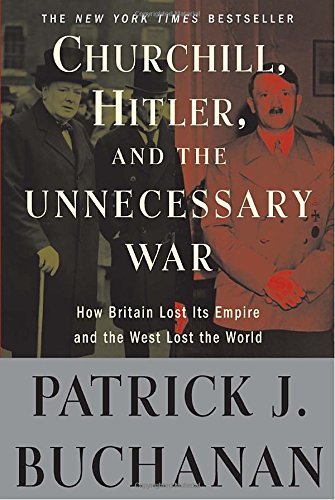



 Tony Hall (on the right) has the courage to speak truth to power on False Flag Weekly News… and courage is not always appreciated in the academy
 Aletho News
 Aletho News