The First Intifada: Nostalgia

Palestinian women confront Israeli soldiers during the First Intifada [Facebook]
Nadia Naser-Najjab | MEMO | December 9, 2017
This month marks the 30th anniversary of the First Intifada, an event which fundamentally altered the profile and trajectory of the Palestinian national struggle against occupation. It shifted political leadership away from the exiled Palestine Liberation Organisation (PLO) leadership, reconfigured local political arrangements and, most crucially, challenged the Israeli occupation at its weakest and most vulnerable points.
However, its full significance has not been, to my mind, sufficiently acknowledged, whether by international observers or by younger generations of Palestinians. This is unfortunate, as the Intifada is not purely an historical event – in my view it has much to contribute to discussions that relate to the conceptual framing, theorisation and tactics of contemporary resistance. This article does not, however, propose to engage at any of these points. It has instead been conceived and developed as a personal account which is grounded within my own perspectives and experiences.
In the late 1980s, I lived in the village of Burqa, which is close to Nablus, in the northern West Bank. My home village – like the rest of the West Bank and the Gaza Strip – had been subject to Israeli occupation for two decades. At the time, the wider world knew little of this reality: insofar as it engaged with the Palestinian “question”, it tended to fixate upon the diaspora refugee communities who had been at the forefront of the Palestinian struggle in Lebanon and Jordan. In the aftermath of the Oslo Accords, this emphasis was inverted. The Occupied Palestinian Territories (OPT) became the focus of international attention and Palestinian refugee communities became, at best, a secondary preoccupation.
For Palestinians in the OPT, there was no possibility that they could be similarly blind to the occupation, whose curfews and collective punishments imposed themselves upon almost every aspect of everyday life. Refuge could not be sought in political quietism: the occupation did not distinguish between the politically active and apathetic. Indeed, this was one of the main oversights of the occupation: it politicised ordinary Palestinians by making resistance an imperative which weighed equally upon every Palestinian man, women and child. My own parents, who had previously shown little inclination to join in revolutionary activities (quite the contrary – they tried to dissuade me and my sisters from participating), joined a protest after Israeli soldiers killed a ten-year-old boy who was playing in his backyard in my home village.
Looking back, I remember how, in imposing collective punishment upon my home village, the Israeli occupiers forced all adult males to congregate in the school courtyard. They made little allowance for age, seniority or status: teachers and doctors were forced to run around while shouting senseless and random words like “tomato” and “potato”. They were sometimes detained for more than six hours, and were not allowed to use the toilet or speak to each other during that entire time. Fathers, brothers, relatives and neighbours were deliberately humiliated in front of each other.
The occupiers inflicted this treatment on my own father. One day, soldiers told him to bring down a Palestinian flag which activists had placed on top of an electricity pole. He was over 60. When he told the soldiers this and tried to make them see how difficult it would be for him to climb the pole, they refused to accept his “excuse” and threatened him with violence if he did not obey. He also knew that if he refused, his ID card would be confiscated and he would have to travel to the military offices in Nablus and wait for hours or even days to get it back.
Israeli soldiers did not therefore always have to resort to direct violence. More often than not, this was unnecessary. In the OPT, violence was an implicit undertone, ever-present in the background. During one prolonged curfew, my sister sneaked out to visit my aunt, who lived around a ten minutes’ walk away. She did not encounter a single Israeli soldier. The Israeli army knew full well that their orders and directives did not require direct enforcement.
This suddenly changed when the First Intifada broke out on 9 December 1987. Yitzhak Rabin declared an “Iron Fist” policy to tame Palestinians, and a man who would later be near-universally venerated as a “dove” of peace openly called upon Israeli soldiers to “break the bones” of Palestinian protestors. This violence also took other forms. Birzeit University, an important centre of popular resistance and struggle, was forced to close. A number of students (myself included) were prevented from graduating on time.
While Rabin’s actions said much about his own considerable capacity for violence and intransigence, they said an equal amount about the settler-colonial mentality. In adhering to its guiding tenets, Israel’s political-military establishment believe that Palestinians cannot be engaged with as equals. Instead, it is more appropriate to engage with “them” with treatment commensurate to their level of personal and social development. Violence presents itself as an appropriate mode of conduct at this point.
While the Israeli political-military establishment continually endeavours to gain insights into the mindset of its Palestinian adversaries, it appears to be structurally predisposed to underestimate Palestinians and their capacity for collective organisation and mobilisation. In other words, the influence of Zionism’s implicit racism and ethnocentrism invariably frustrates the initial aspiration to understand. It is true that the PLO leadership had been similarly blind to the possibilities of mass mobilisation. However, as Frantz Fanon observes, the colonised “…is overpowered but not tamed; he is treated as an inferior but he is not convinced of his inferiority”.
The profound flaws within this misconception were clearly exposed when the United National Leadership of the Uprising (UNLU) took control of what was initially a spontaneous outburst of popular anger and resentment and turned it towards clear ends and purposes. The Intifada rapidly coalesced into a disciplined, broad-based and democratic uprising that was focused upon clear ends and objectives. The uprising became a source of immense pride for Palestinians, and it was characterised by a sense of self-sacrifice and commitment to the wider struggle. Patriotic poems were smuggled from prisons; Palestinian musicians composed Intifada songs, and their tape cassettes helped to raise Palestinian spirits. Sharif Kanaana, a professor at Birzeit University, collected what became known as “Intifada jokes”. He noted that there was a clear difference between jokes told in the pre-Intifada period and those told after it. In the latter instance there was a stronger sense of defiance, and the humour was invariably at the expense of the occupying power.
When the Israeli army closed schools, the popular committees created home schools. When these home schools were then banned, Palestinians continued to operate them underground. One father, whose furniture and television set were confiscated after he refused to pay the occupation tax, spoke of how his son had told him not to protest on his own behalf. He refused to grant the Israelis this minor victory. His son said: “I don’t want to watch cartoons. Do not ask them to keep it.” When I joined solidarity visits to the injured at Al-Makaseed Hospital I was struck by the pride and defiance that shone in the eyes of the injured.
In the current context devoid of any real sense of purpose, it is unsurprising that Palestinians should look back on the Intifada as a “golden age” of Palestinian struggle. However, there is a clear danger that these recollections will romanticise the uprising. It is crucial not to fall into this trap. After all, the Intifada was not entirely cohesive (there were ongoing tensions between the UNLU, the PLO and Hamas) and it could be argued that it was ultimately a failure – after all, its main contribution proved to be the abortive Oslo Accords.
These limitations do not detract from the essential fact that the Intifada has a perhaps unparalleled significance in the history of the occupation, standing apart as the point at which Palestinians gathered the strength and collective sense of purpose which enabled them to confront an occupation which had imposed itself upon Palestinian society for two decades. It will always remain a source of pride for Palestinians, and will always to some extent reside at the level of imagination. In reflecting back upon it, Palestinians should take pride in its many achievements but also resist the temptation to idealise or romanticise. If this caveat is taken into account, then there is every reason to suppose that looking back will produce concrete benefits in the present.
Read also: 250,000 Palestinians injured since First Intifada
No comments yet.
Featured Video
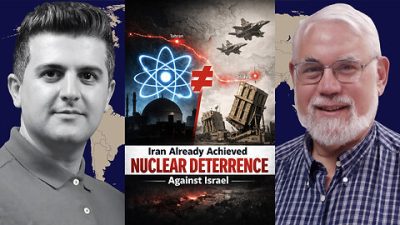
Prof. Ted Postol: Iran Already Achieved Nuclear Deterrence Against Israel
or go to
Aletho News Archives – Video-Images
From the Archives
How the occupied mentality syndrome works
Saudi Arabia on the American chessboard – Part 3
By B. J. Sabri | American Herald Tribune | June 27, 2016
Read part 2: “The occupied mentality Syndrome“
Previously I argued whether Saudi Arabia’s repeated involvements in U.S. interventions and wars stem from free national will or in response to a specific condition. For starters, in Saudi Arabia there is no national will. In Saudi Arabia, the national will is the will of the Al Saud clan. Still, when a major Arab state allies itself with a superpower that committed unspeakable crimes against humanity in almost every Arab country, then something is wrong. This fact alone should compel us to examine the U.S.-Saudi relation for one exceptional reason. As a result of the U.S.-Saudi wars, hundreds of thousands of people in Afghanistan, Iraq, Iran, Libya, Syria, Yemen, and Somalia have lost their lives. Millions became displaced in their own homelands. And millions more rendered refugees.
Attributing the Saudi policies to the bonds of “partnership” with the U.S. is frivolous. There are no bonds between these two thugs except those of business, military deals, secret plots, and wars. Proving this point, bonds such as these have no space for the American and Saudi peoples to share significant cultural or societal exchanges. If partnership is not the reason for the Saudi contribution to the U.S. strategy of empire and imperialism, then another reason must exist.
This leads to three possibilities. … continue
Blog Roll
 Aletho News
- In letter to UN chief, Araghchi warns of dire consequences of US-Israeli attacks on Iran’s nuclear facilities
- Why the CIA conspiracy to invade Iran with Kurdish militias failed
- Why Are Upbeat US Claims About Mission to Rescue Pilot ‘Highly Questionable’?
- Aircraft destroyed during US ‘rescue’ of downed F-15 pilot cost more than $100 million each
- Washington University removes professor who condemned US-Israeli war on Iran
- Russia Warns of Retaliation as UK Authorizes Seizure of Vessels
- Serbia thwarts plot to bomb Russia-Hungary gas pipeline – Vucic
- Al Mayadeen voices solidarity with Dr. Marandi amid death threats
- US dismantling international law in its war against Iran while claiming ‘false’ victory: Legal scholar
- One martyr, 5 injuries in US attack on Iraqi border crossing with Iran
- If Americans Knew
- US loses planes over Iran, Israel downgrades Lebanon war goals – Daily Update
- Israel Is Blocking Palestinians from Easter at Church Where Jesus Resurrected
- Plot to assassinate Palestinian activist follows harassment campaign promoted by Zionist groups and elected officials
- Prominent New York synagogue hosts presentation on why U.S. Jews should support the ethnic cleansing of Gaza
- Tapper vs. Piker: Is the CNN Anchor Auditioning for David Ellison?
- Shouldn’t Democrats Be Able to Condemn Genocide?
- Israel-US kill negotiators, destroy civilian structures, but Iran’s military capabilities still largely intact – Daily Update
- ‘War crime’: Global condemnation as Israeli ministers celebrate death penalty law targeting Palestinian prisoners
- 7 Ways Israel Is Turning Lebanon Into Gaza
- World’s Leading Football Bodies Under Fire Over Israel Policies
- No Tricks Zone
- An Inconvenient Tree: Uncovered In Alps… Europe Much Warmer Than Today 6000 Years Ago
- New Study Reports A 60% Slowdown In Greenland’s Ice Loss Rate In The Last Decade
- Low Intensity Tornado Wrecks Major Solar Farm, Creating A Potential Toxic Dump
- New Study Finds Warming Saves Lives…Cold Temperatures 12 Times More Deadly Than Excess Heat
- German Science Blog Accuses PIK Climate Institute Of Hallucinating Climate Tipping Points
- Devastating Assessment Of Comirnaty Vaccine By Former Senior Pfizer Europe Toxicologist
- New Study: CO2 Is ‘Effectively Negligible’ As An Explanatory Climate Change Factor Since 2000
- Former Pfizer Toxicologist Dr. Helmut Sterz Tells Bundestag Hearing Pfizer Vaccine Should Have Never Been Approved
- Energy Expert: Germany’s Nuclear Phaseout Was A “500 Billion Euro Mistake”
- New Research: South Australia’s Mid-Holocene Sea Surface Temperatures Were 4°C Warmer Than Today
 Aletho News
Leave a comment