The NYT’s latest Russiagate story on George Papadopoulos is not believable. Here’s why
Attempt to distance Russiagate investigation from discredited Trump Dossier fails on Papadopoulos’s inherent unreliability as a witness

By Alexander Mercouris | The Duran | January 1, 2018
As confidence in Robert Mueller’s investigation crumbles there have been the inevitable leaks intended to suggest that the Russiagate investigation is still on track and that despite the increasing appearances to the contrary there is actually some reality to the case it is investigating.
The leaks take the form of claims that Mueller is planning to issue a “supplemental indictment” of Paul Manafort supposedly fleshing out the tax evasion and money laundering claims he has brought against him, and more information about the strange case of George Papadopoulos.
I will not take up time discussing the ‘supplemental indictment’ against Paul Manafort. The case against Paul Manafort does not touch on the collusion allegations which are the focus of the Russiagate affair, and by all accounts the new ‘supplemental indictment’ will not change that.
What the fact that Mueller is now preparing a ‘supplemental indictment’ against Manafort shows is that what I and many others have said previously is true: the original indictment against Manafort was rushed and unprepared, probably because it was rushed out to counter criticism of Mueller which was appearing in the Wall Street Journal.
Of much more interest is the new information which has been published about George Papadopoulos. The information appears in an article in the New York Times which reads in part as follows:
During a night of heavy drinking at an upscale London bar in May 2016, George Papadopoulos, a young foreign policy adviser to the Trump campaign, made a startling revelation to Australia’s top diplomat in Britain: Russia had political dirt on Hillary Clinton.
About three weeks earlier, Mr. Papadopoulos had been told that Moscow had thousands of emails that would embarrass Mrs. Clinton, apparently stolen in an effort to try to damage her campaign.
Exactly how much Mr. Papadopoulos said that night at the Kensington Wine Rooms with the Australian, Alexander Downer, is unclear. But two months later, when leaked Democratic emails began appearing online, Australian officials passed the information about Mr. Papadopoulos to their American counterparts, according to four current and former American and foreign officials with direct knowledge of the Australians’ role.
This information has clearly been published in order to counter the increasingly widely circulating claim that it was the Trump Dossier which triggered the Russiagate investigation.
This is made absolutely clear by the following paragraphs in the New York Times article
The hacking and the revelation that a member of the Trump campaign may have had inside information about it were driving factors that led the F.B.I. to open an investigation in July 2016 into Russia’s attempts to disrupt the election and whether any of President Trump’s associates conspired…
The hacking and the revelation that a member of the Trump campaign may have had inside information about it were driving factors that led the F.B.I. to open an investigation in July 2016 into Russia’s attempts to disrupt the election and whether any of President Trump’s associates conspired.
The information that Mr. Papadopoulos gave to the Australians answers one of the lingering mysteries of the past year: What so alarmed American officials to provoke the F.B.I. to open a counterintelligence investigation into the Trump campaign months before the presidential election?
It was not, as Mr. Trump and other politicians have alleged, a dossier compiled by a former British spy hired by a rival campaign. Instead, it was firsthand information from one of America’s closest intelligence allies.
Is this however really so?
The drunken bragging of a twenty eight year old man in a London bar presumably with attractive young women present is not usually considered grounds to initiate a top secret investigation resulting in the secret surveillance of people against whom no other evidence of wrongdoing exists.
The known timeline of the Russiagate inquiry anyway strongly argues against this claim.
The DNC emails were published by Wikileaks on 22nd July 2016. The FBI launched the Russiagate inquiry in late July 2016, probably after the DNC emails were published.
This was however after the FBI had interviewed Christopher Steele, the compiler of the Trump Dossier, in early July 2016. The Trump Dossier’s first two entries are dated 20th June 2016 and 19th July 2016 – ie. before publication of the DNC emails – and it is likely that before the FBI launched the Russiagate inquiry in late July 2016 it had seen them.
The New York Times says that the FBI received the information about Papadopoulos’s bragging in front of the Australian High Commissioner after the DNC emails were published. However the FBI did not actually interview Papadopoulos until 27th January 2017.
What seems to have happened is that after the Russiagate inquiry was launched the FBI went through all the information it received which might touch on the inquiry. At some point the Australian High Commissioner’s report about Papadopoulos’s bragging in May 2016 in the London bar came up and a decision was taken to interview him.
However – contrary to what the New York Times says – the FBI cannot have accorded this any great importance since though the Russiagate inquiry was launched at the end of July 2016 the FBI did not interview Papadopoulos until 27th January 2017 ie. six months later.
That makes it all but inconceivable that it was – as the New York Times claims – the report from Australia about what Papadopoulos said in the presence of the Australian High Commissioner in the London bar rather than the Trump Dossier which triggered the Russiagate inquiry.
As it happens the rest of the New York Times article, though outlining at fantastic length the nature of Papadopoulos’s Russian contacts provides no evidence of collusion illegal or otherwise between the Russians, Papadopoulos or anyone else in the Trump campaign.
What the New York Times article does show is who Papadopoulos’s Russian contacts were.
It turns out that they were senior people in the Valdai Discussion Club, which is not at all surprising given that Professor Mifsud, the Maltese professor who was Papadopoulos’s contact, is known to have participated in a Valdai Discussion Club panel on 19th April 2016.
The Valdai Discussion Club for those who do not know is a Russian NGO which regularly hosts discussions between top level Russian officials and senior people from around the world. It is sometimes spoken of as the Russian equivalent to Davos. This page from its website gives an idea of its activities and of the very senior people from around the world who have been involved in it,
In other words when Papadopoulos and Professor Mifsud got to know each other Professor Mifsud simply put Papadopoulos in touch with the Russian organisers of the meeting he was attending.
That does not argue for Professor Mifsud’s “high level contacts” within the Russian government; it argues against it.
As it happens no Russian government official appears to have been directly involved in the discussions between the various members of the Valdai Discussion Group and Papadopoulos.
The New York Times says that Igor Ivanov, who was Russia’s foreign minister from 1998 to 2004, was consulted by Papadopoulos’s Russian contacts. Ivanov is presumably the “Russian MFA Connection” referred to in Papadopoulos’s indictment. However Ivanov is a retired official not an active one, and his Wikipedia profile suggests that he is now mainly involved in academic work and in the work of various international NGOs. As such he would have been an obvious person for members of the Valdai Discussion Club to consult, and was not in any sense a representative of the Russian government.
As for the subject matter of the discussions between Papadopoulos and his Russian contacts, there is no hint in the New York Times article of any conspiracy between Papadopoulos, the Trump campaign and the Russians concerning the election or any other matter.
Instead we are told – again at inordinate length – about Papadopoulos’s already known but ultimately futile efforts to arrange a summit meeting between Vladimir Putin and Donald Trump, which Papadopoulos persisted in even after he was told to stop them.
As has by now become typical of the New York Times’ Russiagate coverage, its latest article about Papadopoulos also states as facts things which are in fact strongly disputed.
For example it states as flat facts that it was Professor Mifsud who falsely claimed to Papadopoulos that Olga Polonskaya – one of Papadopoulos’s Russian contacts – was President Putin’s niece, and that it was Professor Mifsud who told Papadopoulos during a hotel meeting in London in April 2016 that the Russians had “dirt” on Hillary Clinton.
Professor Mifsud however has publicly denying telling Papadopoulos either of these things, and the only evidence he did so is that Papadopoulos says he did.
On the subject of the false claim that Polonskaya was Putin’s niece, it is intrinsically far more likely that this is an invention of Papadopoulos’s and not of Professor Mifsud’s. Why after all would Mifsud – presumably in cooperation with the Russians – seek to pass off Polonskaya as Putin’s niece when a five minute internet search would establish that Putin has no niece? What would be the purpose of such a thing?
The only confirmed reference to Polonskaya being Putin’s niece other than Papadopoulos’s statements to the FBI is an email Papadopoulos sent to the Trump campaign describing her as such.
It is Papadopoulos not Professor Mifsud who has pleaded guilty to lying to the FBI. Papadopoulos’s behaviour in fact clearly points to him being a young man out of his depth and given to fantasising. Even the New York Times calls him “brash, boastful and underqualified”.
It turns out that Papadopoulos even publicly reprimanded British Prime Minister David Cameron in a May 2016 interview with The London Times which he was not authorised by the Trump campaign to give, and for which he was subsequently severely reprimanded, and it is also known that he persisted in trying to arrange with the Russians a summit meeting between Donald Trump and Vladimir Putin even when told to stop doing so.
Given that Papadopoulos is therefore a known loose cannon with a record of bragging and a conviction for lying why assume that on any subject – eg. the false claims about Polonskaya – it is Papadopoulos who is telling the truth and that it is Professor Mifsud who is lying? Surely the opposite is far more likely to be true?
In the case of Polonskaya the New York Times has to pretend that it is Papadopoulos not Professor Mifsud who is telling the truth because if it were confirmed that it was Papadopoulos who invented the story about Polonskaya being Putin’s niece then that would expose him as a fantasist, which would discredit the whole elaborate scenario the New York Times is trying to spin around him.
That shows why it is dangerous to assume that Papadopoulos is telling the truth on any point when those who have a vested interest in the Russiagate story say he is. On the contrary Papadopoulos is an inherently unreliable witness and must always be treated as such.
Does the information in the New York Times article however tell us anything we didn’t previously know about the core issue in the case: the “dirt” Papadopoulos says Professor Mifsud told him that the Russians have on Hillary Clinton?
Firstly, despite the New York Times’ painstaking attempts to link the boasts which Papadopoulos blurted out in a London bar to the DNC and Podesta emails, it seems that Papadopoulos whilst he was bragging in the London bar did not in fact refer to those emails.
The relevant paragraph in the New York Times article on this point needs to be read carefully
During a night of heavy drinking at an upscale London bar in May 2016, George Papadopoulos, a young foreign policy adviser to the Trump campaign, made a startling revelation to Australia’s top diplomat in Britain: Russia had political dirt on Hillary Clinton. (bold italics added)
The words “political dirt on Hillary Clinton” are almost certainly copied from the Australian High Commissioner’s report to his government, which was subsequently passed on to the FBI, and which forms the basis of the story in the New York Times.
What these words show is that Papadopoulos was boasting in the London bar that the Russians had “political dirt about Hillary Clinton”, not that they had the DNC or Podesta emails.
What this paragraph also shows is that Papadopoulos in May 2016 was bragging about his high position in the Trump campaign and about his contacts with the Russians, and was doing so openly in the presence of no less a person than the Australian High Commissioner, whose identity he cannot have been unaware of.
This sort of wild indiscretion all but proves that Papadopoulos was not involved in a secret criminal conspiracy with the Russians. Of course the rest of the New York Times article and the text of his indictment provides no evidence that he was.
In fact it is possible to make some educated guesses about the Papadopoulos affair based on this new information, which leads to diametrically opposite conclusions to the ones reached by the New York Times.
In May 2016 Papadopoulos was clearly on a high, giving foolish interviews to The London Times and bragging in front of the Australian High Commissioner in a London bar about his high level position in the Trump campaign and about his contacts with the Russians.
That strongly points to his boast in the London bar that the Russians had ‘political dirt’ on Hillary Clinton being his own invention.
Subsequently, when he was asked about it by the FBI – long after the Russiagate scandal broke out – he panicked and blamed the whole thing on Professor Mifsud who he said told him about it during their meeting in the London hotel in April 2016.
Note that the wording of the indictment shows that Papadopoulos was vague about what precisely Professor Mifsud was supposed to have told him:
On or about April 26, 2016, defendant PAPADOPOULOS met the Professor for breakfast at a London hotel. During this meeting, the Professor told defendant PAPADOPOULOS that he had just returned from a trip to Moscow where he had met with high-level Russian government officials. The Professor told defendant PAPADOPOULOS that on that trip he (the Professor) learned that the Russians had obtained “dirt” on then-candidate Clinton. The Professor told defendant PAPADOPOULOS, as defendant PAPADOPOULOS later described to the FBI, that “They [the Russians] have dirt on her”; “the Russians had emails of Clinton“; “they have thousands of emails.” (bold italics added)
The words “the Russians had emails of Clinton” make it clear that the emails and supposedly discussed by Professor Mifsud and Papadopoulos were not the DNC and Podesta emails but Hillary Clinton’s own 33,000 emails deleted from her private email server. Had Papadopoulos referred to the DNC and Podesta emails in his interview with the FBI the indictment would have surely said so.
In May 2016 – the month when Papadopoulos was drunkenly bragging in the London bar – the scandal around Hillary Clinton’s misuse of a private email server for her State Department emails was at its height, with the Inspector General of the State Department publishing an 83 page report and with speculation rife about the progress of the FBI’s investigation into the affair.
Possibly Papadopoulos was thinking about Hillary Clinton’s 33,000 emails when he was bragging in the London bar. More likely he referred to these emails when he tried to explain away his comments in the London bar to the FBI.
By the time the FBI interviewed him Papadopoulos would have known that any reference to the DNC and Podesta emails would have exposed him to suspicion of involvement in a far greater conspiracy. Frightened and searching for ways to get himself out of trouble, and perhaps realising that he would not be believed if he admitted that he had been lying when he had been bragging in the London bar, he brought up the subject of Hillary Clinton’s emails instead, and involved Professor Mifsud in the story to give himself cover.
Regardless, the fact that Papadopoulos’s recollection of what Professor Mifsud is supposed to have told him is so vague points to what is almost certainly the truth: Papadopoulos is making it all up.
Not only does this seem to me a far more plausible explanation of the Papadopoulos affair than the one suggested by the New York Times, but there is one obvious point which for me confirms it.
Nothing Papadopoulos says about this episode can be independently confirmed.
His account of his meeting in April with Professor Mifsud is disputed by Professor Mifsud who is the only other witness.
Apart from his bragging in the London bar there is no evidence dating from the time that he had any knowledge that the Russians had “dirt” on Hillary Clinton. None of his very numerous communications to the Trump campaign refer to the fact.
To those who say that Papadopoulos would wish to keep his reports about this secret, all I would say is that Papadopoulos cannot have thought of it so very secret since in May 2016 he was openly bragging about it in front of the Australian High Commissioner in a London bar.
All this taken together makes it highly likely that Papadopoulos is inventing the whole story, just as he is almost certainly the person who invented the story of Polonskaya being Putin’s niece.
In summary the New York Times story, far from lending credence to the Russiagate collusion allegations actually provides further reason to doubt them. As for Papadopoulos, far from being a star ‘smoking gun’ witness, he comes across as a boastful fantasist who is not telling the truth.
What the article does highlight is the pressure the FBI and the Mueller investigation are under as the doubts about the Trump Dossier grow.
It is the Trump Dossier which remains however the key to the affair. This latest attempt to deny the fact and to distract from it does not refute it. On the contrary it confirms it.
Israeli army arrests Palestinian parliamentarian Nasser Abdel Gawad
MEMO | January 1, 2018
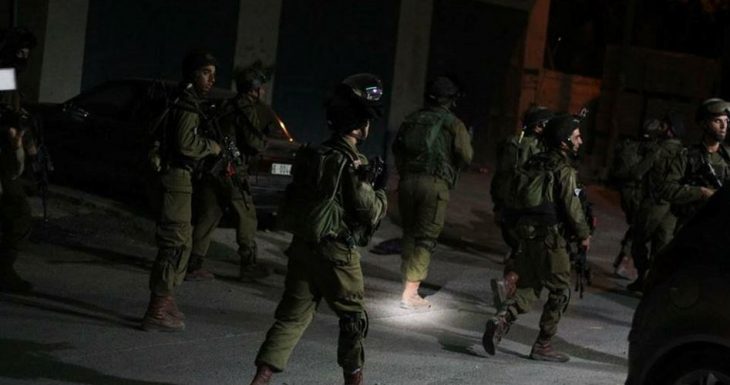
The Israeli army arrested a Palestinian parliamentarian in the West Bank city of Salfit this morning, according to a report by Anadolu Agency.
According to eyewitnesses, the Israeli forces raided Nasser Abdel Gawad’s residence and arrested him.
Palestinian MP Fathi al-Qaraawi of the Hamas-affiliated Change and Reform bloc said continuous arrests of deputies of the Palestinian Legislative Council who are entitled to parliamentary immunity is a flagrant violation of international law.
“Israel rejected the results of the Palestinian parliamentary elections in 2006 and arrested all Hamas deputies (in the West Bank including Jerusalem) and continues to punish the Palestinian people for this by arresting the group’s deputies,” al-Qaraawi said.
The Change and Reform bloc won the 2006 Palestinian elections with an overwhelming majority.
Al-Qaraawi added the arrest is an attempt to block opposition to US President Donald Trump’s recognition of Jerusalem as Israel’s capital.
The latest arrest raises the number of jailed Palestinian parliamentarians to 11.
US vice president’s visit to Israel postponed again
Press TV – January 1, 2018
A planned visit to Israel by US Vice President Mike Pence has been indefinitely postponed, according to Israeli officials.
The trip which had been expected to take place in mid January is not on the Israeli foreign ministry’s schedule, according to The Times of Israel.
“The visit is not included in our provision of scheduled visits of high-level dignitaries in January,” ministry spokesman Emmanuel Nahshon said.
No new date has yet been set for the vice president’s visit.
Pence originally postponed a planned mid-December trip to Israel so he could preside over the Senate vote on the Republican tax plan.
But the delay also followed region-wide protests over President Donald Trump’s decision to recognize Jerusalem al-Quds as the “capital” of Israel.
At the time, Palestinian authorities canceled a planned meeting with the US vice president to protest Trump’s declaration.
A White House official said back then that Pence would visit the occupied territories in mid-January instead.
The entire Jerusalem al-Quds is currently under Israel’s control, while the regime also claims the city’s eastern part, which hosts the third holiest Muslim site.
The city has been designated as “occupied” under international law since the 1967 Arab War. It remains at the core of the Israeli-Palestinian conflict, with Palestinians hoping that the eastern part of the city would eventually serve as the capital of their future state.
Palestinians have repeatedly warned Trump against recognizing al-Quds as Israel’s capital, saying it would deliver a death blow to any prospects of the resolution of the Palestinian-Israeli conflict and fuel extremism in the region.
Pence’s original schedule also included a stop in Egypt. The head of Egypt’s Coptic Church, Pope Tawadros II, also called off a planned meeting with Pence.
Washington Post Ad Calls Singer Lorde a Bigot Over Cancelled Israeli Show
Sputnik – 01.01.2018
A backlash against New Zealand singer Lorde continues in the wake of her decision to call off her concert in Israel amid pressure from her fans following Trump’s Jerusalem move.
A full-page advertisement calling Lorde a bigot and accusing New Zealand of harboring a bias against Israel appeared on the fifth page of the Washington Post’s December 31 edition.
Full page add on @washingtonpost tries to defame @lorde for boycotting israel by Bringing up that #Syria is being bombed. They hilariously forgot that Israel is bombing Syria. #Jerusalem pic.twitter.com/QXlERy5XCo
— Partisangirl 🇸🇾 (@Partisangirl) January 1, 2018
The ad features Lorde’s photo over the picture of men running through ruins with babies and Israeli flags streaming in the wind. The headline says “Lorde and New Zealand ignore Syria to attack Israel.”
It slams the 21-year-old singer’s decision to cancel a concert in Tel Aviv following a wellspring of Muslim fans urging her not to go there, noting that she had joined the global boycott of Israel but “will perform in Russia, despite Putin’s support for Assad’s genocide in Syria.”
The advertisement adds that Lorde’s move shows how a “growing prejudice against the Jewish State” in New Zealand is “trickling down to its youth.”
As for New Zealand, the ad points out the country’s support for the UN resolution urging the US to revoke its decision to recognize Jerusalem as Israel’s capital, while citing New Zealand’s co-sponsorship of a UN resolution condemning illegally-built Israeli settlements in Palestinian territories. The resolution, which was approved by every member of the UN Security Council except the US (which abstained), was endorsed by both Amnesty International and Human Rights Watch.
“Let’s boycott the boycotters and tell Lorde and her fellow bigots that Jew-hatred has no place in the twenty-first century,” the ad reads.
Commenting on the advertisement in the Post, the New Zealand Jewish Council said that the council is “committed to dialogue and tolerance and distances itself from the inflammatory and aggressive material that stoops to the level of BDS [Boycott, Divestment, Sanctions movement] rather than rising above it.”
“We are disappointed with Lorde’s decision to cancel her show after pressure from the discriminatory BDS movement and invite Lorde to continue learning about the region,” the council’s statement reads.
Lorde called off her June concert in Tel Aviv, giving in to the mounting pressure from activists of the Boycott, Divestment, Sanctions movement (BDS), which aims “to end international support for Israel’s oppression of Palestinians and pressure Israel to comply with international law,” according to its official website.
She was also influenced by an open letter written by her fans from New Zealand, which stated that the show in Tel Aviv would demonstrate support for Israel’s occupation of Palestine.
“I’ve received an overwhelming number of messages & letters and have had a lot of discussions with people holding many views, and I think the right decision at this time is to cancel the show,” Lorde said, as quoted by Naranjah, the Israeli promoters of her show.
The decision was made after what the New Zealand pop star deemed as her “learning all the time” and “considering all options” available to her.
Featured Video

Rewriting the risk? Inside the government’s vaccine safety messaging
or go to
Aletho News Archives – Video-Images
Book Review
“Davos Can Really Replace the UN”
Inside the book that maps the architecture behind global governance — from the Epstein files to the Pact for the Future
Lies are Unbekoming | April 1, 2026
On June 13, 2019, the United Nations and the World Economic Forum signed a partnership deal to “accelerate the implementation of the 2030 Agenda for Sustainable Development.” That same evening, WEF president Börge Brende — Norway’s former Foreign Minister — had dinner with Jeffrey Epstein at Epstein’s Manhattan townhouse. The Epstein files, released January 2026, contain an exchange between the two from the previous year. Epstein to Brende: “Davos can really replace the UN. C21, cyber, crypto . genetics… intl coordination.” Brende back to Epstein: “Exactly — we need a new global architecture. World Economic Forum (Davos) is uniquely positioned — public private.”
The next day, the UN General Assembly adopted the framework for restructuring global governance.
That sequence — the partnership signing, the Epstein dinner, the candid admission about replacing the UN with a public-private architecture, and then the formal adoption — opens Jacob Nordangård’s The Digital World Brain. Pages two and three. Footnoted to the UN resolution number, the Epstein files, and the General Assembly record.
I keep coming back to it because it captures what this book does that almost nothing else in the independent research space manages. I’ve followed Jacob’s work for years now and interviewed him about his research. Each book peels back another layer of the same institutional architecture, and each time I think he’s reached the limit of what can be documented, the next one goes further. Nordangård doesn’t speculate. He doesn’t editorialize much. He lays institutional actions next to each other in chronological order and lets the pattern announce itself. … continue
Blog Roll
 Aletho News
- The End of NATO
- 37 days of war on Iran cost US staggering $42bln, tracker shows
- Baghdad tells Asian refiners, traders to begin loading Iraqi crude amid Iranian exemption
- Under fire, Moscow and Tehran close ranks
- Iran, US receive Pakistan-mediated plan for ceasefire then final deal
- Iran submits demands for end to war as mediators scramble ahead of Trump deadline
- Iran Threatens Retaliatory Strike on Stargate AI Project in UAE
- US sent ‘a lot’ of arms to Iranian protesters – Trump
- Barak Ravid Launders Deception To Allow Trump To Back Off Of His Power Plant Threat – Again
- REWRITING THE RISK? INSIDE THE GOVERNMENT’S VACCINE SAFETY MESSAGING
- If Americans Knew
- Trump poised to “blow everything up” (ie. commit war crimes) in Iran – Daily Update
- In Iran, Israel-US take aim at “reason, research, and freedom of thought” – Daily Update
- US loses planes over Iran, Israel downgrades Lebanon war goals – Daily Update
- Israel Is Blocking Palestinians from Easter at Church Where Jesus Resurrected
- Plot to assassinate Palestinian activist follows harassment campaign promoted by Zionist groups and elected officials
- Prominent New York synagogue hosts presentation on why U.S. Jews should support the ethnic cleansing of Gaza
- Tapper vs. Piker: Is the CNN Anchor Auditioning for David Ellison?
- Shouldn’t Democrats Be Able to Condemn Genocide?
- Israel-US kill negotiators, destroy civilian structures, but Iran’s military capabilities still largely intact – Daily Update
- ‘War crime’: Global condemnation as Israeli ministers celebrate death penalty law targeting Palestinian prisoners
- No Tricks Zone
- An Inconvenient Tree: Uncovered In Alps… Europe Much Warmer Than Today 6000 Years Ago
- New Study Reports A 60% Slowdown In Greenland’s Ice Loss Rate In The Last Decade
- Low Intensity Tornado Wrecks Major Solar Farm, Creating A Potential Toxic Dump
- New Study Finds Warming Saves Lives…Cold Temperatures 12 Times More Deadly Than Excess Heat
- German Science Blog Accuses PIK Climate Institute Of Hallucinating Climate Tipping Points
- Devastating Assessment Of Comirnaty Vaccine By Former Senior Pfizer Europe Toxicologist
- New Study: CO2 Is ‘Effectively Negligible’ As An Explanatory Climate Change Factor Since 2000
- Former Pfizer Toxicologist Dr. Helmut Sterz Tells Bundestag Hearing Pfizer Vaccine Should Have Never Been Approved
- Energy Expert: Germany’s Nuclear Phaseout Was A “500 Billion Euro Mistake”
- New Research: South Australia’s Mid-Holocene Sea Surface Temperatures Were 4°C Warmer Than Today
 Aletho News