Is Putin profoundly corrupt or “incorruptible?”
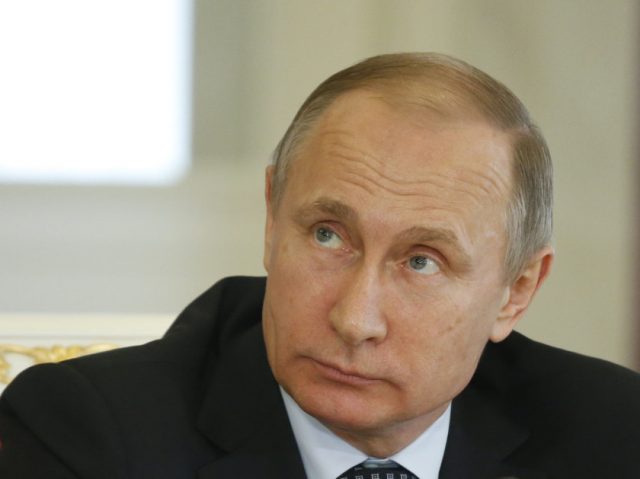
By Sharon Tennison | CCI | April 2017
As the Ukraine situation has worsened, unconscionable misinformation and hype is being poured on Russia and Vladimir Putin. Journalists and pundits must scour the Internet and thesauruses to come up with fiendish new epithets to describe both. Wherever I make presentations across America, the first question ominously asked during Q&A is always, “What about Putin?” It’s time to share my thoughts which follow:
Putin obviously has his faults and makes mistakes. Based on my earlier experience with him, and the experiences of trusted people, including U.S. officials who have worked closely with him over a period of years, Putin most likely is a straight, reliable and exceptionally inventive man.
He is obviously a long-term thinker and planner and has proven to be an excellent analyst and strategist. He is a leader who can quietly work toward his goals under mounds of accusations and myths that have been steadily leveled at him since he became Russia’s second president.
I’ve stood by silently watching the demonization of Putin grow since it began in the early 2000s –– I pondered on computer my thoughts and concerns, hoping eventually to include them in a book (which was published in 2011). The book explains my observations more thoroughly than this article.
Like others who have had direct experience with this little known man, I’ve tried to no avail to avoid being labeled a “Putin apologist”. If one is even neutral about him, they are considered “soft on Putin” by pundits, news hounds and average citizens who get their news from CNN, Fox and MSNBC.
I don’t pretend to be an expert, just a program developer in the USSR and Russia for the past 30 years. But during this time, I’ve have had far more direct, on-ground contact with Russians of all stripes across 11 time zones than any of the Western reporters or for that matter any of Washington’s officials.
I’ve been in country long enough to ponder on Russian history and culture deeply, to study their psychology and conditioning, and to understand the marked differences between American and Russian mentalities which so complicate our political relations with their leaders.
As with personalities in a family or a civic club or in a city hall, it takes understanding and compromise to be able to create workable relationships when basic conditionings are different. Washington has been notoriously disinterested in understanding these differences and attempting to meet Russia halfway.
In addition to my personal experience with Putin, I’ve had discussions with numerous American officials and U.S. businessmen who have had years of experience working with him––I believe it is safe to say that none would describe him as “brutal” or “thuggish”, or the other slanderous adjectives and nouns that are repeatedly used in western media.
I met Putin years before he ever dreamed of being president of Russia, as did many of us working in St.Petersburg during the 1990s. Since all of the slander started, I’ve become nearly obsessed with understanding his character. I think I’ve read every major speech he has given (including the full texts of his annual hours-long telephone “talk-ins” with Russian citizens).
I’ve been trying to ascertain whether he has changed for the worse since being elevated to the presidency, or whether he is a straight character cast into a role he never anticipated––and is using sheer wits to try to do the best he can to deal with Washington under extremely difficult circumstances.
If the latter is the case, and I think it is, he should get high marks for his performance over the past 14 years. It’s not by accident that Forbes declared him the most Powerful Leader of 2013, replacing Obama who was given the title for 2012. The following is my one personal experience with Putin.
The year was 1992

Putin with Anatoly Sobchak, Mayor of St. Petersburg, early 1990s. Putin was one of Sobchak’s deputies from 1992-96
It was two years after the implosion of communism; the place was St.Petersburg.
For years I had been creating programs to open up relations between the two countries and hopefully to help Soviet people to get beyond their entrenched top-down mentalities. A new program possibility emerged in my head. Since I expected it might require a signature from the Marienskii City Hall, an appointment was made.
My friend Volodya Shestakov and I showed up at a side door entrance to the Marienskii building. We found ourselves in a small, dull brown office, facing a rather trim nondescript man in a brown suit.
He inquired about my reason for coming in. After scanning the proposal I provided he began asking intelligent questions. After each of my answers, he asked the next relevant question.
I became aware that this interviewer was different from other Soviet bureaucrats who always seemed to fall into chummy conversations with foreigners with hopes of obtaining bribes in exchange for the Americans’ requests. CCI stood on the principle that we would never, never give bribes.
This bureaucrat was open, inquiring, and impersonal in demeanor. After more than an hour of careful questions and answers, he quietly explained that he had tried hard to determine if the proposal was legal, then said that unfortunately at the time it was not. A few good words about the proposal were uttered. That was all. He simply and kindly showed us to the door.
Out on the sidewalk, I said to my colleague, “Volodya, this is the first time we have ever dealt with a Soviet bureaucrat who didn’t ask us for a trip to the US or something valuable!”
I remember looking at his business card in the sunlight––it read Vladimir Vladimirovich Putin.
1994
U.S. Consul General Jack Gosnell put in an SOS call to me in St.Petersburg. He had 14 Congress members and the new American Ambassador to Russia, Thomas Pickering, coming to St.Petersburg in the next three days. He needed immediate help.
I scurried over to the Consulate and learned that Jack intended me to brief this auspicious delegation and the incoming ambassador.
I was stunned but he insisted. They were coming from Moscow and were furious about how U.S. funding was being wasted there. Jack wanted them to hear the”good news” about CCI’s programs that were showing fine results. In the next 24 hours Jack and I also set up “home” meetings in a dozen Russian entrepreneurs’ small apartments for the arriving dignitaries (St.Petersburg State Department people were aghast, since it had never been done before––but Jack overruled).
Only later in 2000, did I learn of Jack’s former three-year experience with Vladimir Putin in the 1990s while the latter was running the city for Mayor Sobchak. More on this further down.
December 31, 1999

Boris Nikolayevich Yeltsin leaves the Kremlin on the day of his resignation, December 31 1999. Prime Minister Putin (second left) became acting president.
With no warning, at the turn of the year, President Boris Yeltsin made the announcement to the world that from the next day forward he was vacating his office and leaving Russia in the hands of an unknown Vladimir Putin.
On hearing the news, I thought surely not the Putin I remembered––he could never lead Russia. The next day a NYT article included a photo.
Yes, it was the same Putin I’d met years ago! I was shocked and dismayed, telling friends, “This is a disaster for Russia, I’ve spent time with this guy, he is too introverted and too intelligent––he will never be able to relate to Russia’s masses.”
Further, I lamented: “For Russia to get up off of its knees, two things must happen: 1) The arrogant young oligarchs have to be removed by force from the Kremlin, and 2) A way must be found to remove the regional bosses (governors) from their fiefdoms across Russia’s 89 regions”.
It was clear to me that the man in the brown suit would never have the instincts or guts to tackle Russia’s overriding twin challenges.
February 2000
Almost immediately Putin began putting Russia’s oligarchs on edge. In February a question about the oligarchs came up; he clarified with a question and his answer:
What should be the relationship with the so-called oligarchs? The same as anyone else. The same as the owner of a small bakery or a shoe repair shop.
This was the first signal that the tycoons would no longer be able to flaunt government regulations or count on special access in the Kremlin. It also made the West’s capitalists nervous.
After all, these oligarchs were wealthy untouchable businessmen––good capitalists, never mind that they got their enterprises illegally and were putting their profits in offshore banks.
Four months later Putin called a meeting with the oligarchs and gave them his deal:
They could keep their illegally-gained wealth-producing Soviet enterprises and they would not be nationalized …. IF taxes were paid on their revenues and if they personally stayed out of politics.
This was the first of Putin’s “elegant solutions” to the near impossible challenges facing the new Russia. But the deal also put Putin in crosshairs with US media and officials who then began to champion the oligarchs, particularly Mikhail Khodorkovsky.
The latter became highly political, didn’t pay taxes, and prior to being apprehended and jailed was in the process of selling a major portion of Russia’s largest private oil company, Yukos Oil, to Exxon Mobil. Unfortunately, to U.S. media and governing structures, Khodorkovsky became a martyr (and remains so up to today).
March 2000
I arrived in St.Petersburg. A Russian friend (a psychologist) since 1983 came for our usual visit. My first question was, “Lena what do you think about your new president?” She laughed and retorted, “Volodya! I went to school with him!”
She began to describe Putin as a quiet youngster, poor, fond of martial arts, who stood up for kids being bullied on the playgrounds. She remembered him as a patriotic youth who applied for the KGB prematurely after graduating secondary school (they sent him away and told him to get an education).
He went to law school, later reapplied and was accepted. I must have grimaced at this, because Lena said:
Sharon in those days we all admired the KGB and believed that those who worked there were patriots and were keeping the country safe. We thought it was natural for Volodya to choose this career.
My next question was:
What do you think he will do with Yeltsin’s criminals in the Kremlin?
Putting on her psychologist hat, she pondered and replied:
If left to his normal behaviors, he will watch them for a while to be sure what is going on, then he will throw up some flares to let them know that he is watching. If they don’t respond, he will address them personally, then if the behaviors don’t change–– some will be in prison in a couple of years.
I congratulated her via email when her predictions began to show up in real time.
Throughout the 2000s
St.Petersburg’s many CCI alumni were being interviewed to determine how the PEP business training program was working and how we could make the U.S. experience more valuable for their new small businesses. Most believed that the program had been enormously important, even life changing. Last, each was asked:
So what do you think of your new president?
None responded negatively, even though at that time entrepreneurs hated Russia’s bureaucrats. Most answered similarly, “Putin registered my business a few years ago”.
Next question:
So, how much did it cost you?
To a person they replied, “Putin didn’t charge anything”. One said:
We went to Putin’s desk because the others providing registrations at the Marienskii were getting ‘rich on their seats.’
Late 2000
Into Putin’s first year as Russia’s president, US officials seemed to me to be suspect that he would be antithetical to America’s interests––his every move was called into question in American media. I couldn’t understand why and was chronicling these happenings in my computer and newsletters.
Year 2001
Jack Gosnell (former USCG mentioned earlier) explained his relationship with Putin when the latter was deputy mayor of St.Petersburg. The two of them worked closely to create joint ventures and other ways to promote relations between the two countries. Jack related that Putin was always straight up, courteous and helpful.
When Putin’s wife, Ludmila, was in a severe auto accident, Jack took the liberty (before informing Putin) to arrange hospitalization and airline travel for her to get medical care in Finland. When Jack told Putin, he reported that the latter was overcome by the generous offer, but ended saying that he couldn’t accept this favor, that Ludmila would have to recover in a Russian hospital.
She did––although medical care in Russia was abominably bad in the 1990s.
A senior CSIS officer I was friends with in the 2000s worked closely with Putin on a number of joint ventures during the 1990s. He reported that he had no dealings with Putin that were questionable, that he respected him and believed he was getting an undeserved dour reputation from U.S. media.
Matter of fact, he closed the door at CSIS when we started talking about Putin. I guessed his comments wouldn’t be acceptable if others were listening.
Another former U.S. official who will go unidentified, also reported working closely with Putin, saying there was never any hint of bribery, pressuring, nothing but respectable behaviors and helpfulness.
I had two encounters in 2013 with State Department officials regarding Putin:
At the first one, I felt free to ask the question I had previously yearned to get answered:
When did Putin become unacceptable to Washington officials and why??
Without hesitating the answer came back:
The knives were drawn’ when it was announced that Putin would be the next president.”
I questioned WHY? The answer:
I could never find out why––maybe because he was KGB.”
I offered that Bush #I, was head of the CIA. The reply was
That would have made no difference, he was our guy.
The second was a former State Department official with whom I recently shared a radio interview on Russia. Afterward when we were chatting, I remarked, “You might be interested to know that I’ve collected experiences of Putin from numerous people, some over a period of years, and they all say they had no negative experiences with Putin and there was no evidence of taking bribes”. He firmly replied:
No one has ever been able to come up with a bribery charge against Putin.”
From 2001 up to today, I’ve watched the negative U.S. media mounting against Putin …. even accusations of assassinations, poisonings, and comparing him to Hitler.
No one yet has come up with any concrete evidence for these allegations. During this time, I’ve traveled throughout Russia several times every year, and have watched the country slowly change under Putin’s watch. Taxes were lowered, inflation lessened, and laws slowly put in place. Schools and hospitals began improving. Small businesses were growing, agriculture was showing improvement, and stores were becoming stocked with food.
Alcohol challenges were less obvious, smoking was banned from buildings, and life expectancy began increasing. Highways were being laid across the country, new rails and modern trains appeared even in far out places, and the banking industry was becoming dependable. Russia was beginning to look like a decent country –– certainly not where Russians hoped it to be long term, but improving incrementally for the first time in their memories.
My 2013/14 Trips to Russia:
In addition to St.Petersburg and Moscow, in September I traveled out to the Ural Mountains, spent time in Ekaterinburg, Chelyabinsk and Perm. We traveled between cities via autos and rail––the fields and forests look healthy, small towns sport new paint and construction. Today’s Russians look like Americans (we get the same clothing from China).
Old concrete Khrushchev block houses are giving way to new multi-story private residential complexes which are lovely. High-rise business centers, fine hotels and great restaurants are now common place––and ordinary Russians frequent these places. Two and three story private homes rim these Russian cities far from Moscow.
We visited new museums, municipal buildings and huge super markets. Streets are in good repair, highways are new and well marked now, service stations look like those dotting American highways. In January I went to Novosibirsk out in Siberia where similar new architecture was noted. Streets were kept navigable with constant snowplowing, modern lighting kept the city bright all night, lots of new traffic lights (with seconds counting down to light change) have appeared.
It is astounding to me how much progress Russia has made in the past 14 years since an unknown man with no experience walked into Russia’s presidency and took over a country that was flat on its belly.
So why do our leaders and media demean and demonize Putin and Russia???
Like Lady MacBeth, do they protest too much?
Psychologists tell us that people (and countries?) project off on others what they don’t want to face in themselves. Others carry our “shadow” when we refuse to own it. We confer on others the very traits that we are horrified to acknowledge in ourselves.
Could this be why we constantly find fault with Putin and Russia?
Could it be that we project on to Putin the sins of ourselves and our leaders?
Could it be that we condemn Russia’s corruption, acting like the corruption within our corporate world doesn’t exist?
Could it be that we condemn their human rights and LGBT issues, not facing the fact that we haven’t solved our own?
Could it be that we accuse Russia of “reconstituting the USSR”––because of what we do to remain the world’s “hegemon”?
Could it be that we project nationalist behaviors on Russia, because that is what we have become and we don’t want to face it?
Could it be that we project warmongering off on Russia, because of what we have done over the past several administrations?
Some of you were around Putin in the earlier years. Please share your opinions, pro and con …. confidentiality will be assured. It’s important to develop a composite picture of this demonized leader and get the record straight. I’m quite sure that 99% of those who excoriate him in mainstream media have had no personal contact with him at all. They write articles on hearsay, rumors and fabrication, or they read scripts others have written on their tele-prompters. This is how our nation gets its “news”, such as it is.
There is a well known code of ethics among us: Is it the Truth, Is it Fair, Does it build Friendship and Goodwill, and Will it be Beneficial for All Concerned?
It seems to me that if our nation’s leaders would commit to using these four principles in international relations, the world would operate in a completely different manner, and human beings across this planet would live in better conditions than they do today.
As always your comments will be appreciated. Please resend this report to as many friends and colleagues as possible.
Sharon Tennison ran a successful NGO funded by philanthropists, American foundations, USAID and Department of State, designing new programs and refining old ones, and evaluating Russian delegates’ U.S. experiences for over 20 years. Tennison adapted the Marshall Plan Tours from the 40s/50s, and created the Production Enhancement Program (PEP) for Russian entrepreneurs, the largest ever business training program between the U.S. and Russia. Running several large programs concurrently during the 90s and 2000s, funding disappeared shortly after the 2008 financial crisis set in. Tennison still runs an orphanage program in Russia, is President and Founder, Center for Citizen Initiatives, a member of Rotary Club of Palo Alto, California, and author of The Power of Impossible Ideas: Ordinary Citizens’ Extraordinary Efforts to Avert International Crises. The author can be contacted at sharon@ccisf.org
North Korea War Plan: Chrystia Freeland is more dangerous than Tony Blair
By Cameron Pike | OffGuardian | January 28, 2018
The day before the Foreign Ministers’ meeting on Security and Stability in Vancouver on January 16, 2018, a forum was held at the University of British Columbia’s Institute of Asian Research entitled “Getting North Korea Right: Canadian Options and Roles”. This was a publicly held event with the “expert” “talking heads” of think-tanks. The moderator was an Asian International Relations expert, Dr. Paul Evans, who is now the head of the Institute of Asian Research.
The five speakers were Eric Walsh: Canadian Ambassador to the Republic of South Korea, Scott Snyder: Senior Fellow and Director of the Program on U.S.-Korea Policy, and New York Council of Foreign Relations, Kyung-Ae Park: Korea Foundation Chair, School of Public Policy and Global Affairs Director, and Canada-DPRK Knowledge Partnership Program, Brian Job: Professor of Political Science, UBC, Brian Gold: Department of History and Classics, University of Alberta. All panel participants were to attend the following days’ Foreign Ministers’ Meeting on North Korea.
The events’ speakers discussed Canada’s role in mediating the “International Community’s” response to North Korea through sanctions, non-proliferation and diplomacy. The stated goal of the pre-meeting was to have public discourse on the crisis in North Korea, a day in advance of the major international diplomatic event being held in Vancouver. The actual purpose of the pre-meeting was to soft sell the major military role that Canada plans to play in open sea interdiction to a Canadian audience on tightening sanctions on North Korea. This soft sell was necessary to back the hard sell for military action being made by Chrystia Freeland to 20 foreign ministers the following day.
Canadians mostly consider themselves non-militaristic, but as intelligence and military officials know around the world, the Canadian Navy are experts at interdictions at sea and are more preferred in interdiction than the U.S. Navy. Canada has had much experience perfecting these capabilities in interdictions off the coast of Africa, as well and in the Persian Gulf during the two Gulf Wars.
Further, what most Canadians and perhaps the general population in the West do not know, is that Canada is an important partner in the NATO/NORAD and UN command and intelligence structures and does most of the top military coordination in exercises and operations between the nations of NATO currently exercising on the border with Russia, and especially in the Ukraine. Most officers in the Canadian military are trained in a comprehensive way that allows them to operate in an integrated manner with US, UK, NATO, and U.N. forces around the globe. Throughout all U.S. global military actions, whether in the Gulf and Afghan wars, or currently all over the world, Canada’s military and military intelligence, considered the best in the world, has worked hand in hand with the U.S. military in special operations and counter intelligence.
Of the five speakers, the presentation by Scott A. Snyder of the NY Council on Foreign Relations was the most revealing of the actual intentions of the following days’ conference organizers. Snyder used the concept of a rheostat to describe the situation. He said, China was holding the rheostat over North Korea, that the U.S. was holding the rheostat over China, and that the “International Community” was holding the rheostat over the U.S. The significance of this is the acknowledgement that pressure on the U.S. is coming from the “collective” global community of extra-governmental, international, and non-national institutions and structures, including NGO’s, civil society, and the international financial community. Canada, as the host nation for this Foreign Minister’s meeting, is leading the “International Community”, which means that Canada is one of the leading countries holding the rheostat over the U.S.
It should be noted that the New York Council on Foreign Relations, where Snyder is a senior fellow, is an outgrowth of the British Liberal Imperialist Fabian Society. Its core thinkers over the last century, especially since WWII, created the unipolar doctrine of the “International Community” which Snyder references. This “International Community” does not include, at its core, Asia, Africa, Latin America, Russia, now Turkey, and possibly France, and India; that is most of the world. In other words, the “International Community” that Scott Snyder references is not international; nor are the Colour Revolutions, the illegal invasions, and the sanctions that are being carried out in the name of the “International Community” International.
These actions are hybrid warfare designed to pressure or break apart countries from within, who may have the potential of working within the new “multipolar” world framework being promoted by Russia and China. This “multipolar” framework is based on the New Paradigm, which is being introduced to the world economically by China via the Belt and Road Initiative (BRI.)
Snyder, in his presentation, said he expected pressure to be placed on North Korea and suggested it be done as a “nut cracker” with the intention to split North Korea internally, especially its elite, in order to open the door for civil society groups (NGO’s, churches etc.) to come in under the guise of humanitarian assistance, and foment internal dissent, hand in hand with the brutal blockade and interdiction being organized by Chrystia Freeland at the Korean Security Conference the following day. Snyder also further elaborated on the need for “maximizing the thresholds of pressure” to bring North Korea to diplomacy, as a “calibrated scalpel, not a blunt instrument like a hammer.”
At the pre-conference meeting, Brian Gold responded to a question about China and Russia not being invited to the Vancouver Summit. He stated that “China and Russia are irrelevant” to the situation, at which Dr. Paul Evans suggested that he should get a job with the Canadian government. [Editor’s Note: The claim that China and Russia had not been invited is itself an obfuscation: both countries condemned the conference as harmful and officially refused the invitation to attend a post-conference meeting on the evening of January 16, as reported by RT here.]
Brian Job said this is a “convening opportunity” for Canada, and that it involves “delicate interdiction.” That is, Canada will proceed “delicately” as a perceived neutral power backed up by the “International Community” to interdict and board ships with cargo for North Korea. Would Canada do so to Chinese or Russian vessels? Would Canada’s involvement in interdiction be perceived as “neutral” interdiction? Canada’s Privy Council and shadowy neo-cons like Chrystia Freeland certainly hope so. But that is not the reality from China and Russia’s perspective, nor was this accepted by the audience attending the pre-meeting.
UBC Professor, Kyung-Ae Park, from South Korea, said that the U.S./North Korea relationship is none of China’s business. Park is head of a South/North Korean educational exchange program operating out of Canada. She had been scheduled to be part of a “civil society” activation meeting with Chrystia Freeland in downtown Vancouver after the pre-conference meeting. How do “civil society” activists penetrate a country like North Korea? Precisely through the well-practiced method of Colour Revolutions, enacted already several times over by the “International Community”. Snyder referenced Egypt, Syria, Georgia, Ukraine, former Yugoslavia as just a few examples.
Many other Colour Revolutions, all of which have been funded by George Soros’ Open Society and Tides Foundations, have been tried and failed. A recent example of this is in Iran. George Soros, a very close friend of Chrystia Freeland, is a Hungarian Jew who worked for the Nazi’s during WWII helping to confiscate his own people’s property. In an interview on 60 Minutes in 1998, Soros openly admits that this was the best time of his life. Chrystia Freeland was commissioned to write George Soros’ biography before running for public office under the Liberal Party. Freeland is also known in Canadian government circles as being the Minister of Everything.
It should be noted that many on the panel spoke of creating the “coalition of the willing” to deal with North Korea. This is the exact same operational language that was used to manipulate the people of the Western world under Bush to agree to the US invasion of Iraq in 2003. Are we really supposed to fall for this again?
Following the speakers’ presentations, questions were allowed from the audience. The first three questions were technical questions with no substance and were under the general spell of professional decorum. A Director for the Society for the New Humanist Paradigm (SNHP), which represents the New Paradigm in Canada, asked the fourth question.
In that question, the Moon-Putin plan was described for the audience. This plan is the exact opposite of what the panel discussion described was being planned for the next days’ talks at the Foreign Minister’s meeting. The Moon-Putin plan was announced last September at the Vladivostok Eastern Economic Forum. This is a plan agreed to by Russia and South Korea. It is a plan to bring South and North Korea together through physical infrastructure and trade mechanisms, involving the neighbouring countries of Russia and China.
Bridges of cooperation linking South Korea to Russia via North Korea: gas, railroads, ports, electricity, a northern sea route, shipbuilding, jobs, agriculture, and fisheries. Siberian oil and gas pipelines would be extended to Korea, both North and South, as well as to Japan. Both Koreas would be linked up with the vast rail networks of Beijing’s Belt and Road Initiative, including high-speed rail, and the Eurasian Economic Union, which includes the Trans-Siberian Railway. According to Gavan McCormack, “North Korea would accept the security guarantee of the five (Japan included), refrain from any further nuclear or missile testing, shelve (‘freeze’) its existing programs and gain its longed for ‘normalization’ in the form of incorporation in regional groupings, the lifting of sanctions and normalized relations with its neighbour states, without surrender.”
The panel of speakers were also reminded that North Korea has been sanctioned since 1948 and has been suffering ever since at the behest of an illegal UN resolution, 195, and that the Belt and Road and the Moon-Putin plan were for building up their physical economy. As the SNHP director pointed out, in this context, sanctions were the exact opposite. He also pointed out that the January 16 meeting in Vancouver, along with Canada’s new Hard Power Foreign Policy initiatives (announced last year with record military spending for Canada) under Chrystia Freeland, was unprecedented in the history of Canada’s traditional peacekeeping role, and there is no confidence that Canada will play a positive role in this situation, or that Canada is a neutral Middle Power any longer given this shift.
Further, that Canadians deserve to have a national dialogue considering the consequences of such actions. He then went on to address Brian Gold directly, stating that Russia and China, considering the positive resolutions (Sunshine Policy, Olympics, etc.) made with South and North Korea over the last few weeks, were relevant and their absence from these meetings is a mistake. Finally, the SNHP representative asked, “When will Canada wake up to the fact that Freeland is a neo-con war-mongerer?” and “… if the Moon-Putin plan has already been discussed and such positive results are on the horizon, why the Foreign Ministers meeting in Vancouver was taking place at all?”
While the audience clapped, the panel was stunned. Four speakers responded to the intervention with a feeble attempt to change the subject. Most of the questions from the audience that followed the intervention were not questions but denunciations of the war policy that Canada was supporting. After each denunciation there was applause. In response to this, the panel started to back pedal and went limp. Even Brian Gold had to back pedal on Russia and China being irrelevant, and, as he was commenting, had to admit that he was making a case for why Russia and China should have been invited to the Foreign Minister’s meeting even as he was trying to defend his original statement. Subsequently, Brian Gold wrote an article printed in The Hill Times on January 22, 2018.
This article, highlighting Canada’s role as a ‘Middle Power’, serves to deflect attention from the neo-conservative and far-right views of the government of Canada under Chrystia Freeland, especially towards both Russia and China. Contrary to Gold’s article, it is in fact Chrystia Freeland, a frequent contributor to the NY CFR’s policy publication Foreign Affairs, the promoters of the ‘unipolar’ world doctrine, that did not want China and Russia present at the Foreign Minister’s meeting. President Trump has been at war with the likes of the CFR and the neo-liberal/neo-conservative mainstream media outlets that promote their unipolar worldview since before he took office and has consistently promised the American people better relations with Russia and a closer working relationship with China. In recent bold statements, however, Secretary Mattis outlines clearly that Russia and China are the main economic threat to the unipolar world in the National Defense Strategy 2018 policy paper.
Another SNHP Director who attended raised the issue of the THAAD missiles, and asked the panelists how they would not have been seen by North and South Korea as a threat? Snyder responded that the THAAD missiles were for defense and a non-issue, but he did acknowledge that South Korea was against the installation from the beginning. What Snyder should have acknowledged was that massive opposition by South Koreans of the THAAD missile deployment had forced the ouster of President Park Geun-hye in 2017.
What is important to note was the dearth of support from the audience for what the panelists were trying to soft peddal. The reaction by the audience, both in private to the SNHP Directors and following open denunciations to the panel, clearly shows that Canadians are not accepting the pablum they are being fed any more.
Cameron Pike studied Communications and Philosophy at the University of Winnipeg, and has worked in a variety of corporate fields in management before becoming Director at the Society for the New Humanist Paradigm, a Not-For-Profit, in Vancouver, Canada.
Reflections on the Chabloz Case
I’ll sing my way to court in high heels and a frock
Give the press a winning smile from inside the dock…
Alison Chabloz song, Find me guiltyBy Nick Kollerstrom PhD | Occidental Review | January 26, 2018
Mr Gideon Falter, 34, who runs the Campaign Against Antisemitism (CAAS) was the chief witness for the Crown Prosecution service’s (CPS) against the British minstrel Alison Chabloz. On January 10th at Marylebone Magistrate’s Court we heard him swear the oath, to tell the truth, the whole truth and nothing but the truth. He then proceeded to give the court various hearsay conjectures, about what effect Ms Chabloz’ songs might be exerting, upon unspecified persons.
He averred for example that they were ‘spreading anti-semitic hatred’ and were ‘inciting to racial hatred.’ The Court was not given evidence for this,[1] nor advised where or in whom these emotions were being generated. Should he not have called witnesses to testify in support of these conjectures, or better still a psychologist to affirm that they were or had been generated?
The Court was advised of one offensive performance by Ms Chabloz, where she sang her songs ‘(((Survivors))) and ‘Nemo’s anti-Semitic Universe’ namely the London Forum in 2016 (September 24th). A problem here could be the signs of mirth and riotous applause in response to the songs: did this really show what Mr Falter had been alleging, or if not, what did?
She was recently introduced as ‘The brilliant comedienne and singer/songwriter Alison Chabloz,’ by Richie Allen, on his popular radio show (18 January).
The point of satire, is that it makes people laugh. Britain has a long tradition of satire from William Hogarth in the 18th century to Private Eye in the present time. Its future is surely at stake in this trial.
In October of 2017 she was arrested and jailed (or, ‘held in custody’) for 48 hours, for posting a video of herself singing a song. This had allegedly broken her ‘bail conditions’. As Ms Chabloz observed, “As far as I am aware, I am the only artist in modern British history to have been jailed for the heinous crime of composing and singing satirical songs which I uploaded to the Internet.”
We live in a society where just about any sacred belief is liable to be satirised for entertainment value, and those being satirised have not generally sought recourse to legal action. When punk-rock bands savagely mocked the Royal family for example, no-one prosecuted them.

Alison Chabloz
The present case was being brought under the Communications Act of 2003. A degree of public support is said to exist for its controversial section 127,[2] by people fed up with online bullying. For example, a racially motivated tweet relating to a footballer was prosecuted under it. But many have objected to its catch-all character,[3] and the DPP has stated in 2102, that its section 127 ‘should not be seen as a carte blanche for prosecuting content which, however upsetting to some, would normally fall within guarantees of freedom of expression in a democratic society,’ and that freedom of expression should include the right to say things that ‘offend, shock or disturb the state or any sector of the population.’
Last year, at least nine people a day were being arrested in the UK on such dubious grounds. Annoying someone or causing distress has never been viewed as a crime — until now. The Communications Act was basically designed for the media.[4] In contrast, songs posted up on the Web are only heard by persons who choose to listen. One exercises that choice by clicking the ‘play’ button. Ms Chabloz has not ‘communicated’ anything in the sense defined by that Act.
Normally, if a Youtube video is found to be disturbing, a complaint is put through to Youtube, rather than the person who has uploaded it. Now Ms Chabloz’ songs have either been deleted or given protective warnings by Youtube, which further complicates the question, of how and to whom she is supposed to be causing offence.
The Defence lawyer Adrian Davies had suggested at an earlier hearing that his client’s songs might be ‘offensive’ but not ‘grossly offensive,’ and that remark was reiterated by the judge in the present hearing. That is surely so: it’s not as if they were snuff movies, or featured depraved or perverted acts, or personally defamed anyone living — except for one person, Irene Zisblatt who claims that she swallowed diamonds while she was at Auschwitz. The court discussed her case, with Mr Davies pointing out that the official Yad Vashem Holocaust centre in Israel had cast doubt upon the veracity of Ms Zisblatt’s story in her book The Fifth Diamond. It features of course ze evil Nazis ripping babies in half, making lampshades out of human skin, etc. Was this not a legitimate target for satire, Mr Davis asked the Court?
Some have commented that British politics would hardly be able to function if a distinction was liable to be made between ‘offensive’ and ‘grossly offensive.’ How is the law supposed to discern such a thing?
Others have wondered if it is really appropriate for the CAAS to be registered as a charity, i.e., a tax-exempt NGO, which goes around suing people. The CPS had not wanted to take this case, but was pressured by the CAAS to do so. That applies both to the pending case of British ‘nationalist’ Jez Turner as well as Ms Chabloz: in both cases the CPS had no inclination to prosecute, but arm-twisting by the CAA made them do it. In fact, the CAA works for a foreign power: its first action upon being founded in 2014 was to intimidate the Trycicle Theatre in Cricklewood so they gave up their BDS policy on Israeli goods. Why should a group specialising in legal intimidation be awarded tax-exempt charity status?
The second witness after Mr Faulter was Stephen Silverman, the CAA’s ‘Director of Investigations and Enforcement.’ Under examination he confirmed that the online character ‘Nemo’ who had been persistently trolling Ms Chabloz, was none other than Stephen Applebaum, the CAAS’s ‘senior volunteer.’ For the last two years she had received some quite intense twitter threats and curses from this character — thus on her website ‘Nemo’ declared: ‘Even if you are acquitted, we will still go after you.’ Earlier, in the first court hearing of this case in December 2016, Mr Silverman admitted that he had been tweeting as ‘Bedlam Jones’ who had likewise been making quite intimidating comments.
So, this is a case that could work a lot better the other way round, with Alison as the innocent injured party and CAA personnel as guilty of harassment and victimisation. Clearly, the CAA needs to be stripped of its charity status. As a general comment, one can either post envenomed tweets against someone or sue them, but it may be inadvisable to try both.
The case is adjourned until March 7th.
[1] As her lawyer A.D advised the Court, the ‘personal emotional reaction’ of Mr Gideon Falter was ‘entirely irrelevant’ to the case
[2] Section 137: A person is guilty of an offence if he— (a)sends by means of a public electronic communications network, message or other matter that is grossly offensive or of an indecent, obscene or menacing character;
[3] Figures obtained by The Times through the Freedom of Information Act reveal that 3,395 people across 29 forces were arrested last year under section 127 of the Communications Act 2003, which makes it illegal to intentionally “cause annoyance, inconvenience or needless anxiety to another”, in 2016′
[4] It aimed ‘to make provision about the regulation of the provision of electronic communications networks and services … to make provision about the regulation of broadcasting and of the provision of television and radio services, etc.
O Palestine! Modi is coming
By M K Bhadrakumar | Indian Punchline | January 28, 2018
Frankly, it was hard to believe when some newspapers mentioned a few months ago that PM Modi was planning to travel to Palestine in a near future. No Indian prime minister ever visited Israel or Palestine. A de-hyphenation of India’s Israel relationship and its ties with Palestine has been the stated Indian policy all along, ever since 1991 when India established relations with Israel, hardly three years after recognizing Palestine – one of the first countries to do so – in 1988. But it is mere sophistry.
The fact remains that India carefully calibrated the dynamics of the two tracks. Paradoxically, Modi will be flagging openly for the first time that hyphenation firmly continues to be the Indian policy. Every time Delhi adds a new dimension to relations with Israel, it feels a compulsion to burnish the ties with Palestine. After Modi’s visit to Israel, he is left with no option but to travel to Palestine.
Modi can be very excessive in the diplomatic arena – such as introducing Israeli Prime Minister Benjamin Netanyahu to Gandhi recently in Ahmedabad (“Ghandi”, as Netanyahu spells the famous name.) Perhaps, Modi’s intention was good, because Netanyahu is the very antithesis of Gandhi’s doctrine of non-violence and he hoped that something of the principles of ‘ahimsa’ might rub on the militant Israeli leader. (Gandhi would never have condoned the assassination of foreign adversaries as state policy, no matter the pretext.)
There was no rational explanation to hype up the relationship with Israel, a country with which India has a trade volume of $4 billion (including arms purchases). But Modi went overboard, and a Palestine visit became unavoidable. Would Netanyahu get upset with Modi for visiting Palestine? Why should he? The world leaders routinely visit Palestine – Angela Merkel, Barack Obama, Shinzo Abe, Vladimir Putin and so on. Even Donald Trump dropped by Bethlehem while visiting Israel.
But the real significance of Modi’s visit to Palestine on February 9, which was announced by South Block on Saturday, lies elsewhere. The visit is being scheduled within a few weeks of the Trump administration’s announcement to withhold $65 million out of the $125 million in annual support it gives to the United Nations Relief and Works Agency for Palestine Refugees in the Near East, and to freeze an additional $45 million it had authorized in December for food relief to refugees in Gaza and the West Bank. The stony heart of Netanyahu applauded Trump’s decision. Netanyahu seeks “a new model” for aid disbursement that would entail greater Israeli control over Palestinian funds as a means to arm-twist the Palestine Authority, and he and Trump would seem to be working in tandem.
To the extent that Modi’s visit is a gesture of solidarity at a juncture when Trump brutally threatens to pass a death sentence on Palestine by cutting all aid, Delhi’s move is invested with a lot of political symbolism. Certainly, it will be interesting to see what Modi says while on Palestinian soil. His joint statement with Netanyahu was almost ditto a narrative of the Israeli position on Palestine. It even omitted any reference to a two-state solution. Will Modi make amends?
More importantly, it remains to be seen what Modi has to offer to the Palestinian people to alleviate their suffering. When he could offer $1 billion to the beleaguered Mongolians who are sandwiched between Russia and China, a similar gesture to the Palestinian people will be noted regionally and internationally as a noble gesture.
Of course it will be a far more fitting tribute to Gandhi’s legacy on Modi’s part than escorting Netanyahu to Sabarmati Ashram.
Read a dispatch in the weekend Guardian newspaper on what awaits Modi in Palestine.
Palestinian youth activists under attack

Haitham Siyaj
Samidoun Palestinian Prisoner Solidarity Network – January 28, 2018
Israeli repression targeting Palestinian youth activists has continued to rise. On Friday, 26 January, occupation forces seize Haitham Siyaj, only a month after he was released from nearly two years’ imprisonment without charge or trial under administrative detention. Siyaj is one of the comrades of Basil al-Araj who was seized by occupation forces shortly after being released from months in Palestinian Authority prison.
There, his administrative detention – imprisonment without charge or trial – was renewed repeatedly. Siyaj was once again seized at a flying checkpoint erected by occupation forces in the Jaba area.

Tareq Mattar
At the same time, Palestinian youth activist Tareq Mattar’s administrative detention was also extended for another six months. Mattar, 28, is a Palestinian youth leader who is active in a variety of projects, initiatives and forums to organize Palestinian youth and promote study and discussion of the Palestinian cause. He was previously jailed for his Palestinian political activities. He has been jailed without charge or trial since August 2017.

Samer Abu Aisha
Meanwhile, Palestinian journalist Samer Abu Aisha, 30, from Jerusalem, was summoned for interrogation by occupation police on 24 January; he was released from Israeli prison six months ago after 20 months in prison. He was seized by occupation forces in January 2016 after they stormed the headquarters of the ICRC in Sheikh Jarrah where he and a fellow Jerusalemite activist, Hijazi Abu Sbeih, were staying in defiance of an order to expel them from their city for six months. He was jailed for 20 months on charges of illegal protest, incitement and “disturbing public security.”
Russia sanctions a ‘dead horse,’ seriously damaged economy – German regional heads
RT | January 27, 2018
Anti-Russian sanctions have achieved nothing other than placing a significant burden on the German economy, prime ministers of two German federal states have argued, calling on fellow regional leaders to demand their lifting.
The German government should gradually lift sanctions it imposed against Russia over its alleged role in the Ukrainian crisis, Minister President of Saxony-Anhalt Reiner Haseloff told journalists in the German city of Magdeburg on Friday. He said he would raise the issue at a conference of the heads of five German states on Monday and urge them to adopt a unified position against the anti-Russian sanctions.
The initiative has already been supported by Bodo Ramelow, Minister President of Thuringia, who said the German economy had already suffered enough because of the effects of the sanctions. “There must be an exit strategy [as to] the anti-Russian sanctions,” Ramelow told the German DPA news agency, adding that “they have already seriously damaged us economically.”
Sanctions are “a dead horse one should not ride anymore,” Ramelow told Der Spiegel as he pointed out that they did not actually contribute anything to the resolution of the Ukrainian crisis. Ukraine’s problems cannot be “solved through a symbolic policy at the expense of our industries,” he said.
Economic restrictions that the EU imposed against Russia indeed put a heavy burden on the economy of Germany, and its eastern states in particular. Between 2014 and 2016, the volume of Russian imports to the eastern German states has halved while the volume of their export to Russia has decreased by one third, Der Spiegel reported citing the German Federal Statistical Office.
Eastern German states might lose access to some markets for a long period of time, Ramelow warned, adding that Germany’s agriculture and food industries are hit particularly hard by this situation. “However, this is not just about agriculture, but also about machine industry and the [sector] of engineering technologies,” he added.
The head of Thuringia also said that the initiative of the East German states might receive backing from other parts of Germany. “I have heard that Bavaria could possibly support it,” Ramelow said, as cited by DPA.
In the meantime Haseloff, a member of the German Chancellor Angela Merkel’s Christian Democratic Union (CDU), said that he would put the issue of lifting the anti-Russian sanctions on the agenda of the ongoing collation talks between the CDU and the Social Democrats. The politician, who is part of the CDU negotiating team, said he would do so in case the head of the eastern German states succeed in forming a unified position on the issue.
In December 2017, a study published by the Kiel Institute for the World Economy showed that Germany is de facto Europe’s biggest loser from the EU penalties introduced against Russia. German exports to Russia dropped nearly 40 percent with the country losing €618 million ($768 million) each month because of the sanctions.
The sanctions were introduced in 2014 over Russia’s alleged involvement in the conflict in eastern Ukraine and its reunification with Crimea. The EU restrictions targeted Russia’s financial, energy and defense sectors, along with some government officials, businessmen and public figures.
Moscow responded by imposing an embargo on agricultural produce, food and raw materials on countries that joined the anti-Russian sanctions. Since then both sides have repeatedly broadened and extended the restrictive measures.
Israel’s endgame in Gaza: Resistance is futile
Israel’s deliberate targeting of Gaza’s health sector and denying those in need of humanitarian care from obtaining it constitute a crime against humanity

By CJ Werleman | Middle East Eye | January 16, 2018
Some describe Gaza as either the world’s largest “concentration camp” or “open air prison”, while others liken it to the modern-day equivalent of the Warsaw ghetto.
Whatever appropriate analogy you apply to the enclave, that traps two million Palestinians on a slender piece of coastal land along the Egyptian-Israeli border, it’s impossible to overstate the level of human misery and suffering that is taking place there today.
A catastrophic situation
When I spoke with Dr Basem Naim, the former Palestinian minister for health and resident of Gaza, I referred him to a UN report that forewarned that Israel’s medieval-like blockade promises to make the territory “uninhabitable” by 2020.
“What do they [UN] mean? It’s uninhabitable here now,” Naim told me. “The situation today is catastrophic.”
Dr Naim explained how Israel’s intentional cutting of Gaza’s power supply, meant to exert pressure on Hamas but, instead, punishing ordinary Palestinians, is having dire affects on the health sector in Gaza.
“The typical Palestinian gets only three to five hours of electricity each day,” he said. “You can’t pump water to apartments that are above ground level. You can’t pump sewage, which is why more than 95 percent of Gaza’s drinking water is undrinkable.”
He explained that hospitals, which depend on 24-hour electricity, are unable to perform life-saving surgeries, and that some, including Al-Shifa hospital in Gaza City, have ceased doing operations altogether.
This is happening while newborn babies and the elderly freeze to death in the winter, and die from heat exhaustion in the summer. This is happening because Israel is allowing only 120 watts of power to be provided to Gaza, knowing that 400 watts are needed to meet the basic minimum survival needs of two million Palestinian people.
“The scarcity of energy and the severe shortage of fuel in Gaza have damaged all aspects of life in the Strip,” said the International Committee of the Red Cross in a statement issued last year.
Closed borders
But the biggest problem facing the imprisoned citizens of Gaza is the “closed borders”, according to Dr Naim. He explained:
“For example, the last time Rafah border crossing was opened, which was one week ago, came after more than 100 days of closure, and out of the 35,000 people waiting to leave Gaza through Rafah, only 2,000 were able to leave, and the others must wait again for another 100 days. When I talk about 35,000 people, I’m talking about urgent humanitarian cases; patients, and people who need to meet their families for urgent situations. It’s nearly impossible for Palestinians in Gaza to get urgent medical care in Israel, Egypt, or Jordan.
“If a Palestinian wants to leave Gaza for urgent medical care or treatment, he or she must wait 70 days to get [an] Israeli reply saying he or she is allowed or not. And after 70 days, and even if the request is approved, he or she must come to Erez crossing for an interrogation, and he or she might be arrested. I know many cases where the families of patients were blackmailed by Israeli security forces, like Shin Bet, under these very circumstances.”
It’s worth noting that it’s not only from Gaza that Palestinians are denied freedom of movement. Earlier this month, Omar Barghouti, who lives in Israel and is one of the founders of the boycott, divest and sanctions (BDS) movement against Israeli occupation, was denied the right to visit his cancer-stricken mother in Jordan.
Israel’s refusal to allow a prominent Palestinian figure, who has a demonstrable lifetime track record of non-violent activism, undercuts Israeli claims that travel bans have little to do with security and everything to do with meting out collective and inhumane punishment to the Palestinian people, writ large.
A new report published by the human rights group Gisha – Legal Centre for Freedom of Movement shows that 2017 was the worst year for the movement of Palestinians in and out of Gaza since Israel’s attack on Gaza in the summer of 2014, reducing the number of exit permits by 51 percent from 2016 to 2017.
The report shows that Israel allowed fewer than 6,000 monthly exits in 2017 compared with the more than 14,000 allowed the previous year.
The authors of the report also identified a list of policies that were carried out by Israeli authorities to prevent or restrict freedom of Palestinian movement through the Erez crossing.
These new restrictive measures were “introduced with little or no justification provided as to their purpose and, it appears, no consideration of the impact they would have on the lives of Gaza’s residents”.
Targeting the health sector
These measures include “significant extension of the processing times of permit applications, leaving thousands of permit applications pending with no response; a new directive prohibiting Palestinians from exiting Gaza with electronic devices, toiletries and food; freezing travel to the American Consulate; mandatory shuttle services to Allenby Bridge Crossing; “security blocks” blocking travel for medical patients, traders, and humanitarian workers; increase in the frequency and severity of “security interviews” at Erez; trader permits cancelled as new approvals declined; travel for Friday prayers in Jerusalem remaining blocked, and; recipients of permits for travel abroad increasingly made to sign a commitment not to return for a year.”
It’s not only inexcusable for Israel to impose any kind of restriction of movement, but to deliberately target Gaza’s health sector by cutting power to the Strip, and then to deny those in need of humanitarian care from obtaining it – constitutes a crime against humanity by any definition.
“The magnitude, the deliberateness, the violations of international humanitarian law, the impact on the health, lives, and survival, and the overall conditions warrant the characterisation of a crime against humanity,” says Richard Falk, a former UN special rapporteur for human rights in the occupied Palestinian territories.
“This is an increasingly precarious condition. A recent study reports that 46 percent of all Palestinian children in Gaza suffer from acute anaemia. There are reports that the sonic booms associated with Israeli overflights have caused widespread deafness, especially among children. Children need thousands of hearing aids.
“Malnutrition is extremely high in a number of different dimensions and affects 75 percent of Palestinians in Gaza. There are widespread mental disorders, especially among young people … Over 50 percent of Palestinian children in Gaza under the age of 12 have been found to have no will to live,” wrote Falk in 2008.
When I referred to Falk’s findings from a decade ago, Dr Naim said things have become “much worse”, pointing to the fact that much of Gaza’s critical infrastructure was destroyed during Israel’s 2014 assault, noting that 20,000 tons of explosive ordinance was dropped on the Strip by Israeli jets and artillery, and that unemployment and poverty have skyrocketed since.
Breaking the Palestinians’ will
Israel’s restriction on Palestinian movement is also preventing Gaza from building a functioning civil society as human rights workers, social workers, health workers, educators, engineers, etc are denied opportunities to expand their knowledge and skills in other countries.
It also runs afoul of Israel’s “obligations to respect the human rights of Palestinians in Gaza and the West Bank, including their right to freedom of movement, which includes, with some limitations, a right to enter and leave one’s country and to choose one’s place of residence within it,” according to Human Rights Watch.
In fact, Palestinians in Gaza may visit their families in the occupied West Bank only if he or she can prove their relative is “dead, dying, or getting married“, which constitutes another violation of not only international law but also the Oslo Accords that stipulate the Palestinian territories – East Jerusalem, Gaza, and the West Bank – constitute one unified territorial entity. Israel has made movement between the territories all but impossible for Palestinians.
Given that nearly a third of Palestinians in Gaza have relatives in either the occupied West Bank, East Jerusalem, or Israel, one can see how needlessly cruel Israel’s brutal policies of occupation truly are.
Of course, Israel tries to justify its near total freeze of Palestinian movement in and out of Gaza with concerns for its security, but this has always been a rhetorical fig leaf for Israel’s sustained effort to break the will of the Palestinian people.
Israel’s intent has always been to strangle Palestinian political, social, and civil life in the hope that those it occupies will come to the realisation that resistance is futile.
– CJ Werleman is the author of Crucifying America (2013), Koran Curious (2011), and he is the host of Foreign Object. Follow him on twitter: @cjwerleman
READ MORE:
Yes, Palestinians under siege are ‘dehumanised’ – by Israel
Remembering Cast Lead: How corporate media continue to justify Israel’s criminal excesses
US expands sanctions on Russian firms, individuals
Press TV – January 26, 2018
The United States has expanded its sanctions against Russia by adding more individuals and companies to its blacklist because of what Washington calls Moscow’s continued interference in Ukraine.
The US Treasury Department announced on Friday it had added 21 people and nine companies to the sanctions list, including some that had been involved in the delivery of Siemens gas turbines to Crimea. According to the statement, Russian Deputy Energy Minister Andrey Cherezov was in the black list.
“Today’s action is part of Treasury’s continued commitment to maintain sanctions pressure on Russia,” the department said in a statement.
“This action underscores the US government’s opposition to Russia’s occupation of Crimea and firm refusal to recognize its attempted annexation of the peninsula,” it added.
The latest sanctions have also affected some power and energy companies, including Techno-prom-export engineering company and multiple subsidiaries of oil producer Surgut-nefte-gaz.
On Thursday, the US called on the EU to follow in the footsteps of the US by blacklisting more Russian oligarchs in line with a US sanctions review.
The US has also blacklisted dozens of Russian individuals and companies over what Washington calls Russia’s interference in Ukraine and its meddling in the 2016 presidential election.
The US and its allies had already levied broad economic sanctions against Russia over its alleged support for pro-Russia separatist forces in eastern Ukraine and Crimea’s reunification with Russia after a referendum in 2014.
‘US hacks and meddling quite unlike China & Russia’s hacks and meddling’ – ex-Pentagon chief
RT | January 27, 2018
One could almost see the proverbial pots and kettles on Friday, when ex-Pentagon chief Ashton Carter informed us that America’s cyber operations and election meddling are entirely dissimilar to the activities of China and Russia.
The panel, held as part of the World Economic Forum in Davos, was dedicated to state cyberwarfare, the risks of cyber operations spiralling out of control, and ways to rein in the emerging threat – from making better software and incentivizing people to update it, to establishing international rules for states to voluntarily observe.
The ghost of Russia’s alleged interference with 2016 election in the US haunted the event, with supporting roles as cyber menaces given to China, alleged thief of US top secret military technologies, and North Korea, alleged perpetrator of the 2014 Sony hack and last year’s WannaCry ransomware epidemic. The panel were debating how the US and the West in general can respond to such attacks, but barely mentioned the role played by the US in bringing the cyberwarfare situation to its current state.
One noticeable exception came from Carter, Defense Secretary during the last two years of Barack Obama’s presidency, who tried to explain how American actions differed from those of China and Russia.
“We conduct espionage on the Internet. And when we are spied on, I don’t complain. I am unhappy with it because I wish we had not had our secrets stolen. But I put it into a different category. Covert action… is not espionage. It has the effect of harming,” he said.
So… when China steals F-35 blueprints, it harms America; when the US spies on German or Brazilian companies and gets competitive advantage in the market, that’s – no biggie? Sounds plausible. But there is more, because US meddling in foreign elections is not the same thing as somebody meddling in US elections, according to Carter.
He said China and Russia tell the US: “You stick up for democracy. You oppose leaders who are oppressing their people… That’s true, but that’s overt.”
First, being a democratically elected official does not mean the US will not have you overthrown, or worse. Just ask Iranian Prime Minister Mohammad Mosaddegh, or Chilean President Salvador Allende or, if you want someone who is still alive – Ukraine’s Viktor Yanukovich.
Second, by implication if hypothetically President Vladimir Putin were to come out tomorrow and say: “OK, we hacked the DNC to help our buddy Donald,” that would somehow make all fine? Carter repeated the phrase “attack is an attack” explaining his attitude to clandestine state-sponsored cyber operations some half a dozen times during the hour-long discussion, and it didn’t sound like a nation claiming credit for one would make it less of an attack in his opinion.
The former Pentagon chief argued during the panel that the US has to “get doctrinally settled” in its response to harmful actions of other states that cannot be clearly attributed to those states. His examples were Russia’s deployment of troops with no insignia from its naval base in Crimea during the 2014 crisis in Ukraine and what he termed “stirring up minorities” in the Baltic states by Russia. “We need a war plan… We need to make it painful to do that kind of thing to us,” he said.
Frankly, the secret supply of US arms to Syrian anti-government groups, attempts to create a Cuban version of Twitter to foster dissent in the island nation or the reported hacking of the Iranian uranium enrichment facility to blow up centrifuges – arguably the best-known case of a state conducting an act of cyberwarfare on another state, by the way – all fall into the same category. But somehow no war plan for those nations was suggested during the panel.
There were some other things that the panel missed. Like the US intelligence practice of hoarding exploits. The WannaCry attack was based on leaked tools developed by the NSA, not some super-secret North Korean cyber warfare unit. Or the fact that the US public often has to trust its government when it points the finger at another nation and says ‘they did it’. Which is disconcerting, if you take into account the historic record of false claims and the fact that the US cyber warfare experts know how to fake “digital fingerprints” to make an attack look like it came from Russia or China. Or that report that the Obama administration ordered “digital bombs” planted, ready to take out critical Russian infrastructure should Washington chose to do so.
Read more:
Featured Video
No Threat Can Force Iran’s Surrender /Trita Parsi & Lt Cl Daniel Davis
or go to
Aletho News Archives – Video-Images
From the Archives
An Expert Military Analysis of War with China
Actually, None is Necessary
By Fred Reed • Unz Review • December 13, 2020
The Correlation of Armed Forces: U.S. goods and services trade with China totaled an estimated $634.8 billion in 2019. Exports were $163.0 billion; imports were $471.8 billion. The U.S. goods and services trade deficit with China was $308.8 billion in 2019. Trade in services with China (exports and imports) totaled an estimated $76.7 billion in 2019. Services exports were $56.5 billion; services imports were $20.1 billion. The U.S. services trade surplus with China was $36.4 billion in 2019.
There is talk within the Washingtoniat of a possible war with China. Steve Bannon, who apparently was dropped on his head as a child, actually favors such a war. We hear the usual shoo-the-boobs alarm about how the Chinese are doing something terrible and we must gird our loins and American values and show them what for, bow wow, woof. The danger is that the current game of who-blinks-first in Asian waters might actually provoke a shooting war. You know the kind of thing: One warship refuses to get out of the way of another, a collision ensues, some retard lieutenant who signed up on waivers opens fire, and we’re off and running. It is not a good idea to let children play with matches.
The said war is discussed either in emotional terms by idiots or in purely naval terms by those familiar with such things, so we hear of the First Island Chain and the Second Island Chain and whose missiles against the other’s missiles and so on. This would be appropriate if we were fighting World War Two again. Which we aren’t. Let’s take a quick-and-dirty look at how such a war might go.
To begin the war, America would overestimate itself and underestimate China. This is doctrine in the Pentagon. … continue
Blog Roll
 Aletho News
- Theodore Postol: Iran’s Missiles & Drones Were Underestimated
- Iran To Target Military Industrial-Tech Complex That Facilitated Gaza Genocide
- Collapsing Empire: The Resistance Disarms ‘Israel’
- Suicide Should Not Be a Government Service
- Rethinking America’s greatest threat: Iran vs. Israel-Firsters
- Iran accuses adversaries of false flags to strain Turkey ties
- Poland rules out sending Patriot missiles to US/Israel amid war on Iran
- Tehran approves new Hormuz plan with major restrictions
- No Threat Can Force Iran’s Surrender /Trita Parsi & Lt Cl Daniel Davis
- UK’s New Pandemic Plan Would Turn Big Tech Into a Mass Location Tracking Network
- If Americans Knew
- Ann Coulter Rips Into Fox News for Iran War Coverage, Compares to False Rigged 2020 Election Reporting
- Joe Kent Urges Americans To Call White House and Congress To Object To Sending Troops Into Iran
- DNC Resolution to Reject AIPAC Funding Puts Democratic Leaders in the Hot Seat
- Swedish foundation to build 400 schools as over 650,000 Gaza children remain without education for 2 years
- Israeli army admits photshopping image of slain Lebanese journalist
- This is how Israel is systematically killing health workers under the cover of war in Lebanon
- Carrying life under fire: Israeli invasion of Lebanon leaves pregnant women facing deadly risks
- Champagne all around for the new death penalty (for Palestinians) law – Not a ceasefire Day 172
- Why are Palestinian books struggling to be seen on Amazon?
- The Line Between Affinity and Conspiracy
- No Tricks Zone
- New Study Finds Warming Saves Lives…Cold Temperatures 12 Times More Deadly Than Excess Heat
- German Science Blog Accuses PIK Climate Institute Of Hallucinating Climate Tipping Points
- Devastating Assessment Of Comirnaty Vaccine By Former Senior Pfizer Europe Toxicologist
- New Study: CO2 Is ‘Effectively Negligible’ As An Explanatory Climate Change Factor Since 2000
- Former Pfizer Toxicologist Dr. Helmut Sterz Tells Bundestag Hearing Pfizer Vaccine Should Have Never Been Approved
- Energy Expert: Germany’s Nuclear Phaseout Was A “500 Billion Euro Mistake”
- New Research: South Australia’s Mid-Holocene Sea Surface Temperatures Were 4°C Warmer Than Today
- Storing Green Energy To Last Germany 10 Days Would Require A 60-Million Tonne Battery
- New Studies: UK Sea Levels Were 4 Meters Higher Than Today During The Mid-Holocene
- Destructive Green New Deal: German Energy And Metal Group Warns Of Drastic Crisis
 Aletho News