Maduro: Spain’s Persecution of Catalan Leaders ‘Shameful’
teleSUR | March 27, 2018
After five Catalan pro-independence leaders were arrested Saturday, Venezuela’s President Nicolas Maduro slammed the Spanish authorities over persecution of the Catalan leaders and people simply for independence aspirations.
“What’s happening in Spain is shameful, Catalan politicians jailed only for their ideas… whether or not you agree with these elected lawmakers’ ideas, their persecution is an embarrassment,” Maduro warned in a speech during an international meeting on African decendents rights in the region in Caracas Saturday.
Spanish Prime Minister Mariano Rajoy has criticized Venezuela’s government on several occasions, calling it a “dictatorship” and played an important role in the European Union’s decision to levy economic sanctions on Venezuela over what Brussels calls Maduro’s “brutal decisions.”
In an interview this January Rajoy even talked about political prisoners in Venezuela, saying all he wants is for them to be able to go to the streets all while his government is cracking down on Catalan leaders and politicions for purely political reasons.
The Venezuelan leader stressed that unlike the U.S., Spain and the EU, his government was not meddling in the internal affairs of Spain but “outraged that they persecute people just for their ideas.”
At least nine pro-independence politicians and members of Catalan’s civil society groups are currently in jail for rebellion, a crime punishable with up to 30 years in prison. In total 25 Catalans will be tried for rebellion, embezzlement or disobedience for their participation in the Oct.1, 2017 independence referendum.
Rebellion charges are controversial because the crime requires the use of violence; last year’s Catalan independence referendum was a peaceful civic action. The Spanish State Attorney’s office had argued violence was exercised by pro-independence activists and politicians on Sept. 20, 2017, when they surrounded several Catalan government buildings to prevent the Spanish Civil Guard from entering.
Pro-independence leaders like Jordi Turull, the new candidate for regional president, former ministers Josep Rull, Raul Romeva and Dolors Bassa and former parliament speaker Carme Forcadell, are the latest prisoners in Madrid’s crackdown against pro-independence forces in Catalonia since the referendum.
Pro-independence sentiments are widespread in Catalonia and have grown after Madrid brutally repressed Catalans who went to the polls to cast their vote last year. The election resulted in Catalonia’s declaration of independence. Spanish Prime Minister Mariano Rajoy responded by removing Puigdemont and calling for a snap election, which pro-independence parties and politicians won.
In this context the Venezuelan president called on social movements and humanity “to fight against political persecution and political prisoners in Spain, and to accompany the people of Catalonia in their right to democracy and freedom.”
Animosity between Catalonia and Madrid is rooted in Catalan republicanism and rejection of monarchic rule. The Spanish crown was restored by former dictator Francisco Franco (1936-1975) who banned Catalan language and led a brutal persecution against Catalan republicanism.
Today, in Spain writing a song against the crown or burning an image of the royal family can land a person in jail.
Israel readies extra troops, snipers and drones, for Palestinian ‘March of Return’

Courtesy: defenseindustrydaily.com
MEMO | March 27, 2018
Israeli authorities are preparing extra troops, snipers and drones ahead of the Palestinians’ planned “March of Return”, a six-week long series of actions beginning this Friday with Land Day protests.
According to the Times of Israel, Israeli occupation forces are “gearing up” for protests expected to take place along the Gaza Strip’s perimeter fence, “putting additional units on alert out of concerns that large numbers of Palestinians might try to break through the barrier and rush into Israel”.
The majority of Palestinians in the occupied and blockaded Gaza Strip are from nearby communities ethnically cleansed by Israel in the 1948 Nakba.
Land Day, which takes place annually on 30 March, marks the Israeli government’s appropriation of land from Palestinian citizens in 1976, and the bloody repression of protests against the seizure. The March of Return initiative is intended to continue until 15 May, the 70th anniversary of the Nakba.
Citing a “military source”, the Times of Israel reported that in preparation for the expected protests, “additional army battalions, Border Police units, and dozens of snipers will be deployed along the Gaza border on Friday, in order to keep demonstrators from crossing”.
In addition, “police officers will be stationed a bit farther back, in order to keep back any Palestinians who breach the first line of defence”, while “additional teams of IDF soldiers will also patrol the Israeli communities closest to the border”.
Israeli forces are also likely to “deploy drones that can drop tear gas on protesters on the Gaza side of the border, a technique that the Border Police tested earlier this month.”
In regular protests since December, Israeli occupation forces have used lethal violence against Palestinian demonstrators, killing a number of unarmed protesters and injuring hundreds more.
Israel praises ‘record’ $705mn missile defense funding from Washington

© Nancy Pelosi / Twitter
RT | March 27, 2018
The Israeli defense minister hailed the US’ hefty contribution to the missile defense program, thanking Washington for its $705 million in aid – $558 million more than Israel’s initial request.
“I am pleased to announce that the US Congress has approved a record amount for missile defense: $705 million in 2018,” Avigdor Liberman tweeted. “We will continue to develop the multi-layered missile defense system. Our enemies who try to hurt us will be surprised by the capabilities we have developed.”
On Tuesday, Liberman met with a US Congress delegation headed by Nancy Pelosi, the minority leader in the House of Representatives (D-CA), thanking the US for its support.
The “highest aid budget ever” will go to the mass production of the Iron Dome, Magic Wand and Arrow 3 interceptors and defense system development to respond against “future threats,” according to the defense ministry. Liberman praised “our great friend the United States of America” for investing $6.5 billion in “protecting the skies of Israel.”
Liberman’s statement followed the IDF sending missile interceptors after sirens went off late Sunday. The Iron Dome system was mistakenly activated in response to gun fire during a [previously announced] Hamas military exercise in Gaza. Ten Tamir missiles, each costing $50,000, were fired as a result.
In 2016, the US pledged $38 billion in military assistance to Israel under a 10-year arrangement, which will start in FY2019. Israel is already the largest recipient of American foreign aid since World War 2.
READ MORE:
Israel fires volley of Iron Dome defensive missiles after false alarm over gunfire in Gaza
Enough is More Than Enough!

By Gilad Atzmon | March 27, 2018
Jewish power, as I define it, is the power to suppress criticism of Jewish power.
For the last few days the Brits have been shown a spectacular display of that power and the manner in which it is mobilised. Without any attempt to hide their behaviour, a bunch of Jewish leaders have chosen to slander Europe’s biggest party and its popular leader in the name of ‘Jewish sensitivities.’
This blitz attack was sparked by Labour leader Jeremy Corbyn’s reaction to a mural back in 2012. The mural was painted by US street artist Kalen Ockerman. Apparently, at the time Corbyn defended the public display of the painting on the grounds of freedom of speech.
The Labour leader was heavily criticised by Jewish institutions for supporting a mural “depicting Jewish bankers playing Monopoly on the backs of the poor.” The clumsy British media didn’t do its homework and failed to actually examine the mural, but instead immediately delved into the hookedness of the noses of those alleged Jewish bankers.
Embarrassingly for them, Ockerman has came forward and identified the men he depicted in the mural. They are from left to right, “Rothschild, Rockefeller, Morgan, Aleister Crowley, Carnegie & Warburg.” Of the six men, only Rothschild and Warburg were Jewish. In fact, Aleister Crowley was noted for his antisemitic views. The take home message for the BBC & co is that maybe capitalists of all races share similar shaped noses.
I am left wondering if the British Zionist league was offended by the mural because it is they, the Zionists, who see the capitalist as the Jew and vice versa. After all, Labour Zionism began as an avowed attempt to liberate Diaspora Jews of parasitic capitalist traits. Zionism promised to cleanse the Jew of gluttony by means of a ‘homecoming.’
Yesterday 1,500 British Jews took to the streets outside Parliament. They protested Corbyn’s “systematic failure to deal with antisemitism.”
If you wonder what ‘systematic antisemitsm’ means, the Jewish Chronicle provides the answer. In his speech at the protest Jonathan Arkush, the leader of the ardent Zionist Board of Deputies of British Jews, cited Labour’s failure to take proper action on the claims of antisemitism against former London mayor Ken Livingstone and other Labour Party members.
Zionists do not like Ken Livingstone. This is understandable. The man is a legendary icon of ethical thinking. Despite their protests, it is still not easy for the Labour party to expel one of its legends simply for telling the truth about Hitler’s collaboration with Zionism. Maybe Arkush should just give it more time.
Arkush told the crowd that the “the Labour Party must go back to being the enemy of racists – not the refuge.” Of course Corbyn doesn’t have a drop of racism in his entire body, but maybe Jonathan Arkush can meet his own standards and tell us how many Blacks or Muslims are members of his own Jews-only Board of Deputies of British Jews.
The Jewish Leadership Council’s chair Jonathan Goldstein said that Mr Corbyn had become the “figurehead for an antisemitic political culture based upon obsessive hatred of Israel, conspiracy theories and fake news.”
Maybe the Jewish community leader could try to remember that obsession with justice is not a bad thing and also that interfering with freedom of speech can easily backfire.
It is clear why some Jews are upset by Corbyn. The Labour leader treats the Jews as ordinary people. He fails to respect their choseness and ignores their sense of exceptionalism. Perhaps he believes that Jewish politics like all other politics, ought to be subject to criticism. And now it is clear that Corbyn’s approach to Jewish politics is not acceptable to Britain’s Zionist Jewish establishment.
MP John Mann who has operated as a Zionist mouthpiece within the Labour party for more than a while, bemoaned to the Jewish gathering about his Labour comrades that “Some of them glory in being called anti-Zionists – racists that is the word for them.”
Does Mann think that opposing a political movement is ‘racism?’ Is opposition to Britain or the USA, or even North Korea also to be castigated as racism? And then, in an uber-Orwellian manner Mann added “we have to drive these people (the anti Zionists) out of the Labour Party.”
Maidenhead Synagogue Rabbi Dr Jonathan Romain told the JC that this ‘antisemitism crisis’ was Mr Corbyn’s “Watergate moment.” I suggest the Rabbi learn some Jewish history. This tsunami of Jewish self-love and empowerment could turn into a total disaster as it has time after time in the past.
British Jewish leadership is panicking. It has declared open war against a mainstream British political party. This is far from a reasonable move and if it is intended to oppose antisemitsm, its effect will inevitably be the opposite. Maybe gestalt psychology offers us the tools to understand such silly behavior. Jewish history teaches us that attitudes toward Jews resemble a gestalt switch. So that, for instance, once you see Israel for what it is you just can’t un-see it. Once you grasp that the Jewish State is a racist oppressive force no one will be able to uproot that perception in you. Jewish Zionists do face a growing wall of resentment. Instead of dealing with it by means of self reflection, they repeat Israel’s mistake and adopt the most oppressive authoritarian agenda. They are desperately trying to turn Britain into an Orwellian dystopia.
Left open is the question of how it is possible that the Jewish elite, despite its sophistication and education, never learn from the Jewish past. How is it possible that Jews keep repeating the same mistake time after time? I guess one possible answer is that Jewishness (יהודיות) is a form of severe blindness—and that this may be the dark side of choseness.
Expulsion of Russian diplomats portends troubled times
By M K Bhadrakumar | Indian Punchline | March 27, 2018
The mass expulsion of Russian diplomats by some countries of the European Union and North America on Monday is an unprecedented and intriguing development. First, the US alone accounts for some two-thirds of the expulsion – 60 diplomats. Curiously, even Britain, which is apparently the aggrieved party in the Skripal affair, expelled less than half that number – 23. Broadly, however, this is an Anglo-American move with which a number of EU countries and Canada display solidarity.
Second, President Trump is apparently more loyal to Her Majesty in the Buckingham Palace than Prime Minister Theresa May. This gives an intriguing twist to the tale. Why is there such an excessive interest on the part of Washington, especially at a time when the fervor of the Anglo-American kinship has significantly dampened during the Trump era? (President Trump is yet to visit the UK.)
Is it a massive diversionary tactic by the White House the day after porn star Stormy Daniels took Trump’s pants off in her TV interview on ’60 Minutes’? Or, is this yet another attempt by Trump to flaunt that he isn’t ‘soft’ on Russia? Or, is it the Deep State in action – as the closure of the Russian consulate in Seattle might well suggest? There are no easy answers.
Third, only less than half the 28 member countries of the EU have signaled support for the Anglo-American campaign over the spy incident. There is much reluctance or skepticism within the EU about what is going on. Surprisingly, though, Germany, which had voiced skepticism at an early stage, has now joined the pack. Which probably shows that there has been immense pressure from Washington and London.
Nonetheless, curiously, the EU countries by and large made only ‘token’ expulsions. As many as 7 EU countries simply moved on by expelling one Russian diplomat each. Having said that, the pressure campaign is continuing and the likelihood of more EU countries joining the expulsion cannot be ruled out. Austria has point-blank refused to join. (So has Turkey, which virtually rules out a NATO stance, which requires unanimous support from all member countries.)
What is truly extraordinary is that the circumstances surrounding the alleged poisoning of an MI6 double agent of Russian extraction are still shrouded in mystery. The British Labour Party leader Jeremy Corbyn openly cautioned against rushed judgment in a piece in the Guardian. By the way, even PM May claims only that it is “highly likely” that there was Russian involvement (not excluding rogue elements.) Yet, a cardinal principle in Anglo-Saxon jurisprudence is that no one is deemed guilty unless proven guilty.
Indeed, a range of explanations is possible as to what really might have happened in Salisbury. Read an excellent analysis by the respected British scholar on Russia Richard Sakwa, Professor of Russian and European Politics at the University of Kent and Associate Fellow of Chatham House, titled THE SKRIPAL AFFAIR.
Even in America, there are voices of scepticism. An enterprising columnist drew up 30 questions that beg an answer. (See the column by Bob Slane featured on the website of the Ron Paul Institute for Peace and Prosperity, titled 30 Questions That Journalists Should Be Asking About the Skripal Case.)
To my mind, this entire controversy snowballed into a litmus test of the Euro-Atlantic partnership – in particular, the US’ trans-Atlantic leadership – at a defining moment when Britain is giving up EU membership. This is one thing. But, more importantly, does the build-up portend something far more sinister than one would anticipate? One particular passage from Prof. Sakwa’s essay becomes a chilling reminder about what may be lying in the womb of time:
“The only question is whether the confrontation will dissipate, as it did over Agadir in 1911, or whether this is the Sarajevo slow-burning crisis that could explode into flame at some later point… Will it be another case of the sinking of the Maine in 1898, where the subsequent public hysteria provoked war against Spain only to be discovered later that the ship’s ammunition stores had accidentally exploded; or a Gulf of Tonkin incident in 1964, which was also a false flag operation but provoked the escalation of the Vietnam War. The West may be ‘uniting’ against Russia, as The Times put it on 16 March, but to what purpose.”
Is Trump Assembling a War Cabinet?
By Pat Buchanan • Unz Review • March 27, 2018
The last man standing between the U.S. and war with Iran may be a four-star general affectionately known to his Marines as “Mad Dog.”
Gen. James Mattis, the secretary of defense, appears to be the last man in the Situation Room who believes the Iran nuclear deal may be worth preserving and that war with Iran is a dreadful idea.
Yet, other than Mattis, President Donald Trump seems to be creating a war cabinet.
Trump himself has pledged to walk away from the Iran nuclear deal — “the worst deal ever” — and reimpose sanctions in May.
His new national security adviser John Bolton, who wrote an op-ed titled “To Stop Iran’s Bomb, Bomb Iran,” has called for preemptive strikes and “regime change.”
Secretary of State-designate Mike Pompeo calls Iran “a thuggish police state,” a “despotic theocracy,” and “the vanguard of a pernicious empire that is expanding its power and influence across the Middle East.”
Trump’s favorite Arab ruler, 32-year-old Saudi Prince Mohammed bin Salman, calls Iran’s Ayatollah Khamenei “the Hitler of the Middle East.”
Bibi Netanyahu is monomaniacal on Iran, calling the nuclear deal a threat to Israel’s survival and Iran “the greatest threat to our world.”
U.N. Ambassador Nikki Haley echoes them all.
Yet Iran appears not to want a war. U.N. inspectors routinely confirm that Iran is strictly abiding by the terms of the nuclear deal.
While U.S. warships in the Persian Gulf often encountered Iranian “fast attack” boats and drones between January 2016 and August 2017, that has stopped. Vessels of both nations have operated virtually without incident.
What would be the result of Trump’s trashing of the nuclear deal?
First would be the isolation of the United States.
China and Russia would not abrogate the deal but would welcome Iran into their camp. England, France and Germany would have to choose between the deal and the U.S. And if Airbus were obligated to spurn Iran’s orders for hundreds of new planes, how would that sit with the Europeans?
How would North Korea react if the U.S. trashed a deal where Iran, after accepting severe restrictions on its nuclear program and allowing intrusive inspections, were cheated of the benefits the Americans promised?
Why would Pyongyang, having seen us attack Iraq, which had no WMD, and Libya, which had given up its WMD to mollify us, ever consider giving up its nuclear weapons — especially after seeing the leaders of both nations executed?
And, should the five other signatories to the Iran deal continue with it despite us, and Iran agree to abide by its terms, what do we do then?
Find a casus belli to go to war? Why? How does Iran threaten us?
A war, which would involve U.S. warships against swarms of Iranian torpedo boats could shut down the Persian Gulf to oil traffic and produce a crisis in the global economy. Anti-American Shiite jihadists in Beirut, Baghdad and Bahrain could attack U.S. civilian and military personnel.
As the Army and Marine Corps do not have the troops to invade and occupy Iran, would we have to reinstate the draft?
And if we decided to blockade and bomb Iran, we would have to take out all its anti-ship missiles, submarines, navy, air force, ballistic missiles and air defense system.
And would not a pre-emptive strike on Iran unite its people in hatred of us, just as Japan’s pre-emptive strike on Pearl Harbor united us in a determination to annihilate her empire?
What would the Dow Jones average look like after an attack on Iran?
Trump was nominated because he promised to keep us out of stupid wars like those into which folks like John Bolton and the Bush Republicans plunged us.
After 17 years, we are still mired in Afghanistan, trying to keep the Taliban we overthrew in 2001 from returning to Kabul. Following our 2003 invasion, Iraq, once a bulwark against Iran, became a Shiite ally of Iran.
The rebels we supported in Syria have been routed. And Bashar Assad — thanks to backing from Russia, Iran, Hezbollah and Shiite militias from the Middle East and Central Asia — has secured his throne.
The Kurds who trusted us have been hammered by our NATO ally Turkey in Syria, and by the Iraqi Army we trained in Iraq.
What is Trump, who assured us there would be no more stupid wars, thinking? Truman and LBJ got us into wars they could not end, and both lost their presidencies. Eisenhower and Nixon ended those wars and were rewarded with landslides.
After his smashing victory in Desert Storm, Bush I was denied a second term. After invading Iraq, Bush II lost both houses of Congress in 2006, and his party lost the presidency in 2008 to the antiwar Barack Obama.
Once Trump seemed to understand this history.
Copyright 2018 Creators.com.
Bolton the Doors, Mind That Johnson, the Neocons Are Coming
By Robert BRIDGE | Strategic Culture Foundation | 27.03.2018
The designation of John Bolton as US National Security Advisor, in addition to the State Department being taken over by the CIA, sends an unmistakable signal that the Trump administration is gearing up for some serious mischief in the Middle East.
In an ongoing administrative shakeup that has witnessed a number of controversial Trump appointees of late, including former CIA chief Mike Pompeo as the new Secretary of State, and Gina Haspel, who ran a CIA ‘black site’ prison in Thailand that used ‘enhanced interrogation techniques’ (torture), as the new CIA chief, the most ominous is undoubtedly the decision to replace HR McMaster with John Bolton as the National Security Adviser.
At a time of high dudgeon in international affairs, Bolton is not the fire extinguisher the world so desperately needs, but rather an incendiary. Indeed, the former UN ambassador has had a direct hand in some of the most egregious US foreign policy moves in recent history, including appeals for regime change in Iraq, Libya, Iran and Syria. According to the warped worldview of Mr. Bolton, the best form of diplomacy is to be found at the sharp end of a missile strike, and to hell with the atomic fallout.
In a March 2015 opinion piece in the New York Times, with a headline that says it all (“To Stop Iran’s Bomb, Bomb Iran”), Bolton rebuked former US President Barack Obama for his “frantic efforts to reach agreement with Iran.” One need not read between the lines in what comes next to understand that Bolton is diametrically opposed to any sort of diplomacy with Tehran.
“The inescapable conclusion is that Iran will not negotiate away its nuclear program. Nor will sanctions block its building a broad and deep weapons infrastructure. The inconvenient truth is that only military action … can accomplish what is required,” Bolton wrote.
Then, speaking about “rendering inoperable” the Natanz and Fordow uranium-enrichment centers, he boasted that the US military “could do a thorough job of destruction, but Israel alone can do what’s necessary.”
Incidentally, that comment is frightfully similar to how Mike Pompeo, the new secretary of state, blithely spoke about an attack on Iran in 2014.
“In an unclassified setting, it is under 2,000 sorties to destroy the Iranian nuclear capacity,” Pompeo, then serving as House member, told a group of reporters. “This is not an insurmountable task for the coalition forces.”
Destroying Iran’s nuclear facilities, according to Dr. John Strangelove Bolton is just the first step of a program that would include “vigorous American support for Iran’s opposition, aimed at regime change in Tehran.”
Bolton also paid lip service to a conspiracy theory, based on a “leaked” UN document (which has yet to see the light of day, by the way), which promotes the idea that North Korea is sending chemical weapon material to Syria in a program that is being financed by Iran. Thus, in one fell swoop, three of the West’s newest candidates for regime change Syria, North Korea and Iran, are scooped up in a net stitched out of the yarn that Syria has an addiction to chemical weapons. If the charges sound preposterous, that’s because they are.
To believe for an atomic nanosecond that Syrian President Bashar Assad, who oversees a relatively respectable military complex, would have anything to do with chemical weapons at this crucial juncture in his political career – especially with the Russian military on his side – is patently absurd. Moreover, why does the West rush to blame Damascus for every chemical attack that happens in Syria (with the White Helmets conveniently on-site to film the aftermath) when it is the rag-tag rebels and terrorists who, bereft of any modern military arsenal, would be the ones most expected to resort to such barbaric, desperate tactics, and not least of all for the purpose of drawing the Western powers into the fray on their side? As some famous Greek once said, ‘To ask the question is to answer it.’
Meanwhile, even before the unholy triumvirate of Pompeo, Haspel and Bolton have been formally embedded into Team Trump, the world must endure the pitiful spectacle of US Ambassador to the UN, Nikki Haley, regularly screeching about obliterating anything that bears the slightest resemblance to a sovereign state.
She even had the supreme audacity to speak about Washington’s readiness to “bomb Damascus and even the presidential palace of Bashar Assad, regardless [of the] presence of the Russian representatives there.”
But these fiercely aggressive birds known as hawks are not just native to the febrile climate of Washington, D.C. This arrogant bird of prey can also be found as far east as the United Kingdom where it has perched in the House of Commons ever since Tony Blair made a hellacious pact with George W. Bush to join the jolly little fight known as the ‘war on terror.’
Just this month, Sergei Skripal, a former Russian double agent, was the target of a suspected assassination attempt in Salisbury, UK the military town where he moved following a spy-swap in 2010. After a brief investigation, UK British PM Theresa May swiftly blamed Russia for Skripal’s illness. Her argument was that since Mr. Skripal had been targeted by a nerve agent called ‘novichok,’ a chemical that had been produced in the Soviet Union, specifically in Uzbekistan, then it stood to reason that Russia was the culprit. Such an argument would be laughed out of any court of law.
Moreover, when Moscow requested samples of the agent from London, which, as a member of the Organization for the Prohibition of Chemical Weapons (OPCW) it was required to do, London balked. At the same time, no good motive can be found to explain why Russia would want to remove a has-been spy – with a traceable nerve agent, of all things – just a few weeks before presidential elections and the opening of the World Cup.
“He was handed in to Britain as a result of an exchange, said Dmitry Peskov, President Putin’s press-secretary, in an exclusive interview with RT. “So, why should Russia hand in a man that is of any importance or that is of any value? It’s unimaginable. If he’s handed in – so Russia quits with him. He’s of zero value or zero importance.”
Amid this outright mockery of the justice system, the buffoonery of Boris Johnson, the UK Foreign Secretary looked right at home. Instead of producing something the West no longer defers to in criminal cases known as ‘evidence,’ the best Johnson could do was conjure up warmed over clichés and compare Russia with Nazi Germany.
“I think the comparison with 1936 is certainly right. It is an emetic prospect to think of Putin glorifying in this sporting event,” he told the Foreign Affairs Committee.
After he was done with his Hitler rant, Johnson speculated as to why Russia would do such a thing.
“The timing (of the Salisbury attack) is probably more closely connected with the recent election in Russia,” he said. “And as many non-democratic figures do when facing an election or facing some critical political moment, it is often attractive to conjure up in the public imagination the notion of an enemy.”
With Putin’s popularity higher than any Western leader, Johnson’s explanation was wide of the mark.
One last word in closing with regards to the Skripal case that many observers seem to have overlooked. Around the time Mr. Skripal was targeted for assassination, purportedly by the Russians, back in the United States the House Intelligence Committee was announcing there had been no collusion between the Trump administration and Russia. Such an announcement was anticipated as early as February. Aside from this being an unacceptable embarrassment for the Democratic Party, not to mention the establishment, which some have taken to calling the ‘deep state,’ it also meant that Russia, as well as Donald Trump, would be cleared of the egregious charges. Clearly some kind of diversionary tactic would have been welcomed.
Was the attack on Sergei Skripal in fact an effort to deflect attention away from the faltering ‘RussiaGate’ case, as well as to keep the anti-Russia propaganda ball bouncing? As for a motivating factor, one need look no further than Russia’s gas contracts with European countries, a lucrative business that at least one global superpower would like more than anything to control. If there is one thing the Neocons like more than war it’s money. Follow the money.
Russian gas pipeline gets green light from Germany as US tries to kill project
RT | March 27, 2018
Germany has issued a permit for the construction and operation of an offshore section of the Nord Stream 2 pipeline in the Exclusive Economic Zone (EEZ) of Germany in the Baltic Sea.
“The BSH [Federal Maritime and Hydrographic Agency of Germany] issued the permit for this approximately 30-kilometres-long route section in accordance with the Federal Mining Act,” the company in charge of the project, Nord Stream 2 AG, said on its website.
According to the company, all necessary permits have been obtained. In January, the Stralsund Mining Authority approved the construction and operation in German territorial waters and the landfall area.
“We are pleased that all necessary permits are now in place for the German route section, which has an overall length of 85 kilometers,” Permitting Manager Germany at Nord Stream 2 AG Jens Lange said.
Authorization from regulators in Russia, Finland, Sweden, and Denmark, through territories of which the pipeline is set to run as well, are due to be obtained in the coming month, according to the operator. Scheduled construction works will reportedly be carried out this year as planned.
The Nord Stream 2 pipeline is projected to run from Russia to Germany under the Baltic Sea. It will double the existing pipeline’s capacity of 55 billion cubic meters per year. According to the operator, the pipeline is the most efficient way, both economically and ecologically, to transport gas from the world’s largest reserves to European consumers.
The project has been strongly opposed by several members of the European Union, including Poland, Latvia, Lithuania, Romania and Hungary, as well as Ukraine. The latter vigorously opposes Nord Stream 2, as the future pipeline will bypass the country and deprive Ukraine’s budget of transit fees.
At the same time, the US has threatened to sanction companies that cooperate with Russia to implement the project. Earlier, the US announced plans to become a major energy exporter and has begun liquefied natural gas (LNG) deliveries to Europe.
Let’s Investigate John Brennan
Time to find out if CIA interfered in the 2016 election

By Philip Giraldi • Unz Review • March 27, 2018
Former Central Intelligence Agency (CIA) Director John Brennan, a Barack Obama friend and protégé as well as a current paid contributor for NBC and MSNBC, has blasted President Donald Trump for congratulating President Vladimir Putin over his victory in recent Russian national elections. He said that the U.S. President is “afraid of the president of Russia” and that the Kremlin “may have something on him personally. The fact that he has had this fawning attitude toward Mr. Putin … continues to say to me that he does have something to fear and something very serious to fear.”
It is an indication of how low we have sunk as a nation that a possible war criminal like Brennan can feel free to use his former official status as a bully pulpit to claim that someone is a foreign spy without any real pushback or objection from the talking heads and billionaire manipulators that unfortunately run our country. If Trump is actually being blackmailed, as Brennan implies, what evidence is there for that? One might reasonably conclude that Brennan and his associates are actually angry because Trump has had the temerity to try to improve relations with Russia.
It is ironic that when President Trump does something right he gets assailed by the same crowd that piles on when he does something stupid, leading to the conclusion that unless The Donald is attacking another country, when he is lauded as becoming truly presidential, he cannot ever win with the inside the Beltway Establishment crowd. Brennan and a supporting cast of dissimulating former intelligence chiefs opposed Trump from the git-go and were perfectly willing to make things up to support Hillary and the status quo that she represented. It was, of course, a status quo that greatly and personally benefited that ex-government crowd which by now might well be described as the proverbial Deep State.
The claim that Trump is a Russian agent is not a new one since it is an easy mark to allege something that you don’t have to prove. During the campaign, one was frequently confronted on the television by the humorless stare of the malignant Michael Morell, former acting CIA Director, who wrote in a mind numbing August 2016 op-ed how he was proud to support Hillary Clinton because of her “commitment to our nation’s security: her belief that America is an exceptional nation that must lead in the world for the country to remain secure and prosperous; her understanding that diplomacy can be effective only if the country is perceived as willing and able to use force if necessary; and her capacity to make the most difficult decision of all: whether to put young American women and men in harm’s way.” Per Morell, she was a “proponent of a more aggressive approach [in Syria], one that might have prevented the Islamic State from gaining a foothold…”
But Morell saved his finest vitriol for Donald Trump, observing how Vladimir Putin, a wily ex-career intelligence officer “trained to identify vulnerabilities in an individual and to exploit them” obtained the services of one fairly obscure American businessman named Trump without even physically meeting him. Morell, given his broad experience as an analyst and desk jockey, notes, “In the intelligence business, we would say that Mr. Putin had recruited Mr. Trump as an unwitting agent of the Russian Federation.” An “unwitting agent” is a contradiction in terms, but one wouldn’t expect Morell to know that. Nor would John Brennan, who was also an analyst and desk jockey before he was elevated by an equally witless President Barack Obama.
So Morell is by his own words clearly an idiot, which explains a lot about what is wrong with CIA and is probably why he is now a consultant with CBS News instead of serving as Agency Director under the beneficent gaze of President Hillary Clinton.
Well, Trump’s fractured foreign policy aside, I have some real problems with folks like Michael Morell and John Brennan throwing stones. Both can be reasonably described as war criminals due to what they did during the war on terror and also as major subverters of the Constitution of the United States that has emerged as part of the saga of the 2016 election, the outcome of which, ironically, is being blamed on the Russians.
Back in 2013 John Brennan, then Obama’s counter-terrorism advisor, had a difficult time with the Senate Intelligence Committee explaining some things that he did when he was still working at CIA. He was predictably attacked by some senators concerned over the expanding drone program, which he supervised; over CIA torture; for the kill lists that he helped manage; and regarding the pervasive government secrecy, which he surely condoned to cover up the questionable nature of the assassination lists and the drones. Not at all surprisingly, he was forced to defend the policies of the administration that he was then serving in, claiming that the United States is “at war with al-Qaeda.” But he did cite his basic disagreement with the former CIA interrogation policies and expressed his surprise at learning that enhanced interrogation, which he refused to label torture because he is “no lawyer,” had not provided any unique or actionable information. He claimed that he had only “raised serious questions” in his own mind on the interrogation issue after reading the 525 page summary of the 6,000 page report prepared by the Senate Intelligence Committee which detailed the failure of the Agency program. Brennan’s reaction, however, suggested at a minimum that he had read only the rebuttal material produced by CIA that had deliberately inflated the value of the intelligence produced.
Surprisingly the subject of rendition, which Brennan must surely have been involved with while at CIA, hardly surfaced though two other interesting snippets emerged from the questioning. One was his confirmation that the government has its own secret list of innocent civilians killed by drones while at the same time contradicting himself by maintaining that the program does not actually exist and that if even if it did exist such fatalities do not occur. And more directly relevant to Brennan himself, Senator John D. Rockefeller provided an insight into the classified sections of the Senate report on CIA torture, mentioning that the enhanced interrogation program was both “managed incompetently” and “corrupted by personnel with pecuniary conflicts of interest.” One would certainly like to learn more about the presumed contractors who profited corruptly from waterboarding and one would like to know if they were in any way punished, an interesting sidebar as Brennan has a number of times spoken about the need for accountability.
Brennan was not questioned at all about the conflict of interest or ethical issues raised by the revolving door that he benefited from when he left CIA as Deputy Executive Director in 2005 and joined a British-owned company called The Analysis Corporation (TAC) where he was named CEO. He made almost certainly some millions of dollars when the Agency and other federal agencies awarded TAC contracts to develop biometrics and set up systems to manage the government’s various watch lists before rejoining the government with a full bank account to help him along his way. Brennan also reportedly knew how to return a favor, giving his former boss at CIA George Tenet a compensated advisory position in his company and also hosting in 2007 a book signing for Tenet’s At the Center of the Storm. The by-invitation-only event included six hundred current and former intelligence officers, some of whom waited for hours to have Tenet sign copies of the book, which were provided by TAC.
Brennan certainly knew how to feather his nest and reward his friends, but the area that is still murky relates to what exactly he was up to in 2016 when he was CIA Director and also quite possibly working hard to help Hillary get elected. He was still at it well after Trump got elected and assumed office. In May 2017, his testimony before Congress was headlined in a Washington Post front page featured article as Brennan’s explosive testimony just made it harder for the GOP to protect Trump. The article stated that Brennan during the 2016 campaign “reviewed intelligence that showed ‘contacts and interaction’ between Russian actors and people associated with the Trump campaign.” Politico was also in on the chase in an article entitled Brennan: Russia may have successfully recruited Trump campaign aides.
The precise money quote by Brennan that the two articles chiefly rely on is “I encountered and am aware of information and intelligence that revealed contacts and interactions between Russian officials and US persons involved in the Trump campaign that I was concerned about because of known Russian efforts to suborn such individuals. It raised questions in my mind whether or not Russia was able to gain the co-operation of those individuals.”
The testimony inevitably raises some questions about just what Brennan was actually up to. First of all, the CIA is not supposed to keep tabs on American citizens and tracking the activities of known associates of a presidential candidate should have sent warning bells off, yet Brennan clearly persisted in following the trail. What Brennan did not describe, because it was “classified,” was how he came upon the information in the first place. We know from Politico and other sources that it came from foreign intelligence services, including the British, Dutch and Estonians, and there has to be a strong suspicion that the forwarding of at least some of that information might have been sought or possibly inspired by Brennan unofficially in the first place. But whatever the provenance of the intelligence, it is clear that Brennan then used that information to request an FBI investigation into a possible Russian operation directed against potential key advisers if Trump were to somehow get nominated and elected, which admittedly was a long shot at the time. That is how Russiagate began.
So, Mr. Brennan, for all his bluster and scarcely concealed anger, has a lot of baggage, to include his possible role in coordinating with other elements in the national security agencies as well as with overseas parties to get their candidate Hillary Clinton elected. Brennan should be thoroughly investigated by Special Counsel Robert Mueller, to include subpoenaing all records at CIA relating to the Trump inquiries before requiring testimony under oath of Brennan himself with possible legal consequences if he is caught lying.
Poll Shows More Britons Favoring Brexit Than Keeping Northern Ireland
Sputnik – March 27, 2018
Opinion surveys have shown British attitudes becoming increasingly fragmented and polarized, with radically different views about the country’s future.
A poll commissioned by the London-based LBC Radio station and published on March 26 has shown that a greater proportion of the British population support prioritizing the United Kingdom’s exit from the European Union than retaining Northern Ireland as part of the UK. The survey was conducted over two days from March 21 to 22.
36 percent of the 1,630 adults in Great Britain said Brexit was of chief importance to them, with 29 percent giving priority to the union with Northern Ireland and 22 percent said that neither was of any importance to them. Residents of Northern Ireland itself were not included in the poll.
Brexit negotiations between London and Brussels have brought an unprecedented level of concern over how to preserve the unity of the UK, as Ireland has threatened to veto an agreement that creates a hard border with the UK and the Democratic Unionist Party which shares power with Theresa May in London has refused to back any separate status for Northern Ireland that might weaken its links to the rest of the country.Northern Ireland, like Scotland and London, voted to remain in the EU in the June 2016 referendum, with at least 56 percent backing the Remain campaign. Despite also backing Remain, the DUP has since come to support the UK leaving the EU’s Customs Union and the Single Market, so as to keep the country bound to London.
Under the terms of the Good Friday Agreement, which ended the decades-long period of conflict known as The Troubles in 1998, the question of whether the country remains united with Britain or joins with the Republic of Ireland must be made solely by the people of Northern Ireland.
Featured Video
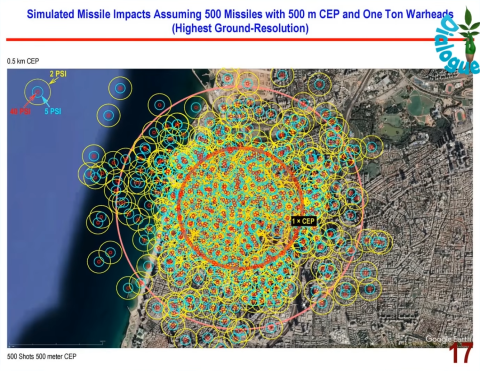
Prof. Ted Postol: US–Iran War? Israel’s Fatal Gamble
or go to
Aletho News Archives – Video-Images
From the Archives
Neocon Max Boot: Legal and illegal aliens need to enlist in the US army and die for Israel

By Jonas E. Alexis | Veterans Today | October 16, 2107
In 1973 Irving Kristol, the godfather of the Neoconservative movement, made a stunning statement which is still relevant to understanding the Israeli influence in US foreign policy. Kristol said:
“Senator McGovern is very sincere when he says that he will try to cut the military budget by 30%. And this is to drive a knife in the heart of Israel… Jews don’t like big military budgets. But it is now an interest of the Jews to have a large and powerful military establishment in the United States…
“American Jews who care about the survival of the state of Israel have to say, no, we don’t want to cut the military budget, it is important to keep that military budget big, so that we can defend Israel.”
Read the statement again very carefully. A big military budget, said Kristol, is only good for Israel, not America or much of the Western World. In other words, precious American soldiers who go to the Middle East to fight so-called terrorism are just working for Israel, not for America.
So, whenever the Neocons use words such as “democracy” or “freedom,” they are essentially conning decent Americans to support Israel’s perpetual wars. … continue
Blog Roll
 Aletho News
- Macron: French citizens fighting for Israel cannot be labeled ‘genociders’
- US eyes Gaza security force drawn from armed gangs
- The Only Motive Behind The ‘Imminent’ U.S. War With Iran Is The Zionist Lobby
- Trump eyes 350-acre US military base housing 5,000 troops in Gaza
- Israel Pushing US Toward a Big and Damaging War With Iran – Ex-Pentagon Analyst
- Meet The Liberal Zionist And Ukraine War Supporter Advising AOC On Foreign Policy
- Buck Dancing for Zion: Kenya’s and Nigeria’s Growing Love Affair With Israel
- Israel installed, oversaw security system at Barak-Epstein residence in New York: Report
- ‘Britain’s Index of Repression’ documents 964 incidents of anti-Palestinian crackdown
- Prof. Ted Postol: US–Iran War? Israel’s Fatal Gamble
- If Americans Knew
- The Lancet: Gaza death toll far higher than reported – Not a ceasefire Day 132
- Compliant aid: Who are the Israel-approved NGOs scaling up in Gaza?
- Why won’t Trump’s “Board of Peace” bring peace? – Not a ceasefire Day 131
- Help end the injustice against Shadi
- Israel’s Favorite American President
- Israel’s “Yellow Line” Is a Death Trap for Palestinians. We Drove Into It.
- Why Israel’s expanding occupation in Syria presents a critical legal test
- Gaza is not a natural disaster. It is the victim of genocide enabled by global inaction
- Netanyahu’s plan to “end” US aid to Israel is to give even more money under a different name
- Israel ceased firing on Gaza for just 15 days of the “ceasefire” – Not a ceasefire Day 130
- No Tricks Zone
- Coal Power Back In Trend As Globe Tries To Keep Pace With Growing Demand For Power
- New Study: A 4°C Warmer Beaufort Sea Had ‘No Sea Ice’ 11,700 – 8200 Years Ago
- Unfudging The Data: Dutch Meteorological Institute Reinstates Early 20th Centruy Heat Waves It Had Erased Earlier
- German Gas Crisis…Chancellor Merz Allegedly Bans Gas Debate Ahead of Elections!
- Pollen Reconstructions Show The Last Glacial’s Warming Events Were Global, 10x Greater Than Modern
- Germany’s Natural Gas Storage Level Dwindles To Just 28%… Increasingly Critical
- New Study Rebuts The Assumption That Anthropogenic CO2 Molecules Have ‘Special’ Properties
- Climate Scientist Who Predicted End Of “Heavy Frost And Snow” Now Refuses Media Inquiries
- Polar Bear Numbers Rising And Health Improving In Areas With The Most Rapid Sea Ice Decline
- One Reason Only For Germany’s Heating Gas Crisis: Its Hardcore-Dumbass Energy Policy
 Aletho News