London systematically destroying evidence in Skripal case – Russia’s UN envoy
RT | April 19, 2018
The UK continues to conceal and destroy evidence relating to the Salisbury incident and have crossed all boundaries in their rhetoric by alleging President Putin’s personal involvement, Russia’s UN envoy Vassily Nebenzia has said.
“The British authorities are engaged in the systematic destruction of evidence,” Nebenzia told the United Nations Security Council, which held a session, called by UK on Wednesday, to discuss the OPCW report and other developments in the Skripal case.
“Skripal’s pets were killed. No samples were obviously taken. The places attended by the Skripals – a bar, a restaurant, a bench, park ground, etc – are all being cleared,” the diplomat said, pointing out that, despite some loud statements about the alleged contamination of the area, “people continue to live in Salisbury as if nothing happened.”
The envoy also reminded the council members that Sergei and Yulia Skripal, who, according to London, are now both recovering from the poisoning by a deadly military grade nerve agent A-234 (‘Novichok’), are kept hidden from the public eye ever since the March 4 incident. In the meantime, London categorically refuses to provide Russia any access to the investigation, and so far has left 45 out of 47 questions addressed to British authorities about the case unanswered.
In a summary of its report, the OPCW didn’t not independently identify the nerve agent used in the Salisbury case nor its origin, but instead only confirmed “the findings of the United Kingdom relating to the identity of the toxic chemical that was used in Salisbury.”
The conclusions made by OPCW were based on samples provided by the UK investigators and do not prove London’s claim of Russia’s involvement in the poisoning, Nebenzia noted. “The main thing that the report lacks, and what the British side was so eager to see, is the conclusion that the substance used in Salisbury was produced in Russia,” he said.
The UK Ambassador to the United Nations, Karen Pierce, however, downplayed the lack of technical evidence and urged the council members to look at “the wider picture which has led the United Kingdom to assess that there’s no plausible alternative explanation than Russian State responsibility for what happened in Salisbury.”
Extensively using the ‘highly likely’ argument, the UK envoy once again claimed in her address to the UNSC that only Russia had the “technical means, operational experience and the motive to target the Skripals.” At one point she even claimed that “President Putin himself was closely involved in the Russian chemical weapons programme.”
“London apparently thinks the Russian President has a hobby of running chemical weapons programs in his free time. I don’t know whether you appreciate that you’ve crossed all possible boundaries,” Nebenzia replied.
While the UK is yet to produce clear evidence of Russian involvement in the alleged poisoning of the former double agent and his daughter, US Ambassador to the UN Nikki Haley once again attacked Moscow during the council meeting, parroting its ally’s narrative.
“As we have stated previously, the United States agrees with the UK’s assessment that Russia is responsible for the chemical weapons in Salisbury,” Haley said. “Whether that is in their direct act, or irresponsibly losing control of the agent, which could be worse, our support for our British friends and colleagues is unwavering.”
Read more:
Lebanese Journalist Names Washington’s Goal Number One in Syria
Sputnik – April 19, 2018
Sputnik spoke to Lebanese journalist and commentator Sharmine Narwani to find out more about situation in Syria and Washington’s goals and actions there.
It has been revealed that US Secretary of Defence, James Mattis, tried to urge US President Donald Trump to obtain congressional approval before launching airstrikes on targets in Syria last weekend. According to reports, President Trump was however set on the use of military force, and overruled the Pentagon chief’s advice. In other developments, Saudi Arabia is reportedly holding talks with the United States and Egypt about sending an Arab coalition force into Syria.
Sputnik: We’re hearing news that the US is in talks with Saudi Arabia to build an Arab force and send it to Syria. Saudi Arabia’s foreign minister has said that he is in talks with US National Security Advisor John Bolton to plan building this force – what do you make of this, what do you think its purpose is?
Sharmine Narwani: Look Trump wants to clear exit the debacle in Syria and eliminate the need to spend billions of dollars a year in maintaining US forces there and participating in the war. The recent chemical weapons allegations came shortly after Trump vocalised this desire; but the likelihood of an Arab force to physically base themselves in Syria on the Syrian-Iraqi border is virtually nil. We must view this new tactic with some suspicion. The US has always trumpeted ISIS as its main goal in Syria or the elimination of ISIS. If ISIS is gone, then what’s the need to have foreign forces based on that border? It seemed clear all along that containing Iran’s access from Iran to the borders of Palestine has always been the goal. It’s not as though Saudi Arabia and Egypt have stellar or significant nation-building expertise anyway. And they have many differences – the Saudis and the UEA for instance are heavily involved militarily in Yemen and are overextended there. Egypt has shown reluctance to participate in that Arab conflict, let alone another one with a government that it has actually sort of ideologically supported in the Syrian conflict. So it’s not likely to become a reality.
Sputnik: Of course in the lead up to the Western bombing campaign on Syria the US was saying that President Bashar al-Assad had used sarin gas, but we’ve now found out that they did not have sufficient evidence of this at the time. Also, the New York Times has revealed that Defence Secretary Jim Mattis urged Trump to get congressional approval for the strikes, but the president overruled him on that – what does this all tell you about the lead up to the events of last weekend?
Sharmine Narwani: If we look at the recent events leading up to the alleged chemical weapons incident, it took place under cover of two important developments: one was Trump’s declaration of exiting Syria, and removing US troops from there soon. The second would be the Syrian army’s very rapid defeat of terrorists in Eastern Ghouta and the reclamation of that strategically vital territory around Damascus. I think the sort of bringing up Sarin, the nerve gas sarin, it’s always kind of utilised as an emotional trigger, as is the mention of chemical weapons by itself and the general assumption if we’re talking about sarin would be that only states would have access to that particular substance, and not terrorist groups and non-state actors, unlike say with a substance like chlorine that is readily available. So I think it was very deliberately invoked, meaning sarin, to create an emotional response globally.
But Sarin has been used in Iraq by insurgents since at least 2004, in the form of IEDs. Turkey for instance, in May 2013, way later during the Syrian conflict, captured 12 Nusra members, Nusra is the Al-Qaida arm in Syria, they captured 12 Nusra members with significant amounts of Sarin and that was believed to be heading toward Syria. And major US-UK risk analysis firm IHS Conflict Monitor, in 2016, told us in a report that ISIS has used chemical weapons more than 52 times in both Syria and Iraq.
Sputnik: We’ve heard today that US senators are increasingly becoming concerned at the absence of a coherent US strategy in Syria, where do you see things from here?
Sharmine Narwani: Even during Obama’s term, we talked about there being a lack of coherent strategy. I would say that there is maybe a lack of a coherent verbalised strategy, one that was disseminated to the American public and an international one. There was certainly a strategy behind the scenes, one that was not vocalised and actions speak louder than words, so when we look at the arming, training and financing of terrorists when it was clear that there wasn’t enough Syrian support to topple Assad in the way leaders had been toppled in Tunisia and Egypt. We had the arming, training & financing but there was a very clear strategy, and the goal was number one, regime change, and two, to weaken the most important Iranian Arab state ally. So that was the strategy. When people say there wasn’t a coherent one they probably mean there wasn’t a coherent vocalised one. US actions have certainly shown us that regime change and weakening Iran were in fact the strategy in Syria and this is apparent today because the escalation still continues.
Russia exposes British lies on Skripal, but trail leads to US
By M.K. Bhadrakumar | Asia Times | April 19, 2018
The sensational case of the poisoning of the ex-MI6 agent and former Russian military intelligence colonel Sergei Skripal on March 4 in Salisbury, in the UK, is becoming more and more curious. Under a blinding spotlight from Moscow, the British allegation regarding a Russian hand in the poisoning of Skripal is getting exposed. An engrossing plot in big-power politics is also unfolding. There is stuff here for a Le Carre novel.
Are we witnessing a replay of the false flag Gulf of Tonkin attack of August 1964, the imaginary “incident” concocted by the US military to provide legal and political justification for deploying American forces in South Vietnam and for commencing open warfare against North Vietnam?
To recap, Britain alleged without any empirical evidence that a military grade nerve agent of a type known as Novichok was used in Salisbury, saying it was originally developed in the former Soviet Union, and therefore, Moscow’s hand – possibly, even President Vladimir Putin’s hand – was “highly likely”.
Moscow has maintained, on the other hand, that it had destroyed all its chemical weapons and an Organization for the Prohibition of Chemical Weapons (OPCW) investigation verified and testified to that.
The British allegation quickly morphed into a large-scale expulsion of Russian diplomats (over 100 of them) by western capitals, under heavy pressure from Washington and London. The US alone expelled 60 Russian diplomats, while Britain expelled 23.
Egg on May’s face
Britain is studiously ignoring the Russian requests for samples of the chemical agent used in the Salisbury attack and for consular access to be granted to the former spy’s daughter Yulia. Meanwhile, Britain instead approached the OPCW to investigate.
The OPCW has now responded that it cannot identify the country of origin of the chemical agent used in the Salisbury attack.
There is egg on PM Theresa May’s face.
However, Russians managed to get their hands on the report prepared for the OPCW by its reputed laboratory in Spiez, the Swiss Center for Radiology and Bacteriological Analysis. According to the Swiss lab’s report, the chemical formula used in the Salisbury attack has been in service in the US, the UK and other NATO countries. Furthermore, neither the Soviet Union nor Russia “ever developed or stockpiled similar chemical weapons.”
That’s more egg on May’s face.
Now comes the bombshell. On April 18, Moscow disclosed that it has formally handed over to the OPCW proof to the effect that the Novichok agent purportedly used in the Salisbury attack actually happens to be patented as a chemical weapon in 2015 in the US and produced in that country. (By the way, unlike Russia, the US is yet to destroy its chemical weapon stockpiles, as required under the Chemical Weapons Convention of 1997.)
Now, not only the British government but Washington too has some explaining to do.
Was Skripal attack a covert op by the West?
Simply put, the Salisbury attack might even have been an Anglo-American joint covert operation undertaken with the ulterior motive to ratchet up tensions between the West and Russia. (The Washington Post reported on Monday that the former National Security Advisor HR McMaster might have hoodwinked President Donald Trump into approving the expulsion under the wrong notion that similar numbers of expulsions by European allies was in the pipeline. In the event though, the Europeans made only token expulsions.)
Britain is steadily edging away from the Skripal case, hoping, perhaps, that the matter will die down. But will Moscow let Britain off the hook?
On their part, the Russians seem to be holding back on some explosive information pointing toward the US’s direct complicity in this affair.
Indeed, if this was McMaster’s swan song, the indefatigable Russophobe probably hoped to kill two birds with one shot – push Russia’s relations with the West to a crisis point and second, scotch the prospects of an early US-Russia presidential summit (which Trump wanted.)
McMaster reportedly tried to stop Trump from congratulating Putin on his big victory in the Russian election on March 18 in a phone conversation where they discussed a possible summit meeting in a near future.
How far all this is linked to Trump’s decision on March 22, finally, to sack McMaster as his National Security Advisor is yet another template. By the standards of military people, McMaster probably has the reputation of being an “intellectual” but the man proved to be an unvarnished Cold Warrior fit for a museum.
From all accounts, Trump never trusted McMaster and the two had an acrimonious relationship. The one-star general who was overlooked for promotion by the Pentagon was Trump’s default choice following the abrupt departure of Michael Flynn.
Michael Wolff narrates a hilarious episode in his book ‘Fire and Fury’ that during the job interview for the NSA post, McMaster tried to impress Trump when he showed up in military uniform with his silver star and launched into a wide-ranging lecture on global strategy. After, Trump reportedly remarked, “That guy bores the shit out of me.”
BBC presenter declares ‘info war against Russia’ after ex-navy chief questions Syria ‘evidence’
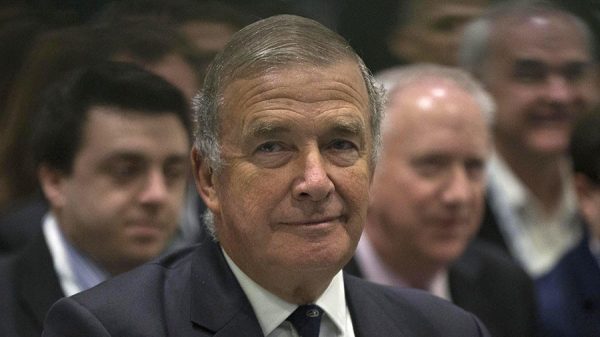
Britain’s Admiral Lord West. © Neil Hall / Reuters
RT | April 18, 2018
During a live interview, a BBC news presenter declared “we’re in an information war with Russia” after a former Royal Navy chief questioned the “extraordinary” claims surrounding an alleged chemical attack in Syria.
Former Navy Admiral Lord West’s questioning of the mainstream narrative surrounding the alleged chemical weapons attack in the town of Douma led the BBC’s Annita McVeigh to suggest that truthfully stating his position and posing questions risked “muddying the waters” in an ongoing “information war with Russia.”
Lord West had described how in his view the claim that Bashar Assad ordered the attack “doesn’t ring true,” asking “what benefit is there for his military?” He went on to say “we know that in the past some of the Islamic groups have used chemicals, and of course there would be huge benefit in them labelling an attack as coming from Assad.”
West went on to question the ‘evidence’ provided by groups like the White Helmets and the World Health Organization, both of which he described as “not neutral.”
The former First Sea Lord then described how in the past he had been put under pressure to support politically motivated narratives: “I had huge pressure put on me politically to try and say that our bombing campaign in Bosnia was achieving all sorts of things which it wasn’t. I was put under huge pressure, so I know the things that can happen.”
At that point the BBC’s McVeigh appeared to question whether he should actually be expressing his opinion truthfully, asking: “Given that we’re in an information war with Russia on so many fronts, do you think perhaps it’s inadvisable to be stating this so publicly given your position and profile, isn’t there a danger that you’re muddying the waters?”
West replied: “I think the answer is, if there’s a real concern, let’s face it, if [Assad] hasn’t done it then that is extremely bad news. If Assad hasn’t carried out the attack, I think it’s just worth making that clear. I think our government’s policy towards Assad has not been clever since 2013.”
Durham Becomes First US City to Ban Police Exchanges with Israel

Palestine Chronicle – April 18, 2018
On Monday, April 16, 2018, the Durham city council in the US, became the first US city council to ban police exchanges with the Israeli policy.
“After 3.5 hours and 50 powerful and inspiring testimonies, the Durham city council has just unanimously passed a resolution to end Durham police training in Israel,” said Eran Efrati, one of the organizers of the Demilitarize from Durham2Palestine campaign, which stood behind the vote, in a Facebook post.
“After years of hard work, Durham becomes the first city in the US to ban American police forces exchanges with the Israeli military and police,” he added.
The campaign has launched a petition which was signed by 1,394 people, calling on the council to ban police exchanges with Israel.
The petition read,
“The Israeli Defense Forces and the Israel Police have a long history of violence and harm against Palestinian people and Jews of Color. They persist in using tactics of extrajudicial killing, excessive force, racial profiling, and repression of social justice movements. Such tactics have been condemned by international human rights organizations for violating the human rights of Palestinians.”
The petition added,
“These tactics further militarize U.S. police forces that train in Israel, and this training helps the police terrorize Black and Brown communities here in the US. Additionally, such practices erode our constitutional rights to due process, freedom of speech, and freedom of assembly. Durham officials — including former Chief Lopez and current Chief Davis — have participated in these racist police exchange programs.”
The Palestine solidarity among minorities and marginalized communities has seen a growth in the last few years, with minorities and people of color joining the global Boycott, Divestment and Sanctions Movement against Israel.
Iran rejects ‘baseless’ UK, US accusations on Yemen missiles
Press TV – April 18, 2018
Iran has firmly rejected fresh US and British allegations of Tehran sending missiles to Yemen, saying the two are seeking to whitewash their “shameful” complicity in the crisis gripping the war-torn country by leveling “false” charges against others.
“The US and UK complicity in Yemen crisis is shameful,” Iran’s Permanent Mission to the United Nations said in a press release on Tuesday.
The Iranian mission was reacting to remarks by the American and British ambassadors to the UN, Nikki Haley and Karen Pierce during a Security Council meeting on Yemen earlier in the day.
Haley claimed that Iran was interfering in the Yemeni affairs and violating the arms embargo on the impoverished state. Pierce also accused Tehran of “non-compliance with Security Council Resolution 2216.”
The Iranian mission, however, said the American and British officials had “repeated their derogatory allegations about Iran to cover up their own role in the disastrous situation created in Yemen. Iran categorically rejects those allegations as baseless propaganda.”
“The fact is that the war of aggression of Saudi Arabia in Yemen is the main underlying reason for the escalation of the crisis. It is regrettable that Saudi Arabia and its warmonger supporters, as the main party responsible for such a catastrophic humanitarian situation, are trying to cover up their shameful crimes by introducing false charges against others or trying to spread the crisis beyond Yemen’s borders,” it added.
“The US and UK are enjoying a blood business in Yemen now” by providing bombs to the Saudi warplanes that are targeting Yemeni civilians, the Iranian mission added.
Saudi Arabia and its allies launched the war in March 2015 in support of Yemen’s former Riyadh-friendly government and against the Houthi Ansarullah movement, which is currently running state affairs.
The military campaign has killed and injured over 600,000 civilians, according to the latest figures released by the Yemeni Ministry of Human Rights.
Several Western countries, the US and the UK in particular, are accused of being complicit in the aggression as they supply the Riyadh regime with advanced weapons and military equipment.
Dirty money or dirty politics? UK hypocrisy over ‘Russian oligarchs’
By Neil Clark | RT | April 18, 2018
According to Russia’s Prosecutor General, 61 criminals who stole up to $10 billion in Russia are enjoying life in the UK. Britain claims to be concerned about ‘dirty money,’ but has rejected requests from Moscow for extradition.
It was the financial heist of the century. The looting of Soviet Russia’s wealth by a group of well-connected oligarchs in the 1990s enriched a tiny few, but impoverished vast swathes of the country’s population. The foundations for this massive, reverse-Robin-Hood redistribution of wealth were laid with Gorbachev’s ‘restructuring’ economic reforms of the late 80s. However, the process reached its peak under Boris Yeltsin.
State assets were handed out like confetti to members of Yeltsin’s inner circle. By 1996 the Russian people, who had seen their living standards plummet following the end of communism, had had enough. Yeltsin’s popularity was down to single-figure ratings – with the Communists riding high in the polls. So the President’s oligarch friends – and their Western allies – worked together to make sure the election went the ‘right’ way.
The US got the IMF to give Russia a $10.2-billion loan so that state salaries, which had been unpaid for months, could finally be paid. With the media under government or oligarch control, a massive propaganda offensive was launched. When the vote came in the second round, Yeltsin was declared the winner with 54 percent of the vote. There were widespread accusations of election fraud, but the West didn’t care. “Yanks to the rescue; The Secret story of how US advisers helped Yeltsin win,” proclaimed Time magazine on its front cover. “Bill (Clinton) would pick up the hotline and talk to Yeltsin. He would tell him what commercials to run, where to campaign, what positions to take, he (the US president), basically became Yeltsin‘s political consultant,” admitted Dick Morris, a Clinton campaign manager.
The events of 1996 are well worth remembering when we hear unproven allegations about how Russia ‘fixed’ the 2016 US presidential election for Trump. With Yeltsin back in power, the oligarchs popped the champagne corks and prepared to make even more money on the backs of the Russian people.
“We hired First Deputy Chubais. We invested huge sums of money. We guaranteed Yeltsin’s re-election. Now we have the right to occupy government posts and use the fruits of our victory,” boasted Boris Berezovsky, the so-called ‘Godfather of the Kremlin’ to the Financial Times in 1997.
The 90s were a decade ordinary Russians would prefer to forget. Things only started to improve for them when the first moves were made to re-introduce some law and order into the system. The process started under Prime Minister Yevgeny Primakov, but accelerated under Vladimir Putin.
A seminal moment came with the arrest, in 2003, of Mikhail Khodorkovsky, who was believed to be the richest man in Russia. In fact, the current ‘Cold War 2.0’ against Russia, waged by Western neocons, can be traced back to this event. At the time of his arrest, Khodorkovsky had been holding talks with US oil companies over a merger with his conglomerate Yukos. The West, as I explained in the New Statesman, had seen the oligarchs as a way they could gain control over Russia. “Now with their man in Moscow behind bars, it is time for the neoconservative propaganda war against Putin to go into overdrive. Richard Perle was first out of the blocks, calling for Russia’s expulsion from the G8 and its exclusion from any postwar Iraq oil contracts, and accusing it of collusion with Iran’s nuclear-power program,” I noted.
The Khodorkovsky case became a cause celebre, while Boris Berezovsky was also lionized by the sections of the establishment when he failed to return to Russia – where he was facing criminal charges – and was granted political asylum in Britain.
An Interpol Red Warrant for his arrest was ignored. The controversial oligarch, now rebranded as a ‘pro-democracy campaigner’ wined and dined UK media figures and was even invited on to the BBC television program Question Time to give his thoughts on ‘democracy.’
There was no, or little, concern about ‘dirty’ Russian money in London at this time. The more rich Russians who flocked to London, the better. But all that has hanged in recent months. The deliberate ramping up of Cold War 2.0 tensions, because of frustration with Russia’s role in thwarting ‘regime change’ plans for Syria, has meant that wealthy Russians living in Britain are now in the line of fire.
“Russians in Britain told to reveal their riches,” declared a headline of the neocon Times newspaper.
Security Minister Ben Wallace, as quoted by ITV, said that the “full force of government” would be brought to bear on foreign criminals and corrupt politicians who use Britain as a haven. His reference to the TV series McMafia – about Russian oligarchs – made it clear which ‘foreign criminals‘ he had in mind.
Unexplained Wealth Orders will be used to ask people with lots of money where they got their fortunes from. But only certain people.
Clearly, the system is open to abuse. Rich Russians who hate Putin and say the right things about the Russian government probably have no reason to be afraid. But those who aren’t personae non grata in Moscow will find things more difficult.
In January, the Daily Telegraph reported that Chelsea Football Club owner Roman Abramovich, who hasn’t fallen out with the Russian government, was for the first time included on “a list of officials and oligarchs” which could serve as “a basis for future Russian sanctions.”
Abramovich was also included in a Times ‘hit-list’ on March 18 on “Putin’s oligarch pals with billions in British assets,” when we were told that the UK government could draw on the list published by the US in January.
I think we can all see the way things are going. Wealthy Russians living in Britain will have to disassociate themselves from the Kremlin, if they’re to be left in peace. The key issue will not be ‘Where did you get your money?’ but ‘Who do you support?’
Some are already getting cold feet.
In March, in the aftermath of the Salisbury case, Sergei Kapchuk, a Russian businessman living in Britain, fled the country saying he was in fear of the British security services – having been pressured to make an appeal to Putin by an ‘intelligence-officer-looking’ man before a television interview.
The anti-Russian witch-hunt has even led to the absurd spectacle of ‘rights activist’ Peter Tatchell calling for the children of Russian “regime officials and families” to be expelled from schools.
In The Independent last week, a Russian woman living in Britain wrote: “I quickly realized that acknowledging you’re a Russian in the UK is like admitting that you have a deadly disease and you only have a few weeks to live.”
The fact that she felt obliged to write the piece under the pseudonym “Valerie Stark” shows us how bad the situation has become.
It’s clear what’s underpinning the UK government’s so-called ‘fight’ against ‘dirty money‘ is not morality (how can it be, from a government that has imposed harsh austerity measures on the British public), but geopolitics. It has to be seen in its wider context as part of the warmongering elite’s Russophobic campaign. “They were not concerned before because they approved of the wholesale theft of Russia‘s wealth back then, and the Yeltsin regime which facilitated it,” George Galloway recently told RT.
Now though, with Russia getting in the way of neocon hegemonic aspirations in the Middle East, it’s a very different story.
An Alternative Explanation to the Skripal Mystery
By Gareth Porter | Consortium News | April 17, 2018
For weeks, British Prime Minister Theresa May and Foreign Secretary Boris Johnson have insisted that there is “no alternative explanation” to Russian government responsibility for the poisoning of former double agent Sergei Skripal and his daughter Yulia in Salisbury last month.
But in fact the British government is well aware that such an alternative explanation does exist. It is based on the well-documented fact that the “Novichok” nerve agent synthesized by Soviet scientist in the 1980s had been sold by the scientist–who led the development of the nerve agent– to individuals linked to Russian criminal organizations as long ago as 1994 and was used to kill a Russian banker in 1995.
The connection between the Novichok nerve agent and a previous murder linked to the murky Russian criminal underworld would account for the facts of the Salisbury poisoning far better than the official line that it was a Russian government assassination attempt.
The credibility of the May government’s attempt to blame it on Russian President Vladimir Putin has suffered because of Yulia Skripal’s relatively rapid recovery, the apparent improvement of Sergei Skripal’s condition and a medical specialist’s statement that the Skripals had exhibited no symptoms of nerve agent poisoning.
How a Crime Syndicate Got Nerve Agent
The highly independent Russian newspaper Novaya Gazeta has published a detailed account of how Russian organized crime figures obtained nerve agent in 1994 from Leonid Rink, the head of the former Soviet government laboratory that had synthesized it.
The newspaper gleaned the information about the transaction from Rink’s court testimony in the 1995 murder of prominent banker Ivan Kivelidi, the leader of the Russian Entrepreneurs’ Round Table, an organization engaged in a conflict with a powerful group of directors of state-owned enterprises.
Rink testified that after the post-Soviet Russian economic meltdown had begun he filled each of several ampoules with 0.25 grams of nerve agent and stored it in his own garage. Just one such ampoule held enough agent to kill 100 people, according to Rink, the lead scientist in the development of the series of nerve agents called Novichok (“newcomer” in Russian).
Rink further admitted that he had then sold one of the ampoules in 1995 to Artur Talanov, who then lived in Latvia and was later seriously wounded in an attempted robbery of a cash van in Estonia, for less than $1,800.
In 1995, some of that nerve agent was applied to Kivelidi’s telephone receiver to kill him, as the court documents in the murder case reveal. Police found that there were links between Talanov and Vladimir Khutsishvili, who had been a board member of Kivelidi’s bank, according to the Kivelidi murder investigation. Khutsishivili was eventually found guilty of poisoning Kivelidi, although it was found that he hired someone else to carry out the poisoning.
But that wasn’t the only nerve agent that Rink sold to gangsters. Rink admitted in court in 2007 that he had sold four of the vials to someone named Ryabov, who had organized crime connections in 1994. Those vials were said to have been seized later by Federal Security Police.
But the investigation of the Kivelidi murder found that vials had also fallen into the hands of other criminal syndicates, including one Chechen organization. Furthermore, Rink testified that he had given each of the recipients of the nerve agent detailed instructions on how it worked and how to handle it safely.
The Mystery of the Non-Lethal Nerve Agent
The newly-revealed story of how organized crime got control of hundreds of doses of lethal nerve agent from a government laboratory sheds crucial light on the mystery of the poisoning in Salisbury, especially in light of the timeline of the Skripals on the day of the poisoning and their unexpectedly swift recovery.
Reports of their activities on March 4 show that they were strolling in central Salisbury, dining, and visiting a pub for several hours before collapsing on a park bench sometime after 4 pm.
The announcements of Yulia’s rapid recovery on March 28 and that Sergei was now “stable” and “improving rapidly” about a week later appears to be in contradiction with the British insistence that they were poisoned by a Russian government intelligence team. The Novichok-type nerve agent has been characterized as quick acting and highly lethal.
But the official Russian forensic investigation in conjunction with the Kivelidi’s murder, as reported by Novaya Gazeta, concluded that the Novichok did not take effect instantaneously but generally took from one and a half to five hours.
The Russian government has now made an official issue of the fact that the nerve agent used in the poisoning proved not to be lethal. In his news conference on April 14 Russian Foreign Minister Sergey Lavrov said the Swiss Spiez Laboratory, working on the case for the Organization for the Prohibition of Chemical Weapons (OPCW), had found traces in the Skripals’ blood sample, of the nerve agent BZ, which was never developed by Soviet scientists but was in the arsenals of the United States and Britain.
Lavrov also acknowledged that the lab had in addition found traces of “A-234”–one of the nerve agents in the Novichok series – “in its initial state and in high concentration”. Lavrov argued that had the assassins used A-234 nerve agent, which he noted is at least eight times more deadly than VX nerve gas, it “would have killed the Skripals.”
But if the poisoning had been done with some of the A-234 nerve agent that was sold by Rink to organized crime figures, it probably would not have been that lethal.
Vil Mirzayanov, the counter-intelligence specialist on the team that developed Novichok and who later revealed the existence of the Novichok program, explained in an interview with The Guardian that, the agent lost its effectiveness. “The final product, in storage, after one year is already losing 2%, 3%,” Mirzayanov said, “The next year more, and the next year more. In 10-15 years, it’s no longer effective.”
Exposure to even a large dose of such a normally lethal poison more than 25 years after it was first produced could account for the apparent lack of normal symptoms associated with exposure to that kind of nerve agent experienced by the Skripals, as well as for their relatively speedy recovery. That lends further credibility to a possible explanation that someone with a personal grudge against Sergei Skripal carried out the poisoning.
An Absence of Nerve Agent Symptoms?
Also challenging the official British line is a statement by a medical specialist involved in the Salisbury District Hospital’s care for the Skripals revealing that they had not exhibited any symptoms of nerve agent poisoning.
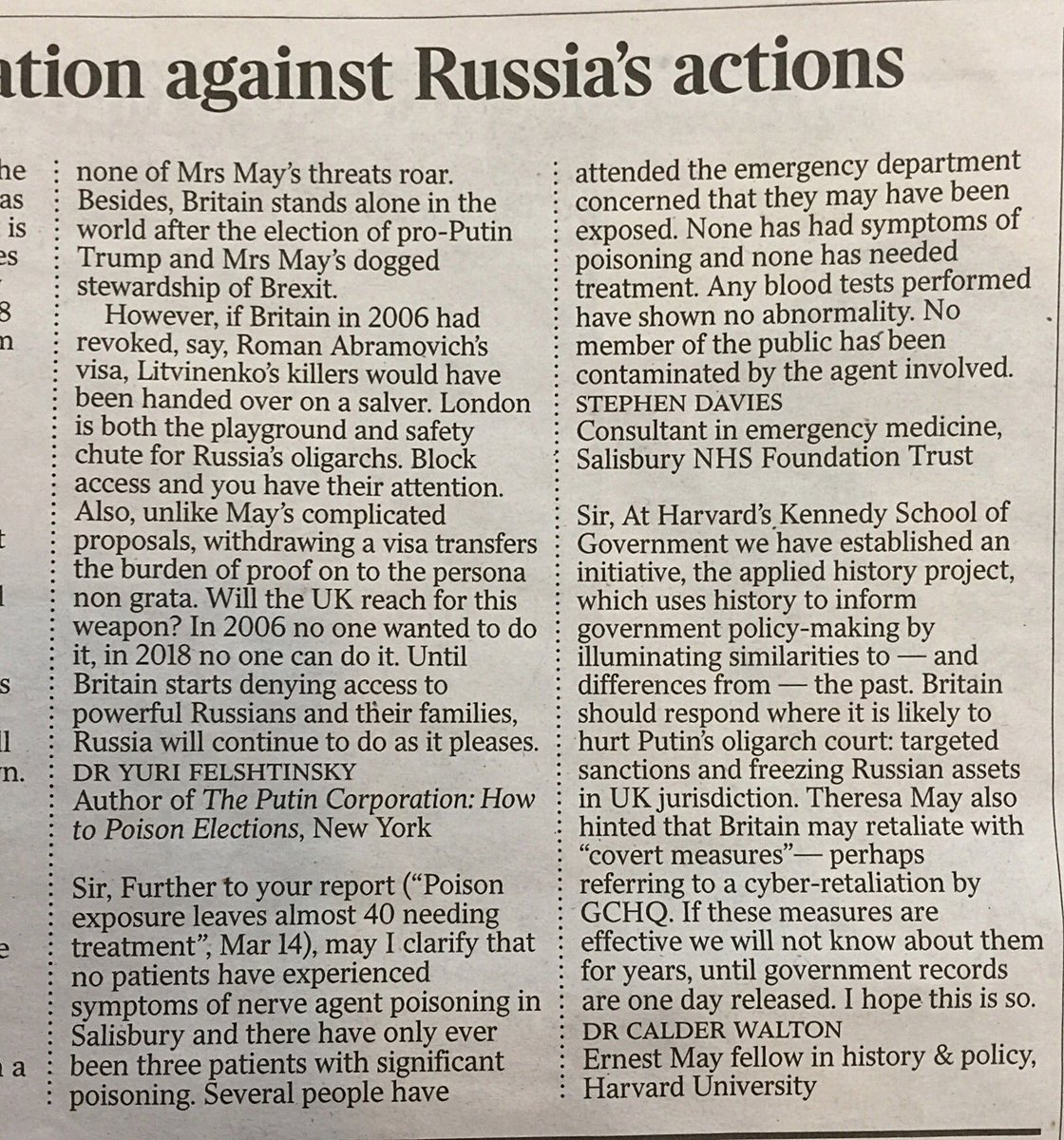
Davies: Letter to The Times
Stephen Davies, a consultant on emergency medicine for the Salisbury NHS Foundation Trust, which runs the Salisbury District Hospital, wrote a letter published in The Times on March 16 that presented a problem for the official British government position. Davies wrote,“[M]ay I clarify that no patients have experienced symptoms of nerve-agent poisoning in Salisbury, and there have only ever been three patients with significant poisoning.” Obviously, Sergei and Yulia Skripal were “patients” in the hospital and were thus included in that statement.
The Times made the unusual decision to cover the Davies letter in a news story, but tellingly failed to quote the crucial statement in the letter that “no patients have experienced symptoms of nerve-agent poisoning in Salisbury” or to report on the significance of the statement.
To rule out the possibility that Davies intended to say something quite different, this writer requested a confirmation or denial of what Davies had written in his letter from the press officer for the Salisbury NHS Foundation Trust, Patrick Butler. But Butler did not respond for a week and then refused directly to deny, confirm or explain the Davies statement.
Instead Butler said in an email, “Three people were admitted and treated as inpatients at Salisbury District Hospital for the effects of nerve agent poisoning as Stephen Davies wrote.” When he was reminded that the letter had actually said something quite different, Butler simply repeated the statement he had just sent and then added, “The Trust will not be providing any further information on this matter.”
Butler did not respond to two separate requests from the writer for assistance in contacting Davies. The refusal of the NHS Foundation Trust to engage at all on the subject underlines the sensitivity of The British government about nerve agent that didn’t work.
There are many individuals in Russia whose feelings about Sergei Skripal’s having become a double agent for Britain’s MI6 – including former colleagues of his – could provide a personal motive for the poisoning. And it is certainly plausible that those individuals could have obtained some of the nerve agent sold by Leonid Rink that entered the black market.
Neither the British government nor the Russian government is apparently eager to acknowledge that alternative explanation. The British don’t want it discussed, because they are determined to use the Salisbury poisoning to push their anti-Russian agenda; and the Russians may be reluctant to talk about it, because it would inevitably get into details of a secret nerve agent research project that they have claimed they closed down in 1992, despite Rink’s testimony in the court case that he was still doing some work for the Russian military until 1994.
Gareth Porter is an independent journalist and winner of the 2012 Gellhorn Prize for journalism. He is the author of numerous books, including Manufactured Crisis: The Untold Story of the Iran Nuclear Scare (Just World Books, 2014).
Western media cover tracks of Trump, May and Macron’s war crime in Syria
By Finian Cunningham | RT | April 17, 2018
With astounding double-think, the US and Britain accuse Russia of “tampering” with the alleged chemical-weapon attack site in Syria’s Douma – just days after the US, UK and France barraged the county with over 100 missiles.
If anyone is guilty of tampering with the alleged crime scene, it is the NATO trio who rushed to bomb Syria just as inspectors belonging to the Organization for the Prohibition of Chemical Weapons (OPCW) arrived in Syria – invited there by the Syrian and Russian governments.
The frenzied Western media campaign to find Syria and Russia guilty of a war crime involving alleged chemical weapons is further highlighted by the reporting this week by award-winning British journalist Robert Fisk.
Fisk, who has been covering Middle East war zones for nearly 40 years, went to Douma city to file his report for The Independent. Credit goes to The Independent for publishing Fisk’s investigative work.
In the aftermath of the weekend’s airstrikes, what he found from interviewing local people and medics is arresting, if not shocking. From Fisk’s witness-gathering report, there was no gas attack carried out on April 7 – in stark contradiction to what the US, British and French governments have been declaring in hysterical tones for the past two weeks.
Those declarations culminated in the US-led bombing of Syria at the weekend. What’s more, the US, British and French leaders are reserving the right to carry out further strikes on Syria – if “the regime repeats its chemical-weapons attacks on civilians.”
What Robert Fisk reports from inside Douma corroborates what the Syrian government and its Russian ally have been saying consistently since the alleged incident on April 7. The incident, they say, was staged by the so-called “first responder” group known as the White Helmets, who work hand-in-glove with notorious terrorist outfits like Jaysh al-Islam and Al-Nusra Front. The White Helmets are also on the pay roll of the American CIA, as well as British and French intelligence agencies.
Similar to Russian Foreign Minister Sergey Lavrov’s earlier claim, Fisk reports that on April 7, a panic scene was engendered in Douma’s hospital by White Helmets activists who shouted that “chemical weapons” were being deployed. These activists began dousing people with water hoses and conveniently had video cameras on hand to capture the chaotic scenes acted out by unwitting civilians. A doctor in the hospital confirmed this to Fisk.
As for the supposed dozens of dead that Western governments and media blamed on “animal Assad” and Russian complicity, there is no evidence of the alleged victims. Video footage of dead people in a war zone is hardly proof.
This means that US President Trump and his British and French counterparts, Theresa May and Emmanuel Macron, just launched a criminal aggression on Syria in grave violation of international law and the country’s sovereignty. This is exactly what many independent observers were decrying at the time of the missile barrage, warning that the presumed evidence for a chemical attack was far from substantiated.
Indeed, the suspicion is that Trump, May and Macron knew that their evidential ground for attacking Syria was impossibly thin, and that is why they rushed to bomb the country. It was a decision hastened by the arrival of the OPCW inspectors heading to Douma. The inspectors are due to start their investigative work on Wednesday – delayed apparently by security concerns.
In all probability, the Douma incident was a propaganda stunt orchestrated by Western-backed anti-government militants and their White Helmets media agents, precisely in order to provoke an external military attack on Syria by the US, Britain and France.
Several things stand out about Robert Fisk’s latest reporting. This is exactly the kind of critical journalism that other Western media outlets should have been engaged in following the alleged chemical weapon attack on April 7. Credit goes to Fisk and The Independent. But it is a shameful case of “too little, too late.”
Also, it is notable how Fisk’s reportage is being roundly ignored – at least so far – by other mainstream Western media outlets. That’s an impressive feat of self-censorship at a crucial time when the US, British and French governments should be open to accusations of committing a war crime on Syria over their latest blitzkrieg.
This is especially so, given their warnings of more to come, over “further” chemical-weapons use. The urgent concern is that these governments are giving themselves a license to act on more false flags. They should be held rigorously to account for their claims.
This disregard for international law is made possible because of the appalling willingness of Western mainstream media to regurgitate self-serving claims made by terrorist-affiliated groups in Syria and their propaganda outlets.
American, British and French mainstream media have given saturated coverage to the White Helmets and the Syrian American Medical Society, and the dodgy one-man-band operation in Coventry known as the Syrian Observatory for Human Rights. CNN, the BBC and France 24 cite these groups as if they are “authoritative” and impartial, when in fact they are all part of the regime-change campaign in Syria sponsored by the US and its British and French allies.
It is telling, too, how Robert Fisk is being assailed as a “Syrian, Russian stooge” on social media. The one Western mainstream journalist who has had the integrity to delve into Syria’s Douma to uncover a very different critical perspective – one that disproves the claims peddled by the US, British and French leaders and other mainstream media – is being vilified for principled journalism.
Western corporate media are a grotesque mockery of public information and critical, independent accounting of government power.
Apart from Robert Fisk, the few other Western journalists to have ventured into Syria to report on what is really happening are independent, “alternative” sources like Eva Bartlett, Vanessa Beeley and Patrick Henningsen. They have exposed the “Oscar-winning” White Helmets group, which is actually complicit in staging atrocities against civilians living under a reign of terror imposed by their terrorist affiliates. It is understood the White Helmets activists behind the Douma provocation on April 7 have since fled the city along with the terrorist gangs under the cover of an evacuation deal with the liberating Syrian and Russian forces, who are now in control of most of the Eastern Ghouta suburbs near Damascus.
Western media journalists, if they were really committed to principles of accuracy and critical investigation, should be poring over the rubble in Douma, interviewing local people and finding out what really happened. But they are not.
That is why, one suspects, they are not there. That is why the US and Britain are now accusing Russia of “tampering” with the site in Douma – because there is no evidence of a chemical-weapons attack, as Robert Fisk reports.
That means the US, British and French governments just committed a brazen war crime.
This would also explain why Western mainstream media have now quickly moved their focus to allegations of “Russian cyberattacks” on American and British infrastructure. This is a classic case of “keeping ahead of the story.” Western governments and their dutiful media do not have a “story” – at least not the one they claim – in Syria, so the imperative is to change to another subject as quickly as possible.
Featured Video
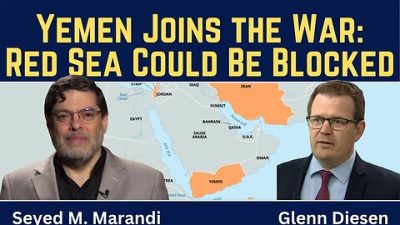
Yemen joins the war – Red Sea could be blocked next – Saudi regime at risk
or go to
Aletho News Archives – Video-Images
From the Archives
Should Europeans ‘Thank’ the Americans for Destroying Nord Stream?
By Robert Bridge | Strategic Culture Foundation | September 29, 2022
With an investigation continuing into the destruction of the Nord Stream gas pipeline that provided energy supplies to Europe from Russia, there appears to be just one prime suspect, and that should surprise nobody.
Following the sabotage of the Nord Stream 1 and 2 gas pipelines, former Polish Foreign Minister Radoslaw Sikorski already seemed to know the identity of the perpetrator when he tweeted out: “Thank you, USA.”
At first glance, it seemed that Sikorski was speaking sarcastically, berating Washington for carrying out an attack that will have severe repercussions for the people of Europe. After all, how could anyone see any good coming from the termination of Europe’s primary source of gas reserves with winter just around the corner? It was Sikorski’s homeland of Poland, after all, that urged its citizens to collect firewood in the face of dwindling gas reserves.
In fact, the Polish diplomat was speaking one-hundred percent literally… continue
Blog Roll
 Aletho News
- Russian Oil Tanker Arrives in Cuba Amid U.S. Blockade
- America Racing to Strategic Defeat in Iran: Lt Col Daniel Davis
- FTC Warns Visa, Mastercard, PayPal, Stripe Over Political Debanking
- Russian tanker approaches Cuba despite US oil blockade
- Marandi: Yemen joins the war – Red Sea could be blocked next – Saudi regime at risk
- Pro-Palestinian French member of European Parliament denied entry to Canada
- Pakistan to Host US-Iran Talks
- How Indonesia’s tilt toward the US left it stranded in the Strait of Hormuz
- US has no choice but to retreat from Iranian borders: Top commander
- Iran Retaliation Strikes Chemical Plant Near Dimona
- If Americans Knew
- Israeli police block Catholic cardinal from entering Church of the Holy Sepulchre on Palm Sunday
- Israel is assassinating journalists again, more than any other nation, anywhere, ever – Not a ceasefire Day 170
- Over 300 US service members wounded, majority have brain injuries – Not a ceasefire Day 169
- Researchers at Human Rights Watch Resign Over Blocked Report on Palestinian Refugee Return
- Jewish Groups Are Backing a War Americans Don’t Want
- Eric Fingerhut Thinks He’s the President of the Jews
- Top Jewish Philanthropists, Rabbis Urge Israeli President to Take Action Against ‘Jewish Extremists’
- Don’t Be Fooled. Zionist Leaders Have Always Wanted to Control Southern Lebanon
- Israel’s widespread use of torture is a core element of its genocide against the Palestinian people
- In Israel’s War on Iran, Many Middle East US Bases Rendered “All But Uninhabitable”
- No Tricks Zone
- New Study Finds Warming Saves Lives…Cold Temperatures 12 Times More Deadly Than Excess Heat
- German Science Blog Accuses PIK Climate Institute Of Hallucinating Climate Tipping Points
- Devastating Assessment Of Comirnaty Vaccine By Former Senior Pfizer Europe Toxicologist
- New Study: CO2 Is ‘Effectively Negligible’ As An Explanatory Climate Change Factor Since 2000
- Former Pfizer Toxicologist Dr. Helmut Sterz Tells Bundestag Hearing Pfizer Vaccine Should Have Never Been Approved
- Energy Expert: Germany’s Nuclear Phaseout Was A “500 Billion Euro Mistake”
- New Research: South Australia’s Mid-Holocene Sea Surface Temperatures Were 4°C Warmer Than Today
- Storing Green Energy To Last Germany 10 Days Would Require A 60-Million Tonne Battery
- New Studies: UK Sea Levels Were 4 Meters Higher Than Today During The Mid-Holocene
- Destructive Green New Deal: German Energy And Metal Group Warns Of Drastic Crisis
 Aletho News