Two million Palestinians in the Gaza Strip are slowly being suffocated. Over 40 per cent of Gazans are unemployed; there is virtually no economy; no electricity; the water is undrinkable; and the medical system has collapsed. It is the Israeli occupation that is responsible for the suffering of Palestinians in Gaza due to its 11-year-old siege imposed on the coastal enclave.
Since 2007, following Hamas’s victory in internationally-monitored elections, Israel has retained absolute control over the movement of people and goods via Gaza’s airspace, territorial waters, and land borders. This blockade subjects Gaza’s population to collective punishment, in contravention of international law.
Confronted with such oppression and the world’s silence in response to Israeli war-crimes, Palestinians in Gaza have no other option than to raise their voices in protest. Seventy per cent of Gaza’s population are refugees, or descendants of refugees, who were violently expelled from their homeland in 1948 to make way for the Zionist state of Israel. Israelis celebrate this land-grab as “independence” but for Palestinians it is the Nakba(catastrophe).
We, Palestinians have never been allowed to return to our land, despite United Nations General Assembly Resolution 194 guaranteeing us this inalienable right. In the Israeli apartheid state, Palestinians are stripped of their humanity; their identity reduced to that of “demographic threat”.
Since 30 March, thousands of Palestinians have been participating in the Great Return March (GRM), sending a united message to Israel and the world: We have the right to return to our homeland that was stolen from us in 1948. We have the right to move freely, to have electricity, to travel, to work. Through the GRM movement, Palestinians are not only demanding the right to return – but also the right to live.
The GRM is not Hamas-driven; it is Palestinian-inspired and driven. It is the embodiment of Palestinian popular resistance involving youth, women, and all Palestinians that steadfastly refuse to collaborate with the occupiers, accept Israeli occupation and submit to Zionist apartheid. They are fighting back, armed only with their rights and international law.
The GRM also shows that the Palestinian people are determined to achieve their freedom, their independence, and their right to return to the villages that they were forced out of 70 years ago.
These protests have also shown the world the brutality of the Israeli occupation government. Israeli forces use jeeps and drones to fire tear gas at paramedics and children. Dozens of snipers, armed with internationally-prohibited explosive bullets designed to permanently maim, have been stationed along the border, targeting and killing unarmed protesters like 15-year old Mohammed Ibrahim Ayoub, and journalists Yaser Murtaja and Ahmed Abu Hussein. Israeli bullets have, so far, killed 50 Palestinians and injured more than 7000 people over the last six weeks.
By killing and wounding so many, Israel had hoped that the masses would retreat, that the protests would subside and, eventually, end. This was not the case, and popular resistance will intensify as we approach 15 May, the 70th anniversary of the Nakba.
Like the apartheid South African government, Israel justifies its decades of state terrorism by demonising legitimate resistance movements, especially Hamas. Hamas was established only in 1987. What then explains the ethnic cleansing of Palestinians since 1948? What explains Israeli settlements and land thefts, Palestinian home demolitions, forced displacement, disproportionate use of force, detention without trial, arrest without due process, denial of entry, land confiscations, and movement restrictions against Palestinians for over 50 years? Israel can no longer rationalise its oppression of Palestinians by blaming Palestinians who exercise their natural and internationally-recognised right to resist.
The GRM is a turning point, just as the 1960 Sharpeville massacre was a turning point in South Africa’s liberation struggle. In Gaza, the world is witnessing an apartheid military regime killing non-violent protesters. The world did not look away from Sharpeville, and it must not look away from occupied Palestine either. The Palestinian call for justice, freedom and dignity must be heard and respected. Seventy years after hundreds of thousands of Palestinians were forced to become refugees through Zionist massacres and violence, we, our children and our grandchildren remain firm on our desire to exercise our right to return home. For Palestinians – and especially Palestinian refugees – the GRM represents a reclaiming of our dignity, and an announcement to the world that we will not accept the oppression of our people. We will continue resisting, the occupation will end, and we will achieve our liberation.
RAMALLAH – The Israeli occupation authorities on Sunday decided to prevent a Palestinian medical delegation from entering the Gaza Strip.
Ministry of Health said in a statement that the Israeli authorities refused to issue the necessary entry permits for the members of the medical delegation formed by the Palestinian Minister of Health in Ramallah Jawad Awwad to assist medical staff in Gaza.
The Ministry stressed that this ban is a further crime committed against the Gazan people who are also prevented from travelling abroad for treatment.
The Ministry called on international organizations to pressure Israel to allow medical teams to visit Gaza and help the staff working there.
The Palestinian Health Ministry has confirmed that Israeli soldiers killed, Monday, 41 Palestinians, including children and four officers of the Ministry of Interior and National Security, in the Gaza Strip, and injured more than 1700.
The Ministry of Interior and National Security said among the slain Palestinians are four of its officers, identified as:
Mousa Jaber Abu Hassanein, 36 – medic, Civil Defense Department.
Mo’taz Bassam an-Nuno, 30 – Internal Security Department.
Mos’ab Yousef Abu Leila, 30 – Military Intelligence Department.
Jihad Mohammad Mousa, 30 – Internal Security Department.
It said the slain officers were performing their duties and national services when the soldiers shot them dead.
Their deaths bring the number of Palestinians, killed by Israeli army fire since morning hours Monday, to 37, while more than 1700 have been injured, including many who suffered serious wounds.
Among the slain Palestinians are five children, including one girl, and among the wounded are 122 children, and 44 women.
27 of the wounded Palestinians suffered very serious wounds, 59 serious injuries, 735 moderate wounds, and 882 suffered light wounds.
772 of the wounded Palestinians were shot with live rounds, three with rubber-coated steel bullets, 91 with shrapnel, 100 cuts and bruises and 737 suffered the effects of teargas inhalation.
65 of the wounded were shot in the head and neck, 116 in their arms, 48 in the chest and back, 651 in the lower extremities, 52 in several parts of their bodies and 737 suffered the effects of teargas inhalation.
The soldiers also caused damage to at least one ambulance, and injured one medic and eleven journalists.
In addition, the Health Ministry called on Egypt to urgently send emergency medical supplies and specialists, mainly surgeons, intensive care physicians, anesthesia specialists, and to allow the transfer of a large number of the wounded to Egyptian hospitals, especially those in need of urgent surgeries, since Gaza hospitals lack the needed supplies due to the siege on the coastal region.
The International Monetary Fund issued a report analyzing possible inflation tendencies and warned of devaluation and drastic price increases. German analysts have commented on the issue in interviews with Sputnik.
“Things are getting more expensive,” Jochen Stanzl, a chief market analyst at the Frankfurt-based CMC Markets told Sputnik.
According to Stanzl, the important question — if the inflation occurs — is whether “central banks will be able to deal with it.”
“I believe central banks won’t be able to raise the rates as fast as they need to,” he said, adding that this is where the core problem lies.
His point of view is supported by Munich-based financial analyst Dimitri Speck.
“We are living in a heavily over-indebted world economy,” he told Sputnik.
“The global economy has never had such a high debt as now. And this debt, apparently, cannot be reduced by regular repayments, but rather by inflation or by the expropriation of private savings,” the expert argued.
According to Speck, inflation is a consequence of state action aimed at “creating demand” and “preventing banking crises.”
It is also used to “stimulate economy in the short run” and to wage wars.
“War is a very common reason for inflationary surges,” the analyst said. “I think this spending trend will gain force. The US is being hit first. The dollar is still the world’s leading currency. In Germany this tendency is, so far, not so evident,” Speck concluded.
In April, the IMF issued a report called “Global Financial Stability Report April 2018: A Bumpy Road Ahead” that warns of devaluation and inflation tendencies in the US economy, which could trigger a global domino effect. Experts warn that the inflation will cause a dramatic rise in costs of living, while income will also lose its value.
In an exclusive interview with Kathimerini, Syrian President Bashar al-Assad denied that the Syrian Army used chemical weapons against civilians, while taking aim at both Turkish President Recep Tayyip Erdogan and US President Donald Trump.
Saying that Syria gave up its chemical arsenal in 2013, Assad said the
“Western narrative started after the victory of the Syrian Army, not before.”
He accused Erdogan of being “affiliated” with the Muslim Brotherhood Islamist movement and called Turkish troops “terrorists” over their intervention in Afrin.
As for Trump, who has called Assad an “animal,” the Syrian leader said it did not bother him “because I deal with the situation as a politician, as a president.”
Alexis Papachelas: There have been accusations from the US and the Europeans about the use of chemical weapons, and there was an attack after that. What is your response to that? Was there a chemical attack? Were you responsible for it?
President Bashar al-Assad: First of all, we don’t have a chemical arsenal since we gave it up in 2013, and the international agency for chemical weapons conducted investigations about this, and it’s clear or documented that we don’t have any. Second, even if we did have, we wouldn’t use them, for many different reasons. But let’s put these two points aside, let’s presume that this army has chemical weapons and it’s in the middle of the war; where should it be used? At the end of the battle? They should use it somewhere in the middle, or where the terrorists made an advancement, not where the army finished the battle and the terrorists gave up and said, “We are ready to leave the area,” and the army is fully in control of that area. So the Western narrative started after the victory of the Syrian Army, not before. When we finished the war, they said, “They used chemical weapons.”
Second, the use of weapons of mass destruction (WMD) in a crammed area with a population like Douma – the supposed area, it’s called Douma and they talk about 45 victims – when you use WMD in such an area, you should have hundreds or maybe thousands of victims. Third, why do all the chemical weapons – the presumed or supposed chemical weapons – only kill children and women? They don’t kill militants. If you look at the videos, it’s completely fake. I mean, when you have chemical weapons, how could the doctors and nurses be safe, dealing with the chemical atmosphere without any protective clothes, without anything, just throwing water at the victims, and the victims become OK just because you washed them with water. So, it’s a farce, it’s a play, it’s a very primitive play, just to attack the Syrian Army, because… Why? That’s the most important part: When the terrorists lost, the US, France, the UK and their other allies who want to destabilize Syria lost one of their main cards, and that’s why they had to attack the Syrian Army, just to raise the morale of the terrorists and to prevent the Syrian Army from liberating more areas in Syria.
AP: Are you saying that there was a chemical attack and someone else is responsible, or that there was nothing there?
PBA: That’s the question, because the side who said – allegedly – that there was a chemical attack, had to prove that there was an attack. We have two scenarios: Either the terrorists had chemical weapons and they used them intentionally, or maybe there were explosions or something, or there was no attack at all, because in all the investigations in Douma, people said, “We didn’t have any chemical attack, we didn’t see any chemical gas or smell any,” and so on. So, we don’t have any indications about what happened. The Western narrative is about that, so that question should be directed at the Western officials who said there was an attack. We should ask them: Where is your concrete evidence about what happened? They only talk about reports. Reports could be allegations. Videos by the White Helmets – the White Helmets are funded by the British Foreign Office – and so on.
AP: In a tweet, US President Donald Trump described you as “animal Assad.” What is your response?
PBA: Actually, when you are president of a country, you have first of all to represent the morals of your people before representing your own morals. You are representing your country. Does this language represent the American culture? That is the question. This is very bad, and I don’t think so. I don’t think there’s a community in the world that has such language. Second, the good thing about Trump is that he expresses himself in a very transparent way, which is very good in that regard. Personally, I don’t care, because I deal with the situation as a politician, as a president. It doesn’t matter for me personally; what matters is whether something would affect me, would affect my country, our war, the terrorists, and the atmosphere that we are living in.
AP: He said “mission accomplished in Syria.” How do you feel about that?
PBA: I think maybe the only mission accomplished was when they helped ISIS escape from Raqqa, when they helped them, and it was proven by video, and under their cover. The leaders of ISIS escaped Raqqa, going toward Deir ez-Zor just to fight the Syrian Army. The other mission accomplished was when they attacked the Syrian Army at the end of 2016 in the area of Deir ez-Zor when ISIS was surrounding Deir ez-Zor, and the only force was the Syrian Army. The only force to defend that city from ISIS was the Syrian Army, and because of the Americans’ – and of course their allies’ – attack, Deir ez-Zor was on the brink of falling into the hands of ISIS. So, this is the only mission that was accomplished. If he’s talking about destroying Syria, of course that’s another mission accomplished. While if you talk about fighting terrorism, we all know very clearly that the only mission the United States has been carrying out in Syria is supporting the terrorists, regardless of their names, or the names of their factions.
AP: He also used such language with the North Korean leader, and now they’re going to meet. Could you potentially see yourself meeting with Trump? What would you tell him if you saw him face to face?
PBA: The first question you should ask is: What can you achieve? The other: What can we achieve with someone who says something before the campaign, and does the opposite after the campaign, who says something today, and does the opposite tomorrow, or maybe in the same day? So, it’s about consistency. Do they have the same frequency every day, or the same algorithm? So, I don’t think that in the meantime we can achieve anything with such an administration. A further reason is that we don’t think the president of that regime is in control. We all believe that the deep state, the real state, is in control, or is in control of every president, and that is nothing new. It has always been so in the United States, at least during the last 40 years, at least since Nixon, maybe before, but it’s becoming starker and starker, and the starkest case is Trump.
AP: When will you accomplish your mission, given the situation here in Syria now?
PBA: I have always said, without any interference, it will take less than a year to regain stability in Syria; I have no doubt about that. The other factor is how much support the terrorists receive, which is something I cannot tell you, because I cannot predict the future. But as long as it continues, time is not the main factor. The main factor is that someday, we’re going to end this conflict and we’re going to reunify Syria under the control of the government. When? I cannot say. I hope it’s going to be soon.
AP: There has been some criticism lately, because you apparently have a law that says that anybody who doesn’t claim their property within a month cannot come back. Is that a way to exclude some of the people who disagree with you?
PBA: No, we cannot dispossess anyone of their property by any law, because the constitution is very clear about the ownership of any Syrian citizen. This could be about the procedure. It’s not the first time we have had such a law just to replan the destroyed and the illegal areas, because you’re dealing with a mixture of destroyed and illegal suburbs in different parts of Syria. So, this law is not about dispossessing anyone. You cannot, I mean even if he’s a terrorist. Let’s say, if you want to dispossess someone, you need a verdict by the judicial system – you cannot make it happen by law. So, there’s either misinterpretation of that law, or an intention, let’s say, to create a new narrative about the Syrian government in order to rekindle the fire of public opinion in the West against the Syrian government. But about the law, even if you want a procedure, it’s about the local administration, it’s about the elected body in different areas, to implement that law, not the government.
AP: It is clear that your biggest allies in this fight are Russia and Iran. Are you worried they might play too important a role in the future of the country after this war is over?
PBA: If you talk about my allies as a president, they are the Syrian people. If you talk about Syria’s allies, of course they’re the Iranians and the Russians. They are our strongest allies, and of course China that supported us politically in the Security Council. As for them playing an important role in the future of the country, these countries respect Syria’s sovereignty and national decision making and provide support to insure them. Iran and Russia are the countries which respect Syria’s sovereignty the most.
AP: It’s been a few years since you visited Greece. Your father had a very close relation with some of the Greek political leaders. How have the relations been between Greece and Syria these days, and what kind of message would you like to send to the Greek people?
PBA: At the moment, there are no formal relations between Syria and Greece; the embassies are closed, so there are no relations. At the same time, Greece wasn’t aggressive towards what happened in Syria. It always supported a political solution, it never supported war or attacks against Syria. You didn’t play any role to support the terrorists, but at the same time, as a member – and an important member – of the EU, you couldn’t play any role, let’s say, in refraining the other countries from supporting the terrorists, violating the international law by attacking and besieging a sovereign country without any reason, without any mandate by the Security Council. So, we appreciate that Greece wasn’t aggressive, but at the same time, I think Greece has to play that role, because it’s part of our region. It is part of the EU geographically, but it’s a bridge between our region and the rest of Europe, and it’s going to be affected, and it has been affected by the refugee situation, and terrorism now has been affecting Europe for the last few years, and Greece is part of that continent. So, I think it’s normal for Greece to start to play its role in the EU in order to solve the problem in Syria and protect the international law.
AP: How about Turkey? Turkey invaded part of your country. You used to have a pretty good relationship with President Recep Tayyip Erdogan. How is that relationship now after the Turkish invasion?
PBA: First of all, this is an aggression, this is an occupation. Any single Turkish soldier on Syrian soil represents occupation. That doesn’t mean the Turkish people are our enemies. Only a few days ago, a political delegation visited from Turkey. We have to distinguish between the Turks in general and Erdogan. Erdogan is affiliated with the Muslim Brotherhood. Maybe he’s not organized, but his affiliation is toward that ideology, I call it this dark ideology. And for him, because, like the West, when the terrorists lost control of different areas, and actually they couldn’t implement the agenda of Turkey or the West or Qatar or Saudi Arabia, somebody had to interfere. This is where the West interfered through the recent attacks on Syria, and this is where Erdogan was assigned by the West, mainly the United States, to interfere, to make the situation complicated, again because without this interference, the situation would have been resolved much faster. So, it’s not about personal relations. The core issue of the Muslim Brotherhood anywhere in the world is to use Islam in order to take control of the government in your country, and to create multiple governments with this kind of relationship, like a network of Muslim Brotherhoods, around the world.
AP: At an election campaign rally this week, he said that he’s going to order another incursion into Syria. How are you going to respond to that if it happens?
PBA: Actually, Erdogan has supported the terrorists since the very beginning of the war, but at that time, he could hide behind words like “protecting the Syrian people,” “supporting the Syrian people,” “supporting the refugees,” “we are against the killing,” and so on. He was able to appear as a humanitarian president, let’s say. Now, because of these circumstances, he has to take off the mask and show himself as the aggressor, and this is the good thing. So, there is no big difference between the head of the Turkish regime sending his troops to Syria and supporting the terrorists; this is his proxy. So, we’ve been fighting his army for seven years. The difference between now and then is the appearance; the core is the same. At that time, we couldn’t talk about occupation – we could talk about supporting terrorists – but this time we can talk about occupation, which is the announcement of Erdogan that he’s now violating the international law, and this could be the good part of him announcing this.
AP: But how can you respond to that?
PBA: First of all, we are fighting the terrorists, and as I said, the terrorists for us are his army, they are the American army, the Saudi army. Forget about the different factions and who is going to finance those factions; at the end of the day, they work for one agenda, and those different players obey one master: the American master. Erdogan is not implementing his own agenda; he’s only implementing the American agenda, and the same goes for the other countries in this war. So, first of all, you have to fight the terrorists. Second, when you take control of more areas, you have to fight any aggressor, any army. The Turkish, French, whoever, they are all enemies; as long as they came to Syria illegally, they are our enemies.
AP: Are you worried about a third world war starting here in Syria? I mean, you have the Israelis hitting the Iranians here in your own country. You have the Russians, you have the Americans. Are you concerned about that possibility?
PBA: No, for one reason: Because fortunately, you have a wise leadership in Russia, and they know that the agenda of the deep state in the United States is to create a conflict. Since Trump’s campaign, the main agenda was against Russia, create a conflict with Russia, humiliate Russia, undermine Russia, and so on. And we’re still in the same process under different titles or by different means. Because of the wisdom of the Russians, we can avoid this. Maybe it’s not a full-blown third world war, but it is a world war, maybe in a different way, not like the second and the first, maybe it’s not nuclear, but it’s definitely not a cold war; it’s something more than a cold war, less than a full-blown war. And I hope we don’t see any direct conflict between these superpowers, because that is where things are going to get out of control for the rest of the world.
AP: Now, there’s a very important question about whether Syria can be a unified, fully sovereign country again. Is that really possible after all that has happened?
PBA: It depends on what the criteria of being unified or not is. The main factor to have a unified country is to have unification in the minds of the people, and vice versa. When those people look at each other as foreigners, they cannot live with each other, and that is where you’re going to have division. Now, let’s talk about facts and reality – not my opinion, I can tell you no, it’s not going to be divided, and of course we’re not going to accept that, but it’s not about my will or about my rhetoric, to say we’re going to be unified; it’s about the reality.
The reality, now, if you look at Syria during the crisis, not only today, since the very beginning, you see all the different spectrums of the Syrian society living with each other, and better than before. These relationships are better than before, maybe because of the effect of the war. If you look at the areas under the control of the terrorists, this is where you can see one color of the Syrian society, which is a very, very, very narrow color. If you want to talk about division, you have to see the line, the separation line between either ethnicities or sects or religions, something you don’t see. So, in reality, there’s no division till this moment; you only have areas under the control of the terrorists. But what led to that speculation? Because the United States is doing its utmost to give that control, especially now in the eastern part of Syria, to those terrorists in order to give the impression that Syria cannot be unified again. But it’s going to be unified; I don’t have any doubt about that.
AP: But why would the US do that if you’re fighting the same enemy: Islamic terrorism?
PBA: Because the US usually has an agenda and it has goals. If it cannot achieve its goals, it resorts to something different, which is to create chaos. Create chaos until the whole atmosphere changes, maybe because the different parties will give up, and they will give in to their goals, and this is where they can implement their goals again, or maybe they change their goals, but if they cannot achieve it, it’s better to weaken every party and create conflict, and this is not unique to Syria. This has been their policy for decades now in every area of this world.
AP: Looking back, do you feel you’ve made any mistakes in dealing with this crisis and the civil war, when it started?
PBA: If I don’t make mistakes, I’m not human; maybe on a daily basis sometimes. The more you work, the more complicate the situation, the more mistakes you are likely to make. But how do you protect yourself as much as possible from committing mistakes? First of all, you consult the largest proportion of the people, not only the institutions, including the parliament, syndicates, and so on, but also the largest number of people, or the largest part of society, to participate in every decision.
While if you talk about the way I behaved toward, or the way I led, let’s say, the government or the state during the war, the main pillars of the state’s policy were to fight terrorism – and I don’t think that fighting terrorism was wrong, to respond to the political initiatives from different parties externally and internally regardless of their intentions, to make a dialogue with everyone – including the militants, and finally to make reconciliation. So, about the pillars of our policy, I think the reality has proven that we were right. As for the details, of course, you always have mistakes.
AP: How much is it going to cost to reconstruct this country, and who is going to pay for that?
PBA: Hundreds of billions, the minimum is 200 billion, and according to some estimates it’s about 400 billion dollars. Why is it not precise? Because some areas are still under the control of the terrorists, so we couldn’t estimate precisely what the figure is. So, this is plus or minus, let’s say.
AP: There has been a lot of speculation. For example, people say in order for a political solution to be viable, you might have to sacrifice yourself for the good of the country. Is that something that has crossed your mind?
PBA: The main part of my future, as a politician, is two things: my will and the will of the Syrian people. Of course, the will of the Syrian people is more important than my will, my desire to be in that position or to help my country or to play a political role, because if I have that desire and will and I don’t have the public support, I can do nothing. After seven years of me being in that position, if I don’t have the majority of the Syrian people’s support, how could I hold it for more than seven years now, with all this animosity from the strongest and the richest countries? Who supports me? If the Syrian people are against me, how can I stay? So, when I feel that the Syrian people do not want me to stay anymore, of course I have to leave without any hesitation.
AP: A lot of blood has been spilt. Can you see yourself sitting across from the opposition and sharing power in some way?
PBA: When you talk about blood, you have to talk about who spilt that blood. I was president before the war for 10 years. Had I been killing the Syrian people for 10 years? No, definitely not. So, the conflict started because somebody, first of all part of the West, supported those terrorists, and they bear the responsibility for this war. So first of all the West, who provided military and financial support and political cover, and who stood against the Syrian people, who impoverished the Syrian people and created a better atmosphere for the terrorists to kill more Syrian people. So, part of the West, mainly France, UK, and US, and also Saudi Arabia and Qatar and Turkey are responsible for this part. Of course blood has been spilt – it’s a war – but who’s responsible? Those who are responsible should be held accountable.
For the first time in decades, it’s hard to ignore the threat of nuclear war. But as long as you’re far from the blast, you’re safe, right? Wrong. In this sobering talk, atmospheric scientist Brian Toon explains how even a small nuclear war could destroy all life on earth — and what we can do to prevent it. A professor in the Department of Atmospheric and Oceanic Sciences at the University of Colorado-Boulder, Brian Toon investigates the causes of the ozone hole, how volcanic eruptions alter the climate, how ancient Mars had flowing rivers, and the environmental impacts of nuclear war. He contributed to the U.N.’s Nobel Peace Prize for climate change and holds numerous scientific awards, including two NASA medals for Exceptional Scientific Achievement. He is an avid woodworker. This talk was given at a TEDx event using the TED conference format but independently organized by a local community. Learn more at https://www.ted.com/tedx
OCCUPIED JERUSALEM – Over 1000 Israeli settlers have broken into al-Aqsa Mosque since the morning hours of Sunday under heavy police presence.
Local sources told the PIC reporter that tension has flared up in the Mosque, especially that hundreds of extremist settlers, rabbis and Israeli leaders are expected to visit the Mosque during the day to mark the so-called “Jerusalem Reunification Day”.
The PIC reporter said that the Israeli police assaulted a group of Aqsa guards for protesting Talmudic and provocative rituals performed by the settlers in the holy site.
Media official at the Islamic Awqaf Department Firas al-Dibis said that the situation started to get worse when the Israeli police opened al-Maghareba Gate to allow more settler break-ins.
So-called Temple Mount groups had called on social media for mass incursions into al-Aqsa Mosque on the anniversary of the Israeli occupation of Jerusalem.
The Israelis on 13th May celebrate the 51st anniversary of the occupation of the eastern part of Jerusalem during the 1967 war, also known as “June setback”.
Before 1967, Jerusalem was divided into two parts: the western part, and it was administered by Israel, and the eastern one which was administered by Jordan. The Israelis celebrate the “Jerusalem Reunification Day” in an attempt to emphasize that Jerusalem is the eternal capital of Israel.
Israel occupied the western part of Jerusalem, which covers 84.1% of its area, in 1948, while the eastern part, which represents 11.5% of the city’s area, remained administered by Jordan until 1967. The remaining part was declared a UN-controlled demilitarized zone.
WASHINGTON – With the 2018 Congressional midterm elections approaching, Republicans – eager to keep their control of both houses of Congress – have been seeking lucrative donations that would give Republican candidates an advantage in the lead-up to November.
On Thursday, those efforts paid off in a big way as the top Republican congressional political action committee (PAC), the Congressional Leadership Fund, secured a massive $30 million donation from Las Vegas casino mogul Sheldon Adelson. Adelson’s massive donation will account for just over 41 percent of all donations made to the group since January 2017.
According to Politico, the deal was brokered in part by Rep. Paul Ryan (R-WI) even though, as a federally elected official, he is not permitted to solicit such eight-figure donations from private donors. In order to get around this inconvenience, Ryan briefly left the room while Norm Coleman of the Republican Jewish Coalition, who was also present at the meeting, asked Adelson for the funds during Ryan’s conveniently timed absence, and thus secured the multi-million dollar contribution.
Adelson’s willingness to help the GOP stay in power come November is unsurprising. The Republican mega-donor gave heavily to the Trump campaign and Republicans in 2016, donating $35 million to the former and $55 million to the top two Republican Super PACs, the Congressional Leadership Fund and the Senate Leadership Fund, during that election cycle.
Getting what he paid for, and more
After investing so heavily in the GOP in 2016, Adelson’s decision to again donate tens of millions of dollars to Republican efforts to stay in power is a direct consequence of how successfully Adelson has been able to influence U.S. policy since Trump and the GOP rode to victory in the last election cycle.
In his media appearances and past interviews with journalists, Adelson has always made it clear that he is a “one-issue voter” and that his central concern is always Israel. Adelson’s belief that Trump would be “good for Israel” was the main driver behind his decision to spend more than $90 million on helping Trump and other Republicans win in the last election.
While Trump’s campaign promises – particularly those populist and anti-war in nature – have rung hollow, the President has notably fulfilled his campaign promises that were of prime importance to Adelson. Those promises were the moving the U.S. embassy in Israel from Tel Aviv to Jerusalem, which Adelson has aggressively promoted and is even helping to finance, and removing the U.S. from the Joint Comprehensive Plan of Action (JCPOA), better known as the Iran nuclear deal.
Adelson has also been successful in installing Iran war-hawks and pro-Israel stalwarts in the top government positions. Adelson-supported appointees include Nikki Haley, long-time recipient of Adelson campaign funds who now serves as U.S. ambassador to the UN; Mike Pompeo, former CIA director who has advocated for bombing Iran and now serves as secretary of state; and John Bolton, a close confidante of Adelson’s who is now National Security Adviser. Adelson was also instrumental in removing Pompeo and Bolton’s predecessors, Rex Tillerson and H.R. McMaster, from their respective posts, due to their support for JCPOA.
If anything, Trump’s presidency has shown that, while Trump has left the promises he made to his base largely unfulfilled, he gladly keeps the promises made to his biggest donor. Adelson’s new donation to the Congressional Leadership Fund shows that he has been extremely pleased with the performance of Trump and the Republican Party.
An alarming vision and a hard line bordering on insanity
Though Adelson has successfully used his donations to obtain policy decisions he has long desired, his work is still not done. Adelson, like many of the government officials he has put into power, is an advocate of a U.S./Israel war with Iran. With the U.S. out of JCPOA and now set to promote regime change as part of its official Iran policy, the foundation is quickly being laid for a military confrontation with Iran. Israel, whose leadership is also funded by Adelson, is also busy preparing for a major conflict with Iran.
Adelson’s perspectives on U.S. foreign policy, particularly towards Iran, are alarming, given that his influence on U.S. politics is set to grow in the wake of his latest donation to the Republican party. For instance, in 2015, Adelson advocated for a U.S. nuclear attack on Iran without provocation, so the U.S. could “impose its demands [on Iran] from a position of strength” during the negotiations that eventually led to the JCPOA.
Per Adelson’s plan, the U.S. would drop a nuclear bomb in the middle of the Iranian desert and then threaten that “the next one is in the middle of Tehran” to show that “we mean business.” Tehran, Iran’s capital, is home to nearly 9 million people, with 15 million more in its suburbs. Were Tehran to be attacked with nuclear weapons, an estimated 7 million would die within seconds. Any sort of diplomatic engagement with Iran, according to Adelson, is “the worst negotiating tactic I could ever imagine.”
Adelson has also given millions of dollars to the Foundation for Defense of Democracies, a pro-war think tank whose “experts” on Iran have pushed for pre-emptive military strikes targeting the country as well as blockades on food and medicine to Iranian civilians. He also has contributed nearly one-third of all donations to the anti-Iran group, United Against Nuclear Iran.
With a $30 million dollar infusion during a difficult and critical midterm election, the Republican party – with Trump still at the helm – will likely show its gratitude towards its most generous benefactor by continuing to heed his beck and call, including driving the U.S. to support a major military confrontation with Iran.
Even as CNN is out with a new report condemning Iran for denying any responsibility or role in the latest massive exchange of fire between Israel and Syria, The New York Times has admitted (albeit buried deep in the story) that Israel was the actual aggressor and initiator of hostilities which threatened to spiral out of control overnight Wednesday and into Thursday morning.
While CNN and most Israeli and mainstream media sources blame Iran for initiating an attack on Israel, on the very day of the early morning strikes (Thursday), the Timesacknowledged, “The barrage [of Syria/Iran missiles] came after an apparent Israeli missile strike against a village in the Syrian Golan Heights late Wednesday.”
This is significant as Israel is seeking to cast Iran as an aggressor on its border which must be dealt with preemptively; however Syria’s response—which involved between 20 and 50 missiles launched in return fire—imposed new rules of engagement on a situation in which Israel previously acted with impunity.
And though multiple international reports have pointed to strikes landing on the Israeli side, Israel has apparently been extremely careful in preventing photographs or video of any potential damage to see the light of day. According to professor of Middle East history Asad AbuKhalil, “Israel censor still hasn’t allowed any reports about casualties or damage.”
Up until recently, Assad had not taken the bait of Israeli provocation for years now in what we previously described as a kind of “waiting game” of survival now, retaliation later. But with the Syrian Army now victorious around the Damascus suburbs and countryside, and with much of Syria’s most populous regions back under government control, it appears that Assad’s belated yet firm response to the Israeli large scale attack has changed the calculus.
Even NYT admits towards end of the article that Israel initiated the exchange of fire:
“The barrage came after an apparent Israeli missile strike against a village in the Syrian Golan Heights late Wednesday.”
Damascus has now signaled to Israel that its acts of aggression will be costly as Syrian leadership has shown a willingness to escalate. But how did this new and increasingly dangerous situation come about, and which side actually has the upper hand?
* * *
Below is a dispatch authored and submitted by Elijah Magnier, Middle East based chief international war correspondent for Al Rai Media, who is currently on the ground in the region and has interviewed multiple officials involved in the conflict.
Israel hits Syrian and Iranian objectives and weapons warehouses again (evacuated weeks before) for the fourth time in a month. 28 Israeli jets participated in the biggest attack since 1974. Tel Aviv informed the Russian leadership of its intentions without succeeding in stopping the Syrian leadership from responding. Actually, what is new is the location where Damascus decided to hit back: the occupied Golan Heights (20 rockets were fired at Israeli military positions).
Syria, in coordination with its Iranian allies (without taking into consideration Russian wishes) took a very audacious decision to fire back against Israeli targets in the Golan. This indicates that Damascus and its allies are ready to widen the battle, in response to continual Israeli provocations.
But what is the reason why new Rules of Engagement (ROE) were imposed in Syria recently?
For decades there was a non-declared ROE between Hezbollah and Israel, where both sides were aware of the consequences. Usually, Israel prepares a bank of target objectives with Hezbollah offices, military objectives and warehouses and also specific commanders with key positions within the organization. Israel hits these targets, updated in every war. However, the Israelis react immediately against Hezbollah commanders, who have the task of supporting, instructing and financing Palestinians in Palestine, and above all the Palestinians of 1948 living in Israel. This has happened on many occasions where Hezbollah commanders related to the Palestinian dossier were assassinated in Lebanon.
Last month, Israel discovered that Iran was sending advanced low observable drones dropping electronic and special warfare equipment to Palestinians. The Israeli radars didn’t see these drones going backward and forward with their traditional radars, but were finally able to identify one drone using thermal detection and acoustic deterrence, to down it on its last journey.
In response to this, Israel targeted the Syrian military airport T-4 used by Iran as a base for these drones. But Israel was not satisfied and wanted to take further revenge, hitting several Iranian and Syrian targets during the following weeks.
Tel Aviv believed it could get away with repetitively hitting Iranian objectives without triggering a military response. Perhaps Israel really believed that Iran was afraid of becoming engaged in a war with Israel, with the US ready to take part in any war against the Islamic Republic from its military bases spread around Syria, in close vicinity to the Iranian forces deployed in Syria. Obviously, Iran has a different view from the Israelis, the Americans and even the Russians, who like to avoid any contact at all cost.
‘Israel retaliates’
The ridiculous trope that sums up ‘mainstream’ reporting on the Middle East. Israel: so often the victim, rather than the aggressor. Fake news. pic.twitter.com/bOfP0ANJmu
Regardless of how many Israeli jets took part in the latest attack against Iranian and Syrian objectives and how many missiles were launched or intercepted, a serious development has occurred: the Syrian high command broke all pre-existing rules and found no obstacle to bombing Israel in the occupied Golan Heights.
Again, the type of missiles or rockets fired by Syria against Israeli military objectives it is not important or whether these fell into an open space or hit their targets. What is important is the fact that a new ROE is now in place in Syria, similar to the one established by Hezbollah over Kiryat Shmona near the Lebanese border, when militants fired anti-aircraft cannons every time Israel violated Lebanese airspace in the 2000.
Basically Israel wanted to hit objectives in Syria but claims not to be looking for confrontation. Israel would have liked to continue provoking Syria and Iran in the Levant, but claims to be unwilling to head towards war or a battle. Israel would like to continue hitting any target it chooses in Syria without suffering retaliation.
But with its latest attack, Israel’s “unintended consequences” or provocation has forced the Syrian government to consider the occupied Golan Heights as the next battlefield. If Israel continues and hits beyond the border area, Syria will think of sending its missiles or rockets way beyond the Golan Heights to reach Israeli territory.
Actually, Hezbollah’s secretary general Sayyed Hasan Nasrallah said a few years back: “Leave Lebanon outside the conflict. Come to Syria where we can settle our differences.” Syria, logically, has become the battlefield for all countries and parties to settle their differences, the platform where the silent war between Israel and Iran and its allies is finding its voice.
In Damascus, sources close to the leadership believe Israel will continue attacking targets. However, Israel knows now where Syria’s response will be.This is what Israel has triggered but didn’t expect. Now it has become a rule.
The Israeli Iron Dome is inefficient and unable to protect Israel from rockets and missiles launched simultaneously. Now the battle has moved into Syrian territory occupied by Israel to the reluctance of Tel Aviv, and Russia. Iran and Syria are not taking into consideration Russia’s concern to keep the level of tension low if Israel is not controlling itself. Syria recognizes the importance of Russia and its efficient role in stopping the war in Syria and all the military and political support Moscow is offering.
However, Damascus and Tehran have other considerations, especially the goal of containing Israel. They have trained over 16 local Syrian groups ready to liberate the Golan Heights or to clash with any possible Israeli advance into Syrian territory.
Israel triggered what it has always feared and has managed to get a new battlefield, the Golan heights. It is true that Israel limited itself to bombing weapons warehouses never hit before. It has bombed bases where Iranian advisors are based along with Syrian officers (Russia cleared most positions to avoid the embarrassment of being hit by Israel). It is also true that Israel didn’t regularly bomb Iranian military and transport aircraft carrying weapons to Syria, or the main Iranian center of control and command at Damascus airport. This means that not all parties are pushing for a wider escalation, so far.
Can the situation get out of control? Of course it can, the question is when?!?
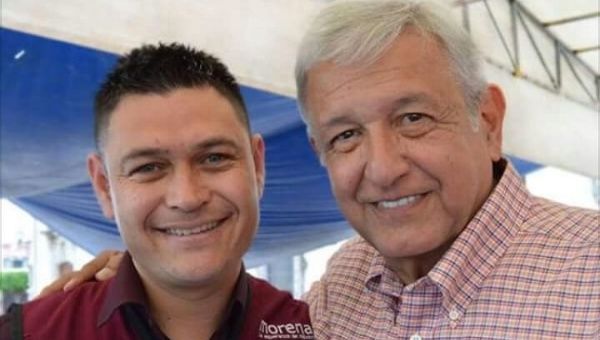
Electoral campaigns in Mexico suffered another casualty on Friday with the murder of Jose Remedios Aguirre Sanchez, a mayoral candidate from the same coalition as presidential hopeful Andres Manuel Lopez Obrador, commonly known as AMLO.
The 35-year-old candidate was shot dead at close range in the Ecological Park of the Apaseo el Alto. Two other people were reportedly injured. The perpetrators escaped in a white convertible Ford Mustang with a U.S. license plate, according to witnesses.
Aguirre was competing in the race for mayor in the municipality of Apaseo el Alto, in Guanajuato, with the Movement of National Regeneration (Morena) party.
Before entering the race for Apaseo el Alto’s mayor, Aguirre had served as the director of public security in the same municipality between 2012 and 2015.
Since September when electoral campaigns began around the country, over 90 candidates, politicians and officials have been violently murdered.
Aguirre was a member of the progressive Morena party that is backing the coalition of Andrez Manuel Lopez Obrador, one of the top picks for Mexico’s presidency.
Rather than admit it has its own reasons why it is unwilling to boost Syrian air defenses Russia plays up their effectiveness and pretends these are perfectly adequate — when in 7 years they haven’t been able to deter Israel from nearly weekly attacks.
On May 10th Israeli strikes on Syrian army positions across southern Syria Israel fired at least 60 cruise missiles. The Russians say that Syrian air defenses destroyed nearly half of these before impact. That would be quite the accomplishment indeed.
However there is another side to the story. Israel has released footage from one of the missiles as it hits a Syrian Russian-made Pantsir-S1 short-range air defense units. This is highly embarrassing for Russians and Syrians both as Pantsir with its fast-firing cannons and missiles of its own was designed to defend key positions from precisely these sort of threats — yet it could not defend even itself. Now, the unit was not camouflaged or dug in. It was sitting out in the open on airbase tarmac. That is extremely reckless and amateurish. Most likely the unit wasn’t even switched on, or was waiting for an ammunition refill (why out in the open??).
However, the Pantsir wasn’t the only kill. The Israelis also destroyed a number of S-200 radars. The S-200 system comes with a heavier missile for long-range air defense. It is positively ancient having entered service in the 1960s and is no longer in use by Russia. Yet it is the best that Syria has.
At the same time Russia has stated the transfer of the newer S-300 systems to Syria is not in the cards right now. The very Russian official in charge of military assistance to other nations has stated that “Syria has all it needs”. This strikes me as a very weird thing to say at a moment when its S-200s are getting blown up.
The Israeli media is tying the Russian statement to Netanyahu lobbying against the transfer on his May 9th Moscow visit, but Russia claims the two are not linked. I am actually willing to buy the latter just not the Kremlin’s explanation of it.
There are valid reasons why Russia would balk at giving Syria the S-300. Firstly there are political and optical problems involved. The Israelis are now firing off their missiles from Israeli (Palestinian) and Lebanese airspace. Defending against them would entail downing Israeli jets over Israel. Now, if that is accomplished by Russian military aid (Syria can’t realistically pay for the S-300s) you start to see my point… If thanks to Putin Israeli jets start falling down from the sky in Israel the US elites can fan the flames of Russophobia in the famously pro-Israeli Middle America all the more easily.
Also it is entirely possible that Russia doesn’t fancy having to foot the bill. The Israeli air force is a large one and highly technically sophisticated. There is no guarantee that it can be deterred or defended against by just a battery or two of S-300s. Quite possibly it would take a much larger buildup of Syrian air defenses, a buildup which Russia perhaps doesn’t want to finance. Especially at a time when it is reducing even its own defense spending.
In the 1970s Israel and Egypt fought an air war of attrition. Egypt’s Soviet-trained and Soviet-supplied air defenses inflicted unacceptable losses on the Israeli air force, but Moscow ended up footing the bill. Putin, who commands a smaller country than Brezhnev and a far, far less ambitious one, is probably not too keen on walking in the Soviets’ path.
That’s quite understandable and probably wise, but to say that Syria has all the air defenses it needs right now — when Israel has been striking it with virtual impunity now for almost seven years is patently untrue and a very bizarre thing to say.
The real explanation is that Russia is unwilling to assume the risks and the burdens of the kind of buildup of Syria’s military that would actually take to check the Israelis if the latter decide to be really stubborn about it.
It would provoke the pro-Israeli Washington elites and burden Russia financially and politically for little gain given that Netanyahu keeps reassuring Putin that Israel does not seek to alter the outcome of the Syrian civil war, but is merely pushing back against Iranian influence in Syria.
As long as Moscow buys that it won’t react. Russian anger rises only when Israel acts in such a way as to set up a war between the US and Assad as was the case last month. This gave rise to the Russian threat they may supply Syria with improved air defenses but the threat now appears to be empty.
For years Israel and its lobby around the world have been trying to normalise their relations with Arabs and Muslims without solving the Palestine Question.
One of the methods they resorted to in the last few years is using human rights and community organizations such as interfaith dialogue and Multiculturalism to achieve this objective and to: isolate the Palestinians, marginalise the Palestine question, end Israel’s isolation, and prevent criticism of Israel, knowing that these organisations will be the first to stand against Israel’s violations, racial and religious discrimination.
The group responsible for this task in Australia is The Australia/Israel & Jewish Affairs Council (AIJAC); its Director of International & Community Affairs, Jeremy Jones is in charge of lobbying religious community organizations, specifically Muslims and Christians. Consequently he convened the Faith Communities for Reconciliation, founding participant in the Australian Partnership of Religious Organisations and the Australian National Dialogue of Christians, Muslims & Jews.
AIJAC is a private political propaganda group. It is recognised as the main Israeli lobby in Australia. It coordinates its activities and works intimately with the Israeli embassy in Canberra and different institutions in Israel. It is privately funded by some Jewish businessmen. It monitors closely Australian politicians, the media, ethnic and religious groups, (especially Arabs and Muslims), unions and academics on their stands towards Israel and the Palestine question. … continue
This site is provided as a research and reference tool. Although we make every reasonable effort to ensure that the information and data provided at this site are useful, accurate, and current, we cannot guarantee that the information and data provided here will be error-free. By using this site, you assume all responsibility for and risk arising from your use of and reliance upon the contents of this site.
This site and the information available through it do not, and are not intended to constitute legal advice. Should you require legal advice, you should consult your own attorney.
Nothing within this site or linked to by this site constitutes investment advice or medical advice.
Materials accessible from or added to this site by third parties, such as comments posted, are strictly the responsibility of the third party who added such materials or made them accessible and we neither endorse nor undertake to control, monitor, edit or assume responsibility for any such third-party material.
The posting of stories, commentaries, reports, documents and links (embedded or otherwise) on this site does not in any way, shape or form, implied or otherwise, necessarily express or suggest endorsement or support of any of such posted material or parts therein.
The word “alleged” is deemed to occur before the word “fraud.” Since the rule of law still applies. To peasants, at least.
Fair Use
This site contains copyrighted material the use of which has not always been specifically authorized by the copyright owner. We are making such material available in our efforts to advance understanding of environmental, political, human rights, economic, democracy, scientific, and social justice issues, etc. We believe this constitutes a ‘fair use’ of any such copyrighted material as provided for in section 107 of the US Copyright Law. In accordance with Title 17 U.S.C. Section 107, the material on this site is distributed without profit to those who have expressed a prior interest in receiving the included information for research and educational purposes. For more info go to: http://www.law.cornell.edu/uscode/17/107.shtml. If you wish to use copyrighted material from this site for purposes of your own that go beyond ‘fair use’, you must obtain permission from the copyright owner.
DMCA Contact
This is information for anyone that wishes to challenge our “fair use” of copyrighted material.
If you are a legal copyright holder or a designated agent for such and you believe that content residing on or accessible through our website infringes a copyright and falls outside the boundaries of “Fair Use”, please send a notice of infringement by contacting atheonews@gmail.com.
We will respond and take necessary action immediately.
If notice is given of an alleged copyright violation we will act expeditiously to remove or disable access to the material(s) in question.
All 3rd party material posted on this website is copyright the respective owners / authors. Aletho News makes no claim of copyright on such material.

 Aletho News
 Aletho News