Israeli court orders PA to compensate collaborators
MEMO | June 30, 2018
An Israeli court has ordered the Palestinian Authority to compensate Palestinians detained by its security services over suspicions that they have collaborated with the occupation authorities, local media reported on Friday. According to the Times of Israel, the court has ordered the PA to pay a total of NIS13.2m ($3.5 million) in compensation to 52 collaborators.
The PA occasionally detains Palestinians in the occupied West Bank who are suspected of collaborating with the Israeli security services. Israel Hayom reported that five lawsuits involving dozens of plaintiffs have been filed against the authority over its crackdown on collaborators, noting that the oldest dates from 2004.
“We welcome the court’s landmark ruling,” said lawyers acting for the collaborators. “The judge saw the plaintiffs’ disabilities [resulting from torture], understood their distress and decided to grant them partial compensation immediately.”
The Palestinian Authority calls its own collaboration with the Israeli occupation authorities “security cooperation”. PA President Mahmoud Abbas has described this as “sacred”. Critics insist that the PA security services were created solely to protect Israel and its occupation, not the people of Palestine.
Forced Recruitment by US-Backed SDF Reported Again in Deir Ezzur
Fars News Agency | June 30, 2018
The US-backed Syrian Democratic Forces (SDF) have detained and forcefully recruited a large number of civilians in Deir Ezzur.
Local sources in Eastern Deir Ezzur reported on Saturday that the SDF has detained tens of civilians during heavy attacks on the villages of al-Tiyanah, al-Shanan and al-Jarzi.
The Kurdish forces also arrested a number of civilians in the villages of Mahimideh and Haqayej al-Bomasa’h.
Meantime, reports said that they have attacked and beaten a number of civilians in the town of al-Kashisheh in Eastern Deir Ezzur.
Tensions have heightened between the civilians and the SDF in Deir Ezzur, Hasaka and other regions occupied by the US-backed Kurdish forces.
In a relevant development on Thursday, local sources in Eastern Deir Ezzur reported that tensions and uprising of civilians against the US-backed Syrian Democratic Forces have intensified, adding that assassination attempts by unknown assailants have also increased against the SDF in the region.
The sources said that residents of the town of al-Shahil have held protest rallies against the SDF and blocked the roads in Eastern Deir Ezzur.
They added that the SDF then detained nearly 70 local residents of the region, noting that several other people were also arrested in the town of Zabiyan and the village of al-Hawayej in Eastern Deir Ezzur.
Meantime, a number of SDF forces have been killed and wounded during repeated explosions and assassination attempts by unknown assailants in Eastern Deir Ezzur.
Syria Is Now Like the Balkans in 1914
By Jeremy Salt | American Herald Tribune | June 30, 2018
The war in Syria has returned to where it was started in 2011, in Dara’a, close to the Jordanian border and therefore easily accessible to takfiris and weapons shipped in to be used behind the façade of ‘peaceful protests.’ The template had been used in Latin America and the Middle East on many occasions and here it was being used again, with the enthusiastic support of the corporate media.
Having failed in its attempt to overthrow the Syrian government the US is now abandoning those groups described in the corporate media as its ‘allies.’ One such group is the takfiri collective fighting under the banner of the Free Syrian Army, which has been told to expect no help from the US in its collapsing attempt to hold ground in southwestern Syria. Another is the Kurdish SDF-YPG collective in the north, which the US betrayed when signing an agreement with Turkey over Manbij. The Kurds, as an administrative and military force, have been forced out. The town is now being patrolled by Turkish and US military units.
The Kurds can’t say they were not told to distrust the US. They have played their cards hopelessly just about everywhere. When Turkey invaded north-western Syria early this year the Kurds rejected an offer of military assistance from the Syrian government, apparently thinking they could hold their ground against the Turkish army, only to be routed by it and to be driven out of Afrin city.
The US had warned Turkey that Manbij was a red line. However, when the Turks insisted, the US gave in. The YPG is now reconciling with the Syrian government, just as some at least of the betrayed takfiris in the southwest, along the border with Jordan and the armistice line with the occupied Syrian Golan Heights, have been accepting an amnesty offer. Israel is still doing its best to throw the Syrian military off balance, by bombing near Damascus airport and striking at Syria’s Iraqi allies along the eastern border, but to no avail. The army is making a clean sweep and all the southwest will soon be back in the hands of the Syrian government.
Syria’s next target is likely to be the base the US has set up at Al Tanf on the Syrian-Iraqi border. At Al Tanf the US has been retraining and rebranding takfiris into its Maghawhir al Thawra (Commandos of the Revolution) proxy force. Backed by US air power, this force has been attacking Syrian forces outside the ‘deconfliction zone’ the US has unilaterally set up within a 50 km radius of Al Tanf.
The US is still arguing that its forces are needed in Syria to fight the Islamic State. In fact, if the Islamic State continues to exist, it is because of tacit support from the US. The heavy work in destroying the Islamic State was done by the Syrian military and the Syrian and Russian air forces, not the US and not the Kurds, as the corporate media would have its gullible consumers believe. The latest example of a helping hand is the helicoptering of two IS leaders from Twaimin on the Syrian-Iraqi border to the US base at Al Shaddadi, south of al Hasaka.
From Tanf the US continues to attack the Syrian and Iraqi militaries, with air support from Israel. The aim seems to be to control the border and prevent the war in Syria from ending. Donald Trump has blown hot and cold over Syria and even Americans should be asking what their forces are doing there. The US has reached none of its set goals. The Syrian government is still in power and the proxy forces armed and paid by outside governments are being routed. The Kurdish card was played, with the apparent intention of linking up the occupied northeast, predominantly Kurdish, with the Kurdish governorate in northern Iraq, in 2011 only a few steps short of statehood. That is now not going to happen, following the collapse of the independence movement in northern Iraq and the loss of all territory taken by the peshmerga since 2014. The US betrayal of the Kurds in favour of an agreement with Turkey puts the final nail in the coffin.
The US is now staying in Syria to prevent the war from ending. Its withdrawal would signify the complete and humiliating failure of the policy of intervention. The US would be signalling that Syria, Russia, Iran and Hezbollah have won and the tripartite axis of the US, Saudi Arabia and Israel have failed. The US is now isolated and vulnerable in Syria. It is opposed on both sides of the Iraq-Syrian border by military and tribal forces, whose resistance to foreign occupation is being coordinated/monitored by a joint command centre set up in Baghdad by Iraq, Syria and Russia.
If Trump does one of his familiar back flips and announces the withdrawal of US forces from Syria it will be Turkey’s turn to be left isolated and vulnerable not just in north-western Syria or Manbij where the government has repeatedly refused to withdraw its troops, but from Bashiqa, near Mosul, despite the repeated demands of the Iraqi government. Turkish occupation of north-western Syria extends to the town Al Bab, northeast of Aleppo, where an industrial zone is being created. Throughout the occupied region the Turkish flag is being flown, a police force trained and proxy town councils set up. Turkish forces are now present in Manbij, further to the west, and Idlib, where under the ‘deconfliction’ arrangements set up under the Astana negotiations Turkey has set up at least 12 ‘observation’ posts.
Bashar al Assad has said Syria intends to liberate the entire country, as is his constitutional duty, and that all occupying forces that do not voluntarily withdraw will be driven out by force. The Turkish government has said it will not return occupied territory to the Syrian government: to whom it would return this territory is not clear. Following his recent election victory Tayyip Erdogan said he would continue to take measures to ‘liberate’ Syria. As these completely polarized positions indicate, open armed conflict between Syria and Turkey would seem inevitable sooner or later. The main Turkish opposition party, the Republican People’s Party (CHP), strongly opposed to intervention in Syria, had said it intended to repair the relationship with the government in Damascus, a process that would inevitably have entailed the withdrawal of Turkish forces but that exit route has now been closed off.
Syria is now a cross between the Balkans in 1914 and Europe 1930-39. The combination of irresponsible outside powers and the violent groups they are backing inside Syria but cannot necessarily control have created a tinderbox. One more spark and the entire region could be blown sky high.
Jeremy Salt has taught at the University of Melbourne, Bosporus University (Istanbul) and Bilkent University (Ankara), specialising in the modern history of the Middle East. His most recent book is “The Unmaking of the Middle East. A History of Western Disorder in Arab Lands” (Berkeley: University of California Press, 2008.)
What Would Help the Peace Process in Korea?
By David William Pear | American Herald Tribune | June 30, 2018
It looks like peace is breaking out in Korea. The Koreans themselves are moving fast to mend their nation. When paradigm shifts happen they often happen quickly. In just a little over a year the South Korean people demanded the ouster of the corrupt rightwing Park Geun-hye as their president, and a new election replaced her with the liberal human rights lawyer Moon Jae-in.
Moon brought in a new era with the overwhelming support of the South Korean people. Kim Jong-un of North Korea responded likewise. Since the beginning of this year the normalization of relations between the North and the South have been moving fast. U.S. diplomats cannot keep up with it. So let us look into the deep roots of the Korean War and what would help the peace process.
We can start by answering what caused the Korean War. The conventional wisdom is that the war was started by the Democratic People’s Republic of Korea (i.e. North Korea) on June 25, 1950 when it invaded the Republic of Korea (i.e. South Korea). But the conventional wisdom is wrong. It is like saying that the Vietnam War started when North Vietnam invaded South Vietnam; or asking when did the American Revolution start.
Scholars are coming around to recognizing that the Korean War was a civil war. Bruce Cumings in his book, “Korea’s Place in the Sun: A Modern History”, explains it this way:
“The Korean War did not begin on June 25, 1950, much special pleading and argument to the contrary. If it did not begin then, Kim iI Sung could not have ‘started’ it then, either, but only at some earlier point. As we search backward for that point, we slowly grope toward the truth that civil wars do not start: they come. They originate in multiple causes, with blame enough to go around for everyone—and blame enough to include Americans who thoughtlessly divided Korea and then reestablished the colonial government machinery and the Koreans who served it.”
The Korean War has its roots in the mid 1800’s. There was a scramble for colonies, subjugation and influence in East Asia. The driving force of colonialism was trade. It was a scramble for booty, cheap labor, and markets. The Industrial Revolution and the instability of capitalism caused an excess of production; requiring new markets, and the need for more raw materials to feed the machines. Capitalism must constantly expand trade or growth stops, and the system collapses.
Fortunes were made in trade with Asia: tea, silk, spices, tobacco, sugar, rum, porcelain, cotton, coal, timber, gold and opium. The big powers in Asia were England, France, Dutch, Czarist Russia and the United States of America. Japan got into the game after the U.S. forcefully opened it for trade with the black gunboats of Commodore Matthew Perry in 1854.
The Japanese were quick learners in the ways of Western imperialism. Theodore Roosevelt admired them greatly, and considered them to be a “superior” race of Asians. Racial stereotyping was then common and many Westerners considered Asians to be inferior heathens. It was not uncommon for Asians to view rightly foreigners and Christian missionaries as subversives, and wanted to keep them out.
In 1866 the U.S. armed merchant ship the General Sherman tried to force its way into a Korean port despite protests from Korea that it was not open for business. The Koreans attacked the ship, and when it got stuck on a sandbar they killed all the crew and burned the ship.
In 1871 the U.S. used the General Sherman incident as an excuse to launch an invasion of Korea with the aim of getting an apology and establishing trading relations. The U.S. invasion was a success, it taught the Koreans a lesson, but they still refused to establish trading relations.
Later, fearing subjugation by one colonial power or another, Korea decided to make a deal with what it thought would be the lesser evil, and entered into the Treaty of Peace, Amity, Commerce and Navigation with the U.S. in 1882. Koreans took some comfort that the U.S. was on the other side of the ocean, unlike Japan. In exchange for giving the U.S. unequal trading rights, the Koreans got a signed treaty of U.S. protection.
The U.S. broke its promise of protection and delivered Korea into the colonial hands of the Japanese with the Taft–Katsura agreement in 1905. Theodore Roosevelt made a secret pact with the Japanese during his mediation of the settlement of the Russo-Japanese War. The secret deal was that Japan got Korea, and the U.S. got a Japanese guarantee of non-interference with its colony in the Philippines. Theodore Roosevelt was awarded the Nobel Peace Prize, even though he secretly and cynically double crossed the Koreans.
After World War Two the U.S. denied Korea a chance for independence again. Instead of liberating Korea, the U.S. was responsible for the division of Korea at the 38th parallel. Russia agreed, and while the Russians ushered in a government of Korean freedom fighters in the North, the U.S. in the South put in place a puppet government of Koreans who had collaborated with the Japanese, and the hated right-wing Korean aristocrats known as Yangban.
In both the north and the south Koreans were ready for self-government. In anticipation of the defeat of the Japanese and liberation, they had set up the Korean People’s Republic with grassroots committees all over the country. The head of the KPR in the South was Yo Un-hyong. Yo was a popular left-leaning nationalist and land reformer. He was assassinated 2 years later by the U.S. backed rightwing puppet government of Syngman Rhee
Even though the Korean people had governed themselves for over a thousand years, the U.S. did not consider them ready for self-government. At the Yalta Conference in February 1945 Franklin Delano Roosevelt proposed that Korea be placed in a trusteeship. He said it would take 40 years before Korea would be ready for self-government.
When U.S. troops docked at the Port of Incheon Korea on September 8, 1945 Roosevelt was dead, and Harry Truman was president. Under Truman the ruse of a trusteeship was dropped. The spoils of war go to the victor and the U.S. set about establishing the southern half of Korea as if it was a new U.S. colony.
The Koreans did not even get to celebrate their first night of liberation in 1945. The U.S. military declared martial law and ordered a curfew for all Koreans. The Japanese colonial administrators were kept in place, and American and Japanese officers partied at the Chosen Hotel in Seoul for several drunken days.
The Japanese administrators, military and police simply put on U.S. Army Military Government (AMG) armbands, kept their rifles and patrolled the streets with fixed bayonets until 1946. Similar scenes were taking place in Vietnam and elsewhere in Asia “liberated” from the Japanese. It was the beginning of the renewal of the U.S. “special relationship” with Japan that Theodore Roosevelt had established in 1905.
The U.S. befriended the enemy Japan and turned on their former Korean allies who had been fighting the Japanese for over 12 years. The U.S. military occupation government commanded by General John R. Hodge would be the military occupation government for the next 3 years.
In 1946 the Japanese administering southern Korea were replaced mostly with Koreans who had collaborated with the Japanese, and the yangban kept their lands. The U.S. feared that communism would take hold in liberated countries. It was the communists who had put up the biggest armed resistance in Asia against the Japanese during World War Two. The U.S. no longer needed or wanted them.
The scene in northern Korea was quite different. The Korean People’s Republic and their grassroots committees took over the government functions. The Japanese war criminals, collaborators, and yangban fled south where the U.S. welcomed them with open arms.
Within 3 years the Russians had pulled out all of their armed forces. The Russians had their own devastated country to rebuild, and they were more concerned about Eastern Europe, which was the historical invasion route to Russia.
The U.S.’s own intelligence had identified the desires of the Korean people. They wanted independence, self-government and land reform. Those were the antithesis of what the U.S. wanted for the Korean people. It was the U.S. that was scrambling all over the world to stem the tidal wave of anti-colonialism.
Kim il Sung was a national patriotic hero that had been fighting Japanese colonialism since the early 1930’s. If the U.S. had not blocked nationwide elections in Korea, he or another leftist reformer would have overwhelmingly won a fair election.
In the Moscow Conference of December, 1945 the U.S. and Russia agreed that Korea would be independent within 5 years after nationwide elections and that all foreign troops would withdraw. Russia kept its end of the bargain. The U.S. broke its promise.
Instead the U.S. rigged an election in the South, in which the Communist Party and leftist were not allowed to participate. Later the U.S. would use the same trick in South Vietnam, in order to keep that country divided too. Like Kim il Sung in Korea, Ho Chi Minh was a national hero and would have won in a fair nationwide election in Vietnam.
Turn to 1950. Military clashes had been a regular occurrence along Korea’s 38th parallel for 2 years, many of them initiated by the South. The 38th parallel was not recognized as an international border by either the U.S. puppet government in South Korea or the anti-colonial government in North Korea.
Korea was one country, and each side claimed to be the legitimate government of all of Korea. Therefore, the Korean War was not a war of aggression. There was no invasion of Korea by Koreans. The invaders were the U.S. which was subjugating the South, and backed a little-known transplant named Syngman Rhee, who had lived in the U.S. for forty years.
The Rhee dictatorship went on an anti-communist witch hunt that killed, imprisoned, tortured and disappeared hundreds of thousands of patriotic left-leaning Koreans in the South. Repressive dictatorships continued the persecution of dissidents for the next 40 years.
No one knows exactly what happened on the night of June 25, 1950; both sides said that the other side started the clash. The scenario that has become official U.S. legend raised many questions, most notably by the investigative journalist I. F. Stone in his book “The Hidden History of the Korean War (1950-1951)”.
For Kim il Sung and his compatriots the Korean War was an anti-colonial war. First he fought against the Japanese, just as Vietnam was fighting then against the French and their puppet government. To Kim il Sung, South Korea was a colonial puppet government of the US. The U.S. can be seen as the aggressor in both Vietnam and Korea.
The legal fig leaf of U.S. subjugation and the establishment of a puppet government in South Korea was a U.S. dominated United Nations-backed rigged election in the South. Communists were not allowed to participate so they boycotted it.
For the next 40 years South Korea was ruled by U.S. backed dictators Syngman Rhee, Park Chung-hee, Chun Doo-hwan and Roh Tae-woo. If one wants to know who controls a country, then look at who controls the country’s military. South Korea’s military is still today under the wartime command of the US military.
Korea and Vietnam have many similarities. Both were invaded by colonial powers in the 1800’s. Would any historian today write something like: The Vietnam War started when the North Vietnamese attacked their French colonial occupiers? Would anybody say that The Vietnam War started in 1957 when Ho Chi Minh’s forces crossed the 17th parallel? South Vietnam, as was South Korea was ruled by a puppet government of the US.
Ho Chi Minh was a freedom fighter just as Kim il Sung was against the Japanese during World War Two. Both were fighting colonialism. The Vietnam War and the Korean War were wars against U.S. occupiers that had replaced colonial rule.
Neither North Korea nor South Korea recognized the 38th parallel as a border. As General MacArthur said when his armed forces crossed the 38th parallel on October 9, 1950, it was just an imaginary line. MacArthur’s UN mandate was originally to repel the North Korean forces from South Korea. But MacArthur argued that the 38th parallel had no meaning and he ordered his army into one of the worst disasters in U.S. military history.
The Chinese had repeatedly warned that they would intervene if MacArthur crossed the 38th parallel. Had MacArthur heeded that warning it may have saved millions of lives, including tens of thousands of American lives.
When MacArthur’s forces reached the Yalu River separating Korea and China there were 300,000 Chinese volunteers and Koreans waiting in ambush. MacArthur’s forces had to run a bloody gauntlet at the Chosen Reservoir as they retreated back across the 38th parallel. The U.S. forces suffered over 15,000 casualties in that single battle.

*(Retreat from the Battle of the Chosen Reservoir)
The reunification of Vietnam, like Korea, was agreed to be settled by nationwide elections. As in Korea, the U.S. staged a phony election in South Vietnam and established the government of the Republic of Vietnam, under the puppet president Ngo Dinh Diem. Just as in Korea, the U.S. knew that if there were fair elections in Vietnam, then the Communist Party would win. So like in Korea, the U.S. staged a phony election in the south in which communists were not permitted to participate.
Article V, item 60 of the Korean Armistice Agreement of 1953 recommended that within 3 months a conference would be held by all sides of the Korean War. All sides were to “settle through negotiation the question of the withdrawal of all foreign forces from Korea, the peaceful settlement of the Korean question, etc. [sic]”.
The conference on Korea was held at the same Geneva Conference of 1954 that temporarily divided Vietnam. Nationwide elections in Vietnam were agreed to be held in 1956. No further agreement was reached on the “peaceful settlement of the Korean question”.
It was the US invasion of Korea in 1871, and Theodore Roosevelt’s betrayal that resulted in Korea being subjugated by Japan in 1905, and annexed in 1910. The U.S. caused much of the suffering, death and destruction of Korea for over a century, and a never ending war.
We cannot turn the clock back to March 1, 1919 when Woodrow Wilson made his 14 points speech that colonial people have a right to self-determination. Nor can we turn it back to 1948, and the promised independence for Korea.
What would help the peace process now in Korea is for the U.S. to get out of the way. All U.S. armed forces should be withdrawn from Korea, as they were supposed to have been in 1948. The US should stop bullying Koreans, stop meddling in the internal affairs of Korea, and let the Korean people settle their own destiny.
***
Reference and suggested reading
“Patriots, Traitors and Empires: The Story of Korea’s Struggle for Freedom”, by Stephen Gowans.
“Reflections on the Roots of U.S. Involvement in Korea”, by Chang Soon.
“Korea’s Place in the Sun: A Modern History”, by Bruce Cumings.
“The Hidden History of the Korean War (1950-1951)”, by I.F. Stone.
***
David William Pear may be contacted at dwpear521@gmail.com
The Two Superpowers: Who Really Controls the Two Countries?
By Paul Craig Roberts | Institute For Political Economy | June 30, 2018
Among the ruling interests in the US, one interest even more powerful than the Israel Lobby—the Deep State of the military/security complex— there is enormous fear that an uncontrollable President Trump at the upcoming Putin/Trump summit will make an agreement that will bring to an end the demonizing of Russia that serves to protect the enormous budget and power of the military-security complex.
You can see the Deep State’s fear in the editorials that the Deep State handed to the Washington Post (June 29) and New York Times (June 29), two of the Deep State’s megaphones, but no longer believed by the vast majority of the American people. The two editorials share the same points and phrases. They repeat the disproved lies about Russia as if blatant, obvious lies are hard facts.
Both accuse President Trump of “kowtowing to the Kremlin.” Kowtowing, of course, is not a Donald Trump characteristic. But once again fact doesn’t get in the way of the propaganda spewed by the WaPo and NYT, two megaphones of Deep State lies.
The Deep State editorial handed to the WaPo reads: “THE REASONS for the tension between the United States and Russia are well-established. Russia seized Crimea from Ukraine, instigated a war in eastern Ukraine, intervened to save the dictatorship of Syrian President Bashar al-Assad, interfered in the U.S. presidential election campaign to harm Hillary Clinton and help Donald Trump, poisoned a former intelligence officer on British soil and continues to meddle in the elections of other democracies.”
The WaPo’s opening paragraph is a collection of all the blatant lies assembled by the Deep State for its Propaganda Ministry. There have been many books written about the CIA’s infiltration of the US media. There is no doubt about it. I remember my orientation as Staff Associate, House Defense Appropriation Subcommittee, when I was informed that the Washington Post is a CIA asset. This was in 1975. Today the Post is owned by a person with government contracts that many believe sustain his front business.
And don’t forget Udo Ulfkotte, an editor of the Frankfurter Allgemeine Zeitung, who wrote in his best seller, Bought Journalism, that there was not a significant journalist in Europe who was not on the CIA’s payroll. The English language edition of Ulfkotte’s book has been suppressed and prevented from publication.
The New York Times, which last told the truth in the 1970s when it published the leaked Pentagon Papers and had the fortitude to stand up for its First Amendment rights, repeats the lies about Putin’s “seizure of Crimea and attack on Ukraine” along with all the totally unsubstantiated BS about Russia interfering in the US president election and electing Trump, who now kowtows to Putin in order to serve Russia instead of the US. The editorial handed to the NYT insinuates that Trump is a threat to the national security of America and its allies (vassals). The problem, the NYT declares, is that Trump is not listening to his advisors.
Shades of President John F. Kennedy, who did not listen to the CIA and Joint Chiefs of Staff about invading Cuba, nuking the Soviet Union, and using the false flag attack on America of the Joint Chiefs’ Northwoods Project (look it up online). Is the New York Times setting up Trump for assassination on the grounds that he is lovey-dovey with Russia and sacrificing US national interests?
I would bet on it.
While the Washington Post and New York Times are telling us that if Trump meets with Putin, Trump will sell out US national security, The Saker says that Putin finds himself in a similar box, only it doesn’t come from the national security interest, but from the Russian Fifth Column, the Atlanticist Integrationists whose front man is the Russian Prime Minister Medvedev, who represents the rich Russian elite whose wealth is based on assets stolen during the Yeltsin years enabled by Washington. These elites, The Saker concludes, impose constraints on Putin that put Russian sovereignty at risk. Economically, it is more important to these elites for financial reasons to be part of Washington’s empire than to be a sovereign country.
I find The Saker’s explanation the best I have read of the constraints on Putin that limit his ability to represent Russian national interests.
I have often wondered why Putin didn’t have the security force round up these Russian traitors and execute them. The answer is that Putin believes in the rule of law, and he knows that Russia’s US financed and supported Fifth Column cannot be eliminated without bloodshed that is inconsistent with the rule of law. For Putin, the rule of law is as important as Russia. So, Russia hangs in the balance. It is my view that the Russian Fifth Column couldn’t care less about the rule of law. They only care about money.
As challenged as Putin might be, Chris Hedges, one of the surviving great American journalists, who is not always right but when he is he is incisive, explains the situation faced by the American people. It is beyond correction. American civil liberties and prosperity appear to be lost.
In my opinion, Hedges’ leftwing leanings caused him to focus on Reagan’s rhetoric rather that on Reagan’s achievements—the two greatest of our time—the end of stagflation, which benefited the American people, and the end of the Cold War, which removed the threat of nuclear war. I think Hedges also does not appreciate Trump’s sincerity about normalizing relations with Russia, relations destroyed by the Clinton, George W. Bush, and Obama regimes, and Trump’s sincerity about bringing offshored jobs home to American workers. Trump’s agenda puts him up against the two most powerful interest groups in the United States. A president willing to take on these powerful groups should be appreciated and supported, as Hedges acknowledges the dispossessed majority do. If I might point out to Chris, whom I admire, it is not like Chris Hedges to align against the choice of the people. How can democracy work if people don’t rule?
Hedges writes, correctly, “The problem is not Trump. It is a political system, dominated by corporate power and the mandarins of the two major political parties, in which we [the American people] don’t count.”
Hedges is absolutely correct.
It is impossible not to admire a journalist like Hedges who can describe our plight with such succinctness:
“We now live in a nation where doctors destroy health, lawyers destroy justice, universities destroy knowlege, the press destroys information, religion destroys morals, and banks destroy the economy.”
Read The Saker’s explanation of Russian politics. Possibly Putin will collapse under pressure from the powerful Fifth Column in his government. Read Chris Hedges analysis of American collapse. There is much truth in it. What happens if the Russian people rise up against the Russian Fifth Column and if the oppressed American people rise up against the extractions of the military/security complex? What happens if neither population rises up?
Who sets off the first nuclear weapon?
Our time on earth is not just limited by our threescore and ten years, but also humanity’s time on earth, and that of every other species, is limited by the use of nuclear weapons.
It is long past the time when governments, and if not them, humanity, should ask why nuclear weapons exist when they cannot be used without destroying life on earth.
Why isn’t this the question of our time, instead of, for example, transgender toilet facilities, and the large variety of fake issues on which the presstitute media focuses?
The articles by The Saker and Chris Hedges, two astute people, report that neither superpower is capable of making good decisions, decisions that are determined by democracy instead of by oligarchs, against whom neither elected government can stand.
If this is the case, humanity is finished.
Here are the Washington Post and New York Times editorials:
Washington Post
June 29, 2018
Editorial
Trump is kowtowing to the Kremlin again. Why?
Ahead of a summit with Putin, Trump is siding with the Russian leader, with dangerous results.THE REASONS for the tension between the United States and Russia are well-established. Russia seized Crimea from Ukraine, instigated a war in eastern Ukraine, intervened to save the dictatorship of Syrian President Bashar al-Assad, interfered in the U.S. presidential election campaign to harm Hillary Clinton and help Donald Trump, poisoned a former intelligence officer on British soil and continues to meddle in the elections of other democracies. Yet on Wednesday in the Kremlin, President Vladimir Putin brushed it all aside and delivered the Russian “maskirovka,” or camouflage, answer that it is all America’s fault.
Meeting with John Bolton, the president’s national security adviser, Mr. Putin declared that the tensions are “in large part the result of an intense domestic political battle inside the U.S.” Then Mr. Putin’s aide Yuri Ushakov insisted that Russia “most certainly did not interfere in the 2016 election” in the United States. On Thursday morning, Mr. Trump echoed them both on Twitter: “Russia continues to say they had nothing to do with Meddling in our Election!”
Why is Mr. Trump kowtowing again? The U.S. intelligence community has concluded that Russia did attempt to tilt the election using multiple campaigns, including cyberintrusions and insidious social media fakery. Would it be so difficult to challenge Mr. Putin about this offensive behavior? A full accounting has yet to be made of the impact on the election, but Mr. Bolton did not mince words last year when he described Russian interference as “a true act of war” and said, “We negotiate with Russia at our peril.” And now?
Summits can be productive, even – maybe especially – when nations are at odds. In theory, a meeting between Mr. Trump and Mr. Putin, now scheduled for next month in Helsinki, could be useful. But a meeting aimed at pleasing Mr. Putin is naive and foolhardy. A meeting aimed at pleasing Mr. Putin at the expense of traditional, democratic U.S. allies would be dangerous and damaging.
Just as Mr. Bolton was flattering Mr. Putin, Russia was engaging in subterfuge on the ground in Syria. The United States, Russia and Jordan last year negotiated cease-fire agreements in southwestern Syria, along the border with Jordan and the Golan Heights. In recent days, the United States has warned Russia and its Syrian allies not to launch an offensive in the area, where the rebel forces hold parts of the city of Daraa and areas along the border. The State Department vowed there would be “serious repercussions” and demanded that Russia restrain its client Syrian forces. Secretary of State Mike Pompeo called the Russian foreign minister, Sergei Lavrov, saying an offensive would be unacceptable. All to no avail; Syria is bombing the area.
This is what happens when Mr. Trump signals, repeatedly, that he is unwilling or unable to stand up to Russian misbehavior. We are on dangerous ground. Either Mr. Trump has lost touch with essential U.S. interests or there is some other explanation for his kowtowing that is yet unknown.
New York Times
June 29, 2018
Editorial
Trump and Putin’s Too-Friendly Summit
It’s good to meet with adversaries. But when Mr. Trump sits down with Mr. Putin, it will be a meeting of kindred spirits. That’s a problem.It’s good for American presidents to meet with adversaries, to clarify differences and resolve disputes. But when President Trump sits down with President Vladimir Putin of Russia in Finland next month, it will be a meeting of kindred spirits, and that’s a problem.
One would think that at a tête-à-tête with the Russian autocrat, the president of the United States would take on some of the major concerns of America and its closest allies. Say, for instance, Mr. Putin’s seizure of Crimea and attack on Ukraine, which led to punishing international sanctions. But at the Group of 7 meeting in Quebec this month, Mr. Trump reportedly told his fellow heads of state that Crimea is Russian because everyone there speaks that language. And, of course, Trump aides talked to Russian officials about lifting some sanctions even before he took office.
One would hope that the president of the United States would let Mr. Putin know that he faces a united front of Mr. Trump and his fellow NATO leaders, with whom he would have met days before the summit in Helsinki. But Axios reported that during the meeting in Quebec, Mr. Trump said, “NATO is as bad as NAFTA,” the North American Free Trade Agreement, which is one of Mr. Trump’s favorite boogeymen.
Certainly the president would mention that even the people he appointed to run America’s intelligence services believe unequivocally that Mr. Putin interfered in the 2016 election to put him in office and is continuing to undermine American democracy. Right? But on Thursday morning, Mr. Trump tweeted, “Russia continues to say they had nothing to do with Meddling in our Election!”
More likely, Mr. Trump will congratulate Mr. Putin, once again, for winning another term in a sham election, as he did in March, even though his aides explicitly warned him not to. And he has already proposed readmitting Russia to the Group of 7, from which it was ousted after the Ukraine invasion.
Summits once tended to be carefully scripted, and presidents were attended by senior advisers and American interpreters. At dinner during a Group of 20 meeting last July, Mr. Trump walked over to Mr. Putin and had a casual conversation with no other American representative present. He later said they discussed adoptions – the same issue that he falsely claimed was the subject of a meeting at Trump Tower in 2016 between his representatives and Russian operatives who said they had dirt on Hillary Clinton.
It’s clear that Mr. Trump isn’t a conventional president, but instead one intent on eroding institutions that undergird democracy and peace. Mr. Trump “doesn’t believe that the U.S. should be part of any alliance at all” and believes that “permanent destabilization creates American advantage,” according to unnamed administration officials quoted by Jeffrey Goldberg in The Atlantic.
Such thinking goes further than most Americans have been led to believe were Mr. Trump’s views on issues central to allied security. He has often given grudging lip service to supporting NATO, even while complaining frequently about allies’ military spending and unfair trade policies.
The tensions Mr. Trump has sharpened with our allies should please Mr. Putin, whose goal is to fracture the West and assert Russian influence in places where the Americans and Europeans have played big roles, like the Middle East, the Balkans and the Baltic States.
Yet despite growing anxieties among European allies, Mr. Trump is relying on his advisers less than ever because, “He now thinks he’s mastered this,” one senior member of Congress said in an interview. That’s a chilling thought given his inability, so far, to show serious progress on any major security issue. Despite Mr. Trump’s talk of quick denuclearization after his headline-grabbing meeting with the North Korean leader, Kim Jong-un, experts say satellite imagery shows the North is actually improving its nuclear capability.
While the White House hasn’t disclosed an agenda for the Putin meeting, there’s a lot the two leaders should be discussing, starting with Russian cyberintrusions. Mr. Trump, though, has implied that Mr. Putin could help the United States guard against election hacking. And although Congress last year mandated sweeping sanctions against Russia to deter such behavior, Mr. Trump has failed to implement many of them.
In a similar vein, should Mr. Trump agree to unilaterally lift sanctions imposed after Moscow invaded Ukraine and started a war, it would further upset alliance members, which joined the United States in imposing sanctions at some cost to themselves. Moreover, what would deter Mr. Putin from pursuing future land grabs?
Mr. Trump could compound that by canceling military exercises, as he did with South Korea after the meeting with Mr. Kim, and by withdrawing American troops that are intended to keep Russia from aggressive action in the Baltics.
Another fraught topic is Syria. Mr. Trump has signaled his desire to withdraw American troops from Syria, a move that would leave the country more firmly in the hands of President Bashar al-Assad and his two allies, Russia and Iran. Russia, in particular, is calling the shots on the battlefield and in drafting a political settlement that could end the fighting, presumably after opposition forces are routed.
What progress could be made at this summit, then? Mr. Trump and Mr. Putin may find it easier to cooperate in preventing a new nuclear arms race by extending New Start, a treaty limiting strategic nuclear weapons that expires in 2021.
Another priority: bringing Russia back into compliance with the I.N.F. treaty, which eliminated all U.S. and Soviet ground-launched ballistic and cruise missiles with ranges between 500 and 5,500 kilometers, until Russia tested and deployed a prohibited cruise missile.
Mr. Trump’s top national security advisers are more cleareyed about the Russian threat than he is. So are the Republicans who control the Senate. They have more responsibility than ever to try to persuade Mr. Trump that the country’s security is at stake when he meets Mr. Putin, and that he should prepare carefully for the encounter.
Why It Matters That Peace Is Gone from Ocasio-Cortez Website
By David Swanson | American Herald Tribune | June 30, 2018
Newly popular Democratic politician hero and nominee for a seat in the U.S. Congress Alexandria Ocasio-Cortez used to have these words on her website:
A Peace Economy
“Since the invasion of Iraq in 2003, the United States has entangled itself in war and occupation throughout the Middle East and North Africa. As of 2018, we are currently involved in military action in Libya, Syria, Iraq, Afghanistan, Yemen, Pakistan, and Somalia. According to the Constitution, the right to declare war belongs to the Legislative body, not the President. Yet, most of these acts of aggression have never once been voted on by Congress. Alex believes that we must end the forever war by bringing our troops home and ending the air strikes and bombings that perpetuate the cycle of terrorism and occupation throughout the world.”
Now they’re gone. Asked about it on Twitter, she replied:
“Hey! Looking into this. Nothing malicious! Site is supporter-run so things happen -we’ll get to the bottom of it.”
A lot of people have been publicly encouraging her to proceed with getting to the bottom of it. One person has even designed a logo for her to use with the above text to match the logos she’s used with other “Issues” sections of her website. Tech-pro volunteers stand ready to help with the task of re-adding the words to the website at a moment’s notice.
Why does this matter? It’s just five pretty vague, non-committal sentences. It gives no indication even within, say, $300 billion what the nominee would like where in the federal budget, what steps she might take to end which wars, or what wars, if any, she considers impeachable offenses, or what initiatives she might undertake to advance peace, diplomacy, the rule of law, or conversion to a peace economy. What’s the big deal?
For one thing, the bar is very low in these matters. I’m not aware of a single candidate for Congress who has so much as hinted at what the federal budget should look like or even been asked to do so. I searched Democratic Congressional campaign websites and found a grand total of eight that mentioned any sort of opposition to war at all. (Most don’t even mention the existence of foreign policy.) Of those eight statements, Ocasio-Cortez’s five sentences are (were) in some ways the strongest. She lists major current wars. She calls them acts of aggression. She says she wants to end the forever war, strongly implying that she wants to end each of the wars she named and any others like them. She says she wants to end bombings, not just troop deployment. And she notes that the bombings are counterproductive on their own terms.
While the obviousness with which these wars are in fact acts of aggression is staggering, it is not possible to hire a political consultant in the United States who would advise you to leave that on your website. Acts of aggression are indisputably illegal, as well as being something that very serious people only accuse non-U.S. governments of when trying to fuel the cycle of violence that Ocasio-Cortez opposes (opposed). If you run for Congress admitting that the U.S. government is engaged in a criminal enterprise, that in fact the majority of what the government does is what was characterized at Nuremberg as the supreme international crime, people should have the right to expect you to do something about it.
Now we’re getting to why this really matters. Some 60% of federal discretionary spending goes to militarism. Most candidates for Congress are only campaigning for 40% of a job. They’re saying literally nothing about foreign policy, and nobody is asking them. So, Ocasio-Cortez is (was) exceptional, but exceptional in even touching fleetingly on the majority of the job for which she is applying. She’s done so in a couple of instances that I’m aware of beyond the now-deleted five sentences. She tweeted opposition to an Israeli massacre of Palestinians, and she spoke in support of the same position in a video interview with Glenn Greenwald. She also tweeted in opposition to an AUMF, including these words:
“War doesn’t bring peace. Alleviating poverty does. Education does. Representative gov does.”
That’s not a Bernie Sanders candidate. That’s a better than Bernie Sanders candidate.
But why does it matter what she says on her website? I’ll tell you why. When people campaign on peace they tend to win, and that fact tends to be erased, either by silence or by the elected official turning toward war after the election. When someone wins a primary campaigning for peace, others need to learn of it. And when they win a general election campaigning for peace, others need to learn of it. This is how you get more candidates to support peace.
The notion that someone will secretly plan to work for peace while going silent or pretending to favor war until they are elected has very few examples to support it and thousands going against it. Very rare is Congressman Ro Khanna whose website is silent on peace but whose career actually works for it. Far more common is one of the other seven candidates with peace on their campaign websites, Pramila Jayapal, an incumbent who has yet to distinguish herself through actions.
While those who campaign on peace may do little for it, those who do anything for it tend to have campaigned on it.
A candidate who surrounds himself or herself with people who delete peace from a website is a candidate hearing bad advice, and a future official likely to go on hearing bad advice.
Now, of course, I’m hoping that Ocasio-Cortez does indeed replace her words on her website. I’m hoping that some of her passionate supporters who have baselessly claimed that she’s preparing a longer better statement on a peace economy turn out to be right. Nothing would please me more. And I would indeed immediately start promoting Ocasio-Cortez for Congress. She is, after all, excellent on many other issues, and her positions on other issues would actually make sense and be achievable with a peace economy.
I hope the new, better statement is on her website by the time I publish this. I hope all of her fans have a chance to call me a fool for mentioning such a thing at all. I hope they accept me as a fellow fan despite my lack of total blind loyalty.
But what’s been revealed during the time that the five sentences have been gone from the website has been quite disturbing, even if typical and predictable. People haven’t just invented excuses. Some have denounced any criticism or questioning as inappropriate. Others have claimed that Ocasio-Cortez should not be held responsible for her own website at all. Others have suggested that she shouldn’t have time to deal with a website until after she’s elected (and has less important work to do than campaigning?). Others have, of course, used the Argumentum Obamatum which proposes that any candidate you like is secretly for peace but wise to pretend otherwise while campaigning (and perhaps even while governing).
So, when I say that others need to hear that a candidate campaigned on peace and won, I don’t just mean other candidates, I mean other people in general. The main reason, bigger even than financial corruption and corporate media, that more candidates don’t win while campaigning for peace is that almost never do any of them try it.
6 killed in attack on EU-funded anti-terror force in Mali implicated in ‘summary executions’
RT | June 30, 2018
At least six soldiers were killed in a suicide bombing of the G5 Sahel anti-terrorist force in Mali. The attack came just days after the UN accused the force of the “summary and arbitrary execution” of civilians.
A suicide bomber exploded a vehicle in front of the G5 Sahel joint task force compound in Mali’s central town of Sevare on Friday. The explosion was followed by an attack from militants.
“The attackers fired rockets at the headquarters and some of them infiltrated the compound. There was an exchange of fire,” Mali’s defense ministry spokesman Boubacar Diallo told Reuters.
At least six soldiers were killed by the attackers, according to the mayor of the nearby town of Mopti. Many others were reportedly injured during the incident. The attack has been reportedly claimed by the Support Group for Islam and Muslims (JNIM), an Al-Qaeda affiliate in Mali. It remained unclear whether the assailants sustained any casualties.
Photos from the scene show heavily damaged buildings inside the compound and a large hole left by the suicide bomber. The explosion was apparently quite powerful, as the bent and scorched frame of the suicide vehicle was blown meters away from its crater. The suicide vehicle was painted in the UN colors and therefore managed to get close to the compound, AFP reported, citing a military source.
G5 Sahel consists of Burkina Faso, Chad, Mali, Mauritania, and Niger. Friday’s attack comes just three days ahead of a scheduled meeting between the group’s leaders and French President Emmanuel Macron, to discuss the progress made by the joint task force in fighting terrorism in the region.
Earlier this week, the UN peacemaking mission to Mali (MINUSMA), accused Malian troops with the task force of the extrajudicial killing of 12 civilians.
“The MINUSMA investigation concluded that, on 19 May, elements of the Malian battalion … summarily and/or arbitrarily executed 12 civilians at the Boulkessy cattle market,” the UN mission said in a statement, adding that it had forwarded its findings to the government in Bamako.
Mali’s government acknowledged last week that some of its soldiers were implicated in “gross violations” against the civilian population. The admission followed local media reports of at least 25 bodies found in a mass grave in central Mali.
The Defense Ministry confirmed “the existence of mass graves implicating certain persons in FAMA [Malian armed forces] in gross violations that caused deaths in Nantaka and Kobaka in the region of Mopti,” it said in a statement, promising to launch an inquiry into the killings.
The G5 Sahel was launched back in 2014 to improve cooperation and tighten up security in the region. The vast Sahel region has been in turmoil since 2011, after a NATO intervention helped overthrow the government in Libya. The resulting chaos fostered the Islamist takeover of northern Mali in 2012 and the rise of the Boko Haram terrorist group in northern Nigeria.
The group’s joint anti-terrorist force was established last July, getting endorsement from the African Union and UN recognition through a resolution sponsored by France. The force, consisting of 5,000 troops at full operational capacity, received money from the EU but ran into financial issues this earlier this year, as the US opposed direct funding by the UN.
Featured Video
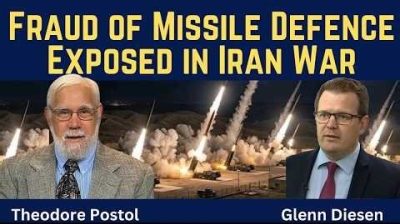
Ted Postol: Fraud of Missile Defence Exposed in Iran War
or go to
Aletho News Archives – Video-Images
Frlom the Archives
Containing the United States
By Edward S. Herman | Z Magazine | September 2016
“Containing the United States” is, of course, a ridiculous and self-contradictory idea in the U.S. and Western ideological and propaganda system. We all know that the United States had to “contain” the Soviet Union from 1945 to 1991, and since then has had the task of containing Russia and China. Only they threaten, bully, aggress and worry countries like Poland and Vietnam. Obama has had to reassure them both of our steadfast stand against Russian and Chinese military attacks. NATO has, of course, expanded greatly over the past several decades, despite the deaths of the Soviet Union and Warsaw Pact, but only to contain the renewed Russian — and Iranian, Libyan, Syrian and other — military threats; and we have “pivoted” to Asia, supported Japanese rearmament, bolstered our own forces in that area and jousted with the Chinese in their coastal waters solely to contain China. Earlier we had been obliged to contain North Vietnam, or was it the Soviet Union in Vietnam? Or China? Or “communism”? Or maybe all of them? Or none of them, but just needing an excuse to enlarge power?
The parallel propaganda has taken many forms. One is accepting as a premise that the United States only acts defensively and has no internal forces and interests that drive it to enlarge its sphere of control. I noted in an earlier article how Paul Krugman claims that internal Russian problems may well be the explanation of Russian “aggression,” but how at the same time it never occurs to him that the huge U.S. transnational corporate interests and “defense” establishment, and the pro-Israel lobby’s activities, might possibly make for an expansionist dynamic here.2 This reflects the standard establishment perspective that we are good and only react to evil. This was the view sustaining and justifying the invasion and occupation of Iraq from 2003. That attack was taken here as not evil but a response to evil, even if involving lies and mistakes, hence not describable as “aggression.” … continue
Blog Roll
 Aletho News
- When Tel Aviv decides, Washington fights
- Top official: Iran ready for a long war with US, no more diplomacy
- How Iran’s Toxic Rain Reveals US-Israel Discord
- Trump Admits He Is Destroying Iran For Israel
- Iran’s latest move in the GCC countries was a stroke of genius
- Blackmail and death threats, Zelensky embarrasses the EU, but there’s no condemnation
- Israel threatens to kill Iran’s new leadership
- Possible Scenarios for the Middle East
- The Horizon of the War. “Italy is being Dragged Into the War against Iran”
- A Second Vietnam War? Hanoi Waits and Prepares
- If Americans Knew
- Corporate Media Go All Out To Support The US-Israeli War On Iran
- US-Israel war on Iran is creating a steady growing number of amputees
- Israel planned this war on Iran for 40 years. Everything else is a smoke screen
- The wrong question about the war in Iran
- ‘Your Tax Dollars Being Used to Raise Your Gas Prices’: US-Israel Bomb Major Iranian Oil Depots
- ‘Bogus Evidence’: Former Nuclear Watchdog Head Debunks US Justification for Iran War
- EXPLAINER – Dimona: What to know about Israel’s nuclear site
- Fires and toxic air in Iran (thanks, Israel) – Not a ceasefire Day 150
- At Israel’s hands, Iran is burning, Lebanon and Gaza are crumbling – Not a ceasefire Day 149
- Israel is using the ‘Gaza doctrine’ in Lebanon and Iran
- No Tricks Zone
- Wake-up Call: Survey Shows Majority Of Germans Now Favor Postponing Climate Targets!
- Televised! Leading German Political Candidate Tells Schoolchildren CO2 Makes Sun Hotter!
- New Study: A Century Warming Of 1.1°C Is ‘Commonplace’ And ‘Not Unusual’ During This Interglacial
- New Study: ‘Internal Noise’ And Volcanic Forcing Can Trigger 10-15°C Warming Within Decades
- Glaciers Worldwide Are Suddendly Surging, Experts Blame Warming!
- Surprising Discovery: Sahara Is Greening…Billions Of Trees Where Once Thought To Be Barren
- New Research Reaffirms Clouds, Aerosols, And Surface Solar Radiation Are ‘Driving The Climate System’
- Germany: Electric Car Catches Fire At Charging Station, Sets Off Local “Inferno”, Widespread Damage
- New Study: Canada’s New Brunswick Was 1°C Warmer Than Today During The Medieval Warm Period
- Coal Power Back In Trend As Globe Tries To Keep Pace With Growing Demand For Power
 Aletho News