Institutionalizing Intolerance: Bullies Win, Freedom Suffers When We Can’t Agree to Disagree

By John W. Whitehead | The Rutherford Institute | August 06, 2018
“Whoever would overthrow the liberty of a nation must begin by subduing the freeness of speech.” ― Benjamin Franklin
What a mess.
As America has become ever more polarized, and those polarized factions have become more militant and less inclined to listen to—or even allow for the existence of—other viewpoints, we are fast becoming a nation of people who just can’t get along.
Here’s the thing: if Americans don’t learn how to get along—at the very least, agreeing to disagree and respecting each other’s right to subscribe to beliefs and opinions that may be offensive, hateful, intolerant or merely different—then we’re going to soon find that we have no rights whatsoever (to speak, assemble, agree, disagree, protest, opt in, opt out, or forge our own paths as individuals).
In such an environment, when we can’t agree to disagree, the bullies (on both sides) win and freedom suffers.
Intolerance, once the domain of the politically correct and self-righteous, has been institutionalized, normalized and politicized.
Even those who dare to defend speech that may be unpopular or hateful as a constitutional right are now accused of “weaponizing the First Amendment.”
On college campuses across the country, speakers whose views are deemed “offensive” to some of the student body are having their invitations recalled, being shouted down by hecklers, or forced to hire costly security details.
It’s not just college students who have lost their taste for diverse viewpoints and free speech.
In Charlottesville, Va., in the wake of a violent clash between the alt-right and alt-left over whether Confederate statues should remain standing in a community park, City Council meetings were routinely “punctuated with screaming matches, confrontations, calls to order, and even arrests,” making it all but impossible for attendees and councilors alike to speak their minds.
On Twitter, President Trump has repeatedly called for the NFL to penalize players who take a knee in protest of police brutality during the national anthem, which clearly flies in the face of the First Amendment’s assurance of the right to free speech and protest (especially in light of the president’s decision to insert himself—an agent of the government—into a private workplace dispute).
On Facebook, Alex Jones, the majordomo of conspiracy theorists who spawned an empire built on alternative news, has been banned for posting content that violates the social media site’s “Community Standards,” which prohibit posts that can be construed as bullying or hateful.
Even the American Civil Liberties Union, once a group known for taking on the most controversial cases, is contemplating stepping back from its full-throated defense of free (at times, hateful) speech.
The most controversial issues of our day—gay rights, abortion, race, religion, sexuality, political correctness, police brutality, et al.—have become battlegrounds for those who claim to believe in freedom of speech but only when it favors the views and positions they support.
“Free speech for me but not for thee” is how my good friend and free speech purist Nat Hentoff used to sum up this double standard.
This haphazard approach to the First Amendment has so muddied the waters that even First Amendment scholars are finding it hard to navigate at times.
It’s really not that hard.
The First Amendment affirms the right of the people to speak freely, worship freely, peaceably assemble, petition the government for a redress of grievances, and have a free press.
Nowhere in the First Amendment does it permit the government to limit speech in order to avoid causing offense, hurting someone’s feelings, safeguarding government secrets, protecting government officials, insulating judges from undue influence, discouraging bullying, penalizing hateful ideas and actions, eliminating terrorism, combatting prejudice and intolerance, and the like.
On paper—at least according to the U.S. Constitution—we are technically free to speak.
In reality, however, we are only as free to speak as a government official—or corporate entities such as Facebook, Google or YouTube—may allow.
Free speech is no longer free.
What we have instead is regulated, controlled speech, and that’s a whole other ballgame.
Remember, the First Amendment is a steam valve. It allows people to speak their minds, air their grievances and contribute to a larger dialogue that hopefully results in a more just world.
When there is no steam valve—when there is no one to hear what the people have to say—frustration builds, anger grows and people become more volatile and desperate to force a conversation.
Silencing unpopular viewpoints with which the majority might disagree—whether it’s by shouting them down, censoring them, muzzling them, or criminalizing them—only empowers the controllers of the Deep State.
Even when the motives behind this rigidly calibrated reorientation of societal language appear well-intentioned—discouraging racism, condemning violence, denouncing discrimination and hatred—inevitably, the end result is the same: intolerance, indoctrination and infantilism.
So where does that leave us?
We’ve got to do the hard work of figuring out how to get along again.
Frankly, I agree with journalist Bret Stephens when he says that we’re failing at the art of disagreement.
According to Stephens, “to disagree well you must first understand well. You have to read deeply, listen carefully, watch closely. You need to grant your adversary moral respect; give him the intellectual benefit of doubt; have sympathy for his motives and participate empathically with his line of reasoning. And you need to allow for the possibility that you might yet be persuaded of what he has to say.”
Instead of intelligent discourse, we’ve been saddled with identity politics, “a safe space from thought, rather than a safe space for thought.”
Safe spaces.
That’s what we’ve been reduced to on college campuses, in government-run forums, and now on public property and on the internet.
The problem, as I make clear in my book A Government of Wolves: The Emerging American Police State, is that the creation of so-called safe spaces—where offensive ideas and speech are prohibited—is just censorship by another name, and censorship breeds resentment, and resentment breeds conflict, and unresolved, festering conflict gives rise to violence.
Charlottesville is a prime example of this.
Anticipating the one-year anniversary of the riots in Charlottesville on August 12, the local city government, which bungled its response the first time around, is now attempting to ostensibly create a “safe space” by shutting the city down for the days surrounding the anniversary, all the while ramping up the presence of militarized police, in the hopes that no one else (meaning activists or protesters) will show up and nothing (meaning riots and brawls among activists) will happen.
What a mess.
Constitutional attorney and author John W. Whitehead is founder and president of The Rutherford Institute. His new book Battlefield America: The War on the American People (SelectBooks, 2015) is available online at http://www.amazon.com. Whitehead can be contacted at johnw@rutherford.org.
The Deep State Intends To Destroy Alex Jones—Don’t Let Them
By Paul Craig Roberts | Institute For Political Economy | August 6, 2018
Fabricated, unwarranted lawsuits are being used in an effort to shut down Alex Jones who raises too many issues that those who rule us do not want raised. At times Alex can be over the top, but overall he has spread a lot of awareness of events that otherwise would have received no notice.
There is no doubt whatsoever of William Binney’s expertise and integrity. This hour long interview with him is posted on Info Wars, not on CNN, BBC, MSNBC, NPR, or Fox News. It is not printed in the Wall Street Journal, the New York Times or the Washington Post.
William Binney developed the NSA’s spy capability and left the agency over its misuse. In this interview—https://www.infowars.com/bill-binney-in-his-own-words-a-collaborative-conspiracy-to-subvert-the-us-government/ — you will learn many things, such as the reason that it is strictly impossible that Hillary’s emails were hacked by the Russians or anyone else; they were downloaded on a thumb drive. You will learn that it is common practice for the US Department of Justice (sic), the FBI, and the so called “security agencies” to frame totally innocent people. You will learn that the entire federal intelligence and legal apparatus is corrupt beyond belief and cannot in any way be trusted.
This is the kind of information that Alex Jones brings to us, and it is the reason the deep state is determined to destroy Alex Jones, just as it attempted to destroy William Binney and still hopes to destroy Snowden and Assange.
The Corbyn anti-Semitism row reveals how desperate Israel and its lobbyists are
By Yvonne Ridley | MEMO | August 6, 2018
The socialist leader of a British political party embroiled in an anti-Semitism row has apologised for appearing on platforms with people who drew Nazi-style comparisons with Israel’s actions. His remarks, though, have backfired among some Jewish and other pro-Palestinian groups.
They have accused the Labour Leader Jeremy Corbyn of “crumbling” after pointing out that the original “Nazi” comments were made by a Jewish survivor of Auschwitz Concentration Camp. Corbyn’s statement and apology were delivered last week in response to a British media furore over reports that he hosted an event in 2010 during which Israel’s behaviour towards the Palestinians was compared to Nazism.
Corbyn’s critics in the pro-Israel Lobby failed to consider that the Nazi comparison was made by Hajo Meyer, a Holocaust survivor who died in 2014. Meyer made the comparison during a talk in a House of Commons committee room on “The Misuse of the Holocaust for Political Purposes”. Furthermore, a man who was removed by security officials from the meeting for making a Nazi salute and shouting “Sieg Heil” was actually from the pro-Israel lobbyists who were in the audience.
Among those rushing to condemn the party for further “proof” of anti-Semitism within the Labour Party under Corbyn’s leadership was one of his own MPs. Liverpool’s Louise Ellman told the BBC that she was “absolutely appalled” to hear about his involvement in the Holocaust meeting. She forgot to mention that she had attended the same meeting in parliament and was among those who jeered a Holocaust survivor. No one from the BBC questioned her about that, or the fact that the comments at the heart of the anti-Semitism row were made by a Jew who survived Auschwitz.
The latest, and harshest, criticism by the co-organisers of that meeting has been saved for Corbyn himself. “We will not crumble, as Jeremy Corbyn seems to have done,” insisted the Scottish Palestine Solidarity Campaign. “By his apology and attack on two advocates of Palestinian freedom Corbyn has only emboldened those who defend every Israeli crime and work to silence opponents of the crimes against humanity carried out by the State of Israel on the Palestinian people.” Such opponents, the SPSC claimed, will never be placated because they hate the idea of Corbyn being within reach of 10 Downing Street where he might challenge Britain’s alliance with Israel.
“False accusations of anti-Semitism by defenders of Israeli snipers,” the Campaign added, “is ‘the gift that keeps on giving’. Once a false accusation has been made the act of denial is portrayed as proof of guilt. This new version of Catch 22 submerges areas of British politics in a McCarthyite madness where the accusation, however absurd, means inescapable guilt, at least in much of the mainstream media.” That media, it must be said, has been shamefully biased towards Israel’s increasingly far-right position.
Corbyn’s apology read thus: “In the past, in pursuit of justice for the Palestinian people and peace in Israel/Palestine, I have on occasion appeared on platforms with people whose views I completely reject. I apologise for the concerns and anxiety that this has caused.”
The man who drew parallels with the Nazi regime, 85-year-old Dr Hajo Meyer, was joined at the meeting in the House of Commons on Holocaust Memorial Day, 27 January 2010, by Dr Haidar Eid, who participated in the meeting from Gaza via speakerphone. Both men compared the dehumanisation of Jewish people in Hitler’s Germany pre-1941 with the dehumanisation of Palestinian people in current day Israel and occupied Palestine. Throughout his UK speaking tour, Dr Meyer received standing ovations.
Co-organisers from the International Jewish Anti-Zionist Network (IJAN) said that the tour had provided an opportunity for “many hearing for the first time important truths about Israel’s occupation of Palestine.” In a press statement issued last week, IJAN quoted Meyer: “My great lesson from Auschwitz is: whoever wants to dehumanise any other, must first be dehumanised himself. The oppressors are no longer really human whatever uniform they wear.“
The event in 2010 attracted leading Zionist figures including Ellman [then and now, Vice Chair of Labour Friends of Israel], Jerry Lewis [then Vice President, Board of Deputies] and Jonathan Hoffman [then Co-Vice Chair of the Zionist Federation], as well as Christian Friends of Israel. “Most of them had clearly not come to listen,” explained IJAN. “They barracked both Dr Meyer and Dr Eid, and one of them, Martin Sugarman, had to be escorted out by the Commons security; on his way out he stunned everyone by giving the Nazi salute and shouting ‘Sieg Heil’.”
IJAN added that following the deaths of more than 2,000 Palestinians in Gaza in July 2014, a letter from survivors of the Nazi genocide and hundreds of their descendants called for a full economic, cultural and academic boycott of Israel. “Genocide begins with the silence of the world… We must raise our collective voices and use our collective power to bring about an end to all forms of racism, including the ongoing genocide of Palestinian people. ‘Never again’ must mean NEVER AGAIN FOR ANYONE!” Dr Hajo Meyer was the first to sign the letter, which was published in the New York Times on 24 August 2014, the morning after he died.

IJAN describes itself as an international network of Jewish people opposed to imperialism, militarism, apartheid and genocide. It said that the event in question was “a coming together of many communities which have faced dehumanisation, racism and genocide.” Speakers were Armenian, Bangladeshi, Irish, Native American, Roma, Rwandan and Tamil. There were also people with disabilities, and a speaker on the slave trade from Africa to the Americas and the revolution which ended slavery in Haiti.
In its literature, IJAN says that it supports “the liberation of the Palestinian people, and the right of return for those driven from their homes and their land by Israeli occupation and ethnic cleansing.” The group has active chapters in Argentina, Canada, France, Spain, Britain and America.
Its tour partner on that occasion, the Scottish Palestine Solidarity Campaign, recalled the events clearly: “During his talks, Hajo Meyer movingly described his experiences in Nazi-occupied Europe; how the regime dehumanised him and other Jews, and drew compelling parallels between his life before 1941 and Israel’s progressive dehumanisation of Palestinians up until the present day. Dr Meyer argued at each meeting that ‘Zionism was the polar opposite of Judaism’, ie a brutal programme of settler colonialism contrasted with the ethical power of one of the great world religions.”
Dr Haider Eid spoke at that meeting in 2010 from the Gaza “prison camp”, as former British Prime Minister David Cameron once called the besieged territory. Most of the Palestinians living in the Gaza Strip are refugees from other parts of historic Palestine, having been driven from their homes by waves of Israeli ethnic cleansing. Successive military offensives have been carried out by Israel over the years.

A Gazan boy walks with his younger sibling through their poverty stricken neighbourhood in Gaza on 4 September 2013 [Ezz Zanoon/Apaimages]
Dr Eid spoke a year after Israel’s massacre of 1,400 Palestinians, which the UN Goldstone Commission concluded was “a war crime and possible crime against humanity.” Crimes against humanity were first prosecuted against the Nazi leadership in Nuremberg after the end of World War Two. The Palestinian academic suggested that Nazi-type bestiality was not consigned to history by the Nuremburg trials. “The world was absolutely wrong to think that Nazism was defeated in 1945,” he insisted. “Nazism has won because it has finally managed to Nazify the consciousness of its own victims.”
SPSC added that while the pro-Israel lobby seeks to criminalise such statements, Dr Eid’s comparison of modern day Israel to Nazi Germany has also been articulated by several prominent political figures in Israel, including the Deputy Chief of the General Staff of the Israeli army, Yair Golan. Major General Golan said in a speech delivered at a 2016 Holocaust Memorial event in Israel that, “It’s scary to see horrifying developments that took place in Europe begin to unfold here.”
The senior officer came under intense attack inside Israel but was defended by prominent figures. His comment was widely believed to be a reference to the case of Elor Azaria, an Israeli soldier who was caught on film taking deliberate aim and shooting dead an injured and already prone Palestinian, Abdel Fattah Al-Sharif. Golan may, though, have been thinking of the recently appointed Military Chief Rabbi Eyal Karim who, as well as calling for genocide in Gaza, had endorsed rape of “comely Gentile women” if it maintained the morale of Israeli soldiers in wartime.
Another example of a senior Israeli drawing on the horrors of World War Two under the Nazi regime was provided when another Major General, and former minister, Matan Vilnai threatened the Palestinians with a Holocaust. In order to leave everyone in no doubt about what he meant, he used the Hebrew word “Shoah”.
Intensive efforts by pro-Israel groups in Britain have so far failed to provide a single anti-Semitic word written or uttered by Corbyn to back up their accusation, but this has not stopped the campaign against him, which is apparently being directed by Israel’s Embassy on the British capital. Unable to win the debate by rational means, it seems that the tactic now is to try to shut down open and honest debate altogether. Anyone who does not toe the pro-Israel line must be discredited and disregarded at all costs, even when that person is both a Jew and a survivor of the Nazi Holocaust. That’s how desperate Israel and its apologists are.
Palestinian Teen Dies From Serious Wounds He Suffered On March 30th
IMEMC News – August 5, 2018
 The Palestinian Health Ministry has reported that a teen died, Sunday, from serious wounds he suffered on the first day of the Great Return March procession, on March 30th, which also marks the Palestinian Land Day.
The Health Ministry said the teen, identified as Ahmad Jihad al-Aydi, 17, from Gaza city, was seriously injured when an Israeli army sharpshooter shot him with a live round in the head, near the eastern border in central Gaza.
Accompanied by his father, the teen was eventually transferred to a Palestinian hospital in Ramallah, on April 24th, but he remained in a critical condition until he succumbed to his wounds.
In related news, the soldiers shot, on Sunday evening, three Palestinians with live fire, and caused many others to suffer the effects of teargas inhalation, east of the al-Boreij refugee camp, in central Gaza.
Also on Sunday, an Israeli army drone fired a missile at a site, north of Beit Lahia in the northern part of the coastal region, wounding four Palestinians.
On Saturday, August 4th, the Health Ministry in Gaza said a child, identified as Moath Ziad Soori, 15, died from serious wounds he suffered a day earlier, after Israeli soldiers shot him with live fire, during the Great Return March procession, east of the al-Boreij refugee camp, in central Gaza.
On the same day of his injury, the soldiers killed a Palestinian, identified as Ahmad Yahia Atallah Yaghi, 25, after shooting him east of the Zeitoun neighborhood, east of Gaza city, and injured 220 Palestinians, including 90 who were shot with live fire, in the Gaza Strip.
Their deaths bring the number of Palestinians, who were killed by Israeli army fire in the Gaza Strip since March 30th, 2018, to 158, while 17259 have been injured; 9071 of the wounded were moved to hospitals and 8188 received treatment in field clinics; 3279 of the injured are children, and 1553 are women.
Twenty-three of the slain Palestinians are children, in addition to three women, including a medic, identified as Razan Ashraf Najjar, 22.
There are 404 wounded Palestinians who are still in critical conditions, while 4141 suffered moderate wounds and 4354 suffered mild injuries.
The soldiers also killed another medic, identified as Mousa Abu Hassanein, 36, and caused damage to 59 Palestinian ambulances.
Furthermore, the army killed two journalists, identified as Yasser Mortaja, 30, and Ahmad Abu Hussein, 25, and wounded 144 others.
The Israeli Buffer Zone On The Syrian Territory Will Have To Wait
By Khaled AL-KASSIMI | ORIENTAL REVIEW | August 4, 2018
On May 18th 2017, 27 Syrian army vehicles drove within 18 miles of al-Tanf, which breached the U.S.-declared 34-mile radius of the army convoy’s operations resulting in the U.S. forces striking the Syrian Army. It should be noted that al-Tanf (an American military base) operated by U.S. special forces trains a number of rebel groups referred to by the U.S. as Vetted Syrian Opposition (VSO) also known as the Southern front which includes over 50 militant groups such as the Revolutionary Commando Army (RCA). When the U.S struck the Syrian army, the Wall Street Journal’s Yaroslav Trofimov reported that “The U.S. attack at al Tanf is significant not because the U.S. has once again struck Assad’s forces, but because it did so in defense of Syrian rebels”. It is important to remember these past events because on June 24th 2018, the U.S. announced that it will not be backing its proxies on the ground with air force – in contrast to last year. This event highlights that the Syrian Arab Army (SAA) and its allies have made substantial geostrategic gains in the past year.
While the Battle of Daraa is symbolically important – since it is the province where the Syrian (foreign) intervention by proxy first took place in 2011 with the help of Former U.S. ambassador to Syria Robert S. Ford – the Battle for southern Syria should not be analyzed as the “final” battle simply because the U.S. announced “that it will not back up its anti-government proxies in the south”. The SAA and its allies still have a long way to go in liberating areas located in Northern and Eastern Syria which remain under the control of the SDF (Syrian Democratic Forces) and extremist rebel factions – funded and trained by American officers. This is by no means an overstatement considering Major General Igor Konashenkov saying that Russia has intelligence that the Free Syrian Army is going to stage a “chemical attack” in the village of Haql al-Jafara and accuse the Syrian government of conducting it.

According to Syrian government military sources, almost a year ago in July 2017 a group of Israeli military and intelligence personnel travelled to Syria’s West Daraa countryside with the objective of meeting rebel commanders from the Southern Front such as Liwa Jaydour, Jaysh al-Ababil, and the Revolutionary Commando Army (RAC) to discuss future cooperation and collaboration in battles. Another meeting also took place on September 2017 in the Quneitra border town of Rafid between Israeli intelligence personnel and militia commanders concerning the establishment of a 50km buffer zone stretching east of Golan Heights into Syrian (Southern) territory – absorbing Quneitara, As Suwayda and Daraa. The Times of Israel on July 6th 2017 notes “Prime Minister Benjamin Netanyahu called Russian President Vladimir Putin on Thursday as part of ongoing Israeli efforts to convince Russia and the United States to establish a demilitarized buffer zone in southern Syria…Israel is pushing for an agreement that would prevent “Hezbollah or other Iranian-backed militias” from operating in the area, which would extend some 30 miles (48 kilometers) beyond the Israeli-Syrian border [sic] on the Golan Heights”.
On June 26th 2018 Russia declared the ceasefire it brokered on July 2017 between Jordan, Israel, and U.S in Southern Syria (de-confliction/de-escalation zone i.e No Fly Zone) as null since Israel targeted an Iranian weapon depot around Damascus Airport, and mercenaries also targeted a Syrian military command post in Suwayda (southernmost province in Syria). The Russian defense ministry took both of these events as clear action in violation of the agreement. With the ceasefire no longer in place, a Syrian-Russo offensive has begun regaining the southern geographical space of Syria. Recent reports reveal that some rebels are surrendering and that the SAA is making substantive gains in Izraa, Nahitah, Sama Al Hadeidat in Daraa and ongoing advances are underway to take Busra al sham in East Daraa. Questions that remain unanswered concern how long will the IDF “turn a blind eye” to the SAA regaining southern provinces such as Quneitara bordered with Israel and the Golan Heights?; and will the U.S. withdraw from its base in Al Tanf base which Al Muallem and Al Assad have vehemently opposed and categorized as colonialism?.
It should be highlighted that with the U.S. abandoning its proxies in Southern Syria, we can deduce that Israel will have to “pause” its “Greater Israel” ambitions in wanting to absorb Southern Syrian territory, and la pièce de résistance – claim the Golan Heights as Sovereign Israeli territory. During a visit to Israel’s northern border according to the Jerusalem Post (JP) on July 4th 2018, General Eisenkot discussed the readiness of the Northern Command with its commander Maj. Gen. Yoel Strick and the 366th Division’s commander Brig. Gen. Amit Fisher. “The IDF is monitoring the situation in Syria and is prepared for a variety of scenarios to preserve the security on Israel’s border,” read a statement given by the IDF’s Spokesperson’s Unit. On July 1st 2018 the Israeli government reinforced its border with the Golan Heights by positioning armored and artillery forces near the border with Syria in light of a situational assessment by the Northern Command.
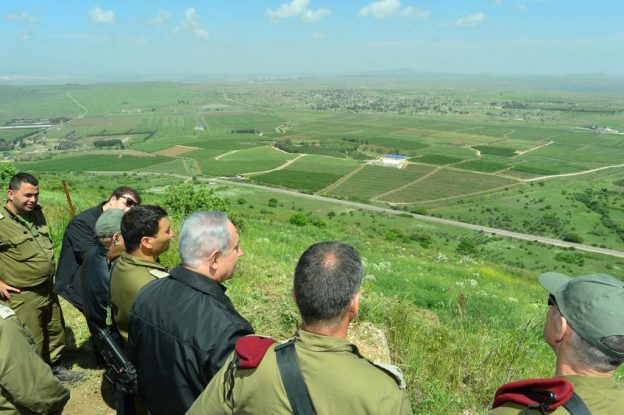
Benjamin Netanyahu is seen during a security tour in the Golan Heights, near Israel’s northern border with Syria
The SAA territorial advancements in the past year highlight that the SAA has the upper hand on the battle field. However, we should also remember that the southern battle is not the final battle, even though it is a vital battle since it includes an offensive that will be combating over 15,000 mercenaries. Contrary to Mr. Robert Fisk’s article in the Independent on June 26th 2018, I think it is too early to state that the battle for southern Syria will go down in history as a moment where “the US has given up on the overthrow of Assad in Syria” because it “abandoned its proxies in southern Syria”. Another battle that should be increasing in intensity in the next few weeks and/or after the southern battle is concluded is the battle to reclaim Northern (East) Syria – a territory under the Syrian Democratic Forces (SDF) and U.S. rebel factions.
The Syrian government including Liwa al-Baqir convened a major meeting of tribal notables from across Syria on June 2 in order to build support for operations against the U.S. in Eastern Syria. Syrian state media claimed the meeting included representatives from seventy clans from Aleppo, Ar-Raqqa, Hasakah, Daraa, and Deir ez-Zor Provinces. According to the Institute for the Study of War unconfirmed reports suggest that the SDF arrested dozens of additional tribal representatives traveling to the meeting from SDF-held Hasaka Province in Northern Syria. Tribal representatives at the meeting denounced the presence of the U.S., France, and Turkey in Syria and called for tribal mobilization to fight them on behalf of Assad. Multiple new pro-regime militia units of unclear size and capability reportedly formed subsequent to the meeting. These units may have joined Liwa al-Baqir with support from Russia and Iran. Not to mention reports released the week of July 15th 2018 highlighting that rebels in Southern Syria are being transported to the Northern part of Syria.
More recent news on July 29th 2018 highlights that the Syrian Democratic Council [the SDF political arm] held a two day meeting with the Syrian government headed by President Bashar Al Assad. Officials belonging to the SDF, which hold large swathes of land in northern Syria discussed the future of the autonomous regions it set up in northern and northeastern Syria. The SDF has made a series of deals with Damascus in recent years, notably in Aleppo when the SAA decimated Syrian Arab rebel groups making a final stand to hold the city. The SDF also came to an agreement with the Syrian government during the Turkish incursion into the then-Kurdish-held Afrin canton in Syria’s north-west corner, allowing Kurdish fighters to cross regime-held territory in a doomed bid to repel Turkish troops and their allies. The SDF, whose military is largely funded by the US as a counter-IS initiative, holds more than 27 percent of the country’s territory, according to the Syrian Observatory for Human Rights. It is still not clear whether rebel troops in northern Syria will be in accord with the SDF and SAA in relinquishing land they have usurped in the past 7 years and have it under the control of Damascus headed by President Bashar Al Assad. Also, according to a statement by SDF spokesperson Leilwa al-Abdullah, SDF forces pushed IS fighters into retreat from an area of 3,100 square-kilometers to a small slither of territory close to the strategic border town of Abu Kamal. A local SDF commander, speaking to Syria Direct said that the “crackdown on the border area” had gone ahead in coordination with Iraqi forces and international coalition airpower.
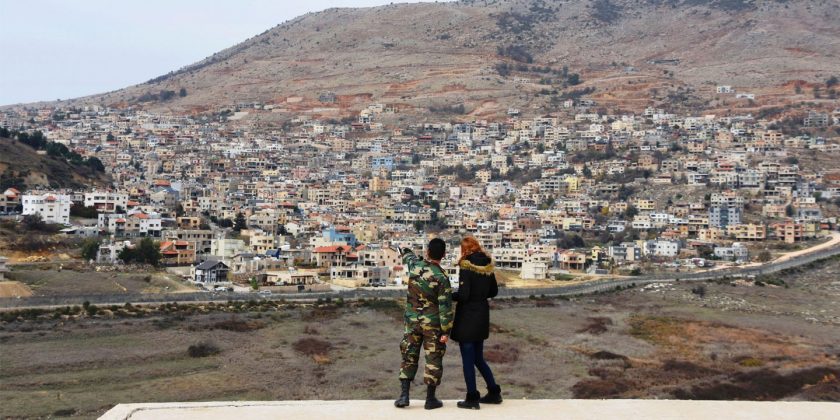
The Golan Heights
Still, recent territorial gains by the SDF may have little bearing on talks with the Syrian government, which could be unwilling to actually cede territorial control or administrative authority to Kurdish-majority forces. Sihanouk Dibo, from the majority-Kurdish leftist Democratic Union Party (PYD), acknowledged that any future talks could be “long and arduous because the Damascus regime is very centralized.” Whether centralized or not, the Syrian Government has historically been committed to the modality of Greater Syria with Damascus being the locus in decision making and autonomous regions conducting provincial policies relating to their provincial preferences. As stated by President Al Assad “Despite the ethnic diversity within each nation, the social fabric of the region by and large is one”. In other words, a region of the historical Bilad Al Sham/Greater Syria space will not be relinquished since the Levant possesses a unified social fabric and most importantly because the Barzani Clan in Iraq is a dangerous example of how U.S. imperialism with its allies can defend decentralization for the sake of geostrategic interest.
Therefore, in regards to the Syrian peace process, peace cannot be implemented when the UNSC resolution 2254 adopted in 2015 – including the P5 – continues to be violated. The delegates meeting at the June 13th U.N-led peace process in Geneva reiterated the importance of the clauses in the resolution which included that a nationwide ceasefire can only occur when member states are serious in halting the funding and training of mercenary entities. The members also reiterated the basis for a Syrian-led and Syrian-owned political transition in order to end the conflict in Syria. The meeting in Geneva did not highlight anything novel that the meetings in Astana or Sochi didn’t already outline. The meeting laid out the so-called four “baskets of reform” for a political settlement of the crisis. They include the drafting of a new constitution, parliamentary elections, the creation of a non-sectarian transitional government and the fight against mercenaries and terrorists. But the talks have made little progress so far as opposition members have failed to find an agreement over the fate of President Bashar al-Assad – a condition that the opposition has long wanted to include in the draft.
It is quite ironic that the Syrian Opposition is adamant in wanting to include a clause that stipulates that the current Syrian president is not allowed to run for president after 2020 and/or practice politics in Syria… it is ironic because while some opposition members discuss the importance of democracy being the foundation for peace in Syria, it is precisely democracy which re-elected President Bashar Al Assad in 2014.
Khaled AL-KASSIMI is a Doctoral candidate in the Department of Political Science at McMaster University in Canada. His research interest relates to the fields and approaches contoured by Critical Security Studies, Development Studies, International Relations, and Decolonial Studies.
Zionist Media: ‘Israel’ Involved in Assassination of Syrian Scientist Aziz Azbar
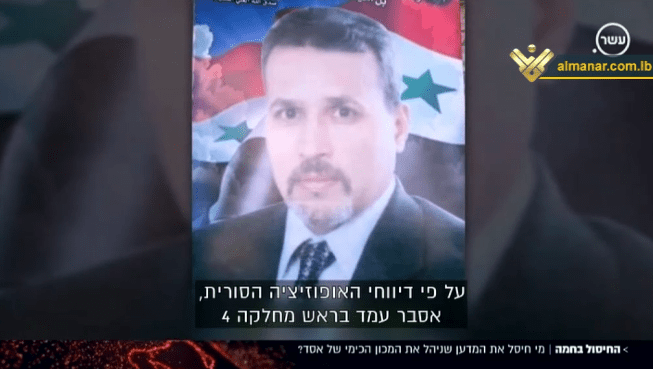
Al-Manar | August 6, 2018
Israeli media outlets reported Monday that the Zionist Mossad intelligence agencywas involved in the assassination of Syrian scientist Aziz Azbar, head of the Syrian Scientific Research and Studies Center, in the city of Masyaf in Hamah province on Saturday.
The Zionist media reports stressed that this operation comes in the context of the secret war on the axis-of-resistance to prevent it from developing its military capabilities, adding that Mossad has returned to play a direct role in eradicating ‘Israel’s’ enemies in several countries.
It is worth noting that Azbar, who holds a Ph.D. in atomic physics and a Ph.D. in liquid rocket fuel from France, was mourned on Monday in his hometown.
MSNBC’s top ‘Russia expert’ thinks Putin was KGB director
RT | August 6, 2018
MSNBC’s resident ‘Russia expert’ has demonstrated the depth of his knowledge by falsely referring to Russian President Vladimir Putin as “a former director of the KGB.”
Speaking to host Bill Maher on Friday, Malcolm Nance unleashed a host of wacky ‘Russiagate’ conspiracy theories – President Trump was convinced to run for president by Russia’s top oligarchs; Trump and Putin have a plan to steal the 2020 election “already hashed out;” and the terrible twosome used their recent Helsinki summit to plot the division of the Western world between them.
Nance, a 20-year Navy veteran cryptologist and private intelligence consultant, went on to call Vladimir Putin “a former director of the KGB.”
While Putin was briefly appointed to head the KGB’s successor agency, the FSB, in 1997, he was a mid-level KGB officer before entering politics. Working in communist East Germany from 1985 to 1990, Putin eventually resigned from the agency as communist hardliners launched a coup d’etat attempt against President Gorbachev in 1991, with Putin siding with the reformist leader.
At no point in his career did Putin lead or come close to leading the KGB.
Putin’s brief stint in charge of the FSB could have caused the mix-up, and Nance would be forgiven for the mistake, except he describes himself as an expert on all things Russian, and regularly appears on MSNBC to push the Trump-Russia collusion narrative. He’s even written two books about it: ‘The Plot to Hack America,’ and most recently ‘The Plot to Destroy Democracy,’ a New York Times bestseller.
In ‘The Plot to Destroy Democracy’ – published two weeks before Trump’s much-criticized meeting with Putin – Nance connects a web of unrelated dots to make the claim that Putin and Trump are conspiring to create an “Axis of Autocracy,” all with no hard evidence. Publishers Weekly called the book “an unconvincing exaggeration of genuine misconduct into cartoonish supervillainy.”
With US mainstream media pushing Russia-hate around the clock since Trump’s election, it’s no wonder that Nance’s conspiracy-mongering and “cartoonish supervillainy” landed him in front of the camera on one of the nation’s most virulently anti-Trump networks.
The fact that his original areas of expertise are related to the Middle East and terrorism, as journalist Max Blumenthal pointed out, matters little. What does matter is that Nance can leverage his military experience to lend a sheen of credibility to the ‘Russiagate’ story.
With mainstream news media making all kinds of outlandish claims – that Russians write Trump’s tweets; Trump has been a KGB agent since 1987; Kanye West is a Kremlin operative – Nance has found himself a lucrative niche. With his career depending on hysteria, why let the facts get in the way of a good soundbite?
Saudi-led coalition ‘victories’ achieved by striking deals with Al-Qaeda in Yemen – AP report
RT | August 6, 2018
An investigation has found that the US-backed, Saudi-led intervention in Yemen has cut secret deals with jihadists from al-Qaeda in the Arabian Peninsula (AQAP), paying them to leave cities rather than dislodging them by force.
The startling revelations come in stark contrast to the long-running US policy of trying to eliminate the jihadist organization with the help of allies from the Arabian peninsula, however, the more pressing aim of defeating Iranian-backed Houthi rebels in Yemen has seen AQAP effectively be on the same side as the Saudi-led coalition — and, by extension, the US, according to Associated Press (AP).
AP based their findings on reporting from the war-torn nation and interviews with two dozen officials, including Yemeni security officers, militia commanders, tribal mediators and four members of al-Qaeda’s branch. All but a few of those sources spoke on condition of anonymity, fearing reprisals. Emirati-backed factions, like most armed groups in Yemen, have been accused of abducting or killing their critics.
The US and their allies have maintained that the last two years has seen them dislodge AQAP from their strongholds in Yemen and limiting their capability to launch attacks on the West.
What the investigation reveals, however, is that this was often done without firing a shot, with key participants saying the US was aware of the arrangements and held off on any drone strikes.
Due to the lack of reliant and effective partners on the ground, coalition partners have also reportedly hired al-Qaeda militants, or at the very least recent members, to fight in militias due to their reputation as “exceptional fighters,” AP said. They added that AQAP members have intertwined with the “dizzying mix of militias, factions, tribal warlords and tribes with very local interests.”
While there is no evidence to suggest that the US itself has given money to AQAP militants, partners involved in the Saudi-led coalition have. The aide of one militia commander recently added to Washington’s terrorism watch list for al-Qaeda ties told AP that the UAE continues to fund his operation.
Another militia commander who has an al-Qaeda figure as his closest aide was recently given $12 million by Yemen’s President Abdrabbuh Mansour Hadi.
While the US does not fund the Saudi-led coalition, it along with the UK, have sold billions of dollars in weapons to Arab partners, as well as providing logistical and targeting support.
While there is awareness and “angst” by “elements of the US military” that its activities in Yemen is strengthening AQAP, “supporting the UAE and the Kingdom of Saudi Arabia against what the US views as Iranian expansionism takes priority,” Michael Horton, a fellow at the analysis group Jamestown Foundation, told AP.
In an email to AP about their investigation, a Pentagon spokesperson denied any US support for AQAP or that they have been soft on drone strikes, and backed up its Arab allies’ commitment to tackling extremism.
“Since the beginning of 2017, we have conducted more than 140 strikes to remove key AQAP leaders and disrupt its ability to use ungoverned spaces to recruit, train and plan operations against the US and our partners across the region,” spokesman Navy Cmdr. Sean Robertson wrote.
“Our regional partners have a proven track record of aggressively pursuing terrorist organizations and denying them safe haven in Yemen and DOD does not have any reason to doubt their resolve,” he added.
Saudi Arabia meanwhile says it has continued its commitment to combating extremism and terrorism. The UAE did not respond to AP’s request for comment.
US Senator Invites Russian Lawmakers to Hold Talks in Washington
Sputnik – 06.08.2018
US Senator Rand Paul on Monday urged to step up an interaction between the US and Russian legislative bodies and expressed hope for an open dialogue between the two countries.
Rand Paul, who is currently heading the US legislative delegation to Russia, held a meeting with the Russian Federation Council lawmakers led by foreign affairs committee head Konstantin Kosachev.
“We want to have open relations and even with countries with which we may have disagreements. I believe that we need to have more cultural exchanges, more exchanges between our legislative bodies, more open lines of communication. We need to have a dialogue between our foreign relations committees and my hope that with the time we will improve dialogue between our countries,” Paul said.
The US official also invited Russian lawmakers to visit Washington to hold talks with their American counterparts. Paul added later that it might be possible to organize a meeting in a third country.
“I am pleased to announce that we will be furthering this conversation. We have invited members of the foreign affairs committee of Russia to come to the United States to meet with us in Washington and we also trying to arrange meetings in a third neutral county as well,” Paul told reporters.
Kosachev, in turn, noted after the meeting with Paul that the lawmakers may discuss the sanctions, strategic stability, and economic issues this Autumn, before the midterm elections in the US. Foreign Affairs Committee chairman stated that during the meeting he discussed the issue of Russia’s alleged meddling in the US election, stressing that “there was and will be none.”
Featured Video

The Most Important Bet You’ve Never Heard Of
or go to
Aletho News Archives – Video-Images
From the Archives
The Occupied Mentality Syndrome
Saudi Arabia on the American chessboard – Part 2
By B. J. Sabri | American Herald Tribune | April 19, 2016
Since the Korean War, but particularly since the Iranian Revolution of 1979 until today, the United States has been steadily escalating its military presence in the Persian Gulf. Taking advantage of many colossal events of the past 36 years, [1] the hyper-empire has institutionalized its massive presence on land and sea, and expanded its objectives to include the unambiguous physical control of the area, as well as the clear understanding that local Arab governments should abide by them. The pretext is always the same: in “defense” of the national interests and security of the United States. From observing how the United States has been interacting with the governments of the region, and by judging from the size of its expeditionary force, we could reach a basic conclusion. The United States is occupying, de facto, the entire Arabian Peninsula. (Yemen, devastated by Saudi and American jets is yet to be conquered. Oman? Britain returned not as colonial ruler but as a soft occupying power.)
Under this articulation, Saudi Arabia, Qatar, Kuwait, and the United Arab Emirates are virtually occupied countries. If we compare this type of occupation to the mandate and protectorate regimes of the past, the results might be identical—the nations affected by it lose sovereignty. When Arab governments comply with the objectives of a foreign power that station military forces on their national milieu, then that power controls them in multiple ways including how they react to policy deliberations and what decisions they intend to take on specific issues. A good method to verify the concept of effective occupation is this: take notice of what the United States says and wants, and then compare it to what the gulf rulers do in response. (I shall discuss this detail at some point in the upcoming parts.)
If the presence of US forces or other means of political pressure are a factor in Saudi Arabia’s interventionist Arab wars, then we need to debate this issue. However, from the history of resistance to colonialism, we learnt: if a powerful state imposes its order on a nation by military means or other forms of coercion, and if this nation does not resist that imposition, then a mental subordination to the powerful state will ensue. This is especially true in the case of Saudi Arabia. One single event, 9/11, has transformed it from a US “ally” into an instant political hostage of the American Empire. … continue
Blog Roll
 Aletho News
- Trump and the debris of Iran war
- IRGC hits US tech giant Oracle’s data center, computing site in UAE over new assassinations
- Bombing Iran Back Into the Stone Age /Lt Col Daniel Davis & Jim Jatras
- UAE rejects report claiming it is ready to join war on Iran to reopen Hormuz
- A New Resistance Front: How Does Syria Factor into the Regional War?
- Gulf states weigh pipeline expansion plans, hoping to bypass Hormuz
- Iran sets up ‘tollbooth’ system in Strait of Hormuz
- Wave 90: IRGC strikes US-linked industrial sites in Gulf
- Iran Says US-Israeli Claims of Its Military Strength Are Wrong
- Trump’s April Fools’ Address to the nation
- If Americans Knew
- ‘War crime’: Global condemnation as Israeli ministers celebrate death penalty law targeting Palestinian prisoners
- 7 Ways Israel Is Turning Lebanon Into Gaza
- World’s Leading Football Bodies Under Fire Over Israel Policies
- Experts warn of possible use of nukes against Iran
- Israeli invasion of Lebanon could be worse than 1982, warn European officials
- Passover: Liberation and collective punishment
- Trump says the quiet part out loud: (Israel’s) war on Iran > Americans’ health – Daily Update
- Gaza families reunite years after babies evacuated amid Israel’s war
- International Rescue Committee warns Gaza’s children face grave protection risks
- Iran’s Alleged 47-Year War on America: Debunking the 1,050 American Deaths Canard
- No Tricks Zone
- Low Intensity Tornado Wrecks Major Solar Farm, Creating A Potential Toxic Dump
- New Study Finds Warming Saves Lives…Cold Temperatures 12 Times More Deadly Than Excess Heat
- German Science Blog Accuses PIK Climate Institute Of Hallucinating Climate Tipping Points
- Devastating Assessment Of Comirnaty Vaccine By Former Senior Pfizer Europe Toxicologist
- New Study: CO2 Is ‘Effectively Negligible’ As An Explanatory Climate Change Factor Since 2000
- Former Pfizer Toxicologist Dr. Helmut Sterz Tells Bundestag Hearing Pfizer Vaccine Should Have Never Been Approved
- Energy Expert: Germany’s Nuclear Phaseout Was A “500 Billion Euro Mistake”
- New Research: South Australia’s Mid-Holocene Sea Surface Temperatures Were 4°C Warmer Than Today
- Storing Green Energy To Last Germany 10 Days Would Require A 60-Million Tonne Battery
- New Studies: UK Sea Levels Were 4 Meters Higher Than Today During The Mid-Holocene
 Aletho News