Chile: Activists Protest Against Dictatorship Killers’ Parole

teleSUR | August 1, 2018
Human rights activists in Chile are protesting a Supreme Court decision to release former Judge Gamaliel Soto, three former military soldiers and a police officer involved in the torture and disappearance of 31-year-old Eduardo Alberto Gonzalez Galeno in 1973.
The demonstrators gathered in front of the court in Valparaiso holding pictures of people forcibly disappeared during the military dictatorship headed by Augusto Pinochet, including Gonzalez Galeno, director of the Hospital of Cunco in Araucania, on September 14, 1973.
Soto had been sentenced to ten years for his involvement in ordering Gonzalez Galeno’s kidnapping, but Chile’s Second Chamber of the Supreme Court decided on Tuesday to grant him parole.
The three military soldiers, Jose Quintanilla Fernandez, Hernan Protillo Aranda and Felipe Gonzalez Astorga, as well as police officer Manuel Perez Santillan, all convicted of crimes against humanity, were also released as a result of an appeal to the country’s highest court, according to Nodal.
Their release was welcomed by the group’s legal defence, arguing that good behavior and the fact that they served half of their sentence were sufficient reason for their release.
Witnesses said Gonzalez Galeno was accused of being a member of the Revolutionary Left Movement (MIR) during his captivity by the military dictatorship headed by military general Augusto Pinochet and, subsequently, beaten and disappeared.
Human rights lawyer Nelson Caucoto decried the court’s decision to release the men, stating there was no justification to grant parole: “We must take into account that parole is justified only by people who have been rehabilitated.
“It does not make sense to grant people freedom to live alongside others if they have not recognized the gravity of their crimes, nor have shown repentance beyond the fulfillment of certain formalities.”
Caucoto also said granting parole to people convicted of crimes against humanity, as in this case, violates the international agreements that Chile is a signatory to.
Revolving Door: How Security Clearances Perpetuate Top-Level Corruption in the United States
By Philip M. GIRALDI | Strategic Culture Foundation | 02.08.2018
President Donald Trump is threatening to take away the security clearances of a number of former senior intelligence and security officers who have been extremely critical of him. Most Americans were unaware that any ex-officials continued to hold clearances after they retired and the controversy has inevitably raised the question why that should be so. Unfortunately, there is no simple answer.
A security clearance is granted to a person but it is also linked to “need to know” in terms of what kind of information should or could be accessed, which means that when you are no longer working as Director of the Central Intelligence Agency you don’t necessarily need to know anything about China’s spying on the United States. Or do you? If you transition into a directorship or staff position of a major intelligence or security contractor, which many retirees do, you might need to retain the qualification for your job, which makes the clearance an essential component in the notorious revolving door whereby government officials transit to the private sector and then directly lobby their former colleagues to keep the flow of cash coming.
At top levels among the beltway bandit companies, where little work is actually done, some make the case that you have to remain “well informed” to function properly. The fact is that many top-level bureaucrats do retain their clearances for those nebulous reasons and also sometimes as a courtesy. Some have even received regular briefings from the CIA and the office of the Director of National intelligence even though they hold no government positions. A few very senior ex-officials have also been recalled by congress or the White House to provide testimony on particular areas of expertise or on past operations, which can legitimately require a clearance, though in such cases one can be granted on a temporary basis to cover a specific issue.
The problem arises when former officials use their clearances as bona fides to enhance their marketability for non-clearance jobs in the media or corporate world, particularly when those individuals are criticizing current government policies and behaving in a partisan fashion regarding specific candidates for office. Donald Trump was especially assailed by former officials John Brennan, James Clapper, Michael Hayden and Michael Morell before the 2016 election, all of whom continue to attack him currently, most particularly for the recent meeting with Russian President Vladimir Putin. During the 2016 campaign, Morell, who openly supported Hillary Clinton and is the designated intelligence on-air contributor for CBS news, deliberately linked the fact that he was ex-CIA Acting Director to his assertion that Trump was somehow an “unwitting agent of the Russian Federation” to establish his credibility. That type of activity should be considered abusive and an exploitation of one’s former office.
Morell left CIA in June 2013 and by November was a senior counselor with Beacon Global Strategies. According to the firm’s website, Beacon Global Strategies is a government and private sector consulting group that specializes in matters of international policy, foreign affairs, national defense, cyber, intelligence, and homeland security. Morell may know little about those issues as they have evolved in the past five years, but citing his clearance gives him credibility for knowledge that he might not really possess and also gives him direct access to former colleagues that he can lobby to obtain government contracts.
Former CIA Director John Brennan, who famously voted for the Communist Party candidate for US president in 1976, has also profited greatly from his government service, becoming rich from his board memberships. He sits on the board of directors of SecureAuth + CORE Security and also on the board of The Analysis Corporation. More important in terms of his public profile, he is the “Intelligence Consultant” for NBC News and MSNBC and appears regularly.
Last week Senator Rand Paul met with President Trump and recommended that Brennan’s security clearance be revoked. He argued that Brennan, Trump’s most aggressive critic, has been using his credentials to provide credibility when he calls meeting with Russia’s president “treasonous” and describes the president as “wholly in the pocket of Putin.” Clearance holders also more generally use their privileged access to “secret information” to leverage speaking and television network pundit fees. In other words, Brennan and the others are using their security clearances to enhance their incomes, monetizing their access to classified information to enhance their value.
It is by no means clear whether Trump will revoke the clearances of Clapper, Brennan, Morell and Hayden. As he is the legal source of all government clearances he has the power to do so. An equitable solution on the clearance issue more generally speaking would be to cancel all security clearances on the day when one leaves government service unless there is a direct and immediate transition to a private sector position that absolutely requires such a qualification. That would be fair to lower level employees seeking a second source of income and it would also eliminate many of those who are merely cashing in on their presumed access. As it is a rational solution it is very unlikely that it will be entertained by either the White House or by Congress.
‘Hilarious & paranoid’: Lavrov laughs at idea that Russia uses memes to destroy US democracy
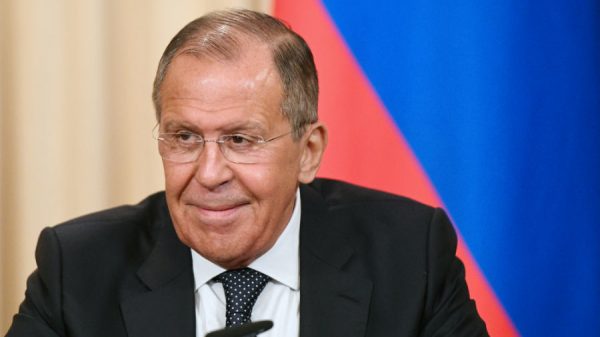
Russian Foreign Minister Sergey Lavrov. May 2018 © Grigoriy Sisoev / Sputnik
RT | August 2, 2018
The idea that Moscow is swaying elections and bringing down US democracy by ‘meme-sharing’ is preposterous, Russia’s Foreign Minister Sergey Lavrov said. The accusations hurled at Russia by the US lawmakers left him baffled.
“It’s just hilarious when I hear that funny pictures can undermine American democracy,” Lavrov told reporters on Thursday, answering RT correspondent’s question about the latest US Senate Intelligence Committee hearing on alleged Russian interference in US domestic affairs.
Experts, brought as witnesses to testify before the Senate on Wednesday, spoke about Russia allegedly using the “less news, more memes” approach online to divide the US public. This led the lawmakers to raise concerns over how Russian “meme-sharing” affects American voters.
“I think that’s just paranoia that goes off the scale,” Lavrov chuckled, saying that talk of weaponizing memes only makes the Senators themselves look bad. “It’s not respectable for American lawmakers to make a sensation out of nothing.”
US politicians consistently accused ‘Russian trolls’ of waging a coordinated campaign to influence elections in the country – something Moscow denies. During repeated hearings in Congress, lawmakers failed to provide any concrete evidence that the alleged nefarious online activity was tied to Russia, and to present data on the effects such a campaign might have caused.
In fact, last year, tech giants Facebook, YouTube and Twitter told Senators that the content allegedly produced by “Russian operatives” made up a tiny fraction of their feeds.
Politics in bad faith: Alexandria Ocasio-Cortez campaigns in Michigan
By Andre Damon | WSWS | July 31, 2018
Alexandria Ocasio-Cortez, a member of the Democratic Socialists of America, visited Southeast Michigan this past weekend. Her primary victory last month over New York Congressman Joe Crowley has made her, virtually overnight, a leading spokesperson for the Democratic Party.
Ocasio-Cortez appeared at rallies in Detroit, Flint and Ypsilanti, as part of a statewide tour in support of Abdul El-Sayed, a former Detroit health department official running for governor of Michigan.

Ocasio-Cortez speaks at Wayne State University in Detroit
Ocasio-Cortez has been lionized in the press as the leader of a radical wave sweeping over the Democratic Party. Given the location of her events—including Detroit, the poorest large city in America, and Flint, which has been devastated by a lead water crisis—anyone taking her and the DSA’s pretenses to “socialism” seriously might have expected to hear bold proposals for tackling America’s rampant social inequality.
But when it came time for her to speak, what followed was a torrent of evasive and dishonest platitudes. She began her remarks at Wayne State University in Detroit:
My fingers are tingling right now because I know that this room is not just a rally, not just an audience, or even just a community; this is movement. Movement cannot be stopped, movement is like a wave; that energy cannot be contained, and Abdul, like many others, is just the crest, is just the foam at the tip of that wave. This is a movement so much bigger than just one person, there is no one person that is the future, there is a people that is the future.
To see such statements in print is to confirm the impression they produce on the listener: So much hot air.
America needs a “salt of the earth government,” Ocasio-Cortez went on, because, “We know that what is right in one place is what is right in all places.” And so on and so forth.
Like Barack Obama, whom she acknowledges as an inspiration, Ocasio-Cortez revels in seemingly profound motivational statements that are, upon the slightest examination, shown to be devoid of content. Her speeches are a variant of Obama’s slogan: “Yes we can.” She makes no effort to explain why Obama’s “Yes we can” was turned into eight years of “No we can’t.”
She continued, “The future of this nation and the future of this party is working class, the future of this party is working people, the future of this party is the marginalized, it is women, it is gender-extended people, it is people of color, it is the affirmation of justice, that is the future of this party.”
This invocation of the working class, mixed with appeals to other “identities,” is in bad faith, because the entire purpose of her campaign, and of the existence of the DSA, is to promote the Democratic Party, which, along with the Republicans, is a party of the corporate and financial oligarchy.
The Democrats are currently in the midst of a ferociously right-wing campaign centered on denunciations of Trump for “betraying” the country to Russia. In the midterm elections, the Democrats are fielding an unprecedented number of former members of the CIA and the military, which reflects their position as the preferred party of dominant sections of the military-intelligence apparatus.
Ocasio-Cortez’s inability to say anything genuinely oppositional, let alone radical, is bound up with her political role. She has quickly been absorbed into the Democratic Party establishment, and her rhetoric conforms to its politics. In promoting a right-wing party, her “left-wing” gloss is reduced to empty slogans.
Only a few sentences of her speech touched on actual policy. “The future of this party is improved and expanded Medicare for all,” she declared. For Abdul El-Sayed, “Medicare for all” means a statewide health care system paid for by workers from their own paychecks, one which his website boasts will exempt a substantial number of businesses from health care contributions.

Abdul El-Sayed
Such campaign promises are meaningless anyway. Obama declared himself a “proponent of a single payer universal health care program” in 2003, before going on to implement the “Affordable Care Act,” a reactionary attack on health care that shifts the burden from corporations and the state to workers by requiring individuals to purchase private insurance. This was cynically packaged as a major social “reform.”
Of particular note in the rallies to which Ocasio-Cortez spoke was the absence of any reference to foreign policy or the slightest hint of opposition to war. In fact, it was as if the rest of the world did not exist.
When a WSWS reporter asked the candidates at the post-rally press briefing in Detroit, “Do both of you support withdrawing all US troops from the Middle East and Africa?” El-Sayed gave an evasive non-answer: “We’ve got to make sure that we are focused on a foreign policy that articulates what we all can do when we come together around a more peaceful world.”
A staffer immediately attempted to conclude the briefing. When the reporter restated the question, “Ms. Ocasio-Cortez, are you anti-war? Do you support withdrawing all US troops from the Middle East?”
She replied, “I’m sorry, I’m here to support Abdul.”
The press conference immediately concluded, and the candidates were whisked away. (The next day, another WSWS reporter asked Ocasio-Cortez the same question at a rally in Ypsilanti, Michigan. She gave the same rehearsed answer.)
After the conclusion of the press conference, a WSWS reporter asked a high-level Ocasio-Cortez staffer, “What does she think the tax rate on the top income bracket should be?” He said he could not answer that question, because “She’s just focused on getting candidates with a similar program elected right now.”
In other words, Ocasio-Cortez can’t even commit to an explicit policy of raising taxes on the wealthiest section of society. In the spectrum of traditional American politics, this places her “democratic socialism” somewhere on the left wing of the 1960s-era Republican Party. Her inability to make any statement in opposition to war likewise put her to the right of both major Democratic nominees in the 1968 presidential primaries, who ran on an anti-war program.
The events make clear the political function of the Democratic Socialists of America. Far from creating a politically independent socialist movement, the DSA functions as an adjunct of the Democratic Party, providing candidates whose programs are largely indistinguishable from the rest of the party and are compatible with the agenda of the “CIA Democrats.”
The political role of Ocasio-Cortez and a slew of similar, DSA-backed candidates is to put a “left-wing,” “progressive,” youth-oriented, and multicultural gloss on a right-wing, pro-war party.
US Senators Introduce Sanctions Bill, Targeting Russia’s Sovereign Debt, Energy
Sputnik – 5 02.08.2018
New legislation introduced in the US Senate would require Secretary of State Mike Pompeo to determine whether Russia should be designated as a state sponsor of terrorism.
A bipartisan group of US senators on Thursday introduced a new package of punitive measures aimed at Russia. A proposed bill includes new sanctions against Russia’s political figures, restrictions on energy investments and limitations connected with uranium imports.
The harshest part of the new bill calls for the sanctioning of Russian sovereign debt.
Six US Senators said in a press release that the legislation “will increase economic, political, and diplomatic pressure on the Russian Federation in response to Russia’s continued interference in our elections, malign influence in Syria, aggression in Crimea, and other activities.”
According to Republican Senator Lindsey Graham, “the current sanctions regime has failed to deter Russia from meddling in the upcoming 2018 mid-term elections.”
“Our goal is to change the status quo and impose crushing sanctions and other measures against Putin’s Russia until he ceases and desists meddling in the US electoral process, halts cyberattacks on US infrastructure, removes Russia from Ukraine, and ceases efforts to create chaos in Syria,” he added.
Congress passed the Countering America’s Adversaries Through Sanctions Act (CAATSA) in July 2017 in response to allegations that Russia sought to influence the 2016 US presidential election. The Trump administration has been widely criticized for not doing enough in response to Moscow’s alleged activities in 2016; however, the White House claimed otherwise, saying that Trump has been tougher on Russia than any previous administration.
Relations between Russia and the United States rapidly deteriorated following the crisis in Ukraine in 2014. Washington introduced several rounds of anti-Russia sanctions after Crimea’s reunification with Russia and the latter’s alleged involvement in the ongoing Ukraine conflict. Russia has refuted all the accusations and issued retaliatory economic restrictions.
Turkey in panic as Assad seeks to reclaim occupied territory
By M K Bhadrakumar | Indian Punchline | August 1, 2018
The meeting of the senior diplomats from Russia, Iran and Turkey in Sochi on Tuesday was prima facie meant to hasten the Astana process on a Syrian settlement. But in reality, it took place in the backdrop of reports that Syrian forces, which have liberated the southwestern provinces of Quneitra (facing Golan Heights) and Daraa (on the Jordanian border) will now proceed to assault the northwestern province of Idlib on the Turkish border.
Ankara has warned that any such move by Damascus will prompt Turkey to pull out of the Astana process altogether in protest. Turkey’s fear is that unlike in the southern provinces, the terrorist groups that control Idlib may fight it out, which would lead to large-scale violence and an exodus of refugees and militants across the border into Turkey. Idlib is estimated to have a population close to 2.5 million. Importantly, though, Turkey seeks to maintain its presence in Idlib, thanks to its enduring links with many of the extremist groups ensconced there. Turkey is equally adamant that the Kurds should not spread their influence into Idlib close to eastern Mediterranean coast.
Turkish President Recep Erdogan personally took up the matter with Russian President Vladimir Putin twice during the past fortnight, demanding that Moscow should restrain Damascus from launching any operations in Idlib. After the meeting in Sochi today, Russian presidential envoy on Syria Alexander Lavrentyev was quoted as saying, “I’d rather refrain from speaking about the city’s (Idlib’s) storming or a pending operation. There are too many rumors and they are ungrounded. Any large-scale operation in Idlib is out of the question.”
He seemed to hint that Russia and Turkey are trying to find a way to influence the terrorist groups to surrender (which was how Daraa and Quneitra were liberated without fighting.) To quote Lavrentyev, “We still hope that the moderate opposition and our Turkish partners, who took responsibility for stabilising this region, will manage it.” But he added, “The threat coming from this zone is still significant.” (In the past 10 days, Russia had shot down as many as four drones launched by the militants from Idlib targeting the Russian military near the Hmeymim airbase.)
On the other hand, Damascus has insisted that it intended to liberate Idlib. All indications are that preparations have begun for a big military operation. The militant groups in Idlib are estimated to be over 50,000 strong and are drawn from Turkish, Uzbek, Chechen, Turkistani and Arab fighters from the Persian Gulf.
Overshadowing the Idlib issue, there is another development that worries Turkey – the direct talks between the Syrian Kurds (previously aligned with the US) and Damascus for reaching a modus vivendi regarding northern Syria up to the Euphrates in the east. The Kurds hope to reconcile with the Assad government in pursuit of their common interest to force Turkey to vacate the large chunks of Syrian territories occupied by it in military operations in the recent years.
Contradictions are galore. For one thing, Russia encourages the newfound proximity between Syrian Kurds and Assad regime. Russia is also keen to vanquish the jihadi fighters who migrated to Syria from North Caucasus and Central Asia. Again, Moscow is one with Damascus on preserving Syria’s unity and territorial integrity at any cost.
On the other hand, it is of supreme importance for Moscow that Turkey is somehow assuaged so that the Astana process as such doesn’t get derailed. At the same time, Russia also places store on its working relationship with Turkey at the bilateral level that is steadily deepening and assuming a strategic character, especially with the downswing in Turkish-American relations lately. The business ties between Russia and Turkey are also flourishing with Russia winning multi-billion dollar contracts in energy projects.
Realpolitik aside, however, morally or legally Turkey has no business to stop the Assad regime from regaining control of the entire Syrian territory. Turkey has blood on its hands by fostering al-Qaeda groups and Islamic State. Equally, Turkish occupation of Syrian territory is untenable on any ground. In reality, Turkey overreached, hoping that it could exploit the US-Russia tensions to bargain with both superpowers and maximize its returns in a Syrian settlement. But President Trump has instead begun tightening the screws on Erdogan lately. Equally, Ankara didn’t expect the stunning victory of the Syrian-Russian operations in southwestern Syria.
There will be growing pressure on Turkey to pull out from Syrian territory in the coming months. Evidently, an American withdrawal from Syria in a near future is on the cards. The Syrian Kurds’ move to reconcile with Damascus is the sure indicator that their American mentors are exiting the war. In short, the US’ capacity to create new facts on the ground in favor of Turkey is virtually zero. This puts Turkey under immense pressure to negotiate a deal with Russia on the best terms available.
To be sure, Assad’s tenacity to reclaim all lost territories is not to be doubted. Make no mistake, he will liberate Idlib, no matter what it takes, and he will thereafter head east towards Jarablus, Azaz, al-Bab and Afrin — territories that are under Turkish control — as well as areas near the Euphrates front line that have been under the control of the Kurdish groups backed by the US. It seems some skirmishes have already begun in the region adjacent to Idlib between Syrian government forces and terrorist groups. Read a report by FARS news agency, here.
US Congress Passes $716Bln Defense Spending Bill for 2019
Sputnik – 01.08.2018
WASHINGTON – The US Senate on Wednesday passed the $716 billion National Defense Authorization Act for the fiscal year 2019. The measure passed with an 87-10 vote and now heads to US President Donald Trump’s office to be signed into law.
Last week, the House of Representatives passed the measure in a 359-54 vote. The measure also funds the Trump administration’s request for Ukraine, which included $250 million for lethal defensive items.
In addition, the bill adds $150 million to accelerate US efforts to field a conventional prompt strike capability before fiscal year 2022, in response to the critical advances Russia and China have made in developing their prompt strike hypersonic weapons.
The bill also funds the Trump administration’s request for $6.3 billion for the European Deterrence Initiative (EDI) to further increase the number of US troops in Europe and deter what it calls “Russian aggression.” The bill, in addition, prohibits military-to-military cooperation with Russia.
The bill obligates US Defense Secretary James Mattis to submit a plan to Congress to ban Turkey from acquiring the F-35 aircraft to punish it for purchasing Russian S-400 air defense systems and for detaining US Pastor Andrew Brunson.
The bill will also include Countering America’s Adversaries Through Sanctions Act (CAATSA) waivers for India, Vietnam and Indonesia.
The United States and NATO have significantly increased their presence in Eastern Europe since the eruption of the Ukrainian crisis in 2014. Moscow has repeatedly voiced its protest over the military buildup, saying that it will undermine regional stability and result in a new arms race.
Israel deports Freedom Flotilla activists

Ma’an – August 1, 2018
BETHLEHEM – Gaza’s National Committee for Breaking the Siege announced on Wednesday that the Israeli authorities began deporting several of the international solidarity activists, who were aboard the Al Awda ship of the Freedom Flotilla.
Gaza’s National Committee confirmed that the activists deportation back to their countries, comes two days after being detained following an attack by Israeli naval forces on the ship in international waters.
Zaher Birawi, head of the committee, said in a statement that a number of international activists have already been deported on Tuesday, including a Malaysian professor, Dr. Mohd Afandi Salleh, and on Wednesday the rest would also be deported.
Birawi stressed that many of the activists rejected to be voluntarily deported, preferring to delay it for more than 72 hours, the legal deadline for accepting voluntary deportation from the country.
Birawi continued that the activists are attempting to delay their deportation, in order to appear before an Israeli court to expose the unjust practices of Israeli naval forces who attacked the humanitarian ship in international waters, and to later prosecute Israel for its actions.
The committee quoted the testimonies of some of the activists as being exposed to “beatings and violence” including the ship’s captain, his assistant, and other solidarity activists.
Swedish human rights activist, Divina Levrini, who was among international detainees, said in a statement that she declares a hunger strike, as a form of protest against the treatment she received by Israeli forces and against the harsh conditions she is going through while being detained in the Israeli Givon prison.
Levrini had conducted an interview with Ma’an in July, while aboard the Freedom Flotilla ship, in which she discussed the Flotilla’s intention on raising awareness about the Israel-Gaza conflict and on breaking the illegal and inhumane Israeli blockade of Gaza.
In addition, two days prior, Israeli authorities already released two Israeli activists on bail. One of the released activists, Zuhr Chamberlain Regev, confirmed that several activists were beaten by Israeli forces before being dragged out of the ship to be detained. She continued by saying that “people on board were tasered and hit by masked Israeli soldiers. We did not get our passports or belongings before we got off the boat. Do not believe reports of peaceful interception.
Trump Duped by Saudis on Iran Oil Sanctions – Tehran Official
Sputnik – 01.08.2018
President Trump’s offer of “no preconditions” talks with Iran’s comes as a surprise break from months of escalating rhetoric in the wake of his walkout from the landmark Iran nuclear deal.
US President Donald Trump has apparently been hoodwinked by Saudi Arabia into believing that the kingdom will be able to make up for a projected drop in Iranian oil exports after the US sanctions take effect in November, Iran’s Press TV reported citing the head of the country’s OPEC governor.
“It seems President Trump has been taken hostage by Saudi Arabia and a few producers when they claimed they can replace 2.5 million barrels per day of Iranian exports, encouraging him to take action against Iran,” Hossein Kazempour Ardebili said.
US Back and Forth on Iran Oil Trade
The White House said last month that Saudi Arabia’s King Salman had promised Trump to raise oil production and that the kingdom had two million barrels per day of spare capacity to boost output to offset a decline Iranian oil supplies.
Iran insists that President Trump’s hope that certain oil producers can fill the gap created as a result of cutting off Iranian oil supplies is based on a “miscalculation.”
Late last month, a senior US State Department official said that countries buying Iranian oil should bring their Iranian crude imports down to zero by the time Washington re-imposes sanctions against the Islamic Republic’s banking and petroleum sectors.
Washington later backed off a bit with Secretary of State Mike Pompeo saying in July that the United States might grant waivers to countries seeking relief from sanctions the US has threatened to impose.
Trump’s U-Turn on Iran
On Monday, President Trump said he would be willing to meet his Iranian counterpart, Hassan Rouhani without preconditions to discuss how to improve ties, but Tehran flatly turned down Trump’s offer dismissing it as worthless and “a humiliation” after he acted to re-impose sanctions on Tehran following the withdrawal from the 2015 landmark nuclear deal.
“Sanctions and pressures are the exact opposite of dialogue,” Iran’s Foreign Ministry spokesman Bahram Qassemi said on Tuesday.
Trump’s overture towards Iran came a week after he threatened the country with “consequences the likes of which few throughout history have ever suffered before,” in an all caps tweet.
On May 8, President Donald Trump said he was withdrawing the US from the 2015 nuclear agreement with Tehran and promised to impose the “highest level” of sanctions on the country’s energy, petrochemical and financial sectors despite objections from Europe as well as Russia and China — the other parties to the deal, known as the Joint Comprehensive Plan of Action (JCPOA).
UNICEF Says Drinking Water Systems in Yemen under Repeated Attacks
Al-Manar | August 1, 2018
UNICEF, on Wednesday, called for immediate halt to attacks on water facilities and civilian infrastructure in Yemen.
UNICEF Executive Director Henrietta Holsman Fore, said that attacks against civilian facilities and services “are unacceptable, inhumane and in breach of the basic laws of war.
“Ongoing violence and repeated attacks on lifesaving civilian infrastructure in Hodeida are a direct threat to the survival of hundreds of thousands of children and their families,” the official said.
“Yet the past few days have seen an escalation in the targeting of systems and facilities that are essential to sustaining the lives of children and families.”
Fore said UNICEF had received, in the past two days, reports that a UNICEF-supported warehouse containing humanitarian provisions, including hygiene and water-related supplies, was hit by two airstrikes.
“Yemen is already facing a severe shortage of drinking water, which is directly linked to outbreaks of cholera and acute watery diarrhea. Attacks on water infrastructure jeopardize efforts to prevent another outbreak of cholera and acute watery diarrhea in Yemen,” she warned, calling “on all parties to the conflict to protect civilians and civilian infrastructure.”
“The war in Yemen has no winners. It is robbing Yemeni children of their futures.”
VIPS to Trump: Intel on Iran Could be CATASTROPHIC
As drums beat again for war — this time on Iran—-the VIPS’ warning is again being disregarded as it was before the Iraq debacle and this time VIPS fear the consequences will be all-caps CATASTROPHIC.
August 1, 2018
MEMORANDUM FOR: The President
FROM: Veteran Intelligence Professionals for Sanity (VIPS)
SUBJECT: Intelligence on Iran Fails the Smell Test
Mr. President:
As the George W. Bush administration revved up to attack Iraq 15 years ago, we could see no compelling reason for war. We decided, though, to give President Bush the benefit of the doubt on the chance he had been sandbagged by Vice President Dick Cheney and others. We chose to allow for the possibility that he actually believed the “intelligence” that Colin Powell presented to the UN as providing “irrefutable and undeniable” proof of WMD in Iraq and a “sinister nexus” between Saddam Hussein and al Qaeda.
To us in VIPS it was clear, however, that the “intelligence” Powell adduced was bogus. Thus, that same afternoon (Feb. 5, 2003) we prepared and sent to President Bush a Memorandum like this one, urging him to seek counsel beyond the “circle of those advisers clearly bent on a war for which we see no compelling reason and from which we believe the unintended consequences are likely to be catastrophic.”
We take no satisfaction at having been correct — though disregarded — in predicting the political and humanitarian disaster in Iraq. Most Americans have been told the intelligence was “mistaken.” It was not; it was out-and-out fraud, in which, sadly, some of our former colleagues took part.
Five years after Powell’s speech, the Chair of the Senate Intelligence Committee minced few words in announcing the main bipartisan finding of a five-year investigation. He said: “In making the case for war, the Administration repeatedly presented intelligence as fact when in reality it was unsubstantiated, contradicted, or even non-existent. As a result, the American people were led to believe that the threat from Iraq was much greater than actually existed.”
Iran Now in Gunsight
As drums beat again for a military attack — this time on Iran, we Veteran Intelligence Professionals for Sanity and other experienced, objective analysts are, by all appearances, being disregarded again. And, this time, we fear the consequences will be all-caps CATASTROPHIC — in comparison with the catastrophe of Iraq.
In memoranda to you over the past year and a half we have pointed out that (1) Iran’s current support for international terrorism is far short of what it was decades ago; and (2) that you are being played by Prime Minister Benjamin Netanyahu’s claims about Iran’ they are based on intelligence exposed as fraudulent several years ago. Tellingly, Netanyahu waited for your new national security adviser to be in place for three weeks before performing his April 30 slide show alleging that Iran has a covert nuclear weapons program. On the chance that our analysis of Netanyahu’s show-and-tell failed to reach you, please know that the Israeli prime minister was recycling information from proven forgeries, which we reported in a Memorandum to you early last spring.
If our Memorandum of May 7 fell through some cracks in the West Wing, here are its main findings:
The evidence displayed by Israeli Prime Minister Benjamin Netanyahu on April 30 in what he called his “Iranian atomic archive” showed blatant signs of fabrication. That evidence is linked to documents presented by the Bush Administration more than a decade earlier as “proof” of a covert Iran nuclear weapons program. Those documents were clearly fabricated, as well.
In our May 7, 2018 Memorandum we also asserted: “We can prove that the actual documents originally came not from Iran but from Israel. Moreover, the documents were never authenticated by the CIA or the International Atomic Energy Agency (IAEA).”
Iran: Almost Targeted in 2008
There was a close brush with war with Iran a decade ago. Bush and Cheney, in close consultation with Israel, were planning to attack Iran in 2008, their last year in office. Fortunately, an honest National Intelligence Estimate of November 2007 concluded that Iran had stopped working on a nuclear weapon in 2003, and that key judgment was made public. Abruptly, that NIE stuck an iron rod into the wheels of the juggernaut then speeding downhill to war.
The key judgment that Iran had stopped work on a nuclear weapon was the result of the painstakingly deliberative process that was customarily used, back in the day, to produce an NIE. After that process — which took a full year — the Nov. 2007 NIE was approved unanimously by all U.S. intelligence agencies.
(In other words, it was decidedly NOT a rump “assessment” like the one cobbled together in a couple of weeks by “handpicked” analysts from three selected, agenda-laden agencies regarding Russian meddling. We refer, of course, to the evidence-impoverished and deceptively labeled “Intelligence Community Assessment” that the directors of the FBI, CIA, and NSA gave you on January 6, 2017. The Defense Intelligence Agency and the State Department intelligence bureau were among the other 13 agencies excluded from that “Intelligence Community Assessment.”)
As for the Bush/Cheney plans for attacking Iran in 2008, President George W. Bush, in his autobiography, Decision Points, recorded his chagrin at what he called the NIE’s “eye-popping” intelligence finding debunking the conventional wisdom that Iran was on the verge of getting a nuclear weapon. Bush added plaintively, “How could I possibly explain using the military to destroy the nuclear facilities of a country the intelligence community said had no active nuclear weapons program?”
Mr. President, we do not know whether a fresh National Intelligence Estimate has been produced on Iran and nuclear weapons — or, if one has been produced, whether it is as honest as the NIE of Nov. 2007, which helped prevent the launch of another unnecessary war the following year. We stand on our record. In sum, if you believe that there is credible evidence that Iran has an active secret nuclear weapons program, we believe you have been misled. And if you base decisions on misleading “intelligence” on Iran, the inevitable result will be a great deal worse than the Bush/Cheney debacle in Iraq.
For the Steering Group
Veteran Intelligence Professionals for Sanity
William Binney, former NSA Technical Director for World Geopolitical & Military Analysis; Co-founder of NSA’s Signals Intelligence Automation Research Center (ret.)
Sen. Richard H. Black, 13th District of Virginia; Colonel US Army (ret.); former Chief, Criminal Law Division, Office of the Judge Advocate General, Pentagon (associate VIPS)
Kathleen Christison, Senior Analyst on Middle East, CIA (ret.)
Bogdan Dzakovic, former Team Leader of Federal Air Marshals and Red Team, FAA Security (ret.) (associate VIPS)
Philip Giraldi, CIA, Operations Officer (ret.)
Larry C. Johnson, former CIA and State Department Counter-terrorism officer
Michael S. Kearns, Captain, Wing Commander, RAAF (ret.); Intelligence Officer & ex-Master SERE Instructor
Linda Lewis, WMD preparedness policy analyst, USDA (ret.) (associate VIPS)
Edward Loomis, NSA Cryptologic Computer Scientist (ret.)
David MacMichael, Capt., USMC (ret.); former Senior Estimates Officer, National Intelligence Council
Ray McGovern, former US Army Infantry/Intelligence Officer & CIA analyst; CIA Presidential briefer (ret.)
Elizabeth Murray, former Deputy National Intelligence Officer for the Near East, National Intelligence Council & CIA political analyst (ret.)
Todd E. Pierce, MAJ, US Army Judge Advocate (ret.)
Gareth Porter, author/journalist (associate VIPS)
Coleen Rowley, FBI Special Agent and former Minneapolis Division Legal Counsel (ret.)
Robert Wing, former Foreign Service Officer (associate VIPS)
Ann Wright, Colonel, US Army (ret.); Foreign Service Officer (resigned in opposition to the war on Iraq)
Netanyahu Got it Wrong Again: No Nuclear Arms in Iran and No Yazdi Cake in Alaadin!
By Heba Morad | American Herald Tribune | July 31, 2018
In the latest English-language video, Israeli Prime Minister Benjamin Netanyahu asks the world to help Iran’s imaginary character Fatemeh in her struggle with the claimed hardships in her country, Iran.
Israeli media outlets circulated a video that Netanyahu had released on Sunday night; an English-language video on social media calling on the world to allegedly help Iranians improve their lives, claiming that the government is oppressing the people. In the video, Netanyahu addresses the camera and tells the story of an imaginary 15-year-old girl called Fatemeh.
Fatemeh, Netanyahu claims, has different hardships to deal with. Netanyahu tries to describe in detail his imaginary friend in Tehran, and concludes by saying that although Fatemeh is fictitious, this is the true story of “millions of Iranians”.
However, when he arrives to a point where he says that “She stops at her favorite bakery in the Aladdin mall to eat cake yazdi but there’s a nation-wide strike,” he makes a big mistake, and makes a fool out of himself.
It seems that Netanyahu’s Mossad and Hasbara teams have failed once again in providing him with the required information to carry out his psychological warfare against Iran; a country that has chosen to have an independent identity and beliefs. They failed to tell him that the Alaadin Mall does not have ANY CONFECTIONARY shop, and that it is a mall, or what they call in Iran “a passage” that sells mobile phones.
Netanyahu failed to know a small detail that can be easily figured out; the Alaadin passage is the most famous of phone malls in Iran, how can the Prime Minister miss out on that point? And if this is the case with Alaadin, this triggers questions on the precision and accuracy of the information related to other stories cooked up by the Israelis on Iran, more precisely Iran’s nuclear deal. Is it that all information Israel and the US have been providing on Iran’s nuclear activity is only as accurate as those on Fatemeh’s cake-craving?
Israel and the US have been claiming that Iran has been seeking a nuclear weapon for years, imposed sanctions on the country, threatened to attack Iran multiple times at the time they are the two regimes that own the largest number of nuclear warheads. Iran has never attacked any other country or state actor. Even Iran’s support to the Assad government in Syria was upon an official invitation from the Syrian government to help curb the Daesh or ISIS terrorists that have committed heinous crimes of inhumanity against the innocent Syrian people. Now if we want to dive into the details we will need an elaborate explanation on bloopers or confessions that were made live on air through different media outlets by US and Israeli generals and officials, like that of General Flynn who acknowledged that the US has been supporting terrorist groups in Syria.
Iran had over and again assured that it seeks no nuclear arms and that all its activity was for peaceful purposes. Leader of the Islamic Revolution Ayatollah Seyed Ali Khamenei has also issued a religious verdict stating that it is forbidden in Islam to seek nuclear weapons, which was acknowledged by the Obama government at a certain point. So, today after Netanyahu’s silly mistake some Iranian activists through social media platforms reassured that young and old know that Alaadin passage sells nothing but mobile phones and accessories. Are they also accused of lying just like the Iranian government has been accused of being untruthful about its nuclear program?
One cannot but say the truth. Yes, Iran does have some issues, just like any other country across the globe. But the Iranian government is, also like other governments trying to carry out reforms and resolve issues. There is no Utopia on this planet, is there one? The US and the Israeli apartheid regime have been putting their utmost efforts to hammer the government and put pressure on Iran and its people. Nevertheless, they should have tried a bit harder maybe or been more careful about the source of their information. At the end of the day, Iran does not seek nuclear weapons just like there is no confectionary shop in the mobile phones passage!
Featured Video
Seyed M. Marandi: U.S. Military DIVIDED? Iran’s Secret Defense EXPOSED
or go to
Aletho News Archives – Video-Images
From the Archives
‘Israel sees Iran as obstacle to its policies’
Press TV – August 25, 2017
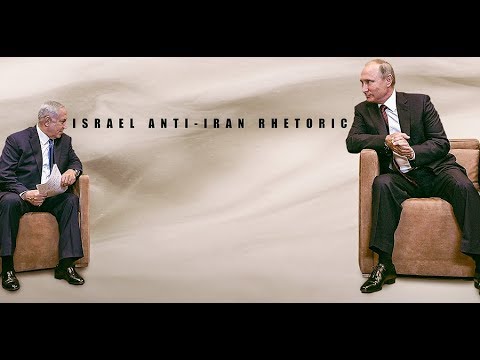
Prime Minister Benjamin Netanyahu has said that Israel felt threatened by Iran’s growing influence in the Middle East. Netanyahu expressed his Iranophobic view in a meeting with Russian President Vladimir Putin in Russia’s Black Sea resort of Sochi on Wednesday. Press TV has asked Scott Rickard, former American intelligence linguist from Tampa, Florida, and Brent Budowsky, a columnist at The Hill from Washington, to give their thoughts on the issue.
Rickard said Tel Aviv is concerned about the fact that the regime could not carry out its old project to spread sectarian divisions and pave the way for dismemberment of the countries in the Middle East region because of the Iranian-led resistance against Israeli policies, not only in the occupied territories of Palestine but also in the whole region.
“Iran is not a threat to Israel whatsoever. The threat that Israel sees is the fact that their Oded Yinon Plan is being put to a hold by Iran,” the intelligence linguist said on Thursday night.
“They (the Israelis) look at Iran as a threat only because they have no influence on their governments and Iran is autonomous and is not under the Zionist influence,” he added.
Since the victory of the Islamic Republic of Iran in 1979, Tehran has been critical of Israel’s policies in the region, whereas “no leaders [of other states] even dared to speak out against Zionism,” Rickard argued. … continue
Blog Roll
 Aletho News
- Alberta Bill Would Fine Political Deepfakes $10,000 Without Satire Exemptions
- Iran declares ‘historic victory’ over US, says enemy forced to accept its proposal
- Trump Claims Ceasefire, Reopening of Strait of Hormuz Agreement with Iran
- Israeli tank fire killed UN peacekeeper in Lebanon, UNIFIL investigation finds
- Russia, China block Bahrain-sponsored UN resolution on Strait of Hormuz
- The US-Israeli War on Science is an Assault on our Future
- Trump’s Promise to Bomb Iran ‘Like Never Before’ Faces Brutal Logistics — Expert
- Germany seeks to restrict stays abroad for men of fighting age – Berliner Zeitung
- Evidence points to Ukraine being behind TurkStream attempted sabotage, but that should come as no surprise
- Sri Lanka secures supplies of Russia oil – minister
- If Americans Knew
- Thousands dead and neighborhoods razed to the ground: Aid agencies fear southern Lebanon is becoming the new Gaza
- The war the US is fighting for Israel could cost trillions
- ‘Cigarette Burns, Nail Wounds’: Toddler Tortured in Gaza to Coerce Father
- Trump Says US Sent ‘a Lot of Guns’ to Protesters in Iran
- Israeli forces destroy 17 UN peacekeeper cameras in south Lebanon
- US-Israeli strikes ‘completely destroy’ synagogue in Tehran
- Archbishop for US Military Says Iran War Is Unjust Under Catholic Teaching
- Iranian leaders’ Open Letters to the American People
- Trump says Iranians appreciate bombs, WHO warns of nuclear risks – Daily Update
- U.N. experts demand Israel release prominent Gaza doctor after reports of ‘severe torture’
- No Tricks Zone
- An Inconvenient Tree: Uncovered In Alps… Europe Much Warmer Than Today 6000 Years Ago
- New Study Reports A 60% Slowdown In Greenland’s Ice Loss Rate In The Last Decade
- Low Intensity Tornado Wrecks Major Solar Farm, Creating A Potential Toxic Dump
- New Study Finds Warming Saves Lives…Cold Temperatures 12 Times More Deadly Than Excess Heat
- German Science Blog Accuses PIK Climate Institute Of Hallucinating Climate Tipping Points
- Devastating Assessment Of Comirnaty Vaccine By Former Senior Pfizer Europe Toxicologist
- New Study: CO2 Is ‘Effectively Negligible’ As An Explanatory Climate Change Factor Since 2000
- Former Pfizer Toxicologist Dr. Helmut Sterz Tells Bundestag Hearing Pfizer Vaccine Should Have Never Been Approved
- Energy Expert: Germany’s Nuclear Phaseout Was A “500 Billion Euro Mistake”
- New Research: South Australia’s Mid-Holocene Sea Surface Temperatures Were 4°C Warmer Than Today
 Aletho News