Venezuelan Opposition Raises $100Mln From Intl Donors in DC – Guaido’s Embassy
Sputnik – February 15, 2019
WASHINGTON – Venezuela’s opposition raised more than $100 million from international donors at a fundraiser in Washington, self-proclaimed interim president Juan Guaido’s embassy in the United States said in a press release.
“The Global Conference on the Humanitarian Crisis in Venezuela held at the Organization of Americas States Headquarters raised over one hundred million dollars, thanks to the donations of different international delegations”, the release said on Thursday.
The opposition’s envoy to the United States, Carlos Vecchio, was quoted as saying in the release that the meeting goes hand in hand with Guaido’s announcement that humanitarian aid will be delivered into Venezuela on 23 February.
On Monday, Christoph Harnisch, the head of the International Committee of the Red Cross (ICRC) in Columbia, said his organization will not assist because the ICRC does not consider the US assistance to Venezuela to be humanitarian aid. Earlier this month, ICRC officials and the UN Secretary-General’s office called on the Trump administration to refrain from politicizing humanitarian assistance.
Venezuelan President Nicolas Maduro has refused to accept aid delivered by the United States to neighboring Columbia, blasting it as a ploy to topple his government.On 23 January, Guaido, with the full support of the US government, declared himself interim president of Venezuela. Constituionally elected Maduro accused Washington of orchestrating a coup and then cut off diplomatic ties with the United States. Russia, China, Turkey and Mexico, among other nations, have reaffirmed their support for Maduro as the only legitimate democratically-elected president of Venezuela.
Meanwhile, Venezuelan Foreign Minister Jorge Arreaza announced Thursday that Caracas has established a working group at the United Nations to oppose foreign meddling in the Latin American country’s affairs.
The US-Based media reported earlier that US President Donald Trump is expected to give a speech on the crisis in Venezuela on 18 February. Trump has said in an interview with the CBS broadcaster that US military intervention in Venezuela was “an option”.
READ MORE:
US Special Envoy Says Ending Venezuela Crisis Necessitates Maduro’s Resignation
Propaganda Blitz Against Venezuela’s Elected President
By Joe Emersberger – FAIR – February 12, 2019
The Miami Herald (2/8/19) reported, “Venezuelan leader Nicolás Maduro continues to reject international aid—going so far as to blockade a road that might have been used for its delivery.“
The “Venezuelan leader” reporter Jim Wyss referred to is Venezuela’s elected president. In contrast, Wyss referred to Juan Guaidó as Venezuela’s “interim president.”
Guaidó, anointed by Trump and a new Iraq-style Coalition of the Willing, did not even run in Venezuela’s May 2018 presidential election. In fact, shortly before the election, Guaidó was not even mentioned by the opposition-aligned pollster Datanálisis when it published approval ratings of various prominent opposition leaders. Henri Falcón, who actually did run in the election (defying US threats against him) was claimed by the pollster to basically be in a statistical tie for most popular among them. It is remarkable to see the Western media dismiss this election as “fraudulent,” without even attempting to show that it was “stolen“ from Falcón. Perhaps that’s because it so clearly wasn’t stolen.
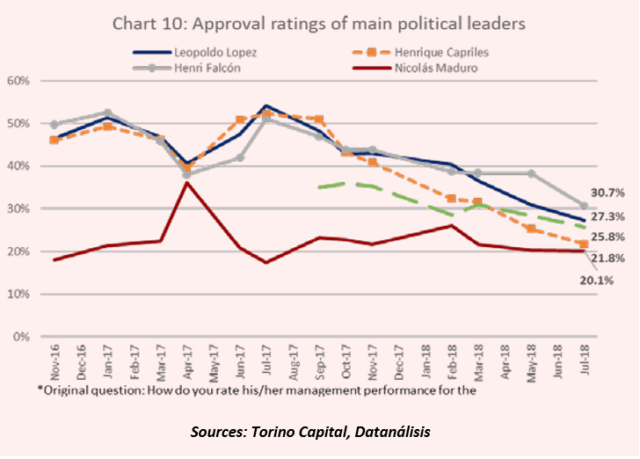
Data from the opposition-aligned pollsters in Venezuela (via Torino Capital) indicates that Henri Falcón was the most popular of the major opposition figures at the time of the May 2018 presidential election. Nicolás Maduro won the election due to widespread opposition boycotting and votes drawn by another opposition candidate, Javier Bertucci.
The constitutional argument that Trump and his accomplices have used to “recognize” Guaidó rests on the preposterous claim that Maduro has “abandoned” the presidency by soundly beating Falcón in the election. Caracas-based journalist Lucas Koerner took apart that argument in more detail.
What about the McClatchy-owned Herald‘s claim that Maduro “continues to reject international aid”? In November 2018, following a public appeal by Maduro, the UN did authorize emergency aid for Venezuela. It was even reported by Reuters (11/26/18), whose headlines have often broadcast the news agency’s contempt for Maduro’s government.
It’s not unusual for Western media to ignore facts they have themselves reported when a major “propaganda blitz” by Washington is underway against a government. For example, it was generally reported accurately in 1998 that UN weapons inspectors were withdrawn from Iraq ahead of air strikes ordered by Bill Clinton, not expelled by Iraq’s government. But by 2002, it became a staple of pro-war propaganda that Iraq had expelled weapons inspectors (Extra! Update, 10/02).
And, incidentally, when a Venezuelan NGO requested aid from the UN-linked Global Fund in 2017, it was turned down. Setting aside how effective foreign aid is at all (the example of Haiti hardly makes a great case for it), it is supposed to be distributed based on relative need, not based on how badly the US government wants somebody overthrown.
But the potential for “aid” to alleviate Venezuela’s crisis is negligible compared to the destructive impact of US economic sanctions. Near the end of Wyss’ article, he cited an estimate from the thoroughly demonized Venezuelan government that US sanctions have cost it $30 billion, with no time period specified for that estimate. Again, this calls to mind the run-up to the Iraq invasion, when completely factual statements that Iraq had no WMDs were attributed to the discredited Iraqi government. Quoting Iraqi denials supposedly balanced the lies spread in the media by US officials like John Bolton, who now leads the charge to overthrow Maduro. Wyss could have cited economists independent of the Maduro government on the impact of US sanctions—like US economist Mark Weisbrot, or the emphatically anti-Maduro Venezuelan economist Francisco Rodríguez.
Illegal US sanctions were first imposed in 2015 under a fraudulent “state of emergency” declared by Obama, and subsequently extended by Trump. The revenue lost to Venezuela’s government due to US economic sanctions since August 2017, when the impact became very easy to quantify, is by now well over $6 billion. That’s enormous in an economy that was only able to import about $11 billion of goods in 2018, and needs about $2 billion per year in medicines. Trump’s “recognition” of Guaidó as “interim president” was the pretext for making the already devastating sanctions much worse. Last month, Francisco Rodríguez revised his projection for the change in Venezuela’s real GDP in 2019, from an 11 percent contraction to 26 percent, after the intensified sanctions were announced.
The $20 million in US “aid” that Wyss is outraged Maduro won’t let in is a rounding error compared to the billions already lost from Trump’s sanctions.
Former US Ambassador to Venezuela William Brownfield, who pressed for more sanctions on Venezuela, dispensed with the standard “humanitarian” cover that US officials have offered for them (Intercept, 2/10/19):
And if we can do something that will bring that end quicker, we probably should do it, but we should do it understanding that it’s going to have an impact on millions and millions of people who are already having great difficulty finding enough to eat, getting themselves cured when they get sick, or finding clothes to put on their children before they go off to school. We don’t get to do this and pretend as though it has no impact there. We have to make the hard decision—the desired outcome justifies this fairly severe punishment.
How does this gruesome candor get missed by reporters like Wyss, and go unreported in his article?
Speaking of “severe punishment,” if the names John Bolton and Elliott Abrams don’t immediately call to mind the punishment they should be receiving for crimes against humanity, it illustrates how well the Western propaganda system functions. Bolton, a prime facilitator of the Iraq War, recently suggested that Maduro could be sent to a US-run torture camp in Cuba. Abrams played a key role in keeping US support flowing to mass murderers and torturers in Central America during the 1980s. Also significant that Abrams, brought in by Trump to help oust Maduro, used “humanitarian aid” as cover to supply weapons to the US-backed Contra terrorists in Nicaragua.
In the Herald article, the use of US “aid” for military purposes is presented as another allegation made by the vilified Venezuelan president: “Maduro has repeatedly said the aid is cover for a military invasion and has ordered his armed forces not to let it in, even as food and medicine shortages sweep the country.”
Calling for international aid and being democratically elected will do as little to protect Maduro’s government from US aggression as being disarmed of WMD did to prevent Iraq from being invaded—unless there is much more pushback from the US public against a lethal propaganda system.
Fiction Plus Coercion Makes Reality: The Illegitimacy of the US-led Coup in Venezuela
By Maximilian C. Forte | Zero Anthropology | February 14, 2019
After considering the economic foundation of current US intervention, designed to erase Venezuela’s economic sovereignty, the purpose here is to focus more on the political side of the equation, not that we can neatly divide the politics from the economics of either the intervention or the defence of sovereignty. What we find is a situation where the anti-government opposition inside Venezuela is limited on three fronts:
(a) it has a narrow base of support among the public, and is thus incapable of producing a “popular uprising,” nor does it command the state machinery;
(b) it relies heavily on foreign support, in other words, the opposite of legitimacy in a democracy—having gone the route of seeking foreign intervention, their real foundation is coercion, not authority; and,
(c) in the absence of any real authority, the leadership is suspended in a web of fiction, which means that it spins fictions of its own power and authority.
Also undermining the legitimacy of the opposition is the US, imposing itself as a supreme tribunal that has arrogated to itself the right to decide on the course of Venezuela’s political future. Right now what we are witnessing is not so much an attempted coup (not yet at least), as much as an intended coup.
Since there is little movement on the ground that would seem to promise anything like an impending removal of the Maduro administration by local forces and by peaceful means, this heightens the possibility of both escalating local violence combined with foreign military intervention. This is especially true since, following the Americans, the opposition rejects dialogue with the government. When claims are exposed as fictions that lack substance, the only way to force them into the domain of reality is through violence.
“Maduro Must Go”: The US as the Ultimate Elector in Venezuela
On February 1 in Miami, in a brazen act of bellicosity that violated international law, US Vice President Mike Pence publicly declared that, “Nicolas Maduro must go,” smearing Maduro as “a dictator with no claim to power” (language oddly reminiscent of the domestic opponents of his own boss). More than that, Pence proceeded to directly threaten Venezuela’s government if it should continue to defy US wishes, in language redolent of classic imperialism:
“Let’s be clear: this is no time for dialogue. This is time for action. And the time has come to end the Maduro dictatorship once and for all…. The United States will continue to assert all diplomatic pressure to bring about a peaceful transition to democracy…. But those looking on should know this: All options are on the table…. And Nicolas Maduro would do well not to test the resolve of the United States”.
“The resolve of the United States”; a US Vice President deciding on whether a foreign leader has the right to stay in power, regardless of those who voted him into power—these examples clearly establish that the real line of conflict here is between the US and Venezuela, and not between Guaidó and Maduro.
Speaking as an official of a rogue state, John Bolton uttered a ridiculously crass threat against President Maduro, in a display of naked imperialism gone wild:
“I wish him [Maduro] a long, quiet retirement on a pretty beach far from Venezuela. And the sooner he takes advantage of that, the sooner he’s likely to have a nice, quiet retirement on a pretty beach rather than being in some other beach area like Guantanamo”.
Interestingly, this is precisely the language of dictatorship: commanding, threatening, abducting, disappearing opponents. The US has a history of not just deposing foreign leaders, but even kidnapping them, when not executing them outright. It is also the speech of a rogue state—no state that respects international law allows its officials to routinely and casually threaten others in this manner. After expressing desires to loot Venezuela’s wealth, they now publicly entertain fantasies of abducting Venezuela’s elected president.
These were not the only times that the Trump administration directly threatened the government of Venezuela with regime change. In July of 2017, then CIA director Mike Pompeo spoke at the Aspen Security Forum about working with Colombia, the Venezuelan opposition, and the CIA in developing “options” for regime change, just a month after Colombia joined NATO as a “Global Partner”. Then on August 5, 2018, an attempted assassination against Venezuelan President Nicolas Maduro took place. Soon after that, Nikki Haley, the US ambassador to the UN at the time, went on a tour to Colombia’s border with Venezuela, covered exclusively by Fox News, in which she advocated for the illegal overthrow of Venezuela’s government. Outside of the UN building in New York, US ambassador Nikki Haley chose to violate the UN Charter itself by openly advocating for the overthrow of a foreign government and hinting loudly that it would happen thanks to strong US intervention. On Thursday, September 27, 2018, Haley shouted into a megaphone in front of demonstrators: “We are going to fight for Venezuela and we are going to continue doing it until Maduro is gone!… We need your voices to be loud, and I will tell you, the US voice is going to be loud”.
“I will tell you, the US voice is going to be loud,” said Haley in reprising George W. Bush’s threat prior to invading Afghanistan (America’s 18-year tale of “success” in Central Asia). The fact of the matter is that the US never imagined that the removal of Maduro’s party from power could ever happen organically and thanks purely to local dynamics. It was always to be something artificial, a fiction brought to life through American violence. The threat of military intervention, which itself flouts international law, was made in the first months of the Trump administration.
From as early as August of 2017 Trump was already suggesting the possibility of a US military coup to overthrow Venezuela’s government. This was before the elections it would discount were even announced. Then Secretary of State Rex Tillerson repeated the suggestion in February 2018, and said Maduro should leave the country altogether and retire in Cuba, much like Bolton above would later do. (The suggestion that Tillerson was among those “pushing back” against Trump’s move to military conflict with Venezuela, is thus pure fantasy. It’s part of the liberal “resistance” veneration of transnationalist oligarchs like Tillerson as representing one of the “adults in the room”.) Again, even before elections had been called in Venezuela, Trump threatened Venezuela with US military intervention.
Venezuela’s government made it clear that one thing that would never be “discussed” with the US (which wants to discuss nothing) would be Venezuela’s sovereignty, and Maduro announced that the military was ready to fight back against US intervention. As for Trump’s repeated threat military options are “on the table,” Maduro simply replied: “There will be no war or military intervention”. In the meantime, however, Venezuela is preparing to make any US military escalation as costly as possible to the US—something which several forces in the world have successfully done, starting with Vietnam, and then especially since 2001. In addition, Maduro in a letter to Trump, asked if politicians in Washington were ready to send their country’s “sons and daughters to die in an absurd war” (unfortunately, we already know the answer to that question).
However, underlining the illegitimacy of the intended coup, the overwhelming majority of Venezuelans are very far from supporting either Guaidó or the US when it comes to US military intervention and economic sanctions. Even before Trump threw his support behind Guaidó, local polling data from Venezuela showed that 86% of Venezuelans were against any foreign military intervention, and 81% opposed the US’ sanctions. With respect to seeking US intervention, Guaidó represents the 14%. In addition, recently launched was a largely symbolic, political campaign to get 10 million signatures of Venezuelans denouncing US intervention; a large rally came out in support to start the process. Should foreign military intervention happen, done in the name of “helping Venezuelans,” it should be remembered that such intervention has virtually no support in Venezuela itself.
The “Early Elections” Ruse
Call new presidential elections—this has been one of the key commands coming from the Venezuelan opposition’s foreign backers. Before 2019 the command was call early elections. Yet when the US and their Venezuelan force multipliers previously pressed the Venezuelan government to hold early elections—just as their EU counterparts would do again in January 2019—they then turned around and condemned the announcement of early elections. Now once again the demand is for new, early elections: states like Spain instructed the Venezuelan government to declare, within eight days, that new elections would be held, or else Spain and others would recognize Guaidó—an ultimatum on how Venezuela should conduct its domestic politics. Venezuela’s government of course rejected this demand outright.
This then raises a key question: if these outside interests did not accept the last elections, why would they accept the results of the next ones? All previous elections had been widely recognized as free and fair, and it was the same system which produced the opposition’s victory in the now defunct National Assembly. Indeed, as recently as August of 2017, the opposition itself accepted the new Constituent Assembly’s call for gubernatorial elections. It was the same system in which Maduro won his re-election, and would be the same for any new elections. Yet the same governments that oppose Maduro, falsely claim that he “stole” the election—and if he had stolen it, it wasn’t from Guaidó, who did not run as a candidate. Clearly the ultimatum, unacceptable as it was shockingly arrogant, was meant as bait to trigger even further intervention: EU-supervised and EU-designed elections perhaps (and let’s not forget the Haitian elections that were rigged under UN auspices). Those EU states which then officially recognized Guaidó were rightly denounced by Russia for engaging in brazen intervention in a sovereign nation’s internal affairs.
In order to denounce past elections while calling for new ones, the US had to fabricate the myth of illegitimate elections in Venezuela. Thus the Trump administration directly threatened with targeted sanctions a leading opposition candidate, Henri Falcón, who was considering launching a presidential campaign, warning him not to do so. The US’ top diplomat in Venezuela even met with Falcón, to persuade him not to run. Widely reported polls showed that he had a good chance of winning the election too. The Venezuelan opposition was instructed by the US to boycott the election, in order to produce what could then be called a “sham”. Mike Pence thus decided in advance that the elections would be a sham, without a shred of evidence provided. The same argument was made by some of the opposition, that Maduro’s election was illegitimate—an election held using the very same system that won the opposition their own seats. There is no evidence to deny that Maduro’s election followed all of the proper legal procedures, and though the turnout was low, Maduro’s share of eligible voters was higher than that of Trump in 2016 and Obama in 2012.
Now here is where myth-making has taken a new turn. Those states which now recognize Guaidó as the president of Venezuela, cannot very well press the demand for new elections on Maduro. To do so would be to continue legitimizing Maduro as the President. So it is now up to Guaidó to call for early elections. Has he done so? After all, if he really believed he was the interim president, with all of the rights and duties of an interim president, then it was his job to call new elections in 30 days. Guaidó has not done so, and this violates the very Constitution which he claims to be defending. The defunct National Assembly has instead invented some new parts of the Constitution—because they simply do not exist in that document—about “technical conditions” that give Guaidó the right to be interim president not just for 30 days, but for a whole year now. Talk about dictatorship. The idea is to deny Maduro and his whole government any legitimacy, an argument that also fails, and it backfired on the opposition with all of its petty, selective, and inventive legalisms about “the Constitution” (which they themselves violate).
The legitimacy of Maduro’s government was rarely respected by his domestic opposition, and almost never by the more powerful extraterritorial opposition represented by US power. And as Maduro clearly pointed out, Venezuela has had no deficit of elections (six occurred in the past 18 months alone, at different levels of government)—so elections themselves are neither the root of the problem, nor can they be a solution.
The Venezuelan government repeated that it was open to holding talks with the opposition, which the opposition continues to publicly refuse. President Maduro also held out the offer of early elections for the legally constituted Constituent Assembly. That offer has also been rejected.
“No Dialogue” Means Violence, No Democracy
Imagine you claim to be interested in defending democracy. Then imagine you reject any dialogue whatsoever with fellow citizens who have views that differ from yours. Are you really interested in democracy then? Imagine you believe yourself to represent the majority, but still the opposing side represents a significant minority, and yet you refuse to deal with the other side. Does that advance democracy?
The US claims that it is seeking peaceful and diplomatic means of securing regime change in Venezuela, a goal which is neither peaceful nor diplomatic. Unable to reconcile this harebrained contradiction, the US inevitably rejects any dialogue with the government of Venezuela, dismissing an offer of mediation by Mexico and Uruguay. This underscores the perverse definition of “diplomacy” that the US has adopted. For successive US regimes, “diplomacy” is merely a default position—it means everything that is not outright “shock and awe”. Saying there can be no dialogue whatsoever, narrows the avenue of peaceful solutions. Moreover, whatever the US seeks, by seeking it in Venezuela its actions can only go against democracy—Venezuelans did not elect the US government, and did not elect to have it involved in their affairs, let alone usurp the authority of Venezuelans.
Guaidó has dutifully echoed the US line in consistently dismissing dialogue, while Maduro has been just as consistent in offering it. Meanwhile, other top opposition leaders in the country—for example, the two former presidential candidates of the two main traditional parties, Claudio Fermín and Eduardo Fernández—have instead favoured “electoral participation and recognition of the legitimacy of the Maduro government”. Not all of the opposition has chosen the avenue of treason that beckons violence.
One thing is certain, this time Venezuela has reached a turning point and there is no going back. The most tragic and extreme steps have been taken, precisely the kinds which should never have been taken. A number of actors are going to have to pay a very high price for their decisions. On the opposition’s side, those who actively involved a foreign imperial power in the domestic affairs of Venezuela, who behave as if it were natural and normal for the US to have a say in Venezuelan politics, and who proceed like they have the full support of US military power authorizing their actions—the price they will need to pay will have to be the maximum one. On the government’s side, those whose decisions and whose many errors of omission and commission have helped to fan the flames of crisis, may find their own future is not assured.
Temir Porras Ponceleón, who served as chief of staff to Nicolás Maduro from 2007 to 2013, and is now a visiting professor at Sciences Po in Paris, has shared a series of important observations and questions about the election issue and the civil war issue, in a hypothetical post-Maduro Venezuela. In a recent interview, he raised these questions:
“We can imagine the crisis getting deeper. Probably the government collapsing, but what about the day after? What about the military of Venezuela? What about the divisions within the military? What I am concerned is, to have a stable and democratic country the day after. And that requires not provoking each other, political dialogue and understanding”.
About the opposition, if it came to power, he asks:
“Do they have a plan to guarantee that this country remains stable and democratic? The day after, do they guarantee that they will not allow, for instance, the US government or the US troops to enter Venezuela? Do they have a plan to deal with the Venezuelan military?”
Then there is the real possibility of a civil war erupting if Maduro leaves or is forced from power:
“And what guarantees that the departure of Maduro doesn’t create a civil war, for instance? The reality of Venezuela is that it is a very polarized country. It is totally unrealistic or irresponsible to think or to assume that there are all the guarantees for Venezuela to be in a peaceful situation. In order to be an election, you have to agree on the terms of that election. When will the election be held? Who can be allowed to run for those elections? And that’s exactly the problem—saying there will be elections is assuming that the problem is solved before even addressing it”.
Ponceleón thinks that it is “highly likely” that the situation will escalate into a civil war in Venezuela. On one point at least, we can already address his question: the opposition cannot guarantee a democratic Venezuela, because it has chosen the most undemocratic means available to it: foreign military intervention. It would be useful to remember that one of the principal ways of conceiving democracy, that came out of many formerly colonized nations, was that democracy meant freedom from alien domination. Any time a foreign power exercises its might in determining the affairs of another people, no matter what those people produce cannot be democratic because the context in which they operate itself stands against democracy.
US intervention, by definition, cancels out self-determination and that means democracy is impossible under such circumstances.
Fictions: Delusions of Authority
There is a serious problem with the person who was appointed and announced himself as the “interim president” of Venezuela, Juán Guaidó. The problem might be diagnosed as megalomania—having serious delusions of authority. In just the last three weeks, Guaidó has gone on record with the following positions:
- Guaidó claimed to have won the support of the United Nations Security Council (UNSC);
- Guaidó acted as if he was in a position to issue orders to the military;
- Guaidó claimed to have obtained foreign aid, though no one knows how it entered the country; and, best of all,
- Guaidó presumed that he was the one to authorize US military intervention.
With the possible exception of the third point, there is a definite pattern here. It involves a realty-denial problem, that is prone to spin fictions. It is what one can expect from someone, unknown to the vast majority of Venezuelans and whose party controlled only 14 seats of the 167 in the defunct National Assembly. It is the posture of a person who was not elected to be president, claiming that the elected president is a sham. The only thing authorizing Guaidó’s fabrications is the power of the US standing behind him. From not having dialogue with Venezuelans, to not having a dialogue with reality, the program represented by Guaidó is that of a fiction waiting—wanting—to become reality. The only chance it has of becoming reality is that it has to be forced through, with massive violence. Why? Because it is artificial; because it is not a program that arises from its grounding in facts. It is pure ideology, at its worst; it is the kind of ideological stance that leads one to foolishly engage in comical stunts on the one hand, while begging for war on the other hand.
Fictions: Movement on the Ground
“What’s going on within Venezuela itself?” asks Paul Dobson—“The answer, however, is not much”. With all the media noise about governments backing the opposition’s claim to presidential authority (in a transparent violation of international law), there is little to show for the opposition making any headway inside Venezuela itself. In fact, most of the hum-drum of everyday life continues, with a few isolated protests, and no public disorder—“conspicuously absent are any of the tell-tale signs of a genuine power shift that might indicate that the government is about to fall”. As Dobson observes, “the man whose name 81 percent of Venezuelans didn’t even know one month ago has not managed to spur the country into the sort of popular action at all levels of society which he probably needs to make this attempted coup a reality”. Guaidó’s primary base of power is his foreign backing, primarily that of the US; his only claim to authority is acting as a gatekeeper of foreign aid allegedly smuggled into the country. As a real president, little would be different, having vowed to sell off Venezuela’s oil facilities to foreign private interests. Guaidó’s greatest achievement would be to become Venezuela’s version of Ashraf Ghani—a figurehead, propped up by foreign aid, overseeing a badly divided country. The only way for a fiction of authority to become a reality is through massive force (violence), and then it only becomes a farcical reality whose life will be short.
On Saturday, February 2, Guaidó’s loudly touted opposition protests occurred, passing without changing anything in the country and even receiving minimal international media coverage. Loudly denounced as a “brutal dictatorship,” the government did absolutely nothing to “repress” the demonstrations, and nobody was reported as hurt or killed. At the same time, a pro-government march countered the opposition protest, and according to some reports, was much larger. In fact, footage of the pro-government demonstration was dishonestly used by Fox News’ Neil Cavuto as he spoke of the opposition rally—when the screen behind him showed a huge mass of people wearing red, the governing party’s colour, along with members of militias. The BBC was at least able to tell the two apart. The opposition protesters were said to number in the “tens of thousands,” which falls far short of the millions who attended pro-government rallies in the past, or a number rivalling the opposition that turned out for Maduro on the same day. Guaidó clearly lacked faith in the possibility of a popular uprising materializing, and he thus continued to call for high-level military defections and for US intervention (though some of the so-called “defectors” were revealed to be fakers)—and the US was reportedly making direct contacts to persuade Venezuelan officers to “defect”. The Saturday protests followed from those held earlier, on Wednesday, January 30, which were reported to be very small and largely confined to the traditional opposition stronghold. Guaidó called for new opposition protests to be held on February 12, clearly not confident that any change would happen anytime soon. The protests came and went, without incident, and without any change. So now the opposition invented a new milestone: February 23, when they said they would push to unblock “aid” sent by the US, which would indeed be using such aid to provoke a violent confrontation, which is likely one of the US’ original objectives in sending the “aid” against the wishes of the legitimate government. (Meanwhile even Colombia’s International Red Cross views the “aid” as a US ploy and said it would have no part in distributing it.)
Indicative of Guaidó’s own lack of confidence, which stems from his lack of legitimacy and the opposition’s over-reliance on foreign support, he made the absurd declaration that he was not ruling out “authorizing” US military intervention. Apparently he was usurping power in the US too now. Responding appropriately, US Representative Ro Khanna stated: “Mr. Guaido, you can proclaim yourself leader of Venezuela but you don’t get to authorize US military interventions”. Khanna added that US legislators would authorize no such action. In a further attempt to pretend he has authority, Guaidó then “ordered” Venezuela’s military to let in “aid” sent by the US—with no sign whatsoever that the military intends to “obey” him.
The Question of International Recognition
In North America, most of the media instruct us on the names and/or numbers of countries that have called on Maduro to step down, and which have recognized Guaidó’s interim presidency. They say little or nothing about all of the countries which have not done so; instead, they occasionally select a certain few that have been the loudest in denouncing the intended coup. The fact of the matter, however, is that the overwhelming majority of the United Nations’ member states continue to acknowledge President Maduro as the legal and legitimate head of government and state in Venezuela—they have made no move whatsoever to withdraw that recognition.
Note that the US took its attempt to shore up support for its force multipliers—the opposition “led” by Guaidó—to the UN Security Council, and not the UN General Assembly which would have meant allowing all member states a vote. The proportion of those supporting the US is greater in the UNSC than in the UNGA. Americans, great tellers of tall tales and ardent fans of impression management, believe that “optics matter”—any performer of magic tricks would immediately agree.
The US failed in its effort to get the United Nations Security Council to support its coup initiative of delegitimizing Maduro and recognizing Guaidó. China, Russia, Equatorial Guinea, and South Africa were some of the countries that expressed support for the Maduro government at the UNSC on January 26, and blocked the US from passing its resolution. China was in fact one of the countries that sent an official delegation to Maduro’s inauguration earlier in the month. Venezuela’s foreign minister, also speaking at the UNSC, declared: “The United States is not behind the coup d’état, it is in the vanguard”. He also blasted a European ultimatum demanding new elections: “Nobody is going to give us deadlines or tell us if there are elections or not”. Russia’s position at the UNSC was not just correct, it was absolutely correct: Venezuela’s internal affairs should never have been brought to the Security Council for discussion in the first place. As Russia’s foreign minister explained, Venezuela “does not represent a threat to the international community, but Washington’s actions do”. This has apparently not stopped the US from returning to the UNSC with a proposed resolution asking it to intervene in Venezuela’s domestic politics, by demanding a new presidential election. Meanwhile, Guaidó’s imagination knows no limits when it comes time to assuming authority: he reportedly told RT that the UNSC has endorsed his side and its attempted coup, not the only “fake news” which he tried to manufacture in that interview.
The UN has since said it would support, not the “Lima Group,” but the Montevideo dialogue, of which Caribbean states have been a key source of momentum (also in opposition to the OAS’ head). The UN Secretary General, Antonio Guterres, also explicitly condemned any move toward foreign military intervention in Venezuela: “The time for an era of foreign intervention passed long ago”. As for the Lima Group, the main outcome of its Ottawa meeting to discuss ways to screw Venezuela, was essentially to call on the military to engage in a coup—so much for “liberal democracy”. Maduro has rejected all EU intervention and also affirmed his support for the Montevideo dialogue instead. That dialogue, however, had thus far only produced a European-backed resolution which Bolivia opposed. The first meeting thus ended with a non-unanimous statement—the obstacle being the Europeans pressing for new presidential elections.
While about 48 governments have recognized Guaidó (usually not in consultation with their electorates), 141 countries, that is, the vast majority of UN members did not heed the US’ call to recognize him. No wonder the US never took its case to the UN General Assembly, where its defeat would have been even more humiliating, and instructive, than it was at the Security Council. Yet, some of the propagandistic North American media, such as Bloomberg, essentially whited out most of the world in order to claim that “global leaders” have backed Guaidó. The rest simply do not exist on their map. They count as those opposing recognition of Guaidó only those that have openly said they would not do so—dismissing those who also have not offered recognition, but who have stayed quiet on Maduro (which is what actual non-intervention looks like). In addition, Bloomberg’s graphic is suitably small enough that we cannot see more than a dozen Caribbean states that have explicitly rejected foreign intervention and recognition of Guaidó. Bloomberg also fails to question the opposition’s fanciful imagining of Russia, China, and Turkey as being “neutral”—so even those countries’ opposition is rhetorically whitewashed. This is a reality-denial problem. Much better, though not perfect, are Venezuelanalysis’ accurate and up-to-date infographics which demonstrate one basic reality very starkly: the world is mostly divided between the “Global North,” made up mostly of former colonial and imperial powers, and the “Global South,” but even more than that it shows what an increasingly multipolar world looks like.
Among the countries that continue to recognize Maduro are the overwhelming majority of African states (with a single exception), Caribbean states (with a single exception), all of Asia, and the Middle East (with one exception).

“Is Venezuela yours?… How do you oust a person who came to office through elections? How do you hand over presidential [powers] to someone who did not even get elected? Do you know what democracy is?”
Earlier, Erdogan in a message to President Maduro exclaimed: “Maduro, brother, stand tall”. Turkey has developed close economic and political ties with Venezuela, and the two leaders have visited each other’s countries in recent years. As for any possible outreach to Russia, the Venezuelan opposition will find itself immediately blocked. Russia does not respect Guaidó as anything other than an instrument of a foreign power, and thus there is no point in holding talks directly with him.
The Venezuelan government promised to review its ties to states that recognized Guaidó, and also promised a symmetrical response to US sanctions and seizures of Venezuela’s assets. Nothing about Maduro suggested he was either intimidated or considered surrendering to US wishes. Maduro insisted he was still interested in good relations with the US, but explicitly not with its government, saying that relations in areas except diplomacy and politics were welcome. What else does one say to those who will not even speak to you?
Lastly, let’s consider those illustrious members of the US Congress: when interviewed on the subject of intervention in Venezuela, they displayed a remarkable degree of not just dishonesty and hypocrisy, but what could also be easily classed as gross intellectual incompetence and even cowardice. It is difficult to locate a better collection of buffoonery in which alcohol was ostensibly absent.
While on the right, figures like Senator Rand Paul stood out in their opposition to US foreign intervention, on the subject of Venezuela it is a small group of particularly bright and courageous young Democrats who have taken the right stand: Tulsi Gabbard, Ro Khanna, and the unflappable Ilhan Omar, who recently interrogated Elliot Abrams. Abrams, is the neoconservative Never Trumper whom Trump has appointed the US “special envoy” for Venezuela. Omar’s comments were not only accurate and on target, they were long overdue. Fox News could only express “shock” (eloquence usually has that effect on them), repeatedly calling the exchange between Omar and Abrams “stunning” (because facts are loathsome things)—but without ever offering a single substantive point to counter Omar’s presentation. They did, however, raise the issue of her identity.
New Study Finds 41% Increase In Cancer Risk From Roundup’s Glyphosate
By Tyler Durden – Zero Hedge – 02/14/2019
A comprehensive analysis of glyphosate – the most widely used weed-killing chemical in the world – reveals that those with the highest exposures to the popular herbicide have a 41% increased risk of developing non-Hodgkin lymphoma (NHL) cancer.
The meta-analysis of six studies containing nearly 65,000 participants also looked at links between glyphosate-based herbicides and immunosuppression, endocrine disruption and genetic alterations.
The study authors said their new meta-analysis evaluated all published human studies, including a 2018 updated government-funded study known as the Agricultural Health Study (AHS). Monsanto has cited the updated AHS study as proving that there is no tie between glyphosate and NHL. In conducting the new meta-analysis, the researchers said they focused on the highest exposed group in each study because those individuals would be most likely to have an elevated risk if in fact glyphosate herbicides cause NHL. –The Guardian
“Together, all of the meta-analyses conducted to date, including our own, consistently report the same key finding: exposure to GBHs are associated with an increased risk of NHL,” concludes the report.
The study, which looks at both human and animal studies also suggests that glyphosate “alters the gut microbiome,” which could “impact the immune system, promote chronic inflammation, and contribute to the susceptibility of invading pathogens.”
Furthermore, glyphosate “may act as an endocrine disrupting chemical because it has been found recently to alter sex hormone production” in both male and female rats.
Lastly, the study looks at genetic alterations caused by glyphosates, noting that several studies show glyphosates inducing “single- and double-strand DNA breaks,” oxidation, and other “genotoxicity” factors – though the researchers caution that this remains a controversial subject.
The findings by five US scientists contradict the US Environmental Protection Agency’s (EPA) assurances of safety over the weed killer and come as regulators in several countries consider limiting the use of glyphosate-based products in farming.
Monsanto and its German owner Bayer AG face more than 9,000 lawsuits in the US brought by people suffering from NHL who blame Monsanto’s glyphosate-based herbicides for their diseases. The first plaintiff to go to trial won a unanimous jury verdict against Monsanto in August, a verdict the company is appealing. The next trial, involving a separate plaintiff, is set to begin on 25 February , and several more trials are set for this year and into 2020. –The Guardian
Monsanto claims that there is no legitimate scientific research conclusively linking glyphosate to NHL or any other type of cancer – pointing to fact that the EPA’s finding that the herbicide is “not likely” to cause cancer is backed by hundreds of studies. They have knocked claims by scientists with the International Agency for Research on Cancer (IARC) who classified glyphosate as a “probable human carcinogen” in 2015, suggesting that researchers engaged in improper conduct that failed to adequately consider several important studies.
As the Guardian notes, “the new analysis could potentially complicate Monsanto’s defense of its top-selling herbicide,” as three of the study authors were tapped by the EPA as board members to sit on a 2016 scientific advisory panel on glyphosate.
“This paper makes a stronger case than previous meta-analyses that there is evidence of an increased risk of NHL due to glyphosate exposure,” says co-author Lianne Sheppard, a professor in the Environmental and Occupational Health Sciences department at the University of Washington. “From a population health point of view there are some real concerns.”
SHeppard was an EPA adviser on glyphosate, and was one of three advisers who told the agency that it failed to follow proper scientific protocols when it concluded that glyphosate was unlikely to cause cancer.
“It was wrong,” said Sheppard. “It was pretty obvious they didn’t follow their own rules, she said. “Is there evidence that it is carcinogenic? The answer is yes.”
The EPA says it is “reviewing the study.”
Facebook Shuts Down Private Page of Head of Sputnik Latvia
Sputnik – 14.02.2019
RIGA – Facebook has deleted a private account of Sputnik Latvia editor-in-chief Valentins Rozencovs after it broadcast a pro-Riga mayor rally.
“Facebook has recently opened a 150-member Riga office and is still hiring. It monitors what people in the Baltics post on the social network website. A staffer or someone who aspires to be one must have informed them about the broadcast from my account, causing it to be shut”, he said.
The airing of last Saturday’s massive rally in support of embattled Riga Mayor Nils Usakovs was watched and reposted by thousands of people. The leader of the popular leftist Harmony party survived a no-confidence vote this Monday, called by right-wing opposition over graft claims.
Rozencovs’ account on Facebook was first purged in January when the California-based social networking giant removed over 500 pages and accounts linked to Russia, citing perceived attempts to manipulate people in the Baltics and elsewhere.
Sputnik global editor-in-chief Margarita Simonyan said the fact that Rozencovs’ private page was targeted again after broadcasting a rally in support of Usakovs was no coincidence. The mayor of the Latvian capital is routinely described in Western media as being pro-Kremlin.
Last July, Valentins Rozencovs said that he had been detained in Riga by the security police upon his arrival from Moscow and released almost 12 hours later. He noted that security services questioned him about his work as Sputnik Latvia’s senior editor and the outlet’s work in the country.
US-led anti-Iran circus in Warsaw unravels as farce
By Finian Cunningham | RT | February 14, 2019
A conference in Warsaw this week was billed as reinstating the US’ lead role in diplomacy for the Mideast. The absence of Russia and other European leaders only served to expose the ill-conceived summit and Washington’s isolation.
When the forum was initially planned last year by the Trump administration, the purpose was to bring Washington back in from the diplomatic cold which it had opted for by abandoning the international nuclear accord with Iran.
Trump’s tearing up of the Iran deal in May 2018 had isolated the US from other signatories: Russia, China and the Europeans. By holding a high-level conference on Iran, the idea was to burnish Washington’s diplomatic standing in the Middle East.
The trouble was that from the outset most would-be participants saw the real agenda of the meeting as an attempt by Washington to drum up international support for further antagonizing Iran with economic sanctions.
Despite recent official US denials of seeking regime change in Tehran, the long-term pattern of flagrant hostility from President Trump and others in his administration betrayed Washington’s real intentions.
Iranian Foreign Minister Mohammad Javad Zarif has been labeling the Warsaw event “a desperate anti-Iran circus.” Last month, it was evident that European states were going to give the conference a miss on the grounds that the thinly veiled agenda would further undermine EU efforts at preserving the Iran deal.
This week’s conference – although slated as a “ministerial summit” – was conspicuous by the absence of senior delegates. Russia, Turkey, Qatar and Lebanon did not attend. Neither did many European leaders, including EU foreign policy chief Federica Mogherini.
The American side sent a high-profile delegation headed by Vice-President Mike Pence and Secretary of State Mike Pompeo. Also present were Jared Kushner, President Trump’s son-in-law and “special advisor” on Middle East policy.
The void in senior foreign participants – especially Russia which has become the main external player in Middle Eastern affairs following its successful military intervention in Syria – only goes to show how diminished Washington’s role has become.
Realizing its anti-Iran agenda was not going to gain much traction, Washington rebranded the Warsaw conference in an attempt to give it an apparently more general regional remit. The event’s updated title proclaiming the “Future of Peace and Security in the Middle East” was intended to not alienate others over the initial hostile focus on Iran.
Hence the agenda was broadened out to include discussions on Syria, Yemen and the Israeli-Palestinian peace process.
Still, however, Iran was not invited. How can a supposed Middle East peace and security conference be held without the inclusion of Iran, an undoubted regional powerhouse?
How could discussions on Syria be expected to be productive when the Syrian government is not present, nor its main ally Russia?
There were no delegations from the Houthi rebels in Yemen, nor the Palestinian Authority. The Palestinians have boycotted Trump’s much-vaunted peace plan, headed up by Jared Kushner, ever since Washington’s recognition last year of Jerusalem as the capital of Israel, as well as ongoing suspicions of additional transgressions against Palestinian rights, such as return of refugees.
On the eve of the Warsaw conference, Israeli Prime Minister Benjamin Netanyahu pulled back the curtains when he revealed the gathering was intended to solidify the “common interest of war with Iran.” Netanyahu’s tweet was quickly deleted but not before it was widely disseminated by critics.
Iran noted it was “no coincidence” that on the first day of the conference in Warsaw, the country saw the worst terrorist attack in years on its soil when 27 of its Islamic Revolutionary Guard Corps were killed in a suicide bombing claimed by a jihadist group. Tehran asserted that the terrorist group had links to “foreign intelligence services.”
While attending the summit, Trump’s personal lawyer Rudy Giuliani openly called for regime change in Iran. Giuliani also spoke at a rally in Warsaw organized by the Iranian exile group Mujahideen-e Khalq (MEK). The group has been linked to past terrorist attacks in Iran aimed at overthrowing the government in Tehran. It is not clear if the MEK had any involvement in this week’s deadly bombing, but its delegates in Warsaw who had been hosting Giuliani cheered the killing of the Iranian guards, according to Iran’s Foreign Ministry.
Earlier this week, Iran celebrated the 40th anniversary of its Islamic revolution. The anniversary was vilified by Trump as “40 years of terror.” His National Security Advisor John Bolton also directed a message to Iran’s leadership saying its time was up. Israel’s Netanyahu also gloated in a chilling warning that the anniversary could be the last.
Yet, preposterously, American officials tried to pretend that the Warsaw conference was not a “trash Iran” event. Gordon Sondland, the US ambassador to the EU, griped that the non-attendance of European leaders was “an unhelpful act.”
Andrew Miller, a former diplomat in the Obama administration, was quoted as saying it was unprecedented for such a de facto boycott by American allies of a supposedly landmark summit.
But of course, what does Washington expect? The Trump administration has shown such a high-handed contempt for diplomatic norms, even towards its purported European allies.
It has also revealed itself as riven with contradictions and shambles over its Middle East policy. Is the US withdrawing from Syria or not? The mixed signals out of Washington on this one issue alone is symbolic of the general incoherence and faltering leadership in the White House.
President Trump seems to want to have his cake and eat it. He wants “America First” unilateralism and is all too quick to ride roughshod over allies and their interests – the Iran nuclear deal being a classic case.
Then when the Trump administration tries to mitigate the damage of its bruising behavior and to hold a supposed multilateral conference on the Middle East, the upshot is very few give the event any credence or respect.
It’s abundantly clear that Washington has no intention for “peace and security” in the Middle East. Its charade of posing as a diplomatic arbiter is coming apart at the seams. But the farce that is American diplomacy is revealing how irrelevant Washington’s role has become.
Most nations know that Washington’s obsession with confronting Iran is not a viable policy. Indeed, it is a reprehensible pathology which only seems to resonate with the unhinged regimes of Israeli and Saudi warmongering despots, both of whom were prominent in Warsaw this week.
Even the mere choice of venue was telling of America’s declining status. Poland has been sucking up to Washington with its purchase of US missile systems and its request for the Americans to build a new military base in the country, which Warsaw proposes to call ‘Fort Trump.’ A former Polish diplomat even complained that the Warsaw government had no input into the summit agenda, which he said was dominated by Washington, Israel and Saudi Arabia.
The Trump administration knew it had to hold its Mideast summit in Poland this week because it would not be welcome in Western European states. It’s a sign of the times when US diplomacy seems to be only hosted by marginal European states who are too obsequious to snigger at the farce.
US Says Iran Misuses Intl Court After Ruling on Assets Took Tehran’s Side
Sputnik – February 14, 2019
WASHINGTON – The International Court of Justice’s ruling to permit Iran to proceed with a lawsuit to recover its frozen assets in the United States is an attempt by Tehran to misuse the court, the US Department of State said in a statement.
“Iran must not be permitted to continue to misuse the International Court of Justice’s judicial process for political and propaganda purposes”, State Department Deputy Spokesman Robert Palladino said on Wednesday.
Earlier in the day, the International Court of Justice ruled that Iran’s lawsuit against the United States over more than $2 billion in frozen assets was admissible.
Palladino said the case is yet another example of how Iran seeks to misuse legal processes and distort principles of international law.
“Iran’s goal is to prevent United States victims of the Iranian regime’s wanton acts of terrorism… from recovering compensation from Iran in US courts”, Palladino said.The US Supreme Court ruled in 2016 that the money frozen by the United States should go to the survivors and families of victims of terrorist attacks attributed to Iran. Tehran claims that this decision violated the 1955 US-Iranian Treaty of Amity.
Washington said last October that it was terminating the treaty after the International Court of Justice ruled the United States breached the agreement by re-imposing sanctions linked to Tehran’s nuclear program.
READ MORE:
UN Court Allows Iran to Proceed With Bid to Recover $1.75 Bln Frozen by US
You can’t have Syria safe zone without Assad’s consent, Russia tells Turkey
Press TV – February 14, 2019
Russia has reminded Turkey that it must obtain the consent of Syrian President Bashar al-Assad’s government for its plan to create a safe zone in the northeastern part of the conflict-plagued Arab country.
“The question of the presence of a military contingent acting on the authority of a third country on the territory of a sovereign country and especially Syria must be decided directly by Damascus. That’s our base position,” Russian Foreign Ministry spokeswoman Maria Zakharova told reporters in Moscow on Thursday.
The remarks came as Iranian President Hassan Rouhani and his Russian and Turkish counterparts Vladimir Putin and Recep Tayyip Erdogan held a tripartite summit in the Russian coastal city of Sochi to provide further coordination among the three countries towards a long-term settlement of the Syria crisis.
The three leaders are going to hold their fourth such meeting in the Astana format.
The Sochi summit comes before the 12th Astana talks in the Kazakh capital in mid-February. The first round of the Astana talks commenced a month after the three guarantors joined efforts and brought about an all-Syria ceasefire.
Moscow, Tehran, and Ankara have been mediating peace negotiations between representatives from the Damascus government and Syrian opposition groups in a series of rounds held in Astana and other places since January 2017.
Since 2012, Turkey has been calling for the establishment of a safe zone of 30-40 kilometers between the northern Syrian towns of Jarablus and al- Ra’i in a bid to drive out the Kurdish People’s Protection Units (YPG). However, the safe zone is yet to be established.
Erdogan and his US counterpart Donald Trump held a telephone conversation last month, during which the Turkish leader expressed Ankara’s determination to establish a safe zone in northern Syria.
Trump has suggested creation of a 30-kilometer safe zone along Turkey’s border with Syria, but has not specified who would create, enforce or pay for it, or where it would be located.
Ankara has been threatening for months to launch an offensive in northern Syria against US-backed YPG militants.
Turkey considers the YPG a terrorist organization and an extension of the outlawed Kurdistan Workers’ Party (PKK), which has been fighting for an autonomous region inside Turkey since 1984.
The Turkish military, with support from allied militants of the so-called Free Syrian Army, launched two cross-border operations in northern Syria, the first dubbed “Euphrates Shield” in August 2016 and the second code-named “Olive Branch”in January 2018, against the YPG and Daesh Takfiri terrorists.
Pence says EU must withdraw from Iran deal & stop trying to ‘break up’ sanctions on ‘vile regime’
RT | February 14, 2019
US Vice-President Mike Pence has demanded that Europe withdraw from the Iran nuclear deal and lashed out at the EU’s efforts to evade Washington’s sanctions on Tehran.
Speaking at a security conference in Warsaw, Pence chastized Europe for leading an “effort to create mechanisms to break up our sanctions” against Iran, and complained that European countries had not been “cooperative” since the Trump administration withdrew from the Iran deal last year.
“The time has come for our European partners to withdraw from the Iran nuclear deal” and join with the US to give the Iranian people and the world “peace, security and freedom,” he said.
Pence said the EU’s newly created Special Purpose Vehicle (SPV), conceived as a way to continue facilitating trade between the EU and Iran, was an “ill-advised step” which would only “strengthen Iran, weaken the EU, and create still more distance between Europe and the United States.”
In January, the EU unveiled a new transactions channel aimed at bypassing the SWIFT international payments system to circumvent US sanctions. The system, called INSTEX – or ‘Instrument in Support of Trade Exchanges’ – has limited capacity and only allows “humanitarian” trade by focusing on sectors “most essential” to Iranian people like food, pharmaceutical and medical devices. While the EU hailed the mechanism as a way to preserve the Iran deal, critics say it won’t change much as European countries still worry about US repercussions if they are “caught” evading sanctions and working in Iran.
Pence said that the US had been “a force for good” in the Middle East and claimed that Trump is committed to standing with “the good people of Iran and stand up to their oppressors.”
He cited the US’ withdrawal from the Iran deal as proof that Washington was making good on that promise, despite the fact that American sanctions, which Pence called “the toughest in history,” have had devastating effects on the Iranian people. He said the sanctions would “get tougher still” until Tehran complies with US demands, and said Washington’s efforts to isolate Iran was a “noble cause.”
Pence said that the nuclear deal did not ensure that the “vile regime” of Iran would not obtain nuclear weapons, but instead “delayed the day” that this would happen. This is despite the fact that Europe, the International Atomic Energy Agency (IAEA) and the UN have all said that Iran is complying with the terms of the deal.
Pence called the Warsaw meeting, which was organized by the US and Poland, an “unprecedented gathering” of leaders, but the attendees list probably wasn’t quite what he might have hoped for, since major EU countries chose not to send top officials and Russia declined an invitation altogether. The summit was billed as a way to promote “peace and security in the Middle East” but focused mainly on efforts to isolate Iran. Ironically, Iran was not invited to the gathering.
Earlier at the conference, US Secretary of State Mike Pompeo said that peace and stability in the Middle East was “not possible” without confronting Iran.
The absence of top diplomats from Germany, France and the UK is a sign that Europe is not likely to back down on its continued support of the Iran deal or its efforts to continue trading with Tehran. Iran dismissed the meeting as an anti-Iran “circus” aimed at “demonizing” the country.
BBC-staged footage on Syria’s Douma Western media’s ‘theater of absurd’: Russia
Press TV – February 14, 2019
Russia says the latest revelations by BBC that the footage of an April chemical attack near the Syrian capital was fabricated proves the “theater of absurd” in Western media’s coverage of events in the Arab country.
“Over the past few years, and not just in Syria, we have been witness to a travesty being staged by the West and its media agencies, which on [the one] hand brags about brilliant democratic goals and support for civilians of a sovereign state, but on the other does not … give a damn about … international law, various forms of freedom and rights of a nation or a certain minority,” the spokeswoman for the Russian Foreign Ministry, Maria Zakharova, told reporters in Moscow on Thursday.
The footage broadcast by BBC showed people being treated after a chemical attack in Douma.
BBC Syria producer Riam Dalati wrote on Twitter on Wednesday that the issue had been investigated for six months.
Zakharova added, “The culmination of this theater of absurd may be a statement by a BBC producer, who confirmed based on his own research that the footage [in Douma] had been staged with direct participation of [the so-called civil defense group] White Helmets.
She further pointed out that Russia wanted to listen to BBC’s explanation because it actively covered the events in favor of the US-led coalition purportedly fighting the Daesh Takfiri terrorist group.
The Western-backed White Helmets group, which has been repeatedly accused of cooperating with Takfiri terrorists and staging fictional chemical attacks, published a video in April 2018, alleging that Syrian government forces had launched a chemical assault in the city of Douma, located about 10 kilometers northeast of Damascus.
The US has warned it would respond to any possible chemical weapons attack by Syrian government forces with retaliatory strikes, stressing that the attacks would be stronger than those conducted by American, British and French forces last year.
On April 14, 2018, the US, Britain and France carried out a string of airstrikes against Syria over a suspected chemical weapons attack on the city of Douma.
Washington and its allies blamed Damascus for the Douma attack, an allegation rejected by the Syrian government.
On September 11 last year, Russian Deputy Foreign Minister Sergei Ryabkov censured the US threats to use military force against Syria as part of Washington’s blackmail policy.
“Unlike the United States, Britain and their allies, Russia provides particular facts on a daily basis through its Defense Ministry, the Foreign Ministry as well missions in New York, The Hague and Geneva. We particularly name geographical points, where preparations are underway for certain terrorist groups backed by the US and its allies to carry out provocations,” Ryabkov said.
BBC Says Its Producer Expressed ‘Personal Opinions’ on Douma Incident
Sputnik – February 14, 2019
BBC Syria producer Riam Dalati, who wrote on Twitter that he could prove the video of the victims of the alleged chemical attack in Douma being treated in hospital was staged, was expressing his own opinion and did not deny the fact of the attack itself, the broadcaster’s spokesperson told Sputnik on Thursday.
“The producer was expressing his personal opinions about some of the video footage that emerged after the attack but has not claimed that the attack did not happen”, the BBC spokesperson said.
On Wednesday, the journalist tweeted that he could “prove without a doubt” that the Douma hospital footage had been staged and no fatalities had occurred in the hospital. He said the attack did take place but without the use of sarin gas and that the nature of any chemical used would have to be verified by the Organisation for the Prohibition of Chemical Weapons.
Previously, the RT broadcaster reported that Dalati had already expressed his scepticism about the Douma hospital video in a Twitter post. However, the journalist subsequently deleted his tweet, citing a breach of editorial policy.
The same month, Hassan Diab, 11, who was featured in the White Helmets video, in an interview with a Russian media outlet alongside his father, gave a detailed description of how the footage of people treated in the hospital was filmed. Diab said, among other things, that children were given food for participating in the video.
Moreover, Douma residents, interviewed by Sputnik, were unable to confirm that the attack had taken place there. They said they knew nothing about it and were not aware of anybody having been affected by toxic chemicals.
The reports about the attack and the publication of the footage by the White Helmets were followed by missile strikes carried out by France, the United Kingdom and the United States targeting alleged chemical weapons production facilities in Damascus.
Western states have repeatedly accused the Syrian authorities of having carried out the Douma attack, while Damascus denied any involvement in the incident. The Russian Foreign Ministry has said that the claims about the alleged use of toxic chemicals by the Syrian government were aimed at justifying external military action.
READ MORE: German Journalist Federation Calls on Regulators to Deny Broadcast License to RT
The Real Motive Behind the FBI Plan to Investigate Trump as a Russian Agent
By Gareth Porter | Consortium News | February 13, 2019
 The New York Times and CNN led media coverage last month of discussions among senior FBI officials in May 2017 of a possible national security investigation of President Donald Trump himself, on the premise that he may have acted as an agent of Russia.
The episode has potentially profound political fallout, because the Times and CNN stories suggested that Trump may indeed have acted like a Russian agent. The New York Times story on Jan. 11 was headlined, “F.B.I. Opened Inquiry into Whether Trump Was Secretly Working on Behalf of Russia.” CNN followed three days later with: “Transcripts detail how FBI debated whether Trump was ‘following directions’ of Russia.”
By reporting that Russia may have been able to suborn the president of the United States, these stories have added an even more extreme layer to the dominant national political narrative of a serious Russian threat to destroy U.S. democracy. An analysis of the FBI’s idea of Trump as possible Russian agent reveals, moreover, that it is based on a devious concept of “unwitting” service to Russian interests that can be traced back to former CIA director John O. Brennan.
The Proposal That Fell Apart
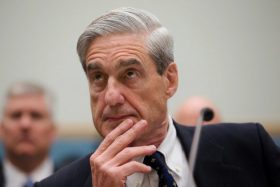
The FBI discussions that drove these stories could have led to the first known investigation of a U.S. president as a suspected national security risk. It ended only a few days after the deliberations among the senior FBI officials when on May 19, 2017, the Justice Department chose Robert Mueller, a former FBI director, to be special counsel. That put control over the Trump-Russia investigation into the hands of Mueller rather than the FBI.
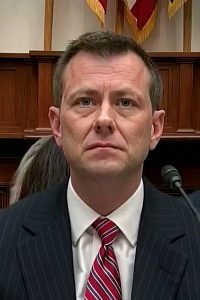
Peter Strzok, who led the bureau’s counter-espionage section, was, along with former FBI General Counsel James A. Baker, one of those involved in the May 2017 discussions about investigating Trump. Strzok initially joined Mueller’s team but was fired after a couple of months when text messages that he had written came to light exposing a deep animosity towards Trump that cast doubt over his impartiality.
The other FBI officials behind the proposed investigation of Trump have also since left the FBI; either fired or retired.
The entirety of what was said at the meetings of five or six senior FBI officials in the immediate aftermath of Trump’s firing of James Comey as FBI director on May 9, 2017, remains a mystery.
Closed-door Testimony
The CNN and Times stories were based on transcripts either obtained or, in the case of the Times, on portions read to it, of private testimony given to the House Judiciary and Government Oversight and Reform committees last October by Baker, one of the participants in the discussions of Trump as a possible Russian agent.
Excerpts of Baker’s testimony published by CNN make it clear that the group spoke about Trump’s policy toward Russia as a basis for a counter-intelligence investigation. Baker said they “discussed as [a] theoretical possibility” that Trump was “acting at the behest of [Russia] and somehow following directions, somehow executing their will.”
Baker went on to explain that this theoretical possibility was only “one extreme” in a range of possibilities discussed and that “the other extreme” was that “the President is completely innocent.”
He thus made it clear that there was no actual evidence for the idea that he was acting on behalf of Russia.
Baker also offered a simpler rationale for such an investigation of Trump: the president’s firing of FBI Director Comey. “Not only would [firing Comey] be an issue of obstructing an investigation,” he said, “but the obstruction itself would hurt our ability to figure what the Russians had done, and that is what would be the threat to national security.”
But the idea that Comey’s firing had triggered the FBI’s discussions had already been refuted by a text message that Strzok, who had been leading the FBI’s probe into the Trump campaign’s contacts with Russians, sent immediately after the firing to Lisa Page, then legal counsel to Andrew McCabe, formerly the bureau’s deputy director who was then acting director.
“We need to open the case we’ve been waiting on now while Andy is acting,” Strzok wrote, referring to McCabe.
As Page later confirmed to congressional investigators, according to the CNN story, Strzok’s message referred to their desire to launch an investigation into possible collusion between Trump and the Russians. Strzok’s message also makes clear he, and others intent on the investigation, were anxious to get McCabe to approve the proposed probe before Trump named someone less sympathetic to the project as the new FBI director.
Why the FBI Wanted to Investigate
The New York Times story argued that the senior FBI officials’ interest in a counter-intelligence investigation of Trump and the Russians sprang from their knowledge of the sensational charges in the opposition research dossier assembled by British ex-spy Christopher Steele (paid for by the DNC and the Clinton campaign) that the Putin government had “tried to obtain influence over Mr. Trump by preparing to blackmail and bribe him.”
But the Times writers must have known that Bruce Ohr, former associate deputy attorney general, had already given McCabe, Page and Strzok information about Steele and his dossier that raised fundamental questions about its reliability.
Ohr’s first contacts at FBI headquarters regarding Steele and his dossier came Aug. 3, 2016, with Page and her boss McCabe. Ohr later met with Strzok.
Ohr said he told them that Steele’s work on the dossier had been financed by the Clinton campaign through the Perkins-Cole law firm. He also told them that Steele, in a July 30, 2016 meeting, told him he was “desperate that Donald Trump not get elected and was passionate about him not being president,” according to Ohr’s contemporaneous notes of the meeting.
 So, key figures in the discussion of Trump and Russia in May 2017 knew that Steele was acting out of both political and business motives to come up with sensational material.
Strzok and Page may have started out as true believers in the idea that the Russians were using Trump campaign officials to manipulate Trump administration policy. However, by May 2017, Strzok had evidently concluded that there was no real evidence.
In a text message to Page on May 19, 2017, Strzok said he was reluctant to join the Mueller investigation, because of his “gut sense and concern” that “there’s no big there there.”
Why, then, were Strzok, Page, McCabe and others so determined to launch an investigation of Trump at about the same time in May 2017?
A CNN article about the immediate aftermath of the Comey firing reported that Deputy Attorney General Rod Rosenstein and senior FBI officials “viewed Trump as a leader who needed to be reined in, according to two sources describing the sentiment of the time.”
That description by anti-Trump law enforcement officials suggests that the proposed counter-intelligence investigation of Trump served as a means to maintain some leverage over his treatment of the FBI in regard to the Russia issue.
That motivation would be consistent with the decision by McCabe on May 15, 2017 – a few days after the discussions in question among the senior FBI officials – to resume the bureau’s relationship with Steele.
The FBI had hired Steele as a paid source when it had earlier launched its investigation of Trump campaign official’s contacts with Russians in July 2016. But it had suspended and then terminated the relationship over Steele’s unauthorized disclosure of the investigation to David Corn of Mother Jones magazine in October 2016. So, the decision to resume the relationship with Steele suggests that the group behind the new investigation were thinking of seizing an opportunity to take off the gloves against Trump.
The ‘Unwitting Collaboration’ Ploy
The discussion by senior FBI officials of a counter-intelligence investigation of Trump has become part of the political struggle over Trump mainly because of the stories in the Times and CNN.
The role of the authors of those stories illustrates how corporate journalists casually embraced the ultimate conspiracy theory – that the president of the United States was acting as a Russian stooge.
The reporters of the CNN story — Jeremy Herb, Pamela Brown and Laura Jarrett — wrote that the FBI officials were “trying to understand why [Trump] was acting in ways that seemed to benefit Russia.”
The New York Times story was more explicit. Co-authors Adam Goldman, Michael S. Schmidt and Nicholas Fandos wrote that the FBI officials “sought to determine whether Mr. Trump was knowingly working for Russia or had unwittingly fallen under Moscow’s influence.”
The same day the Times story was published, the lead author on the piece, Adam Goldman, was interviewed by CNN. Goldman referred to Trump’s interview with NBC’sLester Holt in the days after the Comey firing as something that supposedly pushed the FBI officials over the edge. Goldman declared, “The FBI is watching him say this, and they say he’s telling us why he did this. He did it on behalf of Russia.”
But Trump said nothing of kind. What he actually said — as the Times itself quoted Trump, from the NBCinterview —was: “[W]hen I decided just to do it, I said to myself – I said, you know this Russia thing with Trump and Russia is a made-up story.” The Times article continued: “Mr. Trump’s aides have said that a fuller examination of his comments demonstrates that he did not fire Mr. Comey to end the Russia inquiry. ‘I might even lengthen out the investigation, but I have to do the right thing for the American people,” Mr. Trump added. ‘He’s the wrong man for that position.’”
Goldman was evidently trying to sell the idea of Trump as a suspected agent of Russia.
Goldman also gave an interview to The New Yorker’s Isaac Chotiner, in which the interviewer pressed him on the weakest point of the Trump-as-Russian-agent theory. “What would that look like if the President was an unwitting agent of a foreign power?” asked Chotiner.
The Times correspondent, who won a Pulitzer Prize for his coverage of the alleged Russian efforts to influence the 2016 election, responded: “It is hard to say what that would look like.” Goldman then reiterated the concept. “People were very careful to tell me that: ‘It is wittingly or unwittingly.’” And in answer to a follow-up question, Goldman referred to evidence he suggested might be held by the FBI that “perhaps suggests that the President himself may be acting as a foreign agent, either wittingly or unwittingly….”
The idea that American citizens were somehow at risk of being led by an agent of the Russian government “wittingly or unwittingly” did not appear spontaneously. It had been pushed aggressively by former CIA Director John O. Brennan both during and after his role in pressing for the original investigation.
When Brennan testified before the House Intelligence Committee in May 2017, he was asked whether he had intelligence indicating that anyone in the Trump campaign was “colluding with Moscow.” Instead of answering the question directly, Brennan said he knew from past experience that “the Russians try to suborn individuals, and they try get them to act on their behalf either wittingly or unwittingly.” And he recalled that he had left the government with “unresolved questions” about whether the Russians had been successful in doing so in regard to unidentified individuals in the case of the 2016 elections.
Brennan’s notion of “unwitting collaboration” with Russian subversion is illogical. Although a political actor might accidentally reveal information to a foreign government that is valuable, real “collaboration” must be mutually agreeable. A policy position or action that may benefit a foreign government, but is also in the interest of one’s own government, does not constitute “unwitting collaboration.”
The real purpose of that concept is to confer on national security officials and their media allies the power to cast suspicion on individuals on the basis of undesirable policy views of Russia rather than on any evidence of actual collaboration with the Russian government.
The “witting or unwitting” ploy has its origins in the unsavory history of extreme right-wing anti-communism during the Cold War. For example, when the House Un-American Activities Committee was at its height in 1956, Chairman Francis E. Walter declared that “people who are not actually Communist Party members are witting or unwitting servants of the Communist cause.”
The same logic – without explicit reference to the phrase — has been used to impugn the independence and loyalty of people who have contacts with Russia.
It has also been used to portray some independent media as part of a supposedly all-powerful Russian media system.
The revelation that it was turned against a sitting president, however briefly, is a warning signal that national security bureaucrats and their media allies are now moving more aggressively to delegitimize any opposition to the new Cold War.
Gareth Porter is an independent investigative journalist and historian writing on U.S. national security policy. His latest book, “Manufactured Crisis: The Untold Story of the Iran Nuclear Scare,” was published in 2014. Follow him on Twitter: @GarethPorter.
Featured Video

Iran Is Not Our Enemy
or go to
Aletho News Archives – Video-Images
Book Excerpt
“Vaccines Do Not Cause Autism!” The Science is Settled. Right?
ICAN urges the IACC to actually study infant vaccines and autism
 By Aaron Siri | Injecting Freedom | March 16, 2026
On behalf of ICAN, we just sent a copy of chapter 11 of Vaccines, Amen to the newly appointed members of the federal Interagency Autism Coordinating Committee (IACC).
If you haven’t already read this chapter, you can read the whole thing in the attached letter. I trust that after you read it, you’ll see why the statement “vaccines do not cause autism” is a belief, not science!

IACC Public Comment Letter
1.53MB ∙ PDF file
Includes chapter 11 of Vaccines, Amen
Blog Roll
 Aletho News
- Russia Strongly Condemns Actions Aimed at Harming Health of Iranian Leadership – Kremlin
- Israeli Journalist Demands Tucker Carlson and Candace Owens Be Placed in WWII-Style Internment Camps
- No Liability, No Studies, No Accountability: The Vaccine System Aaron Siri Exposed in Federal Court
- No time for losers: Why the war meant to save Israel may destroy it
- Top US Counterterrorism Official Resigns in Protest of Operation Against Iran
- Just Get Out! Now!
- Unpacking glaring contradictions in US-Zionist justifications for war against Iran
- Iranian model of warfare bleeds US dry while Persian Gulf states watch and learn: Analyst
- IRGC orders ‘defeated’ US to evacuate industrial facilities in region
- Hegseth’s call for ‘no mercy’ to Iranians deemed war crime
- If Americans Knew
- Trump’s counterterrorism chief, whose own wife was killed by ISIS, quits over Iran War saying Tehran posed ‘no imminent threat’
- Here’s what US could fund instead of Bibi’s war on Iran
- Israel Killed Over a Dozen Lebanese Paramedics in Three Days, Now Claiming That Ambulances Are “Hezbollah” Targets
- War on Iran: These are the heritage sites devastated by US and Israeli attacks
- Four news stories from Israeli media that illustrate Israeli “justice”
- CIA Prepares Criminal Referral of Tucker Carlson, as Israel and Its Loyalists Demand His Arrest
- Top US counterterror advisor resigns in protest of “war manufactured by Israel” – Not a ceasefire Day 157
- ‘I Liked the House’: When Israeli Soldiers Turn Palestinian Homes into Barracks
- ‘They Were All I Had’: Lebanese Father Buries Parents, 4 Daughters Killed by Israeli Bombing
- Israel and its supporters are causing attacks on Jewish institutions. Case in point: Michigan synagogue tragedy.
- No Tricks Zone
- New Research: South Australia’s Mid-Holocene Sea Surface Temperatures Were 4°C Warmer Than Today
- Storing Green Energy To Last Germany 10 Days Would Require A 60-Million Tonne Battery
- New Studies: UK Sea Levels Were 4 Meters Higher Than Today During The Mid-Holocene
- Destructive Green New Deal: German Energy And Metal Group Warns Of Drastic Crisis
- New Study Documents A 20-Year Pause In Arctic Sea Ice Decline – Driven By Internal Variability
- Wake-up Call: Survey Shows Majority Of Germans Now Favor Postponing Climate Targets!
- Televised! Leading German Political Candidate Tells Schoolchildren CO2 Makes Sun Hotter!
- New Study: A Century Warming Of 1.1°C Is ‘Commonplace’ And ‘Not Unusual’ During This Interglacial
- New Study: ‘Internal Noise’ And Volcanic Forcing Can Trigger 10-15°C Warming Within Decades
- Glaciers Worldwide Are Suddendly Surging, Experts Blame Warming!
 Aletho News