Non-Military Federal Agencies Under Trump Expand Already Enormous Arsenals
Given that during the height of the Iraq War the Army used around 6 million rounds per month, with its planned purchase of 1.6 billion rounds, DHS would have ammo left over after matching the Army’s peak daily outpouring of hot lead for two solid decades.
By Whitney Webb | MintPress News | February 27, 2019
WASHINGTON — The massive purchases of ammo and weapons by non-military federal agencies, like the Internal Revenue Service (IRS) and Social Security Administration (SSA), that first began under the Obama administration has continued unabated under the Trump administration, while receiving less media coverage.
According to a report released last December by the Government Accountability Office (GAO) and recently highlighted by Forbes, the mass purchase of ammunition, weapons and other military-grade items by ostensibly civilian government agencies has continued up through Fiscal Year (FY) 2017, the latest year for which data is available. The report also found that many agencies had misreported the amount and size of their ammo and weapons purchases to the GAO by a significant degree. In one case, the GAO found that Immigration and Customs Enforcement (ICE) had actually spent eight times more on weapons and ammo than it had disclosed to their office.
The budgets that had been proposed for FY 2017 — which ended on September 30, 2017 — had originally been drafted under the Obama administration but were amended by the Trump administration and the then-Republican-led Congress beginning in late January 2017 following President Donald Trump’s inauguration. The Trump administration chose to leave the massive purchases of ammo and weapons by non-military agencies as they were, despite the controversy they had caused among many Trump supporters and other groups when such purchases were made under the Obama administration.
Among the agencies that acquired ammunition, weapons and related equipment in FY 2017 were:
- The IRS spent $600,000 on ammunition but refused to disclose to the GAO its intended purpose and told the GAO that it could not provide data on firearms purchases. The IRS has stated in the past that such purchases are used in “investigating potential criminal violations of the Internal Revenue Code.” Its current inventory is estimated to include 4,461 firearms, including submachine guns, and over 5 million rounds of ammunition.
- The Veterans Health Administration (VHA) of the Department of Veterans Affairs purchased around 600 firearms and nearly 20,000 rounds of ammunition, along with riot gear and camouflage uniforms. The VHA has claimed that these purchases are for “enforcing federal law at VA medical facilities (and some National Cemetery and Benefits locations).”
- The Office of the Inspector General (OIG) of the Social Security Administration (SSA) purchased around 300 firearms and 250,000 rounds of ammunition. The SSA’s OIG has stated that it uses these items for investigations into “wrongdoing by applicants, beneficiaries, contractors and third parties, and employees.”
- The National Park Service (NPS) of the U.S. Department of the Interior purchased nearly 2 million rounds, approximately 1,500 firearms, silencers, riot shields and batons, camouflage uniforms and “pyrotechnics and specialized munitions.” The stated purpose of these items is to protect “the safety and health of NPS visitors, partners, and staff, as well as our natural and cultural resources.”
Though those numbers certainly seem large — maybe even astoundingly so — on their own, they are part of a years-long effort that began during the Obama administration that has seen many non-military federal agencies arm themselves to the teeth.
DHS buys five bullets for every American man, woman and child
As the recently released GAO report notes, from FY 2010 to FY 2017, non-military federal agencies spent $1.5 billion on ammunition, weapons and military grade tactical gear. As an example, during that time frame, the VA bought 11 million rounds of ammunition, roughly equivalent to 2,800 rounds for each of its 3,957 officers. Similarly, the Department of Health and Human Services (HHS) has purchased 4 million rounds over the past eight years and acquired 1 million rounds for use by its 461 special agents. The HHS has called its arms purchases “imperative.” In addition, the SSA bought 800,000 rounds for their 270 special agents during this period, amounting to nearly 3,000 rounds per agent. Even the U.S. Postal Service acquired significant amounts of weapons and ammunition.
These purchases in the past have been the subject of some controversy, such as the mass purchases of hollow-point rounds by government agencies including the Forest Service, National Park Service, Office of Inspector General, Bureau of Fiscal Service, the Drug Enforcement Administration, U.S. Marshals, and the U.S. Immigration and Customs Enforcement. Hollow-point bullets are illegal under the Geneva Convention but government agencies spent at least $426,268 in just two years (FY 2015 and FY 2016) to acquire them.
Ammunition purchases by the Department of Homeland Security in 2013 were also controversial and were subsequently investigated by the GAO. DHS had claimed that is was buying over a billion rounds of ammunition, including hollow-point rounds, in order to “save money.” However, this has long been in doubt, given that hollow-point rounds are significantly more expensive than other rounds that do not expand upon impact.
At the time, Forbes noted that the massive ammo purchases by DHS could be used to sustain a “hot war” for more than twenty years, given that during the height of the Iraq War the Army used around 6 million rounds per month. With its planned purchase of 1.6 billion rounds, DHS would have ammo left over after matching the Army’s peak daily outpouring of hot lead for two solid decades.
DoE goes Samuel Girard on student borrower
Though the initial mass purchases of ammo and weapons by U.S. federal agencies received considerable media attention and provided fodder for numerous conspiracy theories, the fact that those purchases have continued under Trump has received surprisingly less attention. This may be because past concerns over such purchases during the Obama era were often raised along partisan lines, with conservatives being the most vocal critics. This may seem odd given the gun control stances of Obama and his supporters. Many of those who had criticized the Obama administration for these shocking purchases, a large number of whom are now Trump supporters, may perhaps be uninclined to levy similar criticism against a president they now support.
In addition, it is not surprising that the Trump administration would allow these purchases to continue given that such purchases greatly benefit American arms manufacturers, with whom the president has cultivated a close relationship while making arms sales to allies the cornerstone of his foreign policy. Thus, it would make sense that Trump would be willing to support U.S. government purchases of those same arms, by both the military — as evidenced by the Pentagon’s still-ballooning budget — and non-military agencies.
There is no denying that these purchases represent a significant amount of government waste. More importantly, these purchases reveal the gradual yet continual effort to militarize federal agencies that have historically been administrative, a trend that should concern all Americans.
While the militarization of domestic police forces has attracted attention, it is equally important to ask why regulatory agencies are now so heavily armed, considering that virtually all of those pursued by these regulatory agencies are American citizens who are wanted for minor infractions or non-violent crimes. For instance, in 2016, the Department of Education sent armed U.S. marshals after Paul Aker over a $1,500 unpaid student loan. The armed officers arrived at Aker’s home with an arrest warrant, which resulted in a two-hour standoff. “I’m still shaken,” Aker said at the time. “Why send seven guys with guns about a student loan?” The DOE, during the last two years under the Obama Administration, increased its spending on guns, ammunition and military-style equipment by 25 percent.
With so many other civilian, regulatory agencies now heavily armed, how long before Aker’s experience becomes the norm for those who fall behind on their payments to the IRS or whose pets make too much noise at a National Park?
Whitney Webb is a staff writer for MintPress News and has contributed to several other independent, alternative outlets. Her work has appeared on sites such as Global Research, the Ron Paul Institute and 21st Century Wire among others. She also makes guest appearances to discuss politics on radio and television. She currently lives with her family in southern Chile.
Cohen testimony: Trump’s former attorney can’t provide ‘any real examples’ of Russia collusion
RT | February 27, 2019
US President Donald Trump’s former lawyer Michael Cohen, giving testimony on Capitol Hill, has not been able to provide any evidence of collusion between the Trump campaign and Russian officials during the 2016 election.
Cohen has been giving testimony described as “explosive” by mainstream media to the House Oversight Committee about his “suspicions” that Trump could have worked with Russia during the campaign — but when probed, was not able to provide any evidence to back up those suggestions.
CBS reporter Bo Erickson tweeted during the hearing that Cohen “cannot cite any real examples of Russian collusion” with the Trump campaign “even though he was one of [Trump’s] closest allies.”
“If [Cohen] doesn’t know about any collusion, who does?” Erickson tweeted.
Republicans on the committee have castigated Democrats for inviting a “convicted perjurer,” who they say cannot be trusted, to give testimony. Cohen pleaded guilty last November to making false statements to Congress about a potential deal to build a Trump Tower hotel in Moscow, later admitting that he lied to “protect” Trump.
During the hearing, Rep. Jim Jordan accused Cohen of being aggrieved with Trump because he didn’t get a job at the White House — a claim which Cohen denied.
While Republicans immediately took an adversarial tone with Cohen, Democrats on the committee have been pushing him to produce information implicating Trump in a conspiracy to steal the election with help from Russia.
Committee Chairman Elijah Cummings said Democrats will continue to call Trump’s associates before Congress to testify in their “search for the truth” for the foreseeable future, taking advantage of the fact that the party now holds majority powers in the House of Representatives.
Tweeting before the hearing, Trump himself accused Cohen of “lying in order to reduce his prison time.”
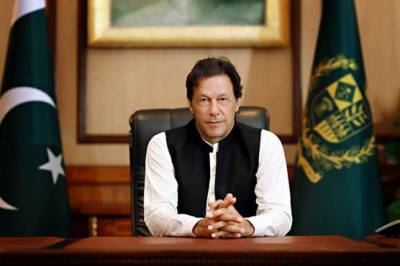
Nuclear Pakistan and India can’t afford miscalculation, should resolve crisis, says PM Khan
RT | February 27, 2019
New Delhi and Islamabad cannot afford a new war with the weapons they now have, Pakistani Prime Minister Imran Khan said, adding that he and Indian PM Narendra Modi have to find a way out of the ongoing security crisis.
In a short televised address on Wednesday, Khan said neither he nor his Indian counterpart, Narendra Modi, would be in control of the situation, if the ongoing hostilities escalate further.
History tells us that wars are full of miscalculation. My question is that given the weapons we have, can we afford miscalculation? We should sit down and talk.
Khan added Pakistan is willing to work with India to investigate the suicide bombing of its police officers in Kashmir which happened two weeks ago and led to this week’s conflict between the two countries. The attack was claimed by the jihadist group Jaish-e-Mohammed (JeM), which India accuses Pakistan of harboring.
But just like any other sovereign nation, Pakistan cannot allow another country to act “as judge, jury and executioners” on its territory, he said. Wednesday’s attack on targets in India by Pakistani warplanes was meant as a show of force and determination to defend its sovereignty, the PM stressed.
“We ensured no casualties and no collateral damage in the operations we undertook,” he said.
India on Tuesday launched an air raid against what is said was a JeM training camp in Pakistani territory. Pakistan on Wednesday launched its own air raid, attacking targets in the disputed region of Kashmir. There are conflicting claims by the two nations on the outcomes and circumstances of both incidents.
At least one Indian fighter jet was shot down on Wednesday. Pakistan claims to have shot down more than one, while India insists it took out one of the Pakistani warplanes.
Forget Venezuela: 80% of Yemenis Require Urgent Humanitarian Aid, Up 30%
Geopolitics Alert – February 27, 2019
Sana’a – While the world focuses on Venezuela to validate coup threats, the manmade humanitarian situation in Yemen continues deteriorating. In fact, the very country claiming to help alleviate Venezuelan suffering, the United States, has played an active and intentional role in creating the crisis in Yemen.
According to a recent report from ReliefWeb, 80% of Yemen’s entire population require urgent humanitarian assistance. This figure is up 30% from last year. That means out of an estimated population of 30.5 million, 24.1 million require immediate aid for survival.
Facing starvation and famine due to the blockade, 20.1 million need urgent food assistance. Healthcare is also a vital concern. 19.7 million Yemenis lack basic access to doctors and lifesaving medicines. To top it off, 17.8 million don’t even have proper water, sanitation, and other supplies for keeping up with basic hygiene. By looking at these numbers, it’s easy to see that a majority of Yemenis need urgent assistance in all three areas.
This is a major problem because the lack of access to clean water and sanitation equipment is directly responsible for the fatal spread of cholera. The UN expects to record up to 350,000 cases of cholera in 2019. In 2017, one million were infected with the preventable illness while several thousand died.
Instead of putting forth any efforts to lift the US-enforced and Saudi-led blockade and siege of Yemen, the UN has appealed for $4.2 billion to meet humanitarian needs.
Famine and Disease as a Weapon of War
The blockade, which is technically illegal under international law, restricts all land, sea, and air imports and exports. It also prohibits the free flow of human movement — which has effectively turned Yemen into an open-air prison. This travel ban, combined with the country’s failing healthcare system, had contributed to the death of over 27 thousand civilians as of August of 2018. It has also caused the death of over 247,000 children who are particularly vulnerable to starvation and disease.
But the starvation, disease, and crumbling healthcare system aren’t merely a byproduct of the blockade: they’re an intentional consequence.
According to a report Geopolitics Alert received from the Republic of Yemen, the US-backed Saudi-led coalition has continued targeting civilian infrastructure vital for sustaining life.
During the month of December alone, Saudi coalition warplanes attacked 68 water tanks and pumps, 222 agricultural fields, four markets, 132 livestock, four food warehouses, and much more. To top it off, coalition airstrikes also targeted 190 businesses and factories as well as airports, seaports, boats, and gas stations.
These are direct attacks on Yemen’s food and water supply.
The report also states that hundreds of workers such as fishermen, farmers, and factory workers in Hodeidah province have become unemployed during the month of December due to such attacks on their source of income. The Saudi coalition also detonates cluster munitions and chemical weapons over agricultural fields to further contaminate the land.
The coalition airstrikes on vital civilian infrastructure make it clear that starvation and disease from the blockade are intended weapons of war.
This MintPress documentary examines the gruesome attacks on fishermen who recall horrors of rape and torture after being captured by Saudi coalition warships.
Russia willing to work with US on cybersecurity, but Washington stalls – national security chief
RT | February 27, 2019
The Russian government is willing to cooperate with the US on cybersecurity issues, but so far it sees no reciprocation of this intention on the other side, said the head of Russia’s National Security Committee.
“On our part, we are prepared to dialogue with our Western partners, once there is responsiveness and a real interest in solving the issues we have accumulated,” Nikolai Patrushev said in an interview.
He added that at the moment there is virtually no progress in this regard.
The US suggested discussing the problems in 2018, but then they derailed a planned Russian-American interagency consultation by failing to send a delegation to Geneva.
The American government accuses Russia of interfering in its domestic affairs by hacking Democrat party officials and leaking stolen emails during the 2016 campaign. Moscow denies the allegations and says unlike Washington, it strictly follows the principle of non-interference.
The ‘Russian bots’ that weren’t: Twitter backtracks on troll claims, media ignores updated info
RT | February 26, 2019
Twitter quietly revised its public database of ‘Russian bot’ accounts earlier this month, removing 228 accounts it previously said were “connected to Russia”— but the admission has gone almost completely unnoticed by the media.
Bloomberg reported on the “burst of activity” from the bot accounts and claimed that Russia’s “social-media trolling operation” was “stepping up its Twitter presence to new heights.”
Fast-forward to 2019 and Twitter has removed 228 of these accounts from the database, saying they had “initially misidentified” them as being linked to Russia, but nobody in the media seems to have noticed.
In fact, Bloomberg is the only major US outlet which bothered to correct the story to reflect reality, admitting that Twitter’s changes to the dataset “invalidate central portions” of its original report and that there was “no surge” in this so-called Russian bot activity at the time in question. Oops!
Pivot to Venezuela!
Interestingly, the highlighted accounts have now been linked to Venezuela, another country the US government just so happens to have bad blood with.
In a tweet, Twitter’s “head of site integrity” Yoel Roth said that the company can now “more confidently associate” the 228 accounts with Venezuela. Roth’s short tweet thread on the misidentification was met with little interest receiving only a few retweets and no attention from media figures who supposedly actively follow any and all news remotely related to Russian activity online.
In a statement to Bloomberg, Roth later admitted that “definitive attribution is very, very difficult.” The Bloomberg mea culpa also noted that Twitter is “reluctant to discuss” how it connects accounts to so-called trolling networks in the first place.
Some on Twitter quickly pointed out that the timing of the pivot to focus on Venezuelan bots was curious, given the US’ recent efforts to engineer regime change against the government of Nicolas Maduro.
Journalist Sam Sacks tweeted that the new information about Venezuelan bots was “convenient” and said that the vast majority of stories written about Russian trolls and their alleged social media activity are “based on junk research.” Sacks also questioned why anyone should have faith in the credibility of such flawed analyses going forward.
Another Twitter user found it odd that Twitter and Bloomberg had “suddenly discovered” that bots it claimed were Russian had “miraculously turned into Venezuelans.”
Pattern of fake ‘Russian bots’
When it comes to the hot topic of Russian bots and trolls, the media and various social media monitoring groups have suffered unfortunate “misidentification” incidents before.
In 2017, an African American activist Charlie Peach was suspended from Twitter during one of the company’s purges of accounts purportedly linked to Russia, a claim that was happily echoed later by multiple major media outlets. Peach told RT at the time that Twitter was engaging in “suppression of voices” using the “Russian scare tactic.”
Twitter users in the UK have also been swept up into the hysteria over Russian bots based on their political opinions, with some accounts belonging to real people even being listed in a UK government report on nefarious Russian activity online.
More recently, a dodgy US-based cybersecurity firm called New Knowledge was busted by the New York Times for creating an army of fake Russian bots in order to secretly influence an Alabama election by accusing one candidate of being ‘supported’ by the fake accounts. Yet, despite its own dirty tricks being exposed, the firm is still cited by major US media outlets as a legitimate source of information on Russian “disinformation” online.
So it seems media interest in Russian bot stories waxes and wanes based on whether or not the information bolsters the ‘correct’ narrative.
Read more:
‘Fake news’ is okay if it’s about #RussiaGate: Top 7 fake ‘collusion’ stories the media pushed
Trump’s Democratic Opposition Endorses His Coup Attempt in Venezuela
Illustrating that the exception only proves the rule, Rep. Tulsi Gabbard stood virtually alone, tweeting: “The United States needs to stay out of Venezuela. Let the Venezuelan people determine their future. We don’t want other countries to choose our leaders — so we have to stop trying to choose theirs.”
By Alexander Rubinstein | MintPress News | February 26, 2019
Nothing unites the D.C. blob like a good old coup d’état. The only other times, it seems, that Donald Trump is given a break by “the resistance” is when he acts “presidential” — i.e., orders military aggression, as we saw with Syria.
As veteran journalist Dan Rather put it at the time:
The number of members of the press who have lauded the actions last night as ‘presidential’ is concerning. War must never be considered a public relations operation. It is not a way for an Administration to gain a narrative. It is a step into a dangerous unknown and its full impact is impossible to predict, especially in the immediate wake of the first strike.”
Now, it has been more than a month since the Trump administration worked with Juan Guaido to orchestrate a declaration of his presidency in Venezuela, and the coup attempt has received the endorsement of a likely backer: former Secretary of State Hillary Clinton. While Clinton’s warmongering surprises no one, it is worth examining the statements of others in her political orbit.
MintPress News previously covered the remarks of the “socialists” in Congress — Sen. Bernie Sanders (I-VT) and Rep. Alexandria Ocasio-Cortez (D-NY) — about Venezuela, in which the former called on Venezuela to accept alleged humanitarian aid from the United States and the latter called out the “failure of democracy” in the country.
On Saturday, Clinton tweeted “I urge Nicolás Maduro to allow humanitarian aid inside Venezuela’s borders peacefully.” Hours later, Sen. Sanders tweeted that the “Maduro government must … allow humanitarian aid into the country, and refrain from violence against protesters.”
As Lawrence Korb put it: “We all think the dictator must go; the question is what’s the best way to do it.” Korb is a senior fellow at the pro-Clinton, UAE-funded comms shop Center for American Progress (CAP). Kelly Magsamen, CAP’s Vice President, National Security and International Policy, recently deleted a tweet in which she defended Elliott Abrams as a civil servant who is a “fierce advocate for human rights and democracy.”
Abrams, as MintPress News continues to note, was recently appointed as United States Special Representative for Venezuela and was previously involved in a $27 million plot to arm right-wing South American contras.
Magsamen claimed Abrams made “professional mistakes.” She added that “we all have a lot of work to do together in Venezuela. We share goals.”
While Clinton’s camp is firmly Never-Trump-Except-in-Cases-of-Regime-Change, she — God help us — is not running for president, currently. The Democrats who have declared their candidacies, however, do not differ much in their rhetoric on Venezuela, with rare exception.
Since there is only one Democratic candidate who has made a forceful statement against the coup, let’s start with Rep. Tulsi Gabbard (D-HI), who was among the first to respond, tweeting “The United States needs to stay out of Venezuela. Let the Venezuelan people determine their future. We don’t want other countries to choose our leaders — so we have to stop trying to choose theirs.”
Sen. Kirsten Gillibrand (D-NY), who has thrown her hat in the ring for 2020, condemned Maduro’s “corrupt reign” and repeated the bald-faced lie that Juan Guaido “was legitimately elected,” via a statement through her spokeswoman, Meredith Kelly, to the Huffington Post.
Former Rep. John Delaney (D-MD), who is running for president in 2020, condemned Venezuela’s “corrupt and failed authoritarian regimes.”
Sen. Elizabeth Warren (D-MA) said, “The Venezuelan people deserve free and fair elections, an economy that works, and the ability to live without fear of violence from their own government.”
Pete Buttigieg — a little-known contender who is the mayor of South Bend, Indiana — also called for “free and fair elections.”
Bernie Sanders has done the same and, as MintPress News recently reported, thrown his weight behind demands that Maduro bend to U.S. demands that he accept “humanitarian aid,” which the government of Venezuela believes to be a trojan horse.
In response to a request for comment from the Huffington Post, Sen. Cory Booker (D-NJ), who is yet another 2020 Democrat contender, merely said: “Maduro is alarming to me on many levels.”
Sen. Amy Klobuchar (D-MN) told the outlet “I support the people of Venezuela standing up against Maduro, installing a new leader, and restoring democracy in Venezuela.”
Sen. Kamala Harris (D-CA) and former Obama official and San Antonio Mayor Julián Castro, both of whom are running, did not respond to the Huffington Post’s request for comment, though clues exist as to their positions.
Harris condemned “Maduro’s dictatorial regime” in a tweet on Saturday. While Castro has remained seemingly silent on the U.S.-backed coup attempt in Venezuela, his brother, Rep. Joaquin Castro (D-TX) last year said “We’ve seen Nicolás Maduro undermine Venezuelan democracy and create a regional economic and humanitarian catastrophe.”
“President Maduro consistently violates the basic human rights of the people he governs and must be held accountable,” he added.
Alexander Rubinstein is a staff writer for MintPress News based in Washington, DC. He reports on police, prisons and protests in the United States and the United States’ policing of the world. He previously reported for RT and Sputnik News.
The Russian Mirror
By Jacob G. Hornberger | FFF | February 26, 2019
A recent article in the New York Times about Russia’s “intelligence state,” authored by John Sipher, a former chief of station for the CIA, provides a valuable mirror for the American people. The problem is that American statists cannot see it as a mirror. While Sipher’s article clearly demonstrates that American statists, especially conservative ones, can see the wrongdoing of foreign totalitarian or authoritarian regimes with great clarity, they have a moral blindness when it comes to recognizing wrongdoing by their own government. Even worse, they defend wrongdoing by their own regime (which they can’t see as wrongdoing) as a way to combat foreign wrongdoing. In fact, they come to view their own wrongdoing as something good when it is being used to oppose wrongdoing by a foreign regime.
Sipher labels Russia’s (and, before that, the Soviet) governmental system an “intelligence state.” He’s critical of it, and rightly so. It is a type of governmental system that engages in such things as secret surveillance of the citizenry, assassination, torture, and interference in the affairs of other nations.
Referring to Russia’s system under Vladimir Putin, who Sipher reminds us is a former KGB officer, Sipher writes:
“The history of the brutal Soviet security services lays bare the roots of Russia’s current use of political arrests, subversion, disinformation, assassination, espionage and the weaponization of lies. None of those tactics is new to the Kremlin.
“In fact, those tactics made Soviet Russia the world’s first “intelligence state,” and they also distinguished it from authoritarian states run by militaries…. The result is a regime with the policies and philosophy of a supercharged secret police service, a regime that relies on intelligence operations to deal with foreign policy challenges and maintain control at home….
“Over the decades, the Soviet and Russian secret services developed tools and habits based on their Chekist experience that set them apart from their counterparts in the West. Rather than focusing on collecting and analyzing intelligence, they developed expertise in propaganda, agitation, subversion, repression, deception and murder.”
Sipher uses the label “intelligence state” to describe the Russian and Soviet system. There is another label that Sipher could have used, a much more common one: a “national security state.”
Why would Sipher avoid using the term “national-security state”? My hunch is that he instinctively knows that that would be holding the mirror to himself and the rest of the American people. That’s because the United States is a “national-security state” or an “intelligence state,” just like Russia is.
In fact, a supreme irony in Sipher’s article is that he worked for the CIA for 27 years. At the risk of belaboring the obvious, the CIA is an “intelligence agency,” one that not only engages in intelligence gathering but also has long wielded and exercised the powers of assassination, torture, indefinite detention, involuntary drug experimentation, and secret surveillance — that is, the same types of powers that Sipher decries in the Russia/Soviet “intelligence state.”
Sipher points out that one of the main features of an “intelligence state” is lying. He ought to know. Since its very beginning, the CIA has been an agency based on lies and lying. Deception has always been justified under the rubric of “national security.” Coming immediately to mind is CIA Director Richard Helms, who was convicted of lying to Congress regarding the CIA’s secret regime-change operation against Chile, to the praise and acclaim of his subordinate officers in the CIA. Let’s also not forget the lies that former Director of National Intelligence James Clapper Jr. told Congress under oath regarding the NSA’s secret surveillance of Americans.
Consider all the nefarious things the CIA has done and continues to do in foreign countries, including assassination, coups, installation of foreign dictators, invasions, wars of aggression, torture, rendition, partnerships with dictatorial regimes, sanctions and embargoes targeting innocent people with death, impoverishment, and suffering.
Or consider MKULTRA, the CIA’s top-secret operation to subject innocent, unsuspecting people to drug experimentation, along with the subsequent intentional destruction of official records to prevent Americans from discovering the full extent of the operation.
Or the U.S. national-security state’s secret surveillance of American citizens, along with secret illegal operations to spy on and infiltrate peaceful and law-abiding organization with the intent to smear and destroy them and their members.
Of course, it wasn’t always that way. The United States was founded as a limited-government republic, which is the opposite of a national-security state. For more than 150 years, our nation prospered without a Pentagon, a military-industrial complex, a national-security state, a CIA, and a NSA. Governmental procedures were transparent. There was no obsession over the nebulous and meaningless term “national security.”
Then came the aftermath of World War II, when U.S. officials told Americans that they were now facing a new official enemy, one that had been an official enemy of Nazi Germany and a friend and partner of the United States. That new official enemy was the Soviet Union and its system of communism. The communists were coming to get us, U.S. official maintained, as part of a worldwide communist conspiracy based in Moscow, Russia.
U.S. officials said that there was only one way to prevent a communist takeover of the United States. In order to prevail against the Soviet Union, the U.S. government would have to be converted into the same type of governmental system, U.S. officials said.
That meant moving to the dark side — toward torture, assassination, coups, regime-change operations, sanctions and embargoes, secret surveillance — i.e., the types of things the communists were doing. That’s how we got the Pentagon, the CIA, and the NSA, three principal components of the U.S. national-security state or intelligence state.
What about our limited-government republic? U.S. officials said that as soon as the Cold War was over, we could have it back. But when the Cold War suddenly and unexpectedly ended, we didn’t get our republic back. Instead, we got the continued existence of the national-security state, along with its forever wars and forever interventions all around the world, along with its never-ending plunge into the dark side.
Worst of all, we got a moral blindness, one in which all too many Americans are unable to recognize what all this has done to us.
Featured Video

No Threat Can Force Iran’s Surrender /Trita Parsi & Lt Cl Daniel Davis
or go to
Aletho News Archives – Video-Images
From the Archives
What is the Israeli Lobby in Australia Doing in Interfaith Dialogue?
By Ali Kazak | Dissident Voice | October 11, 2015
For years Israel and its lobby around the world have been trying to normalise their relations with Arabs and Muslims without solving the Palestine Question.
One of the methods they resorted to in the last few years is using human rights and community organizations such as interfaith dialogue and Multiculturalism to achieve this objective and to: isolate the Palestinians, marginalise the Palestine question, end Israel’s isolation, and prevent criticism of Israel, knowing that these organisations will be the first to stand against Israel’s violations, racial and religious discrimination.
The group responsible for this task in Australia is The Australia/Israel & Jewish Affairs Council (AIJAC); its Director of International & Community Affairs, Jeremy Jones is in charge of lobbying religious community organizations, specifically Muslims and Christians. Consequently he convened the Faith Communities for Reconciliation, founding participant in the Australian Partnership of Religious Organisations and the Australian National Dialogue of Christians, Muslims & Jews.
AIJAC is a private political propaganda group. It is recognised as the main Israeli lobby in Australia. It coordinates its activities and works intimately with the Israeli embassy in Canberra and different institutions in Israel. It is privately funded by some Jewish businessmen. It monitors closely Australian politicians, the media, ethnic and religious groups, (especially Arabs and Muslims), unions and academics on their stands towards Israel and the Palestine question. … continue
Blog Roll
 Aletho News
- Theodore Postol: Iran’s Missiles & Drones Were Underestimated
- Iran To Target Military Industrial-Tech Complex That Facilitated Gaza Genocide
- Collapsing Empire: The Resistance Disarms ‘Israel’
- Suicide Should Not Be a Government Service
- Rethinking America’s greatest threat: Iran vs. Israel-Firsters
- Iran accuses adversaries of false flags to strain Turkey ties
- Poland rules out sending Patriot missiles to US/Israel amid war on Iran
- Tehran approves new Hormuz plan with major restrictions
- No Threat Can Force Iran’s Surrender /Trita Parsi & Lt Cl Daniel Davis
- UK’s New Pandemic Plan Would Turn Big Tech Into a Mass Location Tracking Network
- If Americans Knew
- Ann Coulter Rips Into Fox News for Iran War Coverage, Compares to False Rigged 2020 Election Reporting
- Joe Kent Urges Americans To Call White House and Congress To Object To Sending Troops Into Iran
- DNC Resolution to Reject AIPAC Funding Puts Democratic Leaders in the Hot Seat
- Swedish foundation to build 400 schools as over 650,000 Gaza children remain without education for 2 years
- Israeli army admits photshopping image of slain Lebanese journalist
- This is how Israel is systematically killing health workers under the cover of war in Lebanon
- Carrying life under fire: Israeli invasion of Lebanon leaves pregnant women facing deadly risks
- Champagne all around for the new death penalty (for Palestinians) law – Not a ceasefire Day 172
- Why are Palestinian books struggling to be seen on Amazon?
- The Line Between Affinity and Conspiracy
- No Tricks Zone
- New Study Finds Warming Saves Lives…Cold Temperatures 12 Times More Deadly Than Excess Heat
- German Science Blog Accuses PIK Climate Institute Of Hallucinating Climate Tipping Points
- Devastating Assessment Of Comirnaty Vaccine By Former Senior Pfizer Europe Toxicologist
- New Study: CO2 Is ‘Effectively Negligible’ As An Explanatory Climate Change Factor Since 2000
- Former Pfizer Toxicologist Dr. Helmut Sterz Tells Bundestag Hearing Pfizer Vaccine Should Have Never Been Approved
- Energy Expert: Germany’s Nuclear Phaseout Was A “500 Billion Euro Mistake”
- New Research: South Australia’s Mid-Holocene Sea Surface Temperatures Were 4°C Warmer Than Today
- Storing Green Energy To Last Germany 10 Days Would Require A 60-Million Tonne Battery
- New Studies: UK Sea Levels Were 4 Meters Higher Than Today During The Mid-Holocene
- Destructive Green New Deal: German Energy And Metal Group Warns Of Drastic Crisis
 Aletho News