EU finds no ‘evidence’ Kaspersky Lab software spies for Russia, despite claims by US
RT | April 18, 2019
A recently published document reveals the European Commission has no evidence that Kaspersky Lab software spies on users on behalf of the Russian government, despite the EU and US labeling it “malicious.”
“The Commission is not in possession of any evidence regarding potential issues related to the use of Kaspersky Lab products,” reads a letter from an EC representative to a Belgian member of parliament, dated last Friday.
The European Commission was responding to a request by Belgian MEP Gerolf Annemans who asked last month if it knows “of any reason other than certain press articles that justifies the labelling of Kaspersky as ‘dangerous’ or ‘malicious’.” Annemans also wanted to know if other programs and devices, other than those of Kaspersky, were also flagged as “malicious.”
Reacting to the latest EU letter, Kaspersky said, “this is another evidence not to let the geopolitical agenda fool you with fake news.”
The EU’s proclamation of Kaspersky software as “malicious” did not happen in a vacuum. The announcement came at a time of unprecedented Russian hysteria, originating in the US. In 2017, Special Counsel Robert Mueller’s ‘Russiagate’ investigation was in its infancy, talk of collusion dominated the airwaves… and Kaspersky wasn’t left untouched either.
The Department of Homeland Security banned all federal agencies from using Kaspersky software in September 2017, citing national security concerns but providing no evidence. Company founder and Chief Executive Eugene Kaspersky denounced the move as “baseless paranoia at best,” and the company filed a lawsuit.
Later, Kaspersky found its ads banned from Twitter and its products pulled from store shelves at Best Buy. Eugene Kaspersky called the Twitter ban a case of “blatant censorship.”
How Has Former MI6 Spymaster Richard Dearlove Dodged Scrutiny Despite Links To Russiagate?
By Tyler Durden – Zero Hedge – 04/18/2019
One of the figures involved in the Obama administration’s “Russiagate” scandal who has largely avoided scrutiny is former MI6 spymaster Sir Richard Dearlove, who is intimately linked to several key players in what many now believe was a high-level Set-up against the Trump campaign during the 2016 US election.
Dearlove, who served as chief of MI6 from 1999 to 2004, had contact during the 2016 campaign with dossier author Christopher Steele. He is also a close colleague of Stefan Halper, the alleged FBI and CIA informant who established contact with several Trump campaign advisers. Dearlove and Halper attended a Cambridge political event in July 2016 where Halper had his first contact with Trump campaign adviser Carter Page. –Daily Caller
Of note, Dearlove is best known for peddling a report alleging that Saddam Hussein had WMDs, which then-UK Prime Minister Tony Blair used to justify launching a war against Iraq.
In 2014, the retired British spymaster hosted an event at Cambridge University along with Halper. In attendance was then-director of the Defense Intelligence Agency Michael Flynn, as well as a Russian-born college student Svetlana Lokhova. Both Dearlove and Halper reportedly expressed concerns about Flynn’s contacts with Lokhova – which the 38-year-old Russian-born academic says is complete bullshit.
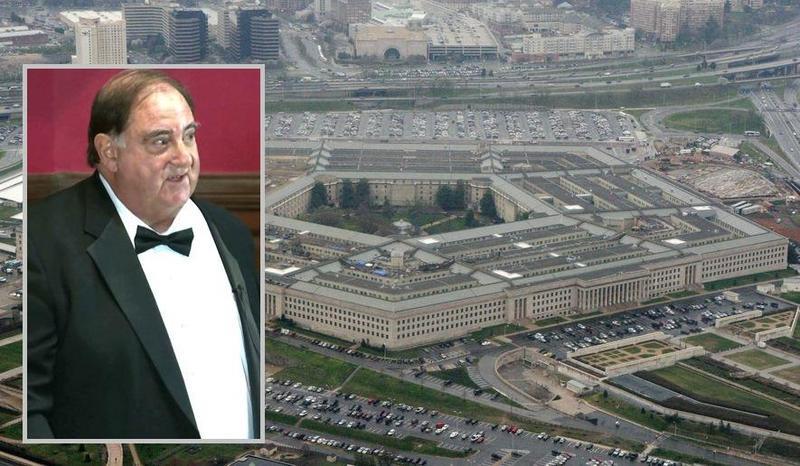
Stefan Halper and the Pentagon, which paid him over $1 million during the Obama administration for “research.”
“General Flynn was the guest of honor and he sat on one side of the table in the middle. I sat on the opposite side of the table to Flynn next to Richard Dearlove because I was the only woman at dinner, and it’s a British custom that the only woman gets to sit next to the host,” Lokhova told Fox News, who added that she has never been alone with Flynn. On the contrary, the unplanned encounter was professional and mildly productive.
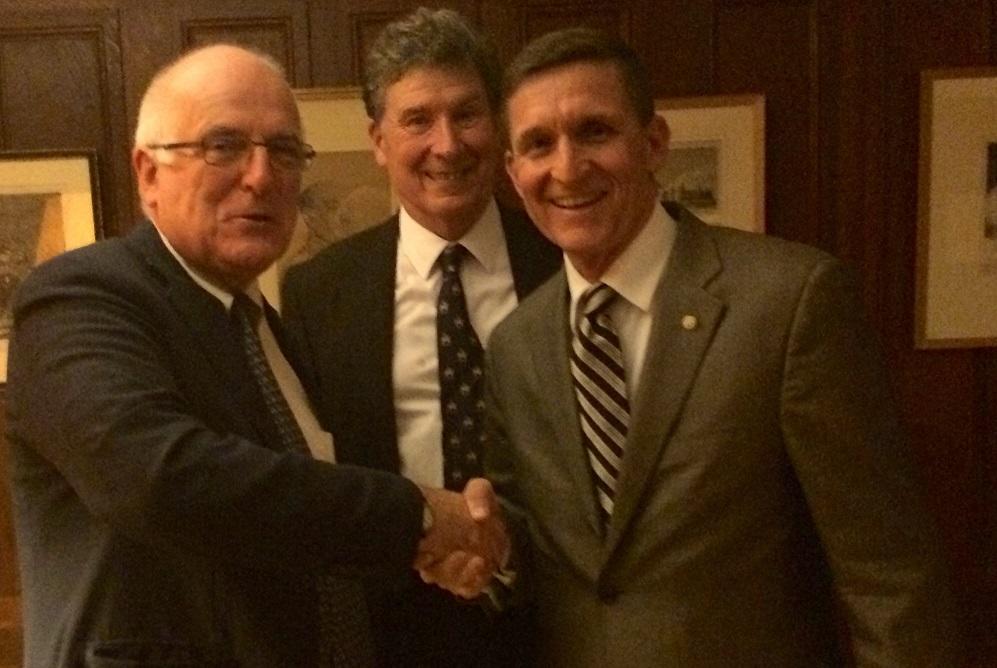
Sir Richard Dearlove (L), Prof. Christopher Andrew (center), and then-Defense Intelligence Agency Director Michael Flynn (R), at Cambridge University, Feb. 28, 2014. (Photo courtesy Svetlana Lokhova via the Daily Caller)
Dearlove – who has feigned not knowing “Trump-Russia” dossier author Christopher Steele, discussed ongoing matters with the former MI6 spy during a meeting in London’s posh Garrick Club according to the Washington Post.
And as the Daily Caller‘s Chuck Ross points out, “Despite his presence at those key junctures, Dearlove has mostly dodged media attention, as well as that of American lawmakers investigating the origins of the Russia probe,” adding “That’s perhaps a testament to Dearlove’s 38 years in MI6.”
As journalist Daniel Lazare wrote last year in Consortium News,
A few things stand out about this august group. One is its in-bred quality. After helping to run an annual confab known as the Cambridge Intelligence Seminar, Dearlove and Halper are now partners in a private venture calling itself “The Cambridge Security Initiative.” Both are connected to another London-based intelligence firm known as Hakluyt & Co. Halper is also connected via two books he wrote with Hakluyt representative Jonathan Clarke and Dearlove has a close personal friendship with Hakluyt founder Mike Reynolds, yet another MI6 vet. Alexander Downer served a half-dozen years on Hakluyt’s international advisory board, while Andrew Wood is linked to Steele via Orbis Business Intelligence, the private research firm that Steele helped found, and which produced the anti-Trump dossier, and where Wood now serves as an unpaid advisor.
Everyone, in short, seems to know everyone else. But another thing that stands out about this group is its incompetence. Dearlove and Halper appear to be old-school paranoids for whom every Russian is a Boris Badenov or a Natasha Fatale. In February 2014, Halper notified US intelligence that Mike Flynn, Trump’s future national security adviser, had grown overly chummy with an Anglo-Russian scholar named Svetlana Lokhova whom Halper suspected of being a spy – suspicions that Lokhova convincingly argues are absurd.
Dearlove, meanwhile, has showered praise upon Halper – a longtime suspected CIA and FBI informant, and has been involved in US politics at the highest levels for decades, becoming George H.W. Bush’s National Director for Policy Development during his presidential campaign. After Bush lost to Reagan, Halper worked as Reagan’s Deputy Assistant Secretary of State – where he served under three different Secretaries.
He then became a senior advisor to the Department of Defense and DOJ between 1984 and 2001. Halper’s former father-in-law was Ray Cline, former Deputy Director of the CIA. He also allegedly spied on the Carter administration – collecting information on foreign policy (an account disputed by Ray Cline).
Halper received a DoD contract from the Obama administration for $411,575 – made in two payments, and had a start date of September 26, 2016 – three days after a September 23 Yahoo! News article by Michael Isikoff about Trump aide Carter Page, which used information fed to Isikoff by “pissgate” dossier creator Christopher Steele. The FBI would use the Yahoo! article along with the unverified “pissgate” dossier as supporting evidence in an FISA warrant application for Page.
Most famously, however, Halper is known for infiltrating the Trump campaign on behalf of the Obama DOJ – spying on advisers Carter Page and George Papadopoulos, who he lured into his orbit under the guise of seeking legitimate professional relationships.
Meanwhile, his buddy Richard Dearlove has remained largely out of the spotlight despite his glaring connections to Russiagate.
Damascus should take control over northeast Syria: Russia FM
Press TV – April 18, 2019
Russia says the legitimate Syrian government should immediately take control over the country’s northeastern region, including the East Euphrates River, which is held by US-backed Kurdish militants.
“There is a need to resolve the issue concerning the country’s northeast and the left bank of the Euphrates River in order to achieve one of the priority tasks and ensure the restoration of the legitimate government’s control over the region,” Russian Foreign Minister Sergei Lavrov said at a press conference on Wednesday.
The top Russian diplomat underlined the need to build dialog with Kurdish groups and secure the interests of Turkey “as far as security in Syria’s border areas is concerned.”
Northeastern Syria is currently controlled by the so-called Syrian Democratic Forces (SDF), a US-backed anti-Damascus alliance of mainly Kurdish militants, which include the Kurdish People’s Protection Units (YPG).
Turkey considers the YPG a terrorist organization and an extension of the outlawed Kurdistan Workers’ Party (PKK), which has been fighting for an autonomous region inside Turkey since 1984.
The United States is a key advocate of autonomy for Syrian Kurds which Damascus has roundly rejected.
Many observers believe Washington plans to carve out a foothold in the region through supporting Syrian Kurds.
In February, a senior adviser to Syrian President Bashar al-Assad flatly rejected the idea of giving Syrian Kurds a measure of autonomy, saying such a move would open the door to the partition of the country.
The Kurdish-led authority that runs much of north and east Syria has presented a roadmap for a deal with Assad in recent meetings with Russia.
Also in February, President Assad called on SDF militants to return to the Syrian army, warning them against reliance on the United States.
“We say to those groups who are betting on the Americans, the Americans will not protect you. The Americans will put you in their pockets so you can be tools in the barter, and they have started with it,” he said.
Russia has been helping Syrian forces in their fight against foreign-backed Takfiri militants. The military assistance began in September 2015 at the official request of the Syrian government.
Foreign-backed militancy, supported by the United States and many of its Western and regional allies, erupted in Syria in 2011.
The militants and Takfiri terrorists overran large swathes of Syria’s territory.
The Daesh terrorist group, which once held large swaths of land in Syria, has now been completely defeated in the Arab country and has lost almost all of its occupied territories.
Syria has now reestablished its reign over nearly its entire expanse.
Understanding Saudi Arabia’s Role in Post-Coup Sudan
By Adam Garrie | EurasiaFuture | April 18, 2019
In previous times, when Saudi Arabia sought to intervene in the affairs of foreign nations, it did so overtly. Whether funding foreign masjids to advance Saudi Arabia’s Wahhabi school of Sunni Islam or sponsoring militant groups with unambiguous links to Riyadh, it used to be that when Saudi Arabia wanted change in a foreign nation, there was no real attempt to hide such developments.
Under the de facto leadership of Crown Prince Muhammad bin Salman, this has partly changed. While western media has struggled to form a cohesive narrative through which to portray military strongman and US citizen Khalifa Haftar’s ongoing attempt to take Tripoli, Haftar’s own movements make it clear just how much Saudi Arabia is backing the renegade military man who once fled Libya as a traitor in the late 1980s.
Haftar was in Riyadh where he met the Saudi monarch just days before he began his assault on Tripoli. It has further been reported that Haftar has received millions of dollars from Riyadh. Thus, it is clear that in spite of Riyadh’s US partner’s support of the fledgling and endlessly corrupt Tripoli regime, Saudi Arabia along with its Egyptian and Emirati allies are firmly behind Haftar.
Recent events in Sudan have served as a reminder to the world that whilst long serving and recently ousted President Omar al-Bashir came to power in 1989 with the backing of the Muslim Brotherhood, since then, Bashir had become something of a post-ideological/poly-ideological political survivor. At various times Bashir has been friendly with and had disputes with countries as diverse as Iran, the United States, Saudi Arabia, Gaddafi’s Libya, Assad’s Syria, Egypt, Qatar and Turkey. In many ways, the only two nations with whom Bashir has had consistently good relations were China and Russia. In respect of just about every other country that seeks strategic relations with Khartoum, Bashir’s career was something of a geopolitical game of ping-pong.
Recent years however had seen Bashir’s Sudan greatly improve relations with Turkey and also Turkey’s closest Arab ally Qatar. To this end, Turkey has signed an agreement with Khartoum to construct a modern port at the location of a once prominent Ottoman Port at Suakin. Yet whilst this apparently win-win project did not immediately radiate political overtones, there were in fact many to be found. Suakin was a traditional Ottoman port of call for those on the Hajj to the Holy City of Mecca. From Suakin, pilgrims would take a short maritime journey to Jeddah before moving on to Mecca. For Saudi Arabia, this was seen as a Turkish attempt to influence what could once again become a major route for those on the Hajj. As Turkey and Saudi Arabia continue to compete for influence among the region’s millions of Sunni Muslims, Riyadh certainly took notice of the Turkey-Sudan port deal.
Although Sudan continues to provide mercenaries to the Saudi coalition in nearby Yemen, Bashir’s juggling act between Saudi Arabia on the one hand and the Turkey-Qatari partnership on the other, proved to be one that has self-evidently been a source of consternation in Riyadh.
To be sure, issues of poverty, corruption, genuine human rights concerns and a general political fatigue in the face of Bashir’s lengthy rule were in fact sources of the protests which led to the former President’s ouster. That being said, the rapidity with which Sudan’s new military rulers have moved against Bashir suggests that there is more to the situation than meets the eye.
Reports have now emerged that Bashir is under arrest whilst the country’s new self-proclaimed rulers issue frequent statements of extreme disapprobation against their former boss. This combined with the fact that Turkeys’ calls for calm and moderation are becoming increasingly vocal whilst Saudi state media is celebrating the fact that Sudan’s new regime has refused to receive Qatar’s foreign minister, makes it clear that the new forces in Khartoum are acting in a manner that leans heavily towards Riyadh and away from the Turkey-Qatar partnership that Bashir had been drawing ever closer to in his final years in power.
Although the situation in Khartoum remains fluid to the point of being chaotic, it is already becoming clear that while the origins of the coup where in many ways organic, the management of events since the ouster of Omar al-Bashir has been one that is incredibly favourable towards Saudi Arabia whilst being notably less so to Turkey and Qatar.
This likewise proves that in the age of Muhammad bin Salman, direct intervention into foreign nations via religious groups and militants has been replaced by using Riyadh’s economic influence to force rulers of poorer nations to do as Saudi Arabia wishes.
Facebook bans British anti-immigrant groups including EDL, BNP and Britain First
RT | April 18, 2019
Facebook has banned 12 high-profile, anti-immigrant British organizations and individuals including the English Defence League, the British National Party, Britain First and Jayda Fransen.
The silicon valley company said it took the decision because it bans users who “proclaim a violent or hateful mission or are engaged in acts of hate or violence.”
“Individuals and organisations who spread hate, or attack or call for the exclusion of others on the basis of who they are, have no place on Facebook,” it said in a statement.
The following organizations and people are now prohibited from the site: The British National Party and Nick Griffin, Britain First and Paul Golding and Jayda Fransen, English Defence League and Paul Ray, Knights Templar International and Jim Dowson, National Front and Tony Martin, and Jack Renshaw.
They were all outlawed under Facebook’s ‘Dangerous Individuals & Organisations policy’. They will no longer be allowed a presence on Facebook or Instagram and posts and other content which expresses praise or support for them will also be banned.
“Our work against organised hate is ongoing and we will continue to review individuals, organisations, pages, groups and content against our Community Standards,” the statement added.
The Knights Templar International said it was “horrified” by the ban, and that it was investigating legal options. “Facebook has deemed our Christian organisation as dangerous and de-platformed us despite never being charged, let alone found guilty of any crime whatsoever,” it said in a statement. “This is a development that would have made the Soviets blush.”
In February the social media giant banned EDL founder Tommy Robinson from its platforms saying the prominent anti-immigration activist repeatedly breached its policies on Hate speech.
Australia’s electoral officials ‘work with social media to tackle misinformation
RT | April 18, 2019
Australian electoral authorities have for the first time set up a cybersecurity task force, an official said on Thursday.
They are also working with social media companies to tackle misinformation in the run up to general elections on May 18.
Australian Electoral Commissioner Tom Rogers said safeguarding the election’s integrity gained priority “due to experiences in other countries,” AP reported.
Rogers is having daily briefings with the Electoral Integrity Assurance Task Force, which comprises the nation’s major security agencies and government departments. He declined to detail the task force’s functions, saying they included dealing with disinformation spread through social media.
Academic: Saudi arrest campaign against Palestinians
MEMO | April 18, 2019
Saudi is carrying out an arrest campaign against Palestinians in the country, an exiled academic has said according to Al-Resalah newspaper.
On Twitter, Said Bin Nasser Al-Ghamdi wrote: “In the kingdom, a new and wide arrest campaign against a number of Palestinians, another number under travel ban, their accounts were frozen and their organisations were confiscated.”
Al-Ghamdi said that these Palestinians are accused of “sympathising with the resistance in Palestine, having an interest in the issue of Jerusalem and Gaza or supporting Hamas.”
He also said that authorities arrested Saudis, who sponsored the Palestinians or employed them in the kingdom.
In early March, Saudi announced the arrest of 50 people over security concerns, they included 30 of its own nationals, six Palestinians and three Jordanians.
Rumors of War: Washington Is Looking for a Fight
By Philip M. GIRALDI | Strategic Culture Foundation | 18.04.2019
It is depressing to observe how the United States of America has become the evil empire. Having served in the United States Army during the Vietnam War and in the Central Intelligence Agency for the second half of the Cold War, I had an insider’s viewpoint of how an essentially pragmatic national security policy was being transformed bit by bit into a bipartisan doctrine that featured as a sine qua non global dominance for Washington. Unfortunately, when the Soviet Union collapsed the opportunity to end once and for all the bipolar nuclear confrontation that threatened global annihilation was squandered as President Bill Clinton chose instead to humiliate and use NATO to contain an already demoralized and effectively leaderless Russia.
American Exceptionalism became the battle cry for an increasingly clueless federal government as well as for a media-deluded public. When 9/11 arrived, the country was ready to lash out at the rest of the world. President George W. Bush growled that “There’s a new sheriff in town and you are either with us or against us.” Afghanistan followed, then Iraq, and, in a spirit of bipartisanship, the Democrats came up with Libya and the first serious engagement in Syria. In its current manifestation, one finds a United States that threatens Iran on a nearly weekly basis and tears up arms control agreements with Russia while also maintaining deployments of US forces in Syria, Iraq, Afghanistan, Somalia and places like Mali. Scattered across the globe are 800 American military bases while Washington’s principal enemies du jour Russia and China have, respectively, only one and none.
Never before in my lifetime has the United States been so belligerent, and that in spite of the fact that there is no single enemy or combination of enemies that actually threaten either the geographical United States or a vital interest. Venezuela is being threatened with invasion primarily because it is in the western hemisphere and therefore subject to Washington’s claimed proconsular authority. Last Wednesday Vice President Mike Pence told the United Nations Security Council that the White House will remove Venezuelan President Nicolás Maduro from power, preferably using diplomacy and sanctions, but “all options are on the table.” Pence warned that Russia and other friends of Maduro need to leave now or face the consequences.
The development of the United States as a hostile and somewhat unpredictable force has not gone unnoticed. Russia has accepted that war is coming no matter what it does in dealing with Trump and is upgrading its forces. By some estimates, its army is better equipped and more combat ready than is that of the United States, which spends nearly ten times as much on “defense.”
Iran is also upgrading its defensive capabilities, which are formidable. Now that Washington has withdrawn from the nuclear agreement with Iran, has placed a series of increasingly punitive sanctions on the country, and, most recently, has declared a part of the Iranian military to be a “foreign terrorist organization” and therefore subject to attack by US forces at any time, it is clear that war will be the next step. In three weeks, the United States will seek to enforce a global ban on any purchases of Iranian oil. A number of countries, including US nominal ally Turkey, have said they will ignore the ban and it will be interesting to see what the US Navy intends to do to enforce it. Or what Iran will do to break the blockade.
But even given all of the horrific decisions being made in the White House, there is one organization that is far crazier and possibly even more dangerous. That is the United States Congress, which is, not surprisingly, a legislative body that is viewed positively by only 18 per cent of the American people.
A current bill originally entitled the “Defending American Security from Kremlin Aggression Act (DASKA) of 2019,” is numbered S-1189. It has been introduced in the Senate which will “… require the Secretary of State to determine whether the Russian Federation should be designated as a state sponsor of terrorism and whether Russian-sponsored armed entities in Ukraine should be designated as foreign terrorist organizations.” The bill is sponsored by Republican Senator Cory Gardner of Colorado and is co-sponsored by Democrat Robert Menendez of New Jersey.
The current version of the bill was introduced on April 11th and it is by no means clear what kind of support it might actually have, but the fact that it actually has surfaced at all should be disturbing to anyone who believes it is in the world’s best interest to avoid direct military confrontation between the United States and Russia.
In a a press release by Gardner, who has long been pushing to have Russia listed as a state sponsor of terrorism, a February version of the bill is described as “… comprehensive legislation [that] seeks to increase economic, political, and diplomatic pressure on the Russian Federation in response to Russia’s interference in democratic processes abroad, malign influence in Syria, and aggression against Ukraine, including in the Kerch Strait. The legislation establishes a comprehensive policy response to better position the US government to address Kremlin aggression by creating new policy offices on cyber defenses and sanctions coordination. The bill stands up for NATO and prevents the President from pulling the US out of the Alliance without a Senate vote. It also increases sanctions pressure on Moscow for its interference in democratic processes abroad and continued aggression against Ukraine.”
The February version of the bill included Menendez, Democrat Jeanne Shaheen of New Hampshire, Democrat Ben Cardin of Maryland and Republican Lindsey Graham of South Carolina as co-sponsors, suggesting that provoking war is truly bipartisan in today’s Washington.
Each Senator co-sponsor contributed a personal comment to the press release. Gardner observed that “Putin’s Russia is an outlaw regime that is hell-bent on undermining international law and destroying the US-led liberal global order.” Menendez noted that “President Trump’s willful paralysis in the face of Kremlin aggression has reached a boiling point in Congress” while Graham added that “Our goal is to change the status quo and impose meaningful sanctions and measures against Putin’s Russia. He should cease and desist meddling in the US electoral process, halt cyberattacks on American infrastructure, remove Russia from Ukraine, and stop efforts to create chaos in Syria.” Cardin contributed “Congress continues to take the lead in defending US national security against continuing Russian aggression against democratic institutions at home and abroad” and Shaheen observed that “This legislation builds on previous efforts in Congress to hold Russia accountable for its bellicose behavior against the United States and its determination to destabilize our global world order.”
The Senatorial commentary is, of course, greatly exaggerated and sometimes completely false regarding what is going on in the world, but it is revealing of how ignorant American legislators can be and often are. The Senators also ignore the fact that the designation of presumed Kremlin surrogate forces as “foreign terrorist organizations” is equivalent to a declaration of war against them by the US military, while hypocritically calling Russia a state sponsor of terrorism is bad enough, as it is demonstrably untrue. But the real damage comes from the existence of the bill itself. It will solidify support for hardliners on both sides, guaranteeing that there will be no rapprochement between Washington and Moscow for the foreseeable future, a development that is bad for everyone involved. Whether it can be characterized as an unintended consequence of unwise decision making or perhaps something more sinister involving a deeply corrupted congress and administration remains to be determined.
New York Times Accidentally Unravels UK Government’s Official Skripal Narrative
By Kit Klarenberg – Sputnik – 17.04.2019
While London almost immediately blamed Moscow for being behind the poisoning of ex-Russian spy Sergei Skripal and his daughter in the UK city of Salisbury in March 2018, Russia has strongly rejected its involvement, stressing it’s been denied access both to the investigation into the incident and the Russian nationals affected.
On 16th April, the New York Times published a glowing profile of Gina Haspel, who in May 2018 became the seventh director of the Central Intelligence Agency.
The article referred to Haspel — the former head of a CIA ‘black site’ in Thailand at which an indeterminate number of suspected terrorists were viciously tortured — as an “adept tactician” blessed with “good listening, empathy and an ability to connect”, and discussed the difficulties the intelligence chief faced in ensuring “her voice is heard at the White House”, due to the intransigence of President Donald Trump and a White House that allegedly treats national security professionals “with deep skepticism”.
So far, so obsequious — but buried in the hagiography is a fascinating disclosure. In a section titled ‘The keys to talking to Trump? Realism and emotion’, authors Julian E. Barnes and Adam Goldman document how Haspel “solidified her reputation” as one of the “most skilled briefers” of the President.
Following the 4th March 2018 poisoning of former spy Sergei Skripal and his daughter Yulia in Salisbury, UK, top national security officials are said to have gathered inside the White House to discuss with Trump how Washington should respond — at the time, Whitehall was preparing to expel dozens of Russian diplomats from the UK, and aggressively pushing various key international allies to follow suit.
Trump was said to have initially dismissed the significance of the poisoning, characterising it as “legitimate spy games, distasteful but within the bounds of espionage”. However, Haspel lobbied the President to expel 60 Russian diplomats from the US — and persuaded Trump to take the “strong option” by showing him the Skripals “were not the only victims of Russia’s attack”.
“Ms. Haspel showed pictures the British government had supplied her of young children hospitalized after being sickened by the Novichok nerve agent that poisoned the Skripals. She then showed a photograph of ducks British officials said were inadvertently killed by the sloppy work of the Russian operatives. Ms. Haspel was not the first to use emotional images to appeal to the president, but pairing it with her hard-nosed realism proved effective: Mr. Trump fixated on the pictures of the sickened children and the dead ducks. At the end of the briefing, he embraced the strong option,” the article states.
Lame Ducks
This small excerpt raises innumerable questions about the ever-mystifying Salisbury incident. Firstly, the images apparently provided to Haspel by the British government have never been published, or even mentioned, by the British media.
Given Whitehall’s determination to blame and diplomatically punish the Russian state for the poisoning before a motive had been established, any perpetrators identified, or other basic facts ascertained — in the face of significant public disapproval, and opposition leader Jeremy Corbyn demanding action be informed by evidence — it’s entirely inconceivable that if these pictures existed, they wouldn’t have been provided to major news outlets and prominently publicised. If they were sufficiently impactful to convince a sceptical US President to support Whitehall’s strategy, hesitant British citizens may well have been similarly swayed.
Moreover though, since March 2018 no UK media outlet, government minister/spokesperson, health professional or law enforcement official has ever even claimed a single child was “sickened” after coming into contact with so-called “Novichok” (there have likewise been no reports of any waterfowl having tragically died due to the nerve agent). Again, it’s utterly imaginable that had a child suffered adverse effects from the nerve agent, it wouldn’t have been widely reported.
There could be several explanations for this seeming anomaly. To name just some of the most unsettling:
- Several children were hospitalised, and several ducks did die, and for reasons unclear the British government didn’t inform the public and prevented the children and their parents from revealing they’d been affected, while secretly communicating the fact to other governments in literally graphic detail.
- Counterfeit and/or misleading images may have been produced by persons unknown to bolster Britain’s case for concerted international action, and further been relayed to Haspel (if not other overseas officials), conning her and Trump into backing its mass-expulsion policy.
Alternatively of course, perhaps the stirring tale of Haspel converting the reticent President with impactful images is mere gossip, or spin — after all, the article’s authors didn’t discuss the episode with the CIA chief herself, but based their article on interviews “with more than a dozen current and former intelligence officials who have briefed or worked alongside her”.
However, even if the explanation is quite so anodyne, that in turn raises major questions about how and why the individual(s) who relayed the story to Barnes and Goldman came to believe children and ducks had been affected by Novichok.
Shifting Chronicle
The official narrative of the Salisbury incident is ever-fluctuating. Seemingly each and every article, news segment, official statement or documentary about any element of the case contains new information, requiring the established account to be at least partially rewritten and/or contradicting established elements of the story.
To name but two significant instances of this strange phenomenon in recent memory, on 19th January it was revealed 16-year-old Abigail McCourt had won a ‘Lifesaver Award’ for giving first-aid to the Skripals after finding them unconscious on a public bench in the centre of Salisbury. Accompanying reports indicated she’d been the first person to notice the collapsed father and daughter, and had quickly alerted her mother Alison — together, they provided potentially life-saving assistance to Sergei and Yulia.
The story was somewhat at odds with the official timeline, as advocated by Whitehall and the Metropolitan Police, which stated an off-duty doctor and nurse had found the Skripals — but moreover, Abigail’s award announcement also revealed her mother wasn’t merely a nurse, but the Chief Nursing Officer for the British Army, with the rank of Colonel.
Similarly, on 3rd March the BBC reported police only “realised the seriousness” of the Salisbury incident after Googling the name Sergei Skripal — while the information wasn’t in fact new (similar claims were made in Panorama documentary Salisbury Nerve Agent Attack — The Inside Story in November the previous year), the article indicated the first police officer on the scene was Sergeant Tracey Holloway.
Again, this small detail had massive ramifications for the British state’s narrative — for previously government and police spokespeople had unanimously claimed Detective Sergeant Nick Bailey had been the first police officer to attend to the Skripals, hailing his courage in rushing to help them without any regard for his own safety. It was also claimed his contact with them on the scene exposed him to the nerve agent, leading to his own hospitalisation — it’s now ‘established’ he was poisoned after visiting Skripal’s home.
Elements of the official narrative also bizarrely and frequently vanish without warning or explanation — a key example being the Skripals giving bread to three local boys to feed to ducks in Salisbury’s Avon Playground at approximately 1:45pm on 4th March. The incident was initially widely reported in the media, with The Daily Mail claiming the children — one of whom apparently ate some of the bread given to them by the Skripals — had been “rushed to hospital for blood tests amid fears they’d been poisoned”, although the children were entirely unharmed, and discharged from hospital having been given “the all-clear”.
“To try to kill Skripal is one thing, but now it seems children may have been caught up in it. It shows whoever did this didn’t care who they killed or maimed,” a spokesperson for Public Health England told the Sunday Mirror.
Strikingly, this episode would soon completely disappear from media coverage of the Salisbury incident, while never appearing in any officially sanctioned narrative — although it’s easy to understand why. According to the Metropolitan Police’s timeline, after leaving the Avon Playground the Skripals went on to the Bishops Mill Pub in Salisbury town centre, before arriving at Zizzi restaurant at around 14:20pm. They left at around 15:35pm, and emergency services received the first report they’d been found unconscious at around 16:15pm.
British authorities determine Sergei and Yulia were poisoned by Novichok spread around their home — in particular the front door handle — at some point before 13:30pm, when Sergei’s car was seen on Devizes Road heading towards the town centre. The pair were apparently so infected by the nerve agent, and the substance so dangerous, Zizzi was forced to close for eight months due to high levels of contamination, and the table the pair dined at had to be destroyed. The Mill pub, which they headed to immediately after their exploits in Avon Playground was likewise subject to extensive decontamination and only declared safe for reopening in August, although it remains shut even today. The bench the Skripals were found lying on was also destroyed.In spite of this, the children given bread by the Skripals and the ducks they fed were completely unharmed by novichok. It was obviously necessary for the pair’s contact with the trio, one boy’s ingestion of the bread, and indeed their en-masse duck-feeding, to be suppressed. Otherwise, the finding that the pair were poisoned at home before travelling into Salisbury is simply unfeasible — and the pair were poisoned elsewhere, at another time and by another means entirely.
It’s puzzling in the extreme this keenly forgotten aspect of the incident allegedly is said to have featured so prominently in Haspel’s case for decisive US action against Russia — and begs the question of who deceived and is deceiving who, how and why.
Own Initiative?
Adding to the intrigue, on the day of its publication the New York Times article caught the attention of Sky News Foreign Affairs Editor Deborah Haynes, who duly shared the piece on Twitter, praising Barnes for his work (Goldman went uncredited) and drawing particular attention to the passage relating to the images of “sickened” children.
However, in a suspicious volte-face, within hours Haynes tweeted that “UK security sources” had told her they were in fact “unaware of children hospitalised because of novichok or wildlife killed” in the Salisbury incident.

Sky News’ Deborah Haynes Backtracks
For her part, Haynes claims she asked “UK contacts” about the images after reading the article, and their denials prompted her to post an “update”. This may well be the case — she certainly has close connections with security services and the military, as evidenced by her honorary membership of the Pen & Sword Club, a group which “[provides] a link between serving and retired officers and supporters within the Ministry of Defence”, and promotes “media operations as a necessary and valued military skill in the 21st century”. She’s one of very few journalists named in their ‘club members’ section — almost all others have military and/or intelligence backgrounds.
Moreover, it’s somewhat odd Haynes was initially seemingly unaware no children were hospitalised in the Salisbury incident, given she wrote extensively about the topic while Defence Editor of The Times. As my previous reports have documented, much of this output was heavily influenced by the Integrity Initiative, a British military intelligence operation which sought to systematically shape media reporting on, and Whitehall’s response to, the Salisbury incident from day one. Evidently, the British deep state is equally as capable of contacting Haynes directly as she is them — and its operatives would have every reason to want one of their most prominent media advocates to speedily retract and repudiate an extremely inconvenient disclosure such as that contained in the New York Times’ report.
If nothing else, that Haynes was willing to transmit an apparently obvious fiction speaks volumes about the willingness of mainstream journalists to parrot each and every fresh claim in the Skripal case, even if it wildly conflicts with what they themselves have written previously.
Sitting on Syria’s Oil, US Cuts Lifeline From Iran, Plunges Syria Into Fuel Crisis
By Marko Marjanović | Checkpoint Asia | April 17, 2019
Syria produced 325,000-385,000 barrels of oil per day before the war. Now it produces 25,000. Partly because of war damage, and partly because the majority of its oil fields are to the east of the Euphrates and occupied by the US and its Syrian Kurdish proxies. (The Kurds are happy to sell but the US won’t let them.)
It used to consume over 200,000 barrels of oil domestically, but that has gone down to 100,000 or less, with majority of that being shipments from Iran on a credit line that both nations understood was unlikely to ever be paid back in full.
Now the US has succeeded in cutting off that lifeline as well. It is blacklisting tankers which deliver the Iranian fuel and having Egypt block them from ever crossing the Suez.
This has caused a huge fuel crisis in government-controlled Syria with extreme rationing and cars lining up for miles in order to pump their allowed maximum of 20 liters every five days.
In Syria’s case the US really did “steal its oil”. It has forced an oil-producing nation into a fuel crisis. It has seperated Damascus from its oil fields (which BTW are in the ethnically Arab part of the country) and then cut its oil from abroad as well.
War Versus Peace: Israel Has Decided and So Should We
By Ramzy Baroud | MEMO | April 17, 2019
So, what have we learned from the Israeli legislative elections on April 9?
A whole lot.
To start with, don’t let such references as the “tight race” between Israeli Prime Minister Benjamin Netanyahu, and his main rival, Benny Gantz, fool you.
Yes, Israelis are divided on some issues that are particular to their social and economic makeup. But they are also firmly unified around the issue that should concern us most: the continued subjugation of the Palestinian people.
Indeed, ‘tight race’, or not, Israel has voted to cement Apartheid, support the ongoing annexation of the Occupied West Bank, and carry on with the Gaza siege.
In the aftermath of the elections, Netanyahu emerged even more powerful; his Likud party has won the elections with 36 seats, followed by Gantz’s Kahol Lavan (Blue and White) with 35 seats.
Gantz, the rising star in Israeli politics was branded throughout the campaign as a centrist politician, a designation that tossed a lifeline to the vanquished Israeli ‘left’ – of which not much is left anyway.
This branding helped sustain a short-lived illusion that there is an Israeli alternative to Netanyahu’s extremist right-wing camp.
But there was never any evidence to suggest that Gantz would have been any better as far as ending the Israeli occupation, dismantling the Apartheid regime and parting ways with the country’s predominantly racist discourse.
The opposite is true.
Gantz has repeatedly criticized Netanyahu for supposedly being too soft on Gaza, promising to rain yet more death and destruction on a region that, according to the United Nations, will be unlivable by 2020.
A series of videos, dubbed “Only the Strong Survives”, was issued by the Gantz campaign in the run-up to the elections. In the footage, Gantz was portrayed as the national saviour, who had killed many Palestinians while serving as the army’s chief of staff between 2011 and 2015.
Gantz is particularly proud of being partly responsible for bombing Gaza “back to the stone age.”
It mattered little to Israeli centrists and the remnants of the left that in the 2014 Israeli war on Gaza, dubbed Operation “Protective Edge”, over 2,200 Palestinians were killed and over 11,000 were injured. In that most tragic war, over 500 Palestinian children were killed, and much of Gaza’s already ailing infrastructure was destroyed.
But then again, why vote for Gantz when Netanyahu and his right-wing extremist camp are getting the job done?
Sadly, Netanyahu’s future coalition is likely to be even more extreme than the previous one.
Moreover, thanks to new possible alliances, Netanyahu will most likely free himself of burdensome allies, the likes of former Israeli Defense Minister, Avigdor Lieberman.
One significant change in the likely makeup of the Israeli right is the absence of such domineering figures, who, aside from Lieberman also include former Education Minister, Naftali Bennett and former Justice Minister Ayelet Shaked.
All the grandstanding from Bennett and Shaked, who had recently established a new party called “The New Right”, didn’t even garner them enough votes to reach the threshold required to win a single seat in the Israeli Parliament, the Knesset. They needed 3.25 per cent of the vote but only achieved 3.22 per cent. They are both out.
The defeat of the infamous duo is quite revealing: the symbols of Israel’s extreme right no longer meet the expectations of Israel’s extremist constituencies.
Now the stage is wide open for the ultra-orthodox parties, Shas, which now has eight seats, and United Torah Judaism, with seven seats to help define the new normal in Israel.
The Israeli left – if it was ever deserving of the name – received a final blow; the once prominent Labor Party won merely six seats.
On the other hand, Arab parties that ran in the 2015 elections under the united banner of the “Joint List”, fragmented once more, to collectively achieve only ten seats.
Their loss of three seats, compared to the previous elections, can be partly blamed on factional and personal agendas. But, that is hardly enough to explain the massive drop in Arab voter participation in the elections: 48 per cent compared to 68 per cent in 2015.
This record low participation can only be explained through the racist ‘Nation State Law”, which was passed by the right-wing-dominated Knesset on July 19, 2018. The new Basic Law, declared Israel as the “nation-state of the Jewish people” everywhere, relegating the rights of the Palestinian people, their history, culture and language, while elevating everything Jewish, making self-determination in the state an exclusive right for Jews only.
This trend is likely to continue, as Israel’s political institutions no longer offer even a symbolic margin for true democracy and fair representation.
But perhaps the most important lesson that we can learn in the aftermath of these elections is that in today’s Israel, military occupation and apartheid have been internalised and normalised as uncontested realities, unworthy of national debate. This, in particular, should summon our immediate attention.
During election campaigns, no major party spoke about peace, let alone provided a comprehensive vision for achieving it. No leading politician called for the dismantling of the illegal Jewish settlements that have been erected on Palestinian land in violation of international law.
More importantly and tellingly, no one spoke of a two-state solution.
As far as Israelis are concerned, the two-state solution is dead. While this is also true for many Palestinians, the Israeli alternative is hardly co-existence in one democratic secular state. The Israeli alternative is Apartheid.
Netanyahu and his future government coalition of like-minded extremists are now armed with an unmistakably popular mandate to fulfil all of their electoral promises, including the annexation of the West Bank.
Moreover, with an emboldened and empowered right-wing coalition, we are also likely to witness a major escalation in violence against Gaza this coming summer.
Considering all of this, we must understand that Israel’s illegal policies in Palestine cannot and will not be challenged from within Israeli society.
Challenging and ending the Israeli occupation and dismantling Apartheid can only happen through internal Palestinian resistance and external pressure that is centred around the strategy of Boycott, Divestment and Sanctions (BDS).
It is now incumbent on the international community to break this vicious Israeli cycle and support the Palestinian people in their ongoing struggle against Israeli occupation, racism and apartheid.
Featured Video
US Marines Seized Panama in 1903
or go to
Aletho News Archives – Video-Images
From the Archives
Precedents for Pizzagate
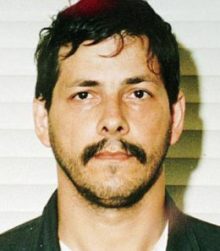
Marc Dutroux, Belgian pedophile, sadist, and serial killer with friends in high places
By Aedon Cassiel | Counter – Currents | December 23, 2016
To reiterate a point that should be clear to the more astute reader, my goal in this series (part 1, part 2) has not been to defend “Pizzagate” as such. My goal has been to defend the people who want to investigate it against specific accusations levied against them by people who think Pizzagate has revealed no intriguing information at all—for a specific reason, which I will be honing in and focusing on much more directly in this closing entry.
Whereas the mainstream critics of Pizzagate would have you believe that the dividing line is between paranoid conspiracy theorist followers of “fake news” and level-headed people who follow trustworthy news sources and rely on cold, hard reason to determine the truth, my goal has been to show that—whatever is or is not happening with Pizzagate itself—this framing of the issue is arrogant, insulting, and the product of extremely narrow tunnel vision. … continue
Blog Roll
 Aletho News
- The U.S. Sanctions Cuban Journalist For Reporting On The U.S. Blockade
- Israeli firms transform cars into intelligence devices: Reports
- Zionist-controlled companies to surveil British citizens
- THE CHILDREN GAMBIT
- A note on comment posting at Alethonews
- Trump stalls over Iran strike plan, Iran holds all the aces
- Zelensky’s Ceasefire for Elections is Strategic Gambit, Not Democratic Move
- US and Dutch pilots flying F-16s for Ukraine – Western media
- West’s Claims of Non-Involvement in Ukraine Conflict ‘Epitome of Hypocrisy’ – Expert
- Putin aide urges retaliation to ‘Western piracy’
- If Americans Knew
- Help end the injustice against Shadi
- Israel’s Favorite American President
- Israel’s “Yellow Line” Is a Death Trap for Palestinians. We Drove Into It.
- Why Israel’s expanding occupation in Syria presents a critical legal test
- Gaza is not a natural disaster. It is the victim of genocide enabled by global inaction
- Netanyahu’s plan to “end” US aid to Israel is to give even more money under a different name
- Israel ceased firing on Gaza for just 15 days of the “ceasefire” – Not a ceasefire Day 130
- In Gaza, “rats run over our faces” – Not a ceasefire Day 129
- Israel-backed border guards, GHF-linked aid – Not a ceasefire Day 128
- Israel battles Palestinian right of return, one Palestinian at a time – Not a ceasefire Day 127
- No Tricks Zone
- New Study: A 4°C Warmer Beaufort Sea Had ‘No Sea Ice’ 11,700 – 8200 Years Ago
- Unfudging The Data: Dutch Meteorological Institute Reinstates Early 20th Centruy Heat Waves It Had Erased Earlier
- German Gas Crisis…Chancellor Merz Allegedly Bans Gas Debate Ahead of Elections!
- Pollen Reconstructions Show The Last Glacial’s Warming Events Were Global, 10x Greater Than Modern
- Germany’s Natural Gas Storage Level Dwindles To Just 28%… Increasingly Critical
- New Study Rebuts The Assumption That Anthropogenic CO2 Molecules Have ‘Special’ Properties
- Climate Scientist Who Predicted End Of “Heavy Frost And Snow” Now Refuses Media Inquiries
- Polar Bear Numbers Rising And Health Improving In Areas With The Most Rapid Sea Ice Decline
- One Reason Only For Germany’s Heating Gas Crisis: Its Hardcore-Dumbass Energy Policy
- 130 Years Later: The CO2 Greenhouse Effect Is Still Only An Imaginary-World Thought Experiment
 Aletho News