Iraq rebuffs US demand to stop Iran energy imports
Press TV – May 7, 2019
Iraq’s Electricity Minister Luay al-Khateeb says his country brushed aside US demands that Baghdad stop gas and power imports from neighboring Iran.
Khateeb, whose remarks were quoted by Iraqi media on Monday, did not say whether the Americans had made the demand after ending waivers for exports of crude oil from Iran this month.
US pressures on Iraq to wean itself off Iran has become a major point of conflict between Washington and Baghdad. A lightening rod in their spat is Iraq’s reliance on Iranian gas imports to generate electricity consumed daily in the country.
Washington is pressing Baghdad to source them from other countries or develop its own energy self-sufficiency. Iraqi leaders say the country cannot stop Iranian gas imports without serious electricity shortages.
In their latest back and forth, Iraq told the Americans that it needed Iran gas imports for at least three more years, Khateeb said.
“Iraq now imports nearly 1,200 megawatts of electricity from Iran. It also imports gas from Iran to produce another 2,800 megawatts of electricity,” the Iraqi minister said.
“If in the next two to three years, large projects are implemented in the field of electricity generation, we can reach self-sufficiency and need no more imports,” he added.
Iraq has signed agreements with General Electric and Siemens over potential deals to develop the country’s power infrastructure.
Siemens had been favorite to win a contract to supply 11 gigawatts of power-generation equipment in a possible $15 billion deal, but the German group has to share the work with US rival after pressure from the Trump administration.
Washington is also pushing for Saudi Arabian and Kuwaiti investment in Iraqi power infrastructure in order to reduce Iran’s trade share.
Without Iran, however, Iraq could lose around a third of its power overnight. The Arab country faces sweltering months ahead when the electricity shortage becomes acute.
The shortage sparked violent protests in southern Basra last September, which spread to other cities, including Baghdad.
Iran is also Iraq’s third-largest trading partner, with an estimated $12 billion in cross-border trade per year, and the countries share strong cultural, religious and geographic ties.
Last month, Iraqi Prime Minister Adel Abdul-Mahdi visited Iran for his first official visit since he took office and the two countries pledged to raise trade to $20 billion in two years.
Head of the National Iranian Gas Company (NIGC) Hassan Montazer Torbati said this month that Iran is about to raise gas exports to neighboring Iraq to 35 million cubic meters a day this year.
“Last year we exported gas to Turkey, Baghdad and Basra with an average of over 40 million cubic meters a day, and this year, gas exports to Iraq will reach more than 35 million cubic meters per day,” he told a news conference in Tehran.
US violating NPT, ignoring Israeli regime’s breaches of accord: Syrian UN envoy

Press TV – May 7, 2019
Syria’s UN Ambassador Bashar al-Ja’afari has slammed the United States for flagrantly violating the nuclear Non-Proliferation Treaty (NPT) and turning a blind eye to the Israeli regime’s breaches of the international accord.
“Syria took the initiative in 1968 to join the treaty, and signed the agreement of guarantees with the International Atomic Energy Agency (IAEA) in 1992 … It also presented a draft resolution in 2003 aimed at the establishment of a (Middle East) region free from weapons of mass destruction (WMD); but the US blocked the measure,” Ja’afari said at the the Preparatory Committee for the 2020 Review Conference of the Parties to the Treaty on the Non-Proliferation of Nuclear Weapons (NPT) in New York on Tuesday.
The Syrian diplomat also lambasted certain Western states for helping Israel establish the Dimona nuclear center and offering it related substances, experience and technology – a step that enabled the Tel Aviv regime to possess hundreds of nuclear heads.
Israel is estimated to have 200 to 400 nuclear warheads in its arsenal. The regime, however, refuses to either accept or deny having the weapons.
It has also evaded signing the Non-Proliferation Treaty (NPT) amid staunch endeavor by the United States and other Western states on international levels in favor of its non-commitment to the accord.
The clandestine nuclear activities were uncovered when whistle-blower Mordechai Vanunu, originally a technician at the Dimona nuclear facility, handed overwhelming evidence of Israel’s nuclear program to Britain’s Sunday Times in 1986.
It is believed that the nuclear site is home to Israel’s nuclear weapons.
In September 2017, then-Iranian Ambassador to the IAEA Reza Najafi denounced the West’s double standard approaches on the possession and development of atomic technology, urging a complete end to any nuclear cooperation with the Israeli regime.
Addressing a quarterly meeting of the IAEA’s 35-member Board of Governors in Vienna, Najafi warned that the Israeli regime’s nuclear program is negatively impacting security of the Middle East.
Reflection: Key to open door of peace is in the hands of Israel
By Latin Patriarch Emeritus Michel Sabbah – Al-Bushra – 6.5.2019
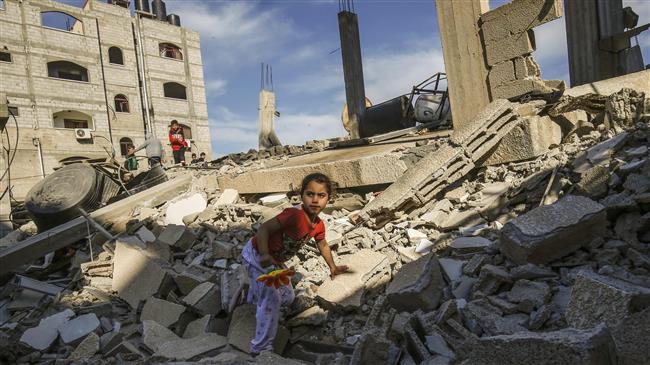
There is a war on Gaza, as it has been once, twice, and more. Gaza and its people are in a state of permanent war. It has been under constant siege for 13 years, which is war imposed upon them every day. Today, the month of Ramadan has started for fasting, prayer, repentance and good deeds. Instead, we see death exploding in and around Gaza. Israel itself complains of the war. Yesterday, Sunday May 5th, the Israeli Defense Minister tweeted and cried out to the world to notice and see Israelis waking up for the second day in a row of rockets coming from Gaza and falling in Israel.
War is painful after two days in Israel. It is as painful and more painful in Gaza after 13 years of siege. War is an absolute evil both for the Israelis and for the Palestinians. Mr. Minister, the key to peace and the end of war is not in the hands of a world that we summon but simply in your hand and in the hands of Israel.
The issue is not only that of Gaza but the issue of all the Palestinian people. The issue is the injustice imposed on the Palestinian people for generations. Israel refuses to see Palestinians as human beings with same rights and equal to all human beings. Israel has tried the methods of war and violence repeatedly to solve the issue. Until today, it has not succeeded and now, on the near horizon, there is talk about a solution wrapped in darkness and non-recognition of Palestinian rights. It will not bring a just solution. It will be another failure.
The solution is simple if Israel wanted to SEE. If it wanted to see that the Palestinian people have the same rights as the Israeli people, all being equal in humanity. It is in Israel’s hands – Israel is the stronger – to realize this equality. Avoiding this equality until now has been useless. Israel itself today suffers from war launched on Gaza.
The solution is simple. Israeli human beings should not remain exposed to war, as is the Palestinian human being. Both are human and equal in humanity. We call upon Israel, the friends of Israel, those interested in the survival of Israel and the security of Israel to simply see that the Palestinian and Israeli peoples are equal in rights and duties and capable of making peace.
We say to the Israeli authorities: It is in your hands to keep us and keep yourselves in constant war and hostility, and in your hands to let us move together to an equal life with dignity, peace and security. Learn from the experience of already 70 years in war. They did not yield security and peace. The cause of the Palestinian people cannot be solved by violence or unjustly imposed solutions, but only by justice and equality. This is the key to war and peace in Israel and Palestine. The key to open the door of peace is in the hands of Israel.
Eileen Fleming, Senior Non-Arab Correspondent for USA’s The Arab Daily News, Author, Reporter: In Nov. 2006, Father Manuel, the parish priest at the Latin Church and school in Gaza, informed the world:
“Gaza cannot sleep! The people are suffering unbelievably. They are hungry, thirsty, have no electricity or clean water. They are suffering constant bombardments and sonic booms from low flying aircraft. They need food: bread and water. Children and babies are hungry… people have no money to buy food. The price of food has doubled and tripled due to the situation. We cannot drink water from the ground here as it is salty and not hygienic. People must buy water to drink. They have no income, no opportunities to get food and water from outside and no opportunities to secure money inside of Gaza. They have no hope.
“Without electricity children are afraid. No light at night. No oil or candles… Thirsty children are crying, afraid and desperate…Many children have been violently thrown from their beds at night from the sonic booms. Many arms and legs have been broken. These planes fly low over Gaza and then reach the speed of sound. This shakes the ground and creates shock waves like an earthquake that causes people to be thrown from their bed. I, myself weigh 120 kilos and was almost thrown from my bed due to the shock wave produced by a low flying jet that made a sonic boom.
“Gaza cannot sleep… the cries of hungry children, the sullen faces of broken men and women who are just sitting in their hungry emptiness with no light, no hope, no love. These actions are War Crimes!
Israel-Gaza deaths: 293 Gazans & 6 Israelis killed in past year
With the recent surge in violence between Israel and Gaza, it is important to examine events of the past year and to learn the chronology and details of the recent deaths among both populations…
By Alison Weir | If Americans Knew | May 6, 2019
With news reports focusing on recent deaths in Israel and Gaza, it’s valuable to enlarge the time period being examined.
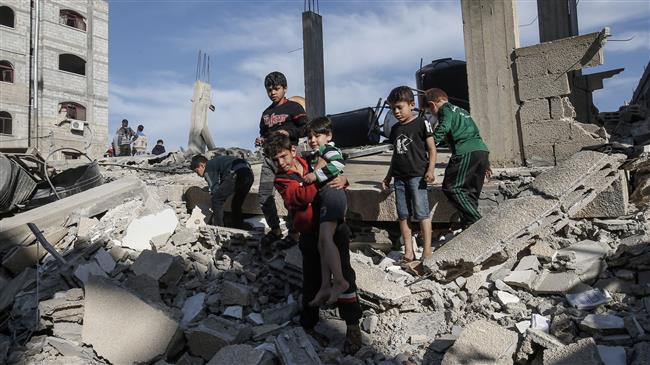
Israeli soldiers have been shooting Gazan men, women, and children every week for over the past year.
Israeli forces have killed approximately 290 Gazans and have injured over 29,000 since Gazans began their weekly Great March of Return on March 30th (see below about why they are marching.) A few additional Gazans died during this time period from wounds inflicted by Israeli forces earlier.
Among those killed and maimed have been numerous medics, women, children, and journalists. Approximately 126 Gazans have had legs and/or arms amputated, and others have been permanently paralyzed.
While Israeli governmental statements, often parroted by U.S. media, claim that Israel targets “terror,” the large majority of Gazans killed by Israeli forces have been civilians.
During the same time period, Gazan resistance fighters have killed 6 Israelis, one of them a Palestinian. (It is difficult to provide a number for Israelis wounded during this time since Israeli statistics for injured include those suffering from panic attacks.)
The names and details of both the Palestinians and the Israelis killed are listed on this timeline.
Deaths during the last 3 days:
On Friday, May 3, Israeli forces killed 4 Palestinians and injured 82. Among the injured were 34 children, two journalists and three paramedics.
On Saturday, May 4, Israeli forces killed 4 Palestinians (including an infant and her mother). Israeli forces also targeted and destroyed a news agency. Journalistic organizations around the world have condemned this attack. This attack was largely unreported by U.S. news media.
On Sunday, May 5, Palestinian resistance fighters killed 3 Israelis and 1 Palestinian Israeli, and Israeli military forces killed 19 Palestinians, including a 12-year-old boy and a 4-month-old girl named Maria. The Israeli shelling destroyed or damaged 600 Palestinian homes, businesses and livelihoods.
The Palestinian Israeli who died, Ziad Alhamamd, was a bedouin from the unrecognized Negev village of as-Sawaween who was working in an Israeli factory in Ashakalon when it was hit by a rocket from Gaza. Gaza’s rockets are mostly home-made and lack guidance systems.
Unrecognized villages are Palestinian villages that were in Palestine before Israel was created that are not formally recognized by the state of Israel. They have no access to Israeli services such as water, electricity, telephones, sewage systems, roads, and often schools and voting stations. Many of the villages are under Israeli demolition orders and never know when their homes will be destroyed. Alhamamd’s village of Sawaween had been denied a school for its 350 elementary school-aged children.
US media provide Israel-centric reports
U.S. news media have published a number of reports on the recent violence that emphasize the Israeli deaths, begin with Israeli victims, largely ignore the year-long killing of Gazans, and frame Israeli actions as defensive.
The New York Times lead paragraph that framed its report yesterday is an example:
“Fighting between Israel and Gaza escalated rapidly on Sunday in the worst combat since the last full-blown war in 2014, with Palestinian rocket and missile attacks killing four Israeli civilians and Israeli forces taking aim at individual Gaza militants.”
“The death toll continues to rise Sunday on both sides of the Israel-Gaza border in one of the most intense flare-ups of violence in the region in years, shattering a month-long lull in attacks.
“Palestinian militants in the Gaza Strip fired more than 600 rockets into southern Israel in less than 24 hours, killing at least four Israelis and leaving several more in critical condition.”
Below is how the Washington Post introduced its report today:
“An uneasy cease-fire settled over the cities of southern Israel on Monday after a weekend that brought a rain of 600 rockets from the Gaza Strip, but not all residents thought the truce was a good thing.
“Near the explosion-scarred house of Moshe Agadi, 58, who became the first Israeli since 2014 to die in rocket fire from Gaza, mothers took their children to play in a park after 48 hours of sheltering indoors.”
Meanwhile, the Israeli military has abducted 11 Palestinians in the West Bank, uprooted 120 Palestinian olive trees, and an Israeli NGO published a report revealing that Israeli authorities forced almost 3,000 Palestinians from their homes in East Jerusalem between 2004 and 2019, deliberately leaving them homeless, including 1,574 of minors.
Total number of Israeli and Palestinian deaths including those outside Gaza
Altogether, 343 Palestinians have died from Israeli attacks, and 16 Israelis have died from Palestinian attacks since March 30, 2018 .
At least 9,908 Palestinians and 1,267 Israelis have been killed by someone from the other side since 2000.
Alison Weir is executive director of If Americans Knew, president of the Council for the National Interest, and author of Against Our Better Judgment: The Hidden History of How the U.S. Was Used to Create Israel.
RELATED:
TAKE ACTION: Contact Congress to condemn Israeli assault on Gazans
Once again, ‘NYT’ distorts the news, dishonestly making Gazans the aggressor and Israel the victim
Israeli forces murder Palestinian after refusing political detention
![Palestinian prisoner Amjad Jamal Galag, 30, shot and killed by Israeli forces on 6May, 2019 [Twitter]](https://i1.wp.com/www.middleeastmonitor.com/wp-content/uploads/2019/05/Post.png?resize=1200%2C800&quality=75&strip=all&ssl=1)
Palestinian prisoner Amjad Jamal Galag, 30, shot and killed by Israeli forces on 6May, 2019 [Twitter]
MEMO | May 6, 2019
Israeli occupation forces shot and killed freed Palestinian prisoner Amjad Jamal Galag, 30, from the neighbourhood of Atteel in the occupied West Bank city of Tulkarm, reports Palestine Post 24
Sources said that a group of Israeli occupation policemen attempted to arrest him at an illegal Israeli military checkpoint.
He refused to surrender to the Israeli occupation forces and resumed his way towards occupied Palestine.
The Israeli police chased him and when they could not catch him, they opened fire at his car and killed him.
It is worth noting that the Israeli occupation forces raided tonight several areas across the occupied West Bank and arrested 14 Palestinians from their beds.
Rights groups have recorded several cases when Israeli occupation forces or police executed Palestinians after refusing to be taken to prison.
The Palestinian Authority is No Longer Crying Wolf Over its Imminent Collapse
By Jonathan Cook – The National – May 5, 2019
We have been here many times before. However, on this occasion even the principal actors understand that the Palestinian Authority is not crying wolf as it warns of imminent collapse.
The crisis is entirely of Israel and Washington’s making. Keen to pander to hawkish public opinion in the run-up to last month’s election, Israel’s Prime Minister Benjamin Netanyahu struck a severe blow against Mahmoud Abbas and his government-in-permanent-waiting.
He announced that Israel would withhold a portion of the taxes it collects on behalf of the Palestinians, and which it is obligated under the Oslo accords to pass on to the PA, based in the West Bank.
The money deducted is the sum the PA transfers as stipends to the families of political prisoners and those killed and maimed by the Israeli army.
This is an incendiary issue, as Netanyahu well knows, given that Palestinians view these families as having made the ultimate sacrifice in the struggle to liberate their people from brutal Israeli occupation.
Abbas cannot be seen to back down, and so has refused to accept any of the monthly tax transfers until the full sum is reinstated, amounting to nearly two-thirds of the PA’s revenues.
Given how precarious Palestinian finances are, after decades of resource theft and restrictions on development imposed by Israel, the PA is already on the brink of bankruptcy.
The problem for Netanyahu and Washington is that the PA was established – under the 25-year-old Oslo accords – to take the pressure and costs off Israel of policing the Palestinian population under occupation.
If the PA collapses, so do the Palestinian security forces that have been keeping order in the West Bank as Israel has continued to plunder Palestinian land and resources.
Late last month the United Nations warned that the standoff had left the PA facing “unprecedented financial, security and political challenges”.
Which means that, despite his recent electoral triumph, Netanyahu is in a serious bind.
He cannot be seen by his even more right-wing coalition partners to be climbing down and restoring stipends to people Israelis view simply as “terrorists”.
Equally, he dares not risk a Palestinian uprising in the West Bank. That would be a real possibility if the Palestinian economy implodes and there are no Palestinian security forces to suppress the resulting wave of popular anger.
A preview of the difficulties in store was given at the weekend, when more than 600 rockets were fired out of Gaza, threatening the cancellation of the Eurovision song contest in Israel later this month.
By Sunday evening, four Israelis were reported dead, while 20 Palestinians had been killed by Israeli airstrikes. The Palestinian fatalities included two pregnant women and a toddler.
There is also the danger, from Israel’s point of view, that if Abbas’s PA collapses, the void in the West Bank will be filled by his Hamas rivals, who run Gaza. Israel has been delighted to keep the Palestinian territories divided under feuding Fatah and Hamas leaderships.
A way out – or a change of tack – is urgently required.
Israel has tried twice to quietly make partial tax transfers to the PA’s bank account, in the hope the money would be accepted. The PA returned it.
Then, the European Union stepped in. Ostensibly an “honest broker”, it appears to be occupying a role the Trump administration has formally abandoned. The EU proposed last week that the PA accept the transfers on a “provisional basis”, until the crisis can be resolved.
PA officials were dismissive. “Let the people take to the streets,” one said. “We have our backs to the wall.” The PA line is that in the current climate, if it backtracks, Israel will simply intensify unilateral measures harming the Palestinian cause.
So now, more in desperation than any realistic prospect of achieving peace, attention is turning to Donald Trump’s long-promised “deal of the century”.
After endless delays, the US administration now seems to be preparing for its release next month, soon after the holy month of Ramadan finishes.
The plan’s main architects, Trump’s son-in-law Jared Kushner and his Middle East envoy Jason Greenblatt, have issued a spate of statements hinting at the contents.
Greenblatt has sought to reassure neighbouring Egypt and Jordan that they will not shoulder the burden. He discounted rumours either that Gaza’s Palestinians would be encouraged to move to the Sinai, in a land swap that would allow Israel to annex parts of the West Bank, or that Jordan would find itself recast as an alternative Palestinian homeland.
Kushner, meanwhile, has strongly suggested that the goal of a two-state solution, implied by the Oslo process, will finally be jettisoned. “New and different ways to reach peace must be tried,” he has said.
He has also stated that the plan will stress “economic benefits” for the Palestinians and “security” for Israel.
David Friedman, Trump’s ambassador to Israel and a stalwart ally of Israel’s most extreme settlers, has recently added that Israel will maintain security control of the West Bank.
According to analysts, these statements suggest the White House is preparing the ground for an offer to the Palestinians of “limited autonomy” – an outcome Arab officials confirmed to The Washington Post.
Sensing the danger, 40 former senior European officials have signed a letter opposing any plan that creates a Palestinian “entity devoid of sovereignty, territorial contiguity and economic viability”.
“Limited autonomy” would be a reformulation of Israel’s long-running ambition to thwart permanently Palestinian hopes of statehood – a policy the late Israeli academic Baruch Kimmerling once termed “politicide”.
Since the late 1970s, the Israeli right has advocated hemming Palestinians into enclaves where they are denied sovereignty.
The model of disparate cantons, effectively operating as glorified municipalities and surrounded by a sea of Israeli settlers, is little different from that of “black homelands”, or Bantustans, established in apartheid-era South Africa.
Now, it seems, the Trump administration is ready to support this racist idea as a way to promote regional peace.
The Americans hope that, with a few sweeteners, the Palestinians can be made to swallow this bitter pill. It is an idea Netanyahu has advanced for some time, with his talk of “economic peace” – or what might be better termed “economic pacification”.
But the current impasse on taxes shows that buying off the Palestinians with bribes, in return for the abandonment of core national goals, may not prove so easy.
With the PA close to collapse, it is hard to see how Trump’s deal of the century can do anything other than speed up the authority’s demise.
How GMO Seeds and Monsanto/Bayer’s “RoundUp” are Driving US Policy in Venezuela
By Whitney Webb | MintPress News | May 6, 2019
CARACAS, VENEZUELA — As the political crisis in Venezuela has unfolded, much has been said about the Trump administration’s clear interest in the privatization and exploitation of Venezuela’s oil reserves, the largest in the world, by American oil giants like Chevron and ExxonMobil.
Yet the influence of another notorious American company, Monsanto — now a subsidiary of Bayer — has gone largely unmentioned.
While numerous other Latin American nations have become a “free for all” for the biotech company and its affiliates, Venezuela has been one of the few countries to fight Monsanto and other international agrochemical giants and win. However, since that victory — which was won under Chavista rule — the U.S.-backed Venezuelan opposition has been working to undo it.
Now, with Juan Guaidó’s parallel government attempting to take power with the backing of the U.S., it is telling that the top political donors of those in the U.S. most fervently pushing regime change in Venezuela have close ties to Monsanto and major financial stakes in Bayer.
In recent months, Monsanto’s most controversial and notorious product — the pesticide glyphosate, branded as Roundup, and linked to cancer in recent U.S. court rulings — has threatened Bayer’s financial future as never before, with a litany of new court cases barking at Bayer’s door. It appears that many of the forces in the U.S. now seeking to overthrow the Venezuelan government are hoping that a new Guaidó-led government will provide Bayer with a fresh, much-needed market for its agrochemicals and transgenic seeds, particularly those products that now face bans in countries all over the world, including once-defoliated and still-poisoned Vietnam.
U.S.-Backed Venezuelan opposition seeks to reverse Chavista seed law and GMO ban
In 2004, then-president of Venezuela, Hugo Chávez, surprised many when he announced the cancellation of Monsanto’s plans to plant 500,000 acres of Venezuelan agricultural land in genetically modified (GM) soybeans. The cancellation of Monsanto’s Venezuela contract led to what became an ad hoc ban on all GM seeds in the entire country, a move that was praised by local farmer groups and environmental activists. In contrast to anti-GM movements that have sprung up in other countries, Venezuela’s resistance to GM crops was based more on concerns about the country’s food sovereignty and protecting the livelihoods of farmers.
Although the ban has failed to keep GM products out of Venezuela — as Venezuela has long imported a majority of its food, much of it originating in countries that are among the world’s largest producers of genetically modified foods — one clear effect has been preventing companies like Monsanto and other major agrochemical and seed companies from gaining any significant foothold in the Venezuelan market.
In 2013, a new seed law was nearly passed that would have allowed GM seeds to be sold in Venezuela through a legal loophole. That law, which was authored by a member of the Chavista United Socialist Party of Venezuela (PSUV), was widely protested by farmers, indigenous activists, environmentalists, and eco-socialist groups, which led to the law’s transformation into what has been nicknamed the “People’s Seed Law.” That law, passed in 2015, went even farther than the original 2004 ban by banning not just GM seeds but several toxic agrochemicals, while also strengthening heirloom seed varieties through the creation of the National Seed Institute.
Soon after the new seed law was passed in 2015, the U.S.-backed Venezuelan opposition led by the Roundtable of Democratic Unity (MUD) — a group comprised of numerous U.S.-funded political parties, including Guaidó’s Popular Will — took control of the country’s National Assembly. Until Venezuela’s Supreme Court dissolved the assembly in 2017, the MUD-legislature attempted to repeal the seed law on several occasions. Those in favor of the repeal called the seed bill “anti-scientific” and damaging to the economy.
Despite the 2017 Supreme Court decision, the National Assembly has continued to meet, but the body holds no real power in the current Venezuelan government. However, if the current government is overthrown and Guaidó — the “interim president” who is also president of the dissolved National Assembly — comes to power, it seems almost certain that the “People’s Seed Law” will be one of the first pieces of legislation on the chopping block.
The AEI axis
Some of the key figures and loudest voices supporting the efforts of the Trump administration to overthrow the Venezuelan government in the United States are well-connected to one particular think-tank, the American Enterprise Institute (AEI). For instance, John Bolton — now Trump’s national security advisor and a major player in the administration’s aggressive Venezuela policy — was a senior fellow at AEI until he became Trump’s top national security official. As national security adviser, Bolton advises the president on foreign policy and issues of national security while also advising both the Secretary of State and the Secretary of Defense. As of late, he has been pushing for military action in Venezuela, according to media reports.
Another key figure in Trump’s Venezuela policy — Elliott Abrams, the State Department’s Special Representative for Venezuela — has been regularly featured at AEI summits and as a guest on its panels and podcasts. According to Secretary of State Mike Pompeo, Abrams’ current role gives him the “responsibility for all things related to our efforts to restore democracy” in Venezuela. Other top figures in the administration, including Vice President Mike Pence and Secretary of State Mike Pompeo, were featured guests at the AEI’s “secretive” gathering in early March. As MintPress and other outlets have reported, Guaidó declared himself “interim president” of Venezuela at Pence’s behest. Pompeo is also intimately involved in directing Trump’s Venezuela policy as the president’s main adviser on foreign affairs.
Other connections to the Trump administration include Secretary of Education Betsy DeVos who was previously on AEI’s board of trustees.
AEI has long been a key part of the “neoconservative” establishment and employs well-known neoconservatives such as Fred Kagan — the architect of the Iraq “troop surge” — and Paul Wolfowitz, the architect of the Iraq War. Its connections to the George W. Bush administration were particularly notable and controversial, as more than 20 AEI employees were given top positions under Bush. Several of them, such as Bolton, have enjoyed new prominence in Trump’s administration.
Other key Bush officials joined the AEI soon after leaving their posts in the administration. One such was Roger Noriega, who was the U.S. representative to the Organization of American States (OAS) during the failed, U.S.-backed 2002 coup and went on to be assistant secretary of state for Western Hemisphere affairs from 2003 to 2005, where he was extremely influential in the administration’s policies towards Venezuela and Cuba.
Since leaving the Bush administration and promptly joining the AEI, Noriega has been instrumental in pushing claims that lack evidence but aim to paint Venezuela’s current President Nicolas Maduro-led government as a national security threat, such as claiming that Venezuela is helping Iran acquire nuclear weapons and hosts soldiers from Lebanon’s Hezbollah. He also lobbied Congress to support Venezuelan opposition leader Leopoldo López, Guaidó’s political mentor and leader of his political party, Popular Will.
Not only that, but Noreiga teamed up with Martin Rodil, a Venezuelan exile formerly employed by the IMF, and José Cardenas, who served in the Bush administration, to found Visión Américas, a private risk-assessment and lobbying firm that was hired to “support the efforts of the Honduran private sector to help consolidate the democratic transition in their country” after the U.S.-backed Honduran coup in 2009. In recent months, Noriega and his associates have been very focused on Venezuela, with Cardenas offering Trump public advice about how “to hasten Maduro’s exit,” while Rodil has publicly offered “to get you a deal” if you have dirt on Venezuela’s government.
While the AEI is best known for its hawkishness, it is also a promoter of big agricultural interests. Since 2000, It has hosted several conferences on the promise of “biotechnology” and genetically modified seeds and has heavily promoted the work of former Monsanto lobbyist Jon Entine, who was an AEI visiting fellow for several years. The AEI also has long-time connections to Dow Chemical.
The most likely reason for the AEI’s interest in promoting biotech, however, can be found in its links to Monsanto. In 2013, The Nation acquired a 2009 AEI document, obtained through a filing error and not intended for public disclosure, that revealed the think tank’s top donors. The form, known as the “schedule of contributors,” revealed that the AEI’s top two donors at the time were the Donors Capital Fund and billionaire Paul Singer.
The Donors Capital Fund, which remains a major contributor to the AEI, is linked to Monsanto interests through the vice chairman of its board, Kimberly O. Dennis, who is also currently a member of the AEI’s National Council. According to AEI, the National Council is composed of “business and community leaders from across the country who are committed to AEI’s success and serve as ambassadors for AEI, providing us with advice, insight, and guidance.”
Dennis is the long-time executive chairwoman of the Searle Freedom Trust, which was founded in 1988 by Daniel Searle after he oversaw the sale of his family pharmaceutical company — G.D. Searle and Company — to Monsanto in 1985 for $2.7 billion. The money Searle had made from that merger was used to fund the trust that now funds the AEI and other right-wing think tanks. Searle was also close to Donald Rumsfeld, who led G.D. Searle and Co. for years and was Secretary of Defense under Gerald Ford and George W. Bush. Searle was also a trustee of the Hudson Institute, which once employed Elliott Abrams.
After the family company — which gained notoriety for faking research about the safety of its sweetener, aspartame or NutraSweet — was sold to Monsanto, G.D. Searle executives close to Daniel Searle rose to prominence within the company. Robert Shapiro, who was G.D. Searle’s long-time attorney and head of its NutraSweet division, would go on to become Monsanto’s vice president, president and later CEO. Notably, Daniel Searle’s grandson, D. Gideon Searle, was an AEI trustee until relatively recently.
Why is a top donor to Marco Rubio increasing his stake in Bayer while others flee?
Yet, it is AEI’s top individual donor noted in the accidental “schedule of contributors” disclosure who is most telling about the private biotech interests guiding the Trump administration’s Venezuela policy. Paul Singer, the controversial billionaire hedge fund manager, has long been a major donor to neoconservative and Zionist causes — helping fund the Foreign Policy Initiative (FPI), the successor to the Project for a New American Century (PNAC); and the neoconservative and islamophobic Foundation for the Defense of Democracies (FDD), in addition to the AEI.
Singer is notably one of the top political donors to Senator Marco Rubio (R-FL) and has been intimately involved in the recent chaos in Venezuela. He has been called one of the architects of the administration’s current regime-change policy, and was the top donor to Rubio’s presidential campaign, as well as a key figure behind the controversial “dossier” on Donald Trump that was compiled by Fusion GPS. Indeed, Singer had been the first person to hire Fusion GPS to do “opposition research” on Trump. However, Singer has largely since evaded much scrutiny for his role in the dossier’s creation, likely because he became a key donor to Trump following his election win in 2016, giving $1 million to Trump’s inauguration fund.
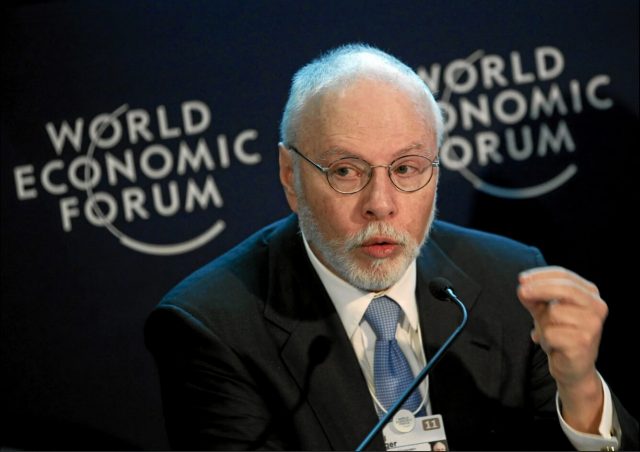
Hedge fund manager Paul Singer has raised millions for a pro-Marco Rubio super PAC. Moritz Hager | World Economic Forum
Singer has a storied history in South America, though he has been relatively quiet about Venezuela. However, a long-time manager of Singer’s hedge fund, Jay Newman, recently told Bloomberg that a Guaidó-led government would recognize that foreign creditors “aren’t the enemy,” and hinted that Newman himself was weighing whether to join a growing “list of bond veterans [that have] already begun staking out positions, anticipating a $60 billion debt restructuring once the U.S.-backed Guaidó manages to oust President Nicolas Maduro and take control.” In addition, the Washington Free Beacon, which is largely funded by Singer, has been a vocal advocate for the Trump administration’s regime-change policy in Venezuela.
Beyond that, Singer’s Elliott Management Corporation gave Roger Noriega, the former assistant secretary of state for Western Hemisphere affairs under Bush, $60,000 in 2007 to lobby on the issue of sovereign debt and for “federal advocacy on behalf of U.S. investors in Latin America.” During the time Noriega was on Singer’s payroll, he wrote articles linking Argentina and Venezuela to Iran’s nonexistent nuclear program. At the time, Singer was aggressively pursuing the government of Argentina in an effort to obtain more money from the country’s prior default on its sovereign debt.
While Singer has been mum himself on Venezuela, he has been making business decisions that have raised eyebrows, such as significantly increasing his stake in Bayer. This move seems at odds with Bayer’s financial troubles, a direct result of the slew of court cases regarding the link between Monsanto’s glyphosate and cancer. The first ruling that signaled trouble for Monsanto and its new parent company Bayer took place last August, but Singer increased his stake in the company starting last December, even though it was already clear by then that Bayer’s financial troubles in relation to the glyphosate court cases were only beginning.
Since the year began, Bayer’s problems with the Monsanto merger have only worsened, with Bayer’s CEO recently stating that the lawsuits had “massively affected” the company’s stock prices and financial performance.
Forcing open a new market for RoundUp
Part of Singer’s interest in Bayer may relate to Venezuela, given that Juan Guaido’s “Plan País” to “rescue” the Venezuelan economy includes a focus on the country’s agricultural sector. Notably, prior to and under Chavismo, agricultural productivity and investment in the agricultural sector took a backseat to oil production, resulting in under 25 percent of Venezuelan land being used for agricultural purposes despite the fact that the nation has a wealth of arable land. The result has been that Venezuela needs to import much of its food from abroad, most of which originate in Colombia or the United States.
Under Chávez and his successor, Maduro, there has been a renewed focus on small-scale farming, food sovereignty and organic agriculture. However, if Maduro is ousted and Guaidó moves to implement his “Plan País,” the opposition’s coziness with foreign corporations, the interests of U.S. coup architects in Bayer/Monsanto, and the opposition’s past efforts to overturn the GM seed ban all suggest that a new market for Bayer/Monsanto products — particularly glyphosate — will open up.
South America has long been a key market for Monsanto and — as the company’s problems began to mount prior to the merger with Bayer — it became a lifeline for the company due to less stringent environmental and consumer regulations than many Western countries. In recent years, when South American governments have opened their countries to more “market-friendly” policies in their agricultural sectors, Monsanto has made millions.
For instance, when Brazil sought to expand biotechnology (i.e. GM seed) investment in 2012, Monsanto saw a 21% increase in its sales of GM corn seed alone, generating an additional $1 billion in profits for the company. A similar comeback scenario is needed more than every by Bayer/Monsanto, as Monsanto’s legal troubles saw the company’s profits plunge late last year.
With countries around the world now weighing glyphosate bans as a result of increased litigation over the chemical’s links to cancer, Bayer needs a new market for the chemical to avoid financial ruin. As Singer now has a significant stake in the company, he — along with the politicians and think tanks he funds — may see promise in the end of the anti-GM seed ban that a Guaidó-led government would bring.
Furthermore, given that Guaidó’s top adviser wants the Trump administration to have a direct role in governing Venezuela if Maduro is ousted, it seems likely that Singer would leverage his connections to keep Bayer/Monsanto afloat amid the growing controversy surrounding glyphosate. Such behavior on the part of Singer would hardly be surprising in light of the fact that international financial media have characterized him as a “ruthless opportunist” and “overly aggressive.”
Such an outcome would be in keeping with the increased profit margins for Monsanto and related companies that have followed its expansion into countries following U.S.-backed coups. For instance, after the U.S.-backed coup in Ukraine in 2014, the loans given to Ukraine by the International Monetary Fund and the World Bank forced the country to open up and expand the use of “biotechnology” and GM crops in its agricultural sector, and Monsanto, in particular, made millions as the prior government’s ban on GM seeds and their associated agrochemicals was reversed. If Maduro is ousted, a similar scenario is likely to play out in Venezuela, given that the Guaidó-led government made known its intention to borrow heavily from these institutions just days after Guaidó declared himself “interim president.”
Feature photo | Luis Arrieta inspects a freshly planted coffee field that used to be a peach orchard in the coastal area of Carayaca on the outskirts of Caracas, Venezuela, Oct. 10, 2018 . Fernando Llano | AP
Whitney Webb is a MintPress News journalist based in Chile. She has contributed to several independent media outlets including Global Research, EcoWatch, the Ron Paul Institute and 21st Century Wire, among others. She has made several radio and television appearances and is the 2019 winner of the Serena Shim Award for Uncompromised Integrity in Journalism.
Kieran Barr contributed to the research used in this report.
Fake news alert: CNN says Venezuelan opposition leader Juan Guaido ‘won election in January’
RT | May 6, 2019
CNN took the concept of “fake news” to a whole new level with a recent report on Venezuela, in which it claimed that citizens “chose” coup leader Juan Guaido over current president Nicolas Maduro in January “elections.”
In a report on Sunday’s deadly Venezuelan military helicopter crash, CNN wrote that “pressure is mounting” on Maduro to step down “following elections in January in which voters chose opposition leader Juan Guaido over him for president.”
The report was finally corrected on Monday after being published on Sunday afternoon and remaining unfixed overnight. It now reflects the fact that Guaido was not elected, but “declared himself interim president” in January.
A correction added to the bottom of the piece explains that the earlier version had “incorrectly described” the situation. Elections? Military coups? Really, who can keep up these days!?
Amazingly, the botched report which initially referenced these mysterious imaginary elections, was the product of work by no less than six journalists — two whose names appear on the main byline and four more listed as contributors at the bottom. Normal practice would see the piece run past a couple of editors too, before being published. That’s potentially eight pairs of eyes — and none of them managed to catch the glaring error.
A number of journalists and Twitter users called CNN out for the “blatant” lie and “shameful” and “terrible” reporting.
It wasn’t the first Venezuela-related embarrassment for CNN. Reporter Jake Tapper was called out on social media last week after he tweeted a link with a picture of opposition army defectors wielding guns to claim Maduro’s government “mows down citizens in streets.”
CNN likes to be known for its so-called adversarial journalism when it comes to the Trump administration, but so far, it seems fully on board with its regime change policies in Venezuela — although, even the White House hasn’t gone so far as to pretend fake elections took place in January.
Israeli Intelligence Warned White House Of “Iran Plot” To Strike US Troops
By Tyler Durden – Zero Hedge – 05/06/2019
On Sunday night US national security advisor John Bolton threatened Iran with “unrelenting force” while announcing the deployment of the USS Abraham Lincoln Carrier Strike Group and a bomber task force to the Persian Gulf region, saying further it sends a “clear and unmistakable” message to the Iranian regime.
Bolton’s statement also cited a “number of troubling and escalatory indications and warnings” from Iran, which later on Monday morning CNN Pentagon correspondent Barbara Starr described based on unnamed US defense officials as including “specific and credible” Iranian threats against US assets in Syria, Iraq, and at sea.
CNN’s Starr reported the following:
US officials tell me the threats from Iran included “specific and credible” intelligence that Iranian forces and proxies were targeting US forces in Syria, Iraq and at sea. There were multiple threads of intelligence about multiple locations, the officials said.
It turns out, perhaps predictably, that the ultimate source of these claims is none other than Israeli intelligence.
Axios White House correspondent Barak Ravid reports:
Israel passed information on an alleged Iranian plot to attack U.S. interests in the Gulf to the U.S. before national security adviser John Bolton threatened Iran with “unrelenting force” last night, senior Israeli officials told me.
This also comes as some high level Israeli defense officials have claimed Iran ordered the Palestinian Islamic Jihad to initiate a conflict in Gaza in order to distract Israel from stopping supposed Iranian expansion inside Syria.
Thus it appears an entire US carrier strike group is now responding to what the White House believes is credible intelligence provided by the Israelis. Or, it could simply fit with Prime Minister Benjamin Netanyahu’s long stated intent to convince Washington to take preemptive military action against Iran.
Axios reports the Israeli intelligence is “not very specific at this stage” but that the “intelligence gathered by Israel, primarily by the Mossad intelligence agency, is understood to be part of the reason for Bolton’s announcement.” The threats against US interests also reportedly include locations in Saudi Arabia and the UAE.
But the most obvious question must be asked: could Tel Aviv be setting up its more powerful ally in a “wag the dog” scenario to initiate war against Israel’s archenemy Iran?
In Upcoming Elections EU Parliament Faces Long List of Enemies
By Attilio Moro | Consortium News | May 6, 2019
As the EU approaches what are considered to be the most important elections in the history of its parliament — between May 22 and 26 — the EU has never had so many enemies.
The list starts with U.S. President Donald Trump and extends to the Brexiters in the UK. It goes from Andrze Duda, the Polish premier, to Hungarian Prime Minister Viktor Orban; from the Czech Republic’s Prime Minster Andrej Babis to the Romanian government.
Italy also makes the list. Its unofficial prime minister, Matteo Salvini, has been advocating, until he took office, the exit from the euro and possibly from the EU altogether. Other anti-EU leaders include Austrian Prime Minister Norbert Hofer, who assumed office on an anti-European platform, and France’s Marine Le Pen.
There is also the AFD Party in Germany and a score of sizable anti-EU minorities in almost all European countries.
The most aggressive of all has been Donald Trump, who went well beyond his “American First” slogan in calling EU countries the trade “enemy” of the U.S. Under his watch, EU-U.S. relations have never been so bad.
Divisions with EU
The Trump administration’s divisions with the EU seem to involve everything, from NATO (Europeans have to pay more, Trump keeps saying) to Iran (Washington trying to block Europe from dealing with Tehran); from trade (too many German cars in the U.S.) to the environment (Trump backed out of the collective reduction of Co2, as internationally agreed in Paris).
Trump has given confidence and strength to Brexiteers and every possible type of EU dissident, to the point that Poland’s Duda has openly defied the EU Commission’s demand to abolish the illiberal law allowing his government to appoint the justices of the Supreme Court.
Hungary’s Orban could defy the European immigration policy by refusing to take in one single migrant (Trump is building a wall, after all). And, contrary to the “European spirit of openness” (and against the wishes of many of George Soros’s friends in Brussels) — Orban in 2018 managed to force most of operations of the private university in Budapest funded by the Hungarian-born billionaire philanthropist to move to Vienna.
The Czech Republic’s Babis, the richest man in the country, continues to flout warnings from Brussels about his violations of press freedom and the independence of the judiciary.
Romania is displaying the most conspicuous insubordination in the case of Laura Kovesi, its former chief prosecutor, who oversaw the convictions of thousands of politicians, officials and businesspeople. Now Bucharest, which is holding the rotating presidency of the EU until the end of June, is trying to prevent Kovesi from leading the new European Public Prosecutor’s Office, which will begin functioning in 2020. Romania’s justice minister has been smearing her in letters to his EU counterparts and the government briefly subjected her to a travel ban. The only government that opposes her nomination is her own.
Sovereignism
The ideology that unifies most of the European “enemies” of the EU is sovereignism, the idea that national interests should come before those of Europe and that sharing wealth doesn’t imply sharing policies and values.
In line with Trump, Sovereignists don’t believe that the problems of the modern world can be dealt with through a multilateral approach. They will win, according to most estimates, a sizeable share of the seats in the EU Parliament later this month.
They will be supported by a substantial share of the European public opinion (mainly right-wing) which is at odds with what they consider to be an EU immigration policy that is too permissive.
They will also be supported by plenty who feel that the EU institutions, including the EU Parliament, are bureaucratic and remote from ordinary people, while too close to the lobbies. They have a point. Around 15 thousand lobbyists are active in Brussels. It is not a mystery that they are very influential in the EU Parliament.
Recently, it turned out that the EU’s liberal party, the Alliance of Liberals and Democrats for Europe, or ALDE, received hundreds of thousands of euros in donations from Google, Bayer, Microsoft, Uber, Syngenta and Deloitte.
The leftists of the GUE/NGL and the Greens both fiercely oppose corporate lobbying. But with those two exceptions, there is good reason to believe that all the other major political groups have received this much money and more.
One of the most striking cases of EU corporate influence is that of Bayer-Monsanto, which managed last year to renew its European license for the weed killer, Roundup, which has been defined by leading research institutions as an endocrine disrupter with links to cancer.
In addition to corporate corruption, anti-EU sentiment includes those opposed to the neoliberal economic policies (privatizations of public companies, cuts in social spending, deregulation) imposed in the last 20 years by the EU institutions, which not only failed to revive the economy but brought southern European countries to the brink of bankruptcy.
Despite the widespread frustrations, most European citizens consider the EU as vital in the era of globalization. And a reasonable percentage of the European constituency will turn out to elect their delegates to Brussels.
But the EU Parliament senses the threat it is facing and is running an unprecedented voter turnout campaign. In every European airport now, huge (and very expensive) billboards inform travelers of what the EU has done for their country.
Had parliamentarians arranged more transparency in the way they do business, or had they passed a proposal that has been languishing for decades for passage – which would oblige lobbies to register — that might have been more effective than billboards.
Attilio Moro is a veteran Italian journalist who was a correspondent for the daily Il Giorno from New York and worked earlier in both radio (Italia Radio) and TV. He has travelled extensively, covering the first Iraq war, the first elections in Cambodia and South Africa, and has reported from Pakistan, Lebanon, Jordan and several Latin American countries, including Cuba, Ecuador and Argentina. Presently, he is a correspondent on European affairs based in Brussels.
“Just A Human Being”: Rachel Maddow’s Latest Resistance Hero
By Tyler Durden | Zero Hedge | May 6, 2019
This is where three years of failed Russiagate conspiracy theorizing and fixation leads you — into the arms of fanatical endless war proponent John Bolton: “John Bolton God bless you, good luck..” one can now hear on “resistance” network MSNBC prime time.
MSNBC’s Rachel Maddow is now championing neocon national security adviser John Bolton’s “humanity” given he apparently went loose cannon this past week, vowing to confront Russia over Venezuela even as his boss President Trump downplayed Moscow’s role in the crisis after a Friday phone call with Putin.
“This is what John Bolton, human being, thought his job was this week,” Maddow said on her show Friday night. Both Pompeo and Bolton had clearly gone a bit rogue with their overly bellicose Venezuela comments, while Trump appeared to be more restrained — and for Maddow this was of course cause for championing the neocon interventionist line: “Hey, John Bolton, hey, Mike Pompeo, are you guys enjoying your jobs right now?” she questioned.
On Friday Trump had said following the phone call, Putin is “not looking at all to get involved in Venezuela other than he’d like to see something positive happen in Venezuela, and I feel the same way.”
Maddow, who once prided herself on slamming and deconstructing Bush-era regime change wars, now finds Trump not jingoistic enough. She stridently questioned:
“How do you come to work anymore if you’re John Bolton? Right, regardless of what you thought about John Bolton before this, his whole career and his track record, I mean, just think of John Bolton as a human being. This is what John Bolton, human being, thought his job was this week.”
She further cut to a clip of Bolton criticizing Russia’s alleged military involvement in Venezuela to prop up Maduro, because apparently uber-hawk Bolton is now a “fearless truth-teller” in Maddow’s world.
“You thought that was your job,” Maddow said. “But it turns out not at all, not after Vladimir Putin gets done with President Trump today.”
It bears repeating that among the loudest right-leaning voices who joined the chorus of leading establishment Democrat Russiagaters included previously forgotten about neocons who were quickly rehabilitated by the “Resistance” — David Frum, Max Boot, Robert Kagan, Bill Kristol among them.
And then there was the nauseating phenomenon of watching liberals lionizing Trump-skeptical Republican Congressional leaders like Lindsey Graham, Jeff Flake, and the late Sen. McCain.
Because it’s awful, just awful! – that Trump might actually prefer peace to waging war in multiple places…
Restraint vs. war in multiple places? Maddow apparently advances the humanity of those advocating the latter.
It amounted to, at times, a picture of a President at odds with the officials who this week have called vociferously for a change in power in Caracas and have consistently declined to rule out a US military intervention.
Trump has become frustrated this week as national security adviser John Bolton and others openly teased military options and has told friends that if Bolton had his way he’d already be at war in multiple places. — CNN
And now, months into 2019, we get to hear Maddow waxing eloquent about the innocent “human side” of none other than John Bolton.
Of course, Maddow should first consider whether Bolton or his neocon ilk ever once paused to consider whether those they advocate dropping bombs on — from Iraq to Syria to Libya to Yemen to Gaza to Venezuela — are themselves actually human beings who simply wish to live out their daily lives in peace.
Featured Video

Daniel Davis: U.S. Military Options & War Narrative Collapse
or go to
Aletho News Archives – Video-Images
Book Excerpt
“Vaccines Do Not Cause Autism!” The Science is Settled. Right?
ICAN urges the IACC to actually study infant vaccines and autism
 By Aaron Siri | Injecting Freedom | March 16, 2026
On behalf of ICAN, we just sent a copy of chapter 11 of Vaccines, Amen to the newly appointed members of the federal Interagency Autism Coordinating Committee (IACC).
If you haven’t already read this chapter, you can read the whole thing in the attached letter. I trust that after you read it, you’ll see why the statement “vaccines do not cause autism” is a belief, not science!

IACC Public Comment Letter
1.53MB ∙ PDF file
Includes chapter 11 of Vaccines, Amen
Blog Roll
 Aletho News
- Washington’s War on Cuba Is Older Than You Think
- Daniel Davis: U.S. Military Options & War Narrative Collapse
- Protesters call on Brussels university to cut partnership with Israeli defense-linked firm
- Weapons makers cash in on Trump’s Iran war
- Why Trump’s anti-Iran naval coalition in Strait of Hormuz is doomed to fail
- IRGC says regional energy sites linked to US will be reduced to ashes
- Qatar condemns ‘dangerous’ Israeli attack on gas field
- Iran made ‘unexpectedly substantial’ offer during Geneva talks, US envoys ‘dragged’ Trump into war: Report
- Russia condemns Israel’s attack near Bushehr plant, files complaint
- Russia Strongly Condemns Actions Aimed at Harming Health of Iranian Leadership – Kremlin
- If Americans Knew
- How ignorance, misunderstanding and obfuscation ended Iran nuclear talks
- Israeli media reports grotesque settler attack in West Bank
- UK security adviser attended US-Iran talks and judged deal was within reach
- Tucker Carlson says ‘neocons’ will try to destroy Joe Kent over resignation
- Lebanon death toll exceeds 900, another assassination in Iran, bombing in Gaza – Not a ceasefire Day 159
- Trump’s counterterrorism chief, whose own wife was killed by ISIS, quits over Iran War saying Tehran posed ‘no imminent threat’
- Here’s what US could fund instead of Bibi’s war on Iran
- Israel Killed Over a Dozen Lebanese Paramedics in Three Days, Now Claiming That Ambulances Are “Hezbollah” Targets
- War on Iran: These are the heritage sites devastated by US and Israeli attacks
- Four news stories from Israeli media that illustrate Israeli “justice”
- No Tricks Zone
- Energy Expert: Germany’s Nuclear Phaseout Was A “500 Billion Euro Mistake”
- New Research: South Australia’s Mid-Holocene Sea Surface Temperatures Were 4°C Warmer Than Today
- Storing Green Energy To Last Germany 10 Days Would Require A 60-Million Tonne Battery
- New Studies: UK Sea Levels Were 4 Meters Higher Than Today During The Mid-Holocene
- Destructive Green New Deal: German Energy And Metal Group Warns Of Drastic Crisis
- New Study Documents A 20-Year Pause In Arctic Sea Ice Decline – Driven By Internal Variability
- Wake-up Call: Survey Shows Majority Of Germans Now Favor Postponing Climate Targets!
- Televised! Leading German Political Candidate Tells Schoolchildren CO2 Makes Sun Hotter!
- New Study: A Century Warming Of 1.1°C Is ‘Commonplace’ And ‘Not Unusual’ During This Interglacial
- New Study: ‘Internal Noise’ And Volcanic Forcing Can Trigger 10-15°C Warming Within Decades
 Aletho News