The DNC Debates, the Media and Tulsi Gabbard
By Renee Parsons | CounterPunch | May 3, 2019
As some of the last minute Democratic presidential candidates scramble to qualify for the DNC’s upcoming June 26/27 primary debate, the latest poll results become more than nominally important given their elevated role in whether a candidate meets the requirements to participate.
In order to qualify, each announced candidate needs to have received either $65,000 from 200 donors in 20 states or to garner more than 1% support in any three of the DNC’s ‘favored’ polls – which includes those 2016 polls with either a flawed methodology or their thumb on the scale which missed the final election results in a big way, all of which proves that wishing does not make it so.
There is every reason to believe that the favored polls will provide the necessary % of support in order for all 21 candidates to qualify. Given any poll’s margin-of-error in statistical sampling, it would seem that measuring public support via a % is an arbitrary criteria that does not represent a true accurate basis with high precision results. Even if a candidate does not qualify for the June debates, they can still qualify for the July event. A house divided and all that…
The basic structure of the debates as announced by DNC Chair Tom Perez represents a presidential primary process that is “transparent, fair, inclusive” with ‘historic reforms’ and ‘increased trust’ which you may recall, the DNC process in 2016 did nothing to generate increased trust. While Democratic officials have been meeting for months with media partners, there is yet no announcement who the moderator or participating panelists will be or how the questions are being formulated. The June round of debates will be broadcast on NBC, MSNBC and Telemundo with the July debates on CNN.
According to the DNC, the max number of candidates participating will be a total of twenty even if all 21 announced candidates qualify as it threatens to eliminate candidates who had already made the cut – so much for “transparent, fair and inclusive.” Ten will appear on June 26 with the next ten on June 27th and selection will be determined by drawing lots. Conceivably, the Main Show of Bernie and Biden may occur on June 26thor they may be split, appearing on two different nights. In any case, it may be difficult for the public to determine a clear ‘winner’ by virtue of candidate separation from the total field.
Leaving First Amendment concerns aside, Perez cited a New Yorker expose “Fox News has always been partisan. But has it become propaganda?” by Jane Mayer reporting on an ‘inappropriate’ relationship between the Trump Administration and Fox News. Perez, therefore, determined that Fox was “not in a position to host a fair and neutral debate” and would not be a participating media partner. True to form, President Trump responded that he would not participate in general election debates with the Democrat favorite MSM outlets.
It is more than ironic when MSM outlets, like the New Yorker reveal their own unprofessional bias without applying the same propaganda standard to itself or to its MSM colleagues for its inappropriate camaraderie with the high level Obama Administration officials or current Democratic Presidential candidates.
As the MSM continues to pat itself on the back and win awards it did not deserve after perpetuating a deep constitutional crisis which has torn the country apart,the NYT and WaPo received $15,000 for its 2018 Pulitzer Prize for National Reporting for its flawed, erroneous reportage on Russiagate as CNN won $2500 for the 2018 White House Correspondents Merriman Smith Award which was based on leaks from former Obama officials John Brennan and James Clapper rather than the old-fashioned method of investigative reporting. Presumably, all recipients kept the prize money.
On the part of the DNC, the obvious idea is to winnow the field in such a way that it does not appear obvious if any one candidate is being deliberately shoved aside without an equal opportunity. LOL with that. Examination of a less than inspiring slate of candidates leaves considerable space for true excellence to surface. It is ironic that the party so enthralled with diversity and identity politics actually represents a gross lack of diversity in terms of public policy options.
With the new CNN poll showing Joe Biden representing the fossil wing of the Democratic party with a 39% favorable rating as Bernie drops to 15%, it is eerily reminiscent of overstated polls for HRC in 2016. Thanks to CNN, additional White House contenders have qualified for the debate via the % option including former Colorado Gov John Hickenlooper who might take the opportunity to inform the public why he attended the Bilderberg meeting in 2018.
Given her almost totally hostile reception by every MSM outlet who deigned to interview her, Rep. Tulsi Gabbard has experienced, as an opponent of regime change wars, more bad manners and outright personal antagonism than any other candidate. While Gabbard easily qualified for the debates via the $65,000 requirement and continues to attract SRO audiences in NH, Iowa, California and elsewhere, yet until the newest CNN poll, she failed to register any % of public support. Something here does not compute given the ‘favored’ polls past history of favoritism. If the Dems continue to put a brick wall around her, Jill Stein has already opened the Green Party door as a more welcoming venue for a Tulsi candidacy. The Dems, who tend to be unprincipled and vindictive, better be careful what they wish for.
Renee Parsons has been a member of the ACLU’s Florida State Board of Directors and president of the ACLU Treasure Coast Chapter. She has been an elected public official in Colorado, an environmental lobbyist and staff member of the US House of Representatives in Washington DC. She can be found on Twitter @reneedove31
Poynter retracts list of ‘unreliable news sources’ after listed sites prove it to be unreliable
By Helen Buyniski | RT | May 3, 2019
Journalism nonprofit Poynter has retracted a long list of supposedly unreliable news websites, admitting the list itself was unreliable – a fact ironically brought to its attention by several of the outlets it calls untrustworthy.
“We regret that we failed to ensure that the data was rigorous before publication, and apologize for the confusion and agitation caused by its publication,” Poynter’s managing director Barbara Allen wrote after removing the list from its website. Allen notably didn’t apologize for compiling the list in the first place, and it is unlikely we’ve heard the last of Poynter’s unreliability index, given that mainstream media gatekeepers have been trying to convince the public it needs an exalted class of media-whisperers to interpret the news for years.
Before deleting entirely, Poynter apologized to the Washington Examiner and FirstPost, two of several sites included on the blacklist who politely inquired as to why they’d been included. Baybars Orsek even told the Examiner that “the total number of complaints is less than 2 percent of the whole database.” By Thursday night, however, the page had vanished, and “inconsistencies between the findings of the original databases… and our own rendering” were blamed, with a promise that a “more consistent and rigorous set of criteria” was on its way. We can hardly wait!
RT made the “unreliable” list, hardly a surprise given the notable bias of neocon-affiliated “fact-checkers” like the folks at NewsGuard, but the other 515 sites held a few surprises. In addition to about 30 well-known conservative outlets like the Daily Caller (“bias,” “clickbait”) and Drudge Report (“bias”), popular progressive pages like Common Dreams (“clickbait”) and Activist Post (“conspiracy,” “unreliable”) are listed side by side with apolitical platforms like Liveleak (“fake”) among the obvious fakes (including joke sites like Clickhole and Reductress ). The list thus appears to be a PropOrNot-style “wrongthink”-tracker designed to tar legitimate dissent and other inconvenient voices with the ‘fake news’ brush.
Poynter apparently doesn’t think much of its audience’s intelligence, as the list included “satire” among the otherwise somewhat interchangeable terms it used to smear included sites – “bias,” “unreliable,” “fake,” “clickbait,” and “conspiracy.” Never mind that some conspiracies are real – Watergate, anyone? – or that their definition of “clickbait” would condemn most of the internet (“sources that provide generally credible content, but use exaggerated, misleading, or questionable headlines, social media descriptions, and/or images”). Blacklisting “satire” because you assume readers are too dim to “get it” enshrines the lowest common denominator in the driver’s seat.
The blacklist was supposedly “built from pre-existing databases compiled by journalists, fact-checkers and researchers around the country,” though Poynter admits that more than half the domains in those databases were no longer active as of November 2018. Most of the data came from OpenSources, a database run by Merrimack University’s Melissa Zimdars, whose academic work, as Breitbart (“bias, unreliable”) noted, centers almost exclusively on obesity (“Watching Our Weights: The Consequences and Contradictions of Televising Fatness in the ‘Obesity Epidemic’”), despite her self-styled credentials as a ‘fake news’ analyst.
The absence of any mainstream voices from the list despite numerous instances of fake stories parading across their pages just in recent months – Covington Catholic students harassing peaceful protesters, the hate crime against Jussie Smollett, Maduro’s government burning humanitarian aid, Donald Trump’s campaign colluding with the Russians – says all that is necessary about the real purpose of Poynter’s list, which is less about protecting readers from fake news than protecting readers from dissenting views.
UK Foreign Sec supports increased press freedom for all, but not RT
By Simon Rite | RT | May 3, 2019
Britain’s Foreign Secretary says he wants improved global media freedom while at the same time suggesting that RT has a bit more freedom than he’d like.
Jeremy Hunt was marking World Press Freedom Day whilst on a trip to Ethiopia, which may seem like an unlikely setting to work in a dig about a Russian news organisation, but he did it anyway.
He said: “We shouldn’t forget the international context Channels like RT – better known as Russia Today – want their viewers to believe that truth is relative and the facts will always fit the Kremlin’s official narrative. Even when that narrative keeps changing.
After the Russian state carried out a chemical attack in the British city of Salisbury last year, the Kremlin came up with over 40 separate narratives to explain that incident. Their weapons of disinformation tried to broadcast those narratives to the world.”
So what Hunt, actually wants people to think is that there is only one truth and one narrative, and it’s the one the British government tells you.
To prove that, here’s what he said next: “The best defence against those who deliberately sow lies are independent, trusted news outlets. So the British Government is taking practical steps to help media professionals improve their skills.”
Just in case the point needs underlining, Hunt believes the best defence against lies is for independent news outlets to be trained by the British government, who can then be trusted to report the agreed narrative.
During his speech he drew attention to the best of African journalism, particularly highlighting work by BBC Africa. You can see the pattern of what Hunt considers good journalism, which is the stuff he agrees with.
You only need to look at Iraq, Libya and Russiagate to see how facts are being used to fit narratives and none of those have anything at all to do with RT. RT is such an easy target because it is the only real high profile network which can realistically push back on the agreed narratives. The viewer should be able to make up their own mind, but press freedom should always mean a plurality of views and not the domination of an agreed western narrative.
This idea of the independence of the western media has always seemed spurious. In much of the world the major outlets are owned by unaccounted corporate entities, and in Britain, all the national networks have daily government briefings to tell them what the news is, and when the government goes on holiday the media calls it ‘silly season’ because they don’t know what to report. Strange kind of independence.
When it comes down to media freedom, the best advice is not to be a total Jeremy Hunt about it.
US ends waiver on India’s Iran oil imports. What next?
By M. K. BHADRAKUMAR | Indian Punchline | May 3, 2019
China’s stance vis-a-vis the US sanctions against Iran’s oil exports is evolving. These are early days. Quite obviously, the Chinese assessment that Iran is not going to wilt under US pressure gives a realistic picture. But it means that there is a long haul ahead and India needs to do some creative thinking. In the improved climate of Sino-Indian relations, a window of opportunity is opening for New Delhi to take a coordinated approach with Beijing.
No sooner than the Trump administration announced in a statement on April 22 its decision that it will not extend the exemption period beyond May 2 for countries buying oil from Iran — so-called “waiver” — the Chinese Communist Party tabloid Global Times came out with an editorial acknowledging that the US decision poses a “tough choice.”
China is the biggest importer of Iranian oil. The Global Times editorial blasted Washington for this “typical manifestation of unilateralism and hegemony” and weighed in on China’s policy options. The editorial offered the following advice: “We think China should clarify its interests and principles surrounding the purchase of oil from the Middle East nation and strive to minimize the loss to China’s national interests.”
That is to say, first, China should no doubt “oppose the hegemonic approach of the US but it can’t take the lead in confronting the US on issues involving Iran.” China will push back at the US by rallying world opinion against its Iran sanctions, but will not take a confrontationist approach.
Second, “Beijing needs to coordinate with other major powers to respond to US sanctions against Iran… There is a need to strengthen coordination among countries. If the issue can be dragged, then let it drag. Otherwise, the issue can be modified. If it cannot be modified, let it be dealt with on a case-by-case basis.”
Third, “The operational safety of Chinese enterprises should be given priority and they have the right to continue to cooperate with Iran or withdraw, keeping in mind the situation on the ground.” The editorial sums up: “China does not want to have a showdown with the US over Iran, nor can Beijing just let Washington do what it wants… we cannot disregard principles or interests. This is a time to test wisdom.”
However, an editorial by the government-owned China Daily on April 23 was more forthright: “Major importers of Iranian oil, China included, have the legitimate right to have normal business ties and conduct trade with Iran, including importing oil from it, should they so choose. The Chinese government is committed to safeguarding the legitimate rights and interests of its enterprises and willing to play an active and constructive role in promoting the stability of the international energy market.”
Significantly, China Daily also hinted at willingness to make coordinated moves with other affected countries such as India.
China has skirted US sanctions against Iran before. This time around too, the likelihood of that happening is being discussed by western analysts. China will find the back door, inevitably. Apart from ship-to-ship transfers of oil, China also has the option to continue to buy some Iranian crude through the banks in China that are already under US sanctions.
The US-China trade talks do not complicate Beijing’s policy calculus on Iran oil. The trade negotiations envisage US exports of oil / LNG to China worth tens of billions of dollars. (The Wall Street Journal reported in March that in a move that would be announced as part of a broader US-China trade deal, China’s state-owned China Petroleum & Chemical Corp., known as Sinopec, will agree to a long-term contract to buy about $18 billion of liquefied natural gas from Cheniere,) This eases the US pressure on China.
On the contrary, the pressure is much higher on India, which meets 80% of its oil demand through imports. Iran used to be the third largest source of supply till the US butted in. The “waiver” allowed India to import 1.25 million tonnes of oil from Iran per month (which itself meant a 30% reduction in the level of imports).
Most important, India could avail of concessional terms, which meant a saving of around a quarter of combined costs due to favourable conditions such as prices, transportation and insurance. Equally, the rupee payment mechanism worked to India’s advantage.
India has to pay Iran in rupees for oil imports and money is deposited in a special account in India, which Iran uses to purchase humanitarian supplies such as rice and medicines from India. In essence, it was barter trade that committed Iran to buy Indian products, creating export earnings for Indian business.
President Trump is notoriously tight-fisted and will never compensate India for all this financial loss. On the other hand, he hopes to take the opportunity to expand US oil exports to India, which are not based on attractive trade terms. (Besides, why should India want Trump to navigate its energy security?)
Suffice to say, with the expiry of the “waiver” on May 2, India’s oil import costs (and its US dollar payouts) will rise, and its export revenue will decrease. India’s economic growth and exchange rate’s stability will come under great pressure. The expert opinion uniformly warns that the US sanctions against Iran will push up international oil prices, thereby increasing India’s overall oil import bills. Washington claims to be generous in leaving India-Iran cooperation over Chabahar port out of the purview of the sanctions. But the US sanctions will in due course severely stymie cooperation between India and Iran over Chabahar.
The question must be frontally asked: What are the US’ intentions toward India? New Delhi has reason to be worried about Washington’s real interests, long-term strategy and the uncertainty in ties with the US. The US’ interests and strategy appear to narrow down to using India to contain China.
Mike Pompeo has rushed to claim credit for the blacklisting by the UN of Masood Azhar. Sections of the Indian media are beside themselves with joy. But the same man went into hiding a couple of weeks ago when EAM Sushma Swaraj telephoned him in Washington seeking flexibility in the US sanctions against Iran oil.
According to media reports, EAM said India should be allowed to import Iranian crude for some more time without being impacted by US secondary sanctions, as the general election is underway in the country, and that the next government with a fresh mandate will take a final call on this issue.
But Pompeo ducked, pleading helplessness — only to resurface from hiding ten days later on May 1 with the astounding claim that his boys got China to lift the block on Azhar. What to make out of such friends?
Unfortunately, the government is waffling by claiming it is ready to deal with the impact of US sanctions against Iran by getting extra supplies from other oil producing countries to compensate for loss of Iranian oil. The matrix is not about the availability of oil — as explained above — but about the huge economic costs. Simply put, India is called upon to underwrite Trump’s maverick Iran policies.
From the Indian perspective, what matters most in the coming period will be the scope to create a trading bloc with China that would allow the two countries to buy Iranian oil without going through the US banking sector.
On the Run-up to Pakistani Prime Minister Imran Khan’s Visit to Iran
By Natalya Zamarayeva – New Eastern Outlook – 03.05.2019
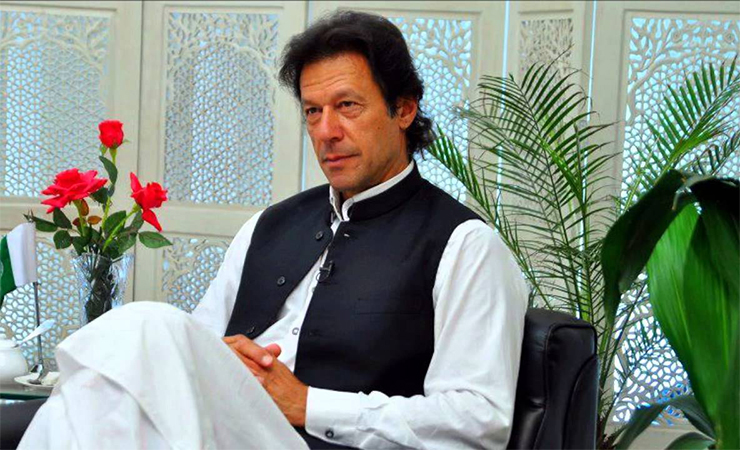
Many firsts, much tradition and a great deal left out on the official agenda for the Iran-Pakistan talks. Pakistan’s Prime Minister Imran Khan, who took office in August 2018, paid his first visit to Tehran on April 21-22, 2019 after receiving an invitation from Iranian President Hassan Rouhani.
For the first time in history, the head of the Islamic Republic of Pakistan:
– voiced support for the ideals of Iran’s Islamic Revolution as the country marked its 40th anniversary, who assured Iran’s spiritual leader Ayatollah Ali Khamenei that Islamabad has set out on a path to revolution;
– publicly admitted that terrorists had used Pakistani soil in the past to carry out attacks against Iran, which has been met with sharp criticism from the Prime Minister’s opposition in Islamabad;
– avoided bringing up the failed negotiations on the Iran-Pakistan gas pipeline.
There were three challenges that the Prime Minister dealt with in a terrific manner, which took place in the background during his visit to Tehran:
– Washington’s steep step-up in anti-Iranian sanctions (Iran-US relations deteriorated in May 2018 following President Donald Trump’s announcement that the US was going to pull out of the Iran nuclear deal, JCPOA; in April 2019, the US declared the Islamic Revolution Guards Corps a terrorist organization; Washington will start imposing economic sanctions against countries importing Iranian crude oil since May 2, 2019; the US has been putting pressure on the EU to politically isolate Iran). Despite threats of economic sanctions, in April 2019, both Islamabad and Tehran called on Washington to fully implement the Iran nuclear deal as soon as possible;
– Saudi hostility towards Iran;
– a brutal terrorist attack in the Pakistan-Iran border area which took place in April 2019.
PM Imran Khan’s visit to Iran can be described as a breakthrough in bilateral relations. The historical, cultural, religious and civilizational ties between the two neighboring Muslim countries are now being recognized with respect for the principles of national sovereignty and territorial integrity. Imran Khan had shown how he is putting Pakistan’s new approach of strengthening relations with all neighboring states into action, which was put forward by the government of the Pakistan Justice Party (PSP/PTI) headed by Khan. Iran and Pakistan have stressed that “no third country” will be able to prevent Iran-Pakistan relations from developing (an obvious reference to the United States and its policy which aims to isolate the Islamic Republic). And given the current situation, countries in this region need to cooperate independently and directly promote their own interests. For Pakistan’s former government, friendship with Iran did not go beyond the diplomatic level.
Former Prime Minister Nawaz Sharif, who came to power in June 2013 with the victory of his party, the Pakistan Muslim League-Nawaz (PML-N), caved to pressure from the US and Saudi influence and tried to forget about the agreements signed in spring 2013 by Pakistani President Asif Ali Zardari and Iranian President Ahmadinejad for the construction of the Iran-Pakistan gas pipeline.Iran-Pakistan relations were frozen while Sharif was in power. Only in November 2017, with the Chief of Army Staff (COAS) General Qamar Javed Bajwa’s visit to Iran, their original defense partnership began to be restored to earlier levels, and bilateral relations intensified on a diplomatic and economic level at a later stage.
In July 2018, immediately after the results of the parliamentary elections were announced, Iran expressed a willingness to promote and expand its cooperation with Pakistan’s new government across all areas. Iran’s Minister of Foreign Affairs was one of the first high-ranking foreign diplomats to pay an official visit to Islamabad in autumn 2018, when he met with Imran Khan. It was during this visit, in response to the Naya Pakistan (New Pakistan) program of reforms announced by the Pakistan’s new government, when Iran’s Foreign Minister told Khan what had been achieved tanks to the 1979 Islamic Revolution, particularly in terms of health, with the greatest improvements seen in primary health care provision. The Iranian experience appealed to Pakistan, and the two states signed the Declaration for Cooperation in Healthcare Sector in 2019.
The current composition of bilateral relations is far more diverse and complicated, and involves security, trade, religious pilgrims, the status of Pakistani prisoners in Iran, the ports of Gwadar and Chabahar, cultural ties, humanitarian cooperation and joint participation in the Chinese Belt and Road Initiative.
Time and time again, terrorist attacks have challenged bilateral relations between these countries. In recent years, terrorist groups have intensified their activities on both Iranian and Pakistani soil. Therefore, Islamabad and Tehran have re-acknowledged the importance of regular cooperation between politicians, the military and security personnel to combat threats such as drug trafficking, kidnapping and human trafficking, hostage-taking, money laundering, bombings and arson. Following the talks, the countries signed a deal to cooperate in the fight against terrorism for the first time; agreed to form a Joint Rapid Reaction Force; and agreed to open new border crossings (in Gabd-ReemdanandMand-Pishin), as well as border markets. The countries plan to continue to build a fence along the border and synchronize the work of border patrol services.
The leaders of both countries expressed regret that Iran, with a population of 80 million people, and Pakistan, with a population of 210 million people, have not taken advantage of their trade potential for various different reasons, and the range of goods has remained limited over the past years. Nawaz Sharif’s government took up Washington’s anti-Iranian sanctions policy, and the volume of trade declined as a result. Since 2017 however, the countries have been gradually expanding the range of goods they produce and the volume of exports and imports using the means they have available. For example, they agreed to establish a barter committee for the exchange of goods with the aim of stepping up monetary, financial and commercial activities. Iran, for its part, is prepared to deliver a tenfold increase in the volume of electricity it exports to Pakistan.
Long-term plans include the construction of a railway line connecting the ports of Pakistani Gwadar and Iranian Chabahar, as well as completing the construction of the gas pipeline to Pakistan.
The process of brokering an internal Afghan political settlement remains a matter of concern for other countries in the region. Iran and Pakistan believe that the formula which would give this solution is in intra-Afghan and Afghan-led dialog.
Peace and harmony in the region remain a priority and provide the foundation for developing transport transit corridors, which are the engine for accelerating bilateral and regional partnerships and trade. Iran and Pakistan support the implementation of bilateral and multilateral agreements, including the Chinese Belt and Road Initiative –BRI; China-Pakistan Economic Corridor – CPEC; and agreements on establishing the North–South and East–West corridors in Iran.
During the visit, Iran acknowledged that a solution may only be found to the conflict in the Jammu region and Kashmir through dialog, which should take the will of the regional population into account and should adhere to the UN Security Council resolutions. The Pakistani Leader, in turn, spoke of injustice against the Palestinians. Both Iran and Pakistan view Israel’s illegal occupation of Golan Heights and the transfer of the Israeli capital from Tel Aviv to Jerusalem as a violation of international law, which will only lead to greater instability in the Middle East.
Natalia Zamarayeva, Ph.D (History) Senior Research Fellow, Pakistan section, Institute of Oriental Studies of the Russian Academy of Sciences.
Big Lie Day
By Leonid SAVIN – ORIENTAL REVIEW – 03/05/2019
2 May has gone down in modern history as the day that terrorist number one, Osama bin Laden, was killed. The official version states that, in 2011, he was shot dead by US special forces in the house where he was living with his wives and children. The house itself was in a city in Pakistan, where he had been hiding undetected ever since the senior members of al-Qaeda (a terrorist organisation banned in Russia) had fled Afghanistan following the defeat of the government of Mullah Omar, who had been sheltering them. Under cover of night, US helicopters carrying two groups of special forces flew to the operation location from Afghanistan, which was a violation of Pakistan’s state sovereignty.
Recalling the incident in his book Pakistan: A Personal History, which was published in the same year as Osama bin Laden’s official assassination, the current prime minister of Pakistan, Imran Khan, noted: “It was bad enough that the world’s most wanted man was not found in some cave but in a city only 50 kilometres from Islamabad, and a mile from Pakistan’s Military Academy. What made it worse was that the news was broken to us Pakistanis, and the rest of the world, by President Obama”.
“It was several hours later when a statement came from our government congratulating the US and taking credit for providing the US with all the information about Osama’s location. This begged the obvious question for all Pakistanis: if we knew about his whereabouts, then why did we not capture him ourselves? The media in India and the rest of the world went wild, blaming Pakistan’s ISI (in other words, the army) for having kept Osama in a safe house for the past six years. […]
“Three days later, the army chief denied all knowledge of the operation and announced that any such violation of our sovereignty would not be violated again. A week later the PM only added to the confusion when he finally gave a statement, suggesting ‘a matching response’ to any attack against ‘Pakistan’s strategic assets’. For Pakistanis, especially those living abroad, this was one of the most humiliating and painful times. The CIA chief Panetta further rubbed salt in our wounds by bluntly saying that the Pakistan government was either incompetent or complicit.”
The US propaganda machine, meanwhile, was continuing its work around the world and few now dispute the widely held view, or rather myth, that bin Laden was killed in Abbottabad. Films have been made, and books published, that back up America’s official version with an additional narrative. The Russian-language Wikipedia page on Operation Neptune Spear goes into great detail. What’s more, all of the links are to US resources or reprints of them.
The fact that everyone who took part in the raid on bin Laden’s house is now dead seems a little strange, however. Just as suspicious is the fact that Dr Shakil Afridi – who, according to official legend, obtained evidence of bin Laden’s whereabouts by running a fake vaccination programme – was arrested almost as soon as the operation was over and sentenced to 33 years for treason. Something else that gives pause for thought is the official story that bin Laden’s body was buried at sea on the same day. There had apparently been enough time for examination and identification at the US military base in Afghanistan and the Americans had got everything they needed to know.
The author of this article recently got the opportunity to go to Abbottabad and used the visit to see where bin Laden was killed and glean any details that were not published in the world’s press.
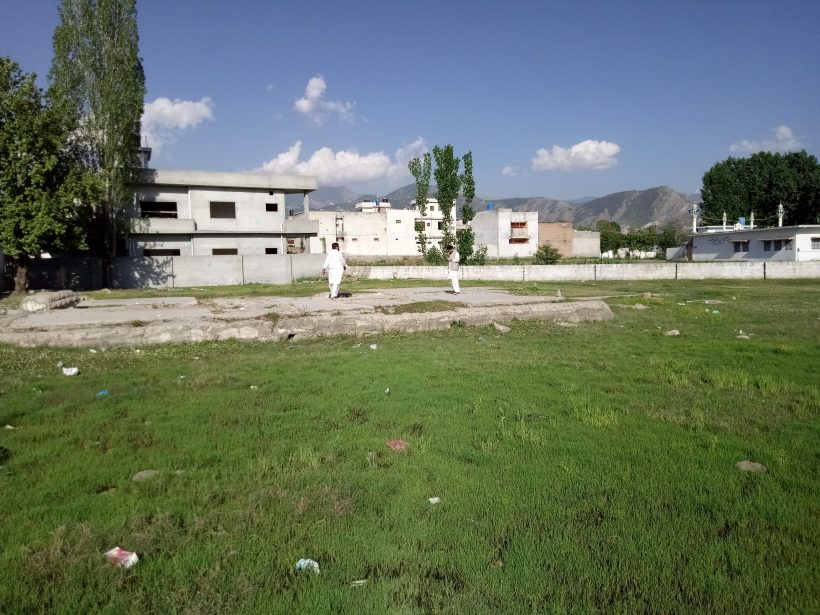
The city of Abbottabad is located in a valley surrounded by mountains and the Karakoram Highway passes close by. As well as the Military Academy in Abbottabad itself, there are a number of military bases and installations located around the city. The fence of an ordnance factory that produces a variety of weapons stretches for many kilometres along both sides of the Karakoram Highway. In other words, it is a place with a pretty high level of security requirements. In 2011, when the operation was carried out, the security measures in and around the city were probably just as strict and serious.
Almost immediately before entering the territory of the Academy, there is a single right turn that leads to the suburb of Bilal Town. We stopped alongside a small group of men outside a shop and asked for directions to bin Laden’s house. After a few seconds’ pause, one of them told us how to get there and where to turn. We stopped again outside another shop further along to clarify exactly where we were going and arrived a few minutes later.
The first person we met was an elderly gentlemen and we asked him about the house, to which he replied: “Yes, that’s the house where the Americans carried out their operation and killed people, only bin Laden wasn’t there. It’s a lie.”
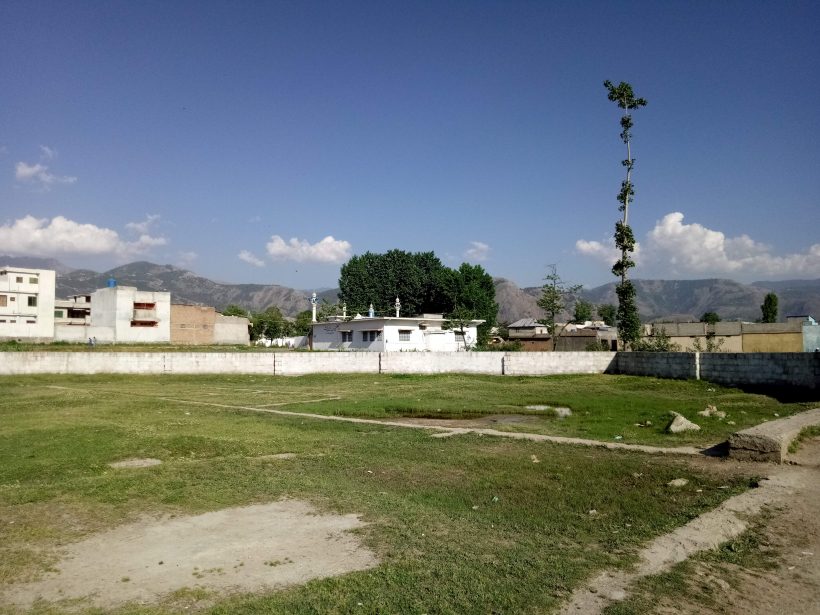
The man hurried on his way and we didn’t question him further. All that remains of the house are the foundations (the building was demolished some time after the operation – another strange fact), and the territory is surrounded by a fairly low concrete wall with a few openings. We saw two men within the walls of the compound itself and decided to talk to them. One of them willingly told us what he knew.
He lives close by and, on the night in question, he and his family heard the sound of helicopters. The sound was so loud that his father climbed up onto the roof, afraid that a helicopter might fall onto their house. A flash then lit up the sky, and explosions and gunfire rang out.
The house itself, where the operation took place, was located away from other structures. There are a few other buildings in the neighbourhood today but, in 2011, only a single-storey building stood opposite. Nevertheless, all the neighbours went up onto their roofs or outside to see what was going on.
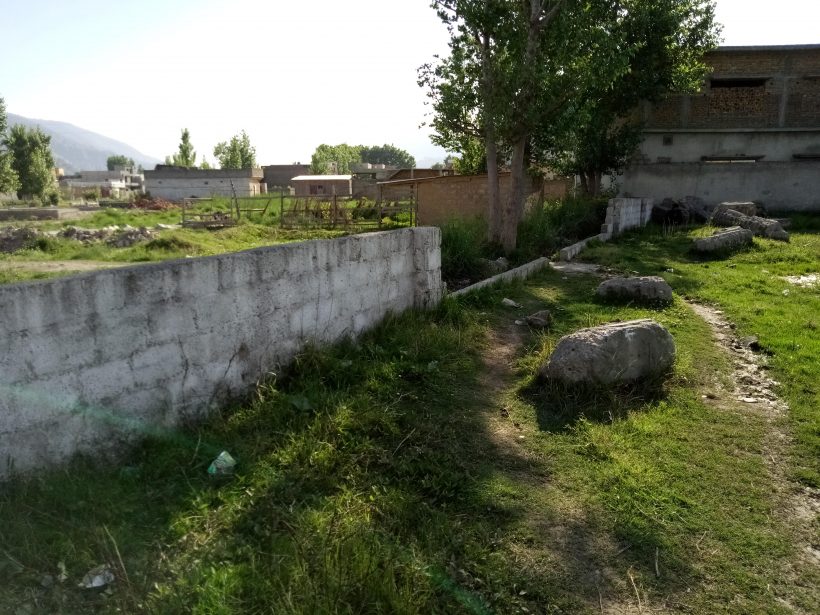
They all knew who was living in the house. According to one of the men we spoke to, it was the family of a businessman from Peshawar. All the neighbours respected him because he regularly helped the local community. The fence around his house was quite high and it’s possible that this was the deciding factor for those who had planned the operation.
“What happened next was like an Indian action movie from the 1990s,” recalls an eyewitness. One of the helicopters fell and burst into flames.
The police arrived about an hour after the first explosions and cordoned off the area, preventing anyone from getting in.
“It’s strange, because when there’s a wedding or a celebration, people often fire into the air and the police arrive in minutes, but this time it took them almost an hour,” said a neighbour.
Another helicopter arrived some time later, picked up the US special forces and flew away. While telling us about it, a young man stated several times that it was like a well-played drama, especially when you take into account what happened next.
“The elderly gentleman you met on the road back there was arrested by the Pakistani intelligence agency and then released,” added the neighbour.
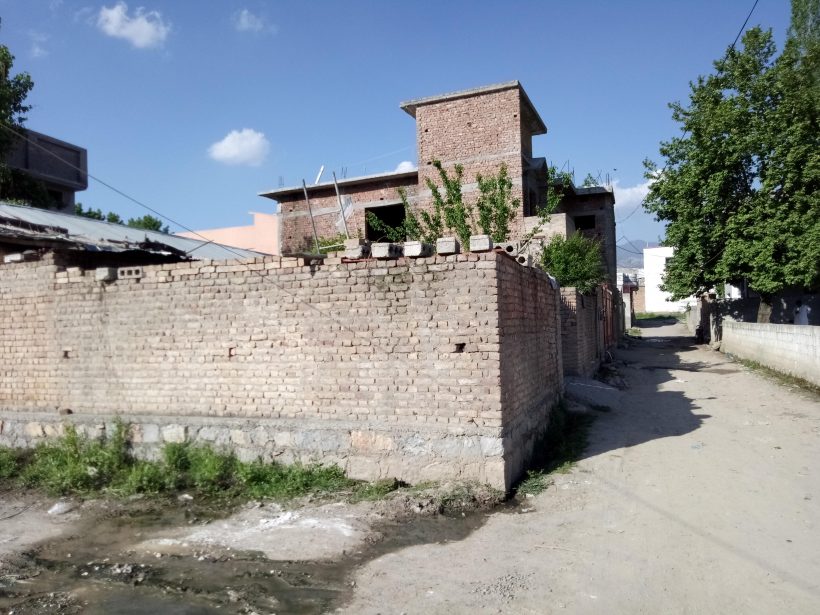
He also believes that bin Laden wasn’t there, and it was innocent people who suffered. Since the land was purchased from the state for residential development, it is legally private property. The deceased owner probably has family somewhere, but nobody has claimed it as yet. And it could be that the target was chosen intentionally so that there would be as few leads and witnesses as possible.
An interesting fate befell the wreckage of the US helicopter that crashed. The Pakistani military handed it over to China and, following relevant research, the country developed its own version of the US helicopter. So Operation Neptune Spear resulted in a leak of military technology. Such things aren’t talked about in America, however.
It should be added that, during America’s war on terror following 9/11, 36,000 people have been killed in Pakistan, including 6,000 soldiers; the country has lost approximately $68 billion; and nearly half a million people have been displaced. While it costs $1 million per year to keep an American soldier in Pakistan, the cost of one Pakistani soldier is $900 per year. And, until very recently, US combat drones repeatedly violated the airspace over Pakistan’s border with Afghanistan – often attacking civilians in the tribal area rather than militants.
However, media outlets under the control of the US State Department continue to report on the US Army’s successes in its war on terror. One needs only to recall Donald Trump’s recent statements regarding America’s victory over ISIS in Syria and Iraq. Fabricating lies and demonising America’s geopolitical opponents, as well as anyone who disagrees with the country’s global agenda, is all in a day’s work for the media lackeys of the US establishment.
‘A Complete Failure’: Venezuelan Coup Attempts Staged ‘More For The US Audience’
Sputnik – May 2, 2019
Juan Guaido’s third attempted coup against Venezuelan President Nicolas Maduro has failed just like the rest, but that hasn’t stopped the US corporate media from turning it into a heroic mass uprising for Americans to see. An activist told Sputnik the coverage is setting the stage for a war, but that both Americans and Venezuelans would resist it.
Guaido has claimed since January 23 to be Venezuela’s interim president, calling Maduro’s May 2018 reelection illegitimate. However, despite three attempts to divide the military ranks and raise a revolution in the country, Guaido’s opposition remains a small force that’s only proven capable of causing violence and chaos, not of grasping the hearts and minds of fellow Venezuelans.
Meanwhile, Washington officials continue to raise the specter of military force against Maduro’s government, which is still recognized by three-quarters of the globe’s countries as the legitimate government of Venezuela.
Radio Sputnik’s Loud and Clear discussed the situation with Gerry Condon, a Vietnam-era US veteran and peace resistor who is now the national president of Veterans for Peace and who recently returned from Venezuela; and Paul Dobson, a writer for VenezuelAnalysis.com, who reported from the Venezuelan city of Merida.
Dobson said the country Thursday seemed “relatively calm and stable” by comparison to earlier in the week.
“The events of Tuesday were to some extent, we can say, exaggerated by the international press,” Dobson noted. “There was definitely an attempted coup d’etat, but the extent to which Juan Guaido’s looking to grasp power was a lot weaker than he was perceived in the international corporate press.”
“Juan Guaido came out about five o’clock in the morning on Tuesday with a video message to his supporters saying he was taking a military base in Caracas with the support of ‘the main military units of the country.’ Both of these statements were later proven to be incorrect: he was outside the military base, not inside of the military base, and he had control of roughly 30 soldiers, of which about 25 were there, who later claimed they were tricked, according to their commanders. He later rejected their participation in this, and only 15 soldiers were left, essentially, on the side of Juan Guaido,” Dobson said.
“Thereafter, we saw significant civilian demonstrations across the country, principally in Caracas, but in other cities as well,” the writer told Sputnik. “We saw attempts by Juan Guaido’s supporters to both pressure through peaceful means but also violence the local military commanders to rebel against their chain of command, all of which was unsuccessful. By the end of the day, we saw Juan Guaido’s mentor and main political ally, Leopoldo Lopez, flee to both the Chilean and then later Spanish Embassy, where he is still holed up, and Juan Guaido went on record by calling his people onto the streets and to continue his struggle on Wednesday.”
Video recorded Tuesday and broadcast on Venezuelan television showed Venezuelan army soldiers taking back armored cars seized by the opposition.
“So yesterday, May Day, the government, who had already planned a traditional May Day march for the workers, made a new call for the people to come onto the streets and defend the national territory from this attempted coup d’etat — and the people responded,” Dobson said. “The march seen in Caracas has been described by many analysts as one of the largest Chavista marches in recent years.”
Dobson noted the opposition also “held an activity in eastern Caracas” that was “considerably smaller” and turned violent in the evening hours amid confrontations with the police and national guard, resulting in one death.
“Juan Guaido is free, still roaming the streets, but it can only be considered a complete failure for him, both in terms of achieving his political objectives, but also any sort of projection of power or domination here in the country. He is looking weaker now than he ever has been in the past,” Dobson said.
Condon told Sputnik that during his trip to Venezuela just before the most recent coup attempt, there was “no visible support for the opposition whatsoever” in the large, poor, working class districts. “I doubt, frankly, that Juan Guaido would even dare set foot in those barrios. He’s not welcome there. There’s a huge class divide; the opposition is largely white, middle class, of course led by wealthy ultra-right [wing] oligarchs, and they have even attacked people of color at those opposition marches, because if you have dark skin, you’re assumed to be a Chavista — a supporter of the government.”
Calling the most recent coup attempt a “Hail Mary pass, a hope and a prayer,” Condon said it seemed “staged more for the US audience. The real coup took place in the media… consistently [in] all of the mainstream media, there’s not a single voice you hear on the media against the US intervention, against the regime change effort. So it’s, in a sense, quite a big propaganda coup in the US media, aimed at the US people, perhaps preparing the way for a US military intervention.”
The activist said Veterans for Peace was calling on US soldiers to “resist participation in any military action” in Venezuela, noting that he expected “massive resistance” to such action, both on the ground by militias organized in the barrios, but also by the US soldiers themselves, who are “just fed up with having been deployed to one failed war based on lies after another.”
“I think that [US President Donald] Trump and his gang have kind of thrown down, they’ve kind of announced to the world that they are going to overthrow the Venezuelan government. I think they’re almost going to have to do something just to try to save face,” Condon said. “But I think their options, nonmilitary and military, are very limited, and I’m hopeful the resistance in Venezuela and around the world in solidarity with the Venezuelan people is going to triumph, and we’re going to turn a corner in the history of this hemisphere.”
More New ‘AIPACs’ Popping Up
Concern that Israel is losing its grip on U.S. politicians is breeding even more pro-Zionist lobby groups
By Philip Giraldi | American Free Press | April 30, 2019
New organizations dedicated to “defending” Israel are proliferating due to concerns that the American people are finally waking up to the fact that they have been getting ripped off by a vast Zionist conspiracy for the past 70-plus years. Ironically, while it has become possible to criticize Israel even in the mainstream media, the United States government itself has become more firmly in the grasp of the Israel lobby, most recently manifested in bills passed by Congress pledging undying love and affection for war criminal Benjamin Netanyahu and all his works. This has been due in large part to the effective lobbying by the American Israel Public Affairs Committee (AIPAC), which met in Washington in March and drew 18,000 of its supporters to both show up and lobby their congressmen.
The congressional love affair with Israel has been accompanied by billions of dollars in U.S. taxpayer-provided Danegeld per annum plus a de facto commitment to send American soldiers to fight and die for Israel even if Netanyahu starts a war for no reason whatsoever.
By one estimate there are 600 groups operating in the United States with the objective of promoting Israel’s interests. They run the gamut, politically speaking, and include leftward leaning organizations, like J Street, that aggressively support a two-state solution for Israel-Palestine while at the same time ignoring the fact that Israel has expanded its settlements in such a fashion as to make a Palestinian state unrealizable. On the extreme right is a group founded in 2010, which calls itself the Emergency Committee for Israel (ECI), headed by none other than Bill Kristol, former editor of the now thankfully defunct Weekly Standard magazine. The ECI board included Rachel Abrams, wife of pardoned felon Elliott Abrams, who is currently seeking to destroy Venezuela.
ECI is largely inactive at the present time, but when it was launched it claimed to be the most pro-Israel of all pro-Israel groups, which would be quite an achievement. It was most active in 2010-14 when it ran full-page ads against liberal advocacy groups, attacked the Occupy Wall Street movement for being anti-Semitic, and criticized individual congressmen for not being sufficiently pro-Israel. In 2013 the group came out against the proposed appointment of Chuck Hagel as secretary of defense because he had once mildly criticized Israel.
The recent controversy over comments critical of Israel and its lobby made by newly elected Rep. Ilhan Omar (D-Minn.) has sparked a wave of pro-Israel activism in and around Congress. At the end of January a new political group was formed by several prominent veteran Democrats, “alarmed by the party’s drift from its longstanding alignment with Israel.” The new group, which is calling itself the Democratic Majority for Israel (DMI), will support Democratic Party candidates who “stand unwaveringly” with the Jewish state.
The group, which is headed by Mark Mellman, a leading Democratic Party pollster, already has some “substantial” funding from the usual Jewish Democratic Party donors and it is interested in assisting potential candidates who are unambiguously supportive of Israel because of “shared values” and its contribution as “one of America’s strongest allies.” The website promises: “We will work to maintain and strengthen support for Israel among Democratic leaders including presidential and congressional candidates as well as with the grassroots of progressive movements. We are committed to doing so because we recognize that America’s relationship with Israel, the sole democracy in the Middle East, is a mutually beneficial one based on shared values and shared interests.”
Due to the fact that the common values and interests are difficult to identify—as they hardly exist and Israel is neither an ally nor a democracy—it might be tough sledding to convince skeptics of the actual value of the relationship for Americans. Instead, one suspects that the group will rely on the usual appeals to tribal or religious sentiment and citations of the holocaust coupled with threats of anti-Semitism leveled against those who question the formula. In reality, DMI, which will be active in state primaries, will likely create incentives through development of a funding mechanism for potential candidates who are enthusiastic about Israel while withholding funds from those who are not.
And there will be opposition to the snake oil DMI is selling, not only from Omar. She and Palestinian-American Rashida Tlaib of Michigan both support the Boycott, Divestment, and Sanctions (BDS) movement against Israel, and there are also a number of other new congressmen who will not hesitate to criticize Israel when it uses lethal force against Palestinian demonstrators. There are also reports that Democratic Party-declared presidential candidates Kamala Harris, Bernie Sanders, Elizabeth Warren, Beto O’Rourke, Pete Buttigieg, Kirsten Gillibrand, Jay Inslee, and Julian Castro have all confirmed they didn’t attend the AIPAC conference this year, possibly linked to a call by the leading progressive grassroots organization MoveOn for a boycott. Opinion polls also indicate that Democrats who sympathize more with Israel than with the Palestinians is at an all-time low of 19%.
Another new bipartisan pro-Israel political action committee was also launched in March in Washington. Pro-Israel America is headed by two former senior AIPAC staff members, Jonathan Missner and Jeff Mendelsohn. It is intended to provide political donations to candidates from either major party who adopt pro-Israel positions. On its initial list, it endorsed a total of 27 candidates— 14 Democrats and 13 Republicans—all of whom have demonstrated a willingness to support pro-Israel legislation in Congress.
The list predictably includes Sens. Lindsey Graham (R-S.C.) and Chris Coons (D-Del.); Rep. Steny Hoyer (D-Md.), the majority leader in the House; Rep. Eliot Engel (D-N.Y.), the chairman of the House Foreign Affairs Committee; and Rep. Michael McCaul (R-Texas), the Foreign Affairs Committee’s ranking Republican.
A press release from Pro-Israel America composed by Mendelsohn stated its mission: “The best way to strengthen the U.S.-Israel relationship is to elect pro-Israel candidates to Congress, and that requires political action from the thousands of Americans who care deeply about this issue.”
The Pro-Israel America website, which is still under construction, will reportedly encourage small donations to political campaigns, unlike the usual practice of bundling to create large contributions. Potential donors will be able to go to the website, evaluate candidates based on their pro-Israel credentials, and then contribute directly to their campaigns.
Finally, there is a third new online group called Jexodus, headed by a swimsuit model named Elizabeth Pipko, that is trying to convince Jewish voters to leave the Democratic Party and become Republicans because the GOP is now the party of Israel. It is hard to argue with that, as President Donald Trump has now moved the U.S. embassy to Jerusalem and recognized Israeli sovereignty over the Golan Heights, while Secretary of State Mike Pompeo has declared that God elected Trump to save the Jews from Iran. There will likely be even more concessions to Netanyahu in the lead-up to America’s own upcoming election in 2020.
All of the pro-Israel groups taken together constitute a veritable political juggernaut that seeks to advantage Israel and benefit it directly without regard for the damage done to American democracy and to actual U.S. interests. They should rightly be seen as organizations that regard their loyalty to the United States as negotiable, but they try to obfuscate the issue by claiming, wrongly, that there exist compelling reasons why Israel and the U.S. should continue to be best friends.
As Americans increasingly begin to appreciate how Israel is in fact a serious liability, that line will not continue to sell very well, no matter how many congressmen and tame journalists are bought and no matter how many new groups pop up like mushrooms funded by Jewish billionaires. Change is coming.
Philip Giraldi is a former CIA counter-terrorism specialist and military intelligence officer and a columnist and television commentator. He is also the executive director of the Council for the National Interest.
Mahathir: Israel “ root cause of world instability”

Palestine Information Center – May 2, 2019
KUALA LUMPUR – Malaysian premier Mahathir Mohamed has described Israel as a terrorist nation and the root cause of instability in the world.
Addressing youths at Al Sharq Annual Conference 2019 in Kuala Lumpur, the Malaysian leader stressed that the time had come for the international community to stand together and end Israel’s occupation of Palestine.
“Apartheid, genocide, crimes against humanity, crimes of aggression and all the evil that mankind can inflict on others can be compiled in Palestine — courtesy of the barbaric, arrogant, terrorist nation called Israel.”
“Until and unless the international community is committed to finding a solution to bring an end to the occupation of the land belonging to the Palestinians, the region and the rest of the world will not have much of a chance for stability and order,” he said in his keynote address before opening the conference, held the first time in Malaysia.
His remarks received overwhelming applause from the participants.
Mahathir also said the senseless murder of innocent people continued in the invasion of Afghanistan and Iraq by the US-led coalition in 2001 and 2003 which had seen more tumult than stability in the region before the Arab Spring came about.
“Nations like Syria, Libya and Yemen today provide images of a human tragedy while the rest of the world watch helplessly.”
“Their sufferings did not originate from internal strife but rather interference and interventions from external powers which obviously were doing it out of self-interest, disguised under the veil of democracy and human rights,” he said.
The premier underlined that ancient civilizations or rather these cradles of civilization were pummeled to pulp by present day powers that have styled themselves as the leaders of modern-day civilization.
“There is nothing civilized in their actions or behavior. The only thing they can showcase is technology capable of producing weaponry that are extremely efficient in maiming, killing and murdering people by the thousands,” he stressed.
Zero Carbon Proposals Slammed As Irresponsible & Arbitrary
By Paul Homewood | Not A Lot Of People Know That | April 2, 2019
The GWPF has issued this press release in response to the Committee on Climate Change’s new proposals to cutting CO2 emissions to zero by 2050:
Summary
The recommendation of the Committee on Climate Change (CCC) for a Net Zero emissions target by 2050 is grounded in nothing stronger than irresponsible optimism and arbitrary assumptions about cost and technological feasibility. In point of fact, the technologies seen as necessary, including carbon capture and sequestration (CCS), further expansion of renewable generation, widespread adoption of hydrogen, and the very rapid electrification of the UK’s entire heating and transport systems, are either known failures or are unproven at these scales and would cost two to three times the amounts claimed by the CCC. Attempts to deliver these policies would ultimately fail, but in the attempt the UK would further harm its already declining productivity, and so erode the UK’s ability to compete internationally and thus deliver an acceptable standard of living for its people. This is not a sustainable low emissions strategy, and even if accepted by government is very likely to end only in humiliating and distressed policy correction. A wise government would reject this advice.
The Committee on Climate Change (CCC) is advising the government of the UK to revise and increase the ambitions of the Climate Change Act. The Act already commits the country to an 80% reduction of greenhouse gas emissions by 2050 as compared to 1990 levels. The new proposal is that it should have ‘Net Zero’ emissions by that year. The UK has, the CCC claims, already reduced its inland consumption emissions by 40% against the 1990 baseline, and it presents the current proposal as a rational continuation of that success story. But this is a selective and misleading history. When the emissions associated with UK consumption through manufacturing in other countries are taken into account, the UK’s carbon footprint was actually still rising up until the 2008 downturn, when it fell because of economic difficulties, and is now showing some signs of returning to the upwards trend as the economy slowly recovers. In essence, the UK simply exported its emissions to other parts of the world, principally China, in substantial part through carbon leakage resulting from high energy costs in the UK, costs which in substantial part were the result of climate policies. This history gives no ground for optimism with regard to the Net Zero target now proposed. Far from being a success on which we can build, UK climate policy has been a failure, resulting only in domestic economic damage and the illusion of reduced emissions.
The overriding problem facing the UK is the comparatively slow growth in productivity. For much of the last century, the UK’s productivity has been below that of the major industrial economies, and the gap has grown in the first two decades of the 21st century. The consequence has been no growth in real wages and incomes, a fact that strains domestic budgets and exacerbates a general reluctance to make the investments required for future economic prosperity.
This deterioration in productivity growth closely follows and is substantially associated with the implementation of policies to reduce energy use and carbon emissions. There are three reasons for this link:
(a) Large amounts of investment and labour have been diverted to capital-intensive renewables, crowding out investment in other infrastructure and sectors with much higher levels of capital and labour productivity.
(b) The resulting increases in energy prices have prompted high-productivity manufacturing and other industries to conclude that they should look elsewhere for growth in both demand and production.
(c) More generally, the efforts and resources of businesses and innovators have been diverted away from improving productivity and towards efforts to reduce carbon emissions. Furthermore, the idea that there is a global opportunity for the UK to grow by exploiting low carbon technologies is demonstrably a myth.
There can be no doubt that these factors have had a major impact on the development of the UK economy in the last two decades. Low carbon growth may be the holy grail, but the reality is almost no growth and slower reductions in carbon emissions per unit of output than in, say, the United States. Yet the CCC is now recommending proposals that are explicitly designed to reinforce this disappointing performance.
If the government accepts the CCC’s proposals, which are marked by a persistent special pleading about the costs and feasibilities, it will immediately sabotage any plan to rectify the UK’s poor productivity performance and weaken international competitiveness. Its recommendations will ensure that the UK suffers from even lower productivity and be still poorer relative to the rest of the world in 2050 than in 2020. At the same time, the slower growth in productivity brought about by these proposals will increase the burden of meeting the CCC’s targets to a level that will not be bearable. The only doubt is how much pain the population will endure, and how much damage will be done, before these infeasible targets are abandoned.
The study that underlies the CCC’s proposals is marked by what can only be called ‘fantasy analysis’. Electricity demand is required to double on present levels, when in fact it is falling due to high prices. The CCC’s plans require that all of that additional electricity must come from low carbon sources, as opposed to under 50% today. The CCC itself admits that CCS is ‘essential’ to its vision for the 2050 target, and must be substantially deployed before 2030, with a significant level by 2026. At present it is non-existent in the UK, and non-viable at scale elsewhere. There must be 30 GW of offshore wind by 2030, and 75 GW by 2050; at present there is 8 GW, all heavily subsidised, with no sign that the industry is in fact able to build offshore wind at market competitive rates.
The CCC believes that petrol and diesel cars and vans must be phased out well before 2040, but admits that even the current eye-catching and over-ambitious plans to mandate electric vehicles by 2035 cannot deliver this transformation. It consequently suggests that new fossil-fuelled vehicles must be outlawed by 2030. Such a ban would in all probability destroy the existing market for domestic car manufacture, as Chinese and other Asian companies using cheap energy and cheap labour will make the UK uncompetitive.
The study notes that the UK’s provision of space and water heating must be converted to electricity and hydrogen, but admits that there is currently ‘no serious plan’ in existence for this revolution. That is correct, but unfortunately, the study does not itself provide one.
The CCC states that there must be very large afforestation schemes to act as carbon sinks, at a rate of 20,000 hectares per year up to 2025, and 27,000 hectares per year thereafter. The CCC itself admits that the current rate has been only about 10,000 hectares per year over the last five years. In any case, the use of forestry as a carbon sink only has a short-term impact unless CCS is applied to wood burning, which is not feasible on a small scale and is unaffordably expensive on a large scale.
Overall, the CCC’s reaction to these manifest failures and difficulties is to conclude that the ‘voluntary approach’ has failed hitherto and would not deliver the new proposals. Implicitly, therefore, the policies that it recommends must be mandatory and state-led. But nowhere does the CCC’s report consider whether the state actually has the administrative or technical competence to successfully deliver these remarkable objectives. Nor does it consider whether the cost of doing so is likely to be tolerable to the public. Indeed, strikingly, though the CCC makes assertions about the cost and benefits of increasing the Climate Change Act target to Net Zero, there is no attempt to actually quantify the marginal costs and benefits of each step necessary – the most fundamental requirement for such an exercise. Indeed, many of the costs actually cited in the report ignore the practical realities of installation, operation and maintenance of technologies that are well-understood and have failed to achieve widespread deployment without large subsidies. Experience tells us that, if adopted, the CCC’s programme will cost anything from three to five times the estimates in this report and will take up to twice as long to implement.
In summary, the Committee on Climate Change has not produced a serious assessment of the practical feasibility and costs of a Net Zero 2050 target. On the contrary, it has simply taken the Net Zero target as a given and made irrationally optimistic and arbitrary assumptions comprising a fictional narrative that magically delivers the emissions reduction goal as the Happy Ending. This is unrealistic, irresponsible, and misleading.
The government should obviously reject the Climate Change Committee’s poorly argued advice, which is economically hazardous and does not offer a sustainable emissions reductions trajectory.
https://www.thegwpf.com/gwpf-statement-on-the-proposed-net-zero-2050-emissions-target/
Russian and US Positions on Venezuelan Crisis are Incompatible – Lavrov
Sputnik – 02.05.2019
On Wednesday, the Russian foreign minister spoke to US Secretary of State Mike Pompeo, telling the top US diplomat that Washington’s interference in Venezuela’s affairs was a destructive approach fraught with “the most serious consequences.”
Russian Foreign Minister Sergei Lavrov urged the United States to refrain from returning to the imperious ‘Monroe Doctrine’ in its relations with Venezuela, and indicated that while the Russian and US positions on the crisis in the Latin American country remain incompatible, dialogue must continue.
“We agreed to maintain contacts, including on Venezuela, but I don’t see a way to reconcile our positions — ours, on the one hand, which is based on the UN Charter and the principles and norms of international law, and that of the United States, on the other, in which Washington assigns the acting president of another country,” Lavrov said, speaking to reporters in Tashkent, Uzbekistan on Thursday.
“Our positions are incompatible, but we are ready to talk,” Lavrov stressed.
According to the foreign minister, during their conversation Wednesday, he told Pompeo that the return of the Monroe Doctrine approach to US foreign policy was a sign of disrespect to the people of Venezuela and Latin America as a whole.
Commenting on the possibility of a US military intervention of Venezuela, Lavrov said that Russia plans to create a bloc of countries to counter such plans. This group is already being formed at the UN, he indicated. “I hope that it will receive serious support from the organisation, because we’re talking about a very simple issue — one that’s hard to distort: the defence of the fundamental norms and principles of international law as they are defined in the UN Charter.”
Maduro Never Had Plans to ‘Flee’ Venezuela
Lavrov noted that earlier claims by Secretary of State Pompeo about Maduro’s supposed plans to escape the country and Russia’s efforts to dissuade him from doing so were simply not true. “If one were to review everything that officials in the US administration say about Venezuela, an endless series of questions would arise. And all of these questions, as a rule, have one and the same answer. Putting it diplomatically: this is not true,” Lavrov said.
Asked why Secretary of State Pompeo may have called him in the first place, Lavrov said that as he understood it, “he called so that he could later say publicly that he called me and urged Russia not to interfere. Well, he did so.” At the same time, Lavrov indicated that Russia does not interfere in Venezuela’s internal affairs, calling Pompeo’s allegations to that effect “rather surreal.”
“I told him that based on our principled position, we never interfere in the affairs of others, and urge others to do the same,” Lavrov said.
Lavrov and Pompeo spoke by telephone by Wednesday, a day after Venezuelan opposition leader Juan Guaido announced the beginning of the “final phase” in the opposition’s bid to seize power in the Latin American country. Before the talks, Pompeo told US media that the US could still use military force against the country “if that’s what’s required.”
Guaido proclaimed himself Venezuela’s interim president on January 23, two weeks after Maduro’s inauguration for a second term following elections in May 2018. The opposition leader was immediately recognised by the US and its Latin American and European allies, as well as Canada, while Russia, China, Cuba, Nicaragua, Bolivia and other countries around the world voiced their support for the elected government, or urged non-interference in Venezuela’s internal affairs.
Featured Video
Daniel Davis: U.S. Military Options & War Narrative Collapse
or go to
Aletho News Archives – Video-Images
Book Excerpt
“Vaccines Do Not Cause Autism!” The Science is Settled. Right?
ICAN urges the IACC to actually study infant vaccines and autism
 By Aaron Siri | Injecting Freedom | March 16, 2026
On behalf of ICAN, we just sent a copy of chapter 11 of Vaccines, Amen to the newly appointed members of the federal Interagency Autism Coordinating Committee (IACC).
If you haven’t already read this chapter, you can read the whole thing in the attached letter. I trust that after you read it, you’ll see why the statement “vaccines do not cause autism” is a belief, not science!

IACC Public Comment Letter
1.53MB ∙ PDF file
Includes chapter 11 of Vaccines, Amen
Blog Roll
 Aletho News
- Washington’s War on Cuba Is Older Than You Think
- Daniel Davis: U.S. Military Options & War Narrative Collapse
- Protesters call on Brussels university to cut partnership with Israeli defense-linked firm
- Weapons makers cash in on Trump’s Iran war
- Why Trump’s anti-Iran naval coalition in Strait of Hormuz is doomed to fail
- IRGC says regional energy sites linked to US will be reduced to ashes
- Qatar condemns ‘dangerous’ Israeli attack on gas field
- Iran made ‘unexpectedly substantial’ offer during Geneva talks, US envoys ‘dragged’ Trump into war: Report
- Russia condemns Israel’s attack near Bushehr plant, files complaint
- Russia Strongly Condemns Actions Aimed at Harming Health of Iranian Leadership – Kremlin
- If Americans Knew
- How ignorance, misunderstanding and obfuscation ended Iran nuclear talks
- Israeli media reports grotesque settler attack in West Bank
- UK security adviser attended US-Iran talks and judged deal was within reach
- Tucker Carlson says ‘neocons’ will try to destroy Joe Kent over resignation
- Lebanon death toll exceeds 900, another assassination in Iran, bombing in Gaza – Not a ceasefire Day 159
- Trump’s counterterrorism chief, whose own wife was killed by ISIS, quits over Iran War saying Tehran posed ‘no imminent threat’
- Here’s what US could fund instead of Bibi’s war on Iran
- Israel Killed Over a Dozen Lebanese Paramedics in Three Days, Now Claiming That Ambulances Are “Hezbollah” Targets
- War on Iran: These are the heritage sites devastated by US and Israeli attacks
- Four news stories from Israeli media that illustrate Israeli “justice”
- No Tricks Zone
- Energy Expert: Germany’s Nuclear Phaseout Was A “500 Billion Euro Mistake”
- New Research: South Australia’s Mid-Holocene Sea Surface Temperatures Were 4°C Warmer Than Today
- Storing Green Energy To Last Germany 10 Days Would Require A 60-Million Tonne Battery
- New Studies: UK Sea Levels Were 4 Meters Higher Than Today During The Mid-Holocene
- Destructive Green New Deal: German Energy And Metal Group Warns Of Drastic Crisis
- New Study Documents A 20-Year Pause In Arctic Sea Ice Decline – Driven By Internal Variability
- Wake-up Call: Survey Shows Majority Of Germans Now Favor Postponing Climate Targets!
- Televised! Leading German Political Candidate Tells Schoolchildren CO2 Makes Sun Hotter!
- New Study: A Century Warming Of 1.1°C Is ‘Commonplace’ And ‘Not Unusual’ During This Interglacial
- New Study: ‘Internal Noise’ And Volcanic Forcing Can Trigger 10-15°C Warming Within Decades
 Aletho News