Jordan monarch orders changes to $10 billion gas deal with Israel
Press TV – April 30, 2019
Jordanian King Abdullah II has ordered a review of his country’s multi-billion-dollar deal to import natural gas from the Israeli-occupied territories.
The London-based and Arabic-language Asharq al-Awsat newspaper, citing senior Jordanian political sources, reported that the king made the decision “in a technical report that examines Jordan’s interests from the continuation or the freezing of the agreement.”
Khaled Bakkar, the head of the finance committee in the Jordanian parliament, said the gas deal apart from being “blatant normalization” with the Israeli regime, is “economically weak” based on the feasibility studies.
He stressed that Jordan’s energy production surpassed the country’s needs, and the import of Israeli gas was only for the benefit of the Tel Aviv regime.
On September 26, 2016, Jordan’s National Electric Power Company signed a 10-billion-dollar deal with US-based Noble Energy and Israeli partners, which will tap the Leviathan natural gas field in the Mediterranean Sea off the coast of Israel for the supply of approximately 1.6 trillion cubic feet of natural gas, or 300 million cubic feet per day (mcf/d), over a 15-year term. Production is expected to begin around 2019 or 2020.
On March 26, members of Jordan’s parliament called for the cancellation of the gas deal with Israel during a parliamentary session closed to the public.
House Speaker Atef Tarawneh stated that all sectors of the society and members of parliament utterly reject the Jordanian electricity company agreement to buy Israeli natural gas.
Several legislators argued that the multi-billion-dollar deal violates Article 33, section two of the Jordanian constitution, which states: “Treaties and agreements which entail any expenditures to the Treasury of the State or affect the public or private rights of Jordanians shall not be valid unless approved by the parliament; and in no case shall the secret terms in a treaty or agreement be contrary to the overt terms.”
Lawmaker Saddah al-Habashneh said the deal was unconstitutional, stressing that members of parliament were not given access to read what he called the “secret” deal.
“Why are they hiding it? It’s a clue that there is something. It is totally rejected,” he commented.
Habashneh then demanded the deal be scrapped along with Jordan’s peace accord with Israel – known as Wadi Araba Treaty and signed on October 26, 1994.
“We are calling for the Wadi Araba agreement to be dropped. What is peace when they’re attacking Gaza?” the parliamentarian said.
“And with yesterday’s recognition of the Golan Heights, what’s left? We want dignity,” he pointed out.
On March 25, US President Donald Trump signed a proclamation, formally recognizing Israel’s sovereignty over the Golan Heights. The announcement came as Israeli Prime Minister Benjamin Netanyahu visited the White House.
The Syrian Ministry of Foreign Affairs and Expatriates, in a statement, called the US decision a “blatant attack on the sovereignty and territorial integrity” of Syria.
“The liberation of the Golan by all available means and its return to the Syrian motherland is an inalienable right,” according to the statement carried by Syria’s official news agency SANA, which added, “The decision … makes the United States the main enemy of the Arabs.”
The Arab League also condemned the move, saying “Trump’s recognition does not change the area’s status.”
Iran, Iraq, Russia and Turkey also condemned the US move.
Israel seized the Golan Heights from Syria after the 1967 Six-Day War and later occupied it in a move that has never been recognized by the international community. The regime has built dozens of settlements in the area ever since and has used the region to carry out a number of military operations against the Syrian government.
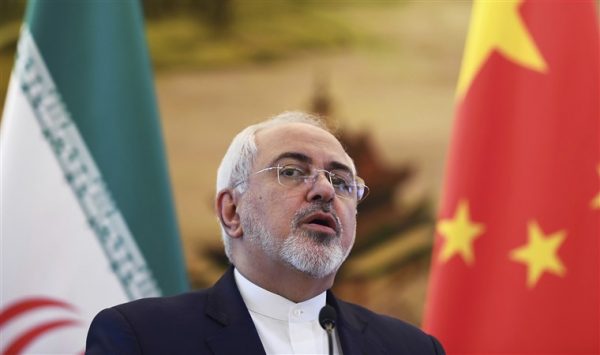
Zarif: US Unilateralism Quickly Replacing Rule of Law with Rule of Jungle
Al-Manar | May 1, 2019
Iranian Foreign Minister Zarif called on Wednesday for a collective effort to deal with the alarming unilateralism of the current US administration, which is “quickly replacing the rule of law with the rule of the jungle.”
In his address to Asia Cooperation Dialogue in Doha, the top Iranian diplomat said that the “imposition of the will of a single power over all other nations is an existential threat” for everyone.
“Unless we align our capabilities to secure multilateralism, a rising and aggressive unilateralist wave can cover the entire world, quickly replacing the rule of law with the rule of the jungle,” Zarif said, addressing the 16th Foreign Ministers’ Meeting of the Asia Cooperation Dialogue in Doha, Qatar.
“Let me assure you that in the relentless pursuit of dialogue and multilateralism, Iran will always be a steadfast partner,” the Iranian foreign minister reiterated.
“The position of the Islamic Republic of Iran on the North-South and East-West transit corridors—along with a well-developed transportation infrastructure—plays a crucial role in connecting members of our community to other regions and contributing to the “Pillar of Connectivity” of our forum.”
The Asia Cooperation Dialogue (ACD) is an inter-governmental organization created in Thailand on June 18, 2002 to promote Asian cooperation at a continental level.
The ACD was founded by 18 members. Since March 2016, the organization consists of 34 states.
US, Israel to supply anti-aircraft missiles to Kurdish militants in Syria: Report
Press TV – May 1, 2019
The United States and Israel are reportedly set to supply anti-aircraft missiles to Kurdish militants in northern Syria amid tensions between Ankara and Washington over the latter’s support for the militants, which the Turkish government views as terrorists.
Citing local sources, Turkey’s Yeni Safak daily reported that the US is set to deliver shipments of Stinger Man Portable Air Defense System (MANPADS) to militants of the Kurdistan Workers’ Party (PKK).
The PKK, it added, has designated the towns of Rmelan and Shaddadah in Syria’s Hasakah Province as well as the Jalabiyah and al-Omar regions as launching points for its American-supplied missiles.
Ankara is unhappy with Washington’s support for Kurdish militants of the People’s Protection Units (YPG), which it views as an extension of the PKK, and has repeatedly called on the US administration to stop providing them with arms.
The PKK has been fighting for autonomy inside Turkey for decades and runs bases in neighboring Syria and Iraq as well.
The report further said the regime in Israel has also vowed to supply the Kurds with Spike anti-aircraft missiles in the Syrian provinces of Dayr al-Zawr and Raqqah following high-level meetings between the militants and Tel Aviv.
Israel has long been backing the militants operating against the Syrian government. The regime has, on several occasions, criticized Turkey for its operations against the Kurdish militants.
The US-Kurdish alliance is closely coordinating the missiles’ deployment to Syria as part of a “special joint strategy,” according to the report.
It further said that a group of 30 PKK militants have already received training to handle the advanced anti-aircraft missiles.
Turkey has since 2016 launched two military operations inside Syria against the US-backed Kurdish militants and has threatened a third if they fail to leave the east of the Euphrates.
Like Turkey, the US has listed the PKK as a terrorist group, but views the YPG as an ally in its so-called fight against the Takfiri Daesh terror group.
Turkey has repeatedly questioned Washington’s deployment of heavy weapons in Syria despite the defeat of Daesh.
Last December, US officials said the Pentagon was considering recommending that Kurdish militants be allowed to keep American-supplied weapons after the withdrawal of troops from Syria.
In February, President Recep Tayyip Erdogan slammed Turkey’s NATO allies for supplying huge loads of weapons to Kurdish militants in northern Syria, while ignoring Ankara’s arms purchase requests.
Featured Video
Total War – Attacking Nuclear Plants, Desalination & Infrastructure
or go to
Aletho News Archives – Video-Images
From the Archives
The Heirs of Meyer Lansky Want Compensation from Cuba. They Shouldn’t Get a Dime.
By Jack Colhoun | History News Network | June 19, 2016

Meyer Lansky
The heirs of Meyer Lansky, the impresario of the North American Mafia gambling colony in Cuba (1933-1958) are betting on a big payback from the negotiations between the United States and Cuba to normalize relations between the two countries. Compensation claims by U.S. citizens or businesses for properties nationalized by the Cuban revolution are among the issues under discussion.
Lansky’s daughter Sandi, her son Gary Rapoport, and her brother Paul have filed a compensation claim against Cuba for the Riviera Hotel and Casino with the U.S. Foreign Claims Settlement Commission. The Cuban revolution confiscated the Riviera and other Mafia-owned properties after it toppled the gangster-linked regime of General Fulgencio Batista in 1959.
“It was through my grandfather’s hard work that the hotel was built,” Rapoport told the U. K. Daily Mail Online on December 23, 2015. “We are his natural relations . . . . By right, it should be our property.” He says the Riviera is valued at $70 million. The Tampa Bay Tribune, Reuters, and Haaretz have also covered the story.
The Riviera, which overlooks the Straits of Florida, was the crown jewel of Lansky’s casinos, hotels, and nightclubs in Havana. When the Riviera opened in December 1957, it was the largest Mafia-owned hotel-casino outside Las Vegas. The hotel’s 440 double rooms were booked solid for the winter season of 1957-1958.
However, the narrative that the success of the Riviera was the product of Meyer Lansky’s “hard work” is undercut by Lansky’s own assessment of his arrangement with Batista. … continue
Blog Roll
 Aletho News
- Seyed M. Marandi: Total War – Attacking Nuclear Plants, Desalination & Infrastructure
- Israel systematically torturing Palestinians in custody: UN special rapporteur Albanese
- How the US-Israeli aggression against Iran is affecting the war in Ukraine
- Italy Is Caught Between Two Wars. Russia’s LNG Tanker
- Iran Beats US & Israeli Missile Defenses by Exploiting Their Weaknesses
- Report: White House Making ‘Detailed Preparations’ for Invasion of Iran
- US Air Defenses Not Suited for Modern Combat — Ex-Air Force Officer
- Eight Iraqi resistance attacks hit US Victoria base near Baghdad airport
- US Dirty War Iran Revelations 2026: Ex-Counterterrorism Chief Joe Kent Exposes Proxy Strategy
- Iran’s Dimona Strike Shatters Myth of ‘Impenetrable’ THAAD, Patriot & Arrow Air Defenses – Analyst
- If Americans Knew
- Lebanon deaths top 1,200; Palantir AI to be embedded across US military – Not a ceasefire Day 163
- Israel’s assassination game: Take all pragmatists off the board
- Food shortages return to Gaza as Israel tightens aid restrictions under the cover of its war on Iran
- Trump demands trillions in payments from Gulf countries, billions from Harvard – Not a ceasefire Day 162
- Meet the former fashion blogger and shady doctor behind the ‘30,000 dead’ Iran psy-op
- Vatican Secretary of State to Trump, Israel: End the war as soon as possible
- The Majority of Americans Believe War Against Iran Benefits Israel More Than US
- Efforts to shut down pro-Palestinian speech face series of setbacks in court
- What has Israel done to my brother?
- Eid without worship in Al Aqsa – Not a ceasefire Day 161
- No Tricks Zone
- Former Pfizer Toxicologist Dr. Helmut Sterz Tells Bundestag Hearing Pfizer Vaccine Should Have Never Been Approved
- Energy Expert: Germany’s Nuclear Phaseout Was A “500 Billion Euro Mistake”
- New Research: South Australia’s Mid-Holocene Sea Surface Temperatures Were 4°C Warmer Than Today
- Storing Green Energy To Last Germany 10 Days Would Require A 60-Million Tonne Battery
- New Studies: UK Sea Levels Were 4 Meters Higher Than Today During The Mid-Holocene
- Destructive Green New Deal: German Energy And Metal Group Warns Of Drastic Crisis
- New Study Documents A 20-Year Pause In Arctic Sea Ice Decline – Driven By Internal Variability
- Wake-up Call: Survey Shows Majority Of Germans Now Favor Postponing Climate Targets!
- Televised! Leading German Political Candidate Tells Schoolchildren CO2 Makes Sun Hotter!
- New Study: A Century Warming Of 1.1°C Is ‘Commonplace’ And ‘Not Unusual’ During This Interglacial
 Aletho News