As the world turns its attention to the pandemic, Israel is moving forward with military raids

By Lucas Leiroz | March 25, 2020
The West Bank situation is becoming increasingly complicated amid the coronavirus pandemic and territorial disputes between Palestinians and Israelis. At first, the Palestinian Authority and Israel showed signs of cooperation in combating the pandemic. A few weeks ago, joint measures were announced between both sides to contain the epidemic of the new coronavirus in the region. The measures include distribution of cleaning and personal hygiene materials, in addition to virus testing kits and medical equipment.
On the part of Tel Aviv, the total closure of the West Bank was promoted, allowing, however, access for Palestinian workers involved in the construction and agriculture sectors to the Jewish state, which is why the proposal was well accepted by Ramallah. On the part of the Palestinians, the West Bank has also been blocked, but only partially and for two weeks, since last Sunday (March 22), in addition to the implementation of a series of control and quarantine measures.
However, efforts to contain the pandemic have not prevented Israeli incursions into the region, which have increased recently. Ibrahim Melhim, a spokesman for the Palestinian Authority, acknowledged Israeli efforts to contain the coronavirus in the country and in Palestine, but criticized the unstoppable incursions against the Palestinians. “We have very strong round-the-clock coordination with the Israeli side to prevent the coronavirus from spreading (…) At the same time, Israel continues to operate in the Palestinian Territories as if there is no coronavirus crisis (…) They [Israeli forces] continue their raids across the West Bank, arresting people and confiscating lands, and that harms the existing coordination between the PA and Israel putting an additional burden on the Palestinian Authority,” said the spokesman.
Apparently, Israel pretends to collaborate with Palestine to stop the pandemic, when, in fact, it freely promotes its military maneuvers in the region, which go unnoticed by the mainstream media, strongly focused on covering the viral tragedy. In addition, Tel Aviv’s own collaboration to control COVID-19 in the region seems extremely limited. The blocking measures made it impossible, for example, for doctors from the “Physicians for Human Rights” (an Israeli NGO that serves Palestinians free of charge) to move alongside the West Bank, clearly hampering medical care in the region.
Mention should also be made of the fact that Israel, not Palestine, is the major focus of infections by the new coronavirus in the region. Israel has already more than 1,000 officially reported cases of the disease, in addition to one death, and several suspicions. In contrast, Palestine has around 60 infected people. It is clear from these data that the most stringent containment measures should come exclusively from Ramallah, since the Israeli military presence in the region itself poses a serious risk to Palestinian public health.
According to a survey by the Truman Institute for Peace at the Hebrew University of Jerusalem, 63% of Israelis say Israel must help Palestinians during the coronavirus crisis. Vered Vinitsky-Serousse, president of the Institute, said that “the majority of Israelis believe that, when necessary, the government should devise preventive measures to help Palestinians during the Covid-19 epidemic.” The big problem, however, is how these joint maneuvers are conducted. Perhaps the first step to be taken in establishing joint measures is the definitive and immediate end to military incursions in the region, which constantly bring insecurity and terror to the Palestinian people.
The situation of tensions in the region must still be read in the context of the so-called “Deal of the Century”, the “peace” proposal for the conflict between Israelis and Palestinians announced by American President Donald Trump. The “agreement” was celebrated unilaterally by the Washigton-Tel Aviv axis, with no participation of Palestinians, which is why it was rejected by the Palestinian Authority and the Arab League. The document foresaw the annexation of Israeli settlements in the West Bank, leaving around 70% of the region under Palestinian rule – a figure much lower than that proposed by all previous attempts to resolve the conflict. Everything indicates that Israel will not stop its attempts to occupy that territory as much as possible.
It is in this context that the “joint” actions between Israelis and Palestinians must be analyzed with skepticism and suspicion. Are these pandemic containment measures really good, even when behind them the Israeli army expands its occupation in the region with increasingly aggressive incursions? Also, to what extent does Palestine benefit from the help of these joint actions when Israel has an absurdly greater number of infected people? Would Israel be able to help the Palestinians? Or would that aid be a mask for such military incursions? All of these are valid questions.
It is also worth remembering that a few weeks ago, at the end of February, Israel announced the construction of more than 2,000 new settlements in Palestinian territories – and on the same occasion, Netanyahu authorized the construction of other 7,000 units in the East Jerusalem region. These data mean that Israel’s aggressiveness against the Palestinians was increasing recently. Did this aggression really disappear from Tel Aviv’s plans in the face of a “commotion” with public health in Palestine (which is much better than the situation in Israel)? Perhaps, the mainstream media and Human Rights observers should divide their attention between the coronavirus and the conflict in Palestine, before more serious clashes erupt.
Lucas Leiroz is a research fellow in international law at the Federal University of Rio de Janeiro.
Correctly Estimating Coronavirus Infections
By Ron Unz • Unz Review • March 25, 2020
The Coronavirus epidemic may soon produce the greatest American disaster since our Civil War over 150 years ago, and numbers reveal the possible magnitude.
For example, New York Times Columnist Nicholas Kristof on Sunday reported the disheartening analysis of Dr. Neil Ferguson of Britain, one of the world’s leading epidemiologists. According to Dr. Ferguson the “best case” scenario is that the Coronavirus will kill over a million Americans.
Other possible projections are far worse. Last week, California Gov. Gavin Newsom issued orders completely locking down his entire state in order to halt the spread of the disease. He justified this decision by explaining that experts had warned him that without drastic changes in behavior, over 25 million Californians would become infected over the following couple of months. Such a calamity would obviously have produced to a total collapse of the state’s health care system, probably resulting in more than a million deaths. A million dead Californians by early summer…
The key to understanding the terrible danger of the Coronavirus is that there is no existing immunity and the disease is highly contagious. Therefore, under ordinary circumstances, the number of infected individuals tends to double every 3-6 days. A doubling-time of 3 days would multiply the ranks of the infected a thousand-fold during the course of a single month.
Thus, in late February Italian political leaders hardly regarded the virus as a serious national threat, but within just a few weeks much of the Italian health care system had collapsed and many thousands of Italians were dead. Despite a full national lockdown, the number of deaths in Italy has continued to rise exponentially.
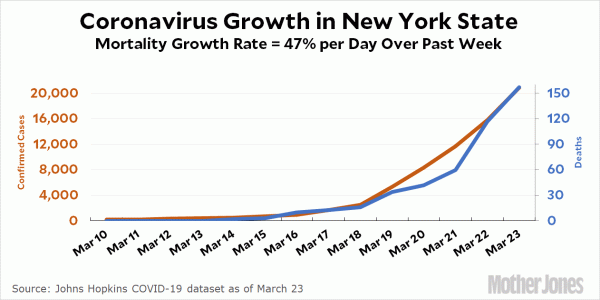
Similarly, New York reported its first death on March 14th. Yet just ten days later, deaths in that state were running at 50 per day, and rapidly accelerating.
Unfortunately, although numbers are absolutely crucial for our efforts to combat this dread disease, we lack accurate American data, especially with regard to the rate of infection.
The problem is that any program of massive, widespread testing is completely impossible given our lack of sufficient testing resources. Meanwhile, the Coronavirus has a substantial latency period during which victims experience no symptoms, and even afterward many cases are quite mild or even completely asymptomatic, leaving the infected unaware of their condition. So at present, testing has been confined to just a tiny sliver of the population, ensuring that the reported numbers of those infected represents a severe undercount. But we are left to guess just how severe.
However, the Coronavirus death statistics are certainly far more solid and reliable, and I soon noticed a simple and easy means of reasonably estimating Coronavirus infections from Coronavirus deaths. But although the methodology seemed obvious to me, after I described it on a comment-thread yesterday, I encountered quite a bit of initial confusion and disagreement, suggesting that the idea was not nearly as obvious as I had assumed. So on the off-chance that some people might be unfamiliar with the method, I’ve decided to outline it below.
Let us note three crucial Coronavirus parameters, which have already been estimated by medical experts although they are obviously dependent upon particular conditions.
- The infection doubling period – probably 3-6 days
- The mortality rate – perhaps 1% prior to the collapse of a the local health system.
- The typical mortality period (time between infection and death) – according to some estimates, around 3 weeks.
Now consider a Coronavirus death. If we assume a mortality rate of 1% and a three week interval between infection and death, we can therefore estimate that there had been 100 new infections three weeks earlier. Next, if we assume a doubling-period of 6 days, those 100 infections would have increased to 100 * 2^(21/6) = over 1000 infections by the time the death occurred.
Therefore, under these particular assumptions (along with a few simplifications), the true number of total infections can be estimated at over 1000x the number of deaths.
Let’s apply this methodology to a real-life situation. On 3/23/20, New York reported 53 new Coronavirus deaths, bringing the total to 210. This suggests that the true number of new infections that day may have been over 50,000, raising the total infected to more than 200,000. These estimates are eight to ten times larger than the officially-reported Coronavirus totals for New York, namely 4,750 and 25,665.
This estimate of New York infections relied upon a doubling period of six days, and it is quite possible that greater “social distancing” together with the recent lockdown imposed in that state may have considerably increased that parameter this figure, thereby reducing the correct number of infections. But I strongly suspect that the figures provided above are still far closer to the truth than those officially reported by the New York authorities. And there is obviously a huge practical difference between assuming 25,000 infected New Yorkers and believing the true figure is already closer to 200,000.
Here’s another example. The official estimate of Coronavirus infections in Louisiana is currently less than 1,400, but this estimation method suggests that the true total is nearly 50,000, a figure that has vastly different policy implications. While I would put little weight in the precise accuracy of that estimate, I strongly believe it’s much closer to reality than the tiny official total.
Summarizing things, the formula for estimating infections is:
- Number of infected = Number of Deaths / Mortality_Rate *2^(Mortality_Period/Doubling_Period).
It’s important to recognize that the parameters used may need to be sharply readjusted based upon particular circumstances.
For example, once a health care system collapses, the death rate probably spikes to around 5%, greatly changing the calculation. Similarly, once government lockdowns or other similar measures are taken, the doubling-period of the infection becomes much longer.
Under other circumstances, if a substantial fraction of the deaths are the elderly residents of nursing homes (as was the case in Washington State), the assumed death-rate would be much higher and the doubling-period of the infections generated by the immobile residents lower, significantly altering the appropriate equation.
Finally, this analysis may carry an important policy implication. Suppose that our best and most accurate means of estimating infections is indeed based upon this methodology. We would therefore be using the current death rate to back into the infection rate that that occurred three weeks earlier, so that any analysis of the impact of government policies would necessarily be lagged by three weeks.
Under these circumstances, it would be extremely inadvisable for President Trump or other government officials to rescind any of their lockdown or quarantine decisions until at least three weeks had gone by and the impact of these policies upon the rate of infection became fully apparent.
Trump Defies All Odds & Outflanks the Left
By Joaquin Flores | Strategic Culture Foundation | March 25, 2020
Did you know that 25% of Americans want their state to secede from the United States? In part one of our series, we laid out our opening – that the betrayals of the Democrat Party against its own working class base would lead towards an uprising, finally coalescing around a National Labor Movement, christened through blood and sacrifice. This would ultimately team-up with Trump’s small business and working class base, making every conservative-libertarian’s worst horse-shoe theory nightmare a living reality.
This is the era of the new populism, beyond left and right.
We said in the previous article in this series that because of Trump’s commitments and Reaganomic view of wealth creation, that he would not be able to rise to the ‘FDR level’ needed to radically transform America’s social contract and forge a genuine New Deal. As it stands, the American economy is set to shrink by a depression-era 14% in Q2 alone.
But Amazingly – Trump Once Again Defied All Odds
Between publishing our dire warning, written days before it had run on SCF, and when we had set to produce our next installment here, it appears that we were right to gauge the seriousness of the moment, but underestimated Trump’s ability to begin the very thing we had been urgently writing about for the past year: take up the necessary transformations proposed by Bernie, by Yang, and by Gabbard.
Reading comments sections on ‘progressive’ YouTube channels, the call for Trump to dump dumb Pence and take on Gabbard or Yang as VP. In a policy sense, that’s just what he’s starting now to do. Democrats would shatter upon the rocks of discoherence if they tried to pick up Pence’s pro-life Christian dominionist evangelical fundamentalist base.
And so Trump moved left, and no – not leftwards to the center – rather he made an unprecedented end-run around the anti-labor centrist Democrats over to the pro-labor economic left of the Democrat Party. That’s the very same economic left of the party that the Clinton-Pelosi-Biden corporate Democrats have suppressed and tried to relegate to invisibility. Clinton and Pelosi failed.
Where Clinton’s DNC succeeded in destroying the campaigns of Gabbard, Sanders, and Yang – despite their nauseating willingness to play DNC ball – the DNC fell victim to their own success. They handed this opening to Trump on a platter.
This happened because the DNC believed its own lies, and succumbed to the cognitive impairment disorder known as ‘Orange Man Bad’ Trump derangement Syndrome. For too long the DNC arrogantly believed that they could simply pander to the billionaire oligarchs and that working people would vote for them by default. Those days are over.
Now we are looking at the beginning of a Trump UBI, at the time of writing this stands at a proposed $500 billion which we have calculated works out as such: if there are about 160 million working age adults, which does not include about 45 million retirees receiving social security etc., then this comes out to $3000 per person. Is this just the beginning?
Once this sort of line is crossed, it’s difficult to go back. Trying to take it back will necessarily lead to the sort of backlash and threatened social violence and chaos which brought about its necessity in the first place.
We’ve already seen with Hurricane Katrina what upright citizens will do to survive, when literal starvation is the alternative. But Trump went further. He ordered a moratorium on evictions, protecting working Americans who might be late on rent. He ordered a ban on bank foreclosures for Americans paying mortgages, for those whose loans were done through HUD and FM & FM.
Then Federal Reserve hack Larry Kudlow, now working as Director of the National Economic Council under President Donald Trump since 2018, announced even more – Trump is seriously looking to propose partial nationalization of businesses needing government assistance.
Universal Basic Income? Moratorium on evictions and foreclosures? Partial nationalization of business and industry? The possibilities presented now with “Comrade Trump’s” opening salvo, knows no bounds.
The most stupid criticism of Trump’s move is that he’s doing this merely in response to what the public wants, that he’s only doing this because people are demanding it, and if he didn’t do it, he couldn’t win re-election. We find this kind of anti-logic to be a form of violence against the understanding of politics in a republic with democratic traditions such as the U.S.
Isn’t this what elected representatives are supposed to do, to represent? Aren’t concessions and proposals in the face of losing one’s mandate what a responsible head of government is supposed to enact? Isn’t it strange that despite these very needs bubbling beneath the surface for decades, Democrats have not moved on these things, and haven’t been afraid of their own base? Isn’t this inability to carry out one’s responsibility to the constituents the very reason for the total implosion of the Democrat Party now underway?
When Democrats failed to do these things, the blue-no-matter-who crowd only made battered-wife syndrome level excuses – they blamed Republican obstruction even when Democrats controlled the White House and both houses of congress for two years starting in 2008.
And Still it May Not be Enough – Towards a National Labor Movement
Despite Trump’s bold pronouncements which have outflanked the Democrat Party, the reality is that the present situation is so stark that even if these proposals all go through as planned, these will not likely be enough. That’s why we introduced this installment with the shocking figure on Americans wanting their states to secede. How this becomes part of the platform of the National Labor Movement will be critical.
There is a good possibility that Trump will extend and even reinforce these social-patriotic provisions at least through the election cycle. But then what, after that?
The reason this 25% secession figure is as small as it is, is because there has been no concerted effort to promote the idea. Compare this naturally popular idea to ‘politically correct’ social views which appear popular in polls, like gun control, but enjoy this largely as the result of tremendous social engineering. This came as public service announcements, subtle references in film and television, the expressed opinions of celebrities and social media ‘influencers’.
Eliminating the 2nd Amendment is an unconstitutional and anti-popular move that only a police-state would want. Despite a non-stop campaign since the 1980’s to vilify the very pillar which guarantees all the other amendments, only 20% of Americans are said to support its elimination.
But this is an idea that has been extremely unnatural, and expensive to promote. It required what many Americans even think were false flags and hoaxes to build to that 20%. It’s a figure that also happens to be shrinking despite thirty years of non-stop preaching.
What would happen to this 25% pro-secession figure if there were organized efforts to build around that idea? There was, bear in mind, the ‘Yes’ movement in 2016, for California to secede from the Union. Also, when the poll was conducted a few years ago, the situation was bad but not the catastrophe we are upon today. This catastrophe, whether engineered or not, has been a fascinating subject. It is unlikely that the Coronavirus is the cause of it, but rather the convenient timing of such appears to be a good reason to telegraph an emergency situation to the elites that now is the time to institute a series of socialist/corporatist/fascist (read: planned economy or distributist) changes to save the system by transforming it.
But absent a real show of extra-parliamentary force from the rank and file of a freshly organized National Labor Movement, any presently proposed patches to the failing system are unlikely to indefinitely stave-off a real uprising.
The 2016 through 2020 election cycles will go down in history as the final and most conclusive end to the America as we knew it. The global pandemic, Covid-19 is one thing, the phenomenon is another. That’s to say – the virus is one thing but the hype hysteria, and pretext for new forms of social control is entirely another.
The Democrat Party’s betrayal of its populist base doesn’t simply mean that millions of potential voters who favored Sanders and Gabbard are going to stay this election out – though they will. It means that some significant segment is going to throw in their lot with the anti-politics or the post-politics of a people with nothing left to lose. Direct action, veterans leading militia groups, organized crime, secessionist movements, revenge killings against corrupt cops, ‘revolutionary conspiracies’, fed-up rogue labor organizers running decertification campaigns and wild-cat strikes – all now known to the state as ‘terrorism’.
“When the people have nothing left to lose, they lose it”, as the popular business consultant Gerald Celente has repeatedly explained for years.
Any analysis of what the DNC should have done, as this author’s ongoing series of essays for SCF on the subject has attempted to do, has wrongly been understood by some readers as a friendly exercise in hopeful proscription to ‘fix’ the DNC – it is not and was not.
My aim has been to show that when a society’s elites reach such a pinnacle of corruption and detachment from its moral and constitutional obligations and authority, then the whole society is on the precipice of collapse. It has been to show that numerous elements of the kinds of policies and attitudes that could have saved this country are in fact known to the Democrats, as Yang for example helps to prove, and they had cast these to the side nonetheless, as if these were all just optional ventures on what was otherwise a fair-weather day.
The sheer hubris of the chattering political class of beltway pundits has served to separate the have-less from the have-nots, to make those just getting by more blind to the situation of those who aren’t. Worse, it has been to set these two great classes against each other – the false notion that giving a hand-up to the latter will come with some greater tax burden to the former. The policies that could have fixed things were out there and were known to the political elite and their financial backers. Still, they turned the other way and told us to turn the other cheek.
Trump’s Still-Born Revolution?
Some of these needed fixes in the area of foreign policy, were seen in still-born form in Trump’s attempts as we discussed. And those opposing Trump’s attempts at steering foreign policy in a sustainable direction were met with obstruction and contempt from the Democrats and neoconservative Republicans as well. After years of impeachment chatter, threats of impeachment, Trump was pushed into striking Syria. And finally with an impeachment proceeding, pushed into murdering Qasem Soleimani. This happened to have the effect of turning off Trump’s anti-war supporters.
This author consistently explained and showed back in 2015 that the nature of Madame Secretary Clinton’s financial and ideological commitments would have irreconcilably led to a massive and bloody military intervention against the Russian Federation, which in turn could have signaled the kind of final, nuclear Armageddon which Ronald Reagan saw as akin to the Christian teleology found in Revelations.
To be clear: the party of Clinton is and has been the enemy of the American people, second only to the financial oligarchs who finance these Democrats. Trump’s left pivot is likely not to go far enough, and the necessary feedback loops are hard to read. That’s why in the next installment we will detail the coming national labor movement and the kinds of social violence we may expect as it emerges from the womb of chaos and bloodshed.
Covid-19 has exposed just how broken American economy & society are – a $2 trillion package alone won’t fix it
By Scott Ritter | RT | March 24, 2020
As Congress and the president bicker over a huge financial stimulus package designed to keep the US economy afloat, they must confront the real existential questions facing the country.
Despite all the wrangling, there will be a national economic stimulus package passed by the Congress and signed by the president. Domestic political imperative guarantees as much. The American economy has largely shut down because of the social lockdown mandated by the coronavirus pandemic, and without a stimulus package the entire system would collapse with little hope of ever fully recovering.
The cost of the package will approximate $2 trillion, give or take a few hundred billion. No matter what the final amount is, it will exceed by far the nearly $1.5 trillion combined bailout/stimulus packages approved by Presidents George W. Bush and Barack Obama to recover from the 2008 economic crisis. The 2008 package, however, was a one-time deal; the coronavirus stimulus covers a period of approximately one month, after which the economy either gets restarted, or Congress and the president will be looking at the need for a follow-on stimulus package of similar size and scope.
The coronavirus pandemic has exposed some uncomfortable truths about the state of America today. First and foremost is the fragility of the American economy. After years of outsourcing manufacturing, the United States has constructed an economy where services industries comprise some 55 percent of overall economic activity. In the age of globalization, with interconnectivity functioning seamlessly, this model has been able to generate the appearance of prosperity, with a booming stock market and increased GDP.
The reality, however, is that the American economy lacks resilience in time of crisis. The ongoing trade war with China, combined with a depressed global oil market, were in the process of exposing this reality before the coronavirus pandemic. The national lockdown, and resulting economic stoppage, only accelerated what was a gradual economic recession in progress. Even if the US economy could be taken off stimulus-driven life support, the conditions that preceded the shutdown still exist and, if anything, have only been exacerbated by the impact of the pandemic on global economic health.
American corporations have been shown to have little capacity to plan for “rainy day” contingencies, instead focusing all their economic resources on the generation of short-term profit. And the American working class has been likewise exposed as living on the edge of catastrophe, with few Americans able to fall back on savings that would enable them to ride out a period of sustained economic inactivity or, worse, to pay for emergency health care.
The other uncomfortable truth about America that has been exposed by the crisis is the overall fragility of American society. The medical emergency brought about by the need to treat this virus has shown that what passes for a national healthcare system is, in fact, a fragile construct of for-profit institutions susceptible to being rapidly overburdened and unable to function once the cash-stream of overpriced healthcare has been cut off. The coronavirus crisis has revealed the reality of the US healthcare system today – most Americans don’t have the wherewithal to get quality healthcare when needed – the cost of such care is prohibitive, as are the insurance premiums one must pay to cover it.
President Trump, while supporting the emergency economic stimulus package, has questioned whether this approach is sustainable. The short answer is that it is not. In addition to the approximately $2 trillion that the stimulus is adding to the US debt, the Federal Reserve has been pumping additional trillions into the American equity market, making virtually interest free money available to US banks and financiers.
The purpose of this injection of free money is to stimulate economic growth in a system which purports to be built on the principles of private capital. But when an ostensibly private equity market must be pumped up with government infusions of capital, it is neither private nor liquid.
Trump is wrestling with the horrible reality that in order to take the American economy off government life support, he must lift the restrictions on socializing that were imposed to slow down and reduce the human-to-human transmission of the coronavirus disease. Whether this move is economically sound, medically advisable or politically viable has yet to be seen. But one thing is for certain – the US is at a crossroads in its history.
Trump’s best-case scenario is that he can jump start the US economy, bringing it back up on all cylinders to resume where it had left off prior to the coronavirus-inspired shut down. Even if this plan worked, however, it would not resolve the underlying deficiencies in the US economic and social model that have been exposed as a result of the crisis.
The other alternative is to recognize the reality of the situation confronting the US today – that the crisis has fundamentally broken the American economy along with the American model of society which drove and sustained it. To fix the innumerable flaws and issues that have been identified by Covid-19 will require a level of government economic intervention over time that will forever tip America away from the vision of capitalism-inspired prosperity it aspired to, toward a more egalitarian form of socialism founded on the European model so many Americans claim to disdain.
Trump, the quintessential capitalist, recognizes this reality. He knows that the decision on whether to restart the American economy is much more than a question of simple economics. It is one which touches on the existential survival of America as we have come to know it.
Scott Ritter is a former US Marine Corps intelligence officer. He served in the Soviet Union as an inspector implementing the INF Treaty, in General Schwarzkopf’s staff during the Gulf War, and from 1991-1998 as a UN weapons inspector. Follow him on Twitter @RealScottRitter
Sanctions on Iran, Others Facing Coronavirus Must Be Urgently Re-evaluated: UN
Al-Manar | March 25, 2020
The United Nations rights chief says any sanctions imposed on Iran, among other countries grappling with the coronavirus pandemic, should be “urgently re-evaluated” to support lives of millions of people worldwide.
“At this crucial time, both for global public health reasons, and to support the rights and lives of millions of people in these countries, sectoral sanctions should be eased or suspended,” Michelle Bachelet said in a statement on Tuesday.
She warned, “In a context of global pandemic, impeding medical efforts in one country heightens the risk for all of us.”
She stressed the importance of giving broad and practical effect to humanitarian exemptions from sanctions measures “with prompt, flexible authorization for essential medical equipment and supplies.”
Bachelet pointed in particular to the case of Iran, one of the hardest-hit countries by the pandemic, and said the COVID-19 outbreak was also spreading to neighboring Afghanistan and Pakistan.
She said even before the pandemic, human rights reports had repeatedly emphasized the impact of sectorial sanctions on Iran’s access to essential medicines and medical equipment, including respirators and protective gear for healthcare workers.
Nearly 500,000 people worldwide have been infected and over 17,000 have died of the viral disease, according to the latest tallies.
Iranian Health Ministry spokesman Kianoush Jahanpour said on Tuesday that the number of coronavirus deaths had risen to 1,934 and the total infections to 24,811 during the past 24 hours.
“There have been 122 new deaths and 1,762 new infections since Sunday,” he said. Jahanpour further put the number of patients who have recovered from the viral disease at 8,913.
US President Donald Trump reinstated Washington’s sanctions on Iran in May 2018 after he unilaterally left the 2015 nuclear deal, known as the Joint Comprehensive Plan of Action (JCPOA), signed between Iran and major world powers.
The International Court of Justice (ICJ) — known as the World Court — has ordered the White House to lift the sanctions it has illegally re-imposed on humanitarian supplies to Iran.
The US claims the bans do not get in the way of food and medicine exports to Iran, but the Islamic Republic says Washington has been working to make problems for a Swiss humanitarian channel launched to enable the transfer of commodities to Iran.
In a phone conversation with Tunisian President Kais Saied on Monday, Iran’s President Hassan Rouhani said the United States’ move to prevent the dispatch of medical and humanitarian aid and the facilitation of banking interactions to meet the Iranian people’s needs suffering from the deadly new coronavirus contravenes human and the United Nations regulations.
Rouhani said the US administration has intensified its cruel measures and sanctions against the Iranian people even under the current difficult conditions caused by the virus outbreak.
Palestinian Worker Dumped at Israeli Checkpoint for Exhibiting Coronavirus Symptoms
PNN | March 24, 2020
Yesterday, Israeli occupation forces threw a worker by the side of the road at the “Beit Sira” checkpoint near the city of Nablus, over suspicion of him being infected with the novel Corona virus.
Locals filmed the man and called the medical crews who rushed to save the worker, who was left at the road, unable to move, for around three hours with high temperature.
He was rushed to the National Hospital of Nablus.
Government spokesman Ibrahim Melhem said in his daily briefing on Tuesday morning that the sample of the worker showed that he was not infected with corona-virus.
Consequently, Melhem warned the Palestinian workers from going to the occupation workshops, where they are subjected to inhuman treatment and living conditions.
In the press conference as well, Melhem also announced that a woman was infected with Corona virus while returning to Ramallah from the United States, bringing the number of infected people to 60, including 16 recovered cases.
Melhem also confirmed that the samples taken for a citizen from Kufur Aqab and those in contact with an infected man have not yet emerged.
He added that the health condition of the patients in Bethlehem is stable and all of them are under health supervision.
Suspending the Constitution: Police State Uses Crises to Expand Its Lockdown Powers
By John W. Whitehead | Rutherford Institute | March 24, 2020
You can always count on the government to take advantage of a crisis, legitimate or manufactured.
This coronavirus pandemic is no exception.
Not only are the federal and state governments unraveling the constitutional fabric of the nation with lockdown mandates that are sending the economy into a tailspin and wreaking havoc with our liberties, but they are also rendering the citizenry fully dependent on the government for financial handouts, medical intervention, protection and sustenance.
Unless we find some way to rein in the government’s power grabs, the fall-out will be epic.
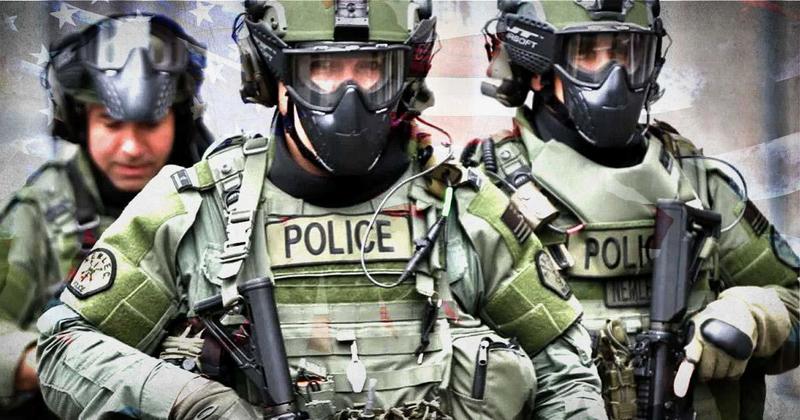
Everything I have warned about for years—government overreach, invasive surveillance, martial law, abuse of powers, militarized police, weaponized technology used to track and control the citizenry, and so on—has coalesced into this present moment.
The government’s shameless exploitation of past national emergencies for its own nefarious purposes pales in comparison to what is presently unfolding.
It’s downright Machiavellian.
Deploying the same strategy it used with 9/11 to acquire greater powers under the USA Patriot Act, the police state—a.k.a. the shadow government, a.k.a. the Deep State—has been anticipating this moment for years, quietly assembling a wish list of lockdown powers that could be trotted out and approved at a moment’s notice.
It should surprise no one, then, that the Trump Administration has asked Congress to allow it to suspend parts of the Constitution whenever it deems it necessary during this coronavirus pandemic and “other” emergencies.
It’s that “other” emergencies part that should particularly give you pause, if not spur you to immediate action (by action, I mean a loud and vocal, apolitical, nonpartisan outcry and sustained, apolitical, nonpartisan resistance).
In fact, the Department of Justice (DOJ) has been quietly trotting out and testing a long laundry list of terrifying powers that override the Constitution.
We’re talking about lockdown powers (at both the federal and state level): the ability to suspend the Constitution, indefinitely detain American citizens, bypass the courts, quarantine whole communities or segments of the population, override the First Amendment by outlawing religious gatherings and assemblies of more than a few people, shut down entire industries and manipulate the economy, muzzle dissidents, “stop and seize any plane, train or automobile to stymie the spread of contagious disease,” reshape financial markets, create a digital currency (and thus further restrict the use of cash), determine who should live or die…
You’re getting the picture now, right?
These are powers the police state would desperately like to make permanent.
Bear in mind, however, that these powers the Trump Administration, acting on orders from the police state, are officially asking Congress to recognize and authorize barely scratch the surface of the far-reaching powers the government has already unilaterally claimed for itself.
Unofficially, the police state has been riding roughshod over the rule of law for years now without any pretense of being reined in or restricted in its power grabs by Congress, the courts or the citizenry.
The seeds of this present madness were sown several decades ago when George W. Bush stealthily issued two presidential directives that granted the president the power to unilaterally declare a national emergency, which is loosely defined as “any incident, regardless of location, that results in extraordinary levels of mass casualties, damage, or disruption severely affecting the U.S. population, infrastructure, environment, economy, or government functions.“
Comprising the country’s Continuity of Government (COG) plan, these directives, which do not need congressional approval, provide a skeletal outline of the actions the president will take in the event of a “national emergency.”
Mind you, that national emergency can take any form, can be manipulated for any purpose and can be used to justify any end goal—all on the say so of the president. Indeed, the U.S. military has reportedly already been given standby orders under COG for this present coronavirus pandemic.
So what is the bottom line here?
We are, for all intents and purposes, one crisis away from having a full-fledged authoritarian state emerge from the shadows, at which time democratic government will be dissolved and the country will be ruled by an unelected bureaucracy.
Thus far, we have at least pretended that the government abides by the Constitution.
The attempts by each successive presidential administration to rule by fiat merely plays into the hands of those who would distort the government’s system of checks and balances and its constitutional separation of powers beyond all recognition.
Remember, these powers do not expire at the end of a president’s term. They remain on the books, just waiting to be used or abused by the next political demagogue.
So, too, every action taken by Trump and his predecessors to weaken the system of checks and balances, sidestep the rule of law, and expand the power of the executive branch of government has made us that much more vulnerable to those who would abuse those powers in the future.
Think on this: the presidential election is right around the corner.
Suddenly, the improbable possibility of any incumbent president attempting to extend the police state’s stranglehold on power by using current events to justify postponing or doing away with an election—forfeiting the people’s rights to govern altogether—and establishing a totalitarian regime seems less far-fetched than it did even a few years ago.
The emergency state is now out in the open for all to see. Unfortunately, “we the people” refuse to see what’s before us. Most Americans, fearful and easily controlled, would sooner rouse themselves to fight for that last roll of toilet paper than they would their own freedoms.
This is how freedom dies.
We erect our own prison walls, and as our rights dwindle away, we forge our own chains of servitude to the police state.
Be warned, however: once you surrender your freedoms to the government—no matter how compelling the reason might be for doing so—you can never get them back.
As I make clear in my book Battlefield America: The War on the American People, no government willingly relinquishes power.
If we continue down this road, there can be no surprise about what awaits us at the end.
The America metamorphosing before our eyes is almost unrecognizable from the country I grew up in, and that’s not just tragic—it’s downright terrifying.
Riyadh’s “Oil War” on Russia has some Global Objectives
By Salman Rafi Sheikh – New Eastern Outlook – 24.03.2020
The on-going Saudi ‘oil war’ with Russia has its roots in the logic of increasingly using natural resources for geo-political and geo-economic purposes. While this is not something entirely new, the latest push comes against the backdrop of increasing competition between the US and Russia for global leadership roles and the former’s attempts at forcing the latter out, squeeze its share in the global oil market to increase that of the US shale oil, thus denting Russia’s economic capacity and its ability to project power in regions beyond its borders.
Whereas the Saudis blame Russia for the ‘oil war’ and Kremlin’s refusal to further cut oil production, the proposed cut, as it stands, would have ultimately meant a further decrease in Russia’s share of the global market and a significant increase in the US’ shale-oil production and exports. Ever since OPEC+ agreement of 2016 and the related cuts in oil production, the output of US shale oil has soared by 4.5 million barrels a day. Whereas the Western political pundits have been speaking and writing of Russia as the ‘malign’ player targeting the US’ ‘booming’ shale oil industry, the fact of the matter is that the US shale industry would not have grown in the first place if there had been no OPEC+ agreement. Russia, as it stands, has only refused to further cut its production, and is willing to extend the OPEC+ to continue a stable system of oil production.
How the OPEC+ benefited the US shale oil is evident from the fact that balanced production of crude oil meant stable and high prices, which made the US shale oil more profitable, further allowing the US to use the scenario to build its production and export infrastructure. As it stands, since 2016 when the OPEC+ deal was struck, US oil exports have increased five-fold and shale production increased from 8.9 million barrels per day to 13.1 million barrels per day. Thus, to a significant extent, by refusing the Saudi proposal of further cuts in oil production, Russia essentially refused to allow the US shale oil industry a further free-way for global expansion.
At the same time, Russia continues to stick with the OPEC+ deal. The Russian Prime Minister Mikhail Mishustin has said,
“We did not initiate the withdrawal from the agreement [OPEC+ deal]. On the contrary, we proposed to extend the agreement on the existing terms, at least until the end of the second quarter or for a year, so as not to complicate the situation that has developed with the spread of coronavirus.”
At the recent meeting between Russia’s Putin and energy officials, Putin reportedly said that:
“OPEC+ has “proved to be an effective instrument to ensure long-term stability on global energy markets. Thanks to that, we have obtained extra budget revenues and, what is important, provided a possibility for upstream companies to confidently invest in promising development projects.”
What becomes evident here is that the blame for reduced oil prices can hardly be put on the Russians. Its roots lie in the global struggle for market share. This struggle is taking place at two levels. The first is between the Russians and the Saudis whereby the latter, known for playing on the US side in every war, want to expand their share of the market to sustain their massively oil-dependent economy. The second level, linked as it is with the first, is again about reducing Russian share of the market and allowing for the shale-oil sector to expand. Since this expansion will theoretically come at the expense of Russian oil, the Saudis would still benefit.
There is as such a Saudi-US consensus behind the dropped oil prices. US President Donald Trump spoke on the phone to the Saudi Crown Prince Mohammed bin Salman on the eve of the Vienna meeting, and their subject of discussion, according to the White House, was the “energy market.”
That the US and Saudi Arabia have a deep interest in squeezing out Russia’s share of the global hydrocarbon market is evident from the way the US has been trying to block and even sanction the joint Russian-German Nord Stream-2 pipeline project.
Who will win this war? Unlike the Saudis, Russia’s economy does not solely depend on oil prices, although it still does play a significant role in enabling the Russian government to fulfil its budgetary commitments. The Saudis would be thus at a loss much sooner than the Russians. If the US president called the Saudi ruler to discuss the “energy market” and it was mainly about finding ways of squeezing Russia, it was equally about finding a way to stabilise oil prices because the continuously falling oil prices would only make shale-oil companies suffer losses. According to a Bloomberg report, “The US shale sector is getting completely killed. A complete bloodbath. Billions of dollars in equity wiped out.”
Whereas some in the West think that this is a Saudi-Russian project to destroy the US economy, this is not the case; for, if both oil producers had wanted this, they could have done this by doing a new OPEC+ deal in a way that would have allowed a cut in prices and still maintain production levels at agreed levels. This has not happened, and given the nature of deep Saudi interests in the US, it is difficult to conceive of a Saudi project to ‘kill’ the US economy. What it signifies is an attempt at squeezing the Russian share of the market. This explains the Saudi proposal for cutting oil production (and thus allowing that of the shale-oil grow further). The falling oil prices only indicate that the project is failing; Russia is resilient and has enough reserves to sustain itself for a decade.
Salman Rafi Sheikh is a research-analyst of International Relations and Pakistani foreign and domestic affairs.
Theodore Roosevelt Strike Group stricken in the Philippines

© Reuters / Kham
RT | March 24, 2020
Three US Navy sailors aboard aircraft carrier USS Theodore Roosevelt tested positive for coronavirus, the acting Naval Secretary has revealed. They will be airlifted off the ship, which hosts 5,000 troops in the Philippine Sea.
The three servicemembers are the first coronavirus cases discovered on board a deployed Navy ship, Acting Navy Secretary Thomas Modly told reporters at a Pentagon briefing on Tuesday. Currently in quarantine, the sick trio will be flown off the ship later today.
The USS Theodore Roosevelt was in Vietnam earlier this month. Last week, the Theodore Roosevelt Strike Group performed Expeditionary Strike Force maneuvers along with the America Expeditionary Strike Group and the 31st Marine Expeditionary Unit for three days in the South China Sea.
Pentagon officials diverged from President Donald Trump’s narrative during Tuesday’s briefing, which was conducted virtually, warning that the outbreak could occupy the nation for as long as three months. “I think we need to plan for this to be a few months long at least and we’re taking all precautionary measures to do that,” Defense Secretary Mark Esper told reporters. The Pentagon has reported 321 cases of coronavirus, including 174 active-duty personnel, 59 civilians, 61 dependents, and 27 contractors, as of Tuesday. A single contractor at the Defense Security Cooperation Agency died on Saturday after testing positive for the virus.
Trump, meanwhile, has declared he wants the US economy back up and running by Easter Sunday, less than three weeks away. The US has 50,206 confirmed cases of coronavirus, according to Johns Hopkins University, and 606 deaths.
Also on rt.com:
On This Day in 1999: NATO Bombing of Yugoslavia in Numbers
Sputnik – March 24, 2020
21 years ago today, on March 24, 1999, NATO began a massive bombing campaign of Yugoslavia, bombarding the country with thousands of cruise missiles and bombs in what would become the largest military assault in Europe since the Second World War.
- NATO’s campaign of air and missile strikes against the Federal Republic of Yugoslavia, which consisted of Serbia and Montenegro, lasted 78 days, ending on June 10, 1999.
- During the campaign, dubbed ‘Operation Noble Anvil’ by NATO, alliance warplanes carried out some 2,300 sorties against 995 facilities, firing nearly 420,000 missiles, bombs and other projectiles with a total mass of about 22,000 metric tonnes.
- The campaign included multiple violations of the laws of war, including the use of cluster bombs (37,000 of them), and depleted uranium projectiles, which led to major spike in oncological diseases, including juvenile cancer rates, after the war. According to Serbian doctors, the most widespread consequences of the use of such weapons have been thyroid disorders, cancers and foetus mutations. In 2017, Serbian scientist Ljubisa Rakic calculated that the amount of DU dropped on Yugoslavia was equivalent to about 170 Hiroshima bombs.
- According to Serbian estimates, the strikes on Yugoslavia left as many as 5,700 people dead, with 12,500 injured.
- NATO casualties included a US AH-64 Apache, an F-16C fighter, an AV-8B Harrier and an F-117A Nighthawk stealth bomber (the first and so far only case of a stealth fighter jet being destroyed in combat). On the Yugoslav side, military and police casualties included 631 troops and 325 policemen dead, with more than 50 missing. Due to the effective use of maskirovka or ‘military deception’ doctrine, The Yugoslav army was able to limit losses of military hardware (93 tanks lost out of an estimated 600), and other armoured vehicles, artillery and anti-aircraft systems.
- The bombing is estimated to have caused as much as $100 billion in damage, destroying or damaging some 25,000 residential buildings, 470 km of roads, and 595 km of railway infrastructure. 14 airports, 19 hospitals, 20 health centers, 69 schools, 18 kindergartens, 176 cultural monuments and 38 bridges were destroyed. The bombing included a targeted raid on Radio Television of Serbia, which claimed 16 lives, and the accidental bombing of the Chinese Embassy, which killed 3 Chinese nationals. All told, Serbian officials estimate that over a third of NATO’s targets were civilian.
- NATO’s official justification for the strikes was its desire to protect Kosovar Albanians from ethnic cleansing and “a humanitarian catastrophe.” Before the war began, Albanian separatists allied to radical Islamist forces clashed with Serbian army and police forces in Kosovo, attacking authorities and attempting to drive ethnic Serbs out of the region. After the bombing campaign was completed and NATO troops entered the breakaway Serbian region in June of 1999, the separatists continued their campaign of violence against Serbs, in spite of NATO commitments to disarm the Kosovar militants.
- In 2008, the province unilaterally declared independence from Serbia. This forced over 200,000 ethnic Serbs to leave their homes. Belgrade, Russia, and many other countries have refused to recognize the breakaway republic. NATO troops, meanwhile, have remained in the province since 1999, establishing Camp Bondsteel, the second-largest US military base in Europe.
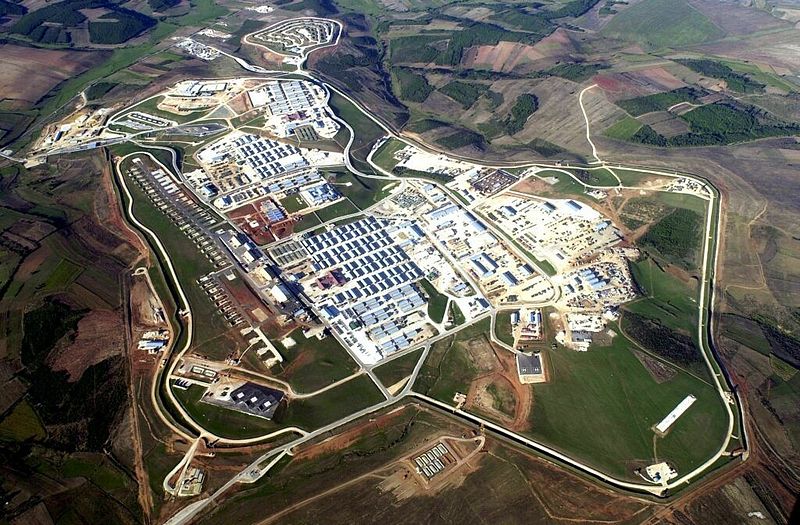
© Photo : public domain Camp Bondsteel in Kosovo
- In 2015, NATO Secretary-General Jens Stoltenberg expressed his “sincere regret” over the deaths and suffering of Serbian civilians. However, three years later at an event in Belgrade, the NATO chief emphasized that the bombing was not aimed against ordinary Serbs, but actually meant “to protect civilians and stop the Milosevic regime.” According to Stoltenberg, Serbs should “look to the future” and continue to shore up the “excellent relationship” between Belgrade and the bloc.
Moscow slams HRW chief for touting story on Russia’s rich grabbing life-saving ventilators
‘We need joint action, not fake news’
RT | March 24, 2020
Russia’s top diplomat in the US has demanded the Human Rights Watch chief stops spreading misinformation about Russia’s readiness to fight Covid-19, after he touted an article claiming it’s letting the wealthy buy up ventilators.
Anatoly Antonov, Russia’s envoy in Washington, has penned a scathing rebuke to the group’s executive director, Kenneth Roth, who tweeted that the Kremlin was “doing nothing to stop wealthy Russians from buying up ventilators,” all that while “leaving ordinary Russians with a likely shortage of this life-saving equipment.”
Roth’s tweet was based on a report by the Moscow Times citing interviews with medical experts and anonymous “wealthy individuals,” said to be on the hunt for the coveted ventilators that help coronavirus-stricken patients breathe.
Although the article itself states that “Russia appears to be in a better starting position than other countries when it comes to ventilators,” with 5,000 devices ready to treat Covid-19 patients in state-run Moscow hospitals alone and “an average of about 29 ventilators per 100,000 residents” available nationwide (as opposed to Italy’s 8 per 100,000), the piece mentions that the majority of life-saving medical equipment is concentrated in Moscow and St. Petersburg.
While that might prompt some concern, in reality, more than half of Russia’s 438 Covid-19 cases (262) have been reported in the capital, which is at the center of the country’s fight against the disease.
Firing back, Antonov said that Russia, which has so far been successful in containing the spread of the virus, has put “well-timed measures” in place that allowed it “to confront this new global threat far more effectively than in the countries that HRW generally avoids criticizing.”
“We urge the executive director of Human Rights Watch not to misinform his readers in New York and around the world about the activities of the Russian government in the fight against coronavirus infection.”
Antonov suggested that, instead of promoting “fake news” and inciting xenophobia and Russophobia, politicians and public figures in the US focus on pooling efforts with the rest of the international community to fend off the pandemic. “Today, more than ever, the combined efforts of the international community are important… Saving lives is the top priority now.”
Collective punishment has always been the stated goal of Iran sanctions hawks
By Eli Clifton | Responsible Statecraft | March 23, 2020
The coronavirus pandemic’s impact in Iran, which already claimed over 1,800 lives and infected more than 23,000 people, is one of the world’s more troubling examples of widespread infection, with insufficient medical resources to treat the victims and a staggering anticipated death toll.
While public health experts and human rights advocates all point to the Trump administration’s “maximum pressure” sanctions regime against Iran as contributing to the public health crisis, sanctions advocates in the Trump administration and at two ultra hawkish think tanks claim that the “humanitarian trade” sanctions exemption is sufficient to address Iran’s medical needs.
But the reality is that advocates of an expansive sanctions campaign have been working to deny Iranians the staples of daily life in pursuit of bringing the regime to its knees or fomenting regime collapse. And it’s likely why to this day, the Trump administration, and its pro-Iran war/regime change allies are reluctant to relent to massive domestic and international pressure to relieve sanctions on Iran.
Indeed, remarks and actions from sanctions hawks in the State Department, the Foundation for Defense of Democracies (FDD), and United Against Nuclear Iran (UANI) illustrate their desire to inflict collective punishment on Iran as a means of generating political instability and state collapse.
Amid the crisis, on March 17, Secretary of State Mike Pompeo announced new sanctions against Iran, telling reporters, “We have an open humanitarian channel to facilitate legitimate transactions even while ensuring our maximum pressure campaign denies terrorists money.”
But that assessment of the humanitarian channel isn’t widely shared and, despite Pompeo’s repeated assertions that the Trump administration offered Iran help to deal with the coronavirus crisis, he hasn’t provided details of what those offers entail.
“Our research showed that in practice, humanitarian exemptions in the U.S. comprehensive sanctions regime have been ineffective in offsetting the strong reluctance of companies and banks to conduct trade with Iran, including the humanitarian trade that is presumably legal,” Human Rights Watch Iran researcher Tara Sepheri Far told Responsible Statecraft. “The Iranian healthcare system, both in terms of access to specialized medicine and also with regards to access to medical equipment, has taken a toll as a result of sanctions,” she added.
Even Pompeo acknowledged that collective punishment and threat of a humanitarian crisis were very much part of the sanctions strategy he was pursuing.
“The leadership has to make a decision that they want their people to eat,” said Pompeo in 2018. “They have to make a decision that they want to use their wealth to import medicine and not use their wealth to fund [Iran’s Quds Force commander] Qassem Soleimani’s travels around the Middle East, with causing death and destruction.”
Two of the most prominent groups advocating for “maximum pressure” against Iran, even in the face of the coronavirus epidemic, have repeatedly called for collective punishment against Iranians.
Mark Dubowitz, the CEO of FDD, a think tank that has regularly called for harsh sanctions and preventive military action against Iran, has repeatedly called for punitive measures against Iran’s entire population.
In a Wall Street Journal op-ed last April, Dubowitz urged lawmakers to “build a sanctions wall” with the goal of “crippl[ing] key sectors of the [Iranian] economy and lead to larger protests.” He added, “[T]he resulting economic and political instability could be leverage for a better, comprehensive deal.”
In a September Fox News appearance, Dubowitz again argued that widespread collective punishment of Iranians was a desirable strategy in bringing pressure on Iran’s leadership to negotiate with the Trump administration about their nuclear program.
“I think the Iranians are in a situation where they are running out of foreign exchange reserves, they’re not going to have the money to pay for imports that they need to run their factories, with factories closing they’re going to have massive unemployment, and so their situation is getting worse every day,” said Dubowitz. “And I think the administration, with a few moves, could actually bring about that kind of economic collapse which will then put the regime in a position where they’ll have to choose between negotiations and the survival of its regime.”
This mentality isn’t a recent phenomenon. Squeezing the Iranian people has been a goal for some time. FDD “freedom scholar” Michael Ledeen made this argument even more bluntly back in 2012 when he openly celebrated ordinary Iranians being unable to afford chickens, claimed this was largely the effect of sanctions, and applauded the fact that Iranians were blaming their leadership for hardships that were largely out of the government’s control.
“[T]here are a lot of very angry Iranians, who not surprisingly are blaming their government for this foul state of affairs,” wrote Ledeen. “In part, the government is blameless, since the cost of imports and the cost of feed grain have been driven up by the sanctions. But then again, the behavior of the government provoked the sanctions in the first place, and the singularly incompetent economic policies of the regime probably constitute the most important cause of the crisis.”
A U.S. senator at the time was even more explicit in promoting the strategy of denying Iranians basic foodstuffs. “It’s okay to take the food out of the mouths of the citizens from a government that’s plotting an attack directly on American soil,” said then-Sen. Mark Kirk (R-Ill.) in reference to sanctions that might impose food shortages on Iranians.
Kirk now serves on the advisory board of UANI, a group that has engaged in a lengthy campaign to pressure all companies, including those engaged in U.S. government licensed humanitarian trade with Iran, to halt their business with the Islamic Republic. (Kirk’s former foreign policy adviser, Richard Goldberg, later went to work at FDD where he promoted military options against Iran. And in an unusual arrangement, he later went to work in Trump’s National Security Council while FDD continued to pay his salary and travel expenses. There Goldberg advocated for an expansive sanctions regime against Iran.)
UANI applauded the Trump administration’s “maximum pressure” strategy for “wreaking maximum havoc on Iran’s economy” Its CEO Mark Wallace, endorsed “economic isolation … to the point of being unbearable.”
Indeed, both UANI and FDD’s fondness for imposing collective punishment on Iranian civilians in order to pressure Iran’s leadership to make concessions on its nuclear program is also reflected in statements from some of their biggest donors.
GOP and Trump megadonor Sheldon Adelson contributed at least $1.5 million to FDD by 2011 (FDD claims he is no longer a funder) and contributed nearly one-third of UANI’s 2013 budget, sending $500,000 to the group.
Adelson told an audience at Yeshiva University in October 2013 that Obama should launch a preventive nuclear attack on a swath of uninhabited Iranian desert and threaten that Iran will be “wiped out” if the country’s leadership doesn’t dismantle their nuclear program.
UANI’s top funder, billionaire Thomas Kaplan, is an investor whose companies have looked to profit from “political unrest” in the Middle East. At UANI’s 2018 conference, Kaplan was presented with a framed Iranian rial by Wallace to recognize his support of UANI and their shared efforts to devalue Iran’s currency.
The calls for economic collapse, military strikes, cheering food shortages, and demanding more “maximum pressure” come at a severe humanitarian cost. But for many in the Trump administration and their allies, that’s precisely the point, which explains why, up until now at least, that President Trump has refused to suspend U.S. sanctions on Iran.
“During last year’s nearly-nationwide flood relief, problems with licenses required for transferring funds to Iran slowed down the relief efforts,” said Far. “The COVID-19 outbreak is more of a serious threat by order of magnitude. There’s a collective responsibility to ensure Iran’s access to resources they need to protect the health of millions of Iranians.”
Featured Video

Meet The Ellisons: Zionists, Technocrats, Moguls
or go to
Aletho News Archives – Video-Images
Frlom the Archives
The Doctrine of ‘Superior People’: The Bond between Israel and World Zionism
By James Petras :: 09.04.2015
Introduction
The single greatest feat of Israel and its overseas missions has not been material success, or the military conquest of millions of unarmed Palestinians, it has been ideological – the widespread acceptance in the US of a doctrine that claims ‘Jews are a superior people.’
Apart from small extremist rightwing sects who exhibit visceral anti-Semitism and denigrate everything Jewish, there are very few academics and politicians willing to question this supremacist doctrine. On the contrary, there is an incurable tendency to advance oneself by accepting and embellishing on it.
For example, in August 2015, US Vice-President Joseph Biden attributed ‘special genius’ to Jews, slavish flattery that embarrassed even New York’s liberal Jewish intellectuals.
Israel’s dominant role in formulating US Middle East policy is largely a product of its success at recruiting, socializing and motivating overseas Jews to act as an organized force to intervene in US politics and push Israel’s agenda.
What motivates American Jews, who have been raised and educated in the US to serve Israel? After all, these are individuals who have prospered, achieved high status and occupy the highest positions of prestige and responsibility. Why would they parrot the policies of Israel and follow the dictates of Israeli leaders (a foreign regime), serving its violent colonial, racist agenda?
What binds a majority of highly educated and privileged Jews to the most rabidly rightwing Israeli regime in history – a relationship they actually celebrate?
What turns comfortable, prosperous American Jews into vindictive bullies, willing and able to blackmail, threaten and punish any dissident voices among their Gentile and Jewish compatriots who have dared to criticize Israel?
What prevents many intelligent, liberal and progressive Jews from openly questioning Israel’s agenda, and especially confronting the role of Zionist zealots who serve as Tel Aviv’s fifth column against the interest of the United States?
There are numerous historical and personal factors that can and should be taken into account to understand this phenomenon.
In this essay I am going to focus on one – the ideology that ‘Jews are a superior people’. The notion that Jews, either through some genetic, biologic, cultural, historical, familial and/or upbringing, have special qualities allowing them to achieve at a uniquely higher level than the ‘inferior’ non-Jews.
We will proceed by sketching the main outline of the Jewish supremacist ideology and then advance our critique.
We will conclude by evaluating the negative consequences of this ideology and propose a democratic alternative. … continue
Blog Roll
 Aletho News
- Meet The Ellisons: Zionists, Technocrats, Moguls
- US failures in Iran reveal Russia is key to South Korea’s strategic security
- ‘All ports in Persian Gulf will be legitimate targets if Iranian ports are attacked’
- 40 Years of Endless War, Data Point by Data Point
- Department of War Using Palantir AI to Pick Targets in Iran
- American bases do not protect – they attack the peoples of the Persian Gulf
- ‘We’ve Obliterated Their Missiles’
- Syrian president vows ‘absolute support’ to disarm Hezbollah
- Ukraine attacking Russian gas pipeline to stop deliveries to Europe – Defense Ministry
- ‘Heinous crime’: Iran denounces Israeli assassination of 4 Iranian diplomats in Lebanon
- If Americans Knew
- Israeli strategic plans to “remake the Middle East” from the 1950s and since
- Honoring Gaza’s women who refused to let the world look away
- 97% of victims of war on Iran are Iranian, 98% of victims in war on Gaza are Gazans – Not a ceasefire Day 152
- Early Iran strikes cost $5.6 billion in munitions, Pentagon estimates
- Israel Decided the War, But Trump’s America Fights and Pays the Bill
- Conscientious Objector Group: Phone ‘Ringing Off Hook’ As Huge Mobilization Underway
- U.S. support for Israel continues to plummet, despite media’s best efforts
- Threats and missiles fly, death tolls soar in Iran, Lebanon, Gaza – Not a ceasefire Day 151
- Lebanon: Israel’s White Phosphorous Use Risks Civilian Harm
- Corporate Media Go All Out To Support The US-Israeli War On Iran
- No Tricks Zone
- Destructive Green New Deal: German Energy And Metal Group Warns Of Drastic Crisis
- New Study Documents A 20-Year Pause In Arctic Sea Ice Decline – Driven By Internal Variability
- Wake-up Call: Survey Shows Majority Of Germans Now Favor Postponing Climate Targets!
- Televised! Leading German Political Candidate Tells Schoolchildren CO2 Makes Sun Hotter!
- New Study: A Century Warming Of 1.1°C Is ‘Commonplace’ And ‘Not Unusual’ During This Interglacial
- New Study: ‘Internal Noise’ And Volcanic Forcing Can Trigger 10-15°C Warming Within Decades
- Glaciers Worldwide Are Suddendly Surging, Experts Blame Warming!
- Surprising Discovery: Sahara Is Greening…Billions Of Trees Where Once Thought To Be Barren
- New Research Reaffirms Clouds, Aerosols, And Surface Solar Radiation Are ‘Driving The Climate System’
- Germany: Electric Car Catches Fire At Charging Station, Sets Off Local “Inferno”, Widespread Damage
 Aletho News